



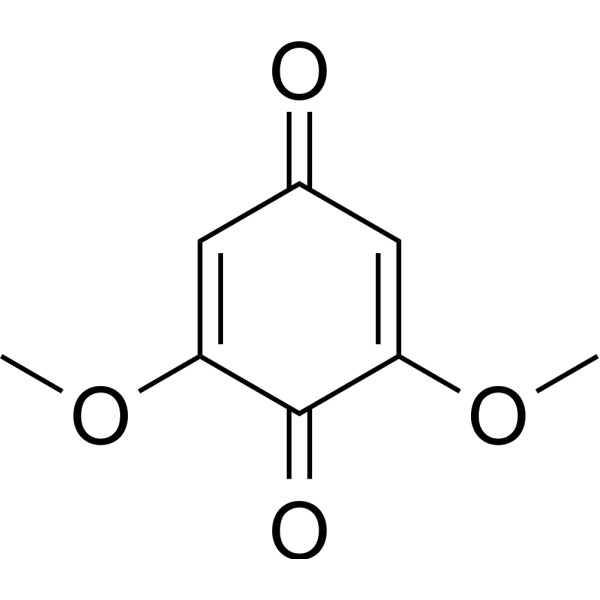
2,6-Dimethoxy-1,4-benzoquinone

Based on 1 Customer Validation
2,6-Dimethoxy-1,4-benzoquinone is a 1,4-benzoquinone derivative. 2,6-Dimethoxy-1,4-benzoquinone promotes phosphorylation of AKT, S6K, mTOR, 4E-BP1, and AMPK, and attenuates mTORC1 activity as part of the AKT/mTOR pathway. 2,6-Dimethoxy-1,4-benzoquinone stimulates myoblast differentiation, increases myotube size, elevates MHC protein expression, enhances mitochondrial biogenesis, respiration, and DNA content, and increases skeletal muscle weights, fiber size, grip strength, and treadmill performance. 2,6-Dimethoxy-1,4-benzoquinone exerts anti-cancer, anti-inflammatory, anti-adipogenic, antibacterial, and antimutagenic effects, inhibits adipogenic transcription factors, nitric oxide production, skin tumor development, Magnaporthe oryzae growth, spore germination, appressorium formation, and growth of select bacterial species, induces H2O2 generation and rice defense gene expression, and reduces rice blast lesion formation. 2,6-Dimethoxy-1,4-benzoquinone can be used for the research of obesity, skin tumorigenesis, rice blast disease, and food-borne illness.
For research use only. We do not sell to patients.
- Purity : 99.88%
- CAS No.: 530-55-2
- Formula: C8H8O4
- Molecular Weight:168.15
-
Storage:Powder -20°C, 3 years , 4°C, 2 years ; In solvent -80°C, 6 months , -20°C, 1 month

To place orders, for customer services and technical support, please contact: MedChemExpress USA
Tel: 609-228-6898 E-mail: [email protected] [email protected]


-
 Biological Activity
-
Chemical Information
-
Solvent & Solubility
- Purity & Documentation
- References
-
 Help & FAQs




All AMPK Isoforms
More

Biological Activity
Description
IC50 & Target
|
Plasmodium |
Cellular Effect
|
Cell Line

|
Type | Value | Description | References |
|---|---|---|---|---|
| KB | ED50 |
3.1 μg/mL
Compound: NSC-56336
|
Cytotoxicity against human KB cells
Cytotoxicity against human KB cells
|
10.1021/np50016a019 |
| MM1.S | IC50 |
1.1 μM
Compound: 9
|
Antiproliferative activity against human MM1.S cells assessed as inhibition of cell proliferation incubated for 72 hrs by XTT assay
Antiproliferative activity against human MM1.S cells assessed as inhibition of cell proliferation incubated for 72 hrs by XTT assay
|
[PMID: 36512676] |
| P388 | ED50 |
0.0015 μg/mL
Compound: 2,6-DMBQ, NSC-56336
|
Cytotoxicity against mouse P388 cells
Cytotoxicity against mouse P388 cells
|
[PMID: 6875580] |
| RPMI-8226 | IC50 |
10.8 μM
Compound: 9
|
Antiproliferative activity against human RPMI-8226 cells assessed as inhibition of cell proliferation incubated for 72 hrs by XTT assay
Antiproliferative activity against human RPMI-8226 cells assessed as inhibition of cell proliferation incubated for 72 hrs by XTT assay
|
[PMID: 36512676] |
In Vitro
2,6-Dimethoxy-1,4-benzoquinone (DMBQ) (up to 5 μM; 24 h) does not alter cell viability of C2C12 murine myoblasts at concentrations up to 5 μM after 24 h of treatment[1].
2,6-Dimethoxy-1,4-benzoquinone (DMBQ) (2.5-5 μM; 4 d) stimulates myogenic differentiation, increases myotube size, and activates the AKT/S6K signaling pathway in C2C12 cells, with these effects blocked by PI3K/AKT inhibition[1].
2,6-Dimethoxy-1,4-benzoquinone (DMBQ) (1-5 μM; 24 h) increases protein synthesis in C2C12 murine myotubes[1].
2,6-Dimethoxy-1,4-benzoquinone (DMBQ) (2.5-5 μM; 24 h, 4 d) enhances mitochondrial biogenesis and function in C2C12 murine myotubes by increasing PGC1α expression, upregulating mitochondrial biogenesis-related genes, and boosting maximal respiration and spare respiratory capacity[1].
2,6-Dimethoxy-1,4-benzoquinone (DMBQ/DBQ) (up to 10 μM; 48 h) exhibits no cytotoxicity in 3T3-L1 mouse preadipocytes[2].
2,6-Dimethoxy-1,4-benzoquinone (DMBQ/DBQ) (2.5-7.5 μM; 8 days) dose-dependently reduces lipid accumulation in MDI-induced 3T3-L1 adipocytes, with 66.9% reduction at 7.5 μM[2].
2,6-Dimethoxy-1,4-benzoquinone (DMBQ/DBQ) (2.5-7.5 μM; 8 days) downregulates adipogenic transcription factors (PPAR-γ, C/EBP-α) and lipogenic enzymes (ACC, FAS) in 3T3-L1 adipocytes[2].
2,6-Dimethoxy-1,4-benzoquinone (DMBQ/DBQ) (2.5-7.5 μM; up to 8 days) dose-dependently increases AMPK phosphorylation in 3T3-L1 preadipocytes and adipocytes, and reduces mature SREBP-1 expression via AMPK-dependent and independent pathways[2].
2,6-Dimethoxy-1,4-benzoquinone (DMBQ/DBQ) (2.5-5 μM; 2 to 8 days) inhibits mTORC1 activity by reducing mTOR and 4E-BP1 phosphorylation in 3T3-L1 adipocytes and MEF cells (including TSC2-/- MEFs) via an Akt-TSC2-independent pathway[2].
2,6-Dimethoxy-1,4-benzoquinone (0.035-7.00 μg/well; 24 h total incubation with LPS, 1 h pre-incubation) dose-dependently inhibits LPS-induced NO production in RAW264 cells, with 1.75 μg/well reducing NO production by 33%, and does not impair cell viability at concentrations up to 3.5 μg/well[3].
2,6-Dimethoxy-1,4-benzoquinone (25-50 μg/plate) inhibits the mutagenicity of DMBA, aflatoxin B1, Trp-P-2, and PhIP in the Ames test, with ID50 values of 25, 40, 50, and 25 μg/plate, respectively[3].
2,6-Dimethoxy-1,4-benzoquinone (10 μg/mL; 24 h) has no effect on Magnaporthe oryzae spore germination and appressorium formation, but (50-1000 μg/mL; 24 h) inhibits these processes in a dose-dependent manner[4].
2,6-Dimethoxy-1,4-benzoquinone (10 μg/mL; 24-h pretreatment) significantly inhibits Magnaporthe oryzae hyphae formation in Oryza sativa L. 'Koshihikari' leaf sheaths, with infection hyphae formation assessed 24 h post-inoculation[4].
2,6-Dimethoxy-1,4-benzoquinone (0.5 mg/disc; overnight) exhibits strong antimicrobial activity against Staphylococcus intermedius ATCC 29663, moderate activity against Staphylococcus epidermidis ATCC 12228 and Shigella sonnei ATCC 25931, weak activity against Listeria monocytogenes ATCC 15313, and no activity against Bacillus cereus ATCC14579, Salmonella enterica ATCC 43971, and Salmonella typhimurium IFO 14193 when tested via paper disc agar diffusion assay[5].
MedChemExpress (MCE) has not independently confirmed the accuracy of these methods. They are for reference only.
-
Cell Line:3T3-L1 adipocytes
-
Concentration:2.5, 5, 7.5 μM
-
Incubation Time:8 days
-
Result:Significantly attenuated MDI-induced increases in PPAR-γ, C/EBP-α, and aP2 protein expression compared to MDI-only treated cells.
Reduced protein levels of lipogenic enzymes ACC and FAS compared to MDI-only treated cells.
-
Cell Line:3T3-L1 preadipocytes, 3T3-L1 adipocytes
-
Concentration:5, 7.5 μM (preadipocytes 24 h treatment); 5, 7.5 μM (adipocytes days 2 and 8 of differentiation); 2.5, 5, 7.5 μM (adipocytes 8-day differentiation for SREBP-1 analysis)
-
Incubation Time:24 h (preadipocytes); days 2 and 8 of 8-day differentiation period (adipocytes); 8 days (adipocytes for SREBP-1 analysis)
-
Result:Increased AMPK phosphorylation in a dose-dependent manner in 3T3-L1 preadipocytes, with elevated phosphorylation maintained from day 2 to day 8 of differentiation.
Reduced mature SREBP-1 protein levels in a dose-dependent manner, with decreases observed in both nuclear and cytosolic fractions; this reduction was not reversed by AMPK siRNA knockdown.
Had its AMPK phosphorylation-increasing effect inhibited by pre-treatment with Compound C.
In Vivo
2,6-Dimethoxy-1,4-benzoquinone (17.5-700 mg/L; topical; single application; 20 μL) inhibits Phorbol 12-myristate 13-acetate (TPA) (HY-18739)-induced acute mouse ear edema, with the highest inhibition rate of 56.3% observed at the 350 mg/L dose[3].
2,6-Dimethoxy-1,4-benzoquinone (50-500 mg/L; topical; twice weekly; 20 weeks) during the promotion stage of DMBA/TPA-induced mouse skin tumorigenesis significantly reduces tumor burden, with the 50 mg/L dose lowering mean tumor count to 2.3 tumors per mouse[3].
2,6-Dimethoxy-1,4-benzoquinone (50-500 mg/L; topical; single application prior to DMBA) prior to DMBA initiation in a mouse skin tumorigenesis model does not produce a statistically significant reduction in tumor burden[3].
MedChemExpress (MCE) has not independently confirmed the accuracy of these methods. They are for reference only.
-
Animal Model:C57BL/6 (male, 7 weeks old at study start, acclimated for 1 week before treatment)[1]
-
Dosage:0.05% (w/w)
-
Administration:oral (dietary supplementation); daily; 7 weeks
-
Result:Significantly increased weights of triceps, gastrocnemius, and quadriceps muscles; showed a tendency to increase weights of tibialis anterior, extensor digitorum longus, and soleus muscles compared to controls.
Significantly increased skeletal muscle fiber cross-sectional area.
Significantly increased forelimb grip strength (normalized to body weight), treadmill running distance, and total running time compared to controls.
Significantly upregulated protein expression of total myosin heavy chain (MHC), MHC1, MHC2A, and MHC2B in skeletal muscle.
Significantly increased phosphorylation of AKT, mTOR, S6K, and 4EBP1 in skeletal muscle; significantly decreased protein expression of muscle atrophy markers MuRF1 and Atrogin1, and increased protein expression of SESN1 and SESN2.
Significantly increased mRNA expression of PGC1α, PGC1α1, PGC1α4, and FNDC5 in skeletal muscle; significantly increased mitochondrial DNA content, citrate synthase activity, mitochondrial respiratory complex I and II activities, and ATP content in skeletal muscle.
Significantly upregulated mRNA expression of Nampt, NRF1, NRF2, TFAM, ERRγ, and PPARδ, as well as mRNA and protein expression of oxidative phosphorylation (OXPHOS) complex proteins in skeletal muscle; significantly increased protein expression of PGC1α, ERRγ, and PPARδ in skeletal muscle.
-
Animal Model:SENCAR (six-week-old females)[3]
-
Dosage:50 mg/L; 500 mg/L
-
Administration:topical; twice weekly; 20 weeks
-
Result:Reduced the final mean number of tumors per mouse from 10.0 (control) to 2.3.
Reduced the final mean number of tumors per mouse to 3.1.
Significantly reduced tumor incidence compared to controls.


Chemical Information
-
CAS No. 530-55-2
-
Appearance Solid
-
Molecular Weight 168.15
-
Formula C8H8O4
-
Color Light yellow to yellow
-
SMILES
O=C1C(OC)=CC(C=C1OC)=O
-
Structure Classification
-
Initial Source
-
Shipping
Room temperature in continental US; may vary elsewhere.
-
Storage
Powder -20°C 3 years 4°C 2 years In solvent -80°C 6 months -20°C 1 month


Solvent & Solubility
In Vitro:
DMSO : 5.56 mg/mL (33.07 mM; ultrasonic and warming and heat to 60°C; Hygroscopic DMSO has a significant impact on the solubility of product, please use newly opened DMSO)
Please refer to the solubility information to select the appropriate solvent. Once prepared, please aliquot and store the solution to prevent product inactivation from repeated freeze-thaw cycles.
Storage method and period of stock solution: -80°C, 6 months; -20°C, 1 month. When stored at -80°C, please use it within 6 months. When stored at -20°C, please use it within 1 month.
Please refer to the solubility information to select the appropriate solvent. Once prepared, please aliquot and store the solution to prevent product inactivation from repeated freeze-thaw cycles.
Storage method and period of stock solution: -80°C, 6 months; -20°C, 1 month. When stored at -80°C, please use it within 6 months. When stored at -20°C, please use it within 1 month.
Concentration (start) × Volume (start) = Concentration (final) × Volume (final)
In Vivo:
Select the appropriate dissolution method based on your experimental animal and administration route.
- For the following dissolution methods, please ensure to first prepare a clear stock solution using an In Vitro approach and then sequentially add co-solvents:
- To ensure reliable experimental results, the clarified stock solution can be appropriately stored based on storage conditions. As for the working solution for In Vivo experiments, it is recommended to prepare freshly and use it on the same day.
- The percentages shown for the solvents indicate their volumetric ratio in the final prepared solution. If precipitation or phase separation occurs during preparation, heat and/or sonication can be used to aid dissolution.
Add each solvent one by one: 10% DMSO 40% PEG300 5% Tween-80 45% Saline
Solubility: ≥ 0.56 mg/mL (3.33 mM); Clear solution
This protocol yields a clear solution of ≥ 0.56 mg/mL (saturation unknown).
Taking 1 mL working solution as an example, add 100 μL DMSO stock solution (5.6 mg/mL) to 400 μL PEG300, and mix evenly; then add 50 μL Tween-80 and mix evenly; then add 450 μL Saline to adjust the volume to 1 mL.
Preparation of Saline: Dissolve 0.9 g sodium chloride in ddH₂O and dilute to 100 mL to obtain a clear Saline solution.
Add each solvent one by one: 10% DMSO 90% (20% SBE-β-CD in Saline)
Solubility: ≥ 0.56 mg/mL (3.33 mM); Clear solution
This protocol yields a clear solution of ≥ 0.56 mg/mL (saturation unknown).
Taking 1 mL working solution as an example, add 100 μL DMSO stock solution (5.6 mg/mL) to 900 μL 20% SBE-β-CD in Saline, and mix evenly.
Preparation of 20% SBE-β-CD in Saline (4°C, storage for one week): 2 g SBE-β-CD powder is dissolved in 10 mL Saline, completely dissolve until clear.
In Vivo Dissolution Calculator
Please enter the basic information of animal experiments:
-
-
-
-
Recommended: Prepare an additional quantity of animals to account for potential losses during experiments.
Please enter your animal formula composition:
-
%DMSO +
Recommended: Keep the proportion of DMSO in working solution below 2% if your animal is weak.
-
%+
-
+%Tween-80 + +
-
%Saline +
The co-solvents required include: DMSO, . All of co-solvents are available by MedChemExpress (MCE). , Tween 80. All of co-solvents are available by MedChemExpress (MCE).
Working solution concentration: 0.22 mg/mL
Method for preparing stock solution: mg drug dissolved in μL DMSO. Stock solution concentration: mg/mL.
1. Take μL DMSO stock solution;
2. Add μL .
μL , mix evenly;
3. Then add μL Tween 80, mix evenly;
4. Then add μL
Please ensure that the stock solution in the first step is dissolved to a clear state, and add co-solvents in sequence. You can use ultrasonic heating (ultrasonic cleaner, recommended frequency 20-40 kHz), vortexing, etc. to assist dissolution.


Purity & Documentation
-
Data Sheet (287 KB)
-
SDS (394 KB)
- English - EN (394 KB)
- Français - FR (394 KB)
- Deutsch - DE (394 KB)
- Norwegian - NO (394 KB)
- Español - ES (394 KB)
- Swedish - SV (394 KB)
- Italian - IT (394 KB)
- Korean - KR (394 KB)
- Portuguese - PT (394 KB)
-
Handling Instructions (2659 KB)
References
[1]. Yoo A, et al. 2,6-Dimethoxy-1,4-benzoquinone increases skeletal muscle mass and performance by regulating AKT/mTOR signaling and mitochondrial function. Phytomedicine. 2021;91:153658. [Content Brief]
[2]. Son HJ, et al. 2,6-Dimethoxy-1,4-benzoquinone Inhibits 3T3-L1 Adipocyte Differentiation via Regulation of AMPK and mTORC1. Planta Med. 2019 Feb;85(3):210-216. [Content Brief]
[3]. Kamiya T, et al. 2,6-Dimethoxy-1,4-benzoquinone, isolation and identification of anti-carcinogenic, anti-mutagenic and anti-inflammatory component from the juice of Vitis coignetiae. Food Chem Toxicol. 2018;122:172-180. [Content Brief]


Complete Stock Solution Preparation Table
Please refer to the solubility information to select the appropriate solvent. Once prepared, please aliquot and store the solution to prevent product inactivation from repeated freeze-thaw cycles.
Storage method and period of stock solution: -80°C, 6 months; -20°C, 1 month. When stored at -80°C, please use it within 6 months. When stored at -20°C, please use it within 1 month.
| Optional Solvent | Concentration Solvent Mass | 1 mg | 5 mg | 10 mg | 25 mg |
|---|---|---|---|---|---|
| DMSO | 1 mM | 5.9471 mL | 29.7354 mL | 59.4707 mL | 148.6768 mL |
| 5 mM | 1.1894 mL | 5.9471 mL | 11.8941 mL | 29.7354 mL | |
| 10 mM | 0.5947 mL | 2.9735 mL | 5.9471 mL | 14.8677 mL | |
| 15 mM | 0.3965 mL | 1.9824 mL | 3.9647 mL | 9.9118 mL | |
| 20 mM | 0.2974 mL | 1.4868 mL | 2.9735 mL | 7.4338 mL | |
| 25 mM | 0.2379 mL | 1.1894 mL | 2.3788 mL | 5.9471 mL | |
| 30 mM | 0.1982 mL | 0.9912 mL | 1.9824 mL | 4.9559 mL |


2,6-Dimethoxy-1,4-benzoquinone Related Classifications
HY-N1677 Related Classifications
 Powered by Bioz