



Quinones

- Formula: C27H30ClNO11
- Molecular Weight: 579.98
Doxorubicin hydrochloride (Standard) is the analytical standard of Doxorubicin hydrochloride. This product is intended for research and analytical applications. Doxorubicin (Hydroxydaunorubicin) hydrochloride, a cytotoxic anthracycline antibiotic, is an anti-cancer chemotherapy agent. Doxorubicin hydrochloride is a potent human DNA topoisomerase I and topoisomerase II inhibitor with IC50s of 0.8 μM and 2.67 μM, respectively. Doxorubicin hydrochloride reduces basal phosphorylation of AMPK and its downstream target acetyl-CoA carboxylase. Doxorubicin hydrochloride induces apoptosis and autophagy.

- Formula: C59H90O4
- Molecular Weight: 863.34
Coenzyme Q10 (Standard) is the analytical standard of Coenzyme Q10. This product is intended for research and analytical applications. Coenzyme Q10 is an essential cofactor of the electron transport chain and a potent antioxidant agent.

- Formula: C11H8O2
- Molecular Weight: 172.18
Menadione (Standard) is the analytical standard of Menadione. This product is intended for research and analytical applications. Menadione is a naphthoquinone that is converted into active vitamin K2 in the body. Menadione is a potential anticancer agent and radiosensitizer.

- Formula: C₃₁H₄₀O₂
- Molecular Weight: 444.65
Menaquinone-4 (Standard) is the analytical standard of Menaquinone-4. This product is intended for research and analytical applications. Menaquinone-4 is a vitamin K, used as a hemostatic agent, and also a adjunctive therapy for the pain of osteoporosis.
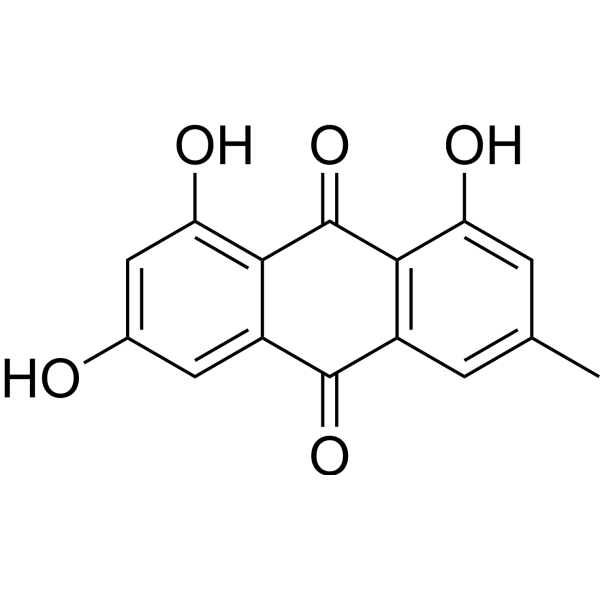
- Formula: C₁₅H₁₀O₅
- Molecular Weight: 270.24
Emodin (Standard) is the analytical standard of Emodin. This product is intended for research and analytical applications. Emodin (Frangula emodin), an anthraquinone derivative, is an anti-SARS-CoV compound. Emodin blocks the SARS coronavirus spike protein and angiotensin-converting enzyme 2 (ACE2) interaction. Emodin inhibits casein kinase-2 (CK2). Anti-inflammatory and anticancer effects. Emodin is a potent selective 11β-HSD1 inhibitor with the IC50 of 186 and 86 nM for human and mouse 11β-HSD1, respectively. Emodin ameliorates metabolic disorder in diet-induced obese mice.

- Formula: C₃₁H₄₆O₂
- Molecular Weight: 450.70
Vitamin K1 (Standard) is the analytical standard of Vitamin K1. This product is intended for research and analytical applications. Vitamin K1 a naturally occurring vitamin required for blood coagulation and bone and vascular metabolism.
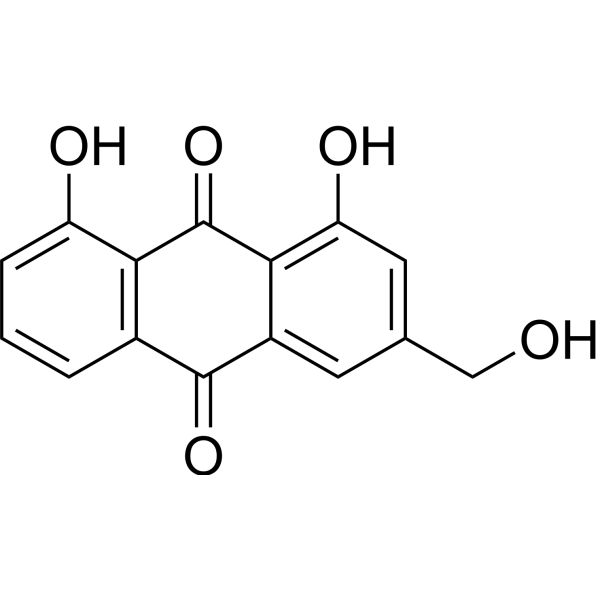

- Formula: C14H8O4
- Molecular Weight: 240.21
Danthron (Standard) is the analytical standard of Danthron. This product is intended for research and analytical applications. Danthron is a natural product extracted from the traditional Chinese medicine Salvia miltiorrhiza Bunge. Danthron functions in regulating glucose and lipid metabolism by activating AMPK.
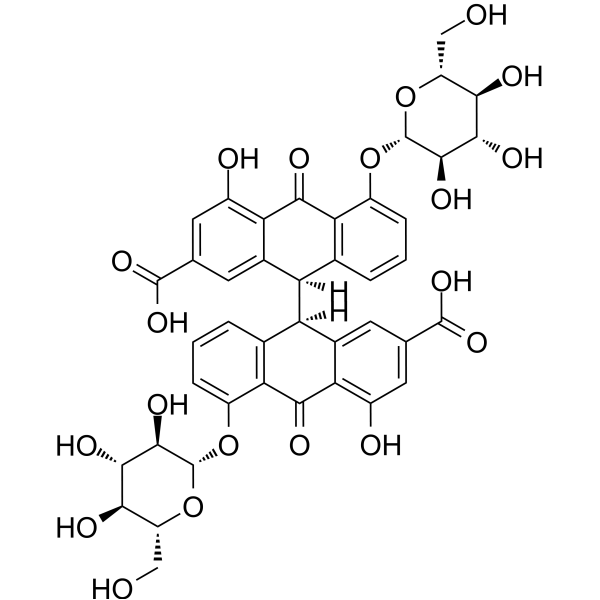
- Formula: C42H38O20
- Molecular Weight: 862.74

- Formula: C16H16O5
- Molecular Weight: 288.30
Shikonin (Standard) is the analytical standard of Shikonin. This product is intended for research and analytical applications. Shikonin is a major component of a Chinese herbal medicine named zicao. Shikonin is a potent TMEM16A chloride channel inhibitor with an IC50 of 6.5 μM. Shikonin is a specific pyruvate kinase M2 (PKM2) inhibitor and can also inhibit TNF-α and NF-κB pathway. Shikonin decreases exosome secretion through the inhibition of glycolysis. Shikonin inhibits AIM2 inflammasome activation.

- Formula: C14H6N2O8
- Molecular Weight: 330.21
Pyrroloquinoline quinone (Standard) is the analytical standard of Pyrroloquinoline quinone. This product is intended for research and analytical applications. Pyrroloquinoline quinone (PQQ), a redox co-factor, is an anionic, redox-cycling orthoquinone. Pyrroloquinoline quinone is isolated from cultures of methylotropic bacteria and tissues of mammals. Pyrroloquinoline quinone is an essential nutrient for mammals and is important for immune function.
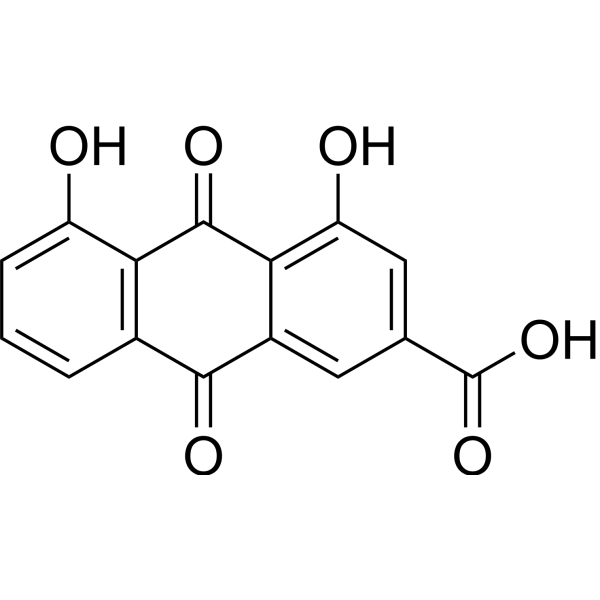

- Formula: C21H22O9
- Molecular Weight: 418.39
Aloin (Standard) is the analytical standard of Aloin. This product is intended for research and analytical applications. Aloin (Aloin-A; Barbaloin-A) is a natural anti-tumor anthraquinone glycoside with iron chelating activity. Aloin induces the differentiation of MC3T3-E1 cells into osteoblasts through MAPK-mediated Wnt and Bmp signaling pathways. Alkaline phosphatase (ALP) is an early marker of osteoblast differentiation, and the activity of ALP is also enhanced by Aloin. Aloin also reduces brain edema, reduces blood-brain barrier disruption and improves cortical impact injuries. Aloin is used in research into osteoporosis and traumatic brain injury (TBI).

- Formula: C19H18O3
- Molecular Weight: 294.34
Tanshinone IIA (Standard) is the analytical standard of Tanshinone IIA. This product is intended for research and analytical applications. Tanshinone IIA (Tan IIA) is one of the main compositions in the root of Salvia miltiorrhiza Bunge. Tanshinone IIA may suppress angiogenesis by targeting the protein kinase domains of VEGF/VEGFR2.

- Formula: C₅₄H₈₂O₄
- Molecular Weight: 795.23
Coenzyme Q9 (Standard) is the analytical standard of Coenzyme Q9. This product is intended for research and analytical applications. Coenzyme Q9 (Ubiquinone Q9), the major form of ubiquinone in rodents, is an amphipathic molecular component of the electron transport chain that functions as an endogenous antioxidant. Coenzyme Q9 attenuates the diabetes-induced decreases in antioxidant defense mechanisms. Coenzyme Q9 improves left ventricular performance and reduces myocardial infarct size and cardiomyocyte apoptosis.

- Formula: C29H40N2O9
- Molecular Weight: 560.64
Geldanamycin (Standard) is the analytical standard of Geldanamycin. This product is intended for research and analytical applications. Geldanamycin is a Hsp90 inhibitor with antimicrobial activity against many Gram-positive and some Gram-negative bacteria. Geldanamycin has anti-influenza virus H5N1 activities.

- Formula: C14H8O4
- Molecular Weight: 240.21
Alizarin (Standard) is the analytical standard of Alizarin. This product is intended for research and analytical applications. Alizarin is a natural dye extracted from the roots of madder plant and has been widely used as a pigment in textile fabrics and paintings.

- Formula: C10H6O4
- Molecular Weight: 190.15
Naphthazarin (DHNQ) is a naturally occurring compound. Naphthazarin is effective by various cellular mechanisms including oxidative stress, activation of mitochondrial apoptosis-inducing factor (AIF), depolymerization of microtubules, interference with lysosomal function and p53-dependent p21 activation. Naphthazarin triggers apoptosis and has anti-tumor effects.

- Formula: C22H20O13
- Molecular Weight: 492.39
Carminic acid (Standard) is the analytical standard of Carminic acid (HY-N8407). This product is intended for research and analytical applications. Carminic acid is a widely used and orally active natural red pigment that can be used in industries such as food, cosmetics, and pharmaceuticals. In addition, carminic acid has anti-inflammatory and antioxidant activities.

- Formula: C21H18O9
- Molecular Weight: 414.36
Doxorubicinone (Adriamycin aglycone) (Standard) is the analytical standard of Doxorubicinone. This product is intended for research and analytical applications. Doxorubicinone is the aglycone of the antibiotic Doxorubicin (HY-15142A), i.e., its sugar-free parent nucleus structure. Doxorubicinone does not induce DNA damage or bind to RelA, but still downregulates the expression of pro-inflammatory cytokines (such as TNF, IL-12, etc.) regulated by the NF-κB pathway. Doxorubicinone can be used in sepsis-related research.



