



Carminic acid

Based on 1 Customer Validation
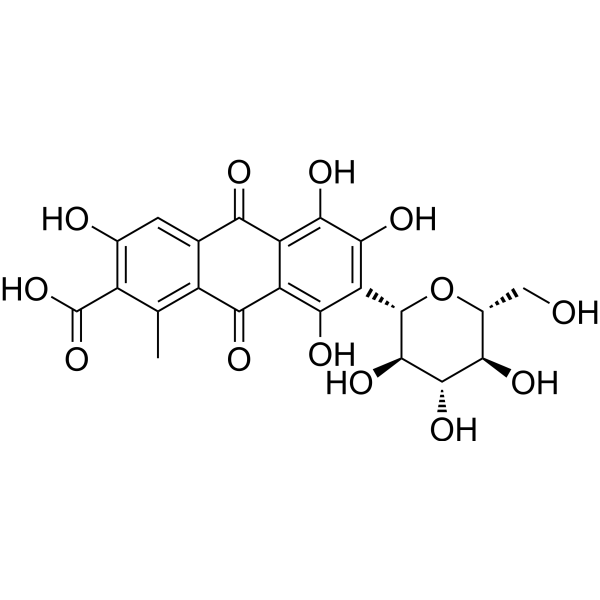
Carminic acid is a widely used and orally active natural red pigment that can be used in industries such as food, cosmetics, and pharmaceuticals. In addition, carminic acid has anti-inflammatory and antioxidant activities.
For research use only. We do not sell to patients.
- Purity : 95.19%
- CAS No.: 1260-17-9
- Formula: C22H20O13
- Molecular Weight:492.39
-
Storage:
4°C, protect from light
* In solvent : -80°C, 6 months; -20°C, 1 month (protect from light)

To place orders, for customer services and technical support, please contact: MedChemExpress USA
Tel: 609-228-6898 E-mail: [email protected] [email protected]


-
 Biological Activity
-
Chemical Information
-
Solvent & Solubility
- Protocols
- Purity & Documentation
- References
-
 Help & FAQs


-

HY-N8407R
Carminic acid (Standard)Standard of Carminic acid -
HY-N0335
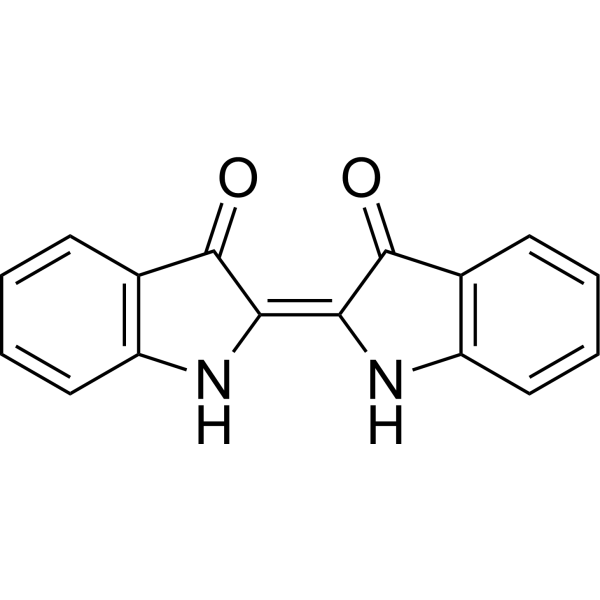
IndigoBlue Dye -
HY-128448
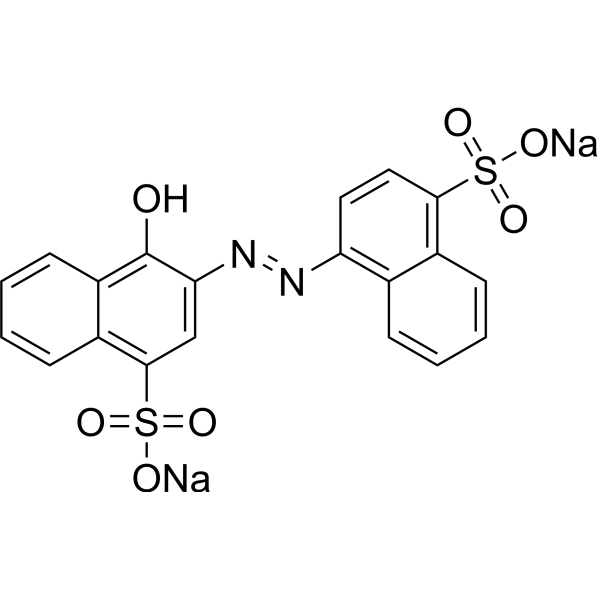
CarmoisineAzo Dye -
HY-13595
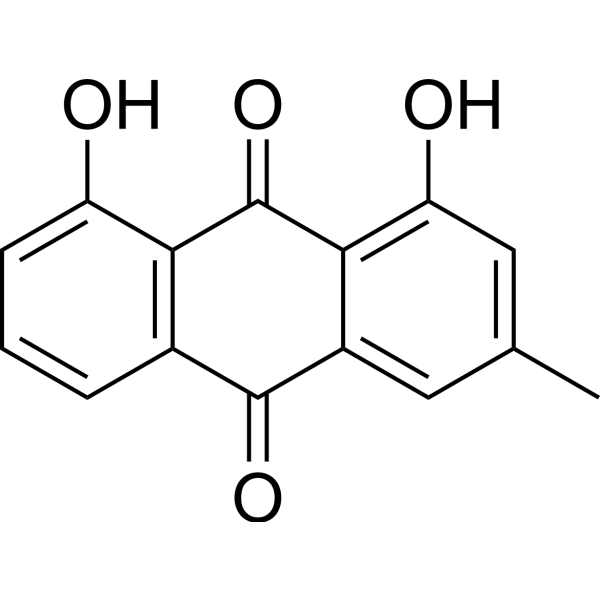
ChrysophanolEGFR Inhibitor -
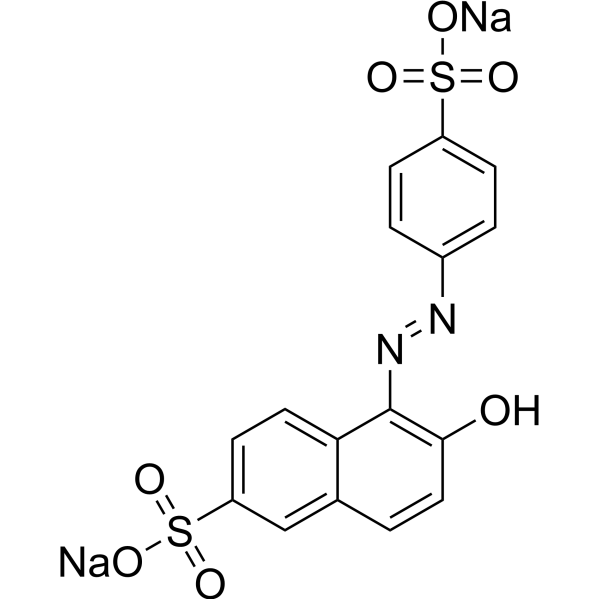
HY-D0249
Sunset Yellow FCFAzo Dye -

HY-N1389
CarmineNatural Dye -
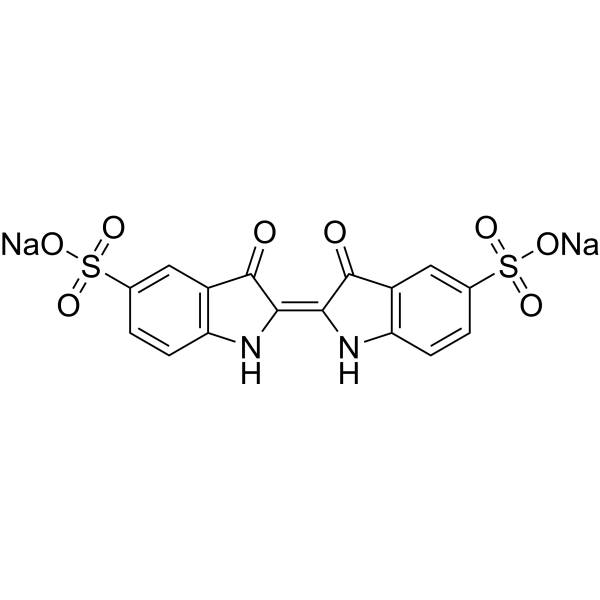
HY-W040226
Indigo carmine -
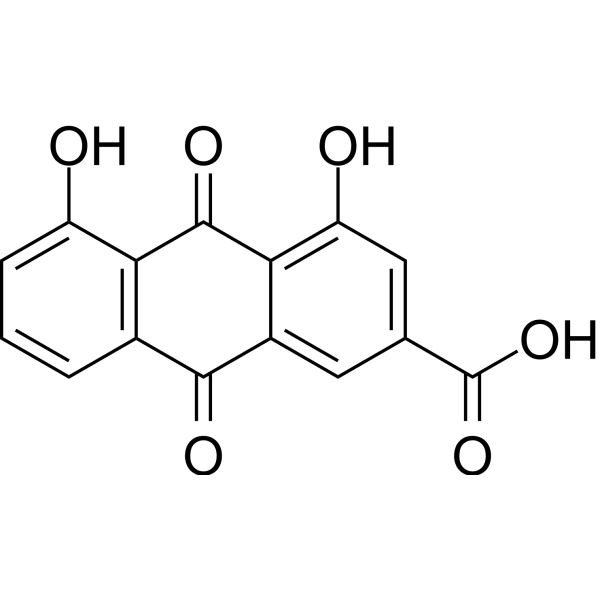
HY-N0105
RheinAntioxidant -
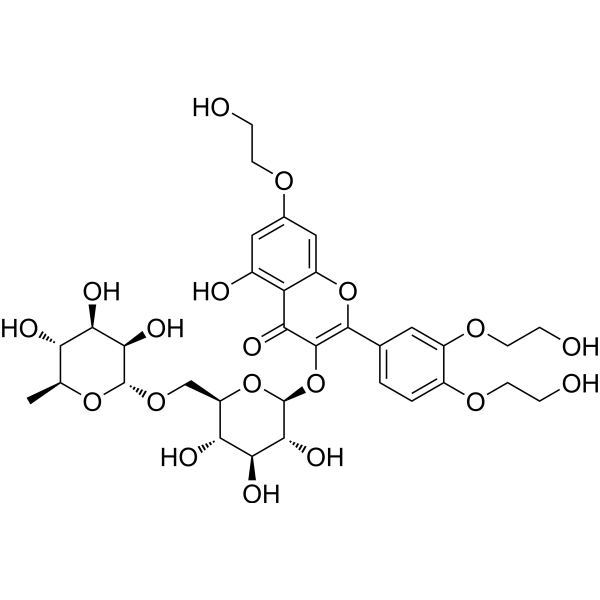
HY-N0139
TroxerutinNOD-like Receptor (NLR) Inhibitor -
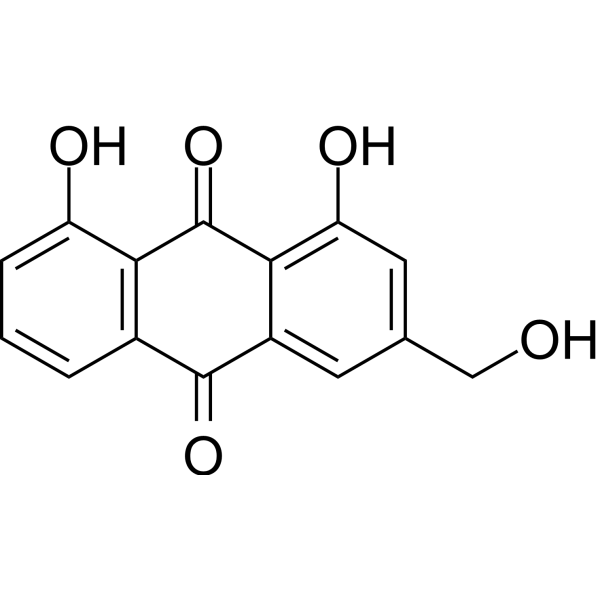
HY-N0189
Aloe emodinmTORC2 Inhibitor -
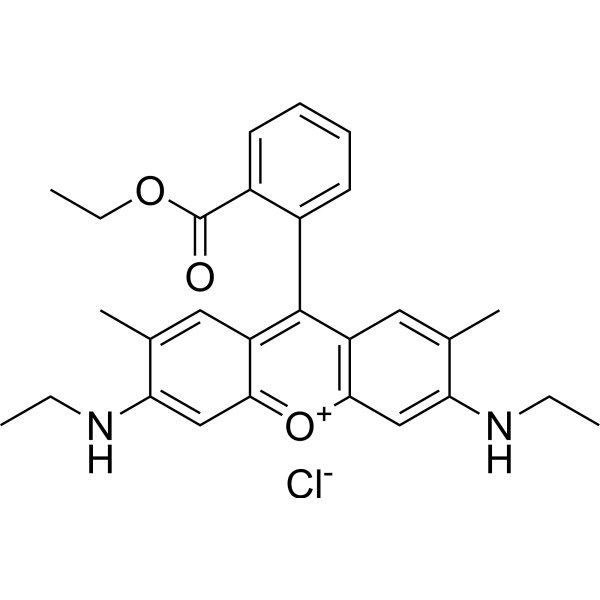
HY-D0309
Rhodamine 6GLaser Dye -
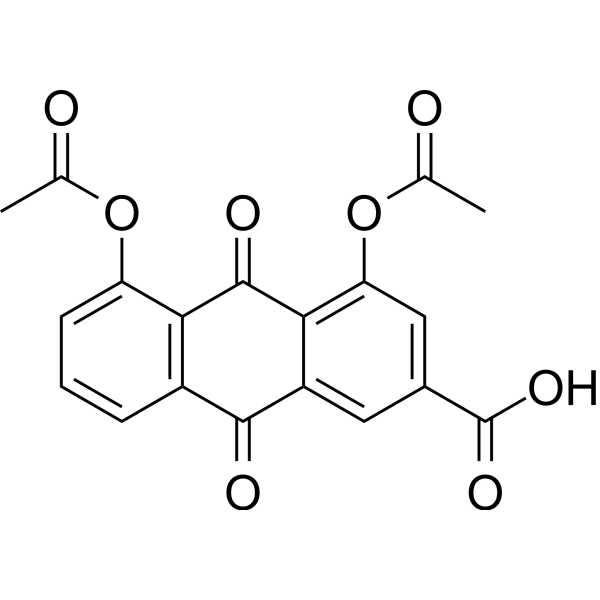
HY-N0283
DiacereinIL-1 Inhibitor


Biological Activity
Description
IC50 & Target
[1]|
IL-1β |
IL-6 |
IL-4 |
Cellular Effect
|
Cell Line

|
Type | Value | Description | References |
|---|---|---|---|---|
| HeLa | IC50 |
3730 μM
Compound: Carminic acid
|
Compound was evaluated for the inhibition of cell proliferation of human cervix epithelioid carcinoma, HeLa (ATCC CCL2).
Compound was evaluated for the inhibition of cell proliferation of human cervix epithelioid carcinoma, HeLa (ATCC CCL2).
|
10.1016/0960-894X(96)00418-0 |
| HepG2 | IC50 |
1770 μM
Compound: Carminic acid
|
Compound was evaluated for the inhibition of cell proliferation of human hepatocellular carcinoma, HepG2 (ATCC HB8065).
Compound was evaluated for the inhibition of cell proliferation of human hepatocellular carcinoma, HepG2 (ATCC HB8065).
|
10.1016/0960-894X(96)00418-0 |
In Vitro
Carminic acid (10-20 μM; 24 h) can reduce the levels of inflammatory factors, ROS, MDA, and H2O2 and increase the activity of SOD in Fructose (HY-N0395)-treated TCMK-1 and HK2 cells. The mechanism involves the inhibition of NF-κB and JNK and the activation of Nrf-2[1].
MedChemExpress (MCE) has not independently confirmed the accuracy of these methods. They are for reference only.
-
Cell Line:TCMK-1 and HK2 cells treated Fructose (HY-N0395)
-
Concentration:10 and 20 μM
-
Incubation Time:24 h
-
Result:Markedly reduced the expression of IL-1β, IL-6, IL-4, IL-18, TNF-α, TGF-β1, MCP-1, TIMP-1, MIP-1α and CXCL1.
In Vivo
Carminic acid (0.1-100 mM) has a deterrent effect on ant feeding[2].
Carminic acid (500-3000 mg/kg; oral gavage) can cause hyperactivity-like behaviors in rats at high doses (1500 and 3000 mg/kg), while the low dose (500 mg/kg) has no negative effects on the locomotor activity and anxiety behaviors of rats[3].
MedChemExpress (MCE) has not independently confirmed the accuracy of these methods. They are for reference only.
-
Animal Model:Male C57BL/6 mice aged 6-7 weeks old (18-20 g) treated Fructose (HY-N0395)[1]
-
Dosage:0.75 and 1.5 g/kg/day
-
Administration:Dietary administration; 16 weeks
-
Result:Alleviated metabolic disorders.
Reduced body weight, blood glucose, blood lipid and insulin levels.
Improved glucose tolerance and insulin resistance.
Relieved renal dysfunction, mitigated glomerular hypertrophy and renal fibrosis.
Inhibited renal inflammation and oxidative stress, and enhanced the activation level of AMPKα.


Chemical Information
-
CAS No. 1260-17-9
-
Appearance Solid
-
Molecular Weight 492.39
-
Formula C22H20O13
-
Color Brown to red
-
SMILES
O=C1C2=C(O)C([C@@H]3O[C@@H]([C@H]([C@@H]([C@H]3O)O)O)CO)=C(O)C(O)=C2C(C4=CC(O)=C(C(O)=O)C(C)=C41)=O
-
Structure Classification
-
Initial Source
cochineal insects (Dactylopius species)
-
Shipping
Room temperature in continental US; may vary elsewhere.
-
Storage
4°C, protect from light
* In solvent : -80°C, 6 months; -20°C, 1 month (protect from light)


Solvent & Solubility
In Vitro:
DMSO : 116.67 mg/mL (236.95 mM; ultrasonic and warming and heat to 60°C; Hygroscopic DMSO has a significant impact on the solubility of product, please use newly opened DMSO)
Please refer to the solubility information to select the appropriate solvent. Once prepared, please aliquot and store the solution to prevent product inactivation from repeated freeze-thaw cycles.
Storage method and period of stock solution: -80°C, 6 months; -20°C, 1 month (protect from light). When stored at -80°C, please use it within 6 months. When stored at -20°C, please use it within 1 month.
Please refer to the solubility information to select the appropriate solvent. Once prepared, please aliquot and store the solution to prevent product inactivation from repeated freeze-thaw cycles.
Storage method and period of stock solution: -80°C, 6 months; -20°C, 1 month (protect from light). When stored at -80°C, please use it within 6 months. When stored at -20°C, please use it within 1 month.
Concentration (start) × Volume (start) = Concentration (final) × Volume (final)


Purity & Documentation
-
Data Sheet (277 KB)
-
SDS (394 KB)
- English - EN (394 KB)
- Français - FR (394 KB)
- Deutsch - DE (394 KB)
- Norwegian - NO (394 KB)
- Español - ES (394 KB)
- Swedish - SV (394 KB)
- Italian - IT (394 KB)
- Korean - KR (394 KB)
- Portuguese - PT (394 KB)
-
Handling Instructions (2659 KB)
References
[1]. Li Q, et al. Carminic acid supplementation protects against fructose-induced kidney injury mainly through suppressing inflammation and oxidative stress via improving Nrf-2 signaling. Aging (Albany NY). 2021 Apr 4;13(7):10326-10353. [Content Brief]
[2]. Eisner T, et al. Red cochineal dye (carminic Acid): its role in nature. Science. 1980 May 30;208(4447):1039-42. [Content Brief]
[4]. Rasmus J N Frandsen, et al. Heterologous production of the widely used natural food colorant carminic acid in Aspergillus nidulans. Sci Rep. 2018 Aug 27;8(1):12853. [Content Brief]


Complete Stock Solution Preparation Table
Please refer to the solubility information to select the appropriate solvent. Once prepared, please aliquot and store the solution to prevent product inactivation from repeated freeze-thaw cycles.
Storage method and period of stock solution: -80°C, 6 months; -20°C, 1 month (protect from light). When stored at -80°C, please use it within 6 months. When stored at -20°C, please use it within 1 month.
| Optional Solvent | Concentration Solvent Mass | 1 mg | 5 mg | 10 mg | 25 mg |
|---|---|---|---|---|---|
| DMSO | 1 mM | 2.0309 mL | 10.1546 mL | 20.3091 mL | 50.7728 mL |
| 5 mM | 0.4062 mL | 2.0309 mL | 4.0618 mL | 10.1546 mL | |
| 10 mM | 0.2031 mL | 1.0155 mL | 2.0309 mL | 5.0773 mL | |
| 15 mM | 0.1354 mL | 0.6770 mL | 1.3539 mL | 3.3849 mL | |
| 20 mM | 0.1015 mL | 0.5077 mL | 1.0155 mL | 2.5386 mL | |
| 25 mM | 0.0812 mL | 0.4062 mL | 0.8124 mL | 2.0309 mL | |
| 30 mM | 0.0677 mL | 0.3385 mL | 0.6770 mL | 1.6924 mL | |
| 40 mM | 0.0508 mL | 0.2539 mL | 0.5077 mL | 1.2693 mL | |
| 50 mM | 0.0406 mL | 0.2031 mL | 0.4062 mL | 1.0155 mL | |
| 60 mM | 0.0338 mL | 0.1692 mL | 0.3385 mL | 0.8462 mL | |
| 80 mM | 0.0254 mL | 0.1269 mL | 0.2539 mL | 0.6347 mL | |
| 100 mM | 0.0203 mL | 0.1015 mL | 0.2031 mL | 0.5077 mL |


Carminic acid Related Classifications
HY-N8407 Related Classifications
 Powered by Bioz