1. GPCR/G Protein Neuronal Signaling Vitamin D Related/Nuclear Receptor Cell Cycle/DNA Damage Membrane Transporter/Ion Channel Anti-infection Metabolic Enzyme/Protease
  2. Cannabinoid Receptor PPAR TRP Channel GPR55 Fungal Tau Protein Endogenous Metabolite
  3. Anandamide

Anandamide  (Synonyms: AEA; Arachidonoyl ethanolamide)

Cat. No.: HY-10863 Pureza: 98.43%
Instrucciones de manejo Technical Support

Anandamide is an endocannabinoid. Anandamide modulates both neuronal and immune functions through two protein-coupled cannabinoid receptors (CB1 and CB2). Anandamide can activate numerous other receptors like PPARS, TRPV1, and GPR18/GPR55. Anandamide also has potential anti-fungal and anti-inflammatory activities. Anandamide can be used for the research of Alzheimer’s disease (AD) and ulcerative colitis.

Para uso exclusivo en investigación. No vendemos a pacientes.

No. CAS : 94421-68-8

Tamaño Precio Stock Cantidad
Liquid + Solvent (Highly Recommended)
10 mM * 1 mL in DMSO
ready for reconstitution
En stock
Solution
10 mM * 1 mL in DMSO En stock
Liquid
5 mg En stock
10 mg En stock
25 mg En stock
50 mg En stock
100 mg En stock
200 mg   Obtener un presupuesto  
500 mg   Obtener un presupuesto  

* Seleccione Cantidad antes de agregar artículos.

This product is a controlled substance and not for sale in your territory.

Revisión del cliente

Based on 2 publication(s) in Google Scholar

Other Forms of Anandamide:

Top Publications Citing Use of Products
Cell Proliferation/Viability Assay
Bio/Physico-chemical Assay

    Anandamide purchased from MedChemExpress. Usage Cited in: Cell Commun Signal. 2025 Jun 13;23(1):280.  [Abstract]

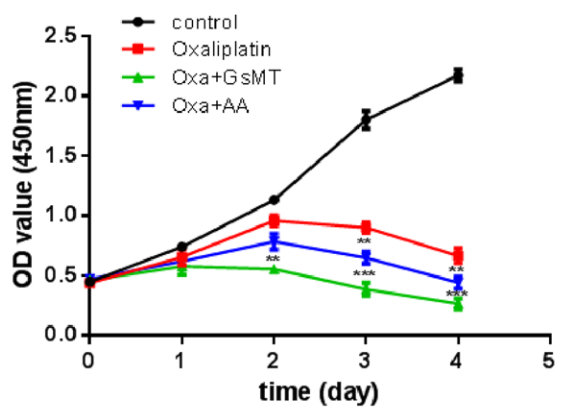
    Huh7 cells were treated with oxaliplatin (2 µM), oxaliplatin combined with Anandamide (Arachidonic acid; AA) (10 µM) for the indicated days. Anandamide (Arachidonic acid; AA) promoted the anti-tumor effect of oxaliplatin in a time-dependent manner (0–4 day).

    Anandamide purchased from MedChemExpress. Usage Cited in: Cell Commun Signal. 2025 Jun 13;23(1):280.  [Abstract]

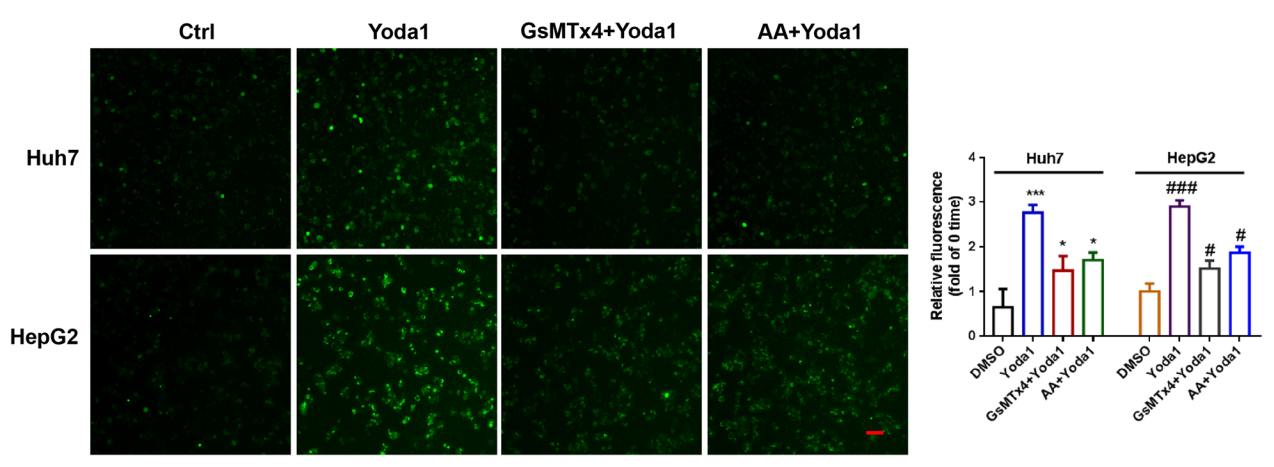
    Huh7 cells were pretreated with Anandamide (Arachidonic acid; AA) (10 µM; 2 h) and then exposed to Yoda1 (10 µM; 30 min). Intracellular calcium influx was observed using a Fluo-4 Calcium Assay Kit.

    Anandamide purchased from MedChemExpress. Usage Cited in: Cell Commun Signal. 2025 Jun 13;23(1):280.  [Abstract]

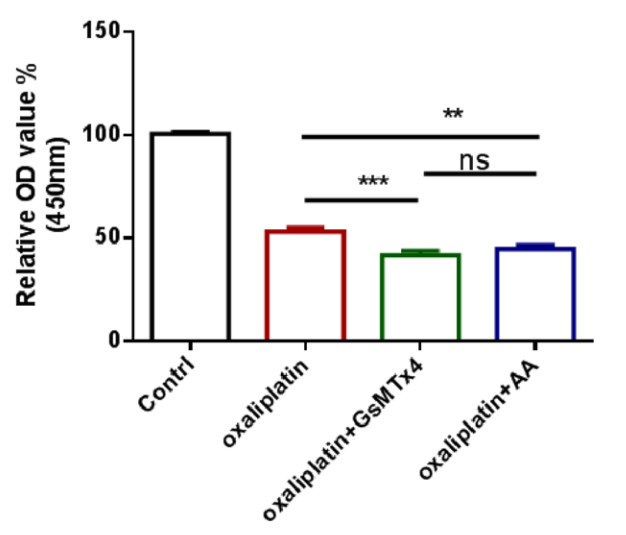
    Huh7 cells were treated with oxaliplatin (2 µM) or oxaliplatin combined with Anandamide (Arachidonic acid; AA) (10 µM) for 3 days. Cell viability was detected by a CCK-8 assay.

    Anandamide purchased from MedChemExpress. Usage Cited in: J Biol Chem. 2021 Sep;297(3):101022.  [Abstract]

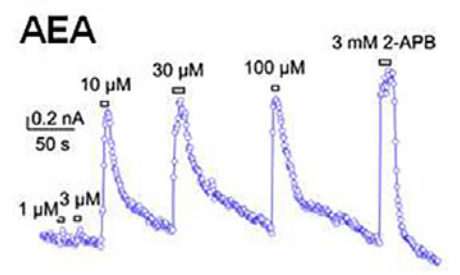
    Representative whole-cell patch-clamp recording showed that Anandamide (AEA) (0.01–100 μM) activate the TRPV1 in a concentration-dependent manner.

    Anandamide purchased from MedChemExpress. Usage Cited in: J Biol Chem. 2021 Sep;297(3):101022.  [Abstract]

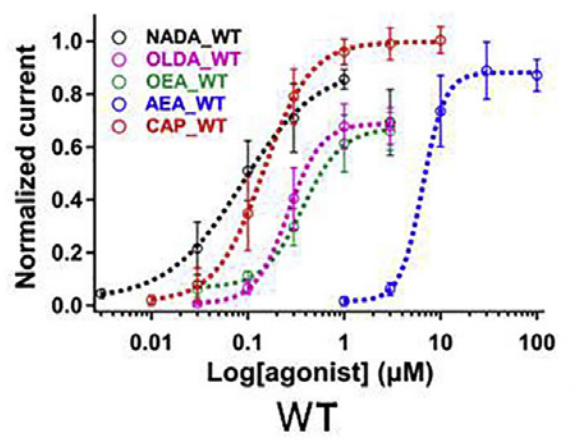
    Anandamide (AEA) (0.01–100 μM) activated the TRPV1 channel in a concentration-dependent manner in HEK293 cells.

    Ver todos los productos específicos de isoformas Cannabinoid Receptor:

    Ver todos los productos específicos de isoformas PPAR:

    Ver todos los productos específicos de isoformas TRP Channel:

    Ver todos los productos específicos de isoformas Endogenous Metabolite:

    • Actividad biológica

    • Pureza y Documentación

    • Referencias

    • Revisión del cliente

    Descripciòn

    Anandamide is an endocannabinoid. Anandamide modulates both neuronal and immune functions through two protein-coupled cannabinoid receptors (CB1 and CB2). Anandamide can activate numerous other receptors like PPARS, TRPV1, and GPR18/GPR55. Anandamide also has potential anti-fungal and anti-inflammatory activities. Anandamide can be used for the research of Alzheimer’s disease (AD) and ulcerative colitis[1][2][3][4][5].

    IC50 & Target[1]

    CB1


    CB2


    PPAR


    TRPV1


    Microbial Metabolite


    Human Endogenous Metabolite


    Cellular Effect
    Cell Line Type Value Description References
    RBL-2H3 IC50
    > 50 3
    Compound: 14
    Antiallergic activity in rat RBL2H3 cells assessed as inhibition of DNP-HSA-mediated degranulation by measuring decrease in beta-hexosaminidase activity preincubated for 30 mins followed by DNP-HSA stimulation and measured after 30 mins by 4-nitrophenyl 2
    Antiallergic activity in rat RBL2H3 cells assessed as inhibition of DNP-HSA-mediated degranulation by measuring decrease in beta-hexosaminidase activity preincubated for 30 mins followed by DNP-HSA stimulation and measured after 30 mins by 4-nitrophenyl 2
    [PMID: 31618024]
    HEK293 EC50
    0.2 3
    Compound: AEA
    Agonist activity at human recombinant TRPV1 expressed in HEK293 cells assessed as increase in intracellular calcium level
    Agonist activity at human recombinant TRPV1 expressed in HEK293 cells assessed as increase in intracellular calcium level
    [PMID: 19361197]
    HEK293 EC50
    0.2 3
    Compound: AEA
    Agonist activity at human recombinant TRPV1 expressed in HEK293 cells assessed as increase in intracellular calcium level
    Agonist activity at human recombinant TRPV1 expressed in HEK293 cells assessed as increase in intracellular calcium level
    [PMID: 19361197]
    HEK293 EC50
    0.49 3
    Compound: 1a, AEA
    Agonist activity on human recombinant TRPV1-mediated enhancement of intracellular calcium concentration in HEK293 cells
    Agonist activity on human recombinant TRPV1-mediated enhancement of intracellular calcium concentration in HEK293 cells
    [PMID: 16570929]
    HEK293 EC50
    0.49 3
    Compound: 1a, AEA
    Agonist activity on human recombinant TRPV1-mediated enhancement of intracellular calcium concentration in HEK293 cells
    Agonist activity on human recombinant TRPV1-mediated enhancement of intracellular calcium concentration in HEK293 cells
    [PMID: 16570929]
    HEK293 EC50
    630 1
    Compound: 21, AEA
    Activation of human VR1 expressed in HEK293 cells assessed as stimulation of Ca2+ influx
    Activation of human VR1 expressed in HEK293 cells assessed as stimulation of Ca2+ influx
    [PMID: 23865723]
    HEK293 EC50
    630 1
    Compound: 21, AEA
    Activation of human VR1 expressed in HEK293 cells assessed as stimulation of Ca2+ influx
    Activation of human VR1 expressed in HEK293 cells assessed as stimulation of Ca2+ influx
    [PMID: 23865723]
    RBL-2H3 IC50
    >50 3
    Compound: 14
    Antiallergic activity in rat RBL2H3 cells assessed as inhibition of DNP-HSA-mediated degranulation by measuring decrease in beta-hexosaminidase activity preincubated for 30 mins followed by DNP-HSA stimulation and measured after 30 mins by 4-nitrophenyl 2
    Antiallergic activity in rat RBL2H3 cells assessed as inhibition of DNP-HSA-mediated degranulation by measuring decrease in beta-hexosaminidase activity preincubated for 30 mins followed by DNP-HSA stimulation and measured after 30 mins by 4-nitrophenyl 2
    [PMID: 31618024]
    RBL-2H3 IC50
    14.5 3
    Compound: 1a, AEA
    Inhibition of AEA uptake in RBL2H3 cells
    Inhibition of AEA uptake in RBL2H3 cells
    [PMID: 16570929]
    RBL-2H3 IC50
    14.5 3
    Compound: 1a, AEA
    Inhibition of AEA uptake in RBL2H3 cells
    Inhibition of AEA uptake in RBL2H3 cells
    [PMID: 16570929]
    RBL-2H3 IC50
    > 50 3
    Compound: 14
    Antiallergic activity in rat RBL2H3 cells assessed as inhibition of DNP-HSA-mediated degranulation by measuring decrease in beta-hexosaminidase activity preincubated for 30 mins followed by DNP-HSA stimulation and measured after 30 mins by 4-nitrophenyl 2
    Antiallergic activity in rat RBL2H3 cells assessed as inhibition of DNP-HSA-mediated degranulation by measuring decrease in beta-hexosaminidase activity preincubated for 30 mins followed by DNP-HSA stimulation and measured after 30 mins by 4-nitrophenyl 2
    [PMID: 31618024]
    In Vitro

    Anandamide (0-250 μg/ml, 1 h) inhibits C. albicans hyphal growth and prevents hyphal adherence to epithelial cells[4].
    Anandamide (0-250 μg/ml, 2 h) alters the expression of genes involved in adhesion and hyphal morphogenesis[4].
    Anandamide reduces tau phosphorylation through the inhibition of the activity of protein kinases[3].

    MedChemExpress (MCE) has not independently confirmed the accuracy of these methods. They are for reference only.

    RT-PCR[4]

    Cell Line: HeLa cervical epithelial cells
    Concentration: 0, 10, 50, 125, 250 μg/ml
    Incubation Time: 2 h
    Result: Repressed the expression of the HWP1 and ALS3 adhesins involved in Candida adhesion to epithelial cells and the HGC1, RAS1, EFG1 and ZAP1 regulators of hyphal morphogenesis and cell adherence. Increased the expression of NRG1, a transcriptional repressor of filamentous growth.
    In Vivo

    Anandamide (10 mg/kg, IP, once) considerably lowers the increase of glycemia in response to glucose ingestion compared with control, and this is associated with an improvement of glucose tolerance[2].
    Anandamide (100 ng, ICV bilateral injection, single) partially prevents streptozotocin (STZ)-induced cognitive impairments, changes in synaptic markers and ventricle enlargement[3].
    Anandamide exerts anti-inflammatory activities, attenuating the development of inflammation in a mouse model of ulcerative colitis[4].
    Anandamide alleviates lipopolysaccharide (LPS)-induced neuroinflammation in rat primary microglial cultures[1].

    MedChemExpress (MCE) has not independently confirmed the accuracy of these methods. They are for reference only.

    Animal Model: Male Wistar rats (3-4 months, 350-400 g, STZ-induced AD-like sporadic dementia model)[3]
    Dosage: 100 ng
    Administration: ICV bilateral injection, single
    Result: Prevented recognition and non-associative emotional memory impairments induced by STZ, but did not influence tone fear conditioning. Decreased BAG2 (Bcl2-associated athanogene) levels, and prevented STZ-induced ventricle enlargement.
    Peso molecular

    347.53

    Fòrmula

    C22H37NO2

    No. CAS
    Appearance

    Liquid (Density: 0.940±0.06 g/cm3)

    Color

    Yellow to brown

    SMILES

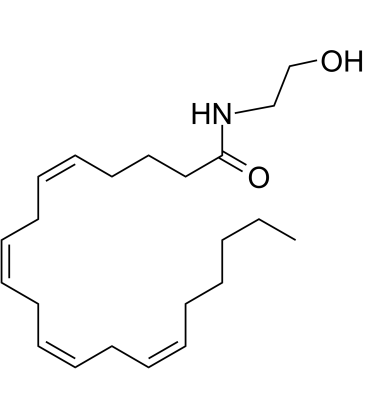
    CCCCC/C=C\C/C=C\C/C=C\C/C=C\CCCC(NCCO)=O

    Structure Classification
    Initial Source
    Envío

    Room temperature in continental US; may vary elsewhere.

    Almacenamiento

    -20°C, stored under nitrogen

    *In solvent : -80°C, 6 months; -20°C, 1 month (stored under nitrogen)

    Solvente y solubilidad
    In Vitro: 

    DMSO : 100 mg/mL (287.74 mM; Need ultrasonic; Hygroscopic DMSO has a significant impact on the solubility of product, please use newly opened DMSO)

    Preparing
    Stock Solutions
    Concentration Solvent Mass 1 mg 5 mg 10 mg
    1 mM 2.8774 mL 14.3872 mL 28.7745 mL
    5 mM 0.5755 mL 2.8774 mL 5.7549 mL
    View the Complete Stock Solution Preparation Table

    * Please refer to the solubility information to select the appropriate solvent. Once prepared, please aliquot and store the solution to prevent product inactivation from repeated freeze-thaw cycles.
    Storage method and period of stock solution: -80°C, 6 months; -20°C, 1 month (stored under nitrogen). When stored at -80°C, please use it within 6 months. When stored at -20°C, please use it within 1 month.

    • Calculadora de molaridad

    • Calculadora de dilución

    Mass (g) = Concentration (mol/L) × Volume (L) × Molecular Weight (g/mol)

    Mass
    =
    Concentration
    ×
    Volume
    ×
    Molecular Weight *

    Concentration (start) × Volume (start) = Concentration (final) × Volume (final)

    This equation is commonly abbreviated as: C1V1 = C2V2

    Concentration (start)

    C1

    ×
    Volume (start)

    V1

    =
    Concentration (final)

    C2

    ×
    Volume (final)

    V2

    In Vivo:

    Select the appropriate dissolution method based on your experimental animal and administration route.

    For the following dissolution methods, please ensure to first prepare a clear stock solution using an In Vitro approach and then sequentially add co-solvents:
    To ensure reliable experimental results, the clarified stock solution can be appropriately stored based on storage conditions. As for the working solution for in vivo experiments, it is recommended to prepare freshly and use it on the same day.
    The percentages shown for the solvents indicate their volumetric ratio in the final prepared solution. If precipitation or phase separation occurs during preparation, heat and/or sonication can be used to aid dissolution.

    • Protocol 1

      Add each solvent one by one:  10% DMSO    40% PEG300    5% Tween-80    45% Saline

      Solubility: ≥ 2.08 mg/mL (5.99 mM); Clear solution

      This protocol yields a clear solution of ≥ 2.08 mg/mL (saturation unknown).

      Taking 1 mL working solution as an example, add 100 μL DMSO stock solution (20.8 mg/mL) to 400 μL PEG300, and mix evenly; then add 50 μL Tween-80 and mix evenly; then add 450 μL Saline to adjust the volume to 1 mL.

      Preparation of Saline: Dissolve 0.9 g sodium chloride in ddH₂O and dilute to 100 mL to obtain a clear Saline solution.
    • Protocol 2

      Add each solvent one by one:  10% DMSO    90% (20% SBE-β-CD in Saline)

      Solubility: ≥ 2.08 mg/mL (5.99 mM); Clear solution

      This protocol yields a clear solution of ≥ 2.08 mg/mL (saturation unknown).

      Taking 1 mL working solution as an example, add 100 μL DMSO stock solution (20.8 mg/mL) to 900 μL 20% SBE-β-CD in Saline, and mix evenly.

      Preparation of 20% SBE-β-CD in Saline (4°C, storage for one week): 2 g SBE-β-CD powder is dissolved in 10 mL Saline, completely dissolve until clear.
    In Vivo Dissolution Calculator
    Please enter the basic information of animal experiments:

    Dosage

    mg/kg

    Animal weight
    (per animal)

    g

    Dosing volume
    (per animal)

    μL

    Number of animals

    Recommended: Prepare an additional quantity of animals to account for potential losses during experiments.
    Please enter your animal formula composition:
    %
    DMSO +
    +
    %
    Tween-80 +
    %
    Saline
    Recommended: Keep the proportion of DMSO in working solution below 2% if your animal is weak.
    The co-solvents required include: DMSO, . All of co-solvents are available by MedChemExpress (MCE). , Tween 80. All of co-solvents are available by MedChemExpress (MCE).
    Calculation results:
    Working solution concentration: mg/mL
    Method for preparing stock solution: mg drug dissolved in μL  DMSO (Stock solution concentration: mg/mL).

    *In solvent : -80°C, 6 months; -20°C, 1 month (stored under nitrogen)

    The concentration of the stock solution you require exceeds the measured solubility. The following solution is for reference only. If necessary, please contact MedChemExpress (MCE).
    Method for preparing in vivo working solution for animal experiments: Take μL DMSO stock solution, add μL . μL , mix evenly, next add μL Tween 80, mix evenly, then add μL Saline.
     If the continuous dosing period exceeds half a month, please choose this protocol carefully.
    Please ensure that the stock solution in the first step is dissolved to a clear state, and add co-solvents in sequence. You can use ultrasonic heating (ultrasonic cleaner, recommended frequency 20-40 kHz), vortexing, etc. to assist dissolution.
    Pureza y Documentación

    Purity: ≥99.0%

    Referencias

    Complete Stock Solution Preparation Table

    * Please refer to the solubility information to select the appropriate solvent. Once prepared, please aliquot and store the solution to prevent product inactivation from repeated freeze-thaw cycles.
    Storage method and period of stock solution: -80°C, 6 months; -20°C, 1 month (stored under nitrogen). When stored at -80°C, please use it within 6 months. When stored at -20°C, please use it within 1 month.

    Optional Solvent Concentration Solvent Mass 1 mg 5 mg 10 mg 25 mg
    DMSO 1 mM 2.8774 mL 14.3872 mL 28.7745 mL 71.9362 mL
    5 mM 0.5755 mL 2.8774 mL 5.7549 mL 14.3872 mL
    10 mM 0.2877 mL 1.4387 mL 2.8774 mL 7.1936 mL
    15 mM 0.1918 mL 0.9591 mL 1.9183 mL 4.7957 mL
    20 mM 0.1439 mL 0.7194 mL 1.4387 mL 3.5968 mL
    25 mM 0.1151 mL 0.5755 mL 1.1510 mL 2.8774 mL
    30 mM 0.0959 mL 0.4796 mL 0.9591 mL 2.3979 mL
    40 mM 0.0719 mL 0.3597 mL 0.7194 mL 1.7984 mL
    50 mM 0.0575 mL 0.2877 mL 0.5755 mL 1.4387 mL
    60 mM 0.0480 mL 0.2398 mL 0.4796 mL 1.1989 mL
    80 mM 0.0360 mL 0.1798 mL 0.3597 mL 0.8992 mL
    100 mM 0.0288 mL 0.1439 mL 0.2877 mL 0.7194 mL
    • No file chosen (Maximum size is: 1024 Kb)
    • If you have published this work, please enter the PubMed ID.
    • Your name will appear on the site.
    Help & FAQs
    • Do most proteins show cross-species activity?

      Species cross-reactivity must be investigated individually for each product. Many human cytokines will produce a nice response in mouse cell lines, and many mouse proteins will show activity on human cells. Other proteins may have a lower specific activity when used in the opposite species.

    Productos vistos recientemente:

    Consulta en línea

    Your information is safe with us. * Required Fields.

    Nombre del producto


    Requested Quantity *

    Nombre del solicitante *


    Saludo

    Direcciòn del E-mail *


    Número de teléfono *

    Department


    Nombre de la Organizaciòn *

    City

    Provincia

    Country or Region *


    Observaciones

    Consulta para venta a granel

    Inquiry Information

    Nombre del producto:
    Anandamide
    Cat. No.:
    HY-10863
    Cantidad:
    MCE Japan Authorized Agent: