



Anandamide-d8

Based on 1 Customer Validation
Anandamide-d8 is a deuterated labeled Anandamide. Anandamide is an endocannabinoid. Anandamide modulates both neuronal and immune functions through two protein-coupled cannabinoid receptors (CB1 and CB2). Anandamide can activate numerous other receptors like PPARS, TRPV1, and GPR18/GPR55. Anandamide also has potential anti-fungal and anti-inflammatory activities. Anandamide can be used for the research of Alzheimer’s disease (AD) and ulcerative colitis.
For research use only. We do not sell to patients.
- Purity : 99.9%
- CAS No.: 924894-98-4
- Formula: C22H29D8NO2
- Molecular Weight:355.58
-
Storage:
Solution, -20°C, 2 years


To place orders, for customer services and technical support, please contact: MedChemExpress USA
Tel: 609-228-6898 E-mail: [email protected] [email protected]


-
 Biological Activity
-
Chemical Information
- Protocols
- Purity & Documentation
- References
-
 Help & FAQs


-
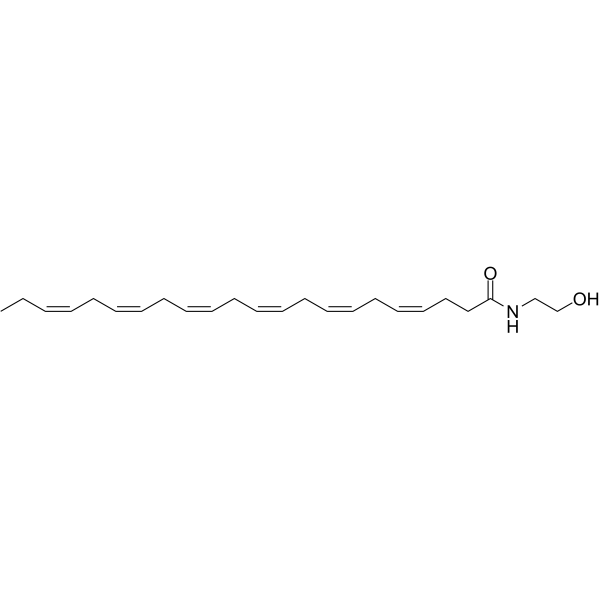
HY-100197
SynaptamideaGPCR Ligand -
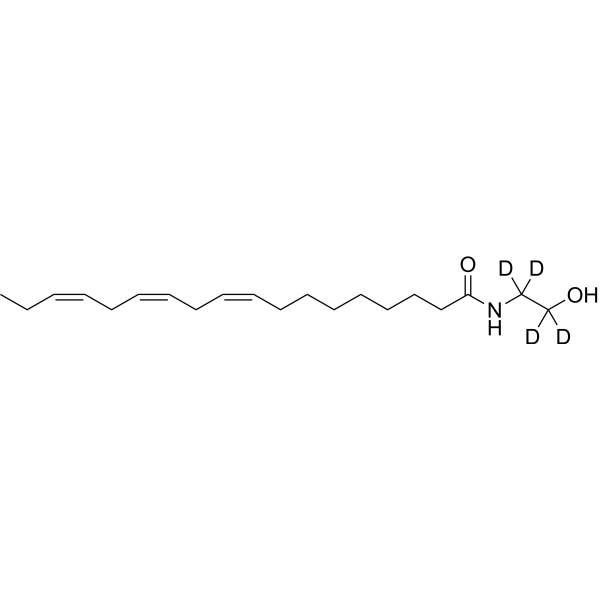
HY-139235S
N-Linolenoylethanolamine-d4Stable Isotope -

HY-130567
1-Monoarachidin2-arachidonoylglycerol derivative -
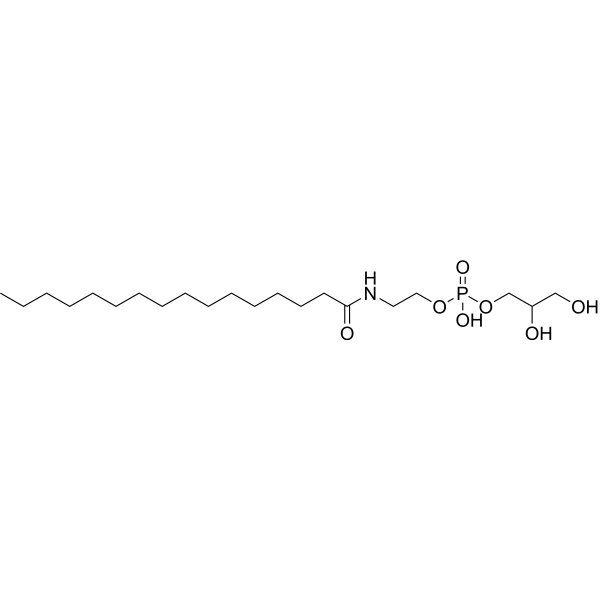
HY-112528
Glycerophospho-N-palmitoyl ethanolamineEndogenous Metabolite -
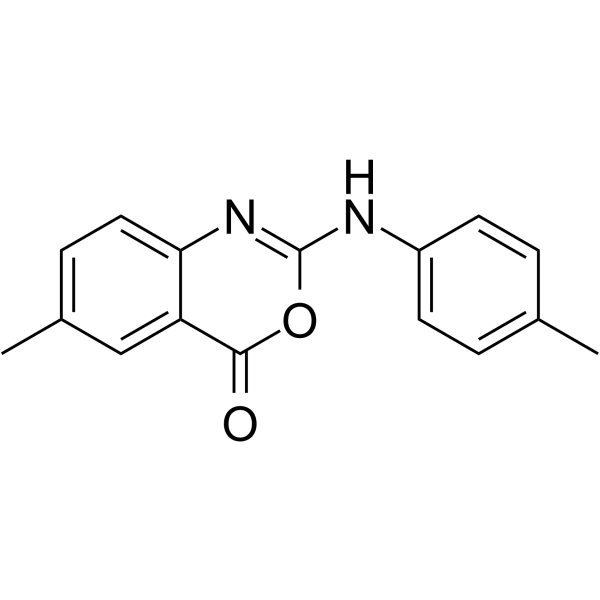
HY-121517
URB754MGL Inhibitor -
HY-121558
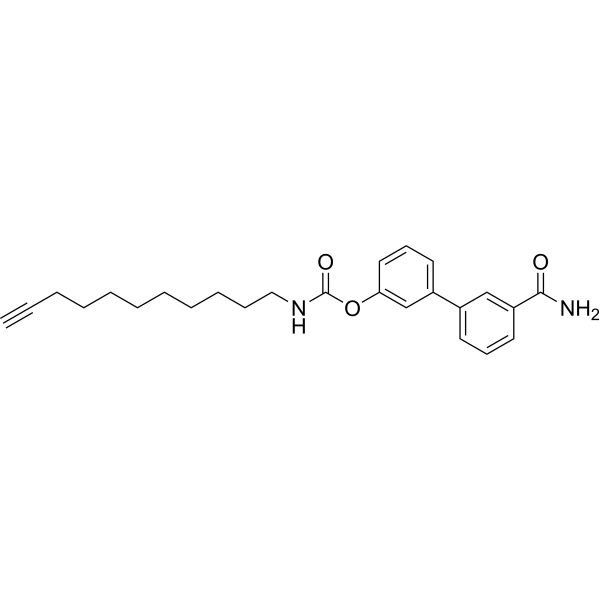
JP104FAAH Inhibitor -
HY-148909
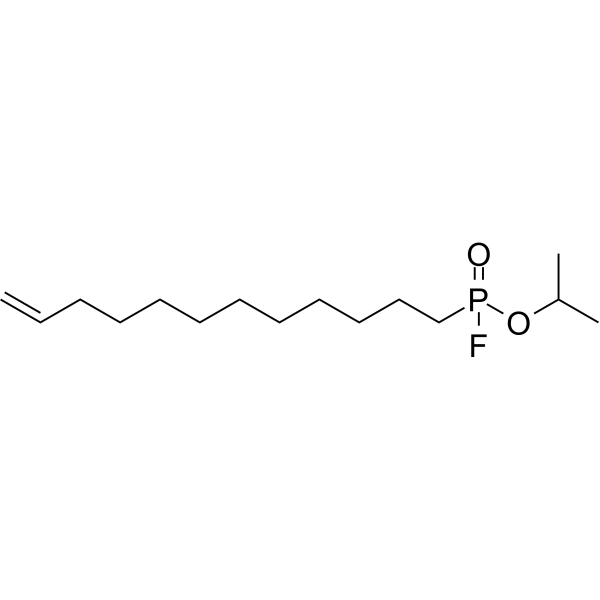
Isopropyl dodec-11-enylfluorophosphonateCB/FAAH Inhibitor -
HY-139394
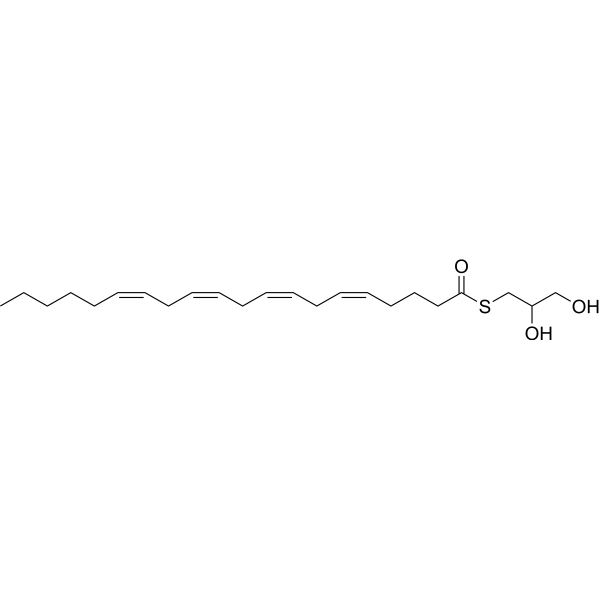
Arachidonoyl-1-thio-glycerolNonretinoid Ligand -

HY-103332S
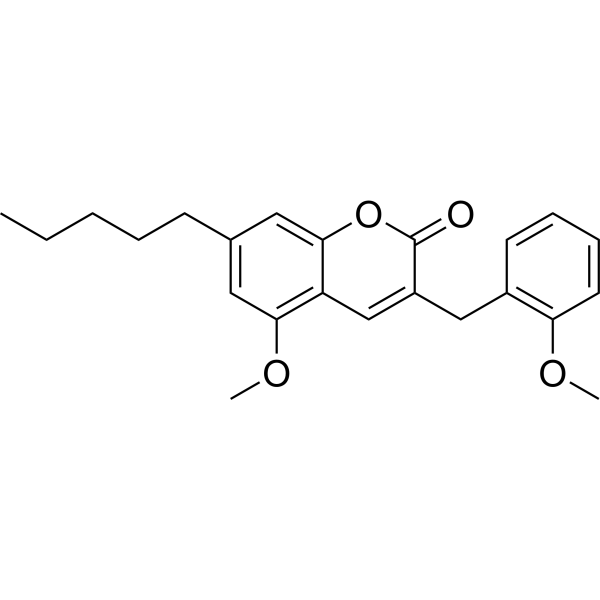
N-Arachidonylglycine-d8Stable Isotope -
HY-117754
PSB-SB1202CB1/CB2 Agonist -

HY-130357
15(S)-HETE EthanolamideCannabinoid Analog
All Endogenous Metabolite Isoforms
More

Biological Activity
Description
In Vitro
Stable heavy isotopes of hydrogen, carbon, and other elements have been incorporated into drug molecules, largely as tracers for quantitation during the drug development process. Deuteration has gained attention because of its potential to affect the pharmacokinetic and metabolic profiles of drugs[1].
Anandamide (0-250 μg/ml, 1 h) inhibits C. albicans hyphal growth and prevents hyphal adherence to epithelial cells[5].
Anandamide (0-250 μg/ml, 2 h) alters the expression of genes involved in adhesion and hyphal morphogenesis[5].
Anandamide reduces tau phosphorylation through the inhibition of the activity of protein kinases[4].
MedChemExpress (MCE) has not independently confirmed the accuracy of these methods. They are for reference only.
In Vivo
Anandamide (100 ng, ICV bilateral injection, single) partially prevents streptozotocin (STZ)-induced cognitive impairments, changes in synaptic markers and ventricle enlargement[4].
Anandamide exerts anti-inflammatory activities, attenuating the development of inflammation in a mouse model of ulcerative colitis[5].
Anandamide alleviates lipopolysaccharide (LPS)-induced neuroinflammation in rat primary microglial cultures[2].
MedChemExpress (MCE) has not independently confirmed the accuracy of these methods. They are for reference only.
Application
1. This compound can be used as a tracer
2. This compound can be used as an internal standard for quantitative analysis by NMR, GC-MS, or LC-MS.


Chemical Information
-
CAS No. 924894-98-4
-
Unlabeled CAS 94421-68-8
-
Appearance Liquid
-
Molecular Weight 355.58
-
Formula C22H29D8NO2
-
Color Colorless to light yellow
-
SMILES
CCCCC/C([2H])=C([2H])\C/C([2H])=C([2H])\C/C([2H])=C([2H])\C/C([2H])=C([2H])\CCCC(NCCO)=O
-
Synonyms
AEA-d8
-
Shipping
Room temperature in continental US; may vary elsewhere.
-
Storage
Solution, -20°C, 2 years


Purity & Documentation
-
Data Sheet (273 KB)
-
SDS (547 KB)
- English - EN (547 KB)
- Français - FR (547 KB)
- Deutsch - DE (547 KB)
- Norwegian - NO (547 KB)
- Español - ES (547 KB)
- Swedish - SV (547 KB)
- Italian - IT (547 KB)
- Korean - KR (547 KB)
- Portuguese - PT (547 KB)
-
Handling Instructions (2659 KB)
References
[1]. Russak EM, et al. Impact of Deuterium Substitution on the Pharmacokinetics of Pharmaceuticals. Ann Pharmacother. 2019 Feb;53(2):211-216. [Content Brief]
[2]. Malek N, et al. Anandamide, Acting via CB2 Receptors, Alleviates LPS-Induced Neuroinflammation in Rat Primary Microglial Cultures. Neural Plast. 2015;2015:130639. [Content Brief]
[3]. Moreira-Silva D, et al. Anandamide Effects in a Streptozotocin-Induced Alzheimer's Disease-Like Sporadic Dementia in Rats. Front Neurosci. 2018 Sep 21;12:653. [Content Brief]
[4]. Troy-Fioramonti S, et al. Acute activation of cannabinoid receptors by Anandamide reduces gastrointestinal motility and improves postprandial glycemia in mice. Diabetes. 2015 Mar;64(3):808-18. [Content Brief]
[5]. Sionov RV, et al. Anandamide prevents the adhesion of filamentous Candida albicans to cervical epithelial cells. Sci Rep. 2020 Aug 13;10(1):13728. [Content Brief]
[6]. Pflüger-Müller B, et al. The endocannabinoid anandamide has an anti-inflammatory effect on CCL2 expression in vascular smooth muscle cells. Basic Res Cardiol. 2020 Apr 22;115(3):34. [Content Brief]

Calculators
Concentration (start) × Volume (start) = Concentration (final) × Volume (final)


Anandamide-d8 Related Classifications
HY-10863S Related Classifications
 Powered by Bioz