



MMP
Matrix metalloproteinases
MMPs (Matrix metalloproteinases) are zinc-dependent endopeptidases. The MMPs belong to a larger family of proteases known as the metzincin superfamily. MMPs are capable of degrading all kinds of extracellular matrix proteins, but also can process a number of bioactive molecules. They are known to be involved in the cleavage of cell surface receptors, the release of apoptotic ligands and chemokine/cytokine inactivation. MMPs are also thought to play a major role on cell behaviors such as cell proliferation, migration, differentiation, angiogenesis, apoptosis, and host defense. MMP-2 and MMP-9 are thought to be important in metastasis. MMP-1 is thought to be important in rheumatoid arthritis and osteoarthritis. Recent data suggests active role of MMPs in the pathogenesis of Aortic Aneurysm. Excess MMPs degrade the structural proteins of the aortic wall. Disregulation of the balance between MMPs and TIMPs is also a characteristic of acute and chronic cardiovascular diseases.
MMP Isoform Specific Products
-
MMP-1
(63)
View all products
-
MMP-2
(145)
View all products
-
MMP-3
(56)
View all products
-
MMP-8
(31)
View all products
-
MMP-9
(184)
View all products
-
MMP-13
(54)
View all products
-
MMP-14
(23)
View all products
-
MMP-17
(3)
View all products
-
ADAM10
(9)
View all products
-
ADAM17
(10)
View all products
-
MMP-7
(23)
View all products
-
MMP-12
(18)
View all products
-
MMP-10
(8)
View all products
-
MMP
(436)
View all products
-
ADAM8
(1)
View all products
-
MMP-19
(1)
View all products
All Product Categories
-
MMP Inhibitors
(593)
View all products
-
MMP Agonists
(2)
View all products
-
MMP Antagonist
(1)
View all products
-
MMP Activators
(35)
View all products
-
MMP Modulators
(3)
View all products
-
MMP Chemicals
(2)
View all products
-
MMP Inducers
(13)
View all products
-
MMP Degrader
(1)
View all products
-
MMP Controls
(5)
View all products
-
MMP Substrates
(14)
View all products
-
MMP Ligands
(3)
View all products
-
Matrix Metalloproteinases Proteins
(41)
View all products
-
MMP-1 Proteins
(2)
View all products
-
MMP-2 Proteins
(7)
View all products
-
MMP-3 Proteins
(2)
View all products
-
MMP-7 Proteins
(2)
View all products
-
MMP-10 Proteins
(1)
View all products
-
MMP-12 Proteins
(2)
View all products
-
MMP-8 Proteins
(7)
View all products
-
MMP-9 Proteins
(11)
View all products
-
MMP-13 Proteins
(1)
View all products
-
MMP-14 Proteins
(1)
View all products
-
ADAM8 Proteins
(4)
View all products
-
ADAM10 Proteins
(1)
View all products
-
ADAM17/TACE Proteins
(3)
View all products
-
MMP Related Products (791)
Related Products (791)

-
Recombinant Proteins (49)
-
Antibodies (15)
-
MMP Isoform Comparison
-
MMP12-IN-3
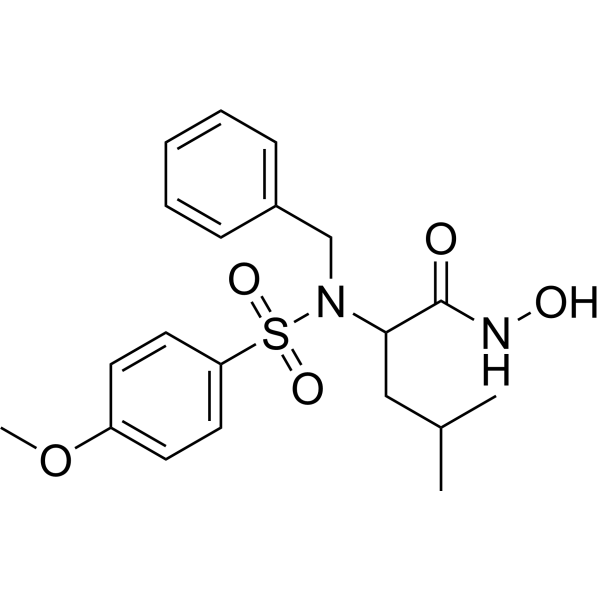 0 ImagesCat. No.: HY-130391CAS No.: 208663-26-7MMP12-IN-3 (compound 32) is a potent MMP12 inhibitor with an IC50 value of 4.9 nM. MMP12-IN-3 has the potential for the research of chronic respiratory diseases such as emphysema.


-
cis-ACCP
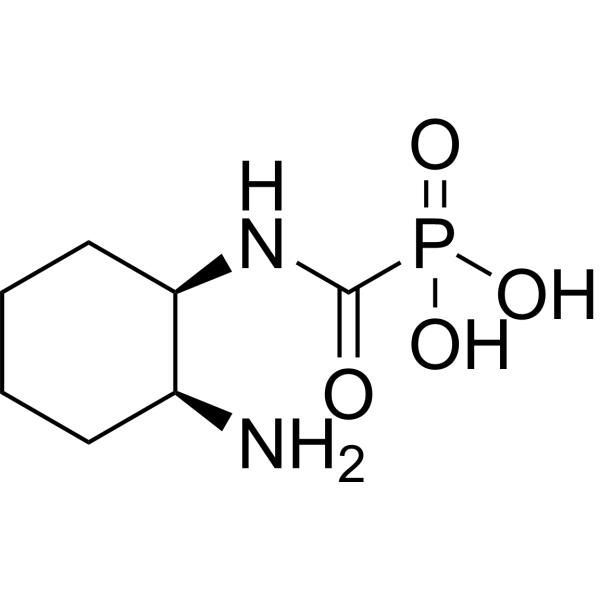 0 ImagesCat. No.: HY-131417CAS No.: 777075-44-2
-
Edaravone-d5
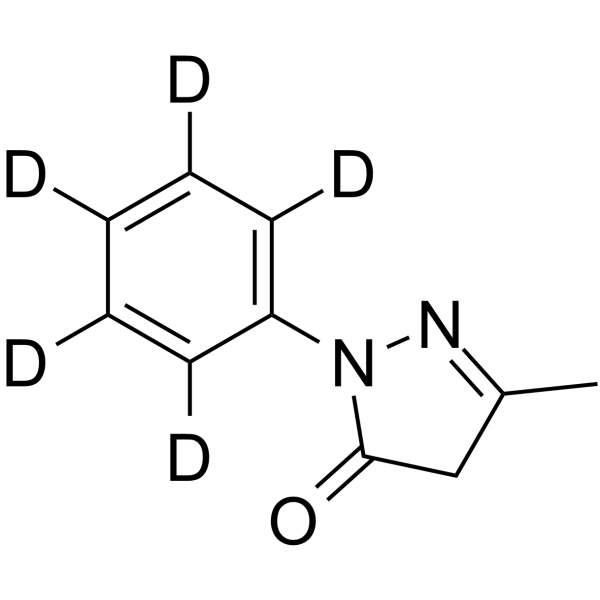 0 ImagesSynonyms: MCI-186-d5Edaravone-d5 is a deuterium labeled Edaravone. Edaravone is a strong novel free radical scavenger, and inhibits MMP-9-related brain hemorrhage in rats treated with tissue plasminogen activator.
-
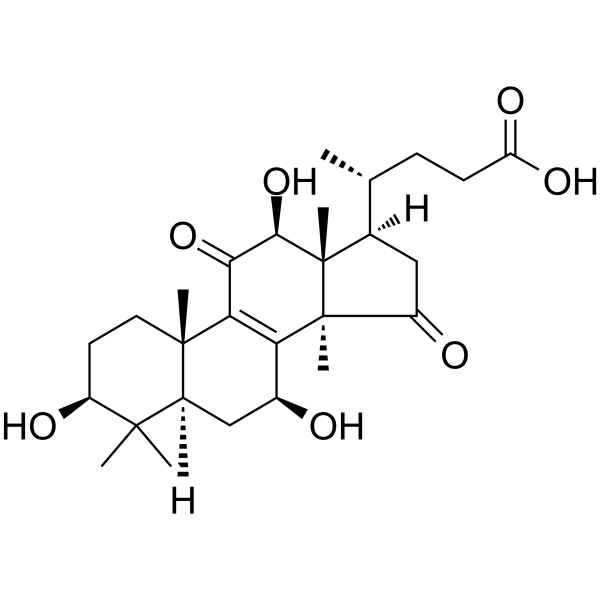
Palmitoyl tripeptide-5
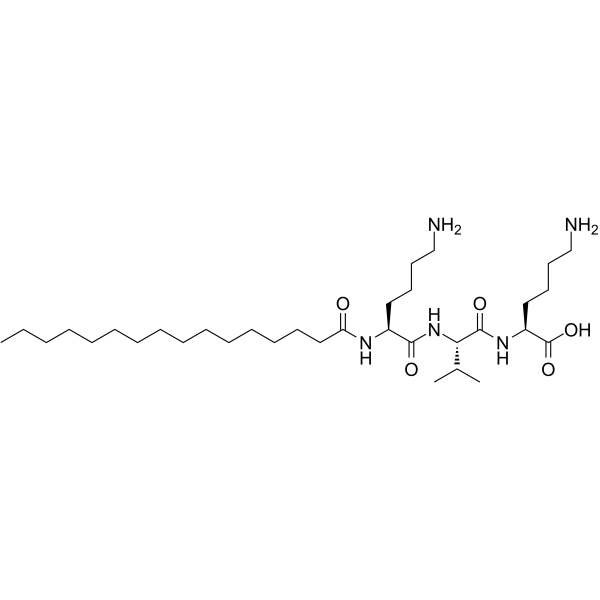 0 ImagesCat. No.: HY-P5250CAS No.: 623172-55-4Palmitoyl tripeptide-5 is a bioactive peptide with anti-aging effect and has been reported used as a cosmetic ingredient.
-
Methylisothiazolinone hydrochloride
 0 ImagesMethylisothiazolinone hydrochloride is a bacterial and fungal inhibitor and preservative, as well as a sensitizer. Methylisothiazolinone hydrochloride can activate matrix metalloproteinases (MMPs) in human bronchial epithelial cells to induce apoptosis and inflammatory response. Methylisothiazolinone hydrochloride can promote the development of atopic dermatitis in mice by disrupting Th2/Th17 related immune responses. Methylisothiazolinone hydrochloride can cause mitochondrial damage in the endothelium of rat cerebral blood vessels.
-
RANKL-IN-1
 0 ImagesCat. No.: HY-175703CAS No.: 3108878-05-0RANKL-IN-1 is a selective and orally active Receptor Activator of Nuclear Factor-κ B Ligand (RANKL) inhibitor with a KD value of 7.6 μM. RANKL-IN-1 exhibits inhibitory activity and selectivity against osteoclastogenesis with an IC50 value of 0.07 μM and SI of 82.57. RANKL-IN-1binds directly to RANKL and blocks the RANKL-induced activation of the NF-κB and MAPK pathways. RANKL-IN-1 can be used for the research of metabolic disease, such as osteoporosis.
-
Sotetsuflavone
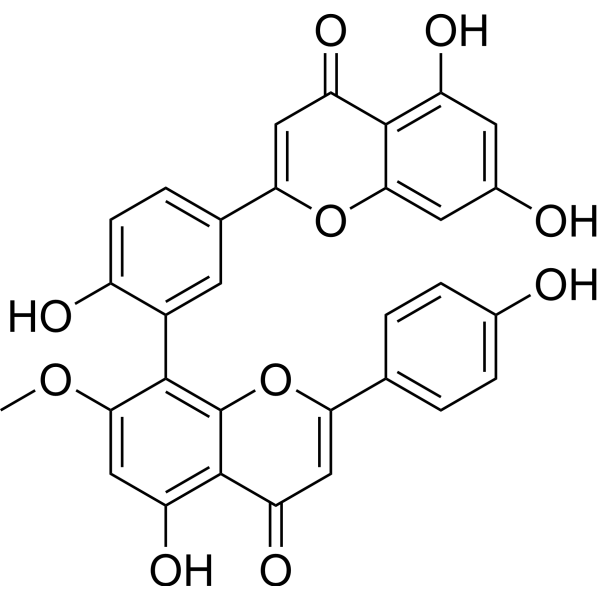 0 ImagesSotetsuflavone is a flavonoid that can be isolated from Cycas revolute. Sotetsuflavone inhibits phosphorylation of PI3K, Akt, mTOR, JNK, and p38 MAPK; modulates expression of Cyclin D1, CDK4, Bcl-2, Bax, cleaved caspases 3/9, MMP-9, TGF-β, STAT3, and β-catenin. Sotetsuflavone induces G0/G1 cell cycle arrest, apoptosis, autophagy, and intracellular ROS elevation, inhibits cancer cell proliferation. Sotetsuflavone inhibits tumor growth in mouse tumor xenograft models. Sotetsuflavone can be used for the research of non-small cell lung cancer and Crohn’s disease.
-
AG01
 0 ImagesCat. No.: HY-P991664AG01 is a monoclonal antibody against progranulin (GP88). AG01 inhibits triple-negative breast cancer (TNBC) cell proliferation and migration, reduces the expression of phosphorylated protein kinases p-Src, p-AKT, and p-ERK, and reduces the expression of oncogenic proteins such as Axl, c-MET, HIF-1α, and VEGF. AG01 inhibits tumor growth and Ki67 expression in a TNBC xenograft mouse model. AG01 can be used in the research of TNBC and other cancers.
-
MMP2-IN-3
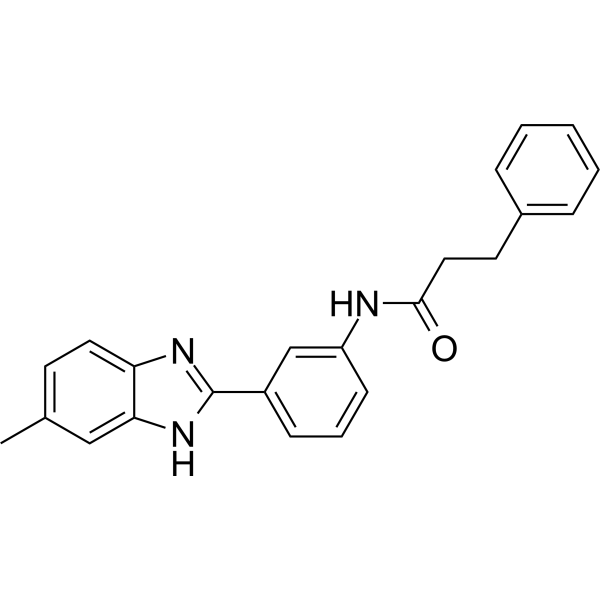 0 ImagesMMP2-IN-3 (compound 2) is a potent MMP-2 (matrix metalloproteinases) inhibitor, with an IC50 of 31 μM. MMP2-IN-3 also shows inhibitory activity against MMP-9 and MMP-8, with IC50 values of 26.6, and 32 μM, respectively.
-
TAK-756
 0 ImagesCat. No.: HY-169949CAS No.: 3097983-41-7TAK-756 is a selective transforming growth factor β-activated kinase 1 (TAK1) inhibitor with a target pIC50 of 8.6. TAK-756 can inhibit TAK1 autophosphorylation and downstream NF-κB phosphorylation, suppress the production of inflammatory and catabolic factors such as MMP-3 and IL-6. TAK-756 exhibits anti-inflammatory effects in a rat joint inflammation model. TAK-756 can be used for the research of inflammatory joint disease, osteoarthritis.
-
MMP-9-IN-13
 0 ImagesMMP-9-IN-13 (Example 1) is a selective inhibitor of human MMP9 with an IC50 value of 0.02 nM. MMP-9-IN-13 can be used in the research of ocular surface.
-
AZD-1236
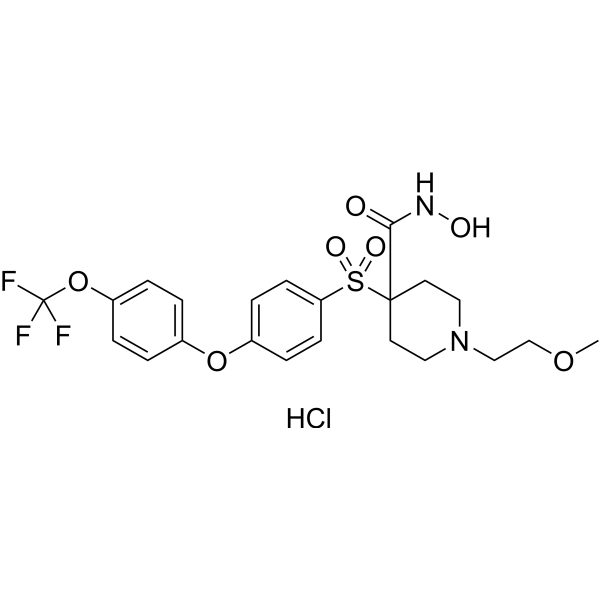
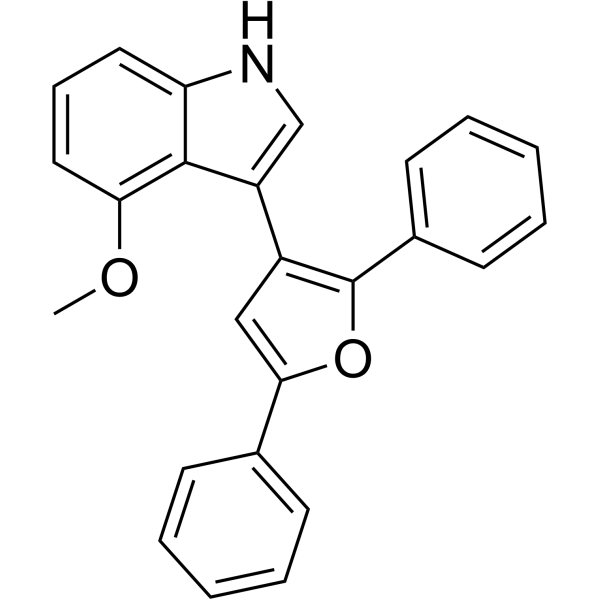
 0 ImagesAZD-1236 is a dual inhibitor of MMP-9 and MMP-12. AZD-1236 selectively inhibits the activities of MMP-9 and MMP-12. AZD-1236 regulates biomarkers, reduces elastin degradation, and decreases lymphocyte levels in sputum and blood. AZD-1236 can be used for research related to chronic obstructive pulmonary disease.

-
BPU
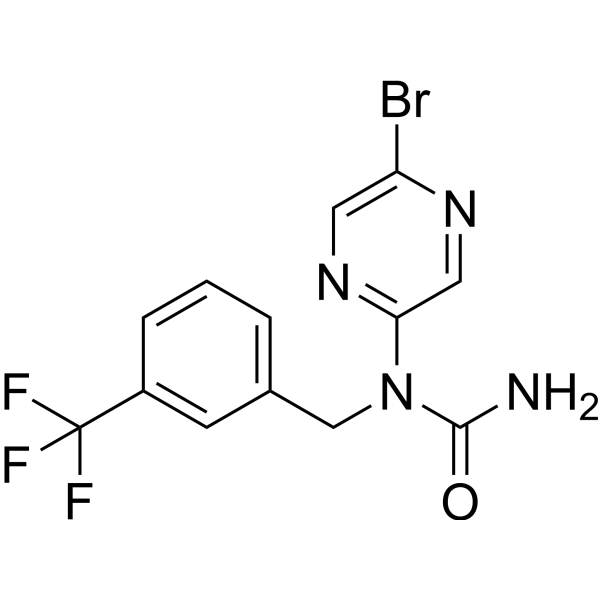 0 ImagesBPU arrests cell cycle progression in the sub-G1 phase. BPU is an anticancer agent through inhibiting blood vessel formation in tumor tissues.
-
Hepcidin-1 (mouse)
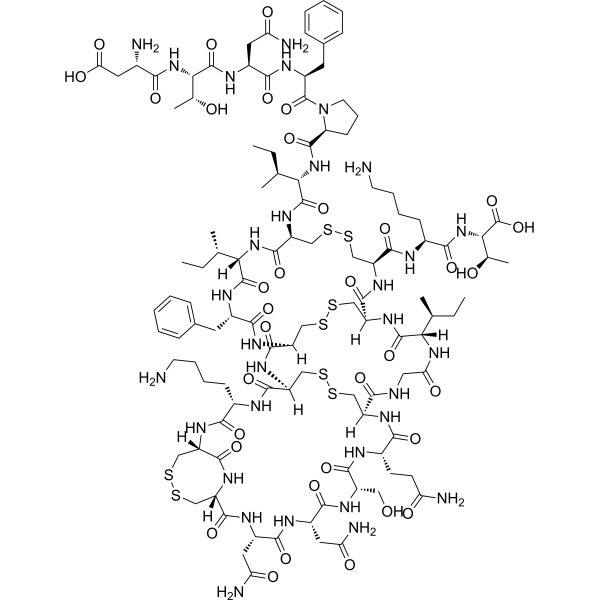 0 ImagesCat. No.: HY-P4373CAS No.: 1676104-75-8Hepcidin-1 (mouse) is an endogenous peptide hormone involved in the regulation of iron homeostasis. Hepcidin-1 (mouse) upregulates mRNA levels of TRAP, cathepsin K, and MMP-9 and increases TRAP-5b protein secretion. Hepcidin-1 (mouse) downregulates the level of FPN1 protein and increases intracellular iron. Hepcidin-1 (mouse) facilitates osteoclast differentiation.




