



Mirtazapine
Based on 1 publication(s) in Google Scholar
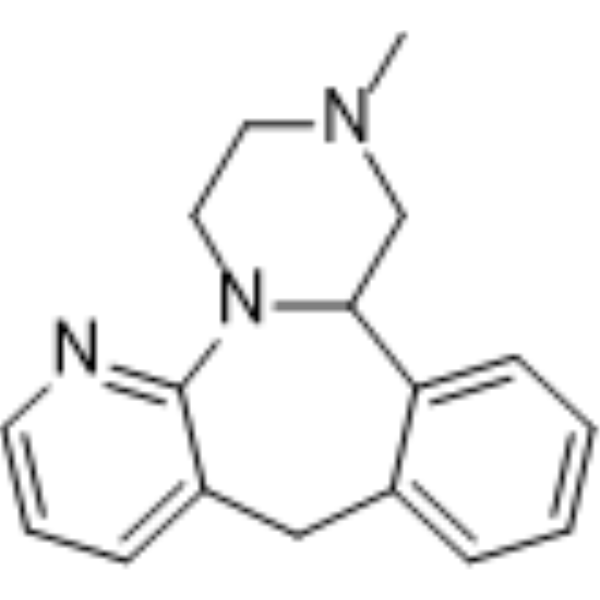
Mirtazapine (Org3770) is a potent and orally active noradrenergic and specific serotonergic antidepressant (NaSSA) agent. Mirtazapine is also a 5-HT2, 5-HT3, histamine H1 receptor and α2-adrenoceptor antagonist with pKi values of 8.05, 8.1, 9.3 and 6.95, respectively.
For research use only. We do not sell to patients.
- Purity : 99.94%
- CAS No.: 85650-52-8
- Formula: C17H19N3
- Molecular Weight:265.36
-
Storage:Powder -20°C, 3 years , 4°C, 2 years ; In solvent -80°C, 2 years , -20°C, 1 year

To place orders, for customer services and technical support, please contact: MedChemExpress USA
Tel: 609-228-6898 E-mail: [email protected] [email protected]


-
 Biological Activity
-
Chemical Information
-
Solvent & Solubility
- Purity & Documentation
- References
-
 Help & FAQs


-
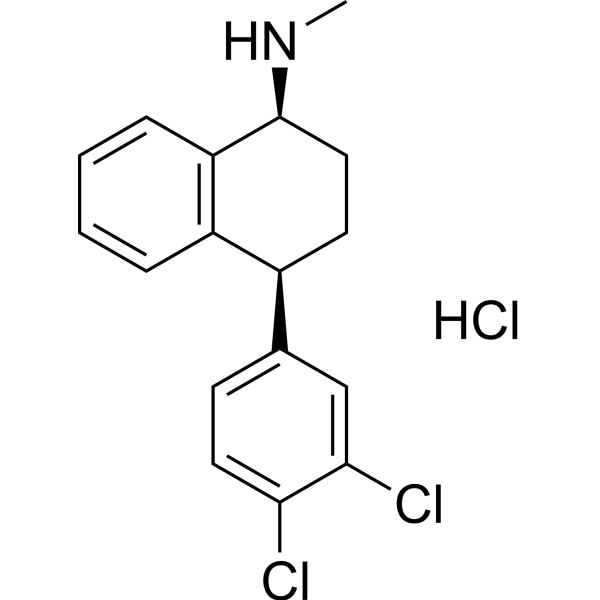
HY-B0176A
Sertraline hydrochlorideSSRI -
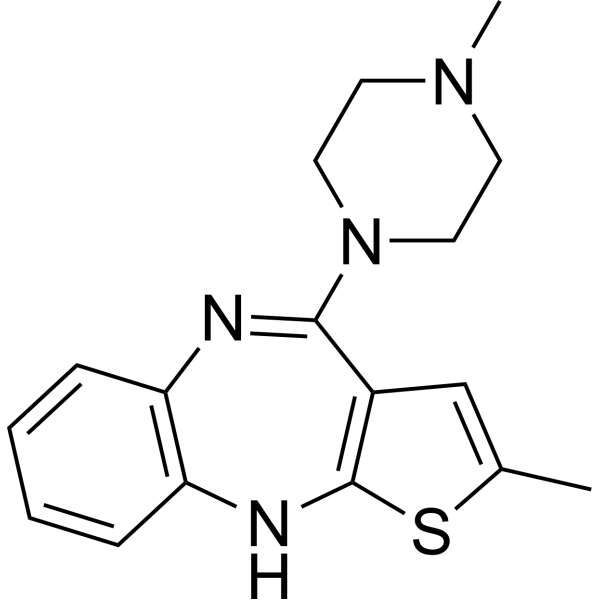
HY-14541
Olanzapine5-HT2/D1/D2 Antagonist -
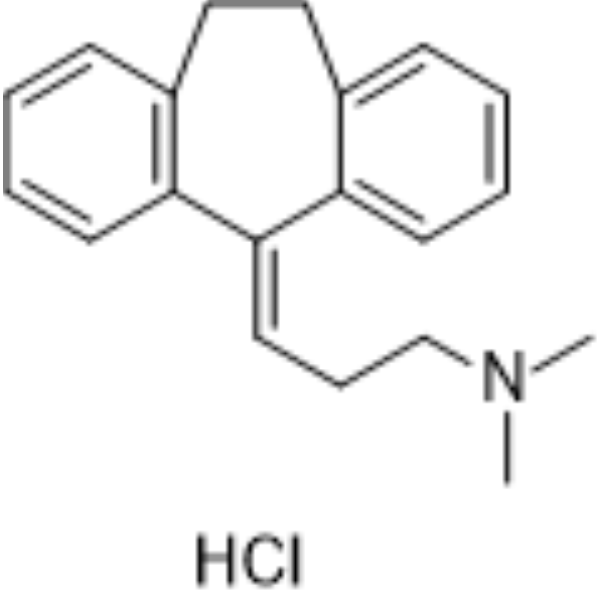
HY-B0527A
Amitriptyline hydrochlorideSERT/NET Inhibitor -
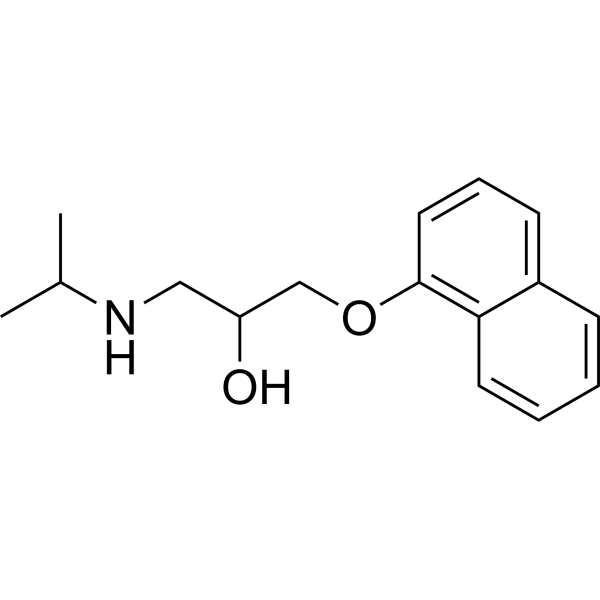
HY-B0573B
Propranololβ-Adrenoceptor Blocker -
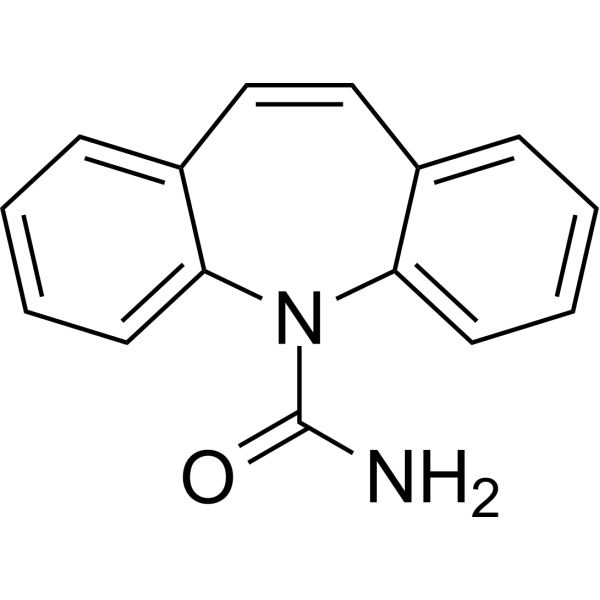
HY-B0246
CarbamazepineAnticonvulsant -
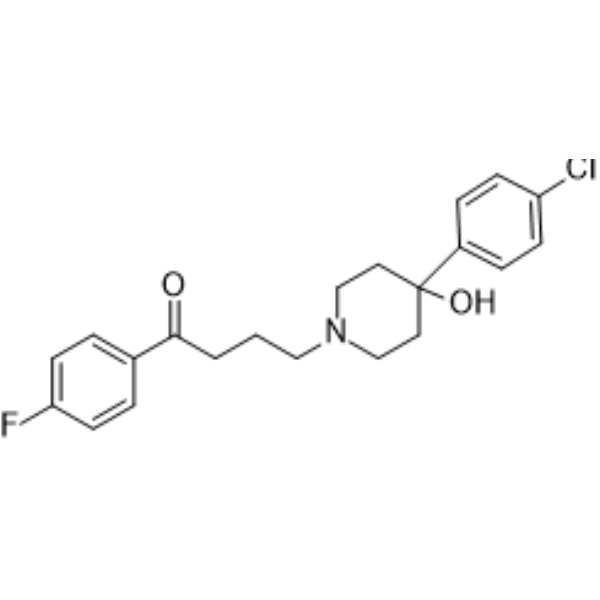
HY-14538
HaloperidolDopamine Receptor Antagonist -
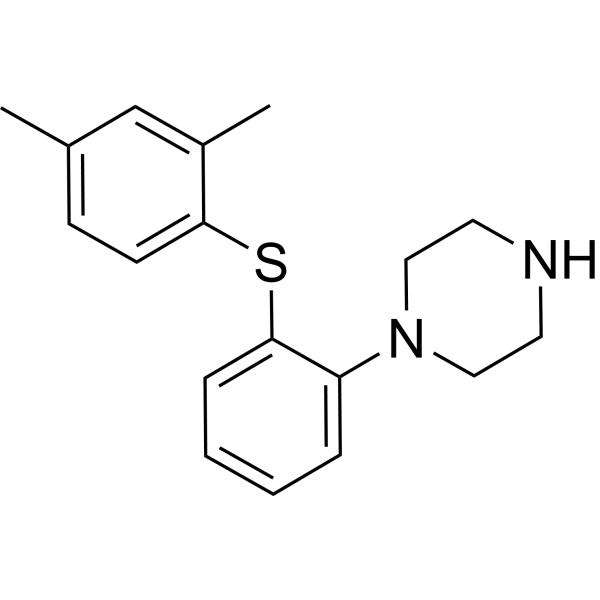
HY-15414
VortioxetineSerotonin Transporter Inhibitor -
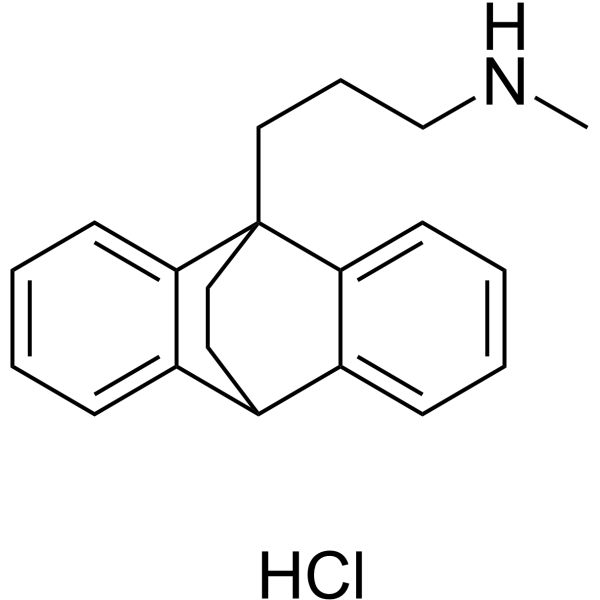
HY-B0444
Maprotiline hydrochlorideAutophagy Inducer -
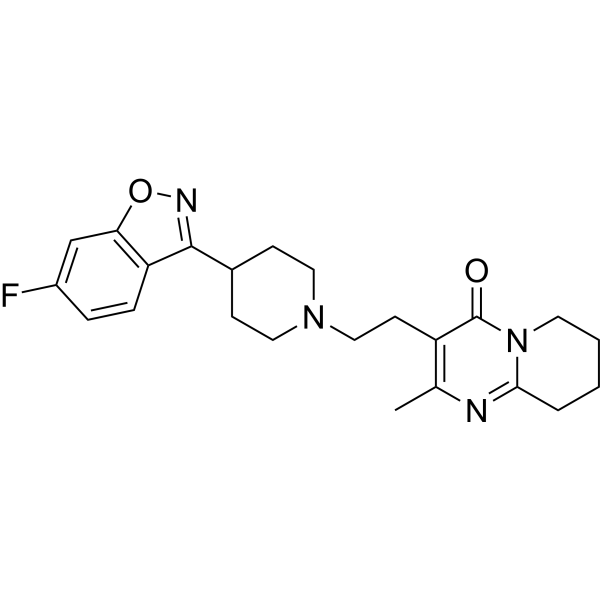
HY-11018
Risperidone5-HT2 Receptor Blocker -
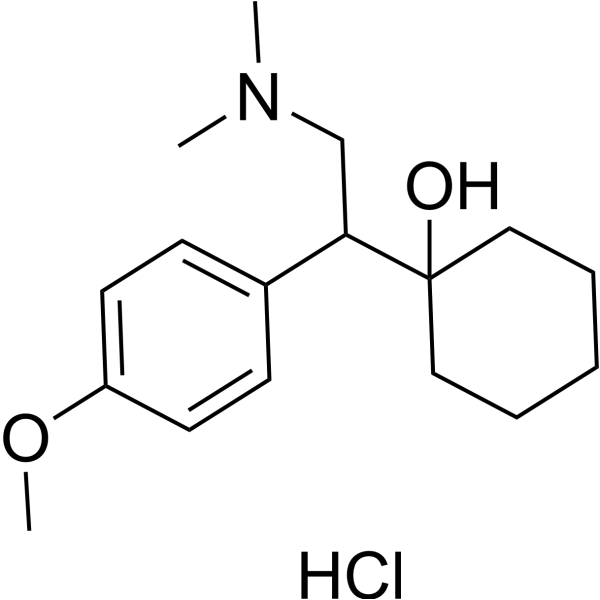
HY-B0196A
Venlafaxine hydrochlorideSerotonin/Norepinephrine Reuptake Inhibitor -
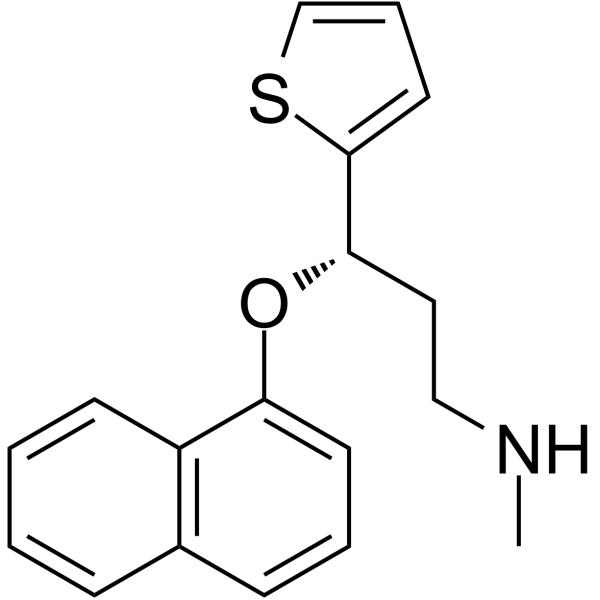
HY-B0161
DuloxetineSerotonin-norepinephrine Reuptake Inhibitor -
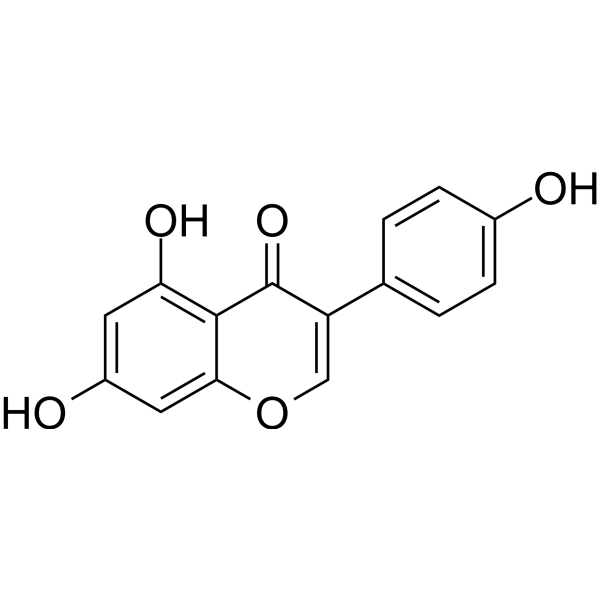
HY-14596
GenisteinAutophagy Inducer
Publications Citing Use of MedChemExpress (MCE) Mirtazapine
MoreAll 5-HT Receptor Isoforms
MoreAll Histamine Receptor Isoforms
MoreAll Adrenergic Receptor Isoforms
More

Biological Activity
Description
IC50 & Target
[2]|
5-HT3 Receptor 8.1 (pKi) |
5-HT2 Receptor 8.05 (pKi) |
H1 Receptor 9.3 (pKi) |
α2-adrenergic receptor 6.95 (pKi) |
In Vitro
Mirtazapine can antagonize the adrenergic α2-autoreceptors and α2-heteroreceptors as well as block 5-HT2 and 5-HT3 receptors. Mirtazapine enhances the release of norepinephrine and 5-HT1A-mediated serotonergic transmission[1].
The cytochrome (CYP) P450 isoenzymes CYP1A2, CYP2D6, and CYP3A4 are mainly responsible for Mirtazapine's metabolism[1].
Mirtazapine (10 μM) significantly reduces activation-induced release of cytokine/chemokine mediators from human CD14+ monocytes in vitro[3].
MedChemExpress (MCE) has not independently confirmed the accuracy of these methods. They are for reference only. .
In Vivo
Mirtazapine treatment inhibits hepatic macrophage/monocyte activation, decreases hepatic macrophage/monocyte-derived pro-inflammatory cytokine (e.g., TNFα) and chemokine (e.g., CXCL1 and CXCL2) production, suppression of Con A-induced increases in the hepatic expression of the neutrophil relevant endothelial cell adhesion molecule ICAM-1, with the resultant significant reduction in neutrophil recruitment into the liver[3].
MedChemExpress (MCE) has not independently confirmed the accuracy of these methods. They are for reference only.
-
Animal Model:Male C57BL/6 mice (8-10 week old) treated with concanavalin A (Con A)[3]
-
Dosage:1 mg/kg, 10 mg/kg, and 20 mg/kg
-
Administration:Intraperitoneal injection; once
-
Result:Strikingly and dose-dependently inhibited Con A-induced liver injury.


Chemical Information
-
CAS No. 85650-52-8
-
Appearance Solid
-
Molecular Weight 265.36
-
Formula C17H19N3
-
Color White to off-white
-
SMILES
CN1CC2C3=CC=CC=C3CC4=CC=CN=C4N2CC1
-
Synonyms
Org3770; 6-Azamianserin
-
Shipping
Room temperature in continental US; may vary elsewhere.
-
Storage
Powder -20°C 3 years 4°C 2 years In solvent -80°C 2 years -20°C 1 year


Publications (1)
-
Journal Impact Factor
-
Most Recent
-
Cell Commun Signal
Tricyclic antidepressants induce liver inflammation by targeting NLRP3 inflammasome activation. [Abstract]2023 May 25;21(1):123. PMID: 37231437


Solvent & Solubility
In Vitro:
DMSO : 50 mg/mL (188.42 mM; Need ultrasonic; Hygroscopic DMSO has a significant impact on the solubility of product, please use newly opened DMSO)
H2O : < 0.1 mg/mL (insoluble)
Please refer to the solubility information to select the appropriate solvent. Once prepared, please aliquot and store the solution to prevent product inactivation from repeated freeze-thaw cycles.
Storage method and period of stock solution: -80°C, 2 years; -20°C, 1 year. When stored at -80°C, please use it within 2 years. When stored at -20°C, please use it within 1 year.
Please refer to the solubility information to select the appropriate solvent. Once prepared, please aliquot and store the solution to prevent product inactivation from repeated freeze-thaw cycles.
Storage method and period of stock solution: -80°C, 2 years; -20°C, 1 year. When stored at -80°C, please use it within 2 years. When stored at -20°C, please use it within 1 year.
Concentration (start) × Volume (start) = Concentration (final) × Volume (final)
In Vivo:
Select the appropriate dissolution method based on your experimental animal and administration route.
- For the following dissolution methods, please ensure to first prepare a clear stock solution using an In Vitro approach and then sequentially add co-solvents:
- To ensure reliable experimental results, the clarified stock solution can be appropriately stored based on storage conditions. As for the working solution for In Vivo experiments, it is recommended to prepare freshly and use it on the same day.
- The percentages shown for the solvents indicate their volumetric ratio in the final prepared solution. If precipitation or phase separation occurs during preparation, heat and/or sonication can be used to aid dissolution.
Add each solvent one by one: 10% DMSO 40% PEG300 5% Tween-80 45% Saline
Solubility: ≥ 2.5 mg/mL (9.42 mM); Clear solution
This protocol yields a clear solution of ≥ 2.5 mg/mL (saturation unknown).
Taking 1 mL working solution as an example, add 100 μL DMSO stock solution (25.0 mg/mL) to 400 μL PEG300, and mix evenly; then add 50 μL Tween-80 and mix evenly; then add 450 μL Saline to adjust the volume to 1 mL.
Preparation of Saline: Dissolve 0.9 g sodium chloride in ddH₂O and dilute to 100 mL to obtain a clear Saline solution.
Add each solvent one by one: 10% DMSO 90% (20% SBE-β-CD in Saline)
Solubility: ≥ 2.5 mg/mL (9.42 mM); Clear solution
This protocol yields a clear solution of ≥ 2.5 mg/mL (saturation unknown).
Taking 1 mL working solution as an example, add 100 μL DMSO stock solution (25.0 mg/mL) to 900 μL 20% SBE-β-CD in Saline, and mix evenly.
Preparation of 20% SBE-β-CD in Saline (4°C, storage for one week): 2 g SBE-β-CD powder is dissolved in 10 mL Saline, completely dissolve until clear.
In Vivo Dissolution Calculator
Please enter the basic information of animal experiments:
-
-
-
-
Recommended: Prepare an additional quantity of animals to account for potential losses during experiments.
Please enter your animal formula composition:
-
%DMSO +
Recommended: Keep the proportion of DMSO in working solution below 2% if your animal is weak.
-
%+
-
+%Tween-80 + +
-
%Saline +
The co-solvents required include: DMSO, . All of co-solvents are available by MedChemExpress (MCE). , Tween 80. All of co-solvents are available by MedChemExpress (MCE).
Working solution concentration: 0.22 mg/mL
Method for preparing stock solution: mg drug dissolved in μL DMSO. Stock solution concentration: mg/mL.
1. Take μL DMSO stock solution;
2. Add μL .
μL , mix evenly;
3. Then add μL Tween 80, mix evenly;
4. Then add μL
Please ensure that the stock solution in the first step is dissolved to a clear state, and add co-solvents in sequence. You can use ultrasonic heating (ultrasonic cleaner, recommended frequency 20-40 kHz), vortexing, etc. to assist dissolution.


Purity & Documentation
-
Data Sheet (283 KB)
-
SDS (393 KB)
- English - EN (393 KB)
- Français - FR (393 KB)
- Deutsch - DE (393 KB)
- Norwegian - NO (393 KB)
- Español - ES (393 KB)
- Swedish - SV (393 KB)
- Italian - IT (393 KB)
- Korean - KR (393 KB)
- Portuguese - PT (393 KB)
-
Handling Instructions (2659 KB)
References
[1]. S A Anttila, et al. A review of the pharmacological and clinical profile of mirtazapine. CNS Drug Rev. Fall 2001;7(3):249-64. [Content Brief]
[2]. T H de Boer, et al. Neurochemical and autonomic pharmacological profiles of the 6-aza-analogue of mianserin, Org 3770 and its enantiomers. Neuropharmacology. 1988 Apr;27(4):399-408. [Content Brief]
[3]. Wagdi Almishri, et al. The Antidepressant Mirtazapine Inhibits Hepatic Innate Immune Networks to Attenuate Immune-Mediated Liver Injury in Mice. Front Immunol. 2019 Apr 12;10:803. [Content Brief]


Complete Stock Solution Preparation Table
Please refer to the solubility information to select the appropriate solvent. Once prepared, please aliquot and store the solution to prevent product inactivation from repeated freeze-thaw cycles.
Storage method and period of stock solution: -80°C, 2 years; -20°C, 1 year. When stored at -80°C, please use it within 2 years. When stored at -20°C, please use it within 1 year.
| Optional Solvent | Concentration Solvent Mass | 1 mg | 5 mg | 10 mg | 25 mg |
|---|---|---|---|---|---|
| DMSO | 1 mM | 3.7685 mL | 18.8423 mL | 37.6847 mL | 94.2116 mL |
| 5 mM | 0.7537 mL | 3.7685 mL | 7.5369 mL | 18.8423 mL | |
| 10 mM | 0.3768 mL | 1.8842 mL | 3.7685 mL | 9.4212 mL | |
| 15 mM | 0.2512 mL | 1.2562 mL | 2.5123 mL | 6.2808 mL | |
| 20 mM | 0.1884 mL | 0.9421 mL | 1.8842 mL | 4.7106 mL | |
| 25 mM | 0.1507 mL | 0.7537 mL | 1.5074 mL | 3.7685 mL | |
| 30 mM | 0.1256 mL | 0.6281 mL | 1.2562 mL | 3.1404 mL | |
| 40 mM | 0.0942 mL | 0.4711 mL | 0.9421 mL | 2.3553 mL | |
| 50 mM | 0.0754 mL | 0.3768 mL | 0.7537 mL | 1.8842 mL | |
| 60 mM | 0.0628 mL | 0.3140 mL | 0.6281 mL | 1.5702 mL | |
| 80 mM | 0.0471 mL | 0.2355 mL | 0.4711 mL | 1.1776 mL | |
| 100 mM | 0.0377 mL | 0.1884 mL | 0.3768 mL | 0.9421 mL |


Mirtazapine Related Classifications
HY-B0352 Related Classifications
 Powered by Bioz