










1. Search Result
Search Result
Results for "

Gly-Gly-Pro

" in MedChemExpress (MCE) Product Catalog:

75

Inhibitors & Agonists

85

Peptides

1

Natural
Products

3

Isotope-Labeled Compounds

Cat. No. Product Name Target Research Area
  • HY-P0264
    Exendin(9-39) amide
    30+ Cited Publications

    Avexitide

    GLP Receptor Metabolic Disease
    Exendin(9-39) amide (Avexitide) is a glucagon-like peptide-1 (GLP-1) antagonist that competes with endogenous GLP-1 for binding to GLP-1 receptors, thereby antagonizing the effects of excess GLP-1 secretion. Exendin(9-39) amide can be used to study postoperative hypoglycemia (PBH) .
  • HY-P3506
    Retatrutide
    3 Publications Verification

    LY3437943

    GCGR GLP Receptor Metabolic Disease
    Retatrutide (LY3437943) is a triple agonist peptide of the glucagon receptor (GCGR), glucosedependent insulinotropic polypeptide receptor (GIPR), and glucagon-like peptide-1 receptor (GLP-1R). Retatrutide binds human GCGR, GIPR, and GLP-1R with EC50 values of 5.79, 0.0643 and 0.775 nM, respectively. Retatrutide can be used for the research of obesity .
  • HY-P3375

    IBI-362; LY-3305677; OXM-3

    GCGR GLP Receptor Metabolic Disease
    Mazdutide (IBI-362; LY-3305677) is a long-acting synthetic oxyntomodulin analog. Mazdutide is also a co-agonist of glucagon-like peptide (GLP-1R) and glucagon receptor (GCGR). Mazdutide binds human and mouse GCGR (Ki: 17.7 nM and 15.9 nM, respectively) and GLP-1R (Ki: 28.6 nM and 25.1 nM, respectively) and stimulates insulin secretion from mouse islets (EC50: 5.2 nM). Mazdutide is used in studies of obesity and type 2 diabetes (T2D) .
  • HY-13443A
    Exendin-4 acetate
    Maximum Cited Publications
    66 Publications Verification

    Exenatide acetate

    GCGR Cardiovascular Disease Metabolic Disease Cancer
    Exendin-4 acetate (Exenatide acetate), a 39 amino acid peptide, is a long-acting glucagon-like peptide-1 receptor agonist with an IC50 of 3.22 nM.
  • HY-P0119
    Lixisenatide
    2 Publications Verification

    GLP Receptor Akt MEK Apoptosis Reactive Oxygen Species (ROS) MMP Cardiovascular Disease Neurological Disease Metabolic Disease Inflammation/Immunology
    Lixisenatide is a glucagon-like peptide-1 (GLP-1) receptor agonist. Lixisenatide inhibits the inflammatory response through down regulation of pro-inflammatory cytokines, and suppresses of the Akt-MEK1/2 signaling pathway. Lixisenatide can inhibit oxidative stress, mitochondrial dysfunction and apoptosis. Lixisenatide can be used for the researches of inflammation, metabolic disease, neurological disease and cardiovascular disease, such as rheumatoid arthritis, diabetes, Alzheimer's disease and atherosclerosis .
  • HY-P3506A
    Retatrutide TFA
    3 Publications Verification

    LY3437943 TFA

    GLP Receptor GCGR Metabolic Disease
    Retatrutide (LY3437943) TFA is a triple agonist peptide of the glucagon receptor (GCGR), glucosedependent insulinotropic polypeptide receptor (GIPR), and glucagon-like peptide-1 receptor (GLP-1R). Retatrutide TFA binds human GCGR, GIPR, and GLP-1R with EC50 values of 5.79, 0.0643 and 0.775 nM, respectively. Retatrutide TFA can be used for the research of obesity .
  • HY-P1856
    Proinsulin C-peptide (human)
    1 Publications Verification

    Insulin Receptor PDGFR MAPKAPK2 (MK2) Cardiovascular Disease Metabolic Disease Inflammation/Immunology
    Proinsulin C-peptide (human) is a peptide consisting of 31 amino acids that links the A and B chains of proinsulin to ensure its correct folding. Proinsulin C-peptide (human) inhibits the high glucose-induced increase in PDGF-β receptor protein expression and the phosphorylation of p42/p44 MAP kinase. Proinsulin C-peptide (human) increases the deformability of erythrocytes derived from type 1 diabetes, inhibits insulin-induced neointimal thickening, and suppresses the proliferation of rat aortic smooth muscle cells cultured under high-glucose conditions .
  • HY-13443
    Exendin-4
    Maximum Cited Publications
    66 Publications Verification

    Exenatide

    GCGR Cardiovascular Disease Metabolic Disease Cancer
    Exendin-4 (Exenatide), a 39 amino acid peptide, is a long-acting glucagon-like peptide-1 receptor agonist with an IC50 of 3.22 nM.
  • HY-P3375A

    IBI-362 TFA; LY-3305677 TFA; OXM-3 TFA

    GCGR GLP Receptor Metabolic Disease
    Mazdutide (IBI-362; LY-3305677) TFA is a long-acting synthetic oxyntomodulin analog. Mazdutide is also a co-agonist of glucagon-like peptide (GLP-1R) and glucagon receptor (GCGR). Mazdutide TFA binds human and mouse GCGR (Ki: 17.7 nM and 15.9 nM, respectively) and GLP-1R (Ki: 28.6 nM and 25.1 nM, respectively) and stimulates insulin secretion from mouse islets (EC50: 5.2 nM). Mazdutide TFA is used in studies of obesity and type 2 diabetes (T2D) .
  • HY-P10957

    MBX 1416

    GLP Receptor Metabolic Disease
    Imapextide is a glucagon-like peptide-1 (GLP-1) receptor antagonist that can be used in hypoglycemia research .
  • HY-P10302A

    GLP Receptor Metabolic Disease Inflammation/Immunology
    GLP-1R/GIPR agonist-1 sodium is a dual GLP-1/GIP receptor agonist, with an EC50 of 0.57 nM for GLP-1R and an EC50 of 0.75 nM for GIPR. GLP-1R/GIPR agonist-1 sodium reduces food intake, inhibits weight gain, repairs islet damage, improves glucose tolerance, regulates serum lipid and liver enzyme levels, ameliorates hepatic vacuolization, reduces hepatic fat accumulation, delays the progression of hepatic fibrosis, and exhibits long-lasting hypoglycemic activity. GLP-1R/GIPR agonist-1 sodium can be used in research related to type 2 diabetes, obesity, and non-alcoholic steatohepatitis .
  • HY-P11271

    Insulin Receptor GLP Receptor Metabolic Disease
    Ribupatide is a dual gastric inhibitory polypeptide (GIP) and glucagon-like peptide 1 (GLP-1) receptor agonist. Enicepatide can be studied in antidiabetic research .
  • HY-111922

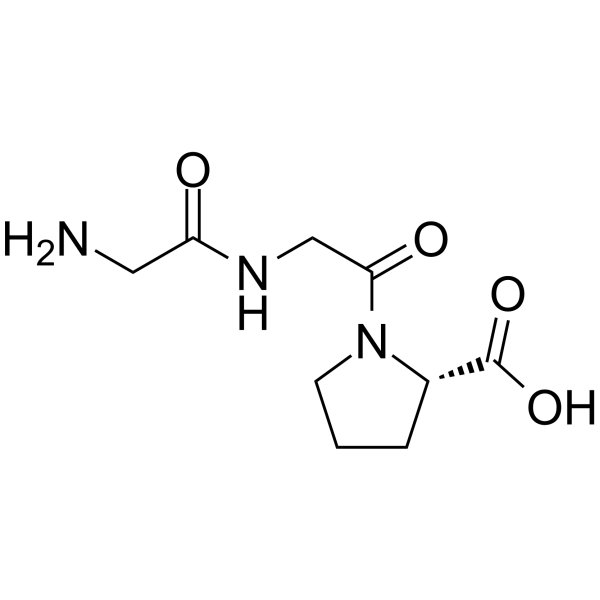
    Glycyl-Glycyl-L-Proline; Gly-Gly-Pro

    Peptides Others
    H-Gly-Gly-Pro-OH is a peptide with 3 amino acid.
  • HY-P1823

    Akt mTOR Caspase Infection Cardiovascular Disease Metabolic Disease Inflammation/Immunology Cancer
    C-Reactive Protein (CRP) is an anti-pneumococcal plasma protein that can serve as an inflammatory marker. C-Reactive protein can protect mice from pneumococcal infection by activating complement. C-Reactive protein can inhibit the activation of caspase-3/9 through the CD64/AKT/mTOR pathway, thereby promoting chemotherapy resistance in mice with tongue squamous cell carcinoma .
  • HY-P10271

    NNC0090-2746; MAR709; RO6811135

    GLP Receptor Metabolic Disease
    RG7697 is a dual agonist for glucagon-like peptide receptor (GLP Receptor) and glucosedependent insulinotropic polypeptide receptor (GIPR), with EC50 of 5 and 3 pM, respectively. RG7697 exhibits antihyperglycemic property .
  • HY-P10018

    SAR425899

    GLP Receptor GCGR Metabolic Disease
    Bamadutide (SAR425899) is a potent dual glucagon-like peptide-1 receptor/glucagon receptor (GLP-1R/GCGR) agonist. Bamadutide improves post-meal blood glucose control by significantly enhancing β-cell function and slowing down the rate of glucose absorption in the body. Bamadutide can be used for the research of metabolic diseases such as type 2 diabetes .
  • HY-P5221

    Peptides Others
    Acetyl hexapeptide-37 is a bioactive peptide with anti-aging effect and has been reported used as a cosmetic ingredient .
  • HY-P0310

    Peptides Infection
    SV40 large T antigen NLS is from Large T antigen residue 47 to 55, enables protein import into cell nucleus.
  • HY-P4858

    GSK-3 Wnt Cancer
    C-Peptide 1 (rat), a peptide, is aβ-catenin/GSK-3β activator. C-Peptide 1 (rat) can regulate the Wnt/β-catenin signaling pathway. C-Peptide 1 (rat) can be used for the research of cancer .
  • HY-P0264A
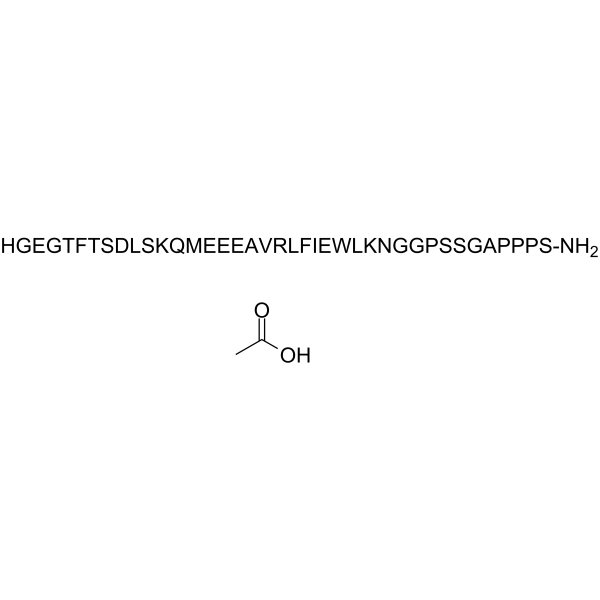
    Exendin(9-39) amide acetate
    30+ Cited Publications

    Avexitide acetate

    GLP Receptor Metabolic Disease
    Exendin(9-39) amide (Avexitide) acetate is a glucagon-like peptide-1 (GLP-1) antagonist that competes with endogenous GLP-1 for the GLP-1R, counteracting the effects of excessive GLP-1 secretion. Exendin(9-39) amide acetate can be utilized in Postbariatric hypoglycemia (PBH) research .
  • HY-P1878

    Insulin Receptor Metabolic Disease
    Proinsulin C-Peptide (55-89), human is a peptide fragment of the cleavage product of proinsulin .
  • HY-153476A

    GLP Receptor GCGR Inflammation/Immunology
    GIP/GLP-1 dual receptor agonist-1 sodium is a GIP/GLP-1 dual receptor agonist. GIP/GLP-1 dual receptor agonist-1 sodium is used in the research of metabolic disorders and fatty liver diseases, including non-alcoholic steatohepatitis (NASH) and non-alcoholic fatty liver disease (NAFLD) .
  • HY-153476

    GCGR GLP Receptor Inflammation/Immunology
    GIP/GLP-1 dual receptor agonist-1 is a GIP/GLP-1 dual receptor agonist. GIP/GLP-1 dual receptor agonist-1 is used in the research of metabolic disorders and fatty liver diseases, including non-alcoholic steatohepatitis (NASH) and non-alcoholic fatty liver disease (NAFLD) .
  • HY-P2317

    Bacterial Endogenous Metabolite Infection
    Cecropin P1, porcine is an antibacterial peptide that can be isolated from the upper part of the small intestine of the pig. Cecropin P1, porcine shows antibacterial activity against Gram-negative bacteria. Cecropin P1, porcine shows antiviral activity and inhibits PRRSV infection .
  • HY-P2497
    Exendin (5-39)
    1 Publications Verification

    GCGR Neurological Disease
    Exendin (5-39) is a potent glucagon-like peptide 1 (GLP-1) receptor antagonist. Exendin (5-39) improves memory impairment in β-amyloid protein-treated rats .
  • HY-P10716

    GLP Receptor Metabolic Disease
    Exendin-P5 is a selective agonist that targets the GLP-1R. Exendin-P5 promotes rapid activation of G proteins by transient interactions with the transmembrane domain of GLP-1R, enhancing its potency in G protein-mediated signaling and accelerating cAMP production. This mechanism suggests the potential application of Exendin-P5 in the study of metabolic diseases .
  • HY-13443B

    GCGR Cardiovascular Disease Metabolic Disease Cancer
    Exendin-4-Lys-azide TFA (Compound Ex40) is an azide derivative of Exendin-4-Lys-azide, Exendin-4, which can be used for coupling/click chemistry .
  • HY-P2480

    CDK Others
    Histone H1-derived Peptide is a phosphopeptide and the peptide substrates containes a sequence in accordance with the optimal recognition motif for CDK, can be used to detecting CDK1-cyclinB1 enzyme activity .
  • HY-P0316

    Thrombin NO Synthase Cardiovascular Disease
    TP508 is a 23-amino acid nonproteolytic thrombin peptide that represents a portion of the receptor-binding domain of thrombin molecule. TP508 activates endothelial NO synthase (eNOS) and stimulates production of NO in human endothelial cells. TP508 activates endothelial cells and stem cells to revascularize and regenerate tissues .
  • HY-P11271A

    Insulin Receptor GLP Receptor Metabolic Disease
    Ribupatide TFA is a dual gastric inhibitory polypeptide (GIP) and glucagon-like peptide 1 (GLP-1) receptor agonist. Ribupatide TFA can be studied in antidiabetic research .
  • HY-P3506B

    LY3437943 acetate

    GCGR GLP Receptor Metabolic Disease
    Retatrutide (LY3437943) acetate is a triple agonist peptide of the glucagon receptor (GCGR), glucosedependent insulinotropic polypeptide receptor (GIPR), and glucagon-like peptide-1 receptor (GLP-1R). Retatrutide acetate inhibits human GCGR, GIPR, and GLP-1R with EC50 values of 5.79, 0.0643 and 0.775 nM, respectively. Retatrutide acetate can be used for the research of obesity .
  • HY-P10591

    Olatorepatidum

    Insulin Receptor GLP Receptor Metabolic Disease
    Olatorepatide (Olatorepatidum) is a dual gastric inhibitory polypeptide (GIP) receptor and glucagon like peptide 1 (GLP-1) receptor agonist, with antidiabetic effect .
  • HY-P11348

    MMP Cancer
    TG-MMP-Lys is an MMP-sensitive crosslinking peptide. TG-MMP-Lys is promising for research of fibrotic diseases (e.g., liver fibrosis) .
  • HY-P0316A

    Thrombin NO Synthase Cardiovascular Disease
    TP508 TFA is a 23-amino acid nonproteolytic thrombin peptide that represents a portion of the receptor-binding domain of thrombin molecule. TP508 TFA activates endothelial NO synthase (eNOS) and stimulates production of NO in human endothelial cells. TP508 TFA activates endothelial cells and stem cells to revascularize and regenerate tissues .
  • HY-P4063

    Peptides Metabolic Disease
    Pegylated synthetic human c-peptide retains bioactivity comparable to that of natural (i.e. non-polyethylene glycolated) C-peptides and has a prolonged circulating residence time in plasma for use in diabetic peripheral neuropathy studies .
  • HY-P4503

    GCGR Others
    (D-His1)-Exenatide is one od impurities of Exenatide.
  • HY-P4724

    Drug Derivative Metabolic Disease
    (β-Asp28)-Exenatide is a potential degradation product of exenatide produced by the formation and cleavage of asparagine.
  • HY-P4407

    Glucocorticoid Receptor Metabolic Disease
    (D-Asn28)-Exenatide is an Exenatide (HY-13443) impurity. Exenatide is a long-acting glucagon-like peptide-1 receptor agonist .
  • HY-P3491

    Polyethylene Glycol loxenatide; PEX 168

    GCGR PI3K Akt Reactive Oxygen Species (ROS) Autophagy Interleukin Related Sirtuin AMPK Apoptosis Cardiovascular Disease Metabolic Disease Inflammation/Immunology
    Pegloxenatide (Polyethylene glycol loxenatide) is a long-acting glucagon-like peptide-1 receptor (GLP-1RA) agonist. Pegloxenatide has various activities such as lowering blood glucose, lowering blood lipids, improving body weight, anti-inflammation, promoting wound healing, protecting the liver, and protecting the heart. Pegloxenatide can be used in the research of type 2 diabetes and its multiple complications .
  • HY-P11233

    GLP Receptor Metabolic Disease
    Acmopatide (Compound E-153) is a dual-acting GIP/GLP-1 receptor agonist. Acmopatide is used in anti-diabetic research .
  • HY-P4730

    Peptides Others
    (β-D-Asp28)-Exenatide is a polypeptide that can be found by peptide screening. Peptide screening is a research tool that pools active peptides primarily by immunoassay. Peptide screening can be used for protein interaction, functional analysis, epitope screening, especially in the field of agent research and development .
  • HY-P11281A

    Peptides Inflammation/Immunology
    GYGGGP(GPP)5GFOGER(GPP)5GPC TFA is a type I collagen mimic that can bind to integrins and modify hydrogels .
  • HY-P11281

    Peptides Inflammation/Immunology
    GYGGGP(GPP)5GFOGER(GPP)5GPC is a type I collagen mimic that can bind to integrins and modify hydrogels .
  • HY-P10302

    GLP Receptor Insulin Receptor Metabolic Disease
    GLP-1R/GIPR AgonIST-1 is a double-receptor agonist for GLP-1 (glucagon-like peptide-1) and GIP (glucose-dependent insulin releasing peptide). GLP-1R/GIPR agonist-1 lowers blood sugar by mimicking the action of endogenous hormones GLP-1 and GIP, enhancing insulin secretion while inhibiting glucagon secretion. GLP-1R/GIPR agonist-1 can be used in the study of metabolic diseases such as diabetes, obesity, and non-alcoholic steatohepatitis (NASH) .
  • HY-P11235

    PF-08653944; MET-097

    GLP Receptor Metabolic Disease
    Berobenatide is a glucagon-like peptide-1 (GLP-1) receptor agonist .
  • HY-P3255
    DA-JC4
    1 Publications Verification

    Insulin Receptor Neurological Disease Inflammation/Immunology
    DA-JC4 is a dual GLP-1/GIP receptor agonist and can be used for the research of neurological disease and insulin signaling pathways .
  • HY-P11270

    BGM0504; BG128

    Insulin Receptor GLP Receptor Metabolic Disease
    Relsipatide (BG128) is a dual gastric inhibitory polypeptide (GIP) and glucagon-like peptide 1 (GLP-1) receptor agonist. Enicepatide can be studied in antidiabetic research .
  • HY-P11043

    GLP Receptor Neuropeptide Y Receptor Arrestin Metabolic Disease
    GEP44 is a peptide biased triple agonist targeting Glucagon-like peptide 1 receptor (GLP-1R), neuropeptide Y1 Receptor (Y1-R), and neuropeptide Y2 Receptor (Y2-R). GEP44 induces Y1-R antagonist-controlled, GLP-1R-dependent stimulation of insulin secretion in both rat and human pancreatic islets by counteracting effects of Y1-R and GLP-1R agonism. GEP44 promotes insulin-independent Y1-R-mediated glucose uptake in muscle tissue and significantly reduces food intake and body weight in diet-induced obese rat models. GEP44 can be used for obesity and type 2 diabetes mellitus research .
  • HY-P11237

    CT-388

    GCGR Insulin Receptor Metabolic Disease
    Enicepatide is a dual gastric inhibitory polypeptide (GIP) and glucagon-like peptide 1 (GLP-1) receptor agonist. Enicepatide can be studied in antidiabetic research .
  • HY-P2718

    Biochemical Assay Reagents Others
    Z-Gly-Pro-Gly-Gly-Pro-Ala-OH is a collagenase substrate that induces planulae to settle .

Inquiry Online

Your information is safe with us. * Required Fields.

Salutation


Country or Region *

Applicant Name *


Organization Name *

Department *


Email Address *


Product Name *

Cat. No.


Requested quantity *

Phone Number *


Remarks

Inquiry Online

Inquiry Information

Product Name:
Cat. No.:
Quantity:
MCE Japan Authorized Agent:

