Search Result
Results for "
Aspergillus fumigatus
" in MedChemExpress (MCE) Product Catalog:
1
Biochemical Assay Reagents
1
Isotope-Labeled Compounds
| Cat. No. |
Product Name |
Target |
Research Areas |
Chemical Structure |
-
- HY-104029
-
|
F901318
|
Fungal
Dihydroorotate Dehydrogenase
|
Infection
|
|
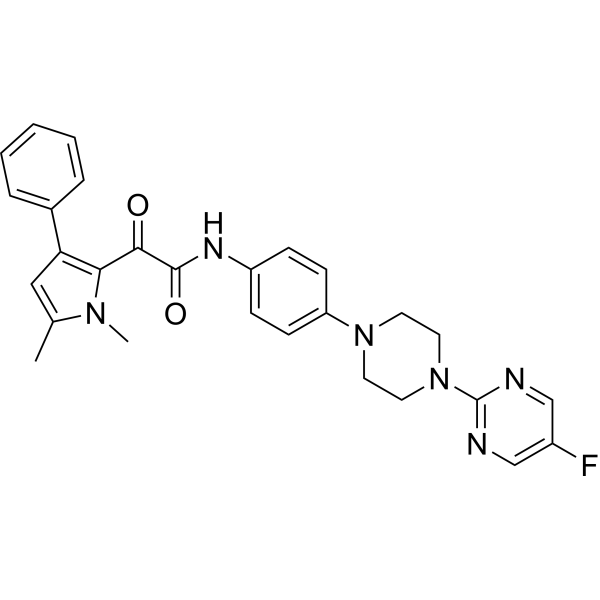
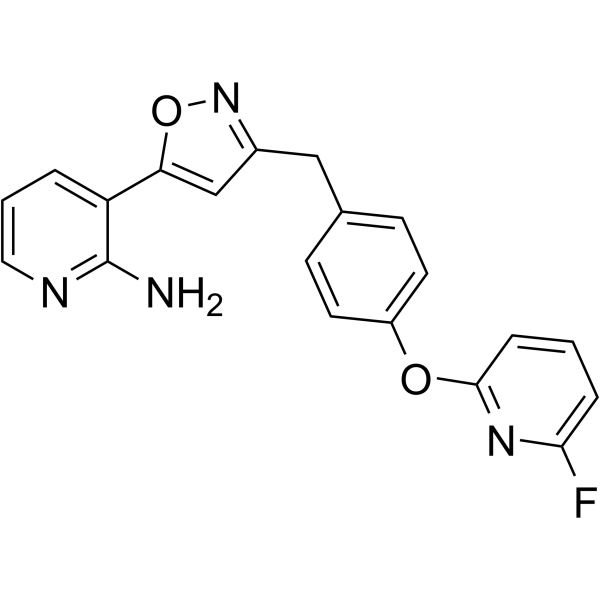
Olorofim (F901318) selectively inhibits fungal dihydroorotate dehydrogenase (DHODH), a key enzyme in the pyrimidine biosynthesis pathway. Olorofim (F901318). Olorofim exhibits excellent activity against A. fumigatus and other Aspergillus spp. .
|
-
-
- HY-N1063
-
|
Xanthoxyline
|
Fungal
|
Infection
Metabolic Disease
|
|
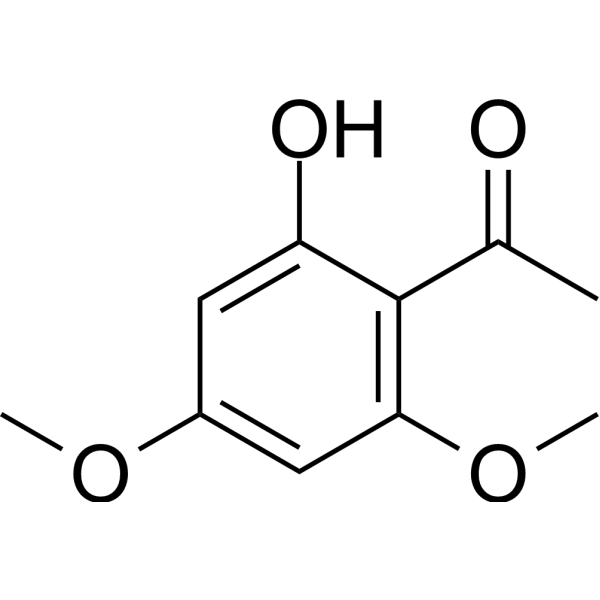
Xanthoxylin (Xanthoxyline) can be isolated from Zanthoxylum simulans. Xanthoxylin has antifungal and antioxidant effects. The MIC of Xanthoxylin against Toxoplasma neonatorum and Aspergillus fumigatus were 50 µg/mL and 75 µg/mL, respectively. Xanthoxylin can be used in the study of anti-epileptic diseases .
|
-
-
- HY-B0751
-
|
Amebacilin; NSC9168
|
Parasite
HIV
Antibiotic
|
Infection
|
|
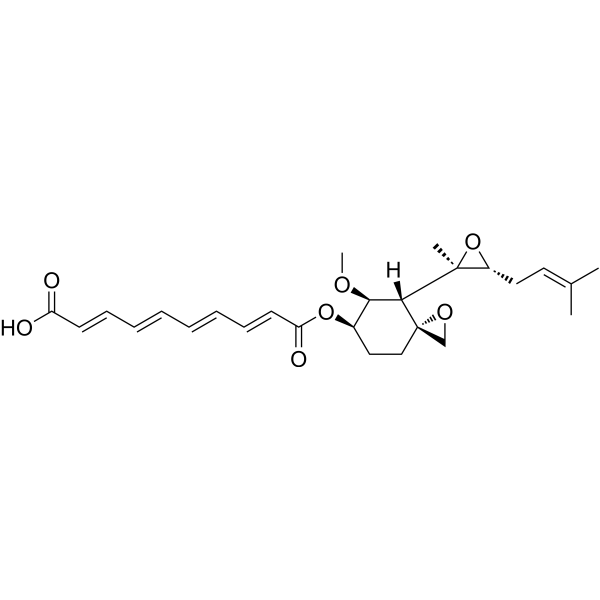
Fumagillin(NSC9168) is an antimicrobial compound first isolated in 1949 from the fungus Aspergillus fumigatu. Fumagillin can inhibits HIV‐1 infection through the inhibition of HIV-1 viral protein R (Vpr) activity.
|
-
-
- HY-117766
-
|
PC945
|
Fungal
Cytochrome P450
|
Infection
|
|
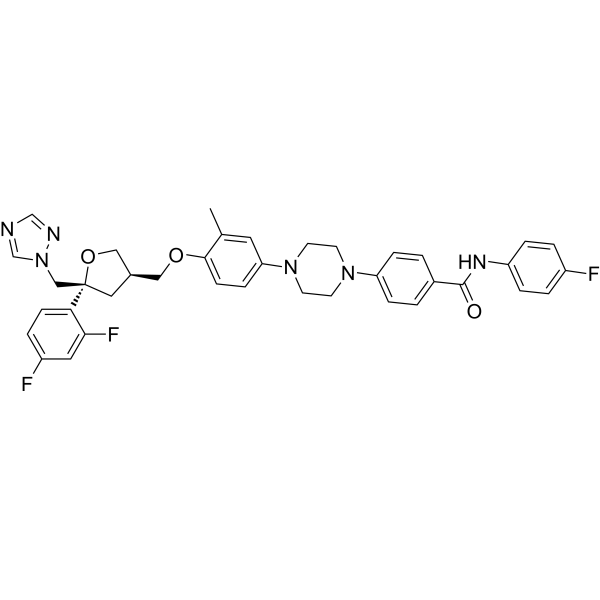
Opelconazole (PC945), a potent, long-acting antifungal triazole, possesses activity against a broad range of both azole-susceptible and azole-resistant strains of Aspergillus fumigatus. Opelconazole is also a potent, tightly binding inhibitor of A. fumigatus sterol 14α-demethylase activity, CYP51A and CYP51B, with IC50s of 0.23 μM and 0.22 μM, respectively .
|
-
-
- HY-W007626
-
|
|
Fungal
|
Infection
|
|
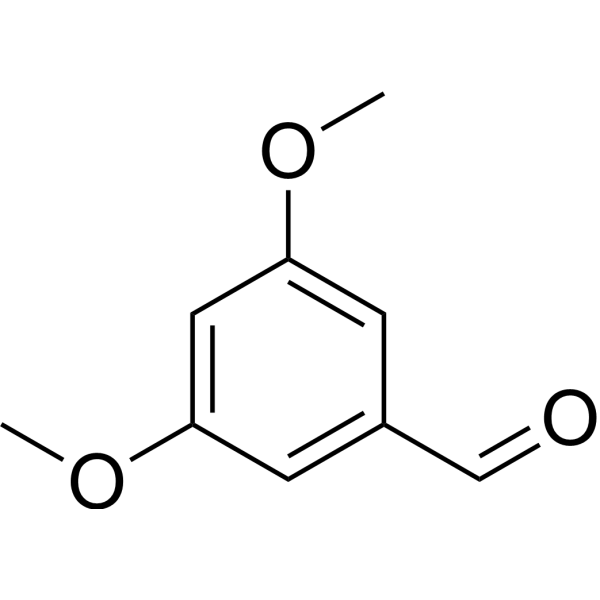
3,5-Dimethoxybenzaldehyde is an antifungal agent. 3,5-Dimethoxybenzaldehyde exhibits antifungal activity against Saccharomyces cerevisiae cell wall integrity mutants (slt2Δ and bck1Δ) and Aspergillus fumigatus MAPK mutants (sakAΔ and mpkCΔ) .
|
-
-
- HY-P2543
-
|
|
Neuropeptide Y Receptor
|
Cardiovascular Disease
Neurological Disease
|
|
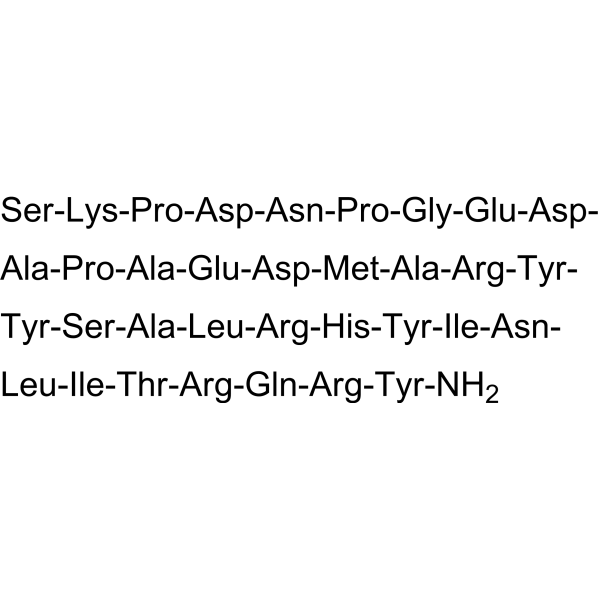
Neuropeptide Y (3-36) (human, rat) is a neuropeptide Y fragment derived from humans or rats. Neuropeptide Y is an extremely abundant neurotransmitter in central and peripheral neurons, and it participates in the regulation of psychomotor activity, circadian rhythm, feeding behavior and cardiovascular function. Neuropeptide Y (3-36) (human, rat) can serve as a substrate to be sequentially degraded from its N-terminus by AfuS28, and it requires binding to AfuS28 and SedB to be decomposed into amino acids, dipeptides and tripeptides [1] [2].
|
-
-
- HY-147110
-
|
|
Fungal
|
Infection
Inflammation/Immunology
|
|
APX2039 is a brain-penetrant and orally active Gwt1 protein inhibitor. APX2039 inhibits an early step in fungal glycosylphosphatidylinositol anchor biosynthesis. APX2039 can be used for the research of cryptococcal meningitis and invasive mycosis caused by Talaromyces marneffei .
|
-
-
- HY-N2198
-
|
|
Fungal
Bacterial
Topoisomerase
Apoptosis
|
Infection
Inflammation/Immunology
Cancer
|
|
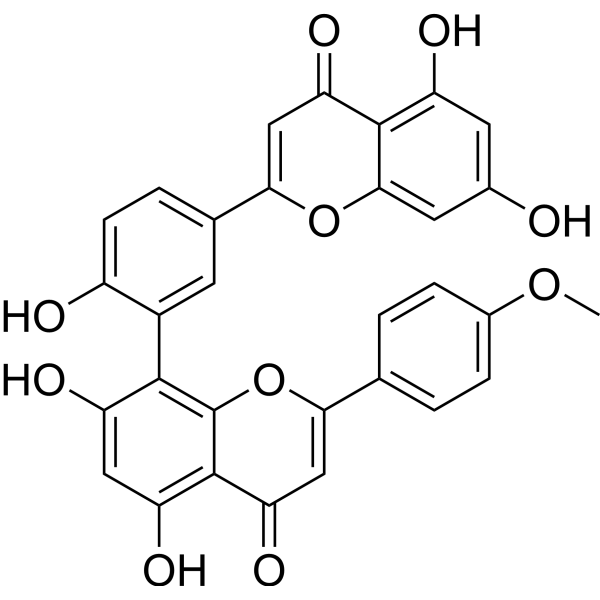
Podocarpusflavone A is a biflavonoid present in the leaves of Podocarpus henkelii, with anti-tumor, topoisomerase I inhibitory, antibacterial and antifungal activities. Podocarpusflavone A exhibits antibacterial activity against Enterococcus faecalis and Pseudomonas aeruginosa. Podocarpusflavone A shows weak activity against fungal pathogens. Podocarpusflavone A targets topoisomerase I and induces cell cycle arrest and apoptosis in MCF-7 cells. Podocarpusflavone A can be used for studies on cancer, bacterial and fungal infections .
|
-
-
- HY-W068682
-
|
Hemipyocyanine; 1-Phenazinol; Hemi-pyocyanin
|
Amylases
Bacterial
|
Infection
Neurological Disease
Metabolic Disease
Inflammation/Immunology
Cancer
|
|
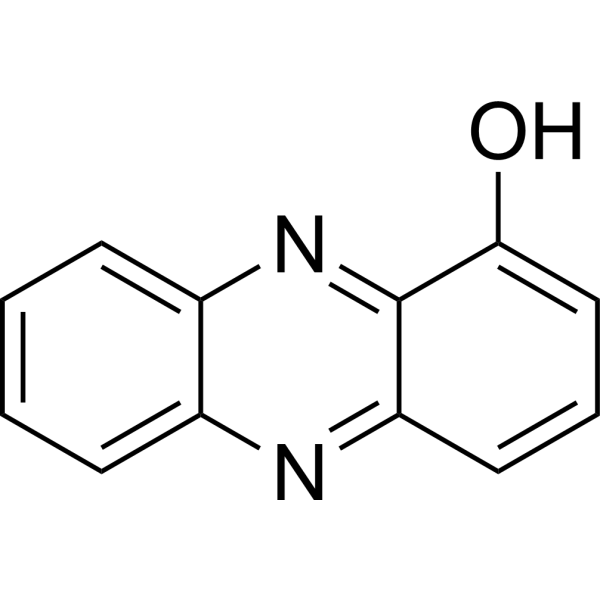
1-Hydroxyphenazine (Hemipyocyanine; 1-Phenazinol; Hemi-pyocyanin) is an inhibitor for α-Amylase with an IC50 of 3.1 μg/mL . 1-Hydroxyphenazine exhibits anticancer and anti-inflammatory activity against cells A549, 1321N1 and RAW264.7, antifungal and antibacterial activity against strains Candida albicans, Aspergillus fumigatus, Escherichia coli and Xanthomonas campestris .
|
-
-
- HY-121254
-
-
-
- HY-P2274
-
|
|
Parasite
|
Infection
|
|
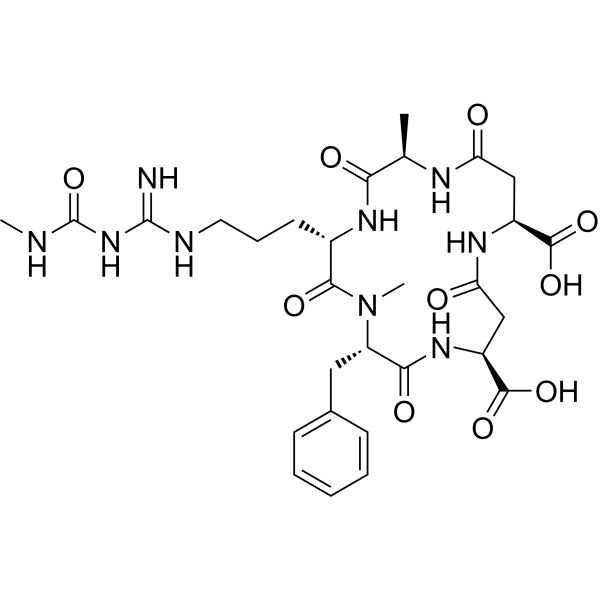
Argifin is a sub-nanomolar chitinase inhibitor produced by soil microorganisms, with IC50s of 0.025 μM, 6.4 μM , 1.1 μM and 4.5 μM for SmChiA (Serratia marcescens chitinaese A), SmChiB, Aspergillus fumigatus chitinase B1 and human chitotriosidase, respectively .
|
-
-
- HY-136153
-
|
|
Fungal
|
Infection
|
|
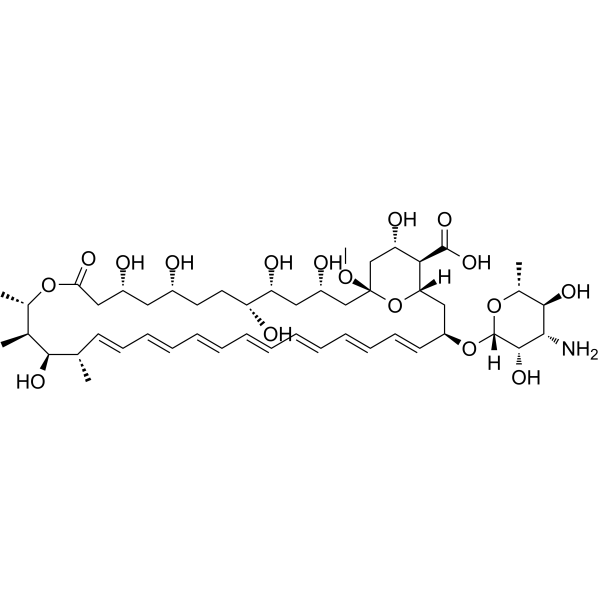
Amphotericin X1 is an 13-O-methyl derivative of Amphotericin B with good antifungal activity. Amphotericin X1 inhibits Candida albicans 33/079, C.parapsilosis 937A, Cryptococcus neoformans 451, Aspergillus niger 57A and A.fumigatus with MIC values of 1 μg/mL, 8 μg/mL, 1 μg/mL, 2 μg/mL and 2 μg/mL, respectively .
|
-
-
- HY-126657
-
|
|
Fungal
|
Infection
|
|
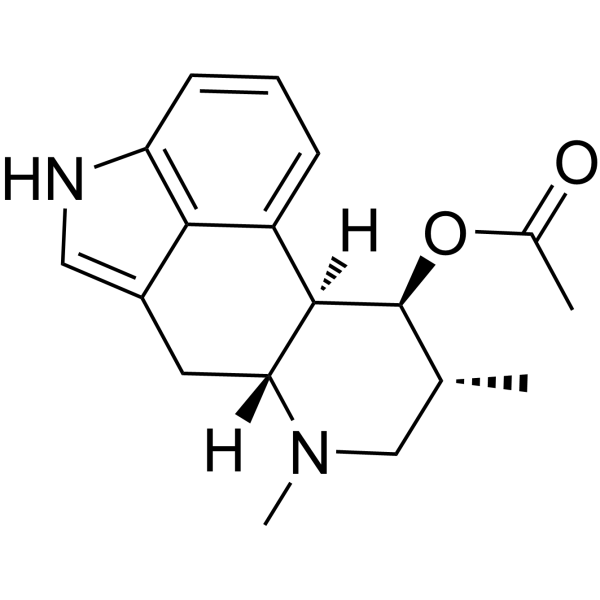
Fumigaclavine A, a clavine alkaloid, is a Mycotoxin produced by Aspergillus fumigatus. A. fumigatus can be isolated from contaminating moldy silage .
|
-
-
- HY-133101
-
|
|
Endogenous Metabolite
|
Cancer
|
|
14-Norpseurotin is a compound isolated from the culture of Aspergillus fumigatus. 14-Norpseurotin significantly induces neurite outgrowth of rat pheochromocytoma cells (PC12) at a 10.0 microM concentration .
|
-
-
- HY-170616
-
|
|
Fungal
Interleukin Related
|
Infection
Inflammation/Immunology
|
|
JH-FK-08 is an inhibitor for the serine/threonine-specific phosphatase calcineurin. JH-FK-08 exhibits antifungal activity that inhibits C. neoformans with MIC80 of 0.8 µg/mL. JH-FK-08 exhibits immunosuppressive activity and inhibits the IL-2 expression with an IC50 of 42.6 nM. JH-FK-08 exhibits anti-infectious activity in mouse models .
|
-
-
- HY-W782599
-
|
|
Fungal
PKC
Calcineurin
|
Infection
|
|
Senkyunolide B is a phthalide found in Angelica sinensis. Senkyunolide B has broad antifungal activities. Senkyunolide B affects the spore germination and hyphae growth of Aspergillus fumigatus via down-regulating phosphatidylinositol-PKC-calcineurin axis and the expression of ENG genes .
|
-
-
- HY-N1063R
-
|
Xanthoxyline (Standard)
|
Reference Standards
Fungal
|
Infection
Metabolic Disease
|
|
Xanthoxylin (Xanthoxyline) can be isolated from Zanthoxylum simulans. Xanthoxylin has antifungal and antioxidant effects. The MIC of Xanthoxylin against Toxoplasma neonatorum and Aspergillus fumigatus were 50 µg/mL and 75 µg/mL, respectively. Xanthoxylin can be used in the study of anti-epileptic diseases .
|
-
-
- HY-B0751R
-
|
Amebacilin (Standard); NSC9168 (Standard)
|
Reference Standards
Parasite
HIV
Antibiotic
|
Infection
|
|
Fumagillin (Standard) is the analytical standard of Fumagillin. This product is intended for research and analytical applications. Fumagillin(NSC9168) is an antimicrobial compound first isolated in 1949 from the fungus Aspergillus fumigatu. Fumagillin can inhibits HIV‐1 infection through the inhibition of HIV-1 viral protein R (Vpr) activity.
|
-
-
- HY-W077257
-
-
-
- HY-N7569
-
|
|
Apoptosis
Caspase
PPAR
|
Cancer
|
|
Demethoxyfumitremorgin C is a secondary metabolite of the marine fungus, Aspergillus fumigatus. Demethoxyfumitremorgin C induces prostate cancer cell apoptosis. Demethoxyfumitremorgin C activates caspase-3, -8, and -9, leading to PARP/ cleavage .
|
-
-
- HY-N8406
-
|
|
Bacterial
Antibiotic
|
Infection
|
|
Monomethylsulochrin is a potent antibacterial metabolite from endophytic fungus Aspergillus fumigatus, isolated from Albizia lucidior leaves (fabaceae). Monomethylsulochrin exhibits anti-Staphylococcus aureus activity with minimum inhibitory concentration (MIC) of 31.25 μg/mL .
|
-
-
- HY-164620
-
|
|
Fungal
|
Infection
|
|
Antifungal agent 112 (Compound 1e) exhibits antifungal activity against Candida albicans, Aspergillus niger and Aspergillus fumigatus with MIC of 0.0024, 0.0022 and 0.0028 M, respectively .
|
-
-
- HY-108079
-
|
|
Fungal
|
Infection
|
|
KOS-2079 is an antifungal agent. KOS-2079 has strong inhibitory activity against Aspergillus flavus 204303 (MIC = 1.10 μg/mL) and Aspergillus fumigatus 204305 (MIC = 1.32 μg/mL). KOS-2079 is commonly used in the study of fungal infection .
|
-
-
- HY-106923
-
|
|
Fungal
Drug Derivative
|
Infection
|
|
BMS-181184 is a new Pradimicin derivative and fungicide. BMS-181184 exhibits fungicidal activity against yeasts, dermatophytes, and most Aspergillus fumigatus strains. BMS-181184 is active against Sporothrix schenckii, dematiaceous fungi, and some members of the non-Aspergillus hyaline hyphomycetes .
|
-
-
- HY-138050
-
|
(-)-Nyasol; (Z)-Hinokiresinol; cis-Hinokiresinol
|
NO Synthase
Bacterial
Fungal
Parasite
Leukotriene Receptor
|
Infection
Inflammation/Immunology
|
|
Nyasol ((-)-Nyasol) is an active compound that has antifungal, antibacterial, antileishmanial, hyaluronidase inhibition activities. Nyasol inhibits LTB4 binding to human neutrophils. Nyasol suppresses neuroinflammatory response through the inhibition of I-κB degradation in LPS (HY-D1056)-stimulated BV-2 microglial cells .
|
-
-
- HY-19404
-
|
CS-758; R-120758
|
Fungal
|
Infection
|
|
Embeconazole (CS-758; R-120758) is an antifungal agent against Candida albicans, Cryptococcus neoformans, Aspergillus fumigatus and Aspergillus flavus, with MICs of 8, 16, 63 and 250 μM, respectively .
|
-
-
- HY-W104752
-
-
-
- HY-146464
-
|
|
Fungal
|
Infection
|
|
Antifungal agent 30 (compound A18) is a potent antifungal agent. Antifungal agent 30 shows excellent antifungal activity against Candida albicans (CPCC400616) and Aspergillus fumigatus, with MIC of 0.03 and 0.5 μg/mL, respectively. Antifungal agent 30 also shows excellent antifungal activity against fluconazole-resistant strains. The potent antifungal activity of Antifungal agent 30 mainly causes by hydrogen and coordination bond interaction with the CYP51 .
|
-
-
- HY-N14960
-
|
|
Antibiotic
|
|
|
Clavariopsin A is a cyclic depsipeptide antibiotic. Clavariopsin A shows antifungal activity for Candida albicans IFO 0583, Candida albicans ATCC 10231, Aspergillus niger AJ117374, Aspergillus fumigatus AJ117190, Aspergillus fumigatus JCM1739 with MIC values of 8, 8, 16, 2, 4 μg/mL, respectively .
|
-
-
- HY-N14961
-
|
|
Antibiotic
|
Infection
|
|
Clavariopsin B is a cyclic depsipeptide antibiotic. Clavariopsin B shows antifungal activity for Candida albicans IFO 0583, Candida albicans ATCC 10231, Aspergillus niger AJ117374, Aspergillus fumigatus AJ117190, Aspergillus fumigatus JCM1739 with MIC values of 8, 8, 16, 4, 4 μg/mL, respectively .
|
-
-
- HY-N14509
-
|
|
Fungal
|
Infection
|
|
Queenslandon has moderate anti-streptomyces, penicillium, Penicillium, Aspergillus fumigatus, aspergillus flavus and other fungal activities. And it has no effect on bacteria .
|
-
-
- HY-N14102
-
|
|
Fungal
|
Infection
|
|
Chlorflavonin has the activities of anti-aspergillus, yeast, botrytis, and other fungal. Among these fungi, anti-Aspergillus fumigatus activity is particularly strong, the minimum inhibitory concentration up to 0.08 μg/mL .
|
-
-
- HY-N14011
-
|
|
Antibiotic
Bacterial
|
Infection
|
|
Cedarmycin A has activities against Candida, Cryptococcus neoforme and Aspergillus fumigatus, with the MIC values of 12.5-50 μg/mL .
|
-
-
- HY-N14122
-
|
|
Fungal
|
Infection
|
|
Cladosporide B is found in the strain of Cladosporium sp. IFM 49189. Cladosporide B has slightly stronger anti-Aspergillus fumigatus activity than Cladosporide A .
|
-
-
- HY-P5569
-
|
|
Fungal
|
Infection
|
|
SP-B peptide is an antimicrobial peptide. SP-B peptide has antifungal activity against strains of Cryptococcus neoformans, Candida albicans and Aspergillus fumigatus
|
-
-
- HY-N14018
-
|
|
Antibiotic
Fungal
|
Infection
|
|
Glidobactin A is an acyl peptide antibiotic. Glidobactin A has activity against Candida, Aspergillus fumigatus and Trichophyton, but it is not effective against Candida albicans M-9 infection in mice .
|
-
-
- HY-N14121
-
|
|
Fungal
|
Infection
|
|
Cladosporide A is found in the strain of Cladosporium sp. IFM 49189. Cladosporide A inhibits Aspergillus fumigatus with IC50 of 0.5-4.0 μg/mL, but it has no effect on other filamentous fungi .
|
-
-
- HY-N14614
-
|
|
Acyltransferase
|
Metabolic Disease
|
|
Pyripyropene B is a powerful acyl-CoA: cholesterol acyltransferase 2 (ACAT2) inhibitor found in the fungus Aspergillus fumigatus FO 1289. Pyripyropene B inhibits acyl-CoA: cholesterol acyltransferase with an IC50 of 117 nM .
|
-
-
- HY-N16051
-
|
CJ-19784
|
Bacterial
Fungal
|
Infection
|
|
Bromoflavone (CJ-19784) is a flavone that can be isolated from Aspergillus candidus. Bromoflavone shows anti-Mtb activity with an MIC90 value of 1.2 μM. Bromoflavone is also an antifungal agent. Bromoflavone inhibits the growth of pathogenic fungi, Candida albicans, Cryptococcus neoformans and Aspergillus fumigatus with IC50 values of 0.11, 20 and 0.54 μg/mL, respectively. .
|
-
-
- HY-N8336
-
|
|
Antibiotic
Bacterial
Fungal
|
Infection
Cancer
|
|
IT-143A is an antibiotic, that exhibits antibacterial and antifungal activity against Micrococcus luteus and Aspergillus fumigatus with MIC of 6.25-25 μg/mL. IT-143A inhibits growth of cancer cell KB with an IC50 of 0.36 ng/mL .
|
-
-
- HY-P0068
-
|
HMR 3270; IP960; NXL201
|
Fungal
|
Infection
|
|
Aminocandin (HMR 3270) is water-soluble antifungal agent of the echinocandin class with excellent activity against Aspergillus and Candida spp. .
|
-
-
- HY-N15048
-
|
|
Fungal
|
Infection
|
|
Phellinsin selectively inhibits the activity of the chitin synthase I and II with IC50s (μg/mL) of 76 and 28, respectively. Phellinsin has the antifungal activity on Colletotrichum lagenarium, Pyricularia oryzae, Aspergillus fumigatus and Trichophyton mentagrophytes and so on (MIC is 12.5-50 μg/mL) .
|
-
-
- HY-N5160
-
|
|
Antibiotic
Fungal
|
Infection
|
|
Arborcandin A is a 1,3-β-glucan synthase inhibitor that serves as an antifungal antibiotic. Arborcandin A exhibits IC50 values of 0.25 μg/mL and 0.05 μg/mL against Candida albicans and Aspergillus fumigatus, respectively. Additionally, Arborcandin A has an MIC of 4-8 μg/mL against the genus Candida .
|
-
-
- HY-N5165
-
|
|
Antibiotic
Fungal
|
Infection
|
|
Arborcandin F is a 1,3-β-glucan synthase inhibitor that serves as an antifungal antibiotic. Arborcandin F exhibits IC50 values of 0.012 μg/mL against both Candida albicans and Aspergillus fumigatus. Additionally, Arborcandin F has an MIC of 2-4 μg/mL against the genus Candida .
|
-
-
- HY-N5163
-
|
|
Antibiotic
Fungal
|
Infection
|
|
Arborcandin D is a 1,3-β-glucan synthase inhibitor that serves as an antifungal antibiotic. Arborcandin D exhibits IC50 values of 3 μg/mL and 0.35 μg/mL against Candida albicans and Aspergillus fumigatus, respectively. Additionally, Arborcandin D has an MIC of 4 μg/mL against the genus Candida .
|
-
-
- HY-N14020
-
|
GlbC
|
Antibiotic
Fungal
|
Infection
Cancer
|
|
Glidobactin C (GlbC) is an anti-tumor antibiotic. Glidobactin C (GlbC) has the activity against pathogenic fungi and yeast. Glidobactin C has anti-Candida albicans and Aspergillus fumigatus activity with a MIC of 0.8 μg/mL. Glidobactin C also extends the survival of mice inoculated with leukemia P388 cells .
|
-
-
- HY-N5162
-
|
|
Antibiotic
Fungal
|
Infection
|
|
Arborcandin C is a 1,3-β-glucan synthase inhibitor that serves as an antifungal antibiotic. Arborcandin C exhibits IC50 values of 0.15 μg/mL and 0.015 μg/mL against Candida albicans and Aspergillus fumigatus, respectively. Additionally, Arborcandin C has an MIC of 1-2 μg/mL against the genus Candida .
|
-
-
- HY-N5161
-
|
|
Antibiotic
Fungal
|
Infection
|
|
Arborcandin B is a 1,3-β-glucan synthase inhibitor that serves as an antifungal antibiotic. Arborcandin B exhibits IC50 values of 0.30 μg/mL and 0.025 μg/mL against Candida albicans and Aspergillus fumigatus, respectively. Additionally, Arborcandin B has an MIC of 2-4 μg/mL against the genus Candida .
|
-
-
- HY-N5164
-
|
|
Antibiotic
Fungal
|
Infection
|
|
Arborcandin E is a 1,3-β-glucan synthase inhibitor that serves as an antifungal antibiotic. Arborcandin E exhibits IC50 values of 0.1 μg/mL and 0.012 μg/mL against Candida albicans and Aspergillus fumigatus, respectively. Additionally, Arborcandin E has an MIC of 0.5-2 μg/mL against the genus Candida .
|
-
-
- HY-N12106
-
|
Fumicycline
|
Endogenous Metabolite
Fungal
|
Infection
|
|
Neosartoricin (Fumicycline) (Compound 3), a prenylated anthracenone, is a microbial secondary metabolite. Neosartoricin can be isolated from Aspergillus fumigatus and Neosartorya fischeri. Neosartoricin has immunosuppressive activity, and significantly inhibits T-cell proliferative activity with an IC50 of 3 μM. Neosartoricin may be beneficial to fungal defense, facilitating infection through suppressing the host adaptive immunity without involvement of primary virulence .
|
-
- HY-P2274R
-
|
|
Reference Standards
Parasite
|
Infection
|
|
Argifin (Standard) is the analytical standard of Argifin. This product is intended for research and analytical applications. Argifin is a sub-nanomolar chitinase inhibitor produced by soil microorganisms, with IC50s of 0.025 μM, 6.4 μM , 1.1 μM and 4.5 μM for SmChiA (Serratia marcescens chitinaese A), SmChiB, Aspergillus fumigatus chitinase B1 and human chitotriosidase, respectively[1].
|
-
- HY-147814
-
|
|
Bacterial
Fungal
|
Infection
|
|
KFU-127 (Compound 6b) is a broad spectrum topical antimicrobial capable of one-shot targeting of bacterial and fungal-bacterial biofilms. KFU-127 is considerably toxic for eukaryotic cells . KFU-127 is a click chemistry reagent, it contains an Alkyne group and can undergo copper-catalyzed azide-alkyne cycloaddition (CuAAc) with molecules containing Azide groups.
|
-
- HY-N19644
-
|
|
Fungal
|
Infection
|
|
(-)-Oxysporidinone is an antifungal agent. (-)-Oxysporidinone inhibits the growth of Aspergillus fumigatus and Cryptococcus neoformans. (-)-Oxysporidinone can be used in studies related to fungal infections .
|
-
- HY-N19755
-
|
|
Fungal
|
Infection
|
|
Clemontanoside-C is an oleanane-based triterpenoid saponin and antifungal agent found in the roots of Lepidagathis cuspidata. Clemontanoside-C acts against Aspergillus flavus, Rhizopus stolinifer, Penicillum nodatum, and Aspergillus fumigatus. Clemontanoside-C can be used for the research of fungal infections .
|
-
- HY-153624
-
|
|
Fungal
|
Infection
|
|
Antifungal agent 59 is an antifungal agent, with MIC values of 0.01-1 μg/mL. Antifungal agent 59 prevents the formation of fungi biofilms, but also has safety .
|
-
- HY-N19876
-
-
- HY-N9869
-
|
|
Bacterial
|
Infection
|
|
(E,Z)-Platanoside is a flavonoid glycoside. (E,Z)-Platanoside is a potent and highly selective MRSA inhibitor; it exhibits low activity against other tested strains, including Gram-negative bacteria, intracellular Mycobacterium intracellulare, Candida albicans, Cryptococcus neoformans, and Aspergillus fumigatus. (E,Z)-Platanoside can be used in research on MRSA infections .
|
-
- HY-N14012
-
|
|
Antibiotic
Bacterial
|
Infection
|
|
Cedarmycin B has activities against Candida, Cryptococcus neoforme and Aspergillus fumigatus, with the MIC values of 12.5-50 μg/mL .
|
-
- HY-W009815
-
|
δ-Laurolactone
|
Environmental Pollutants
Fungal
|
Infection
|
|
δ-Dodecalactone can be obtained from L. plantarum AF1. δ-Dodecalactone exhibits potent antifungal activity against molds Aspergillus flavus, A. fumigatus, A. petrakii, A. ochraceus, A. nidulans, and Penicillium roqueforti. δ-Dodecalactone is a flavoring compound .
|
-
- HY-104029R
-
|
F901318 (Standard)
|
Fungal
Reference Standards
Dihydroorotate Dehydrogenase
|
Infection
|
|
Olorofim (Standard) is the analytical standard of Olorofim (HY-104029). This product is intended for research and analytical applications. Olorofim (F901318) selectively inhibits fungal dihydroorotate dehydrogenase (DHODH), a key enzyme in the pyrimidine biosynthesis pathway. Olorofim (F901318). Olorofim exhibits excellent activity against A. fumigatus and other Aspergillus spp. .
|
-
- HY-W069116
-
|
|
Fungal
|
Infection
|
|
Antifungal agent 146 (Compound 19l) is a broad-spectrum antifungal agent. Antifungal agent 146 has inhibitory effects on the main dermatophytes that cause onychomycosis (Trichophyton rubrum, Trichophyton mentagrophytes) and other fungi (Candida albicans, Cryptococcus neoformans and Aspergillus fumigatus) with MIC values of 16, 16, 64, 32, and 32 μg/mL. Antifungal agent 146 can be used for the research of infection .
|
-
- HY-B0751S
-
|
Amebacilin-13C26; NSC9168-13C26
|
Isotope-Labeled Compounds
|
Infection
|
|
Fumagillin- 13C26 (Amebacilin- 13C26) is the 13C-labeled Fumagillin (HY-B0751). Fumagillin(NSC9168) is an antimicrobial compound first isolated in 1949 from the fungus Aspergillus fumigatu. Fumagillin can inhibits HIV‐1 infection through the inhibition of HIV-1 viral protein R (Vpr) activity.
|
-
- HY-136753
-
|
|
Fungal
|
Infection
|
|
Antifungal agent-162 (Compound 1c) is an Antifungal agent. Antifungal agent-162 exhibits potent in vitro antifungal activity against Candida albicans, Cryptococcus neoformans, Candida parapsilosis, Candida tropicalis, Candida krusei, and Microsporum gypseum (with MIC80 values ranging from 0.0156 to 0.25 μg/mL), while shows no activity against Aspergillus fumigatus .
|
-
- HY-183333
-
|
|
Fungal
|
Infection
|
|
CHNQD-02204 is a potent and selective antifungal agent with in vitro activity against Candida albicans, with a MIC of 0.025 μg/mL. CHNQD-02204 inhibits ergosterol biosynthesis, disrupts the membrane integrity and biofilm formation of Candida albicans, and suppresses the morphological transition of Candida albicans from yeast to hyphal form. CHNQD-02204 can be used in studies related to candidal infections .
|
-
- HY-136760
-
|
|
Cytochrome P450
Fungal
|
Infection
|
|
CYP51-IN-10 is cytochrome P450 14a-demethylase (CYP51) inhibitor with antifungal activity. CYP51-IN-10 can be used for the research of fungal infection .
|
-
- HY-136755
-
|
|
Cytochrome P450
Fungal
|
Infection
|
|
CYP51-IN-5 is a cytochrome P450 14α-demethylase (CYP51) inhibitor and an antifungal (fungal) agent belonging to the triazole derivative class. CYP51-IN-5 is applicable to the research of Candida albicans, Cryptococcus neoformans, Candida parapsilosis, Candida tropicalis, Trichophyton rubrum, Candida krusei and Microsporum gypseum .
|
-
- HY-182569
-
|
|
VEGFR
|
Inflammation/Immunology
Cancer
|
|
FR 111142 is an angiogenesis inhibitor (IC50 = 18.4 μM) and has anti-inflammatory activity (IC50 = 20.6 μM). FR 111142 inhibits capillary-like tube formation as well as nitric oxide production in LPS (HY-D1056)-activated murine macrophages. FR 111142 enhances catabolism of low-density lipoprotein (LDL). FR 111142 does not induce significant cytotoxicity in human endothelial progenitor cells, nor affect cell viability of murine macrophages. FR 111142 can be used for the research of cancer, inflammatory diseases .
|
-
- HY-183249
-
|
|
Acetyl-CoA synthetase
Fungal
|
Infection
|
|
Ac-CoA Synthase-IN-2 is an Ac-CoA Synthase (ACS) inhibitor and antifungal agent. Ac-CoA Synthase-IN-2 binds in the ATP/acetyl-AMP pocket of fungal and human ACS enzymes to exert competitive inhibition with ATP, and inhibits Cryptococcus neoformans CnKbc1-mediated acetoacetate-to-aceto-acetyl CoA conversion. Ac-CoA Synthase-IN-2 can be used for the research of fungal infections .
|
-
| Cat. No. |
Product Name |
Type |
-
- HY-W007626
-
|
|
Biochemical Assay Reagents
|
|
3,5-Dimethoxybenzaldehyde is an antifungal agent. 3,5-Dimethoxybenzaldehyde exhibits antifungal activity against Saccharomyces cerevisiae cell wall integrity mutants (slt2Δ and bck1Δ) and Aspergillus fumigatus MAPK mutants (sakAΔ and mpkCΔ) .
|
| Cat. No. |
Product Name |
Target |
Research Area |
-
- HY-P2543
-
|
|
Neuropeptide Y Receptor
|
Cardiovascular Disease
Neurological Disease
|
|
Neuropeptide Y (3-36) (human, rat) is a neuropeptide Y fragment derived from humans or rats. Neuropeptide Y is an extremely abundant neurotransmitter in central and peripheral neurons, and it participates in the regulation of psychomotor activity, circadian rhythm, feeding behavior and cardiovascular function. Neuropeptide Y (3-36) (human, rat) can serve as a substrate to be sequentially degraded from its N-terminus by AfuS28, and it requires binding to AfuS28 and SedB to be decomposed into amino acids, dipeptides and tripeptides [1] [2].
|
-
- HY-P2274
-
|
|
Parasite
|
Infection
|
|
Argifin is a sub-nanomolar chitinase inhibitor produced by soil microorganisms, with IC50s of 0.025 μM, 6.4 μM , 1.1 μM and 4.5 μM for SmChiA (Serratia marcescens chitinaese A), SmChiB, Aspergillus fumigatus chitinase B1 and human chitotriosidase, respectively .
|
-
- HY-P5569
-
|
|
Fungal
|
Infection
|
|
SP-B peptide is an antimicrobial peptide. SP-B peptide has antifungal activity against strains of Cryptococcus neoformans, Candida albicans and Aspergillus fumigatus
|
-
- HY-P0068
-
|
HMR 3270; IP960; NXL201
|
Fungal
|
Infection
|
|
Aminocandin (HMR 3270) is water-soluble antifungal agent of the echinocandin class with excellent activity against Aspergillus and Candida spp. .
|
-
- HY-P2274R
-
|
|
Reference Standards
Parasite
|
Infection
|
|
Argifin (Standard) is the analytical standard of Argifin. This product is intended for research and analytical applications. Argifin is a sub-nanomolar chitinase inhibitor produced by soil microorganisms, with IC50s of 0.025 μM, 6.4 μM , 1.1 μM and 4.5 μM for SmChiA (Serratia marcescens chitinaese A), SmChiB, Aspergillus fumigatus chitinase B1 and human chitotriosidase, respectively[1].
|
| Cat. No. |
Product Name |
Category |
Target |
Chemical Structure |
-
- HY-N1063
-
-
-
- HY-B0751
-
-
-
- HY-N2198
-
-
-
- HY-121254
-
-
-
- HY-P2274
-
-
-
- HY-126657
-
-
-
- HY-W782599
-
-
-
- HY-N1063R
-
-
-
- HY-B0751R
-
-
-
- HY-W077257
-
-
-
- HY-N7569
-
-
-
- HY-N8406
-
|
|
Microorganisms
Phenols
Source Classification
|
Bacterial
Antibiotic
|
|
Monomethylsulochrin is a potent antibacterial metabolite from endophytic fungus Aspergillus fumigatus, isolated from Albizia lucidior leaves (fabaceae). Monomethylsulochrin exhibits anti-Staphylococcus aureus activity with minimum inhibitory concentration (MIC) of 31.25 μg/mL .
|
-
-
- HY-138050
-
-
-
- HY-N14960
-
|
|
Microorganisms
Antibiotics
Other Antibiotics
Source Classification
|
Antibiotic
|
|
Clavariopsin A is a cyclic depsipeptide antibiotic. Clavariopsin A shows antifungal activity for Candida albicans IFO 0583, Candida albicans ATCC 10231, Aspergillus niger AJ117374, Aspergillus fumigatus AJ117190, Aspergillus fumigatus JCM1739 with MIC values of 8, 8, 16, 2, 4 μg/mL, respectively .
|
-
-
- HY-N14961
-
|
|
Microorganisms
Antibiotics
Other Antibiotics
Source Classification
|
Antibiotic
|
|
Clavariopsin B is a cyclic depsipeptide antibiotic. Clavariopsin B shows antifungal activity for Candida albicans IFO 0583, Candida albicans ATCC 10231, Aspergillus niger AJ117374, Aspergillus fumigatus AJ117190, Aspergillus fumigatus JCM1739 with MIC values of 8, 8, 16, 4, 4 μg/mL, respectively .
|
-
-
- HY-N14509
-
-
-
- HY-N14102
-
-
-
- HY-N14011
-
-
-
- HY-N14122
-
-
-
- HY-N14018
-
-
-
- HY-N14121
-
-
-
- HY-N14614
-
-
-
- HY-N16051
-
|
CJ-19784
|
Flavonoids
Flavones
Marine natural products
Marine microorganism
Source Classification
|
Bacterial
Fungal
|
|
Bromoflavone (CJ-19784) is a flavone that can be isolated from Aspergillus candidus. Bromoflavone shows anti-Mtb activity with an MIC90 value of 1.2 μM. Bromoflavone is also an antifungal agent. Bromoflavone inhibits the growth of pathogenic fungi, Candida albicans, Cryptococcus neoformans and Aspergillus fumigatus with IC50 values of 0.11, 20 and 0.54 μg/mL, respectively. .
|
-
-
- HY-N8336
-
-
-
- HY-N15048
-
|
|
Natural Products
Microorganisms
Source Classification
|
Fungal
|
|
Phellinsin selectively inhibits the activity of the chitin synthase I and II with IC50s (μg/mL) of 76 and 28, respectively. Phellinsin has the antifungal activity on Colletotrichum lagenarium, Pyricularia oryzae, Aspergillus fumigatus and Trichophyton mentagrophytes and so on (MIC is 12.5-50 μg/mL) .
|
-
-
- HY-N5160
-
|
|
Natural Products
Microorganisms
Source Classification
|
Antibiotic
Fungal
|
|
Arborcandin A is a 1,3-β-glucan synthase inhibitor that serves as an antifungal antibiotic. Arborcandin A exhibits IC50 values of 0.25 μg/mL and 0.05 μg/mL against Candida albicans and Aspergillus fumigatus, respectively. Additionally, Arborcandin A has an MIC of 4-8 μg/mL against the genus Candida .
|
-
-
- HY-N5165
-
|
|
Natural Products
Microorganisms
Source Classification
|
Antibiotic
Fungal
|
|
Arborcandin F is a 1,3-β-glucan synthase inhibitor that serves as an antifungal antibiotic. Arborcandin F exhibits IC50 values of 0.012 μg/mL against both Candida albicans and Aspergillus fumigatus. Additionally, Arborcandin F has an MIC of 2-4 μg/mL against the genus Candida .
|
-
-
- HY-N5163
-
|
|
Natural Products
Microorganisms
Source Classification
|
Antibiotic
Fungal
|
|
Arborcandin D is a 1,3-β-glucan synthase inhibitor that serves as an antifungal antibiotic. Arborcandin D exhibits IC50 values of 3 μg/mL and 0.35 μg/mL against Candida albicans and Aspergillus fumigatus, respectively. Additionally, Arborcandin D has an MIC of 4 μg/mL against the genus Candida .
|
-
-
- HY-N14020
-
|
GlbC
|
Microorganisms
Antibiotics
Other Antibiotics
Source Classification
|
Antibiotic
Fungal
|
|
Glidobactin C (GlbC) is an anti-tumor antibiotic. Glidobactin C (GlbC) has the activity against pathogenic fungi and yeast. Glidobactin C has anti-Candida albicans and Aspergillus fumigatus activity with a MIC of 0.8 μg/mL. Glidobactin C also extends the survival of mice inoculated with leukemia P388 cells .
|
-
-
- HY-N5162
-
|
|
Natural Products
Microorganisms
Source Classification
|
Antibiotic
Fungal
|
|
Arborcandin C is a 1,3-β-glucan synthase inhibitor that serves as an antifungal antibiotic. Arborcandin C exhibits IC50 values of 0.15 μg/mL and 0.015 μg/mL against Candida albicans and Aspergillus fumigatus, respectively. Additionally, Arborcandin C has an MIC of 1-2 μg/mL against the genus Candida .
|
-
-
- HY-N5161
-
-
-
- HY-N5164
-
|
|
Natural Products
Microorganisms
Source Classification
|
Antibiotic
Fungal
|
|
Arborcandin E is a 1,3-β-glucan synthase inhibitor that serves as an antifungal antibiotic. Arborcandin E exhibits IC50 values of 0.1 μg/mL and 0.012 μg/mL against Candida albicans and Aspergillus fumigatus, respectively. Additionally, Arborcandin E has an MIC of 0.5-2 μg/mL against the genus Candida .
|
-
-
- HY-N12106
-
|
Fumicycline
|
Microorganisms
Phenols
Polyphenols
Source Classification
|
Endogenous Metabolite
Fungal
|
|
Neosartoricin (Fumicycline) (Compound 3), a prenylated anthracenone, is a microbial secondary metabolite. Neosartoricin can be isolated from Aspergillus fumigatus and Neosartorya fischeri. Neosartoricin has immunosuppressive activity, and significantly inhibits T-cell proliferative activity with an IC50 of 3 μM. Neosartoricin may be beneficial to fungal defense, facilitating infection through suppressing the host adaptive immunity without involvement of primary virulence .
|
-
-
- HY-P2274R
-
|
|
Natural Products
Microorganisms
Source Classification
|
Reference Standards
Parasite
|
|
Argifin (Standard) is the analytical standard of Argifin. This product is intended for research and analytical applications. Argifin is a sub-nanomolar chitinase inhibitor produced by soil microorganisms, with IC50s of 0.025 μM, 6.4 μM , 1.1 μM and 4.5 μM for SmChiA (Serratia marcescens chitinaese A), SmChiB, Aspergillus fumigatus chitinase B1 and human chitotriosidase, respectively[1].
|
-
-
- HY-N19644
-
-
-
- HY-N19755
-
-
-
- HY-N19876
-
-
-
- HY-N9869
-
-
-
- HY-N14012
-
-
-
- HY-182569
-
|
|
Structural Classification
Natural Products
Microorganisms
Source Classification
|
VEGFR
|
|
FR 111142 is an angiogenesis inhibitor (IC50 = 18.4 μM) and has anti-inflammatory activity (IC50 = 20.6 μM). FR 111142 inhibits capillary-like tube formation as well as nitric oxide production in LPS (HY-D1056)-activated murine macrophages. FR 111142 enhances catabolism of low-density lipoprotein (LDL). FR 111142 does not induce significant cytotoxicity in human endothelial progenitor cells, nor affect cell viability of murine macrophages. FR 111142 can be used for the research of cancer, inflammatory diseases .
|
-
| Cat. No. |
Product Name |
Chemical Structure |
-
- HY-B0751S
-
|
|
|
Fumagillin- 13C26 (Amebacilin- 13C26) is the 13C-labeled Fumagillin (HY-B0751). Fumagillin(NSC9168) is an antimicrobial compound first isolated in 1949 from the fungus Aspergillus fumigatu. Fumagillin can inhibits HIV‐1 infection through the inhibition of HIV-1 viral protein R (Vpr) activity.
|
-
Your information is safe with us. * Required Fields.
Inquiry Information
- Product Name:
- Cat. No.:
- Quantity:
- MCE Japan Authorized Agent:

