Delivery of temperature sensitive items including proteins and kits will be paused on 6/19 for the Juneteenth holiday. For urgent orders please contact customer service.
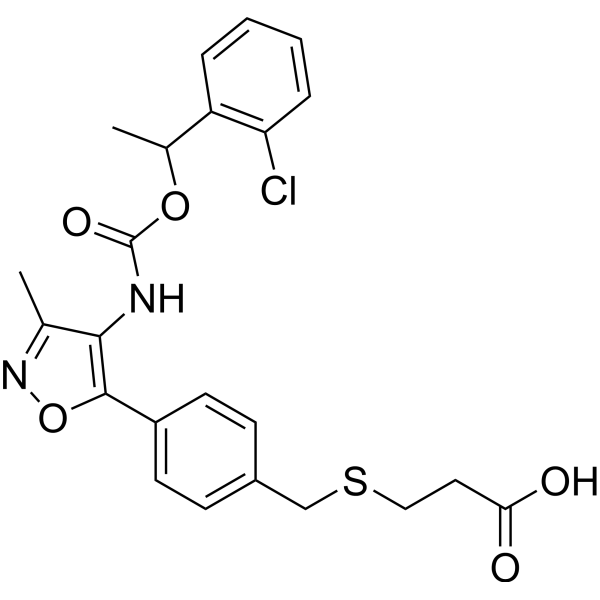
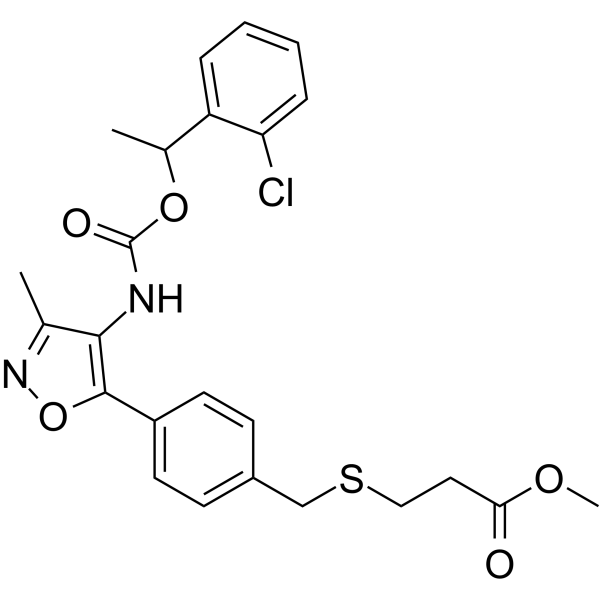
Ki16425 (Debio 0719) is a subtype-selective, competitive antagonist of the EDG-family receptors, LPA1 and LPA3 with Kis of 0.34 μM and 0.93 μM, respectively. Ki16425 (Debio 0719) reduces the LPA-induced activation of p42/p44 MAPK . Ki16425 can also inhibit LPA-induced dephosphorylation of Yes-associated protein (YAP)/TAZ in HEK293A cells .
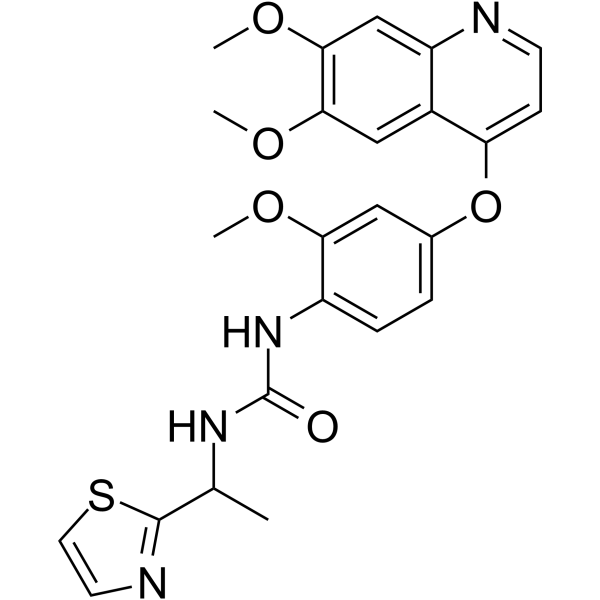
Ki20227 is an orally active and highly selective c-Fms tyrosine kinase (CSF1R) inhibitor with IC50s of 2 nM, 12 nM, 451 and 217 nM for CSF1R, VEGFR2 (vascular endothelial growth factor receptor-2), c-Kit (stem cell factor receptor) and PDGFRβ (platelet-derived growth factor receptor β). Ki20227 suppresses osteoclast differentiation and osteolytic bone destruction .
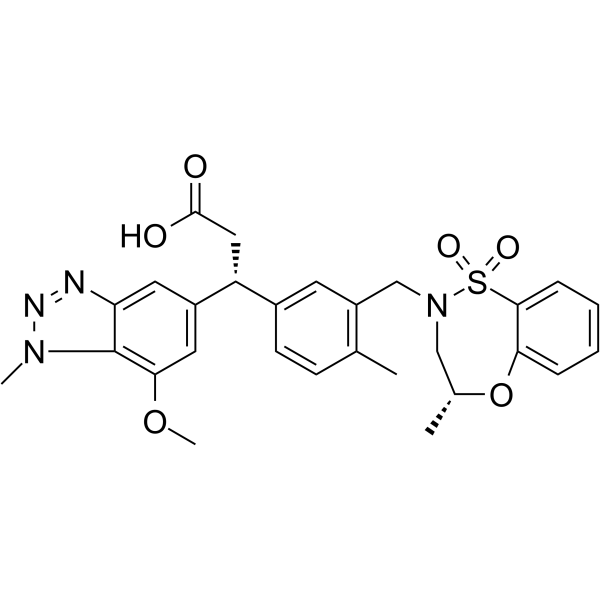
KI-DX-014 is a DDX21 inhibitor with high RNA-binding inhibitory activity (IC50 of 3.31 μM). KI-DX-014 targets DDX21’s intrinsically disordered C-terminal domain, inhibits DDX21-structured RNA interaction, modulates DDX21’s RNA-dependent ATPase activity, and disrupts DDX21 biomolecular condensate formation. KI-DX-014 attenuates in vitroP-TEFb release from the 7SK snRNP complex, suppresses P-TEFb-dependent RNA polymerase II CTD phosphorylation, and induces developmental defects in zebrafish embryos. KI-DX-014 acts as a chemical probe for dissecting DDX21 functions in normal physiology and disease states. KI-DX-014 can be used for cancers and neurodegenerative disorders research .
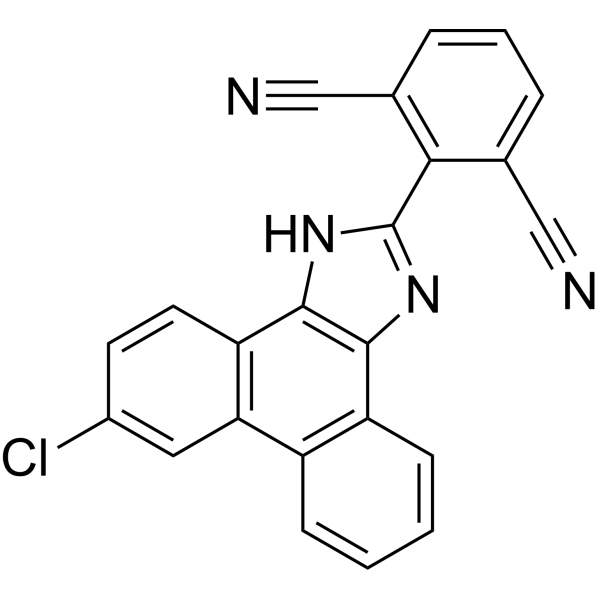
KI-TOX-A3 is a TOX protein-protein interaction inhibitor that blocks the TOX-KAT7 protein-protein interaction with an IC50 of 0.51 μM. KI-TOX-A3 induces proteasomal degradation of TOX, restores KAT7-mediated H3K14 acetylation, reverses exhaustion of CD8 + T cells, and inhibits the proliferation of T cell acute lymphoblastic leukemia (T-ALL) cells. KI-TOX-A3 shows promise for use in studies of hematological malignancies such as T-ALL .
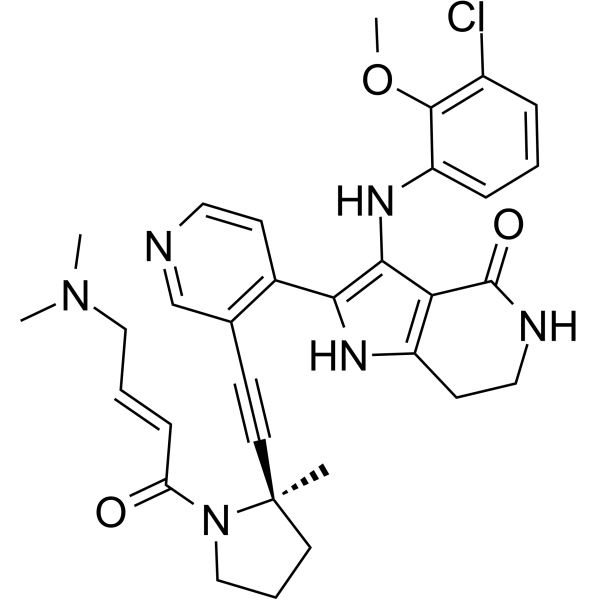
STX-721 is an orally active, irreversible, covalent EGFR exon 20 insertion (ex20ins) inhibitor that selectively targets ex20ins-mutant dynamic protein states. STX-721 potently inhibits the kinase activity of EGFR ex20ins mutants (NPG, ASV, SVD). STX-721 inhibits phosphorylation of EGFR (pEGFR Y1068) and downstream ERK (pERK Thr202/Tyr204), and suppresses proliferation of ex20ins-mutant Ba/F3 cells and human NSCLC cell lines (NCI-H2073 ASV KI, CUTO-14 ASV). STX-721 induces tumor regression in EGFR ex20ins-mutant PDX/CDX models. STX-721 can be used for the study of non-small cell lung cancer (NSCLC) harboring EGFR or HER2 ex20ins mutations .
MF63 is a selective and orally active inhibitor of mPGES-1. MF63 reduces the accumulation of PGE2, relieves pyresis, hyperalgesia, and inflammatory pain by inhibiting mPGES-1 .
Dragendorff reagent is used for detecting alkaloids and other nitrogen-containing compounds. Dragendorff reagent is a solution of potassium bismuth iodide composing of Basic bismuth nitrate (Bi(NO3)3), Tartaric acid (HY-N2436), and Potassium iodide (KI). When contact with alkaloids, Dragendorff reagent produces an orange or orange red precipitate .
Ki16198 is a potent and orally active LPA receptor antagonist, the methyl ester of Ki16425 (HY-13285). Ki16198 inhibits LPA1 and LPA3-induced inositol phosphate production with?Ki?values of 0.34 μM and 0.93 μM, respectively. Ki16198 is effective for pancreatic cancer tumorigenesis and metastasis in vivo .
KI-7 is an A2B adenosine receptor positive allosteric modulator. KI-7 potentiates the cAMP accumulation induced by the non-selective A2B adenosine receptor agonist NECA (EC50=445.8 nM). KI-7 also potentiates the cAMP accumulation induced by the selective A2B adenosine receptor agonist BAY 60-6583 as well as by adenosine with EC50s of 2390 nM and 2550 nM, respectively .
Psme3 Mouse Pre-designed siRNA Set A contains three designed siRNAs for Psme3 gene (Mouse), as well as a negative control, a positive control, and a FAM-labeled negative control.
FAP-PI3KI1 is a fibroblast-activated protein (FAP)-targeted PI3K inhibitor that selectively targets FAP-expressing human idiopathic pulmonary fibrosis (IPF) cells and effectively inhibits collagen synthesis and reduces collagen deposition .
Axin1 Mouse Pre-designed siRNA Set A contains three designed siRNAs for Axin1 gene (Mouse), as well as a negative control, a positive control, and a FAM-labeled negative control.
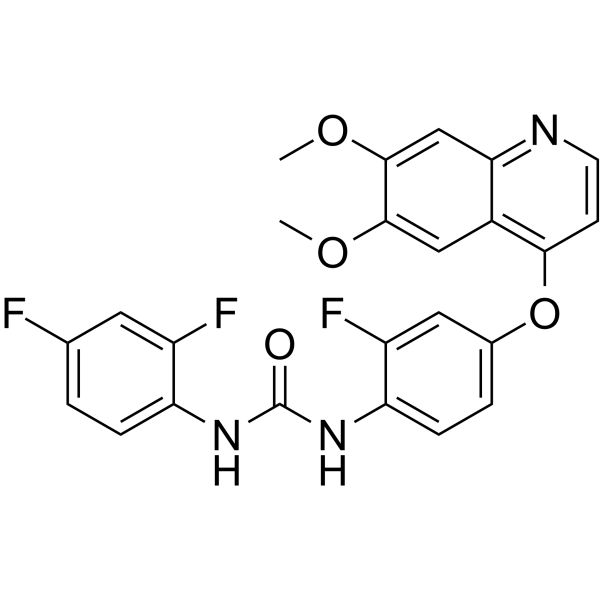
Ki11502 is a multi-targeted receptor tyrosine kinase (RTK) inhibitor that selectively inhibits the activity of PDGF β/α receptors with IC50 values less than 10 nM. Ki11502 selectively inhibits PDGF β receptor phosphorylation, proliferation, and proteoglycan synthesis in human vascular smooth muscle cells. Ki11502 can induce Apoptosis) and exhibits profound antiproliferative effects on select subsets of leukemia, including those with Imatinib (HY-15463) resistant mutations. Ki11502 is highly suitable for studying the role of PDGF in vascular diseases, particularly the role of proteoglycans in atherosclerosis .
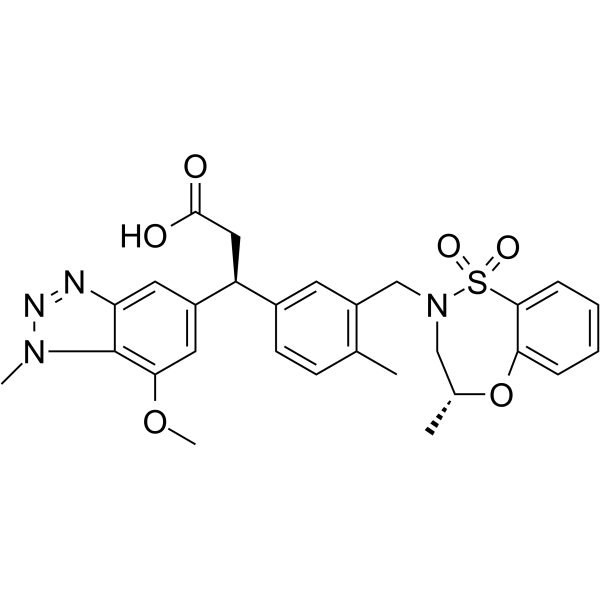
KI-ARv-03 is a potent and selective ATP-competitive CDK9 inhibitor with an IC₅₀ of 0.15 μM (at 45 μM ATP), exhibiting over 130-fold selectivity against other CDKs (including CDK1-7). KI-ARv-03 reduces androgen receptor (AR)-driven transcription and proliferation in prostate cancer cells. KI-ARv-03 can be used for leukemia, pancreatic cancer, alveolar rhabdomyosarcoma (ARMS) and castration-resistant prostate cancer (CRPC) research. KI-ARv-03 is a ligand for target protein for PROTAC. KI-ARv-03 can be used to synthesize PROTAC KI-CDK9d-32 (HY-173523) [1][2].
KI-MS2-008 is a selective Max binder. KI-MS2-008 results in the stabilization of Max homodimers and the attenuation of Myc. KI-MS2-008 has anticancer activity against Myc-dependent cancer .
KI 1769 is a potassium channel opener. KI 1769 can exhibit vasodilating effect. KI 1769 prolongs the micturition interval and reduces the resistance to fluid infusion through the urethral lumen. KI 1769 can be used for the research of cardiovascular disease .
Ki 23057 is a competitive, orally active inhibitor for tyrosine kinase, which inhibits the phosphorylation of K-samII/FGF-R2, VEGF-R1, VEGF-R2, PDGF-Rβ and c-Kit, with IC50s of 88, 69, 83, 100 and 480 nM. Ki 23057 inhibits the proliferation of sclerogastric cancer cells OCUM-2MD3 and OCUM-8, and induces apoptosis. Ki 23057 exhibits antitumor efficacy in mouse models .
Human BMPR1A mRNA encodes the human bone morphogenetic protein receptor type 1A (BMPR1A) protein, a family of transmembrane serine/threonine kinases. BMPR1A may play a role in positively regulating chondrocyte differentiation through GDF5 interaction and mediating induction of adipogenesis by GDF6.
KI-328 is a novel inhibitor targeting KIT kinase that has selective activity against some KIT mutant kinases commonly found in acute myeloid leukemia (AML). KI-328 showed specificity for KIT kinase in in vitro kinase assays and inhibited the growth of wild-type (Wt) and mutant KIT-expressing cells, but had lower activity against D816V-KIT. Comparative analysis of the inhibitory effects of several potent KIT inhibitors on the growth of multiple mutant KIT-expressing cells showed that the multi-kinase inhibitors had comparable activity against D816V-KIT as against other mutant KITs; however, heat shock protein 90 (HSP90) inhibitors showed significant activity against D816V-KIT, inhibiting the growth of D816V-KIT-expressing cells at concentrations that did not affect the growth of other mutant KIT-expressing cells. These results suggest that potent KIT inhibitors have different activities against different types of KIT mutant kinases. Therefore, in clinical development, KIT inhibitors need to validate their activity against multiple types of KIT mutant kinases.
SJYHJ-026 (compound 37) is a pregnane X receptor (PXR) PROTAC degrader with the DC50 of 86.6 nM and maximal degradation of 66.4%. SJYHJ-026 shows cell cytotoxic aganist SNU-C4 HiBiT-PXR KI cells with the IC50 values of 97.4 μM (24 h) and 99.5 μM (72 h) (Blue: VHL ligand HY-125845,Black: linker HY-43048;Pink: PXR inhibitor HY-169277) .
PSME3 Human Pre-designed siRNA Set A contains three designed siRNAs for PSME3 gene (Human), as well as a negative control, a positive control, and a FAM-labeled negative control.
Ki16425 (Standard) is the analytical standard of Ki16425. This product is intended for research and analytical applications. Ki16425 (Debio 0719) is a subtype-selective, competitive antagonist of the EDG-family receptors, LPA1 and LPA3 with Kis of 0.34 μM and 0.93 μM, respectively. Ki16425 (Debio 0719) reduces the LPA-induced activation of p42/p44 MAPK . Ki16425 can also inhibit LPA-induced dephosphorylation of Yes-associated protein (YAP)/TAZ in HEK293A cells .
PROTAC SMARCA2/4-degrader-34 (compound 38) is a potent is a potent SMARCA2 and SMARCA4 PROTAC degrader. PROTAC SMARCA2/4-degrader-34 shows PXR binding affinity with DC50 value of 85.1 nM. PROTAC SMARCA2/4-degrader-34 decreases the protein expression of 3xFLAG-PXR. (Pink: Ligand for target protein (HY-169280); Black: Linker (HY-43048); Blue: Ligand for E3 ligase (HY-125845) .
Tnfrsf8 Mouse Pre-designed siRNA Set A contains three designed siRNAs for Tnfrsf8 gene (Mouse), as well as a negative control, a positive control, and a FAM-labeled negative control.
KI696 (Standard) is the analytical standard of KI696 (HY-101140). This product is intended for research and analytical applications. KI696 is a high affinity probe that disrupts the Keap1/NRF2 interaction. KI696 is a potent and selective inhibitor of the KEAP1/NRF2 interaction .
Ki20227 (Standard) is the analytical standard of Ki20227 (HY-10408). This product is intended for research and analytical applications. Ki20227 is an orally active and highly selective c-Fms tyrosine kinase (CSF1R) inhibitor with IC50s of 2 nM, 12 nM, 451 and 217 nM for CSF1R, VEGFR2 (vascular endothelial growth factor receptor-2), c-Kit (stem cell factor receptor) and PDGFRβ (platelet-derived growth factor receptor β). Ki20227 suppresses osteoclast differentiation and osteolytic bone destruction .
KI696 isomer (Standard) is the analytical standard of KI696 isomer (HY-101140A). This product is intended for research and analytical applications. KI696 isomer is the less active isomer of KI696 (HY-101140). KI696 is a high affinity probe that disrupts the Keap1/NRF2 interaction .
Ki-67 peptide/BSA is an antigen-adjuvant conjugate conjugate of Ki-67 peptide and BSA. By conjugating the antigen with a protein adjuvant, the production of antigen-specific antibodies in vaccine models can be enhanced. The conjugate does not affect protein folding or disrupt major epitopes, and can enhance cross-presentation and the production of antigen-specific T cells.
GIGA-564 is a fully human anti-CTLA4 IgG1 monoclonal antibody with a Kd of 9.8 nM. GIGA-564 binds to a unique epitope of CTLA-4, mediates FcR-dependent signaling pathways, depletes CTLA-4-highly-expressing regulatory T cells within tumors, and inhibits the proliferation of peripheral regulatory T cells. GIGA-564 exhibits anti-tumor activity in mouse models. GIGA-564 can be used for tumor research .
Anti-Human/Mouse/Bovine LAG-3 Antibody (ADI-31853) is a monoclonal antibody that specifically binds to human, mouse and bovine LAG-3. Anti-Human/Mouse/Bovine LAG-3 Antibody (ADI-31853) can be used in the research of colon cancer, colorectal cancer and rectal cancer. The recommended isotype control is Human IgG4 (S228P) kappa, Isotype Control (HY-P99003) .
INCA033989 is a fully human IgG1 monoclonal antibody targeting mutCALR (KD = 1.75 nM for mutCALR del52; KD = 6.78 nM for mutCALR ins5). INCA033989 antagonizes mutCALR-driven signaling and proliferation. INCA033989 selectively inhibits pSTAT3/pSTAT5. INCA033989 prevents thrombocytosis and reduces the expansion of mutCALR-positive cells. INCA033989 is useful for research on myeloproliferative neoplasms .
Dragendorff reagent is used for detecting alkaloids and other nitrogen-containing compounds. Dragendorff reagent is a solution of potassium bismuth iodide composing of Basic bismuth nitrate (Bi(NO3)3), Tartaric acid (HY-N2436), and Potassium iodide (KI). When contact with alkaloids, Dragendorff reagent produces an orange or orange red precipitate .
Ki-67 peptide/BSA is an antigen-adjuvant conjugate conjugate of Ki-67 peptide and BSA. By conjugating the antigen with a protein adjuvant, the production of antigen-specific antibodies in vaccine models can be enhanced. The conjugate does not affect protein folding or disrupt major epitopes, and can enhance cross-presentation and the production of antigen-specific T cells.
GIGA-564 is a fully human anti-CTLA4 IgG1 monoclonal antibody with a Kd of 9.8 nM. GIGA-564 binds to a unique epitope of CTLA-4, mediates FcR-dependent signaling pathways, depletes CTLA-4-highly-expressing regulatory T cells within tumors, and inhibits the proliferation of peripheral regulatory T cells. GIGA-564 exhibits anti-tumor activity in mouse models. GIGA-564 can be used for tumor research .
Anti-Human/Mouse/Bovine LAG-3 Antibody (ADI-31853) is a monoclonal antibody that specifically binds to human, mouse and bovine LAG-3. Anti-Human/Mouse/Bovine LAG-3 Antibody (ADI-31853) can be used in the research of colon cancer, colorectal cancer and rectal cancer. The recommended isotype control is Human IgG4 (S228P) kappa, Isotype Control (HY-P99003) .
INCA033989 is a fully human IgG1 monoclonal antibody targeting mutCALR (KD = 1.75 nM for mutCALR del52; KD = 6.78 nM for mutCALR ins5). INCA033989 antagonizes mutCALR-driven signaling and proliferation. INCA033989 selectively inhibits pSTAT3/pSTAT5. INCA033989 prevents thrombocytosis and reduces the expansion of mutCALR-positive cells. INCA033989 is useful for research on myeloproliferative neoplasms .
Ki67/MKI67 is localized on mitotic chromosomes and maintains its dispersion during nuclear envelope disassembly. It covers a large portion of the chromosome surface and prevents chromatin from collapsing into clumps. Ki67/MKI67 Protein, Human (His) is the recombinant mouse-derived Ki-67(MKI67) protein, expressed by E. coli , with N-6*His labeled tag.
Ki67/MKI67 is localized on mitotic chromosomes and maintains its dispersion during nuclear envelope disassembly. It covers a large portion of the chromosome surface and prevents chromatin from collapsing into clumps. Ki67/MKI67 Protein, Human (GST) is the recombinant human-derived Ki67/MKI67 protein, expressed by E. coli , with N-GST labeled tag.
PSME3 is a subunit of the 11S REG-gamma proteasome modulator that forms a homoheptamer and is essential for activating the trypsin-like subunit of the proteasome and inhibiting the chymotrypsin-like and PGPH subunits. PSME3 promotes MDM2-p53 interaction, leading to p53 degradation and inhibiting apoptosis after DNA damage. PSME3 Protein, Human (His, solution) is the recombinant human-derived PSME3 protein, expressed by E. coli , with N-His labeled tag.
PSME3 is a subunit of the 11S REG-gamma proteasome modulator that forms a homoheptamer and is essential for activating the trypsin-like subunit of the proteasome and inhibiting the chymotrypsin-like and PGPH subunits. PSME3 promotes MDM2-p53 interaction, leading to p53 degradation and inhibiting apoptosis after DNA damage. PSME3 Protein, Human (N-His) is the recombinant human-derived PSME3 protein, expressed by E. coli , with N-His labeled tag.
CD30/TNFRSF8 protein (TNFSF8/CD30L receptor) is a key factor regulating cell growth and lymphoblast transformation and may activate NF-kappa-B signaling. CD30/TNFRSF8 Protein, Cynomolgus (HEK293, C-His) is the recombinant cynomolgus-derived CD30/TNFRSF8 protein, expressed by HEK293 , with C-His labeled tag.
The Kras4B protein interacts specifically with GPR31, dependent on farnesylation. This binding suggests a regulatory role for Kras4B in association with GPR31, emphasizing the importance of the farnesylation process. Comprehensive exploration into the molecular details of this interaction is crucial to understand the precise mechanisms and functional implications in cellular processes or signaling pathways. Kras4A Protein, Human (Biotinylated, His-Avi) is the recombinant human-derived Kras4A protein, expressed by E. coli, with N-His and N-Avi labeled tag.
The Kras4B protein interacts specifically with GPR31, dependent on farnesylation. This binding suggests a regulatory role for Kras4B in association with GPR31, emphasizing the importance of the farnesylation process. Comprehensive exploration into the molecular details of this interaction is crucial to understand the precise mechanisms and functional implications in cellular processes or signaling pathways. Kras4B Protein, Human (G13D, His) is the recombinant human-derived KRAS protein, expressed by E. coli, with N-His labeled tag.
Kras4B Protein, Human (184a.a, G12C, His) expresses in E. coli with a His tag at the N-terminus. KRAS G12C is an oncogenic driver mutation in multiple cancer types.
The Kras4B protein interacts specifically with GPR31, dependent on farnesylation. This binding suggests a regulatory role for Kras4B in association with GPR31, emphasizing the importance of the farnesylation process. Comprehensive exploration into the molecular details of this interaction is crucial to understand the precise mechanisms and functional implications in cellular processes or signaling pathways. Kras4B Protein, Human (His) is the recombinant human-derived Kras4B protein, expressed by E. coli , with N-6*His labeled tag.
CD30/TNFRSF8 protein (TNFSF8/CD30L receptor) is a key factor regulating cell growth and lymphoblast transformation and may activate NF-kappa-B signaling. FITC-Labeled CD30/TNFRSF8 Protein, Human (HEK293, Fc) is the recombinant human-derived FITC-Labeled CD30/TNFRSF8 protein, expressed by HEK293 , with His labeled tag.
The Kras4B protein interacts specifically with GPR31, dependent on farnesylation. This binding suggests a regulatory role for Kras4B in association with GPR31, emphasizing the importance of the farnesylation process. Comprehensive exploration into the molecular details of this interaction is crucial to understand the precise mechanisms and functional implications in cellular processes or signaling pathways. Kras4B Protein, Human (His) is the recombinant human-derived Kras4B protein, expressed by E. coli , with N-6*His labeled tag.
The Kras4B protein interacts specifically with GPR31, dependent on farnesylation. This binding suggests a regulatory role for Kras4B in association with GPR31, emphasizing the importance of the farnesylation process. Comprehensive exploration into the molecular details of this interaction is crucial to understand the precise mechanisms and functional implications in cellular processes or signaling pathways. Kras4B Protein, Human (sf9, His) is the recombinant human-derived Kras4B protein, expressed by sf9 insect cells, with N-His labeled tag.
KRAS protein is a key Ras family member that binds GDP/GTP and has intrinsic GTPase activity. Its critical role in regulating cell proliferation emphasizes its importance in cellular processes. Kras4B Protein, Human (G12S, His) is the recombinant human-derived KRAS, expressed by E. coli, with N-6*His labeled tag.
The Kras4B protein interacts specifically with GPR31, dependent on farnesylation. This binding suggests a regulatory role for Kras4B in association with GPR31, emphasizing the importance of the farnesylation process. Comprehensive exploration into the molecular details of this interaction is crucial to understand the precise mechanisms and functional implications in cellular processes or signaling pathways. Kras4B Protein, Human (184a.a, His) is the recombinant human-derived Kras4B protein, expressed by E. coli, with N-His labeled tag.
CD30/TNFRSF8 protein (TNFSF8/CD30L receptor) is a key factor regulating cell growth and lymphoblast transformation and may activate NF-kappa-B signaling. CD30/TNFRSF8 Protein, Human (Biotinylated, HEK293, His-Avi) is the recombinant human-derived CD30/TNFRSF8 protein, expressed by HEK293 , with C-6*His, C-Avi labeled tag.
CD30/TNFRSF8 protein (TNFSF8/CD30L receptor) is a key factor regulating cell growth and lymphoblast transformation and may activate NF-kappa-B signaling. CD30/TNFRSF8 Protein, Human (HEK293, hFc) is the recombinant human-derived CD30/TNFRSF8 protein, expressed by HEK293 , with C-hFc labeled tag.
The Kras4B protein interacts specifically with GPR31, dependent on farnesylation. This binding suggests a regulatory role for Kras4B in association with GPR31, emphasizing the importance of the farnesylation process. Comprehensive exploration into the molecular details of this interaction is crucial to understand the precise mechanisms and functional implications in cellular processes or signaling pathways. Kras4B Protein, Human (G12D, His) is the recombinant human-derived Kras4B protein, expressed by E. coli, with N-His labeled tag.
The Kras4B protein interacts specifically with GPR31, dependent on farnesylation. This binding suggests a regulatory role for Kras4B in association with GPR31, emphasizing the importance of the farnesylation process. Comprehensive exploration into the molecular details of this interaction is crucial to understand the precise mechanisms and functional implications in cellular processes or signaling pathways. Kras4B Protein, Human (G12R, His) is the recombinant human-derived Kras4B protein, expressed by E. coli, with N-His labeled tag.
The Kras4B protein interacts specifically with GPR31, dependent on farnesylation. This binding suggests a regulatory role for Kras4B in association with GPR31, emphasizing the importance of the farnesylation process. Comprehensive exploration into the molecular details of this interaction is crucial to understand the precise mechanisms and functional implications in cellular processes or signaling pathways. Kras4B Protein, Human (G12A, His) is the recombinant human-derived Kras4B protein, expressed by E. coli, with N-His labeled tag.
The Kras4B protein interacts specifically with GPR31, dependent on farnesylation. This binding suggests a regulatory role for Kras4B in association with GPR31, emphasizing the importance of the farnesylation process. Comprehensive exploration into the molecular details of this interaction is crucial to understand the precise mechanisms and functional implications in cellular processes or signaling pathways. Kras4B Protein, Human (Q61H, His) is the recombinant human-derived Kras4B protein, expressed by E. coli, with N-His labeled tag.
CD30/TNFRSF8 protein (TNFSF8/CD30L receptor) is a key factor regulating cell growth and lymphoblast transformation and may activate NF-kappa-B signaling. CD30/TNFRSF8 Protein, Human (Biotinylated, HEK293, His) is the recombinant human-derived CD30/TNFRSF8 protein, expressed by HEK293 , with C-His labeled tag.
CD30/TNFRSF8 protein (TNFSF8/CD30L receptor) is a key factor regulating cell growth and lymphoblast transformation and may activate NF-kappa-B signaling. CD30/TNFRSF8 Protein, Human (HEK293, His-Avi) is the recombinant human-derived CD30/TNFRSF8, expressed by HEK293, with C-Avi, C-His labeled tag. The total length of CD30/TNFRSF8 Protein, Human (HEK293, His-Avi) is 361 a.a..
The Kras4B protein interacts specifically with GPR31, dependent on farnesylation. This binding suggests a regulatory role for Kras4B in association with GPR31, emphasizing the importance of the farnesylation process. Comprehensive exploration into the molecular details of this interaction is crucial to understand the precise mechanisms and functional implications in cellular processes or signaling pathways. Kras4B Protein, Human (G12C, His) is the recombinant human-derived Kras4B protein, expressed by E. coli , with N-6*His labeled tag and G12C mutation.
The Kras4B protein interacts specifically with GPR31, dependent on farnesylation. This binding suggests a regulatory role for Kras4B in association with GPR31, emphasizing the importance of the farnesylation process. Comprehensive exploration into the molecular details of this interaction is crucial to understand the precise mechanisms and functional implications in cellular processes or signaling pathways. Kras4B Protein, Human (G12V, His) is the recombinant human-derived Kras4B protein, expressed by E. coli , with N-6*His labeled tag.
CD30/TNFRSF8 protein (TNFSF8/CD30L receptor) is a key factor regulating cell growth and lymphoblast transformation and may activate NF-kappa-B signaling. CD30/TNFRSF8 Protein, Cynomolgus (194a.a, HEK293, His) is the recombinant cynomolgus-derived CD30/TNFRSF8 protein, expressed by HEK293 , with C-His labeled tag.
CD70 is the ligand of CD27 in activated T and B lymphocytes, is an important cytokine in CD70-CD27 pathway involving with the generation and maintenance of T cell immunity. CD70 is a surface antigen, also shows antiviral activity and regulates viability of tumor cells and regulatory T cells. As for CD70 protein in cynomolgus contains TNF_2 domain (57-189 a.a) and transmembrane helix, belonging to the tumor necrosis factor (TNF) family. CD70 Protein, Cynomolgus (HEK293, His) is 156 amino acids in length (Q39-P194) and is expressed in the HEK293 cells with a N terminal His-tag.
KRAS protein is a key Ras family member that binds GDP/GTP and has intrinsic GTPase activity. Its critical role in regulating cell proliferation emphasizes its importance in cellular processes. Kras4B Protein, Human (184a.a, G12V, His) is the recombinant human-derived KRAS protein, expressed by E. coli , with N-6*His labeled tag and G12V mutation.
CD70 is the ligand of CD27 in activated T and B lymphocytes, is an important cytokine in CD70-CD27 pathway involving with the generation and maintenance of T cell immunity. CD70 is a surface antigen, also shows antiviral activity and regulates viability of tumor cells and regulatory T cells. As for CD70 protein in human contains transmembrane domain and transmembrane helix, belonging to the tumor necrosis factor (TNF) family. CD70 Protein, Human (FITC, HEK293, His) is a luorescein isothiocyanate (FITC)-labeled recombinant protein expressed in the HEK293 cells with a N terminal His-tag.
CD70 is the ligand of CD27 in activated T and B lymphocytes, is an important cytokine in CD70-CD27 pathway involving with the generation and maintenance of T cell immunity. CD70 is a surface antigen, also shows antiviral activity and regulates viability of tumor cells and regulatory T cells. As for CD70 protein in human contains transmembrane domain and transmembrane helix, belonging to the tumor necrosis factor (TNF) family. CD70 Trimer Protein, Human (Biotinylated, HEK293, His) is a biotinylated CD70 protein trimeric complex, is expressed in the HEK293 cells, with a N terminal His-tag.
The PNCK protein is a calcium/calmodulin-dependent protein kinase and a key component of the calcium-triggered signaling cascade. In vitro, PNCK exhibits the ability to phosphorylate CREB1 and SYN1/synapsin I, emphasizing its involvement in regulating cellular processes associated with these substrates. PNCK Protein, Human (sf9, His, GST) is the recombinant human-derived PNCK protein, expressed by sf9 insect cells , with N-8*His, N-GST labeled tag.
CD30/TNFRSF8 protein (TNFSF8/CD30L receptor) is a key factor regulating cell growth and lymphoblast transformation and may activate NF-kappa-B signaling. CD30/TNFRSF8 Protein, Human (HEK293, His) is the recombinant human-derived CD30/TNFRSF8 protein, expressed by HEK293 , with C-6*His labeled tag.
CAMK1; calcium/calmodulin-dependent protein KInase I; calcium/calmodulin-dependent protein KInase type 1; CaMKI; caM-KI; caMKI-alpha; caM KInase I alpha; CAMKI; MGC120317; MGC120318;
CAMK1 alpha/CAMK1 Protein, Human (sf9, His, GST) is the recombinant human-derived CAMK1 alpha, expressed by Sf9 insect cells , with His, GST labeled tag.
CD30/TNFRSF8 protein (TNFSF8/CD30L receptor) is a key factor regulating cell growth and lymphoblast transformation and may activate NF-kappa-B signaling. CD30/TNFRSF8 Protein, Human (HEK293, N-His, C-Myc) is the recombinant human-derived CD30/TNFRSF8 protein, expressed by HEK293 , with C-Myc, N-10*His labeled tag.
HLA-A*0301 collaborates with B2M to present viral and tumor peptides that direct CD8-positive T cells to respond against infected or transformed cells. It can also present self-peptides to avoid self-reaction. HLA-A*0301 KRAS G12V Complex Protein, Human (HEK293, His-Avi) is a recombinant protein dimer complex containing HLA-A*0301 and B2M/Beta-2-microglobulin Protein, expressed by HEK293 , with C-Avi, C-His labeled tag and VVGAVGVGK peptide. HLA-A*0301 KRAS G12V Complex Protein, Human (HEK293, His-Avi), has molecular weight of 55-60 kDa.
c KI ras2 antibody; c KIrsten ras protein antibody; c-K-ras antibody; c-KI-ras antibody; Cellular c KI ras2 proto oncogene antibody; Cellular transforming proto oncogene antibody; CFC2 antibody; cK Ras antibody; GTPase KRas antibody; K RAS p21 protein antibody; c KI ras2 antibody; c KIrsten ras protein antibody
WB, IHC-P, ICC/IF, FC
Human, Mouse, Rat
KRAS Antibody (YA6861) is a Mouse-derived and non-conjugated IgG1 monoclonal antibody, targeting to KRAS.
c KI ras2 antibody; c KIrsten ras protein antibody; c-K-ras antibody; c-KI-ras antibody; Cellular c KI ras2 proto oncogene antibody; Cellular transforming proto oncogene antibody; CFC2 antibody; cK Ras antibody; GTPase KRas antibody; K RAS p21 protein antibody; c KI ras2 antibody; c KIrsten ras protein antibody; c-K-ras antibody; c-KI-ras antibody; Cellular c KI ras2 proto oncogene antibody; Cellular transforming proto oncogene antibody; CFC2 antibody; cK Ras antibody; GTPase KRas antibody; K RAS p21 protein antibody; K RAS2A antibody; K RAS2B antibody; K RAS4A antibody; K RAS4B antibody; K-Ras 2 antibody; KI RAS antibody; KI-Ras antibody; KIRSTEN MURINE SARCOMA VIRUS 2 antibody; KIrsten rat sarcoma 2 viral (v KI ras2) oncogene homolog antibody; KIrsten rat sarcoma viral oncogene homolog antibody; KRAS antibody; KRAS proto oncogene, GTPase antibody; KRAS1 antibody; KRAS2 antibody; N-terminally processed antibody; NS antibody; NS3 antibody; Oncogene KRAS2 antibody; p21ras antibody; PR310 c K ras oncogene antibody; PR310 cK ras oncogene antibody; RALD antibody; RASK_HUMAN antibody; RASK2 antibody; Transforming protein p21 antibody; v KI ras2 KIrsten rat sarcoma 2 viral oncogene homolog antibody; v KI ras2 KIrsten rat sarcoma viral oncogene homolog antibody;
WB, IHC-P
Human, Mouse, Rat
KRAS Antibody (YA6628) is a Mouse-derived and non-conjugated IgG1 monoclonal antibody, targeting to KRAS.
Psme3 Mouse Pre-designed siRNA Set A contains three designed siRNAs for Psme3 gene (Mouse), as well as a negative control, a positive control, and a FAM-labeled negative control.
Axin1 Mouse Pre-designed siRNA Set A contains three designed siRNAs for Axin1 gene (Mouse), as well as a negative control, a positive control, and a FAM-labeled negative control.
Human BMPR1A mRNA encodes the human bone morphogenetic protein receptor type 1A (BMPR1A) protein, a family of transmembrane serine/threonine kinases. BMPR1A may play a role in positively regulating chondrocyte differentiation through GDF5 interaction and mediating induction of adipogenesis by GDF6.
PSME3 Human Pre-designed siRNA Set A contains three designed siRNAs for PSME3 gene (Human), as well as a negative control, a positive control, and a FAM-labeled negative control.
Tnfrsf8 Mouse Pre-designed siRNA Set A contains three designed siRNAs for Tnfrsf8 gene (Mouse), as well as a negative control, a positive control, and a FAM-labeled negative control.
Inquiry Online
Your information is safe with us. * Required Fields.
Western blot analysis of extracts from THP-1(lane 2(20μg), Jurkat (lane 3(20μg) and NIH3T3(lane 4(20μg) using FOXO1A (HY-P80132) Rabbit mAb. Proteins were transferred
to a PVDF membrane and blocked with 5% non-fat milk in TBST for 2 hour at room temperature. The primary antibody (1/1000) and Loading control antibody (Beta Actin, HY-P80438, 1/10000) was
used in 5% non-fat milk in TBST at 4°C overnight. Goat Anti-Mouse/Rabbit IgG-HRP Secondary Antibody (1/10000) was used for 1 hour at room temperature.
Western blot analysis of extracts from THP-1(lane 2(20μg), Jurkat (lane 3(20μg) and NIH3T3(lane 4(20μg) using FOXO1A (HY-P80132) Rabbit mAb. Proteins were transferred
to a PVDF membrane and blocked with 5% non-fat milk in TBST for 2 hour at room temperature. The primary antibody (1/1000) and Loading control antibody (Beta Actin, HY-P80438, 1/10000) was
used in 5% non-fat milk in TBST at 4°C overnight. Goat Anti-Mouse/Rabbit IgG-HRP Secondary Antibody (1/10000) was used for 1 hour at room temperature.
Western blot analysis of extracts from THP-1(lane 2(20μg), Jurkat (lane 3(20μg) and NIH3T3(lane 4(20μg) using FOXO1A (HY-P80132) Rabbit mAb. Proteins were transferred
to a PVDF membrane and blocked with 5% non-fat milk in TBST for 2 hour at room temperature. The primary antibody (1/1000) and Loading control antibody (Beta Actin, HY-P80438, 1/10000) was
used in 5% non-fat milk in TBST at 4°C overnight. Goat Anti-Mouse/Rabbit IgG-HRP Secondary Antibody (1/10000) was used for 1 hour at room temperature.
Western blot analysis of extracts from THP-1(lane 2(20μg), Jurkat (lane 3(20μg) and NIH3T3(lane 4(20μg) using FOXO1A (HY-P80132) Rabbit mAb. Proteins were transferred
to a PVDF membrane and blocked with 5% non-fat milk in TBST for 2 hour at room temperature. The primary antibody (1/1000) and Loading control antibody (Beta Actin, HY-P80438, 1/10000) was
MedchemExpress Validation 03
Western blot analysis of extracts from THP-1(lane 2(20μg), Jurkat (lane 3(20μg) and NIH3T3(lane 4(20μg) using FOXO1A (HY-P80132) Rabbit mAb. Proteins were transferred
MedchemExpress Validation 04
Western blot analysis of extracts from THP-1(lane 2(20μg), Jurkat (lane 3(20μg) and NIH3T3(lane 4(20μg) using FOXO1A (HY-P80132) Rabbit mAb. Proteins were transferred
to a PVDF membrane and blocked with 5% non-fat milk in TBST for 2 hour at room temperature. The primary antibody (1/1000) and Loading control antibody (Beta Actin, HY-P80438, 1/10000) was
used in 5% non-fat milk in TBST at 4°C overnight. Goat Anti-Mouse/Rabbit IgG-HRP Secondary Antibody (1/10000) was used for 1 hour at room temperature.
MedchemExpress Validation
Western blot analysis of extracts from THP-1(lane 2(20μg), Jurkat (lane 3(20μg) and NIH3T3(lane 4(20μg) using FOXO1A (HY-P80132) Rabbit mAb. Proteins were transferred
to a PVDF membrane and blocked with 5% non-fat milk in TBST for 2 hour at room temperature. The primary antibody (1/1000) and Loading control antibody (Beta Actin, HY-P80438, 1/10000) was
used in 5% non-fat milk in TBST at 4°C overnight. Goat Anti-Mouse/Rabbit IgG-HRP Secondary Antibody (1/10000) was used for 1 hour at room temperature.
Western blot analysis of extracts from THP-1(lane 2(20μg), Jurkat (lane 3(20μg) and NIH3T3(lane 4(20μg) using FOXO1A (HY-P80132) Rabbit mAb. Proteins were transferred
to a PVDF membrane and blocked with 5% non-fat milk in TBST for 2 hour at room temperature. The primary antibody (1/1000) and Loading control antibody (Beta Actin, HY-P80438, 1/10000) was
used in 5% non-fat milk in TBST at 4°C overnight. Goat Anti-Mouse/Rabbit IgG-HRP Secondary Antibody (1/10000) was used for 1 hour at room temperature.
MedchemExpress Validation
Western blot analysis of extracts from THP-1(lane 2(20μg), Jurkat (lane 3(20μg) and NIH3T3(lane 4(20μg) using FOXO1A (HY-P80132) Rabbit mAb. Proteins were transferred
to a PVDF membrane and blocked with 5% non-fat milk in TBST for 2 hour at room temperature. The primary antibody (1/1000) and Loading control antibody (Beta Actin, HY-P80438, 1/10000) was
used in 5% non-fat milk in TBST at 4°C overnight. Goat Anti-Mouse/Rabbit IgG-HRP Secondary Antibody (1/10000) was used for 1 hour at room temperature.
MedchemExpress Validation
Western blot analysis of extracts from THP-1(lane 2(20μg), Jurkat (lane 3(20μg) and NIH3T3(lane 4(20μg) using FOXO1A (HY-P80132) Rabbit mAb. Proteins were transferred
to a PVDF membrane and blocked with 5% non-fat milk in TBST for 2 hour at room temperature. The primary antibody (1/1000) and Loading control antibody (Beta Actin, HY-P80438, 1/10000) was
used in 5% non-fat milk in TBST at 4°C overnight. Goat Anti-Mouse/Rabbit IgG-HRP Secondary Antibody (1/10000) was used for 1 hour at room temperature.
MedchemExpress Validation
Western blot analysis of extracts from THP-1(lane 2(20μg), Jurkat (lane 3(20μg) and NIH3T3(lane 4(20μg) using FOXO1A (HY-P80132) Rabbit mAb. Proteins were transferred
to a PVDF membrane and blocked with 5% non-fat milk in TBST for 2 hour at room temperature. The primary antibody (1/1000) and Loading control antibody (Beta Actin, HY-P80438, 1/10000) was
used in 5% non-fat milk in TBST at 4°C overnight. Goat Anti-Mouse/Rabbit IgG-HRP Secondary Antibody (1/10000) was used for 1 hour at room temperature.
MedchemExpress Validation
Western blot analysis of extracts from THP-1(lane 2(20μg), Jurkat (lane 3(20μg) and NIH3T3(lane 4(20μg) using FOXO1A (HY-P80132) Rabbit mAb. Proteins were transferred
to a PVDF membrane and blocked with 5% non-fat milk in TBST for 2 hour at room temperature. The primary antibody (1/1000) and Loading control antibody (Beta Actin, HY-P80438, 1/10000) was
used in 5% non-fat milk in TBST at 4°C overnight. Goat Anti-Mouse/Rabbit IgG-HRP Secondary Antibody (1/10000) was used for 1 hour at room temperature.
MedchemExpress Validation
Western blot analysis of extracts from THP-1(lane 2(20μg), Jurkat (lane 3(20μg) and NIH3T3(lane 4(20μg) using FOXO1A (HY-P80132) Rabbit mAb. Proteins were transferred
to a PVDF membrane and blocked with 5% non-fat milk in TBST for 2 hour at room temperature. The primary antibody (1/1000) and Loading control antibody (Beta Actin, HY-P80438, 1/10000) was
used in 5% non-fat milk in TBST at 4°C overnight. Goat Anti-Mouse/Rabbit IgG-HRP Secondary Antibody (1/10000) was used for 1 hour at room temperature.
MedchemExpress Validation
Western blot analysis of extracts from THP-1(lane 2(20μg), Jurkat (lane 3(20μg) and NIH3T3(lane 4(20μg) using FOXO1A (HY-P80132) Rabbit mAb. Proteins were transferred
to a PVDF membrane and blocked with 5% non-fat milk in TBST for 2 hour at room temperature. The primary antibody (1/1000) and Loading control antibody (Beta Actin, HY-P80438, 1/10000) was
used in 5% non-fat milk in TBST at 4°C overnight. Goat Anti-Mouse/Rabbit IgG-HRP Secondary Antibody (1/10000) was used for 1 hour at room temperature.
MedChemExpress values your privacy and your trust is important to us. We use cookies to enhance your website experience. Some cookies are necessary to run the website.
Privacy and Cookie Policy

