1. Search Result
Search Result
Pathways Recommended: Stem Cell/Wnt Cell Cycle/DNA Damage
Results for "

MCF7 human breast cancer cells

" in MedChemExpress (MCE) Product Catalog:

39

Inhibitors & Agonists

1

Biochemical Assay Reagents

1

Inhibitory Antibodies

16

Natural
Products

1

Oligonucleotides

Cat. No. Product Name Target Research Areas Chemical Structure
  • HY-119358
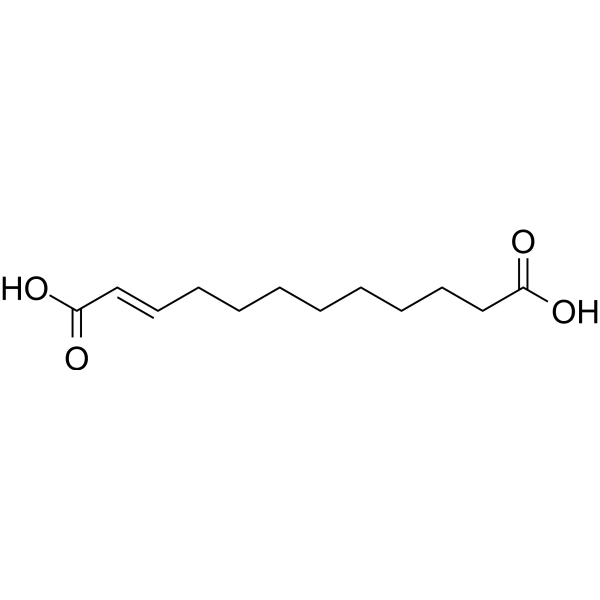
    Traumatic Acid
    3 Publications Verification

    Reactive Oxygen Species (ROS) Apoptosis Cardiovascular Disease Inflammation/Immunology
    Traumatic Acid is a wound healing agent and a cytokinin (phytohormone). Traumatic Acid enhances the biosynthesis of collagen in cultured human skin fibroblasts. Traumatic Acid inhibits MCF-7 breast cancer cells viability and enhances apoptosis and oxidative stress. Traumatic Acid can be used in studies of cancer, circulatory disorders (including arterial hypertension), and skin diseases associated with oxidative stress and impaired collagen biosynthesis .
    Traumatic Acid
  • HY-175465

    Interleukin Related STAT Cancer
    SMI-10B13 is an Oncostatin M (OSM) inhibitor with a KD of 6.6 μM. SMI-10B13 inhibits OSM-mediated STAT3 phosphorylation in T47D and MCF-7 cell lines (IC50 = 136 and 164 nM, respectively). SMI-10B13 shows anti-tumor effect in human breast cancer mice models .
    SMI-10B13
  • HY-N0435

    DNA/RNA Synthesis Cancer
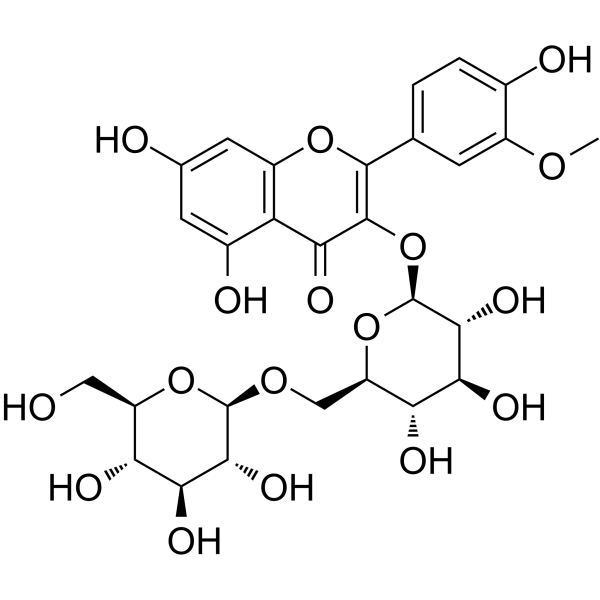
    Isorhamnetin 3-gentiobioside is a flavonoid with activity of promoting cancer cell proliferation. Isorhamnetin 3-gentiobioside is an activator of DNA synthesis in MCF-7 human breast cancer cells with an EC50 of 3.1 μg/mL. Isorhamnetin 3-gentiobioside exhibits ABTS radical scavenging activity with an IC50 of 33.43 μg/mL. The compound can be used to study the bidirectional regulatory mechanism of cancer .
    Isorhamnetin 3-gentiobioside
  • HY-142997

    Liposome Cancer
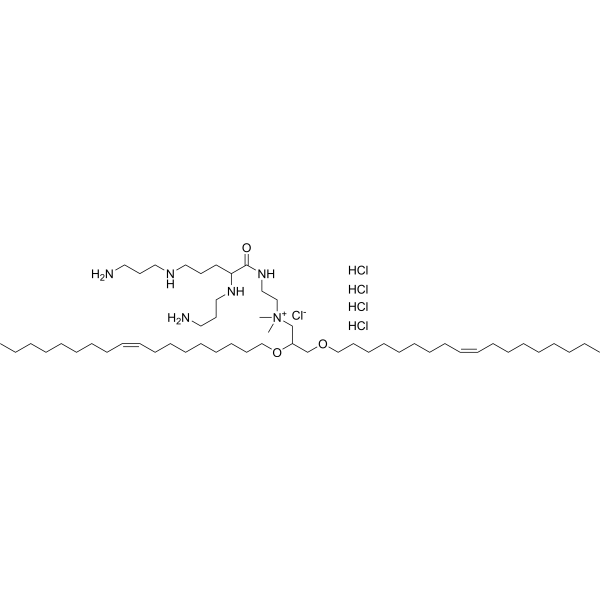
    DOSPA is a cationic lipid. DOSPA can form lipid nanoparticles with DOPE (HY-112005) to serve as a carrier for nucleic acid transfection. DOSPA is applicable in research related to drug delivery .
    DOSPA
  • HY-N6990

    Others Cancer
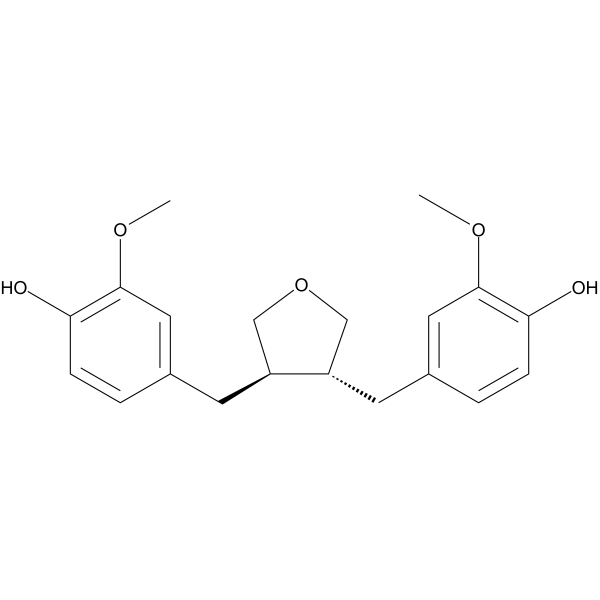
    Anhydrosecoisolariciresinol is from the flower of Wedelia biflora, has anti-tumor activities . Anhydrosecoisolariciresinol decreases the growth of human breast cancer MCF-7 and MDA-MB-231 cell lines .
    Anhydrosecoisolariciresinol
  • HY-136093B
    Lixumistat
    1 Publications Verification

    IM156 free base; HL156A free base; HL271 free base

    Mitochondrial Metabolism AMPK Neurological Disease Inflammation/Immunology
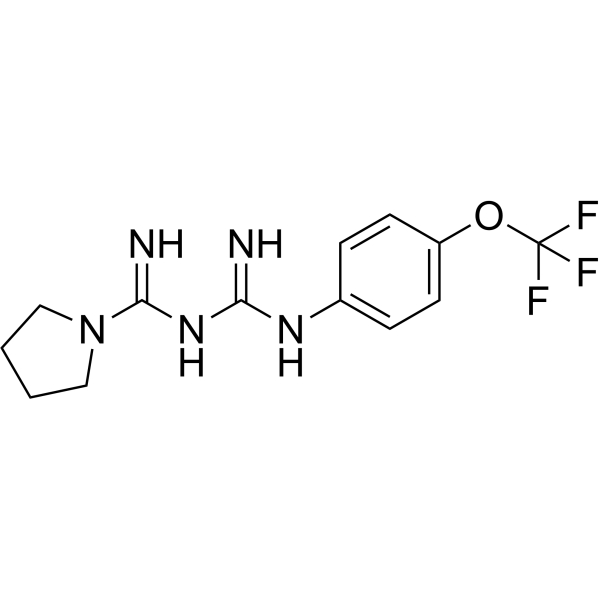
    Lixumistat (IM156 free base) is a potent and orally active AMPK activator and OXPHOS inhibitor. Lixumistat strongly activates AMPK, while it lacks the systemic metabolic regulatory effects of classic metformin, such as hypoglycemic and weight-lowering activities. Lixumistat exhibits significant therapeutic effects on cognitive decline associated with brain aging and pulmonary fibrosis .
    Lixumistat
  • HY-N4010

    Others Cancer
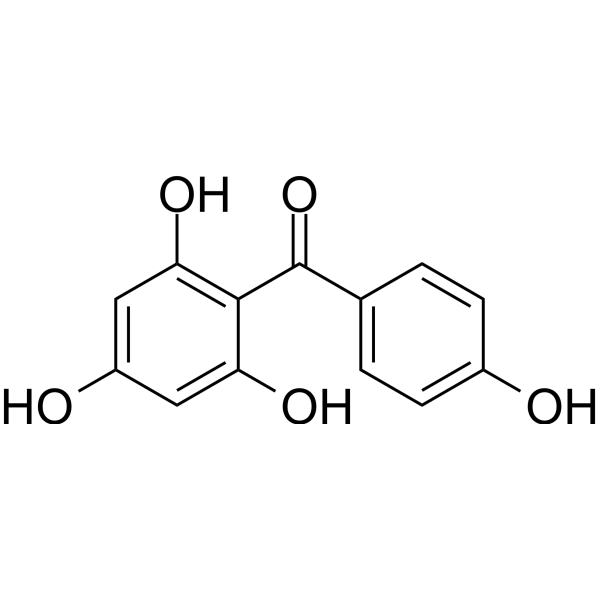
    Iriflophenone, isolated from Aquilaria sinensis, stimulates MCF-7 and T-47D human breast cancer cells proliferation .
    Iriflophenone
  • HY-119358R

    Reference Standards Reactive Oxygen Species (ROS) Apoptosis Cardiovascular Disease Inflammation/Immunology
    Traumatic Acid (Standard) is the analytical standard of Traumatic Acid. This product is intended for research and analytical applications. Traumatic Acid is a wound healing agent and a cytokinin (phytohormone). Traumatic Acid enhances the biosynthesis of collagen in cultured human skin fibroblasts. Traumatic Acid inhibits MCF-7 breast cancer cells viability and enhances apoptosis and oxidative stress. Traumatic Acid can be used in studies of cancer, circulatory disorders (including arterial hypertension), and skin diseases associated with oxidative stress and impaired collagen biosynthesis[1][2].
    Traumatic Acid (Standard)
  • HY-P991358

    LFA-102; X213

    Estrogen Receptor/ERR STAT Akt Cancer
    XOMA-213 (LFA-102; X213) is a human monoclonal antibody (mAb) targeting the prolactin receptor (PRLR), with a Kd value of 2 nM against the human target. XOMA-213 blocks PRL-induced cell proliferation and inhibits the activation of multiple PRLR ligands, including PRL and human growth hormone (hGH). XOMA-213 suppresses PRL-induced phosphorylation of Stat5, Akt and ERK1/2 in cells. XOMA-213 induces tumor regression, delays disease progression, and inhibits PRLR signaling as well as tumor growth. XOMA-213 can be used in research related to breast cancer .
    XOMA-213
  • HY-121255

    (R)-Cryptopleurine; NSC 19912

    TMV Cancer
    (–)-Cryptopleurine is an alkaloid that has been found in Lauraceae and has diverse biological activities. It inhibits the growth of human A375 melanoma, A431 epidermoid carcinoma, A549 lung, MES-SA uterine sarcoma, and MCF-7 breast cancer cells (IC50=3 nM for all).2 (–)-Cryptopleurine inhibits hypoxia-induced gene expression in a hypoxia response element (HRE) reporter assay (IC50=8.7 nM).3 (–)-Cryptopleurine (500 μg/mL) prevents lesion formation in tobacco (N. tabacum) plants infected with tobacco mosaic virus (TMV). It also inhibits protein synthesis by yeast and mammalian ribosomes.
    (-)-Cryptopleurine
  • HY-123656

    Apoptosis Cancer
    Antiproliferative agent-61 is a synthetic β-carlinyl chalcone with significant antiproliferative activity. Antiproliferative agent-61 showed significant effects in a range of solid tumor cell lines, with the most prominent effects in breast cancer. Antiproliferative agent-61 showed IC50 values of 2.25 and 3.29 μM in the human breast cancer MCF-7 cell line. Antiproliferative agent-61 significantly induced DNA fragmentation and apoptosis in breast cancer cells. Antiproliferative agent-61 inhibited the interaction of MDM2 with p53 and promoted the degradation of MDM2 .
    Antiproliferative agent-61
  • HY-W288480

    Apoptosis Cancer
    Trihexyl phosphate is an organophosphate flame retardant. Trihexyl phosphate causes mitochondrial impairment and induces cell apoptosis in CHO cells. Trihexyl phosphate promotes the proliferation of human breast cancer cells (MCF-7) in a dose-dependent manner and exerts estrogenicity via ERα-independent pathways .
    Trihexyl phosphate
  • HY-N10777

    Others Cancer
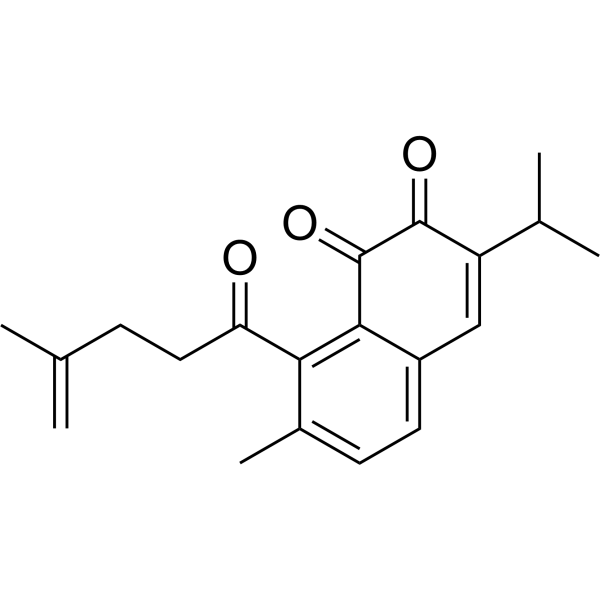
    1-Ketoaethiopinone is an abietane-diterpenoid. 1-Ketoaethiopinone has an α, β-unsaturated carbonyl function. 1-Ketoaethiopinone shows cytotoxic activity against human cancer cell lines MOLT-4 (human lymphoblastic leukemia) and MCF-7 (human breast adenocarcinoma) .
    1-Ketoaethiopinone
  • HY-174336

    Survivin Apoptosis Cancer
    Survivin-IN-1 (Compound II₃) is a potent Survivin (a member of the Inhibitor of Apoptosis Protein family) inhibitor with an IC50 value of 8.1 μM against human lung cancer A549 cells and 9.0 μM against breast cancer MCF-7 cells. Survivin-IN-1 reduces Survivin protein levels and induces tumor cell apoptosis. Survivin-IN-1 is promising for research of malignant tumors such as lung cancer and breast cancer .
    Survivin-IN-1
  • HY-N15577

    Drug Derivative Cancer
    Antiproliferative agent-69 (Compound 1) is a prenylated kaempferol derivative found in the fresh bud’s fur of Platanus acerifolia. Antiproliferative agent-69 shows significant antiproliferative effects against human breast cancer cells (MCF-7) and human hepatocellular carcinoma cells (Hep-G2) with IC50 values of 38.2 μM and 39.5 μM, respectively. Antiproliferative agent-69 is promising for research of breast cancer and liver cancer .
    Antiproliferative agent-69
  • HY-175003

    Proton Pump Cancer
    HV1-IN-2 (Compound 14c) is a human voltage-gated proton channel (HV1) inhibitor with an IC50 of 2.14 μM. HV1-IN-2 has a potent anticancer activity with significant antiproliferative effects against THP-1 and MCF-7 cells. HV1-IN-2 can be used for cancers research, such as colorectal tumours, leukaemia, and breast cancer .
    HV1-IN-2
  • HY-N4010R

    Reference Standards Others Cancer
    Iriflophenone, isolated from Aquilaria sinensis, stimulates MCF-7 and T-47D human breast cancer cells proliferation .
    Iriflophenone (Standard)
  • HY-N10305

    Autophagy Cancer
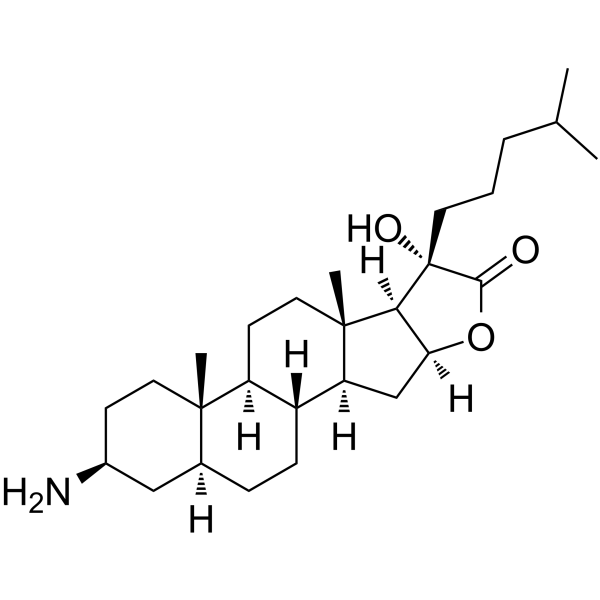
    Clionamine B is an autophagy stimulating aminosteroid isolated from the sponge Cliona celata. Clionamine B strongly stimulates autophagy in human breast cancer MCF-7 cells .
    Clionamine B
  • HY-118129

    Ganwuweizic acid

    PARP Apoptosis Cancer
    Schisandronic acid is a triterpenoid antioxidant and anticancer agent extracted from Schisandra chinensis, which has potent cytotoxicity against human breast cancer cells, especially MCF-7. Schisandronic acid induces apoptosis and reduces cell viability in a time-dependent manner (MCF-7, IC50=8.06 μM). Schisandronic acid can upregulate active caspase-3 expression and cleave PARP, reduce the generation of reactive oxygen species and exhibit antioxidant effects .
    Schisandronic acid
  • HY-126803

    Antibiotic Infection Cancer
    Saquayamycin B (compound 3) is a new angucycline antibiotic. Saquayamycin B has antitumor activities against a human lung (H-460) and a human breast cancer cell line (MCF-7) with GI50 values of 12.2 and 15.2 µM respectively .
    Saquayamycin B
  • HY-N15584

    Isoheraclenin

    Others Cancer
    Pabularinone is a compound found in the plant Clausena lansium. Pabularinone has potent cytotoxic activity, and its activity showed inhibitory effects in human breast cancer (MCF-7) cells (IC50: 33.74 μg/mL). Pabularinone can be used in anti-tumor research .
    Pabularinone
  • HY-N10959

    Others Cancer
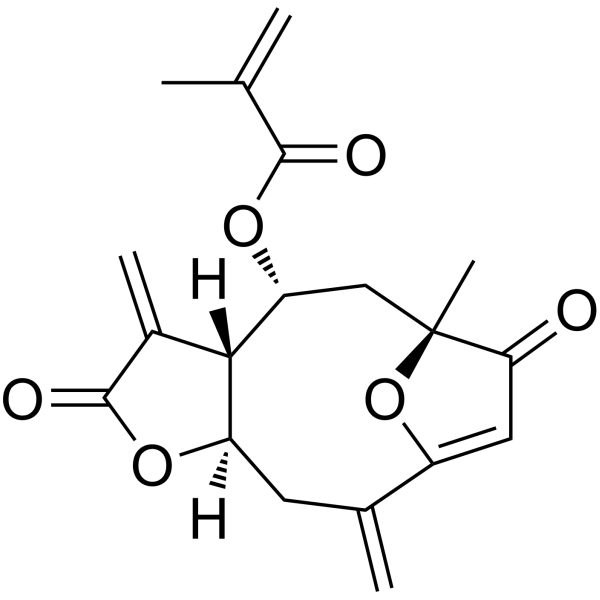
    4,15-Isoatriplicolide methylacrylate is a germacrane-type sesquiterpene lactone. 4,15-Isoatriplicolide methylacrylate also is a cytotoxic agent. 4,15-Isoatriplicolide methylacrylate has cytotoxic activity for MCF-7 human breast cancer cell line .
    4,15-Isoatriplicolide methylacrylate
  • HY-N3210

    Others Cancer
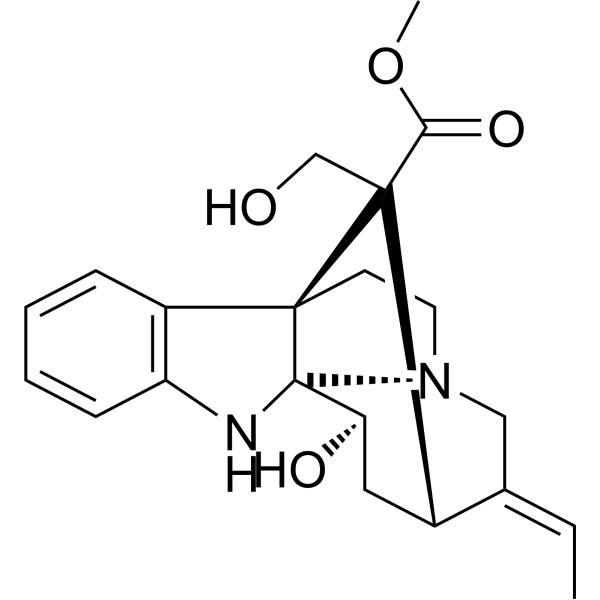
    Nb-Demethylechitamine is an alkaloid isolated from the methanol extract of Alstonia rostrata twigs. Nb-Demethylechitamine has in vitro cytotoxic activity against several human cancer cell lines, including human myeloid leukemia HL-60, liver cancer SMMC-7721, lung cancer A-549, breast cancer MCF-7, and colon cancer SW480 cells .
    Nb-Demethylechitamine
  • HY-116904

    Apoptosis Akt Cancer
    Anticancer agent 253 (Compound 26) has anti-cancer activity against breast cancer cells, with IC50s of 6 μM (MCF-7), 10 μM (MDA-MB-231) and 6.4 μM (4T1 cells). Anticancer agent 253 arrests cell cycle and induces mitochondria-mediated apoptosis in cancer cells. Anticancer agent 253 inhibits Akt phosphorylation in human breast and prostate cancer .
    Anticancer agent 253
  • HY-171477

    Estrogen Receptor/ERR Cancer
    Metahexestrol is an estrogen receptor (E2R) inhibitor with antitumor activity. It significantly inhibits the proliferation of estrogen receptor-positive MCF-7 human breast cancer cells (ED50 = 1.0 μM). Additionally, Metahexestrol also exhibits inhibitory effects in estrogen receptor-negative MDA-MB-231 cells, and its antiproliferative activity cannot be reversed by estrogen, suggesting that its mechanism of action may be partially independent of the E2R pathway. Metahexestrol can be used in research on estrogen-dependent breast cancer .
    Metahexestrol
  • HY-175174

    Glutaminase Cancer
    Antiproliferative agent-73 (Compound 7) is an antiproliferative agent. Antiproliferative agent-73 significantly inhibits proliferation of human cancer cells with excellent cytotoxicity. Antiproliferative agent-73 has potent anticancer activity with IC50s of 15.20, 18.18, 20.20 and 13.23  μM for HepG2, MCF-7, HCT-116 and WI38 cells, respectively. Antiproliferative agent-73 can be used for cancers research, such as breast, colorectal and liver cancer .
    Antiproliferative agent-73
  • HY-175512

    Microtubule/Tubulin Apoptosis Reactive Oxygen Species (ROS) Cancer
    Tubulin-IN-53 is a potent Tubulin inhibitor with an IC50 of 6.06 μM. Tubulin-IN-53 inhibits the polymerization of tubulin by targeting the colchicine binding site of tubulin and destroys the microtubule network. Tubulin-IN-53 induces MCF-7 cell cycle arrest in the G2/M phase and apoptosis, and inhibits cell migration accompanied by the decrease of mitochondrial membrane potential and increase the accumulation of ROS. Tubulin-IN-53 destroys the angiogenesis of human umbilical vein endothelial cells.Tubulin-IN-53 can used for the study of cancers such as breast cancer and lung cancer .
    Tubulin-IN-53
  • HY-162805

    NO Synthase Topoisomerase Apoptosis NF-κB Inflammation/Immunology Cancer
    iNOS/TopoI-IN-1 (compound AuL9) is a multi-target hybrid molecule with anti-tumor, anti-inflammatory and antioxidant activities. iNOS/TopoI-IN-1 inhibits the growth of breast cancer cells MCF-7 and MDA MB-231 in vitro with IC50 of 3.5 μM and 6.3 μM, respectively, and induces DNA damage and apoptosis of breast cancer cells by inhibiting human topoisomerase I (TopoI) (Ki=2.72 μM). In addition, NOS/TopoI-IN-1 inhibits the expression of iNOS by inhibiting the activation of NF-kB (Ki=1.49 μM) .
    iNOS/TopoI-IN-1
  • HY-173492

    EGFR Apoptosis Cancer
    EGFR-IN-156 (Compound 7f) is an EGFR inhibitor that also has inhibitory activity against mutations EGFRL858R and EGFRT790M (IC50 values are 0.186, 0.131, and 0.107 μM, respectively). EGFR-IN-156 has significant anticancer activity against human cancer cell lines HepG-29 (liver cancer), MCF-7 (breast cancer), and HCT-116 (colon cancer) (IC50 values are 1.67, 5.32, and 6.56 μM, respectively). EGFR-IN-156 inhibits cancer cell proliferation by inducing cell cycle arrest at the G/G1 phase and triggering apoptosis. EGFR-IN-156 shows promise in EGFR-related cancers .
    EGFR-IN-156
  • HY-121149B

    (E/Z)-3-Hydroxytamoxifen

    Estrogen Receptor/ERR Apoptosis Cancer
    (E/Z)-Droloxifene is a mixture of (E)-droloxifene (a selective estrogen receptor modulator) and (Z)-droloxifene. (E)-Droloxifene binds to the estrogen receptor (ER) with an IC50 value of 24 nM in rabbit uterine homogenates. (E)-Droloxifene increases uterine weight in immature rats, and reduces estradiol-induced increases in uterine weight in juvenile rats. (E)-Droloxifene also inhibits 17β-estradiol-stimulated growth of MCF-7, ZR-75-1, and T47D human breast cancer cells. (Z)-Droloxifene binds weakly to ER and has no estrogenic or antiestrogenic activity .
    (E/Z)-Droloxifene
  • HY-139090

    28-O-Acetyl-3-Oxobetulin; 3-oxo-28-O-Acetylbetulin

    Bacterial HIV Drug Derivative Cancer
    3-Oxobetulin acetate (28-O-Acetyl-3-Oxobetulin; 3-oxo-28-O-Acetylbetulin) is a derivative of betulin (HY-N0083), a cholesterol biosynthesis inhibitor. 3-Oxobetulin acetate inhibits the growth of P388 murine lymphocytic leukemia cells (EC50=0.12 μg/mL) and human MCF-7 breast cancer, SF-268 CNS cancer, H460 lung cancer, and KM20L2 colon cancer cells (GI50s=8, 10.6, 5.2, and 12.7 μg/mL), but not BxPC-3 pancreatic cancer cells or DU145 prostate cancer cells (GI50s=>10 μg/mL for both). 3-Oxobetulin acetate inhibits the replication of X4-tropic recombinant HIV (NL4.3-Ren) in MT-2 lymphoblastoid cells (IC50=13.4 μM). 3-Oxobetulin acetate is also effective against Listeria donovani amastigotes.
    3-Oxobetulin acetate
  • HY-N16759

    Others Cancer
    Apparicine is a monoterpene indole alkaloid that can be naturally extracted from the stems of Tabernaemontana divaricata. Apparicine shows no cytotoxicity against MCF-7 human breast cancer cells and A-549 human lung cancer cells .
    Apparicine
  • HY-W702106

    Endogenous Metabolite Cancer
    2-Methyl estradiol, an endogenous metabolite of Estradiol (HY-B0141), inhibits cell proliferation and angiogenesis, with IC50 values of 3 and 2.39 μM for HUVEC and MCF-7 human breast cancer cell proliferation, respectively .
    2-Methyl estradiol
  • HY-Z9022

    Microtubule/Tubulin Cancer
    Iso cephalomannine is a tubulin-targeting cytotoxic agent. Iso cephalomannine induces cytotoxicity in breast cancer cells. Iso cephalomannine can be used in breast cancer-related research .
    Iso cephalomannine
  • HY-125675

    Estrogen Receptor/ERR Cancer
    VPC-16606 is a selective inhibitor targeting the activation function 2 (AF2) domain of estrogen receptor α (ERα). VPC-16606 blocks the interaction between ERα and coactivators, inhibits the activity of both wild-type and clinically drug-resistant mutant ERα, and exerts inhibitory effects on hormone-resistant breast cancer cells. VPC-16606 can be used in breast cancer research .
    VPC-16606
  • HY-183119

    Legumain Cancer
    Legumain-IN-2 is a selective legumain inhibitor with a human legumain IC50 of 0.9 nM. Legumain-IN-2 can be used for the research of breast cancer .
    Legumain-IN-2
  • HY-W551344

    DNA/RNA Synthesis Cancer
    dCTPase-IN-1 is a highly selective deoxycytidine triphosphate pyrophosphatase 1 (dCTPase) inhibitor with an IC50 of 20 nM. dCTPase-IN-1 functionally inhibits dCTPase, exhibits a synergistic effect in enhancing cytotoxicity, and has no inherent cytotoxicity. dCTPase-IN-1 can be used for the research of leukemia .
    dCTPase-IN-1
  • HY-W269285

    D-1,2,3,4-Tetrahydronorharman-3-carboxylic acid

    Drug Derivative NO Synthase Cytochrome P450 Cancer
    H-D-Tpi-OH (D-1,2,3,4-Tetrahydronorharman-3-carboxylic acid) is a tetrahydro-β-carboline derivative. H-D-Tpi-OH only slightly upregulates QR1, mildly inhibits the aromatase and NO synthesis pathways, and shows no significant in vitro anti-breast tumor proliferation activity. H-D-Tpi-OH can be used in cancer-related research .
    H-D-Tpi-OH
  • HY-N18070

    Drug Derivative PKC Fungal Cardiovascular Disease Infection Inflammation/Immunology Cancer
    12-Deoxyphorbol-13-isobutyrate-20-acetate is a 12-deoxy-phorbol diterpene ester. 12-Deoxyphorbol-13-isobutyrate-20-acetate is a protein kinase C (PKC) agonist that activates protein kinase C to phosphorylate troponin I and troponin T. 12-Deoxyphorbol-13-isobutyrate-20-acetate induces skin irritation and necrosis in mice without cocarcinogenic activity. 12-Deoxyphorbol-13-isobutyrate-20-acetate inhibits Aspergillus carbonarius growth. 12-Deoxyphorbol-13-isobutyrate-20-acetate supports research on heart failure, cardiomyopathies and fungal infection .
    12-Deoxyphorbol-13-isobutyrate-20-acetate

Inquiry Online

Your information is safe with us. * Required Fields.

Salutation


Country or Region *

Applicant Name *


Organization Name *

Department *


Email Address *


Product Name *

Cat. No.


Requested quantity *

Phone Number *


Remarks

Inquiry Online

Inquiry Information

Product Name:
Cat. No.:
Quantity:
MCE Japan Authorized Agent: