



Taxaceae
-
- Taxus chinensisi> (Pilger) Rehd. (27)
- Taxus cuspidatai> Siebold & Zucc. (14)
- Taxus wallichianai> Zucc. (13)
- Taxus baccatai> L. (11)
- Taxus yunnanensisi> W.C.Cheng & L.K.Fu (7)
- Taxus sumatranai> (Miq.) de Laub. (6)
- Taxus wallichianai> var. maireii> (Lemee & H. Léveillé) L. K. Fu & Nan Li (6)
- Cephalotaxus harringtoniai> (Knight ex J.Forbes) K.Koch (5)
- Taxus brevifoliai> Nutt. (3)
- Cephalotaxus sinensisi> var. wilsonianai> (Hayata) L. K. Fu & Nan Li (2)
- Pseudotaxus chieniii> (W. C. Cheng) W. C. Cheng (1)
- Japanese yewi> Taxus cuspidata Sieb. et Zucc. (1)
- Taxus canadensis i>Marshall (1)
- Taxus wallichianai> var. chinensis (Pilg.) Florini> (1)
- Taxus × mediai> Rehder (1)
-
Taxaceae (100)

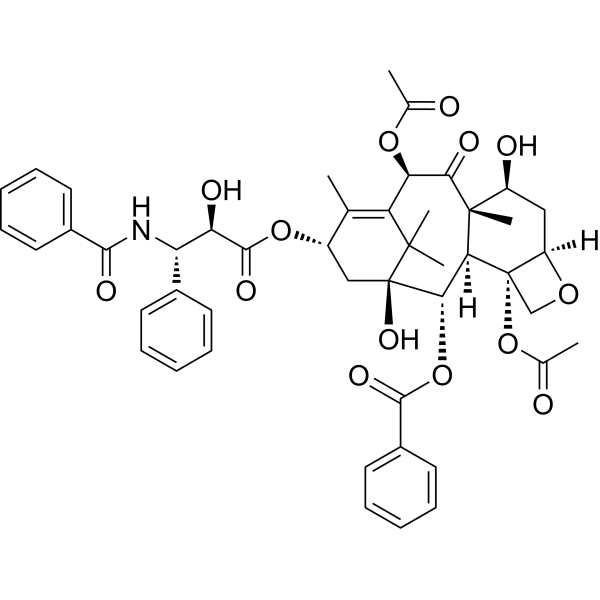
- Formula: C47H51NO14
- Molecular Weight: 853.91
Paclitaxel is a naturally occurring antineoplastic agent and stabilizes tubulin polymerization. Paclitaxel can cause both mitotic arrest and apoptotic cell death. Paclitaxel also induces autophagy.
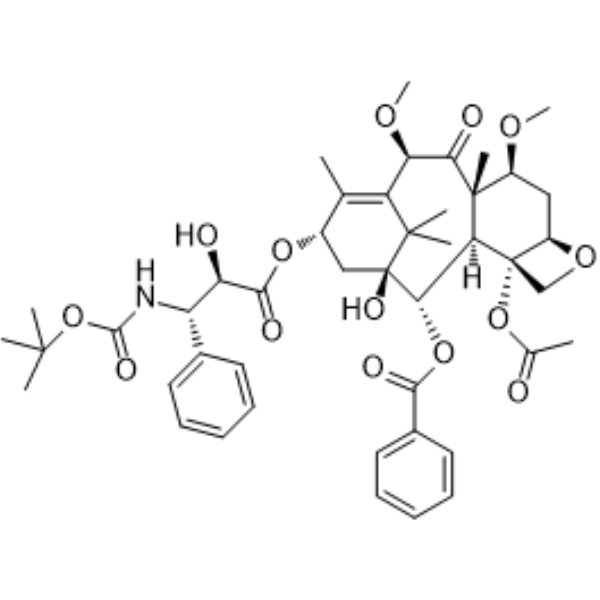
- Formula: C45H57NO14
- Molecular Weight: 835.93
Cabazitaxel is a semi-synthetic derivative of the natural taxoid 10-deacetylbaccatin III with potential antineoplastic activity.

- Formula: C₄₇H₅₁NO₁₄
- Molecular Weight: 853.91
Paclitaxel (Standard) is the analytical standard of Paclitaxel. This product is intended for research and analytical applications. Paclitaxel is a naturally occurring antineoplastic agent and stabilizes tubulin polymerization. Paclitaxel can cause both mitotic arrest and apoptotic cell death. Paclitaxel also induces autophagy.
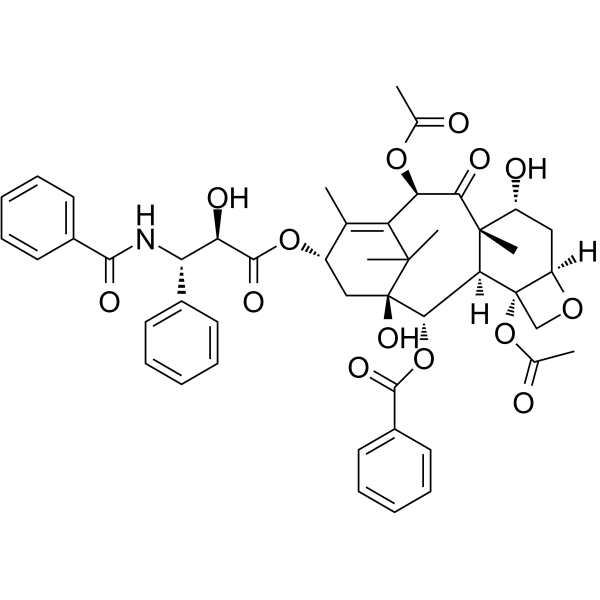
- Formula: C47H51NO14
- Molecular Weight: 853.91
7-epi-Taxol is an active metabolite of taxol, with activity comparable to that of taxol against cell replication, promoting microtubule bundle formation and against microtubule depolymerization.
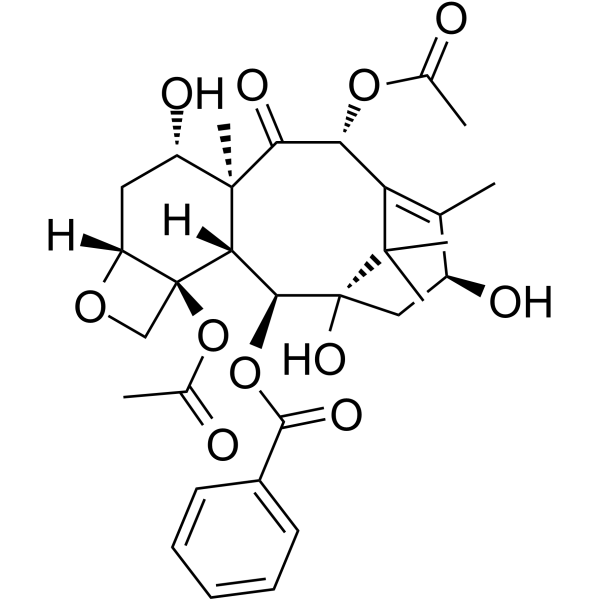
- Formula: C31H38O11
- Molecular Weight: 586.63
Baccatin III is an orally available, selective inhibitor of the TGF-β1 signaling pathway and myeloid-derived suppressor cell (MDSC) activation. Baccatin III targets the AKT/STAT6 and Smad2/3 pathways, blocking TGF-β1-induced fibroblast differentiation and MDSC-mediated immunosuppression. Baccatin III exerts anti-inflammatory and anti-fibrotic effects by inhibiting macrophage activation and extracellular matrix deposition, and shows potential in the treatment of pulmonary fibrosis and cancer in terms of regulating the tumor immune microenvironment.

- Formula: C45H53NO14
- Molecular Weight: 831.90
Iso cephalomannine is a tubulin-targeting cytotoxic agent. Iso cephalomannine induces cytotoxicity in breast cancer cells. Iso cephalomannine can be used in breast cancer-related research.

- Formula: C19H32O2
- Molecular Weight: 292.46
Methyl (9E,12E,15E)-octatrienoate is an aliphatic ester that exists in the leaves of Taxus wallichiana var. mairei.

- Formula: C19H32O2
- Molecular Weight: 292.46
Methyl (9Z,12E,15Z)-octadecatrienoate is an aliphatic ester found in the leaves of Taxus wallichiana var mairei.
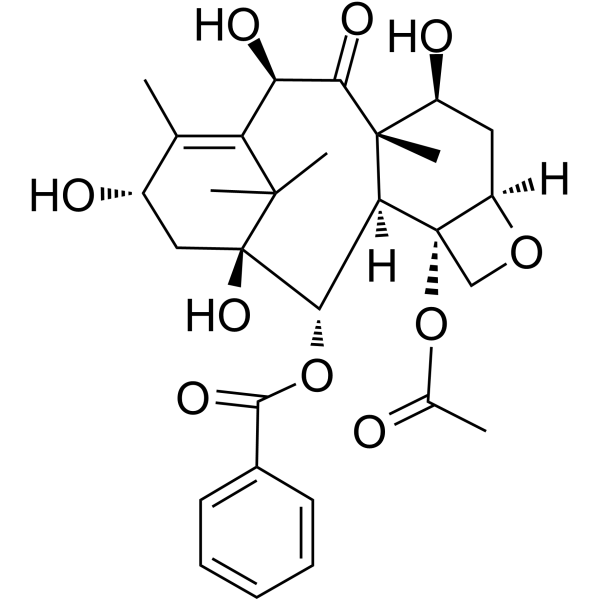
- Formula: C29H36O10
- Molecular Weight: 544.59
10-Deacetylbaccatin-III is an intermediate in the preparation process of paclitaxel. 10-Deacetylbaccatin III can be isolated from the dried needles and small branches of the European yew tree (Taxus baccata). 10-Deacetylbaccatin III exhibits antileishmanial activity.
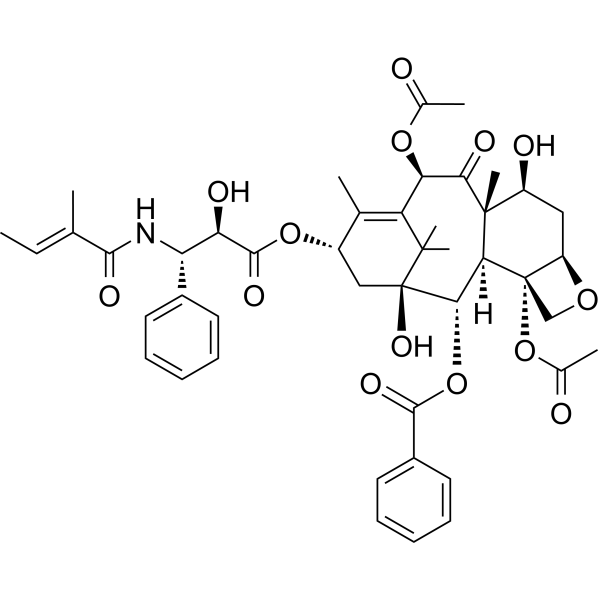
- Formula: C45H53NO14
- Molecular Weight: 831.90
Cephalomannine is a Paclitaxel (HY-B0015) alkaloidal analog that can be isolated from most Cephalotaxus species. Cephalomannine is an orally active anti-tumor agent and can be used as a chemotherapy agent for cancer research.
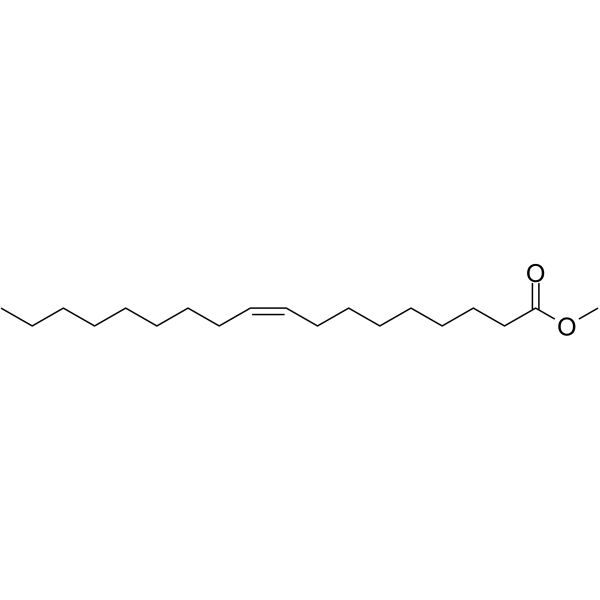
- Formula: C19H36O2
- Molecular Weight: 296.49
Methyl oleate is a fatty acid methyl ester (FAME) with anti-extended spectrum β-Lactamase (ESBL) potential, anticancer and antibacterial activities. Methyl oleate substantially improves the antioxidation ability but markedly impaired the antiwear capacity of zinc dialkyldithiophosphate (ZDDP). Methyl oleate is promising for research of ESBL producing multi drug resistant (MDR) pathogens.
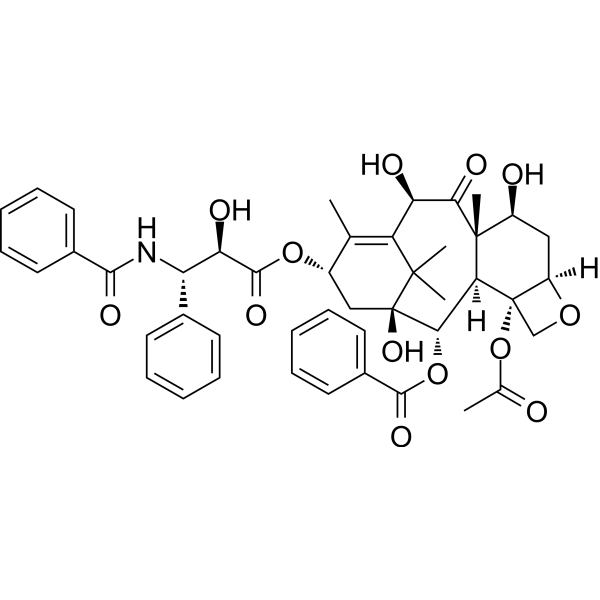
- Formula: C45H49NO13
- Molecular Weight: 811.87
10-Deacetyltaxol (10-Deacetylpaclitaxel) is a taxane derivative isolated from Taxus wallichiana Zucc. 10-Deacetyltaxol (10-Deacetylpaclitaxel) promotes the polymerization of tubulin and to inhibit the depolymerization of microtubules induced by cold or by calcium ions in vitro. 10-Deacetyltaxol (10-Deacetylpaclitaxel) exhibits cytotoxicity in human glial and neuroblastoma cell-lines.
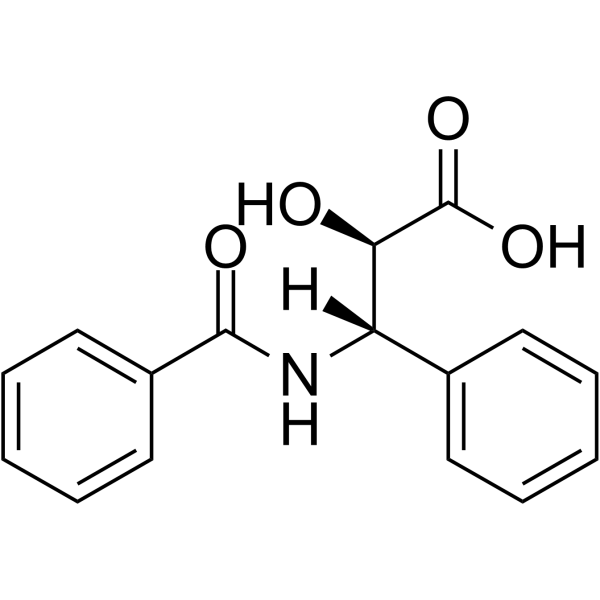
- Formula: C16H15NO4
- Molecular Weight: 285.29
N-Benzoyl-(2R,3S)-3-phenylisoserine is a Taxol C-13 Side Chain and crucial for the strong antitumor activity of Taxol.
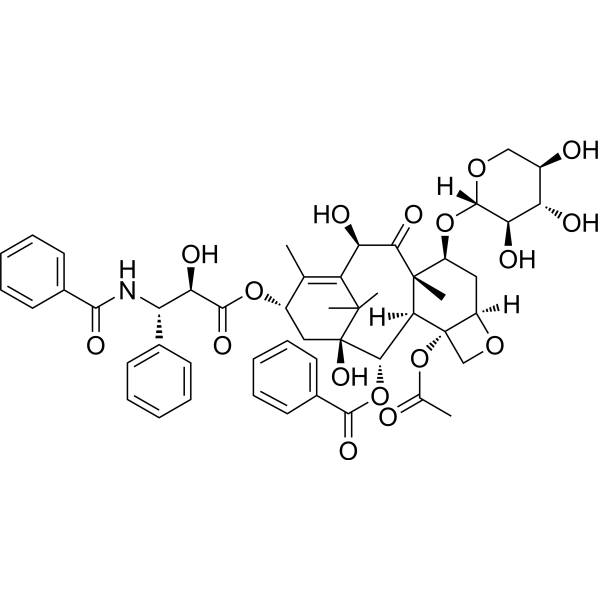
- Formula: C50H57NO17
- Molecular Weight: 943.98
10-Deacetyl-7-xylosyl paclitaxel is a Paclitaxel (a microtubule stabilizing agent; enhances tubulin polymerization) derivative with improved pharmacological features.
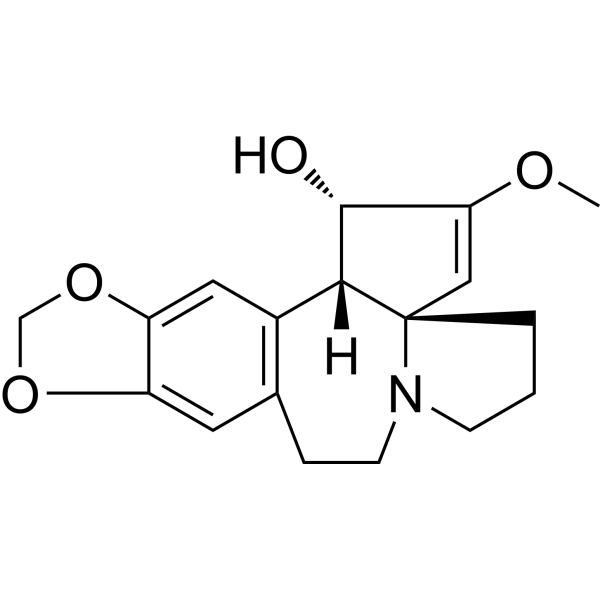
- Formula: C18H21NO4
- Molecular Weight: 315.37
Cephalotaxlen ((-)-Cephalotaxine) is an alkaloid that can be isolated from Cephalotaxus fortunei, with antileukemic and antiviral activities. Cephalotaxlen has anti-ZIKV (Zika virus) activity.
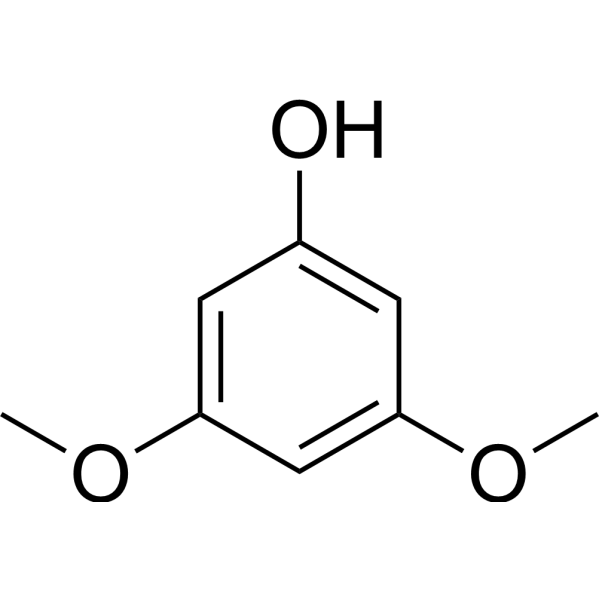
- Formula: C8H10O3
- Molecular Weight: 154.16
3,5-Dimethoxyphenol is a toxin metabolite, found in human consuming yew leaves.

- Formula: C₂₉H₃₆O₁₀
- Molecular Weight: 544.59
10-Deacetylbaccatin III (Standard) is the analytical standard of 10-Deacetylbaccatin III. This product is intended for research and analytical applications.
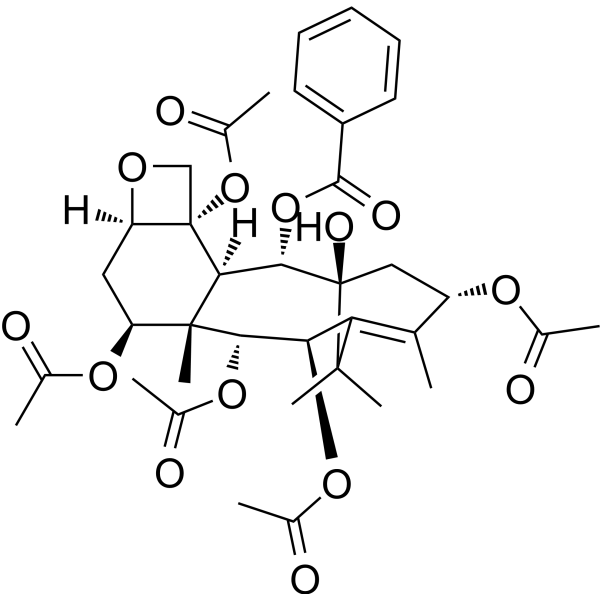
- Formula: C37H46O14
- Molecular Weight: 714.75
Baccatin VI is a natural taxoid with antinociceptive activities. Baccatin VI possesses significant antinociceptive activity against p-Benzoquinone-induced abdominal contractions.
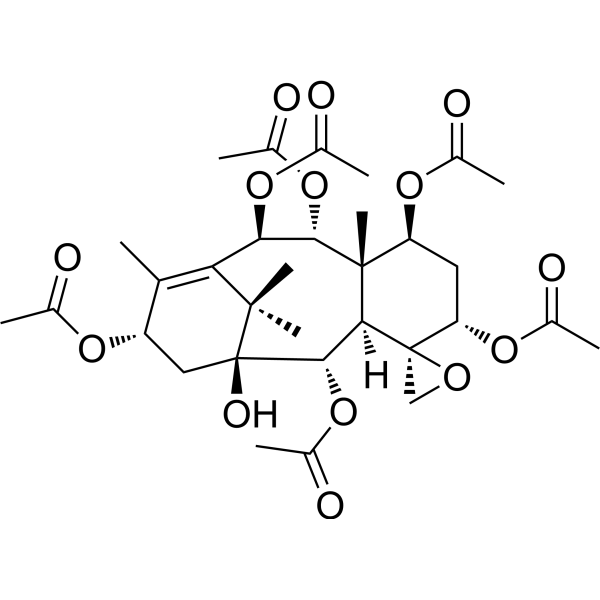
- Formula: C32H44O14
- Molecular Weight: 652.68
1β-Hydroxybaccatin I (1-Hydroxybaccatin I) can be extracted from Taxus wallichiana.
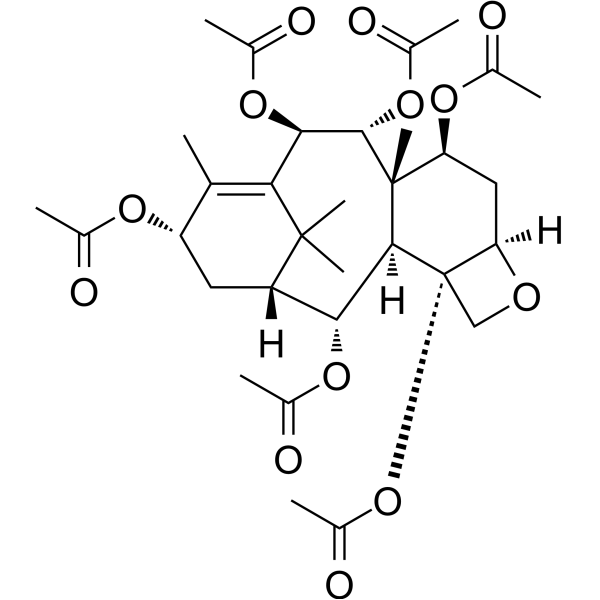
- Formula: C32H44O13
- Molecular Weight: 636.68
1-Dehydroxybaccatin IV is a taxane diterpene. 1-Dehydroxybaccatin IV shows concentration-dependent NO inhibition, with an IC50 of 32.2 μM.



