



7-epi-Taxol
Based on 4 publication(s) in Google Scholar
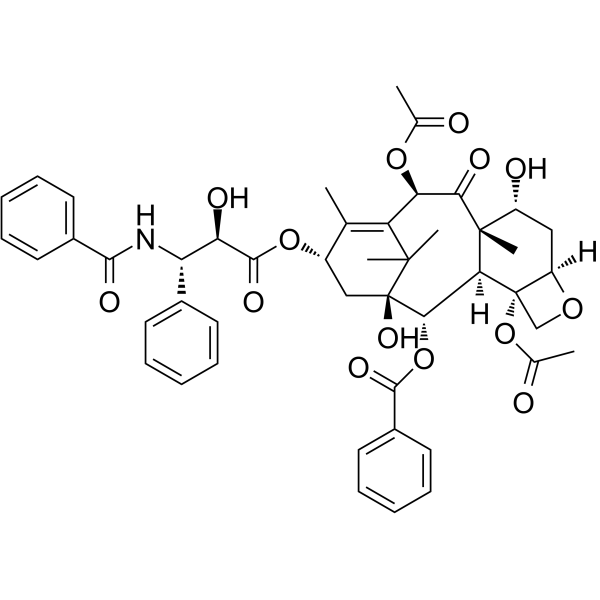
7-epi-Taxol is an active metabolite of taxol, with activity comparable to that of taxol against cell replication, promoting microtubule bundle formation and against microtubule depolymerization.
For research use only. We do not sell to patients.
- Purity : 99.92%
- CAS No.: 105454-04-4
- Formula: C47H51NO14
- Molecular Weight:853.91
-
Storage:Powder -20°C, 3 years , 4°C, 2 years ; In solvent -80°C, 2 years , -20°C, 1 year

To place orders, for customer services and technical support, please contact: MedChemExpress USA
Tel: 609-228-6898 E-mail: [email protected] [email protected]


-
 Biological Activity
-
Chemical Information
-
Solvent & Solubility
- Purity & Documentation
- References
-
 Help & FAQs


-
HY-N1391
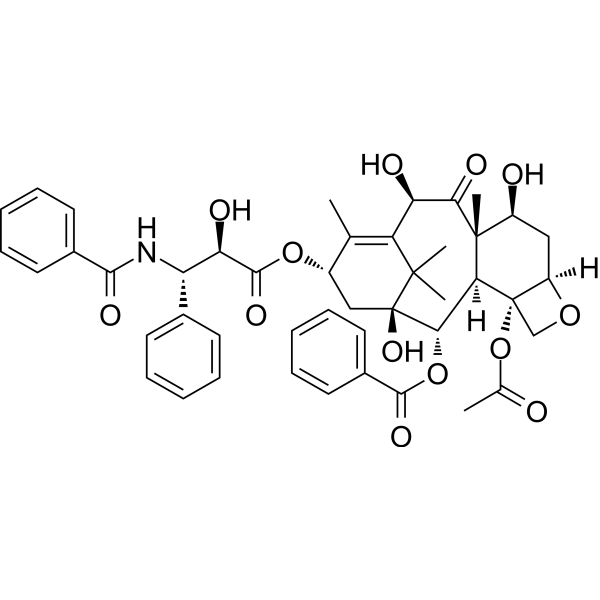
10-DeacetyltaxolTaxane Derivative -
HY-77572
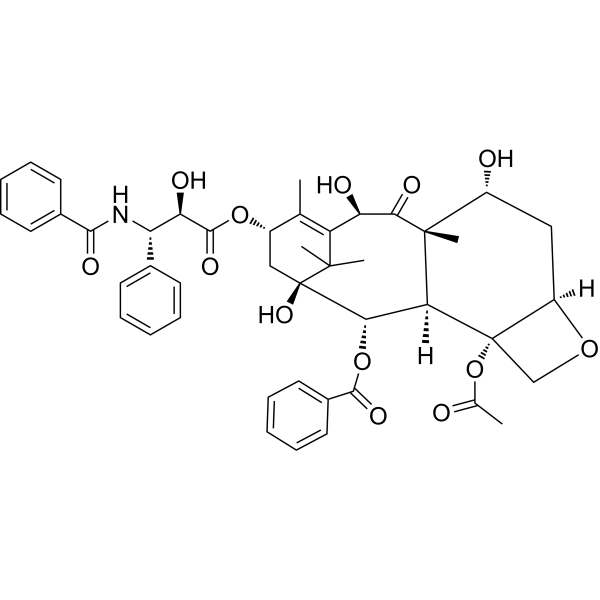
7-Epi 10-desacetyl paclitaxelNatural Product -
HY-N6985
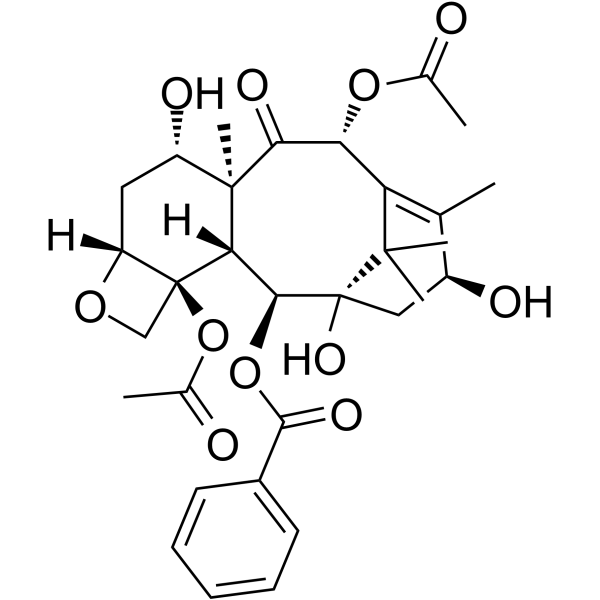
Baccatin IIIAnticancer Agent -
HY-10583
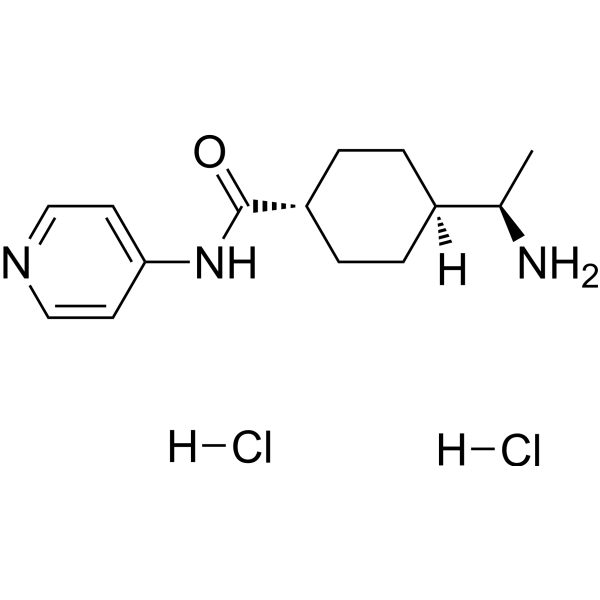
Y-27632 dihydrochlorideROCK Inhibitor -
HY-13520
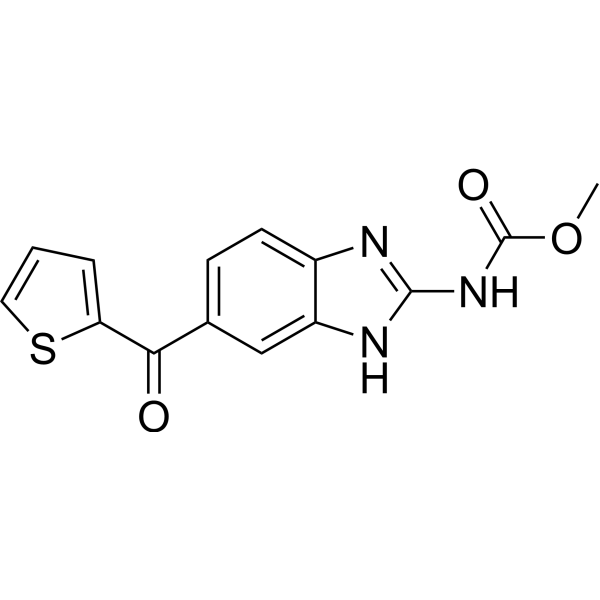
NocodazoleMicrotubule Inhibitor -
HY-77554
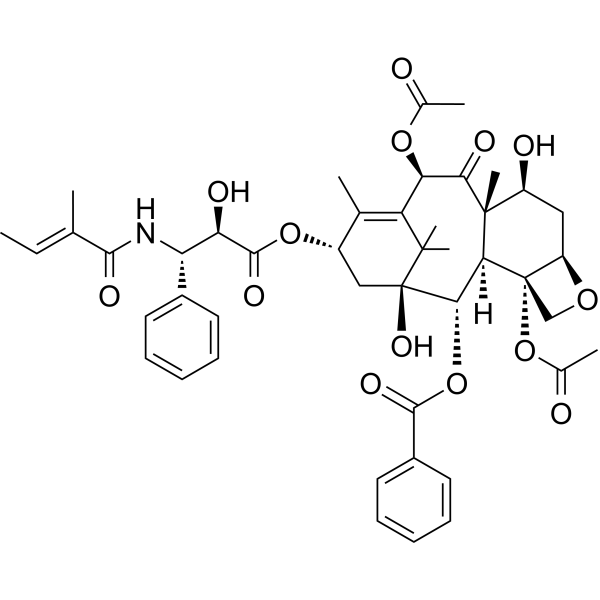
CephalomannineAnti-Tumor Agent -

HY-N0227R
7-epi-Taxol (Standard)Active Metabolite of Taxol -
HY-125348
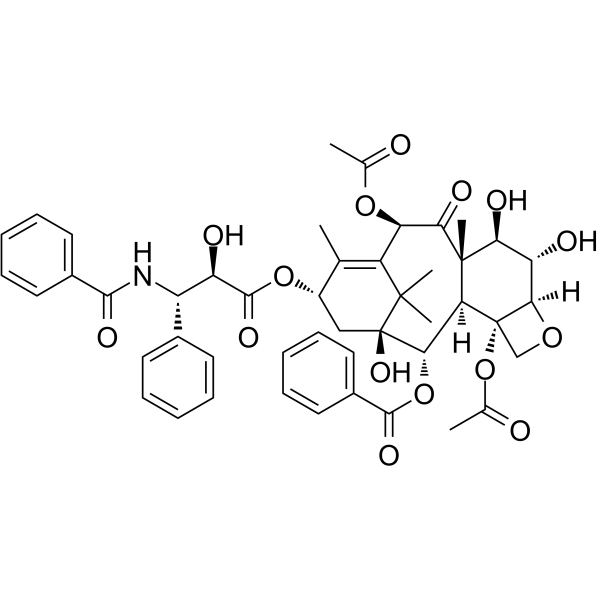
6α-Hydroxy paclitaxelPaclitaxel Metabolite -
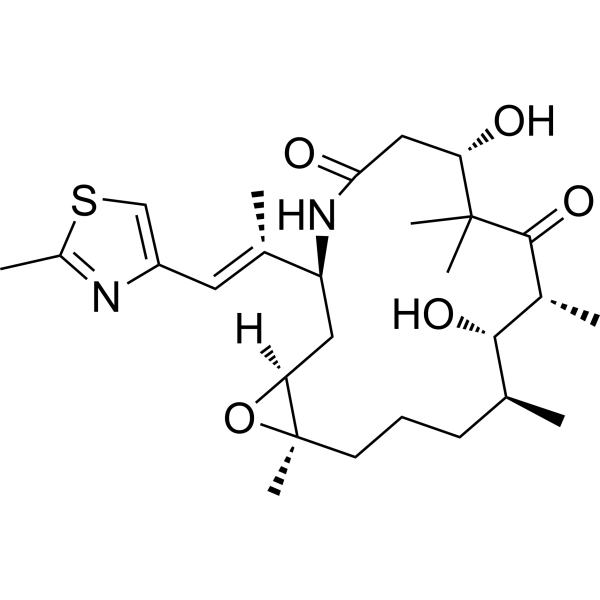
HY-10222
IxabepiloneMicrotubule Inhibitor -
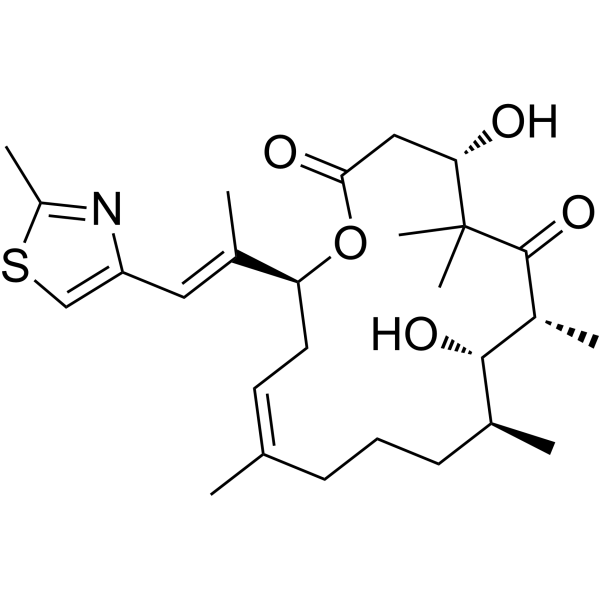
HY-15278
UtideloneMicrotubule Stabilizer -
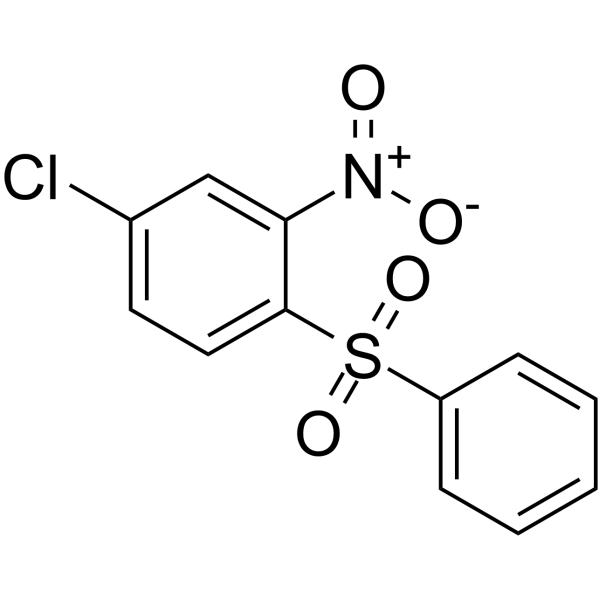
HY-101770
BTB-1Kif18A Inhibitor -
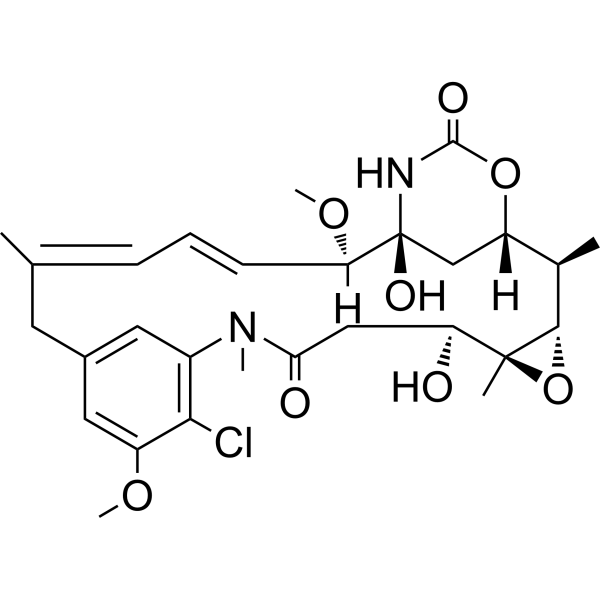
HY-19474
MaytansinolApoptosis Inducer
Publications Citing Use of MedChemExpress (MCE) 7-epi-Taxol
More

Biological Activity
Description
IC50 & Target
Microtubule/Tubulin[2]
Cellular Effect
|
Cell Line

|
Type | Value | Description | References |
|---|---|---|---|---|
| HeLa | IC50 |
0.05 nM
Compound: 16
|
Cytotoxicity against human HeLa cells assessed as reduction in cell viability incubated for 72 hrs by WST-8 dye based assay
Cytotoxicity against human HeLa cells assessed as reduction in cell viability incubated for 72 hrs by WST-8 dye based assay
|
[PMID: 28240909] |
| KB | IC50 |
0.0015 μg/mL
Compound: 61
|
Cytotoxicity against human KB cells
Cytotoxicity against human KB cells
|
[PMID: 14987066] |
| KB | ED50 |
3 x 10⁻⁵ μg/mL
Compound: 1
|
Cytotoxicity against human KB cells
Cytotoxicity against human KB cells
|
[PMID: 2878063] |
| KB | ED50 |
3 x 10⁻⁵ μg/mL
Compound: 7
|
Cytotoxicity against human KB cells
Cytotoxicity against human KB cells
|
10.1021/np50067a001 |
In Vitro
7-epi-Taxol (7-Epitaxol) is a metabolite of taxol[1]. 7-epi-Taxol has activity comparable to that of taxol on cell replication, microtubule bundle formation and in vitro microtubule polymerization[2].
MedChemExpress (MCE) has not independently confirmed the accuracy of these methods. They are for reference only. .


Chemical Information
-
CAS No. 105454-04-4
-
Appearance Solid
-
Molecular Weight 853.91
-
Formula C47H51NO14
-
Color White to off-white
-
SMILES
O[C@@H]1C[C@]2([H])[C@](CO2)(OC(C)=O)[C@]3([H])[C@]1(C)C([C@H](OC(C)=O)C4=C(C)[C@@H](OC([C@@H]([C@H](C5=CC=CC=C5)NC(C6=CC=CC=C6)=O)O)=O)C[C@]([C@H]3OC(C7=CC=CC=C7)=O)(O)C4(C)C)=O
-
Synonyms
7-epi-Paclitaxel
-
Structure Classification
-
Initial Source
-
Shipping
Room temperature in continental US; may vary elsewhere.
-
Storage
Powder -20°C 3 years 4°C 2 years In solvent -80°C 2 years -20°C 1 year


Publications (4)
-
Journal Impact Factor
-
Most Recent
-
Nat Commun
Human iPSC-based Modeling of Pulmonary Fibrosis Reveals p300/CBP Inhibition Suppresses Alveolar Transitional Cell State. [Abstract]2026 Feb 12;17(1):1214. PMID: 41680175 -
Cell Discov
2024 Nov 5;10(1):112. PMID: 39500876 -
Am J Cancer Res
Activation of the IL-17 signalling pathway by the CXCL17-GPR35 axis affects drug resistance and colorectal cancer tumorigenesis. [Abstract]2023 May 15;13(5):2172-2187. PMID: 37293165 -
PLoS One
2019 Jul 3;14(7):e0210377. PMID: 31269031


Solvent & Solubility
In Vitro:
DMSO : 100 mg/mL (117.11 mM; Need ultrasonic; Hygroscopic DMSO has a significant impact on the solubility of product, please use newly opened DMSO)
Please refer to the solubility information to select the appropriate solvent. Once prepared, please aliquot and store the solution to prevent product inactivation from repeated freeze-thaw cycles.
Storage method and period of stock solution: -80°C, 2 years; -20°C, 1 year. When stored at -80°C, please use it within 2 years. When stored at -20°C, please use it within 1 year.
Please refer to the solubility information to select the appropriate solvent. Once prepared, please aliquot and store the solution to prevent product inactivation from repeated freeze-thaw cycles.
Storage method and period of stock solution: -80°C, 2 years; -20°C, 1 year. When stored at -80°C, please use it within 2 years. When stored at -20°C, please use it within 1 year.
Concentration (start) × Volume (start) = Concentration (final) × Volume (final)
In Vivo:
Select the appropriate dissolution method based on your experimental animal and administration route.
- For the following dissolution methods, please ensure to first prepare a clear stock solution using an In Vitro approach and then sequentially add co-solvents:
- To ensure reliable experimental results, the clarified stock solution can be appropriately stored based on storage conditions. As for the working solution for In Vivo experiments, it is recommended to prepare freshly and use it on the same day.
- The percentages shown for the solvents indicate their volumetric ratio in the final prepared solution. If precipitation or phase separation occurs during preparation, heat and/or sonication can be used to aid dissolution.
Add each solvent one by one: 10% DMSO 40% PEG300 5% Tween-80 45% Saline
Solubility: ≥ 2.5 mg/mL (2.93 mM); Clear solution
This protocol yields a clear solution of ≥ 2.5 mg/mL (saturation unknown).
Taking 1 mL working solution as an example, add 100 μL DMSO stock solution (25.0 mg/mL) to 400 μL PEG300, and mix evenly; then add 50 μL Tween-80 and mix evenly; then add 450 μL Saline to adjust the volume to 1 mL.
Preparation of Saline: Dissolve 0.9 g sodium chloride in ddH₂O and dilute to 100 mL to obtain a clear Saline solution.
In Vivo Dissolution Calculator
Please enter the basic information of animal experiments:
-
-
-
-
Recommended: Prepare an additional quantity of animals to account for potential losses during experiments.
Please enter your animal formula composition:
-
%DMSO +
Recommended: Keep the proportion of DMSO in working solution below 2% if your animal is weak.
-
%+
-
+%Tween-80 + +
-
%Saline +
The co-solvents required include: DMSO, . All of co-solvents are available by MedChemExpress (MCE). , Tween 80. All of co-solvents are available by MedChemExpress (MCE).
Working solution concentration: 0.22 mg/mL
Method for preparing stock solution: mg drug dissolved in μL DMSO. Stock solution concentration: mg/mL.
1. Take μL DMSO stock solution;
2. Add μL .
μL , mix evenly;
3. Then add μL Tween 80, mix evenly;
4. Then add μL
Please ensure that the stock solution in the first step is dissolved to a clear state, and add co-solvents in sequence. You can use ultrasonic heating (ultrasonic cleaner, recommended frequency 20-40 kHz), vortexing, etc. to assist dissolution.


Purity & Documentation
-
Data Sheet (280 KB)
-
SDS (419 KB)
- English - EN (419 KB)
- Français - FR (419 KB)
- Deutsch - DE (419 KB)
- Norwegian - NO (419 KB)
- Español - ES (419 KB)
- Swedish - SV (419 KB)
- Italian - IT (419 KB)
- Korean - KR (419 KB)
- Portuguese - PT (419 KB)
-
Handling Instructions (2659 KB)
References
[1]. Royer I, et al. Paclitaxel metabolites in human plasma and urine: identification of 6 alpha-hydroxytaxol, 7-epitaxol and taxol hydrolysis products using liquid chromatography/atmospheric-pressure chemical ionization mass spectrometry. Rapid Commun Mass Spectrom. 1995;9(6):495-502. [Content Brief]
[2]. Ringel I, et al. Taxol is converted to 7-epitaxol, a biologically active isomer, in cell culture medium. J Pharmacol Exp Ther. 1987 Aug;242(2):692-8. [Content Brief]


Complete Stock Solution Preparation Table
Please refer to the solubility information to select the appropriate solvent. Once prepared, please aliquot and store the solution to prevent product inactivation from repeated freeze-thaw cycles.
Storage method and period of stock solution: -80°C, 2 years; -20°C, 1 year. When stored at -80°C, please use it within 2 years. When stored at -20°C, please use it within 1 year.
| Optional Solvent | Concentration Solvent Mass | 1 mg | 5 mg | 10 mg | 25 mg |
|---|---|---|---|---|---|
| DMSO | 1 mM | 1.1711 mL | 5.8554 mL | 11.7108 mL | 29.2771 mL |
| 5 mM | 0.2342 mL | 1.1711 mL | 2.3422 mL | 5.8554 mL | |
| 10 mM | 0.1171 mL | 0.5855 mL | 1.1711 mL | 2.9277 mL | |
| 15 mM | 0.0781 mL | 0.3904 mL | 0.7807 mL | 1.9518 mL | |
| 20 mM | 0.0586 mL | 0.2928 mL | 0.5855 mL | 1.4639 mL | |
| 25 mM | 0.0468 mL | 0.2342 mL | 0.4684 mL | 1.1711 mL | |
| 30 mM | 0.0390 mL | 0.1952 mL | 0.3904 mL | 0.9759 mL | |
| 40 mM | 0.0293 mL | 0.1464 mL | 0.2928 mL | 0.7319 mL | |
| 50 mM | 0.0234 mL | 0.1171 mL | 0.2342 mL | 0.5855 mL | |
| 60 mM | 0.0195 mL | 0.0976 mL | 0.1952 mL | 0.4880 mL | |
| 80 mM | 0.0146 mL | 0.0732 mL | 0.1464 mL | 0.3660 mL | |
| 100 mM | 0.0117 mL | 0.0586 mL | 0.1171 mL | 0.2928 mL |


7-epi-Taxol Related Classifications
HY-N0227 Related Classifications
 Powered by Bioz