



Cephalomannine

Based on 1 Customer Validation
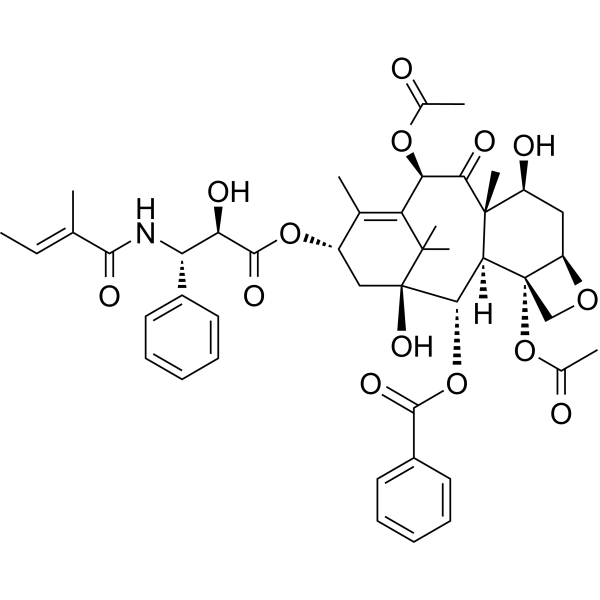
Cephalomannine is a Paclitaxel (HY-B0015) alkaloidal analog that can be isolated from most Cephalotaxus species. Cephalomannine is an orally active anti-tumor agent and can be used as a chemotherapy agent for cancer research.
For research use only. We do not sell to patients.
- Purity : 99.90%
- CAS No.: 71610-00-9
- Formula: C45H53NO14
- Molecular Weight:831.90
-
Storage:
4°C, protect from light
* In solvent : -80°C, 6 months; -20°C, 1 month (protect from light)

To place orders, for customer services and technical support, please contact: MedChemExpress USA
Tel: 609-228-6898 E-mail: [email protected] [email protected]


-
 Biological Activity
-
Chemical Information
-
Solvent & Solubility
- Purity & Documentation
- References
-
 Help & FAQs


-
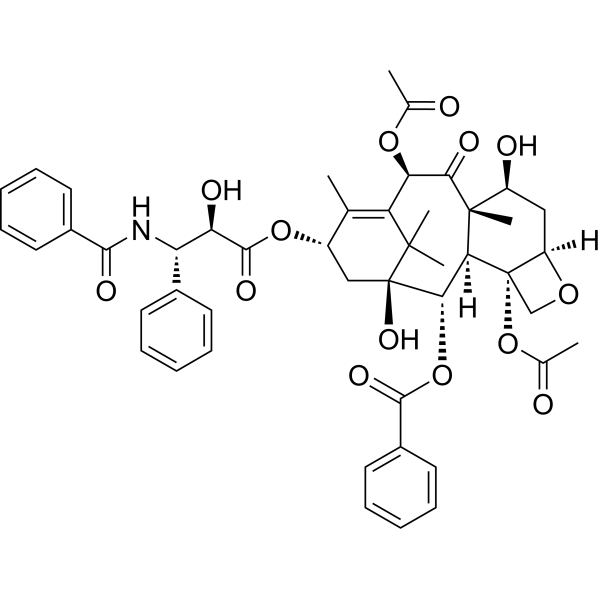
HY-B0015
PaclitaxelAntitumor Agent -
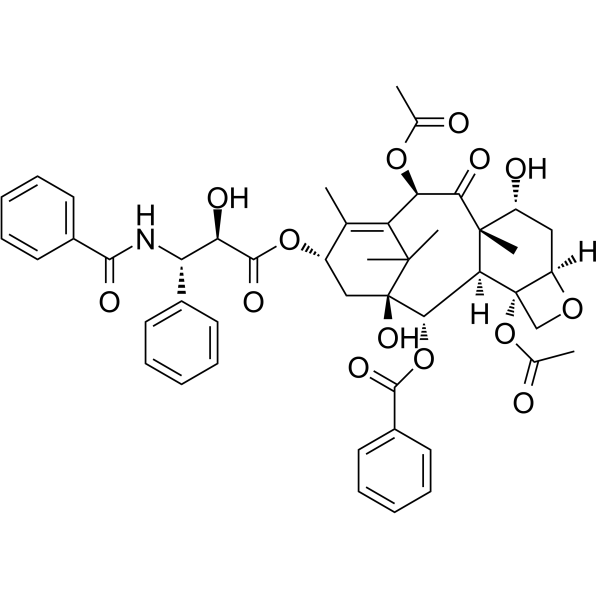
HY-N0227
7-epi-TaxolActive Metabolite of Taxol -

HY-77554R
Cephalomannine (Standard)Anti-Tumor Agent -
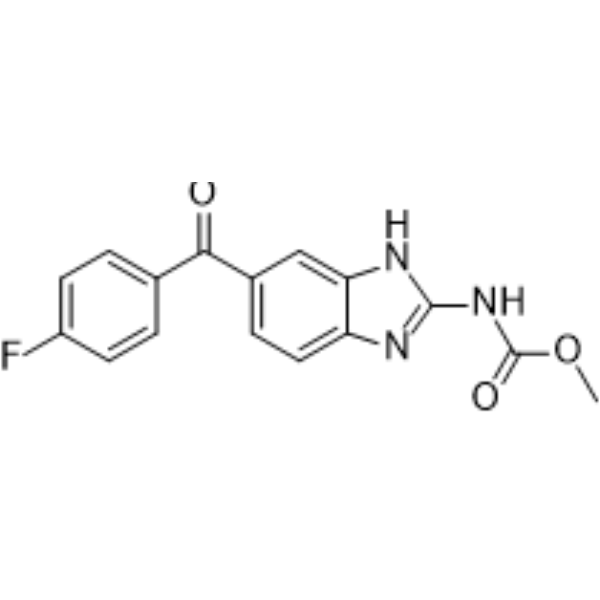
HY-B0294
FlubendazoleTubulin Polymerization Inhibitor -

HY-B0015R
Paclitaxel (Standard)Antitumor Agent -
HY-10498
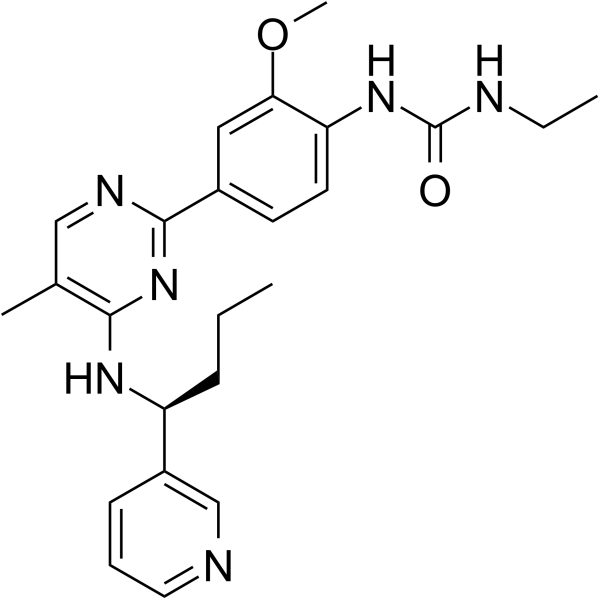
LexibulinTubulin Polymerisation Inhibitor -
HY-B0011A
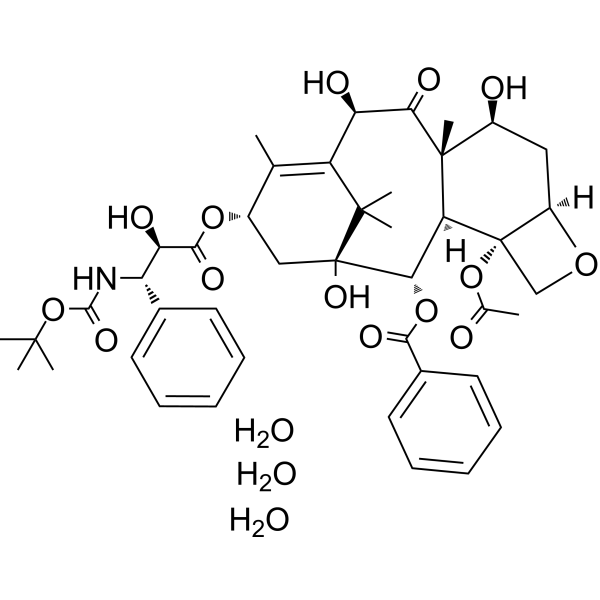
Docetaxel TrihydrateTubulin Stabilizer -
HY-16191
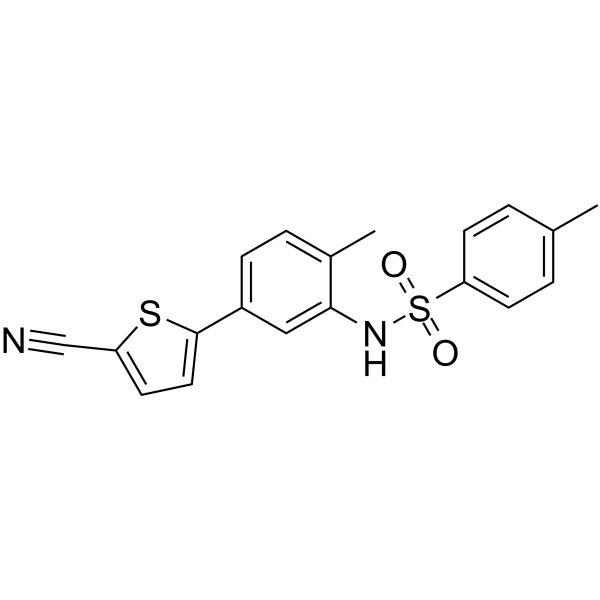
ELR510444Tubulin Inhibitor -

HY-B0294R
Flubendazole (Standard)Tubulin Polymerization Inhibitor -

HY-N0227R
7-epi-Taxol (Standard)Active Metabolite of Taxol -

HY-10498R
Lexibulin (Standard)Tubulin Polymerisation Inhibitor -

HY-B0011AR
Docetaxel Trihydrate (Standard)Reference Standard


Biological Activity
Description
IC50 & Target
|
HIF-1α |
Cellular Effect
|
Cell Line

|
Type | Value | Description | References |
|---|---|---|---|---|
| A2780 | IC50 |
0.1 μM
Compound: 1
|
Cytotoxicity against human A2780 cells by MTT assay
Cytotoxicity against human A2780 cells by MTT assay
|
[PMID: 18001087] |
| A2780 | IC50 |
0.013 μM
Compound: 4
|
Antiproliferative activity against human A2780 cells assessed as growth inhibition after 48 hrs by sulforhodamine B assay
Antiproliferative activity against human A2780 cells assessed as growth inhibition after 48 hrs by sulforhodamine B assay
|
[PMID: 25682561] |
| A549 | IC50 |
0.1 μM
Compound: 1
|
Cytotoxicity against human A549 cells by MTT assay
Cytotoxicity against human A549 cells by MTT assay
|
[PMID: 18001087] |
| A549 | IC50 |
0.005 μM
Compound: 4
|
Antiproliferative activity against human A549/CDDP cells assessed as growth inhibition after 48 hrs by sulforhodamine B assay
Antiproliferative activity against human A549/CDDP cells assessed as growth inhibition after 48 hrs by sulforhodamine B assay
|
[PMID: 25682561] |
| A549 | IC50 |
0.008 μM
Compound: 4
|
Antiproliferative activity against human A549 cells assessed as growth inhibition after 48 hrs by sulforhodamine B assay
Antiproliferative activity against human A549 cells assessed as growth inhibition after 48 hrs by sulforhodamine B assay
|
[PMID: 25682561] |
| Bel-7402 | IC50 |
0.92 μM
Compound: 1
|
Cytotoxicity against human Bel7402 cells by MTT assay
Cytotoxicity against human Bel7402 cells by MTT assay
|
[PMID: 18001087] |
| BGC-823 | IC50 |
0.1 μM
Compound: 1
|
Cytotoxicity against human BGC823 cells by MTT assay
Cytotoxicity against human BGC823 cells by MTT assay
|
[PMID: 18001087] |
| HCT-8 | IC50 |
0.31 μM
Compound: 1
|
Cytotoxicity against human HCT8 cells by MTT assay
Cytotoxicity against human HCT8 cells by MTT assay
|
[PMID: 18001087] |
| HCT-8 | IC50 |
>25 μM
Compound: 4
|
Antiproliferative activity against human HCT8 cells assessed as growth inhibition after 48 hrs by sulforhodamine B assay
Antiproliferative activity against human HCT8 cells assessed as growth inhibition after 48 hrs by sulforhodamine B assay
|
[PMID: 25682561] |
| HepG2 | IC50 |
0.02 μM
Compound: 4
|
Antiproliferative activity against human HepG2 cells assessed as growth inhibition after 48 hrs by sulforhodamine B assay
Antiproliferative activity against human HepG2 cells assessed as growth inhibition after 48 hrs by sulforhodamine B assay
|
[PMID: 25682561] |
| IGROV-1 | IC50 |
0.3 μM
Compound: 4
|
Antiproliferative activity against human IGROV1 cells assessed as growth inhibition after 72 hrs by Coulter counting analysis
Antiproliferative activity against human IGROV1 cells assessed as growth inhibition after 72 hrs by Coulter counting analysis
|
[PMID: 19833515] |
| KB | IC50 |
0.0015 μg/mL
Compound: 55
|
Cytotoxicity against human KB cells
Cytotoxicity against human KB cells
|
[PMID: 14987066] |
| KB | ED50 |
3.8 ng/mL
Compound: 2
|
Cytotoxicity against human KB cells
Cytotoxicity against human KB cells
|
[PMID: 19209890] |
| KB | ED50 |
3.8 x 10⁻³ μg/mL
Compound: 2
|
Cytotoxicity against human KB cells
Cytotoxicity against human KB cells
|
[PMID: 19209890] |
| KB | ED50 |
3.8 ng/mL
Compound: 2
|
Cytotoxicity against human KB cells
Cytotoxicity against human KB cells
|
[PMID: 7264680] |
| KB | ED50 |
3.8 x 10⁻³ μg/mL
Compound: 2
|
Cytotoxicity against human KB cells
Cytotoxicity against human KB cells
|
[PMID: 7264680] |
| MCF7 | IC50 |
6 nM
Compound: cephalomannine
|
Antiproliferative activity against human MCF7 cells after 72 hrs by MTT assay
Antiproliferative activity against human MCF7 cells after 72 hrs by MTT assay
|
[PMID: 11325226] |
| MCF7 | IC50 |
0.004 μM
Compound: 4
|
Antiproliferative activity against human MCF7 cells assessed as growth inhibition after 48 hrs by sulforhodamine B assay
Antiproliferative activity against human MCF7 cells assessed as growth inhibition after 48 hrs by sulforhodamine B assay
|
[PMID: 25682561] |
| NIH3T3 | IC50 |
0.6 μM
Compound: 4
|
Antiproliferative activity against mouse NIH/3T3 cells assessed as growth inhibition after 48 hrs by sulforhodamine B assay
Antiproliferative activity against mouse NIH/3T3 cells assessed as growth inhibition after 48 hrs by sulforhodamine B assay
|
[PMID: 25682561] |
| SW480 | IC50 |
0.033 μM
Compound: 4
|
Antiproliferative activity against human SW480 cells assessed as growth inhibition after 48 hrs by sulforhodamine B assay
Antiproliferative activity against human SW480 cells assessed as growth inhibition after 48 hrs by sulforhodamine B assay
|
[PMID: 25682561] |
In Vitro
Cephalomannine significantly inhibits the proliferation of H460, A549 and H1299 cells under normal oxygen conditions, with IC50 values of 0.18, 0.20 and 0.37 μM, respectively. Cephalomannine shows obvious inhibitory effect on cell viability under hypoxia[3].
Cephalomannine (0, 0.025, 0.05, 0.1 μM; 0, 12, 24h) inhibiting the interaction of APEX1/HIF-1α can also significantly inhibit the cell viability, ROS production, intracellular pH, migration of hypoxic lung cancer cells, and angiogenesis of hypoxic human umbilical vein endothelial cells (HUVECs)[3].
Cephalomannine dose-dependently inhibits UBE2S expression and thus suppresses prostate cancer (PCa) growth and metastasis[4].
MedChemExpress (MCE) has not independently confirmed the accuracy of these methods. They are for reference only. .
-
Cell Line:
-
Concentration:
-
Incubation Time:
-
Result:
-
Cell Line:H460 and A549 cell lines
-
Concentration:0, 0.025, 0.05, 0.1 μM
-
Incubation Time:0, 12, 24h
-
Result:After 24 h, the relative expression of APEX1 and HIF-1α was significantly inhibited.
-
Cell Line:H460 and A549 cell lines
-
Concentration:0, 0.025, 0.05, 0.1 μM
-
Incubation Time:0, 12, 24h
-
Result:HIF-1α levels were increased in hypoxic lung cancer cells.
-
Cell Line:H460 and A549 cell lines
-
Concentration:0, 0.025, 0.05, 0.1 μM
-
Incubation Time:0, 12, 24h
-
Result:The expression of APEX1 and HIF-1α was decreased.
In Vivo
Cephalomannine can interrupt the interaction between APEX1 and HIF-1α by competitive binding with APEX1[3].
MedChemExpress (MCE) has not independently confirmed the accuracy of these methods. They are for reference only.
-
Animal Model:BALB/C nude mice xenograft model[3]
-
Dosage:0.4 mg/kg
-
Administration:Intraperitoneal injection (i.p.)
-
Result:Reduced the volume and weight of H460 xenograft tumors.
-
Animal Model:BALB/c nude mice bone metastasis xenograft model[4]
-
Dosage:10 mg/kg, 20 mg/kg
-
Administration:Intraperitoneal injection (i.p.)
-
Result:Decreased bone destruction, reduced bioluminescence intensity and number of bone metastases, significantly extended time to endpoint events, decreased UBE2S expression and number of osteoclasts, and did not produce significant toxicity to the heart, liver, or kidney of nude mice.


Chemical Information
-
CAS No. 71610-00-9
-
Appearance Solid
-
Molecular Weight 831.90
-
Formula C45H53NO14
-
Color White to off-white
-
SMILES
O=C(/C(C)=C/C)N[C@@H](C1=CC=CC=C1)[C@H](C(O[C@@H]2C(C)=C([C@@H](OC(C)=O)C([C@@]3(C)[C@]([C@](OC(C)=O)(CO4)[C@H]4C[C@@H]3O)([H])[C@@H]5OC(C6=CC=CC=C6)=O)=O)C(C)(C)[C@@]5(O)C2)=O)O
-
Structure Classification
-
Initial Source
-
Shipping
Room temperature in continental US; may vary elsewhere.
-
Storage
4°C, protect from light
* In solvent : -80°C, 6 months; -20°C, 1 month (protect from light)


Solvent & Solubility
In Vitro:
DMSO : ≥ 100 mg/mL (120.21 mM; Hygroscopic DMSO has a significant impact on the solubility of product, please use newly opened DMSO)
* "≥" means soluble, but saturation unknown.
Please refer to the solubility information to select the appropriate solvent. Once prepared, please aliquot and store the solution to prevent product inactivation from repeated freeze-thaw cycles.
Storage method and period of stock solution: -80°C, 6 months; -20°C, 1 month (protect from light). When stored at -80°C, please use it within 6 months. When stored at -20°C, please use it within 1 month.
Please refer to the solubility information to select the appropriate solvent. Once prepared, please aliquot and store the solution to prevent product inactivation from repeated freeze-thaw cycles.
Storage method and period of stock solution: -80°C, 6 months; -20°C, 1 month (protect from light). When stored at -80°C, please use it within 6 months. When stored at -20°C, please use it within 1 month.
Concentration (start) × Volume (start) = Concentration (final) × Volume (final)
In Vivo:
Select the appropriate dissolution method based on your experimental animal and administration route.
- For the following dissolution methods, please ensure to first prepare a clear stock solution using an In Vitro approach and then sequentially add co-solvents:
- To ensure reliable experimental results, the clarified stock solution can be appropriately stored based on storage conditions. As for the working solution for In Vivo experiments, it is recommended to prepare freshly and use it on the same day.
- The percentages shown for the solvents indicate their volumetric ratio in the final prepared solution. If precipitation or phase separation occurs during preparation, heat and/or sonication can be used to aid dissolution.
Add each solvent one by one: 10% DMSO 40% PEG300 5% Tween-80 45% Saline
Solubility: ≥ 2.5 mg/mL (3.01 mM); Clear solution
This protocol yields a clear solution of ≥ 2.5 mg/mL (saturation unknown).
Taking 1 mL working solution as an example, add 100 μL DMSO stock solution (25.0 mg/mL) to 400 μL PEG300, and mix evenly; then add 50 μL Tween-80 and mix evenly; then add 450 μL Saline to adjust the volume to 1 mL.
Preparation of Saline: Dissolve 0.9 g sodium chloride in ddH₂O and dilute to 100 mL to obtain a clear Saline solution.
In Vivo Dissolution Calculator
Please enter the basic information of animal experiments:
-
-
-
-
Recommended: Prepare an additional quantity of animals to account for potential losses during experiments.
Please enter your animal formula composition:
-
%DMSO +
Recommended: Keep the proportion of DMSO in working solution below 2% if your animal is weak.
-
%+
-
+%Tween-80 + +
-
%Saline +
The co-solvents required include: DMSO, . All of co-solvents are available by MedChemExpress (MCE). , Tween 80. All of co-solvents are available by MedChemExpress (MCE).
Working solution concentration: 0.22 mg/mL
Method for preparing stock solution: mg drug dissolved in μL DMSO. Stock solution concentration: mg/mL. * In solvent : -80°C, 6 months; -20°C, 1 month (protect from light)
1. Take μL DMSO stock solution;
2. Add μL .
μL , mix evenly;
3. Then add μL Tween 80, mix evenly;
4. Then add μL
Please ensure that the stock solution in the first step is dissolved to a clear state, and add co-solvents in sequence. You can use ultrasonic heating (ultrasonic cleaner, recommended frequency 20-40 kHz), vortexing, etc. to assist dissolution.


Purity & Documentation
-
Data Sheet (286 KB)
-
SDS (555 KB)
- English - EN (555 KB)
- Français - FR (555 KB)
- Deutsch - DE (555 KB)
- Norwegian - NO (555 KB)
- Español - ES (555 KB)
- Swedish - SV (555 KB)
- Italian - IT (555 KB)
- Korean - KR (555 KB)
- Portuguese - PT (555 KB)
-
Handling Instructions (2659 KB)
References
[1]. Feng Gao, et al. Synthesis, isolation, stereostructure and cytotoxicity of paclitaxel analogs from cephalomannine.Fitoterapia. 2013 Oct;90:79-84. [Content Brief]
[2]. Jianhua Li, et al. Microbial transformation of cephalomannine by Luteibacter sp. J Nat Prod. 2007 Dec;70(12):1846-9. [Content Brief]
[3]. Ullah, Asmat et al. Cephalomannine inhibits hypoxia-induced cellular function via the suppression of APEX1/HIF-1α interaction in lung cancer. Cell death & disease vol. 2021;12(5):490. [Content Brief]


Complete Stock Solution Preparation Table
Please refer to the solubility information to select the appropriate solvent. Once prepared, please aliquot and store the solution to prevent product inactivation from repeated freeze-thaw cycles.
Storage method and period of stock solution: -80°C, 6 months; -20°C, 1 month (protect from light). When stored at -80°C, please use it within 6 months. When stored at -20°C, please use it within 1 month.
| Optional Solvent | Concentration Solvent Mass | 1 mg | 5 mg | 10 mg | 25 mg |
|---|---|---|---|---|---|
| DMSO | 1 mM | 1.2021 mL | 6.0103 mL | 12.0207 mL | 30.0517 mL |
| 5 mM | 0.2404 mL | 1.2021 mL | 2.4041 mL | 6.0103 mL | |
| 10 mM | 0.1202 mL | 0.6010 mL | 1.2021 mL | 3.0052 mL | |
| 15 mM | 0.0801 mL | 0.4007 mL | 0.8014 mL | 2.0034 mL | |
| 20 mM | 0.0601 mL | 0.3005 mL | 0.6010 mL | 1.5026 mL | |
| 25 mM | 0.0481 mL | 0.2404 mL | 0.4808 mL | 1.2021 mL | |
| 30 mM | 0.0401 mL | 0.2003 mL | 0.4007 mL | 1.0017 mL | |
| 40 mM | 0.0301 mL | 0.1503 mL | 0.3005 mL | 0.7513 mL | |
| 50 mM | 0.0240 mL | 0.1202 mL | 0.2404 mL | 0.6010 mL | |
| 60 mM | 0.0200 mL | 0.1002 mL | 0.2003 mL | 0.5009 mL | |
| 80 mM | 0.0150 mL | 0.0751 mL | 0.1503 mL | 0.3756 mL | |
| 100 mM | 0.0120 mL | 0.0601 mL | 0.1202 mL | 0.3005 mL |


Cephalomannine Related Classifications
HY-77554 Related Classifications
 Powered by Bioz