Search Result
Results for "
Nav1.7 channels
" in MedChemExpress (MCE) Product Catalog:
| Cat. No. |
Product Name |
Target |
Research Areas |
Chemical Structure |
-
- HY-N6691
-
|
3-Veratroylveracevine
|
Sodium Channel
|
Neurological Disease
|
|
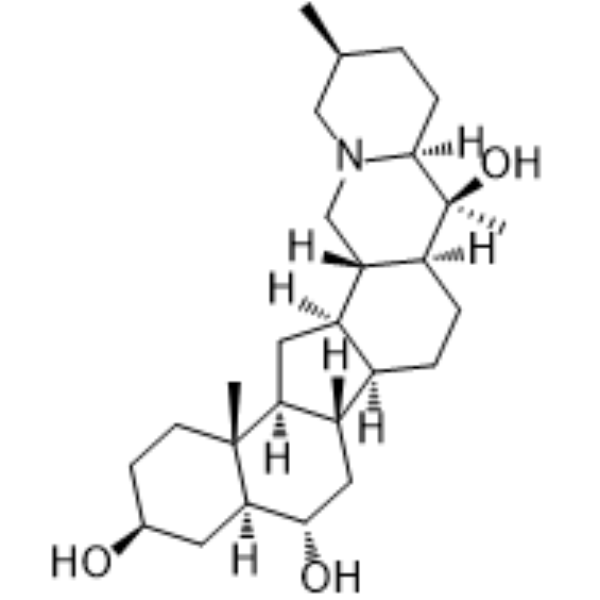
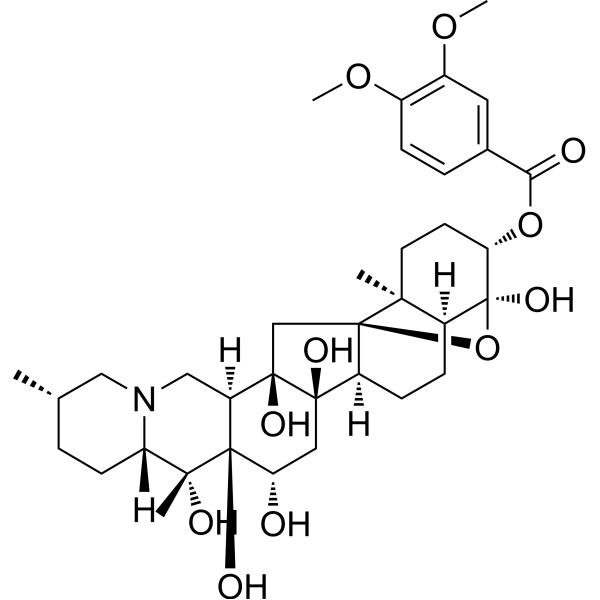
Veratridine (3-Veratroylveracevine) is a plant neurotoxin, a voltage-gated sodium channels (VGSCs) agonist. Veratridine inhibits the peak current of Nav1.7, with an IC50 of 18.39 µM. Veratridine regulates sodium ion channels mainly by activating sodium ion channels, preventing channel inactivation and increasing sodium ion flow .
|
-
-
- HY-125079
-
|
ANP-230
|
Sodium Channel
|
Cardiovascular Disease
Neurological Disease
|
|
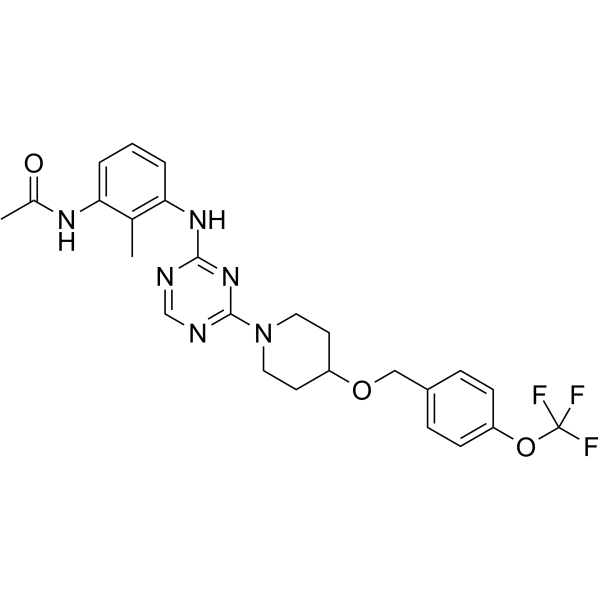
DSP-2230 is the orally active inhibitor for voltage-gated sodium channel that inhibits Nav1.7-, Nav1.8-, and Nav1.9-derived sodium currents with IC50s of 7.1 μM, 11.4 μM and 6.7 μM, respectively. DSP-2230 can be used to improve neuropathic pain .
|
-
-
- HY-N0212
-
-
-
- HY-12796A
-
|
Vixotrigine hydrochloride; GSK-1014802 hydrochloride; CNV1014802 hydrochloride
|
Sodium Channel
|
Neurological Disease
|
|
Raxatrigine hydrochloride (GSK-1014802 hydrochloride) is a novel small molecule state-dependent sodium channel blocker; Nav1.7 sodium channel inhibitor.
|
-
-
- HY-12796
-
|
Vixotrigine; GSK-1014802; CNV1014802
|
Sodium Channel
|
Neurological Disease
|
|
Raxatrigine (GSK-1014802) is a novel small molecule state-dependent sodium channel blocker; Nav1.7 sodium channel inhibitor.
|
-
-
- HY-118952A
-
|
|
Sodium Channel
|
Neurological Disease
|
|
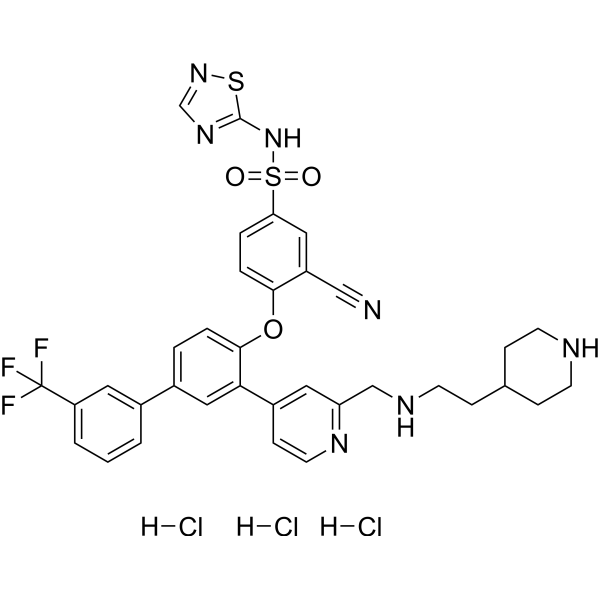
PF-06456384 trihydrochloride is an extremely potent and selective Nav1.7 sodium channel blocker (IC50: 0.01 nM for hNaV1.7; 75 nM for rNaV1.7; <0.1 nM for mNaV1.7). PF-06456384 trihydrochloride shows no significant analgesic efficacy in the mouse Formalin pain model .
|
-
-
- HY-16723
-
|
TV 45070; XEN402
|
Sodium Channel
|
Neurological Disease
Inflammation/Immunology
|
|
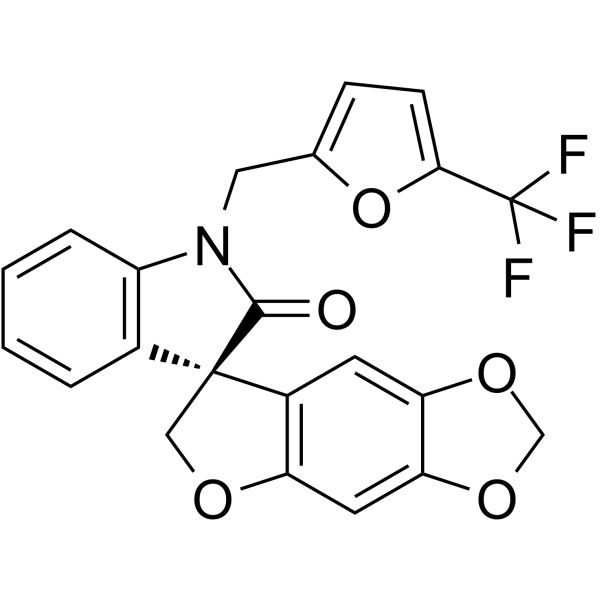
Funapide (TV 45070; XEN402) is an orally active inhibitor of voltage-gated sodium channels (VGSC) in the peripheral nervous system with IC50 values ??of 84 nM and 54 nM for Nav1.5 and Nav1.7, respectively. Funapide has analgesic effects .
|
-
-
- HY-112279
-
-
-
- HY-107405
-
|
|
Sodium Channel
|
Neurological Disease
|
|
TC-N 1752 is a potent and orally active inhibitor of Nav1.7, with IC50s of 0.17 μM, 0.3 μM, 0.4 μM, 1.1 μM and 2.2 μM at hNav1.7, hNav1.3, hNav1.4, hNaV1.5 and rNav1.8, respectively. TC-N 1752 also inhibits tetrodotoxin-sensitive sodium channels. TC-N 1752 shows analgesic efficacy in the Formalin model of pain .
|
-
-
- HY-12811
-
|
|
Sodium Channel
|
Neurological Disease
|
|
PF-04856264 is a potent and selective Nav1.7 inhibitor, with IC50s of 28, 131, 19, and 42 nM for human, mouse, cynomolgus monkey and dog Nav1.7, respectively. PF-04856264 has low potency against the rat Nav1.7 channel. PF-04856264 shows analgesic effect .
|
-
-
- HY-N1847
-
|
|
Sodium Channel
|
Neurological Disease
|
|
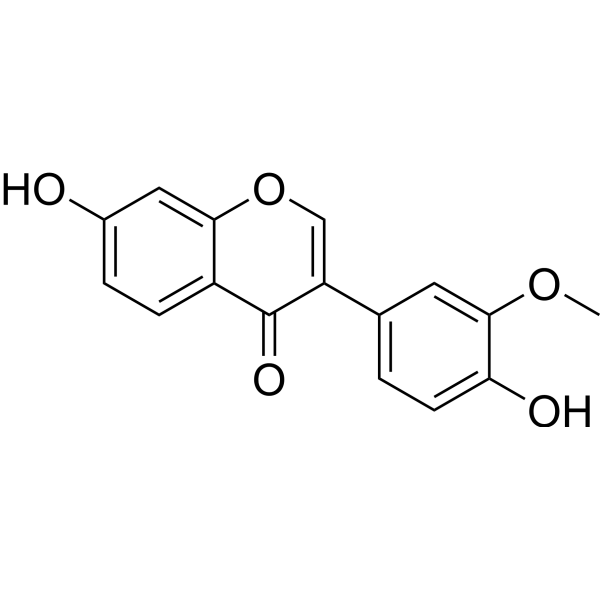
3'-Methoxydaidzein is a isoflavone and a Sodium Channel inhibitor. 3'-Methoxydaidzein inhibits subtypes NaV1.7, NaV1.8 and NaV1.3 with IC50 of 181 nM, 397 nM, and 505 nM, respectively. 3'-Methoxydaidzein exerts analgesic activity by inhibiting voltage-gated sodium channels .
|
-
-
- HY-122001
-
|
|
Sodium Channel
|
Neurological Disease
|
|
PF-05186462 is a potent and selective inhibitor of human Nav1.7 voltage-dependent sodium channel, with an IC50 of 21 nM. PF-05186462 shows significant selectivity for Nav1.7 versus other sodium channels (Nav 1.1, 1.2, 1.3, 1.4, 1.5, 1.6, and 1.8). PF-05186462 can be used for the research of acute or chronic pain .
|
-
-
- HY-P1221A
-
|
|
Sodium Channel
|
Neurological Disease
|
|
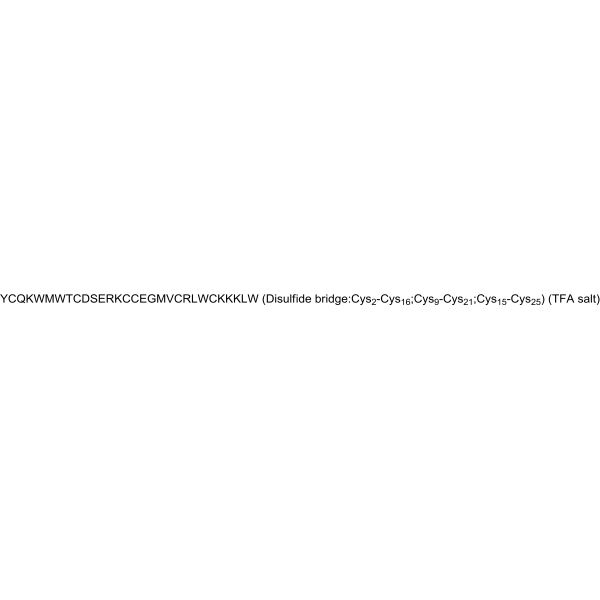
ProTx II TFA is a selective blocker of Nav1.7 sodium channels with an IC50 of 0.3 nM, and is at least 100-fold selective for Nav1.7 over other sodium channel subtypes. ProTx-II inhibits sodium channels by decreasing channel conductance and shifting activation to more positive potentials and blocks action potential propagation in nociceptors .
|
-
-
- HY-157802
-
|
|
Sodium Channel
|
Neurological Disease
|
|
LTGO-33 is a potent and selective voltage-gated sodium channel NaV1.8 inhibitor. LTGO-33 inhibits NaV1.8 in the nM potency range and exhibits over 600-fold selectivity against human NaV1.1-NaV1.7 and NaV1.9. LTGO-33 exhibits state-independent inhibition with similar potencies on channels in the closed and inactivated conformations. LTGO-33 inhibits native TTX-R NaV1.8 currents in non-human primate and human DRG neurons, where it reduces action potential firing. LTGO-33 can be used for pain disorders research .
|
-
-
- HY-101789
-
|
|
Sodium Channel
|
Neurological Disease
|
|
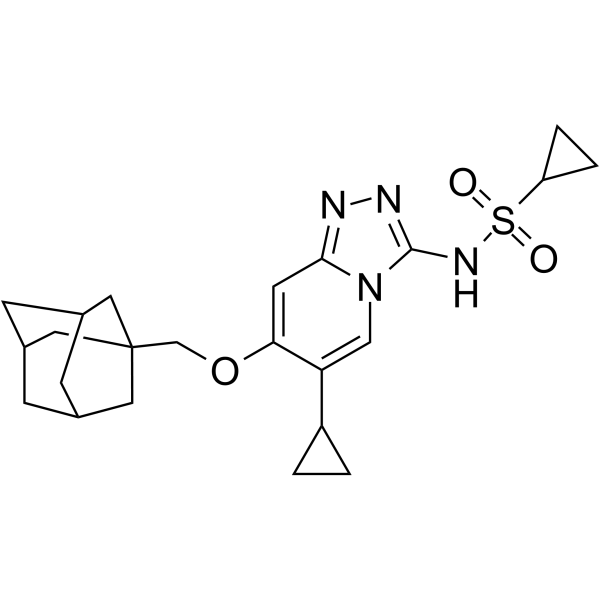
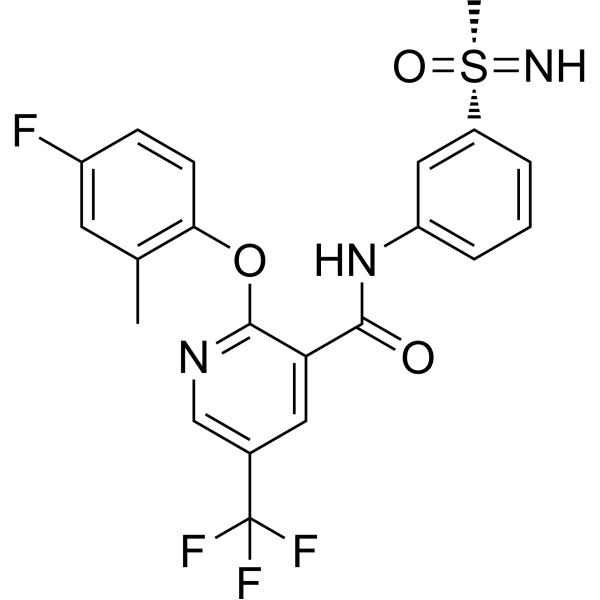
Nav1.7-IN-3 is a selective, orally bioavailable voltage-gated sodium channel Nav1.7 inhibitor with an IC50 of 8 nM. Pain relief. Limited CNS penetration .
|
-
-
- HY-119934
-
|
|
Sodium Channel
|
Neurological Disease
|
|
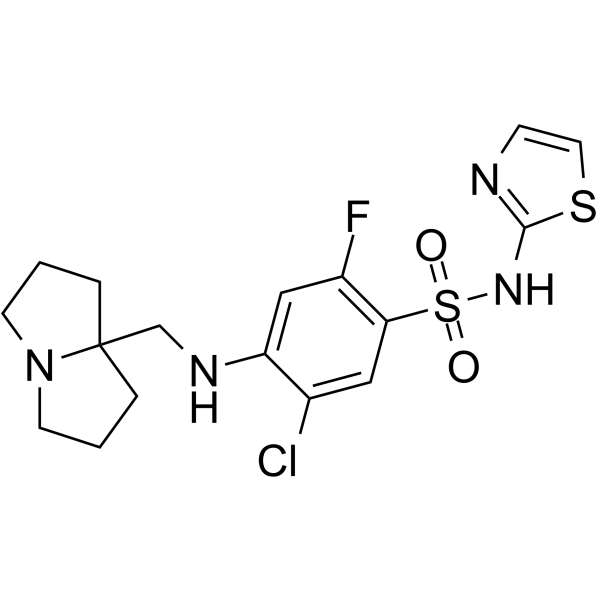
NaV1.7 inhibitor-1 is an efficacious voltage-gated sodium channel (NaV) 1.7 inhibitor with an IC50 of 0.6 nM for hNaV1.7, exhibits 80-fold selectivity versus hNaV1.5 .
|
-
-
- HY-A0079
-
|
Amethocaine
|
Sodium Channel
Calcium Channel
|
Neurological Disease
|
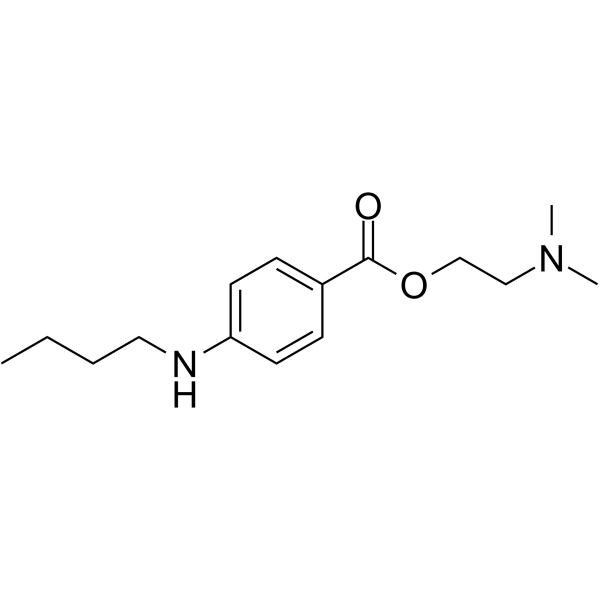
Tetracaine (Amethocaine) is a sodium channel inhibitor and ryanodine receptor (RyR) inhibitor. Tetracaine blocks sodium conduction across nerve cell membranes, preventing rapid sodium ion influx and depolarization. Tetracaine exhibits biphasic effects on spontaneous sarcoplasmic reticulum Ca 2+ release in Ca 2+-overloaded ventricular myocytes, and increases sarcoplasmic reticulum Ca 2+ load. Tetracaine can be used in research related to eye diseases .
|
-
-
- HY-133910
-
|
|
Sodium Channel
|
Neurological Disease
|
|
Lu AE98134, an activator of voltage-gated sodium channels, acts as a partly selective Nav1.1 channels positive modulator. Lu AE98134 also increases the activity of Nav1.2 and Nav1.5 channels but not of Nav1.4, Nav1.6 and Nav1.7 channels. Lu AE98134 can be used to analyze pathophysiological functions of the Nav1.1 channel in various central nervous system diseases, including cognitive restoring in schizophrenia, et al .
|
-
-
- HY-178494
-
|
|
Sodium Channel
Potassium Channel
|
Neurological Disease
|
|
Nav1.7-IN-19 is a potent, selective and orally active Nav1.7 inhibitor with an IC50 of 0.49 μM. Nav1.7-IN-19 shows high selectivity for Nav1.7, with selectivities of 312-fold and 662-fold against Nav1.1 and Nav1.5 in the inactivated state. Nav1.7-IN-19 exhibits weak inhibition on hERG potassium channels. Nav1.7-IN-19 exhibits analgesic effect and can be used for the research of neurological disease .
|
-
-
- HY-178281
-
|
|
Potassium Channel
Sodium Channel
|
Neurological Disease
|
|
E0199 is a novel potent dual-target KV7/NaV modulator that activates the KV7 channel (KV7.2/7.3 (EC50 = 12.78 nM), KV7.2 (EC50 = 0.50 μM), and KV7.5 (EC50 = 27.14 nM) channels) while simultaneously blocks the NaV1.7 (IC50 = 0.52 μM), NaV1.8 (IC50 = 0.24 μM), and NaV1.9 (IC50 = 0.16 μM) channels. E0199 shows a potent analgesic effect without affecting heart and skeletal muscle ion channels critically in a chronic constriction injury (CCI) mouse model. E0199 can be used for Neuropathic pain (NP) research .
|
-
-
- HY-123824
-
|
|
Sodium Channel
|
Neurological Disease
|
|
GNE-0439 is a novel Nav1.7-selective inhibitor with IC50 of 0.34 uM and inhibits Nav1.5 with an IC50 of 38.3 μM. GNE-0439 inhibits mutant N1742K channels (IC50=0.37 uM) in membrane potential assays. GNE-0439 possesses a carboxylic acid group, binds outside of the channel pore, and is unique compared with known selective VSD4 binders .
|
-
-
- HY-103623
-
-
-
- HY-100727
-
-
-
- HY-156596
-
-
-
- HY-P1073
-
|
|
Calcium Channel
Potassium Channel
Sodium Channel
TRP Channel
|
Neurological Disease
Cancer
|
ProTx-I is a toxin derived from Thrixopelma pruriens and a peptide inhibitor targeting TTX-resistant sodium channels. ProTx-I interacts with voltage sensors of multiple domains such as NaV1.7, reduces neuronal excitability through allosteric modulation of channel gating and alteration of voltage dependence. The IC50 values of ProTx-I against human NaV1.7, NaV1.2, NaV1.6, and NaV1.5 are 95 nM, 104 nM, 21 nM, and 358 nM, respectively; ProTx-I also potently inhibits Ba 2+ currents of hCav3.1, while its inhibitory potency against hCav3.2 is approximately 160-fold lower. ProTx-I is applicable to the research of chronic pain .
|
-
-
- HY-19366
-
-
-
- HY-117714
-
|
|
Sodium Channel
|
Neurological Disease
|
|
AZD-3161 is a potent and selective blocker of NaV1.7 channel, with a pIC50 of 7.1. AZD-3161 can be used for the research of neuropathic and inflammatory pain .
|
-
-
- HY-105285
-
|
Neu-P11
|
Melatonin Receptor
5-HT Receptor
P2X Receptor
TRP Channel
Sodium Channel
|
Neurological Disease
|
|
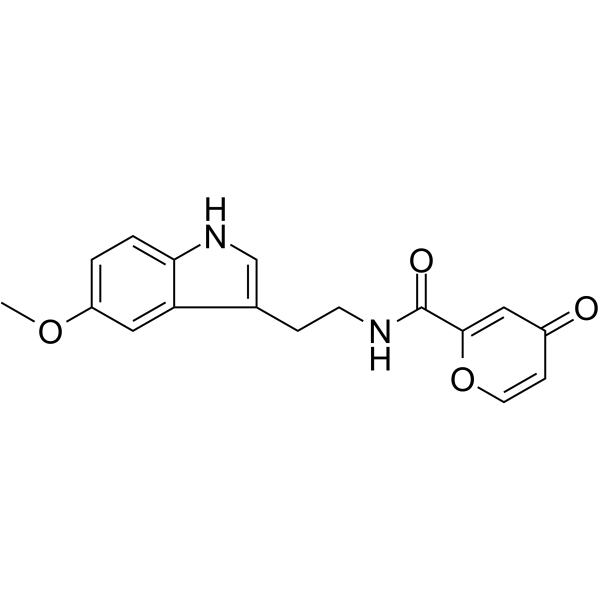
Piromelatine (Neu-P11) is a melatonin MT1/MT2 receptor agonist, serotonin 5-HT1A/5-HT1D agonist, and serotonin 5-HT2B antagonist. Piromelatine (Neu-P11) possesses sleep promoting, analgesic, anti-neurodegenerative, anxiolytic and antidepressant potentials. Piromelatine (Neu-P11) also possesses pain-related P2X3, TRPV1, and Nav1.7 channel-inhibition capacities .
|
-
-
- HY-P1220A
-
|
|
Sodium Channel
|
Neurological Disease
|
|
Huwentoxin-IV TFA is a potent and selective sodium channel blocker, inhibits neuronal Nav1.7, Nav1.2, Nav1.3 and Nav1.4 with IC50s of 26, 150, 338 and 400 nM, respectively. Huwentoxin-IV TFA preferentially blocks peripheral nerve subtype Nav1.7 by binding neurotoxin receptor site 4. Huwentoxin-IV TFA has analgesic effects on animal models of inflammatory and neuropathic pain .
|
-
-
- HY-P1221
-
|
|
Sodium Channel
|
Neurological Disease
|
|
ProTx II is a selective blocker of Nav1.7 sodium channels with an IC50 of 0.3 nM, and is at least 100-fold selective for Nav1.7 over other sodium channel subtypes. ProTx-II inhibits sodium channels by decreasing channel conductance and shifting activation to more positive potentials and blocks action potential propagation in nociceptors .
|
-
-
- HY-123825
-
-
-
- HY-16723A
-
|
(R)-TV 45070; (R)-XEN402
|
Sodium Channel
|
Neurological Disease
Inflammation/Immunology
|
|
(R)-Funapide ((R)-TV 45070) is the less active R-enantiomer of Funapide. Funapide is a potent inhibitor of the sodium channel Nav1.7, Nav1.8 and other Nav channels expressed in the peripheral nervous system. Fornabil is an orally effective analgesic agent .
|
-
-
- HY-P10234A
-
|
|
Sodium Channel
|
Neurological Disease
|
|
Poneratoxin acetate is the acetate salt form of Poneratoxin (HY-P10234). Poneratoxin acetate is the modulator for voltage-gated sodium channel (NaV, EC50 for NaV1.6 and NaV1.7 is 97 nM and 2.3 µM), that lowers the voltage threshold for activation and inhibits the inactivation of channels, enhances the excitability of neurons, and leads to the transmission of pain signals .
|
-
-
- HY-108425
-
|
|
Sodium Channel
|
Neurological Disease
|
|
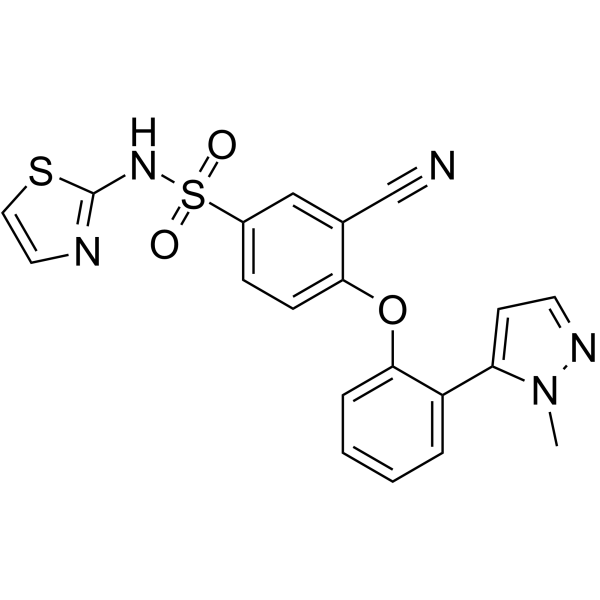
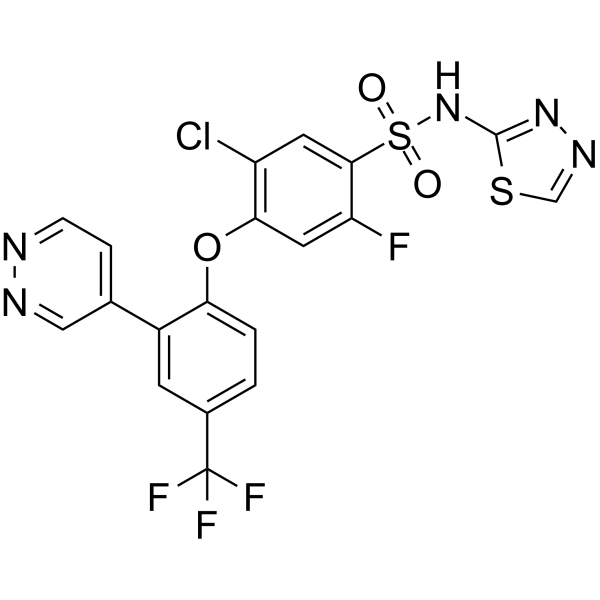
AMG8379 is a potent, orally active and selective sulfonamide antagonist of the voltage-gated sodium channel NaV1.7, with IC50s of 8.5 and 18.6 nM for hNaV1.7 and mNaV1.7, respectively. AMG8379 potently and reversibly blocks endogenous Tetrodotoxin (TTX)-sensitive sodium channels in dorsal root ganglia (DRG) neurons with an IC50 of 3.1 nM .
|
-
-
- HY-12883A
-
|
|
Sodium Channel
|
Neurological Disease
|
|
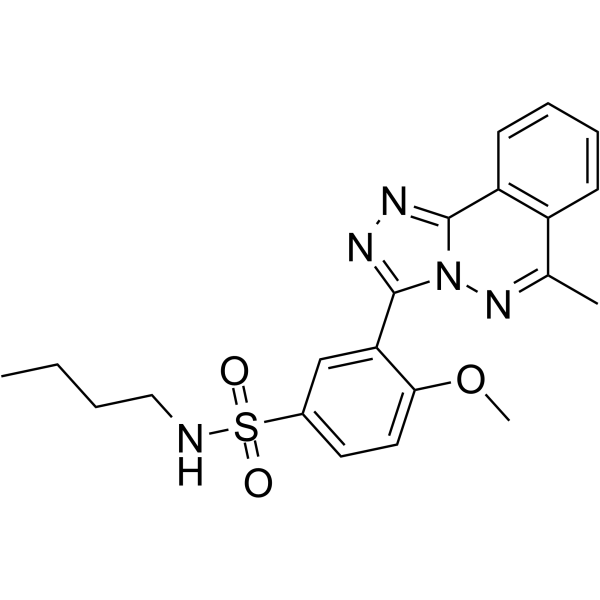
PF-05198007 is a potent, orally active and selective arylsulfonamide Nav1.7 inhibitor. PF-05198007 is a compound with a similar pharmacodynamic profile to PF-05089771 .
|
-
-
- HY-P5160A
-
|
PhlTx1 TFA
|
Sodium Channel
|
Neurological Disease
|
|
Phlotoxin-1 (PhlTx1) is a 34-amino acid and 3-disulfide bridge peptide. Phlotoxin-1 can be isolated from Phlogiellus genus spider. Phlotoxin-1 is an antinociceptive agent by inhibiting NaV1.7 channel .
|
-
-
- HY-15736
-
|
|
Sodium Channel
|
Neurological Disease
|
|
Sodium Channel inhibitor 1 is a state-dependent voltage-gated NaV1.7 inhibitor with an IC50 of 0.087 μM. Sodium Channel inhibitor 1 can be used for research of pain .
|
-
-
- HY-N6691R
-
|
3-Veratroylveracevine (Standard)
|
Reference Standards
Sodium Channel
|
Neurological Disease
|
|
Veratridine (Standard) is the analytical standard of Veratridine. This product is intended for research and analytical applications. Veratridine (3-Veratroylveracevine) is a plant neurotoxin, a voltage-gated sodium channels (VGSCs) agonist. Veratridine inhibits the peak current of Nav1.7, with an IC50 of 18.39?μM. Veratridine regulates sodium ion channels mainly by activating sodium ion channels, preventing channel inactivation and increasing sodium ion flow .
|
-
-
- HY-P1220
-
|
|
Sodium Channel
|
Neurological Disease
|
|
Huwentoxin-IV is a potent and selective sodium channel blocker, inhibits neuronal Nav1.7, Nav1.2, Nav1.3 and Nav1.4 with IC50s of 26, 150, 338 and 400 nM, respectively. Huwentoxin-IV preferentially blocks peripheral nerve subtype Nav1.7 by binding neurotoxin receptor site 4. Huwentoxin-IV has analgesic effects on animal models of inflammatory and neuropathic pain .
|
-
-
- HY-171778
-
|
|
Sodium Channel
|
Neurological Disease
Inflammation/Immunology
|
|
QLS-81 is a Nav1.7 channel inhibitor (IC50: 1.5 μM). QLS-81 has significant analgesic activity and can relieve neuropathic and inflammatory pain. QLS-81 exerts frequency-dependent inhibitory effects by inhibiting the inactivated state of Nav1.7 channels. QLS-81 can be used in the study of chronic pain .
|
-
-
- HY-P1681A
-
|
|
Sodium Channel
|
Neurological Disease
|
|
GpTx-1 TFA is a peptide-based NaV1.7 sodium channel antagonist isolated from the venom of the Chilean spider Grammostola porter. GpTx-1 TFA demonstrates potent inhibitory activity against the NaV1.7 channel with an IC50 value of 10 nM, while exhibiting excellent selectivity for NaV1.4 (IC50 = 0.301 μM) and NaV1.5 (IC50 = 4.20 μM), showing >20-fold and >950-fold selectivity respectively .
|
-
-
- HY-P1681
-
|
|
Sodium Channel
|
Neurological Disease
|
|
GpTx-1 is a peptide-based NaV1.7 sodium channel antagonist isolated from the venom of the Chilean spider Grammostola porter. GpTx-1 demonstrates potent inhibitory activity against the NaV1.7 channel with an IC50 value of 10 nM, while exhibiting excellent selectivity for NaV1.4 (IC50 = 0.301 μM) and NaV1.5 (IC50 = 4.20 μM), showing >20-fold and >950-fold selectivity respectively .
|
-
-
- HY-P10234
-
|
|
Sodium Channel
|
Neurological Disease
|
|
Poneratoxin is the modulator for voltage-gated sodium channel (NaV, EC50 for NaV1.6 and NaV1.7 is 97 nM and 2.3 µM), that lowers the voltage threshold for activation and inhibits the inactivation of channels, enhances the excitability of neurons, and leads to the transmission of pain signals .
|
-
-
- HY-135495
-
|
|
Sodium Channel
Histamine Receptor
|
Inflammation/Immunology
|
|
AM-0466 is a sodium channel inhibitor with nanomolar levels of NaV1.7 inhibitory activity. AM-0466 exhibits potent pharmacodynamic activity in a NaV1.7-dependent histamine-induced itch model. AM-0466 also showed significant analgesic effects in capsaicin-induced pain models. After optimizing its pharmacokinetic properties, AM-0466 was advanced into in vivo targeting and efficacy models for testing .
|
-
-
- HY-P5795
-
|
|
Sodium Channel
Potassium Channel
|
Neurological Disease
|
|
GsAF-I is a potent Nav and hERG1 channels blocker with IC50s of 0.36, 0.6, 1.28, 0.33, 1.2, 0.04 and 4.8 μM against Nav1.1, Nav1.2, Nav1.3, Nav1.4, Nav1.6, Nav1.7 and hERG1, respectively .
|
-
-
- HY-123833
-
|
|
Sodium Channel
|
Others
|
|
PF-05661014, a desmethyl analogue of PF-06526290, selectively inhibits Nav1.3 and Nav1.7 currents by stabilizing inactivated channels via interaction with D4 VSD. PF-05661014 can be used for research of sodium channel modulation .
|
-
-
- HY-116194
-
-
-
- HY-160663
-
-
-
- HY-N0212R
-
-
-
- HY-167852
-
-
- HY-155236
-
-
- HY-162347
-
|
|
Sodium Channel
|
Neurological Disease
|
|
Nav1.7-IN-13 (compound 3g) is a sodium channel inhibitor that significantly inhibits Veratridine (HY-N6691)-induced neuronal activity. Nav1.7-IN-13 inhibits total Na+ current in DRG neurons in a concentration-dependent manner; slows down the activation of Navs. Nav1.7-IN-13 significantly alleviated mechanical pain behavior in a rat model of nerve injury (SNI) and had analgesic activity .
|
-
- HY-P5793
-
-
- HY-128794
-
|
|
Sodium Channel
|
Neurological Disease
|
|
PF-05150122 is a novel potent and selective human Nav1.7 channel blocker with the activity of inhibiting human pain signaling. PF-05150122 exhibited favorable biopharmacokinetic parameters in microdose studies, providing a basis for exploring its application in acute or chronic pain inhibition. The pharmacokinetic model of PF-05150122 predicted that at the corresponding oral dose, it could effectively reduce the 50% inhibitory concentration (IC50) of Nav1.7, demonstrating its inhibitory potential .
|
-
- HY-P5865
-
|
Theraphotoxin-Tap1a; TRTX-Tap1a; µ/ω-TRTX-Tap1a
|
Sodium Channel
|
Neurological Disease
|
|
Tap1a (Theraphotoxin-Tap1a) is a spider venom peptide that inhibits sodium channels with IC50s of 80 nM and 301 nM against Nav1.7 and Nav1.1, respectively. Tap1a shows analgesic effects .
|
-
- HY-P5160
-
|
PhlTx1
|
Sodium Channel
|
Neurological Disease
|
|
Phlotoxin-1 (PhlTx1) is a 34-amino acid and 3-disulfide bridge peptide. Phlotoxin-1 can be isolated from Phlogiellus genus spider. Phlotoxin-1 is an antinociceptive agent by inhibiting NaV1.7 channel .
|
-
- HY-108425A
-
|
|
Sodium Channel
|
Neurological Disease
|
|
AMG8380, an orally active and less active enantiomer of AMG8379, can serves as a negative control. AMG8380 inhibits human and mouse voltage-gated sodium channel NaV1.7 with IC50s of 0.907 and 0.387 μM, respectively. AMG8380 blocks Tetrodotoxin (TTX)-sensitive native channels with an IC50 of 2560 nM .
|
-
- HY-P5813
-
|
β-TRTX-cd1a; β-Theraphotoxin-cd1a
|
Calcium Channel
|
Neurological Disease
|
|
Cd1a is a β-toxin derived from the African spider Ceratogyrus darlingi. Cd1a can regulate calcium ion channels. Cd1a inhibits human calcium ion channels (Cav2.2)(IC502.6 μM) and mouse sodium ion channels (Nav1.7). Cd1a can be used in the development of peripheral pain treatment drugs .
|
-
- HY-185335
-
|
|
Sodium Channel
|
Neurological Disease
|
|
Sodium Channel-IN-8 (Example 96) is a voltage-gated sodium channel (NaV1.7) inhibitor.Sodium Channel-IN-8 can be used for the research of pain .
|
-
- HY-185333
-
|
|
Sodium Channel
|
Neurological Disease
|
|
Sodium Channel-IN-7 (Example 59) is a NaV1.7 voltage-gated sodium channel inhibitor.Sodium Channel-IN-7 binds to the VSD4 binding pocket of NaV1.7, with reduced interaction with Try1537.Sodium Channel-IN-7 can be used for the research of pain .
|
-
- HY-P5153
-
|
μ-TRTX-Tp1a
|
Sodium Channel
|
Neurological Disease
|
|
ProTx-III is a selective and potent inhibitor of voltage-gated sodium channel Nav1.7, with an IC50 of 2.1 nM. ProTx-III is a spider venom peptide isolated from the venom of the Peruvian green velvet tarantella. ProTx-III has a typical inhibitor cystine knot motif (ICK). ProTx-III is able to reverse the pain response. ProTx-III can be used to study diseases such as chronic pain, epilepsy, and arrhythmia .
|
-
- HY-P5164
-
|
|
Sodium Channel
|
Neurological Disease
|
|
GrTx1 is a peptide toxin originally isolated from the venom of the spider Grammostola rosea. GrTx1 blocks sodium channel, with IC50s of 0.63 μM, 0.23 μM, 0.77 μM, 1.29 μM, 0.63 μM and 0.37 μM for Nav1.1, Nav1.2, Nav1.3, Nav1.4, Nav1.6 and Nav1.7, repectively . GrTx1 can be used for neurological disease research .
|
-
- HY-P5790
-
|
|
Sodium Channel
|
Neurological Disease
|
|
μ-TRTX-Hd1a, a spider venom, is a selective NaV 1.7 inhibitor. μ-TRTX-Hd1a is a gating modifier that inhibits human NaV 1.7 by interacting with the S3b-S4 paddle motif in channel domain II .
|
-
- HY-105285R
-
|
Neu-P11 (Standard)
|
Reference Standards
Melatonin Receptor
5-HT Receptor
P2X Receptor
TRP Channel
Sodium Channel
|
Neurological Disease
|
|
Piromelatine (Standard) is the analytical standard of Piromelatine. This product is intended for research and analytical applications. Piromelatine (Neu-P11) is a melatonin MT1/MT2 receptor agonist, serotonin 5-HT1A/5-HT1D agonist, and serotonin 5-HT2B antagonist. Piromelatine (Neu-P11) possesses sleep promoting, analgesic, anti-neurodegenerative, anxiolytic and antidepressant potentials. Piromelatine (Neu-P11) also possesses pain-related P2X3, TRPV1, and Nav1.7 channel-inhibition capacities .
|
-
- HY-179445
-
|
|
Sodium Channel
|
Neurological Disease
Inflammation/Immunology
|
|
Nav1.7-IN-20 (Compound 3AG) is an orally active Nav1.7 channel inhibitor with an IC50 of 3.1 μM. Nav1.7-IN-20 demonstrates analgesic efficacy in a complete Freund's adjuvant (CFA) inflammatory pain model. Nav1.7-IN-20 can be used for pain research .
|
-
- HY-185334
-
|
|
Sodium Channel
|
Neurological Disease
|
|
GNE-3565 is an arylsulfonamide class NaV1.7 inhibitor with subnanomolar channel blockage and mixed subtype selectivity.GNE-3565 can be used for the research of pain .
|
-
- HY-182831
-
|
|
Sodium Channel
|
Neurological Disease
|
|
Nav1.7-IN-22 (P58 13-2) is a selective inhibitor of voltage-gated sodium channel Nav1.7. Nav1.7-IN-22 inhibits abnormal electrical signal generation and conduction in sensory neurons by blocking Nav1.7 channel activity. Nav1.7-IN-22 can be used for the study of pain .
|
-
- HY-103623R
-
|
|
Reference Standards
Sodium Channel
|
Neurological Disease
|
|
PF-05241328 (Standard) is the analytical standard of PF-05241328 (HY-103623). This product is intended for research and analytical applications. PF-05241328 is a potent and selective inhibitor of human Nav1.7 voltage-dependent sodium channels (Nav1.7), with an IC50 of 31 nM.
|
-
- HY-100727R
-
|
|
Sodium Channel
Reference Standards
|
Neurological Disease
|
|
AM-2099 (Standard) is the analytical standard of AM-2099 (HY-100727). This product is intended for research and analytical applications. AM-2099 is a potent and selective inhibitor of voltage-gated sodium channel Nav1.7 with an IC50 of 0.16 μM for human Nav1.7.
|
-
- HY-101789R
-
|
|
Reference Standards
Sodium Channel
|
Neurological Disease
|
|
Nav1.7-IN-3 (Standard) is the analytical standard of Nav1.7-IN-3 (HY-101789). This product is intended for research and analytical applications. Nav1.7-IN-3 is a selective, orally bioavailable voltage-gated sodium channel Nav1.7 inhibitor with an IC50 of 8 nM. Pain relief. Limited CNS penetration .
|
-
- HY-107405R
-
|
|
Reference Standards
Sodium Channel
|
Neurological Disease
|
|
TC-N 1752 (Standard) is the analytical standard of TC-N 1752 (HY-107405). This product is intended for research and analytical applications. TC-N 1752 is a potent and orally active inhibitor of Nav1.7, with IC50s of 0.17 μM, 0.3 μM, 0.4 μM, 1.1 μM and 2.2 μM at hNav1.7, hNav1.3, hNav1.4, hNaV1.5 and rNav1.8, respectively. TC-N 1752 also inhibits tetrodotoxin-sensitive sodium channels. TC-N 1752 shows analgesic efficacy in the Formalin model of pain .
|
-
- HY-183566
-
|
|
Sodium Channel
|
Neurological Disease
|
|
MK-5661 is an orally potent NaV1.8 voltage-gated sodium channel inhibitor with an EC50 of 4.3 nM. MK-5661 selectively inhibits peripheral nociceptive signaling mediators. MK-5661 reduces capsaicin-induced spontaneous nociceptive behaviors in humanized rats and attenuates capsaicin-induced skin flushing responses in rhesus monkeys. MK-5661 is applicable for pain-related research .
|
-
| Cat. No. |
Product Name |
Target |
Research Area |
-
- HY-P1221A
-
|
|
Sodium Channel
|
Neurological Disease
|
|
ProTx II TFA is a selective blocker of Nav1.7 sodium channels with an IC50 of 0.3 nM, and is at least 100-fold selective for Nav1.7 over other sodium channel subtypes. ProTx-II inhibits sodium channels by decreasing channel conductance and shifting activation to more positive potentials and blocks action potential propagation in nociceptors .
|
-
- HY-P1073
-
|
|
Calcium Channel
Potassium Channel
Sodium Channel
TRP Channel
|
Neurological Disease
Cancer
|
ProTx-I is a toxin derived from Thrixopelma pruriens and a peptide inhibitor targeting TTX-resistant sodium channels. ProTx-I interacts with voltage sensors of multiple domains such as NaV1.7, reduces neuronal excitability through allosteric modulation of channel gating and alteration of voltage dependence. The IC50 values of ProTx-I against human NaV1.7, NaV1.2, NaV1.6, and NaV1.5 are 95 nM, 104 nM, 21 nM, and 358 nM, respectively; ProTx-I also potently inhibits Ba 2+ currents of hCav3.1, while its inhibitory potency against hCav3.2 is approximately 160-fold lower. ProTx-I is applicable to the research of chronic pain .
|
-
- HY-P1220A
-
|
|
Sodium Channel
|
Neurological Disease
|
|
Huwentoxin-IV TFA is a potent and selective sodium channel blocker, inhibits neuronal Nav1.7, Nav1.2, Nav1.3 and Nav1.4 with IC50s of 26, 150, 338 and 400 nM, respectively. Huwentoxin-IV TFA preferentially blocks peripheral nerve subtype Nav1.7 by binding neurotoxin receptor site 4. Huwentoxin-IV TFA has analgesic effects on animal models of inflammatory and neuropathic pain .
|
-
- HY-P1221
-
|
|
Sodium Channel
|
Neurological Disease
|
|
ProTx II is a selective blocker of Nav1.7 sodium channels with an IC50 of 0.3 nM, and is at least 100-fold selective for Nav1.7 over other sodium channel subtypes. ProTx-II inhibits sodium channels by decreasing channel conductance and shifting activation to more positive potentials and blocks action potential propagation in nociceptors .
|
-
- HY-P10234A
-
|
|
Sodium Channel
|
Neurological Disease
|
|
Poneratoxin acetate is the acetate salt form of Poneratoxin (HY-P10234). Poneratoxin acetate is the modulator for voltage-gated sodium channel (NaV, EC50 for NaV1.6 and NaV1.7 is 97 nM and 2.3 µM), that lowers the voltage threshold for activation and inhibits the inactivation of channels, enhances the excitability of neurons, and leads to the transmission of pain signals .
|
-
- HY-P5160A
-
|
PhlTx1 TFA
|
Sodium Channel
|
Neurological Disease
|
|
Phlotoxin-1 (PhlTx1) is a 34-amino acid and 3-disulfide bridge peptide. Phlotoxin-1 can be isolated from Phlogiellus genus spider. Phlotoxin-1 is an antinociceptive agent by inhibiting NaV1.7 channel .
|
-
- HY-P1220
-
|
|
Sodium Channel
|
Neurological Disease
|
|
Huwentoxin-IV is a potent and selective sodium channel blocker, inhibits neuronal Nav1.7, Nav1.2, Nav1.3 and Nav1.4 with IC50s of 26, 150, 338 and 400 nM, respectively. Huwentoxin-IV preferentially blocks peripheral nerve subtype Nav1.7 by binding neurotoxin receptor site 4. Huwentoxin-IV has analgesic effects on animal models of inflammatory and neuropathic pain .
|
-
- HY-P1681A
-
|
|
Sodium Channel
|
Neurological Disease
|
|
GpTx-1 TFA is a peptide-based NaV1.7 sodium channel antagonist isolated from the venom of the Chilean spider Grammostola porter. GpTx-1 TFA demonstrates potent inhibitory activity against the NaV1.7 channel with an IC50 value of 10 nM, while exhibiting excellent selectivity for NaV1.4 (IC50 = 0.301 μM) and NaV1.5 (IC50 = 4.20 μM), showing >20-fold and >950-fold selectivity respectively .
|
-
- HY-P1681
-
|
|
Sodium Channel
|
Neurological Disease
|
|
GpTx-1 is a peptide-based NaV1.7 sodium channel antagonist isolated from the venom of the Chilean spider Grammostola porter. GpTx-1 demonstrates potent inhibitory activity against the NaV1.7 channel with an IC50 value of 10 nM, while exhibiting excellent selectivity for NaV1.4 (IC50 = 0.301 μM) and NaV1.5 (IC50 = 4.20 μM), showing >20-fold and >950-fold selectivity respectively .
|
-
- HY-P10234
-
|
|
Sodium Channel
|
Neurological Disease
|
|
Poneratoxin is the modulator for voltage-gated sodium channel (NaV, EC50 for NaV1.6 and NaV1.7 is 97 nM and 2.3 µM), that lowers the voltage threshold for activation and inhibits the inactivation of channels, enhances the excitability of neurons, and leads to the transmission of pain signals .
|
-
- HY-P5795
-
|
|
Sodium Channel
Potassium Channel
|
Neurological Disease
|
|
GsAF-I is a potent Nav and hERG1 channels blocker with IC50s of 0.36, 0.6, 1.28, 0.33, 1.2, 0.04 and 4.8 μM against Nav1.1, Nav1.2, Nav1.3, Nav1.4, Nav1.6, Nav1.7 and hERG1, respectively .
|
-
- HY-P5793
-
-
- HY-P5865
-
|
Theraphotoxin-Tap1a; TRTX-Tap1a; µ/ω-TRTX-Tap1a
|
Sodium Channel
|
Neurological Disease
|
|
Tap1a (Theraphotoxin-Tap1a) is a spider venom peptide that inhibits sodium channels with IC50s of 80 nM and 301 nM against Nav1.7 and Nav1.1, respectively. Tap1a shows analgesic effects .
|
-
- HY-P5160
-
|
PhlTx1
|
Sodium Channel
|
Neurological Disease
|
|
Phlotoxin-1 (PhlTx1) is a 34-amino acid and 3-disulfide bridge peptide. Phlotoxin-1 can be isolated from Phlogiellus genus spider. Phlotoxin-1 is an antinociceptive agent by inhibiting NaV1.7 channel .
|
-
- HY-P5813
-
|
β-TRTX-cd1a; β-Theraphotoxin-cd1a
|
Calcium Channel
|
Neurological Disease
|
|
Cd1a is a β-toxin derived from the African spider Ceratogyrus darlingi. Cd1a can regulate calcium ion channels. Cd1a inhibits human calcium ion channels (Cav2.2)(IC502.6 μM) and mouse sodium ion channels (Nav1.7). Cd1a can be used in the development of peripheral pain treatment drugs .
|
-
- HY-P5153
-
|
μ-TRTX-Tp1a
|
Sodium Channel
|
Neurological Disease
|
|
ProTx-III is a selective and potent inhibitor of voltage-gated sodium channel Nav1.7, with an IC50 of 2.1 nM. ProTx-III is a spider venom peptide isolated from the venom of the Peruvian green velvet tarantella. ProTx-III has a typical inhibitor cystine knot motif (ICK). ProTx-III is able to reverse the pain response. ProTx-III can be used to study diseases such as chronic pain, epilepsy, and arrhythmia .
|
-
- HY-P5164
-
|
|
Sodium Channel
|
Neurological Disease
|
|
GrTx1 is a peptide toxin originally isolated from the venom of the spider Grammostola rosea. GrTx1 blocks sodium channel, with IC50s of 0.63 μM, 0.23 μM, 0.77 μM, 1.29 μM, 0.63 μM and 0.37 μM for Nav1.1, Nav1.2, Nav1.3, Nav1.4, Nav1.6 and Nav1.7, repectively . GrTx1 can be used for neurological disease research .
|
-
- HY-P5790
-
|
|
Sodium Channel
|
Neurological Disease
|
|
μ-TRTX-Hd1a, a spider venom, is a selective NaV 1.7 inhibitor. μ-TRTX-Hd1a is a gating modifier that inhibits human NaV 1.7 by interacting with the S3b-S4 paddle motif in channel domain II .
|
| Cat. No. |
Product Name |
Category |
Target |
Chemical Structure |
Your information is safe with us. * Required Fields.
Inquiry Information
- Product Name:
- Cat. No.:
- Quantity:
- MCE Japan Authorized Agent:

