



Tetracaine
Based on 1 publication(s) in Google Scholar
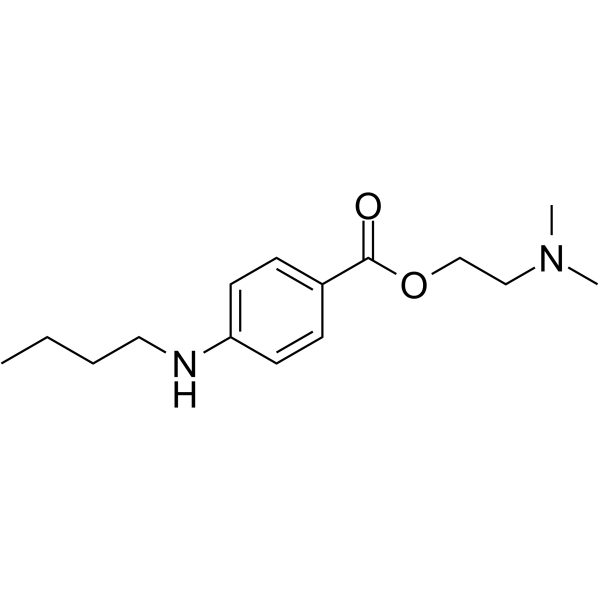
Tetracaine (Amethocaine) is a sodium channel inhibitor and ryanodine receptor (RyR) inhibitor. Tetracaine blocks sodium conduction across nerve cell membranes, preventing rapid sodium ion influx and depolarization. Tetracaine exhibits biphasic effects on spontaneous sarcoplasmic reticulum Ca2+ release in Ca2+-overloaded ventricular myocytes, and increases sarcoplasmic reticulum Ca2+ load. Tetracaine can be used in research related to eye diseases.
For research use only. We do not sell to patients.
- Purity : 99.87%
- CAS No.: 94-24-6
- Formula: C15H24N2O2
- Molecular Weight:264.36
-
Storage:Powder -20°C, 3 years , 4°C, 2 years ; In solvent -80°C, 2 years , -20°C, 1 year

To place orders, for customer services and technical support, please contact: MedChemExpress USA
Tel: 609-228-6898 E-mail: [email protected] [email protected]


-
 Biological Activity
-
Chemical Information
-
Solvent & Solubility
- Protocols
- Purity & Documentation
- References
-
 Help & FAQs


-
HY-B0185
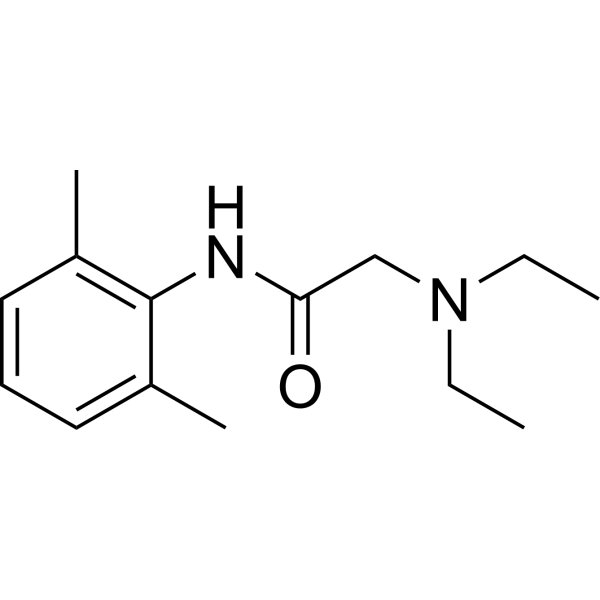
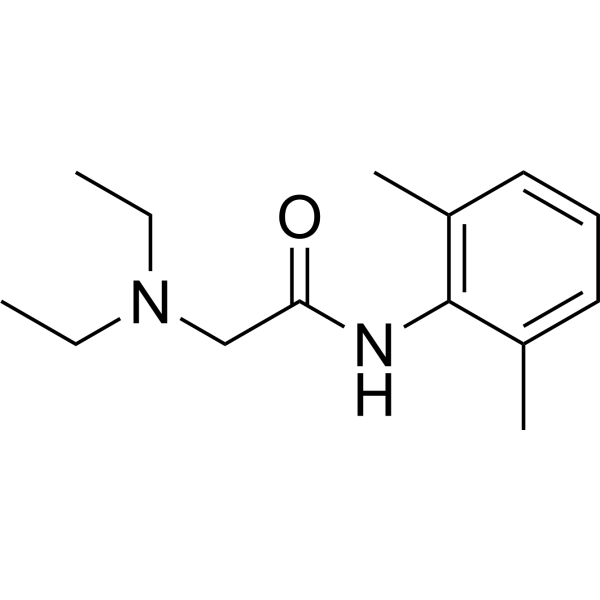
LidocaineNa+ Channel Blocker -
HY-N6691
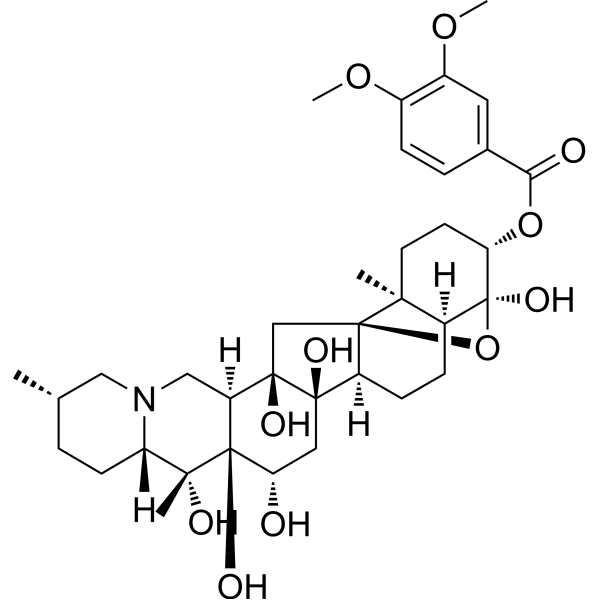
VeratridineVGSCs Agonist -
HY-B1971
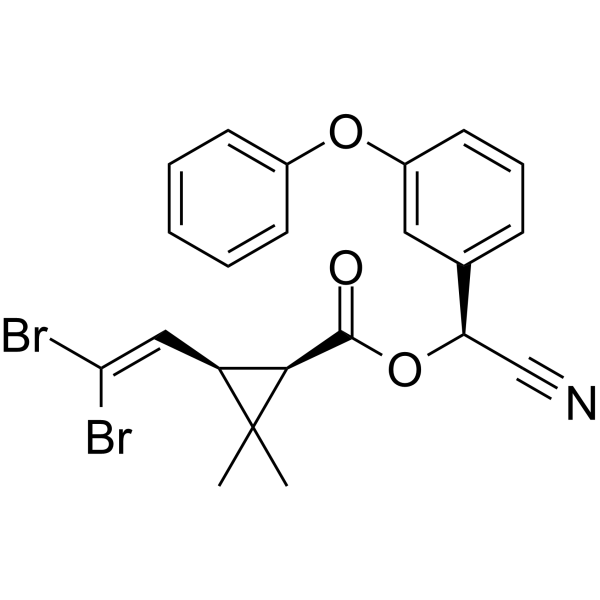
DeltamethrinInsecticide -
HY-B0185R
Lidocaine (Standard) -

HY-A0079R
Tetracaine (Standard) -
HY-19693
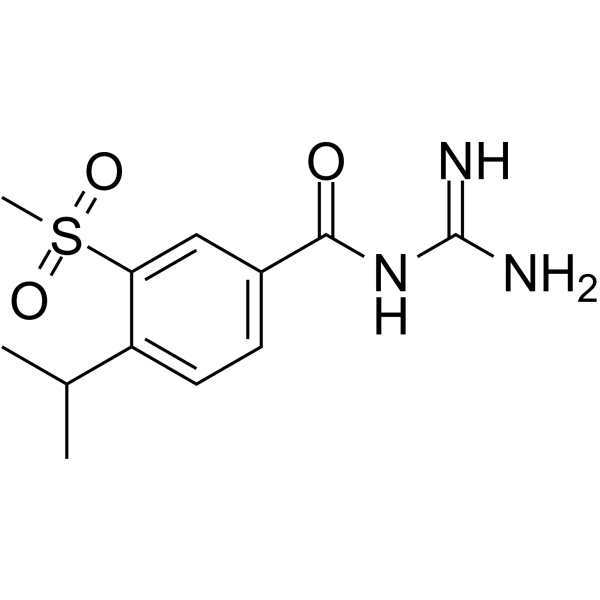
CariporideNa+/H+ Exchange Inhibitor -
HY-B0185G
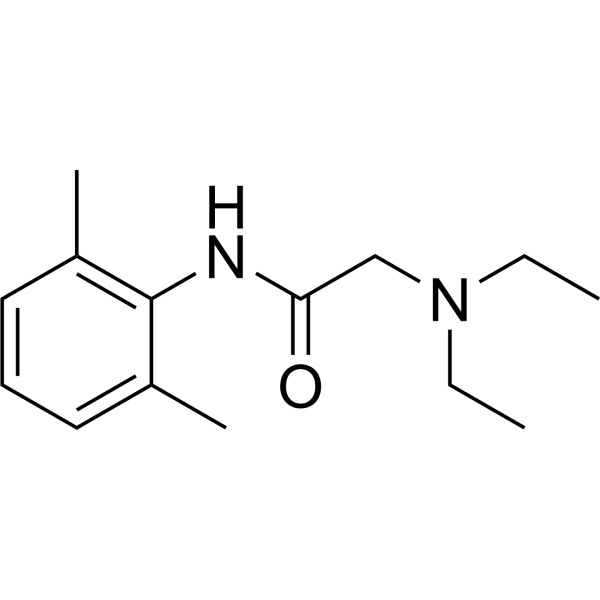
Lidocaine (GMP)Na+ Channel Blocker -
HY-Y0258
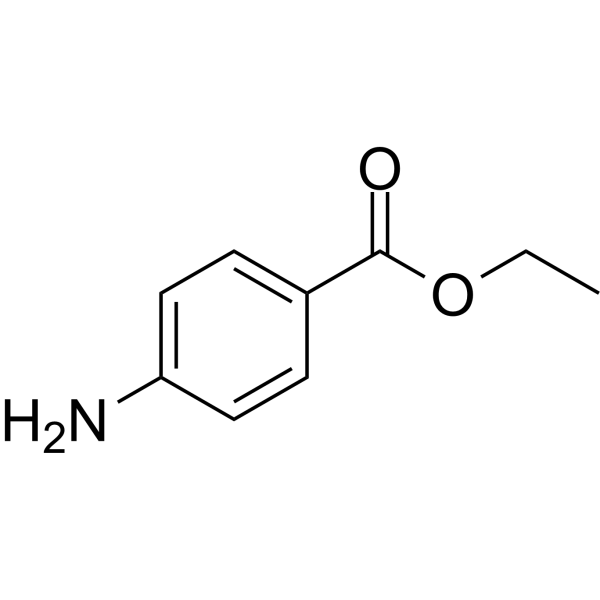
BenzocaineAnesthetic -
HY-B0235
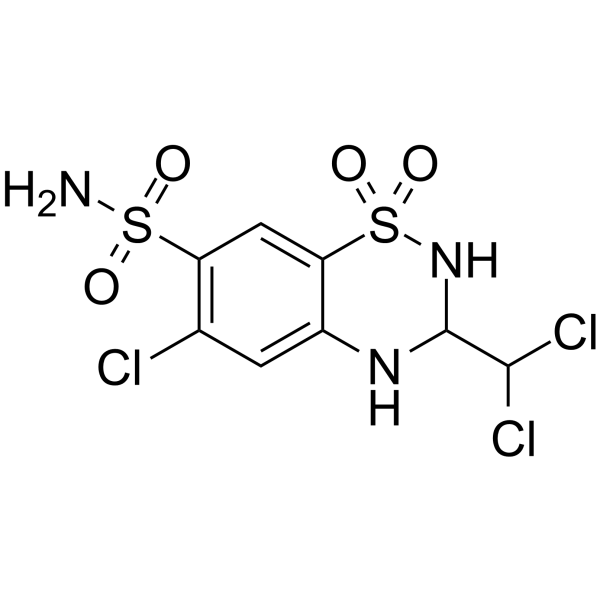
TrichlormethiazideDiuretic -
HY-B0432A
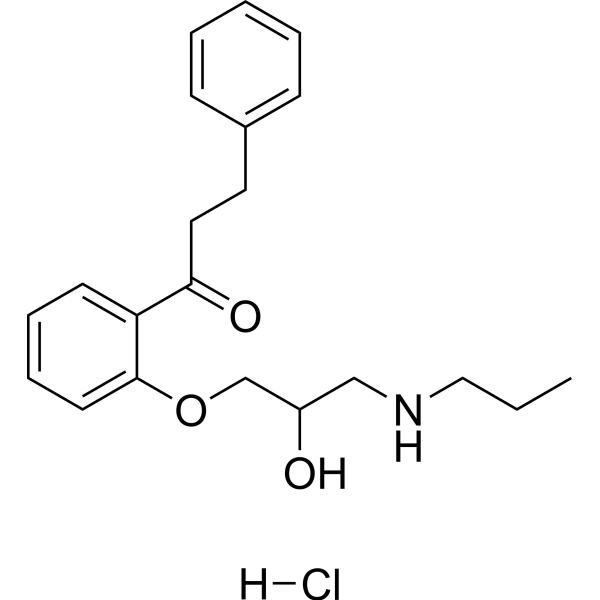
Propafenone hydrochlorideSodium Channel Inhibitor -
HY-Y0258R
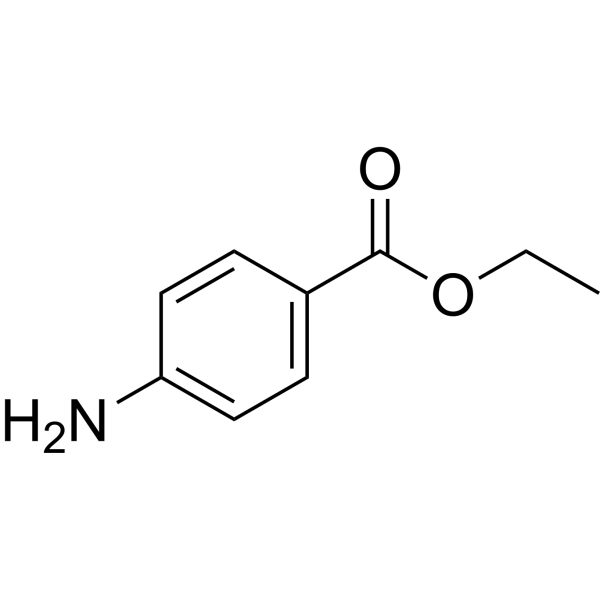
Benzocaine (Standard)Standard -
HY-B0137A
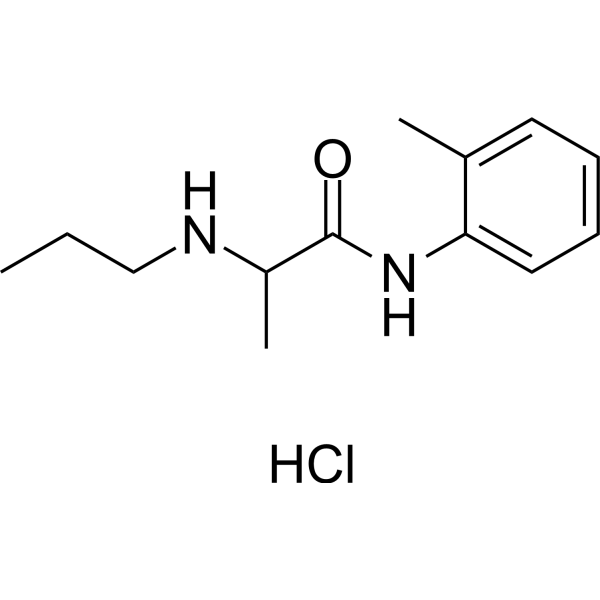
Prilocaine hydrochlorideNa, K-ATPase Inhibitor
Publications Citing Use of MedChemExpress (MCE) Tetracaine
MoreAll Calcium Channel Isoforms
More

Biological Activity
Description
Cellular Effect
|
Cell Line

|
Type | Value | Description | References |
|---|---|---|---|---|
| CHO-K1 | IC50 |
0.53 μM
Compound: tetracaine
|
Inhibition of human NaV1.5 alpha subunit expressed in CHOK1 cells at -90 mV holding potential by patch clamp electrophysiological assay
Inhibition of human NaV1.5 alpha subunit expressed in CHOK1 cells at -90 mV holding potential by patch clamp electrophysiological assay
|
[PMID: 22770500] |
| CHO-K1 | IC50 |
1.1 μM
Compound: tetracaine
|
Inhibition of human NaV1.2 alpha subunit expressed in CHOK1 cells at -65 mV holding potential by patch clamp electrophysiological assay
Inhibition of human NaV1.2 alpha subunit expressed in CHOK1 cells at -65 mV holding potential by patch clamp electrophysiological assay
|
[PMID: 22770500] |
| HEK293 | IC50 |
0.11 μM
Compound: tetracaine
|
Inhibition of recombinant human NaV1.7 alpha subunit expressed in HEK293 cells at -65 mV holding potential by patch clamp electrophysiological assay
Inhibition of recombinant human NaV1.7 alpha subunit expressed in HEK293 cells at -65 mV holding potential by patch clamp electrophysiological assay
|
[PMID: 22770500] |
| HEK293 | IC50 |
0.49 μM
Compound: Tetracaine
|
Inhibition of recombinant human Nav1.2 expressed in HEK293 cells preincubated for 40 mins followed by DiSBAC2 substrate addition measured after 90 mins by FRET assay
Inhibition of recombinant human Nav1.2 expressed in HEK293 cells preincubated for 40 mins followed by DiSBAC2 substrate addition measured after 90 mins by FRET assay
|
[PMID: 27015369] |
| HEK293 | IC50 |
0.52 μM
Compound: Tetracaine
|
Inhibition of recombinant human Nav1.6 expressed in HEK293 cells preincubated for 40 mins followed by DiSBAC2 substrate addition measured after 90 mins by FRET assay
Inhibition of recombinant human Nav1.6 expressed in HEK293 cells preincubated for 40 mins followed by DiSBAC2 substrate addition measured after 90 mins by FRET assay
|
[PMID: 27015369] |
| HEK293 | IC50 |
0.62 μM
Compound: tetracaine
|
Inhibition of recombinant human NaV1.7 alpha subunit expressed in HEK293 cells at -90 mV holding potential by patch clamp electrophysiological assay
Inhibition of recombinant human NaV1.7 alpha subunit expressed in HEK293 cells at -90 mV holding potential by patch clamp electrophysiological assay
|
[PMID: 22770500] |
| HEK293 | IC50 |
0.65 μM
Compound: Tetracaine
|
Inhibition of human Nav1.5 expressed in HEK293 cells by whole cell-patch clamp method
Inhibition of human Nav1.5 expressed in HEK293 cells by whole cell-patch clamp method
|
[PMID: 27015369] |
| HEK293 | IC50 |
0.74 μM
Compound: Tetracaine
|
Inhibition of recombinant human Nav1.3 expressed in HEK293 cells preincubated for 40 mins followed by DiSBAC2 substrate addition measured after 90 mins by FRET assay
Inhibition of recombinant human Nav1.3 expressed in HEK293 cells preincubated for 40 mins followed by DiSBAC2 substrate addition measured after 90 mins by FRET assay
|
[PMID: 27015369] |
| HEK293 | IC50 |
33 μM
Compound: tetracaine
|
Inhibition of human NaV1.7 F1737A mutant expressed in HEK293 cells at -65 mV holding potential by patch clamp electrophysiological assay
Inhibition of human NaV1.7 F1737A mutant expressed in HEK293 cells at -65 mV holding potential by patch clamp electrophysiological assay
|
[PMID: 22770500] |
| HEK293 | IC50 |
7.51 μM
Compound: Tetracaine
|
Inhibition of human NaV1.7 expressed in HEK293 cells by [14C]guanidinium influx assay
Inhibition of human NaV1.7 expressed in HEK293 cells by [14C]guanidinium influx assay
|
[PMID: 21570288] |
In Vitro
Tetracaine inhibits human NaV1.7 channel with IC50 values of 0.11 μM (Vhold = -65 mV) and 0.62 μM (Vhold = -90 mV), respectively, and shows >300-fold reduced potency against the NaV1.7F1737A mutant channel[1].
Tetracaine (Vhold = -90 mV) inhibits human NaV1.5 channel with an IC50 value of 0.53 μM[1].
Tetracaine (Vhold = -65 mV) inhibits human NaV1.2 channel with an IC50 value of 1.1 μM[1].
Tetracaine exerts biphasic effects on spontaneous Ca2+ release in Ca2+-overloaded rat ventricular myocytes, initially inhibiting Ca2+ sparks and waves at concentrations >0.25 mM, then potentiating release at submaximal concentrations (<1.25 mM), while completely abolishing release at ≥1.5 mM[3].
Tetracaine (0.75 mM; 2-5 min) causes a time-dependent increase in SR Ca2+ load in Ca2+-overloaded rat ventricular myocytes, with a 19% increase after 2 min and a 54% increase after 5 min of exposure[3].
Tetracaine (0.75 mM; up to 10 min) has delayed potentiation of spontaneous Ca2+ release in rat ventricular myocytes that depends on extracellular Ca2+ concentration[3].
Tetracaine (1 mM) enhances net Ca2+ uptake in isolated canine cardiac SR microsomes by reducing Ca2+ leakage through RyR channels[3].
Tetracaine inhibits canine cardiac SR RyR channel activity in planar lipid bilayers with an EC50 of 0.26 mM at low luminal Ca2+, and this inhibition is reversed by elevated luminal Ca2+[3].
MedChemExpress (MCE) has not independently confirmed the accuracy of these methods. They are for reference only.
Clinical Trial
| NCT Number | Sponsor | Condition | Start Date |
Phase
|
|---|---|---|---|---|
| NCT01329991 | 2011-05 | PHASE1 |


Chemical Information
-
CAS No. 94-24-6
-
Appearance Solid
-
Molecular Weight 264.36
-
Formula C15H24N2O2
-
Color White to off-white
-
SMILES
O=C(OCCN(C)C)C1=CC=C(NCCCC)C=C1
-
Synonyms
Amethocaine
-
Shipping
Room temperature in continental US; may vary elsewhere.
-
Storage
Powder -20°C 3 years 4°C 2 years In solvent -80°C 2 years -20°C 1 year


Publications (1)
-
Journal Impact Factor
-
Most Recent
-
JACC Basic Transl Sci
JP2 and JCN Crosstalk Abrogate MURF1-Mediated JCN Ubiquitination and Degradation in Cardiomyocytes. [Abstract]2026 Apr 17;11(5):101534. PMID: 42000606


Solvent & Solubility
In Vitro:
DMSO : ≥ 43 mg/mL (162.66 mM; Hygroscopic DMSO has a significant impact on the solubility of product, please use newly opened DMSO)
* "≥" means soluble, but saturation unknown.
Please refer to the solubility information to select the appropriate solvent. Once prepared, please aliquot and store the solution to prevent product inactivation from repeated freeze-thaw cycles.
Storage method and period of stock solution: -80°C, 2 years; -20°C, 1 year. When stored at -80°C, please use it within 2 years. When stored at -20°C, please use it within 1 year.
Please refer to the solubility information to select the appropriate solvent. Once prepared, please aliquot and store the solution to prevent product inactivation from repeated freeze-thaw cycles.
Storage method and period of stock solution: -80°C, 2 years; -20°C, 1 year. When stored at -80°C, please use it within 2 years. When stored at -20°C, please use it within 1 year.
Concentration (start) × Volume (start) = Concentration (final) × Volume (final)
In Vivo:
Select the appropriate dissolution method based on your experimental animal and administration route.
- For the following dissolution methods, please ensure to first prepare a clear stock solution using an In Vitro approach and then sequentially add co-solvents:
- To ensure reliable experimental results, the clarified stock solution can be appropriately stored based on storage conditions. As for the working solution for In Vivo experiments, it is recommended to prepare freshly and use it on the same day.
- The percentages shown for the solvents indicate their volumetric ratio in the final prepared solution. If precipitation or phase separation occurs during preparation, heat and/or sonication can be used to aid dissolution.
Add each solvent one by one: 10% DMSO 40% PEG300 5% Tween-80 45% Saline
Solubility: ≥ 2.5 mg/mL (9.46 mM); Clear solution
This protocol yields a clear solution of ≥ 2.5 mg/mL (saturation unknown).
Taking 1 mL working solution as an example, add 100 μL DMSO stock solution (25.0 mg/mL) to 400 μL PEG300, and mix evenly; then add 50 μL Tween-80 and mix evenly; then add 450 μL Saline to adjust the volume to 1 mL.
Preparation of Saline: Dissolve 0.9 g sodium chloride in ddH₂O and dilute to 100 mL to obtain a clear Saline solution.
Add each solvent one by one: 10% DMSO 90% (20% SBE-β-CD in Saline)
Solubility: ≥ 2.5 mg/mL (9.46 mM); Clear solution
This protocol yields a clear solution of ≥ 2.5 mg/mL (saturation unknown).
Taking 1 mL working solution as an example, add 100 μL DMSO stock solution (25.0 mg/mL) to 900 μL 20% SBE-β-CD in Saline, and mix evenly.
Preparation of 20% SBE-β-CD in Saline (4°C, storage for one week): 2 g SBE-β-CD powder is dissolved in 10 mL Saline, completely dissolve until clear.
In Vivo Dissolution Calculator
Please enter the basic information of animal experiments:
-
-
-
-
Recommended: Prepare an additional quantity of animals to account for potential losses during experiments.
Please enter your animal formula composition:
-
%DMSO +
Recommended: Keep the proportion of DMSO in working solution below 2% if your animal is weak.
-
%+
-
+%Tween-80 + +
-
%Saline +
The co-solvents required include: DMSO, . All of co-solvents are available by MedChemExpress (MCE). , Tween 80. All of co-solvents are available by MedChemExpress (MCE).
Working solution concentration: 0.22 mg/mL
Method for preparing stock solution: mg drug dissolved in μL DMSO. Stock solution concentration: mg/mL.
1. Take μL DMSO stock solution;
2. Add μL .
μL , mix evenly;
3. Then add μL Tween 80, mix evenly;
4. Then add μL
Please ensure that the stock solution in the first step is dissolved to a clear state, and add co-solvents in sequence. You can use ultrasonic heating (ultrasonic cleaner, recommended frequency 20-40 kHz), vortexing, etc. to assist dissolution.


Purity & Documentation
-
Data Sheet (273 KB)
-
SDS (644 KB)
- English - EN (644 KB)
- Français - FR (644 KB)
- Deutsch - DE (644 KB)
- Norwegian - NO (644 KB)
- Español - ES (644 KB)
- Swedish - SV (644 KB)
- Italian - IT (644 KB)
- Korean - KR (644 KB)
- Portuguese - PT (644 KB)
-
Handling Instructions (2659 KB)
References
[1]. Macsari I, et al. 3-Oxoisoindoline-1-carboxamides: potent, state-dependent blockers of voltage-gated sodium channel Na(V)1.7 with efficacy in rat pain models. J Med Chem. 2012;55(15):6866-6880. [Content Brief]
[2]. Bartfield JM, et al. A comparison of proparacaine and tetracaine eye anesthetics. Acad Emerg Med. 1994;1(4):364-367. [Content Brief]
[3]. Györke S, et al. Dual effects of tetracaine on spontaneous calcium release in rat ventricular myocytes. J Physiol. 1997;500 ( Pt 2)(Pt 2):297-309. [Content Brief]


Complete Stock Solution Preparation Table
Please refer to the solubility information to select the appropriate solvent. Once prepared, please aliquot and store the solution to prevent product inactivation from repeated freeze-thaw cycles.
Storage method and period of stock solution: -80°C, 2 years; -20°C, 1 year. When stored at -80°C, please use it within 2 years. When stored at -20°C, please use it within 1 year.
| Optional Solvent | Concentration Solvent Mass | 1 mg | 5 mg | 10 mg | 25 mg |
|---|---|---|---|---|---|
| DMSO | 1 mM | 3.7827 mL | 18.9136 mL | 37.8272 mL | 94.5680 mL |
| 5 mM | 0.7565 mL | 3.7827 mL | 7.5654 mL | 18.9136 mL | |
| 10 mM | 0.3783 mL | 1.8914 mL | 3.7827 mL | 9.4568 mL | |
| 15 mM | 0.2522 mL | 1.2609 mL | 2.5218 mL | 6.3045 mL | |
| 20 mM | 0.1891 mL | 0.9457 mL | 1.8914 mL | 4.7284 mL | |
| 25 mM | 0.1513 mL | 0.7565 mL | 1.5131 mL | 3.7827 mL | |
| 30 mM | 0.1261 mL | 0.6305 mL | 1.2609 mL | 3.1523 mL | |
| 40 mM | 0.0946 mL | 0.4728 mL | 0.9457 mL | 2.3642 mL | |
| 50 mM | 0.0757 mL | 0.3783 mL | 0.7565 mL | 1.8914 mL | |
| 60 mM | 0.0630 mL | 0.3152 mL | 0.6305 mL | 1.5761 mL | |
| 80 mM | 0.0473 mL | 0.2364 mL | 0.4728 mL | 1.1821 mL | |
| 100 mM | 0.0378 mL | 0.1891 mL | 0.3783 mL | 0.9457 mL |


Tetracaine Related Classifications
HY-A0079 Related Classifications
 Powered by Bioz