



Prilocaine hydrochloride
Based on 1 publication(s) in Google Scholar
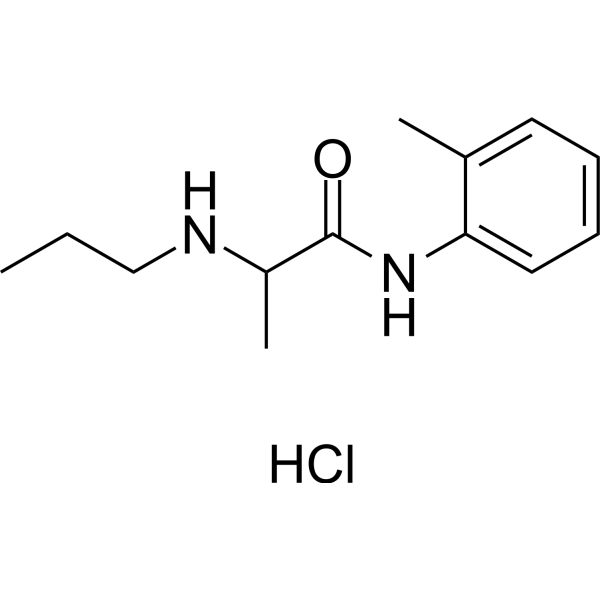
Prilocaine hydrochloride, an amino amide, is a Na/K-ATPase inhibitor. Prilocaine has neurotoxic effects.
For research use only. We do not sell to patients.
- CAS No.: 1786-81-8
- Formula: C13H21ClN2O
- Molecular Weight:256.77
-
Storage:
4°C, sealed storage, away from moisture
* In solvent : -80°C, 6 months; -20°C, 1 month (sealed storage, away from moisture)

To place orders, for customer services and technical support, please contact: MedChemExpress USA
Tel: 609-228-6898 E-mail: [email protected] [email protected]


-
 Biological Activity
-
Chemical Information
- Protocols
- Purity & Documentation
- References
-
 Help & FAQs


-
HY-B0137
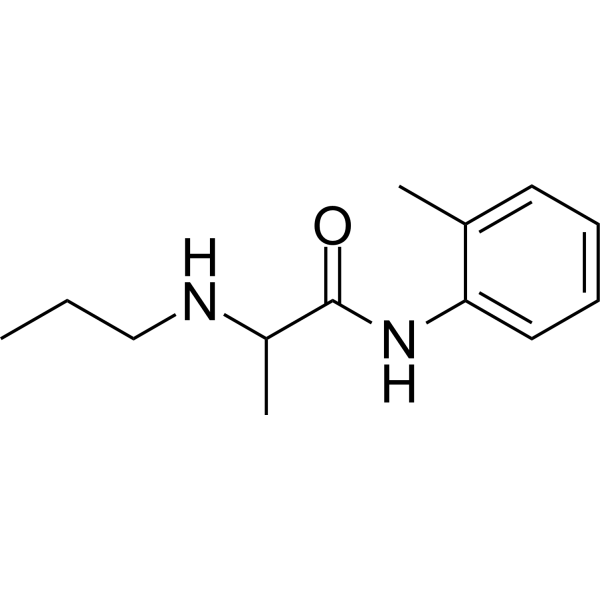
PrilocaineNa, K-ATPase Inhibitor -

HY-B0137R
Prilocaine (Standard)Na, K-ATPase Inhibitor -
HY-B1357
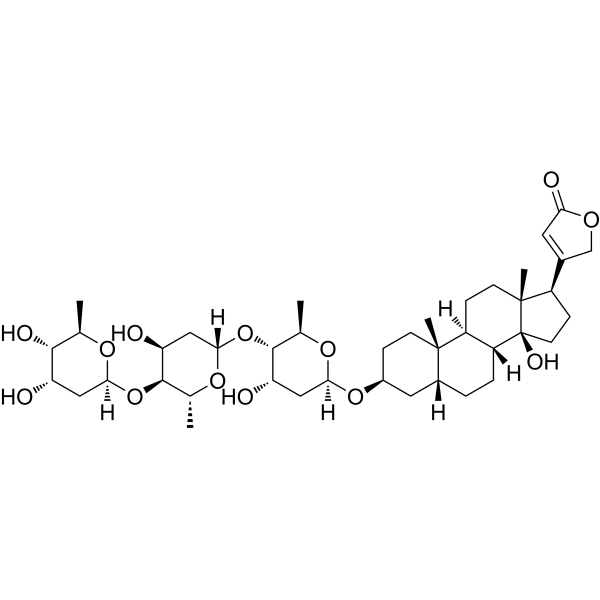
DigitoxinAnti-cancer Agent -

HY-B0137AR
Prilocaine hydrochloride (Standard)Na, K-ATPase Inhibitor -
HY-N2070
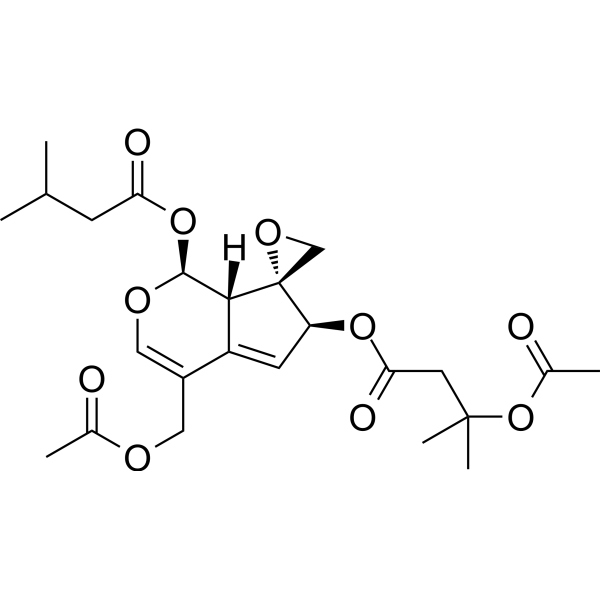
AcevaltrateNa+/K+ ATPase Inhibitor -
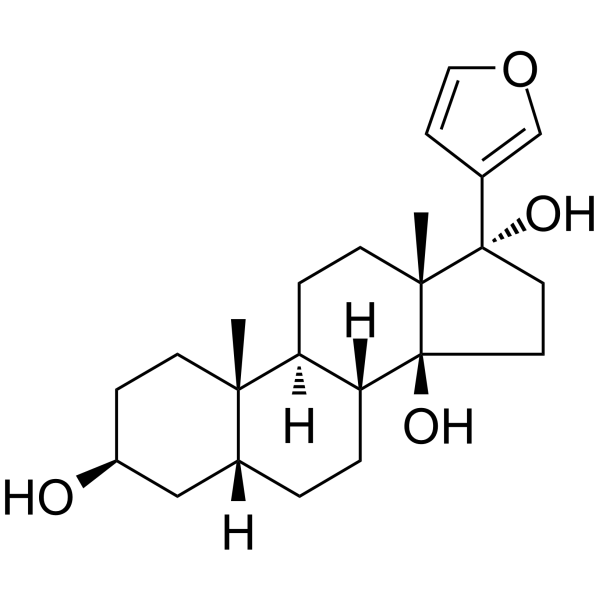
HY-12283
RostafuroxinATP1A1 Antognist -

HY-B1357R
Digitoxin (Standard)Anti-cancer Agent -
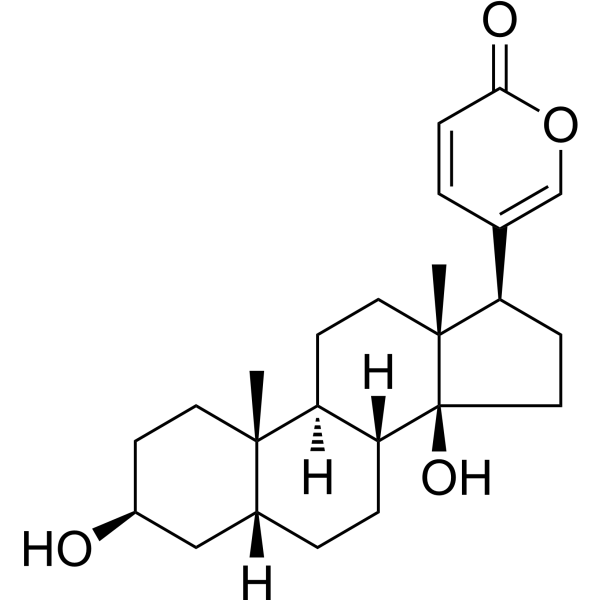
HY-N0877
BufalinNa+/K+ ATPase Inhibitor -
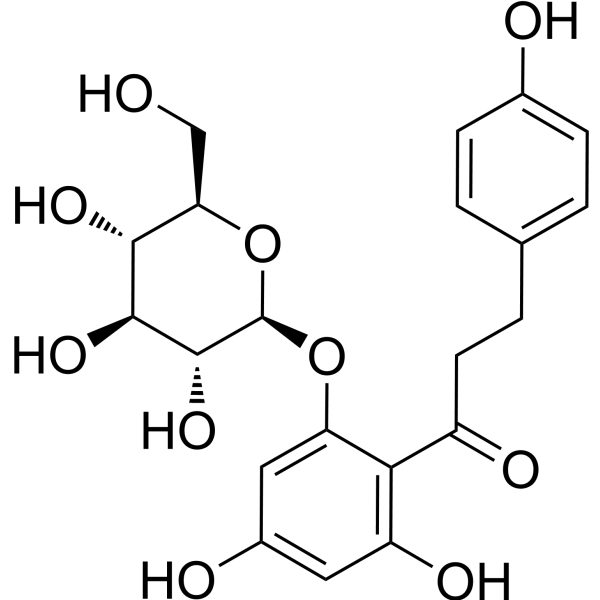
HY-N0143
PhlorizinSGLT Inhibitor -
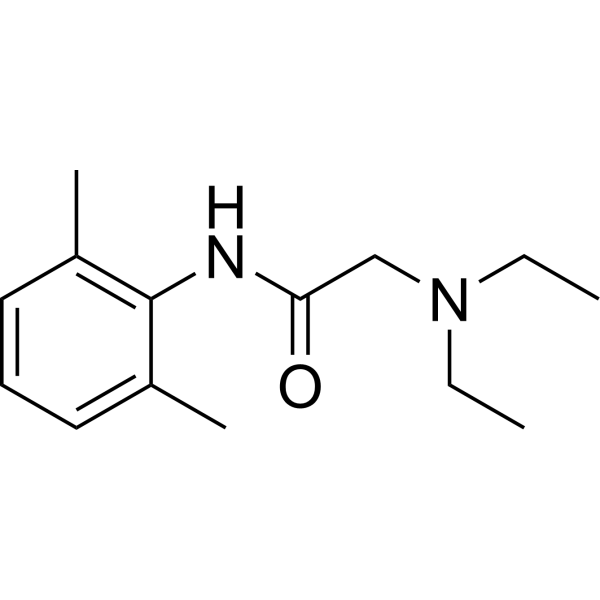
HY-B0185
LidocaineNa+ Channel Blocker -
HY-B0552
DibucaineSodium Channel Inhibitor
Publications Citing Use of MedChemExpress (MCE) Prilocaine hydrochloride
More

Biological Activity
Description
IC50 & Target
Na/K-ATPase[2]
In Vitro
Prilocaine hydrochloride is more potent in inhibiting the Na,K-ATPase of plasma membranes of LM cells (transformed fibroblasts) at 37 °C (43.8 mM) than at 25 °C (28.2 mM)[2].
MedChemExpress (MCE) has not independently confirmed the accuracy of these methods. They are for reference only. Further protocols information, click here.


Chemical Information
-
CAS No. 1786-81-8
-
Appearance Solid
-
Molecular Weight 256.77
-
Formula C13H21ClN2O
-
Color White to off-white
-
SMILES
CC(NCCC)C(NC1=CC=CC=C1C)=O.Cl
-
Shipping
Room temperature in continental US; may vary elsewhere.
-
Storage
4°C, sealed storage, away from moisture
* In solvent : -80°C, 6 months; -20°C, 1 month (sealed storage, away from moisture)


Publications (1)
-
Journal Impact Factor
-
Most Recent
-
Stem Cell Res Ther
Local anesthetics impair the growth and self-renewal of glioblastoma stem cells by inhibiting ZDHHC15-mediated GP130 palmitoylation. [Abstract]2021 Feb 4;12(1):107. PMID: 33541421

Protocols
-
Neurotoxicity Study
This protocol assesses in vitro neurotoxicity by combining neuronal viability, mitochondrial/metabolic activity, neurite outgrowth, and optional neuronal network function readouts. Calcein-AM or resazurin/PrestoBlue readouts estimate viable or metabolically active cells; βIII-tubulin immunofluorescence detects neuronal morphology and neurite networks; TMRE detects mitochondrial membrane potential; and MEA recordings detect functional changes in neuronal network activity.


Purity & Documentation
-
Data Sheet (267 KB)
-
SDS (252 KB)
- Français - FR (252 KB)
- Deutsch - DE (252 KB)
- Norwegian - NO (252 KB)
- Español - ES (252 KB)
- Swedish - SV (252 KB)
- Italian - IT (252 KB)
- Korean - KR (252 KB)
- Portuguese - PT (252 KB)
-
Handling Instructions (2659 KB)
References
[1]. M Mete, et al. Neurotoxic effects of local anesthetics on the mouse neuroblastoma NB2a cell line. Biotech Histochem. 2015 Apr;90(3):216-22. [Content Brief]
[2]. H Kutchai, et al. Effects of local anaesthetics on the activity of the Na,K-ATPase of canine renal medulla. Pharmacol Res. 2000 Jan;41(1):1-7. [Content Brief]

Calculators
Concentration (start) × Volume (start) = Concentration (final) × Volume (final)


Prilocaine hydrochloride Related Classifications
HY-B0137A Related Classifications
 Powered by Bioz