



Veratridine
Based on 4 publication(s) in Google Scholar
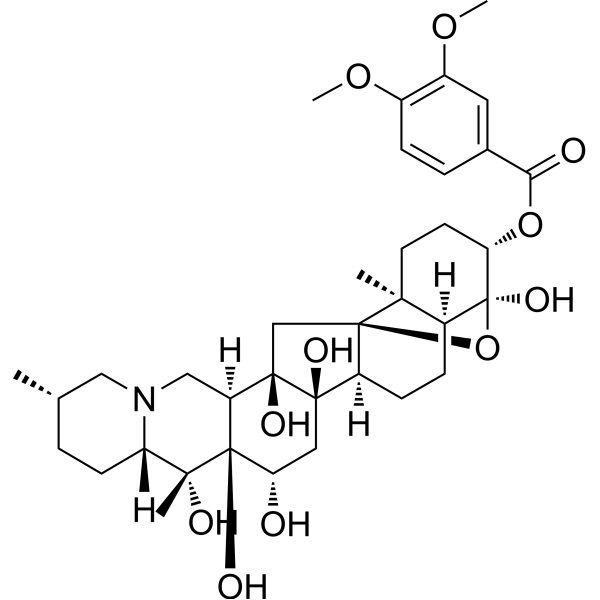
Veratridine (3-Veratroylveracevine) is a plant neurotoxin, a voltage-gated sodium channels (VGSCs) agonist. Veratridine inhibits the peak current of Nav1.7, with an IC50 of 18.39 µM. Veratridine regulates sodium ion channels mainly by activating sodium ion channels, preventing channel inactivation and increasing sodium ion flow.
For research use only. We do not sell to patients.
- Purity : 99.42%
- CAS No.: 71-62-5
- Formula: C36H51NO11
- Molecular Weight:673.79
-
Storage:Powder -20°C, 3 years ; In solvent -80°C, 1 year , -20°C, 6 months

To place orders, for customer services and technical support, please contact: MedChemExpress USA
Tel: 609-228-6898 E-mail: [email protected] [email protected]


-
 Biological Activity
-
Chemical Information
-
Solvent & Solubility
- Purity & Documentation
- References
-
 Help & FAQs


-
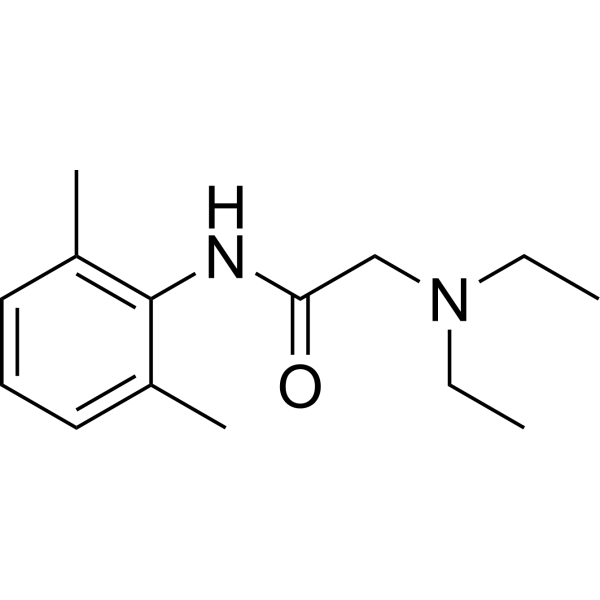
HY-B0185
LidocaineNa+ Channel Blocker -
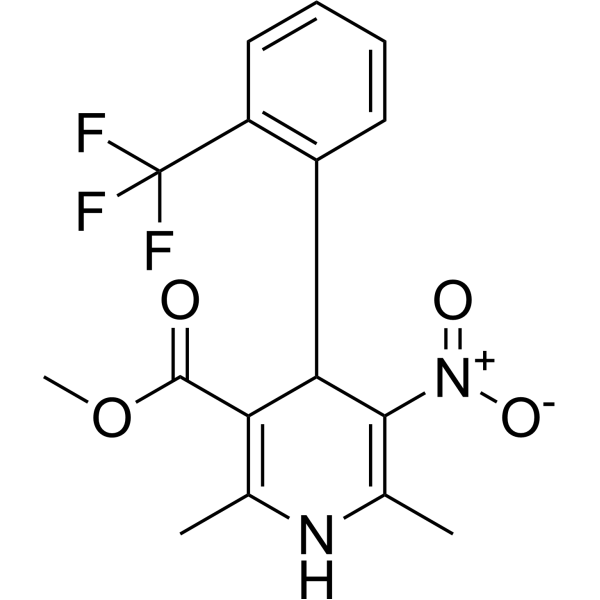
HY-10588
Bay K 8644L-type Ca2+ Channel Agonist -
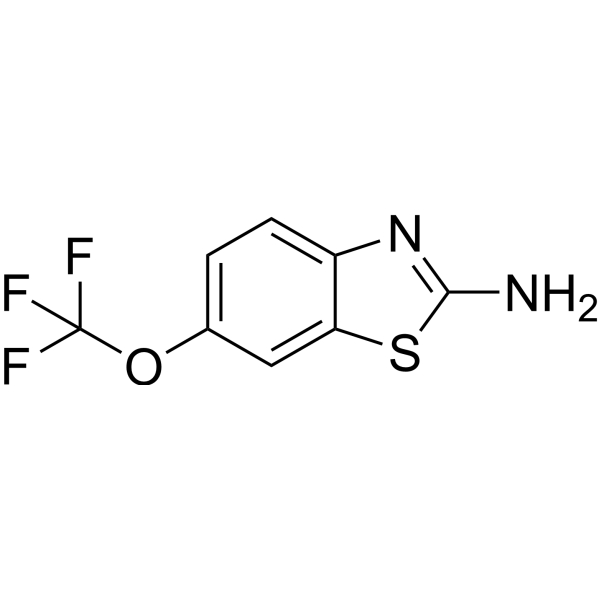
HY-B0211
RiluzoleAnticonvulsant Agent -
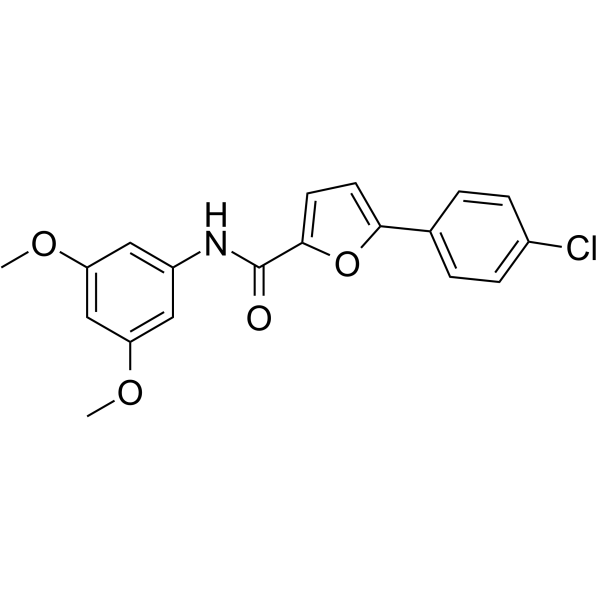
HY-11079
A-803467Nav1.8 Sodium Channel Blocker -
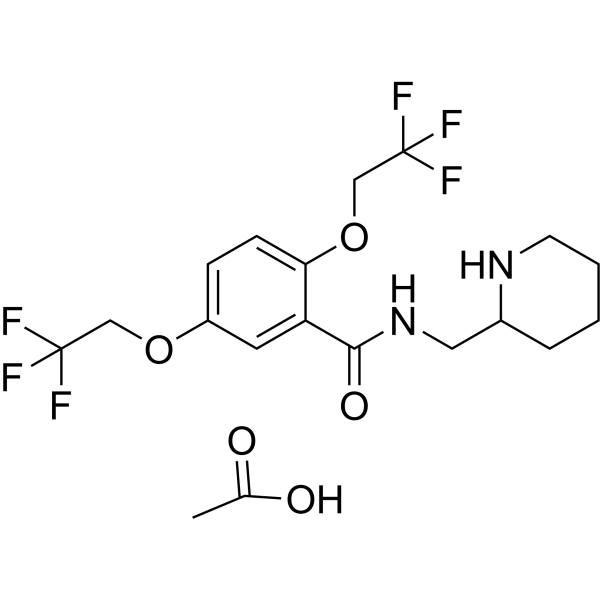
HY-17429
Flecainide acetateSodium Channel Inhibitor -
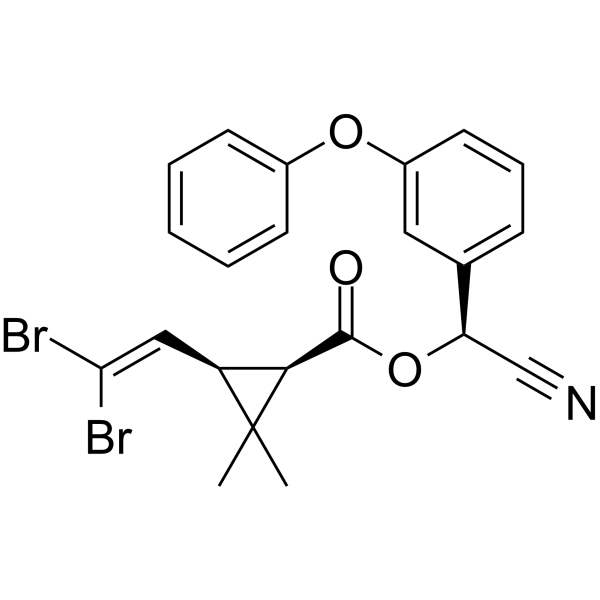
HY-B1971
DeltamethrinInsecticide -
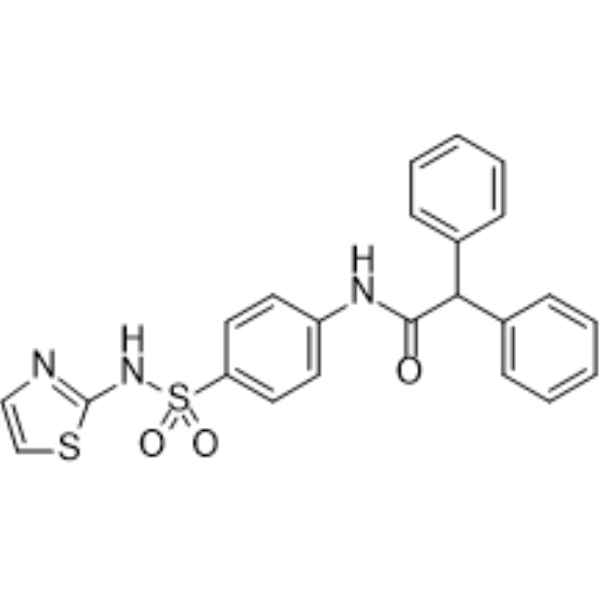
HY-16787
ICA-121431Nav Inhibitor -
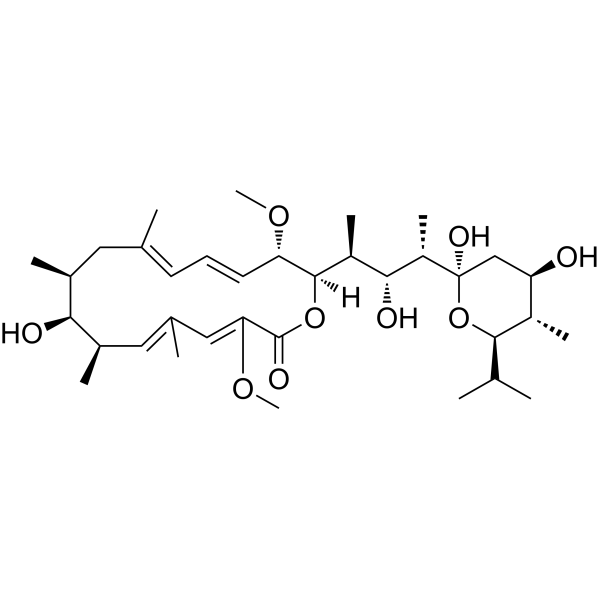
HY-100558
Bafilomycin A1V-ATPase Inhibitor -
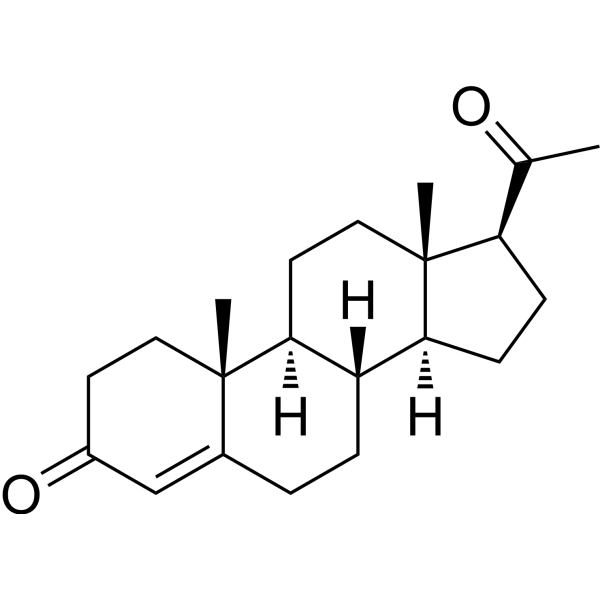
HY-N0437
ProgesteroneEndogenous Metabolite -
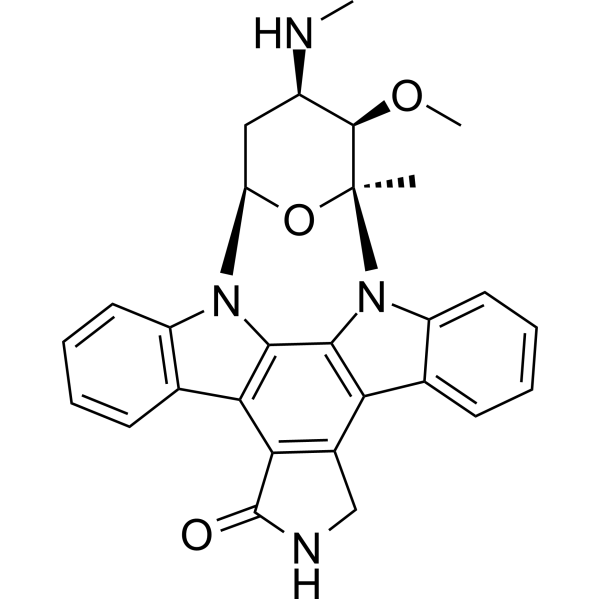
HY-15141
StaurosporinePKC/PKA Inhibitor -
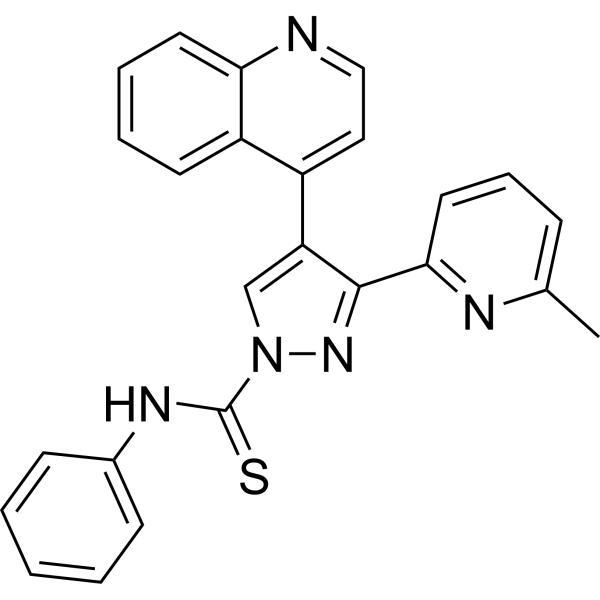
HY-10432
A 83-01ALK4/5/7 Inhibitor
Publications Citing Use of MedChemExpress (MCE) Veratridine
More Customer Validation & Images

-
Bio/Physico-chemical Assay
-
Cell Imaging/Staining
-
Cell Proliferation/Viability Assay
-
Cell Imaging/Staining
-
Cell Proliferation/Viability Assay


Biological Activity
Description
IC50 & Target
[1]|
Nav1.7 18.39 μM (IC50) |
In Vitro
Veratridine (0.25 mM and 1 mM; 24 h) treatment results in all cells death[2].
Veratridine (0.001-100 μM) produces tetrodotoxin-sensitive responses[3].
MedChemExpress (MCE) has not independently confirmed the accuracy of these methods. They are for reference only.
-
Cell Line:Neuro-2a cells
-
Concentration:0.25 mM and 1 mM
-
Incubation Time:24 hours
-
Result:Caused around 100% cell mortality (0% cell viability).
-
Cell Line:Cultured mouse DRG neurons
-
Concentration:0.001, 0.1, 1, 10, 30, and 100 μM
-
Incubation Time:
-
Result:Increased responding neurons number from a threshold of 1 μM in a concentration-dependent manner.


Chemical Information
-
CAS No. 71-62-5
-
Appearance Solid
-
Molecular Weight 673.79
-
Formula C36H51NO11
-
Color White to off-white
-
SMILES
C[C@@]12[C@]34[C@](CC[C@]1([H])[C@@](O)([C@@H](OC(C5=CC(OC)=C(OC)C=C5)=O)CC2)O4)([H])[C@@]6(O)[C@](O)([C@@]7([H])[C@@](O)([C@](O)([C@@]8([H])N(C[C@@H](C)CC8)C7)C)[C@@H](O)C6)C3
-
Synonyms
3-Veratroylveracevine
-
Structure Classification
-
Initial Source
-
Shipping
Room temperature in continental US; may vary elsewhere.
-
Storage
Powder -20°C 3 years In solvent -80°C 1 year -20°C 6 months


Publications (4)
-
Journal Impact Factor
-
Most Recent
-
Neuropsychopharmacology
Small-molecule natural product sophoricoside reduces peripheral neuropathic pain via directly blocking of NaV1.6 in dorsal root ganglion nociceptive neurons. [Abstract]2025 Mar;50(4):662-672. PMID: 39414988
Veratridine purchased from MedChemExpress. Usage Cited in: Neuropsychopharmacology. 2025 Mar;50(4):662-672. [Abstract]
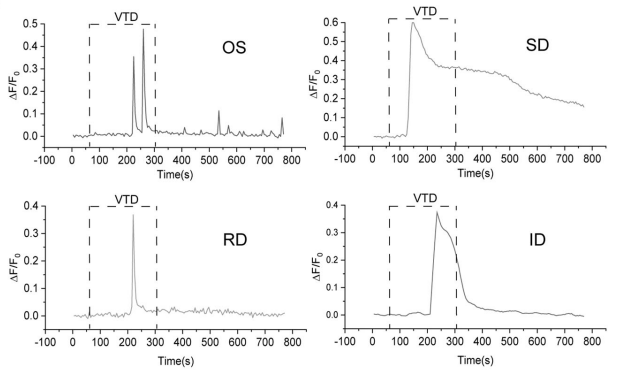
Representative traces of the four responses profiles triggered by veratridine (30 µM): oscillatory (OS), slow decay (SD), rapid decay (RD), and intermediate decay (ID) profile.
Veratridine purchased from MedChemExpress. Usage Cited in: Neuropsychopharmacology. 2025 Mar;50(4):662-672. [Abstract]
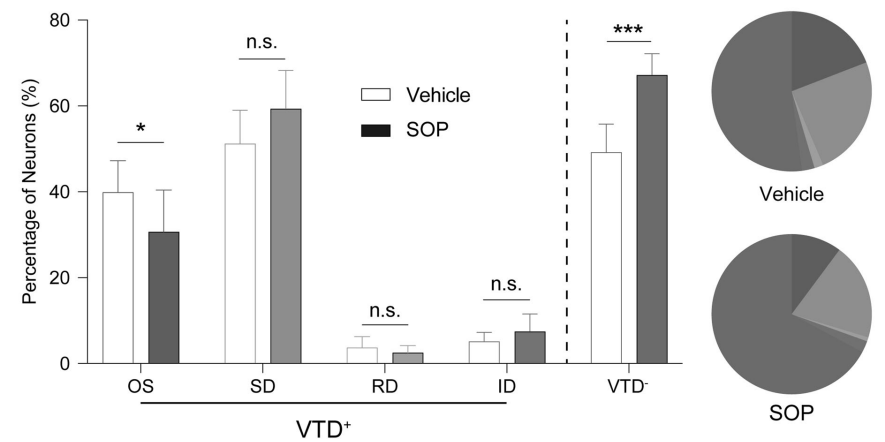
Percentage of different population of DRG neurons based on Veratridine (30 μM)-response pattern after treated with 0.1% DMSO or 20 μM SOP overnight incubation. Pie charts represent mean values in the histogram (0.1% DMSO, n = 8 slides; SOP, n = 8 slides).
-
Commun Chem
Carbenoid-involved reactions integrated with scaffold-based screening generates a Nav1.7 inhibitor. [Abstract]2024 Jun 12;7(1):135. PMID: 38866907 -
Sci Rep
Poneratoxin as a key tool for investigating the relationship between sodium channel hypersensitivity and impaired nerve cell function. [Abstract]2025 Jul 16;15(1):25854. PMID: 40670556
Veratridine purchased from MedChemExpress. Usage Cited in: Sci Rep. 2025 Jul 16;15(1):25854. [Abstract]
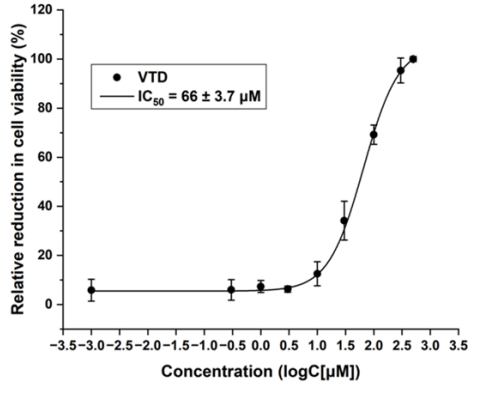
Dose-response curve of Veratridine (24 h) against growth of SH-SY5Y cells combined with 0.1 µM OB. Cell viability was measured by CCK-8 assay and mean values of triplicates ± SD are shown.
Veratridine purchased from MedChemExpress. Usage Cited in: Sci Rep. 2025 Jul 16;15(1):25854. [Abstract]
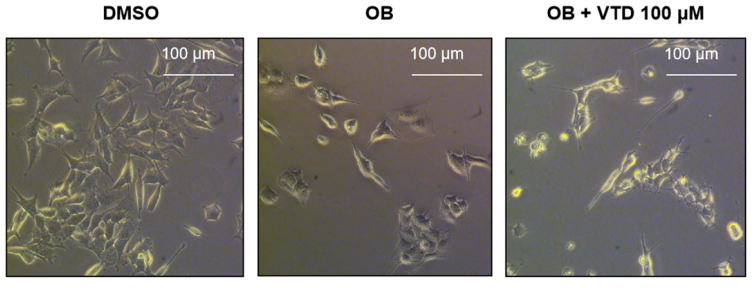
The bright field images of SH-SY5Y cells treated with DMSO, OB alone or in combination thereof with indicated concentrations of Veratridine (100 μM) for 24 h.
-
Proteome Sci
Effects of µ-Conotoxin GIIIB on the cellular activity of mouse skeletal musculoblast: combined transcriptome and proteome analysis. [Abstract]2023 Oct 12;21(1):17. PMID: 37828502
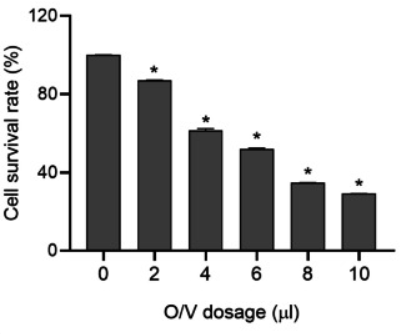
Veratridine purchased from MedChemExpress. Usage Cited in: Proteome Sci. 2023 Oct 12;21(1):17. [Abstract]
µ-CTX GIIIB protects the Sol8 cells from the cell injury induced by ouabain and Veratridine (veratrine, 0, 2, 4, 6, 8, and 10 µL, 24 h). The effects of ouabain and veratrine on cell survival rate of Sol8 cells was detected by CCK-8.


Solvent & Solubility
In Vitro:
DMSO : 100 mg/mL (148.41 mM; Need ultrasonic; Hygroscopic DMSO has a significant impact on the solubility of product, please use newly opened DMSO)
Please refer to the solubility information to select the appropriate solvent. Once prepared, please aliquot and store the solution to prevent product inactivation from repeated freeze-thaw cycles.
Storage method and period of stock solution: -80°C, 1 year; -20°C, 6 months. When stored at -80°C, please use it within 1 year. When stored at -20°C, please use it within 6 months.
Please refer to the solubility information to select the appropriate solvent. Once prepared, please aliquot and store the solution to prevent product inactivation from repeated freeze-thaw cycles.
Storage method and period of stock solution: -80°C, 1 year; -20°C, 6 months. When stored at -80°C, please use it within 1 year. When stored at -20°C, please use it within 6 months.
Concentration (start) × Volume (start) = Concentration (final) × Volume (final)
In Vivo:
Select the appropriate dissolution method based on your experimental animal and administration route.
- For the following dissolution methods, please ensure to first prepare a clear stock solution using an In Vitro approach and then sequentially add co-solvents:
- To ensure reliable experimental results, the clarified stock solution can be appropriately stored based on storage conditions. As for the working solution for In Vivo experiments, it is recommended to prepare freshly and use it on the same day.
- The percentages shown for the solvents indicate their volumetric ratio in the final prepared solution. If precipitation or phase separation occurs during preparation, heat and/or sonication can be used to aid dissolution.
Add each solvent one by one: 10% DMSO 40% PEG300 5% Tween-80 45% Saline
Solubility: ≥ 2.5 mg/mL (3.71 mM); Clear solution
This protocol yields a clear solution of ≥ 2.5 mg/mL (saturation unknown).
Taking 1 mL working solution as an example, add 100 μL DMSO stock solution (25.0 mg/mL) to 400 μL PEG300, and mix evenly; then add 50 μL Tween-80 and mix evenly; then add 450 μL Saline to adjust the volume to 1 mL.
Preparation of Saline: Dissolve 0.9 g sodium chloride in ddH₂O and dilute to 100 mL to obtain a clear Saline solution.
Add each solvent one by one: 10% DMSO 90% (20% SBE-β-CD in Saline)
Solubility: ≥ 2.5 mg/mL (3.71 mM); Clear solution
This protocol yields a clear solution of ≥ 2.5 mg/mL (saturation unknown).
Taking 1 mL working solution as an example, add 100 μL DMSO stock solution (25.0 mg/mL) to 900 μL 20% SBE-β-CD in Saline, and mix evenly.
Preparation of 20% SBE-β-CD in Saline (4°C, storage for one week): 2 g SBE-β-CD powder is dissolved in 10 mL Saline, completely dissolve until clear.
In Vivo Dissolution Calculator
Please enter the basic information of animal experiments:
-
-
-
-
Recommended: Prepare an additional quantity of animals to account for potential losses during experiments.
Please enter your animal formula composition:
-
%DMSO +
Recommended: Keep the proportion of DMSO in working solution below 2% if your animal is weak.
-
%+
-
+%Tween-80 + +
-
%Saline +
The co-solvents required include: DMSO, . All of co-solvents are available by MedChemExpress (MCE). , Tween 80. All of co-solvents are available by MedChemExpress (MCE).
Working solution concentration: 0.22 mg/mL
Method for preparing stock solution: mg drug dissolved in μL DMSO. Stock solution concentration: mg/mL.
1. Take μL DMSO stock solution;
2. Add μL .
μL , mix evenly;
3. Then add μL Tween 80, mix evenly;
4. Then add μL
Please ensure that the stock solution in the first step is dissolved to a clear state, and add co-solvents in sequence. You can use ultrasonic heating (ultrasonic cleaner, recommended frequency 20-40 kHz), vortexing, etc. to assist dissolution.


Purity & Documentation
-
Data Sheet (282 KB)
-
SDS (588 KB)
- English - EN (588 KB)
- Français - FR (588 KB)
- Deutsch - DE (588 KB)
- Norwegian - NO (588 KB)
- Español - ES (588 KB)
- Swedish - SV (588 KB)
- Italian - IT (588 KB)
- Korean - KR (588 KB)
- Portuguese - PT (588 KB)
-
Handling Instructions (2659 KB)
References
[1]. Zhang XY, et al. Veratridine modifies the gating of human voltage-gated sodium channel Nav1.7. Acta Pharmacol Sin. 2018 Nov;39(11):1716-1724. [Content Brief]
[2]. Laura A Uribe, et al. Supramolecular Complexes of Plant Neurotoxin Veratridine with Cyclodextrins and Their Antidote-like Effect on Neuro-2a Cell Viability. Pharmaceutics. 2022 Mar 9;14(3):598. [Content Brief]
[3]. Zainab A Mohammed, et al. Veratridine produces distinct calcium response profiles in mouse Dorsal Root Ganglia neurons. Sci Rep. 2017 Mar 24;7:45221. [Content Brief]


Complete Stock Solution Preparation Table
Please refer to the solubility information to select the appropriate solvent. Once prepared, please aliquot and store the solution to prevent product inactivation from repeated freeze-thaw cycles.
Storage method and period of stock solution: -80°C, 1 year; -20°C, 6 months. When stored at -80°C, please use it within 1 year. When stored at -20°C, please use it within 6 months.
| Optional Solvent | Concentration Solvent Mass | 1 mg | 5 mg | 10 mg | 25 mg |
|---|---|---|---|---|---|
| DMSO | 1 mM | 1.4841 mL | 7.4207 mL | 14.8414 mL | 37.1035 mL |
| 5 mM | 0.2968 mL | 1.4841 mL | 2.9683 mL | 7.4207 mL | |
| 10 mM | 0.1484 mL | 0.7421 mL | 1.4841 mL | 3.7104 mL | |
| 15 mM | 0.0989 mL | 0.4947 mL | 0.9894 mL | 2.4736 mL | |
| 20 mM | 0.0742 mL | 0.3710 mL | 0.7421 mL | 1.8552 mL | |
| 25 mM | 0.0594 mL | 0.2968 mL | 0.5937 mL | 1.4841 mL | |
| 30 mM | 0.0495 mL | 0.2474 mL | 0.4947 mL | 1.2368 mL | |
| 40 mM | 0.0371 mL | 0.1855 mL | 0.3710 mL | 0.9276 mL | |
| 50 mM | 0.0297 mL | 0.1484 mL | 0.2968 mL | 0.7421 mL | |
| 60 mM | 0.0247 mL | 0.1237 mL | 0.2474 mL | 0.6184 mL | |
| 80 mM | 0.0186 mL | 0.0928 mL | 0.1855 mL | 0.4638 mL | |
| 100 mM | 0.0148 mL | 0.0742 mL | 0.1484 mL | 0.3710 mL |


Veratridine Related Classifications
HY-N6691 Related Classifications
 Powered by Bioz