1. Search Result
Search Result
Results for "

anti-HBV activities

" in MedChemExpress (MCE) Product Catalog:

55

Inhibitors & Agonists

1

Fluorescent Dyes

1

Biochemical Assay Reagents

1

Peptides

1

Inhibitory Antibodies

14

Natural
Products

2

Isotope-Labeled Compounds

1

Oligonucleotides

1

GMP Molecules

Cat. No. Product Name Target Research Areas Chemical Structure
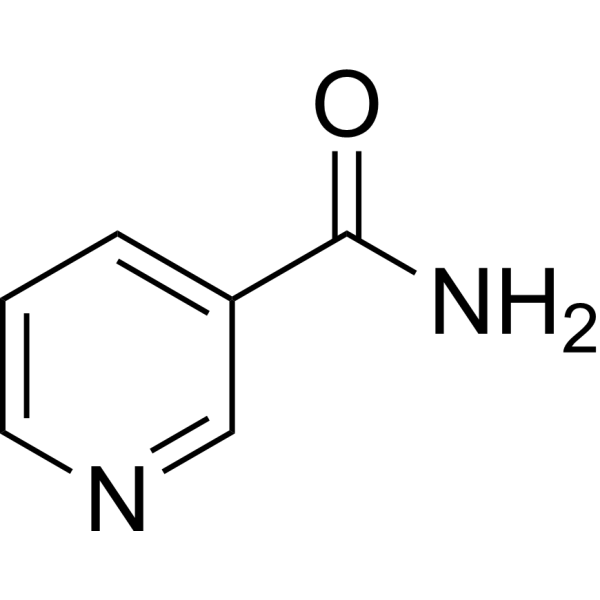
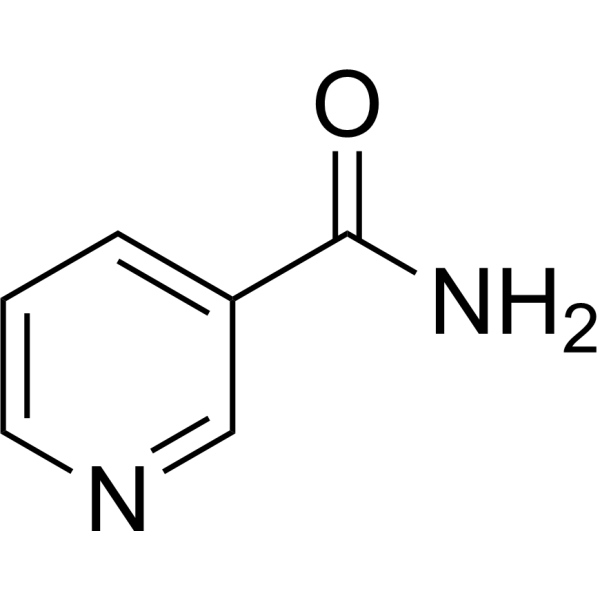
  • HY-B0150
    Nicotinamide
    85+ Cited Publications

    Niacinamide; Nicotinic acid amide

    Environmental Pollutants Endogenous Metabolite Sirtuin HBV Organoid Cancer
    Nicotinamide is a form of vitamin B3 or niacin. Nicotinamide Hydrochloride inhibits SIRT2 activity (IC50: 2 μM). Nicotinamide also inhibits SIRT1. Nicotinamide increases cellular NAD+, ATP, ROS levels. Nicotinamide inhibits tumor growth and improves survival. Nicotinamide also has anti-HBV activity .
    Nicotinamide
  • HY-N0056
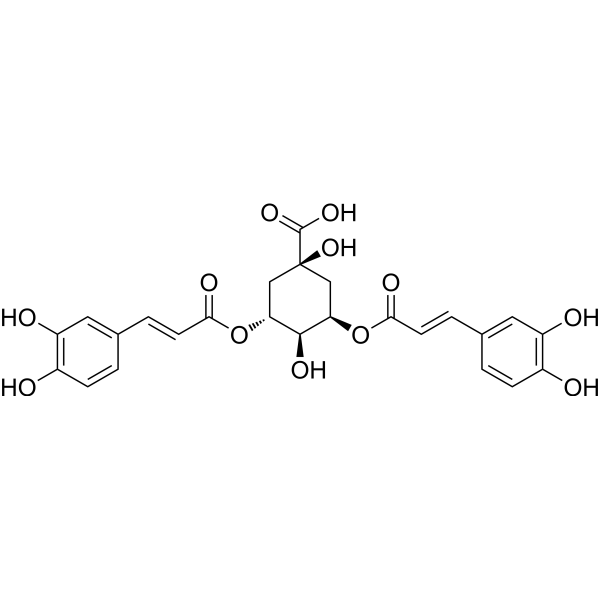
    Isochlorogenic acid A
    10+ Cited Publications

    3,5-Dicaffeoylquinic acid; 3,5-CQA

    Reactive Oxygen Species (ROS) HBV Endogenous Metabolite HIV Bacterial Neurological Disease Inflammation/Immunology
    Isochlorogenic acid A (3,5-Dicaffeoylquinic acid) is a natural phenolic acid with anti-mutagenicity, anti-HBV, anti-HIV, anti-oxidant, anti-bacterial, and anti-inflammatoryy activities .
    Isochlorogenic acid A
  • HY-B1464
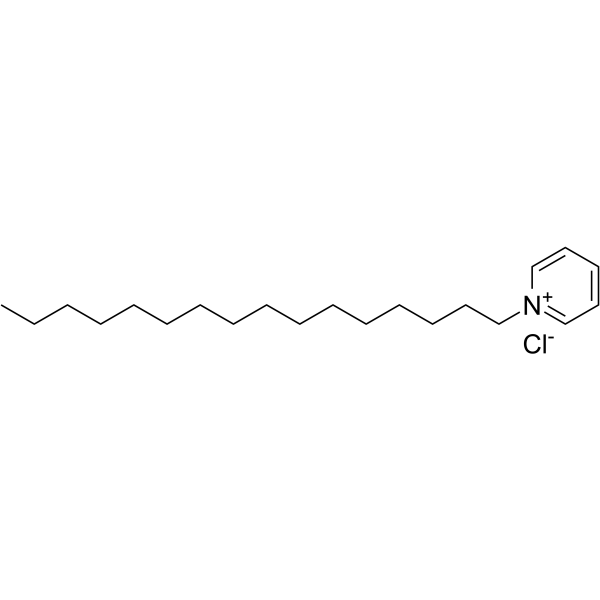
    Cetylpyridinium chloride
    5+ Cited Publications

    Environmental Pollutants Bacterial HBV Infection Inflammation/Immunology
    Cetylpyridinium chloride, a cationic quaternary ammonium compound, is an anti-bacterial agent with broad-spectrum activity. Cetylpyridinium chloride is an effective anti-HBV capsid assembly inhibitor with an IC50 of 2.5 μM. Cetylpyridinium chloride is used in pesticides and various types of mouthwashes, and other personal care products .
    Cetylpyridinium chloride
  • HY-107454
    OSS_128167
    30+ Cited Publications

    Sirtuin HBV Infection Metabolic Disease Inflammation/Immunology Cancer
    OSS_128167 is a potent selective sirtuin 6 (SIRT6) inhibitor with IC50s of 89 μM, 1578 μM and 751 μM for SIRT6, SIRT1 and SIRT2, respectively. OSS_128167 has anti-HBV activity that inhibits HBV transcription and replication. OSS_128167 has anti-cancer, anti-inflammation and anti-viral effects .
    OSS_128167
  • HY-W063968
    RO8191
    20+ Cited Publications

    CDM-3008; RO4948191

    IFNAR JAK STAT HCV HBV Infection
    RO8191 (CDM-3008), an imidazonaphthyridine compound, is an orally active and potent interferon (IFN) receptor agonist. RO8191 directly binds to IFNα/β receptor 2 (IFNAR2) and activates IFN-stimulated genes (ISGs) expression and JAK/STAT phosphorylation. RO8191 shows antiviral activity against both HCV and EMCV with an IC50 of 200 nM for HCV replicon . RO8191 is a cccDNA modulator (CDM) through interferon-like activity and has anti-HBV activity .
    RO8191
  • HY-B0150R
    Nicotinamide (Standard)
    Maximum Cited Publications
    89 Publications Verification

    Niacinamide(Standard); Nicotinic acid amide (Standard)

    Reference Standards Endogenous Metabolite Sirtuin Cancer
    Nicotinamide (Standard) is the analytical standard of Nicotinamide. This product is intended for research and analytical applications. Nicotinamide is a form of vitamin B3 or niacin. Nicotinamide Hydrochloride inhibits SIRT2 activity (IC50: 2 μM). Nicotinamide also inhibits SIRT1. Nicotinamide increases cellular NAD+, ATP, ROS levels. Nicotinamide inhibits tumor growth and improves survival. Nicotinamide also has anti-HBV activity .
    Nicotinamide (Standard)
  • HY-W018791
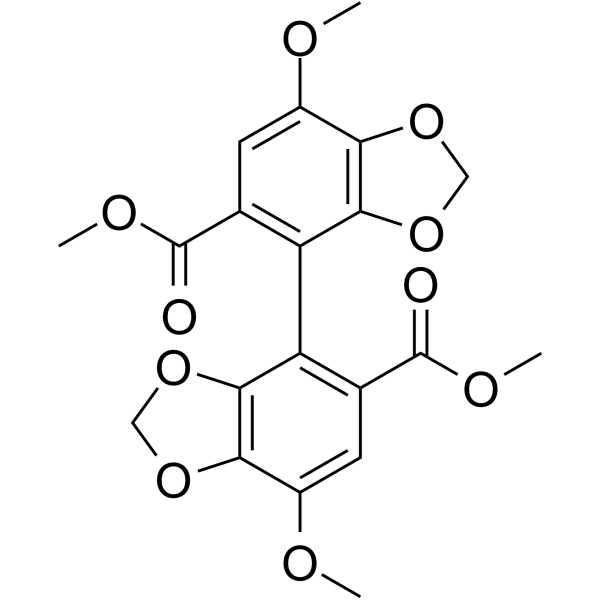
    Bifendate
    2 Publications Verification

    DDB

    HBV Autophagy Cytochrome P450 Atg8/LC3 p62 P-glycoprotein Infection Cardiovascular Disease Cancer
    Bifendate (DDB), extracted from Schisandrae chinensis, is an orally active anti-HBV agent against chronic hepatitis B. Bifendate inhibits ATG5-dependent autophagy and attenuates oleic acid-induced lipid accumulation with anti-oxidant properties in vitro. Bifendate can decrease alanine transaminase (ALT) level in mice. Bifendate attenuates hepatic steatosis in cholesterol/bile salt- and high-fat diet-induced hypercholesterolemia in mice. Bifendate potently increases the activity of cytochrome proteins (CYPs) and reverse P-gp-mediated multi-drug resistance (MDR) .
    Bifendate
  • HY-124600
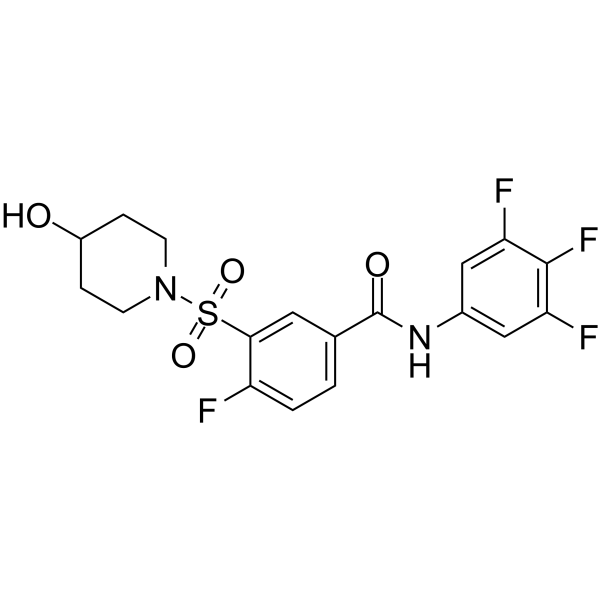
    NVR 3-778
    3 Publications Verification

    HBV Infection
    NVR 3-778 is a first-in-Class and oral bioavailable HBV CAM (capsid assembly modulator) belonging to the SBA (sulfamoylbenzamide) class, with anti-HBV activity .
    NVR 3-778
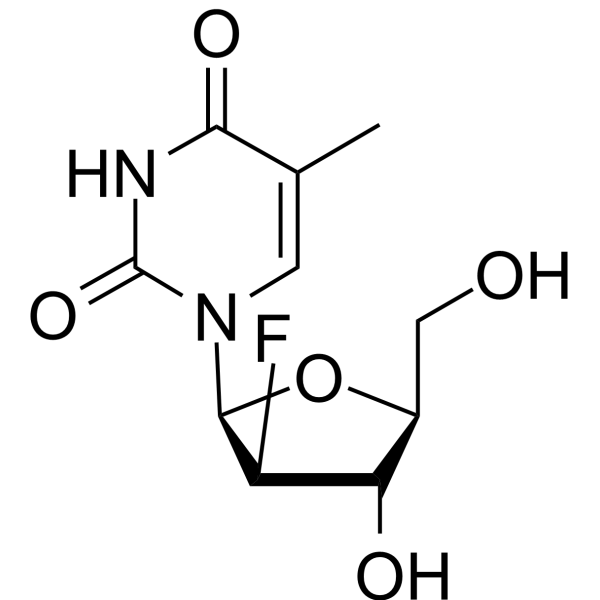
  • HY-13859
    Clevudine
    1 Publications Verification

    L-FMAU

    HBV DNA/RNA Synthesis Orthopoxvirus Infection
    Clevudine (L-FMAU), a nucleoside analog of the unnatural L-configuration, has potent anti-HBV activity with long half-life, low toxicity. Clevudine is a non-competitive inhibitor that is not incorporated into the viral DNA but rather binds to the polymerase. Clevudine is active against cowpox virus respiratory infection in mice .
    Clevudine
  • HY-148560A

    HBV DNA/RNA Synthesis Infection
    trans-ccc_R08 (Compound 1-B) is a cccDNA inhibitor with anti-HBV activity, with an IC50 of 0.14 μM for HBeAg and an IC50 of 0.08 μM for HBsAg in in vitro assays. trans-ccc_R08 inhibits covalently closed circular DNA (cccDNA). trans-ccc_R08 is applicable to research related to hepatitis B virus infection .
    trans-ccc_R08
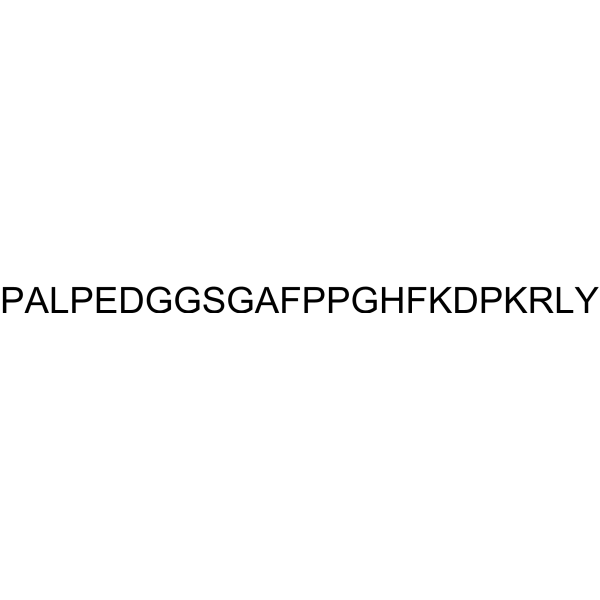
  • HY-P3601

    FGF basic (1-24)

    Bacterial HBV Infection Inflammation/Immunology
    Brain Derived Basic Fibroblast Growth Factor (1-24) (FGF basic 1-24) is a synthetic peptide, shows anti-bacterial and anti-HBV activities. Brain Derived Basic Fibroblast Growth Factor (1-24) can be used in infection disease and immune disease research .
    Brain Derived Basic Fibroblast Growth Factor (1-24)
  • HY-P99703

    17.1.41

    HBV Infection
    Libivirumab (17.1.41) is a human anti-HBV monoclonal antibody. Libivirumab shows neutralization activity with IC50s of 35, 130 ng/mL for HBsAg, HBeAg, respectively .
    Libivirumab
  • HY-123336

    HBV Infection
    Schisantherin C exhibits anti-HBV activity with potency against HBsAg and HBeAg secretion by 59.7% and 34.7% at 50μg/mL .
    Schisantherin C
  • HY-116999

    HBV Infection
    IR415 is a potent anti-HBV agent and inhibits HBV replication by blocking the HBx activity. IR415 selectively interacts with HBx (Kd=2 nM) and blocks HBV-mediated RNAi suppression, reverses the inhibitory effect of HBx protein on the activity of the dicer endoribonuclease . HBx: hepatitis B virus X protein.
    IR415
  • HY-100028
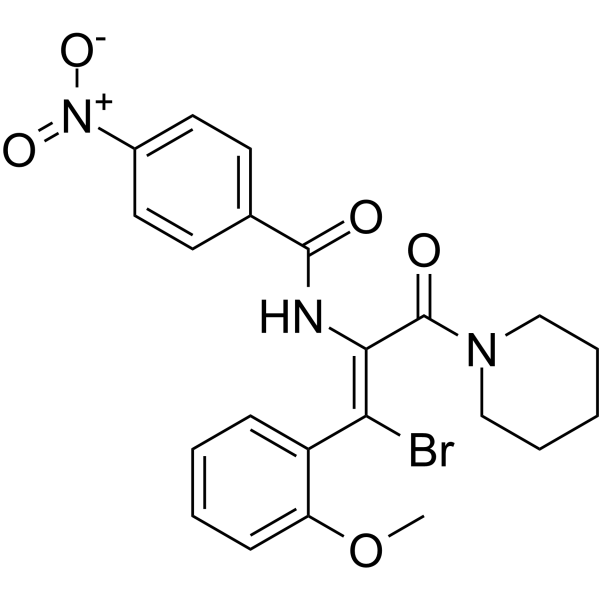
    AT-130
    2 Publications Verification

    HBV DNA/RNA Synthesis Infection Cancer
    AT-130, a phenylpropenamide derivative, is a potent hepatitis B virus (HBV) replication non-nucleoside inhibitor. AT-130 inhibits the viral DNA synthesis with an EC50 of 0.13 μM. AT-130 inhibits both wt and mutant HBVs. AT-130 has anti-HBV activity in hepatoma cells .
    AT-130
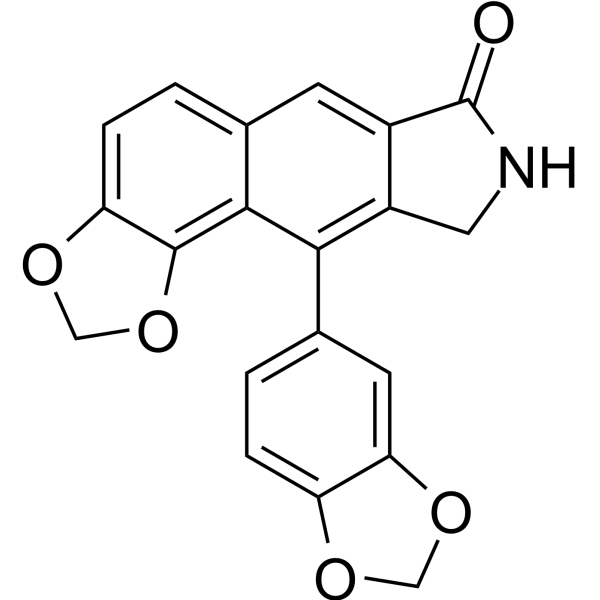
  • HY-16680

    Helioxanthin analogue 8-1

    HBV Infection
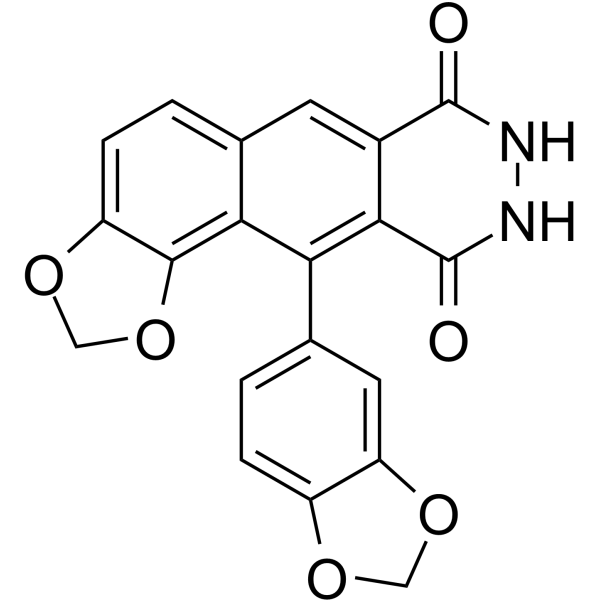
    Helioxanthin 8-1(Helioxanthin analogue 8-1) is an anti-HBV agent. Helioxanthin 8-1 exhibits anti-hepatitis B virus activity in both in vitro human hepatitis B virus models and animal models. Helioxanthin 8-1 inhibits the synthesis of duck hepatitis B virus (DHBV) DNA, covalently closed circular DNA, RNA and proteins, thereby blocking DHBV replication. Helioxanthin 8-1 shows higher cytotoxicity in virus-induced cells than in non-induced cells. Helioxanthin 8-1 can be used in studies related to hepatitis B virus infection .
    Helioxanthin 8-1
  • HY-148783

    HBV Infection
    HBV-IN-32 is a potent cccDNA (covalently closed circular DNA) inhibitor. HBV-IN-32 shows anti-HBV activity with an IC50 value of 0.14 µM for HBsAg. HBV-IN-32 inhibits cell growth .
    HBV-IN-32
  • HY-N8153

    HBV Infection Inflammation/Immunology
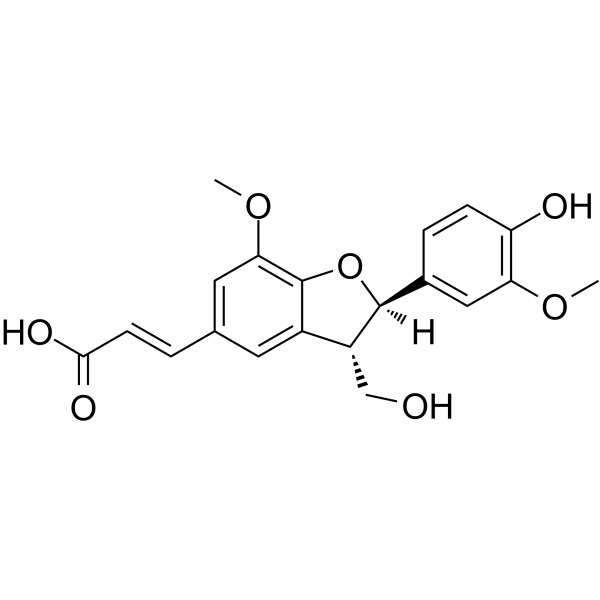
    Glycosmisic acid, a natural compound, possesses anti-HBV activity .
    Glycosmisic acid
  • HY-B0150A

    Niacinamide hydrochloride; Nicotinic acid amide hydrochloride

    Sirtuin Endogenous Metabolite HBV Infection Cancer
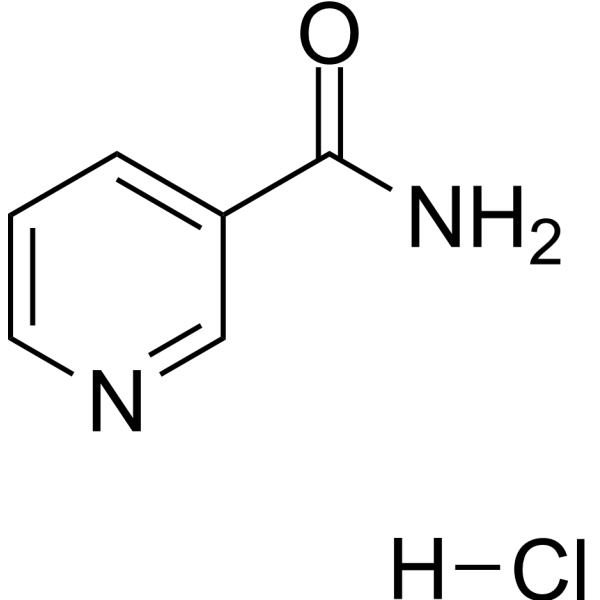
    Nicotinamide hydrochloride is a form of vitamin B3 or niacin. Nicotinamide hydrochloride inhibits SIRT2 activity (IC50: 2 μM). Nicotinamide hydrochloride also inhibits SIRT1. Nicotinamide hydrochloride increases cellular NAD+, ATP, ROS levels. Nicotinamide hydrochloride inhibits tumor growth and improves survival. Nicotinamide hydrochloride also has anti-HBV activity .
    Nicotinamide hydrochloride
  • HY-N1323

    HBV Infection
    Sanggenol P, a flavonoid, shows anti-HBV activity on HepG2.2.15 cell line in vitro .
    Sanggenol P
  • HY-16679
    Helioxanthin derivative 5-4-2
    1 Publications Verification

    Helioxanthin 5-4-2

    HBV Infection
    Helioxanthin derivative 5-4-2 is an analogue of helioxanthin, exhibites significant in vitro anti-HBV activity with EC50 of 0.08 uM in HepG2.2.15 cells.
    Helioxanthin derivative 5-4-2
  • HY-126033

    HBV RSV Infection
    Sophoranol is an alkaloid that can be isolated from S. flavescens, with antiviral activity. Sophoranol has anti-HBV (hepatitis B virus) activity. Sophoranol shows potent antiviral activities against respiratory syncytial virus (RSV) with an IC50 of 10.4 μg/mL .
    Sophoranol
  • HY-N0056R

    3,5-Dicaffeoylquinic acid (Standard); 3,5-CQA (Standard)

    Reference Standards Reactive Oxygen Species (ROS) HBV Endogenous Metabolite HIV Bacterial Neurological Disease Inflammation/Immunology
    Isochlorogenic acid A (Standard) is the analytical standard of Isochlorogenic acid A. This product is intended for research and analytical applications. Isochlorogenic acid A (3,5-Dicaffeoylquinic acid) is a natural phenolic acid with anti-mutagenicity, anti-HBV, anti-HIV, anti-oxidant, anti-bacterial, and anti-inflammatoryy activities .
    Isochlorogenic acid A (Standard)
  • HY-136111

    HBV Infection
    KR-26556 is a sulfonamide type hepatitis B virus (HBV) capsid assembly regulator. KR-26556 exhibits anti-HBV activity with an EC50 of 0.04 μM. KR-26556 has favorable safety characteristics. KR-26556 can be used for research on chronic hepatitis B .
    KR-26556
  • HY-B0150S3

    Niacinamide-d3; Nicotinic acid amide-d3

    Isotope-Labeled Compounds Endogenous Metabolite Organoid Sirtuin HBV Cancer
    Nicotinamide-d3 (Niacinamide-d3) is deuterium labeled Nicotinamide. Nicotinamide is a form of vitamin B3 or niacin. Nicotinamide Hydrochloride inhibits SIRT2 activity (IC50: 2 μM). Nicotinamide also inhibits SIRT1. Nicotinamide increases cellular NAD+, ATP, ROS levels. Nicotinamide inhibits tumor growth and improves survival. Nicotinamide also has anti-HBV activity .
    Nicotinamide-d3
  • HY-W018791R

    DDB (Standard)

    Reference Standards HBV Autophagy Cytochrome P450 Atg8/LC3 p62 P-glycoprotein Infection Cardiovascular Disease Cancer
    Bifendate (DDB), extracted from Schisandrae chinensis, is an orally active anti-HBV agent against chronic hepatitis B. Bifendate inhibits ATG5-dependent autophagy and attenuates oleic acid-induced lipid accumulation with anti-oxidant properties in vitro. Bifendate can decrease alanine transaminase (ALT) level in mice. Bifendate attenuates hepatic steatosis in cholesterol/bile salt- and high-fat diet-induced hypercholesterolemia in mice. Bifendate potently increases the activity of cytochrome proteins (CYPs) and reverse P-gp-mediated multi-drug resistance (MDR) .
    Bifendate (Standard)
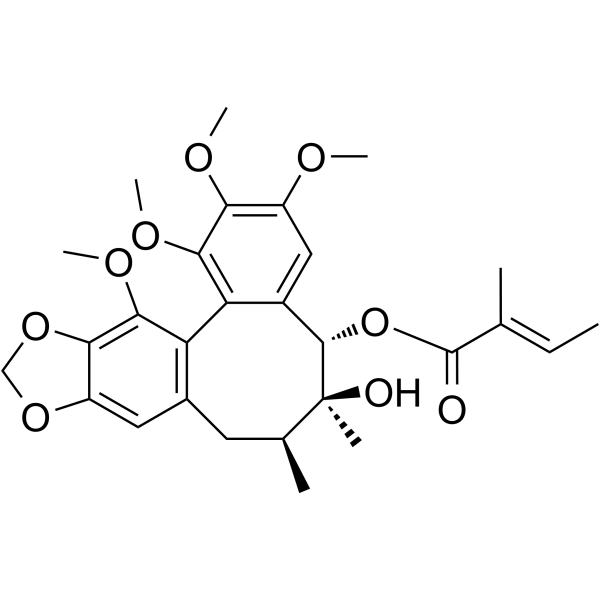
  • HY-N15262

    Angeloylgomisin P

    HIV HBV Infection Metabolic Disease
    Schinlignan B (Angeloylgomisin P) is a lignan with antioxidant, anti-HIV, anti-HBV activities, which is found in plants of the Schisandra genus. Schinlignan B is promising for research of antioxidant-associated diseases .
    Schinlignan B
  • HY-148782

    HBV Infection
    HBV-IN-31 is a potent cccDNA (covalently closed circular DNA) inhibitor. HBV-IN-31 shows anti-HBV activity with an IC50 value of 0.13 µM for HBsAg. HBV-IN-31 inhibits cell growth .
    HBV-IN-31
  • HY-145059

    HBV Infection
    HBV-IN-12 is a potent hepatitis B surface antigen (HBsAg) inhibitor (0.001 μM< EC50 ≤0.05 μM). HBV-IN-12 shows anti-HBV DNA activity (0.001 μM<EC50 ≤0.02 μM). From patent WO2021204252A1, compound 15 .
    HBV-IN-12
  • HY-N2988

    Arisanschinin K

    HBV Infection Inflammation/Immunology
    Schisanwilsonin C (Arisanschinin K) shows anti-HBV activity .
    Schisanwilsonin C
  • HY-139574

    HBV Infection Inflammation/Immunology
    Firzacorvir is a cyclic sulfamide compound and modulates HBV core protein. Firzacorvir has anti-HBV activity with EC50 < 1 μΜ .
    Firzacorvir
  • HY-149435

    HBV Infection
    HBV-IN-36 (compound 42) is a HBV inhibior (IC50=2 μM), showing anti-HBV activity with EC50 of 0.58 μM .
    HBV-IN-36
  • HY-149392

    HBV Infection
    HBV-IN-35 (Compound 88) is a HBV inhibitor. HBV-IN-35 has anti-HBV activities in mouse and human hepatocytes (EC50: 100 nM and 400 nM respectively) .
    HBV-IN-35
  • HY-163516

    HBV Infection
    HBV-IN-45 is a selective and orally active HBV capsid assembly modulator with an IC50 of 0.51 μM for HBcAg in HBC cells. HBV-IN-45 shows potent anti-HBV activities .
    HBV-IN-45
  • HY-112142A

    DVR-23

    HBV Inflammation/Immunology
    (Rac)-AB-423 (DVR-23) is an anti-HBV candidate compound with promising anti-HBV activity. (Rac)-AB-423 showed no induction of CYP1A2, CYP3A4, or CYP2B6 enzyme activity at high concentrations. (Rac)-AB-423 exhibited desirable pharmacokinetic properties, enabling good systemic exposure and high oral bioavailability. (Rac)-AB-423 achieved more than 2 log viral load reduction in the hydrodynamic injection (HDI) HBV mouse model .
    (Rac)-AB-423
  • HY-N8168

    HBV Infection
    LPRP-Et-97543 is a potent anti-HBV agent. LPRP-Et-97543 reduces Core, S, and preS but not X promoter activities. LPRP-Et-97543 can be used for acute and chronic HBV infections research .
    LPRP-Et-97543
  • HY-N15419

    HBV Infection
    Acutumidine (compound 4) is an alkaloid with anti-HBV activity that can be isolated from Hypserpa nitida Miers. Acutumidine inhibits the production of HBsAg in Hep G2.2.15 cells stably transfected with HBV genome with an IC50 value of 2.023 mM .
    Acutumidine
  • HY-124600R

    HBV Infection
    NVR 3-778 (Standard) is the analytical standard of NVR 3-778. This product is intended for research and analytical applications. NVR 3-778 is a first-in-Class and oral bioavailable HBV CAM (capsid assembly modulator) belonging to the SBA (sulfamoylbenzamide) class, with anti-HBV activity .
    NVR 3-778 (Standard)
  • HY-173120

    HBV Infection
    HBV-IN-51 (Compound 17e) is a potent HBV capsid assembly modulator. HBV-IN-51 exhibits remarkable anti-HBV activity with an EC50 of 0.033 μM in HepAD38 cells. HBV-IN-51 exhibits robust metabolic stability in plasma, and can be rapidly metabolized in human liver microsomes .
    HBV-IN-51
  • HY-162795

    HBV Infection
    HBV-IN-47 (compound 4a) is a capsid assembly regulator with inhibitory activity against hepatitis B virus (HBV). HBV-IN-47 exhibits strong anti-HBV activity in HepAD38 cells with low toxicity (EC50=0.24 μM). HBV-IN-47 can be used for the study of chronic hepatitis B (CHB) .
    HBV-IN-47
  • HY-B1464R

    Reference Standards Bacterial HBV Infection Inflammation/Immunology
    Cetylpyridinium (chloride) (Standard) is the analytical standard of Cetylpyridinium (chloride). This product is intended for research and analytical applications. Cetylpyridinium chloride, a cationic quaternary ammonium compound, is an anti-bacterial agent with broad-spectrum activity. Cetylpyridinium chloride is an effective anti-HBV capsid assembly inhibitor with an IC50 of 2.5 μM. Cetylpyridinium chloride is used in pesticides and various types of mouthwashes, and other personal care products .
    Cetylpyridinium chloride (Standard)
  • HY-N11792

    HBV Others
    Pedunculosumoside F is a homoflavonoid glucoside. Pedunculosumoside F can be isolated from Ophioglossum pedunculosum. Pedunculosumoside F has cytotoxicity against HepG2 22.15 cells with CC50 value of 56.7 μM without anti-HBV activity. While its analogs block HBsAg secretion in HBV-infected HepG2 2.2.15 cells .
    Pedunculosumoside F
  • HY-151134

    HBV Infection
    HBV-IN-25 is a good potency, orally active novel HBV cccDNA reducer. HBV-IN-25 has anti-HBeAg potency and anti-HBV activity with IC50 values of 0.58 μM and 1.15 μM, respectively. HBV-IN-25 has good aqueous solubility (LYSA>452 μg/mL) and good PK property with no cellular toxicity .
    HBV-IN-25
  • HY-179265

    HBV Infection
    D-CAM-14 is a potent HBV capsid assembly modulator with potent anti-HBV activity (EC50 = 0.1 nM, EC90 = 9 nM in HepAD38 cells). D-CAM-14 suppresses HBeAg, and HBcAg in HBV-infected HepG2-NTCP cells, with EC50 values of 98 and 67 nM, respectively. D-CAM-14 has distinct impacts on capsid radii and the morphology of preassembled capsids. D-CAM-14 can be used for HBV infection disease research .
    D-CAM-14
  • HY-145053

    HBV Infection
    HBV-IN-10 is an enantiomer of compound 6 (WO2021204258A1). Compound 6 is a hepatitis B surface antigen (HBsAg) inhibitor (0.001 μM< EC50 ≤0.05 μM). From patent WO2021204258A1, compound 6 .
    HBV-IN-10
  • HY-145060

    HBV Infection
    HBV-IN-12 is a potent hepatitis B surface antigen (HBsAg) inhibitor. From patent WO2021204252A1, compound 1_B .
    HBV-IN-13
  • HY-147863

    HBV Infection Neurological Disease
    HBV-IN-24 (compound (2ʹS, 6S)-1a) is a potent HBV inhibitor. HBV-IN-24 exhibits potent inhibition activity against HBV DNA, HBsAg, and HBeAg, with EC50 values of 0.6, 0.6, and 4.6 nM, respectively. HBV-IN-24 shows excellent antiviral activity, could have improved neurotoxicity .
    HBV-IN-24
  • HY-145053A

    HBV Infection
    (5S,8R)-HBV-IN-10 is an enantiomer of compound 6 (WO2021204258A1). Compound 6 is a hepatitis B surface antigen (HBsAg) inhibitor (0.001 μM< EC50 ≤0.05 μM). From patent WO2021204258A1, compound 6 .
    (5S,8R)-HBV-IN-10
  • HY-179393

    HBV Cancer
    HBV-IN-54 is a selective and orally active HBV inhibitor. HBV-IN-54 exhibits anti-HBV activity in both HepAD38 cells (EC50 = 0.020 μM, CC50 > 100 μM) and HLCZ01 cells (EC50 = 0.024 μM, CC50 > 100 μM). HBV-IN-54 inhibits viral replication in vivo. HBV-IN-54 displays favorable physicochemical properties and high plasma stability. HBV-IN-54 can be used for research on Hepatitis B (HBV) .
    HBV-IN-54
  • HY-N19941

    HBV Infection
    Schisanwilsonin K is a dibenzocyclooctane lignan found in the stems of Schisandra wilsoniana with weak anti-HBV activity.Schisanwilsonin K can be used for the research of hepatitis B virus infection .
    Schisanwilsonin K

Inquiry Online

Your information is safe with us. * Required Fields.

Salutation


Country or Region *

Applicant Name *


Organization Name *

Department *


Email Address *


Product Name *

Cat. No.


Requested quantity *

Phone Number *


Remarks

Inquiry Online

Inquiry Information

Product Name:
Cat. No.:
Quantity:
MCE Japan Authorized Agent:

