



Isochlorogenic acid A
Based on 16 publication(s) in Google Scholar
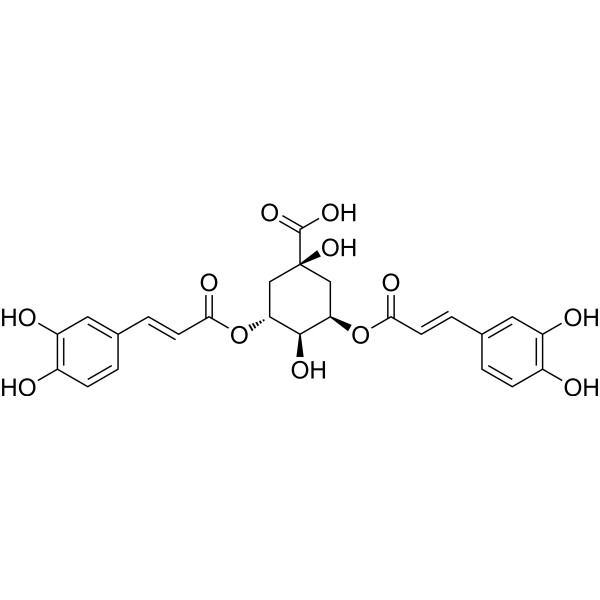
Isochlorogenic acid A (3,5-Dicaffeoylquinic acid) is a natural phenolic acid with anti-mutagenicity, anti-HBV, anti-HIV, anti-oxidant, anti-bacterial, and anti-inflammatoryy activities.
For research use only. We do not sell to patients.
- Purity : 99.53%
- CAS No.: 2450-53-5
- Formula: C25H24O12
- Molecular Weight:516.45
-
Storage:Powder -20°C, 3 years , 4°C, 2 years ; In solvent -80°C, 6 months , -20°C, 1 month

To place orders, for customer services and technical support, please contact: MedChemExpress USA
Tel: 609-228-6898 E-mail: [email protected] [email protected]


-
 Biological Activity
-
Chemical Information
-
Solvent & Solubility
- Protocols
- Purity & Documentation
- References
-
 Help & FAQs


-
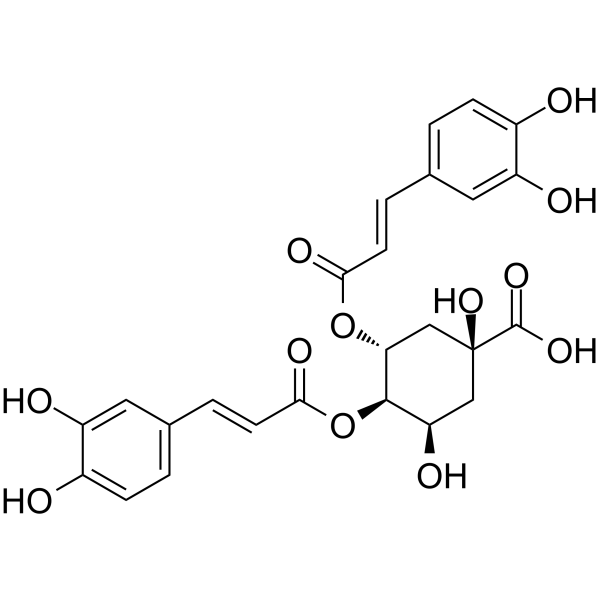
HY-N0057
3,4-Dicaffeoylquinic acidAntioxidant -
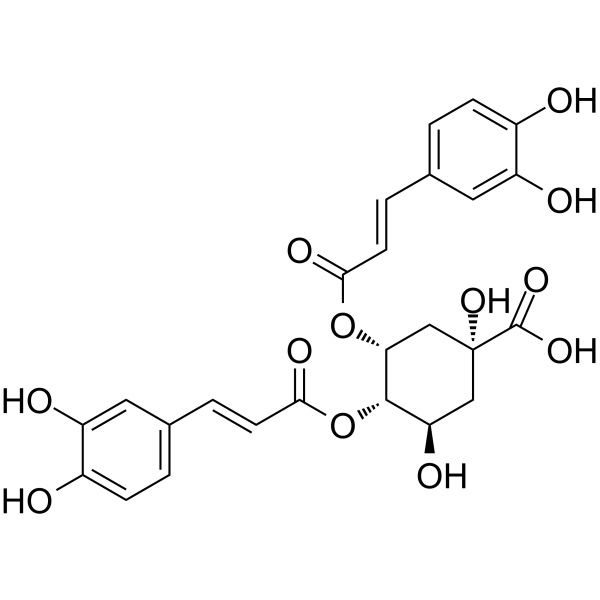
HY-N0058
4,5-Dicaffeoylquinic acidAntioxidant -
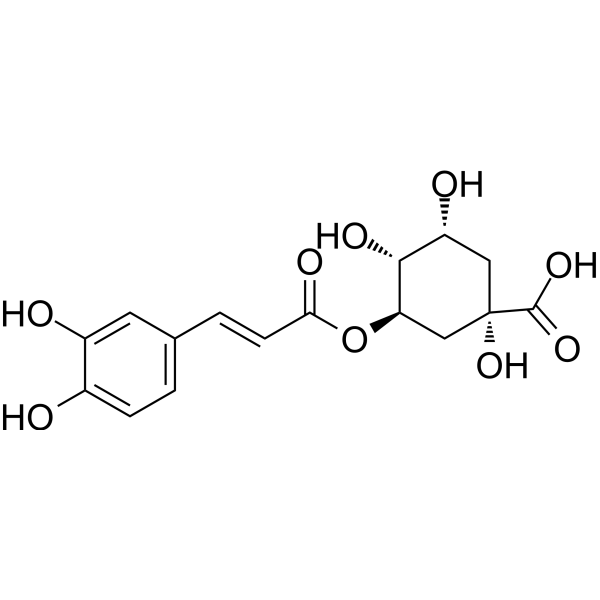
HY-N0055
Chlorogenic acidAntioxidant -
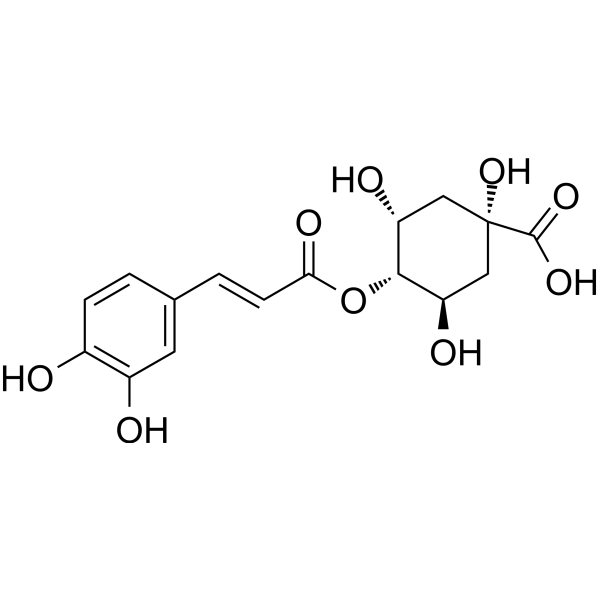
HY-N0787
Cryptochlorogenic acidphenolic Acid Compound -
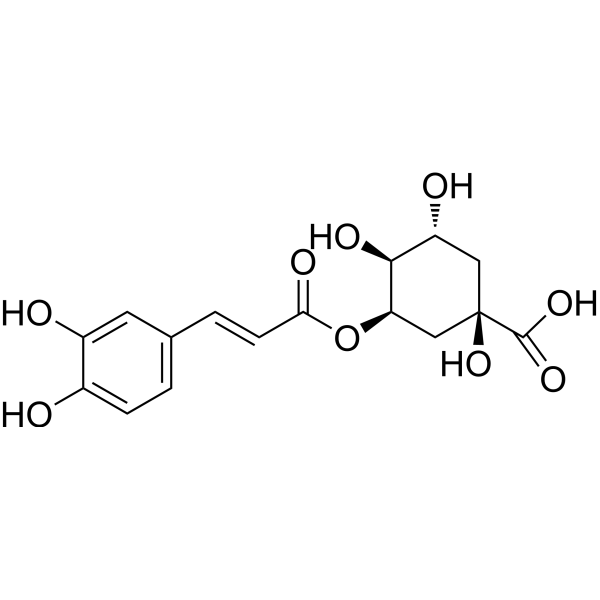
HY-N0722
Neochlorogenic acidCOX Inhibitor -
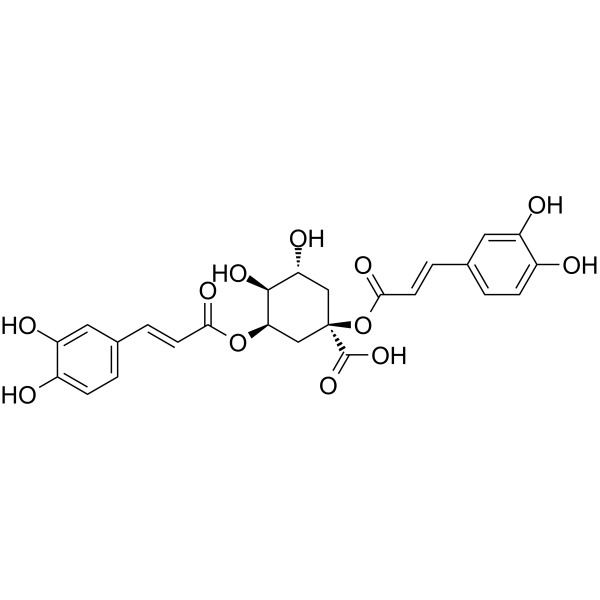
HY-N0359
CynarinAntioxidant -
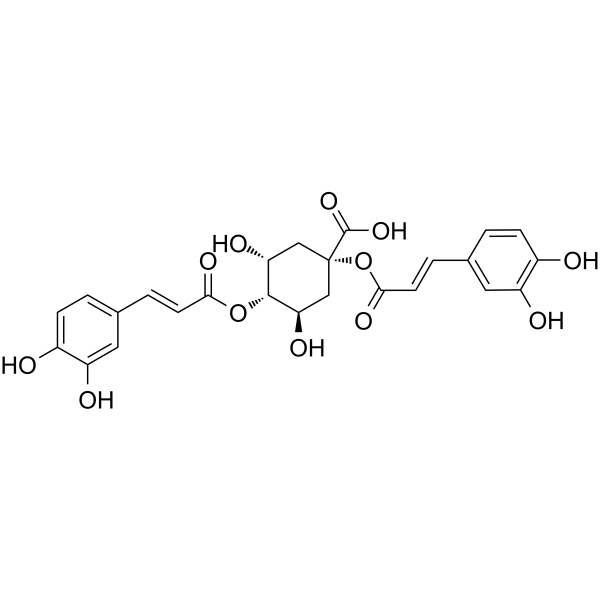
HY-N0358
1,4-Dicaffeoylquinic acidAnti-inflammatory Agent -
HY-N0148
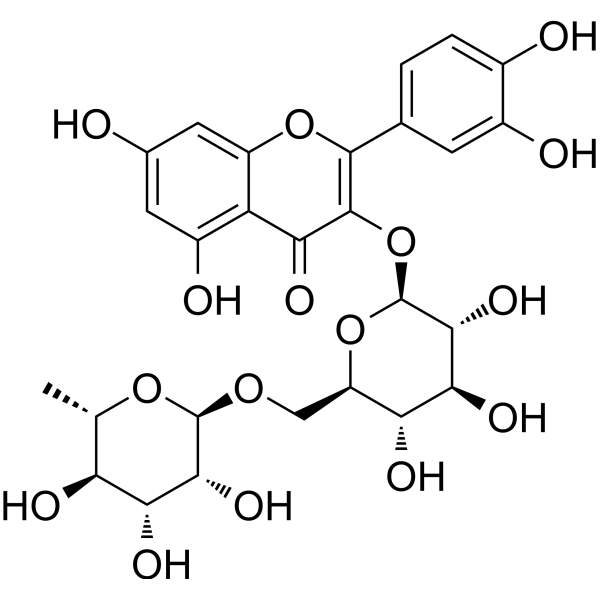
RutinCBR1 Inhibitor -
HY-N0162
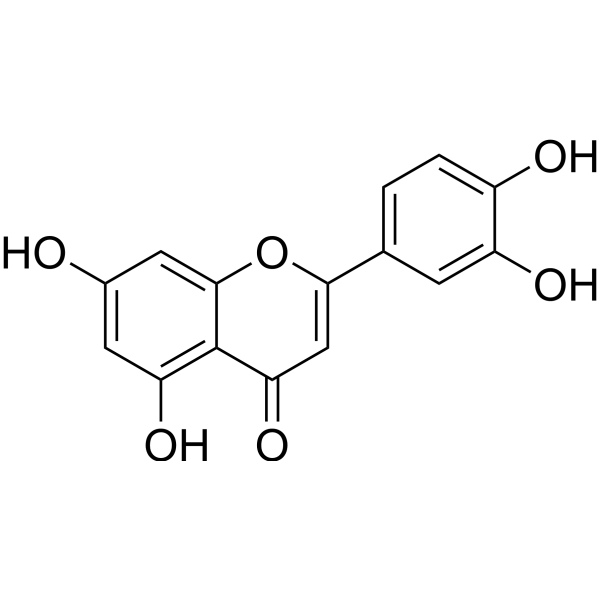
LuteolinNrf2 Inhibitor -
HY-Y1750
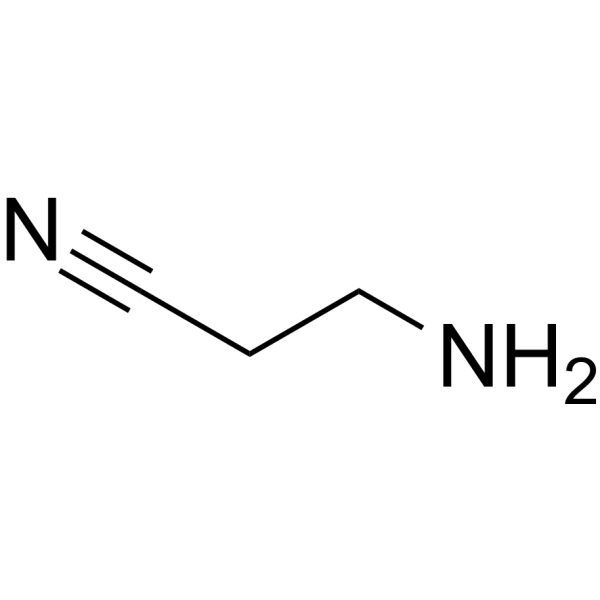
β-AminopropionitrileLysyl Oxidase Inhibitor -
HY-18085
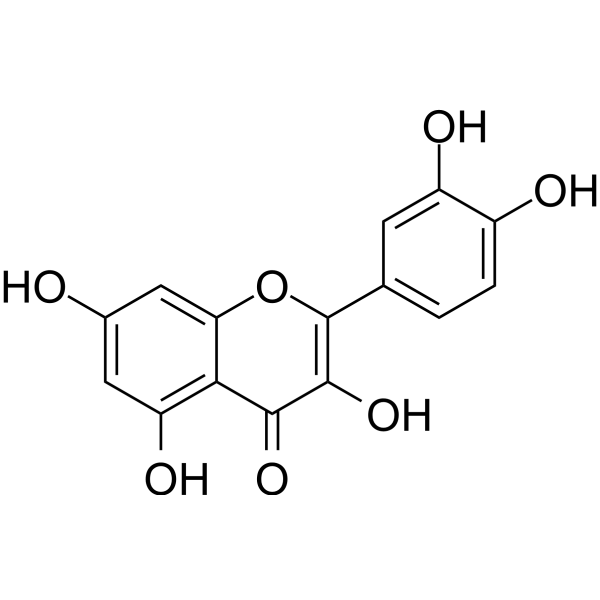
QuercetinFlavonoid Antioxidant -
HY-100579
Ferrostatin-1Ferroptosis Inhibitor
Publications Citing Use of MedChemExpress (MCE) Isochlorogenic acid A
More- Phytomedicine. 2026 Sep:159:158563.
- Phytomedicine. 2026 Feb:151:157776. [Abstract]
- Cell Biosci. 2023 Nov 14;13(1):210. [Abstract]
- Food Biosci. 2023 Oct, 55, 103069.
- Foods. 2024 Apr 3;13(7):1101. [Abstract]
- ACS Omega. 2025 Sep 22;10(38):44260-44269. [Abstract]
- Molecules. 2024 Feb 20;29(5):927. [Abstract]
- Antiviral Res. 2026 Jan:245:106323. [Abstract]
- J Funct Foods. 2021, 104400.
- Food Sci Biotechnol. 2018 Jun 8;27(5):1439-1444. [Abstract]
- Vet Microbiol. 2026 May:316:110992. [Abstract]
- SSRN. 2026 Apr 14.
- SSRN. 2026 Apr 8.
- Chemistry of Plant Raw Material. 2025.
- Pharmacological Research-Modern Chinese Medicine. 2023 Dec, 9, 100340.
- SSRN. 2023 May 19.
 Customer Validation & Images

-
Cell Proliferation/Viability Assay
-
WB
All Endogenous Metabolite Isoforms
More

Biological Activity
Description
Cellular Effect
|
Cell Line

|
Type | Value | Description | References |
|---|---|---|---|---|
| HeLa | IC50 |
>500 μM
Compound: RLE30
|
Inhibition of HDAC in human HeLa cells using Boc-Lys(AC)-AMC as substrate after 24 to 48 hrs by spectrofluorometry
Inhibition of HDAC in human HeLa cells using Boc-Lys(AC)-AMC as substrate after 24 to 48 hrs by spectrofluorometry
|
[PMID: 26996372] |
| HT-22 | EC50 |
>100 μM
Compound: 25
|
Neuroprotective activity against glutamate-induced cell death in mouse HT-22 cells assessed as increase in cell viability after 24 hrs by EZ-Cytox assay
Neuroprotective activity against glutamate-induced cell death in mouse HT-22 cells assessed as increase in cell viability after 24 hrs by EZ-Cytox assay
|
[PMID: 32991171] |
| MT2 | ED50 |
1 μg/mL
Compound: 3,5-DCQA
|
Antiviral activity against HIV1 LAI in human MT2 cells assessed as virus-induced cytopathic effect after 72 hrs
Antiviral activity against HIV1 LAI in human MT2 cells assessed as virus-induced cytopathic effect after 72 hrs
|
[PMID: 11430019] |
| MT2 | ED50 |
1.9 μM
Compound: 3,5-dicaffeoylquinic acid
|
Antiviral activity against HIV1 LAI in MT2 cells assessed as inhibition of virus-induced cytopathic effect
Antiviral activity against HIV1 LAI in MT2 cells assessed as inhibition of virus-induced cytopathic effect
|
[PMID: 18674899] |
| MT2 | ED50 |
2 μM
Compound: 3,5-DCQA
|
Concentration that inhibits Human Immunodeficiency Virus Type 1 (HIV-1)-induced death of MT-2 cells
Concentration that inhibits Human Immunodeficiency Virus Type 1 (HIV-1)-induced death of MT-2 cells
|
[PMID: 9986720] |
| MT2 | IC50 |
1.9 μM
Compound: 8
|
Inhibition of HIV1 integrase activity assessed as suppression of viral replication in human MT2 cells
Inhibition of HIV1 integrase activity assessed as suppression of viral replication in human MT2 cells
|
[PMID: 27676157] |
In Vitro
Isochlorogenic acid A inhibits the aminoacylation activity of LeuRS from Giardia lamblia (GlLeuRS), with an IC50 of 5.82 μg/mL[1].
Isochlorogenic acid A (5-100 μM, 48 h) increases melanin content in B16 cells, and increases TYR proteins activity[4].
Isochlorogenic acid A shows DPPH (IC50=4.26 µg/mL), ABTS radical scavenging activity[6].
Isochlorogenic acid A (0-250 μg/mL, 24 h) inhibits nitric oxide production in LPS-stimulated RAW 264.7 cells[6].
MedChemExpress (MCE) has not independently confirmed the accuracy of these methods. They are for reference only. Further protocols information, click here.
-
Cell Line:B16 cells
-
Concentration:48 h
-
Incubation Time:5, 50, and 100 μM
-
Result:Increased tyrosinase (TYR), TRP1, TRP2, p-MITF, and total MITF protein expressions.
Induced the phosphorylation of Akt at Thr308.
In Vivo
MedChemExpress (MCE) has not independently confirmed the accuracy of these methods. They are for reference only.
-
Animal Model:TMT-induced ICR male mice[5]
-
Dosage:5 and 10 mg/kg
-
Administration:p.o., once a day for 3 weeks
-
Result:Improved spatial memory and learning ability of mice in MWM test.
Reduced the TMT-induced increased AChE activity.
Reduced the MDA content compared to the TMT group.


Chemical Information
-
CAS No. 2450-53-5
-
Appearance Solid
-
Molecular Weight 516.45
-
Formula C25H24O12
-
Color White to light yellow
-
SMILES
OC(C=C1/C=C/C(O[C@H]2[C@@H]([C@@H](C[C@](O)(C2)C(O)=O)OC(/C=C/C3=CC(O)=C(C=C3)O)=O)O)=O)=C(C=C1)O
-
Synonyms
3,5-Dicaffeoylquinic acid; 3,5-CQA
-
Structure Classification
-
Shipping
Room temperature in continental US; may vary elsewhere.
-
Storage
Powder -20°C 3 years 4°C 2 years In solvent -80°C 6 months -20°C 1 month


Publications (16)
-
Journal Impact Factor
-
Most Recent
-
-
Phytomedicine
A novel mechanism of Reduning injection in sepsis treatment: Targeting inflammatory kinases TBK1 and IKKβ. [Abstract]2026 Feb:151:157776. PMID: 41512388 -
Cell Biosci
2023 Nov 14;13(1):210. PMID: 37964389 -
-
Foods
Effects of Cooking Methods on Caffeoylquinic Acids and Radical Scavenging Activity of Sweet Potato. [Abstract]2024 Apr 3;13(7):1101. PMID: 38611405 -
ACS Omega
Selective Enhancement of Caffeoylquinic Acid Derivative via UV Irradiation and Validation of Analytical Method in the Aerial Aster × chusanensis Y. S. Lim. [Abstract]2025 Sep 22;10(38):44260-44269. PMID: 41048756 -
Molecules
Evaluation of Environmental Factor Effects on the Polyphenol and Flavonoid Content in the Leaves of Chrysanthemum indicum L. and Its Habitat Suitability Prediction Mapping. [Abstract]2024 Feb 20;29(5):927. PMID: 38474439 -
Antiviral Res
Isochlorogenic acid A impairs hepatitis B virus replication by interference with various steps of hepatitis B virus life cycle involving HO-1-mediated ROS modulation. [Abstract]2026 Jan:245:106323. PMID: 41349371
Isochlorogenic acid A purchased from MedChemExpress. Usage Cited in: Antiviral Res. 2026 Jan:245:106323. [Abstract]
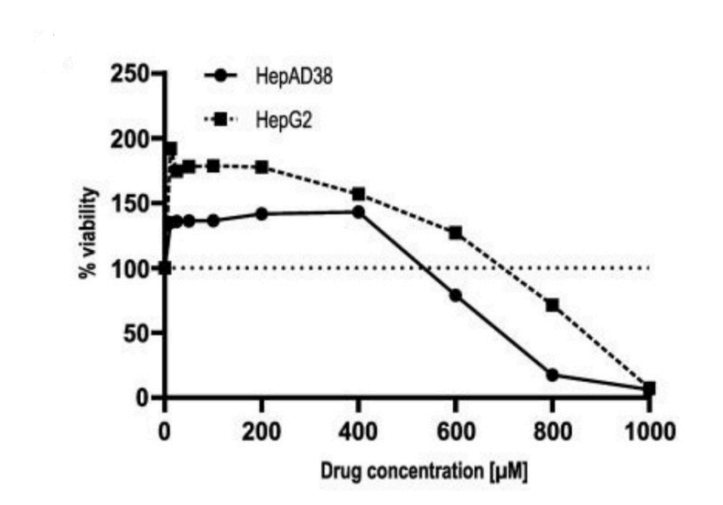
Cytotoxicity assay of Isochlorogenic acid A (ICAA) on HepAD38 and HepG2 cells. Cells were incubated with different concentrations (up to 1000 μM) of ICAA for 6 days, and the toxicity was assessed using a cell viability assay (Presto Blue).
Isochlorogenic acid A purchased from MedChemExpress. Usage Cited in: Antiviral Res. 2026 Jan:245:106323. [Abstract]
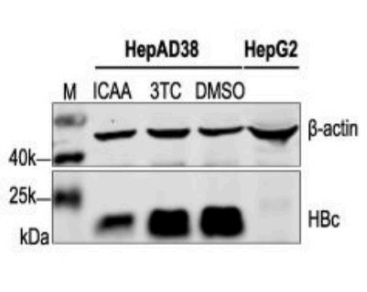
Isochlorogenic acid A (ICAA: 200 μM). Representative images from Western blots showing the intracellular core protein and its quantification.
-
-
Food Sci Biotechnol
Synergic effect in the reduction of serum uric acid level between ethanol extract of Aster glehni and vitamin B6. [Abstract]2018 Jun 8;27(5):1439-1444. PMID: 30319854 -
Vet Microbiol
The Chinese medicine monomer Schisandrin C inhibits PRRSV infection by regulating the OGT-PI3K/AKT/mTOR signaling pathway. [Abstract]2026 May:316:110992. PMID: 41865607 -
-
-
-
-


Solvent & Solubility
In Vitro:
DMSO : ≥ 50 mg/mL (96.81 mM; Hygroscopic DMSO has a significant impact on the solubility of product, please use newly opened DMSO)
* "≥" means soluble, but saturation unknown.
Please refer to the solubility information to select the appropriate solvent. Once prepared, please aliquot and store the solution to prevent product inactivation from repeated freeze-thaw cycles.
Storage method and period of stock solution: -80°C, 6 months; -20°C, 1 month. When stored at -80°C, please use it within 6 months. When stored at -20°C, please use it within 1 month.
Please refer to the solubility information to select the appropriate solvent. Once prepared, please aliquot and store the solution to prevent product inactivation from repeated freeze-thaw cycles.
Storage method and period of stock solution: -80°C, 6 months; -20°C, 1 month. When stored at -80°C, please use it within 6 months. When stored at -20°C, please use it within 1 month.
Concentration (start) × Volume (start) = Concentration (final) × Volume (final)
In Vivo:
Select the appropriate dissolution method based on your experimental animal and administration route.
- For the following dissolution methods, please ensure to first prepare a clear stock solution using an In Vitro approach and then sequentially add co-solvents:
- To ensure reliable experimental results, the clarified stock solution can be appropriately stored based on storage conditions. As for the working solution for In Vivo experiments, it is recommended to prepare freshly and use it on the same day.
- The percentages shown for the solvents indicate their volumetric ratio in the final prepared solution. If precipitation or phase separation occurs during preparation, heat and/or sonication can be used to aid dissolution.
Add each solvent one by one: 10% DMSO 40% PEG300 5% Tween-80 45% Saline
Solubility: ≥ 2.5 mg/mL (4.84 mM); Clear solution
This protocol yields a clear solution of ≥ 2.5 mg/mL (saturation unknown).
Taking 1 mL working solution as an example, add 100 μL DMSO stock solution (25.0 mg/mL) to 400 μL PEG300, and mix evenly; then add 50 μL Tween-80 and mix evenly; then add 450 μL Saline to adjust the volume to 1 mL.
Preparation of Saline: Dissolve 0.9 g sodium chloride in ddH₂O and dilute to 100 mL to obtain a clear Saline solution.
Add each solvent one by one: 10% DMSO 90% (20% SBE-β-CD in Saline)
Solubility: ≥ 2.5 mg/mL (4.84 mM); Clear solution
This protocol yields a clear solution of ≥ 2.5 mg/mL (saturation unknown).
Taking 1 mL working solution as an example, add 100 μL DMSO stock solution (25.0 mg/mL) to 900 μL 20% SBE-β-CD in Saline, and mix evenly.
Preparation of 20% SBE-β-CD in Saline (4°C, storage for one week): 2 g SBE-β-CD powder is dissolved in 10 mL Saline, completely dissolve until clear.
In Vivo Dissolution Calculator
Please enter the basic information of animal experiments:
-
-
-
-
Recommended: Prepare an additional quantity of animals to account for potential losses during experiments.
Please enter your animal formula composition:
-
%DMSO +
Recommended: Keep the proportion of DMSO in working solution below 2% if your animal is weak.
-
%+
-
+%Tween-80 + +
-
%Saline +
The co-solvents required include: DMSO, . All of co-solvents are available by MedChemExpress (MCE). , Tween 80. All of co-solvents are available by MedChemExpress (MCE).
Working solution concentration: 0.22 mg/mL
Method for preparing stock solution: mg drug dissolved in μL DMSO. Stock solution concentration: mg/mL.
1. Take μL DMSO stock solution;
2. Add μL .
μL , mix evenly;
3. Then add μL Tween 80, mix evenly;
4. Then add μL
Please ensure that the stock solution in the first step is dissolved to a clear state, and add co-solvents in sequence. You can use ultrasonic heating (ultrasonic cleaner, recommended frequency 20-40 kHz), vortexing, etc. to assist dissolution.

Protocols
-
Genotoxicity/Mutagenicity Study
The bacterial reverse mutation assay detects point mutations that restore amino-acid prototrophy in auxotrophic Salmonella typhimurium or Escherichia coli tester strains; after exposure to a test article, mutagenic activity is read out as an increased number of revertant colonies on minimal agar compared with the vehicle control. The assay uses tester strains with different mutation targets so that base-substitution and frameshift mutagens can be detected, and testing is performed with and without exogenous mammalian metabolic activation because some chemicals require biotransformation to become mutagenic.


Purity & Documentation
-
Data Sheet (277 KB)
-
SDS (394 KB)
- English - EN (394 KB)
- Français - FR (394 KB)
- Deutsch - DE (394 KB)
- Norwegian - NO (394 KB)
- Español - ES (394 KB)
- Swedish - SV (394 KB)
- Italian - IT (394 KB)
- Korean - KR (394 KB)
- Portuguese - PT (394 KB)
-
Handling Instructions (2659 KB)
References
[1]. Zhang YH, et al. 3,5-Dicaffeoylquinic acid isolated from Artemisia argyi and its ester derivatives exert anti-leucyl-tRNA synthetase of Giardia lamblia (GlLeuRS) and potential anti-giardial effects. Fitoterapia. 2012 Oct;83(7):1281-5. [Content Brief]
[2]. Malarz J, et al. Long-term cultured hairy roots of chicory-a rich source of hydroxycinnamates and 8-deoxylactucin glucoside. Appl Biochem Biotechnol. 2013 Dec;171(7):1589-601. [Content Brief]
[3]. Wan C, et al. Isolation and identification of phenolic compounds from Gynura divaricata leaves. Pharmacogn Mag. 2011 Apr;7(26):101-8. [Content Brief]
[4]. Mamat N, et al. Isochlorogenic acid A promotes melanin synthesis in B16 cell through the β-catenin signal pathway. Acta Biochim Biophys Sin (Shanghai). 2017 Sep 1;49(9):800-807. [Content Brief]
[5]. Kang JY, et al. Reversal of Trimethyltin-Induced Learning and Memory Deficits by 3,5-Dicaffeoylquinic Acid. Oxid Med Cell Longev. 2016;2016:6981595. [Content Brief]


Complete Stock Solution Preparation Table
Please refer to the solubility information to select the appropriate solvent. Once prepared, please aliquot and store the solution to prevent product inactivation from repeated freeze-thaw cycles.
Storage method and period of stock solution: -80°C, 6 months; -20°C, 1 month. When stored at -80°C, please use it within 6 months. When stored at -20°C, please use it within 1 month.
| Optional Solvent | Concentration Solvent Mass | 1 mg | 5 mg | 10 mg | 25 mg |
|---|---|---|---|---|---|
| DMSO | 1 mM | 1.9363 mL | 9.6815 mL | 19.3630 mL | 48.4074 mL |
| 5 mM | 0.3873 mL | 1.9363 mL | 3.8726 mL | 9.6815 mL | |
| 10 mM | 0.1936 mL | 0.9681 mL | 1.9363 mL | 4.8407 mL | |
| 15 mM | 0.1291 mL | 0.6454 mL | 1.2909 mL | 3.2272 mL | |
| 20 mM | 0.0968 mL | 0.4841 mL | 0.9681 mL | 2.4204 mL | |
| 25 mM | 0.0775 mL | 0.3873 mL | 0.7745 mL | 1.9363 mL | |
| 30 mM | 0.0645 mL | 0.3227 mL | 0.6454 mL | 1.6136 mL | |
| 40 mM | 0.0484 mL | 0.2420 mL | 0.4841 mL | 1.2102 mL | |
| 50 mM | 0.0387 mL | 0.1936 mL | 0.3873 mL | 0.9681 mL | |
| 60 mM | 0.0323 mL | 0.1614 mL | 0.3227 mL | 0.8068 mL | |
| 80 mM | 0.0242 mL | 0.1210 mL | 0.2420 mL | 0.6051 mL |


Isochlorogenic acid A Related Classifications
HY-N0056 Related Classifications
 Powered by Bioz