



NVR 3-778
Based on 3 publication(s) in Google Scholar
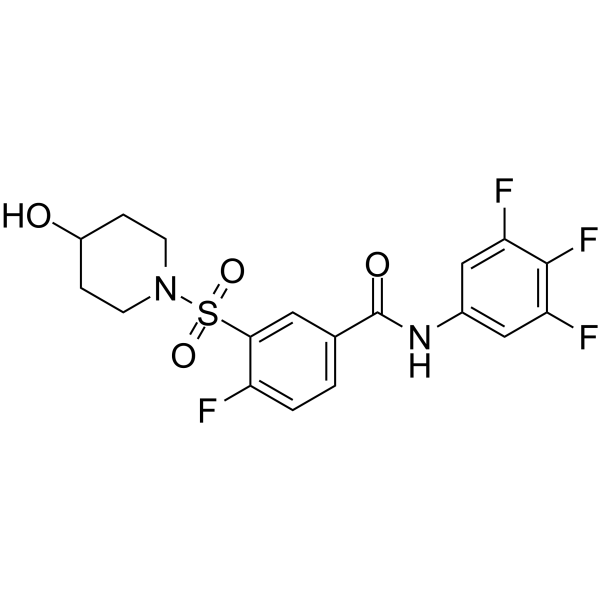
NVR 3-778 is a first-in-Class and oral bioavailable HBV CAM (capsid assembly modulator) belonging to the SBA (sulfamoylbenzamide) class, with anti-HBV activity.
Nur für Forschungszwecke. Wir verkaufen nicht an Patienten.
- Reinheit : 99.88%
- CAS. Nr.: 1445790-55-5
- Formel: C18H16F4N2O4S
- Molecular Weight:432.39
-
Speicherung:Powder -20°C, 3 years ; In solvent -80°C, 6 months , -20°C, 1 month

To place orders, for customer services and technical support, please contact: MedChemExpress USA
Tel: 609-228-6898 E-mail: [email protected] [email protected]


-
 Biologische Aktivität
-
Chemical Information
-
Lösungsmittel & Löslichkeit
- Reinheit & Dokumentation
- Verweise
-
 Help & FAQs


-
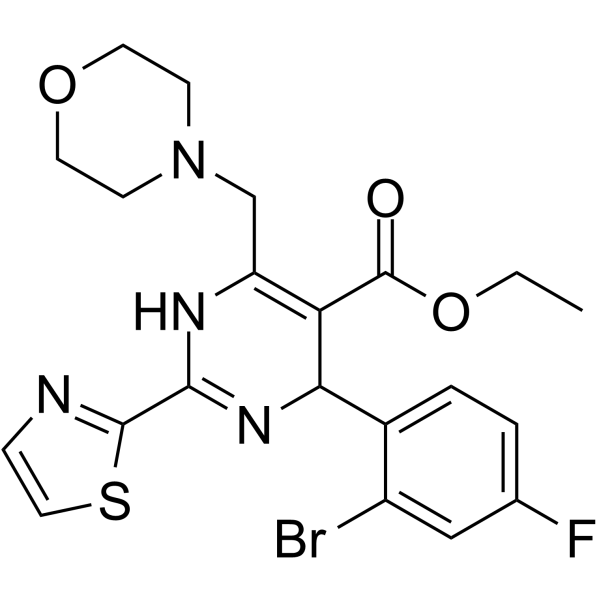
HY-108917
MorphothiadinHBV Inhibitor -
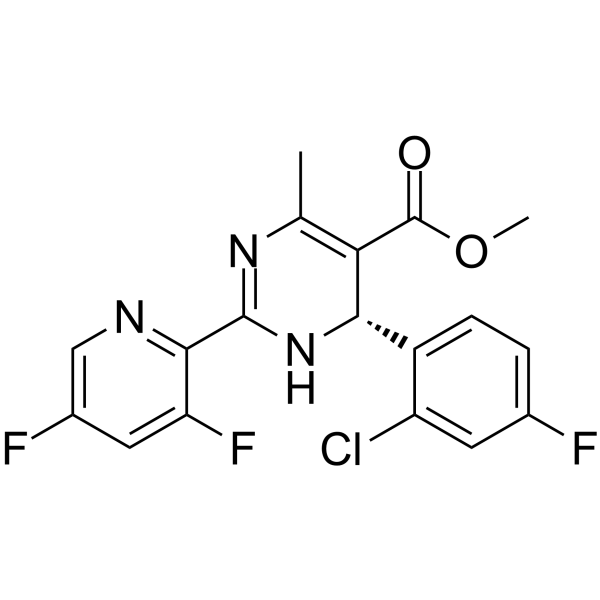
HY-100029
Bay 41-4109HBV Inhibitor -
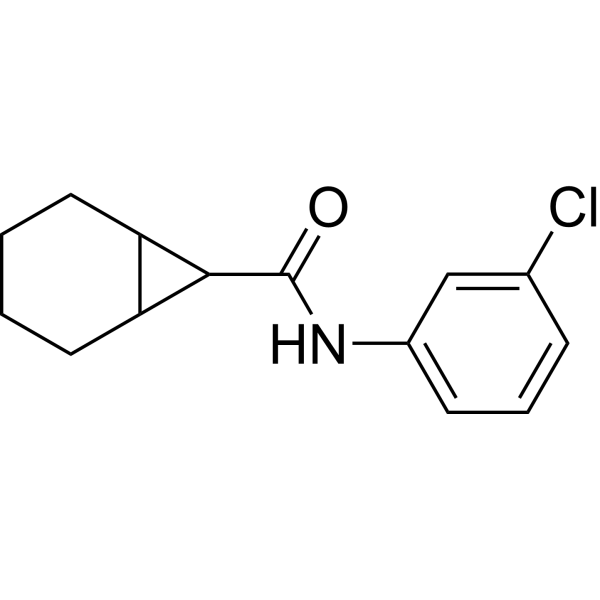
HY-114314
BA-53038BHBV Core Protein Allosteric Modulator -
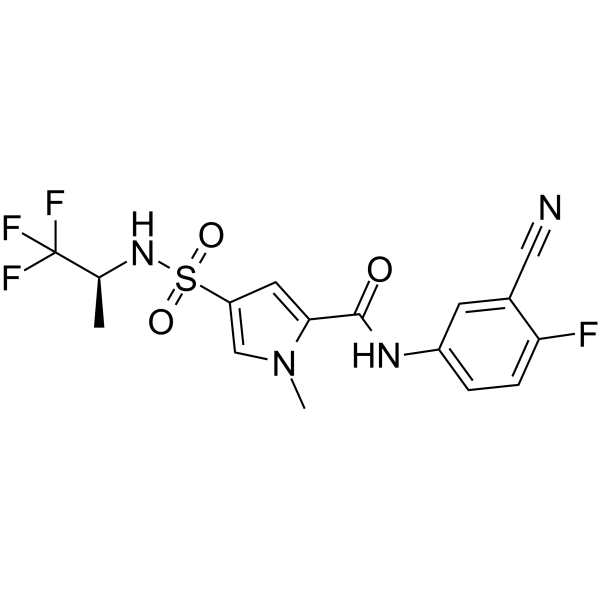
HY-109168
BersacapavirHBV Inhibitor -
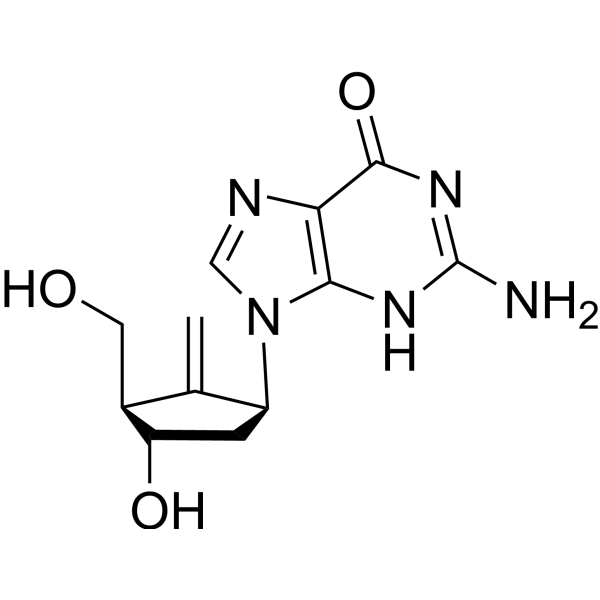
HY-13623
EntecavirHBV Inhibitor -
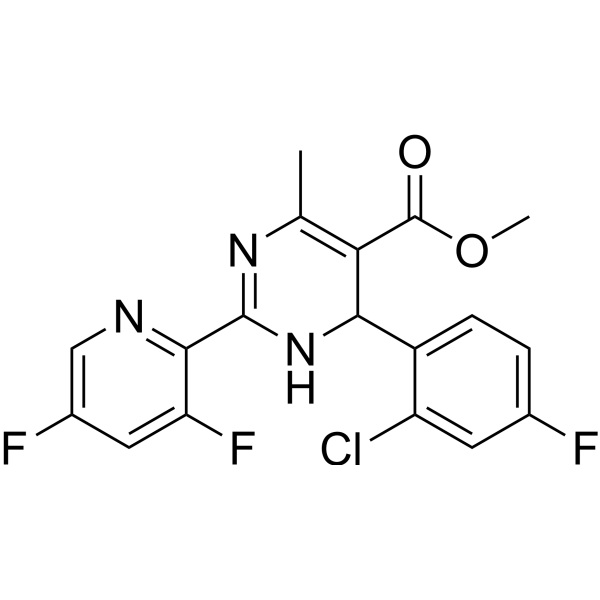
HY-100029A
Bay 41-4109 racemateHBV Inhibitor -
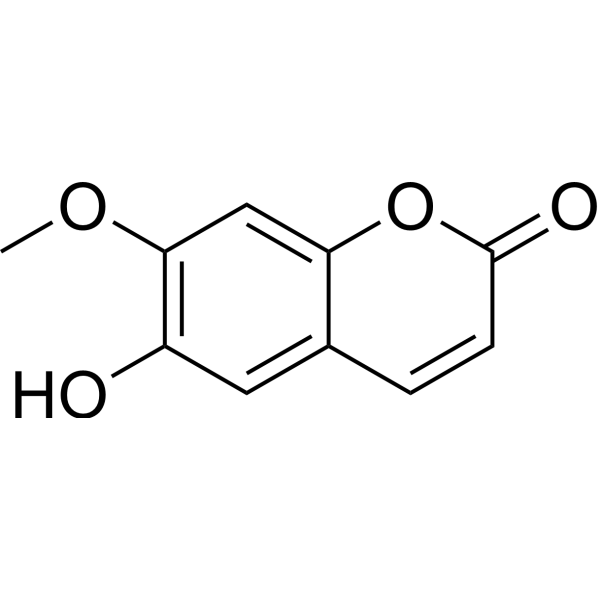
HY-N1365
IsoscopoletinHBV Inhibitor -
HY-112564
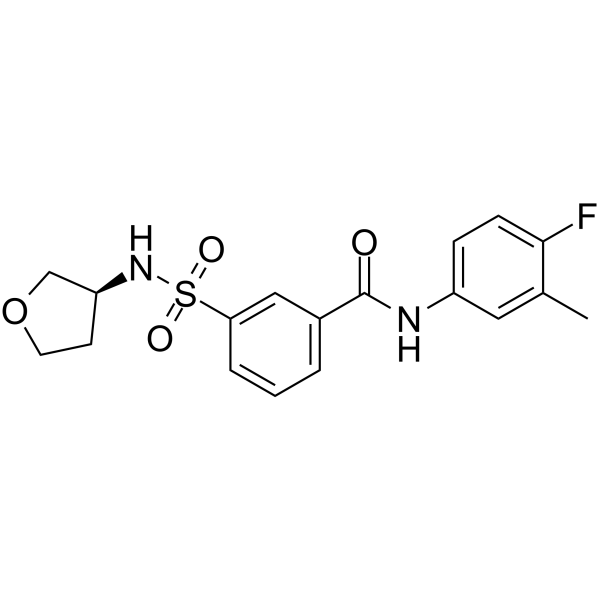
JNJ-632HBV CAM -
HY-117650A
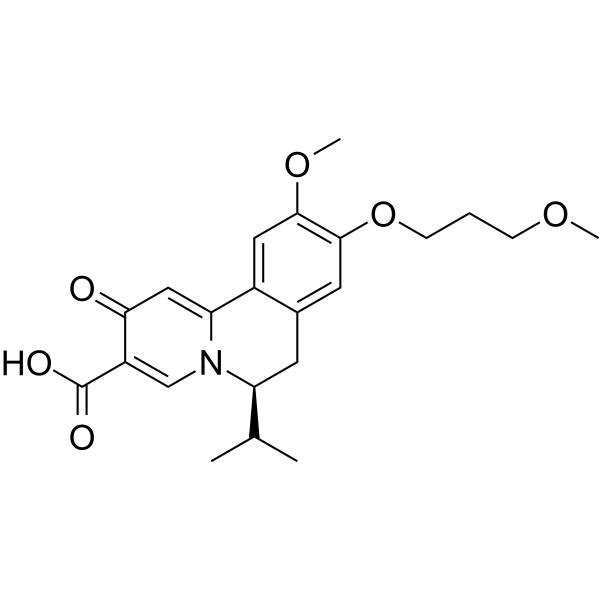
RG7834HBV Inhibitor -
HY-101954A
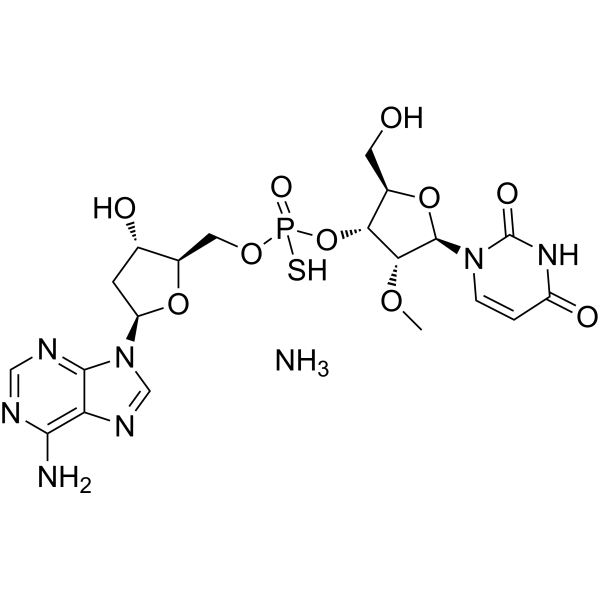
Inarigivir ammoniumHBV Inhibitor -
HY-112142
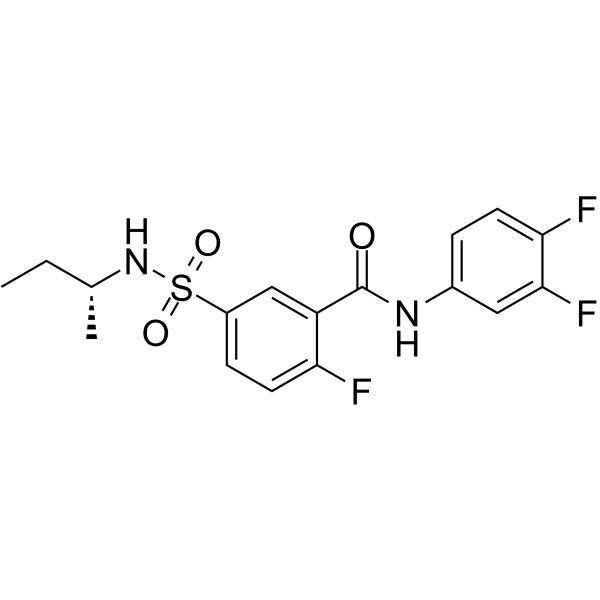
AB-423 -

HY-124600R
NVR 3-778 (Standard)HBV CAM
Publications Citing Use of MedChemExpress (MCE) NVR 3-778
More

Biologische Aktivität
Beschreibung
IC50 & Target
HBV[1]
Cellular Effect
|
Cell Line

|
Type | Value | Description | References |
|---|---|---|---|---|
| HepG2 2.2.15 | CC50 |
15.3 μM
Compound: 1; NVR 3-778
|
Cytotoxicity against human HepG2.2.15 cells assessed as reduction in cell viability incubated for 3 days followed by replacement of fresh medium containing compound and measured after 3 days by cell titer glo-based luminescence assay
Cytotoxicity against human HepG2.2.15 cells assessed as reduction in cell viability incubated for 3 days followed by replacement of fresh medium containing compound and measured after 3 days by cell titer glo-based luminescence assay
|
[PMID: 31227344] |
| HepG2 2.2.15 | CC50 |
15.3 μM
Compound: 1
|
Cytotoxicity against human HepG2.2.15 cells assessed as reduction in cell viability
Cytotoxicity against human HepG2.2.15 cells assessed as reduction in cell viability
|
[PMID: 33610748] |
| HepG2 2.2.15 | CC50 |
4.81 μM
Compound: NVR3-778
|
Cytotoxicity against human HepG2.2.15 cells
Cytotoxicity against human HepG2.2.15 cells
|
[PMID: 32173194] |
| HepG2 2.2.15 | CC50 |
8.6 μM
Compound: NVR 3-778
|
Cytotoxicity against human HepG2 2.2.15 cells assessed as reduction in cell viability incubated for 5 days by MTT assay
Cytotoxicity against human HepG2 2.2.15 cells assessed as reduction in cell viability incubated for 5 days by MTT assay
|
[PMID: 33603970] |
| HepG2 2.2.15 | IC50 |
0.26 μM
Compound: NVR3-778
|
Antiviral activity against Hepatitis B virus infected in human HepG2.2.15 cells by solid phase radioimmunoassay
Antiviral activity against Hepatitis B virus infected in human HepG2.2.15 cells by solid phase radioimmunoassay
|
[PMID: 32173194] |
In Vitro
NVR 3-778 targets HBV core protein and inhibits viral replication[1].
NVR 3-778 inhibits the generation of infectious HBV DNA-containing virus particles with a mean antiviral with an EC50 of 0.40?μM in HepG2.2.15 cells[1].
NVR 3-778 exhibits pan-genotypic antiviral activity and a lack of cross-resistance with nucleos(t)ide inhibitors of HBV replication[1].
NVR 3-778 inhibits pregenomic RNA encapsidation, viral replication, and the production of HBV DNA- and HBV RNA-containing particles[1].
NVR 3-778 also inhibits de novo infection and viral replication in primary human hepatocytes with EC50s of 0.81?μM against HBV DNA and between 3.7μM and 4.8?μM against the production of HBV antigens and intracellular HBV RNA[1].
The EC50 values of NVR 3-778 are increased by 4.5-, 9.3-, and 15.8-fold in the presence of 10%, 20%, and 40% human serum, respectively[1].
MedChemExpress (MCE) has not independently confirmed the accuracy of these methods. They are for reference only.
In Vivo
MedChemExpress (MCE) has not independently confirmed the accuracy of these methods. They are for reference only.
-
Animal Model:Dogs[1]
-
Dosage:1.5 mg/kg (Pharmacokinetic Analysis)
-
Administration:Oral gavage
-
Result:The mean Cmax and AUC0–inf values are 0.56 µg/ml and 3.50 µg·h/ml and the oral bioavailability is 84.6%.
Clinical Trial
| NCT Number | Sponsor | Condition | Start Date |
Phase
|
|---|---|---|---|---|
| NCT01329991 | Plexxikon| | 2011-05 | PHASE1 |


Chemical Information
-
CAS. Nr. 1445790-55-5
-
Appearance Solid
-
Molecular Weight 432.39
-
Formel C18H16F4N2O4S
-
Color White to off-white
-
SMILES
O=C(NC1=CC(F)=C(F)C(F)=C1)C2=CC=C(F)C(S(=O)(N3CCC(O)CC3)=O)=C2
-
Versand
Room temperature in continental US; may vary elsewhere.
-
Speicherung
Powder -20°C 3 years In solvent -80°C 6 months -20°C 1 month


Publications (3)
-
Journal Impact Factor
-
Most Recent
-
Sci Rep
Identification of low-molecular compounds that inhibit envelope formation of hepatitis B virus. [Abstract]2025 Jul 8;15(1):24344. PMID: 40624334 -
Microbiol Spectr
A visible assay for evaluating the inhibitory activity of drug and antibody against HBV infection. [Abstract]2026 Apr 7;14(4):e0263825. PMID: 41810956 -
Anal Methods
An automated microfluidic platform for the screening and characterization of novel hepatitis B virus capsid assembly modulators. [Abstract]2022 Jan 6;14(2):135-146. PMID: 34918017


Lösungsmittel & Löslichkeit
In Vitro:
DMSO : 250 mg/mL (578.18 mM; Need ultrasonic; Hygroscopic DMSO has a significant impact on the solubility of product, please use newly opened DMSO)
Please refer to the solubility information to select the appropriate solvent. Once prepared, please aliquot and store the solution to prevent product inactivation from repeated freeze-thaw cycles.
Storage method and period of stock solution: -80°C, 6 months; -20°C, 1 month. When stored at -80°C, please use it within 6 months. When stored at -20°C, please use it within 1 month.
Please refer to the solubility information to select the appropriate solvent. Once prepared, please aliquot and store the solution to prevent product inactivation from repeated freeze-thaw cycles.
Storage method and period of stock solution: -80°C, 6 months; -20°C, 1 month. When stored at -80°C, please use it within 6 months. When stored at -20°C, please use it within 1 month.
Konzentration (Stammlösung) × Volumen (Stammlösung) = Konzentration (Ziellösung) × Volumen (Ziellösung)
In Vivo:
Select the appropriate dissolution method based on your experimental animal and administration route.
- For the following dissolution methods, please ensure to first prepare a clear stock solution using an In Vitro approach and then sequentially add co-solvents:
- To ensure reliable experimental results, the clarified stock solution can be appropriately stored based on storage conditions. As for the working solution for In Vivo experiments, it is recommended to prepare freshly and use it on the same day.
- The percentages shown for the solvents indicate their volumetric ratio in the final prepared solution. If precipitation or phase separation occurs during preparation, heat and/or sonication can be used to aid dissolution.
Add each solvent one by one: 10% DMSO 40% PEG300 5% Tween-80 45% Saline
Solubility: ≥ 2.08 mg/mL (4.81 mM); Clear solution
This protocol yields a clear solution of ≥ 2.08 mg/mL (saturation unknown).
Taking 1 mL working solution as an example, add 100 μL DMSO stock solution (20.8 mg/mL) to 400 μL PEG300, and mix evenly; then add 50 μL Tween-80 and mix evenly; then add 450 μL Saline to adjust the volume to 1 mL.
Preparation of Saline: Dissolve 0.9 g sodium chloride in ddH₂O and dilute to 100 mL to obtain a clear Saline solution.
Add each solvent one by one: 10% DMSO 90% (20% SBE-β-CD in Saline)
Solubility: 2.08 mg/mL (4.81 mM); Suspended solution; Need ultrasonic
This protocol yields a suspended solution of 2.08 mg/mL. Suspended solution can be used for oral and intraperitoneal injection.
Taking 1 mL working solution as an example, add 100 μL DMSO stock solution (20.8 mg/mL) to 900 μL 20% SBE-β-CD in Saline, and mix evenly.
Preparation of 20% SBE-β-CD in Saline (4°C, storage for one week): 2 g SBE-β-CD powder is dissolved in 10 mL Saline, completely dissolve until clear.
In Vivo Dissolution Calculator
Please enter the basic information of animal experiments:
-
-
-
-
Recommended: Prepare an additional quantity of animals to account for potential losses during experiments.
Please enter your animal formula composition:
-
%DMSO +
Recommended: Keep the proportion of DMSO in working solution below 2% if your animal is weak.
-
%+
-
+%Tween-80 + +
-
%Saline +
The co-solvents required include: DMSO, . All of co-solvents are available by MedChemExpress (MCE). , Tween 80. All of co-solvents are available by MedChemExpress (MCE).
Working solution concentration: 0.22 mg/mL
Method for preparing stock solution: mg drug dissolved in μL DMSO. Stock solution concentration: mg/mL.
1. Take μL DMSO stock solution;
2. Add μL .
μL , mix evenly;
3. Then add μL Tween 80, mix evenly;
4. Then add μL
Please ensure that the stock solution in the first step is dissolved to a clear state, and add co-solvents in sequence. You can use ultrasonic heating (ultrasonic cleaner, recommended frequency 20-40 kHz), vortexing, etc. to assist dissolution.


Reinheit & Dokumentation
-
Data Sheet (274 KB)
-
SDS (252 KB)
- English - EN (252 KB)
- Français - FR (252 KB)
- Deutsch - DE (252 KB)
- Norwegian - NO (252 KB)
- Español - ES (252 KB)
- Swedish - SV (252 KB)
- Italian - IT (252 KB)
- Korean - KR (252 KB)
- Portuguese - PT (252 KB)
-
Handling Instructions (2659 KB)
Verweise


Complete Stock Solution Preparation Table
Please refer to the solubility information to select the appropriate solvent. Once prepared, please aliquot and store the solution to prevent product inactivation from repeated freeze-thaw cycles.
Storage method and period of stock solution: -80°C, 6 months; -20°C, 1 month. When stored at -80°C, please use it within 6 months. When stored at -20°C, please use it within 1 month.
| Optional Solvent | Concentration Solvent Mass | 1 mg | 5 mg | 10 mg | 25 mg |
|---|---|---|---|---|---|
| DMSO | 1 mM | 2.3127 mL | 11.5636 mL | 23.1273 mL | 57.8182 mL |
| 5 mM | 0.4625 mL | 2.3127 mL | 4.6255 mL | 11.5636 mL | |
| 10 mM | 0.2313 mL | 1.1564 mL | 2.3127 mL | 5.7818 mL | |
| 15 mM | 0.1542 mL | 0.7709 mL | 1.5418 mL | 3.8545 mL | |
| 20 mM | 0.1156 mL | 0.5782 mL | 1.1564 mL | 2.8909 mL | |
| 25 mM | 0.0925 mL | 0.4625 mL | 0.9251 mL | 2.3127 mL | |
| 30 mM | 0.0771 mL | 0.3855 mL | 0.7709 mL | 1.9273 mL | |
| 40 mM | 0.0578 mL | 0.2891 mL | 0.5782 mL | 1.4455 mL | |
| 50 mM | 0.0463 mL | 0.2313 mL | 0.4625 mL | 1.1564 mL | |
| 60 mM | 0.0385 mL | 0.1927 mL | 0.3855 mL | 0.9636 mL | |
| 80 mM | 0.0289 mL | 0.1445 mL | 0.2891 mL | 0.7227 mL | |
| 100 mM | 0.0231 mL | 0.1156 mL | 0.2313 mL | 0.5782 mL |


NVR 3-778 Related Classifications
HY-124600 Related Classifications
 Powered by Bioz