Search Result
| Isoforms Recommended: |
COX-1
|
Results for "
human COX-1
" in MedChemExpress (MCE) Product Catalog:
1
Biochemical Assay Reagents
20
Isotope-Labeled Compounds
| Cat. No. |
Product Name |
Target |
Research Areas |
Chemical Structure |
-
- HY-15036
-
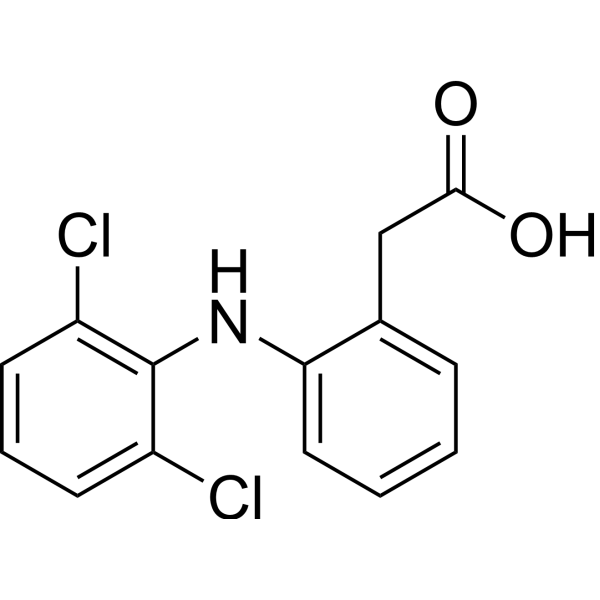
Diclofenac
Maximum Cited Publications
24 Publications Verification
|
COX
Apoptosis
|
Inflammation/Immunology
Cancer
|
|
Diclofenac is a potent and nonselective anti-inflammatory agent, acts as a COX inhibitor, with IC50s of 4 and 1.3 nM for human COX-1 and COX-2 in CHO cells , and 5.1 and 0.84 μM for ovine COX-1 and COX-2, respectively . Diclofenac induces apoptosis of neural stem cells (NSCs) via the activation of the caspase cascade .
|
-
-
- HY-B0253
-
|
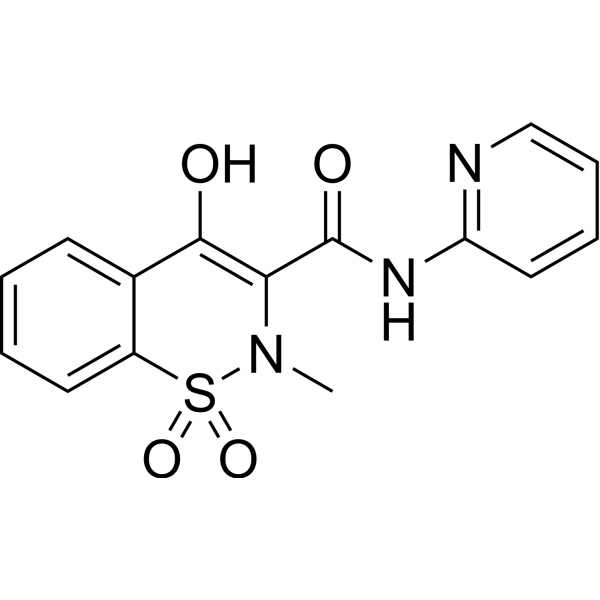
CP-16171
|
COX
|
Inflammation/Immunology
Cancer
|
|
Piroxicam (CP-16171) is a non-steroidal anti-inflammatory drugs, acts as a COX inhibitor, with IC50s of 47, 25 μM for human monocyte COX-1 and COX-2, respectively.
|
-
-
- HY-111310
-
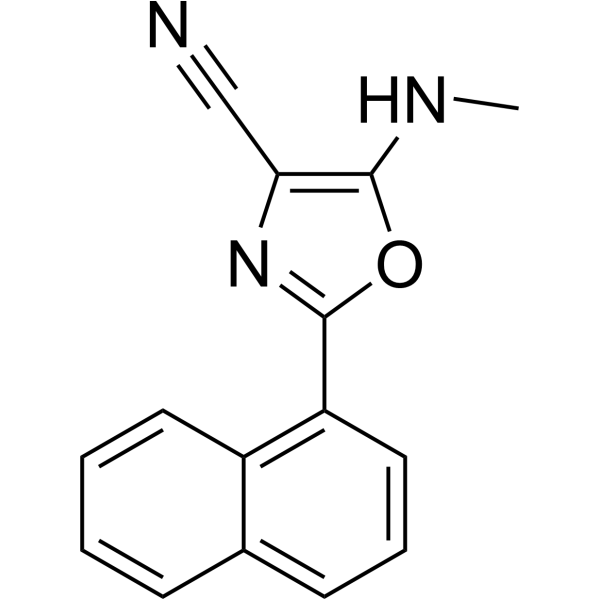
ML351
2 Publications Verification
|
Lipoxygenase
|
Neurological Disease
Metabolic Disease
|
|
ML351 is a potent and highly specific 15-LOX-1 inhibitor with an IC50 of 200 nM. ML351 shows excellent selectivity (>250-fold) versus the related isozymes, 5-LOX, platelet 12-LOX, 15-LOX-2, ovine COX-1, and human COX-2 . ML351 prevents dysglycemia and reduces β-cell oxidative stress in nonobese diabetic mouse model of T1D .
|
-
-
- HY-15038
-
|
|
COX
Apoptosis
|
Inflammation/Immunology
Cancer
|
|
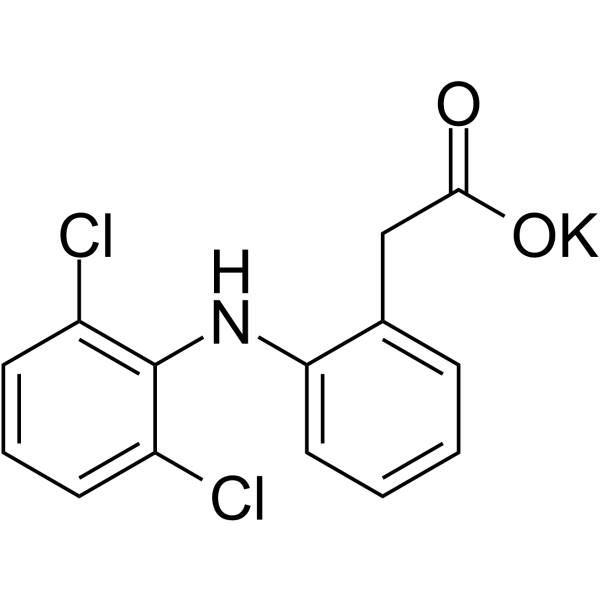
Diclofenac potassium is a potent and nonselective anti-inflammatory agent, acts as a COX inhibitor, with IC50s of 4 and 1.3 nM for human COX-1 and COX-2 in CHO cells , and 5.1 and 0.84 μM for ovine COX-1 and COX-2, respectively . Diclofenac potassium induces apoptosis of neural stem cells (NSCs) via the activation of the caspase cascade .
|
-
-
- HY-17372
-
|
MK 966
|
COX
|
Inflammation/Immunology
Cancer
|
|
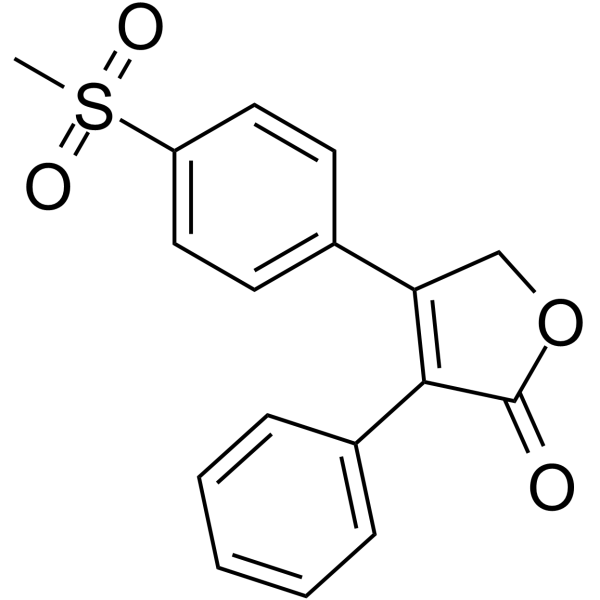
Rofecoxib is a potent, specific and orally active COX-2 inhibitor, with IC50s of 26 and 18 nM for human COX-2 in human osteosarcoma cells and Chinese hamster ovary cells, with a 1000-fold selectivity for COX-2 over human COX-1 (IC50 > 50 μM in U937 cells and > 15 μM in Chinese hamster ovary cells).
|
-
-
- HY-B0808
-
|
Oxaprozinum; Wy21743
|
COX
NF-κB
Akt
IKK
Apoptosis
|
Inflammation/Immunology
Cancer
|
|
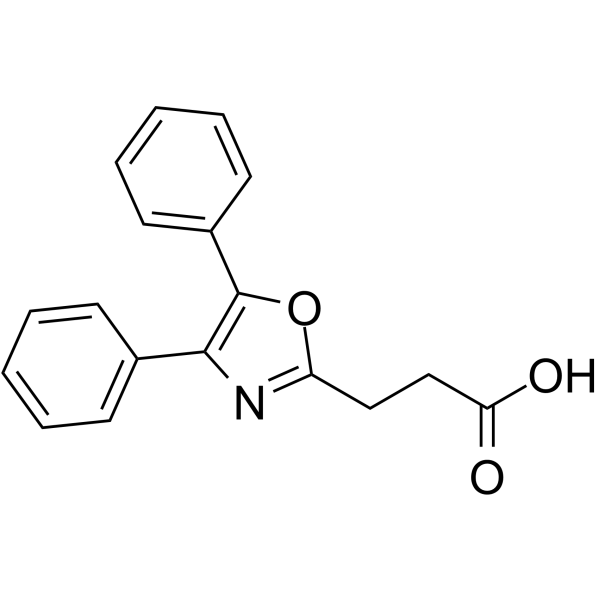
Oxaprozin is an orally active and potent COX inhibitor, with IC50 values of 2.2 μM for human platelet COX-1 and and 36 μM for IL-1-stimulated human synovial cell COX-2, respectively. Oxaprozin also inhibits the activation of NF-κB. Oxaprozin induces cell apoptosis. Oxaprozin shows anti-inflammatory activity. Oxaprozin-mediated inhibition of the Akt/IKK/NF-κB pathway contributes to its anti-inflammatory properties .
|
-
-
- HY-N0481
-
|
|
COX
TNF Receptor
NO Synthase
Interleukin Related
NF-κB
Apoptosis
p38 MAPK
JNK
ERK
Keap1-Nrf2
RANKL/RANK
|
Neurological Disease
Inflammation/Immunology
Cancer
|
|
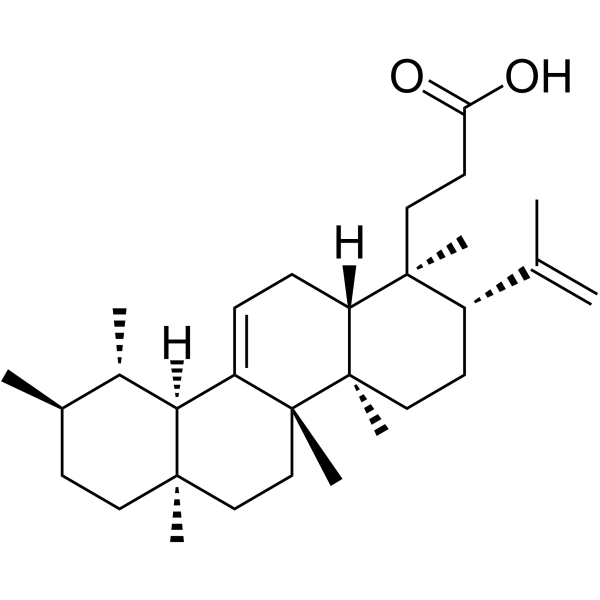
Roburic acid acts as an anti-inflammatory, anti-tumor and osteoclastogenesis inhibitor, with a Ki of 7.066 μM against human TNF, an IC50 of 9 μM against human COX-2, and an IC50 of 5 μM against ovine COX-1. Roburic acid reduces the production of inflammatory mediators such as NO and IL-6 in macrophages by inhibiting the NF-κB and MAPK (p38/JNK) pathways. By competitively inhibiting the TNF-TNF-R1 interaction, Roburic acid blocks the downstream NF-κB signaling pathway, thereby inducing cell cycle arrest and apoptosis in cancer cells. Roburic acid specifically inhibits osteoclastogenesis and bone resorption by suppressing the RANKL/TRAF6/NF-κB/NFATc1 axis. Roburic acid can be used in research related to osteolytic diseases such as osteoporosis, colorectal cancer and inflammatory diseases .
|
-
-
- HY-15037
-
|
GP 45840
|
COX
Apoptosis
|
Inflammation/Immunology
Cancer
|
|
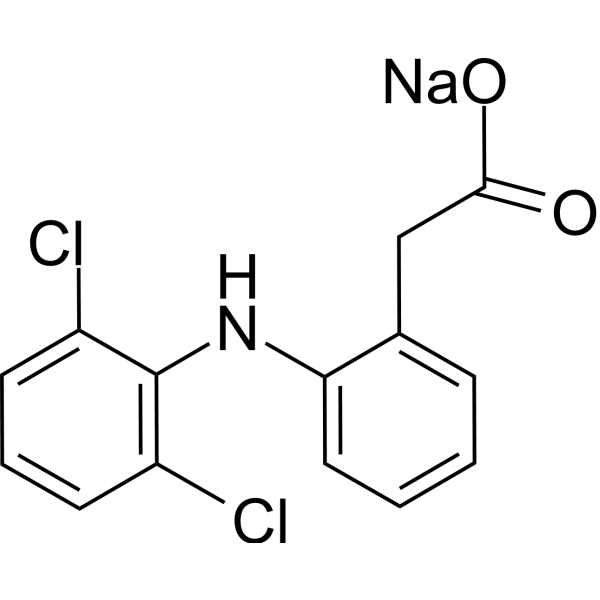
Diclofenac Sodium (GP 45840) is a potent and nonselective anti-inflammatory agent, acts as a COX inhibitor, with IC50s of 4 and 1.3 nM for human COX-1 and COX-2 in CHO cells , and 5.1 and 0.84 μM for ovine COX-1 and COX-2, respectively . Diclofenac Sodium induces apoptosis of neural stem cells (NSCs) via the activation of the caspase cascade .
|
-
-
- HY-15321
-
|
MK-0663; L-791456
|
COX
|
Inflammation/Immunology
Cancer
|
|
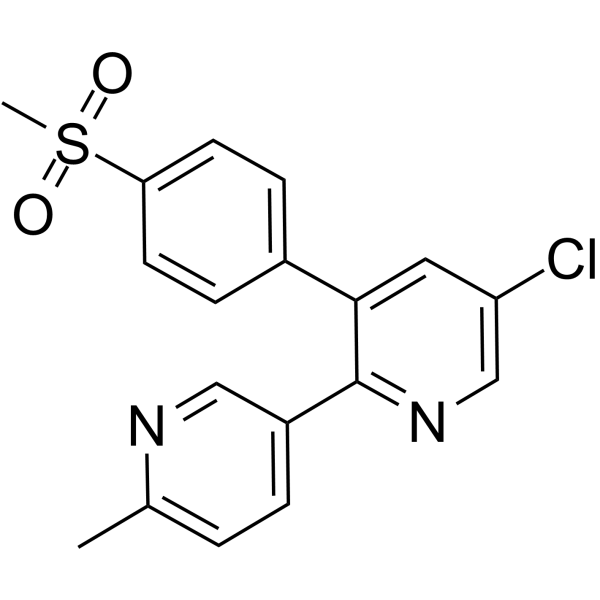
Etoricoxib (MK-0663) is a non steroidal anti-inflammatory agent, acting as a selective and orally active COX-2 inhibitor. Etoricoxib can cross the blood-brain barrier, with IC50s of 1.1 μM and 116 μM for COX-2 and COX-1 in human whole blood .
|
-
-
- HY-15036A
-
|
|
COX
Apoptosis
|
Inflammation/Immunology
Cancer
|
|
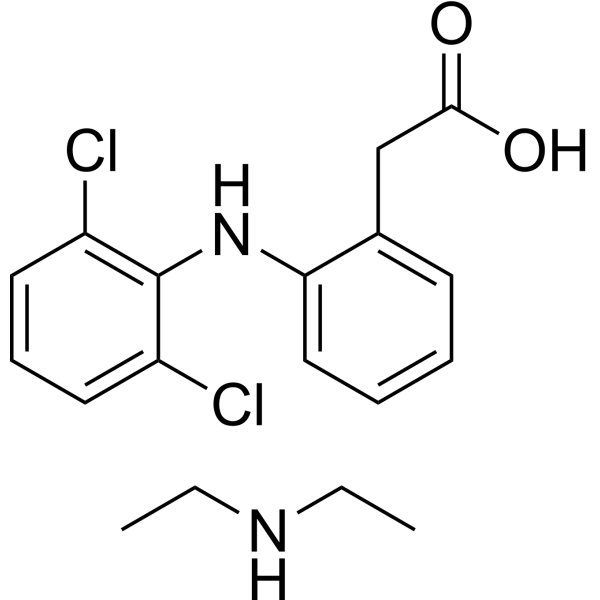
Diclofenac diethylamine is a potent and nonselective anti-inflammatory agent, acts as a COX inhibitor, with IC50s of 4 and 1.3 nM for human COX-1 and COX-2 in CHO cells , and 5.1 and 0.84 μM for ovine COX-1 and COX-2, respectively . Diclofenac diethylamine induces apoptosis of neural stem cells (NSCs) via the activation of the caspase cascade .
|
-
-
- HY-15036S
-
|
|
Isotope-Labeled Compounds
COX
Apoptosis
|
Inflammation/Immunology
|
|
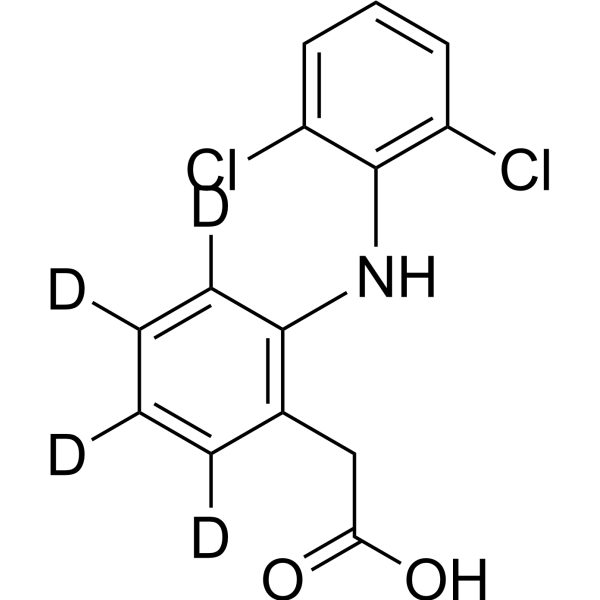
Diclofenac-d4 is the deuterium labeled Diclofenac. Diclofenac is a potent and nonselective anti-inflammatory agent, acts as a COX inhibitor, with IC50s of 4 and 1.3 nM for human COX-1 and COX-2 in CHO cells , and 5.1 and 0.84 μM for ovine COX-1 and COX-2, respectively . Diclofenac induces apoptosis of neural stem cells (NSCs) via the activation of the caspase cascade .
|
-
-
- HY-B1799
-
|
|
COX
|
Inflammation/Immunology
Cancer
|
|
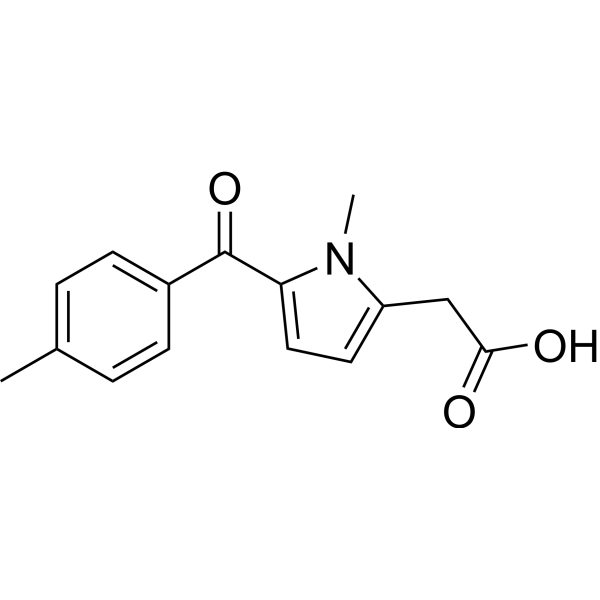
Tolmetin is an orally active and potent COX inhibitor with IC50s of 0.35 μM and 0.82 μM human COX-1 and COX-2, respectively. Tolmetin is a non-steroidal anti-inflammatory drug (NSAID) .
|
-
-
- HY-W012817
-
|
|
Environmental Pollutants
COX
|
Inflammation/Immunology
|
|
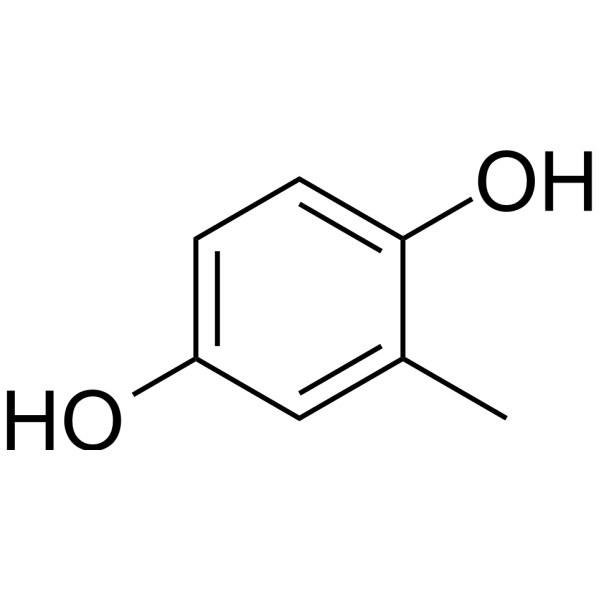
Methylhydroquinone is an orally active COX inhibitor with IC50s of 480.7 μM and 52.2 μM for ovine COX-1 and human recombinant COX-2, respectively. Methylhydroquinone has potential DNA damaging effects: 1) inhibiting COX-1 to reduce prostaglandin synthesis and exert anti-inflammatory activity; 2) inducing DNA single-strand breaks. Methylhydroquinone exerts its effects by competitively binding to the active sites of COX-1 (such as Tyr385, Met522) and non-covalent interactions .
|
-
-
- HY-15037R
-
|
GP 45840 (Standard)
|
Reference Standards
COX
Apoptosis
|
Inflammation/Immunology
Cancer
|
|
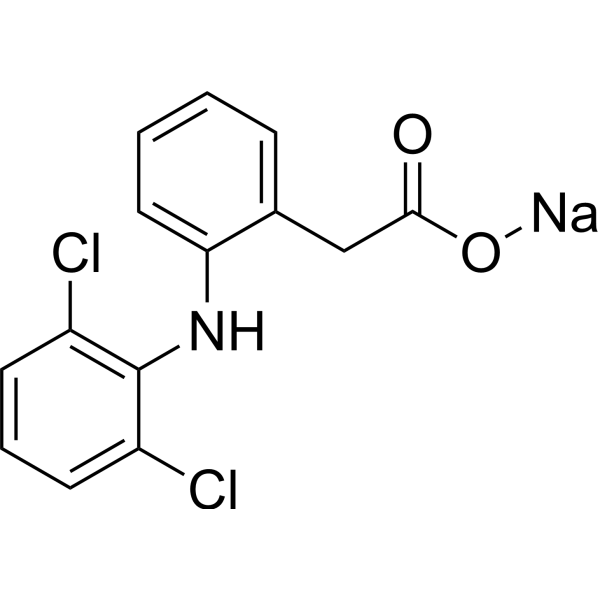
Diclofenac (Sodium) (Standard) is the analytical standard of Diclofenac (Sodium). This product is intended for research and analytical applications. Diclofenac Sodium (GP 45840) is a potent and nonselective anti-inflammatory agent, acts as a COX inhibitor, with IC50s of 4 and 1.3 nM for human COX-1 and COX-2 in CHO cells , and 5.1 and 0.84 μM for ovine COX-1 and COX-2, respectively . Diclofenac Sodium induces apoptosis of neural stem cells (NSCs) via the activation of the caspase cascade .
|
-
-
- HY-10439
-
|
|
PGE synthase
|
Inflammation/Immunology
|
|
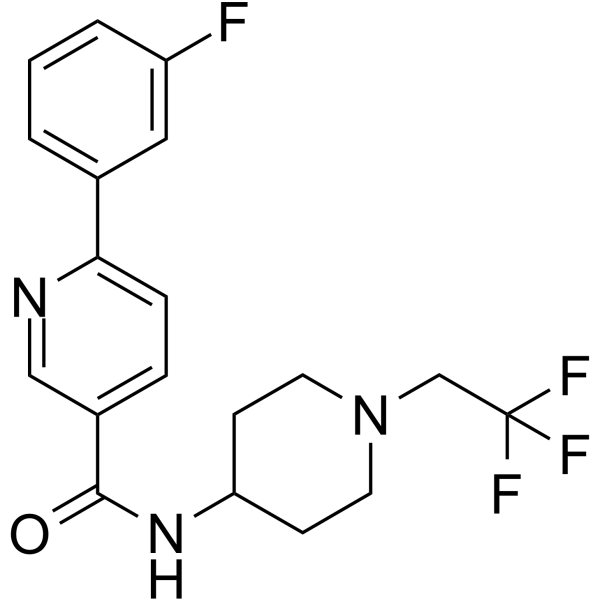
HPGDS inhibitor 1 is a potent, selective and orally active Hematopoietic Prostaglandin D Synthase (HPGDS) inhibitor with an IC50s of 0.6 nM and 32 nM in enzyme and cellular assays, respectively. HPGDS inhibitor 1 does not inhibit human L-PGDS, mPGES, COX-1, COX-2, or 5-LOX .
|
-
-
- HY-14837
-
|
Enisamium iodide
|
Influenza Virus
SARS-CoV
|
Infection
|
|
Amizon is an orally effective antiviral and anti-inflammatory agent. Amizon inhibits influenza virus replication and restricts viral RNA synthesis. Amizon reduces the mRNA expression of COX-1, COX-2, NF-κB, TGF1β, IL-1 and IL-6, and stimulates the secretion and mRNA expression of IL-10. Amizon inhibits the oxidative activity of macrophages and possesses antioxidant and free radical-scavenging activities. Amizon is applicable to research related to influenza and acute respiratory viral infections .
|
-

-
- HY-B2218D
-
|
Magnesium dihydroxide, 99%(KT)
|
Environmental Pollutants
Bacterial
|
Infection
Inflammation/Immunology
|
|
Magnesium hydroxide (Magnesium dihydroxide), 99%(KT) is an orally effective antacid. Magnesium hydroxide, 99%(KT) can form a local strongly alkaline microenvironment, reduce ATP production by consuming H +, and hydrolyze cellular phospholipids to disrupt the cellular integrity of microorganisms, thus exhibiting antibacterial activity. Magnesium hydroxide, 99%(KT) downregulates the generation of inflammatory macrophages to alleviate inflammatory responses. Magnesium hydroxide, 99%(KT) can be used in research related to acid peptic diseases and chronic wound infections .
|
-

-
- HY-108259
-
|
|
PGE synthase
|
Inflammation/Immunology
|
|
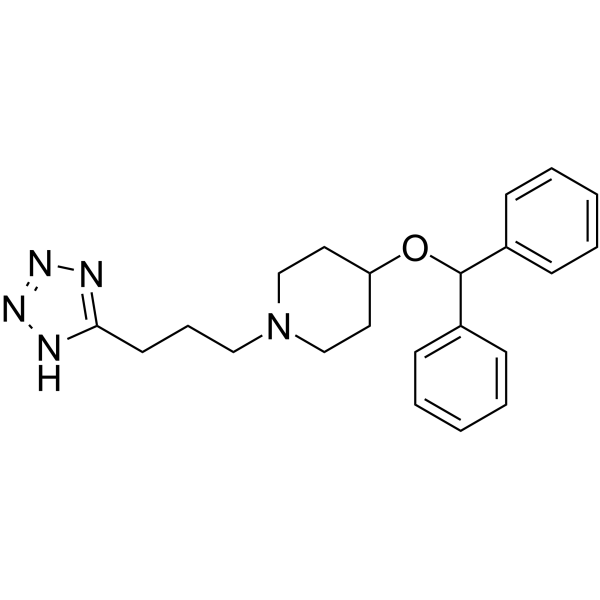
HQL-79, a potent, selective and orally active human hematopoietic prostaglandin D synthase (H-PGDS) inhibitor, highly selectively inhibits the synthesis of PGD2, and acts as an anti-allergic agent, with a Kd of 0.8 μM and an IC50 of 6 μM. Shows no obvious effect on COX-1, COX-2, m-PGES, or L-PGDS .
|
-
-
- HY-139589
-
|
ISC-27864; GRC-27864
|
PGE synthase
COX
Collagen
|
Neurological Disease
Inflammation/Immunology
|
|
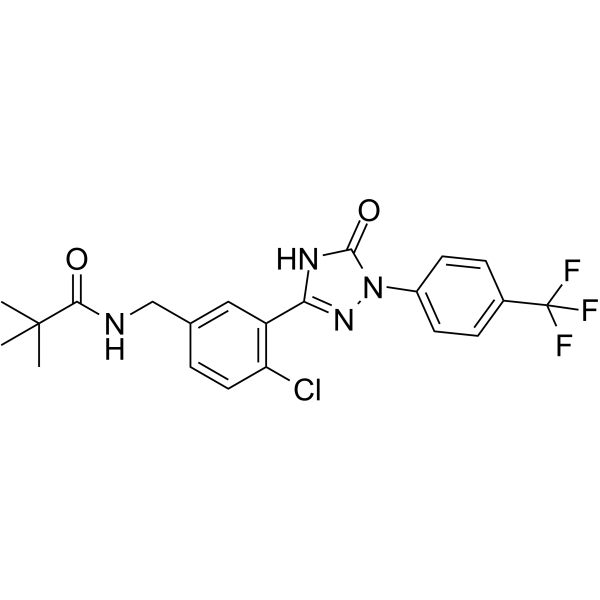
Zaloglanstat (ISC-27864; GRC-27864) is a selective, orally active microsomal mPGES-1 inhibitor. Zaloglanstat has an IC50 of 5 nM for human mPGES-1 without significant inhibitory effect on COX-1/2 (IC50 >10 μM). Zaloglanstat blocks the conversion of arachidonic acid metabolite prostaglandin PGH2 to prostaglandin PGE2, thereby inhibiting inflammation-related PGE2 overproduction and reducing inflammatory responses and pain. Zaloglanstat inhibits IL-1β-induced PGE2 release in A549 cells and human synovial fibroblasts in vitro. Zaloglanstat inhibits PGE2 release in pig and dog whole blood with IC50s ??of 161 nM and 154 nM, respectively. Zaloglanstat can be used in the study of asthma, osteoarthritis, and neurodegenerative diseases .
|
-
-
- HY-15036R
-
|
|
Reference Standards
COX
Apoptosis
|
Inflammation/Immunology
Cancer
|
|
Diclofenac (Standard) is the analytical standard of Diclofenac. This product is intended for research and analytical applications. Diclofenac is a potent and nonselective anti-inflammatory agent, acts as a COX inhibitor, with IC50s of 4 and 1.3 nM for human COX-1 and COX-2 in CHO cells , and 5.1 and 0.84 μM for ovine COX-1 and COX-2, respectively . Diclofenac induces apoptosis of neural stem cells (NSCs) via the activation of the caspase cascade .
|
-

-
- HY-103387
-
DuP-697
1 Publications Verification
|
COX
Apoptosis
|
Inflammation/Immunology
Cancer
|
|
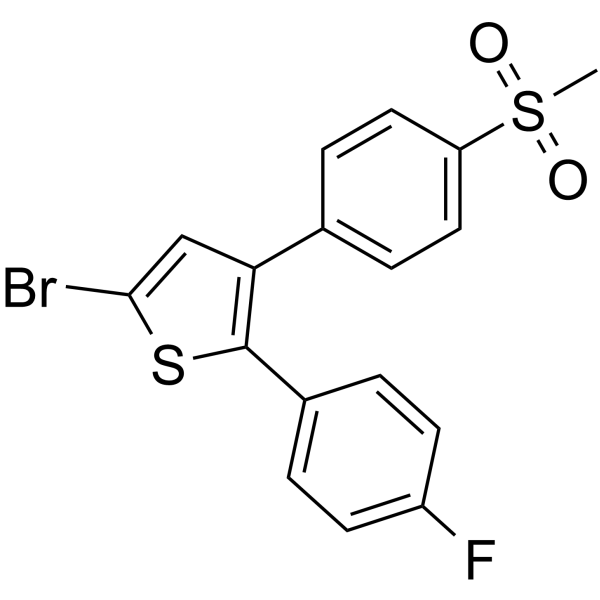
DuP-697 is a member of the vicinal diaryl heterocycles and a potent, irreversible, selective and orally active COX-2 inhibitor (IC50 of 10 nM and 800 nM for human COX-2 and COX-1, respectively). DuP-697 exerts antiproliferative (IC50 of 42.8 nM), antiangiogenic and apoptotic effects on HT29 colorectal cancer cells. DuP-697 inhibits prostaglandin synthesis and has anti-inflammatory, anticancer and antipyretic effects .
|
-
-
- HY-15036S1
-
|
|
Isotope-Labeled Compounds
COX
Apoptosis
|
Inflammation/Immunology
|
|
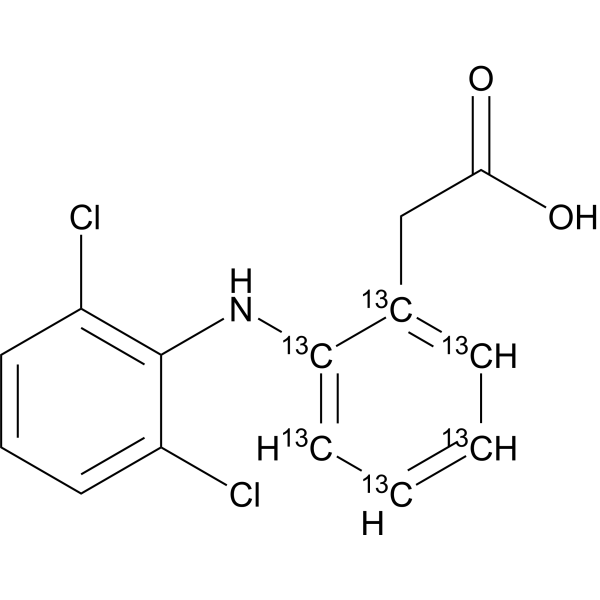
Diclofenac- 13C6 is the 13C6 labeled Diclofenac. Diclofenac is a potent and nonselective anti-inflammatory agent, acts as a COX inhibitor, with IC50s of 4 and 1.3 nM for human COX-1 and COX-2 in CHO cells, and 5.1 and 0.84 μM for ovine COX-1 and COX-2, respectively. Diclofenac induces apoptosis of neural stem cells (NSCs) via the activation of the caspase cascade.
|
-
-
- HY-B1489
-
|
|
COX
|
Inflammation/Immunology
Cancer
|
|
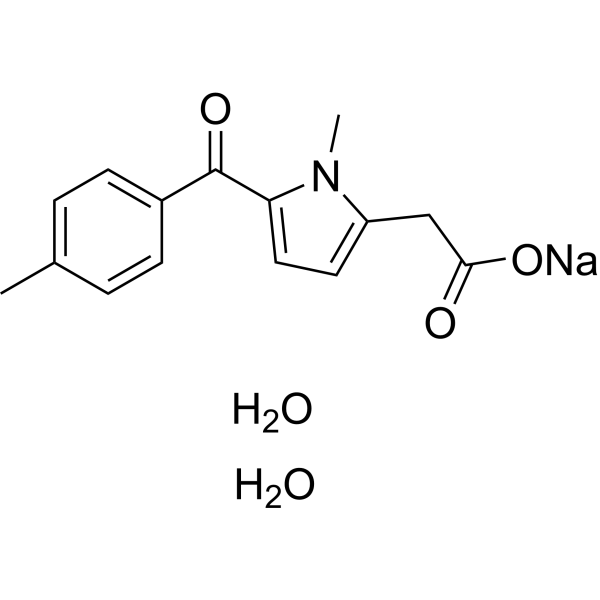
Tolmetin sodium dihydrate is an orally active and potent COX inhibitor with IC50s of 0.35 μM and 0.82 μM human COX-1 and COX-2, respectively. Tolmetin sodium dihydrate is a non-steroidal anti-inflammatory drug (NSAID) .
|
-
-
- HY-W012126
-
|
2,6-Dichloro-N-phenylaniline
|
Bacterial
|
Infection
Cancer
|
|
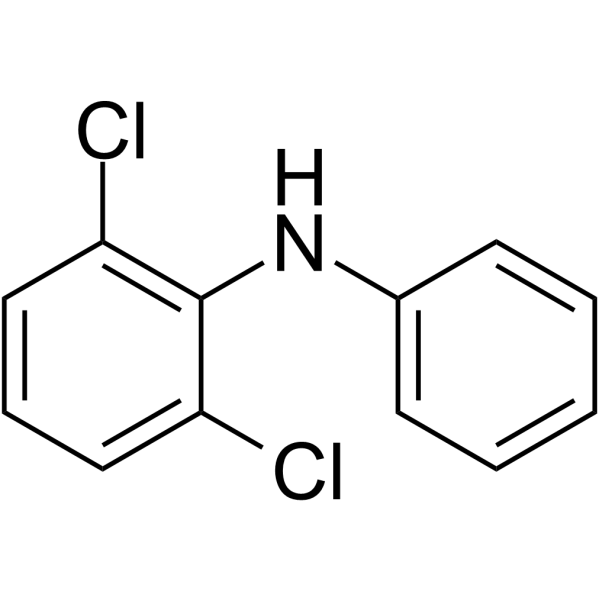
2,6-Dichlorodiphenylamine is an analogue of Diclofenac Sodium (HY-15037) and has anti-Candida albicans activity. Diclofenac Sodium is a potent and nonselective anti-inflammatory agent, acts as a COX inhibitor, with IC50s of 4 and 1.3 nM for human COX-1 and COX-2 in CHO cells.
|
-
-
- HY-15321S
-
|
MK-0663-d4; L-791456-d4
|
COX
|
Others
|
|
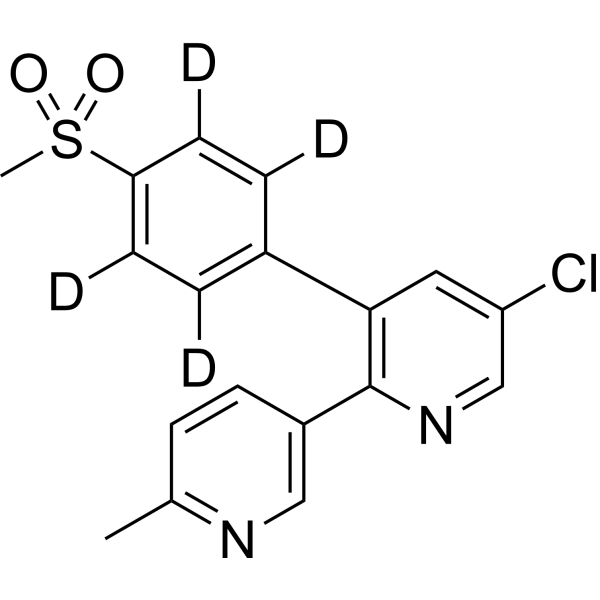
Etoricoxib-d4 (MK-0663-d4) is a deuterium labeled Etoricoxib. Etoricoxib is a non steroidal anti-inflammatory agent, acting as a selective and orally active COX-2 inhibitor, with IC50s of 1.1 μM and 116 μM for COX-2 and COX-1 in human whole blood.
|
-
-
- HY-15037S2
-
|
GP 45840-13C6
|
Isotope-Labeled Compounds
COX
Apoptosis
|
Inflammation/Immunology
|
|
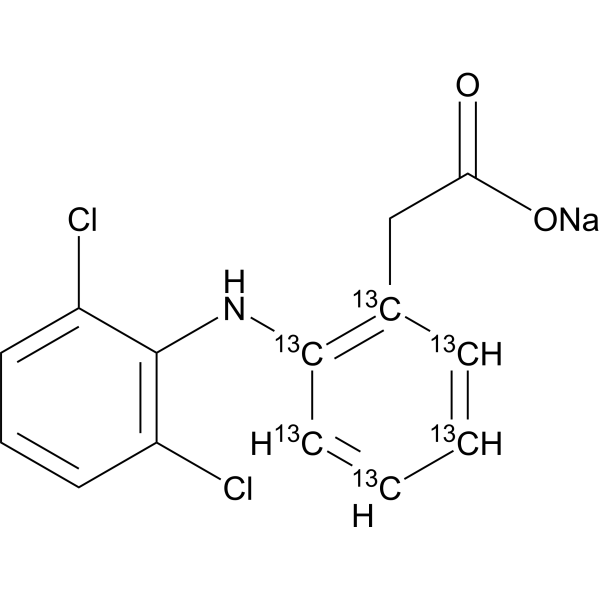
Diclofenac- 13C6 (Sodium) is the 13C6 labeled Diclofenac (Sodium). Diclofenac Sodium (GP 45840) is a potent and nonselective anti-inflammatory agent, acts as a COX inhibitor, with IC50s of 4 and 1.3 nM for human COX-1 and COX-2 in CHO cells, and 5.1 and 0.84 μM for ovine COX-1 and COX-2, respectively. Diclofenac Sodium induces apoptosis of neural stem cells (NSCs) via the activation of the caspase cascade.
|
-
-
- HY-15037S1
-
|
|
COX
Apoptosis
|
Inflammation/Immunology
|
|
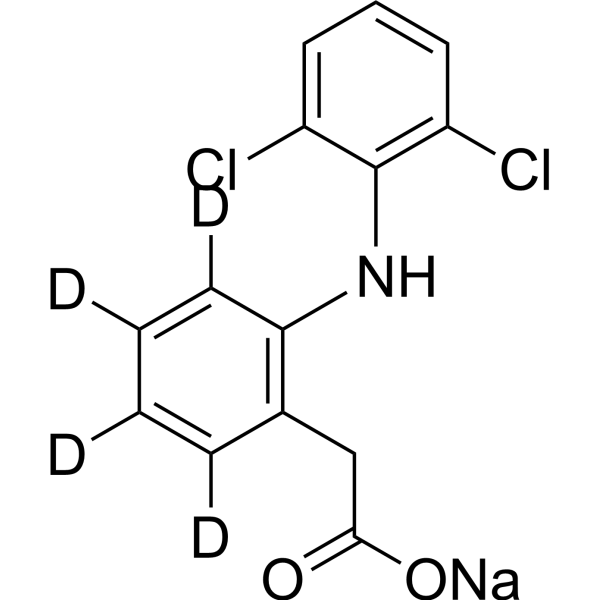
Diclofenac-d4 (sodium) is the deuterium labeled Diclofenac sodium. Diclofenac Sodium (GP 45840) is a potent and nonselective anti-inflammatory agent, acts as a COX inhibitor, with IC50s of 4 and 1.3 nM for human COX-1 and COX-2 in CHO cells , and 5.1 and 0.84 μM for ovine COX-1 and COX-2, respectively . Diclofenac Sodium induces apoptosis of neural stem cells (NSCs) via the activation of the caspase cascade .
|
-
-
- HY-B0227S
-
|
RP-19583-d3
|
COX
Apoptosis
|
Inflammation/Immunology
|
|
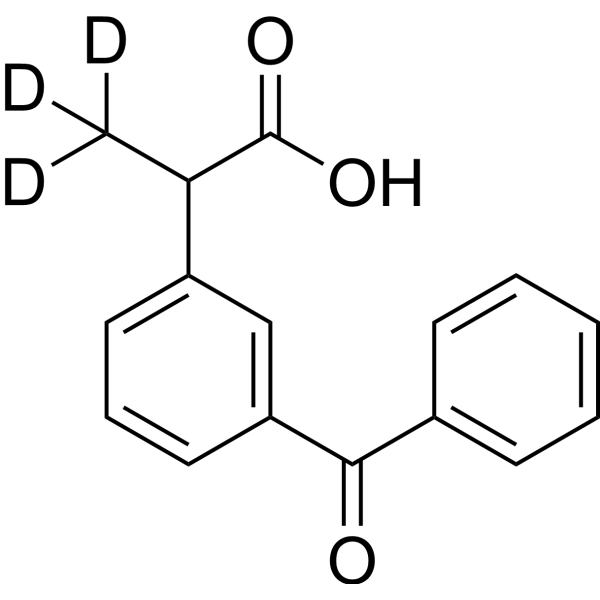
Ketoprofen-d3 is the deuterium labeled Ketoprofen. Ketoprofen (RP-19583) is a non-steroidal antiinflammatory agent, acting as a potent inhibitor of COX, with IC50s of 2 nM and 26 nM for COX-1 and COX-2 in human blood monocytes, respectively .
|
-
-
- HY-14397S
-
|
Indometacin-d4
|
Isotope-Labeled Compounds
COX
Autophagy
|
Inflammation/Immunology
Cancer
|
|
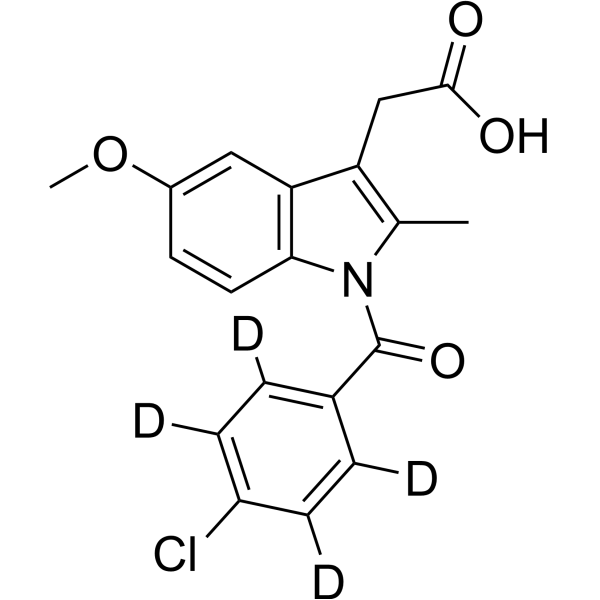
Indomethacin-d4 (Indometacin-d4) is a deuterium labeled Indomethacin. Indomethacin is a potent, blood-brain permeable and nonselective inhibitor of COX1 and COX2, with IC50s of 18 nM and 26 nM for human COX-1 and COX-2, respectively, in CHO cells . Indomethacin disrupts autophagic flux by disturbing the normal functioning of lysosomes .
|
-
-
- HY-19212
-
|
|
COX
Lipoxygenase
|
Inflammation/Immunology
|
|
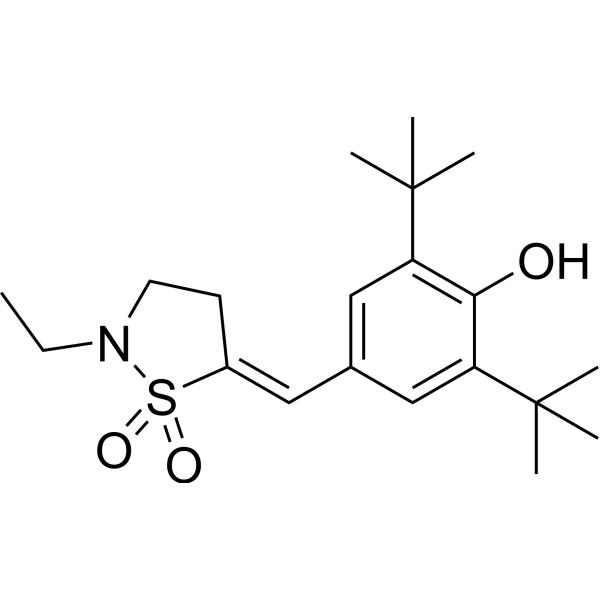
S-2474 is an inhibitor of COX-2 and 5-lipoxygenase (5-LO), with IC50s of 11 nM and 27 μM for COX-2 and COX-1 in human intact cells, and used as a nonsteroidal anti-inflammatory agent.
|
-
-
- HY-B0253R
-
|
CP-16171 (Standard)
|
Reference Standards
COX
|
Inflammation/Immunology
Cancer
|
|
Piroxicam (Standard) is the analytical standard of Piroxicam. This product is intended for research and analytical applications. Piroxicam (CP-16171) is a non-steroidal anti-inflammatory drugs, acts as a COX inhibitor, with IC50s of 47, 25 μM for human monocyte COX-1 and COX-2, respectively.
|
-

-
- HY-123823
-
|
NCX 4016
|
COX
Apoptosis
|
Cancer
|
|
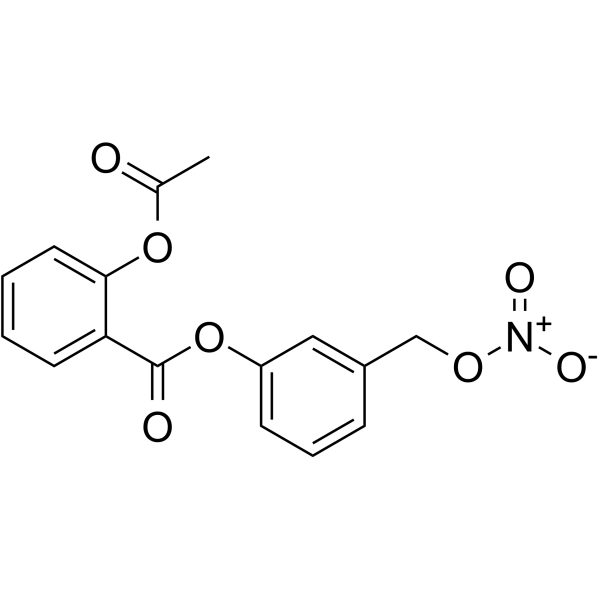
Nitroaspirin (NCX 4016) is a nitric oxide (NO) donor and a nitro-derivative of Aspirin, which combines with Nitroaspirin to inhibit cyclooxygenase. Nitroaspirin (NCX 4016) has antithrombotic and anti-platelet properties and acts as a direct and irreversible inhibitor of COX-1. Nitroaspirin (NCX 4016) causes significant induction of cell cycle arrest and apoptosis in Cisplatin-resistant human ovarian cancer cells via down-regulation of EGFR/PI3K/STAT3 signaling and modulation of Bcl-2 family proteins .
|
-
-
- HY-100516
-
|
UR-8880
|
COX
Cytochrome P450
|
Inflammation/Immunology
|
|
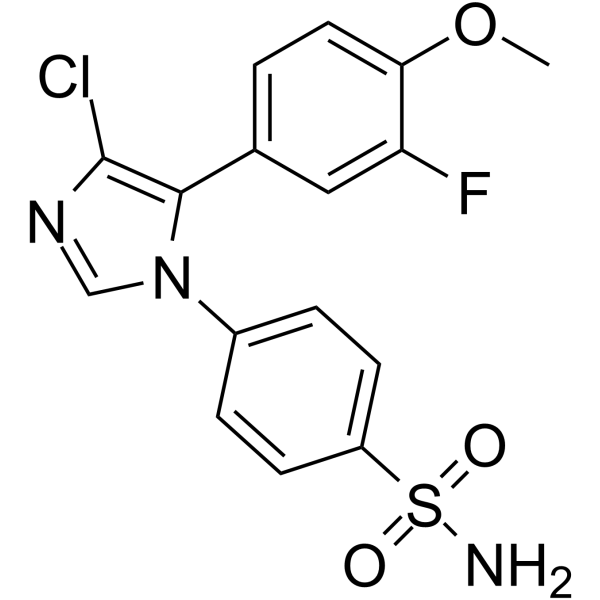
Cimicoxib (UR-8880) is an orally active, blood-brain barrier-permeable COX-2 inhibitor that also exerts targeted inhibition on CYP2D15. It has an IC50 of 66 nM against hCOX-2, an IC50 of 1.6 μM against canine CYP2D15, and an IC50 of 0.056 μM against feline CYP2D15. By inhibiting the COX-2 pathway to reduce the production of thromboxane B2 and prostaglandin E2, Cimicoxib exerts antipyretic, anti-inflammatory and analgesic effects. Cimicoxib is metabolized by CYP2D15 to form demethyl-cimicoxib, undergoes glucuronidation via UDP-glucuronosyltransferases, and exhibits biphasic elimination kinetics in beagle dogs. Cimicoxib is widely used in studies of inflammatory diseases, osteoarthritis, and perioperative pain associated with orthopedic or soft tissue surgeries .
|
-
-
- HY-169430
-
|
|
PGE synthase
|
|
|
AGU654 (Compound 44) is a selective mPGES-1 inhibitor with an IC50 of 2.9 nM against mPGES-1. AGU654 inhibits mPGES-1 to block the pathway converting arachidonic acid into prostaglandin E2 (PGE2) by COX-1/2, thereby alleviating inflammatory responses, pain, and fever. In activated human monocyte-derived macrophages and human whole blood models, AGU654 selectively suppresses bacterial exotoxin-induced PGE2 production while preserving the production of other prostaglandins. In guinea pig models, AGU654 significantly alleviates fever, inflammation, and inflammatory pain, exhibiting excellent anti-inflammatory, analgesic, and antipyretic effects. AGU654 holds promise as a strategy for studying inflammatory diseases and pain .
|
-

-
- HY-111274
-
|
Indometacin farnesil
|
COX
Autophagy
|
Inflammation/Immunology
|
|
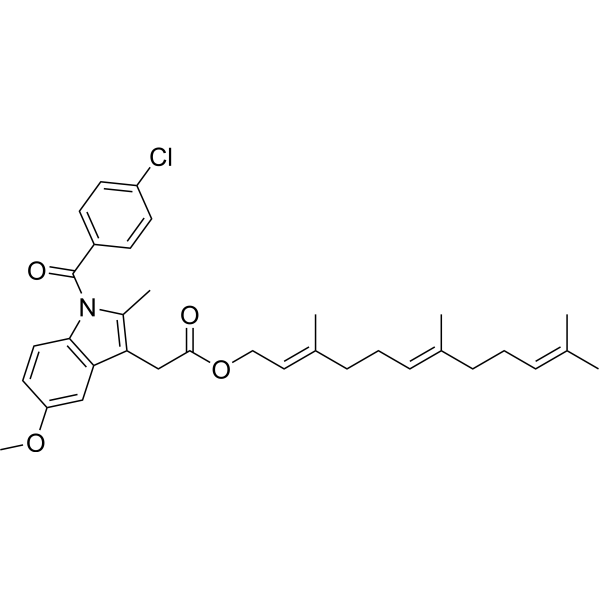
Indomethacin farnesil is an orally active proagent of Indomethacin. Indomethacin (Indometacin) is a potent, blood-brain permeable and nonselective inhibitor of COX1 and COX2, with IC50s of 18 nM and 26 nM for human COX-1 and COX-2, respectively, in CHO cells. Indomethacin disrupts autophagic flux by disturbing the normal functioning of lysosomes .
|
-
-
- HY-14397S1
-
|
|
COX
Autophagy
|
Inflammation/Immunology
Cancer
|
|
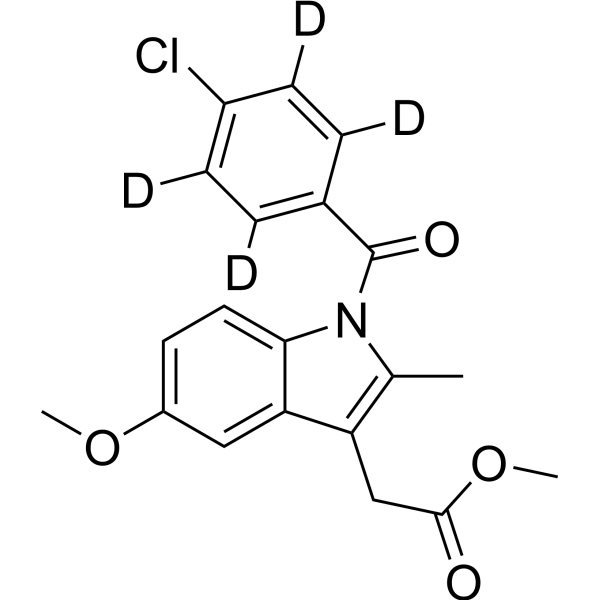
Indomethacin-d4 Methyl Ester is the deuterium labeled Indomethacin. Indomethacin (Indometacin) is a potent, blood-brain permeable and nonselective inhibitor of COX1 and COX2, with IC50s of 18 nM and 26 nM for human COX-1 and COX-2, respectively, in CHO cells . Indomethacin disrupts autophagic flux by disturbing the normal functioning of lysosomes .
|
-
-
- HY-15038R
-
|
|
Reference Standards
COX
Apoptosis
|
Inflammation/Immunology
Cancer
|
|
Diclofenac (potassium) (Standard) is the analytical standard of Diclofenac (potassium). This product is intended for research and analytical applications. Diclofenac potassium is a potent and nonselective anti-inflammatory agent, acts as a COX inhibitor, with IC50s of 4 and 1.3 nM for human COX-1 and COX-2 in CHO cells , and 5.1 and 0.84 μM for ovine COX-1 and COX-2, respectively . Diclofenac potassium induces apoptosis of neural stem cells (NSCs) via the activation of the caspase cascade .
|
-

-
- HY-15036AR
-
|
|
Reference Standards
COX
Apoptosis
|
Inflammation/Immunology
Cancer
|
|
Diclofenac (diethylamine) (Standard) is the analytical standard of Diclofenac (diethylamine). This product is intended for research and analytical applications. Diclofenac diethylamine is a potent and nonselective anti-inflammatory agent, acts as a COX inhibitor, with IC50s of 4 and 1.3 nM for human COX-1 and COX-2 in CHO cells , and 5.1 and 0.84 μM for ovine COX-1 and COX-2, respectively . Diclofenac diethylamine induces apoptosis of neural stem cells (NSCs) via the activation of the caspase cascade .
|
-

-
- HY-B0253S
-
|
CP-16171 d3
|
COX
|
Inflammation/Immunology
Cancer
|
|
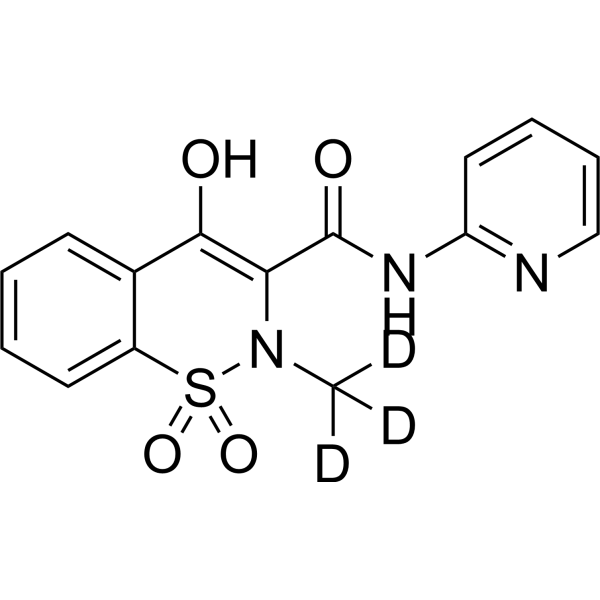
Piroxicam-d3 (CP-16171-d3) is deuterium labeled Piroxicam. Piroxicam is a non-steroidal anti-inflammatory drugs, acts as a COX inhibitor, with IC50s of 47, 25 μM for human monocyte COX-1 and COX-2, respectively .
|
-
-
- HY-15321R
-
|
MK-0663 (Standard); L-791456 (Standard)
|
Reference Standards
COX
|
Inflammation/Immunology
Cancer
|
|
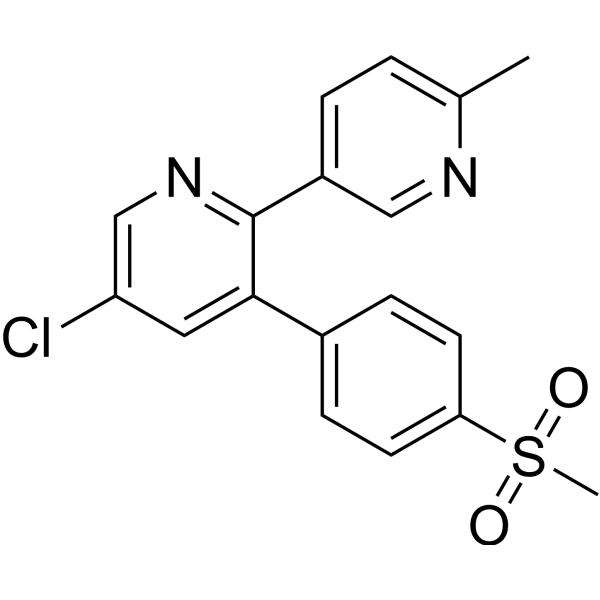
Etoricoxib (Standard) is the analytical standard of Etoricoxib. This product is intended for research and analytical applications. Etoricoxib (MK-0663) is a non steroidal anti-inflammatory agent, acting as a selective and orally active COX-2 inhibitor, with IC50s of 1.1 μM and 116 μM for COX-2 and COX-1 in human whole blood.
|
-
-
- HY-15321S2
-
|
MK-0663-d3; L-791456-d3
|
COX
|
Inflammation/Immunology
|
|
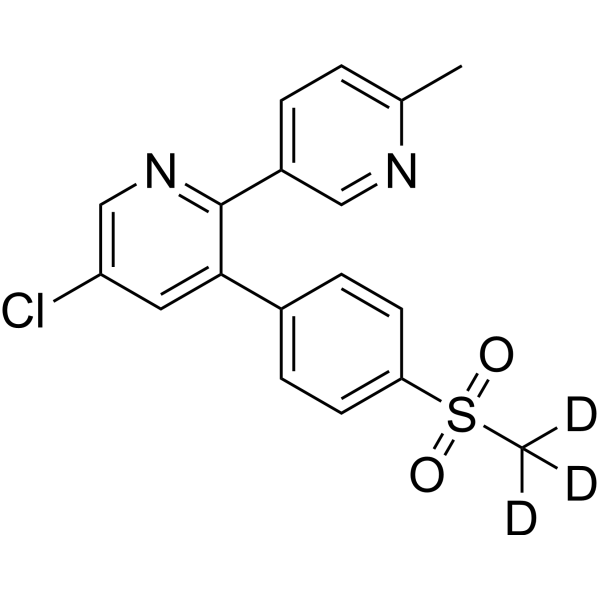
Etoricoxib-d3 is the deuterium labeled Etoricoxib . Etoricoxib (MK-0663) is a non steroidal anti-inflammatory agent, acting as a selective and orally active COX-2 inhibitor, with IC50s of 1.1 μM and 116 μM for COX-2 and COX-1 in human whole blood .
|
-
-
- HY-17372S
-
|
|
Isotope-Labeled Compounds
COX
|
Inflammation/Immunology
Cancer
|
|
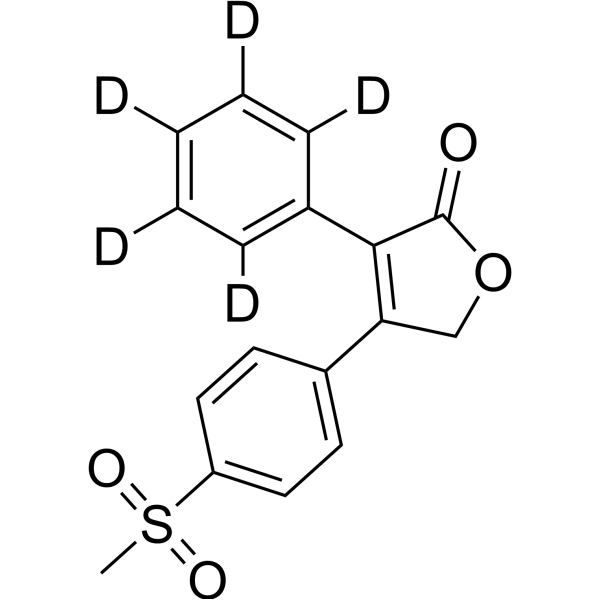
Rofecoxib-d5 is the deuterium labeled Rofecoxib. Rofecoxib is a potent, specific and orally active COX-2 inhibitor, with IC50s of 26 and 18 nM for human COX-2 in human osteosarcoma cells and Chinese hamster ovary cells, with a 1000-fold selectivity for COX-2 over human COX-1 (IC50 > 50 μM in U937 cells and > 15 μM in Chinese hamster ovary cells) .
|
-
-
- HY-N10009
-
|
|
NF-κB
TNF Receptor
COX
ERK
p38 MAPK
Sirtuin
|
Inflammation/Immunology
|
|
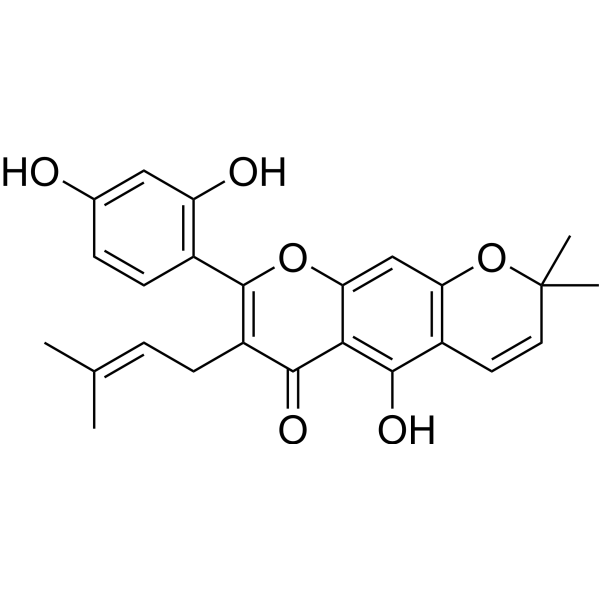
Cudraflavone B is a prenylated flavonoid with anti-inflammatory and anti-tumor properties. Cudraflavone B is also a dual inhibitor of COX-1 and COX-2. Cudraflavone B blocks the translocation of nuclear factor κB (NF-κB) from the cytoplasm to the nucleus in macrophages. Thus, Cudraflavone B inhibits tumor necrosis factor α (TNFα) gene expression and secretion. Cudraflavone B also triggers the mitochondrial apoptotic pathway, activates NF-κB, the MAPK p38, and ERK, and induced the expression of SIRT1. Thus Cudraflavone B inhibits the growth of human oral squamous cell carcinoma cells .
|
-
-
- HY-165587
-
|
|
Prostaglandin Receptor
|
Cardiovascular Disease
|
|
BM-573 is an orally active dual thromboxane A₂ (TXA₂) modulator with an IC50 of 1.3 nM. BM-573 possesses both thromboxane synthase (TxAS) inhibition and thromboxane receptor (TP) antagonistic effects. BM-573 can completely inhibit platelet aggregation induced by Arachidonic acid (HY-109590) or U-46619 (TXA₂ analogues). BM-573 completely blocks the generation of TXB₂ (the stable metabolite of TXA₂) in human platelets and does not inhibit cyclooxygenase (COX-1/COX-2), thus avoiding interference with other prostaglandin synthesis. BM-573 has an inhibitory effect on U-46619-induced contractions in rat gastric fundus smooth muscle (ED₅₀ = 4.2 μM), but has no effect on contractions caused by PGE₂, PGF₂α, or PGI₂. BM-573 can be used in the study of atherosclerosis, myocardial infarction, pulmonary hypertension and shock .
|
-

-
- HY-B0808S1
-
|
Oxaprozinum-d5; Wy21743-d5
|
Isotope-Labeled Compounds
COX
NF-κB
|
Inflammation/Immunology
Cancer
|
|
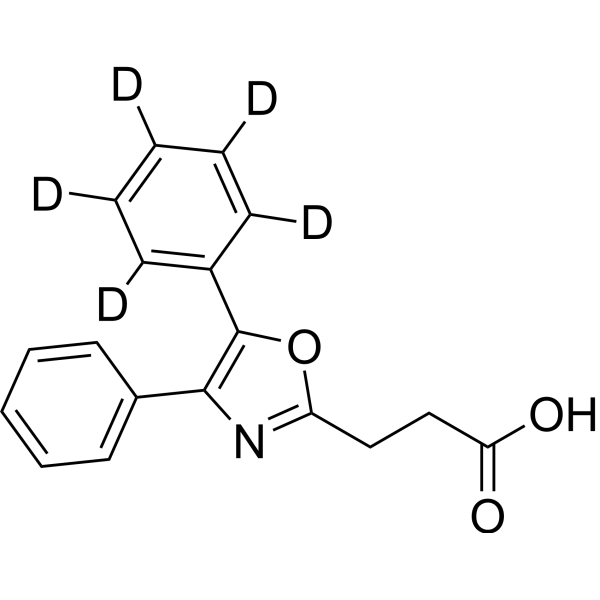
Oxaprozin-d5 is deuterium labeled Oxaprozin. Oxaprozin is an inhibitor of both COX-1 and COX-2 with IC50s of 2.2 μM and 36 μM for human platelet COX-1 and IL-1-stimulated human synovial cell COX-2, respectively. Oxaprozin also inhibits the activation of NF-κB.
|
-
-
- HY-W012817R
-
|
|
COX
Reference Standards
|
Others
|
|
Methylhydroquinone (Standard) is the analytical standard of Methylhydroquinone. This product is intended for research and analytical applications. Methylhydroquinone is an orally active COX inhibitor with IC50s of 480.7 μM and 52.2 μM for ovine COX-1 and human recombinant COX-2, respectively. Methylhydroquinone has potential DNA damaging effects: 1) inhibiting COX-1 to reduce prostaglandin synthesis and exert anti-inflammatory activity; 2) inducing DNA single-strand breaks. Methylhydroquinone exerts its effects by competitively binding to the active sites of COX-1 (such as Tyr385, Met522) and non-covalent interactions[1][2].
|
-

-
- HY-135081
-
|
N-4AIA
|
COX
|
Others
|
|
N-(4-acetamidophenyl)-indomethacin amide (N-4-AIA) is one of several aromatic amides of indomethacin reported to be potent and selective reversible inhibitors of COX-2.1 N-4-AIA inhibits human recombinant and ovine COX-2 with IC50 values of 0.12 and 0.625 μM, respectively. It is about 400 times less potent as an inhibitor of human recombinant COX-1 and 80 times less potent as an inhibitor of ovine COX-1 than ovine COX-2.
|
-

-
- HY-106093
-
|
|
COX
|
Inflammation/Immunology
|
|
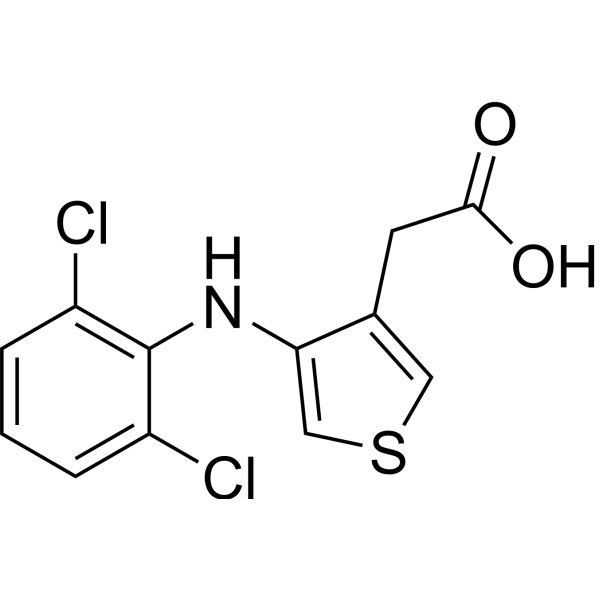
Eltenac, a non-steroidal anti-inflammatory drug (NSAID), is a COX inhibitor. Eltenac shows IC50 of 0.03 μM for both COX-1 and COX-2 in isolated human whole blood .
|
-
-
- HY-15037S
-
|
|
Isotope-Labeled Compounds
COX
Apoptosis
|
Inflammation/Immunology
|
|
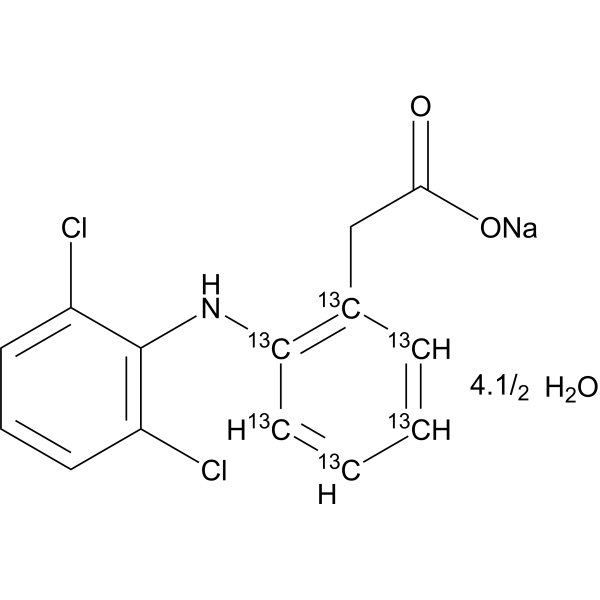
Diclofenac- 13C6 (sodium heminonahydrate) is the 13C-labeled Diclofenac Sodium. Diclofenac Sodium (GP 45840) is a potent and nonselective anti-inflammatory agent, acts as a COX inhibitor, with IC50s of 4 and 1.3 nM for human COX-1 and COX-2 in CHO cells , and 5.1 and 0.84 μM for ovine COX-1 and COX-2, respectively . Diclofenac Sodium induces apoptosis of neural stem cells (NSCs) via the activation of the caspase cascade .
|
-
-
- HY-B0253A
-
|
CP-16171 olamine
|
COX
|
Inflammation/Immunology
Cancer
|
|
Piroxicam olamine (CP-16171) is a non-steroidal anti-inflammatory drugs, acts as a COX inhibitor, with IC50s of 47, 25 μM for human monocyte COX-1 and COX-2, respectively .
|
-

- HY-B1799A
-
|
|
COX
|
Inflammation/Immunology
Cancer
|
|
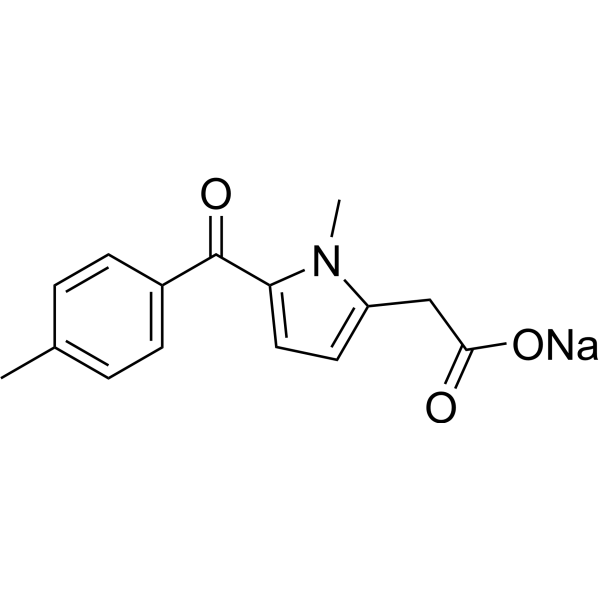
Tolmetin sodium is an orally active and potent COX inhibitor with IC50s of 0.35 μM and 0.82 μM human COX-1 and COX-2, respectively. Tolmetin sodium is a non-steroidal anti-inflammatory drug (NSAID) .
|
-
- HY-B0253S1
-
|
CP-16171-d4
|
Isotope-Labeled Compounds
COX
|
Inflammation/Immunology
Cancer
|
|
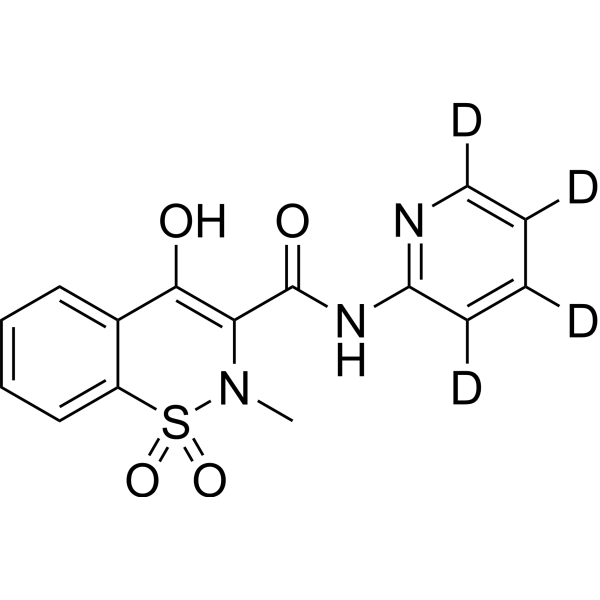
Piroxicam-d4 is the deuterium labeled Piroxicam. Piroxicam (CP-16171) is a non-steroidal anti-inflammatory drugs, acts as a COX inhibitor, with IC50s of 47, 25 μM for human monocyte COX-1 and COX-2, respectively.
|
-
- HY-B0227S1
-
|
RP-19583-d4
|
COX
Apoptosis
|
Inflammation/Immunology
|
|
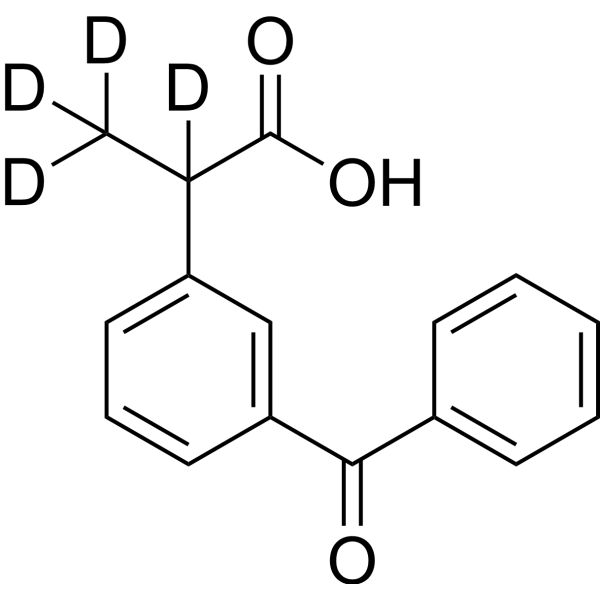
Ketoprofen-d4 is the deuterium labeled Ketoprofen. Ketoprofen (RP-19583) is a non-steroidal antiinflammatory agent, acting as a potent inhibitor of COX, with IC50s of 2 nM and 26 nM for COX-1 and COX-2 in human blood monocytes, respectively .
|
-
- HY-B1799S
-
|
|
Isotope-Labeled Compounds
COX
|
Inflammation/Immunology
Cancer
|
|
Tolmetin-d3 is the deuterium labeled Tolmetin. Tolmetin is an orally active and potent COX inhibitor with IC50s of 0.35 μM and 0.82 μM human COX-1 and COX-2, respectively. Tolmetin is a non-steroidal anti-inflammatory drug (NSAID) .
|
-

- HY-B0227S2
-
|
RP-19583-13C,d3
|
Isotope-Labeled Compounds
COX
Apoptosis
|
Inflammation/Immunology
|
|
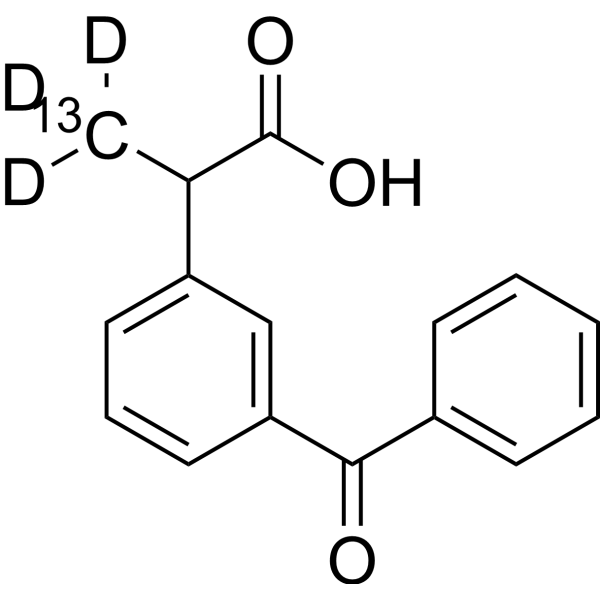
Ketoprofen- 13C,d3 is the 13C- and deuterium labeled Ketoprofen. Ketoprofen (RP-19583) is a non-steroidal antiinflammatory agent, acting as a potent inhibitor of COX, with IC50s of 2 nM and 26 nM for COX-1 and COX-2 in human blood monocytes, respectively .
|
-
- HY-B1799R
-
|
|
Reference Standards
COX
|
Inflammation/Immunology
Cancer
|
|
Tolmetin (Standard) is the analytical standard of Tolmetin. This product is intended for research and analytical applications. Tolmetin is an orally active and potent COX inhibitor with IC50s of 0.35 μM and 0.82 μM human COX-1 and COX-2, respectively. Tolmetin is a non-steroidal anti-inflammatory drug (NSAID) .
|
-

- HY-17372R
-
|
MK 966 (Standard)
|
Reference Standards
COX
|
Inflammation/Immunology
Cancer
|
|
Rofecoxib (Standard) is the analytical standard of Rofecoxib. This product is intended for research and analytical applications. Rofecoxib is a potent, specific and orally active COX-2 inhibitor, with IC50s of 26 and 18 nM for human COX-2 in human osteosarcoma cells and Chinese hamster ovary cells, with a 1000-fold selectivity for COX-2 over human COX-1 (IC50 > 50 μM in U937 cells and > 15 μM in Chinese hamster ovary cells).
|
-

- HY-B1489R
-
|
|
Reference Standards
COX
|
Inflammation/Immunology
Cancer
|
|
Tolmetin (sodium dihydrate) (Standard) is the analytical standard of Tolmetin (sodium dihydrate). This product is intended for research and analytical applications. Tolmetin sodium dihydrate is an orally active and potent COX inhibitor with IC50s of 0.35 μM and 0.82 μM human COX-1 and COX-2, respectively. Tolmetin sodium dihydrate is a non-steroidal anti-inflammatory drug (NSAID) .
|
-

- HY-15321S1
-
|
MK-0663-13C,d3; L-791456-13C,d3
|
Isotope-Labeled Compounds
COX
|
Inflammation/Immunology
Cancer
|
|
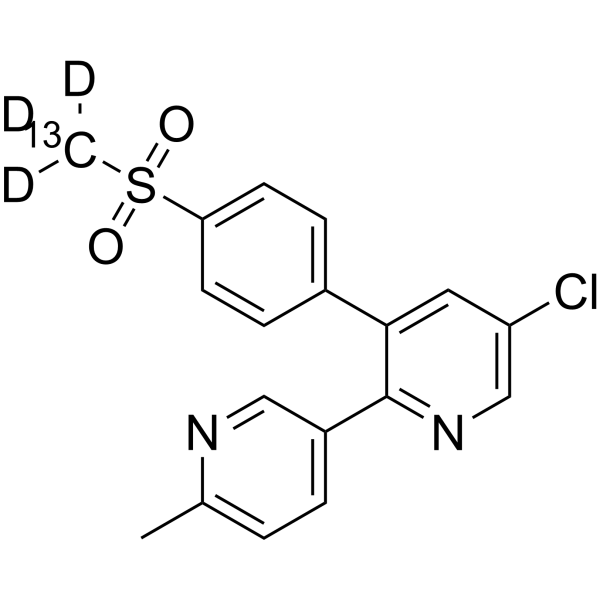
Etoricoxib- 13C,d3 is the 13C- and deuterium labeled Etoricoxib. Etoricoxib (MK-0663) is a non steroidal anti-inflammatory agent, acting as a selective and orally active COX-2 inhibitor, with IC50s of 1.1 μM and 116 μM for COX-2 and COX-1 in human whole blood.
|
-
- HY-B0808A
-
|
Oxaprozinum potassium; Wy21743 potassium
|
COX
NF-κB
Akt
IKK
Apoptosis
|
Inflammation/Immunology
Cancer
|
|
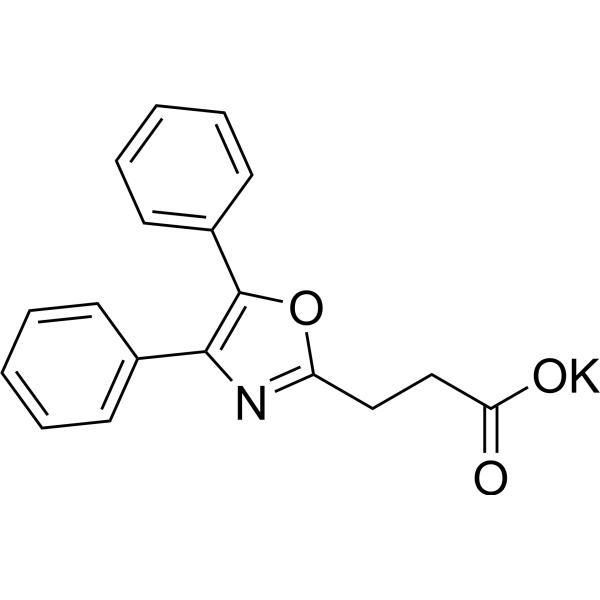
Oxaprozin potassium is an orally active and potent COX inhibitor, with IC50 values of 2.2 μM for human platelet COX-1 and and 36 μM for IL-1-stimulated human synovial cell COX-2, respectively. Oxaprozin potassium also inhibits the activation of NF-κB. Oxaprozin potassium induces cell apoptosis. Oxaprozin potassium shows anti-inflammatory activity. Oxaprozin potassium-mediated inhibition of the Akt/IKK/NF-κB pathway contributes to its anti-inflammatory properties .
|
-
- HY-W012126R
-
|
2,6-Dichloro-N-phenylaniline (Standard)
|
Reference Standards
Bacterial
|
Infection
Cancer
|
|
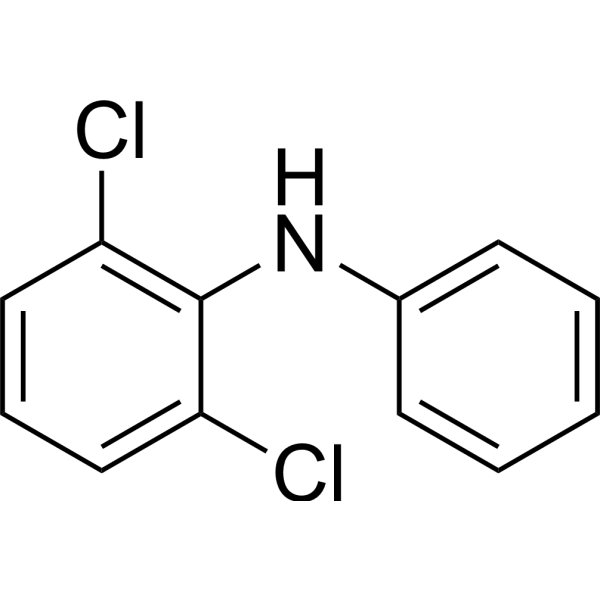
2,6-Dichlorodiphenylamine (Standard) is the analytical standard of 2,6-Dichlorodiphenylamine. This product is intended for research and analytical applications. 2,6-Dichlorodiphenylamine is an analogue of Diclofenac Sodium (HY-15037) and has anti-Candida albicans activity. Diclofenac Sodium is a potent and nonselective anti-inflammatory agent, acts as a COX inhibitor, with IC50s of 4 and 1.3 nM for human COX-1 and COX-2 in CHO cells.
|
-
- HY-B0808R
-
|
Oxaprozinum (Standard); Wy21743 (Standard)
|
Reference Standards
COX
NF-κB
Akt
IKK
Apoptosis
|
Inflammation/Immunology
Cancer
|
|
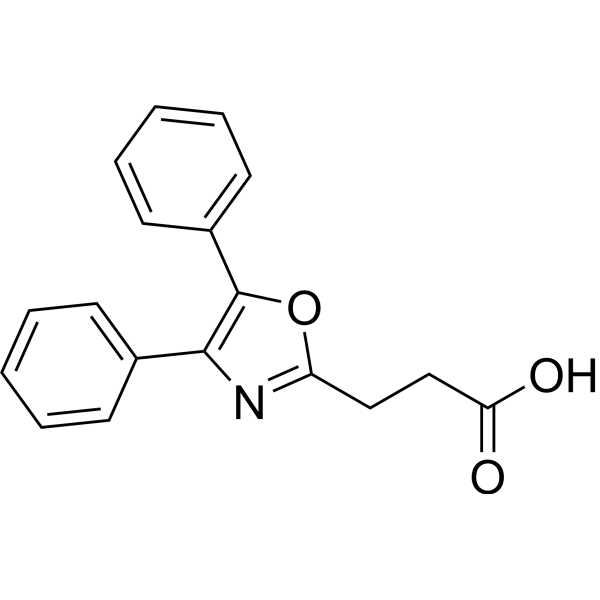
Oxaprozin (Standard) is the analytical standard of Oxaprozin. This product is intended for research and analytical applications. Oxaprozin is an orally active and potent COX inhibitor, with IC50 values of 2.2 μM for human platelet COX-1 and and 36 μM for IL-1-stimulated human synovial cell COX-2, respectively. Oxaprozin also inhibits the activation of NF-κB. Oxaprozin induces cell apoptosis. Oxaprozin shows anti-inflammatory activity. Oxaprozin-mediated inhibition of the Akt/IKK/NF-κB pathway contributes to its anti-inflammatory properties .
|
-
- HY-W753345
-
|
2,6-Dichloro-N-phenylaniline-13C6
|
Isotope-Labeled Compounds
Bacterial
|
Cancer
|
|
2,6-Dichlorodiphenylamine- 13C6 (2,6-Dichloro-N-phenylaniline- 13C6) is the 13C-labeled 2,6-Dichlorodiphenylamine (HY-W012126). 2,6-Dichlorodiphenylamine is an analogue of Diclofenac Sodium (HY-15037) and has anti-Candida albicans activity. Diclofenac Sodium is a potent and nonselective anti-inflammatory agent, acts as a?COX?inhibitor, with?IC50s of 4 and 1.3 nM for human COX-1 and COX-2 in CHO cells.
|
-

- HY-W709448
-
|
Oxaprozinum-d10; Wy21743-d10
|
Isotope-Labeled Compounds
Apoptosis
COX
Akt
IKK
NF-κB
|
Inflammation/Immunology
|
|
Oxaprozin-d10 (Oxaprozinum-d10; Wy21743-d10) is the deuterium labeled Oxaprozin (HY-B0808). Oxaprozin is an orally active and potent COX inhibitor, with IC50 values of 2.2 μM for human platelet COX-1 and and 36 μM for IL-1-stimulated human synovial cell COX-2, respectively. Oxaprozin also inhibits the activation of NF-κB. Oxaprozin induces cell apoptosis. Oxaprozin shows anti-inflammatory activity. Oxaprozin-mediated inhibition of the Akt/IKK/NF-κB pathway contributes to its anti-inflammatory properties .
|
-

- HY-179021
-
|
|
COX
Lipoxygenase
|
Cancer
|
|
COX-2/15-LOX-IN-7 is a potent, selective and orally active dual inhibitor of COX-2 and 15-LOX with IC50 values of 0.022 and 1.19 μM. COX-2/15-LOX-IN-7 also inhibits COX-1 with an IC50 value of 28.081μM. COX-2/15-LOX-IN-7 has low cytotoxicity against human colorectal cancer HT-29 and HCT116 cell lines (IC50 >100 μM for both). COX-2/15-LOX-IN-7 exhibits non-ulcerogenic performance. COX-2/15-LOX-IN-7 can be used for the research of cancer .
|
-

- HY-N0481R
-
|
|
Reference Standards
COX
TNF Receptor
NO Synthase
Interleukin Related
NF-κB
Apoptosis
p38 MAPK
JNK
ERK
Keap1-Nrf2
RANKL/RANK
|
Inflammation/Immunology
|
|
Roburic acid (Standard) is the analytical standard of Roburic acid. This product is intended for research and analytical applications. Roburic acid acts as an anti-inflammatory, anti-tumor and osteoclastogenesis inhibitor, with a Ki of 7.066 μM against human TNF, an IC50 of 9 μM against human COX-2, and an IC50 of 5 μM against ovine COX-1. Roburic acid reduces the production of inflammatory mediators such as NO and IL-6 in macrophages by inhibiting the NF-κB and MAPK (p38/JNK) pathways. By competitively inhibiting the TNF-TNF-R1 interaction, Roburic acid blocks the downstream NF-κB signaling pathway, thereby inducing cell cycle arrest and apoptosis in cancer cells. Roburic acid specifically inhibits osteoclastogenesis and bone resorption by suppressing the RANKL/TRAF6/NF-κB/NFATc1 axis. Roburic acid can be used in research related to osteolytic diseases such as osteoporosis, colorectal cancer and inflammatory diseases.
|
-

- HY-180832
-
|
|
COX
|
Neurological Disease
|
|
COX-1 ligand 1 (Compound 44) is a selective COX-1 ligand (Kds or Kis: 22 nM for rhesus monkey COX-1; 43 nM for hCOX-1). COX-1 ligand 1 inhibits [ 3H]PS13 binding to human COX-1. COX-1 ligand 1, when radiolabeled with 11C or 18F, can be used in studies of COX-1 imaging and psychiatric disorders .
|
-

- HY-183673
-
|
|
COX
|
Neurological Disease
Inflammation/Immunology
|
|
COX-1/2-IN-12 is an orally active dual inhibitor of COX-1 and COX-2, with an IC50 of 41.6 nM against human COX-1 and an IC50 of 31.1 nM against human COX-2. COX-1/2-IN-12 induces antinociceptive activity and inhibits edema in in vivo experiments. COX-1/2-IN-12 can be used in research related to inflammation and pain .
|
-

- HY-10439R
-
|
|
Reference Standards
PGE synthase
|
Inflammation/Immunology
|
|
HPGDS inhibitor 1 (Standard) is the analytical standard of HPGDS inhibitor 1 (HY-10439). This product is intended for research and analytical applications. HPGDS inhibitor 1 is a potent, selective and orally active Hematopoietic Prostaglandin D Synthase (HPGDS) inhibitor with an IC50s of 0.6 nM and 32 nM in enzyme and cellular assays, respectively. HPGDS inhibitor 1 does not inhibit human L-PGDS, mPGES, COX-1, COX-2, or 5-LOX .
|
-

- HY-108259R
-
|
|
Reference Standards
PGE synthase
|
Inflammation/Immunology
|
|
HQL-79 (Standard) is the analytical standard of HQL-79 (HY-108259). This product is intended for research and analytical applications. HQL-79, a potent, selective and orally active human hematopoietic prostaglandin D synthase (H-PGDS) inhibitor, highly selectively inhibits the synthesis of PGD2, and acts as an anti-allergic agent, with a Kd of 0.8 μM and an IC50 of 6 μM. Shows no obvious effect on COX-1, COX-2, m-PGES, or L-PGDS .
|
-

- HY-126453
-
|
|
COX
|
Cancer
|
|
VU0487836 is a selective cyclooxygenase-1 (COX-1) inhibitor with an IC50 of 0.36 μM against ovine-derived COX-1. VU0487836 serves as a prototype for the development of radiological imaging agents targeting COX-1 for ovarian cancer. VU0487836 is applicable to relevant research on ovarian cancer .
|
-

- HY-183187
-
|
|
Estrogen Receptor/ERR
COX
|
Cancer
|
|
4H-Chromen-4-one-o-carborane is an estrogen receptor (ER) agonist, with an EC50 of 0.9 μM for ERα and an EC50 of 11.1 μM for ERβ. 4H-Chromen-4-one-o-carborane also acts as an inhibitor of COX-1 and COX-2, with an IC50 of 6.6 μM for COX-1 and an IC50 of 17.7 μM for COX-2 .
|
-

- HY-181123
-
|
|
COX
|
Neurological Disease
Inflammation/Immunology
|
|
AS1-6 is a selective COX-2 inhibitor with an IC50 of 2.7 μM. AS1-6 has an IC50 of 12.6 μM for COX-1. AS1-6 exerts significant anti-inflammatory and analgesic activities. AS1-6 can be used in research on non-steroidal anti-inflammatory agents .
|
-

- HY-181647
-
|
|
Bacterial
Elastase
|
Infection
|
|
LasB-IN-3 is a protease elastase (LasB) inhibitor of Pseudomonas aeruginosa with an IC50 value of 8.5 nM. LasB-IN-3 shows an IC50 of 58.9 nM for the Met128Val mutant. LasB-IN-3 binds to active sites of wild-type and Met128Val mutant LasB, coordinates zinc ions, forms hydrogen bonds and CH-π interactions, and inhibits LasB proteolytic activity. LasB-IN-3 increases survival rate in LasB-induced acute lung injury mice models. LasB-IN-3 can be used for the research of Pseudomonas aeruginosa infection .
|
-

-
-
HY-L914
-
|
|
3,208 compounds
|
|
In the research of covalent inhibitors targeting serine and threonine, scientists have found that the nucleophilicity of these hydroxyl groups is significantly enhanced due to the influence of their surrounding environment. This results in higher activity during catalytic reactions. Aspirin, which targets the non-catalytic domain serine (Ser529 in human COX1) of cyclooxygenase, exerts its anti-inflammatory effect through covalent binding. β-lactam antibiotics, which targets the catalytic domain serine of penicillin-binding proteins, interferes with bacterial cell wall synthesis.
Through careful selection, we constructed a structural filter containing over 110 electrophilic groups. By analyzing the electrophilic fragments selected by the structural filter, we removed any molecules with trivial or undesirable structural features. Ultimately, we obtained 3,300 fragment molecules which can target serine and threonine residues and can be used for fragment-based covalent drug discovery.
|
| Cat. No. |
Product Name |
Type |
-
- HY-B2218D
-
|
Magnesium dihydroxide, 99%(KT)
|
Biochemical Assay Reagents
|
|
Magnesium hydroxide (Magnesium dihydroxide), 99%(KT) is an orally effective antacid. Magnesium hydroxide, 99%(KT) can form a local strongly alkaline microenvironment, reduce ATP production by consuming H +, and hydrolyze cellular phospholipids to disrupt the cellular integrity of microorganisms, thus exhibiting antibacterial activity. Magnesium hydroxide, 99%(KT) downregulates the generation of inflammatory macrophages to alleviate inflammatory responses. Magnesium hydroxide, 99%(KT) can be used in research related to acid peptic diseases and chronic wound infections .
|
| Cat. No. |
Product Name |
Category |
Target |
Chemical Structure |
-
- HY-N0481
-
-
-
- HY-W012817
-
-
-
- HY-N10009
-
|
|
Brosimopsis oblongifolia
Phenols
Polyphenols
Plants
Moraceae
Source Classification
|
NF-κB
TNF Receptor
COX
ERK
p38 MAPK
Sirtuin
|
|
Cudraflavone B is a prenylated flavonoid with anti-inflammatory and anti-tumor properties. Cudraflavone B is also a dual inhibitor of COX-1 and COX-2. Cudraflavone B blocks the translocation of nuclear factor κB (NF-κB) from the cytoplasm to the nucleus in macrophages. Thus, Cudraflavone B inhibits tumor necrosis factor α (TNFα) gene expression and secretion. Cudraflavone B also triggers the mitochondrial apoptotic pathway, activates NF-κB, the MAPK p38, and ERK, and induced the expression of SIRT1. Thus Cudraflavone B inhibits the growth of human oral squamous cell carcinoma cells .
|
-
-
- HY-W012817R
-
|
|
Natural Products
Microorganisms
Source Classification
|
COX
Reference Standards
|
|
Methylhydroquinone (Standard) is the analytical standard of Methylhydroquinone. This product is intended for research and analytical applications. Methylhydroquinone is an orally active COX inhibitor with IC50s of 480.7 μM and 52.2 μM for ovine COX-1 and human recombinant COX-2, respectively. Methylhydroquinone has potential DNA damaging effects: 1) inhibiting COX-1 to reduce prostaglandin synthesis and exert anti-inflammatory activity; 2) inducing DNA single-strand breaks. Methylhydroquinone exerts its effects by competitively binding to the active sites of COX-1 (such as Tyr385, Met522) and non-covalent interactions[1][2].
|
-
-
- HY-N0481R
-
|
|
Triterpenes
Structural Classification
Gentiana macrophylla Pall.
Terpenoids
Gentianaceae
Plants
Source Classification
|
Reference Standards
COX
TNF Receptor
NO Synthase
Interleukin Related
NF-κB
Apoptosis
p38 MAPK
JNK
ERK
Keap1-Nrf2
RANKL/RANK
|
|
Roburic acid (Standard) is the analytical standard of Roburic acid. This product is intended for research and analytical applications. Roburic acid acts as an anti-inflammatory, anti-tumor and osteoclastogenesis inhibitor, with a Ki of 7.066 μM against human TNF, an IC50 of 9 μM against human COX-2, and an IC50 of 5 μM against ovine COX-1. Roburic acid reduces the production of inflammatory mediators such as NO and IL-6 in macrophages by inhibiting the NF-κB and MAPK (p38/JNK) pathways. By competitively inhibiting the TNF-TNF-R1 interaction, Roburic acid blocks the downstream NF-κB signaling pathway, thereby inducing cell cycle arrest and apoptosis in cancer cells. Roburic acid specifically inhibits osteoclastogenesis and bone resorption by suppressing the RANKL/TRAF6/NF-κB/NFATc1 axis. Roburic acid can be used in research related to osteolytic diseases such as osteoporosis, colorectal cancer and inflammatory diseases.
|
-
| Cat. No. |
Product Name |
Chemical Structure |
-
- HY-15036S
-
|
|
|
Diclofenac-d4 is the deuterium labeled Diclofenac. Diclofenac is a potent and nonselective anti-inflammatory agent, acts as a COX inhibitor, with IC50s of 4 and 1.3 nM for human COX-1 and COX-2 in CHO cells , and 5.1 and 0.84 μM for ovine COX-1 and COX-2, respectively . Diclofenac induces apoptosis of neural stem cells (NSCs) via the activation of the caspase cascade .
|
-
-
- HY-15036S1
-
|
|
|
Diclofenac- 13C6 is the 13C6 labeled Diclofenac. Diclofenac is a potent and nonselective anti-inflammatory agent, acts as a COX inhibitor, with IC50s of 4 and 1.3 nM for human COX-1 and COX-2 in CHO cells, and 5.1 and 0.84 μM for ovine COX-1 and COX-2, respectively. Diclofenac induces apoptosis of neural stem cells (NSCs) via the activation of the caspase cascade.
|
-
-
- HY-15321S
-
1 Publications Verification
|
|
Etoricoxib-d4 (MK-0663-d4) is a deuterium labeled Etoricoxib. Etoricoxib is a non steroidal anti-inflammatory agent, acting as a selective and orally active COX-2 inhibitor, with IC50s of 1.1 μM and 116 μM for COX-2 and COX-1 in human whole blood.
|
-
-
- HY-15037S2
-
|
|
|
Diclofenac- 13C6 (Sodium) is the 13C6 labeled Diclofenac (Sodium). Diclofenac Sodium (GP 45840) is a potent and nonselective anti-inflammatory agent, acts as a COX inhibitor, with IC50s of 4 and 1.3 nM for human COX-1 and COX-2 in CHO cells, and 5.1 and 0.84 μM for ovine COX-1 and COX-2, respectively. Diclofenac Sodium induces apoptosis of neural stem cells (NSCs) via the activation of the caspase cascade.
|
-
-
- HY-15037S1
-
|
|
|
Diclofenac-d4 (sodium) is the deuterium labeled Diclofenac sodium. Diclofenac Sodium (GP 45840) is a potent and nonselective anti-inflammatory agent, acts as a COX inhibitor, with IC50s of 4 and 1.3 nM for human COX-1 and COX-2 in CHO cells , and 5.1 and 0.84 μM for ovine COX-1 and COX-2, respectively . Diclofenac Sodium induces apoptosis of neural stem cells (NSCs) via the activation of the caspase cascade .
|
-
-
- HY-B0227S
-
|
|
|
Ketoprofen-d3 is the deuterium labeled Ketoprofen. Ketoprofen (RP-19583) is a non-steroidal antiinflammatory agent, acting as a potent inhibitor of COX, with IC50s of 2 nM and 26 nM for COX-1 and COX-2 in human blood monocytes, respectively .
|
-
-
- HY-14397S
-
|
|
|
Indomethacin-d4 (Indometacin-d4) is a deuterium labeled Indomethacin. Indomethacin is a potent, blood-brain permeable and nonselective inhibitor of COX1 and COX2, with IC50s of 18 nM and 26 nM for human COX-1 and COX-2, respectively, in CHO cells . Indomethacin disrupts autophagic flux by disturbing the normal functioning of lysosomes .
|
-
-
- HY-14397S1
-
|
|
|
Indomethacin-d4 Methyl Ester is the deuterium labeled Indomethacin. Indomethacin (Indometacin) is a potent, blood-brain permeable and nonselective inhibitor of COX1 and COX2, with IC50s of 18 nM and 26 nM for human COX-1 and COX-2, respectively, in CHO cells . Indomethacin disrupts autophagic flux by disturbing the normal functioning of lysosomes .
|
-
-
- HY-B0253S
-
|
|
|
Piroxicam-d3 (CP-16171-d3) is deuterium labeled Piroxicam. Piroxicam is a non-steroidal anti-inflammatory drugs, acts as a COX inhibitor, with IC50s of 47, 25 μM for human monocyte COX-1 and COX-2, respectively .
|
-
-
- HY-15321S2
-
|
|
|
Etoricoxib-d3 is the deuterium labeled Etoricoxib . Etoricoxib (MK-0663) is a non steroidal anti-inflammatory agent, acting as a selective and orally active COX-2 inhibitor, with IC50s of 1.1 μM and 116 μM for COX-2 and COX-1 in human whole blood .
|
-
-
- HY-17372S
-
|
|
|
Rofecoxib-d5 is the deuterium labeled Rofecoxib. Rofecoxib is a potent, specific and orally active COX-2 inhibitor, with IC50s of 26 and 18 nM for human COX-2 in human osteosarcoma cells and Chinese hamster ovary cells, with a 1000-fold selectivity for COX-2 over human COX-1 (IC50 > 50 μM in U937 cells and > 15 μM in Chinese hamster ovary cells) .
|
-
-
- HY-B0808S1
-
|
|
|
Oxaprozin-d5 is deuterium labeled Oxaprozin. Oxaprozin is an inhibitor of both COX-1 and COX-2 with IC50s of 2.2 μM and 36 μM for human platelet COX-1 and IL-1-stimulated human synovial cell COX-2, respectively. Oxaprozin also inhibits the activation of NF-κB.
|
-
-
- HY-15037S
-
|
|
|
Diclofenac- 13C6 (sodium heminonahydrate) is the 13C-labeled Diclofenac Sodium. Diclofenac Sodium (GP 45840) is a potent and nonselective anti-inflammatory agent, acts as a COX inhibitor, with IC50s of 4 and 1.3 nM for human COX-1 and COX-2 in CHO cells , and 5.1 and 0.84 μM for ovine COX-1 and COX-2, respectively . Diclofenac Sodium induces apoptosis of neural stem cells (NSCs) via the activation of the caspase cascade .
|
-
-
- HY-B0253S1
-
|
|
|
Piroxicam-d4 is the deuterium labeled Piroxicam. Piroxicam (CP-16171) is a non-steroidal anti-inflammatory drugs, acts as a COX inhibitor, with IC50s of 47, 25 μM for human monocyte COX-1 and COX-2, respectively.
|
-
-
- HY-B0227S1
-
|
|
|
Ketoprofen-d4 is the deuterium labeled Ketoprofen. Ketoprofen (RP-19583) is a non-steroidal antiinflammatory agent, acting as a potent inhibitor of COX, with IC50s of 2 nM and 26 nM for COX-1 and COX-2 in human blood monocytes, respectively .
|
-
-
- HY-B1799S
-
|
|
|
Tolmetin-d3 is the deuterium labeled Tolmetin. Tolmetin is an orally active and potent COX inhibitor with IC50s of 0.35 μM and 0.82 μM human COX-1 and COX-2, respectively. Tolmetin is a non-steroidal anti-inflammatory drug (NSAID) .
|
-
-
- HY-B0227S2
-
|
|
|
Ketoprofen- 13C,d3 is the 13C- and deuterium labeled Ketoprofen. Ketoprofen (RP-19583) is a non-steroidal antiinflammatory agent, acting as a potent inhibitor of COX, with IC50s of 2 nM and 26 nM for COX-1 and COX-2 in human blood monocytes, respectively .
|
-
-
- HY-15321S1
-
|
|
|
Etoricoxib- 13C,d3 is the 13C- and deuterium labeled Etoricoxib. Etoricoxib (MK-0663) is a non steroidal anti-inflammatory agent, acting as a selective and orally active COX-2 inhibitor, with IC50s of 1.1 μM and 116 μM for COX-2 and COX-1 in human whole blood.
|
-
-
- HY-W753345
-
|
|
|
2,6-Dichlorodiphenylamine- 13C6 (2,6-Dichloro-N-phenylaniline- 13C6) is the 13C-labeled 2,6-Dichlorodiphenylamine (HY-W012126). 2,6-Dichlorodiphenylamine is an analogue of Diclofenac Sodium (HY-15037) and has anti-Candida albicans activity. Diclofenac Sodium is a potent and nonselective anti-inflammatory agent, acts as a?COX?inhibitor, with?IC50s of 4 and 1.3 nM for human COX-1 and COX-2 in CHO cells.
|
-
-
- HY-W709448
-
|
|
|
Oxaprozin-d10 (Oxaprozinum-d10; Wy21743-d10) is the deuterium labeled Oxaprozin (HY-B0808). Oxaprozin is an orally active and potent COX inhibitor, with IC50 values of 2.2 μM for human platelet COX-1 and and 36 μM for IL-1-stimulated human synovial cell COX-2, respectively. Oxaprozin also inhibits the activation of NF-κB. Oxaprozin induces cell apoptosis. Oxaprozin shows anti-inflammatory activity. Oxaprozin-mediated inhibition of the Akt/IKK/NF-κB pathway contributes to its anti-inflammatory properties .
|
-
| Cat. No. |
Compare |
Product Name |
Application |
Reactivity |
Image |
Compare Products
|
| Products |
|
| Cat. No. |
|
| Host |
|
| Reactivity |
|
| Application |
|
Dilution
Ratio |
|
| Molecular Weight |
|
| Conjugation |
|
| Clonality |
|
| Immunogen |
|
| Appearance |
|
| Isotype |
|
| Gene ID |
|
| SwissProt ID |
|
| Purity |
|
| Formulation |
|
| Free Sample |
Yes
No
|
| Size |
* This product has been "discontinued".
Optimized version of product available:
|
Your information is safe with us. * Required Fields.
Inquiry Information
- Product Name:
- Cat. No.:
- Quantity:
- MCE Japan Authorized Agent:











