Search Result
Results for "
lipid soluble
" in MedChemExpress (MCE) Product Catalog:
45
Biochemical Assay Reagents
1
Isotope-Labeled Compounds
| Cat. No. |
Product Name |
Target |
Research Areas |
Chemical Structure |
-
- HY-D1168
-
|
|
Environmental Pollutants
Fluorescent Dye
|
Metabolic Disease
|
|
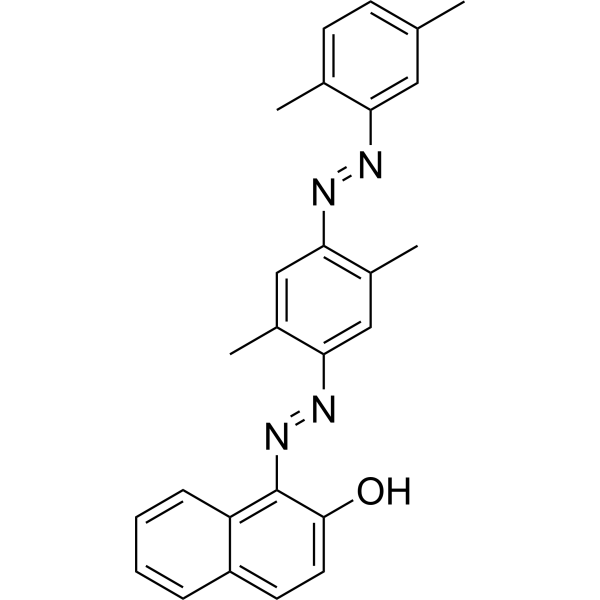
Oil Red O is a fat-soluble diazol dye, with a maximum absorption at 518 nm. Oil Red O stains neutral lipids and cholesteryl esters but not biological membranes. Oil Red O can be used for detecting and quantifying hepatic steatosis in mouse liver biopsies. Oil Red O staining efficiently helps to visualize the radical changes that occur in tissues as metabolic disease occurs and progresses .
|
-
-
- HY-D0213
-
-
-
- HY-P99646
-
|
MEDI6570
|
LOX-1
|
Metabolic Disease
Inflammation/Immunology
|
|
Gocdacimab (MEDI6570) is a fully human IgG1 monoclonal antibody inhibitor targeting the lectin-like oxidized low-density lipoprotein receptor LOX-1. By binding to LOX-1 and blocking its function, gocdacimab effectively reduces the level of free soluble LOX-1, thereby inhibiting key pathological processes such as lipid accumulation, foam cell formation, and vascular wall inflammation. Gocdacimab can interfere with atherosclerosis-related mechanisms, and it is used for research on atherosclerosis, and type 2 diabetes mellitus .
|
-

-
- HY-B1513
-
|
|
Environmental Pollutants
SARS-CoV
Microtubule/Tubulin
|
Infection
Metabolic Disease
Cancer
|
|
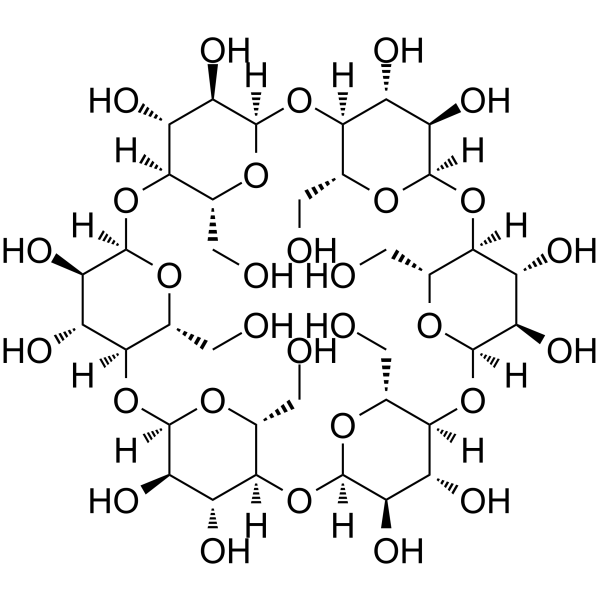
α-Cyclodextrin (α-CD) is a soluble fiber derived from corn. α-Cyclodextrin can deplete sphingolipids and phospholipids from cell membranes. α-Cyclodextrin interacts with tubulin. α-Cyclodextrin improves defenses against SARS-CoV-2 infection. α-Cyclodextrin enhances the anticancer efficacy of Crcumin (HY-N0005) against breast, lung and cervical cancer. α-Cyclodextrin has beneficial effects on body weight and blood lipids .
|
-
-
- HY-W698249
-
|
|
Ferroptosis
Bacterial
|
Cardiovascular Disease
Infection
|
|
Ferrous gluconate is a highly water-soluble iron-containing agent with high bioavailability and bactericidal activity. As a non-heme iron, Ferrous gluconate is used for meat product fortification and improvement of iron deficiency anemia. Ferrous gluconate induces ferroptosis in E. coli through Fe 2+ infiltration, reactive oxygen species burst, lipid peroxidation and direct interaction with DNA. Ferrous gluconate also downregulates the SOS responsive transcriptional repressor LexA. In addition, Ferrous gluconate regulates multiple key pathways in E. coli such as fatty acid metabolism, iron-sulfur cluster assembly and pyruvate metabolism, and is applied in studies related to *E. coli* infection and iron deficiency anemia .
|
-

-
- HY-113068
-
|
|
Tyrosinase
|
Metabolic Disease
|
|
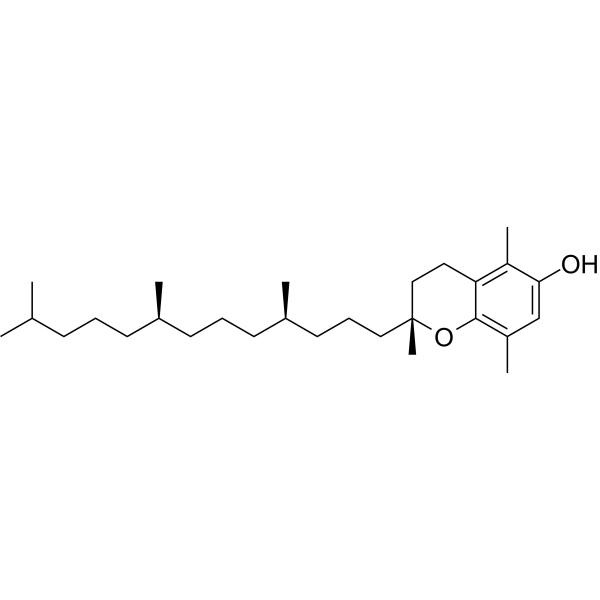
(rel)-β-Tocopherol is a relative configuration of β-Tocopherol. β-Tocopherol is a lipid-soluble form of vitamin E with antioxidant activity .
|
-
-
- HY-154644
-
|
|
Environmental Pollutants
Biochemical Assay Reagents
|
Cancer
|
|
Soya Lecithin is a phospholipid mixture that can be used as a drug delivery vehicle and is a pharmaceutical excipient. Soya Lecithin can form a lipid bilayer structure through self-assembly, and its binding properties are amphiphilic (hydrophilic head and hydrophobic tail), encapsulating hydrophobic drugs. Soya Lecithin forms stable nanoliposomes or microemulsions, improves the solubility and cellular uptake efficiency of poorly soluble drugs (such as Curcumin (HY-N0005)), and exerts activities such as enhancing drug delivery and regulating cell proliferation .
|
-

-
- HY-D0932
-
|
Solvent Red 24; C.I. 26105
|
Environmental Pollutants
Biochemical Assay Reagents
Cytochrome P450
Aryl Hydrocarbon Receptor
|
Metabolic Disease
|
|
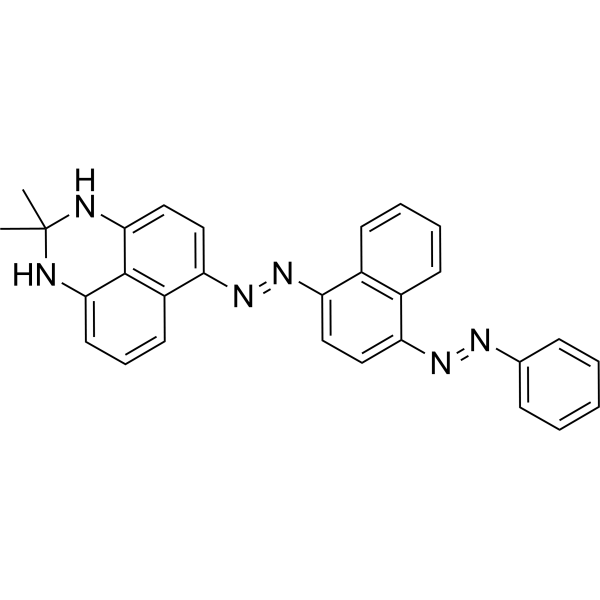
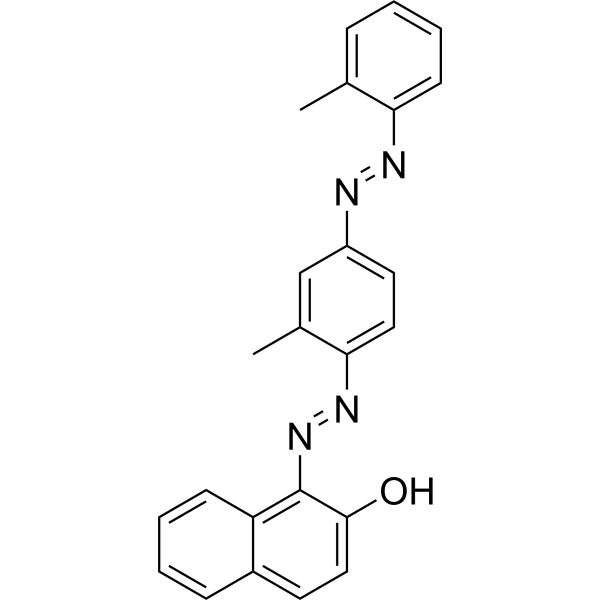
Sudan IV is an agonist of the aryl hydrocarbon receptor (AhR) that activates downstream signaling pathways and induces CYP1A1 expression. Sudan IV promotes CYP1A1 gene transcription by activating AhR-ARNT heterodimers and binding to exogenous response elements (XREs) on DNA, thereby enhancing drug metabolizing enzyme activity. Sudan IV can be used to study the toxicity mechanisms of industrial dyes and the effects of interactions with serum proteins (such as bovine serum albumin (BSA)) on their distribution in vivo. Sudan IV is a fat-soluble diazo dye that can be used to stain lipids, triglycerides, and lipoproteins on frozen sections .
|
-
-
- HY-W011426
-
|
Propan-2-yl hexadecanoate
|
Environmental Pollutants
Biochemical Assay Reagents
Liposome
|
Others
|
|
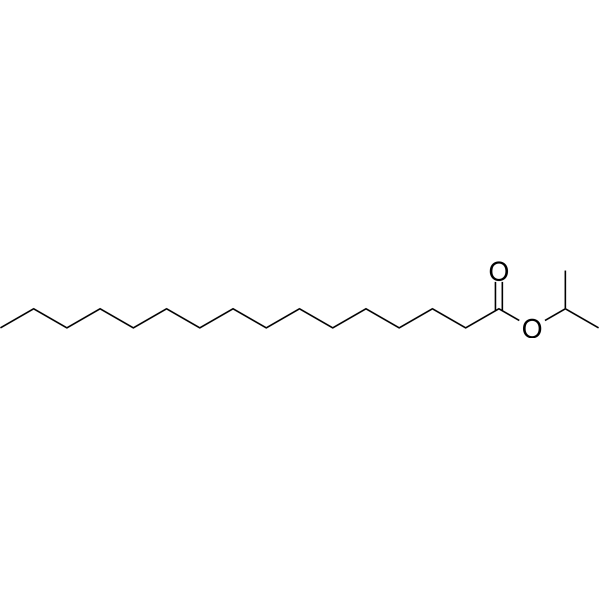
Isopropyl palmitate is an fatty acid ester. Isopropyl palmitate can be used for design and characterization of bioactive bilayer films. The bilayer membrane not only has the ability to scavenge free radicals and inhibit lipid peroxidation, but also can inhibit the growth of known foodborne pathogens. Isopropyl palmitate can be used as an excipient, such as lubricant, oily carrier, solvent, controlled-release transdermal film. Pharmaceutical excipients, or pharmaceutical auxiliaries, refer to other chemical substances used in the pharmaceutical process other than pharmaceutical ingredients. Pharmaceutical excipients generally refer to inactive ingredients in pharmaceutical preparations, which can improve the stability, solubility and processability of pharmaceutical preparations. Pharmaceutical excipients also affect the absorption, distribution, metabolism, and elimination (ADME) processes of co-administered drugs .
|
-
-
- HY-D1610
-
|
|
Fluorescent Dye
|
Others
|
|
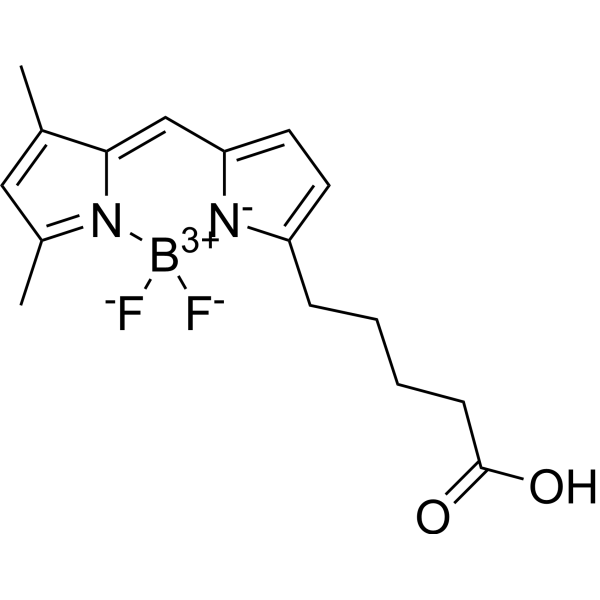
BODIPY FL C5 is a green fluorescent fatty acid. BODIPY FL C5 can be used as a precursor for the synthesis of various fluorescent phospholipids. BODIPY FL C5 is relatively insensitive to the environment and fluoresces in both water-soluble and lipid environments .
|
-
-
- HY-Y0537B
-
|
|
Environmental Pollutants
Biochemical Assay Reagents
Mitochondrial Metabolism
|
Metabolic Disease
|
|
Potassium chloride, for molecular biology is potassium chloride that can be used in molecular biology. Potassium chloride, for molecular biology affects the stability of biological membranes by disrupting the electrostatic interactions between proteins and lipids. Potassium chloride, for molecular biology affects the solubility of myofibrillar proteins and the integrity of mitochondria. Potassium chloride, for molecular biology is commonly used in homogenization buffers and protein extraction procedures .
|
-

-
- HY-B0757A
-
|
rel-Vitamin E Nicotinate
|
Reactive Oxygen Species (ROS)
Endogenous Metabolite
|
Cardiovascular Disease
|
|
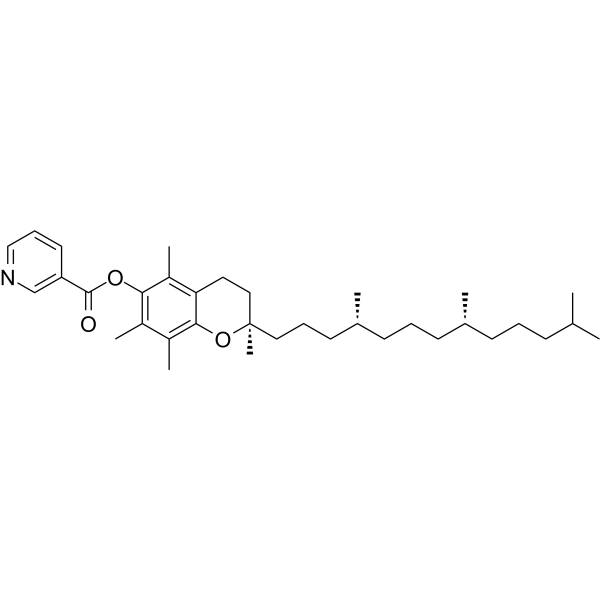
(±)-α-Tocopherol nicotinate, vitamin E - nicotinate, is an orally active fat-soluble antioxidant that prevents lipid peroxidation in cell membranes. (±)-α-Tocopherol nicotinate is hydrolysed in the blood to α -tocopherol and niacin and may be used in studies of related vascular diseases .
|
-
-
- HY-W750676
-
|
AstaREAL; AstaXin; BioAstin
|
Endogenous Metabolite
|
Metabolic Disease
|
|
rac-Astaxanthin is a carotenoid pigment found primarily in marine animals including shrimp and salmon. It is a potent lipid-soluble antioxidant.
|
-

-
- HY-W440690
-
|
|
Liposome
|
Cancer
|
|
Cholesterol-PEG2000-amine is a pegylated lipids which can be used for preparation of liposome or nanoparticle. The lipophilic moiety can encapsulate hydrophobic drugs whereas the hydrophilic PEG chain helps the overal water solubility of the micelles.
|
-

-
- HY-W440894
-
|
|
Biochemical Assay Reagents
|
Others
|
|
DSPE-PEG5000-DBCO sodium is a PEG lipid that can improve the delivery efficiency and tissue specificity of poorly soluble drugs. DSPE-PEG5000-DBCO sodium can be used in drug delivery research .
|
-

-
- HY-167028
-
|
|
Biochemical Assay Reagents
|
Others
|
|
DSPE-PEG2000-alkyne is a PEG lipid that can improve the delivery efficiency and tissue specificity of poorly soluble drugs. DSPE-PEG2000-alkyne can be used in drug delivery research .
|
-

-
- HY-W440881
-
|
|
Biochemical Assay Reagents
|
Others
|
|
DSPE-PEG3400-DBCO sodium is a PEG lipid that can improve the delivery efficiency and tissue specificity of poorly soluble drugs. DSPE-PEG3400-DBCO sodium can be used in drug delivery research .
|
-

-
- HY-W440706
-
|
|
Liposome
|
Cancer
|
|
Cholesterol-PEG2000-alcohol is a pegylated lipids which can be used for preparation of liposome or nanoparticle. The lipophilic moiety can encapsulate hydrophobic drugs whereas the hydrophilic PEG chain helps the overal water solubility of the micelles. The amine can react with an activated NHS ester to form a stable amide bond.
|
-

-
- HY-157624
-
|
18:0-22:6 PE
|
Liposome
|
Others
|
|
1-Stearoyl-2-docosahexaenoyl-sn-glycero-3-phosphoethanolamine (18:0-22:6 PE) is a lipid compound that can be used for liposome preparation. Liposomes are the main component of vesicles with concentric phospholipid bilayer membranes, which can be used to construct drug delivery systems for anti-cancer and anti-infection fields. Highly polar water-soluble loads can be captured in the internal aqueous space of liposomes, while lipophilic loads can be distributed into the lipid bilayer and become part of the lipid bilayer. Especially for the delivery of antisense oligonucleotides, it can overcome the problems of inefficient cellular uptake and rapid loss in the body.
|
-

-
- HY-176513
-
|
|
Fluorescent Dye
|
Others
|
|
Cy-OH-LP is a turn-on fluorescent and photoacoustic probe that can detect lipid-associated hydroxyl radicals. Cy-OH-LP can be oxidized to Cy7 in the presence of hydroxyl radicals, which displays weak fluorescent and photoacoustic signals in water-soluble environments and strong fluorescent and photoacoustic signals in lipid-rich environments due to its lipid solubility. Cy-OH-LP can be used for in vivo photoacoustic imaging of hydroxyl radicals .
|
-

-
- HY-121660
-
|
|
Drug Derivative
|
Cardiovascular Disease
|
|
Hexyl nicotinate is a lipid-soluble nicotinic acid ester and cutaneous vasodilator. Hexyl nicotinate induces localized cutaneous vasodilation and increases blood flow. Hexyl nicotinate can be used for the research of Raynaud's phenomenon .
|
-
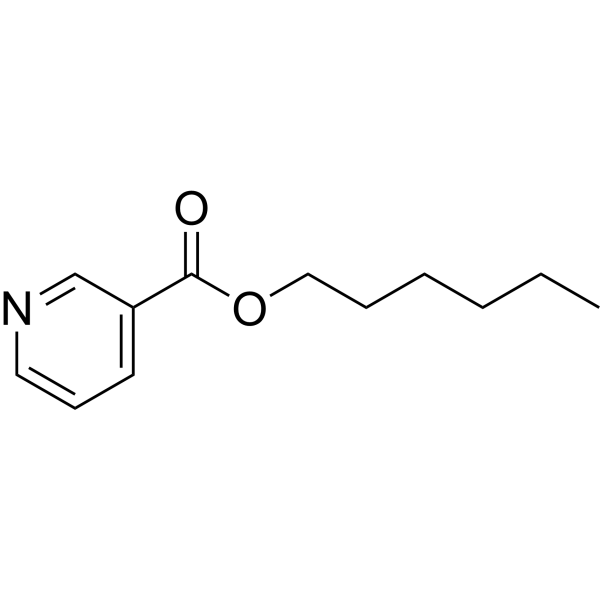
-
- HY-166979
-
|
|
Biochemical Assay Reagents
|
Others
|
|
Stearic acid-mPEG2000 is a PEG lipid that can improve the delivery efficiency and tissue specificity of poorly soluble drugs. Stearic acid-mPEG2000 can be used in drug delivery research .
|
-

-
- HY-W750676R
-
|
AstaREAL (Standard); AstaXin (Standard); BioAstin (Standard)
|
Endogenous Metabolite
Reference Standards
|
Metabolic Disease
|
|
(rac./meso)-Astaxanthin (Standard) is the analytical standard of (rac./meso)-Astaxanthin. This product is intended for research and analytical applications. rac-Astaxanthin is a carotenoid pigment found primarily in marine animals including shrimp and salmon. It is a potent lipid-soluble antioxidant.
|
-

-
- HY-166968
-
|
|
Biochemical Assay Reagents
|
Others
|
|
DSPE-PEG5000-COOH is a PEG lipid that can improve the delivery efficiency and tissue specificity of poorly soluble drugs. DSPE-PEG5000-COOH can be used in drug delivery research .
|
-

-
- HY-166983
-
|
|
Biochemical Assay Reagents
|
Others
|
|
m-PEG5000-DMG is a PEG lipid that can improve the delivery efficiency and tissue specificity of poorly soluble drugs. m-PEG5000-DMG can be used in drug delivery research .
|
-

-
- HY-176509A
-
|
|
Liposome
|
Others
|
|
DSPE-PEG2000-CHO is a linear heterobifunctional PEGylation reagent with DSPE phospholipids and aldehyde groups. PEG linkers have good hydrophilicity and water solubility. Aldehyde-polyethylene glycol (DSPE) is one of the most commonly used reactive phospholipids to bind antibodies, peptides or other ligands to the surface of liposomes and other lipid-polyethylene glycol nanoparticles. DSPE-PEG2000-CHO can be used for drug delivery .
|
-

-
- HY-D0932R
-
|
Solvent Red 24 (Standard); C.I. 26105 (Standard)
|
Biochemical Assay Reagents
Aryl Hydrocarbon Receptor
Cytochrome P450
Reference Standards
|
Metabolic Disease
|
|
Sudan IV (Standard) (Solvent Red 24 (Standard)) is the analytical standard of Sudan IV (HY-D0932). This product is intended for research and analytical applications. Sudan IV is an agonist of the aryl hydrocarbon receptor (AhR) that activates downstream signaling pathways and induces CYP1A1 expression. Sudan IV promotes CYP1A1 gene transcription by activating AhR-ARNT heterodimers and binding to exogenous response elements (XREs) on DNA, thereby enhancing drug metabolizing enzyme activity. Sudan IV can be used to study the toxicity mechanisms of industrial dyes and the effects of interactions with serum proteins (such as bovine serum albumin (BSA)) on their distribution in vivo. Sudan IV is a fat-soluble diazo dye that can be used to stain lipids, triglycerides, and lipoproteins on frozen sections.
|
-

-
- HY-160277
-
|
|
Fluorescent Dye
|
Others
|
|
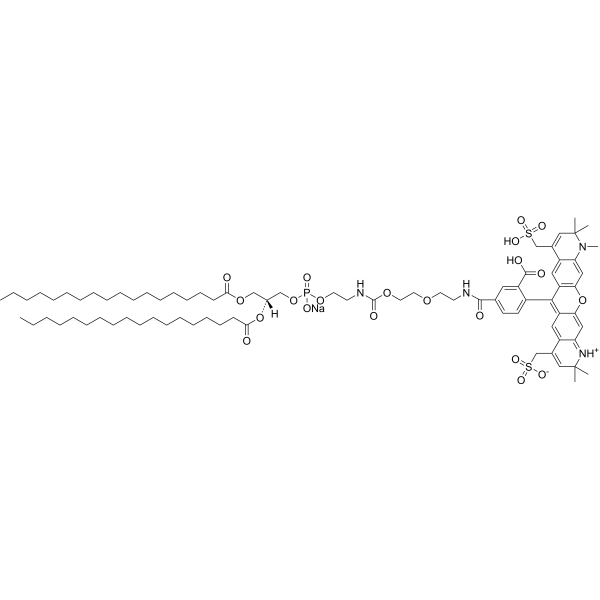
DSPE-PEG2000-Fluor 594 is a PEGylated lipid with a DSPE group and a Fluor 594 fluorophore. DSPE is a phospholipid. Fluor 594 is a red water-soluble dye .
|
-
-
- HY-D0421
-
|
|
Fluorescent Dye
|
Others
|
|
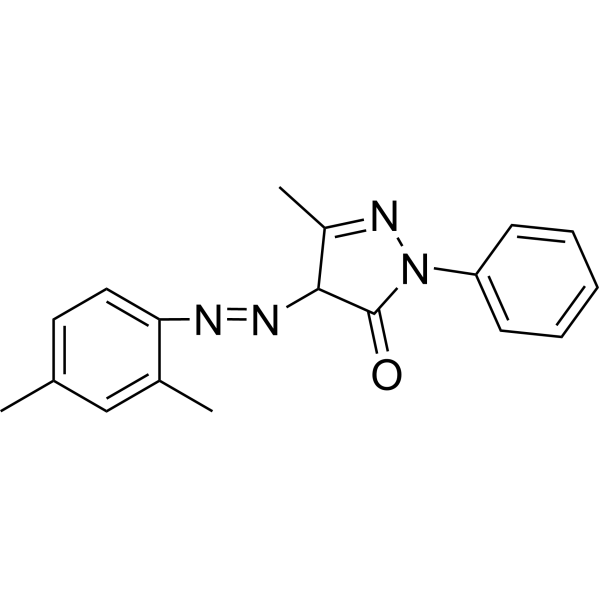
C.I. Solvent yellow 18 is a lipid-soluble fluorescent azo dye, which is widely used in industries such as textiles, medicine, food, cosmetics, plastics, paints, inks, photography and papermaking .
|
-
-
- HY-W440925
-
|
|
Biochemical Assay Reagents
|
Others
|
|
m-PEG5000-DSPE sodium is a PEG lipid that can improve the delivery efficiency and tissue specificity of poorly soluble drugs. m-PEG5000-DSPE sodium can be used in drug delivery research .
|
-

-
- HY-166874
-
|
|
Biochemical Assay Reagents
|
Others
|
|
DSPE-PEG2000-endo-BCN is a PEG lipid that can improve the delivery efficiency and tissue specificity of poorly soluble drugs. DSPE-PEG2000-endo-BCN can be used in drug delivery research .
|
-

-
- HY-176509C
-
|
|
Liposome
|
Others
|
|
DSPE-PEG5000-CHO is a linear heterobifunctional PEGylation reagent with DSPE phospholipids and aldehyde groups. PEG linkers have good hydrophilicity and water solubility. Aldehyde-polyethylene glycol (DSPE) is one of the most commonly used reactive phospholipids to bind antibodies, peptides or other ligands to the surface of liposomes and other lipid-polyethylene glycol nanoparticles. DSPE-PEG5000-CHO can be used for drug delivery .
|
-

-
- HY-176509
-
|
|
Liposome
|
Others
|
|
DSPE-PEG1000-CHO is a linear heterobifunctional PEGylation reagent with DSPE phospholipids and aldehyde groups. PEG linkers have good hydrophilicity and water solubility. Aldehyde-polyethylene glycol (DSPE) is one of the most commonly used reactive phospholipids to bind antibodies, peptides or other ligands to the surface of liposomes and other lipid-polyethylene glycol nanoparticles. DSPE-PEG1000-CHO can be used for drug delivery .
|
-

-
- HY-170509
-
|
|
Ferroptosis
Glutathione Peroxidase
|
Cardiovascular Disease
Neurological Disease
Cancer
|
|
Ferroptosis-IN-17 (Compound 18) is a ferroptosis (Ferroptosis) inhibitor with an EC50 value of 0.57 μM. Ferroptosis-IN-17 reduces intracellular ferrous ion accumulation, lipid peroxidation, and effectively restores the levels of glutathione (GSH) and glutathione peroxidase 4 (GPX4). Ferroptosis-IN-17 shows good solubility and significant metabolic stability in rat plasma. Ferroptosis-IN-17 is promising for research in tumor suppression, neurodegenerative diseases, and cardiovascular diseases .
|
-

-
- HY-160254
-
-

-
- HY-166871
-
|
|
Biochemical Assay Reagents
|
Others
|
|
DSPE-PEG5000-endo-BCN is a PEG lipid that can improve the delivery efficiency and tissue specificity of poorly soluble drugs. DSPE-PEG5000-endo-BCN can be used in drug delivery research .
|
-

-
- HY-W747992
-
|
|
Endogenous Metabolite
|
Cardiovascular Disease
Metabolic Disease
|
|
Indicaxanthin is a natural water-soluble betalain, presenting a yellow-orange color. Indicaxanthin possesses free radical scavenging ability and can inhibit lipid peroxidation, reducing the formation of malondialdehyde (MDA). Indicaxanthin can be used in the research of cardiovascular diseases and diabetes .
|
-

-
- HY-D1074
-
|
3,3'-Dipropyloxacarbocyanine iodide
|
Fluorescent Dye
|
Others
|
|
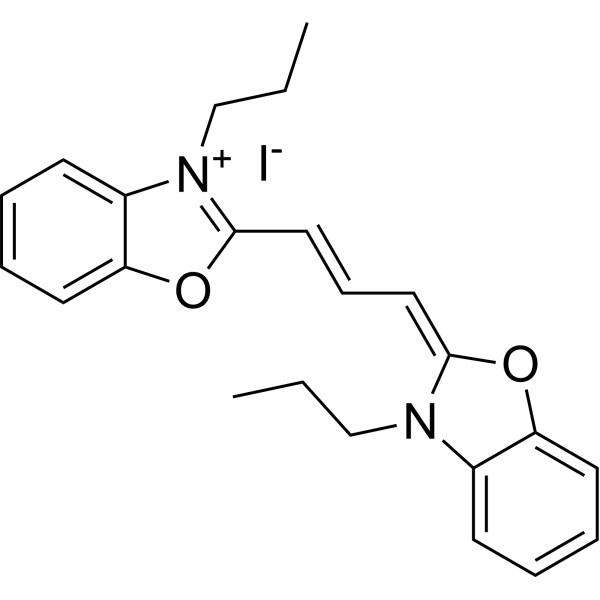
DiOC3(3) (3,3'-Dipropyloxacarbocyanine iodide) is a green fluorescent lipophilic dye with cell membrane permeability. DiOC3(3) can be used to stain cell membranes and other lipid-soluble biological structures .
|
-
-
- HY-40118
-
|
Boc-L-proline methyl ester
|
Liposome
|
Others
|
|
Boc-Pro-OMe (Boc-L-proline methyl ester) is a lipid compound that can be used for liposome preparation. Liposomes are the main component of vesicles with concentric phospholipid bilayer membranes, which can be used to construct drug delivery systems for anti-cancer and anti-infection fields. Highly polar water-soluble loads can be captured in the internal aqueous space of liposomes, while lipophilic loads can be distributed into the lipid bilayer and become part of the lipid bilayer. Especially for the delivery of antisense oligonucleotides, it can overcome the problems of inefficient cellular uptake and rapid loss in the body.
|
-

-
- HY-165975
-
|
(2S)-3-Keto-C6-dihydrosphingosine hydrochloride
|
Liposome
|
Others
|
|
(2S)-3-Keto sphinganine (d6:0) ((2S)-3-Keto-C6-dihydrosphingosine) hydrochloride is a lipid compound that can be used for liposome preparation. Liposomes are the main component of vesicles with concentric phospholipid bilayer membranes, which can be used to construct drug delivery systems for anti-cancer and anti-infection fields. Highly polar water-soluble loads can be captured in the internal aqueous space of liposomes, while lipophilic loads can be distributed into the lipid bilayer and become part of the lipid bilayer. Especially for the delivery of antisense oligonucleotides, it can overcome the problems of inefficient cellular uptake and rapid loss in the body.
|
-

-
- HY-113068R
-
|
|
Reference Standards
Tyrosinase
|
Metabolic Disease
|
|
(rel)-β-Tocopherol (Standard) is the analytical standard of (rel)-β-Tocopherol. This product is intended for research and analytical applications. (rel)-β-Tocopherol is a relative configuration of β-Tocopherol.(±)-β-Tocopherol is a lipid-soluble form of vitamin E with antioxidant activity. β-Tocopherol can inhibit tyrosinase activity and melanin synthesis. β-Tocopherol also can prevent the inhibition of cell growth and of PKC activity caused by d-alpha-tocopherol .
|
-

-
- HY-W099563
-
|
|
Biochemical Assay Reagents
|
Others
|
|
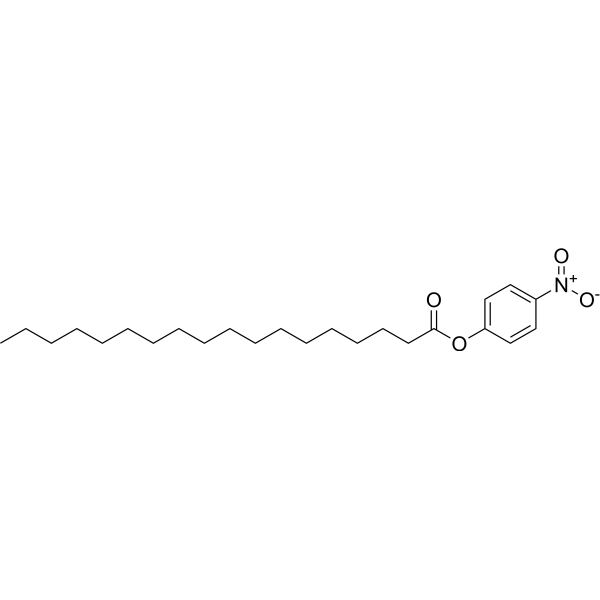
4-Nitrophenyl stearate, which is an ester formed by the condensation of stearic acid and 4-nitrophenol, is commonly used as a substrate for enzymatic assays, where the hydrolysis of ester bonds by esterase and lipase can be measured by absorbance or ratio In addition, 4-Nitrophenyl stearate has been used as a model compound to study the enzymatic activity and selectivity of lipases and esterases from various sources. The long hydrophobic tail of the molecule makes it suitable for use in lipophilic Good solubility in the environment makes it a useful probe for studying lipid metabolism.
|
-
-
- HY-137373
-
|
|
PKG
|
Others
|
|
Rp-8-pCPT-cGMPS is a competitive inhibitor of cGMP-dependent protein kinase (PKG) (Ki=0.5 μM). Rp-8-pCPT-cGMPS has high lipid solubility and can more easily penetrate the cell membrane and reach sufficient concentration inside the cell to inhibit cGMP-dependent protein kinase. Rp-8-pCPT-cGMPS can be used to study the activity and function of cGMP-dependent protein kinase in platelets .
|
-

-
- HY-W591449
-
|
|
Liposome
|
Cancer
|
|
DOPE-PEG2000-Azide is a liposome to simulate biological phospholipid membrane. Liposomes are the main component of vesicles with concentric phospholipid bilayer membranes, which can be used to construct drug delivery systems for anti-cancer and anti-infection fields. Highly polar water-soluble payloads can be trapped in the internal aqueous space of liposomes, while lipophilic payloads can partition into and become part of the lipid bilayer. Especially for delivering antisense oligonucleotides, it can overcome problems such as inefficient cellular uptake and rapid loss in the body .
|
-

-
- HY-401721
-
|
|
Biochemical Assay Reagents
|
Others
|
|
5-CNAC is an orally active enhancer of absorption, with no pharmacological activity on its own. 5-CNAC can significantly enhance the absorption efficiency of the drug (such as Salmon calcitonin (HY-P0090)) when administered together with it in the gastrointestinal tract. 5-CNAC binds reversibly and non-covalently to peptide drugs, protecting them from degradation by gastrointestinal enzymes, increasing their lipid solubility, promoting passive transcellular absorption, and not damaging the integrity of the intestinal epithelium. 5-CNAC can be used in the research of adjuvants for orally administered peptide agents .
|
-

-
- HY-141635
-
|
|
Endogenous Metabolite
|
Metabolic Disease
|
|
cis-11,14-Eicosadienoic acid methyl ester is a more lipid soluble form of the ω-6 C20-2 fatty acid 11(Z),14(Z)-eicosadienoic acid, a naturally occurring PUFA. 11(Z),14(Z)-Eicosadienoic acid competitively inhibits inosine 5’-monophosphate dehydrogenase (Ki=3.1 μM) and inhibits the binding of LTB4 to its receptor on neutrophils (Ki=3.0 μM). Also, serum levels of eicosadienoic acids negatively correlate with degree of sleep disturbance.3 Eicosadienoic acids are converted by desaturases, in vivo, to eicosatrienoic acids, which are potent vasodilators.
|
-

-
- HY-116844
-
|
Glidiazine
|
Drug Derivative
Insulin Receptor
|
Metabolic Disease
|
|
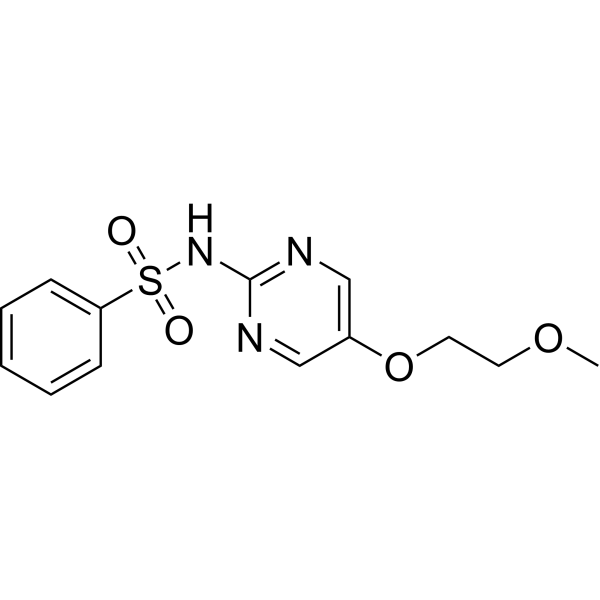
Glymidine (Glidiazine) is a hypoglycaemic agent. Glymidine is a lipid soluble sulphapyrimidine derivative. Glymidine appears to stimulate insulin release from pancreas. Glymidine is a possible alternative to the sulphonylureas and biguanides for the research of diabetes mellitus .
|
-
-
- HY-100571A
-
|
|
Drug Isomer
|
Metabolic Disease
|
|
(+)-5-trans Cloprostenol isopropyl ester is a more lipid-soluble form of (+)-5-trans cloprostenol (HY-120955), which is a synthetic derivative of prostaglandin F2α .
|
-

-
- HY-155877N
-
|
|
Biochemical Assay Reagents
|
Others
|
|
mPEG-DSPE (MW 5000) sodium is a PEG lipid that can improve the delivery efficiency and tissue specificity of poorly soluble drugs. mPEG-DSPE (MW 5000) sodium can be used in drug delivery research .
|
-

-
- HY-166980
-
|
|
Biochemical Assay Reagents
|
Others
|
|
m-PEG-DPPE (MW 2000) is a PEG lipid that can improve the delivery efficiency and tissue specificity of poorly soluble drugs. m-PEG-DPPE (MW 2000) can be used in drug delivery research .
|
-

- HY-W440924
-
|
|
Biochemical Assay Reagents
|
Others
|
|
m-PEG3000-DSPE sodium is a PEG lipid that can improve the delivery efficiency and tissue specificity of poorly soluble drugs. m-PEG3000-DSPE sodium can be used in drug delivery research .
|
-

- HY-167028B
-
|
|
Biochemical Assay Reagents
|
Others
|
|
DSPE-PEG3400-alkyne is a PEG lipid that can improve the delivery efficiency and tissue specificity of poorly soluble drugs. DSPE-PEG3400-alkyne can be used in drug delivery research .
|
-

- HY-W440922
-
|
|
Biochemical Assay Reagents
|
Others
|
|
m-PEG1000-DSPE sodium is a PEG lipid that can improve the delivery efficiency and tissue specificity of poorly soluble drugs. m-PEG1000-DSPE sodium can be used in drug delivery research .
|
-

- HY-167022
-
|
|
Biochemical Assay Reagents
|
Others
|
|
DSPE-PEG600-azide is a PEG lipid that can improve the delivery efficiency and tissue specificity of poorly soluble drugs. DSPE-PEG600-azide can be used in drug delivery research .
|
-

- HY-167031
-
|
|
Biochemical Assay Reagents
|
Others
|
|
DOPE-PEG5000-DBCO is a PEG lipid that can improve the delivery efficiency and tissue specificity of poorly soluble drugs. DOPE-PEG5000-DBCO can be used in drug delivery research .
|
-

- HY-118648
-
|
PGF2α methyl ester; Dinoprost methyl
|
Prostaglandin Receptor
|
Others
|
|
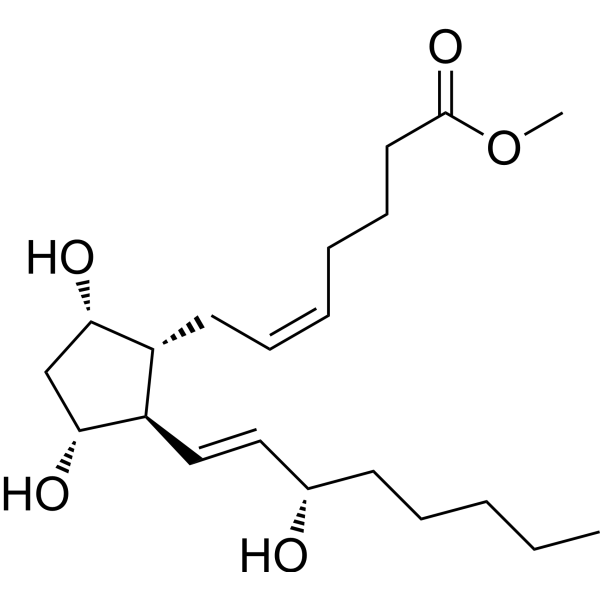
Prostaglandin F2α methyl ester (PGF2α methyl ester; Dinoprost methyl) is a PGF2α analog with more lipid solubility. Prostaglandin F2α methyl ester exhibits efficacy in maintaining the ocular hypotensive .
|
-
- HY-17659
-
|
|
Drug Derivative
|
Others
|
|
Decylplastoquinone is lipid-soluble derivative of plastoquinone (HY-N11882). Plastoquinone (PQ-9), a potent electron carrier, is an essential component of photosynthesis. Plastoquinone is also a redox sensor that regulates state transitions and gene expression .
|
-

- HY-166982
-
|
|
Biochemical Assay Reagents
|
Others
|
|
DSPE-PEG2000-PA is a PEG lipid that can improve the delivery efficiency and tissue specificity of poorly soluble drugs. DSPE-PEG2000-PA can be used in drug delivery research .
|
-

- HY-121267R
-
|
|
Reference Standards
Herbicide
DNA/RNA Synthesis
|
Others
|
|
Dicamba (Standard) is the analytical standard of Dicamba. This product is intended for research and analytical applications. Dicamba is a herbicide with high water solubility and low volatility. Dicamba induces tissue damage and cell death in Gallium aparine L. through lipid peroxidation. Dicamba is widely used in agriculture and horticulture .
|
-

- HY-166996
-
|
|
Biochemical Assay Reagents
|
Others
|
|
Bis(N-2-ethoxyethyl 2-hexyldecanoate)amine is a PEG lipid that can improve the delivery efficiency and tissue specificity of poorly soluble drugs. Bis(N-2-ethoxyethyl 2-hexyldecanoate)amine can be used in drug delivery research .
|
-

- HY-W440881A
-
|
|
Liposome
|
|
|
DSPE-PEG3400-C2-DBCO sodium is a PEG lipid that can improve the delivery efficiency and tissue specificity of poorly soluble drugs. DSPE-PEG3400-C2-DBCO sodium can be used in drug delivery research .
|
-

- HY-W699792
-
|
|
Biochemical Assay Reagents
|
|
|
R-(3)-Benzyloxymyristic acid methyl ester is a nonpolar solvent with activity for studying lipid-related interactions. R-(3)-Benzyloxymyristic acid methyl ester can be used in scientific research to explore the properties and behavior of cell membranes. R-(3)-Benzyloxymyristic acid methyl ester exhibits excellent solubility and compatibility in biochemical experiments.
|
-

- HY-147207C
-
|
|
Liposome
|
Others
|
|
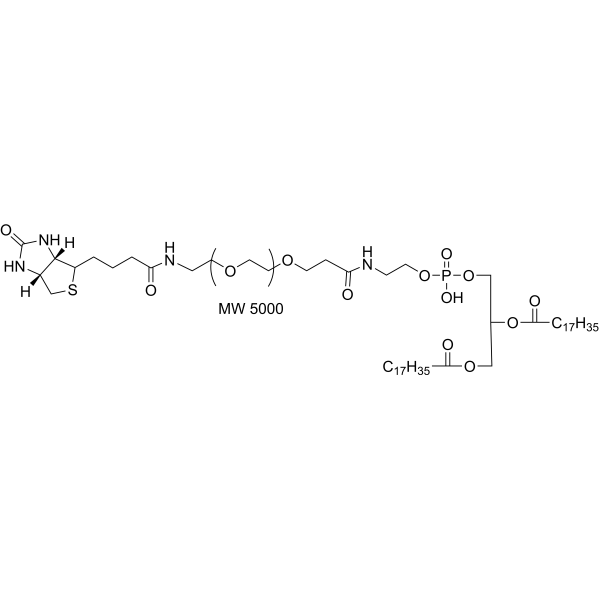
Phospholipid-PEG5000-Biotin is a phospholipid PEG derivative, can be used for modify liposome and cells surface, and pancreatic islets for cell transplantation. Phospholipid is a class of lipid containing a hydrophilic “head” and two hydrophobic “tails”; PEG is a hydrophilic and water-soluble polymer with low toxicity; Biotin is an enzyme co-factor, can be used for labeling protein .
|
-
- HY-124200
-
|
|
Prostaglandin Receptor
|
Endocrinology
|
|
AL 8810 (Item No. 16735) is an 11β-fluoro analog of prostaglandin F2α which acts as a potent and selective antagonist at the FP receptor. AL 8810 isopropyl ester is a lipid soluble, esterified prodrug form of AL 8810 analogous to the commonly used therapeutic intraocular prostaglandin compounds such as Latanoprost (HY-B0577) and Travoprost (HY-B0584).
|
-

- HY-147207A
-
|
|
Liposome
|
Others
|
|
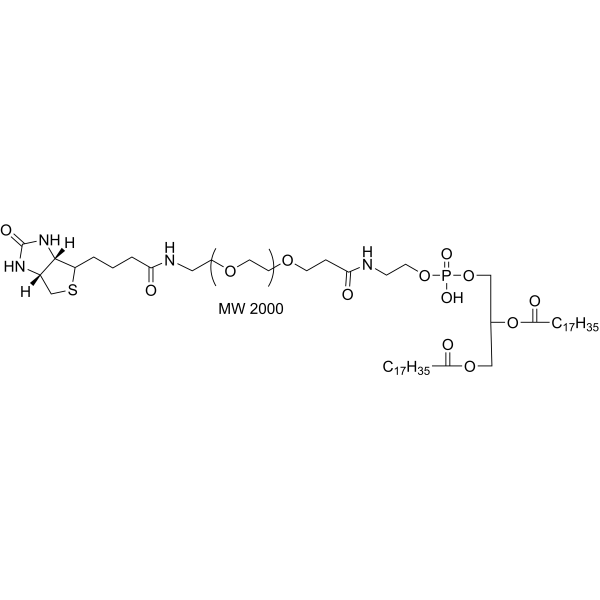
Phospholipid-PEG2000-Biotin is a Biotin labeled phospholipid PEG derivative, can be used for modify liposome and cells surface, and pancreatic islets for cell transplantation. Phospholipid is a class of lipid containing a hydrophilic "head" and two hydrophobic "tails" ; PEG is a hydrophilic and water-soluble polymer with low toxicity; Biotin is an enzyme co-factor, can be used for labeling protein .
|
-
- HY-W440807
-
|
|
Liposome
|
Others
|
|
Oleoyl-Gly-Lys-(m-PEG11)-NH2 is a PEG-lipid molecule featuring an oleoyl amide linked to a Gly-Lys dipeptide and a methoxy PEG11 chain on the C-terminus of the lysine. The lysine primary amine may be used in a wide variety of reactions with carboxylic acids, NHS esters, and carbonyl groups. The PEG linker provides aqueous solubility.
|
-

- HY-137412
-
|
Prostaglandin F2α 1,15-lactone
|
Drug Derivative
|
Endocrinology
|
|
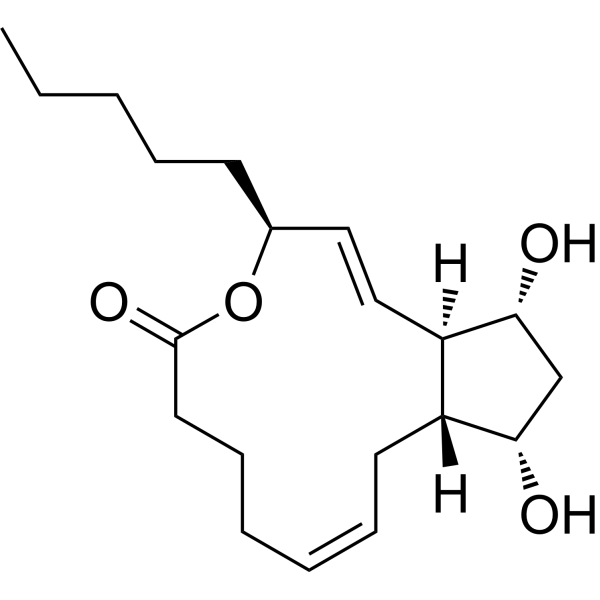
PGF2α 1,15-lactone (Prostaglandin F2α 1,15-lactone) is a lipid-soluble internal ester of PGF2α. PGF2α 1,15-lactone decreases menstrual cycle lengths in non-pregnant rhesus monkeys. PGF2α 1,15-lactone terminates early pregnancy in the monkey .
|
-
- HY-N9300
-
|
|
Platelet-activating Factor Receptor (PAFR)
|
Inflammation/Immunology
|
|
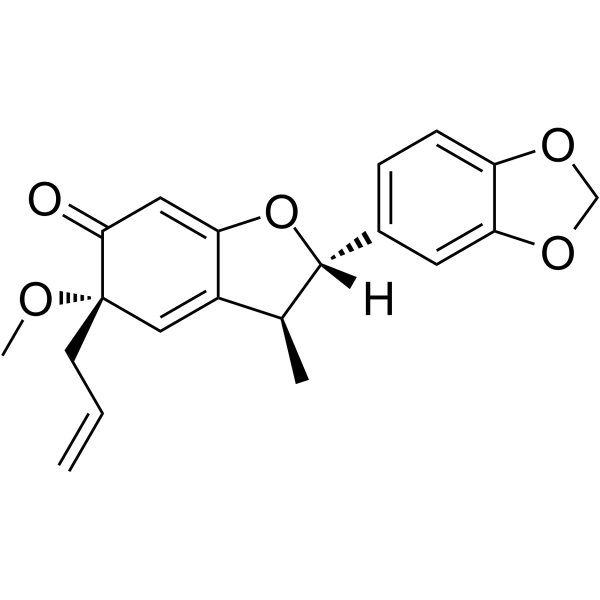
1,6-Dihydro-4,7-epoxy-1-methoxy-3,4-methylenedioxy-6-oxo-3,8-lignan, a lignan derivative from the ethyl acetate soluble fraction of twigs of Magnolia denudate (Magnoliaceae), exhibits anti-platelet-activating factor (PAF) activity. PAF is a potent lipid mediator in inflammation and asthma .
|
-
- HY-B0757AR
-
|
rel-Vitamin E Nicotinate (Standard)
|
Reference Standards
Reactive Oxygen Species (ROS)
Endogenous Metabolite
|
Cardiovascular Disease
|
|
(±)-α-Tocopherol nicotinate (Standard) is the analytical standard of (±)-α-Tocopherol nicotinate. This product is intended for research and analytical applications. (±)-α-Tocopherol nicotinate, vitamin E - nicotinate, is an orally active fat-soluble antioxidant that prevents lipid peroxidation in cell membranes. (±)-α-Tocopherol nicotinate is hydrolysed in the blood to α -tocopherol and niacin and may be used in studies of related vascular diseases[1][2].
|
-

- HY-N13221
-
|
|
Bacterial
Reactive Oxygen Species (ROS)
Fungal
|
Cardiovascular Disease
Metabolic Disease
Cancer
|
Apple Cider Vinegar Powder is a soluble powdered form of apple cider vinegar. Apple Cider Vinegar Powder has anti-bacterial, anti-oxidant, and antibiotic properties and can help maintain the acid-base balance in the blood. Apple Cider Vinegar Powder can lower blood sugar and lipid levels. Apple Cider Vinegar Powder is used in research related to tumors, diabetes, and cardiovascular diseases .
|
-

- HY-173381A
-
|
Cholesteryl biotinyl(polyethyleneglycol)-1000 carbamate
|
Biochemical Assay Reagents
|
Others
|
|
Cholesteryl-PEG1000-Biotin is a lipid product. Cholesteryl-PEG1000-Biotin is a cholesterol backbone attached to one side of a PEG unit and a Biotin unit on the other side. Biotin is an enzyme cofactor that can be used to label proteins, and PEG is a low-toxic, hydrophilic, water-soluble polymer. Cholesteryl-PEG1000-Biotin can be used for drug circulation time studies .
|
-

- HY-W440922A
-
|
|
Biochemical Assay Reagents
|
Others
|
|
m-PEG-C1-DSPE sodium (MW 1000) is a structural analog of m-PEG-DSPE sodium (MW 1000) (HY-W440922). m-PEG-C1-DSPE sodium (MW 1000) is a PEG lipid that can improve the delivery efficiency and tissue specificity of poorly soluble drugs. m-PEG-C1-DSPE sodium (MW 1000) can be used in drug delivery research .
|
-

- HY-176509D
-
|
|
Liposome
|
Others
|
|
DSPE-PEG10000-CHO is a linear heterobifunctional PEGylation reagent with DSPE phospholipids and aldehyde groups. PEG linkers have good hydrophilicity and water solubility. Aldehyde-polyethylene glycol (DSPE) is one of the most commonly used reactive phospholipids to bind antibodies, peptides or other ligands to the surface of liposomes and other lipid-polyethylene glycol nanoparticles. DSPE-PEG10000-CHO can be used for drug delivery .
|
-

- HY-176509B
-
|
|
Liposome
|
Others
|
|
DSPE-PEG3400-CHO is a linear heterobifunctional PEGylation reagent with DSPE phospholipids and aldehyde groups. PEG linkers have good hydrophilicity and water solubility. Aldehyde-polyethylene glycol (DSPE) is one of the most commonly used reactive phospholipids to bind antibodies, peptides or other ligands to the surface of liposomes and other lipid-polyethylene glycol nanoparticles. DSPE-PEG3400-CHO can be used for drug delivery .
|
-

- HY-176509H
-
|
|
Liposome
|
Others
|
|
DSPE-PEG40000-CHO is a linear heterobifunctional PEGylation reagent with DSPE phospholipids and aldehyde groups. PEG linkers have good hydrophilicity and water solubility. Aldehyde-polyethylene glycol (DSPE) is one of the most commonly used reactive phospholipids to bind antibodies, peptides or other ligands to the surface of liposomes and other lipid-polyethylene glycol nanoparticles. DSPE-PEG40000-CHO can be used for drug delivery .
|
-

- HY-134123
-
|
LXB4 methyl ester
|
Drug Intermediate
Leukotriene Receptor
|
Metabolic Disease
|
|
Lipoxin B4 (LXB4) methyl ester is a lipid soluble prodrug form of the transcellular metabolite LXB4. LXB4 is a positional isomer of LXA4 produced by the metabolism of 15-HETE or 15-HpETE by human leukocytes. At a concentration of 100 nM, LXB4 inhibits polymorphonuclear leukocyte (PMN) migration stimulated by leukotriene B4 (LTB4; Item No. 20110) and inhibits LTB4-induced adhesion of PMNs with an IC50 value of 0.3 nM.
|
-

- HY-153725
-
|
|
Liposome
|
Cancer
|
|
17:1 Lyso PC is a liposome to simulate biological phospholipid membrane. Liposomes are the main component of vesicles with concentric phospholipid bilayer membranes, which can be used to construct drug delivery systems for anti-cancer and anti-infection fields. Highly polar water-soluble payloads can be trapped in the internal aqueous space of liposomes, while lipophilic payloads can partition into and become part of the lipid bilayer. Especially for delivering antisense oligonucleotides, it can overcome problems such as inefficient cellular uptake and rapid loss in the body .
|
-

- HY-178962
-
|
|
Drug Metabolite
|
Cancer
|
|
Antitumor agent-207 (compound 10K) is a Pt(IV)-NO prodrug with high lipid solubility, good stability, and excellent tumor targeted release ability. Antitumor agent-207 has significant anti proliferative activity in various cells such as TE-1 (IC50 = 1.79 μM), TE-10 (IC50 = 1.95 μM), KYSE-30 IC50 = 5.99 μM), KYSE-520 (IC50 = 5.53 μM) cells. Antitumor agent-207 can significantly enhance intracellular Pt accumulation and DNA platformization levels, and effectively release NO. Antitumor agent-207 can be used for research on cancers such as esophageal cancer .
|
-

- HY-W698249R
-
|
|
Reference Standards
Ferroptosis
Bacterial
|
|
|
Ferrous gluconate (Standard) is the analytical standard of Ferrous gluconate. This product is intended for research and analytical applications. Ferrous gluconate is a highly water-soluble iron-containing agent with high bioavailability and bactericidal activity. As a non-heme iron, Ferrous gluconate is used for meat product fortification and improvement of iron deficiency anemia. Ferrous gluconate induces ferroptosis in E. coli through Fe 2+ infiltration, reactive oxygen species burst, lipid peroxidation and direct interaction with DNA. Ferrous gluconate also downregulates the SOS responsive transcriptional repressor LexA. In addition, Ferrous gluconate regulates multiple key pathways in E. coli such as fatty acid metabolism, iron-sulfur cluster assembly and pyruvate metabolism, and is applied in studies related to *E. coli* infection and iron deficiency anemia .
|
-

- HY-W012618R
-
|
|
Drug Intermediate
Reference Standards
|
Others
|
|
Isopropyl palmitate (Standard) is the analytical standard of Isopropyl palmitate. This product is intended for research and analytical applications. Isopropyl palmitate is an fatty acid ester. Isopropyl palmitate can be used for design and characterization of bioactive bilayer films. The bilayer membrane not only has the ability to scavenge free radicals and inhibit lipid peroxidation, but also can inhibit the growth of known foodborne pathogens. Isopropyl palmitate can be used as an excipient, such as lubricant, oily carrier, solvent, controlled-release transdermal film. Pharmaceutical excipients, or pharmaceutical auxiliaries, refer to other chemical substances used in the pharmaceutical process other than pharmaceutical ingredients. Pharmaceutical excipients generally refer to inactive ingredients in pharmaceutical preparations, which can improve the stability, solubility and processability of pharmaceutical preparations. Pharmaceutical excipients also affect the absorption, distribution, metabolism, and elimination (ADME) processes of co-administered drugs .
|
-

- HY-W011426R
-
|
Propan-2-yl hexadecanoate (Standard)
|
Biochemical Assay Reagents
Liposome
Reference Standards
|
Others
|
|
Isopropyl palmitate (Standard) is the analytical standard of Isopropyl palmitate. This product is intended for research and analytical applications. Isopropyl palmitate is an fatty acid ester. Isopropyl palmitate can be used for design and characterization of bioactive bilayer films. The bilayer membrane not only has the ability to scavenge free radicals and inhibit lipid peroxidation, but also can inhibit the growth of known foodborne pathogens. Isopropyl palmitate can be used as an excipient, such as lubricant, oily carrier, solvent, controlled-release transdermal film. Pharmaceutical excipients, or pharmaceutical auxiliaries, refer to other chemical substances used in the pharmaceutical process other than pharmaceutical ingredients. Pharmaceutical excipients generally refer to inactive ingredients in pharmaceutical preparations, which can improve the stability, solubility and processability of pharmaceutical preparations. Pharmaceutical excipients also affect the absorption, distribution, metabolism, and elimination (ADME) processes of co-administered drugs .
|
-

- HY-D0932S
-
|
Solvent Red 24-d6; C.I. 26105-d6
|
Isotope-Labeled Compounds
Biochemical Assay Reagents
Aryl Hydrocarbon Receptor
Cytochrome P450
|
Metabolic Disease
|
|
Sudan IV-d6 (Solvent Red 24-d6) is the deuterium labeled Sudan IV(HY-D0932). Sudan IV is an agonist of the aryl hydrocarbon receptor (AhR) that activates downstream signaling pathways and induces CYP1A1 expression. Sudan IV promotes CYP1A1 gene transcription by activating AhR-ARNT heterodimers and binding to exogenous response elements (XREs) on DNA, thereby enhancing drug metabolizing enzyme activity. Sudan IV can be used to study the toxicity mechanisms of industrial dyes and the effects of interactions with serum proteins (such as bovine serum albumin (BSA)) on their distribution in vivo. Sudan IV is a fat-soluble diazo dye that can be used to stain lipids, triglycerides, and lipoproteins on frozen sections .
|
-

- HY-W1121876
-
-

- HY-W440932
-
|
|
Biochemical Assay Reagents
|
Others
|
|
Stearic acid-mPEG5000 is a PEG lipid that can improve the delivery efficiency and tissue specificity of poorly soluble drugs. Stearic acid-mPEG5000 can be used in drug delivery research .
|
-

- HY-W440930
-
|
|
Biochemical Assay Reagents
|
Others
|
|
Stearic acid-mPEG1000 is a PEG lipid that can improve the delivery efficiency and tissue specificity of poorly soluble drugs. Stearic acid-mPEG1000 can be used in drug delivery research .
|
-

- HY-W440942
-
|
|
Biochemical Assay Reagents
|
Others
|
|
Pentacosadiynoic acid-mPEG2000 is a PEG lipid that can improve the delivery efficiency and tissue specificity of poorly soluble drugs. Pentacosadiynoic acid-mPEG2000 can be used in drug delivery research .
|
-

- HY-W440943
-
|
|
Biochemical Assay Reagents
|
Others
|
|
Pentacosadiynoic acid-mPEG5000 is a PEG lipid that can improve the delivery efficiency and tissue specificity of poorly soluble drugs. Pentacosadiynoic acid-mPEG5000 can be used in drug delivery research .
|
-

- HY-W440941
-
|
|
Biochemical Assay Reagents
|
Others
|
|
Pentacosadiynoic acid-mPEG1000 is a PEG lipid that can improve the delivery efficiency and tissue specificity of poorly soluble drugs. Pentacosadiynoic acid-mPEG1000 can be used in drug delivery research .
|
-

- HY-W440825
-
|
|
Biochemical Assay Reagents
|
Others
|
|
DSPE-PEG1000-COOH is a PEG lipid that can improve the delivery efficiency and tissue specificity of poorly soluble drugs. DSPE-PEG1000-COOH can be used in drug delivery research .
|
-

- HY-166807
-
|
|
Biochemical Assay Reagents
|
Others
|
|
Palmitate-PEG1000-Mal is a PEG lipid that can improve the delivery efficiency and tissue specificity of poorly soluble drugs. Palmitate-PEG1000-Mal can be used in drug delivery research .
|
-

- HY-167028A
-
|
|
Biochemical Assay Reagents
|
Others
|
|
DSPE-PEG1000-alkyne is a PEG lipid that can improve the delivery efficiency and tissue specificity of poorly soluble drugs. DSPE-PEG1000-alkyne can be used in drug delivery research .
|
-

- HY-W440830
-
|
|
Biochemical Assay Reagents
|
Others
|
|
DSPE-PEG3400-COOH is a PEG lipid that can improve the delivery efficiency and tissue specificity of poorly soluble drugs. DSPE-PEG3400-COOH can be used in drug delivery research .
|
-

- HY-167028C
-
|
|
Biochemical Assay Reagents
|
Others
|
|
DSPE-PEG5000-alkyne is a PEG lipid that can improve the delivery efficiency and tissue specificity of poorly soluble drugs. DSPE-PEG5000-alkyne can be used in drug delivery research .
|
-

- HY-164579
-
|
|
Liposome
|
Others
|
|
NH2-GG-DSPE is a lipid compound that can be used for liposome preparation. Liposomes are the main component of vesicles with concentric phospholipid bilayer membranes, which can be used to construct drug delivery systems for anti-cancer and anti-infection fields. Highly polar water-soluble loads can be captured in the internal aqueous space of liposomes, while lipophilic loads can be distributed into the lipid bilayer and become part of the lipid bilayer. Especially for the delivery of antisense oligonucleotides, it can overcome the problems of inefficient cellular uptake and rapid loss in the body.
|
-

- HY-157678
-
|
18:2 PS sodium
|
Liposome
|
Others
|
|
1,2-Dilinoleoyl-sn-glycero-3-phospho-L-serine sodium (18:2 PS sodium) is a lipid compound that can be used for liposome preparation. Liposomes are the main component of vesicles with concentric phospholipid bilayer membranes, which can be used to construct drug delivery systems for anti-cancer and anti-infection fields. Highly polar water-soluble loads can be captured in the internal aqueous space of liposomes, while lipophilic loads can be distributed into the lipid bilayer and become part of the lipid bilayer. Especially for the delivery of antisense oligonucleotides, it can overcome the problems of inefficient cellular uptake and rapid loss in the body.
|
-

- HY-N10625A
-
|
5α-Cyprinol
|
Phosphatase
|
Metabolic Disease
|
|
Cyprinol (5α-Cyprinol) is an orally active bile salt and xenochemical pheromone . Cyprinol impairs renal function and increases plasma ALP activity in rats, induces diel vertical migration in Daphnia spp., enhances the permeability of the rectal mucosa to water-soluble compounds, and aids lipid digestion in fish. Cyprinol can be used in studies of fish toxicity and acute renal failure .
|
-

- HY-W1119946
-
|
|
Nucleoside Antimetabolite/Analog
|
Others
|
|
(3R,5S)-5-O-DMT-3-pyrrolidinol-benzyl laurate is a laurate derivative with a dimethoxytrityl (DMT) protecting group and a 3-pyrrolidinol structure. (3R,5S)-5-O-DMT-3-pyrrolidinol-benzyl laurate can be used for oligonucleotide modification or as a lipid-soluble delivery vehicle.
|
-

- HY-176509E
-
|
|
Liposome
|
Others
|
|
DSPE-PEG20000-CHO is a linear heterobifunctional PEGylation reagent with DSPE phospholipids and aldehyde groups. PEG linkers have good hydrophilicity and water solubility. Aldehyde-polyethylene glycol (DSPE) is one of the most commonly used reactive phospholipids to bind antibodies, peptides or other ligands to the surface of liposomes and other lipid-polyethylene glycol nanoparticles. DSPE-PEG20000-CHO can be used for drug delivery .
|
-

- HY-156957
-
|
|
Biochemical Assay Reagents
|
Others
|
|
5-CNAC disodium is an orally active enhancer of absorption, with no pharmacological activity on its own. 5-CNAC disodium can significantly enhance the absorption efficiency of the drug (such as Salmon calcitonin (HY-P0090)) when administered together with it in the gastrointestinal tract. 5-CNAC disodium binds reversibly and non-covalently to peptide drugs, protecting them from degradation by gastrointestinal enzymes, increasing their lipid solubility, promoting passive transcellular absorption, and not damaging the integrity of the intestinal epithelium. 5-CNAC disodium can be used in the research of adjuvants for orally administered peptide agents .
|
-

- HY-W006081
-
|
|
UGT
|
Others
|
|
3-Methyl-2-nitrophenol is a UDP-glucuronyltransferase (EC 2.4.1.17) acceptor substrate that can be confirmed to undergo glucuronidation catalyzed by the enzyme to form a glucuronide conjugate. 3-Methyl-2-nitrophenol functions as a substrate for conjugation, with glucuronidation forming a glucuronide conjugate that eliminates the parent compound’s characteristic yellow color. 3-Methyl-2-nitrophenol has higher lipid solubility that contributes to high glucuronidation conversion rate, and exhibits lower absorbance at 340 nm to act as a less interfering substrate for the NADH-NAD +-linked UDP-glucuronyltransferase assay .
|
-

- HY-164581
-
|
|
Phosphoramidites
DNA/RNA Synthesis
|
Others
|
|
DMTr-2'-O-C22-rG (ibu)-3'-CE-Phosphoramidite is an RNA phosphoramidite monomer for oligonucleotide synthesis. DMTr-2'-O-C22-rG (ibu)-3'-CE-Phosphoramidite enables site-specific introduction of 2'-O-C22 lipophilic modification at guanosine positions to construct double-stranded RNA (dsRNA) molecules with extrahepatic delivery capability. DMTr-2'-O-C22-rG (ibu)-3'-CE-Phosphoramidite supports target gene silencing in skeletal muscle, cardiac muscle and adipose tissue by enhancing the lipid solubility and tissue uptake efficiency of dsRNA. DMTr-2'-O-C22-rG (ibu)-3'-CE-Phosphoramidite can be used for the construction and mechanism research of nucleic acid silencing molecules .
|
-

| Cat. No. |
Product Name |
Type |
-
- HY-D1168
-
|
|
Fluorescent Dyes
|
|
Oil Red O is a fat-soluble diazol dye, with a maximum absorption at 518 nm. Oil Red O stains neutral lipids and cholesteryl esters but not biological membranes. Oil Red O can be used for detecting and quantifying hepatic steatosis in mouse liver biopsies. Oil Red O staining efficiently helps to visualize the radical changes that occur in tissues as metabolic disease occurs and progresses .
|
-
- HY-D0932
-
|
Solvent Red 24; C.I. 26105
|
Fluorescent Dyes
|
|
Sudan IV is an agonist of the aryl hydrocarbon receptor (AhR) that activates downstream signaling pathways and induces CYP1A1 expression. Sudan IV promotes CYP1A1 gene transcription by activating AhR-ARNT heterodimers and binding to exogenous response elements (XREs) on DNA, thereby enhancing drug metabolizing enzyme activity. Sudan IV can be used to study the toxicity mechanisms of industrial dyes and the effects of interactions with serum proteins (such as bovine serum albumin (BSA)) on their distribution in vivo. Sudan IV is a fat-soluble diazo dye that can be used to stain lipids, triglycerides, and lipoproteins on frozen sections .
|
-
- HY-D1610
-
|
|
Fluorescent Dyes
|
|
BODIPY FL C5 is a green fluorescent fatty acid. BODIPY FL C5 can be used as a precursor for the synthesis of various fluorescent phospholipids. BODIPY FL C5 is relatively insensitive to the environment and fluoresces in both water-soluble and lipid environments .
|
-
- HY-D0932R
-
|
Solvent Red 24 (Standard); C.I. 26105 (Standard)
|
Fluorescent Dyes
|
|
Sudan IV (Standard) (Solvent Red 24 (Standard)) is the analytical standard of Sudan IV (HY-D0932). This product is intended for research and analytical applications. Sudan IV is an agonist of the aryl hydrocarbon receptor (AhR) that activates downstream signaling pathways and induces CYP1A1 expression. Sudan IV promotes CYP1A1 gene transcription by activating AhR-ARNT heterodimers and binding to exogenous response elements (XREs) on DNA, thereby enhancing drug metabolizing enzyme activity. Sudan IV can be used to study the toxicity mechanisms of industrial dyes and the effects of interactions with serum proteins (such as bovine serum albumin (BSA)) on their distribution in vivo. Sudan IV is a fat-soluble diazo dye that can be used to stain lipids, triglycerides, and lipoproteins on frozen sections.
|
-
- HY-D0421
-
|
|
Fluorescent Dyes
|
|
C.I. Solvent yellow 18 is a lipid-soluble fluorescent azo dye, which is widely used in industries such as textiles, medicine, food, cosmetics, plastics, paints, inks, photography and papermaking .
|
-
- HY-D1074
-
|
3,3'-Dipropyloxacarbocyanine iodide
|
Fluorescent Dyes
|
|
DiOC3(3) (3,3'-Dipropyloxacarbocyanine iodide) is a green fluorescent lipophilic dye with cell membrane permeability. DiOC3(3) can be used to stain cell membranes and other lipid-soluble biological structures .
|
| Cat. No. |
Product Name |
Type |
-
- HY-W011426
-
|
Propan-2-yl hexadecanoate
|
Biochemical Assay Reagents
|
|
Isopropyl palmitate is an fatty acid ester. Isopropyl palmitate can be used for design and characterization of bioactive bilayer films. The bilayer membrane not only has the ability to scavenge free radicals and inhibit lipid peroxidation, but also can inhibit the growth of known foodborne pathogens. Isopropyl palmitate can be used as an excipient, such as lubricant, oily carrier, solvent, controlled-release transdermal film. Pharmaceutical excipients, or pharmaceutical auxiliaries, refer to other chemical substances used in the pharmaceutical process other than pharmaceutical ingredients. Pharmaceutical excipients generally refer to inactive ingredients in pharmaceutical preparations, which can improve the stability, solubility and processability of pharmaceutical preparations. Pharmaceutical excipients also affect the absorption, distribution, metabolism, and elimination (ADME) processes of co-administered drugs .
|
-
- HY-Y0537B
-
|
|
Biochemical Assay Reagents
|
|
Potassium chloride, for molecular biology is potassium chloride that can be used in molecular biology. Potassium chloride, for molecular biology affects the stability of biological membranes by disrupting the electrostatic interactions between proteins and lipids. Potassium chloride, for molecular biology affects the solubility of myofibrillar proteins and the integrity of mitochondria. Potassium chloride, for molecular biology is commonly used in homogenization buffers and protein extraction procedures .
|
-
- HY-B0757A
-
|
rel-Vitamin E Nicotinate
|
Biochemical Assay Reagents
|
|
(±)-α-Tocopherol nicotinate, vitamin E - nicotinate, is an orally active fat-soluble antioxidant that prevents lipid peroxidation in cell membranes. (±)-α-Tocopherol nicotinate is hydrolysed in the blood to α -tocopherol and niacin and may be used in studies of related vascular diseases .
|
-
- HY-W440894
-
|
|
Biochemical Assay Reagents
|
|
DSPE-PEG5000-DBCO sodium is a PEG lipid that can improve the delivery efficiency and tissue specificity of poorly soluble drugs. DSPE-PEG5000-DBCO sodium can be used in drug delivery research .
|
-
- HY-167028
-
|
|
Biochemical Assay Reagents
|
|
DSPE-PEG2000-alkyne is a PEG lipid that can improve the delivery efficiency and tissue specificity of poorly soluble drugs. DSPE-PEG2000-alkyne can be used in drug delivery research .
|
-
- HY-W440881
-
|
|
Biochemical Assay Reagents
|
|
DSPE-PEG3400-DBCO sodium is a PEG lipid that can improve the delivery efficiency and tissue specificity of poorly soluble drugs. DSPE-PEG3400-DBCO sodium can be used in drug delivery research .
|
-
- HY-166979
-
|
|
Biochemical Assay Reagents
|
|
Stearic acid-mPEG2000 is a PEG lipid that can improve the delivery efficiency and tissue specificity of poorly soluble drugs. Stearic acid-mPEG2000 can be used in drug delivery research .
|
-
- HY-166968
-
|
|
Biochemical Assay Reagents
|
|
DSPE-PEG5000-COOH is a PEG lipid that can improve the delivery efficiency and tissue specificity of poorly soluble drugs. DSPE-PEG5000-COOH can be used in drug delivery research .
|
-
- HY-166983
-
|
|
Biochemical Assay Reagents
|
|
m-PEG5000-DMG is a PEG lipid that can improve the delivery efficiency and tissue specificity of poorly soluble drugs. m-PEG5000-DMG can be used in drug delivery research .
|
-
- HY-176509A
-
|
|
Biochemical Assay Reagents
|
|
DSPE-PEG2000-CHO is a linear heterobifunctional PEGylation reagent with DSPE phospholipids and aldehyde groups. PEG linkers have good hydrophilicity and water solubility. Aldehyde-polyethylene glycol (DSPE) is one of the most commonly used reactive phospholipids to bind antibodies, peptides or other ligands to the surface of liposomes and other lipid-polyethylene glycol nanoparticles. DSPE-PEG2000-CHO can be used for drug delivery .
|
-
- HY-160277
-
|
|
Biochemical Assay Reagents
|
|
DSPE-PEG2000-Fluor 594 is a PEGylated lipid with a DSPE group and a Fluor 594 fluorophore. DSPE is a phospholipid. Fluor 594 is a red water-soluble dye .
|
-
- HY-W440925
-
|
|
Biochemical Assay Reagents
|
|
m-PEG5000-DSPE sodium is a PEG lipid that can improve the delivery efficiency and tissue specificity of poorly soluble drugs. m-PEG5000-DSPE sodium can be used in drug delivery research .
|
-
- HY-166874
-
|
|
Biochemical Assay Reagents
|
|
DSPE-PEG2000-endo-BCN is a PEG lipid that can improve the delivery efficiency and tissue specificity of poorly soluble drugs. DSPE-PEG2000-endo-BCN can be used in drug delivery research .
|
-
- HY-176509C
-
|
|
Biochemical Assay Reagents
|
|
DSPE-PEG5000-CHO is a linear heterobifunctional PEGylation reagent with DSPE phospholipids and aldehyde groups. PEG linkers have good hydrophilicity and water solubility. Aldehyde-polyethylene glycol (DSPE) is one of the most commonly used reactive phospholipids to bind antibodies, peptides or other ligands to the surface of liposomes and other lipid-polyethylene glycol nanoparticles. DSPE-PEG5000-CHO can be used for drug delivery .
|
-
- HY-176509
-
|
|
Biochemical Assay Reagents
|
|
DSPE-PEG1000-CHO is a linear heterobifunctional PEGylation reagent with DSPE phospholipids and aldehyde groups. PEG linkers have good hydrophilicity and water solubility. Aldehyde-polyethylene glycol (DSPE) is one of the most commonly used reactive phospholipids to bind antibodies, peptides or other ligands to the surface of liposomes and other lipid-polyethylene glycol nanoparticles. DSPE-PEG1000-CHO can be used for drug delivery .
|
-
- HY-166871
-
|
|
Biochemical Assay Reagents
|
|
DSPE-PEG5000-endo-BCN is a PEG lipid that can improve the delivery efficiency and tissue specificity of poorly soluble drugs. DSPE-PEG5000-endo-BCN can be used in drug delivery research .
|
-
- HY-W099563
-
|
|
Biochemical Assay Reagents
|
|
4-Nitrophenyl stearate, which is an ester formed by the condensation of stearic acid and 4-nitrophenol, is commonly used as a substrate for enzymatic assays, where the hydrolysis of ester bonds by esterase and lipase can be measured by absorbance or ratio In addition, 4-Nitrophenyl stearate has been used as a model compound to study the enzymatic activity and selectivity of lipases and esterases from various sources. The long hydrophobic tail of the molecule makes it suitable for use in lipophilic Good solubility in the environment makes it a useful probe for studying lipid metabolism.
|
-
- HY-166980
-
|
|
Biochemical Assay Reagents
|
|
m-PEG-DPPE (MW 2000) is a PEG lipid that can improve the delivery efficiency and tissue specificity of poorly soluble drugs. m-PEG-DPPE (MW 2000) can be used in drug delivery research .
|
-
- HY-W440924
-
|
|
Biochemical Assay Reagents
|
|
m-PEG3000-DSPE sodium is a PEG lipid that can improve the delivery efficiency and tissue specificity of poorly soluble drugs. m-PEG3000-DSPE sodium can be used in drug delivery research .
|
-
- HY-167028B
-
|
|
Biochemical Assay Reagents
|
|
DSPE-PEG3400-alkyne is a PEG lipid that can improve the delivery efficiency and tissue specificity of poorly soluble drugs. DSPE-PEG3400-alkyne can be used in drug delivery research .
|
-
- HY-W440922
-
|
|
Biochemical Assay Reagents
|
|
m-PEG1000-DSPE sodium is a PEG lipid that can improve the delivery efficiency and tissue specificity of poorly soluble drugs. m-PEG1000-DSPE sodium can be used in drug delivery research .
|
-
- HY-167022
-
|
|
Biochemical Assay Reagents
|
|
DSPE-PEG600-azide is a PEG lipid that can improve the delivery efficiency and tissue specificity of poorly soluble drugs. DSPE-PEG600-azide can be used in drug delivery research .
|
-
- HY-167031
-
|
|
Biochemical Assay Reagents
|
|
DOPE-PEG5000-DBCO is a PEG lipid that can improve the delivery efficiency and tissue specificity of poorly soluble drugs. DOPE-PEG5000-DBCO can be used in drug delivery research .
|
-
- HY-166982
-
|
|
Biochemical Assay Reagents
|
|
DSPE-PEG2000-PA is a PEG lipid that can improve the delivery efficiency and tissue specificity of poorly soluble drugs. DSPE-PEG2000-PA can be used in drug delivery research .
|
-
- HY-166996
-
|
|
Biochemical Assay Reagents
|
|
Bis(N-2-ethoxyethyl 2-hexyldecanoate)amine is a PEG lipid that can improve the delivery efficiency and tissue specificity of poorly soluble drugs. Bis(N-2-ethoxyethyl 2-hexyldecanoate)amine can be used in drug delivery research .
|
-
- HY-W699792
-
|
|
Biochemical Assay Reagents
|
|
R-(3)-Benzyloxymyristic acid methyl ester is a nonpolar solvent with activity for studying lipid-related interactions. R-(3)-Benzyloxymyristic acid methyl ester can be used in scientific research to explore the properties and behavior of cell membranes. R-(3)-Benzyloxymyristic acid methyl ester exhibits excellent solubility and compatibility in biochemical experiments.
|
-
- HY-147207C
-
|
|
Biochemical Assay Reagents
|
|
Phospholipid-PEG5000-Biotin is a phospholipid PEG derivative, can be used for modify liposome and cells surface, and pancreatic islets for cell transplantation. Phospholipid is a class of lipid containing a hydrophilic “head” and two hydrophobic “tails”; PEG is a hydrophilic and water-soluble polymer with low toxicity; Biotin is an enzyme co-factor, can be used for labeling protein .
|
-
- HY-147207A
-
|
|
Biochemical Assay Reagents
|
|
Phospholipid-PEG2000-Biotin is a Biotin labeled phospholipid PEG derivative, can be used for modify liposome and cells surface, and pancreatic islets for cell transplantation. Phospholipid is a class of lipid containing a hydrophilic "head" and two hydrophobic "tails" ; PEG is a hydrophilic and water-soluble polymer with low toxicity; Biotin is an enzyme co-factor, can be used for labeling protein .
|
-
- HY-B0757AR
-
|
rel-Vitamin E Nicotinate (Standard)
|
Biochemical Assay Reagents
|
|
(±)-α-Tocopherol nicotinate (Standard) is the analytical standard of (±)-α-Tocopherol nicotinate. This product is intended for research and analytical applications. (±)-α-Tocopherol nicotinate, vitamin E - nicotinate, is an orally active fat-soluble antioxidant that prevents lipid peroxidation in cell membranes. (±)-α-Tocopherol nicotinate is hydrolysed in the blood to α -tocopherol and niacin and may be used in studies of related vascular diseases[1][2].
|
-
- HY-173381A
-
|
Cholesteryl biotinyl(polyethyleneglycol)-1000 carbamate
|
Biochemical Assay Reagents
|
|
Cholesteryl-PEG1000-Biotin is a lipid product. Cholesteryl-PEG1000-Biotin is a cholesterol backbone attached to one side of a PEG unit and a Biotin unit on the other side. Biotin is an enzyme cofactor that can be used to label proteins, and PEG is a low-toxic, hydrophilic, water-soluble polymer. Cholesteryl-PEG1000-Biotin can be used for drug circulation time studies .
|
-
- HY-176509D
-
|
|
Biochemical Assay Reagents
|
|
DSPE-PEG10000-CHO is a linear heterobifunctional PEGylation reagent with DSPE phospholipids and aldehyde groups. PEG linkers have good hydrophilicity and water solubility. Aldehyde-polyethylene glycol (DSPE) is one of the most commonly used reactive phospholipids to bind antibodies, peptides or other ligands to the surface of liposomes and other lipid-polyethylene glycol nanoparticles. DSPE-PEG10000-CHO can be used for drug delivery .
|
-
- HY-176509B
-
|
|
Biochemical Assay Reagents
|
|
DSPE-PEG3400-CHO is a linear heterobifunctional PEGylation reagent with DSPE phospholipids and aldehyde groups. PEG linkers have good hydrophilicity and water solubility. Aldehyde-polyethylene glycol (DSPE) is one of the most commonly used reactive phospholipids to bind antibodies, peptides or other ligands to the surface of liposomes and other lipid-polyethylene glycol nanoparticles. DSPE-PEG3400-CHO can be used for drug delivery .
|
-
- HY-176509H
-
|
|
Biochemical Assay Reagents
|
|
DSPE-PEG40000-CHO is a linear heterobifunctional PEGylation reagent with DSPE phospholipids and aldehyde groups. PEG linkers have good hydrophilicity and water solubility. Aldehyde-polyethylene glycol (DSPE) is one of the most commonly used reactive phospholipids to bind antibodies, peptides or other ligands to the surface of liposomes and other lipid-polyethylene glycol nanoparticles. DSPE-PEG40000-CHO can be used for drug delivery .
|
-
- HY-W011426R
-
|
Propan-2-yl hexadecanoate (Standard)
|
Biochemical Assay Reagents
|
|
Isopropyl palmitate (Standard) is the analytical standard of Isopropyl palmitate. This product is intended for research and analytical applications. Isopropyl palmitate is an fatty acid ester. Isopropyl palmitate can be used for design and characterization of bioactive bilayer films. The bilayer membrane not only has the ability to scavenge free radicals and inhibit lipid peroxidation, but also can inhibit the growth of known foodborne pathogens. Isopropyl palmitate can be used as an excipient, such as lubricant, oily carrier, solvent, controlled-release transdermal film. Pharmaceutical excipients, or pharmaceutical auxiliaries, refer to other chemical substances used in the pharmaceutical process other than pharmaceutical ingredients. Pharmaceutical excipients generally refer to inactive ingredients in pharmaceutical preparations, which can improve the stability, solubility and processability of pharmaceutical preparations. Pharmaceutical excipients also affect the absorption, distribution, metabolism, and elimination (ADME) processes of co-administered drugs .
|
-
- HY-W440932
-
|
|
Biochemical Assay Reagents
|
|
Stearic acid-mPEG5000 is a PEG lipid that can improve the delivery efficiency and tissue specificity of poorly soluble drugs. Stearic acid-mPEG5000 can be used in drug delivery research .
|
-
- HY-W440930
-
|
|
Biochemical Assay Reagents
|
|
Stearic acid-mPEG1000 is a PEG lipid that can improve the delivery efficiency and tissue specificity of poorly soluble drugs. Stearic acid-mPEG1000 can be used in drug delivery research .
|
-
- HY-W440942
-
|
|
Biochemical Assay Reagents
|
|
Pentacosadiynoic acid-mPEG2000 is a PEG lipid that can improve the delivery efficiency and tissue specificity of poorly soluble drugs. Pentacosadiynoic acid-mPEG2000 can be used in drug delivery research .
|
-
- HY-W440943
-
|
|
Biochemical Assay Reagents
|
|
Pentacosadiynoic acid-mPEG5000 is a PEG lipid that can improve the delivery efficiency and tissue specificity of poorly soluble drugs. Pentacosadiynoic acid-mPEG5000 can be used in drug delivery research .
|
-
- HY-W440941
-
|
|
Biochemical Assay Reagents
|
|
Pentacosadiynoic acid-mPEG1000 is a PEG lipid that can improve the delivery efficiency and tissue specificity of poorly soluble drugs. Pentacosadiynoic acid-mPEG1000 can be used in drug delivery research .
|
-
- HY-W440825
-
|
|
Biochemical Assay Reagents
|
|
DSPE-PEG1000-COOH is a PEG lipid that can improve the delivery efficiency and tissue specificity of poorly soluble drugs. DSPE-PEG1000-COOH can be used in drug delivery research .
|
-
- HY-166807
-
|
|
Biochemical Assay Reagents
|
|
Palmitate-PEG1000-Mal is a PEG lipid that can improve the delivery efficiency and tissue specificity of poorly soluble drugs. Palmitate-PEG1000-Mal can be used in drug delivery research .
|
-
- HY-167028A
-
|
|
Biochemical Assay Reagents
|
|
DSPE-PEG1000-alkyne is a PEG lipid that can improve the delivery efficiency and tissue specificity of poorly soluble drugs. DSPE-PEG1000-alkyne can be used in drug delivery research .
|
-
- HY-W440830
-
|
|
Biochemical Assay Reagents
|
|
DSPE-PEG3400-COOH is a PEG lipid that can improve the delivery efficiency and tissue specificity of poorly soluble drugs. DSPE-PEG3400-COOH can be used in drug delivery research .
|
-
- HY-167028C
-
|
|
Biochemical Assay Reagents
|
|
DSPE-PEG5000-alkyne is a PEG lipid that can improve the delivery efficiency and tissue specificity of poorly soluble drugs. DSPE-PEG5000-alkyne can be used in drug delivery research .
|
-
- HY-176509E
-
|
|
Biochemical Assay Reagents
|
|
DSPE-PEG20000-CHO is a linear heterobifunctional PEGylation reagent with DSPE phospholipids and aldehyde groups. PEG linkers have good hydrophilicity and water solubility. Aldehyde-polyethylene glycol (DSPE) is one of the most commonly used reactive phospholipids to bind antibodies, peptides or other ligands to the surface of liposomes and other lipid-polyethylene glycol nanoparticles. DSPE-PEG20000-CHO can be used for drug delivery .
|
| Cat. No. |
Product Name |
Target |
Research Area |
-
- HY-40118
-
|
Boc-L-proline methyl ester
|
Liposome
|
Others
|
|
Boc-Pro-OMe (Boc-L-proline methyl ester) is a lipid compound that can be used for liposome preparation. Liposomes are the main component of vesicles with concentric phospholipid bilayer membranes, which can be used to construct drug delivery systems for anti-cancer and anti-infection fields. Highly polar water-soluble loads can be captured in the internal aqueous space of liposomes, while lipophilic loads can be distributed into the lipid bilayer and become part of the lipid bilayer. Especially for the delivery of antisense oligonucleotides, it can overcome the problems of inefficient cellular uptake and rapid loss in the body.
|
| Cat. No. |
Product Name |
Target |
Research Area |
Image |
-
- HY-P99646
-
|
MEDI6570
|
LOX-1
|
Metabolic Disease
Inflammation/Immunology
|
|
Gocdacimab (MEDI6570) is a fully human IgG1 monoclonal antibody inhibitor targeting the lectin-like oxidized low-density lipoprotein receptor LOX-1. By binding to LOX-1 and blocking its function, gocdacimab effectively reduces the level of free soluble LOX-1, thereby inhibiting key pathological processes such as lipid accumulation, foam cell formation, and vascular wall inflammation. Gocdacimab can interfere with atherosclerosis-related mechanisms, and it is used for research on atherosclerosis, and type 2 diabetes mellitus .
|
-

(5)
| Cat. No. |
Product Name |
Category |
Target |
Chemical Structure |
| Cat. No. |
Product Name |
Chemical Structure |
-
- HY-D0932S
-
|
|
|
Sudan IV-d6 (Solvent Red 24-d6) is the deuterium labeled Sudan IV(HY-D0932). Sudan IV is an agonist of the aryl hydrocarbon receptor (AhR) that activates downstream signaling pathways and induces CYP1A1 expression. Sudan IV promotes CYP1A1 gene transcription by activating AhR-ARNT heterodimers and binding to exogenous response elements (XREs) on DNA, thereby enhancing drug metabolizing enzyme activity. Sudan IV can be used to study the toxicity mechanisms of industrial dyes and the effects of interactions with serum proteins (such as bovine serum albumin (BSA)) on their distribution in vivo. Sudan IV is a fat-soluble diazo dye that can be used to stain lipids, triglycerides, and lipoproteins on frozen sections .
|
-
| Cat. No. |
Product Name |
|
Classification |
-
- HY-W440894
-
|
|
|
DBCO
|
|
DSPE-PEG5000-DBCO sodium is a PEG lipid that can improve the delivery efficiency and tissue specificity of poorly soluble drugs. DSPE-PEG5000-DBCO sodium can be used in drug delivery research .
|
-
- HY-W440881
-
|
|
|
DBCO
|
|
DSPE-PEG3400-DBCO sodium is a PEG lipid that can improve the delivery efficiency and tissue specificity of poorly soluble drugs. DSPE-PEG3400-DBCO sodium can be used in drug delivery research .
|
-
- HY-167022
-
|
|
|
Azide
|
|
DSPE-PEG600-azide is a PEG lipid that can improve the delivery efficiency and tissue specificity of poorly soluble drugs. DSPE-PEG600-azide can be used in drug delivery research .
|
-
- HY-167031
-
|
|
|
DBCO
|
|
DOPE-PEG5000-DBCO is a PEG lipid that can improve the delivery efficiency and tissue specificity of poorly soluble drugs. DOPE-PEG5000-DBCO can be used in drug delivery research .
|
-
- HY-W440881A
-
|
|
|
DBCO
|
|
DSPE-PEG3400-C2-DBCO sodium is a PEG lipid that can improve the delivery efficiency and tissue specificity of poorly soluble drugs. DSPE-PEG3400-C2-DBCO sodium can be used in drug delivery research .
|
-
- HY-178962
-
|
|
|
Alkynes
|
|
Antitumor agent-207 (compound 10K) is a Pt(IV)-NO prodrug with high lipid solubility, good stability, and excellent tumor targeted release ability. Antitumor agent-207 has significant anti proliferative activity in various cells such as TE-1 (IC50 = 1.79 μM), TE-10 (IC50 = 1.95 μM), KYSE-30 IC50 = 5.99 μM), KYSE-520 (IC50 = 5.53 μM) cells. Antitumor agent-207 can significantly enhance intracellular Pt accumulation and DNA platformization levels, and effectively release NO. Antitumor agent-207 can be used for research on cancers such as esophageal cancer .
|
| Cat. No. |
Product Name |
|
Classification |
-
- HY-B1513
-
|
|
|
Others
|
|
α-Cyclodextrin (α-CD) is a soluble fiber derived from corn. α-Cyclodextrin can deplete sphingolipids and phospholipids from cell membranes. α-Cyclodextrin interacts with tubulin. α-Cyclodextrin improves defenses against SARS-CoV-2 infection. α-Cyclodextrin enhances the anticancer efficacy of Crcumin (HY-N0005) against breast, lung and cervical cancer. α-Cyclodextrin has beneficial effects on body weight and blood lipids .
|
-
- HY-154644
-
|
|
|
Emulsifiers
Solubilizing Agents
|
|
Soya Lecithin is a phospholipid mixture that can be used as a drug delivery vehicle and is a pharmaceutical excipient. Soya Lecithin can form a lipid bilayer structure through self-assembly, and its binding properties are amphiphilic (hydrophilic head and hydrophobic tail), encapsulating hydrophobic drugs. Soya Lecithin forms stable nanoliposomes or microemulsions, improves the solubility and cellular uptake efficiency of poorly soluble drugs (such as Curcumin (HY-N0005)), and exerts activities such as enhancing drug delivery and regulating cell proliferation .
|
-
- HY-W011426
-
|
Propan-2-yl hexadecanoate
|
|
Solvents
|
|
Isopropyl palmitate is an fatty acid ester. Isopropyl palmitate can be used for design and characterization of bioactive bilayer films. The bilayer membrane not only has the ability to scavenge free radicals and inhibit lipid peroxidation, but also can inhibit the growth of known foodborne pathogens. Isopropyl palmitate can be used as an excipient, such as lubricant, oily carrier, solvent, controlled-release transdermal film. Pharmaceutical excipients, or pharmaceutical auxiliaries, refer to other chemical substances used in the pharmaceutical process other than pharmaceutical ingredients. Pharmaceutical excipients generally refer to inactive ingredients in pharmaceutical preparations, which can improve the stability, solubility and processability of pharmaceutical preparations. Pharmaceutical excipients also affect the absorption, distribution, metabolism, and elimination (ADME) processes of co-administered drugs .
|
-
- HY-W440690
-
|
|
|
Pegylated Lipids
|
|
Cholesterol-PEG2000-amine is a pegylated lipids which can be used for preparation of liposome or nanoparticle. The lipophilic moiety can encapsulate hydrophobic drugs whereas the hydrophilic PEG chain helps the overal water solubility of the micelles.
|
-
- HY-W440881
-
|
|
|
Pegylated Lipids
|
|
DSPE-PEG3400-DBCO sodium is a PEG lipid that can improve the delivery efficiency and tissue specificity of poorly soluble drugs. DSPE-PEG3400-DBCO sodium can be used in drug delivery research .
|
-
- HY-W440706
-
|
|
|
Pegylated Lipids
|
|
Cholesterol-PEG2000-alcohol is a pegylated lipids which can be used for preparation of liposome or nanoparticle. The lipophilic moiety can encapsulate hydrophobic drugs whereas the hydrophilic PEG chain helps the overal water solubility of the micelles. The amine can react with an activated NHS ester to form a stable amide bond.
|
-
- HY-157624
-
|
18:0-22:6 PE
|
|
Phospholipids
|
|
1-Stearoyl-2-docosahexaenoyl-sn-glycero-3-phosphoethanolamine (18:0-22:6 PE) is a lipid compound that can be used for liposome preparation. Liposomes are the main component of vesicles with concentric phospholipid bilayer membranes, which can be used to construct drug delivery systems for anti-cancer and anti-infection fields. Highly polar water-soluble loads can be captured in the internal aqueous space of liposomes, while lipophilic loads can be distributed into the lipid bilayer and become part of the lipid bilayer. Especially for the delivery of antisense oligonucleotides, it can overcome the problems of inefficient cellular uptake and rapid loss in the body.
|
-
- HY-166983
-
|
|
|
Pegylated Lipids
|
|
m-PEG5000-DMG is a PEG lipid that can improve the delivery efficiency and tissue specificity of poorly soluble drugs. m-PEG5000-DMG can be used in drug delivery research .
|
-
- HY-176509A
-
|
|
|
Pegylated Lipids
|
|
DSPE-PEG2000-CHO is a linear heterobifunctional PEGylation reagent with DSPE phospholipids and aldehyde groups. PEG linkers have good hydrophilicity and water solubility. Aldehyde-polyethylene glycol (DSPE) is one of the most commonly used reactive phospholipids to bind antibodies, peptides or other ligands to the surface of liposomes and other lipid-polyethylene glycol nanoparticles. DSPE-PEG2000-CHO can be used for drug delivery .
|
-
- HY-164581
-
|
|
|
Phosphoramidites
Guanine
|
|
DMTr-2'-O-C22-rG (ibu)-3'-CE-Phosphoramidite is an RNA phosphoramidite monomer for oligonucleotide synthesis. DMTr-2'-O-C22-rG (ibu)-3'-CE-Phosphoramidite enables site-specific introduction of 2'-O-C22 lipophilic modification at guanosine positions to construct double-stranded RNA (dsRNA) molecules with extrahepatic delivery capability. DMTr-2'-O-C22-rG (ibu)-3'-CE-Phosphoramidite supports target gene silencing in skeletal muscle, cardiac muscle and adipose tissue by enhancing the lipid solubility and tissue uptake efficiency of dsRNA. DMTr-2'-O-C22-rG (ibu)-3'-CE-Phosphoramidite can be used for the construction and mechanism research of nucleic acid silencing molecules .
|
-
- HY-160277
-
|
|
|
Pegylated Lipids
Fluorescent Lipids
|
|
DSPE-PEG2000-Fluor 594 is a PEGylated lipid with a DSPE group and a Fluor 594 fluorophore. DSPE is a phospholipid. Fluor 594 is a red water-soluble dye .
|
-
- HY-176509C
-
|
|
|
Pegylated Lipids
|
|
DSPE-PEG5000-CHO is a linear heterobifunctional PEGylation reagent with DSPE phospholipids and aldehyde groups. PEG linkers have good hydrophilicity and water solubility. Aldehyde-polyethylene glycol (DSPE) is one of the most commonly used reactive phospholipids to bind antibodies, peptides or other ligands to the surface of liposomes and other lipid-polyethylene glycol nanoparticles. DSPE-PEG5000-CHO can be used for drug delivery .
|
-
- HY-176509
-
|
|
|
Pegylated Lipids
|
|
DSPE-PEG1000-CHO is a linear heterobifunctional PEGylation reagent with DSPE phospholipids and aldehyde groups. PEG linkers have good hydrophilicity and water solubility. Aldehyde-polyethylene glycol (DSPE) is one of the most commonly used reactive phospholipids to bind antibodies, peptides or other ligands to the surface of liposomes and other lipid-polyethylene glycol nanoparticles. DSPE-PEG1000-CHO can be used for drug delivery .
|
-
- HY-W591449
-
|
|
|
Pegylated Lipids
|
|
DOPE-PEG2000-Azide is a liposome to simulate biological phospholipid membrane. Liposomes are the main component of vesicles with concentric phospholipid bilayer membranes, which can be used to construct drug delivery systems for anti-cancer and anti-infection fields. Highly polar water-soluble payloads can be trapped in the internal aqueous space of liposomes, while lipophilic payloads can partition into and become part of the lipid bilayer. Especially for delivering antisense oligonucleotides, it can overcome problems such as inefficient cellular uptake and rapid loss in the body .
|
-
- HY-155877N
-
|
|
|
Pegylated Lipids
|
|
mPEG-DSPE (MW 5000) sodium is a PEG lipid that can improve the delivery efficiency and tissue specificity of poorly soluble drugs. mPEG-DSPE (MW 5000) sodium can be used in drug delivery research .
|
-
- HY-166980
-
|
|
|
Pegylated Lipids
|
|
m-PEG-DPPE (MW 2000) is a PEG lipid that can improve the delivery efficiency and tissue specificity of poorly soluble drugs. m-PEG-DPPE (MW 2000) can be used in drug delivery research .
|
-
- HY-167031
-
|
|
|
Pegylated Lipids
|
|
DOPE-PEG5000-DBCO is a PEG lipid that can improve the delivery efficiency and tissue specificity of poorly soluble drugs. DOPE-PEG5000-DBCO can be used in drug delivery research .
|
-
- HY-W440881A
-
|
|
|
Pegylated Lipids
|
|
DSPE-PEG3400-C2-DBCO sodium is a PEG lipid that can improve the delivery efficiency and tissue specificity of poorly soluble drugs. DSPE-PEG3400-C2-DBCO sodium can be used in drug delivery research .
|
-
- HY-147207C
-
|
|
|
Pegylated Lipids
|
|
Phospholipid-PEG5000-Biotin is a phospholipid PEG derivative, can be used for modify liposome and cells surface, and pancreatic islets for cell transplantation. Phospholipid is a class of lipid containing a hydrophilic “head” and two hydrophobic “tails”; PEG is a hydrophilic and water-soluble polymer with low toxicity; Biotin is an enzyme co-factor, can be used for labeling protein .
|
-
- HY-147207A
-
|
|
|
Pegylated Lipids
|
|
Phospholipid-PEG2000-Biotin is a Biotin labeled phospholipid PEG derivative, can be used for modify liposome and cells surface, and pancreatic islets for cell transplantation. Phospholipid is a class of lipid containing a hydrophilic "head" and two hydrophobic "tails" ; PEG is a hydrophilic and water-soluble polymer with low toxicity; Biotin is an enzyme co-factor, can be used for labeling protein .
|
-
- HY-W440807
-
|
|
|
Pegylated Lipids
|
|
Oleoyl-Gly-Lys-(m-PEG11)-NH2 is a PEG-lipid molecule featuring an oleoyl amide linked to a Gly-Lys dipeptide and a methoxy PEG11 chain on the C-terminus of the lysine. The lysine primary amine may be used in a wide variety of reactions with carboxylic acids, NHS esters, and carbonyl groups. The PEG linker provides aqueous solubility.
|
-
- HY-176509D
-
|
|
|
Pegylated Lipids
|
|
DSPE-PEG10000-CHO is a linear heterobifunctional PEGylation reagent with DSPE phospholipids and aldehyde groups. PEG linkers have good hydrophilicity and water solubility. Aldehyde-polyethylene glycol (DSPE) is one of the most commonly used reactive phospholipids to bind antibodies, peptides or other ligands to the surface of liposomes and other lipid-polyethylene glycol nanoparticles. DSPE-PEG10000-CHO can be used for drug delivery .
|
-
- HY-176509B
-
|
|
|
Pegylated Lipids
|
|
DSPE-PEG3400-CHO is a linear heterobifunctional PEGylation reagent with DSPE phospholipids and aldehyde groups. PEG linkers have good hydrophilicity and water solubility. Aldehyde-polyethylene glycol (DSPE) is one of the most commonly used reactive phospholipids to bind antibodies, peptides or other ligands to the surface of liposomes and other lipid-polyethylene glycol nanoparticles. DSPE-PEG3400-CHO can be used for drug delivery .
|
-
- HY-176509H
-
|
|
|
Pegylated Lipids
|
|
DSPE-PEG40000-CHO is a linear heterobifunctional PEGylation reagent with DSPE phospholipids and aldehyde groups. PEG linkers have good hydrophilicity and water solubility. Aldehyde-polyethylene glycol (DSPE) is one of the most commonly used reactive phospholipids to bind antibodies, peptides or other ligands to the surface of liposomes and other lipid-polyethylene glycol nanoparticles. DSPE-PEG40000-CHO can be used for drug delivery .
|
-
- HY-166807
-
|
|
|
Pegylated Lipids
|
|
Palmitate-PEG1000-Mal is a PEG lipid that can improve the delivery efficiency and tissue specificity of poorly soluble drugs. Palmitate-PEG1000-Mal can be used in drug delivery research .
|
-
- HY-157678
-
|
18:2 PS sodium
|
|
Phospholipids
|
|
1,2-Dilinoleoyl-sn-glycero-3-phospho-L-serine sodium (18:2 PS sodium) is a lipid compound that can be used for liposome preparation. Liposomes are the main component of vesicles with concentric phospholipid bilayer membranes, which can be used to construct drug delivery systems for anti-cancer and anti-infection fields. Highly polar water-soluble loads can be captured in the internal aqueous space of liposomes, while lipophilic loads can be distributed into the lipid bilayer and become part of the lipid bilayer. Especially for the delivery of antisense oligonucleotides, it can overcome the problems of inefficient cellular uptake and rapid loss in the body.
|
-
- HY-176509E
-
|
|
|
Pegylated Lipids
|
|
DSPE-PEG20000-CHO is a linear heterobifunctional PEGylation reagent with DSPE phospholipids and aldehyde groups. PEG linkers have good hydrophilicity and water solubility. Aldehyde-polyethylene glycol (DSPE) is one of the most commonly used reactive phospholipids to bind antibodies, peptides or other ligands to the surface of liposomes and other lipid-polyethylene glycol nanoparticles. DSPE-PEG20000-CHO can be used for drug delivery .
|
Your information is safe with us. * Required Fields.
Inquiry Information
- Product Name:
- Cat. No.:
- Quantity:
- MCE Japan Authorized Agent:








