



Oil Red O
Based on 12 publication(s) in Google Scholar
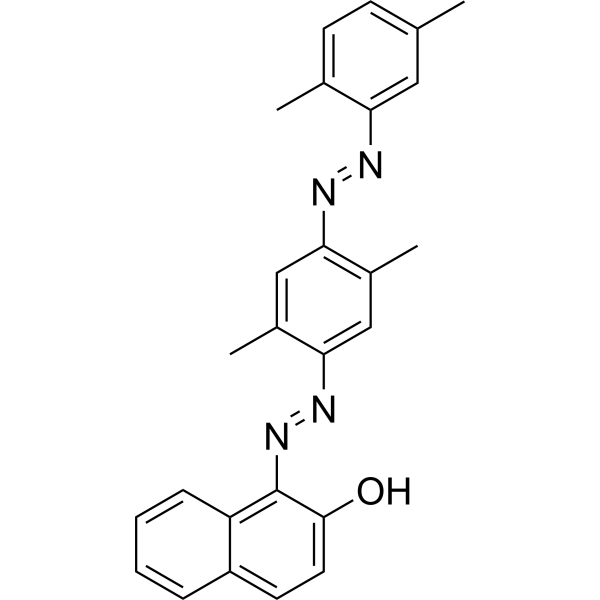
Oil Red O is a fat-soluble diazol dye, with a maximum absorption at 518 nm. Oil Red O stains neutral lipids and cholesteryl esters but not biological membranes. Oil Red O can be used for detecting and quantifying hepatic steatosis in mouse liver biopsies. Oil Red O staining efficiently helps to visualize the radical changes that occur in tissues as metabolic disease occurs and progresses.
For research use only. We do not sell to patients.
- CAS No.: 1320-06-5
- Formula: C26H24N4O
- Molecular Weight:408.49
-
Storage:
4°C, protect from light, stored under nitrogen
* In solvent : -80°C, 6 months; -20°C, 1 month (protect from light, stored under nitrogen)

To place orders, for customer services and technical support, please contact: MedChemExpress USA
Tel: 609-228-6898 E-mail: [email protected] [email protected]


-
 Biological Activity
-
Chemical Information
-
Solvent & Solubility
- Protocols
- Purity & Documentation
- References
-
 Help & FAQs


-
HY-D0718
Nile RedHydrophobic Fluorescent Stain -
HY-W090090
BODIPY 493/503Neutral Lipid Dye -
HY-N1446
Oleic acidMonounsaturated Fatty Acid -
HY-12318
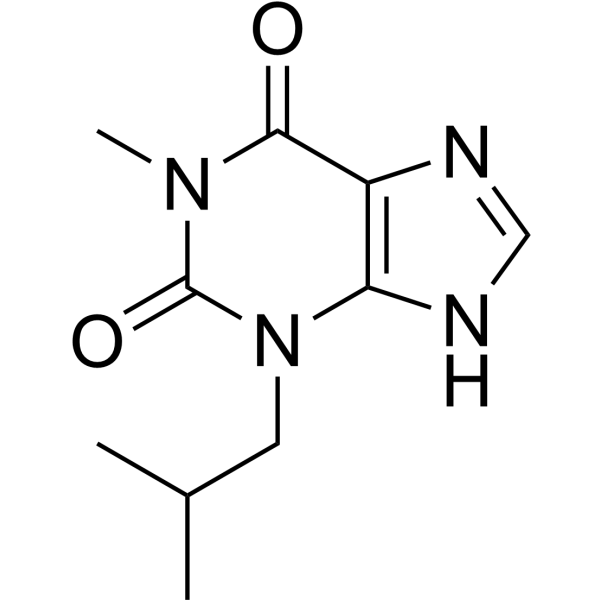
IBMXPDE Inhibitor -
HY-14648
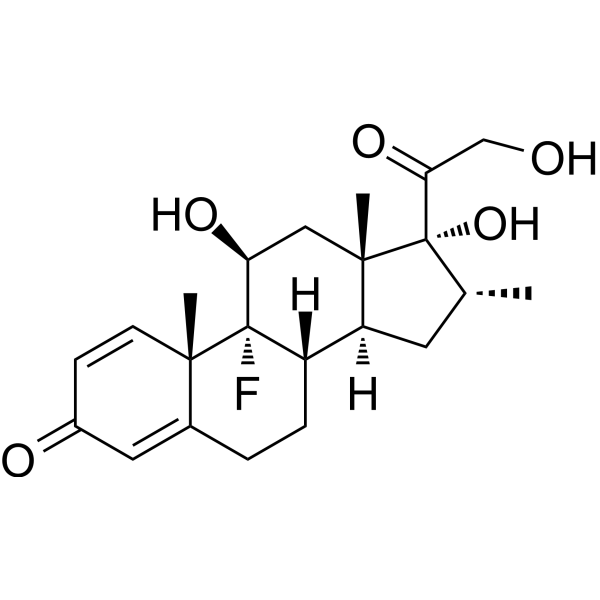
DexamethasoneGR Agonist -
HY-15925
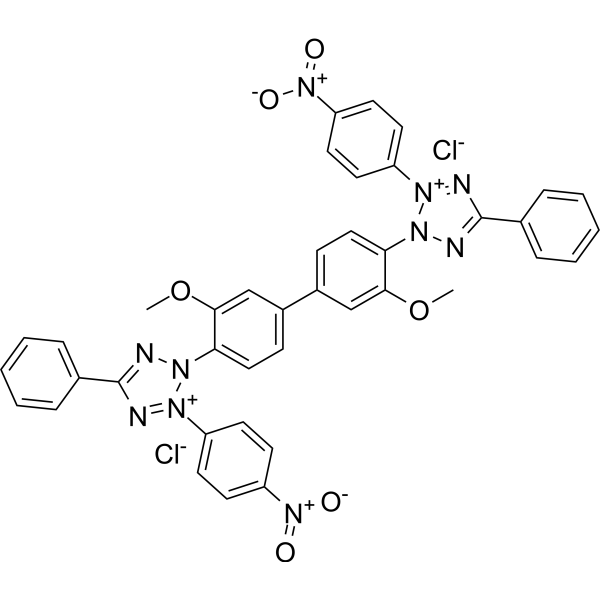
Nitro blue tetrazolium chlorideDehydrogenases Substrate -
HY-50202
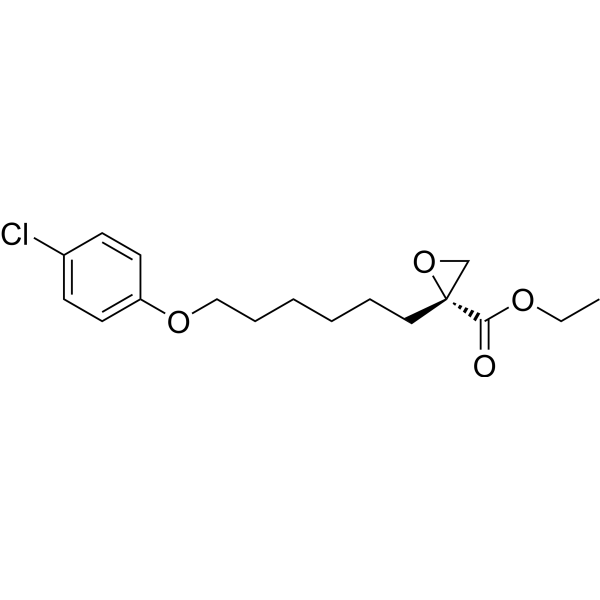
EtomoxirCPT1a Inhibitor -
HY-18739
Phorbol 12-myristate 13-acetatePKC Activator -

HY-P0035
Insulin (human)Recombinant Human Insulin -
HY-D0940
H2DCFDAROS-Sensitive Probe -
HY-17386
RosiglitazonePPARγ Agonist
Publications Citing Use of MedChemExpress (MCE) Oil Red O
More- Signal Transduct Target Ther. 2026 Mar 9;11(1):84. [Abstract]
- Adv Sci (Weinh). 2026 Jan 21:e17054. [Abstract]
- Food Chem. 2025 Nov 23:11:100330. [Abstract]
- Regen Biomater. 2025 Jun 16:12:rbaf056. [Abstract]
- Aging Cell. 2024 Oct;23(10):e14256. [Abstract]
- Life Sci. 2025 Jun 1:370:123571. [Abstract]
- Int Immunopharmacol. 2025 Jun 5:157:114768. [Abstract]
- Chem Biol Interact. 2026 Apr 25:429:111957. [Abstract]
- Sci Rep. 2025 Oct 21;15(1):36691. [Abstract]
- J Orthop Surg Res. 2023 Jul 29;18(1):546. [Abstract]
- J Biochem Mol Toxicol. 2024 Jan;38(1):e23624. [Abstract]
- J Mol Histol. 2026 Mar 17;57(2):117. [Abstract]
 Customer Validation & Images

-
Histological Imaging/Staining
-
Histological Imaging/Staining
-
Histological Imaging/Staining
-
Histological Imaging/Staining
-
Histological Imaging/Staining


Biological Activity
Description
In Vitro
Guide (The following is our recommended solution. This solution is merely a guideline and should be modified according to your specific needs.)
The complete experimental procedure for Oil Red O (ORO) staining of liposomes [2] :
1 Prepare the ORO stock solution
1). Add 500 mg of ORO powder and 100 mL of 100% isopropanol to a 250 mL bottle, and mix thoroughly.
2). After the solution is prepared, it should be stored in an airtight container to prevent exposure to light.
2 Prepare the ORO working solution
Dilute the ORO storage solution with water to 60% isopropanol (in a volume ratio of 3:2).
Before use, filter the working solution through a 0.2 μm cellulose acetate sterile syringe filter.
Note: To achieve the best solution quality, it is recommended to prepare the ORO working solution one day in advance and let it stand for overnight. If it needs to be used on the same day, the diluted solution should be mixed on a shaker for at least 2 hours. Before shaking, wrap the centrifuge tube with a paraffin film to prevent leakage.
3 Prepare Samples
At a temperature of 20°C, the nematodes were cultured on the nematode growth medium (NGM) inoculated with OP50 Escherichia coli (in the logarithmic late stage) until the target developmental stage was reached.
2). Add 1 mL of PBST solution (containing 0.01% Triton X-100) to the petri dish. Gently shake to separate the nematodes from the culture medium. Incline the petri dish and rinse it with 1 mL of PBST. Transfer the nematode suspension to a 1.5 mL centrifuge tube.
3). Centrifuge at 560 × g for 1 minute. Discard the supernatant and retain the precipitate. Repeat the process by washing with 1 mL of PBST three times. Finally, discard the supernatant and retain only 100 μL.
4). Add 600 μL of 40% isopropanol to the worm precipitate and shake for incubation at room temperature for 3 minutes.
5). Centrifuge at 560 × g for 30 seconds, discard the supernatant and retain only 100 μL. Be careful not to disturb the worm sediment.
Note: If performing high-throughput staining, the volume of PBST should be increased. The washing time of the nematodes in PBST should not exceed 15 minutes. If there are still bacteria in the supernatant, additional washing is required. Incubate with 40% isopropanol using a shaker or oscillator to ensure thorough mixing of the samples.
4 Lipid-Loaded Chromosomes
1). Add 600 μL of ORO working solution to each sample, and invert the centrifuge tube three times to thoroughly mix the nematodes with the staining solution.
2). Incubate at room temperature with rotation at 30 rpm for 2 hours.
3). Centrifuge at 560 × g for 1 minute, then discard the supernatant and retain only 100 μL.
4). Resuspend the sample in 600 μL of PBST and incubate it at 30 rpm for 30 minutes to remove any excess staining solution.
5). Centrifuge at 560 × g for 1 minute, then discard the supernatant and retain only 50 μL.
6). To better distinguish the reproductive cells from the intestinal cell nuclei of nematodes, 1 μL of DAPI can be added to 1 mL of ORO working solution. After staining for 2 hours, the samples can be prepared for imaging. The intestinal cell nuclei are larger, and the reproductive glands can be identified by the developing reproductive cells.
Note: After ORO staining, the nematodes may adhere to the wall of the centrifuge tube and fail to form a clear precipitate. If this occurs, you can perform another centrifugation or let it stand for at least 10 minutes to allow the nematodes to settle.
5 Production
1). Resuspend the worm precipitate in the remaining supernatant and mix thoroughly.
2). Take 5 μL of the nematode suspension and drop it onto a glass slide. Carefully cover the slide to prevent air bubbles.
3). After sealing the edges of the cover slip with nail polish, proceed with the imaging process.
Note: The fixed and stained nematodes may be stiff and difficult to aspirate. It is recommended to cut off the tip of the pipette tip to enlarge the aperture. If imaging cannot be performed immediately, the slide can be stored in a 4°C centrifuge tube rack for up to 24 hours.
6 Imaging
1). Use a microscope camera with color imaging function to capture the ORO-stained nematodes.
2). Use the 5X objective lens to capture the entire field of view of multiple nematodes, then switch to the 10X objective lens to observe the details of individual nematodes.
3). Export the image in TIF format to prevent data loss due to compression.
Note: If using ORO + DAPI staining, switch to fluorescence imaging mode.
7 Result Analysis
1). Import the image into Image J. If the file format is not recognized, it can be read using the Bio-Formats function in the plugin menu.
2). Under the "Stacks" function in the image menu, use "Images-to-Stack" to combine multiple images into a stack for comparison.
3). Adjust the "Brightness/Contrast" settings to enhance the visibility of the lipid droplets.
4). Classify the images based on the accumulation of lipids in the entire body or specific tissues.
5). To assess lipid localization and identify non-specific artifacts, you can select "Stack to RGB" in the "Color" option of the image menu, which will display the signals of the RGB channels respectively.
MedChemExpress (MCE) has not independently confirmed the accuracy of these methods. They are for reference only.


Chemical Information
-
CAS No. 1320-06-5
-
Appearance Solid
-
Molecular Weight 408.49
-
Formula C26H24N4O
-
Color Brown to black
-
SMILES
OC1=CC=C2C=CC=CC2=C1/N=N/C3=CC(C)=C(/N=N/C4=CC(C)=CC=C4C)C=C3C
-
Shipping
Room temperature in continental US; may vary elsewhere.
-
Storage
4°C, protect from light, stored under nitrogen
* In solvent : -80°C, 6 months; -20°C, 1 month (protect from light, stored under nitrogen)


Publications (12)
-
Journal Impact Factor
-
Most Recent
-
Signal Transduct Target Ther
Nature-inspired confined cascade enzyme nanoreactors for targeted atherosclerosis therapy. [Abstract]2026 Mar 9;11(1):84. PMID: 41803109 -
Adv Sci (Weinh)
OCTN2 Activates a Non-Canonical Carnitine Metabolic Pathway to Promote MASH-HCC Progression and Immunotherapy Resistance. [Abstract]2026 Jan 21:e17054. PMID: 41566533 -
Food Chem
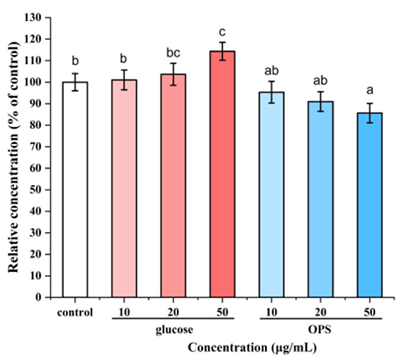
Oyster-derived polysaccharide modulates lipid metabolism and oxidative stress in Caenorhabditis elegans via distinct mechanisms from glucose. [Abstract]2025 Nov 23:11:100330. PMID: 41403465
Oil Red O purchased from MedChemExpress. Usage Cited in: Food Chem. 2025 Nov 23:11:100330. [Abstract]
Oil Red O (ORO) is used to visualize lipid droplets in C. elegans. ORO stock solution (6 mg/mL in isopropanol) was prepared and equilibrated at room temperature overnight. A working solution was then made by mixing the stock solution with deionized water (60:40 ratio) and filtering it.
-
Regen Biomater
Matrix stiffness boosts PDAC chemoresistance via SCD1-dependent lipid metabolic reprogramming. [Abstract]2025 Jun 16:12:rbaf056. PMID: 40741620 -
Aging Cell
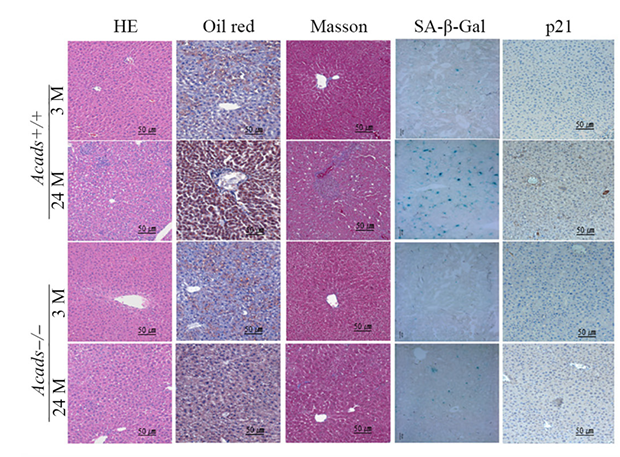
Aging-induced short-chain acyl-CoA dehydrogenase promotes age-related hepatic steatosis by suppressing lipophagy. [Abstract]2024 Oct;23(10):e14256. PMID: 38898632
Oil Red O purchased from MedChemExpress. Usage Cited in: Aging Cell. 2024 Oct;23(10):e14256. [Abstract]
Representative images of liver sections stained with H&E, Oil Red O, Masson's trichrome, senescence‐associated (SA)‐β‐galactosidase, or p21 antibody (scale bar = 50 μm).
-
Life Sci
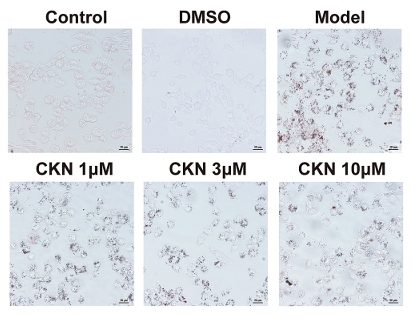
CKN reduces TLR4-mediated inflammation and cerebral I/R injury by activating the LXRα/ABCA1 pathway in microglia. [Abstract]2025 Jun 1:370:123571. PMID: 40107493
Oil Red O purchased from MedChemExpress. Usage Cited in: Life Sci. 2025 Jun 1:370:123571. [Abstract]
The results of Oil Red O staining indicated that CKN effectively attenuates cholesterol-induced lipid accumulation in BV2 cells.
-
Int Immunopharmacol
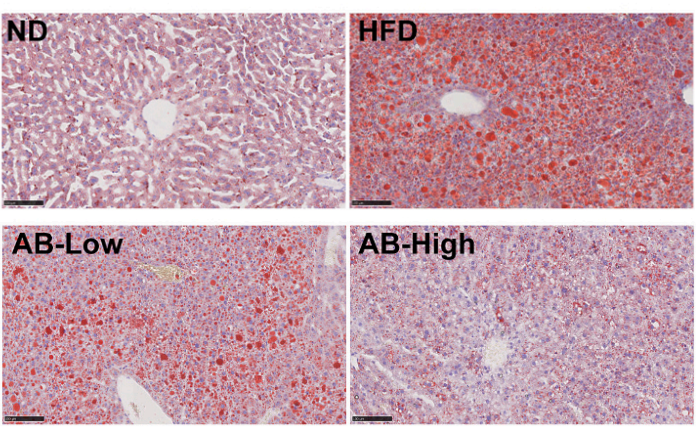
Alisol B alleviates MASLD by activating liver autophagy and fatty acid oxidation via Ces2a. [Abstract]2025 Jun 5:157:114768. PMID: 40327987
Oil Red O purchased from MedChemExpress. Usage Cited in: Int Immunopharmacol. 2025 Jun 5:157:114768. [Abstract]
Histological assessment using Oil Red O staining revealed that Alisol B treatment significantly reduced both the size and quantity of hepatic lipid droplets compared to the HFD group.
-
Chem Biol Interact
Cyflumetofen induces hepatic steatosis and disrupts lipid metabolism in zebrafish larvae. [Abstract]2026 Apr 25:429:111957. PMID: 41654006 -
Sci Rep
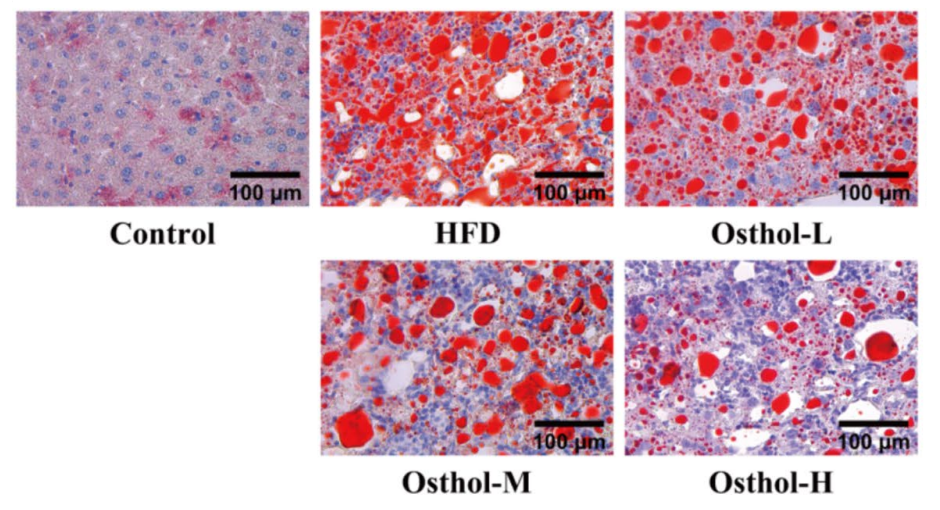
Osthol ameliorates obesity-associated lipid metabolic disorders by inhibiting ADRA1D-dependent Th17 cell differentiation. [Abstract]2025 Oct 21;15(1):36691. PMID: 41120583
Oil Red O purchased from MedChemExpress. Usage Cited in: Sci Rep. 2025 Oct 21;15(1):36691. [Abstract]
Oil red O staining of liver sections further confirmed that OST dose-dependently diminished intrahepatic lipid accumulation. The oil red O working solution was prepared by dissolving 0.5% oil red O in isopropanol, followed by thorough mixing at room temperature under light-protected conditions and filtration. Prior to staining, sections were immersed in 60% isopropanol for 1 min and subsequently incubated in oil red O working solution for 10 min.
-
J Orthop Surg Res
2023 Jul 29;18(1):546. PMID: 37516879 -
J Biochem Mol Toxicol
miRNA-211-5p inhibition enhances the protective effect of hucMSC-derived exosome in Aβ1-40 -induced SH-SY5Y cells by increasing NEP expression. [Abstract]2024 Jan;38(1):e23624. PMID: 38229323 -
J Mol Histol
METTL14 mitigates osteoporosis progression by promoting osteogenic differentiation of BMMSCs through improving mitochondrial dysfunction. [Abstract]2026 Mar 17;57(2):117. PMID: 41843018


Solvent & Solubility
In Vitro:
DMSO : 2 mg/mL (4.90 mM; ultrasonic and warming and heat to 60°C; Hygroscopic DMSO has a significant impact on the solubility of product, please use newly opened DMSO)
Please refer to the solubility information to select the appropriate solvent. Once prepared, please aliquot and store the solution to prevent product inactivation from repeated freeze-thaw cycles.
Storage method and period of stock solution: -80°C, 6 months; -20°C, 1 month (protect from light, stored under nitrogen). When stored at -80°C, please use it within 6 months. When stored at -20°C, please use it within 1 month.
Please refer to the solubility information to select the appropriate solvent. Once prepared, please aliquot and store the solution to prevent product inactivation from repeated freeze-thaw cycles.
Storage method and period of stock solution: -80°C, 6 months; -20°C, 1 month (protect from light, stored under nitrogen). When stored at -80°C, please use it within 6 months. When stored at -20°C, please use it within 1 month.
Concentration (start) × Volume (start) = Concentration (final) × Volume (final)


Purity & Documentation
-
Data Sheet (280 KB)
-
SDS (394 KB)
- English - EN (394 KB)
- Français - FR (394 KB)
- Deutsch - DE (394 KB)
- Norwegian - NO (394 KB)
- Español - ES (394 KB)
- Swedish - SV (394 KB)
- Italian - IT (394 KB)
- Korean - KR (394 KB)
- Portuguese - PT (394 KB)
-
Handling Instructions (2659 KB)
References
[1]. Mehlem A, et al. Imaging of neutral lipids by oil red O for analyzing the metabolic status in health and disease. Nat Protoc. 2013 Jun;8(6):1149-54. [Content Brief]
[2]. Escorcia W, et al. Quantification of Lipid Abundance and Evaluation of Lipid Distribution in Caenorhabditis elegans by Nile Red and Oil Red O Staining. J Vis Exp. 2018 Mar 5;(133):57352. [Content Brief]


Complete Stock Solution Preparation Table
Please refer to the solubility information to select the appropriate solvent. Once prepared, please aliquot and store the solution to prevent product inactivation from repeated freeze-thaw cycles.
Storage method and period of stock solution: -80°C, 6 months; -20°C, 1 month (protect from light, stored under nitrogen). When stored at -80°C, please use it within 6 months. When stored at -20°C, please use it within 1 month.
| Optional Solvent | Concentration Solvent Mass | 1 mg | 5 mg | 10 mg | 25 mg |
|---|---|---|---|---|---|
| DMSO | 1 mM | 2.4480 mL | 12.2402 mL | 24.4804 mL | 61.2010 mL |


Oil Red O Related Classifications
HY-D1168 Related Classifications
 Powered by Bioz