



Lipid Droplet Dyes
- 1
- 2
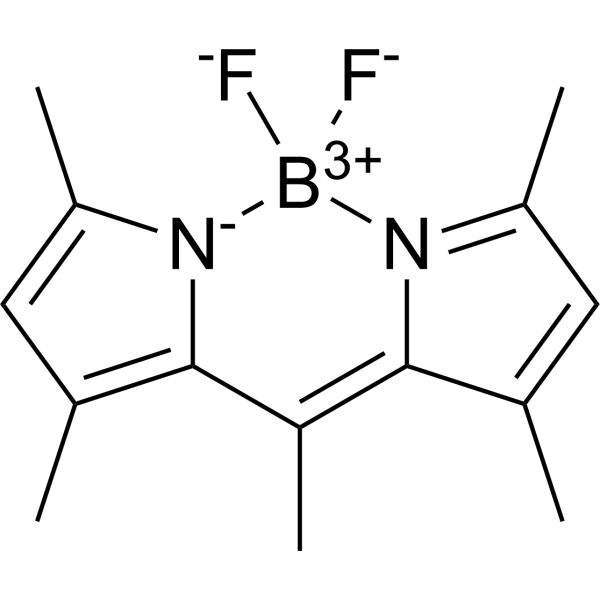
- Formula: C14H17BF2N2
- Molecular Weight: 262.11
BODIPY493/503 is a BODIPY dye. BODIPY dye is a small molecule dye with strong ultraviolet absorption ability, its fluorescence peak is relatively sharp, and the quantum yield is high. They are relatively insensitive to the polarity and pH of the environment and are relatively stable under different physiological conditions. Due to its structural asymmetry, BODIPY derives a variety of structural products. BODIPY lipid droplet dyes can well pass through the cell membrane into the cell, and localize the neutral lipids in the cell to specifically stain the lipid droplets, which can be used for labeling of live cells and fixed cells. Maximum excitation/emission wavelength: 493/503 nm.
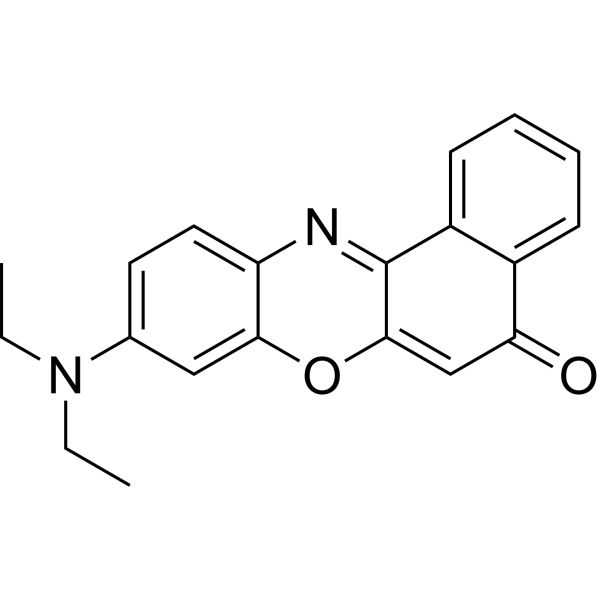
- Formula: C20H18N2O2
- Molecular Weight: 318.37
Nile red (Nile blue oxazone) is a lipophilic stain. Nile red has environment-sensitive fluorescence. Nile red is intensely fluorescent in a lipid-rich environment while it has minimal fluorescence in aqueous media. Nile red is an excellent vital stain for the detection of intracellular lipid droplets by fluorescence microscopy and flow cytof uorometry. Nile red stains intracellular lipid droplets red. The fluorescence wavelength is 543/598 nm.
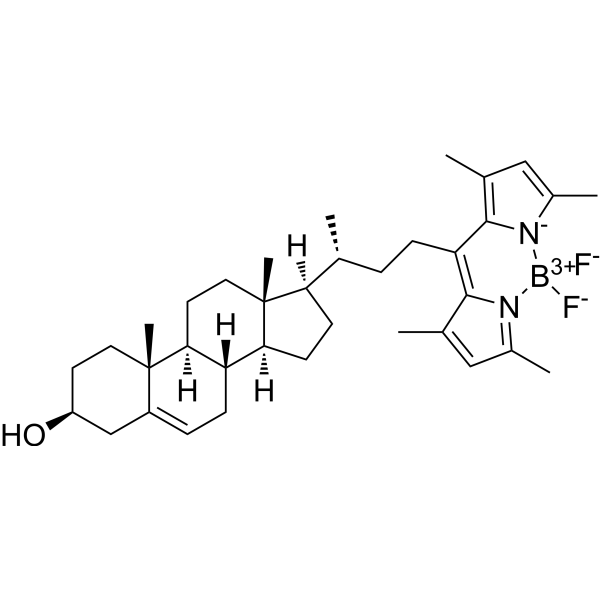
- Formula: C36H51BF2N2O
- Molecular Weight: 576.61
BODIPY-cholesterol is an intrinsically lipophilic, and cell-permeable analog of cholesterol with a fluorescent BODIPY group. BODIPY-cholesterol can be used to monitor sterol uptake and inter-organelle sterol flux in cells. (Excitation/Emission: 505/515 nm).
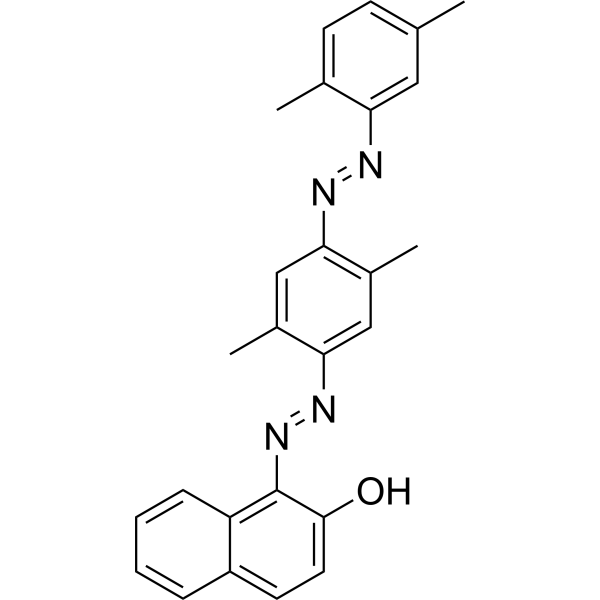
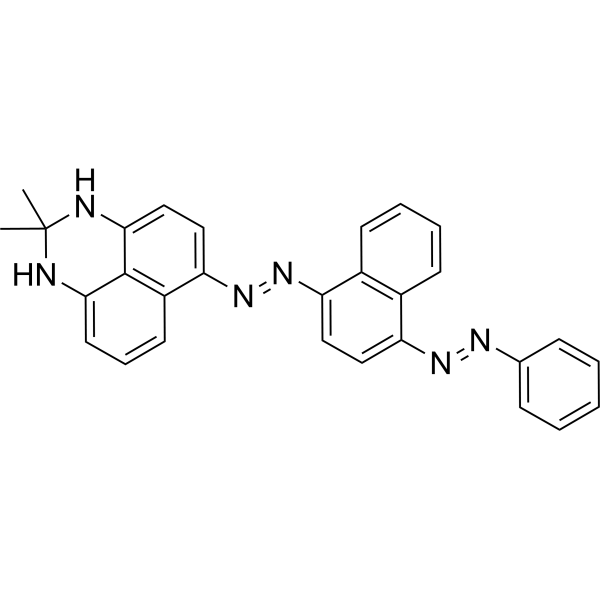
- Formula: C26H24N4O
- Molecular Weight: 408.49
Oil Red O is a fat-soluble diazol dye, with a maximum absorption at 518 nm. Oil Red O stains neutral lipids and cholesteryl esters but not biological membranes. Oil Red O can be used for detecting and quantifying hepatic steatosis in mouse liver biopsies. Oil Red O staining efficiently helps to visualize the radical changes that occur in tissues as metabolic disease occurs and progresses.
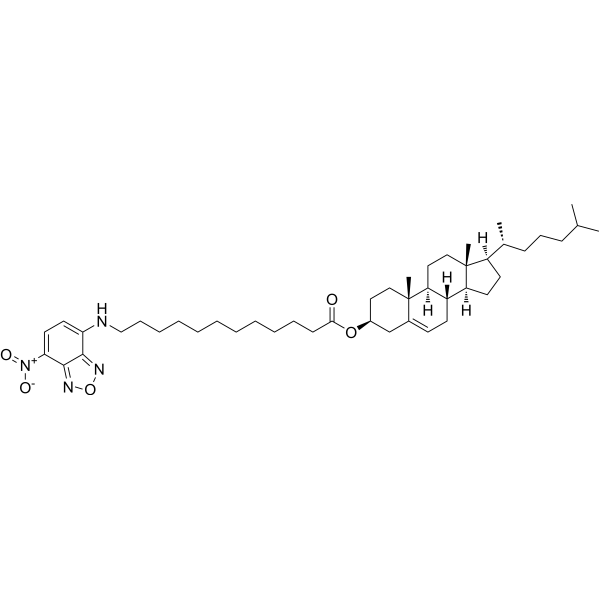
- Formula: C45H70N4O5
- Molecular Weight: 747.06
3-C12-NBD-cholesterol is a fluorescent cholesterol analog that can be used for measuring membrane and intracellular trafficking dynamics.
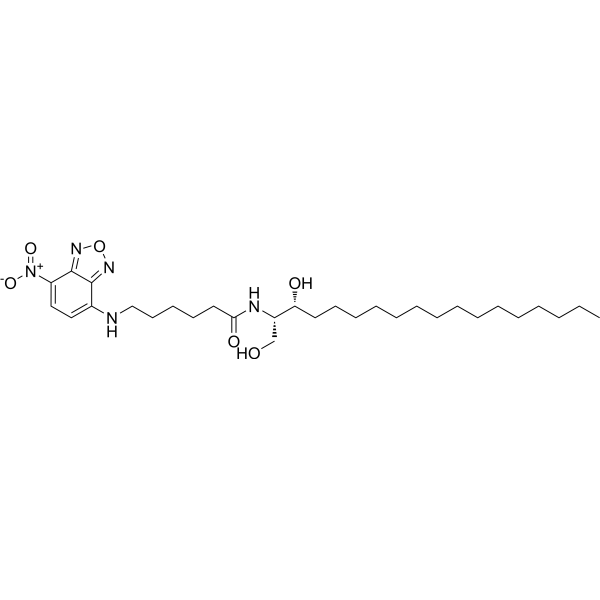
- Formula: C30H51N5O6
- Molecular Weight: 577.76
C6-NBD Sphinganine is a sphinganine analog and can be used as fluorescent dye for labeling fatty acid.
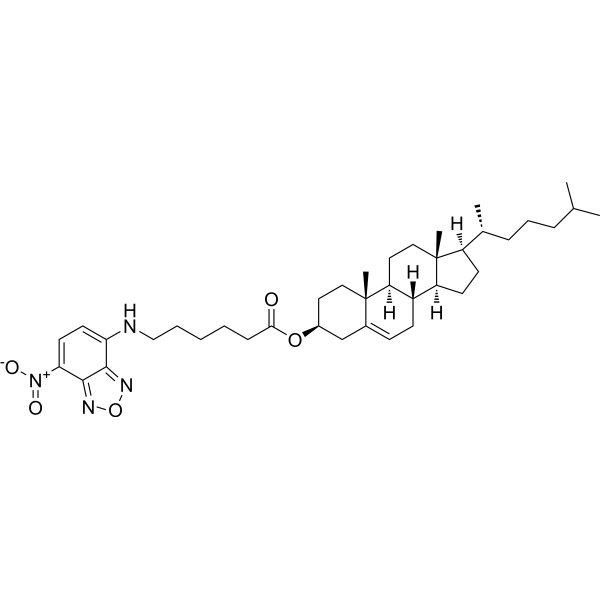
- Formula: C39H58N4O5
- Molecular Weight: 662.90
3-C6-NBD-cholesterol is a fluorescent analog of Chol that can be used to measure the kinetics of membrane and intracellular trafficking.
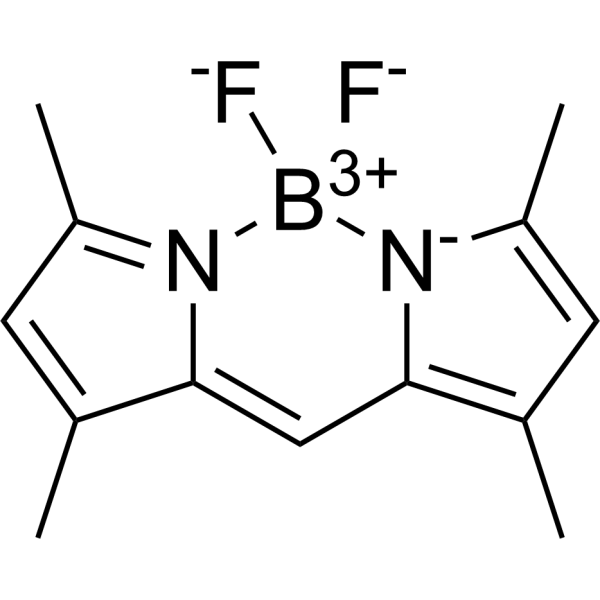
- Formula: C13H15BF2N2
- Molecular Weight: 248.08
BODIPY505/515 is a BODIPY dye. BODIPY dye is a small molecule dye with strong ultraviolet absorption ability, its fluorescence peak is relatively sharp, and the quantum yield is high. They are relatively insensitive to the polarity and pH of the environment and are relatively stable under different physiological conditions. Due to its structural asymmetry, BODIPY derives a variety of structural products. BODIPY lipid droplet dyes can well pass through the cell membrane into the cell, and localize the neutral lipids in the cell to specifically stain the lipid droplets, which can be used for labeling of live cells and fixed cells. Maximum excitation/emission wavelength: 505/515 nm.
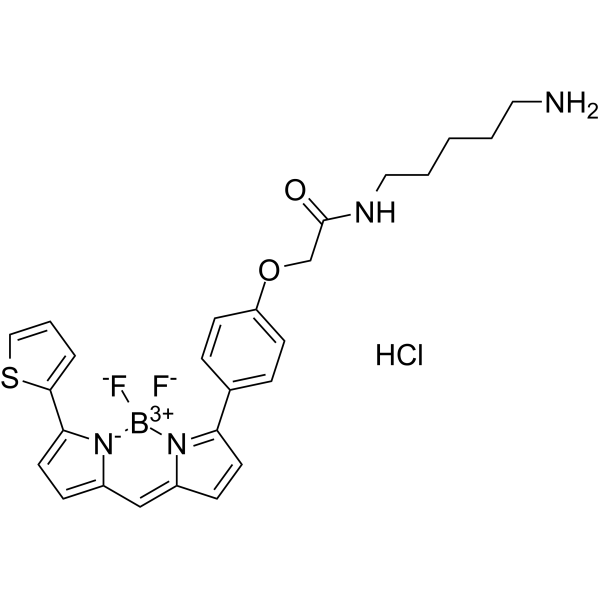
- Formula: C26H28BClF2N4O2S
- Molecular Weight: 544.85
BODIPY TR Cadaverine, a cadaverine derivative, is a red fluorescent dye. BODIPY TR Cadaverine can be used in a a highly sensitive and robust fluorescent displacement assay, which binds to native LPS strongly, specifically recognizing lipid A, and is competitively displaced by compounds displaying an affinity for lipid A.
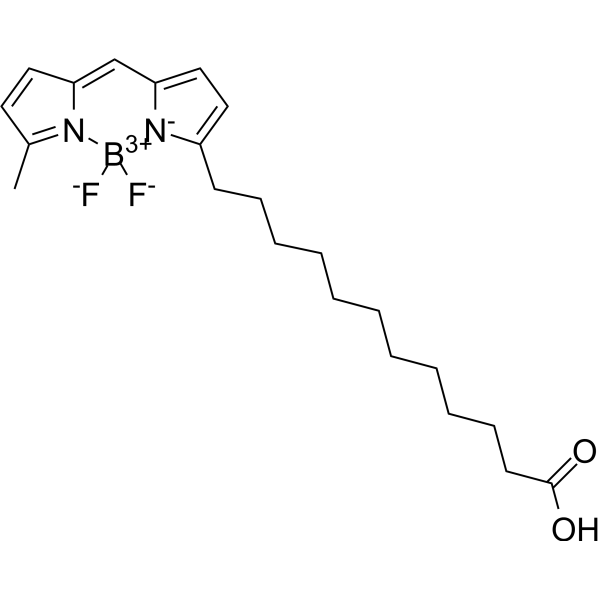
- Formula: C22H31BF2N2O2
- Molecular Weight: 404.30
BODIPY 500/510 C1, C12 is a BODIPY dye. BODIPY dye is a small molecule dye with strong ultraviolet absorption ability, its fluorescence peak is relatively sharp, and the quantum yield is high. They are relatively insensitive to the polarity and pH of the environment and are relatively stable under different physiological conditions. Due to its structural asymmetry, BODIPY derives a variety of structural products. BODIPY lipid droplet dyes can well pass through the cell membrane into the cell, and localize the neutral lipids in the cell to specifically stain the lipid droplets, which can be used for labeling of live cells and fixed cells. Maximum excitation/emission wavelength: 500/510 nm. Protect from light, stored at -20°C.
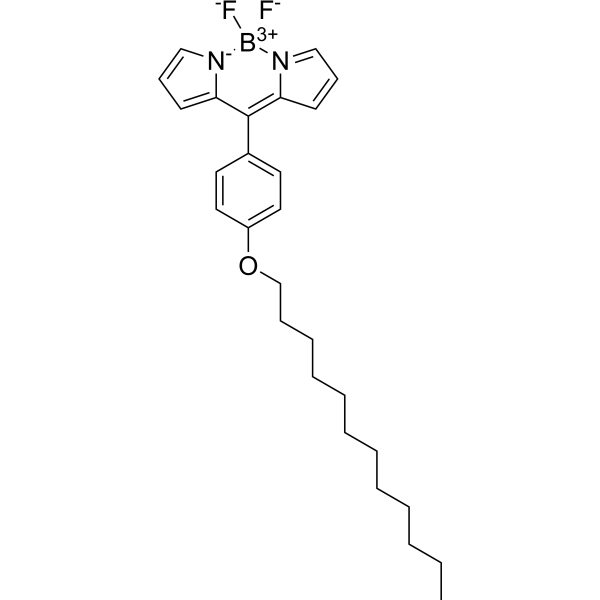
- Formula: C27H35BF2N2O
- Molecular Weight: 452.39
BODIPY-C12 is a boron-dipyrromethene derivative containing a lipophilic tail (excitation 490 nm). BODIPY-C12 is a hydrophobic molecular and sensitivity to the surrounding environment and can be used to quantify viscosity, critical micelle concentration, and critical micelle temperature.
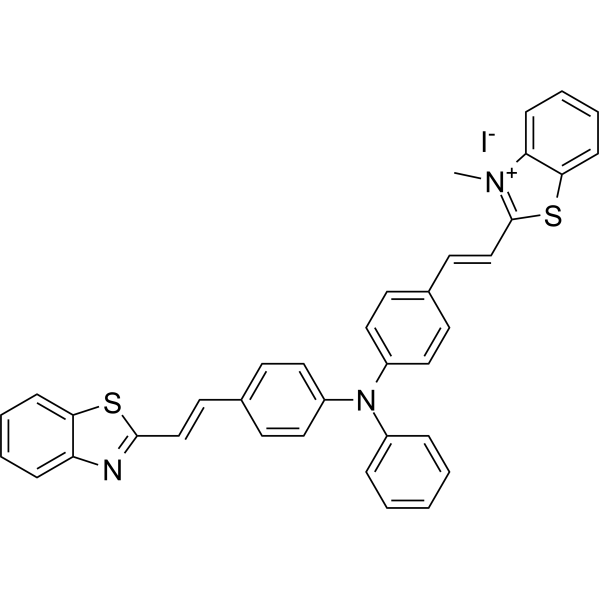
- Formula: C37H28IN3S2
- Molecular Weight: 705.67
BETA-1 is the first twisted intramolecular charge transfer (TICT)-aggregation-induced emission (AIE) integration molecule. BETA-1 emits cyan fluorescence in lipid droplets (LDs) and red fluorescence in mitochondria. BETA-1 can be used for the simultaneous and dual-color imaging of LDs and mitochondria in vivo and in vitro.
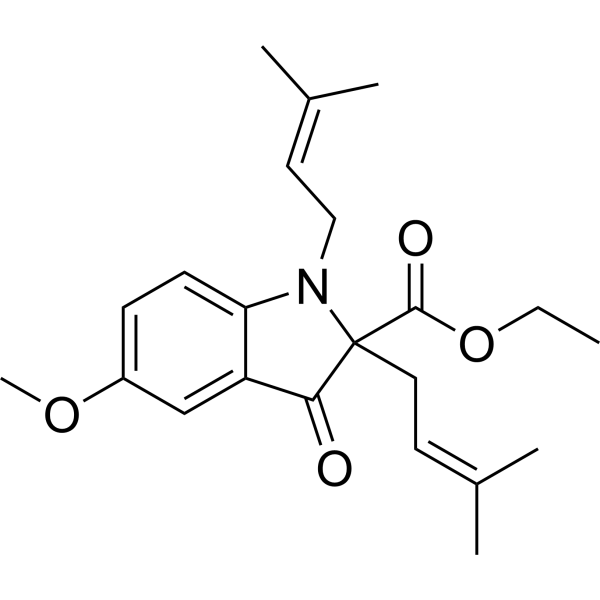
- Formula: C22H29NO4
- Molecular Weight: 371.47
LipidGreen 2 is a second generation small molecule probe for lipid imaging. LipidGreen 2 has a better fluorescence signal compared with the previous LipidGreen, and selectively stains neutral lipids in cells and fat deposits in live zebrafish.

- Formula: C51H50Cl2N2O23
- Molecular Weight: 1129.85
Fluo-3AM (solution) is a fluorecent Ca2+ chelator, with high affinity for calcium. Fluo-3 AM can specifically identify intracellular calcium ions, with high sensitivity, low cytotoxicity, increased AM acetylmethyl ester can enter the cell well, after being sheared by the intracellular esterase stay in the cell to bind to calcium ions, produce strong fluorescence.
Solvent and concentration: DMSO: 5 mM
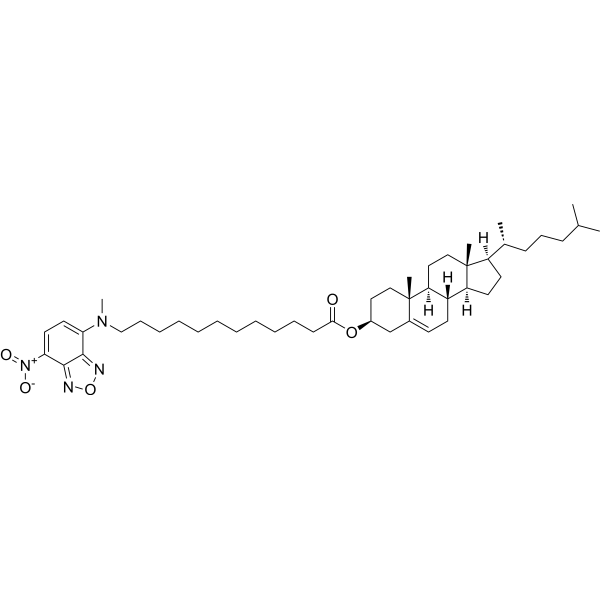
- Formula: C46H72N4O5
- Molecular Weight: 761.09
C-12 NBD cholesterol is a cholesterol derivative with a hydrophilic fluorophore tag (NBD: Ex=465 nm, Em=535 nm). C-12 NBD cholesterol can be used to study the utilization and metabolism of cholesterol.

- Formula: C34H36IN5O2
- Molecular Weight: 673.59
CQPP is a Fluorescent probe designed for monitoring polarity changes in the cellular microenvironment, including polarity tracking of lipid droplets/nuclei during ferroptosis. CQPP exhibits ratiometric fluorescence emission and fluorescence lifetime variations in response to polarity changes; a nonpolar environment stimulates fluorescence from the locally excited (LE) state, while a polar environment drives solvation relaxation to the intramolecular charge transfer (ICT) state, which attenuates the LE emission at ~470 nm and simultaneously enhances the ICT emission at ~670 nm. CQPP binds to intranuclear DNA through electrostatic interactions and hydrogen bonds in the DNA minor groove, which enhances its emission at ~670 nm and prolongs its fluorescence lifetime. CQPP can simultaneously target lipid droplets (green LE fluorescence) and the nucleus (red ICT fluorescence). The detection wavelengths of CQPP are Ex/Em = 405/470 nm and Ex/Em = 405/670 nm, and it also supports fluorescence lifetime imaging via 810 nm two-photon excitation.

- Formula: C34H29BF2N2O4
- Molecular Weight: 578.41
LDs-BCA is a BF2-chelated AIE fluorescent probe with a positive solvatochromic effect, which can specifically target intracellular lipid droplets (Ex/Em = 565/620-730 nm). LDs-BCA monitors the dynamic changes in the morphology, size and quantity of intracellular lipid droplets under oleic acid induction and starvation stress. LDs-BCA, after intraperitoneal injection, accumulates in the gastric fat of living obese mice, allowing continuous monitoring via its fluorescent signal. LDs-BCA is applicable to studies related to intracellular lipid droplet polarity imaging and in vivo gastric fat visualization.

- Formula: C26H14N2
- Molecular Weight: 354.40
LW-1 is a fluorescent probe targeting polarity detection of lipid droplets (LD). LW-1 produces a strong solvatochromic effect via the intramolecular charge transfer (ICT) mechanism: as environmental polarity increases, the emission wavelength red-shifts and the fluorescence intensity decreases significantly (emission at 557 nm in toluene and 642 nm in acetonitrile, with an 85 nm red-shift); fluorescence enhances in low-polarity lipid droplets. LW-1 can be used for lipid droplet polarity detection, differentiation between cancer cells and normal cells, monitoring of lipid droplet polarity changes under different physiological conditions such as starvation, oleic acid treatment and oxidative stress, as well as ex vivo imaging of polarity changes in lung tissues of asthmatic mice. The detection wavelength for cell imaging with LW-1 is Ex/Em = 405/500-550 nm (green channel).

- Formula: C26H27BF2N2O4
- Molecular Weight: 480.31
SSR-LDs is a fluorescent probe for lipid droplet polarity detection and lipid droplet imaging. SSR-LDs exhibits polarity-dependent fluorescence: it produces intense short-wavelength emission in low-polarity environments, while generating weak long-wavelength emission in high-polarity environments. SSR-LDs enters cells via free diffusion, specifically targets lipid droplets, and is unaffected by intracellular viscosity or pH values ranging from 4.5 to 9.0. SSR-LDs shows variable Ex/Em wavelengths in different solvents, including 590/663 nm in THF, 600/660 nm in mouse tissue and in vivo imaging, and an excitation wavelength of 580 nm with an emission wavelength range of 610-750 nm in cell imaging. SSR-LDs can be used for research related to fatty liver, liver injury and hepatitis.
- 1
- 2



