1. Immunology/Inflammation PI3K/Akt/mTOR Epigenetics Membrane Transporter/Ion Channel Neuronal Signaling Anti-infection
  2. COX AMPK Potassium Channel Chloride Channel Calcium Channel Parasite
  3. Flufenamic acid

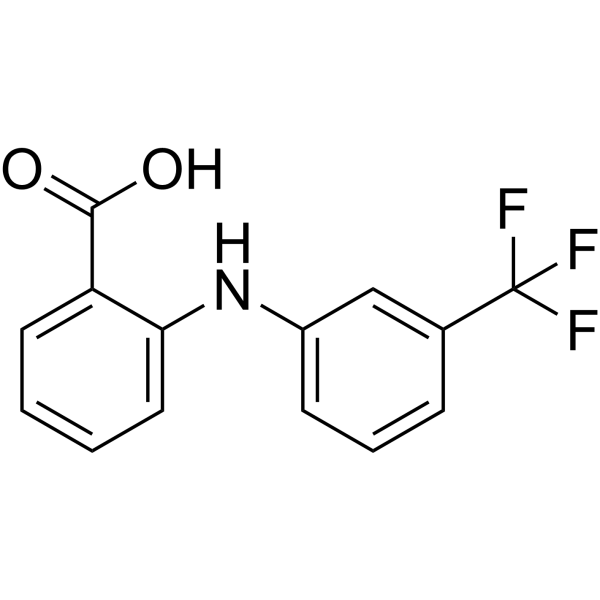
Flufenamic acid is a non-steroidal anti-inflammatory agent, inhibits cyclooxygenase (COX), activates AMPK, and also modulates ion channels, blocking chloride channels and L-type Ca2+ channels, modulating non-selective cation channels (NSC), activating K+ channels. Flufenamic acid binds to the central pocket of TEAD2 YBD and inhibits both TEAD function and TEAD-YAP-dependent processes, such as cell migration and proliferation.

For research use only. We do not sell to patients.

CAS No. : 530-78-9

Size Price Stock Quantity
Solid + Solvent (Highly Recommended)
10 mM * 1 mL in DMSO
ready for reconstitution
In-stock
Solution
10 mM * 1 mL in DMSO In-stock
Solid
100 mg In-stock
200 mg   Get quote  
500 mg   Get quote  

* Please select Quantity before adding items.

This product is a controlled substance and not for sale in your territory.

Customer Review

Based on 9 publication(s) in Google Scholar

Other Forms of Flufenamic acid:

Top Publications Citing Use of Products

    Flufenamic acid purchased from MedChemExpress. Usage Cited in: Burns Trauma. 2025 Feb 17:13:tkaf007.

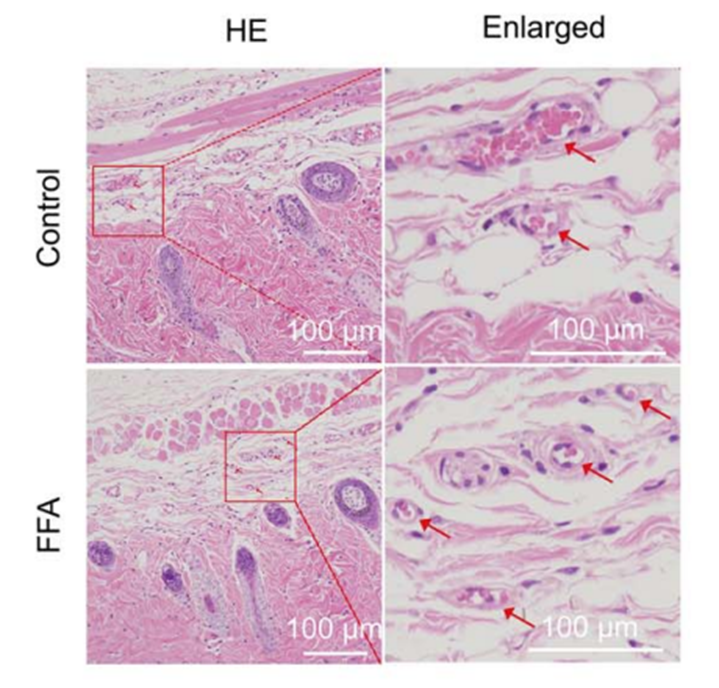
    HE staining samples from Flufenamic acid (FFA) (12 mg/kg, i.p.) and control groups in the peri-necrotic region reveal blood vessel density.

    Flufenamic acid purchased from MedChemExpress. Usage Cited in: Burns Trauma. 2025 Feb 17:13:tkaf007.

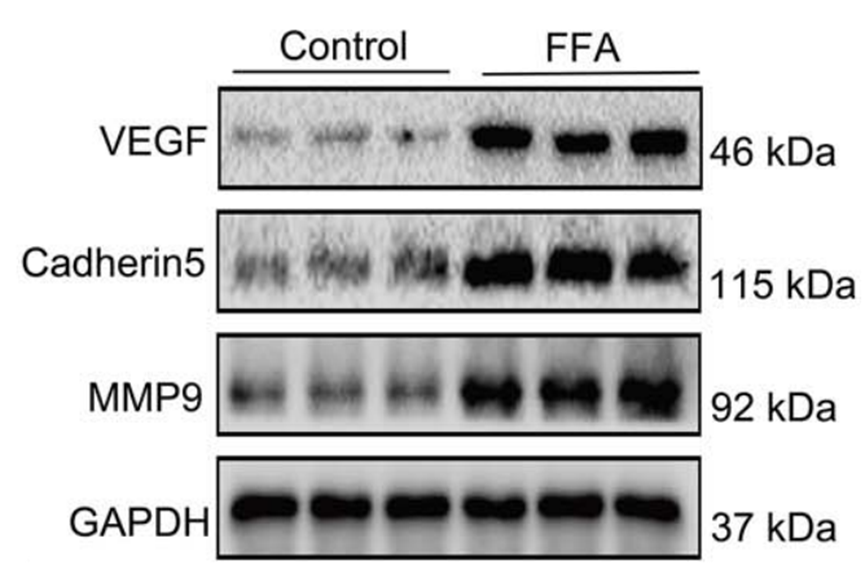
    WB analysis of mouse flaps showing VEGF, Cadherin5, and MMP9 expression with GAPDH as the reference treated with Flufenamic acid (FFA) (12 mg/kg, i.p.).

    Flufenamic acid purchased from MedChemExpress. Usage Cited in: Burns Trauma. 2025 Feb 17:13:tkaf007.

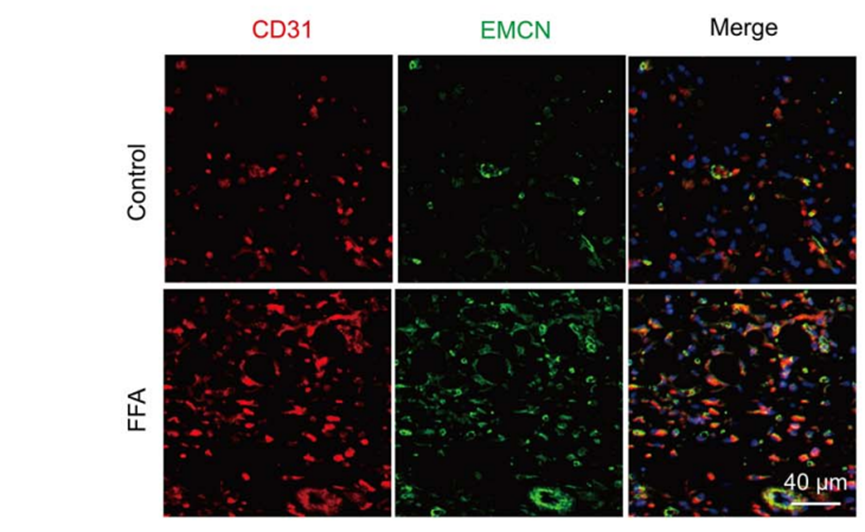
    On Day 7 postoperatively, flaps from the stated groups were stained with CD31 and EMCN via IF treated with Flufenamic acid (FFA) (12 mg/kg, i.p.).
    • Biological Activity

    • Protocol

    • Purity & Documentation

    • References

    • Customer Review

    Description

    Flufenamic acid is a non-steroidal anti-inflammatory agent, inhibits cyclooxygenase (COX), activates AMPK, and also modulates ion channels, blocking chloride channels and L-type Ca2+ channels, modulating non-selective cation channels (NSC), activating K+ channels. Flufenamic acid binds to the central pocket of TEAD2 YBD and inhibits both TEAD function and TEAD-YAP-dependent processes, such as cell migration and proliferation.

    IC50 & Target

    L-type calcium channel


    Cellular Effect
    Cell Line Type Value Description References
    COS-7 EC50
    100 μM
    Compound: 14; FFA
    Activation of TREK1 (unknown origin) expressed in COS7 cells assessed as increase in whole cell currents at +50 mV relative to control
    Activation of TREK1 (unknown origin) expressed in COS7 cells assessed as increase in whole cell currents at +50 mV relative to control
    [PMID: 26588045]
    CWR22R IC50
    115 μM
    Compound: FLU
    Antiproliferative activity against human 22Rv1 cells after 72 hrs by sulforhodamine B colorimetric proliferation assay
    Antiproliferative activity against human 22Rv1 cells after 72 hrs by sulforhodamine B colorimetric proliferation assay
    [PMID: 28881288]
    CWR22R IC50
    115 μM
    Compound: FLU
    Antiproliferative activity against human 22Rv1 cells after 72 hrs by sulforhodamine B colorimetric assay
    Antiproliferative activity against human 22Rv1 cells after 72 hrs by sulforhodamine B colorimetric assay
    [PMID: 29602039]
    HEK293 EC50
    474 μM
    Compound: 1
    Activation of human TRESK channel expressed in HEK293 cells assessed as induction of channel current by whole cell patch clamp assay
    Activation of human TRESK channel expressed in HEK293 cells assessed as induction of channel current by whole cell patch clamp assay
    [PMID: 27641472]
    HEK293 EC50
    7 μM
    Compound: FFA
    Agonist activity at human TRPA1 expressed in HEK293 cells assessed as increase in calcium influx by Fluo-4-AM dye based fluorescence assay
    Agonist activity at human TRPA1 expressed in HEK293 cells assessed as increase in calcium influx by Fluo-4-AM dye based fluorescence assay
    [PMID: 30878828]
    LNCaP EC50
    200 μM
    Compound: 5, flufenamic acid
    Decrease in androgen receptor protein expression in LNCaP cells by Western blotting
    Decrease in androgen receptor protein expression in LNCaP cells by Western blotting
    [PMID: 17383188]
    LNCaP IC50
    > 50 μM
    Compound: 7, FLUF
    Transcriptional activity at human androgen receptor BF3 site stably transfected in eGFP-expressing human LNCAP cells after 5 days by fluorometric analysis
    Transcriptional activity at human androgen receptor BF3 site stably transfected in eGFP-expressing human LNCAP cells after 5 days by fluorometric analysis
    [PMID: 22047606]
    In Vitro

    Flufenamic acid is a non-steroidal anti-inflammatory agent, inhibits cyclooxygenase (COX), and also modulates ion channels, blocking chloride channels and L-type Ca2+ channels, modulating non-selective cation channels (NSC), activating K+ channels. Flufenamic acid inhibits a wide spectrum of TRP channels, including: C3, C7, M2, M3, M4, M5, M7, M8, V1, V3, and V4 but activates at least two TRP channels (C6 and A1)[1]. Flufenamic acid induces AMPK activation in T84 cells, and such an effect is via a direct stimulation of calcium/calmodulin-dependent protein kinase kinase beta (CaMKKβ) activity[2]. Moreover, Flufenamic acid (FFA; 5-50 μM) dose-dependently inhibits cAMP-dependent Cl- secretion in intact T84 cells, suppresses CFTR-mediated apical ICl-, and blocks the Ca2+-dependent Cl- secretion in a dose-dependent manner with IC50 of appr 10 μM and near complete inhibition at 100 μM in T84 cell monolayers, but shows no effect on Na+-K+ ATPase or NKCC in T84 cells[3]. Ufenamat at low concentrations can promote osteogenesis of bone marrow mesenchymal stem cells (mBMMSCs) by co-culture with mouse skin mesenchymal stem cells (mSMSCs) [5].

    MedChemExpress (MCE) has not independently confirmed the accuracy of these methods. They are for reference only.

    In Vivo

    Flufenamic acid (50 mg/kg, i.p.) has anti-inflammatory effect in a mouse model of Vibrio cholerae El Tor variant (EL)-induced diarrhea and significantly abrogates EL-induced intestinal fluid secretion and barrier disruption at 20 mg/kg. Furthermore, Flufenamic acid suppresses NF-κB nuclear translocation and expression of proinflammatory mediators and promotes AMPK phosphorylation in the EL-infected mouse intestine[2].

    MedChemExpress (MCE) has not independently confirmed the accuracy of these methods. They are for reference only.

    Molecular Weight

    281.23

    Formula

    C14H10F3NO2

    CAS No.
    Appearance

    Solid

    Color

    White to off-white

    SMILES

    O=C(O)C1=CC=CC=C1NC2=CC=CC(C(F)(F)F)=C2

    Shipping

    Room temperature in continental US; may vary elsewhere.

    Storage
    Powder -20°C 3 years
    4°C 2 years
    In solvent -80°C 1 year
    -20°C 6 months
    Solvent & Solubility
    In Vitro: 

    DMSO : 100 mg/mL (355.58 mM; Need ultrasonic; Hygroscopic DMSO has a significant impact on the solubility of product, please use newly opened DMSO)

    Preparing
    Stock Solutions
    Concentration Solvent Mass 1 mg 5 mg 10 mg
    1 mM 3.5558 mL 17.7790 mL 35.5581 mL
    5 mM 0.7112 mL 3.5558 mL 7.1116 mL
    View the Complete Stock Solution Preparation Table

    * Please refer to the solubility information to select the appropriate solvent. Once prepared, please aliquot and store the solution to prevent product inactivation from repeated freeze-thaw cycles.
    Storage method and period of stock solution: -80°C, 1 year; -20°C, 6 months. When stored at -80°C, please use it within 1 year. When stored at -20°C, please use it within 6 months.

    • Molarity Calculator

    • Dilution Calculator

    Mass (g) = Concentration (mol/L) × Volume (L) × Molecular Weight (g/mol)

    Mass
    =
    Concentration
    ×
    Volume
    ×
    Molecular Weight *

    Concentration (start) × Volume (start) = Concentration (final) × Volume (final)

    This equation is commonly abbreviated as: C1V1 = C2V2

    Concentration (start)

    C1

    ×
    Volume (start)

    V1

    =
    Concentration (final)

    C2

    ×
    Volume (final)

    V2

    In Vivo:

    Select the appropriate dissolution method based on your experimental animal and administration route.

    For the following dissolution methods, please ensure to first prepare a clear stock solution using an In Vitro approach and then sequentially add co-solvents:
    To ensure reliable experimental results, the clarified stock solution can be appropriately stored based on storage conditions. As for the working solution for in vivo experiments, it is recommended to prepare freshly and use it on the same day.
    The percentages shown for the solvents indicate their volumetric ratio in the final prepared solution. If precipitation or phase separation occurs during preparation, heat and/or sonication can be used to aid dissolution.

    • Protocol 1

      Add each solvent one by one:  10% DMSO    40% PEG300    5% Tween-80    45% Saline

      Solubility: ≥ 2.5 mg/mL (8.89 mM); Clear solution

      This protocol yields a clear solution of ≥ 2.5 mg/mL (saturation unknown).

      Taking 1 mL working solution as an example, add 100 μL DMSO stock solution (25.0 mg/mL) to 400 μL PEG300, and mix evenly; then add 50 μL Tween-80 and mix evenly; then add 450 μL Saline to adjust the volume to 1 mL.

      Preparation of Saline: Dissolve 0.9 g sodium chloride in ddH₂O and dilute to 100 mL to obtain a clear Saline solution.
    • Protocol 2

      Add each solvent one by one:  10% DMSO    90% Corn Oil

      Solubility: ≥ 2.5 mg/mL (8.89 mM); Clear solution

      This protocol yields a clear solution of ≥ 2.5 mg/mL (saturation unknown). If the continuous dosing period exceeds half a month, please choose this protocol carefully.

      Taking 1 mL working solution as an example, add 100 μL DMSO stock solution (25.0 mg/mL) to 900 μL Corn oil, and mix evenly.

    In Vivo Dissolution Calculator
    Please enter the basic information of animal experiments:

    Dosage

    mg/kg

    Animal weight
    (per animal)

    g

    Dosing volume
    (per animal)

    μL

    Number of animals

    Recommended: Prepare an additional quantity of animals to account for potential losses during experiments.
    Please enter your animal formula composition:
    %
    DMSO +
    +
    %
    Tween-80 +
    %
    Saline
    Recommended: Keep the proportion of DMSO in working solution below 2% if your animal is weak.
    The co-solvents required include: DMSO, . All of co-solvents are available by MedChemExpress (MCE). , Tween 80. All of co-solvents are available by MedChemExpress (MCE).
    Calculation results:
    Working solution concentration: mg/mL
    Method for preparing stock solution: mg drug dissolved in μL  DMSO (Stock solution concentration: mg/mL).
    The concentration of the stock solution you require exceeds the measured solubility. The following solution is for reference only. If necessary, please contact MedChemExpress (MCE).
    Method for preparing in vivo working solution for animal experiments: Take μL DMSO stock solution, add μL . μL , mix evenly, next add μL Tween 80, mix evenly, then add μL Saline.
     If the continuous dosing period exceeds half a month, please choose this protocol carefully.
    Please ensure that the stock solution in the first step is dissolved to a clear state, and add co-solvents in sequence. You can use ultrasonic heating (ultrasonic cleaner, recommended frequency 20-40 kHz), vortexing, etc. to assist dissolution.
    Purity & Documentation

    Purity: 99.93%

    References
    Cell Assay
    [3]

    In brief, apical and basolateral chambers are filled symmetrically with Kreb's solutions. Thereafter, DMSO or Flufenamic acid is added into the basolateral chamber followed by apical membrane permealization by amphotericin B. After the amphotericin B-elicited Isc is stabilized, ouabain is added into the basolateral chamber. The ouabain sensitive Isc is used as an indicator of Na+-K+ ATPase activity[3].

    MCE has not independently confirmed the accuracy of these methods. They are for reference only.

    Animal Administration
    [2]

    Rats[2]
    Six-week-old male ICR outbred mice (weight 30-35 g) are fasted for 24 h before anesthesia using an intraperitoneal injection of nembutal (60 mg/kg). Following abdominal incision, the ileum is ligated (appr 3-4 cm long) and inoculated with 100 µL of PBS or PBS containing V. cholerae (105 CFU/loop) with or without a concomitant intraperitoneal injection of Flufenamic acid or metformin. Twelve hours post-inoculation, ileal loops are removed for weight/length ratio measurement, biochemical analysis and ultrastructural evaluation[2].

    MCE has not independently confirmed the accuracy of these methods. They are for reference only.

    References

    Complete Stock Solution Preparation Table

    * Please refer to the solubility information to select the appropriate solvent. Once prepared, please aliquot and store the solution to prevent product inactivation from repeated freeze-thaw cycles.
    Storage method and period of stock solution: -80°C, 1 year; -20°C, 6 months. When stored at -80°C, please use it within 1 year. When stored at -20°C, please use it within 6 months.

    Optional Solvent Concentration Solvent Mass 1 mg 5 mg 10 mg 25 mg
    DMSO 1 mM 3.5558 mL 17.7790 mL 35.5581 mL 88.8952 mL
    5 mM 0.7112 mL 3.5558 mL 7.1116 mL 17.7790 mL
    10 mM 0.3556 mL 1.7779 mL 3.5558 mL 8.8895 mL
    15 mM 0.2371 mL 1.1853 mL 2.3705 mL 5.9263 mL
    20 mM 0.1778 mL 0.8890 mL 1.7779 mL 4.4448 mL
    25 mM 0.1422 mL 0.7112 mL 1.4223 mL 3.5558 mL
    30 mM 0.1185 mL 0.5926 mL 1.1853 mL 2.9632 mL
    40 mM 0.0889 mL 0.4445 mL 0.8890 mL 2.2224 mL
    50 mM 0.0711 mL 0.3556 mL 0.7112 mL 1.7779 mL
    60 mM 0.0593 mL 0.2963 mL 0.5926 mL 1.4816 mL
    80 mM 0.0444 mL 0.2222 mL 0.4445 mL 1.1112 mL
    100 mM 0.0356 mL 0.1778 mL 0.3556 mL 0.8890 mL
    • No file chosen (Maximum size is: 1024 Kb)
    • If you have published this work, please enter the PubMed ID.
    • Your name will appear on the site.
    Help & FAQs
    • Do most proteins show cross-species activity?

      Species cross-reactivity must be investigated individually for each product. Many human cytokines will produce a nice response in mouse cell lines, and many mouse proteins will show activity on human cells. Other proteins may have a lower specific activity when used in the opposite species.

    Your Recently Viewed Products:

    Inquiry Online

    Your information is safe with us. * Required Fields.

    Product Name


    Requested Quantity *

    Applicant Name *


    Salutation

    Email Address *


    Phone Number *

    Department


    Organization Name *

    City

    State

    Country or Region *


    Remarks

    Bulk Inquiry

    Inquiry Information

    Product Name:
    Flufenamic acid
    Cat. No.:
    HY-B1221
    Quantity:
    MCE Japan Authorized Agent: