
1. Search Result
Search Result
Results for "

μ-opioid receptor agonist

" in MedChemExpress (MCE) Product Catalog:

91

Inhibitors & Agonists

27

Peptides

7

Natural
Products

5

Isotope-Labeled Compounds

Cat. No. 상품명 Target 연구분야 Chemical Structure
  • HY-P0210
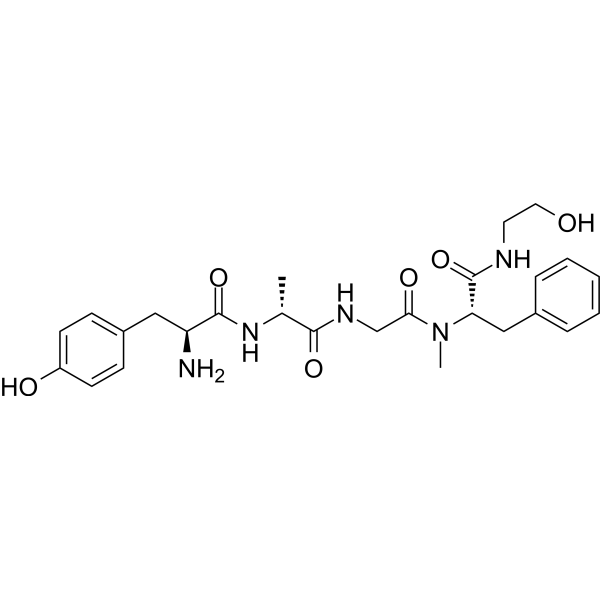
    DAMGO
    Maximum Cited Publications
    12 Publications Verification

    Opioid Receptor Cancer
    DAMGO is a μ-opioid receptor (μ-OPR ) selective agonist with a Kd of 3.46 nM for native μ-OPR .
    DAMGO
  • HY-P1502
    β-Endorphin, human
    1 Publications Verification

    Opioid Receptor Neurological Disease
    β-Endorphin, human, a prominent endogenous peptide, existing in the hypophysis cerebri and hypothalamus, is an agonist of opioid receptor, with preferred affinity for μ-opioid receptor and δ-opioid receptor; β-Endorphin, human exhibits antinociception activity.
    β-Endorphin, human
  • HY-N0923
    Corydaline
    1 Publications Verification

    (+)-Corydaline; Corydalin

    Cholinesterase (ChE) Enterovirus Opioid Receptor Neurological Disease
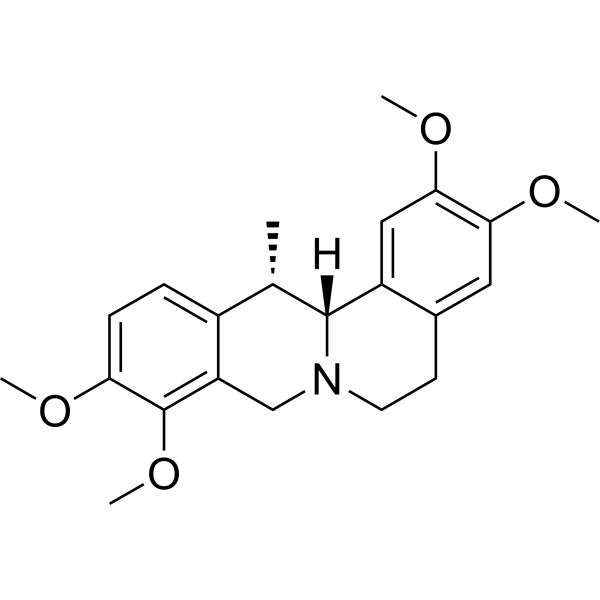
    Corydaline ((+)-Corydaline), an isoquinoline alkaloid isolated from Corydalis yanhusuo, is an AChE inhibitor with an IC50 of 226 μM. Corydaline is a μ-opioid receptor (Ki of 1.23 μM) agonist and inhibits enterovirus 71 (EV71) replication (IC50 of 25.23 μM). Corydaline has anti-angiogenic, anti-allergic and gastric-emptying and antinociceptive activities .
    Corydaline
  • HY-90003
    Tianeptine
    1 Publications Verification

    Opioid Receptor iGluR MMP PI3K Akt NF-κB Neurological Disease Inflammation/Immunology
    Tianeptine is an atypical antidepressant. Tianeptine is a moderate-intensity agonist of the μ-opioid receptor (MOR), and to a lesser extent, is an agonist of the δ-opioid receptor (DOR). Tianeptine is a glutamate modulator that can enhance AMPA receptor and antagonize NMDA receptor. tianeptine increases sensitivity of the α1 adrenergic receptor, which only manifests in chronic treatment. Tianeptine exerts neuroprotective effects under stress/inflammation-induced conditions, exhibiting anti-inflammatory and antioxidant properties. Tianeptine inhibits MMP-9 by suppressing the PI3K/Akt-mediated NF-κB pathway. Tianeptine can be used to alleviate symptoms of depression and anxiety, but does not cause sedative effects .
    Tianeptine
  • HY-P0185
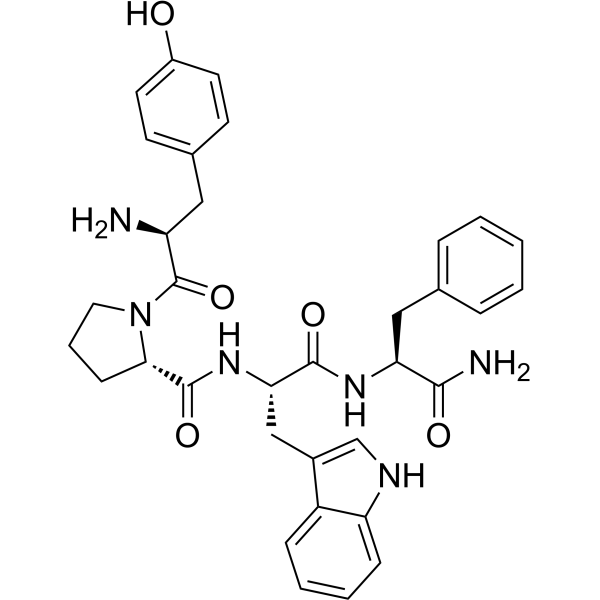
    Endomorphin 1
    3 Publications Verification

    Opioid Receptor Neurological Disease
    Endomorphin 1, a high affinity, highly selective agonist of the μ-opioid receptor (Ki: 1.11 nM), displays reasonable affinities for kappa3 binding sites, with Ki value between 20 and 30 nM. Endomorphin 1 has antinociceptive properties .
    Endomorphin 1
  • HY-111454
    SR17018
    1 Publications Verification

    Opioid Receptor Neurological Disease
    SR17018 is an mu-opioid-receptor (MOR) agonist, binding with GTPγS, with an EC50 of 97 nM.
    SR17018
  • HY-101386
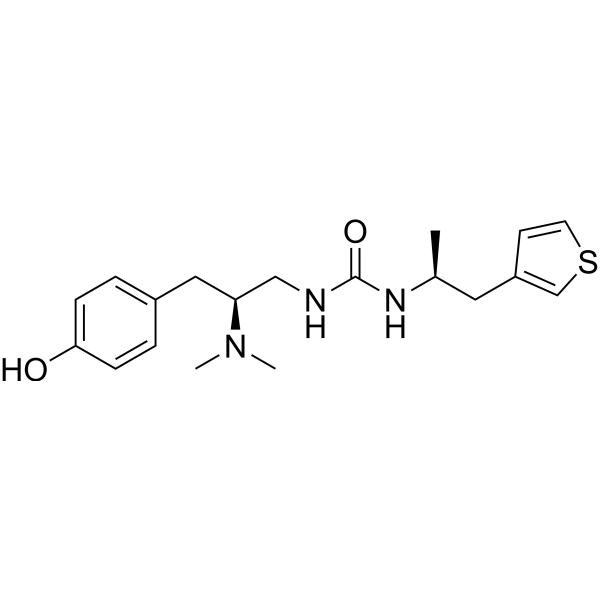
    PZM21
    4 Publications Verification

    Opioid Receptor Neurological Disease
    PZM21 is a potent and selective μ opioid receptor agonist with an EC50 of 1.8 nM .
    PZM21
  • HY-145404
    Mitragynine pseudoindoxyl
    1 Publications Verification

    Opioid Receptor Metabolic Disease
    Mitragynine pseudoindoxyl is a potent orally active agonist of the μ-opioid receptor (MOR-1, Ki=0.8 nM) and an antagonist of the δ-opioid receptor (DOR-1, Ki=3.0 nM). Mitragynine pseudoindoxyl has moderate affinity for the κ-opioid receptor (KOR-1, Ki=24 nM) and does not recruit β-arrestin-2, acting through G protein-mediated signaling pathways without β-arrestin-2-related activation. Mitragynine pseudoindoxyl produces potent analgesic activity through a mixed μ-agonist/δ-antagonist mechanism, with low side effects such as physical dependence, respiratory depression, and constipation, and no rewarding or aversive behaviors. Mitragynine pseudoindoxyl reduces hyperactivity, inhibits GI transit, and enhances characteristics, making it a potential analgesic .
    Mitragynine pseudoindoxyl
  • HY-120645
    BMS-986122
    1 Publications Verification

    Opioid Receptor Neurological Disease
    BMS-986122 is a selective, potent positive allosteric modulator of the mu-opioid receptor (µ-OR). BMS-986122 shows potentiation of orthosteric agonist-mediated β-arrestin recruitment, adenylyl cyclase inhibition, and G protein activation. BMS-986122 potentiates DAMGO-mediated [ 35S]GTPγS binding in mouse brain membranes .
    BMS-986122
  • HY-156131
    Loperamide
    Maximum Cited Publications
    12 Publications Verification

    ADL 2-1294

    Opioid Receptor Neurological Disease Inflammation/Immunology
    Loperamide (ADL 2-1294) is selective and orally active μ opioid receptor agonist with Ki valuess of 3, 48 and 1156 nM against μ, δ and κ opioid receptor, respectively. Loperamide produces antinociception and antihyperalgesia. Loperamide exhibits peripheral selectivity, enhancing fluid, electrolyte, and glucose absorption, reversing PGE2 (HY-101952)- and Cholera toxin (HY-P1446)-induced intestinal secretion, and reducing intestinal motility. Loperamide can be used for the researches of inflammatory pain and protracted diarrhoea .
    Loperamide
  • HY-P1087

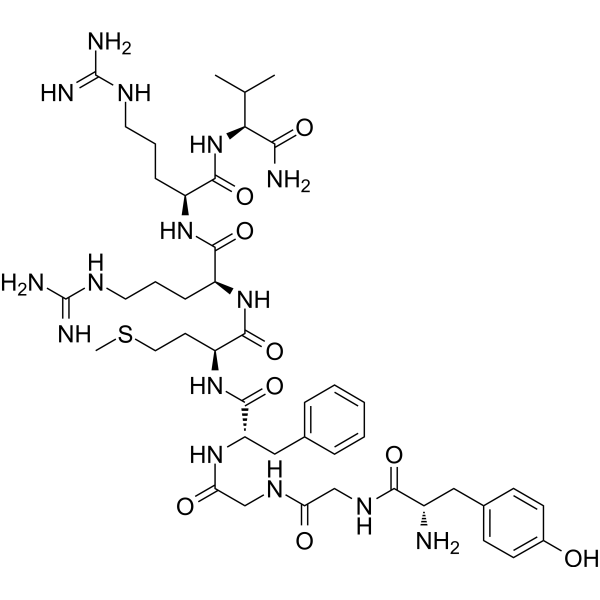
    Metorphamide

    Opioid Receptor Cancer
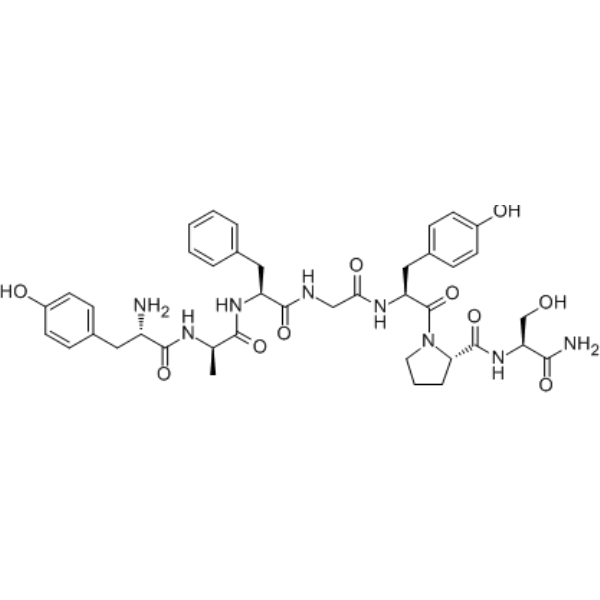
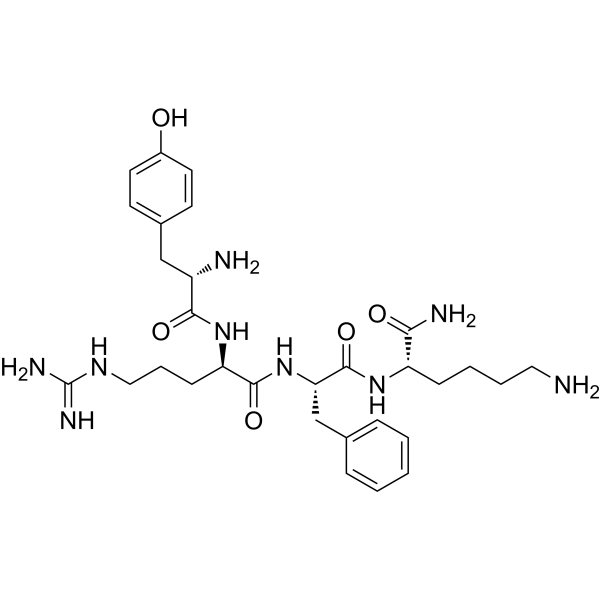
    Adrenorphin is a opioid octapeptide, acting as a potent agonist of μ-opioid receptor, with Ki of 12 nM.
    Adrenorphin
  • HY-P0244

    Opioid Receptor Neurological Disease
    Dermorphin is a natural heptapeptide μ-opioid receptor (MOR) agonist found in amphibian skin. Inhibition of neuropathic pain .
    Dermorphin
  • HY-P1626

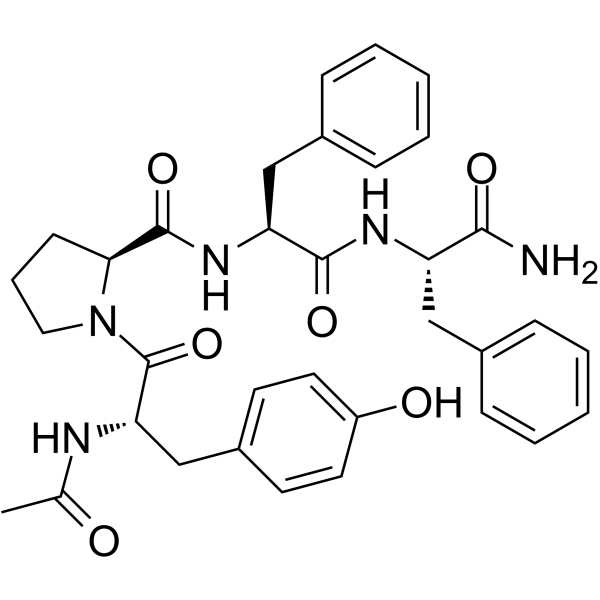
    Opioid Receptor Neurological Disease
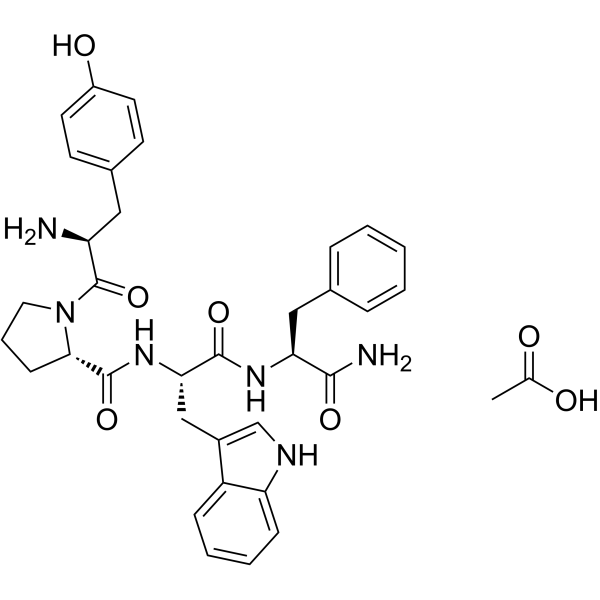
    Acetyl tetrapeptide-15 is a synthetic peptide. Acetyl tetrapeptide-15 is derived from endomorphin-2 (Tyr-Pro-Phe-Phe-NH2), a human μ-opioid agonist with selective anti-nociceptive effect. Acetyl tetrapeptide-15 reduces skin hyperreactivity producing inflammatory, chronic and neuropathic pain, by increasing the threshold of neuronal excitability in μ-opioid receptor via an endorphin-like pathway. Acetyl tetrapeptide-15 is used in the cosmetics for sensitive skin .
    Acetyl tetrapeptide-15
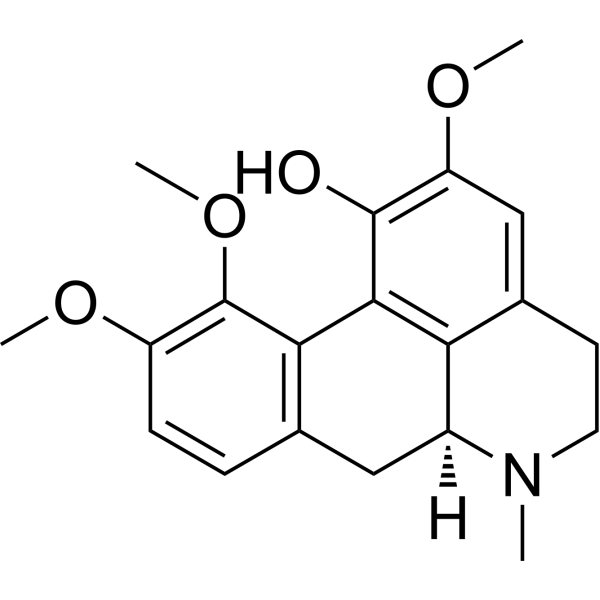
  • HY-N2571

    Reverse Transcriptase HIV Opioid Receptor Infection Neurological Disease Cancer
    Corydine is a HIV-1 reverse transcriptase inhibitor and μ-opioid receptor (MOR) agonist, with an IC50 of 356.7 μg/mL against HIV-1 reverse transcriptase, an EC50 of 0.51 μM for MOR, and a Ki of 2.82 μM for MOR. Corydine produces antinociceptive effects by inhibiting acetic acid-induced writhing behavior in a MOR-dependent manner. Corydine inhibits the proliferation of cancer cells, mitogen-stimulated lymphocytes and IL-2-dependent cells. Corydine can be used in studies related to human immunodeficiency virus infection, visceral pain, leukemia, melanoma, bladder cancer and colon adenocarcinoma .
    Corydine
  • HY-P0210B
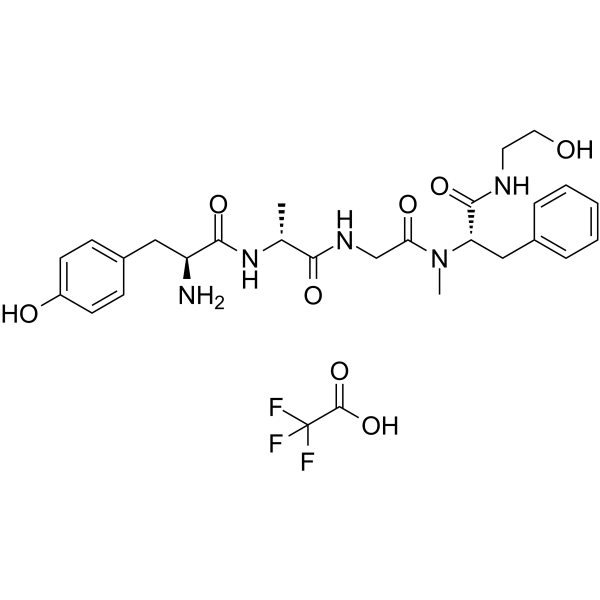
    DAMGO TFA
    Maximum Cited Publications
    12 Publications Verification

    Opioid Receptor Cancer
    DAMGO TFA is a μ-opioid receptor (μ-OPR ) selective agonist with a Kd of 3.46 nM for native μ-OPR .
    DAMGO TFA
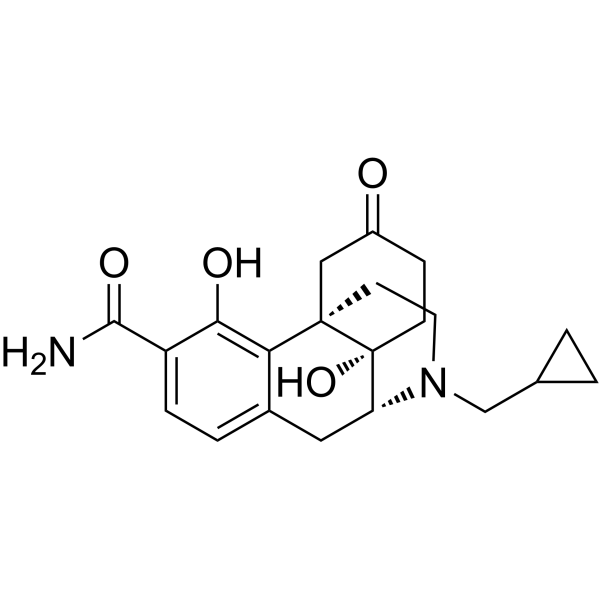
  • HY-123689

    ALKS-33; RDC-0313

    Opioid Receptor Neurological Disease
    Samidorphan (ALKS-33) is an orally active opioid system modulator that has a high affinity for binding with μ‐opioid, κ‐opioid, and δ‐opioid receptors. Samidorphan acts as an antagonist at μ‐opioid receptors and acts as a partial agonist at k-opioid and δ‐opioid receptors. Samidorphan primarily acts as an opioid receptor antagonist in vivo. Samidorphan can improve the behavior of depressed animals .
    Samidorphan
  • HY-112692

    Opioid Receptor Neurological Disease
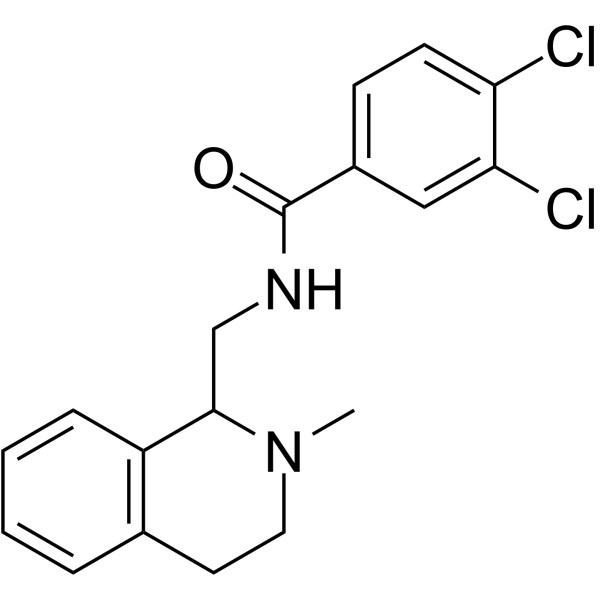
    AT-121 is a bifunctional nociception and mu opioid receptor agonist, with Kis of 3.67 and 16.49 nM, respectively. AT-121 is a safe, non-addictive analgesic, and shows antinociceptive and antiallodynic effects .
    AT-121
  • HY-90003A
    Tianeptine sodium salt
    1 Publications Verification

    Opioid Receptor iGluR MMP PI3K Akt NF-κB Neurological Disease Inflammation/Immunology
    Tianeptine sodium salt is an atypical antidepressant. Tianeptine sodium salt is a moderate-intensity agonist of the μ-opioid receptor (MOR), and to a lesser extent, is an agonist of the δ-opioid receptor (DOR). Tianeptine sodium salt is a glutamate modulator that can enhance AMPA receptor and antagonize NMDA receptor. Tianeptine sodium salt increases sensitivity of the α1 adrenergic receptor, which only manifests in chronic treatment. Tianeptine sodium salt exerts neuroprotective effects under stress/inflammation-induced conditions, exhibiting anti-inflammatory and antioxidant properties. Tianeptine sodium salt inhibits MMP-9 by suppressing the PI3K/Akt-mediated NF-κB pathway. Tianeptine sodium salt can be used to alleviate symptoms of depression and anxiety, but does not cause sedative effects .
    Tianeptine sodium salt
  • HY-15997
    (-)-U-50488 hydrochloride
    1 Publications Verification

    (-)-Trans-(1S,2S)-U-50488 hydrochloride

    Opioid Receptor Infection Cancer
    (-)-U-50488 hydrochloride ((-)-Trans-(1S,2S)-U-50488 hydrochloride) is a selective kappa-opioid receptor (KOR) agonist (b>Kd=2.2 nM) over μ-opioid receptor (MOR) (b>Kd=430 nM). (-)-U-50488 hydrochloride is a more active enantiomer than (+)?trans-(1R,2R) U-50488 (HY-15997A)?or the (±)?trans-racemic mixture U-50488 (HY-15997B). (-)-U-50488 hydrochloride has a potent and sustained anti-HIV effect in fected blood monocyte-derived macrophages (MDM) .
    (-)-U-50488 hydrochloride
  • HY-P0186A

    Opioid Receptor Neurological Disease
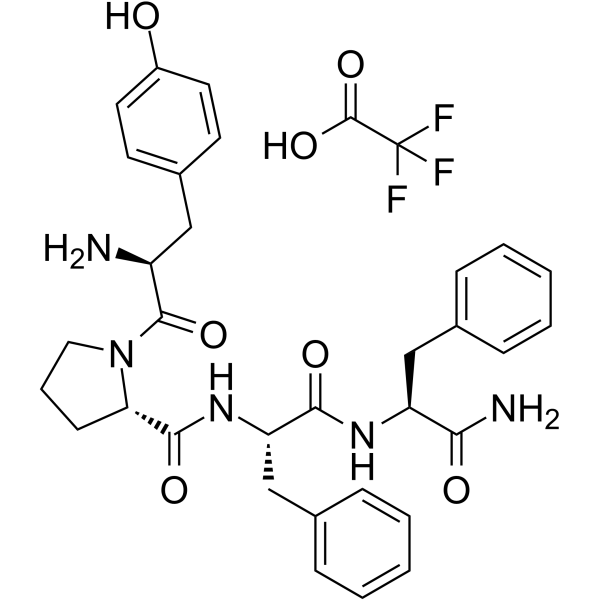
    Endomorphin 2 TFA, a high affinity, highly selective agonist of the μ-opioid receptor, displays reasonable affinities for kappa3 binding sites, with Ki value between 20 and 30 nM .
    Endomorphin 2 TFA
  • HY-128865

    Opioid Receptor Neurological Disease
    BPR1M97 is a dual-acting mu opioid receptor (MOP) and nociceptin-orphanin FQ peptide (NOP) receptor agonist with Ki values of 1.8 and 4.2 nM, respectively. BPR1M97 shows high potency and blood-brain barrier penetration, and produces potent antinociceptive effects .
    BPR1M97
  • HY-P3870

    Opioid Receptor Neurological Disease
    DALDA is a potent and highly selective μ-opioid receptor agonist with a Ki of 1.69 nM. DALDA shows antinociceptive and respiratory effects .
    DALDA
  • HY-169450

    9-O-Desmethyl mitragynine

    Opioid Receptor Neurological Disease
    (-)-9-Hydroxycorynantheidine (9-O-Desmethyl mitragynine), the 9-demethyl analogue of Mitragynine, is a selective and partial agonist of μ-opioid receptor. (-)-9-Hydroxycorynantheidine inhibits electrically stimulated twitch contraction in guinea-pig ileum .
    (-)-9-Hydroxycorynantheidine
  • HY-P3870A

    Opioid Receptor Neurological Disease
    DALDA acetate is a potent and highly selective μ-opioid receptor agonist with a Ki of 1.69 nM. DALDA acetate shows antinociceptive and respiratory effects .
    DALDA acetate
  • HY-162771

    Opioid Receptor Neurological Disease
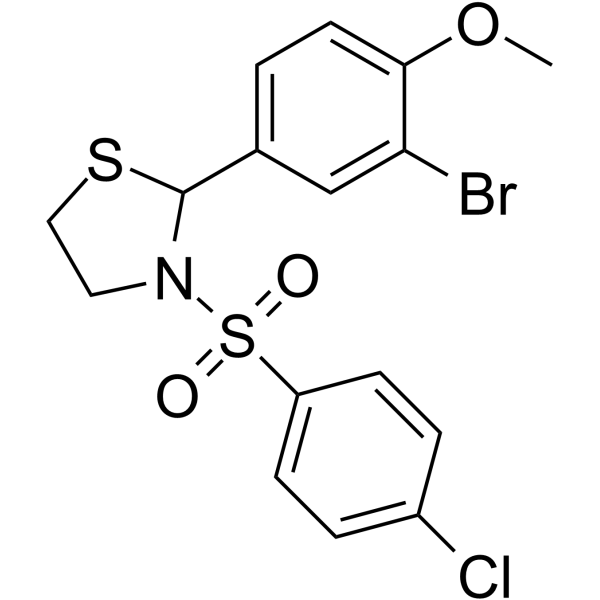
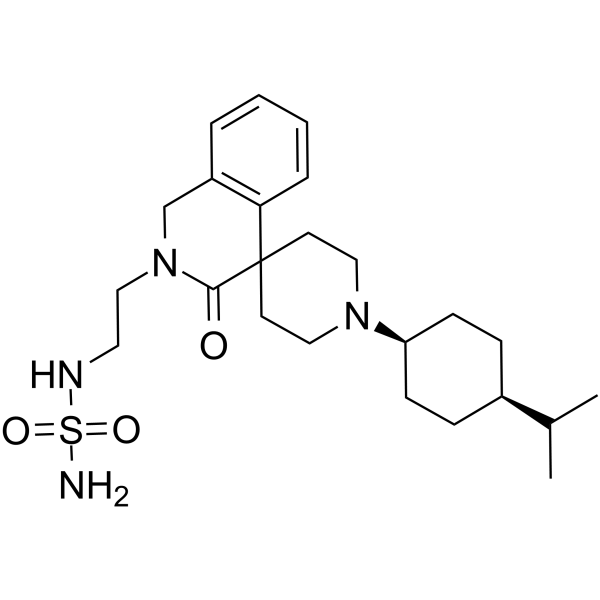
    Mu opioid receptor agonist 1 (compound 12) is a Mu opioid receptor agonist. Mu opioid receptor agonist 1 can be used in nervous system related research .
    Mu opioid receptor agonist 1
  • HY-178235

    Opioid Receptor Neurological Disease
    MDAN-21 is a bivalent opioid ligand that contains both μ-opioid receptor agonists and δ-opioid receptor antagonists. MDAN-21 has a strong analgesic effect and does not produce tolerance in mouse studies. MDAN-21 can effectively inhibit the withdrawal of morphine dependent monkeys and alleviate abnormal pain in the study of rhesus monkeys. MDAN-21 can be used for the study of allodynia .
    MDAN-21
  • HY-155319

    Opioid Receptor Neurological Disease
    μ opioid receptor agonist 3 (compound 20) is a potent μ opioid receptor (µOR) agonist with an EC50 of 0.87 nM. μ opioid receptor agonist 3 has the potential for pain and neuropsychiatric indications research .
    μ opioid receptor agonist 3
  • HY-142918

    Opioid Receptor Neurological Disease
    μ opioid receptor agonist 1 (Compound H-1a)is an optically pure oxaspiro ring substituted pyrrolopyrazole derivative, acts as a MOR receptor agonist and can be used for the research of pain and pain related diseases .
    μ opioid receptor agonist 1
  • HY-142919

    Opioid Receptor Neurological Disease
    μ opioid receptor agonist 2 (Compound H-3)is an optically pure oxaspiro ring substituted pyrrolopyrazole derivative, acts as a MOR receptor agonist and can be used for the research of pain and pain related diseases .
    μ opioid receptor agonist 2
  • HY-P2018

    Opioid Receptor Cardiovascular Disease
    FK 33-824, a synthetic analogue of Met-enkephalin, is a selective agonist of the μ-opioid receptor (μ-OR) .
    FK 33-824
  • HY-P0244A

    Opioid Receptor Neurological Disease
    Dermorphin TFA is a natural heptapeptide μ-opioid receptor (MOR) agonist found in amphibian skin. Inhibition of neuropathic pain .
    Dermorphin TFA
  • HY-120385

    GRT-6006

    Opioid Receptor Neurological Disease
    Lexanopadol (GRT-6006) is a μ-opioid receptor and nociceptor receptor (ORL-1 receptor) agonist. Lexanopadol can be used to study pain .
    Lexanopadol
  • HY-122681

    SR-16435 free base

    Opioid Receptor Neurological Disease
    SR-16434 is a nociceptin/orphanin FQ (NOP)/μ-opioid receptor partial agonist, with high binding affinity (NOP receptor Ki=7.49; μ-Opioid receptor Ki=2.70). SR-16434 can relieve pain .
    SR-16434
  • HY-123689S1

    ALKS-33-d5; RDC-0313-d5

    Isotope-Labeled Compounds Opioid Receptor Neurological Disease
    Samidorphan-d5 (ALKS-33-d5) is is a deuterated compound of Samidorphan. Samidorphan is an orally active opioid system modulator that binds with high affinity to μ-opioid, κ-opioid, and δ-opioid receptors. Samidorphan is a μ-opioid receptor antagonist and a partial agonist at k-opioid and δ-opioid receptors. Samidorphan acts primarily as an opioid receptor antagonist in vivo .
    Samidorphan-d5
  • HY-172637

    Opioid Receptor Neurological Disease
    Phenethyl 4-ANPP is a MOR (μ-opioid receptor) agonist. Phenethyl 4-ANPP is an analytical reference standard that is structurally similar to known opioids .
    Phenethyl 4-ANPP
  • HY-153471

    Opioid Receptor Infection Inflammation/Immunology
    MOR agonist-1 is a MOR (μ-opioid receptor) agonist. MOR agonist-1 has good analgesic effect. MOR agonist-1 can be used for the research of pain and pain-related disorders .
    MOR agonist-1
  • HY-P0186

    Opioid Receptor Neurological Disease
    Endomorphin 2, a high affinity, highly selective agonist of the μ-opioid receptor, displays reasonable affinities for kappa3 binding sites, with Ki value between 20 and 30 nM.
    Endomorphin 2
  • HY-170310

    Opioid Receptor Neurological Disease
    AP-238 is a a new synthetic opioid (NSO), and acts as an agonist for μ-opioid receptor (MOR) with an EC50 of 248 nM. AP-238 exhibits analgesic activity .
    AP-238
  • HY-185355

    Opioid Receptor Neurological Disease
    μ Opioid receptor agonist 4 (Compound 104) acts as an agonist of the μ-opioid receptor (MOP). μ Opioid receptor agonist 4 produces analgesic effects in mice, with a potency 2300-fold higher than that of Meperidine .
    μ Opioid receptor agonist 4
  • HY-P0185A
    Endomorphin 1 acetate
    3 Publications Verification

    Opioid Receptor Neurological Disease
    Endomorphin 1 acetate, a high affinity, highly selective agonist of the μ-opioid receptor (Ki: 1.11 nM), displays reasonable affinities for kappa3 binding sites, with Ki value between 20 and 30 nM. Endomorphin 1 acetate has antinociceptive properties .
    Endomorphin 1 acetate
  • HY-106601A

    LY-150720 hydrochloride

    Opioid Receptor Neurological Disease
    Picenadol (LY-150720) hydrochloride is an opioid mixed agonist-antagonist analgesic. Picenadol hydrochloride is an external racemic mixture, where its d-isomer (LY136596) is a potent μ-opioid receptor agonist, and the l-isomer (LY136595) is a weak μ-receptor competitive antagonist, which can inhibit the agonist effect and reduce the risk of dependence. Picenadol hydrochloride has anticholinergic activity .
    Picenadol hydrochloride
  • HY-163667

    Opioid Receptor Neurological Disease
    Atoxifent is a potent μ-opioid receptor agonist (EC50=0.39 nM). These receptors are found in brain regions that control pain, emotions, habitual learning, and cognition. Atoxifent exhibits strong analgesic effects and a lower risk of respiratory depression. Atoxifent can be used for research in opioid pharmacology and signal transduction .
    Atoxifent
  • HY-145369

    Opioid Receptor Neurological Disease
    DS34942424 is an orally potent analgesic without mu opioid receptor agonist activity.
    DS34942424
  • HY-151811

    Opioid Receptor Neurological Disease
    NAQ is a potent and selective μ opioid receptor partial agonist, with a Ki of 0.55 nM. NAQ shows selectivity for Mu opioid receptor over the δ receptor (Ki=132.50 nM) and the κ receptor (Ki=26.45 nM). NAQ can be used for the research of opioid withdrawal or dependence .
    NAQ
  • HY-N15180

    (-)-Corynantheidine

    Opioid Receptor Neurological Disease
    Corynantheidine ((-)-Corynantheidine) is a mu-opioid receptor (MOR) partial agonist that shows MOR-dependent analgesic effects in mice .
    Corynantheidine
  • HY-135698

    M-CAM

    Opioid Receptor Neurological Disease
    Methocinnamox (M-CAM) a selective and long-acting μ-opioid receptor (MOR) antagonist with a Ki of 0.6 nM. Methocinnamox binds to the orthosteric site of the MOR in a pseudo-irreversible, non-covalent manner, resulting in prolonged receptor blockade that persists until new receptors are synthesized. Methocinnamox acts as a reversible antagonist at both the kappa-opioid receptor (KOR) (Ki = 4.9 nM) and delta-opioid receptor (DOR) (Ki = 2.2 nM), and it exhibits no intrinsic agonist activity at these receptors. Methocinnamox can be used to reverse and prevent opioid overdose and addiction .
    Methocinnamox
  • HY-176063

    TRP Channel Opioid Receptor Neurological Disease
    TRPV1 antagonist 11 (compound 2ac) is a potent TRPV1 antagonist with an IC50 of 29.3 nM. TRPV1 antagonist 11 is a potent μ-opioid receptor (MOR) agonist with a Ki of 60.3 nM. TRPV1 antagonist 11, a pyrimidine piperazine, exhibits pain relieving effects by antagonizing TRPV1 and stimulating MOR. TRPV1 antagonist 11 shows a potent, dose-dependent anti-nociceptive effect in a Formalin-induced pain model in mice .
    TRPV1 antagonist 11
  • HY-128624

    Opioid Receptor Neurological Disease
    DS39201083, a Conolidine derivative, is a potent and orally active analgesic agent. DS39201083 shows no agonist activity at the mu opioid receptor. DS39201083 can be used for the study of neurological diseases .
    DS39201083
  • HY-112692A

    Opioid Receptor Neurological Disease
    AT-121 hydrochloride is a bifunctional nociception and mu opioid receptor agonist, with Kis of 3.67 and 16.49 nM, respectively. AT-121 hydrochloride is a safe, non-addictive analgesic, and shows antinociceptive and antiallodynic effects .
    AT-121 hydrochloride
  • HY-W856819

    Opioid Receptor Cholinesterase (ChE) Drug Metabolite nAChR Neurological Disease
    Eseroline is a potent μ-opioid receptor agonist, which is the hydrolytic metabolite of Physostigmine (HY-N6608). Eseroline is a selective and competitive acetylcholinesterase (AChE) inhibitor, with its Ki values for AChE and BuChE being 0.1 μM and 200 μM respectively. Eseroline has nicotinic acetylcholine receptor allosteric enhancing ligand (nAChR-APL) activity, meaning it does not activate the receptor but significantly enhances the signal transduction of Ach triggered by the receptor. Eseroline is neurotoxic, causing cell membrane damage (LDH leakage) and energy metabolism collapse (ATP depletion). Eseroline can be used for the study of Alzheimer's disease .
    Eseroline

온라인 문의

Your information is safe with us. * Required Fields.

호칭


Country or Region *

고객명 *


회사명 *

Department *


메일주소 *


상품명 *

Cat. No.


Requested quantity *

전화번호 *


비고

온라인 문의

Inquiry Information

상품명:
Cat. No.:
수량:
MCE Japan Authorized Agent:

