



BMS-986122
Based on 1 publication(s) in Google Scholar
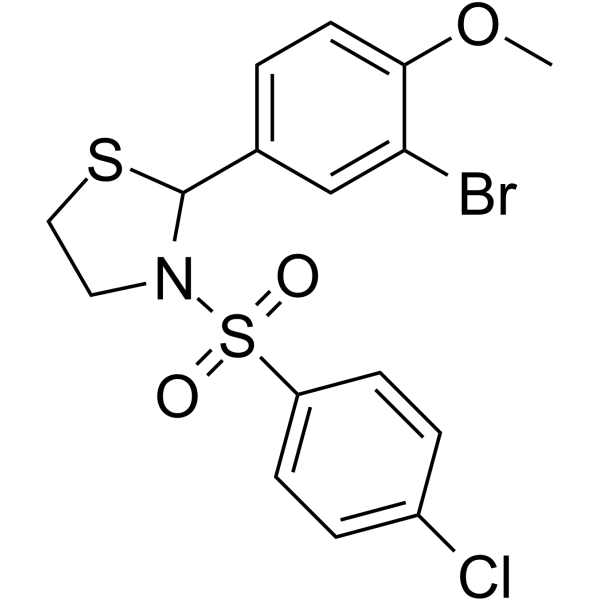
BMS-986122 is a selective, potent positive allosteric modulator of the mu-opioid receptor (µ-OR). BMS-986122 shows potentiation of orthosteric agonist-mediated β-arrestin recruitment, adenylyl cyclase inhibition, and G protein activation. BMS-986122 potentiates DAMGO-mediated [35S]GTPγS binding in mouse brain membranes.
For research use only. We do not sell to patients.
- Purity : 99.90%
- CAS No.: 313669-88-4
- Formula: C16H15BrClNO3S2
- Molecular Weight:448.78
-
Storage:Powder -20°C, 3 years , 4°C, 2 years ; In solvent -80°C, 6 months , -20°C, 1 month

To place orders, for customer services and technical support, please contact: MedChemExpress USA
Tel: 609-228-6898 E-mail: [email protected] [email protected]


-
 Biological Activity
-
Chemical Information
-
Solvent & Solubility
- Purity & Documentation
- References
-
 Help & FAQs


-
HY-120613
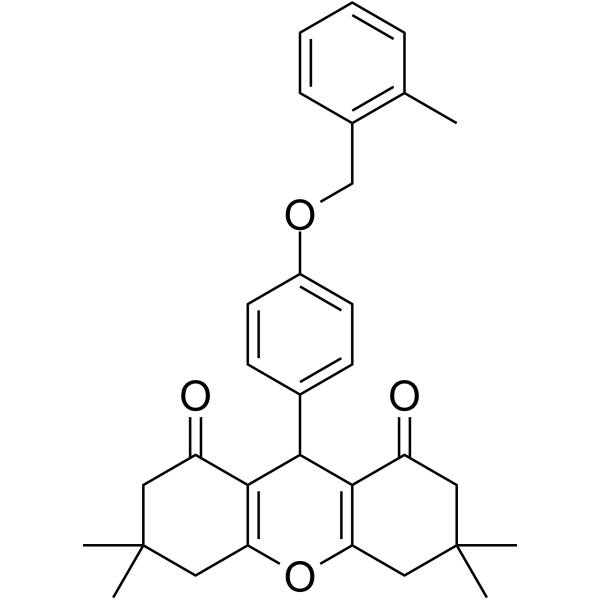
BMS-986187δ-opioid receptor PAM -
HY-P0210
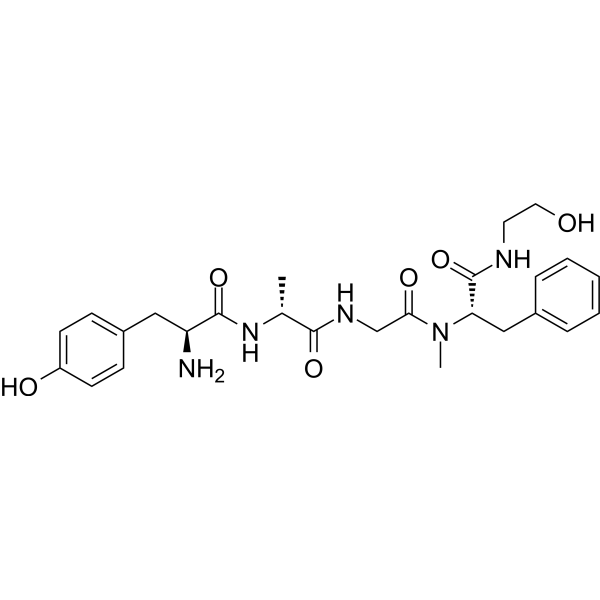
DAMGOμ-OPR Agonist -
HY-P0183
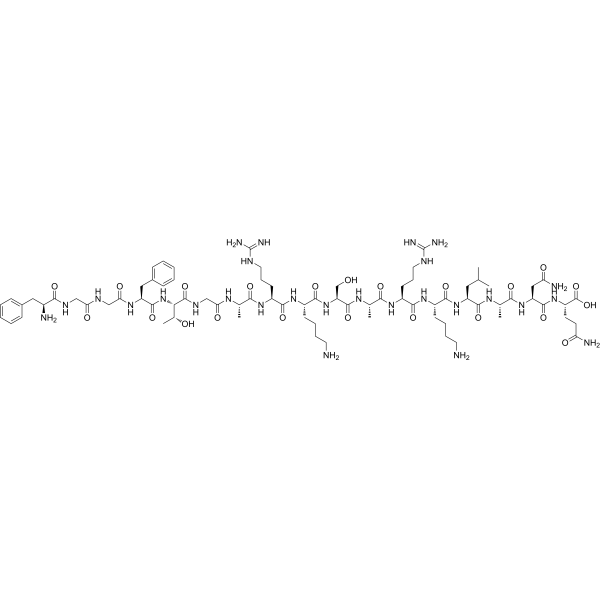
NociceptinNociceptin Receptor Ligand -
HY-101386
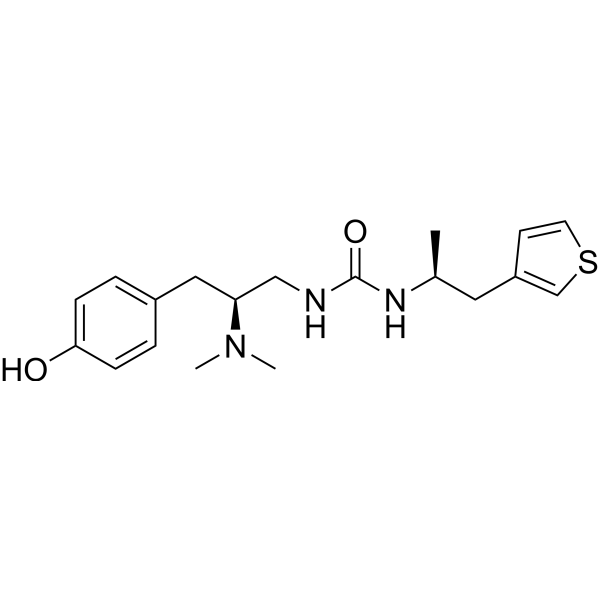
PZM21μ-opioid Receptor Agonist -
HY-114452
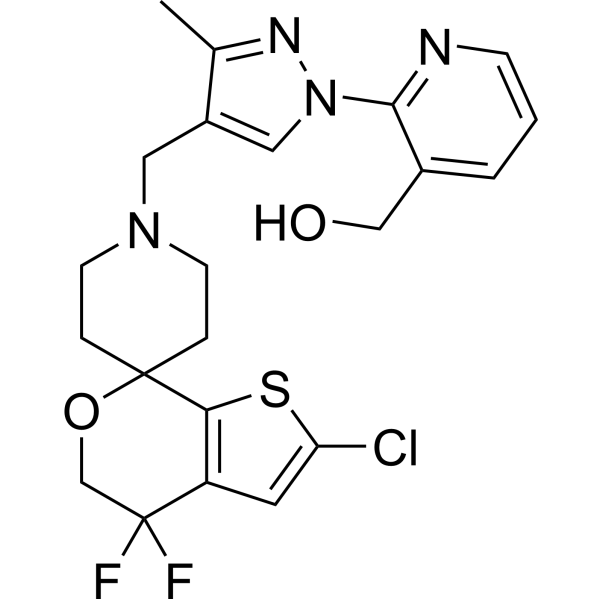
LY2940094NOP Antagonist -
HY-P1596
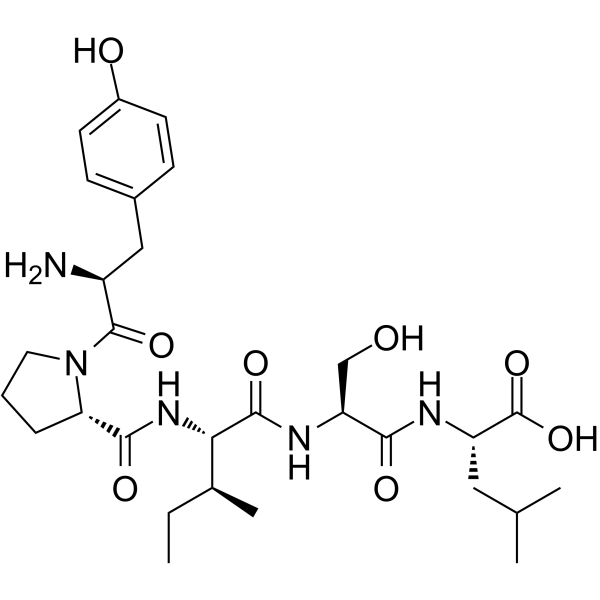
Gluten Exorphin Cμ/δ Opioid Inhibitor -
HY-101079
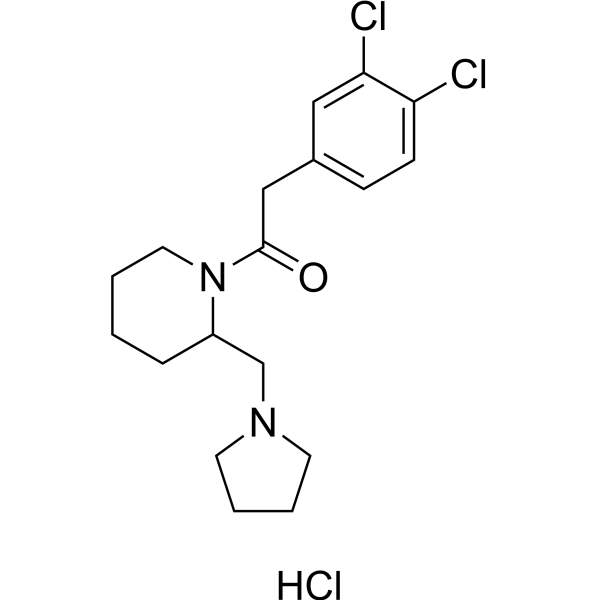
BRL 52537 hydrochlorideKOR Agonist -
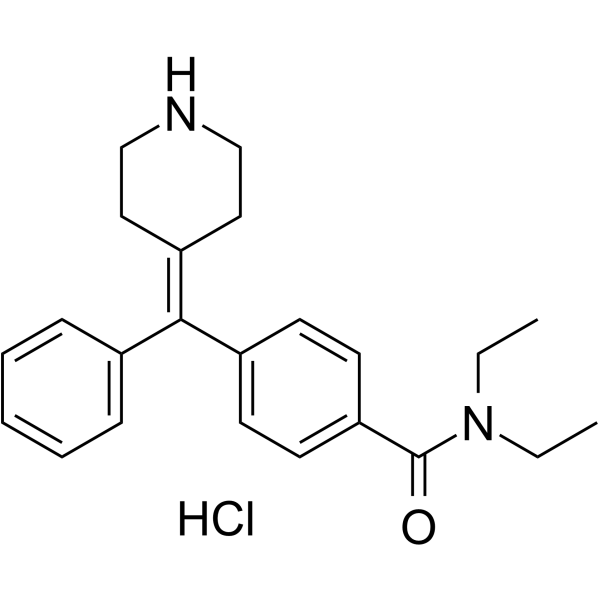
HY-101039A
AR-M 1000390 hydrochlorideδ Opioid Receptor Agonist -
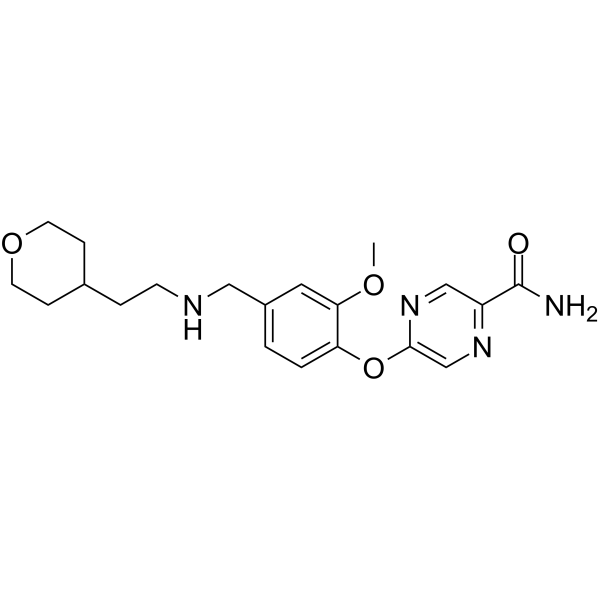
HY-100122
Bevenopranμ-opioid receptor antagonist t -
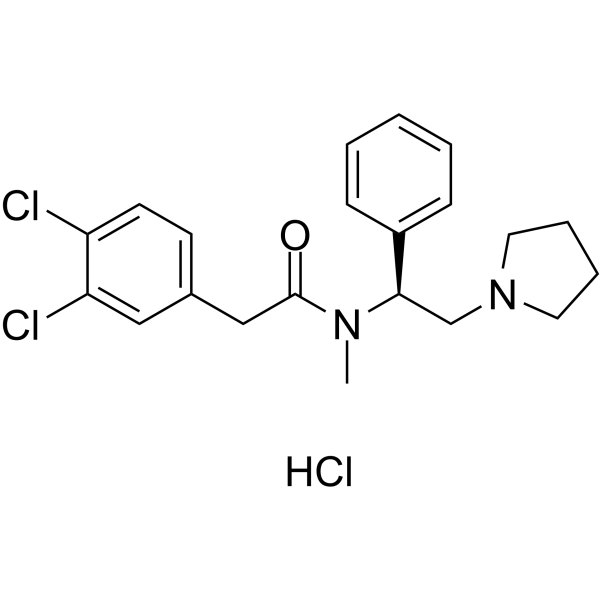
HY-101205
ICI-199441 hydrochlorideκ-Opioid Receptor Agonist -
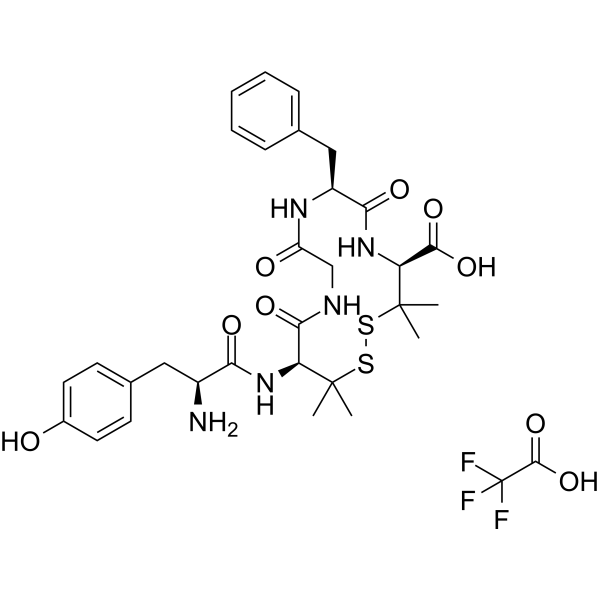
HY-P1334A
DPDPE TFADOR Agonist -
HY-13101
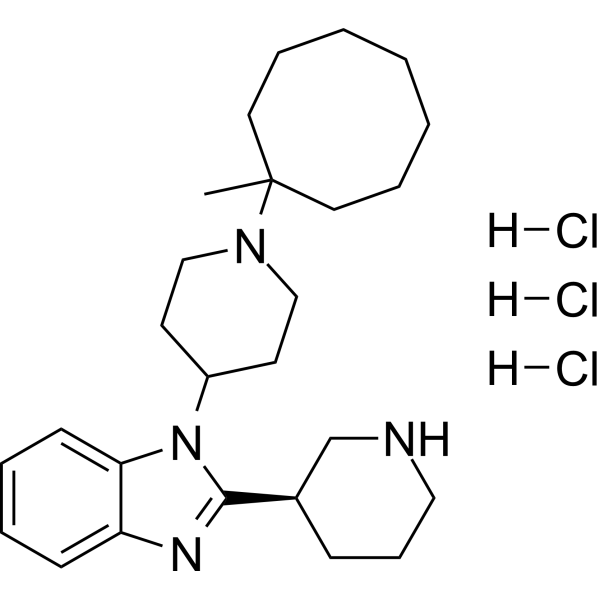
MCOPPB trihydrochlorideNOP/ORL1 Agonist
Publications Citing Use of MedChemExpress (MCE) BMS-986122
MoreAll Opioid Receptor Isoforms
More

Biological Activity
Description
IC50 & Target
|
μ Opioid Receptor/MOR |
In Vitro
BMS-986122 increases β-arrestin recruitment stimulated by endomorphin 1 (EC50=3 μM) in U2OS-OPRM1 human osteosarcoma cells expressing μ-opioid receptors. BMS-986122 potentiates endomorphin 1-induced inhibition of forskolin-stimulated adenylyl cyclase activity in CHO cells expressing human recombinant μ-opioid receptors (EC50=8.9 μM).? BMS-986122 potentiates DAMGO-mediated [35S]GTPγS binding in mouse brain membranes and appears to be, at least in part, a positive affinity modulator of the μ-opioid receptor for DAMGO binding[1].
?
BMS-986122 enhances the ability of the endogenous opioid Methionine-enkephalin (Met-Enk) to stimulate G protein activity in mouse brain homogenates without activity on its own and to enhance G protein activation to a greater extent than β-arrestin recruitment in CHO cells expressing human mu-opioid receptors. BMS-986122 increases the potency of Met-Enk to inhibit GABA release in the periaqueductal gray, an important site for antinociception[2].
?
BMS-986122 is selective for μ-OR and has no detectable activity at the closely related δ-OR. BMS-986122 is a silent allosteric modulator at δ-OR and κ-OR[3].
MedChemExpress (MCE) has not independently confirmed the accuracy of these methods. They are for reference only.


Chemical Information
-
CAS No. 313669-88-4
-
Appearance Solid
-
Molecular Weight 448.78
-
Formula C16H15BrClNO3S2
-
Color White to off-white
-
SMILES
O=S(N1C(C2=CC=C(OC)C(Br)=C2)SCC1)(C3=CC=C(Cl)C=C3)=O
-
Shipping
Room temperature in continental US; may vary elsewhere.
-
Storage
Powder -20°C 3 years 4°C 2 years In solvent -80°C 6 months -20°C 1 month


Publications (1)
-
Journal Impact Factor
-
Most Recent
-
Biochemistry
Mu Opioid Receptor Positive Allosteric Modulator BMS-986122 Confers Agonist-Dependent G Protein Subtype Signaling Bias. [Abstract]2025 Jun 3;64(11):2376-2393. PMID: 40378294


Solvent & Solubility
In Vitro:
DMSO : 100 mg/mL (222.83 mM; Need ultrasonic; Hygroscopic DMSO has a significant impact on the solubility of product, please use newly opened DMSO)
Please refer to the solubility information to select the appropriate solvent. Once prepared, please aliquot and store the solution to prevent product inactivation from repeated freeze-thaw cycles.
Storage method and period of stock solution: -80°C, 6 months; -20°C, 1 month. When stored at -80°C, please use it within 6 months. When stored at -20°C, please use it within 1 month.
Please refer to the solubility information to select the appropriate solvent. Once prepared, please aliquot and store the solution to prevent product inactivation from repeated freeze-thaw cycles.
Storage method and period of stock solution: -80°C, 6 months; -20°C, 1 month. When stored at -80°C, please use it within 6 months. When stored at -20°C, please use it within 1 month.
Concentration (start) × Volume (start) = Concentration (final) × Volume (final)
In Vivo:
Select the appropriate dissolution method based on your experimental animal and administration route.
- For the following dissolution methods, please ensure to first prepare a clear stock solution using an In Vitro approach and then sequentially add co-solvents:
- To ensure reliable experimental results, the clarified stock solution can be appropriately stored based on storage conditions. As for the working solution for In Vivo experiments, it is recommended to prepare freshly and use it on the same day.
- The percentages shown for the solvents indicate their volumetric ratio in the final prepared solution. If precipitation or phase separation occurs during preparation, heat and/or sonication can be used to aid dissolution.
Add each solvent one by one: 10% DMSO 40% PEG300 5% Tween-80 45% Saline
Solubility: 2.5 mg/mL (5.57 mM); Suspended solution; Need ultrasonic
This protocol yields a suspended solution of 2.5 mg/mL. Suspended solution can be used for oral and intraperitoneal injection.
Taking 1 mL working solution as an example, add 100 μL DMSO stock solution (25.0 mg/mL) to 400 μL PEG300, and mix evenly; then add 50 μL Tween-80 and mix evenly; then add 450 μL Saline to adjust the volume to 1 mL.
Preparation of Saline: Dissolve 0.9 g sodium chloride in ddH₂O and dilute to 100 mL to obtain a clear Saline solution.
In Vivo Dissolution Calculator
Please enter the basic information of animal experiments:
-
-
-
-
Recommended: Prepare an additional quantity of animals to account for potential losses during experiments.
Please enter your animal formula composition:
-
%DMSO +
Recommended: Keep the proportion of DMSO in working solution below 2% if your animal is weak.
-
%+
-
+%Tween-80 + +
-
%Saline +
The co-solvents required include: DMSO, . All of co-solvents are available by MedChemExpress (MCE). , Tween 80. All of co-solvents are available by MedChemExpress (MCE).
Working solution concentration: 0.22 mg/mL
Method for preparing stock solution: mg drug dissolved in μL DMSO. Stock solution concentration: mg/mL.
1. Take μL DMSO stock solution;
2. Add μL .
μL , mix evenly;
3. Then add μL Tween 80, mix evenly;
4. Then add μL
Please ensure that the stock solution in the first step is dissolved to a clear state, and add co-solvents in sequence. You can use ultrasonic heating (ultrasonic cleaner, recommended frequency 20-40 kHz), vortexing, etc. to assist dissolution.


Purity & Documentation
-
Data Sheet (281 KB)
-
SDS (392 KB)
- English - EN (392 KB)
- Français - FR (392 KB)
- Deutsch - DE (392 KB)
- Norwegian - NO (392 KB)
- Español - ES (392 KB)
- Swedish - SV (392 KB)
- Italian - IT (392 KB)
- Korean - KR (392 KB)
- Portuguese - PT (392 KB)
-
Handling Instructions (2659 KB)
References
[1]. Burford NT, et al. Discovery of positive allosteric modulators and silent allosteric modulators of the μ-opioid receptor. Proc Natl Acad Sci U S A. 2013;110(26):10830-10835. [Content Brief]
[2]. Kandasamy R, et al. Positive allosteric modulation of the mu-opioid receptor produces analgesia with reduced side effects. Proc Natl Acad Sci U S A. 2021;118(16):e2000017118. [Content Brief]
[3]. Livingston KE, Alt A, Canals M, Traynor JR. Pharmacologic Evidence for a Putative Conserved Allosteric Site on Opioid Receptors. Mol Pharmacol. 2018;93(2):157-167. [Content Brief]


Complete Stock Solution Preparation Table
Please refer to the solubility information to select the appropriate solvent. Once prepared, please aliquot and store the solution to prevent product inactivation from repeated freeze-thaw cycles.
Storage method and period of stock solution: -80°C, 6 months; -20°C, 1 month. When stored at -80°C, please use it within 6 months. When stored at -20°C, please use it within 1 month.
| Optional Solvent | Concentration Solvent Mass | 1 mg | 5 mg | 10 mg | 25 mg |
|---|---|---|---|---|---|
| DMSO | 1 mM | 2.2283 mL | 11.1413 mL | 22.2826 mL | 55.7066 mL |
| 5 mM | 0.4457 mL | 2.2283 mL | 4.4565 mL | 11.1413 mL | |
| 10 mM | 0.2228 mL | 1.1141 mL | 2.2283 mL | 5.5707 mL | |
| 15 mM | 0.1486 mL | 0.7428 mL | 1.4855 mL | 3.7138 mL | |
| 20 mM | 0.1114 mL | 0.5571 mL | 1.1141 mL | 2.7853 mL | |
| 25 mM | 0.0891 mL | 0.4457 mL | 0.8913 mL | 2.2283 mL | |
| 30 mM | 0.0743 mL | 0.3714 mL | 0.7428 mL | 1.8569 mL | |
| 40 mM | 0.0557 mL | 0.2785 mL | 0.5571 mL | 1.3927 mL | |
| 50 mM | 0.0446 mL | 0.2228 mL | 0.4457 mL | 1.1141 mL | |
| 60 mM | 0.0371 mL | 0.1857 mL | 0.3714 mL | 0.9284 mL | |
| 80 mM | 0.0279 mL | 0.1393 mL | 0.2785 mL | 0.6963 mL | |
| 100 mM | 0.0223 mL | 0.1114 mL | 0.2228 mL | 0.5571 mL |


BMS-986122 Related Classifications
HY-120645 Related Classifications
 Powered by Bioz