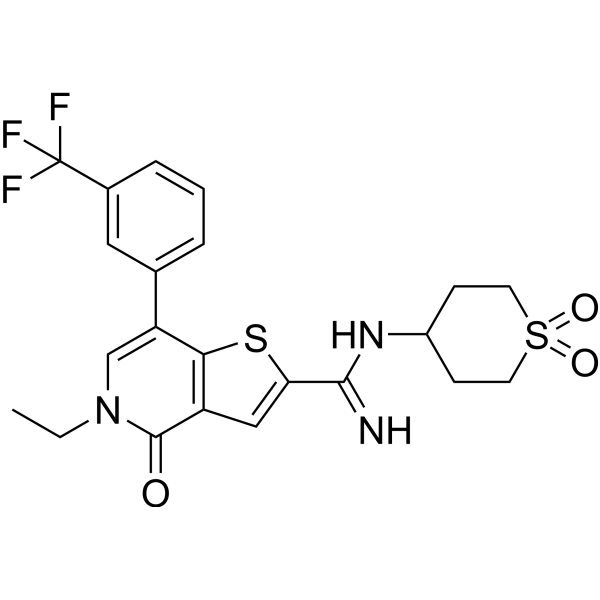
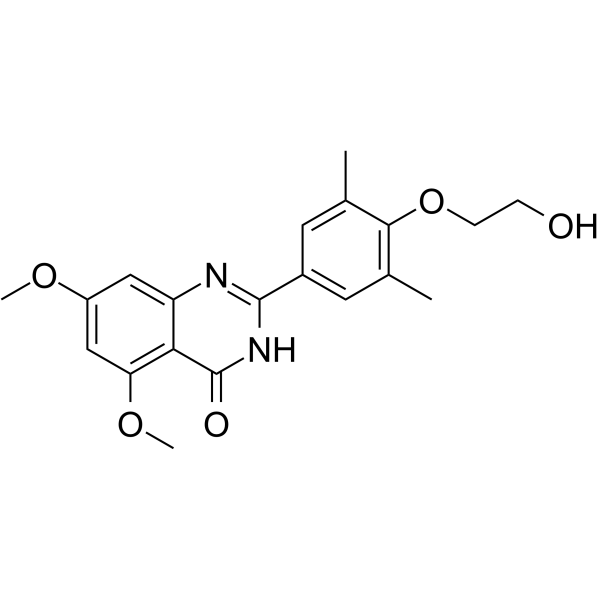
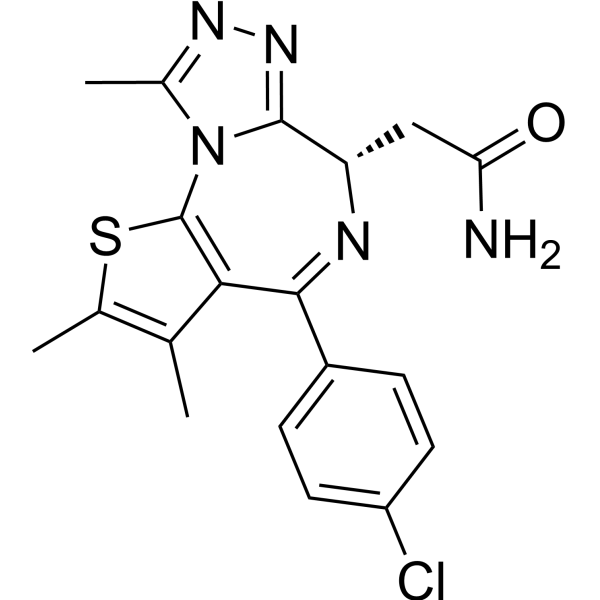
1. Search Result
Search Result
Results for "

BET bromodomain

" in MedChemExpress (MCE) Product Catalog:

106

Inhibitors & Agonists

1

Biochemical Assay Reagents

1

Isotope-Labeled Compounds

1

Click Chemistry

Cat. No. Product Name Target Research Areas Chemical Structure
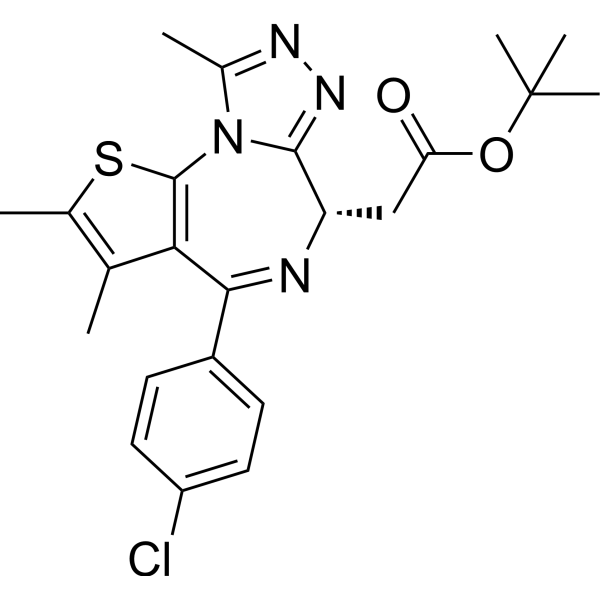
  • HY-13030
    (+)-JQ-1
    Maximum Cited Publications
    295 Publications Verification

    JQ1

    Epigenetic Reader Domain Autophagy Ligands for Target Protein for PROTAC Neurological Disease Cancer
    (+)-JQ-1 (JQ1), a chemical probe, is a potent, specific, CNS-penetrant and reversible BET bromodomain inhibitor, with IC50s of 77 and 33 nM for the first and second bromodomain (BRD4(1/2)) . (+)-JQ-1 also activates autophagy .
    (+)-JQ-1
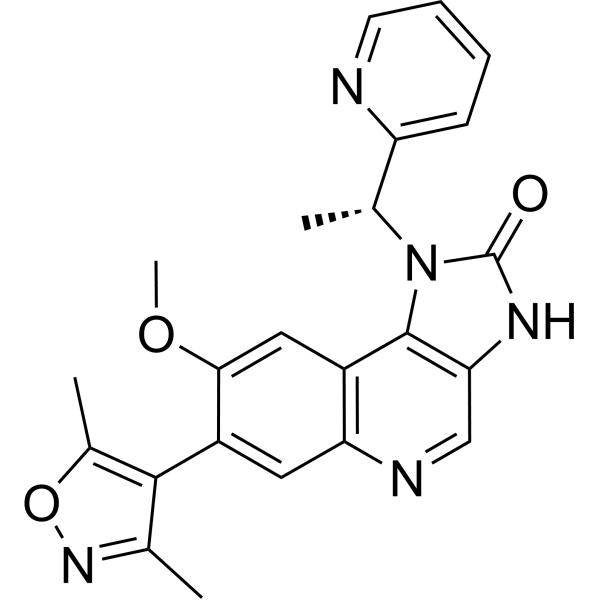
  • HY-13032
    Molibresib
    20+ Cited Publications

    I-BET762; GSK525762; GSK525762A

    Epigenetic Reader Domain Cancer
    Molibresib (I-BET762; GSK525762) is a BET bromodomain inhibitor with IC50 of 32.5-42.5 nM.
    Molibresib
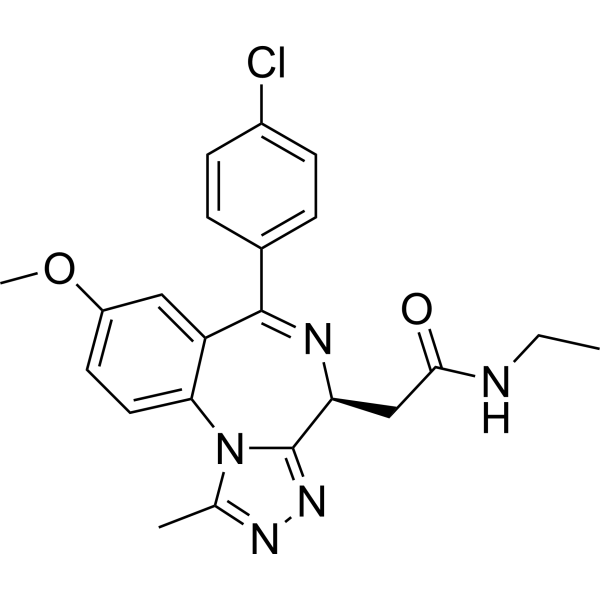
  • HY-78695
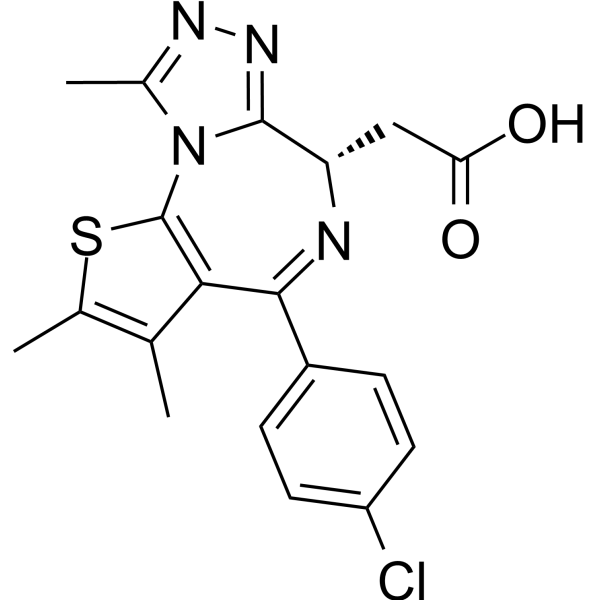
    JQ-1 carboxylic acid
    5+ Cited Publications

    Epigenetic Reader Domain PD-1/PD-L1 Ligands for Target Protein for PROTAC Cancer
    JQ-1 carboxylic acid, a (+)-JQ-1 (HY-13030) derivative, is a potent BET bromodomain inhibitor. JQ-1 carboxylic acid can be used to synthesize PROTAC, which can target the degradation of BRD4.
    JQ-1 carboxylic acid
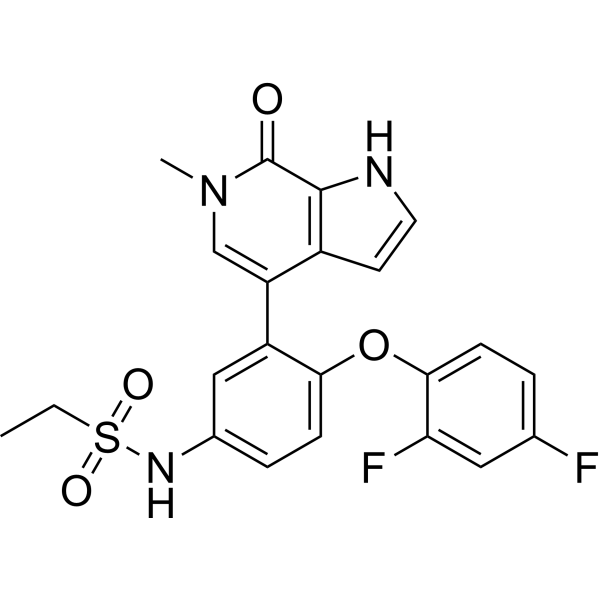
  • HY-13235
    I-BET151
    25+ Cited Publications

    GSK1210151A

    Epigenetic Reader Domain Cancer
    I-BET151 (GSK1210151A) is a BET bromodomain inhibitor which inhibits BRD4, BRD2, and BRD3 with pIC50 of 6.1, 6.3, and 6.6, respectively .
    I-BET151
  • HY-100015
    Mivebresib
    10+ Cited Publications

    ABBV-075

    Epigenetic Reader Domain Apoptosis Cancer
    Mivebresib (ABBV-075) is a potent and orally active bromodomain and extraterminal domain (BET) bromodomain inhibitor. Mivebresib binds to BRD4 with a Ki of 1.5 nM .
    Mivebresib
  • HY-16652
    Apabetalone
    5+ Cited Publications

    RVX-208; RVX000222

    Epigenetic Reader Domain HIV Cancer
    Apabetalone (RVX-208) is an inhibitor of BET transcriptional regulators with selectivity for the second bromodomain. The IC50s are 87 μM and 0.51 μM for BD1 and BD2, respectively .
    Apabetalone
  • HY-18975
    I-BRD9
    5+ Cited Publications

    Epigenetic Reader Domain Inflammation/Immunology Cancer
    I-BRD9 is a selective cellular chemical probe of bromodomain-containing protein 9 (BRD9) with pIC50 value of 7.3 μM. I-BRD9 has high selectivity for bromodomain and extra terminal domain (BET) family and highly homologous bromodomain-containing protein 7 (BRD7). I-BRD9 can be used to identify genes regulated by BRD9 in Kasumi-1 cells involved in oncology and immune response pathways .
    I-BRD9
  • HY-136570
    GSK778
    1 Publications Verification

    iBET-BD1

    Epigenetic Reader Domain Apoptosis Inflammation/Immunology Cancer
    GSK778 (iBET-BD1), a chemical probe, is a potent and selective BD1 bromodomain inhibitor of the BET proteins, with IC50s of 75 nM (BRD2 BD1), 41 nM (BRD3 BD1), 41 nM (BRD4 BD1), and 143 nM (BRDT BD1), respectively. GSK778 phenocopies the effects of pan-BET inhibitors in cancer models .
    GSK778
  • HY-15846
    CPI-203
    5+ Cited Publications

    Epigenetic Reader Domain Apoptosis Cancer
    CPI-203 is a novel potent, selective and cell permeable inhibitor of BET bromodomain, with an IC50 value of appr 37 nM (BRD4 α-screen assay).
    CPI-203
  • HY-112789
    (+)-JQ1 PA
    1 Publications Verification

    Epigenetic Reader Domain Cancer
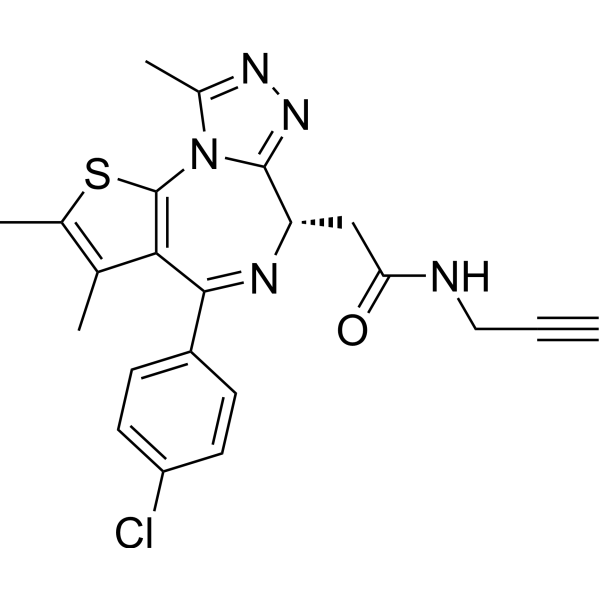
    (+)-JQ1 PA is a derivative of the Bromodomain and extra-terminal (BET) inhibitor JQ1, with an IC50 of 10.4 nM. (+)-JQ1 PA is a click chemistry reagent, it contains an Alkyne group and can undergo copper-catalyzed azide-alkyne cycloaddition (CuAAc) with molecules containing Azide groups.
    (+)-JQ1 PA
  • HY-100653
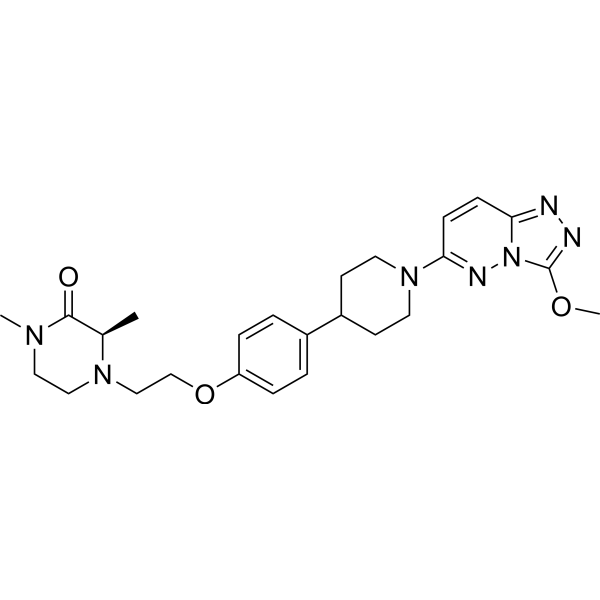
    AZD5153
    5 Publications Verification

    Epigenetic Reader Domain Apoptosis Cancer
    AZD5153 is a bivalent, selective, and orally active BET/BRD4 bromodomain inhibitor with an IC50 of value of 5 nM for full-length BRD4 (FL-BRD4). AZD5153 ligates two bromodomains in BRD4 simultaneously. AZD5153 can be used for the study of cancer, such as acute myeloid leukemia, multiple myeloma, and diffuse large B-cell lymphoma .
    AZD5153
  • HY-136938
    NEO2734
    4 Publications Verification

    EP31670

    Epigenetic Reader Domain Histone Acetyltransferase Cancer
    NEO2734 (EP31670) is an orally active dual p300/CBP and BET bromodomain selective inhibitor, with IC50 values of <30 nM for both p300/CBP and BET bromodomains . NEO2734 is active in SPOP mutant and wild-type prostate cancer .
    NEO2734
  • HY-100653A
    AZD5153 6-Hydroxy-2-naphthoic acid
    5 Publications Verification

    Epigenetic Reader Domain Cancer
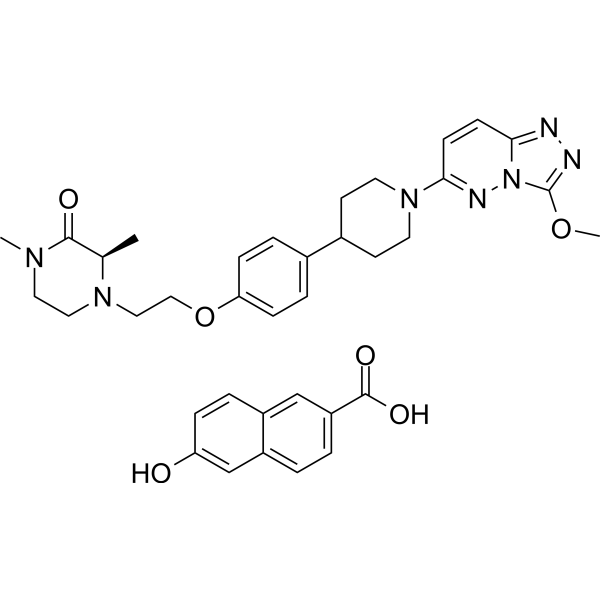
    AZD5153 6-Hydroxy-2-naphthoic acid is the 6-Hydroxy-2-naphthoic acid of AZD5153. AZD5153 is a potent, selective, and orally available BET/BRD4 bromodomain inhibitor; disrupts BRD4 with an IC50 of 1.7 nM.
    AZD5153 6-Hydroxy-2-naphthoic acid
  • HY-111422
    PLX51107
    3 Publications Verification

    Epigenetic Reader Domain Cancer
    PLX51107 is a potent and selective BET inhibitor, with Kds of 1.6, 2.1, 1.7, and 5 nM for BD1 and 5.9, 6.2, 6.1, and 120 nM for BD2 of BRD2, BRD3, BRD4, and BRDT, respectively; PLX51107 also interacts with the bromodomains of CBP and EP300 (Kd, in the 100 nM range).
    PLX51107
  • HY-145550

    BI894999

    Epigenetic Reader Domain Cancer
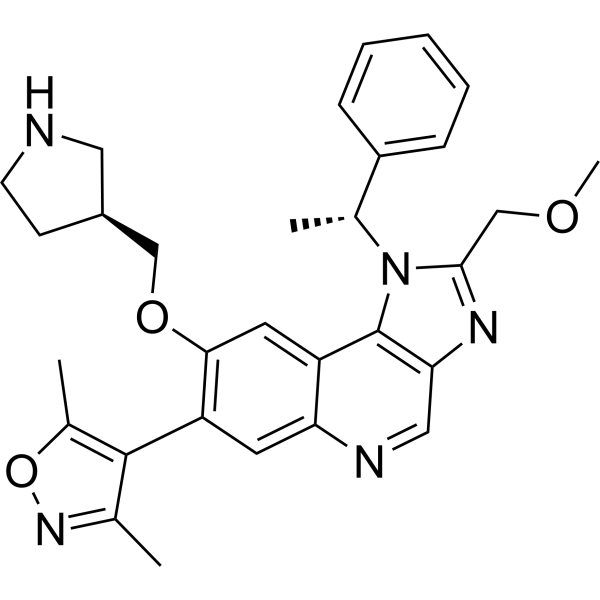
    Amredobresib (BI894999) is an orally active BET inhibitor. Amredobresib inhibits the binding of BRD4-BD1 and BRD4-BD2 bromodomains to acetylated histones with IC50 values of 5 nM and 41 nM, respectively. Amredobresib exhibits anticancer activity against acute myeloid leukemia (AML) and NUT cancer .
    Amredobresib
  • HY-16586
    PFI-1
    3 Publications Verification

    Epigenetic Reader Domain Autophagy Apoptosis Cancer
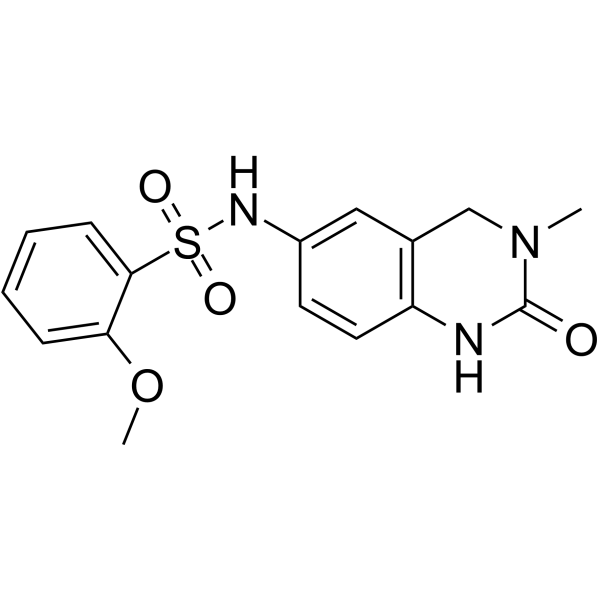
    PFI-1, a chemical probe, is a selective BET (bromodomain-containing protein) inhibitor for BRD4 with IC50 of 0.22 μM in a cell-free assay.
    PFI-1
  • HY-134463
    NHWD-870
    1 Publications Verification

    Epigenetic Reader Domain Apoptosis Cancer
    NHWD-870 is a potent, orally active and selective BET family bromodomain inhibitor and only binds bromodomains of BRD2, BRD3, BRD4 (IC50=2.7 nM), and BRDT. NHWD-870 has potent tumor suppressive efficacies and suppresses cancer cell-macrophage interaction. NHWD-870 increases tumor apoptosis and inhibits tumor proliferation .
    NHWD-870
  • HY-136571
    GSK046
    3 Publications Verification

    iBET-BD2

    Epigenetic Reader Domain Inflammation/Immunology
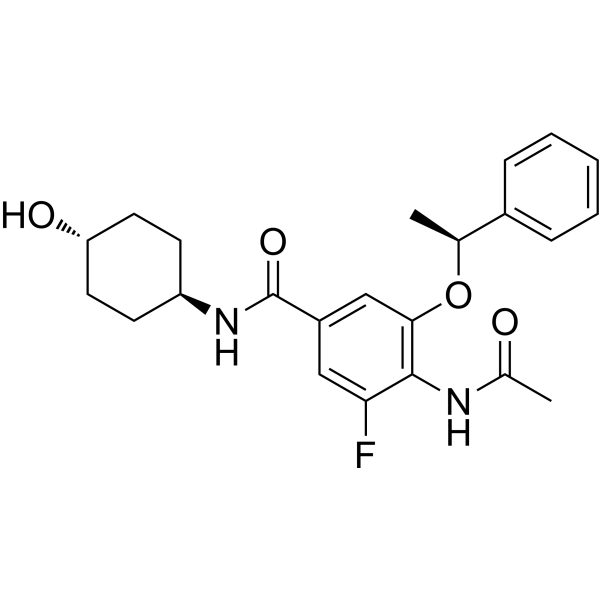
    GSK046 (iBET-BD2), a chemical probe, is a potent, selective and orally active BD2 bromodomain inhibitor of the BET proteins, with IC50s of 264 nM (BRD2 BD2), 98 nM (BRD3 BD2), 49 nM (BRD4 BD2) and 214 nM (BRDT BD2), respectively. GSK046 has immunomodulatory activity .
    GSK046
  • HY-131061

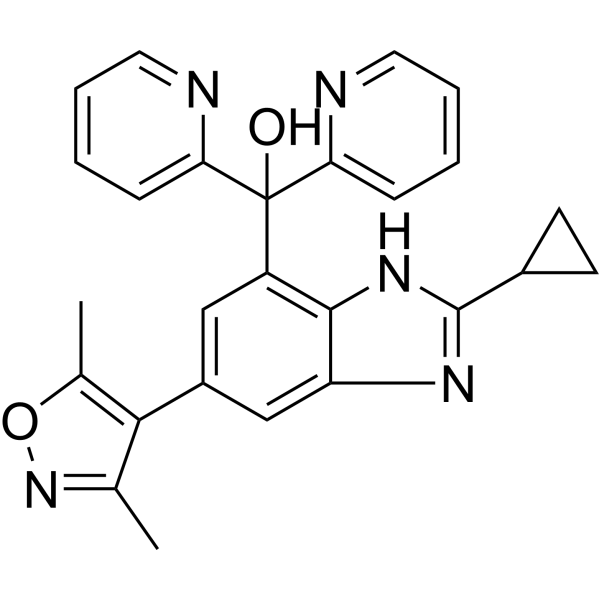
    Epigenetic Reader Domain Cancer
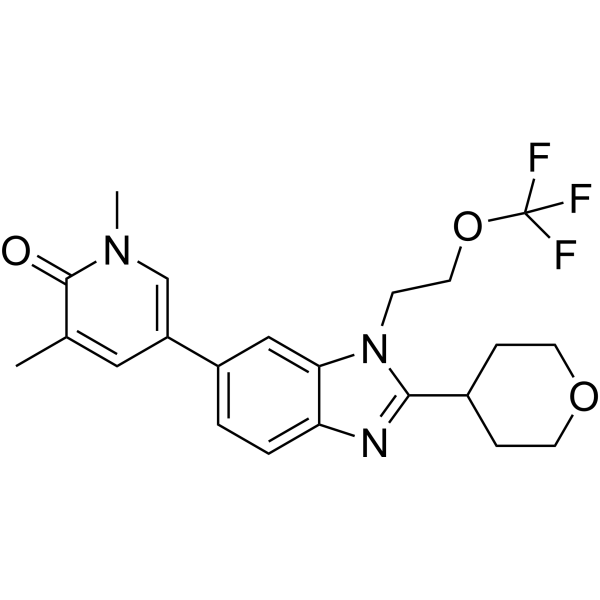
    BET bromodomain inhibitor 1 is an orally active, selective bromodomain and extra-terminal (BET) bromodomain inhibitor with an IC50 of 2.6 nM for BRD4. BET bromodomain inhibitor 1 binds to BRD2(2), BRD3(2), BRD4(1), BRD4(2), and BRDT(2) with high affinities (Kd values of 1.3 nM, 1.0 nM, 3.0 nM, 1.6 nM, 2.1 nM, respectively). bromodomain inhibitor 1 has anti-cancer activity .
    BET bromodomain inhibitor 1
  • HY-103036

    Epigenetic Reader Domain Apoptosis Cancer
    BET bromodomain-IN-5 is an orally active BET inhibitor with an IC50 of 14 nM against BRD4 (1). BET bromodomain-IN-5 can inhibit the proliferation of tumor cells and induce cell cycle arrest and apoptosis. BET bromodomain-IN-5 can be used in the research of tumors .
    BET bromodomain-IN-5
  • HY-109050
    Alobresib
    2 Publications Verification

    GS-5829

    Epigenetic Reader Domain Cancer
    Alobresib (GS-5829) is a BET bromodomain inhibitor, which represents a highly effective therapeutics agent against recurrent/chemotherapy resistant uterine serous carcinoma (USC) overexpressing c-Myc. Alobresib can be used in the metastatic castration-resistant prostate cancer (mCRPC) research .
    Alobresib
  • HY-100352
    BI-9564
    2 Publications Verification

    Epigenetic Reader Domain Cancer
    BI-9564, a chemical probe, is a potent, selective and cell-permeable BRD9/BRD7 bromodomains inhibitor, with IC50s of 75 nM and 3.4 μM and Kds of 14 nM and 239 nM, respectively. BI-9564 has an IC50 of > 100 μM for BET family .
    BI-9564
  • HY-117286

    TEN-010

    Epigenetic Reader Domain Apoptosis Neurological Disease Cancer
    (S)-JQ-35 (TEN-010) is an orally active, blood-brain barrier-permeable bromodomain inhibitor that selectively targets the bromodomain and extra-terminal domain (BET) protein family (BRD4, BRD3, BRD2 and BRDT). (S)-JQ-35 blocks the activation of Myc gene expression by BRD4, thereby inhibiting cancer cell proliferation and promoting cancer cell apoptosis. (S)-JQ-35 can be used in research related to NUT midline carcinoma and neuroblastoma .
    (S)-JQ-35
  • HY-137892

    Epigenetic Reader Domain Inflammation/Immunology
    GSK620, a chemical probe, is a potent and orally active pan-BD2 inhibitor with excellent broad selectivity, developability and in vivo oral pharmacokinetics. GSK620 is highly selective for the BET-BD2 family of proteins, with >200-fold selectivity over all other bromodomains. GSK620 shows an anti-inflammatory phenotype in human whole blood .
    GSK620
  • HY-111976

    Epigenetic Reader Domain Cancer
    MT1 is a bivalent chemical probe of BET bromodomains, with an IC50 of 0.789 nM for BRD4(1) .
    MT1
  • HY-19760

    Epigenetic Reader Domain Inflammation/Immunology
    I-BET282 is a pan-inhibitor of all eight BET bromodomains, and selectivity over other representative bromodomain-containing proteins. I-BET282 shows pIC50s ranging 6.4-7.7 for BRD2 (BD1/BD2), BRD2 (BD1/BD), BRD3 (BD1/BD), and BRD4 (BD1/BD) .
    I-BET282
  • HY-112610

    Epigenetic Reader Domain Histone Acetyltransferase Cancer
    CF53 is a highly potent, selective and orally active inhibitor of BET protein, with a Ki of <1 nM, Kd of 2.2 nM and an IC50 of 2 nM for BRD4 BD1. CF53 binds to both the BD1 and BD2 domains of BRD2, BRD3, BRD4, and BRDT BET proteins with high affinities, very selective over non-BET bromodomain-containing proteins. CF53 shows potent anti-tumor activity both in vitro and in vivo .
    CF53
  • HY-125232
    MS645
    1 Publications Verification

    Epigenetic Reader Domain Cancer
    MS645 is a bivalent BET bromodomains (BrD) inhibitor with a Ki of 18.4 nM for BRD4-BD1/BD2. MS645 spatially constrains bivalent inhibition of BRD4 BrDs resulting in a sustained repression of BRD4 transcriptional activity in solid-tumor cells .
    MS645
  • HY-W010649

    HSP Epigenetic Reader Domain ATP-binding cassette (ABC) transporters Bacterial Fungal Antibiotic Infection Metabolic Disease Inflammation/Immunology Cancer
    Isoxazole is a member of the five-membered heterocycle drug scaffold. Isoxazole has been used as a BET bromodomain inhibitor and can improve β-cell function in a diabetic mouse model. Isoxazole and its derivatives exhibit broad biological activities (such as antimicrobial, antibacterial, antifungal, antiviral, anticancer, anti-inflammatory, immunomodulatory, analgesic, anti-tuberculosis, and anti-diabetic effects). For example, the bicyclic Isoxazole can act as an HSP90 inhibitor, and the tricyclic Isoxazole is promising as a selective multidrug resistance protein (MRP1) inhibitor​ .
    Isoxazole
  • HY-43723

    Ligands for Target Protein for PROTAC Cancer
    PROTAC BET-binding moiety 2 is an inhibitor of BET bromodomain .
    PROTAC BET-binding moiety 2
  • HY-145125

    PROTACs Others
    SJ995973 (PROTAC) is a uniquely potent degrader of bromodomain and extra-terminal (BET) proteins.
    SJ995973
  • HY-111502

    Epigenetic Reader Domain Cancer
    Y06036 is a potent and selective BET inhibitor, which binds to the BRD4(1) bromodomain with Kd value of 82 nM . Antitumor activity .
    Y06036
  • HY-147046

    Epigenetic Reader Domain Ligands for Target Protein for PROTAC Cancer
    ET-JQ1-OH is an allele-specific BET inhibitor. ET-JQ1-OH can serve as a Ligand for Target Protein for PROTAC, and is used for the development and design of PROTAC Brd4 degraders, such as AB3145 (HY-180923).
    ET-JQ1-OH
  • HY-124596

    Epigenetic Reader Domain Cancer
    CD161 is a potent, selective and orally bioavailable bromodomain and extra-terminal (BET) bromodomain inhibitor with an IC50s of 28.2 nM and 7.2 nM for BRD4 BD1 and BRD4 BD2, respectively. CD161 has good anticancer activity .
    CD161
  • HY-114416

    Epigenetic Reader Domain Cancer
    GS-626510 is a potent, and orally active BET family bromodomains inhibitor, with Kd values of 0.59-3.2 nM for BRD2/3/4, with IC50 values of 83 nM and 78 nM foe BD1 and BD2, respectively .
    GS-626510
  • HY-158764

    PROTACs Epigenetic Reader Domain Cancer
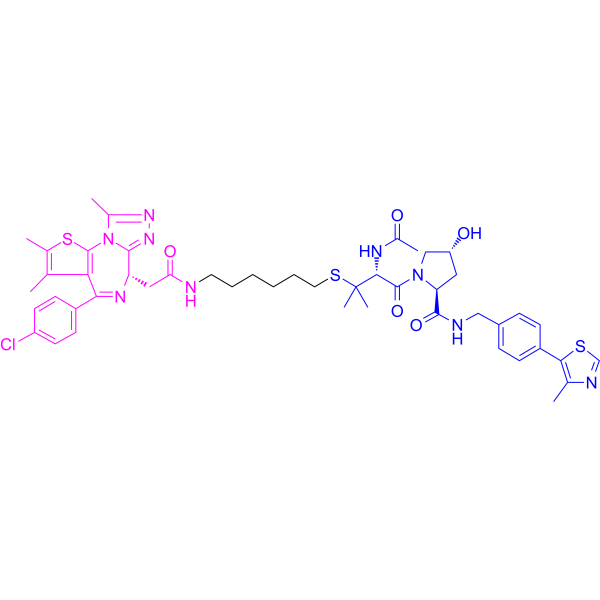
    PROTAC BET Degrader-12 (Compound 8b) is a PROTAC degrader for bromodomain and extra-terminal domain (BET)-containing proteins, which degrades the BRD3 and BRD4 in a DCAF11-dependent manner. PROTAC BET Degrader-12 inhibits cell viability of KBM7 with a DC50 of 305.2 nM. (Pink: ligand for target protein (+)-JQ-1 (HY-13030); Black: linker (HY-159077); Blue: ligand for E3 ligase (HY-159076))
    PROTAC BET Degrader-12
  • HY-114504

    Epigenetic Reader Domain Inflammation/Immunology
    RVX-297 is a potent, orally active BET bromodomain inhibitor with selectivity for BD2. RVX-297 shows IC50s of 0.08, 0.05, and 0.02 μM for BRD2(BD2), BRD3(BD2), and BRD4(BD2), respectively. RVX-297 suppresses inflammatory gene expression in multiple immune cell types. RVX-297 is effective in acute inflammation and autoimmunity models .
    RVX-297
  • HY-138563

    Epigenetic Reader Domain Cancer
    GSK973, a chemical probe, is a highly selective, orally bioavailable inhibitor of the BD2s (second bromodomains) of the BET family, with a pIC50 of 7.8 and a pKd of 8.7 for BRD4 BD2. GSK973 displays a 1600-fold selectivity for BRD4 BD2 over BRD4 BD1. GSK973 shows good potency against BRD2 BD2, BRD3 BD2, and BRDT BD2 (pIC50=7.4~7.8; pKd=8.3~8.5) .
    GSK973
  • HY-111916

    BET-IN-4

    Epigenetic Reader Domain Cancer
    ODM-207 (BET-IN-4) is a potent BET bromodomain protein (BRD4) inhibitor, with an IC50 of ≤ 1 μM .
    ODM-207
  • HY-125236

    Epigenetic Reader Domain Cancer
    BET-IN-19 (Compound 146) is a BET inhibitor. BET-IN-19 inhibits hlL-6 mRNA transcription (IC50 ≤0.3 uM), and c-myc activity in human AML MV4-11 cell (IC50 ≤0.3 uM)。BET-IN-19 inhibits tetra-acetylated histone H4 binding to BRD4 bromodomain 1 (IC50 ≤0.3 uM) .
    BET-IN-19
  • HY-123911

    PROTACs Epigenetic Reader Domain Cancer
    dBET23 is a highly effective and selective PROTAC BRD4 degrader with a DC50/5h of ~ 50 nM for BRD4BD1 protein .
    dBET23
  • HY-177124

    VYN201

    Epigenetic Reader Domain Cancer
    Repibresib (VYN201) is a bromodomain and extra-terminal motif (BET) inhibitor. Repibresib shows antineoplastic activity .
    Repibresib
  • HY-161346

    PROTACs Epigenetic Reader Domain Cancer
    EBET-1055 is a bromodomain and extra-terminal (BET) PROTAC degrader. EBET-1055 effectively inhibits the growth of pancreatic ductal adenocarcinoma (PDAC). EBET-1055 also simultaneously modulates cancer-associated fibroblast (CAF) activity, upregulating all reporter gene activities in organoid co-cultures . Pink: BET ligand (HY-161387); Blue: CRBN ligase ligand (HY-14658); Black: linker
    EBET-1055
  • HY-162088

    Epigenetic Reader Domain Inflammation/Immunology
    DW71177 is a novel [1,2,4]triazolo[4,3-a] quinoxaline-based potent and BD1-Selective BET inhibitor, and can be used for study of acute myeloid leukemia .
    DW71177
  • HY-112149A

    Epigenetic Reader Domain Inflammation/Immunology Cancer
    (E/Z)-ZL0420 is a racemic compound of (Z)-ZL0420 and (E)-ZL0420 isomers. (E)-ZL0420 is a potent and selective bromodomain-containing protein 4 (BRD4) inhibitor with IC50 values of 27 nM against BRD4 BD1 and 32 nM against BRD4 BD2 .
    (E/Z)-ZL0420
  • HY-161346A

    PROTACs Epigenetic Reader Domain Cancer
    (Rac)-EBET-1055 is the racemate of EBET-1055 (HY-161346). EBET-1055 is a bromodomain and extra-terminal (BET) PROTAC degrader. EBET-1055 effectively inhibits the growth of pancreatic ductal adenocarcinoma (PDAC). EBET-1055 also simultaneously modulates cancer-associated fibroblast (CAF) activity, upregulating all reporter gene activities in organoid co-cultures .
    (Rac)-EBET-1055
  • HY-146709

    Epigenetic Reader Domain Cancer
    BET bromodomain inhibitor 2 is a potent BET bromodomain inhibitor with an IC50 of 14.1 µM .
    BET bromodomain inhibitor 2
  • HY-115568
    BETd-246
    2 Publications Verification

    PROTACs Epigenetic Reader Domain Cancer
    BETd-246 is a second-generation and PROTAC-based BET bromodomain (BRD) inhibitor connected by ligands for Cereblon and BET, exhibiting superior selectivity, potency and antitumor activity .
    BETd-246
  • HY-123626

    Epigenetic Reader Domain Cancer
    BiBET is a chemical probe of BET/BRD4 and is able to bind to two bromodomains simultaneously in a bivalent and cis-binding mode .
    BiBET
  • HY-153593

    Epigenetic Reader Domain Cancer
    BET bromodomain inhibitor 3 is BET bromodomain inhibitor. BET bromodomain inhibitor 3 has inhibitory effect against BrdT with Ki value of > 40 µM. BET bromodomain inhibitor 3 can be used for the research of contraception, cancer, and heart disease .
    BET bromodomain inhibitor 3

Inquiry Online

Your information is safe with us. * Required Fields.

Salutation


Country or Region *

Applicant Name *


Organization Name *

Department *


Email Address *


Product Name *

Cat. No.


Requested quantity *

Phone Number *


Remarks

Inquiry Online

Inquiry Information

Product Name:
Cat. No.:
Quantity:
MCE Japan Authorized Agent:

