



ZEN-3694
Based on 1 publication(s) in Google Scholar
ZEN-3694 (BET-IN-19) is an orally active BET inhibitor. ZEN-3694 regulates the function of BET proteins, thereby downregulating pathways involved in cell cycle regulation, ER signaling, AR signaling, AR splice variants, MYC, GR, cell growth, inflammation, and cellular immune responses. ZEN-3694 inhibits proliferation, induces apoptosis, reverses the upregulation of CDK6 and CCND1, restores cell cycle arrest, and inhibits CDK6 via miR-34a-5p. ZEN-3694 can be used in research related to HER2 breast cancer and metastatic castration-resistant prostate cancer.
For research use only. We do not sell to patients.
- Purity : 99.85%
- CAS No.: 1643947-30-1
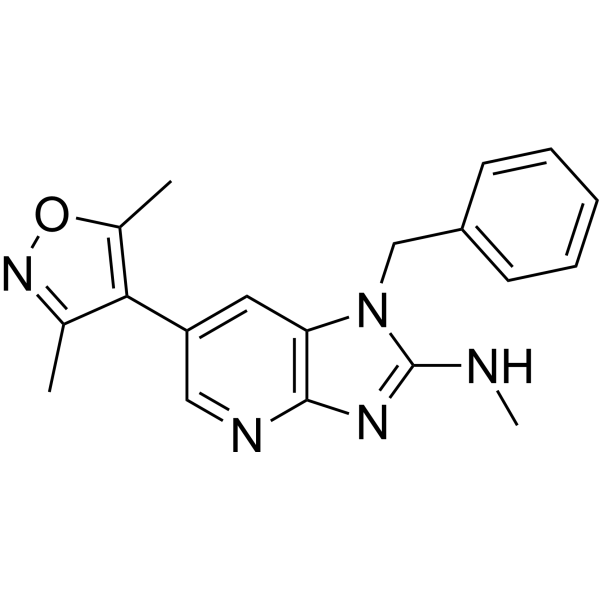
- Formula: C19H19N5O
- Molecular Weight:333.39
-
Storage:Powder -20°C, 3 years ; In solvent -80°C, 6 months , -20°C, 1 month

To place orders, for customer services and technical support, please contact: MedChemExpress USA
Tel: 609-228-6898 E-mail: [email protected] [email protected]


-
 Biological Activity
-
Chemical Information
-
Solvent & Solubility
- Protocols
- Purity & Documentation
- References
-
 Help & FAQs


-
HY-13032
MolibresibBET Inhibitor -
HY-16652
ApabetaloneBET Inhibitor -
HY-16297A
AbemaciclibCDK4/6 Inhibitor -
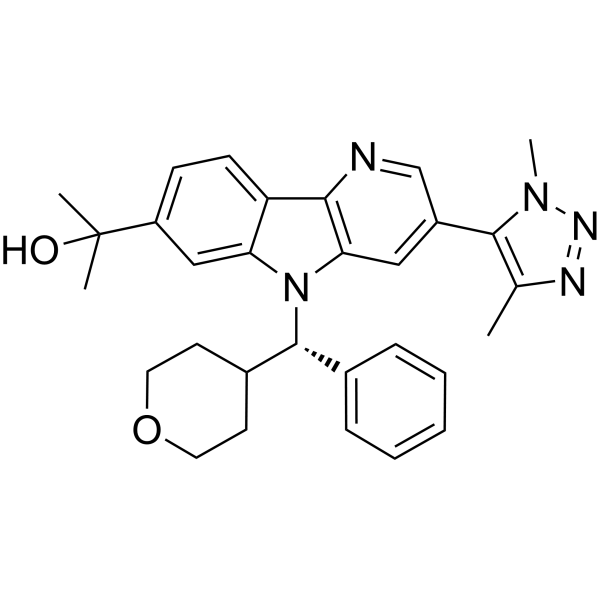
HY-101567
BMS-986158BET Inhibitor -
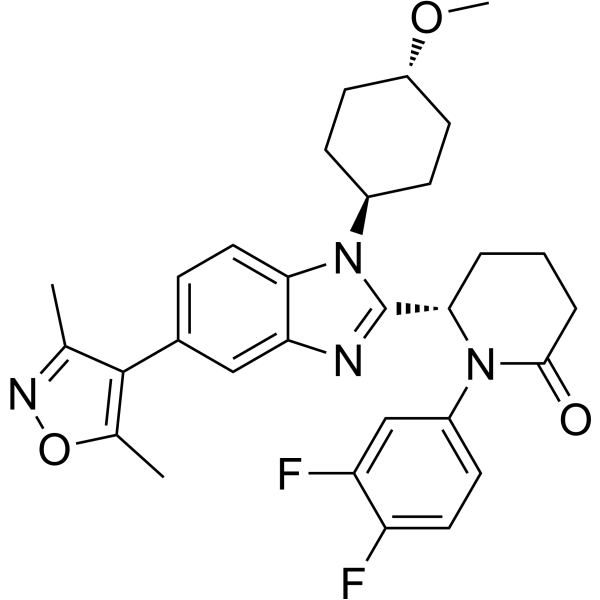
HY-111784
Inobrodibp300/CBP Inhibitor -
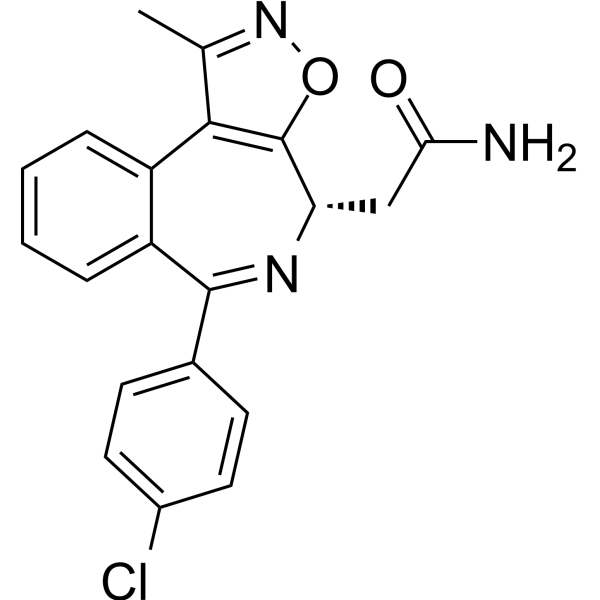
HY-12863
PelabresibBET Inhibitor -
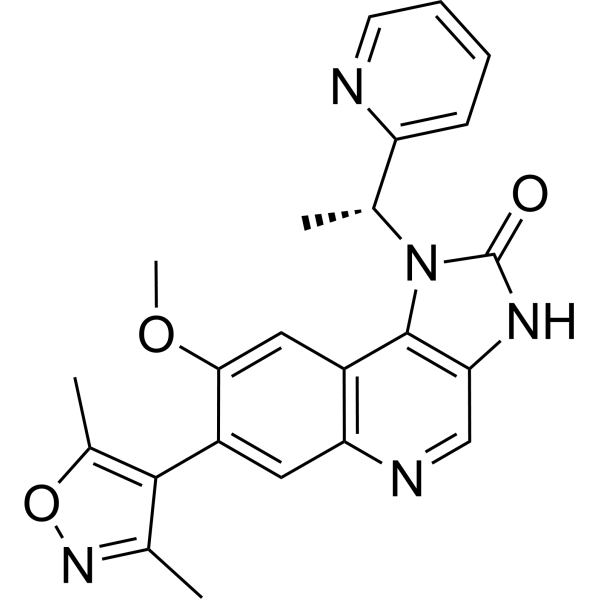
HY-13235
I-BET151BRD2/3/4 Inhibitor -
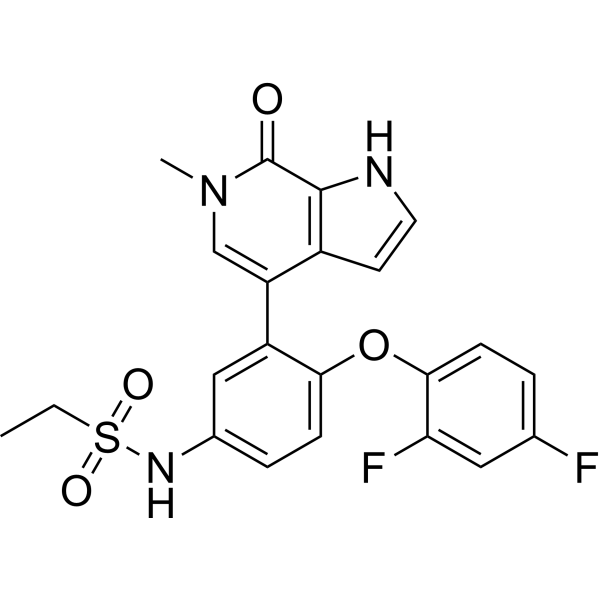
HY-100015
MivebresibBET Inhibitor -
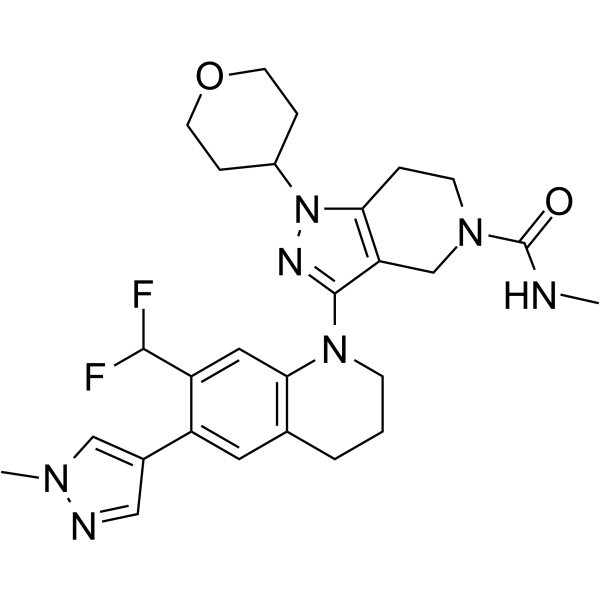
HY-108696
GNE-781CBP Inhibitor -
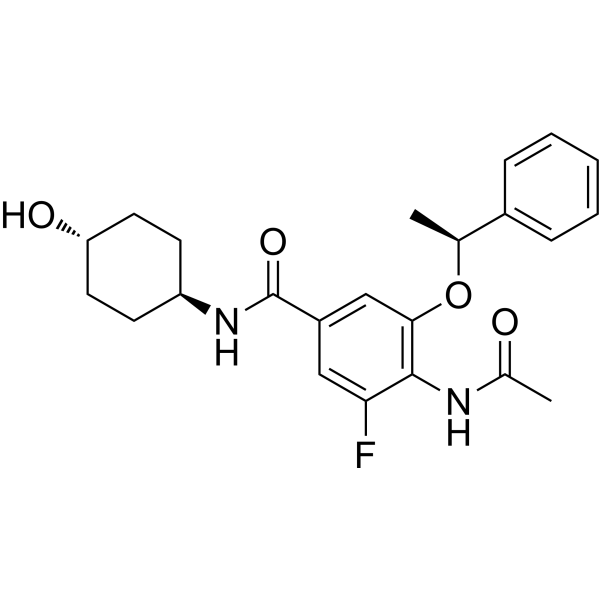
HY-136571
GSK046BET BD2 Inhibitor -
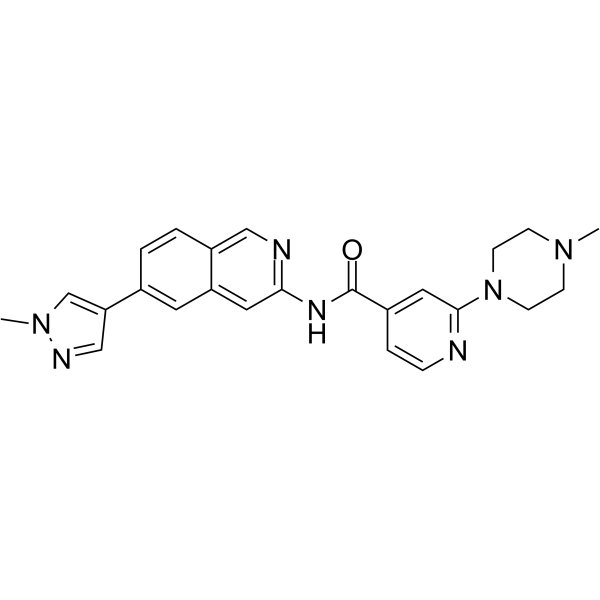
HY-137435
CirtuvivintCLK Inhibitor -

HY-16652R
Apabetalone (Standard)BET Inhibitor
Publications Citing Use of MedChemExpress (MCE) ZEN-3694
More

Biological Activity
Description
IC50 & Target
[1]|
BET |
In Vitro
ZEN-3694 (7 days with re-treatment on day 3 or 4) inhibits proliferation of HCC-1428, ZR-75-1, CAMA-1, MCF-7, palbociclib-resistant MCF-7, and abemaciclib-resistant MCF-7 ER+ breast cancer cell lines with IC50 values ranging 0.3-2.6 μM, and exhibits similar antiproliferative activity in both wild-type and CDK4/6 inhibitor-resistant cells[1].
The combination of ZEN-3694 and abemaciclib (0.25X-2X IC50 constant ratios; 7 days with re-treatment on day 3 or 4) synergistically inhibits proliferation of MCF-7, PALBO-R MCF-7, and ABEMA-R MCF-7 cells with CI values of 0.07-0.36[1].
ZEN-3694 (nanomolar range; 5 days) potently reduces viability of palbociclib-resistant MCF7-R100 and T47D-R100 ER+ breast cancer cells maintained in palbociclib with nanomolar potency, with resistant cells showing greater sensitivity than parental MCF7 cells[3].
ZEN-3694 (nanomolar range; 14 days) suppresses long-term colony formation of palbociclib-resistant MCF7-R100 and T47D-R100 ER+ breast cancer cells maintained in palbociclib with nanomolar potency, with resistant cells showing greater sensitivity than parental MCF7 cells[3].
ZEN-3694 (0.5-4 μM; 6 h) dose-dependently downregulates CDK6, CDK4, ESR1, MYC, BCLXL, and BCL2 mRNA and upregulates HEXIM1 mRNA in MCF-7 and PALBO-R MCF-7 cells[1].
ZEN-3694 (1 μM) downregulates elevated CDK6 protein levels in PALBO-R and ABEMA-R MCF-7 cells, and downregulates ERα protein levels in MCF-7, PALBO-R MCF-7, and ABEMA-R MCF-7 cells[1].
ZEN-3694 alters the expression of over 11,000 genes and inhibits key tumorigenic pathways (including estrogen-mediated S-phase entry, STAT3, and VEGF signaling) in MCF-7, PALBO-R MCF-7, and ABEMA-R MCF-7 cells[1].
ZEN-3694 (1×100 IC50; 7 days with re-treatment on day 3 or 4) induces apoptosis in MCF-7 (27.3%), PALBO-R MCF-7 (34.5%), and ABEMA-R MCF-7 (21.4%) cells after 7-day treatment[1].
The combination of ZEN-3694 and abemaciclib (1×100 IC50; 7 days with re-treatment on day 3 or 4) induces high levels of apoptosis (75.2% in MCF-7, 60.2% in PALBO-R MCF-7, 50.4% in ABEMA-R MCF-7) in wild-type and CDK4/6 inhibitor-resistant ER+ breast cancer cells after 7-day treatment[1].
ZEN-3694 induces transcriptional upregulation of miR-34a-5p in palbociclib-resistant MCF7-R100 ER+ breast cancer cells[3].
ZEN-3694 (varying concentrations (unspecified numerically)) induces dose-dependent reduction of CDK6, cyclin D1, cyclin E2, phosphorylated Rb, ERα, and c-MYC protein expression in palbociclib-resistant MCF7-R100 ER+ breast cancer cells[3].
ZEN-3694 (24 h; 2-5 days) induces G1 cell cycle arrest within 24 hours and time-dependent apoptosis after extended exposure in palbociclib-resistant MCF7-R100 ER+ breast cancer cells[3].
ZEN-3694 suppresses BCL-2 protein expression and induces PARP cleavage in palbociclib-resistant MCF7-R100 ER+ breast cancer cells maintained in palbociclib, with these effects attenuated when palbociclib is removed[3].
MedChemExpress (MCE) has not independently confirmed the accuracy of these methods. They are for reference only.
- Annexin V plus membrane-impermeant dye apoptosis staining
- BrdU Incorporation Assay
- Somatic Cell Culture
- Protocol for Cell Cycle
- CCK-8/WST-8 Cell Proliferation Assay
- Cell Counting-Based Growth Curve Assay
- Research Protocol for Inflammation-related Diseases
- Breast Cancer Modeling
- Directly Induced Neuron Culture
- Cell Viability Determination by MTT Colorimetric Assay
- Detection of Apoptosis
- TUNEL staining for apoptotic DNA fragmentation
- Flow cytometric DNA-content cell-cycle staining
- Protocol for Cell Counting and Cell Density Analysis
- Apoptosis Solutions
- MTT Cell Proliferation Assay


Chemical Information
-
CAS No. 1643947-30-1
-
Appearance Solid
-
Molecular Weight 333.39
-
Formula C19H19N5O
-
Color Off-white to light yellow
-
SMILES
CNC1=NC(N=CC(C2=C(C)ON=C2C)=C3)=C3N1CC4=CC=CC=C4
-
Synonyms
BET-IN-19
-
Shipping
Room temperature in continental US; may vary elsewhere.
-
Storage
Powder -20°C 3 years In solvent -80°C 6 months -20°C 1 month


Publications (1)
-
Journal Impact Factor
-
Most Recent
-
bioRxiv
Spatially-Resolved Multiomic Atlas of Leiomyosarcoma Identifies Two Clinically Relevant Epigenetically-Driven Cell States. [Abstract]2026 May 26:2026.05.22.726988. PMID: 42244620


Solvent & Solubility
In Vitro:
DMSO : 100 mg/mL (299.95 mM; Need ultrasonic; Hygroscopic DMSO has a significant impact on the solubility of product, please use newly opened DMSO)
Please refer to the solubility information to select the appropriate solvent. Once prepared, please aliquot and store the solution to prevent product inactivation from repeated freeze-thaw cycles.
Storage method and period of stock solution: -80°C, 6 months; -20°C, 1 month. When stored at -80°C, please use it within 6 months. When stored at -20°C, please use it within 1 month.
Please refer to the solubility information to select the appropriate solvent. Once prepared, please aliquot and store the solution to prevent product inactivation from repeated freeze-thaw cycles.
Storage method and period of stock solution: -80°C, 6 months; -20°C, 1 month. When stored at -80°C, please use it within 6 months. When stored at -20°C, please use it within 1 month.
Concentration (start) × Volume (start) = Concentration (final) × Volume (final)
In Vivo:
Select the appropriate dissolution method based on your experimental animal and administration route.
- For the following dissolution methods, please ensure to first prepare a clear stock solution using an In Vitro approach and then sequentially add co-solvents:
- To ensure reliable experimental results, the clarified stock solution can be appropriately stored based on storage conditions. As for the working solution for In Vivo experiments, it is recommended to prepare freshly and use it on the same day.
- The percentages shown for the solvents indicate their volumetric ratio in the final prepared solution. If precipitation or phase separation occurs during preparation, heat and/or sonication can be used to aid dissolution.
Add each solvent one by one: 10% DMSO 40% PEG300 5% Tween-80 45% Saline
Solubility: ≥ 2.5 mg/mL (7.50 mM); Clear solution
This protocol yields a clear solution of ≥ 2.5 mg/mL (saturation unknown).
Taking 1 mL working solution as an example, add 100 μL DMSO stock solution (25.0 mg/mL) to 400 μL PEG300, and mix evenly; then add 50 μL Tween-80 and mix evenly; then add 450 μL Saline to adjust the volume to 1 mL.
Preparation of Saline: Dissolve 0.9 g sodium chloride in ddH₂O and dilute to 100 mL to obtain a clear Saline solution.
Add each solvent one by one: 10% DMSO 90% (20% SBE-β-CD in Saline)
Solubility: ≥ 2.5 mg/mL (7.50 mM); Clear solution
This protocol yields a clear solution of ≥ 2.5 mg/mL (saturation unknown).
Taking 1 mL working solution as an example, add 100 μL DMSO stock solution (25.0 mg/mL) to 900 μL 20% SBE-β-CD in Saline, and mix evenly.
Preparation of 20% SBE-β-CD in Saline (4°C, storage for one week): 2 g SBE-β-CD powder is dissolved in 10 mL Saline, completely dissolve until clear.
In Vivo Dissolution Calculator
Please enter the basic information of animal experiments:
-
-
-
-
Recommended: Prepare an additional quantity of animals to account for potential losses during experiments.
Please enter your animal formula composition:
-
%DMSO +
Recommended: Keep the proportion of DMSO in working solution below 2% if your animal is weak.
-
%+
-
+%Tween-80 + +
-
%Saline +
The co-solvents required include: DMSO, . All of co-solvents are available by MedChemExpress (MCE). , Tween 80. All of co-solvents are available by MedChemExpress (MCE).
Working solution concentration: 0.22 mg/mL
Method for preparing stock solution: mg drug dissolved in μL DMSO. Stock solution concentration: mg/mL.
1. Take μL DMSO stock solution;
2. Add μL .
μL , mix evenly;
3. Then add μL Tween 80, mix evenly;
4. Then add μL
Please ensure that the stock solution in the first step is dissolved to a clear state, and add co-solvents in sequence. You can use ultrasonic heating (ultrasonic cleaner, recommended frequency 20-40 kHz), vortexing, etc. to assist dissolution.


Purity & Documentation
-
Data Sheet (282 KB)
-
SDS (251 KB)
- English - EN (251 KB)
- Français - FR (251 KB)
- Deutsch - DE (251 KB)
- Norwegian - NO (251 KB)
- Español - ES (251 KB)
- Swedish - SV (251 KB)
- Italian - IT (251 KB)
- Korean - KR (251 KB)
- Portuguese - PT (251 KB)
-
Handling Instructions (2659 KB)
References
[1]. Kharenko OA, et al. Combination of ZEN-3694 with CDK4/6 inhibitors reverses acquired resistance to CDK4/6 inhibitors in ER-positive breast cancer. Cancer Gene Ther. 2022;29:859-869. [Content Brief]
[2]. Aggarwal R, et al. A Phase 1b/2a Study of the Pan-BET Bromodomain Inhibitor ZEN-3694 in Combination with Enzalutamide in Patients with Metastatic Castration-Resistant Prostate Cancer. Clin Cancer Res. 2020;26(20):5338-5347. [Content Brief]
[3]. Liu R, et al. BET Bromodomain inhibition reverses CDK4/6 inhibitor resistance in estrogen receptor-positive breast cancer via induction of miR-34a-5p. Clin Cancer Res. 2025;31(23):5096-5110. [Content Brief]


Complete Stock Solution Preparation Table
Please refer to the solubility information to select the appropriate solvent. Once prepared, please aliquot and store the solution to prevent product inactivation from repeated freeze-thaw cycles.
Storage method and period of stock solution: -80°C, 6 months; -20°C, 1 month. When stored at -80°C, please use it within 6 months. When stored at -20°C, please use it within 1 month.
| Optional Solvent | Concentration Solvent Mass | 1 mg | 5 mg | 10 mg | 25 mg |
|---|---|---|---|---|---|
| DMSO | 1 mM | 2.9995 mL | 14.9974 mL | 29.9949 mL | 74.9872 mL |
| 5 mM | 0.5999 mL | 2.9995 mL | 5.9990 mL | 14.9974 mL | |
| 10 mM | 0.2999 mL | 1.4997 mL | 2.9995 mL | 7.4987 mL | |
| 15 mM | 0.2000 mL | 0.9998 mL | 1.9997 mL | 4.9991 mL | |
| 20 mM | 0.1500 mL | 0.7499 mL | 1.4997 mL | 3.7494 mL | |
| 25 mM | 0.1200 mL | 0.5999 mL | 1.1998 mL | 2.9995 mL | |
| 30 mM | 0.1000 mL | 0.4999 mL | 0.9998 mL | 2.4996 mL | |
| 40 mM | 0.0750 mL | 0.3749 mL | 0.7499 mL | 1.8747 mL | |
| 50 mM | 0.0600 mL | 0.2999 mL | 0.5999 mL | 1.4997 mL | |
| 60 mM | 0.0500 mL | 0.2500 mL | 0.4999 mL | 1.2498 mL | |
| 80 mM | 0.0375 mL | 0.1875 mL | 0.3749 mL | 0.9373 mL | |
| 100 mM | 0.0300 mL | 0.1500 mL | 0.2999 mL | 0.7499 mL |


ZEN-3694 Related Classifications
HY-125236 Related Classifications
 Powered by Bioz