




1. Search Result
Search Result
Results for "

C5 protein

" in MedChemExpress (MCE) Product Catalog:

44

Inhibitors & Agonists

2

Fluorescent Dyes

2

Biochemical Assay Reagents

6

Inhibitory Antibodies

36

Recombinant Proteins

10

Isotope-Labeled Compounds

5

Antibodies

3

Click Chemistry

2

Oligonucleotides

Cat. No. Product Name Target Research Areas Chemical Structure
  • HY-P99394
    Talquetamab
    1 Publications Verification

    JNJ-64407564

    CD3 Cancer
    Talquetamab (JNJ-64407564) is a humanized bispecific antibody that binds to GPRC5D (member of G protein-coupled receptor family C5 group D) and CD3 to induce T cell-mediated killing of GPRC5D-expressing MM cells through T cell recruitment and activation. Talquetamab (JNJ-64407564) has antitumor activity .
    Talquetamab
  • HY-NP004

    CVF

    Complement System Inflammation/Immunology
    Cobra Venom Factor (CVF) is a selective activator targeting complement components C3, C5, and factor B in the complement system. After binding to factor B, Cobra Venom Factor is cleaved by factor D, forming a stable C3/C5 convertase resistant to regulatory proteins H and I. This continuously hydrolyzes C3 and C5, depleting serum complement while inducing neutrophil migration, vascular leakage, and increased TNF-α levels. Cobra Venom Factor can be used to deplete complement and mimic complement activation-related pathological states, and is applied in animal models of complement-mediated diseases such as acute respiratory distress syndrome (ARDS), sepsis, and shock. Cobra Venom Factor can be isolated from the venom of cobras (e.g., Naja atra, Naja melanoleuca, Naja kaouthia, etc.) .
    Cobra Venom Factor
  • HY-D1612

    Fluorescent Dye Others
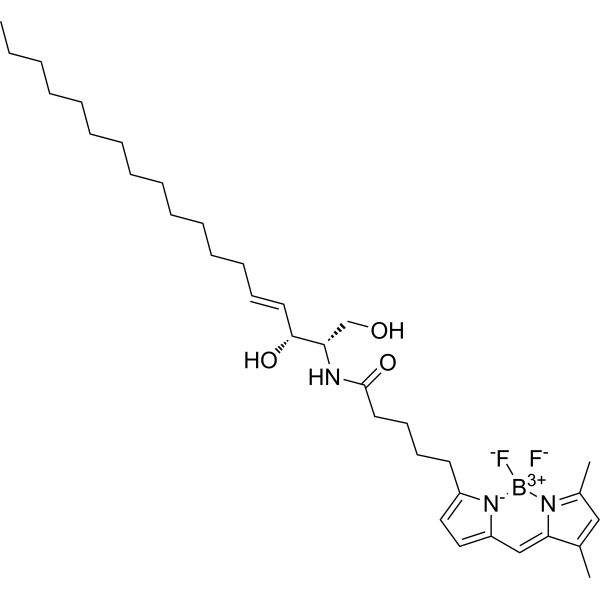
    The Golgi apparatus is composed of flattened vesicles superimposed on each other by unit membranes. The flattened vesicles are round with expanded and perforated edges. The Golgi fluorescent probe is a BODIPY-labeled ceramide derivative, the synthesis of which occurs in the endoplasmic reticulum and can then be transported to the Golgi via ceramide transport protein (CERT) or vesicular translocation, allowing specific labeling of the dye . BODIPY Fl C5-Ceramide is a Golgi-specific green fluorescent dye, which can visualise individual cells . Ex/Em= 505 nm/512 nm.
    BODIPY FL C5-Ceramide
  • HY-Y0252S

    Endogenous Metabolite Others
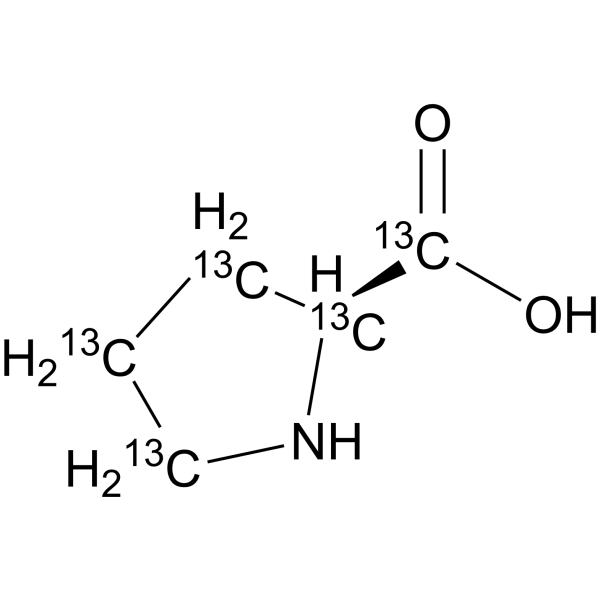
    L-Proline- 13C5 is the 13C-labeled L-Proline. L-Proline is one of the twenty amino acids used in living organisms as the building blocks of proteins.
    L-Proline-13C5
  • HY-P99365

    ALXN1210

    Complement System Metabolic Disease
    Ravulizumab (ALXN1210) is a humanized monoclonal antibody that specifically binds with high affinity to the human complement protein C5. Ravulizumab can be used for the research of paroxysmal nocturnal hemoglobinuria, atypical hemolytic uremic syndrome, and myasthenia gravis .
    Ravulizumab
  • HY-145720

    ALN-CC5

    Complement System Small Interfering RNA (siRNA) Metabolic Disease
    Cemdisiran (ALN-CC5) is an N-acetylgalactosamine-conjugated RNAi agent and also a complement component C5 inhibitor. Cemdisiran targets C5 mRNA, cleaves C5 mRNA via the endogenous RNA interference pathway, and inhibits the production of C5 protein in the liver. Cemdisiran exerts a dose-dependent inhibitory effect on total C5 concentrations in cynomolgus monkeys. When used in combination with Pozelimab (HY-P99786) in cynomolgus monkeys, Cemdisiran achieves a more sustained and complete inhibitory effect on complement activity. Cemdisiran can be used in the research of paroxysmal nocturnal hemoglobinuria and other complement-mediated diseases .
    Cemdisiran
  • HY-B0228S1

    Adenine riboside-13C5; D-Adenosine-13C5

    Apoptosis Nucleoside Antimetabolite/Analog Autophagy Endogenous Metabolite Cancer
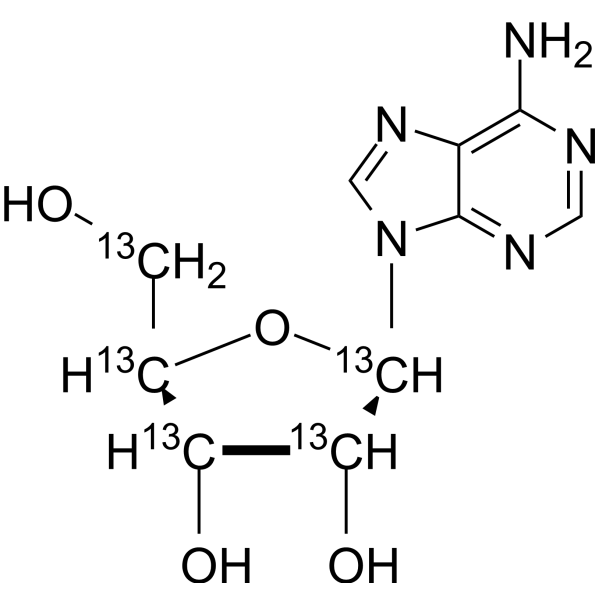
    Adenosine- 13C5 is the 13C labeled Adenosine . Adenosine (Adenine riboside), a ubiquitous endogenous autacoid, acts through the enrollment of four G protein-coupled receptors: A1, A2A, A2B, and A3. Adenosine affects almost all aspects of cellular physiology, including neuronal activity, vascular function, platelet aggregation, and blood cell regulation .
    Adenosine-13C5
  • HY-128342
    Complement C5-IN-1
    1 Publications Verification

    Complement System Inflammation/Immunology
    Compound C5-IN-1 (Compound 7) is a selective allosteric inhibitor of complement component protein C5. Compound C5-IN-1 prevents C5 from being cleaved by C5 convertase, inhibits the cleavage of C5 into C5a and C5b, and thus blocks the formation of membrane attack complex (MAC). Compound C5-IN-1 has an IC50 of 0.77 μM and 5 nM in 50% human whole blood and 2% human serum to block MAC deposition induced by zymosan, respectively. Compound C5-IN-1 can be used to study diseases related to complement overactivation, such as paroxysmal nocturnal hemoglobinuria (PNH) and atypical hemolytic uremic syndrome (aHUS) .
    Complement C5-IN-1
  • HY-122725B

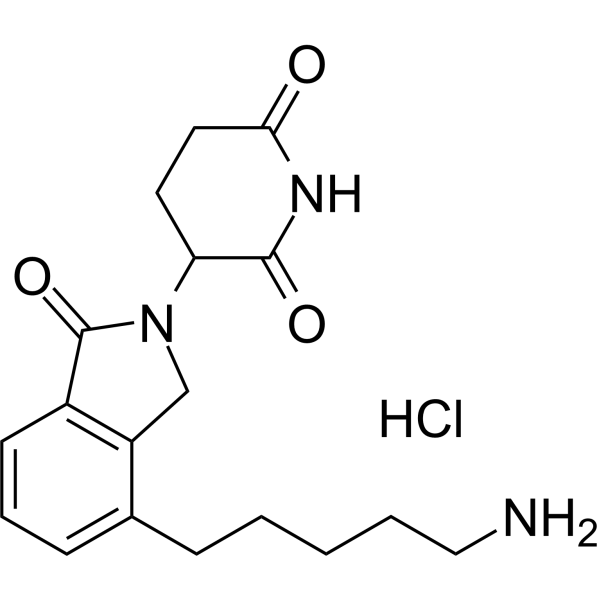
    E3 Ligase Ligand-Linker Conjugates Cancer
    Lenalidomide-C5-NH2 hydrochloride is an E3 ligase ligand-linker conjugate. Lenalidomide-C5-NH2 hydrochloride can be coupled to a target protein ligand via a linker to form a PROTAC molecule—such as a PROTAC degrader for MDM2 .
    Lenalidomide-C5-NH2 hydrochloride
  • HY-P99638

    ALXN-1720

    Complement System Inflammation/Immunology
    Gefurulimab (ALXN-1720) is a high-affinity antibody inhibitor targeting complement protein C5, which can specifically bind to C5 and inhibit its cleavage into C5a and C5b. Gefurulimab can block the activation of the terminal complement pathway and reduce inflammatory damage. Gefurulimab can effectively reduce the formation of membrane attack complex (MAC) and has good pharmacokinetic properties. Gefurulimab can be used to study kidney and autoimmune diseases related to abnormal activation of the complement system, such as IgA nephropathy, lupus nephritis, and myasthenia gravis .
    Gefurulimab
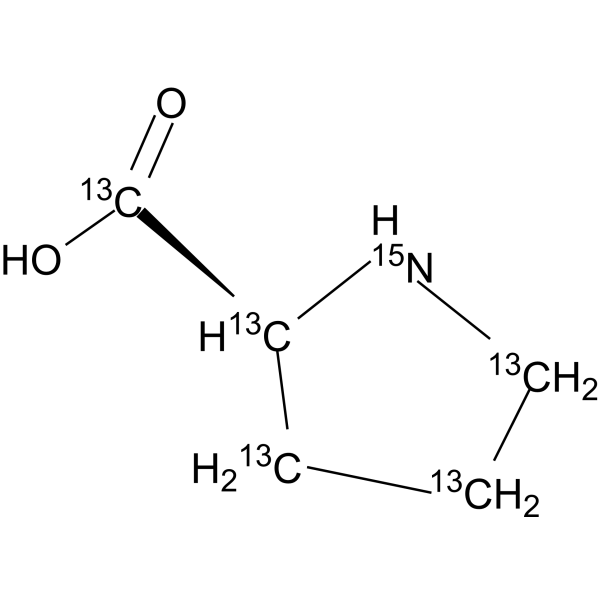
  • HY-Y0252S4

    Endogenous Metabolite Others
    L-Proline- 13C5,1- 15N is the 13C- and 15N-labeled L-Proline. L-Proline is one of the twenty amino acids used in living organisms as the building blocks of proteins.
    L-Proline-13C5,15N
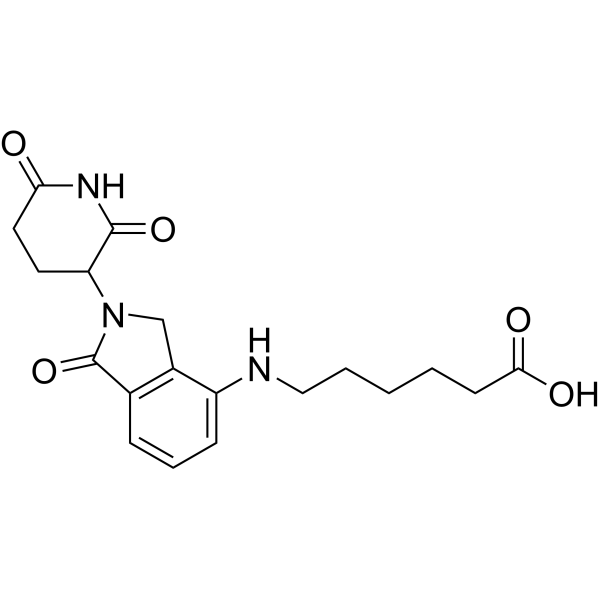
  • HY-160241

    E3 Ligase Ligand-Linker Conjugates Cancer
    Lenalidomide-C5-acid is the Lenalidomide-based E3 ligase ligand-linker conjugate used in the recruitment of CRBN protein. Lenalidomide-C5-acid can be used to synthesize PROTACs .
    Lenalidomide-C5-acid
  • HY-122725

    E3 Ligase Ligand-Linker Conjugates Cancer
    Lenalidomide-C5-NH2 is an E3 ligase ligand-linker conjugate. Lenalidomide-C5-NH2 can be coupled to a target protein ligand via a linker to form a PROTAC molecule—such as a PROTAC degrader for MDM2 .
    Lenalidomide-C5-NH2
  • HY-145720A

    ALN-CC5 sodium

    Complement System Others
    Cemdisiran sodium is an N-acetylgalactosamine (GalNAc) conjugated siRNA for the research of complement-mediated diseases by suppressing liver production of complement 5 (C5) protein.
    Cemdisiran sodium
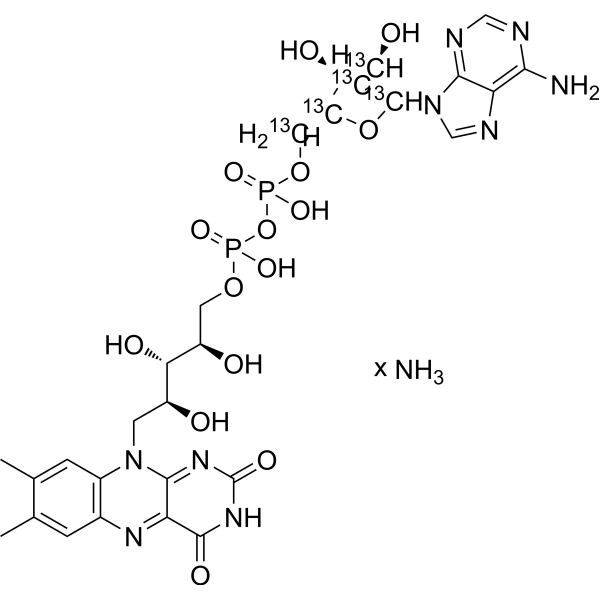
  • HY-B1654S

    FAD-13C5 ammonium

    Isotope-Labeled Compounds Endogenous Metabolite Cardiovascular Disease
    Flavin adenine dinucleotide- 13C5 (FAD- 13C5) ammonium is 13C labeled Flavin adenine dinucleotide (HY-B1654). Flavin adenine dinucleotide (FAD) is a redox cofactor, more specifically a prosthetic group of a protein, involved in several important enzymatic reactions in metabolism.
    Flavin adenine dinucleotide-13C5 ammonium
  • HY-159570

    PROTACs STAT Cancer
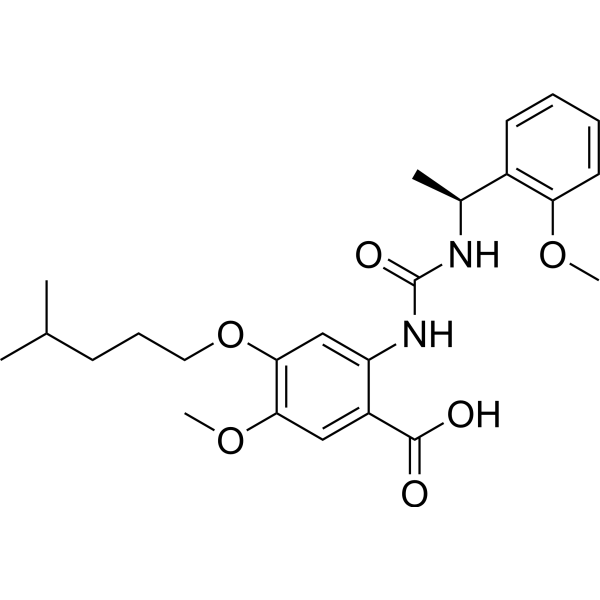
    XD2-149 is a PROTAC targeting STAT3. XD2-149 consists of PROTAC target protein ligand Napabucasin (HY-13919) (red part), E3 ligase Thalidomide (HY-14658) (black part), and linker NH2-C5-Azacyclohexane-N-Boc (HY-159572) (blue part). The E3 ligase + linker conjugate is Thalidomide-NH-C5-azacyclohexane-N-Boc (HY-159571), and the active control of the target protein ligand is Thalidomide acid (HY-159573) [1] .
    XD2-149
  • HY-W018772S15

    Endogenous Metabolite Inflammation/Immunology
    D-Ribose(mixture of isomers)- 13C5 isomers)- 13C5 is the 13C labeled D-Ribose(mixture of isomers) . D-Ribose(mixture of isomers) is an energy enhancer, and acts as a sugar moiety of ATP, and widely used as a metabolic therapy supplement for chronic fatigue syndrome or cardiac energy metabolism. D-Ribose(mixture of isomers) is active in protein glycation, induces NF-κB inflammation in a RAGE-dependent manner .
    D-Ribose(mixture of isomers)-13C5
  • HY-P991067

    KP-104

    Complement System Inflammation/Immunology
    Vensobafusp alfa (KP-104) is a fusion protein composed of an IgG4 monoclonal antibody directed against terminal complement protein C5 fused to the complement factor H 1-5 domain (FH1-5). Vensobafusp alfa shows anti-inflammatory and immunomodulatory activities. The isotype control for Vensobafusp alfa can refer to Human IgG4 (S228P) kappa, Isotype Control (HY-P99003) . .
    Vensobafusp alfa
  • HY-129608

    Cereblon ligand-linker Conjugate

    E3 Ligase Ligand-Linker Conjugates Cancer
    Lenalidomide-acetylene-C5-COOH (compound 43; Cereblon ligand-linker Conjugate) is the Lenalidomide-based Cereblon ligand used in the recruitment of CRBN protein. Lenalidomide-acetylene-C5-COOH can be connected to the ligand for protein by a linker to form PROTAC . Lenalidomide-acetylene-C5-COOH is a click chemistry reagent, it contains an Alkyne group and can undergo copper-catalyzed azide-alkyne cycloaddition (CuAAc) with molecules containing Azide groups.
    Lenalidomide-acetylene-C5-COOH
  • HY-B0152S3

    6-Aminopurine-13C5; Vitamin B4-13C5

    Isotope-Labeled Compounds DNA/RNA Synthesis Endogenous Metabolite Cancer
    Adenine- 13C5 (6-Aminopurine- 13C5; Vitamin B4- 13C5) is 13C-labeled Adenine (HY-B0152). Adenine (6-Aminopurine), a purine, is one of the four nucleobases in the nucleic acid of DNA. Adenine acts as a chemical component of DNA and RNA. Adenine also plays an important role in biochemistry involved in cellular respiration, the form of both ATP and the cofactors (NAD and FAD), and protein synthesis.
    Adenine-13C5
  • HY-148326

    ADC Linker Others
    Glu(OtBu)-Val-Cit-PAB-OH (compound L5-1c) is an non-cleavable ADC linker. Glu(OtBu)-Val-Cit-PAB-OH has been used to synthesis protein-tubulysin conjugates .
    Glu(OtBu)-Val-Cit-PAB-OH
  • HY-N0322S3

    Estrogen Receptor/ERR Endogenous Metabolite Metabolic Disease
    Cholesterol- 13C5 is the 13C-labeled Cholesterol. Cholesterol is the major sterol in mammals. It is making up 20-25% of structural component of the plasma membrane. Plasma membranes are highly permeable to water but relatively impermeable to ions and protons. Cholesterol plays an important role in determining the fluidity and permeability characteristics of the membrane as well as the function of both the transporters and signaling proteins . Cholesterol is also an endogenous estrogen-related receptor α (ERRα) agonist .
    Cholesterol-13C5
  • HY-132856

    E3 Ligase Ligand-Linker Conjugates Cancer
    Lenalidomide-C5-amido-Boc is the Lenalidomide-based Cereblon ligand used in the recruitment of CRBN protein. Lenalidomide-C5-amido-Boc can be connected to the ligand for protein by a linker to form PROTAC .
    Lenalidomide-C5-amido-Boc
  • HY-139996

    PROTACs Apoptosis FLT3 c-Kit FGFR VEGFR PDGFR c-Fms Cancer
    Pomalidomide-C5-Dovitinib (compound 2) is a PROTAC containing Pomalidomide, Dovitinib and connected with CRBN. Pomalidomide-C5-Dovitinib shows enhanced antiproliferative effects against FLT3-ITD+ AML cells. Pomalidomide-C5-Dovitinib induces the degradation of the FLT3-ITD and KIT proteins in a ubiquitin-proteasome-dependent manner and completely blocks their downstream signaling pathway. Pomalidomide-C5-Dovitinib has the potential for the research of FLT3-ITD + acute myeloid leukemia .
    Pomalidomide-C5-Dovitinib
  • HY-149562

    E3 Ligase Ligand-Linker Conjugates Autophagy Apoptosis Cancer
    Thalidomide-5-O-C5-NH2 hydrochloride is the Thalidomide (HY-10984)-based cereblon ligand used in the recruitment of CRBN protein.Thalidomide-5-O-C5-NH2 hydrochloride can be connected to the ligand for protein by a linker to form PROTACs .
    Thalidomide-5-O-C5-NH2 hydrochloride
  • HY-D1611

    Fluorescent Dye Others
    BODIPY FL-C5 NHS Ester is a green-fluorescent dye that is reactive with primary amines on biomolecules such as peptides, proteins, modified nucleotides and biopolymers .
    BODIPY FL-C5 NHS Ester
  • HY-130530

    Biochemical Assay Reagents Metabolic Disease
    AP-C5 displays selective inhibition of guanosine 3′,5′-cyclic monophosphate (cGMP)-dependent protein kinase II (cGKII) with a pIC50 of 7.2, which can be used for the research of diarrheal disease . AP-C5 is a click chemistry reagent, it contains an Alkyne group and can undergo copper-catalyzed azide-alkyne cycloaddition (CuAAc) with molecules containing Azide groups.
    AP-C5
  • HY-161132

    E3 Ligase Ligand-Linker Conjugates Others
    Lenalidomide 4'-alkyl-C5-azide is a functionalized cerebellar ligand for PROTAC development that contains an E3 ligand and an alkyl LC5 ligand with terminal azides that can be coupled to a target protein ligand .
    Lenalidomide 4'-alkyl-C5-azide
  • HY-168175

    PROTACs HDAC Cancer
    PROTAC HDAC8 Degrader-2 (compound 32a) is a degrader of HDAC8 with a DC50 of 8.9 nM and HDAC6 with a DC50 of 14.3 nM. PROTAC HDAC8 Degrader-2 is composed of PROTAC target protein ligand HDAC8 ligand 1 (HY-168176) (red part), E3 ligase ligand Thalidomide-4-OH (HY-103596) (blue part) and PROTAC Linker 1,5-Diaminopentane (HY-W540541) (black part), among which the conjugate of E3 ubiquitin ligase ligand + Linker is Thalidomide-NH-C5-NH2 (HY-134986) .
    PROTAC HDAC8 Degrader-2
  • HY-170820

    Molecular Glues Bcl-2 Family CDK EGFR HSP Androgen Receptor c-Myc Cancer
    XYD049 is a CRBN-based molecular glue degrader targeting GSPT1, with a DC50 of 19 nM. XYD049 mediates the formation of a ternary complex between CRBN and GSPT1, thereby triggering CRBN- and proteasome-dependent degradation of GSPT1. By degrading GSPT1, XYD049 downregulates castration-resistant prostate cancer (CRPC)-related oncogenes, including BCL2, CDK2, E2F3, EGFR, HSP90B1, TMPRSS2, AR, AR-V7, PSA and c-Myc. XYD049 inhibits cancer cell growth and suppresses tumor growth in mice. XYD049 can be used for research on castration-resistant prostate cancer. XYD049 consists of a linker (black part) NH2-C5-NH-Boc (HY-W004710), a CRBN-based E3 ligase ligand (blue part) Thalidomide 4-fluoride (HY-41547), and a target protein ligand (red part) GSPT1 ligand-1 (HY-170821), among which the E3 ligase ligand plus linker forms the conjugate E3 Ligase Ligand-linker Conjugate 158 (HY-170822) .
    XYD049
  • HY-155261

    E3 Ligase Ligand-Linker Conjugates Cancer
    Pomalidomide-5-C5-NH2 hydrochloride is the Pomalidomide (HY-10984)-based cereblon (CRBN) ligand used in the recruitment of CRBN protein. Pomalidomide-5-C5-NH2 hydrochloride can be connected to the ligand for protein by a linker to form PROTAC .
    Pomalidomide-5-C5-NH2 hydrochloride
  • HY-149751

    Biochemical Assay Reagents Others
    Methylthiomcresol-C5-COOH (Compound F4) is a hapten that can be conjugated to carrier proteins for antigen design. Methylthiomcresol-C5-COOH designed antigen can be applied in ELISA to detect the residual amount of fenthion in white wine samples .
    Methylthiomcresol-C5-COOH
  • HY-122725A

    E3 Ligase Ligand-Linker Conjugates Cancer
    Lenalidomide-C5-NH2 TFA is an E3 ligase ligand-linker conjugate. Lenalidomide-C5-NH2 TFA can be coupled to a target protein ligand via a linker to form a PROTAC molecule—such as a PROTAC degrader for MDM2 .
    Lenalidomide-C5-NH2 TFA
  • HY-P99767

    ALXN1007; Lendalizumab

    Complement System Infection
    Olendalizumab (ALXN1007) is a mouse-derived and humanized IgG2-G4-κ antibody, targeting to Complement protein C5a (Ki=60 pM). Olendalizumab targets the complement inflammatory pathway. Moreover, Olendalizumab can be used for research of complement mediated disorder caused by corona virus .
    Olendalizumab
  • HY-B0660S1

    EPA 1,2,3,4,5-13C, FA 20:5-13C5

    Isotope-Labeled Compounds Endogenous Metabolite Histone Demethylase Neurological Disease Cancer
    Eicosapentaenoic acid 1,2,3,4,5- 13C5 (EPA 1,2,3,4,5- 13C, FA 20:5- 13C5) is 13C labeled Eicosapentaenoic Acid. Eicosapentaenoic Acid (EPA) is an orally active Omega-3 long-chain polyunsaturated fatty acid (ω-3 LC-PUFA). Eicosapentaenoic Acid exhibits a DNA demethylating action that promotes the re-expression of the tumor suppressor gene CCAAT/enhancer-binding protein δ (C/EBPδ). Eicosapentaenoic Acid activates RAS/ERK/C/EBPβ pathway through H-Ras intron 1 CpG island demethylation in U937 leukemia cells. Eicosapentaenoic Acid can promote relaxation of vascular smooth muscle cells and vasodilation .
    Eicosapentaenoic acid 1,2,3,4,5-13C5
  • HY-W767865

    Isotope-Labeled Compounds Endogenous Metabolite Infection Cardiovascular Disease Inflammation/Immunology
    Cyclic GMP sodium- 13C5 is the 13C-labeled Cyclic GMP sodium (HY-113469A). Cyclic GMP (cGMP) sodium, an important second messenger, is a major intracellular mediator of extracellular signals such as nitric oxide (NO) and natriuretic peptides (NPs). Effects of Cyclic GMP sodium occur through three main groups of cellular targets: cGMP-dependent protein kinases (PKGs), cGMP-gated cation channels, and PDEs. Cyclic GMP can inhibit both platelet adhesion and aggregation. cGAMP (Cyclic-GMP-AMP) (HY-12512), a conjugate of Cyclic GMP and AMP, can induce IRF3 phosphorylation and nuclear translocation, enhancing antiviral immune responses .
    Cyclic GMP sodium-13C5
  • HY-131455A

    Biochemical Assay Reagents Others
    Biotin-C1-PEG3-C3-amido-C5-Gly-Arg-Gly-N3 TFA is used for detection of modification site for N-myristoylated and GPI-anchored proteins in blood-stage P. falciparum . Biotin-C1-PEG3-C3-amido-C5-Gly-Arg-Gly-N3 (TFA) is a click chemistry reagent, it contains an Azide group and can undergo copper-catalyzed azide-alkyne cycloaddition reaction (CuAAc) with molecules containing Alkyne groups. It can also undergo strain-promoted alkyne-azide cycloaddition (SPAAC) reactions with molecules containing DBCO or BCN groups.
    Biotin-C1-PEG3-C3-amido-C5-Gly-Arg-Gly-N3 TFA
  • HY-150632

    SARS-CoV Infection
    SARS-CoV-2 nsp13-IN-6 (compound C5) is a potent SARS-CoV-2 non-structural protein 13 (nsp13) inhibitor with IC50 values of 27 and 33 μM for ssDNA + ATPase and ssDNA - ATPase. SARS-CoV-2 nsp13-IN-6 can be used for researching anti-COVID-19 .
    SARS-CoV-2 nsp13-IN-6
  • HY-W586819

    Ligands for E3 Ligase Cancer
    C5 Lenalidomide-CH3 is an E3 ubiquitin ligase cereblon (CRBN) ligand used to recruit the cereblon protein. C5 Lenalidomide-CH3 can be linked to a target protein ligand via a linker to form a PROTAC.
    C5 Lenalidomide-CH3
  • HY-W949165

    Ligands for E3 Ligase Cancer
    C5 Lenalidomide-6-fluoro is an E3 ubiquitin ligase cereblon (CRBN) ligand used to recruit the cereblon protein. C5 Lenalidomide-6-fluoro can be linked to a target protein ligand via a linker to form a PROTAC.
    C5 Lenalidomide-6-fluoro
  • HY-B0152S2

    6-Aminopurine-13C5,15N5; Vitamin B4-13C5,15N5

    Isotope-Labeled Compounds DNA/RNA Synthesis Endogenous Metabolite Cancer
    Adenine- 13C5,15C5 (6-Aminopurine- 13C5,15C5; Vitamin B4- 13C5,15C5) is 13C-labeled Adenine (HY-B0152). Adenine (6-Aminopurine), a purine, is one of the four nucleobases in the nucleic acid of DNA. Adenine acts as a chemical component of DNA and RNA. Adenine also plays an important role in biochemistry involved in cellular respiration, the form of both ATP and the cofactors (NAD and FAD), and protein synthesis.
    Adenine-13C5,15N5
  • HY-W945790

    E3 Ligase Ligand-Linker Conjugates Others
    Thalidomide-4-O-C5-Br is a synthesized E3 ligase ligand-linker conjugate that incorporates the Thalidomide based CRBN ligand and a linker used in PROTAC technology. Thalidomide-4-O-C5-Br can be connected to the ligand for protein by a linker to form PROTAC EZH2 Degrader-11 (HY-181306) .
    Thalidomide-4-O-C5-Br
  • HY-177942

    ADC Linker Neurological Disease
    Azide-C5-amide-tri-SA-bis(amide-PBA) (compound 15) is a linker targeting eye tissue specific protein, can be used for oligonucleotide coupling .
    Azide-C5-amide-tri-SA-bis(amide-PBA)
  • HY-P991788

    CCR Inflammation/Immunology
    Anti-Mouse CCR5 Antibody (C5Mab-2) reacts with mouse CCR5. CCR5 is a seven-pass transmembrane protein from the GPCR family. Recommend Isotype Controls: Rat IgG2b kappa, Isotype Control (HY-P990682) .
    Anti-Mouse CCR5 Antibody (C5Mab-2)

Inquiry Online

Your information is safe with us. * Required Fields.

Salutation


Country or Region *

Applicant Name *


Organization Name *

Department *


Email Address *


Product Name *

Cat. No.


Requested quantity *

Phone Number *


Remarks

Inquiry Online

Inquiry Information

Product Name:
Cat. No.:
Quantity:
MCE Japan Authorized Agent:

