Search Result
Results for "
biosynthetic+pathway
" in MedChemExpress (MCE) Product Catalog:
7
Isotope-Labeled Compounds
| Cat. No. |
Product Name |
Target |
Research Areas |
Chemical Structure |
-
- HY-F0003
-
|
|
Ferroptosis
Endogenous Metabolite
|
Metabolic Disease
Cancer
|
|
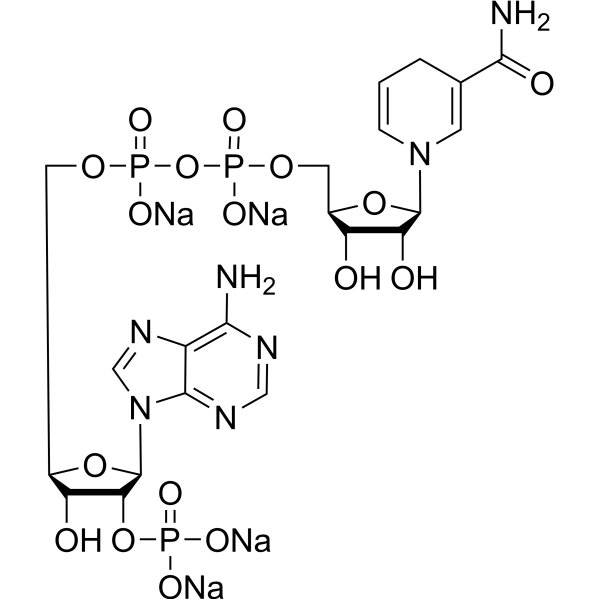
NADPH tetrasodium salt functions as an important cofactor in a variety of metabolic and biosynthetic pathways. NADPH tetrasodium salt is an endogenous inhibitor of ferroptosis. NADPH tetrasodium salt plays a vital role in the biosynthesis of agents, chiral alcohols, fatty acids and biopolymers, while also being required for lipid biosynthesis, biomass formation, and cell replication .
|
-
-
- HY-B1247
-
|
PPIX
|
Endogenous Metabolite
|
Others
|
|
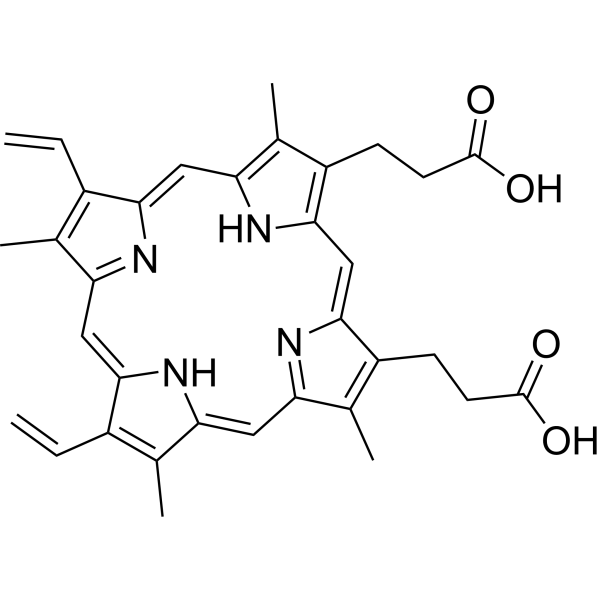
Protoporphyrin IX is a final intermediate in the heme biosynthetic pathway, which acts as a radiation sensitizer enhancing ROS generation even in a hypoxic state and inducing DNA damage. Protoporphyrin IX also acts as a photo sensitizer undergoing photobleaching that occurs through direct degradation by light irradiation. Protoporphyrin IX is formed and accumulated following 5-aminolevulinic acid (5-ALA) (HY-W000450) administration in the tumor cells of rats. Protoporphyrin IX causes selective improvement of basal cell carcinoma when activated red fluorescence of a peak wavelength at 405 nm. Protoporphyrin IX is promising for research of sonodynamic and photodynamic agents for a wide range of cancers, such as bladder cancer and nodular basal cell carcinoma .
|
-
-
- HY-125818
-
|
Cytidine triphosphate; 5'-CTP
|
DNA/RNA Synthesis
Nucleoside Antimetabolite/Analog
Endogenous Metabolite
|
Metabolic Disease
|
|
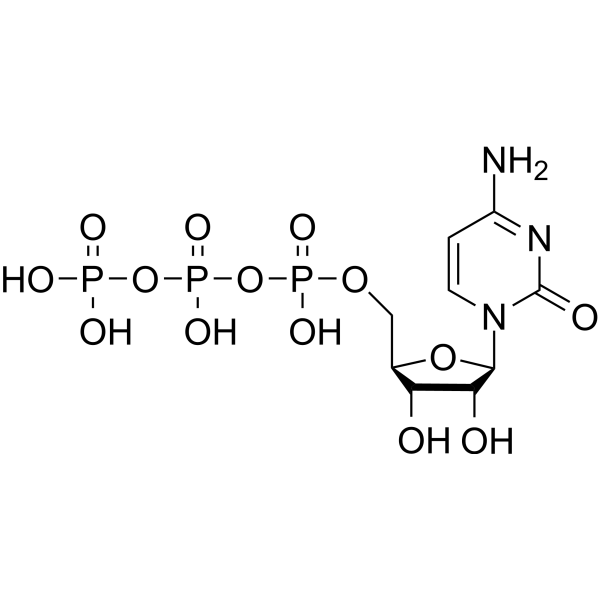
Cytidine 5′-triphosphate (Cytidine triphosphate; 5'-CTP) is a nucleoside triphosphate and serves as a building block for nucleotides and nucleic acids, lipid biosynthesis. Cytidine triphosphate synthase can catalyze the formation of cytidine 5′-triphosphate from uridine 5′-triphosphate (UTP). Cytidine 5′-triphosphate is an essential biomolecule in the de novo pyrimidine biosynthetic pathway in T. gondii .
|
-
-
- HY-B1468
-
|
|
Nucleoside Antimetabolite/Analog
Endogenous Metabolite
|
Cancer
|
|
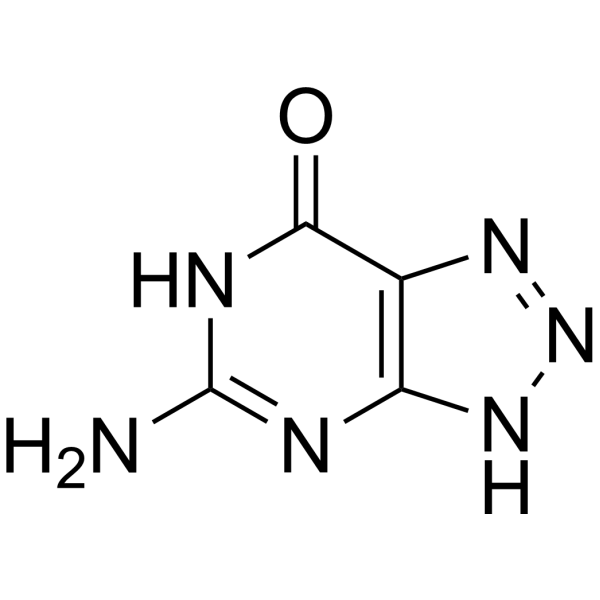
8-Azaguanine is a purine analogue that shows antineoplastic activity. 8-Azaguanine functions as an antimetabolite and easily incorporates into ribonucleic acids, interfering with normal biosynthetic pathways, thus inhibiting cellular growth .
|
-
-
- HY-W016288
-
|
2,3-Naphthalenedicarboxaldehyde; Naphthalene-2,3-dialdehyde
|
Fungal
|
Infection
|
|
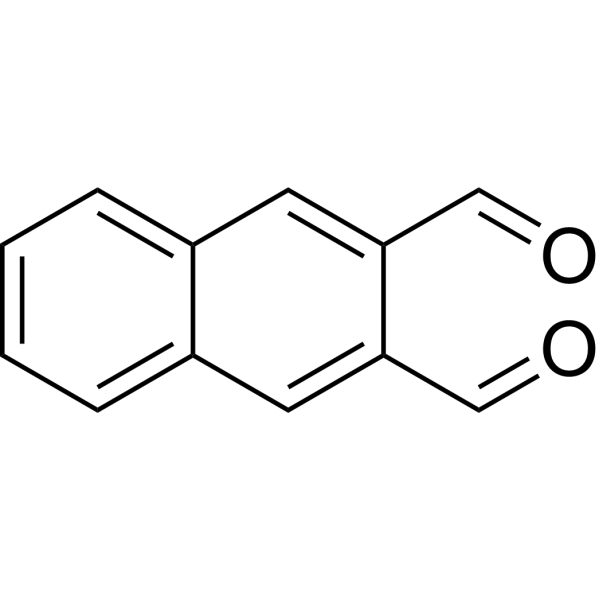
Naphthalene-2,3-dicarboxaldehyde (NDA) is an effective inhibitor of Candida albicans aspartate semialdehyde dehydrogenase (ASADH), with a Ki value of 45 μM. Naphthalene-2,3-dicarboxaldehyde targets ASADH in the aspartate biosynthetic pathway of Candida albicans. Naphthalene-2,3-dicarboxaldehyde reacts with primary amines to generate highly fluorescent and stable derivatives. Naphthalene-2,3-dicarboxaldehyde serves as a fungistatic agent and a fluorogenic derivatization reagent. Naphthalene-2,3-Dicarboxaldehyde can be used for the research of candidiasis .
|
-
-
- HY-119663
-
|
|
Fungal
|
Infection
|
|
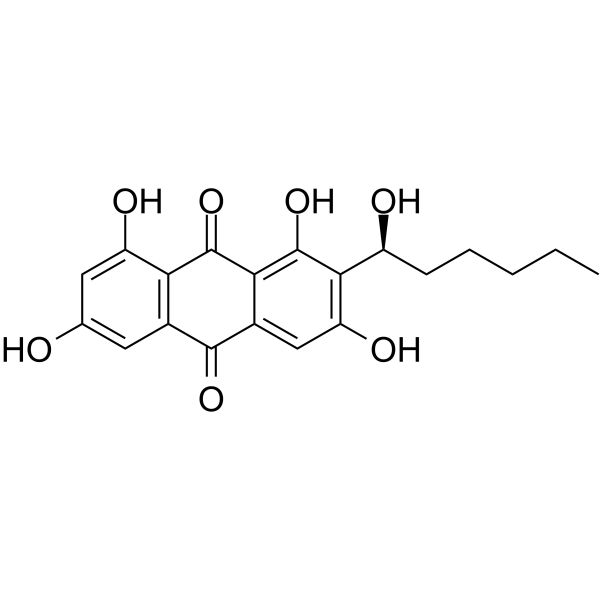
Averantin is the minor metabolite of the fungus Cercospora arachidicola . Averantin is an aflatoxin B1 precursor that can be used in the biosynthetic pathway .
|
-
-
- HY-N3926
-
|
|
Drug Intermediate
|
Others
|
|
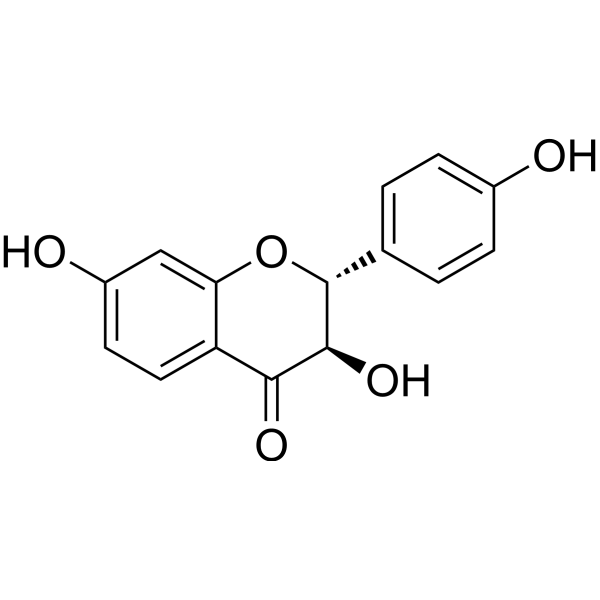
Garbanzol is an orally active natural flavonoid compound. Garbanzol is one of the key intermediates in the flavonoid biosynthetic pathway. Garbanzol exhibits anti-mutagenic activity .
|
-
-
- HY-N15351
-
|
|
Fluorescent Dye
Endogenous Metabolite
|
Others
|
|
Flavokermesic acid is an anthraquinone dye that can be detected in extracts of insects from the family Diaspididae, and it is a minor pigment component thereof. Flavokermesic acid can be used to investigate the biosynthetic pathways of insect-derived anthraquinone pigments .
|
-

-
- HY-F0003A
-
|
|
Ferroptosis
Endogenous Metabolite
|
Metabolic Disease
Cancer
|
|
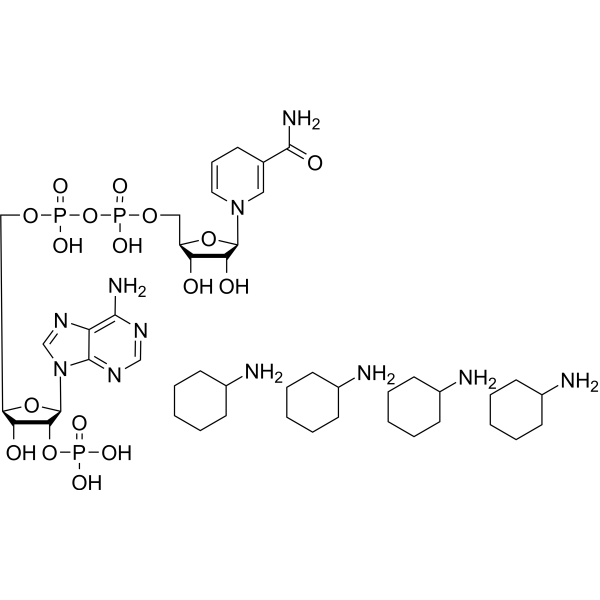
NADPH tetracyclohexanamine functions as an important cofactor in a variety of metabolic and biosynthetic pathways. NADPH tetracyclohexanamine is an endogenous inhibitor of ferroptosis. NADPH tetracyclohexanamine plays a vital role in the biosynthesis of agents, chiral alcohols, fatty acids and biopolymers, while also being required for lipid biosynthesis, biomass formation, and cell replication .
|
-
-
- HY-W013100
-
|
Cytidine triphosphate disodium; 5'-CTP disodium
|
DNA/RNA Synthesis
Nucleoside Antimetabolite/Analog
Endogenous Metabolite
|
Metabolic Disease
|
|
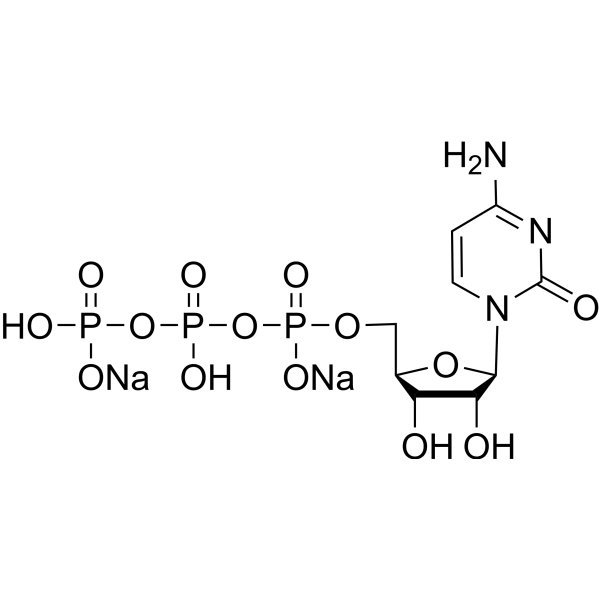
Cytidine-5'-triphosphate (Cytidine triphosphate; 5'-CTP) disodium is a nucleoside triphosphate, that is invovled in biosynthesis of DNA, RNA and lipid. Cytidine triphosphate synthase can catalyze the formation of cytidine 5′-triphosphate from uridine 5′-triphosphate (UTP). Cytidine 5′-triphosphate disodium is an essential biomolecule in the de novo pyrimidine biosynthetic pathway in T. gondii .
|
-
-
- HY-W039953
-
|
N-azidoacetylglucosamine-tetraacylated
|
Biochemical Assay Reagents
|
Others
|
|
Ac4GlcNAz (N-azidoacetylglucosamine-tetraacylated) is an azido-tagged analogue of N-acetylglucosamine (GlcNAC). It features azide functionality on the N-acyl side chain and is acetylated to aid in cell membrane permeation. Once in the cell, the acetylated compound is deprotected and takes part in the hexosamine biosynthetic pathway by action of GlcNAc kinase. The resulting modified proteins are detected by the addition of fluorescent tags under Cu(I)-catalyzed azide-alkyne cycloaddition conditions.
|
-

-
- HY-113206
-
|
|
Endogenous Metabolite
|
Metabolic Disease
|
|
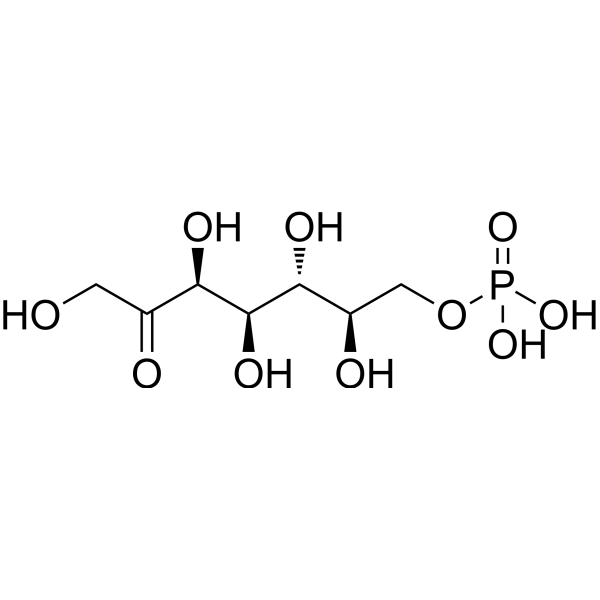
D-Sedoheptulose 7-phosphate is a common precursor for the heptoses of septacidin (group III) and hygromycin B (group IV). D-Sedoheptulose 7-phosphate can be converted to NDP-heptoses through similar biosynthetic pathways in those compounds .
|
-
-
- HY-113206A
-
|
|
Endogenous Metabolite
|
Metabolic Disease
|
|
D-Sedoheptulose-7-phosphate barium is a common precursor for the heptoses of septacidin (group III) and hygromycin B (group IV). D-Sedoheptulose-7-phosphate barium can be converted to NDP-heptoses through similar biosynthetic pathways in those compounds .
|
-

-
- HY-122950
-
|
|
Fungal
|
Infection
|
|
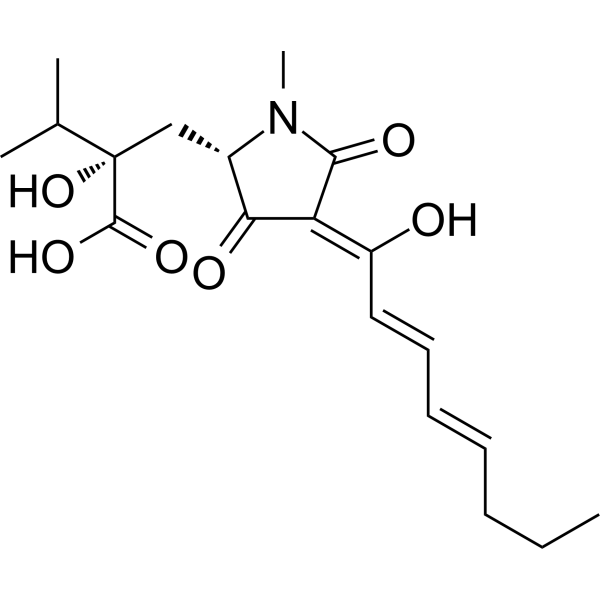
Harzianic acid, a tetramic acid derivative, with activity of antimicrobial, antibiofilm formation and biofilm disaggregation. Harzianic acid interferes with biofilm formation by limiting bacterial iron availability. Harzianic acid is also a selective inhibitor of Acetohydroxyacid synthase (AHAS), the first enzyme in the branched-chain amino acid biosynthetic pathway. Harzianic acid can used for herbicide and fungicide .
|
-
-
- HY-P3519
-
|
|
Drug Intermediate
|
Infection
|
|
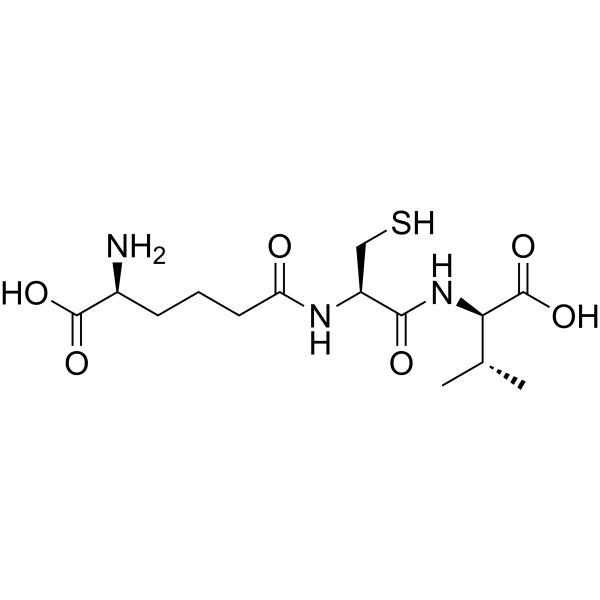
ACV Tripeptide, a tripeptide, is the first dedicated intermediate in the biosynthetic pathway leading to the penicillin and cephalosporin classes of β-lactam natural products in bacteria and fungi. ACV Tripeptide is is synthesized nonribosomally by the ACV synthetase (ACVS) enzyme, which is encoded by the 11 kb The pchAB gene encodes this enzyme. ACV Tripeptide can be used for the biosynthesis of β-lactam antibiotics .
|
-
-
- HY-F0003R
-
|
|
Reference Standards
Ferroptosis
Endogenous Metabolite
|
Metabolic Disease
Cancer
|
|
NADPH tetrasodium salt (Standard) is the analytical standard of NADPH tetrasodium salt (HY-F0003). This product is intended for research and analytical applications. NADPH tetrasodium salt functions as an important cofactor in a variety of metabolic and biosynthetic pathways. NADPH tetrasodium salt is an endogenous inhibitor of ferroptosis. NADPH tetrasodium salt plays a vital role in the biosynthesis of agents, chiral alcohols, fatty acids and biopolymers, while also being required for lipid biosynthesis, biomass formation, and cell replication.
|
-

-
- HY-145301
-
|
|
Bacterial
|
Infection
|
|
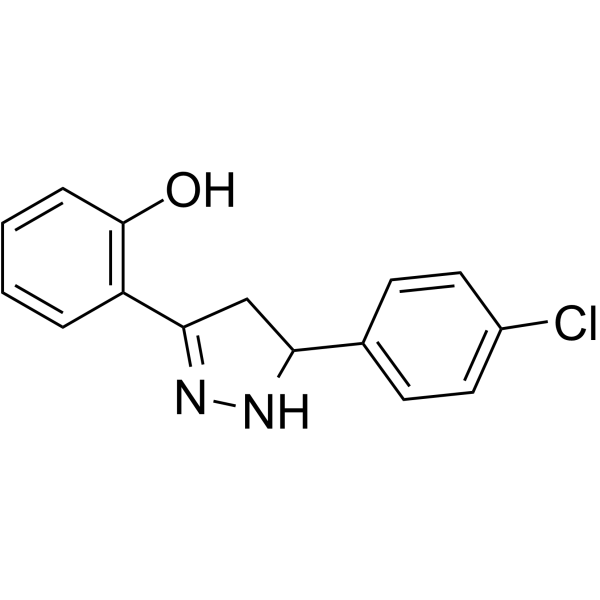
Mycobactin-IN-1, a pyrazoline analogue, is a mycobactin biosynthesis inhibitor against mycobacteria. Mycobactin-IN-1 binds to salicyl-AMP ligase (MbtA), a key enzyme in the mycobactin biosynthetic pathway. Mycobactin-IN-1 inhibits whole-cell drug efflux pumps in M. smegmatis. Mycobactin-IN-1 eradicates intracellularly surviving mycobacteria. Mycobactin-IN-1 shows an excellent in vivo pharmacokinetic profile. Mycobactin-IN-1 can be used for the research of tuberculosis .
|
-
-
- HY-N1356A
-
|
|
Cytochrome P450
|
Inflammation/Immunology
|
|
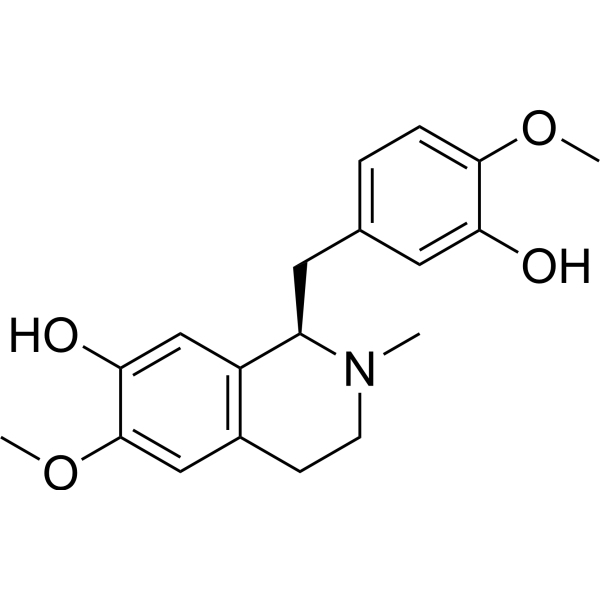
(R)-Reticuline is a key intermediate and precursor in the biosynthetic pathway of morphinan alkaloids. (R)-Reticuline plays a central role in the metabolism of opium poppy (Papaver somniferum). (R)-Reticuline can either undergo O-methylation catalyzed by PSOMT1, or be converted to (+)-Salutaridine via regioselective and stereoselective oxidative coupling under the action of salutaridine synthase (CYP719B1). (R)-Reticuline serves as a direct precursor for the synthesis of important alkaloids such as morphine, codeine and thebaine .
|
-
-
- HY-B1247R
-
|
PPIX (Standard)
|
Reference Standards
Endogenous Metabolite
|
Others
|
|
Protoporphyrin IX (Standard) is the analytical standard of Protoporphyrin IX. This product is intended for research and analytical applications. Protoporphyrin IX is a final intermediate in the heme biosynthetic pathway, which acts as a radiation sensitizer enhancing ROS generation even in a hypoxic state and inducing DNA damage. Protoporphyrin IX also acts as a photo sensitizer undergoing photobleaching that occurs through direct degradation by light irradiation. Protoporphyrin IX is formed and accumulated following 5-aminolevulinic acid (5-ALA) (HY-W000450) administration in the tumor cells of rats. Protoporphyrin IX causes selective improvement of basal cell carcinoma when activated red fluorescence of a peak wavelength at 405 nm. Protoporphyrin IX is promising for research of sonodynamic and photodynamic agents for a wide range of cancers, such as bladder cancer and nodular basal cell carcinoma .
|
-

-
- HY-16304
-
|
|
Endogenous Metabolite
|
Metabolic Disease
|
|
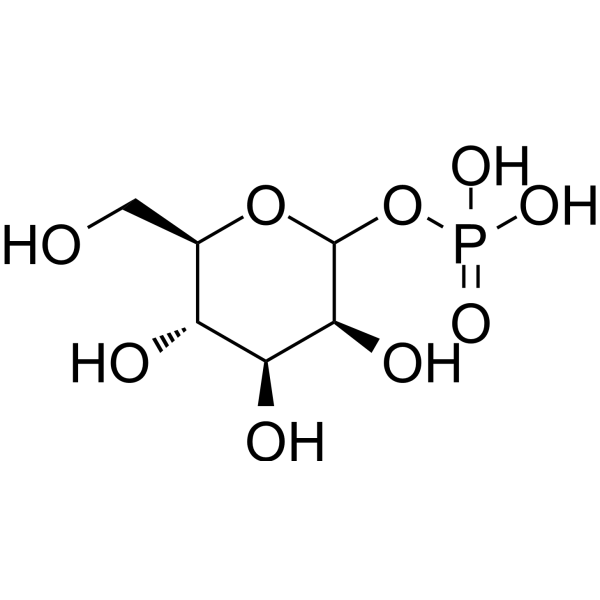
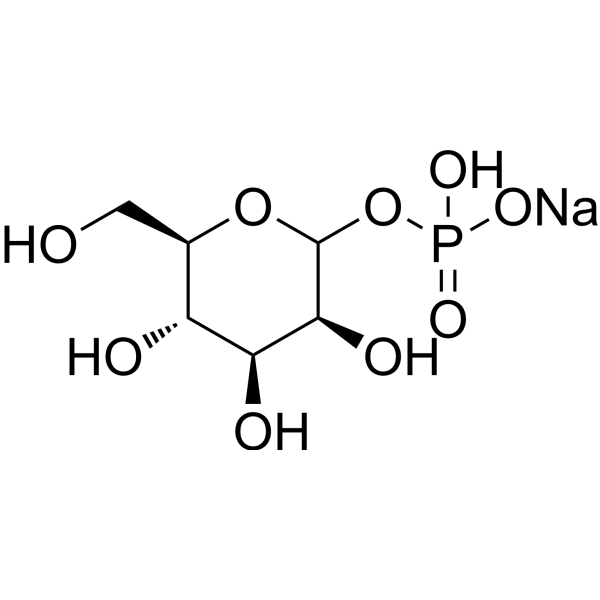
Mannose 1-phosphate is a phosphorylated mannose that serves as a precursor of GDP-mannose, a constituent unit of glycosylation biosynthetic pathways. Mannose 1-phosphate increases intracellular GDP-mannose concentration, promotes normalization of lipid-linked oligosaccharide structures, and enhances the formation of mature N-glycans on cellular proteins. Mannose 1-phosphate can be used in studies related to glycosylation disorders .
|
-
-
- HY-128425A
-
|
L-Ureidosuccinic acid
|
Fungal
|
Infection
|
|
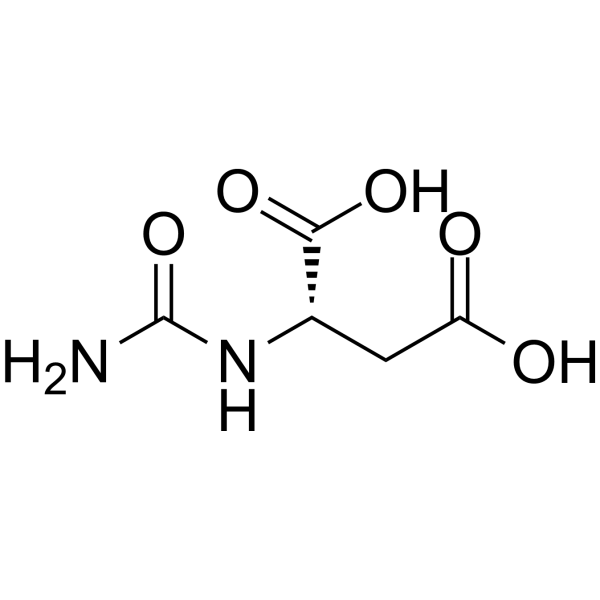
N-Carbamoyl-L-aspartic acid (L-Ureidosuccinic acid) is an important pyrimidine metabolic precursor and intermediate metabolite. N-Carbamoyl-L-aspartic acid reverses the growth inhibition of Ura + strains induced by 2-thiouracil (with growth rate increasing linearly with its concentration), but fails to support the growth of uracil-requiring Ura - strains. N-Carbamoyl-L-aspartic acid inhibits the cell growth of *Saccharomyces cerevisiae* by suppressing the purine biosynthetic pathway at a pre-step of 5-aminoimidazole nucleotide synthesis. The growth inhibitory effect of N-Carbamoyl-L-aspartic acid on yeast can be alleviated by purines, and the sensitivity of strains is closely related to the activity level of dihydroorotase .
|
-
-
- HY-125818S3
-
|
Cytidine triphosphate-13C9 dilithium; 5'-CTP-13C9 dilithium
|
Isotope-Labeled Compounds
DNA/RNA Synthesis
Nucleoside Antimetabolite/Analog
Endogenous Metabolite
|
Metabolic Disease
|
|
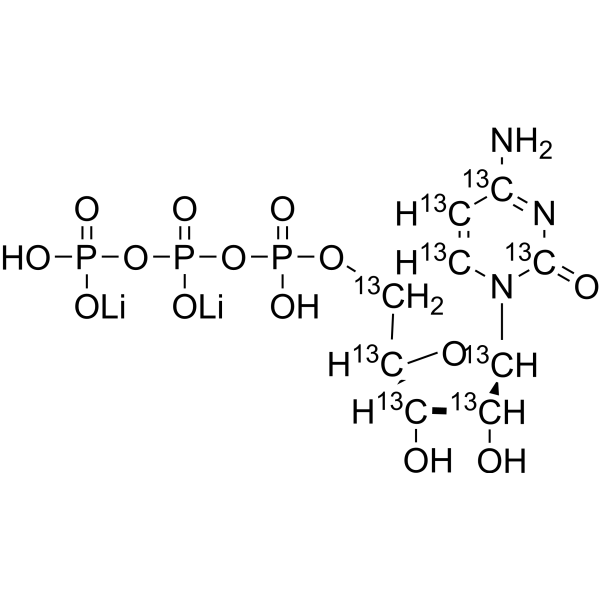
Cytidine-5'-triphosphate- 13C9 (Cytidine triphosphate- 13C9 dilithium; 5'-CTP- 13C9) dilithium is 13C-labeled Cytidine-5'-triphosphate (HY-125818). Cytidine 5′-triphosphate (Cytidine triphosphate; 5'-CTP) is a nucleoside triphosphate and serves as a building block for nucleotides and nucleic acids, lipid biosynthesis. Cytidine triphosphate synthase can catalyze the formation of cytidine 5′-triphosphate from uridine 5′-triphosphate (UTP). Cytidine 5′-triphosphate is an essential biomolecule in the de novo pyrimidine biosynthetic pathway in T. gondii.
|
-
-
- HY-B1247A
-
|
PPIX disodium
|
Endogenous Metabolite
|
Cancer
|
|
Protoporphyrin IX disodium is a final intermediate in the heme biosynthetic pathway, which acts as a radiation sensitizer enhancing ROS generation even in a hypoxic state and inducing DNA damage. Protoporphyrin IX disodium also acts as a photo sensitizer undergoing photobleaching that occurs through direct degradation by light irradiation. Protoporphyrin IX disodium is formed and accumulated following 5-aminolevulinic acid (5-ALA) (HY-W000450) administration in the tumor cells of rats. Protoporphyrin IX disodium causes selective improvement of basal cell carcinoma when activated red fluorescence of a peak wavelength at 405 nm. Protoporphyrin IX disodium is promising for research of sonodynamic and photodynamic agents for a wide range of cancers, such as bladder cancer and nodular basal cell carcinoma .
|
-

-
- HY-W587751
-
|
Amorpha-4,11-diene-12-ol
|
Drug Intermediate
|
Infection
|
|
Arteannuic alcohol (Amorpha-4,11-diene-12-ol) is a precursor substance in the biosynthetic pathway of Artemisinin (HY-B0094). Alcohol dehydrogenase catalyzes the dehydrogenation reaction of chlorogenic alcohol to produce artemisinic aldehyde .
|
-

-
- HY-W013100R
-
|
Cytidine triphosphate disodium (Standard); 5'-CTP disodium (Standard)
|
Reference Standards
DNA/RNA Synthesis
Nucleoside Antimetabolite/Analog
Endogenous Metabolite
|
Metabolic Disease
|
|
Cytidine-5'-triphosphate (Cytidine triphosphate) (Standard) disodium is the analytical standard of Cytidine-5'-triphosphate disodium (HY-W013100). This product is intended for research and analytical applications. Cytidine-5'-triphosphate (Cytidine triphosphate; 5'-CTP) disodium is a nucleoside triphosphate, that is invovled in biosynthesis of DNA, RNA and lipid. Cytidine triphosphate synthase can catalyze the formation of cytidine 5′-triphosphate from uridine 5′-triphosphate (UTP). Cytidine 5′-triphosphate disodium is an essential biomolecule in the de novo pyrimidine biosynthetic pathway in T. gondii.
|
-

-
- HY-W016288R
-
|
2,3-Naphthalenedicarboxaldehyde (Standard); Naphthalene-2,3-dialdehyde (Standard)
|
Fungal
Reference Standards
|
Infection
|
|
Naphthalene-2,3-dicarboxaldehyde (Standard) is the analytical standard for Naphthalene-2,3-dicarboxaldehyde (HY-W016288). This product is for research and analytical applications. Naphthalene-2,3-dicarboxaldehyde (NDA) is an effective inhibitor of Candida albicans aspartate semialdehyde dehydrogenase (ASADH), with a Ki value of 45 μM. Naphthalene-2,3-dicarboxaldehyde targets ASADH in the aspartate biosynthetic pathway of Candida albicans. Naphthalene-2,3-dicarboxaldehyde reacts with primary amines to generate highly fluorescent and stable derivatives. Naphthalene-2,3-dicarboxaldehyde serves as a fungistatic agent and a fluorogenic derivatization reagent. Naphthalene-2,3-Dicarboxaldehyde can be used for the research of candidiasis .
|
-

-
- HY-W715783
-
|
Divaric acid; Divarinolic acid; Varinolic acid
|
Biochemical Assay Reagents
|
Others
|
|
Divarinic acid (also known as Divaric acid, Divarinolic acid, or Varinolic acid) serves as an intermediate in the biosynthetic pathway of phytocannabinoids, and can be used to synthesize the cannabinoid precursor CBGVA .
|
-

-
- HY-136476G
-
|
|
Drug Intermediate
|
Others
|
|
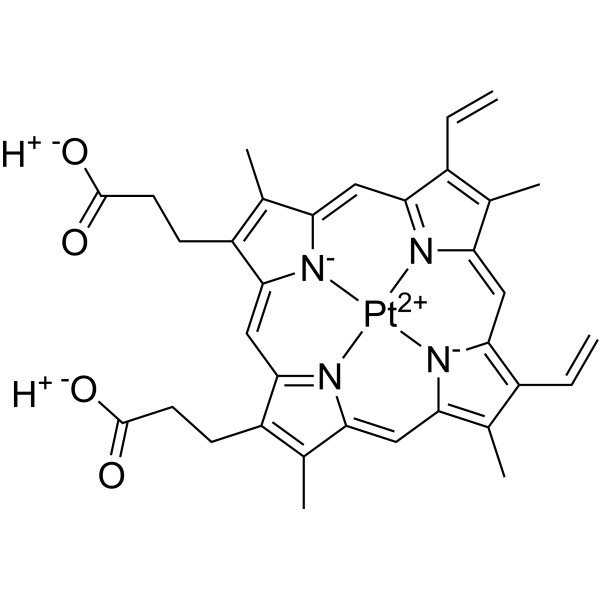
Pt(II) protoporphyrin IX is a protoporphyrin IX. Protoporphyrin IX is a heterocyclic organic compound, which consists of four pyrrole rings, and is the final intermediate in the heme biosynthetic pathway .
|
-
-
- HY-N12196
-
|
|
Cytochrome P450
|
Infection
|
|
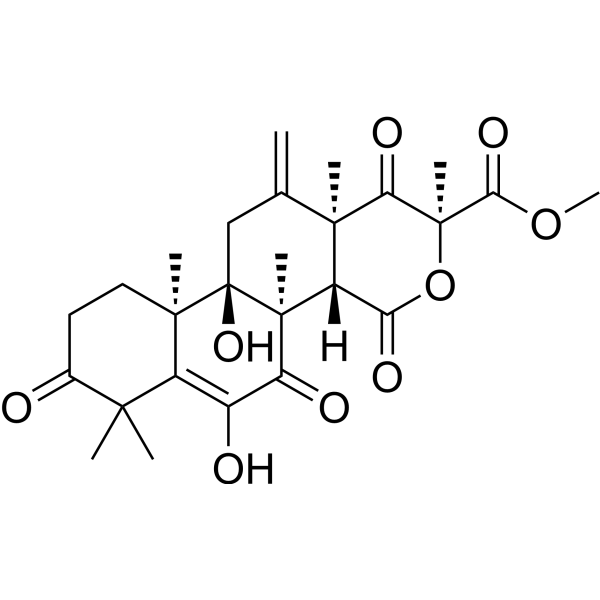
Terretonin is a fungal terpenoid isolated from Aspergillus terreus. The complete biosynthetic pathway of terretonin includes: cytochrome P450 Trt6 catalyzes the oxidation of terrenoid to obtain an unstable intermediate; then it is catalyzed by isomerase Trt14 and processed by non-heme iron-dependent dioxygenase Trt7 to complete the biosynthesis of terretonin .
|
-
-
- HY-113225B
-
|
GTP tritris
|
Endogenous Metabolite
Exosomes
|
Cancer
|
|
Guanosine triphosphate tritris (GTP tritris) serves as a vital enhancer of myogenic cell differentiation and plays a critical role in modulating miRNA-myogenic regulator factors. It also facilitates the release of exosomes enriched with guanosine and guanosine-derived molecules, and is regarded as an activated precursor for RNA synthesis. In mitochondrial function, GTP participates in the import of proteins into the matrix, which is essential for various regulated pathways, and is involved in initiating peptide synthesis through the binding of formylmethionyl-tRNA to the ribosome, as well as polypeptide chain elongation. Additionally, GTP acts as a phosphate and pyrophosphate carrier that channels chemical energy into specific biosynthetic pathways. It activates signal transducing G proteins that regulate cellular processes such as proliferation and differentiation, and its hydrolysis by small GTPases, including Ras and Rho, is integral to both proliferation and apoptosis. Furthermore, the small GTPase Rab is instrumental in vesicle docking, fusion, and formation. Beyond signal transduction, GTP is an energy-rich precursor in the enzymatic biosynthesis of DNA and RNA.
|
-

-
- HY-110271
-
|
|
Antibiotic
|
Others
|
|
N-Acetylpuromycin is a inactive form of the antibiotic puromycin. N-Acetylpuromycin is the last intermediate of the puromycin antibiotic biosynthetic pathway in Streptomyces alboniger .
|
-

-
- HY-N15367
-
|
|
Endogenous Metabolite
|
Infection
|
|
Aklaviketone is a bacterial metabolite found in strain S 383 of Streptomyces galilaeus. Aklaviketone can be used in the biosynthetic pathway of anthracycline antibiotics .
|
-

-
- HY-N15409
-
|
|
Others
|
Others
|
|
Epoxymurin A is a compound that can be isolated from the stem bark of Annona Muricata. Epoxymurin A can be used in the study of the biosynthetic pathway of annonaceous acetogenins .
|
-

-
- HY-126634
-
|
|
Others
|
Infection
|
|
Lyngbyatoxin B is a complex compound in a versatile biosynthetic pathway from the marine cyanobacterium Moorea producens. By heterologously expressing the lyngbyatoxin biosynthetic pathway in Escherichia coli, lyngbyatoxin A (25.6 mg/L) and its precursor indolactam-V (150 mg/L) were successfully produced. This approach confirmed the biosynthetic route of lyngbyatoxin and laid a chemical foundation for future pathway engineering. In addition, the successful production of lyngbyatoxin A in E. coli opens the possibility for heterologous expression and characterization of other cyanobacterial natural products.
|
-

-
- HY-136476F
-
|
|
Drug Intermediate
|
Others
|
|
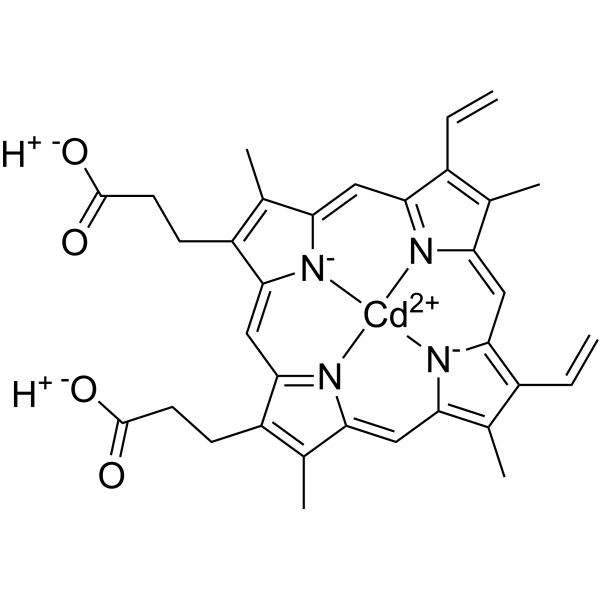
Cd(II) protoporphyrin IX is a protoporphyrin IX. Protoporphyrin IX is a heterocyclic organic compound, which consists of four pyrrole rings, and is the final intermediate in the heme biosynthetic pathway .
|
-
-
- HY-136476E
-
|
|
Drug Intermediate
|
Others
|
|
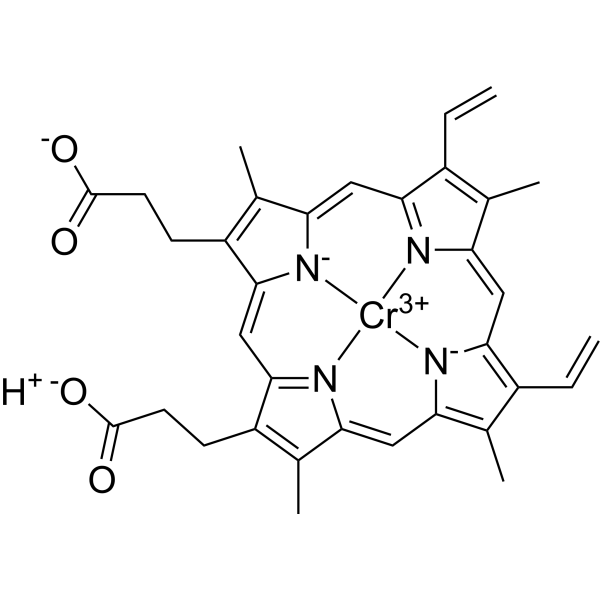
Cr(III) protoporphyrin IX is a protoporphyrin IX. Protoporphyrin IX is a heterocyclic organic compound, which consists of four pyrrole rings, and is the final intermediate in the heme biosynthetic pathway .
|
-
-
- HY-N14823
-
|
|
Drug Intermediate
|
Others
|
|
Demethylmacrocin is a key intermediate in the biosynthetic pathway of Tylosin (HY-B0519A). Demethylmacrocin can be efficiently converted into tylosin through specific sequential oxidation and methylation reactions .
|
-

-
- HY-145302
-
|
|
Bacterial
|
Infection
|
|
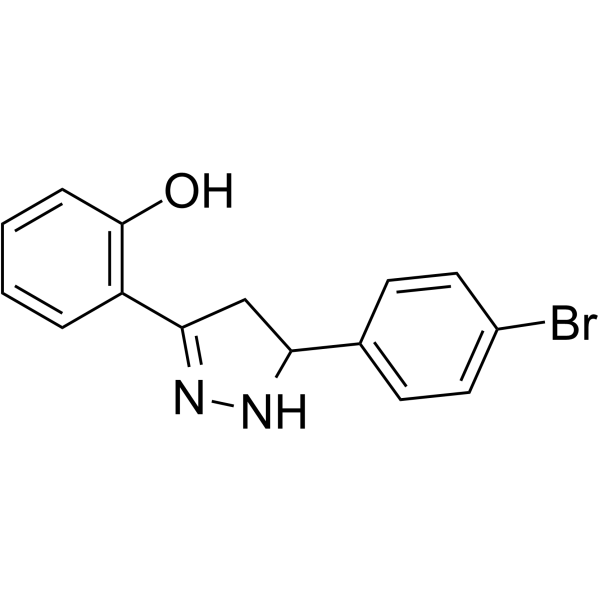
Mycobactin-IN-2 (compound 49) is a mycobactin biosynthesis inhibitor against mycobacteria. Mycobactin-IN-2 binds to salicyl-AMP ligase (MbtA), a key enzyme in the mycobactin biosynthetic pathway .
|
-
-
- HY-W016509
-
|
|
Drug Derivative
|
Neurological Disease
|
|
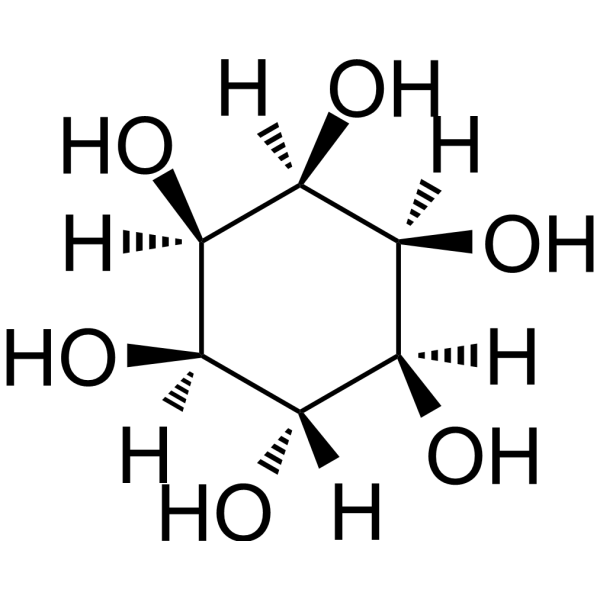
epi-Inositol, a inositol analog, is an antidepressant agent. epi-Inositol shows regulatory effects on expression of the most highly regulated gene in the inositol biosynthetic pathway. epi-Inositol shows antiepileptic effect .
|
-
-
- HY-121034
-
|
|
Bacterial
|
Others
|
|
Acaterin is a compound isolated from Pseudomonas. Its biosynthetic gene cluster has been identified, and related studies have proposed its biosynthetic pathway. Comparative transcriptomics has shown that its formation is related to the bacterial regulatory network.
|
-

-
- HY-N11794
-
|
|
Others
|
Others
|
|
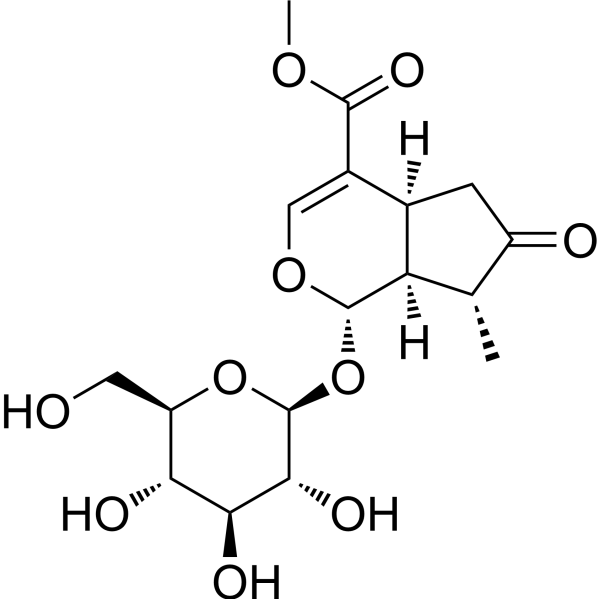
7-Ketologanin is an iridoid glucoside. 7-Ketologanin can be isolated from the Stems of Viburnum erosum. 7-Ketologanin involves in biosynthetic pathway of oleuropein. Oleuropein, is a bioactive phenolic compound, modulates several oncogenic signalling pathways .
|
-
-
- HY-157160
-
|
|
Herbicide
|
Others
|
|
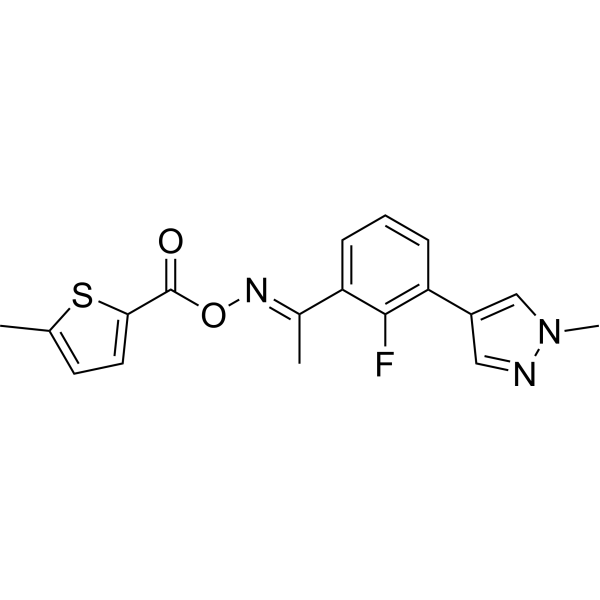
PPO-IN-5 (compound 9) is a herbicide based on PPO inhibitors. PPO, protoporphyrinogen oxidase, participates in the biosynthetic pathway of heme and chlorophyll synthesis. PPO-IN-5 is tolerant in cereal crops such as wheat, corn, and rice, and is a potential herbicide in wheat fields .
|
-
-
- HY-150100
-
|
Tyrosine hydroxylase
|
Tyrosine Hydroxylase
|
Neurological Disease
|
|
Tyrosine 3-monooxygenase (Tyrosine hydroxylase) is a rate-limiting enzyme in catecholamine biosynthesis and belongs to the family of aromatic amino acid hydroxylases. Tyrosine 3-monooxygenase catalyzes the initial and rate-limiting step in the biosynthetic pathway of catecholamines, including dopamine, noradrenaline, and adrenaline .
|
-
-
- HY-146549
-
|
|
Bacterial
|
Infection
|
|
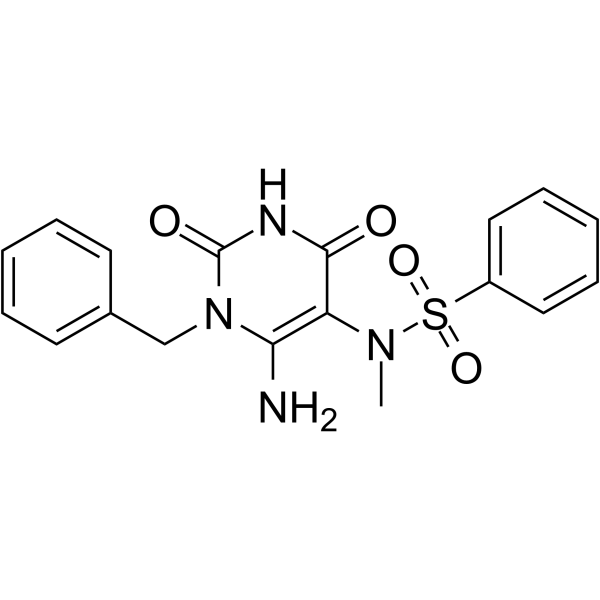
RmlA-IN-1 (Compound 8a) is a potent inhibitor of glucose-1-phosphate thymidylyltransferase (RmlA) with an IC50 of 0.073 μM. RmlA-IN-1 influences monosaccharide l-Rhamnose biosynthetic pathway. RmlA-IN-1 affects bacterial cell wall permeability .
|
-
-
- HY-146551
-
|
|
Bacterial
|
Infection
|
|
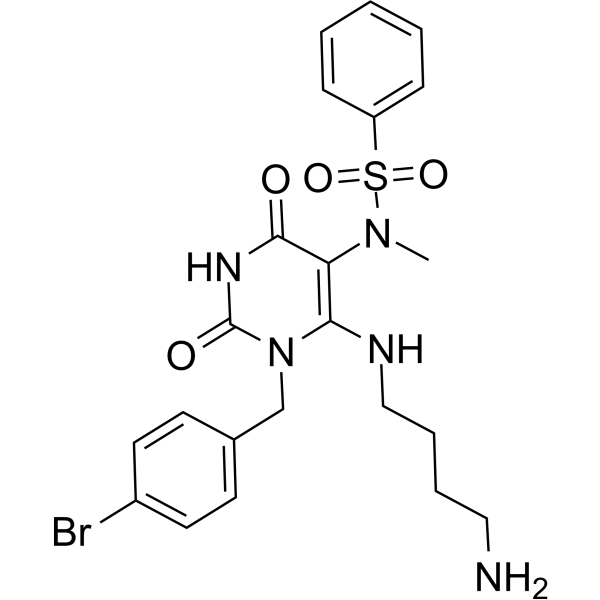
RmlA-IN-2 (Compound 1d) is a potent inhibitor of glucose-1-phosphate thymidylyltransferase (RmlA) with an IC50 of 0.303 μM. RmlA-IN-2 influences monosaccharide l-Rhamnose biosynthetic pathway. RmlA-IN-2 affects bacterial cell wall permeability .
|
-
-
- HY-B1468R
-
|
|
Nucleoside Antimetabolite/Analog
Endogenous Metabolite
Reference Standards
|
Cancer
|
|
8-Azaguanine (Standard) is the analytical standard of 8-Azaguanine. This product is intended for research and analytical applications. 8-Azaguanine is a purine analogue that shows antineoplastic activity. 8-Azaguanine functions as an antimetabolite and easily incorporates into ribonucleic acids, interfering with normal biosynthetic pathways, thus inhibiting cellular growth .
|
-

-
- HY-W016509R
-
|
|
Endogenous Metabolite
Drug Derivative
|
Neurological Disease
|
|
epi-Inositol (Standard) is the analytical standard of epi-Inositol (HY-W016509). This product is intended for research and analytical applications. epi-Inositol, a inositol analog, is an antidepressant agent. epi-Inositol shows regulatory effects on expression of the most highly regulated gene in the inositol biosynthetic pathway. epi-Inositol shows antiepileptic effect .
|
-

-
- HY-125818C
-
|
Cytidine triphosphate disodium hydrate; 5'-CTP disodium hydrate
|
DNA/RNA Synthesis
Nucleoside Antimetabolite/Analog
Endogenous Metabolite
|
Metabolic Disease
|
|
Cytidine 5′-triphosphate is a nucleoside triphosphate and serves as a building block for nucleotides and nucleic acids, lipid biosynthesis. Cytidine triphosphate synthase can catalyze the formation of cytidine 5′-triphosphate from uridine 5′-triphosphate (UTP). Cytidine 5′-triphosphate is an essential biomolecule in the de novo pyrimidine biosynthetic pathway in T. gondii .
|
-

-
- HY-16304A
-
|
|
Endogenous Metabolite
|
Metabolic Disease
|
|
Mannose 1-phosphate sodium is a phosphorylated mannose that serves as a precursor of GDP-mannose, a constituent unit of glycosylation biosynthetic pathways. Mannose 1-phosphate sodium increases intracellular GDP-mannose concentration, promotes normalization of lipid-linked oligosaccharide structures, and enhances the formation of mature N-glycans on cellular proteins. Mannose 1-phosphate sodium can be used in studies related to glycosylation disorders .
|
-
-
- HY-P3519A
-
|
|
Drug Intermediate
|
Infection
|
|
ACV Tripeptide TFA, a tripeptide, is the first dedicated intermediate in the biosynthetic pathway leading to the penicillin and cephalosporin classes of β-lactam natural products in bacteria and fungi. ACV Tripeptide TFA is is synthesized nonribosomally by the ACV synthetase (ACVS) enzyme, which is encoded by the 11 kb The pchAB gene encodes this enzyme. ACV Tripeptide TFA can be used for the biosynthesis of β-lactam antibiotics .
|
-

- HY-N7241
-
|
|
Others
|
Endocrinology
|
|
Saudin, derived from Clutia lanceolata, is a hypoglycemic compound that significantly enhances glucose-triggered insulin release from murine pancreatic islets. It belongs to a group of new diterpenoids with a distinct tetracyclic core, suggesting potential as a therapeutic agent for diabetes treatment. Proposed biosynthetic pathways outline alternative cyclization routes from a common precursor, with Lanceolide P (16) identified as a promising lead compound for further development in managing diabetes .
|
-

- HY-125818S1
-
|
|
Nucleoside Antimetabolite/Analog
DNA/RNA Synthesis
Endogenous Metabolite
|
Metabolic Disease
|
|
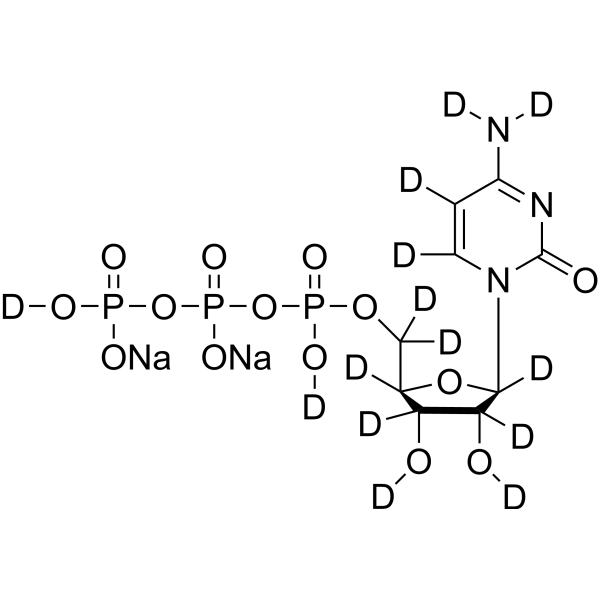
Cytidine-5′-triphosphate-d14 disodium is the deuterium labeled Cytidine-5'-triphosphate . Cytidine 5′-triphosphate (Cytidine triphosphate;5'-CTP) is a nucleoside triphosphate and serves as a building block for nucleotides and nucleic acids, lipid biosynthesis. Cytidine triphosphate synthase can catalyze the formation of cytidine 5′-triphosphate from uridine 5′-triphosphate (UTP). Cytidine 5′-triphosphate is an essential biomolecule in the de novo pyrimidine biosynthetic pathway in T. gondii .
|
-
- HY-W754064
-
|
Cytidine triphosphate-13C5; 5'-CTP-13C5; Cytidine-5'-triphosphate-1',2',3',4',5'-13C5 Triethylamine Salt
|
Isotope-Labeled Compounds
Nucleoside Antimetabolite/Analog
DNA/RNA Synthesis
Endogenous Metabolite
|
Metabolic Disease
|
|
Cytidine-5'-triphosphate- 13C5 (Cytidine triphosphate- 13C5) is the 13C-labeled Cytidine-5'-triphosphate (HY-125818). Cytidine 5′-triphosphate (Cytidine triphosphate; 5'-CTP) is a nucleoside triphosphate and serves as a building block for nucleotides and nucleic acids, lipid biosynthesis. Cytidine triphosphate synthase can catalyze the formation of cytidine 5′-triphosphate from uridine 5′-triphosphate (UTP). Cytidine 5′-triphosphate is an essential biomolecule?in the de novo?pyrimidine biosynthetic pathway in?T. gondii .
|
-

- HY-125818S4
-
|
Cytidine triphosphate-d14 dilithium; 5'-CTP-d14 dilithium
|
Isotope-Labeled Compounds
DNA/RNA Synthesis
Nucleoside Antimetabolite/Analog
Endogenous Metabolite
|
Metabolic Disease
|
|
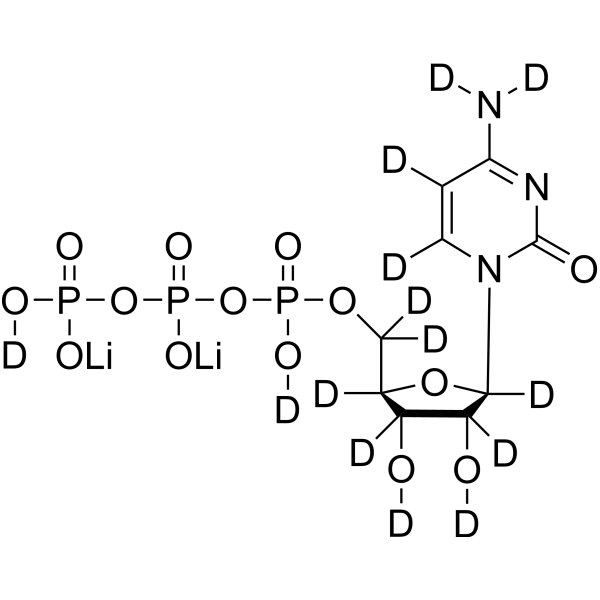
Cytidine-5'-triphosphate-d14 (Cytidine triphosphate-d14 dilithium; 5'-CTP-d14) dilithium is deuterium labeled Cytidine-5'-triphosphate (HY-125818). Cytidine 5′-triphosphate (Cytidine triphosphate; 5'-CTP) is a nucleoside triphosphate and serves as a building block for nucleotides and nucleic acids, lipid biosynthesis. Cytidine triphosphate synthase can catalyze the formation of cytidine 5′-triphosphate from uridine 5′-triphosphate (UTP). Cytidine 5′-triphosphate is an essential biomolecule in the de novo pyrimidine biosynthetic pathway in T. gondii.
|
-
- HY-125818S6
-
|
Cytidine triphosphate-15N3 dilithium; 5'-CTP-15N3 dilithium
|
Isotope-Labeled Compounds
DNA/RNA Synthesis
Nucleoside Antimetabolite/Analog
Endogenous Metabolite
|
Metabolic Disease
|
|
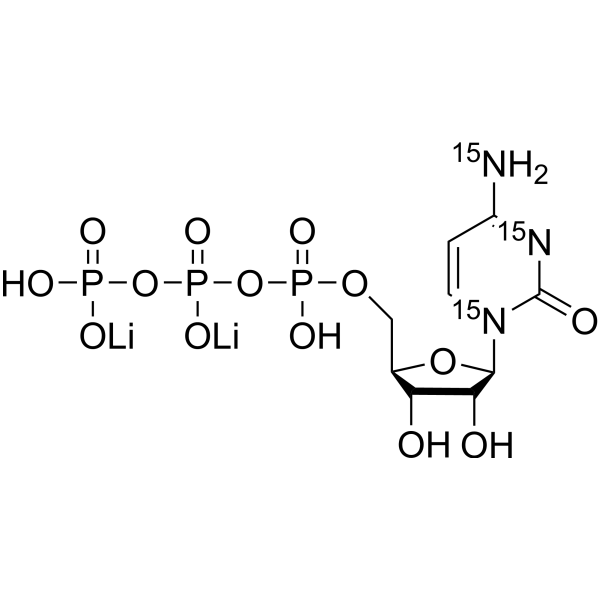
Cytidine-5'-triphosphate- 15N3 (Cytidine triphosphate- 15N3 dilithium; 5'-CTP- 15N3) dilithium is 15N labeled Cytidine-5'-triphosphate (HY-125818). Cytidine 5′-triphosphate (Cytidine triphosphate; 5'-CTP) is a nucleoside triphosphate and serves as a building block for nucleotides and nucleic acids, lipid biosynthesis. Cytidine triphosphate synthase can catalyze the formation of cytidine 5′-triphosphate from uridine 5′-triphosphate (UTP). Cytidine 5′-triphosphate is an essential biomolecule in the de novo pyrimidine biosynthetic pathway in T. gondii.
|
-
- HY-125818S2
-
|
Cytidine triphosphate-13C,d1 dilithium; 5'-CTP-13C,d1 dilithium
|
Isotope-Labeled Compounds
DNA/RNA Synthesis
Nucleoside Antimetabolite/Analog
Endogenous Metabolite
|
Metabolic Disease
|
|
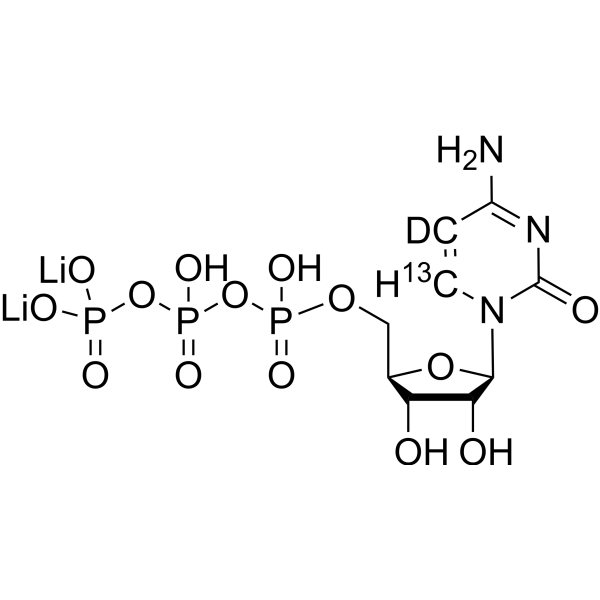
Cytidine-5'-triphosphate- 13C,d1 (Cytidine triphosphate- 13C,d1 dilithium; 5'-CTP- 13C,d1) dilithium is deuterium and 13C-labeled Cytidine-5'-triphosphate (HY-125818). Cytidine 5′-triphosphate (Cytidine triphosphate; 5'-CTP) is a nucleoside triphosphate and serves as a building block for nucleotides and nucleic acids, lipid biosynthesis. Cytidine triphosphate synthase can catalyze the formation of cytidine 5′-triphosphate from uridine 5′-triphosphate (UTP). Cytidine 5′-triphosphate is an essential biomolecule in the de novo pyrimidine biosynthetic pathway in T. gondii.
|
-
- HY-W016628R
-
|
L-Gulonolactone (Standard)
|
Reference Standards
Endogenous Metabolite
|
Metabolic Disease
|
|
L-Gulono-1,4-lactone (L-Gulonolactone) (Standard) is the analytical standard of L-Gulono-1,4-lactone. This product is intended for research and analytical applications. L-Gulono-1,4-lactone is a biosynthetic precursor of L-Ascorbic acid (Vitamin C) (HY-B0166). L-Gulono-1,4-lactone can be enzymatically converted to L-Ascorbic acid via the animal uronic acid pathway, while species such as humans lack the key oxidase that catalyzes this step, resulting in the disruption of this pathway and the necessity to obtain Vitamin C from diet. L-Gulono-1,4-lactone is a putative intermediate in an alternative biosynthetic pathway of L-Ascorbic acid in Arabidopsis thaliana.
|
-

- HY-125818S5
-
|
Cytidine triphosphate-15N3,d14 dilithium; 5'-CTP-15N3,d14 dilithium
|
Isotope-Labeled Compounds
DNA/RNA Synthesis
Nucleoside Antimetabolite/Analog
Endogenous Metabolite
|
Metabolic Disease
|
|
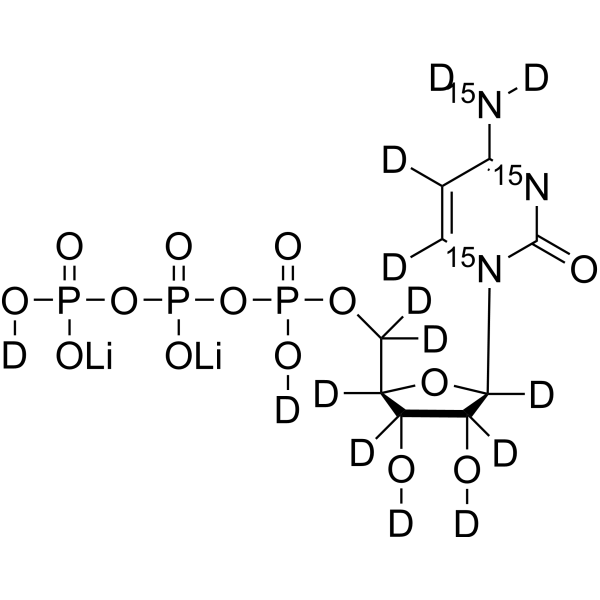
Cytidine-5'-triphosphate- 15N3,d14 (Cytidine triphosphate- 15N3,d14 dilithium; 5'-CTP- 15N3,d14) dilithium is deuterium and 15N labeled Cytidine-5'-triphosphate (HY-125818). Cytidine 5′-triphosphate (Cytidine triphosphate; 5'-CTP) is a nucleoside triphosphate and serves as a building block for nucleotides and nucleic acids, lipid biosynthesis. Cytidine triphosphate synthase can catalyze the formation of cytidine 5′-triphosphate from uridine 5′-triphosphate (UTP). Cytidine 5′-triphosphate is an essential biomolecule in the de novo pyrimidine biosynthetic pathway in T. gondii.
|
-
- HY-W014394R
-
|
|
TRP Channel
Reference Standards
Parasite
|
Cardiovascular Disease
|
|
Protoporphyrin IX (Standard) is the analytical standard of Protoporphyrin IX. This product is intended for research and analytical applications. Protoporphyrin IX is a final intermediate in the heme biosynthetic pathway, which acts as a radiation sensitizer enhancing ROS generation even in a hypoxic state and inducing DNA damage. Protoporphyrin IX also acts as a photo sensitizer undergoing photobleaching that occurs through direct degradation by light irradiation. Protoporphyrin IX is formed and accumulated following 5-aminolevulinic acid (5-ALA) (HY-W000450) administration in the tumor cells of rats. Protoporphyrin IX causes selective improvement of basal cell carcinoma when activated red fluorescence of a peak wavelength at 405 nm. Protoporphyrin IX is promising for research of sonodynamic and photodynamic agents for a wide range of cancers, such as bladder cancer and nodular basal cell carcinoma .
|
-

- HY-N16644
-
|
|
Drug Derivative
|
Cancer
|
|
4'-O-Methylthujaplicatin is a thujaplicatin derivative. 4'-O-Methylthujaplicatin is related to the Yatein (HY-N1060) biosynthetic pathway .
|
-

- HY-N15277
-
|
|
Endogenous Metabolite
|
Others
|
|
Deoxyshikonofuran is a shikonofuran derivative that can be extracted from the shikonin-producing cell cultures of Lithospermum erythrorhizon. Deoxyshikonofuran can be used for the study of the shikonin biosynthetic pathway .
|
-

- HY-W746289
-
|
|
Endogenous Metabolite
|
Neurological Disease
|
|
Narcotoline, a phenylpyridine isoquinoline alkaloid, is a by-product in the biosynthetic pathway of Noscapine (HY-13716). Narcotoline can be used to study the metabolic regulatory agents of Noscapine .
|
-

- HY-E71185
-
|
|
Biochemical Assay Reagents
|
Others
|
|
12α,13α-Dihydroxyfumitremorgin C prenyltransferase (EC 2.5.1.110) is involved in the biosynthetic pathways of several indole alkaloids such as fumitremorgins and verruculogen.
|
-

- HY-171664
-
|
ent-CPP
|
Endogenous Metabolite
|
Others
|
|
ent-Copalyl diphosphate (ent-CPP) is a terpenoid precursor and metabolite involved in plant biosynthetic pathways. ent-Copalyl diphosphate participates in metabolism of natural products including phytoalexins in rice and maize, and steviol glycoside in Stevia rebaudiana .
|
-

- HY-N17022
-
|
|
Others
|
Others
|
|
Methyl pechueloate is a guaiane-type sesquiterpene ester compound, a potential precursor of xerantholide, and is used in the structural analysis and biosynthetic pathway research of sesquiterpenoid compounds. Methyl pechueloate can be naturally extracted from the aerial parts of Pechuel-Loeschea leibnitziae (Kuntze) O. Hoffm .
|
-

- HY-111670
-
|
|
Acetolactate Synthase (ALS)
|
Metabolic Disease
|
|
α-Acetohydroxybutyric acid is a metabolic intermediate produced under the catalysis of acetolactate synthase. α-Acetohydroxybutyric acid is generated from 2-oxobutyric acid and converted into 2,3-dihydroxy-3-methylpentanoic acid in the 2-methylbutanol biosynthetic pathway .
|
-

- HY-E71109
-
|
|
Biochemical Assay Reagents
|
Others
|
|
(S)-2-Hydroxypropylphosphonic acid epoxidase (EC 1.11.1.23) is the last enzyme in the biosynthetic pathway of fosfomycin, a broad-spectrum antibiotic produced by certain Streptomyces species. Contains non heme iron that forms a iron (IV)-oxo (ferryl) complex with hydrogen peroxide, which functions as a proton abstractor from the substrate.
|
-

- HY-N15457
-
|
|
Drug Intermediate
|
Metabolic Disease
|
|
(2R,3S)-3-Isopropylmalic acid (Compound (2R,3S)-3-Isopropylmalate) is an intermediate of the leucine biosynthetic pathway. (2R,3S)-3-Isopropylmalic acid serves as the main endogenous substrate for the Saccharomyces cerevisiae Tmt1 methyltransferase.
|
-

- HY-N2423B
-
|
(E/Z)-Allyl-glucosinolate free base; (E/Z)-2-Propenyl-glucosinolate free base
|
NF-κB
p38 MAPK
Apoptosis
|
Cardiovascular Disease
Infection
Inflammation/Immunology
Cancer
|
|
(E/Z)-Sinigrin ((E/Z)-Allyl-glucosinolate; (E/Z)-2-Propenyl-glucosinolate) free base is an orally active aliphatic thioglucoside anti-leukemia compound. Allyl isothiocyanate, produced by the hydrolysis of (E/Z)-sinigrin free base by myrosinase, has an IC50 of 2.71 μM against HL60 leukemia cells. The hydrolysis products of (E/Z)-sinigrin free base can further activate apoptosis pathways, inhibit NF-κB and MAPK signaling pathways, and induce phase II metabolic enzyme activity, thus exhibiting anti-cancer, anti-inflammatory, antibacterial, antioxidant, and wound healing activities. (E/Z)-Sinigrin free base can be used in research on cancer, inflammation-related diseases (such as atherosclerosis), and infectious diseases. (E/Z)-Sinigrin free base can be naturally extracted from the seeds of Brassica nigra, Brassica juncea, and other Brassicaceae plants such as broccoli and Brussels sprouts. Methyl pechueloate is a guaiane-type sesquiterpene ester compound and a potential precursor of xerantholide. It is useful in the structural elucidation and biosynthetic pathway studies of sesquiterpenoids. Methyl pechueloate can be naturally extracted from the aerial parts of Pechuel-Loeschea leibnitziae (Kuntze) O. Hoffm .
|
-

| Cat. No. |
Product Name |
Target |
Research Area |
-
- HY-P3519
-
|
|
Drug Intermediate
|
Infection
|
|
ACV Tripeptide, a tripeptide, is the first dedicated intermediate in the biosynthetic pathway leading to the penicillin and cephalosporin classes of β-lactam natural products in bacteria and fungi. ACV Tripeptide is is synthesized nonribosomally by the ACV synthetase (ACVS) enzyme, which is encoded by the 11 kb The pchAB gene encodes this enzyme. ACV Tripeptide can be used for the biosynthesis of β-lactam antibiotics .
|
-
- HY-P3519A
-
|
|
Drug Intermediate
|
Infection
|
|
ACV Tripeptide TFA, a tripeptide, is the first dedicated intermediate in the biosynthetic pathway leading to the penicillin and cephalosporin classes of β-lactam natural products in bacteria and fungi. ACV Tripeptide TFA is is synthesized nonribosomally by the ACV synthetase (ACVS) enzyme, which is encoded by the 11 kb The pchAB gene encodes this enzyme. ACV Tripeptide TFA can be used for the biosynthesis of β-lactam antibiotics .
|
| Cat. No. |
Product Name |
Category |
Target |
Chemical Structure |
-
- HY-B1247
-
-
-
- HY-125818
-
-
-
- HY-B1468
-
-
-
- HY-119663
-
-
-
- HY-N3926
-
-
-
- HY-N15351
-
-
-
- HY-113206
-
-
-
- HY-N1356A
-
-
-
- HY-B1247R
-
|
PPIX (Standard)
|
Structural Classification
Human Gut Microbiota Metabolites
Microorganisms
Ketones, Aldehydes, Acids
Endogenous metabolite
Source Classification
|
Reference Standards
Endogenous Metabolite
|
|
Protoporphyrin IX (Standard) is the analytical standard of Protoporphyrin IX. This product is intended for research and analytical applications. Protoporphyrin IX is a final intermediate in the heme biosynthetic pathway, which acts as a radiation sensitizer enhancing ROS generation even in a hypoxic state and inducing DNA damage. Protoporphyrin IX also acts as a photo sensitizer undergoing photobleaching that occurs through direct degradation by light irradiation. Protoporphyrin IX is formed and accumulated following 5-aminolevulinic acid (5-ALA) (HY-W000450) administration in the tumor cells of rats. Protoporphyrin IX causes selective improvement of basal cell carcinoma when activated red fluorescence of a peak wavelength at 405 nm. Protoporphyrin IX is promising for research of sonodynamic and photodynamic agents for a wide range of cancers, such as bladder cancer and nodular basal cell carcinoma .
|
-
-
- HY-16304
-
-
-
- HY-128425A
-
|
L-Ureidosuccinic acid
|
Structural Classification
Natural Products
Classification of Application Fields
Other Diseases
Endogenous metabolite
Disease Research Fields
Source Classification
|
Fungal
|
|
N-Carbamoyl-L-aspartic acid (L-Ureidosuccinic acid) is an important pyrimidine metabolic precursor and intermediate metabolite. N-Carbamoyl-L-aspartic acid reverses the growth inhibition of Ura + strains induced by 2-thiouracil (with growth rate increasing linearly with its concentration), but fails to support the growth of uracil-requiring Ura - strains. N-Carbamoyl-L-aspartic acid inhibits the cell growth of *Saccharomyces cerevisiae* by suppressing the purine biosynthetic pathway at a pre-step of 5-aminoimidazole nucleotide synthesis. The growth inhibitory effect of N-Carbamoyl-L-aspartic acid on yeast can be alleviated by purines, and the sensitivity of strains is closely related to the activity level of dihydroorotase .
|
-
-
- HY-N12196
-
|
|
Other Monoterpenes
Microorganisms
Terpenoids
Source Classification
|
Cytochrome P450
|
|
Terretonin is a fungal terpenoid isolated from Aspergillus terreus. The complete biosynthetic pathway of terretonin includes: cytochrome P450 Trt6 catalyzes the oxidation of terrenoid to obtain an unstable intermediate; then it is catalyzed by isomerase Trt14 and processed by non-heme iron-dependent dioxygenase Trt7 to complete the biosynthesis of terretonin .
|
-
-
- HY-N15367
-
-
-
- HY-N15409
-
-
-
- HY-126634
-
|
|
Structural Classification
Alkaloids
other families
Plants
Lyngbya majuscule
Indole Alkaloids
Source Classification
|
Others
|
|
Lyngbyatoxin B is a complex compound in a versatile biosynthetic pathway from the marine cyanobacterium Moorea producens. By heterologously expressing the lyngbyatoxin biosynthetic pathway in Escherichia coli, lyngbyatoxin A (25.6 mg/L) and its precursor indolactam-V (150 mg/L) were successfully produced. This approach confirmed the biosynthetic route of lyngbyatoxin and laid a chemical foundation for future pathway engineering. In addition, the successful production of lyngbyatoxin A in E. coli opens the possibility for heterologous expression and characterization of other cyanobacterial natural products.
|
-
-
- HY-N14823
-
-
-
- HY-W016509
-
-
-
- HY-121034
-
|
|
Natural Products
Microorganisms
Source Classification
|
Bacterial
|
|
Acaterin is a compound isolated from Pseudomonas. Its biosynthetic gene cluster has been identified, and related studies have proposed its biosynthetic pathway. Comparative transcriptomics has shown that its formation is related to the bacterial regulatory network.
|
-
-
- HY-N11794
-
-
-
- HY-B1468R
-
-
-
- HY-W016509R
-
|
|
Natural Products
Endogenous metabolite
Source Classification
|
Endogenous Metabolite
Drug Derivative
|
|
epi-Inositol (Standard) is the analytical standard of epi-Inositol (HY-W016509). This product is intended for research and analytical applications. epi-Inositol, a inositol analog, is an antidepressant agent. epi-Inositol shows regulatory effects on expression of the most highly regulated gene in the inositol biosynthetic pathway. epi-Inositol shows antiepileptic effect .
|
-
-
- HY-N7241
-
|
|
Clutia lanceolata Forssk.
Other Monoterpenes
Terpenoids
Euphorbiaceae
Plants
Source Classification
|
Others
|
|
Saudin, derived from Clutia lanceolata, is a hypoglycemic compound that significantly enhances glucose-triggered insulin release from murine pancreatic islets. It belongs to a group of new diterpenoids with a distinct tetracyclic core, suggesting potential as a therapeutic agent for diabetes treatment. Proposed biosynthetic pathways outline alternative cyclization routes from a common precursor, with Lanceolide P (16) identified as a promising lead compound for further development in managing diabetes .
|
-
-
- HY-W016628R
-
|
L-Gulonolactone (Standard)
|
Structural Classification
Human Gut Microbiota Metabolites
Microorganisms
Endogenous metabolite
Saccharides
Source Classification
|
Reference Standards
Endogenous Metabolite
|
|
L-Gulono-1,4-lactone (L-Gulonolactone) (Standard) is the analytical standard of L-Gulono-1,4-lactone. This product is intended for research and analytical applications. L-Gulono-1,4-lactone is a biosynthetic precursor of L-Ascorbic acid (Vitamin C) (HY-B0166). L-Gulono-1,4-lactone can be enzymatically converted to L-Ascorbic acid via the animal uronic acid pathway, while species such as humans lack the key oxidase that catalyzes this step, resulting in the disruption of this pathway and the necessity to obtain Vitamin C from diet. L-Gulono-1,4-lactone is a putative intermediate in an alternative biosynthetic pathway of L-Ascorbic acid in Arabidopsis thaliana.
|
-
-
- HY-W014394R
-
|
|
Structural Classification
Monophenols
other families
Phenols
Plants
Source Classification
|
TRP Channel
Reference Standards
Parasite
|
|
Protoporphyrin IX (Standard) is the analytical standard of Protoporphyrin IX. This product is intended for research and analytical applications. Protoporphyrin IX is a final intermediate in the heme biosynthetic pathway, which acts as a radiation sensitizer enhancing ROS generation even in a hypoxic state and inducing DNA damage. Protoporphyrin IX also acts as a photo sensitizer undergoing photobleaching that occurs through direct degradation by light irradiation. Protoporphyrin IX is formed and accumulated following 5-aminolevulinic acid (5-ALA) (HY-W000450) administration in the tumor cells of rats. Protoporphyrin IX causes selective improvement of basal cell carcinoma when activated red fluorescence of a peak wavelength at 405 nm. Protoporphyrin IX is promising for research of sonodynamic and photodynamic agents for a wide range of cancers, such as bladder cancer and nodular basal cell carcinoma .
|
-
-
- HY-N16644
-
-
-
- HY-N15277
-
-
-
- HY-W746289
-
-
-
- HY-171664
-
-
-
- HY-N17022
-
-
-
- HY-N15457
-
-
-
- HY-N2423B
-
|
(E/Z)-Allyl-glucosinolate free base; (E/Z)-2-Propenyl-glucosinolate free base
|
Structural Classification
Glucosinolates
Plants
Brassicaceae
Source Classification
Mutarda nigra (L.) Bernh.
|
NF-κB
p38 MAPK
Apoptosis
|
|
(E/Z)-Sinigrin ((E/Z)-Allyl-glucosinolate; (E/Z)-2-Propenyl-glucosinolate) free base is an orally active aliphatic thioglucoside anti-leukemia compound. Allyl isothiocyanate, produced by the hydrolysis of (E/Z)-sinigrin free base by myrosinase, has an IC50 of 2.71 μM against HL60 leukemia cells. The hydrolysis products of (E/Z)-sinigrin free base can further activate apoptosis pathways, inhibit NF-κB and MAPK signaling pathways, and induce phase II metabolic enzyme activity, thus exhibiting anti-cancer, anti-inflammatory, antibacterial, antioxidant, and wound healing activities. (E/Z)-Sinigrin free base can be used in research on cancer, inflammation-related diseases (such as atherosclerosis), and infectious diseases. (E/Z)-Sinigrin free base can be naturally extracted from the seeds of Brassica nigra, Brassica juncea, and other Brassicaceae plants such as broccoli and Brussels sprouts. Methyl pechueloate is a guaiane-type sesquiterpene ester compound and a potential precursor of xerantholide. It is useful in the structural elucidation and biosynthetic pathway studies of sesquiterpenoids. Methyl pechueloate can be naturally extracted from the aerial parts of Pechuel-Loeschea leibnitziae (Kuntze) O. Hoffm .
|
-
| Cat. No. |
Product Name |
Chemical Structure |
-
- HY-125818S3
-
|
|
|
Cytidine-5'-triphosphate- 13C9 (Cytidine triphosphate- 13C9 dilithium; 5'-CTP- 13C9) dilithium is 13C-labeled Cytidine-5'-triphosphate (HY-125818). Cytidine 5′-triphosphate (Cytidine triphosphate; 5'-CTP) is a nucleoside triphosphate and serves as a building block for nucleotides and nucleic acids, lipid biosynthesis. Cytidine triphosphate synthase can catalyze the formation of cytidine 5′-triphosphate from uridine 5′-triphosphate (UTP). Cytidine 5′-triphosphate is an essential biomolecule in the de novo pyrimidine biosynthetic pathway in T. gondii.
|
-
-
- HY-125818S1
-
|
|
|
Cytidine-5′-triphosphate-d14 disodium is the deuterium labeled Cytidine-5'-triphosphate . Cytidine 5′-triphosphate (Cytidine triphosphate;5'-CTP) is a nucleoside triphosphate and serves as a building block for nucleotides and nucleic acids, lipid biosynthesis. Cytidine triphosphate synthase can catalyze the formation of cytidine 5′-triphosphate from uridine 5′-triphosphate (UTP). Cytidine 5′-triphosphate is an essential biomolecule in the de novo pyrimidine biosynthetic pathway in T. gondii .
|
-
-
- HY-W754064
-
|
|
|
Cytidine-5'-triphosphate- 13C5 (Cytidine triphosphate- 13C5) is the 13C-labeled Cytidine-5'-triphosphate (HY-125818). Cytidine 5′-triphosphate (Cytidine triphosphate; 5'-CTP) is a nucleoside triphosphate and serves as a building block for nucleotides and nucleic acids, lipid biosynthesis. Cytidine triphosphate synthase can catalyze the formation of cytidine 5′-triphosphate from uridine 5′-triphosphate (UTP). Cytidine 5′-triphosphate is an essential biomolecule?in the de novo?pyrimidine biosynthetic pathway in?T. gondii .
|
-
-
- HY-125818S4
-
|
|
|
Cytidine-5'-triphosphate-d14 (Cytidine triphosphate-d14 dilithium; 5'-CTP-d14) dilithium is deuterium labeled Cytidine-5'-triphosphate (HY-125818). Cytidine 5′-triphosphate (Cytidine triphosphate; 5'-CTP) is a nucleoside triphosphate and serves as a building block for nucleotides and nucleic acids, lipid biosynthesis. Cytidine triphosphate synthase can catalyze the formation of cytidine 5′-triphosphate from uridine 5′-triphosphate (UTP). Cytidine 5′-triphosphate is an essential biomolecule in the de novo pyrimidine biosynthetic pathway in T. gondii.
|
-
-
- HY-125818S6
-
|
|
|
Cytidine-5'-triphosphate- 15N3 (Cytidine triphosphate- 15N3 dilithium; 5'-CTP- 15N3) dilithium is 15N labeled Cytidine-5'-triphosphate (HY-125818). Cytidine 5′-triphosphate (Cytidine triphosphate; 5'-CTP) is a nucleoside triphosphate and serves as a building block for nucleotides and nucleic acids, lipid biosynthesis. Cytidine triphosphate synthase can catalyze the formation of cytidine 5′-triphosphate from uridine 5′-triphosphate (UTP). Cytidine 5′-triphosphate is an essential biomolecule in the de novo pyrimidine biosynthetic pathway in T. gondii.
|
-
-
- HY-125818S2
-
|
|
|
Cytidine-5'-triphosphate- 13C,d1 (Cytidine triphosphate- 13C,d1 dilithium; 5'-CTP- 13C,d1) dilithium is deuterium and 13C-labeled Cytidine-5'-triphosphate (HY-125818). Cytidine 5′-triphosphate (Cytidine triphosphate; 5'-CTP) is a nucleoside triphosphate and serves as a building block for nucleotides and nucleic acids, lipid biosynthesis. Cytidine triphosphate synthase can catalyze the formation of cytidine 5′-triphosphate from uridine 5′-triphosphate (UTP). Cytidine 5′-triphosphate is an essential biomolecule in the de novo pyrimidine biosynthetic pathway in T. gondii.
|
-
-
- HY-125818S5
-
|
|
|
Cytidine-5'-triphosphate- 15N3,d14 (Cytidine triphosphate- 15N3,d14 dilithium; 5'-CTP- 15N3,d14) dilithium is deuterium and 15N labeled Cytidine-5'-triphosphate (HY-125818). Cytidine 5′-triphosphate (Cytidine triphosphate; 5'-CTP) is a nucleoside triphosphate and serves as a building block for nucleotides and nucleic acids, lipid biosynthesis. Cytidine triphosphate synthase can catalyze the formation of cytidine 5′-triphosphate from uridine 5′-triphosphate (UTP). Cytidine 5′-triphosphate is an essential biomolecule in the de novo pyrimidine biosynthetic pathway in T. gondii.
|
-
| Cat. No. |
Product Name |
|
Classification |
-
- HY-W039953
-
|
N-azidoacetylglucosamine-tetraacylated
|
|
Azide
|
|
Ac4GlcNAz (N-azidoacetylglucosamine-tetraacylated) is an azido-tagged analogue of N-acetylglucosamine (GlcNAC). It features azide functionality on the N-acyl side chain and is acetylated to aid in cell membrane permeation. Once in the cell, the acetylated compound is deprotected and takes part in the hexosamine biosynthetic pathway by action of GlcNAc kinase. The resulting modified proteins are detected by the addition of fluorescent tags under Cu(I)-catalyzed azide-alkyne cycloaddition conditions.
|
| Cat. No. |
Product Name |
|
Classification |
-
- HY-F0003
-
|
|
|
Nucleotide Analogs
|
|
NADPH tetrasodium salt functions as an important cofactor in a variety of metabolic and biosynthetic pathways. NADPH tetrasodium salt is an endogenous inhibitor of ferroptosis. NADPH tetrasodium salt plays a vital role in the biosynthesis of agents, chiral alcohols, fatty acids and biopolymers, while also being required for lipid biosynthesis, biomass formation, and cell replication .
|
-
- HY-125818
-
|
Cytidine triphosphate; 5'-CTP
|
|
Nucleotide Analogs
|
|
Cytidine 5′-triphosphate (Cytidine triphosphate; 5'-CTP) is a nucleoside triphosphate and serves as a building block for nucleotides and nucleic acids, lipid biosynthesis. Cytidine triphosphate synthase can catalyze the formation of cytidine 5′-triphosphate from uridine 5′-triphosphate (UTP). Cytidine 5′-triphosphate is an essential biomolecule in the de novo pyrimidine biosynthetic pathway in T. gondii .
|
-
- HY-F0003A
-
|
|
|
Nucleotide Analogs
|
|
NADPH tetracyclohexanamine functions as an important cofactor in a variety of metabolic and biosynthetic pathways. NADPH tetracyclohexanamine is an endogenous inhibitor of ferroptosis. NADPH tetracyclohexanamine plays a vital role in the biosynthesis of agents, chiral alcohols, fatty acids and biopolymers, while also being required for lipid biosynthesis, biomass formation, and cell replication .
|
-
- HY-W013100
-
|
Cytidine triphosphate disodium; 5'-CTP disodium
|
|
Nucleotide Analogs
Cytidine Nucleotide
|
|
Cytidine-5'-triphosphate (Cytidine triphosphate; 5'-CTP) disodium is a nucleoside triphosphate, that is invovled in biosynthesis of DNA, RNA and lipid. Cytidine triphosphate synthase can catalyze the formation of cytidine 5′-triphosphate from uridine 5′-triphosphate (UTP). Cytidine 5′-triphosphate disodium is an essential biomolecule in the de novo pyrimidine biosynthetic pathway in T. gondii .
|
-
- HY-125818C
-
|
Cytidine triphosphate disodium hydrate; 5'-CTP disodium hydrate
|
|
Nucleotide Analogs
Cytidine Nucleotide
|
|
Cytidine 5′-triphosphate is a nucleoside triphosphate and serves as a building block for nucleotides and nucleic acids, lipid biosynthesis. Cytidine triphosphate synthase can catalyze the formation of cytidine 5′-triphosphate from uridine 5′-triphosphate (UTP). Cytidine 5′-triphosphate is an essential biomolecule in the de novo pyrimidine biosynthetic pathway in T. gondii .
|
Your information is safe with us. * Required Fields.
Inquiry Information
- Product Name:
- Cat. No.:
- Quantity:
- MCE Japan Authorized Agent:








