Search Result
Results for "
urine metabolite
" in MedChemExpress (MCE) Product Catalog:
1
Biochemical Assay Reagents
25
Isotope-Labeled Compounds
| Cat. No. |
Product Name |
Target |
Research Areas |
Chemical Structure |
-
- HY-113409
-
|
|
Endogenous Metabolite
|
Metabolic Disease
|
|
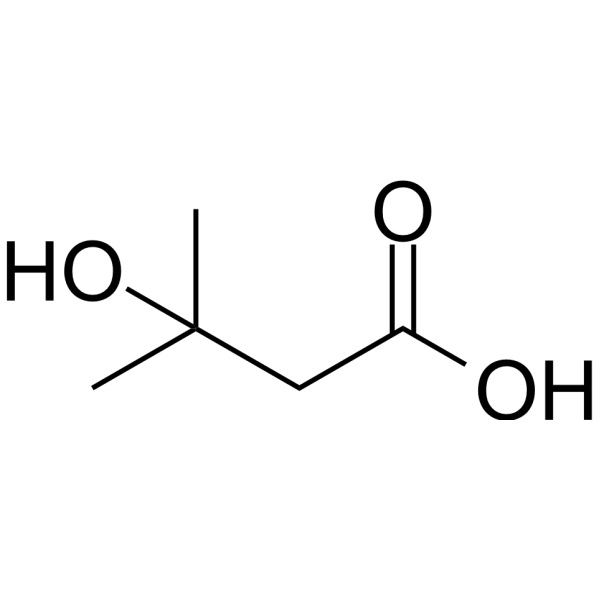
3-Hydroxyisovaleric acid is a normal endogenous metabolite excreted in the urine. The urinary excretion of 3-hydroxyisovaleric acid is early and sensitive indicator of biotin deficiency .
|
-
-
- HY-77641
-
|
|
Endogenous Metabolite
|
Metabolic Disease
|
|
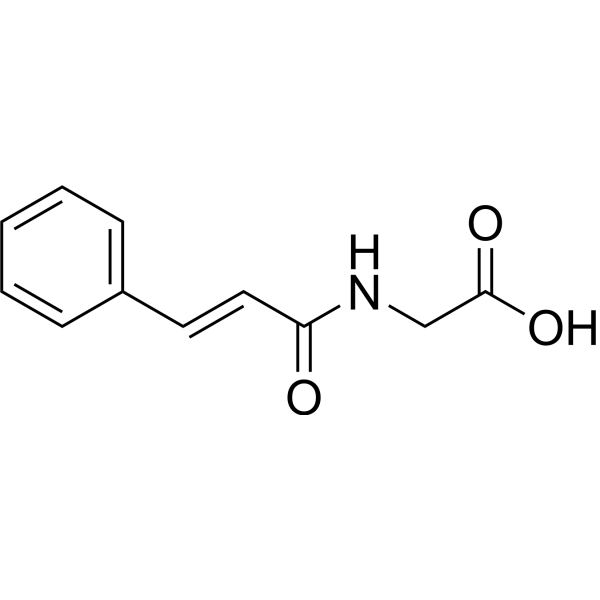
Cinnamoylglycine is a human urinary metabolite and PPG analog. Cinnamoylglycine is a conjugate of cinnamic acid and glycine. Cinnamoylglycine is used as a urine marker. Cinnamoylglycine can be used in adipogenic differentiation studies .
|
-
-
- HY-113358
-
|
|
Endogenous Metabolite
|
Inflammation/Immunology
|
|
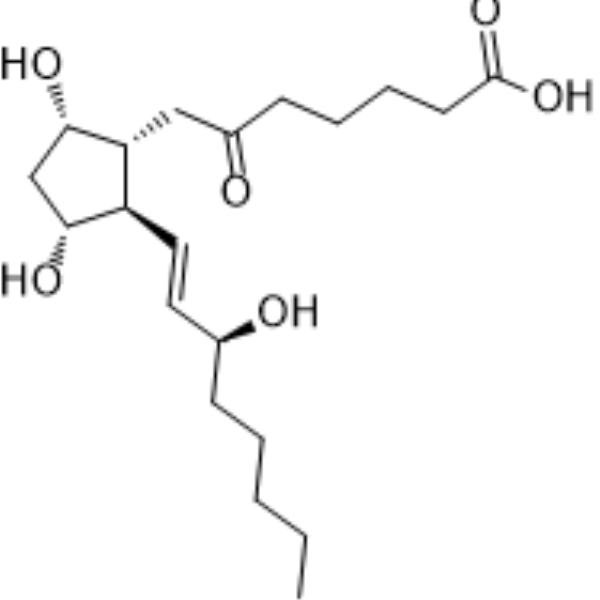
6-keto Prostaglandin F1α is an endogenous metabolite present in Cerebrospinal_Fluid, Urine and Blood that can be used for the research of Meningitis, Rheumatoid Arthritis and Cardiopulmonary Resuscitation .
|
-
-
- HY-128733
-
|
|
Endogenous Metabolite
|
Neurological Disease
Metabolic Disease
Cancer
|
|
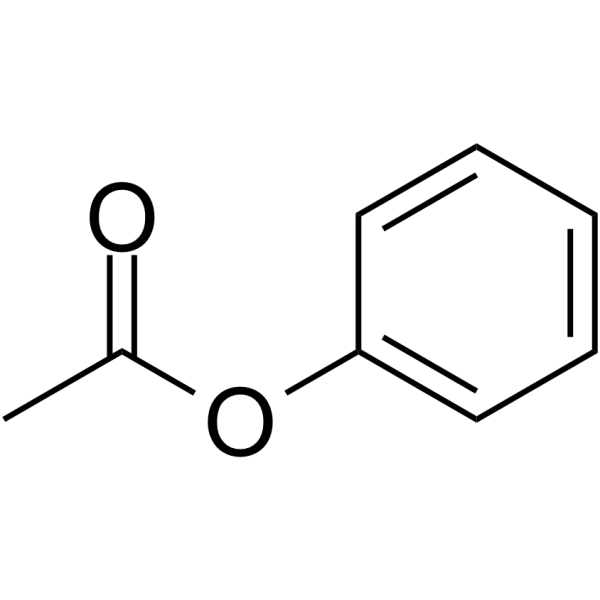
Phenyl acetate is an endogenous metabolite and a metabolite of 2-phenylethylamine, which can be found in urine. Phenyl acetate regulates the metabolism of glutamine. In addition, Phenyl acetate can be used as a detection index for certain diseases, such as depression .
|
-
-
- HY-113423
-
|
Tetrahydrodeoxycortisol
|
Endogenous Metabolite
|
Others
|
|
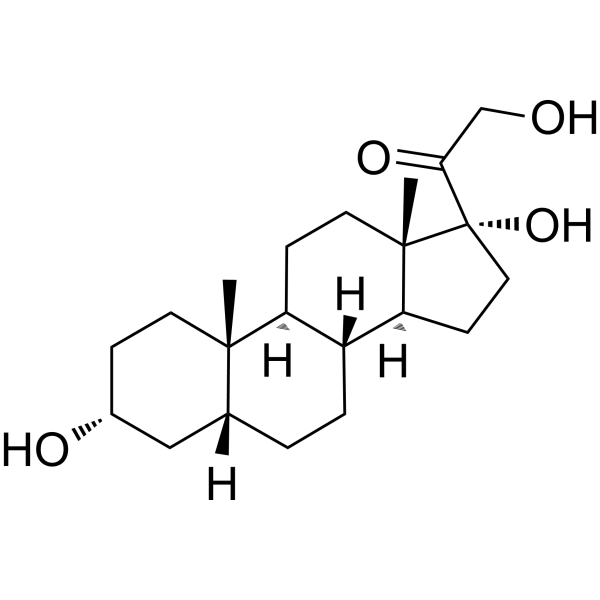
Tetrahydro-11-deoxycortisol (Tetrahydrodeoxycortisol) is an endogenous metabolite present in Urine that can be used for the research of 11 Beta Hydroxylase Deficiency .
|
-
-
- HY-N9446
-
|
|
Endogenous Metabolite
|
Others
|
|
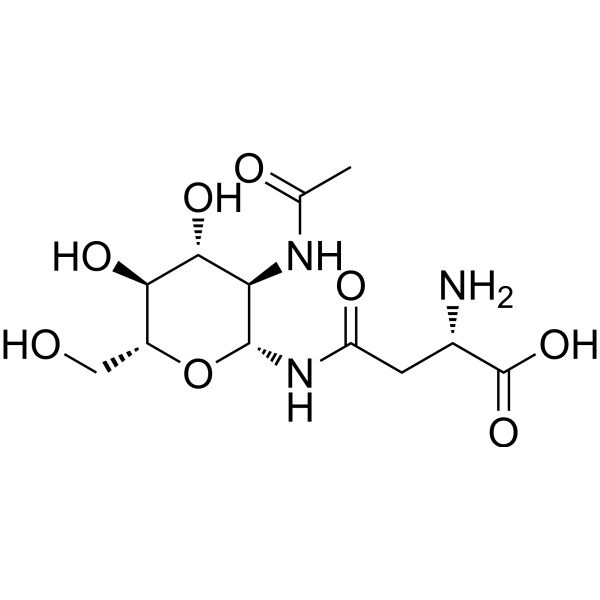
H-Asn(glcnac-beta-D)-OH is an endogenous metabolite present in Urine that can be used for the research of NGLY1-CDDG .
|
-
-
- HY-W041019
-
|
|
Endogenous Metabolite
|
Metabolic Disease
|
|
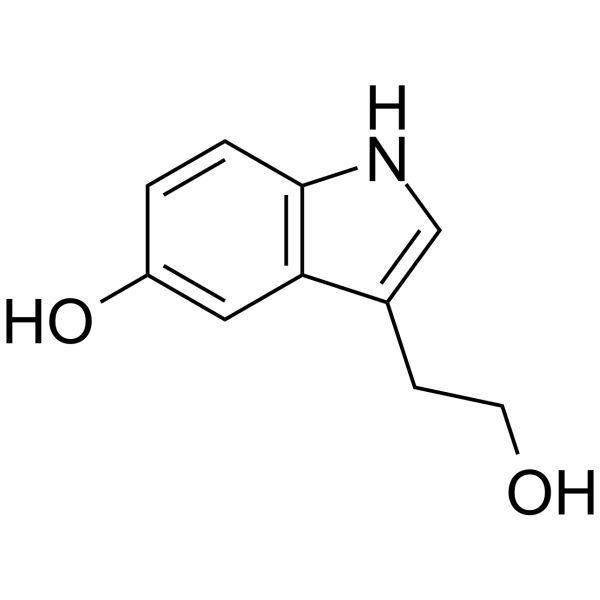
5-Hydroxytryptophol is a mammalian serotonin metabolite that can be used as a sensitive biomarker for recent alcohol intake. 5-Hydroxytryptophol is formed by alcohol-induced changes in the serotonin metabolic pathway and is excreted in the urine as a glucuronic acid conjugate. 5-Hydroxytryptophol is elevated in urine excretion and can be used clinically to monitor alcohol intake in scenarios such as alcohol relapse .
|
-
-
- HY-129554
-
|
cis-9,10-Epoxyoctadecanoic acid
|
Endogenous Metabolite
|
Others
|
|
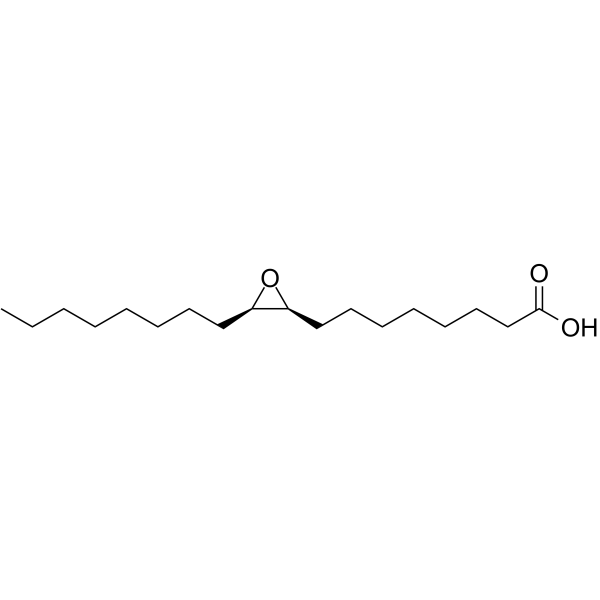
cis-9,10-Epoxystearic acid (cis-9,10-Epoxyoctadecanoic acid) is an endogenous metabolite that can be found in plasma and urine .
|
-
-
- HY-W015060
-
-
-
- HY-133871
-
-
-
- HY-113150
-
-
-
- HY-113318
-
-
-
- HY-W251393
-
-
-
- HY-165151
-
|
Urochrome hydrochloride
|
Endogenous Metabolite
|
Others
|
|
Urobilin hydrochloride is the metabolite of Hemoglobin (HY-P2995), that can be excreted through urine and feces in many mammals. Urobilin hydrochloride can be used as an indicator of human waste pollution .
|
-
-
- HY-W019151
-
|
|
Endogenous Metabolite
|
Metabolic Disease
|
|
Meconine is an endogenous metabolite of Noscapine (HY-13716). Meconine is the major metabolite in all three species, accounting for about 3, 8 and 2% of the dose in the first 24 h urines of rats, rabbits and humans, respectively. Meconine can be used as a marker to detect illicit opiate use .
|
-
-
- HY-W008097
-
-
-
- HY-W653982
-
-
-
- HY-113232
-
-
-
- HY-113495
-
-
-
- HY-113336
-
-
-
- HY-113200A
-
|
|
Endogenous Metabolite
|
Cancer
|
|
N1-Acetylspermine trihydrochloride is an endogenous metabolite present in Urine that can be used for the research of Leukemia .
|
-
-
- HY-W016482
-
-
-
- HY-13936
-
|
1-Methylimidazole-4-acetic acid
|
Endogenous Metabolite
|
Others
|
|
1-Methylimidazoleacetic acid (1-Methylimidazole-4-acetic acid) is a histamine metabolite in urine that can be used in the study of mastocytosis .
|
-
-
- HY-W053507
-
|
3-Methylbenzeneacetic acid
|
Drug Metabolite
Drug Intermediate
|
Others
|
|
m-Tolylacetic acid (3-Methylbenzeneacetic acid) is a hydroaromatic dicarboxylic acids excreted in the urine as metabolite of tolueneacetic acid. m-Tolylacetic acid can be used for drug intermediate for synthesising more complex molecules .
|
-
-
- HY-134611
-
|
β-hydroxyethoxyacetic acid; HEAA
|
Drug Metabolite
|
Others
|
|
(2-Hydroxyethoxy)acetic acid (β-hydroxyethoxyacetic acid) is the main urinary metabolite of 1,4-Dioxane. (2-Hydroxyethoxy)acetic acid is a reliable and sensitive shortterm biomarker in urine .
|
-
-
- HY-W016562S
-
|
2-Benzamidoacetic acid-d5
|
Endogenous Metabolite
|
Metabolic Disease
|
|
Hippuric acid-d5 is the deuterium labeled Hippuric acid. Hippuric Acid (2-Benzamidoacetic acid), an acyl glycine produced by the conjugation of benzoic acid and glycine, is a normal component in urine as a metabolite of aromatic compounds from food.
|
-
-
- HY-164804
-
-
-
- HY-113239
-
-
-
- HY-I0177
-
|
|
Drug Metabolite
|
Others
|
|
Vilazodone carboxylic acid is a vilazodone metabolite observed in both urine (major) and plasma (minor) .
|
-
-
- HY-145535
-
|
C24 3'-sulfo Galactosylceramide (d18:1/24:0)
|
Endogenous Metabolite
|
Metabolic Disease
|
|
Tetracosanoyl-sulfatide is an endogenous metabolite present in Urine that can be used for the research of Mild Metachromatic Leukodystrophy .
|
-
-
- HY-113200
-
|
|
Endogenous Metabolite
|
Cancer
|
|
N1-Acetylspermine is an endogenous metabolite present in Urine that can be used for the research of Leukemia .
|
-
-
- HY-113095
-
γ-CEHC
1 Publications Verification
|
Drug Metabolite
Endogenous Metabolite
|
Others
|
|
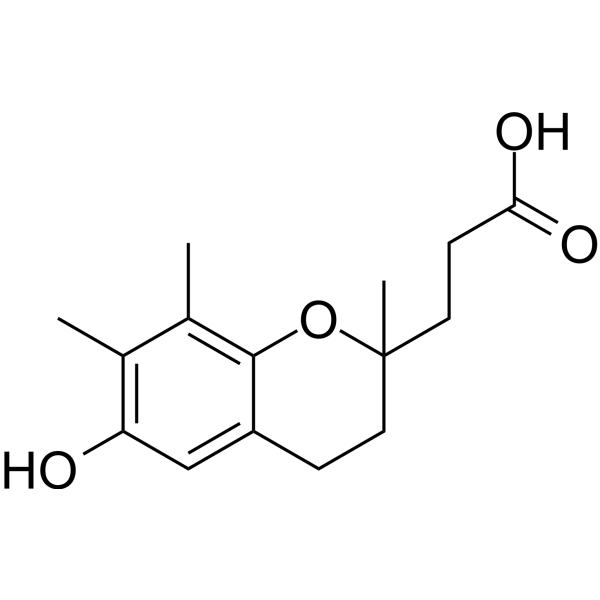
γ-CEHC is a γ-tocopherol (HY-N7148) metabolite. γ-CEHC is mainly excreted into the urine rather than into the bile. γ-CEHC is present in conjugated form in human urine, mainly as glucuronide .
|
-
-
- HY-113451
-
|
|
Endogenous Metabolite
|
Metabolic Disease
|
|
3-Hydroxysebacic acid is an endogenous metabolite present in Urine that can be used for the research of Medium Chain Acyl Co A Dehydrogenase Deficiency .
|
-
-
- HY-136612
-
|
|
Drug Metabolite
|
Others
|
|
DCBA is a metabolite of insect repellent N-N-diethyl-meta-toluamide (DEET). The concentration of DCBA in urine can assess exposure to DEET .
|
-
-
- HY-W101367
-
|
N-Acetyl-S-benzyl-L-cysteine; Benzylmercapturic acid
|
Drug Metabolite
|
Others
|
|
Ac-Cys(Bzl)-OH (N-Acetyl-S-benzyl-L-cysteine) is a toluene metabolite. Ac-Cys(Bzl)-OH in urine samples is a good marker of occupational toluene exposure.
|
-
-
- HY-113283R
-
|
|
Reference Standards
Endogenous Metabolite
|
Metabolic Disease
|
|
Homogentisic acid (Standard) is the analytical standard of Homogentisic acid. This product is intended for research and analytical applications. Homogentisic acid is a specific metabolite that accumulates in the urine and serum. Homogentisic acid can be used for diagnosis of alkaptonuria. Homogentisic acid is a phenolic acid .
|
-
-
- HY-107850S
-
-
-
- HY-W016562S1
-
|
2-Benzamidoacetic acid-d2
|
Isotope-Labeled Compounds
Endogenous Metabolite
|
Metabolic Disease
|
|
Hippuric acid-d2 is the deuterium labeled Hippuric acid. Hippuric Acid (2-Benzamidoacetic acid), an acyl glycine produced by the conjugation of benzoic acid and glycine, is a normal component in urine as a metabolite of aromatic compounds from food.
|
-
-
- HY-137829
-
|
|
Endogenous Metabolite
|
Others
|
|
5-Methyltetrahydrofolic acid disodium is the metabolite of Folinic acid (Leucovorin) (HY-17556). 5-Methyltetrahydrofolic acid disodium is involved in one-carbon metabolism and the transfer of methyl groups .
|
-
-
- HY-N9944
-
|
|
Endogenous Metabolite
|
Metabolic Disease
|
|
3-Oxo-4,6-choladien-24-oic acid is an endogenous metabolite. 3-Oxo-4,6-choladien-24-oic acid exsists in the urine of patients with hepatobiliary disease .
|
-
-
- HY-164805
-
|
|
Endogenous Metabolite
|
Others
|
|
N-Lactylleucine is an endogenous metabolite that can be identified in patients with the intermediate type of maple syrup urine disease .
|
-
-
- HY-122317
-
|
|
Drug Metabolite
|
Others
|
|
Menthol glucuronide, a metabolite of Menthol (HY-N1369), is a plasma and urine biomarker of acute Menthol inhalation .
|
-
-
- HY-113317
-
-
-
- HY-128733R
-
|
|
Reference Standards
Endogenous Metabolite
|
Neurological Disease
Metabolic Disease
Cancer
|
|
Phenyl acetate (Standard) is the analytical standard of Phenyl acetate. This product is intended for research and analytical applications. Phenyl acetate is an endogenous metabolite and a metabolite of 2-phenylethylamine, which can be found in urine. Phenyl acetate regulates the metabolism of glutamine. In addition, Phenyl acetate can be used as a detection index for certain diseases, such as depression.
|
-
-
- HY-113283S
-
|
|
Isotope-Labeled Compounds
Endogenous Metabolite
|
Metabolic Disease
|
|
Homogentisic acid- 13C6 is the 13C-labeled Homogentisic acid (HY-113283). Homogentisic acid is a specific metabolite that accumulates in the urine and serum. Homogentisic acid can be used for diagnosis of alkaptonuria. Homogentisic acid is a phenolic acid .
|
-
-
- HY-139070A
-
|
|
Endogenous Metabolite
|
Metabolic Disease
|
|
D-Glyceric acid sodium is the sodium form of D-Glyceric acid (HY-139070A). D-Glyceric acid is an endogenous metabolite present in urine that can be used for the research of primary hyperoxaluria type I and glutaric acidemia type 2 .
|
-
-
- HY-W654040
-
-
-
- HY-118399
-
-
-
- HY-113479
-
-
-
- HY-139070
-
|
|
Endogenous Metabolite
|
Metabolic Disease
|
|
D-Glyceric acid is an endogenous metabolite present in urine that can be used for the research of primary hyperoxaluria type I and glutaric acidemia type 2 .
|
-
- HY-172744
-
|
|
Drug Metabolite
|
Metabolic Disease
|
|
α-Hydroxy bromazolam is a metabolite of Bromazolam catalyzed by CYP enzymes and can be found in plasma and urine. α-Hydroxy bromazolam is an important biomarker for Bromazolam intake .
|
-
- HY-W127369
-
|
PC(O-16:0/22:6(4Z,7Z,10Z,13Z,16Z,19Z))
|
Endogenous Metabolite
|
Metabolic Disease
|
|
1-O-Hexadecyl-2-O-docosahexaenoyl-sn-glycero-3-phosphorylcholine is an endogenous metabolite present in Urine that can be used for the research of Obesity .
|
-
- HY-113073
-
|
|
Endogenous Metabolite
|
Others
|
|
2,4-Dihydroxybutanoic acid is typically absent in normal human urine extracts and is found only in trace amounts in neonates, while cases of succinic semialdehyde dehydrogenase deficiency consistently exhibit elevated levels of this metabolite.
|
-
- HY-113457
-
-
- HY-W019151S
-
|
|
Isotope-Labeled Compounds
Endogenous Metabolite
|
Metabolic Disease
|
|
Meconin-d3 is the deuterium labeled Meconine (HY-W019151). Meconine is an endogenous metabolite of Noscapine (HY-13716). Meconine is the major metabolite in all three species, accounting for about 3, 8 and 2% of the dose in the first 24 h urines of rats, rabbits and humans, respectively. Meconine can be used as a marker to detect illicit opiate use.
|
-
- HY-148002
-
|
|
Drug Metabolite
|
Others
|
|
1'-Hydroxy Midazolam-β-D-glucuronide is a β-D-glucuronide that acts as a drug metabolite, human urine metabolite, and human serum metabolite .
|
-
- HY-W016415
-
-
- HY-172560
-
-
- HY-113105
-
|
Estriol 16-glucosiduronate
|
Endogenous Metabolite
|
Others
|
|
Estriol 16α-(β-D-glucuronide) is an endogenous metabolite present in Urine that can be used for the research of Pregnancy .
|
-
- HY-W739812
-
|
Finasteride carboxylic acid
|
Aldose Reductase
|
Cancer
|
|
Carboxy finasteride is a metabolite of the 5α-reductase inhibitor Finasteride (HY-13635). Finasteride is biotransformed by cytochrome P450 (CYP3A4) and is successively oxidized to Hydroxy finasteride and Carboxy finasteride. Carboxy finasteride is the major metabolite in urine, while Hydroxy finasteride is the major metabolite in plasma .
|
-
- HY-128733S
-
-
- HY-113104
-
|
ADT-G
|
Endogenous Metabolite
Drug Metabolite
|
Metabolic Disease
|
|
Androsterone glucuronide (ADT-G) is one of the main metabolites of oral testosterone in humans and can be found in urine. The level of Androsterone glucuronide can reflect the absorption and hepatic metabolism of testosterone .
|
-
- HY-W042039
-
|
|
Calcium Channel
|
Cardiovascular Disease
|
|
Methyl homoveratrate, a metabolite of RWJ-26240 in vivo, can be identified in plasma, urine and faecal extract. McN5691 (RWJ-26240) is a voltage-sensitive calcium channel blocker .
|
-
- HY-100638
-
|
NPC
|
Drug Metabolite
|
Cancer
|
|
RPR132595A (NPC) is an active metabolite of CPT-11, which is generated by cytochrome P-450 3A4 (CYP3A4) and finally excreted through urine .
|
-
- HY-W741628
-
-
- HY-W016562S3
-
|
2-Benzamidoacetic acid-15N
|
Endogenous Metabolite
|
Metabolic Disease
|
|
Hippuric acid- 15N is the 15N-labeled Hippuric acid. Hippuric Acid (2-Benzamidoacetic acid), an acyl glycine produced by the conjugation of benzoic acid and glycine, is a normal component in urine as a metabolite of aromatic compounds from food.
|
-
- HY-W088846
-
-
- HY-137020
-
-
- HY-129903
-
|
|
Drug Metabolite
|
Others
|
|
N-Desethyl vardenafil is the major metabolite of Vardenafil (HY-B0442) and can be detected in human urine .
|
-
- HY-129903R
-
|
|
Drug Metabolite
Reference Standards
|
Others
|
|
N-Desethyl vardenafil (Standard) is the analytical standard of N-Desethyl vardenafil. This product is intended for research and analytical applications. N-Desethyl vardenafil is the major metabolite of Vardenafil (HY-B0442) and can be detected in human urine .
|
-
- HY-156558
-
-
- HY-113239S
-
-
- HY-W712534
-
|
|
Drug Metabolite
|
Metabolic Disease
|
|
N-Acetyl lenalidomide is a metabolite of Lenalidomide (HY-A0003), which is formed by hydrolysis of Lenalidomide in plasma and urine .
|
-
- HY-113239S1
-
-
- HY-113231
-
-
- HY-139349
-
|
|
Endogenous Metabolite
|
Others
|
|
Finasteride carboxaldehyde (Compound M2) is the metabolite of 5α-reductase inhibitor Finasteride (HY-13635) in human bile and urine .
|
-
- HY-113232S
-
-
- HY-113150R
-
|
|
Endogenous Metabolite
Reference Standards
|
Neurological Disease
|
|
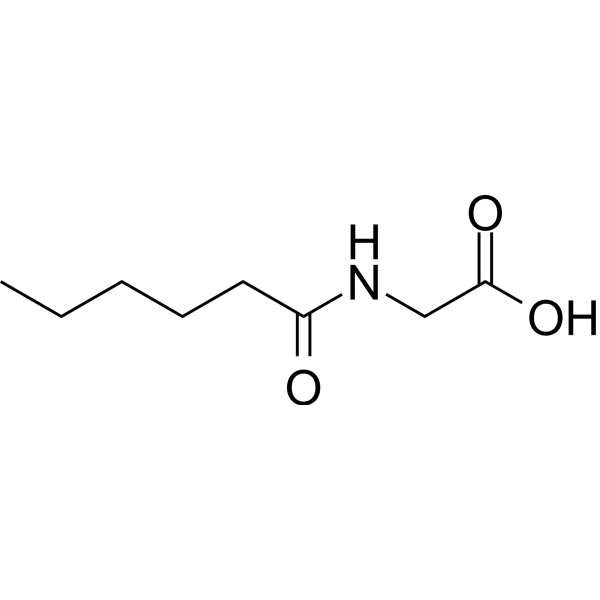
Hexanoylglycine (Standard) is the analytical standard of Hexanoylglycine. This product is intended for research and analytical applications. Hexanoylglycine is an endogenous metabolite present in Urine that can be used for the research of Ethylmalonic Encephalopathy .
|
-
- HY-W041019R
-
|
|
Reference Standards
Endogenous Metabolite
|
Metabolic Disease
|
|
5-Hydroxytryptophol is a mammalian serotonin metabolite that can be used as a sensitive biomarker for recent alcohol intake. 5-Hydroxytryptophol is formed by alcohol-induced changes in the serotonin metabolic pathway and is excreted in the urine as a glucuronic acid conjugate. 5-Hydroxytryptophol is elevated in urine excretion and can be used clinically to monitor alcohol intake in scenarios such as alcohol relapse .
|
-
- HY-100638A
-
|
NPC hydrochloride
|
Drug Metabolite
|
Cancer
|
|
RPR132595A (NPC) hydrochloride is an active metabolite of CPT-11, which is generated by cytochrome P-450 3A4 (CYP3A4) and finally excreted through urine .
|
-
- HY-W015060S1
-
|
|
Endogenous Metabolite
|
Others
|
|
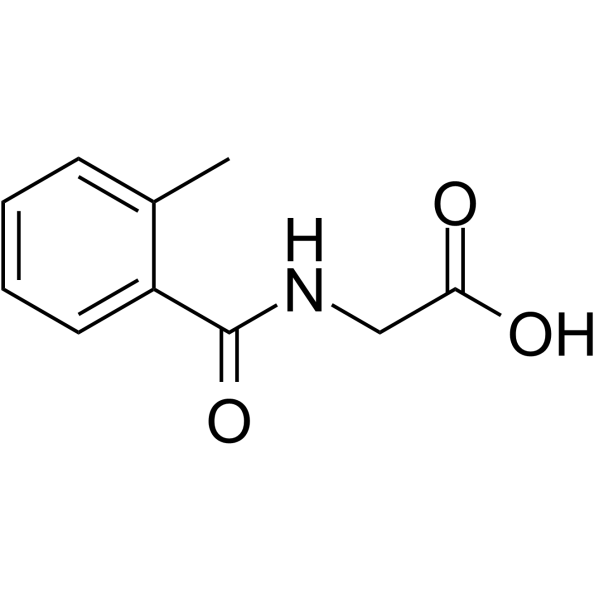
2-(2-Methylbenzamido)acetic acid-d2 is the deuterium labeled 2-(2-Methylbenzamido)acetic acid. 2-(2-Methylbenzamido)acetic acid is a metabolite detected in urine.
|
-
- HY-N6910
-
|
|
Others
|
Metabolic Disease
|
|
Pseudolaric Acid C2, a diterpenoid isolated from Pseudolarix kaempferi, is identified as the specific metabolite of Pseudolaric acid B in plasma, urine, bile and feces after both oral and intravenous administration to rats .
|
-
- HY-118548
-
|
|
Drug Metabolite
|
Endocrinology
|
|
Tetranor-PGAM is a tetranor-prostaglandin A metabolite. Tetranor-PGAM is a dehydration product of tetranor-PGEM (HY-114988). Tetranor-PGAM can be measured as a surrogate for tetranor-PGEM levels in urine .
|
-
- HY-117129
-
|
MK-0436
|
Parasite
|
Infection
|
|
MK 436 (MK-0436) is a metabolite with anti-trypanosomal activity that can be isolated from dog urine, particularly effective against Trypanosoma cruzi, the pathogen responsible for Chagas disease in South America .
|
-
- HY-W401407
-
|
|
Drug Metabolite
Cytochrome P450
|
Metabolic Disease
|
|
Diosmetin-3-O-glucuronide is a major circulating metabolite of Diosmetin (HY-N0125) in plasma and in urine. Diosmetin is a natural flavonoid which inhibits human CYP1A enzyme activity .
|
-
- HY-107850R
-
|
NSC 1612 (Standard); NSC 47462 (Standard)
|
Endogenous Metabolite
Reference Standards
|
Metabolic Disease
|
|
Pregnanediol (Standard) is the analytical standard of Pregnanediol. This product is intended for research and analytical applications. Pregnanediol is the major metabolite of progesterone and can be excreted via urine. Pregnanediol offers an indirect way to measure progesterone levels in vivo .
|
-
- HY-113150S2
-
-
- HY-N9417
-
|
2,3-Dihydroxy-3-methylbutanoic acid
|
Endogenous Metabolite
|
Others
|
|
2,3-Dihydroxyisovaleric acid (2,3-Dihydroxy-3-methylbutanoic acid) is a natural metabolite of the branched-chain amino acid leucine that has been found present in the urine of a patient with 2-hydroxyglutaric aciduria .
|
-
- HY-17011
-
|
|
Fungal
|
Metabolic Disease
|
|
Croconazole is an antifungal agent containing imidazole rings. Croconazole has a unique structural feature of aryl vinyl at the imidazole ring N-1. Croconazole can be used for the identification and quantitative study of major metabolites in rat urine and bile .
|
-
- HY-W015060R
-
-
- HY-12374
-
-
- HY-W740426
-
|
|
Drug Metabolite
|
Cancer
|
|
N-Desmethyltopotecan is a metabolite of Topotecan (HY-13768), and it can be detected in plasma, urine and feces .
|
-
- HY-W016482R
-
-
- HY-164611
-
-
- HY-113239S2
-
-
- HY-W584173
-
|
|
Endogenous Metabolite
|
Metabolic Disease
|
|
D-Glyceric acid calcium hydrate is an endogenous metabolite present in urine that can be used for the research of primary hyperoxaluria type I and glutaric acidemia type 2 .
|
-
- HY-N17735
-
|
|
Drug Metabolite
|
Others
|
|
(R)-1,2-Dihydroxyaporphine (Compound M1) is a metabolite of Nuciferine (HY-N0049) and is easily excreted through urine and feces .
|
-
- HY-W140665
-
|
|
Drug Metabolite
|
Others
|
|
3-Nonanol is a urinary metabolite of n-nonane in male rats after gavage administration. 3-Nonanol appears in urine of the rats following exposure to n-nonane .
|
-
- HY-W015060S
-
|
|
Endogenous Metabolite
|
Others
|
|
2-(2-Methylbenzamido)acetic acid-d7 is the deuterium labeled 2-(2-Methylbenzamido)acetic acid. 2-(2-Methylbenzamido)acetic acid is a metabolite detected in urine.
|
-
- HY-W706930
-
|
|
Isotope-Labeled Compounds
Drug Metabolite
|
Others
|
|
DCBA-d10 is the deuterium labeled DCBA (HY-136612). DCBA is a metabolite of insect repellent N-N-diethyl-meta-toluamide (DEET). The concentration of DCBA in urine can assess exposure to DEET .
|
-
- HY-177997
-
|
|
Drug Metabolite
|
Neurological Disease
|
|
α-Hydroxysalmeterol is a metabolite that can be formed via cytochrome P450 isoform 3A4-induced hydroxylation of Salmeterol (HY-14302). α-Hydroxysalmeterol is a potentially relevant urine biomarker to include when screening for Salmeterol misuse .
|
-
- HY-129953
-
-
- HY-W019151R
-
|
|
Reference Standards
Endogenous Metabolite
|
Metabolic Disease
|
|
Meconine (Standard) is the analytical standard of Meconine (HY-W019151). This product is intended for research and analytical applications. Meconine is an endogenous metabolite of Noscapine (HY-13716). Meconine is the major metabolite in all three species, accounting for about 3, 8 and 2% of the dose in the first 24 h urines of rats, rabbits and humans, respectively. Meconine can be used as a marker to detect illicit opiate use.
|
-
- HY-113409R
-
|
|
Reference Standards
Endogenous Metabolite
|
Metabolic Disease
|
|
3-Hydroxyisovaleric acid (Standard) is the analytical standard of 3-Hydroxyisovaleric acid. This product is used for research and analytical applications. 3-Hydroxyisovaleric acid is a normal endogenous metabolite excreted in urine. The urinary excretion of 3-Hydroxyisovaleric acid serves as an early and sensitive indicator of biotin deficiency .
|
-
- HY-W014277
-
|
|
Drug Metabolite
|
Others
|
|
2,6-Diisopropylnaphthalene is a substituted naphthalene compound, metabolite precursor and potato sprout inhibitor. 2,6-Diisopropylnaphthalene is metabolized in rats only via oxidation of its isopropyl chains, producing five major unconjugated urinary metabolites, glucuronide conjugates of these metabolites, while a small amount of the parent drug is excreted in urine. 2,6-Diisopropylnaphthalene inhibits sprouting of stored potato tubers; when used alone, it only provides a short-term sprout-inhibiting effect .
|
-
- HY-132545S
-
|
NPC-d3
|
Isotope-Labeled Compounds
Topoisomerase
|
Cancer
|
|
RPR132595A-d3 is the deuterium labeled RPR132595A. RPR132595A is an active metabolite of Irinotecan (CPT-11), which is generated by cytochrome P-450 3A4 (CYP3A4) and finally excreted through urine .
|
-
- HY-112948
-
|
|
Endogenous Metabolite
|
Metabolic Disease
|
|
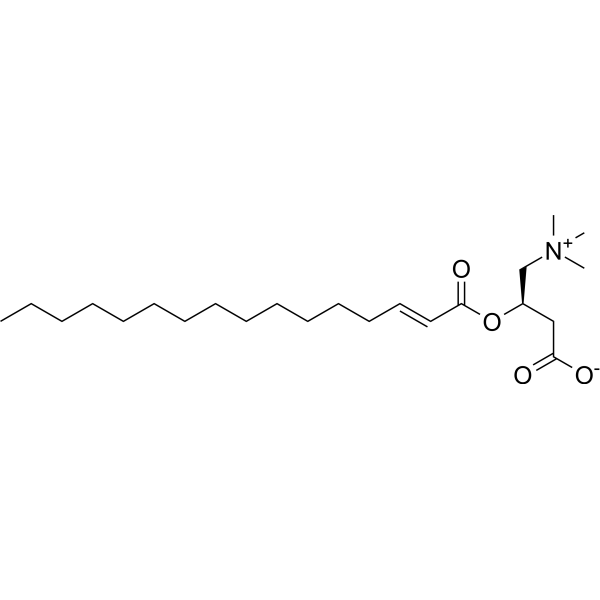
2-Methylbutyrylcarnitine is a fatty acid metabolite. 2-Methylbutyrylcarnitine is found mainly in the blood and urine of humans and animals and is produced through the pyruvate carboxylation pathway. 2-Methylbutyrylcarnitine exhibits high level in the plasma of subjects with steatohepatitis (NASH) and can be used as an indicator for the diagnosis of metabolic diseases .
|
-
- HY-126923
-
|
2,3-Dinor-TXB2
|
Endogenous Metabolite
|
Cardiovascular Disease
Metabolic Disease
|
|
2,3-Dinor thromboxane B2 (2,3-Dinor-TXB2), a metabolite of urine, serves as an indicator of the production of thromboxane A2 (TxA2) in the body, and can be used as a tool to study the role of thromboxane in various pathophysiological processes in the human body .
|
-
- HY-W053507R
-
|
3-Methylbenzeneacetic acid (Standard)
|
Drug Metabolite
Reference Standards
Drug Intermediate
|
Others
|
|
m-Tolylacetic acid (3-Methylbenzeneacetic acid) (Standard) is the analytical standard of m-Tolylacetic acid (HY-W053507). This product is intended for research and analytical applications. m-Tolylacetic acid is a hydroaromatic dicarboxylic acids excreted in the urine as metabolite of tolueneacetic acid. m-Tolylacetic acid can be used for drug intermediate for synthesising more complex molecules .
|
-
- HY-W002105
-
|
|
Endogenous Metabolite
Biochemical Assay Reagents
|
Others
|
|
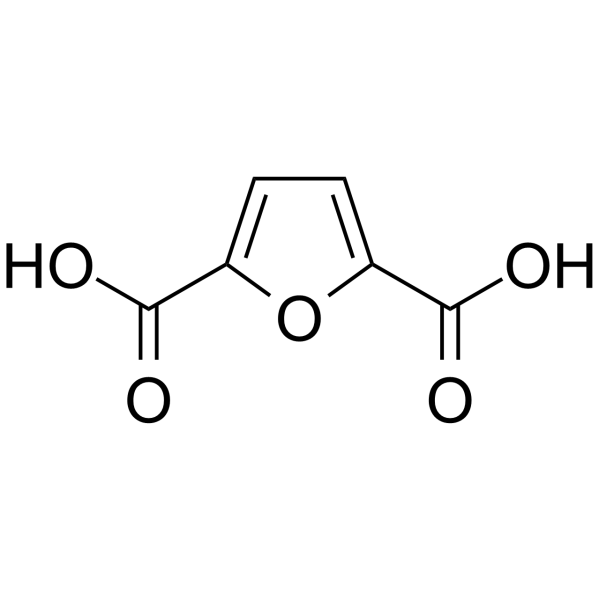
2,5-Furandicarboxylic acid is an endogenous metabolite that can be detected in human urine. 2,5-Furandicarboxylic acid serves as an environmentally friendly substitute for terephthalic acid in the production of polyesters. 2,5-Furandicarboxylic acid can be used as the raw material for various chemical intermediates to synthesize polymers, polyurethanes, thermosetting resins, and plasticizers .
|
-
- HY-W015874R
-
|
|
Reference Standards
Endogenous Metabolite
|
Metabolic Disease
|
|
2-Hydroxy-2-methylbutanoic acid (Standard) is the analytical standard of 2-Hydroxy-2-methylbutanoic acid. This product is intended for research and analytical applications. 2-Hydroxy-2-methylbutanoic acid, an unusual metabolite, is associated with 2-hydroxyglutaric aciduria and maple syrup urine disease.
|
-
- HY-W438378
-
|
HMPG piperazine
|
Biochemical Assay Reagents
|
Others
|
|
4-Hydroxy-3-methoxyphenylglycol piperazine (HMPG piperazine) is a salt of HMPG combined with piperazine. HMPG is a metabolite of adrenaline and norepinephrine and is an important marker of catecholamine hormone metabolism in the body. 4-Hydroxy-3-methoxyphenylglycol piperazine is used as a standard in clinical laboratories to accurately measure the HMPG content in urine .
|
-
- HY-134132
-
|
Methyl 15(S)-HETE
|
Drug Intermediate
|
Others
|
|
15(S)-HETE methyl ester (Methyl 15(S)-HETE) (compound 1) is a derivative of 15(S)-HETE (HY-113336), a endogenous metabolite presenting in Urine that can be used for the research of Zellweger Syndrome. 15(S)-HETE methyl ester is commonly used in formations of nutritional supplements .
|
-
- HY-N9440
-
|
|
Drug Metabolite
|
Inflammation/Immunology
Cancer
|
|
7-Hydroxycoumarin glucuronide is a transport substrate and main human coumarin metabolite. 7-Hydroxycoumarin glucuronide undergoes ATP-dependent efflux transport via MRP3 and MRP4. 7-Hydroxycoumarin glucuronide undergoes active transport processes for urinary excretion and is primarily excreted into urine in humans.
|
-
- HY-Y1097
-
|
2-(Methoxycarbonyl)benzoic acid
|
Endogenous Metabolite
Reactive Oxygen Species (ROS)
|
Cancer
|
|
Monomethyl phthalate is an orally active metabolite of phthalic acid. Monomethyl phthalate, as a urine biomarker after exposure to phthalate, can be used as a detection indicator for thyroid cancer and benign nodules. Monomethyl phthalate reduces the survival rate of young frogs. Monomethyl phthalate induces oxidative damage to red blood cells in rats .
|
-
- HY-131395
-
|
N-Acetyl-LTE4
|
Endogenous Metabolite
|
Cardiovascular Disease
|
|
N-Acetyl-Leukotriene E4 (N-Acetyl-LTE4) is a metabolite of Leukotriene E4 (LTE4) (HY-113465), which is detected in bile and urine . N-Acetyl-Leukotriene E4 produces a vasoconstriction in the mesenteric vessels which led to reduction of blood flow to the gut .
|
-
- HY-113158
-
|
|
Drug Metabolite
|
Metabolic Disease
|
|
4-Hydroxyhippuric acid is a metabolite of polyphenols. 4-Hydroxyhippuric acid is generated via medium-chain acyl-CoA dehydrogenase (MCAD)-dependent β-oxidation of microbially-produced 3-(4-hydroxyphenyl)propionic acid, followed by host glycine conjugation. 4-Hydroxyhippuric acid can be simultaneously detected in urine as a biomarker of dietary polyphenol intake .
|
-
- HY-129953B
-
|
15(R)-PGF2α
|
Endogenous Metabolite
|
Inflammation/Immunology
|
|
15(R)-Prostaglandin F2α is the isomer of 9α,11β-Prostaglandin F2α (HY-129953). 9α,11β-Prostaglandin F2α is an endogenous metabolite present in Urine that can be used for the research of Asthma .
|
-
- HY-W053507S
-
|
3-Methylbenzeneacetic acid-d3
|
Isotope-Labeled Compounds
Drug Metabolite
Drug Intermediate
|
Others
|
|
m-Tolylacetic acid-d3 (3-Methylbenzeneacetic acid-d3) is the deuterium labeled m-Tolylacetic acid (HY-W053507). m-Tolylacetic acid is a hydroaromatic dicarboxylic acids excreted in the urine as metabolite of tolueneacetic acid. m-Tolylacetic acid can be used for drug intermediate for synthesising more complex molecules .
|
-
- HY-113139
-
|
N1-Methylinosine
|
Nucleoside Antimetabolite/Analog
Endogenous Metabolite
|
Cancer
|
|
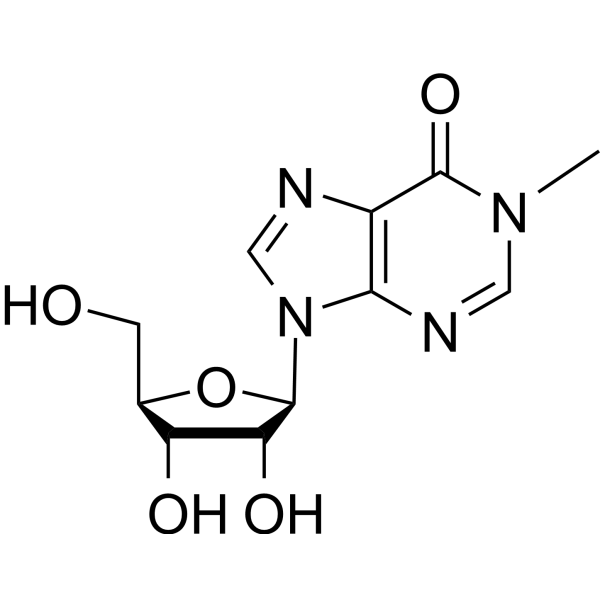
1-Methylinosine (N1-MetHYlinosine) is a modified nucleotide located at position 37 of eukaryotic tRNA, 3' to the tRNA anticodon. 1-Methylinosine is a minor metabolite of 1-methyladenosine (HY-113081). The level of 1-Methylinosine is significantly elevated in urine samples from breast cancer models .
|
-
- HY-W040047
-
|
|
Endogenous Metabolite
|
Metabolic Disease
|
|
Pregnanediol 3-glucuronide is the main terminal metabolite of Progesterone (HY-N0437). Pregnanediol 3-glucuronide is the metabolite of Progesterone produced in the liver through hydroxylation and glucuronidation, with high hydrophilicity and easy excretion through urine. A decrease in the level of Pregnanediol 3-glucuronide is associated with an increased risk of thyroid cancer, while an increase is associated with the state of pregnancy. Pregnanediol 3-glucuronide is of great significance in the monitoring of female reproductive health, pregnancy assessment, and the diagnosis of endocrine diseases .
|
-
- HY-113114
-
|
|
Endogenous Metabolite
Glucocorticoid Receptor
|
Metabolic Disease
Inflammation/Immunology
|
|
Tetrahydrocortisone is a corticosteroid catalyzed from endogenous glucocorticoids by AKR1D1 (5β-reductase). Its formation is mediated by AKR1D1 and regulated by the glucocorticoid receptor (GR). As one of the final products of glucocorticoid inactivation metabolism, Tetrahydrocortisone participates in the maintenance of glucocorticoid metabolic homeostasis in vivo. Tetrahydrocortisone can be used for mechanistic studies of metabolic diseases such as non-alcoholic fatty liver disease (NAFLD) and type 2 diabetes, and also serves as a biomarker for in vivo AKR1D1 activity and glucocorticoid metabolic status .
|
-
- HY-W008097R
-
|
|
Reference Standards
Endogenous Metabolite
Drug Intermediate
|
Metabolic Disease
|
|
3,3-Dimethylglutaric acid (Standard) is the analytical standard of 3,3-Dimethylglutaric acid (HY-W008097). This product is intended for research and analytical applications. 3,3-Dimethylglutaric acid is a type of methyl-branching fatty acid and is an occasional endogenous metabolite found in human urine. 3,3-Dimethylglutaric acid can be used as a ligand to synthesize metal complexes.
|
-
- HY-W097839
-
|
|
Drug Metabolite
Dopamine Transporter
|
Neurological Disease
|
|
2,4,5-Trimethoxycinnamic acid is a metabolite. 2,4,5-Trimethoxycinnamic acid is detectable in plasma and urine after administration of the aqueous extract of P. frutescens. 2,4,5-Trimethoxycinnamic acid induces a stress-like significant increase in basal Dopamine turnover in the hippocampus. 2,4,5-Trimethoxycinnamic acid is applicable to depression research .\n
|
-
- HY-N18029
-
|
|
Drug Derivative
|
Inflammation/Immunology
Cancer
|
|
(24S)-Ginsenoside V is a monooxygenated derivative of Ginsenoside Rb1 (HY-N0039). (24S)-Ginsenoside V is the major circulating metabolite of Ginsenoside Rb1 in rat plasma. (24S)-Ginsenoside V appears in rat urine after intravenous and oral administration of Ginsenoside Rb1 to rats .
|
-
- HY-N15364
-
|
|
Endogenous Metabolite
|
Metabolic Disease
|
|
Imidazoleacetic acid riboside is a metabolite of histamine, belonging to the riboside conjugates of imidazoleacetic acid. Imidazoleacetic acid riboside is generated by dephosphorylation of imidazoleacetic acid ribonucleotide in rats. Imidazoleacetic acid riboside can be detected in the kidney and brain tissue after administration of labeled histamine or histidine, and exists as a urinary metabolite of histamine in both rats and humans. Imidazoleacetic acid riboside is not only excreted in urine, but also can be used to capture and isolate ribose for studying the metabolic pathways of ribose synthesis from glucose or glucuronolactone via the pentose phosphate pathway or the C-6 oxidation pathway in vivo .
|
-
- HY-129554R
-
|
cis-9,10-Epoxyoctadecanoic acid (Standard)
|
Reference Standards
Endogenous Metabolite
|
Others
|
|
cis-9,10-Epoxystearic acid (Standard) (cis-9,10-Epoxyoctadecanoic acid (Standard)) is the analytical standard of cis-9,10-Epoxystearic acid (HY-129554). This product is intended for research and analytical applications. cis-9,10-Epoxystearic acid (cis-9,10-Epoxyoctadecanoic acid) is an endogenous metabolite that can be found in plasma and urine .
|
-
- HY-N15717
-
|
|
Drug Metabolite
|
Others
|
|
(erythro) 1′,2′-Dihydroxyasarone is a metabolite of Beta-asarone (HY-N1501) and can also be isolated from the roots of Acorus tatarinowii. (erythro) 1′,2′-Dihydroxyasarone can form glucuronic acid conjugates in vivo and be excreted in urine. (erythro) 1′,2′-Dihydroxyasarone can serve as a marker for the metabolism and toxic risk assessment of Beta-asarone .
|
-
- HY-Y1097R
-
|
2-(Methoxycarbonyl)benzoic acid (Standard)
|
Reference Standards
Endogenous Metabolite
|
Cancer
|
|
Monomethyl phthalate (Standard) is the analytical standard of Monomethyl phthalate. This product is intended for research and analytical applications. Monomethyl phthalate is an orally active metabolite of phthalic acid. Monomethyl phthalate, as a urine biomarker after exposure to phthalate, can be used as a detection indicator for thyroid cancer and benign nodules. Monomethyl phthalate reduces the survival rate of young frogs. Monomethyl phthalate induces oxidative damage to red blood cells in rats.
|
-
- HY-113457S
-
|
11-Ketoetiocholanolone-d5
|
Isotope-Labeled Compounds
Endogenous Metabolite
Biochemical Assay Reagents
|
Metabolic Disease
|
|
11-Oxo etiocholanolone-d5 (11-Ketoetiocholanolone-d5) is the deuterium labeled 11-Oxo etiocholanolone (HY-113457). 11-Oxo etiocholanolone (11-Ketoetiocholanolone) is a steroid. 11-Oxo etiocholanolone is a key indicator for detecting cortisol metabolites in feces and urine. 11-Oxo etiocholanolone has the potential to be a pheromone .
|
-
- HY-129953S
-
-
- HY-113139S
-
|
N1-Methylinosine-d3
|
Isotope-Labeled Compounds
Endogenous Metabolite
Nucleoside Antimetabolite/Analog
|
Cancer
|
|
1-Methylinosine-d3 (N1-MetHYlinosine-d3) is the deuterium labeled 1-Methylinosine. 1-Methylinosine is a modified nucleotide located at position 37 of eukaryotic tRNA, 3' to the tRNA anticodon. 1-Methylinosine is a minor metabolite of 1-methyladenosine (HY-113081). The level of 1-Methylinosine is significantly elevated in urine samples from breast cancer models.
|
-
- HY-113377
-
|
|
Endogenous Metabolite
|
Metabolic Disease
|
|
L-Glyceric acid is a mainly urinary metabolite accumulating in rare inherited metabolic disease L-glyceric aciduria. L-Glyceric acid can be used to diagnose primary hyperoxaluria type 2 (PH2). L-Glyceric acid excretion to distinguish PH1 from PH2 .
|
-
- HY-113377A
-
|
|
Endogenous Metabolite
|
Metabolic Disease
|
|
L-Glyceric acid sodium is a mainly urinary metabolite accumulating in rare inherited metabolic disease L-glyceric aciduria. L-Glyceric acid sodium can be used to diagnose primary hyperoxaluria type 2 (PH2). L-Glyceric acid sodium excretion to distinguish PH1 from PH2 .
|
-
- HY-W040047S
-
|
|
Endogenous Metabolite
Isotope-Labeled Compounds
|
Endocrinology
|
|
Pregnanediol 3-glucuronide is the main end-metabolite of Progesterone (HY-N0437). Pregnanediol 3-glucuronide is a metabolite of Progesterone formed by hydroxylation and glucuronidation in the liver, with high hydrophilicity and easy excretion through urine. Pregnanediol 3-glucuronide excretion rate of ≥ 9 μmol/24 h can serve as biochemical evidence of ovulation. Pregnanediol 3-glucuronide reflects the quality of the luteal phase, and a level of < 7 μmol/24 h may indicate anovulation or luteal insufficiency. Pregnanediol 3-glucuronide holds significant importance in monitoring female reproductive health, assessing pregnancy, and diagnosing endocrine disorders.
|
-
- HY-113158R
-
|
|
Reference Standards
Drug Metabolite
|
Metabolic Disease
|
|
4-Hydroxyhippuric acid (Standard) is the analytical standard of 4-Hydroxyhippuric acid (HY-113158). This product is intended for research and analytical applications. 4-Hydroxyhippuric acid is a metabolite of polyphenols. 4-Hydroxyhippuric acid is generated via medium-chain acyl-CoA dehydrogenase (MCAD)-dependent β-oxidation of microbially-produced 3-(4-hydroxyphenyl)propionic acid, followed by host glycine conjugation. 4-Hydroxyhippuric acid can be simultaneously detected in urine as a biomarker of dietary polyphenol intake .
|
-
- HY-W002105R
-
|
|
Reference Standards
Biochemical Assay Reagents
|
Others
|
|
2,5-Furandicarboxylic acid (Standard) is the analytical standard of 2,5-Furandicarboxylic acid (HY-W002105). This product is intended for research and analytical applications. 2,5-Furandicarboxylic acid is an endogenous metabolite that can be detected in human urine. 2,5-Furandicarboxylic acid serves as an environmentally friendly substitute for terephthalic acid in the production of polyesters. 2,5-Furandicarboxylic acid can be used as the raw material for various chemical intermediates to synthesize polymers, polyurethanes, thermosetting resins, and plasticizers .
|
-
- HY-N9944R
-
|
|
Reference Standards
Endogenous Metabolite
|
Metabolic Disease
|
|
3-Oxo-4,6-choladien-24-oic acid (Standard) is the analytical standard of 3-Oxo-4,6-choladien-24-oic acid. This product is intended for research and analytical applications. 3-Oxo-4,6-choladien-24-oic acid is an endogenous metabolite. 3-Oxo-4,6-choladien-24-oic acid exsists in the urine of patients with hepatobiliary disease[1].
|
-
- HY-W012168
-
|
|
Carbonic Anhydrase
|
Metabolic Disease
|
|
4-Chloro-3-sulfamoylbenzoic acid is a weak inhibitor of human carbonic anhydrase isoforms hCA I, hCA II, hCA IV, and hCA IX, and a synthesis intermediate for carbonic anhydrase inhibitors. 4-Chloro-3-sulfamoylbenzoic acid is the major metabolite of tripamide detected in tissues, urine, and feces of rats and rabbits following Tripamide (HY-106570) administration. 4-Chloro-3-sulfamoylbenzoic acid can be used for the study of carbonic anhydrase inhibition and species differences in drug metabolism .
|
-
- HY-W012584R
-
|
|
Endogenous Metabolite
|
Cardiovascular Disease
|
|
(3R,4S,5S)-Tetrahydro-2H-pyran-2,3,4,5-tetraol (Standard) is the analytical standard of (3R,4S,5S)-Tetrahydro-2H-pyran-2,3,4,5-tetraol. This product is intended for research and analytical applications. L-Arabinopyranose is an endogenous metabolite present in Urine that can be used for the research of Ribose 5 Phosphate Isomerase Deficiency .
|
-
- HY-129756
-
|
N-Phenylthioacetamide
|
Biochemical Assay Reagents
|
Metabolic Disease
|
|
Thioacetanilide (N-Phenylthioacetamide) is a sulfur-containing thioamide derivative of acetanilide. Thioacetanilide displays a solvent‑dependent Z/E isomeric distribution, preferring the E conformation in polar hydrogen‑bonding solvents and the Z conformation in halogenated solvents. Thioacetanilide serves as a substrate for metabolic desulfurization and aromatic hydroxylation. Thioacetanilide is mainly metabolized via desulfurization and 4‑hydroxylation of the aromatic ring in Rattus norvegicus, and the released sulfur integrates into the total body sulfur pool. Thioacetanilide is well absorbed in rats, and more than 90% of the dose is excreted in urine as conjugated metabolites after oral administration .
|
-
- HY-160078
-
|
|
Biochemical Assay Reagents
|
Metabolic Disease
|
|
Deferiprone O-β-D-glucuronide is a novel orally active iron chelator. Deferiprone O-β-D-glucuronide can be used to investigate its ability to reduce iron burden in patients with β-thalassemia .
|
-
- HY-W767164
-
|
|
Biochemical Assay Reagents
|
Cardiovascular Disease
|
|
Deferiprone O-β-D-glucuronide sodium is a novel orally active iron chelator. Deferiprone O-β-D-glucuronide sodium can be used to investigate its ability to reduce iron burden in patients with β-thalassemia .
|
-
- HY-N13356
-
|
gamma-Glutamylthreonine; H-γ-Glu-Thr-OH; γ-Glu-Thr
|
Bacterial
Peptide-Drug Conjugates (PDCs)
Drug Metabolite
|
Infection
Inflammation/Immunology
|
|
L-gamma-Glutamyl-L-threonine (gamma-Glutamylthreonine; H-γ-Glu-Thr-OH; γ-Glu-Thr) is a dipeptide obtained through the formal condensation of the L-glutamic acid side chain carboxyl group and the L-threonine amino group. L-gamma-Glutamyl-L-threonine is present in high concentrations in human urine and exhibits antibacterial activity against Gram-negative bacterial. L-gamma-Glutamyl-L-threonine is also a flavor compound. Gamma-Glutamylthreonine is a metabolite catalyzed by γ-glutamyl transpeptidase and is associated with immune regulation. Gamma-Glutamylthreonine can be used in research on inflammation and bacterial infections .
|
-
- HY-129397
-
|
BPG; 2,3-Dinor-11β-PGF2α; 2,3-dinor-11-epi PGF2α
|
Prostaglandin Receptor
|
Endocrinology
|
|
2,3-Dinor-11beta-prostaglandin F2alpha (2,3-Dinor-11β-PGF2α) is a metabolite of PGD2. Urinary excretion of 2,3-Dinor-11beta-prostaglandin F2alpha is increased in patients with mast cell activation disease (MCAD) and has been used as a marker of increased PGD2 levels. 2,3-Dinor-11beta-prostaglandin F2alpha levels are also increased in the urine of patients with asthma and are positively correlated with impaired lung function.
|
-
- HY-153169
-
6PPD-Q
Maximum Cited Publications
7 Publications Verification
6PPD-Quinone
|
α-synuclein
Environmental Pollutants
|
Others
|
|
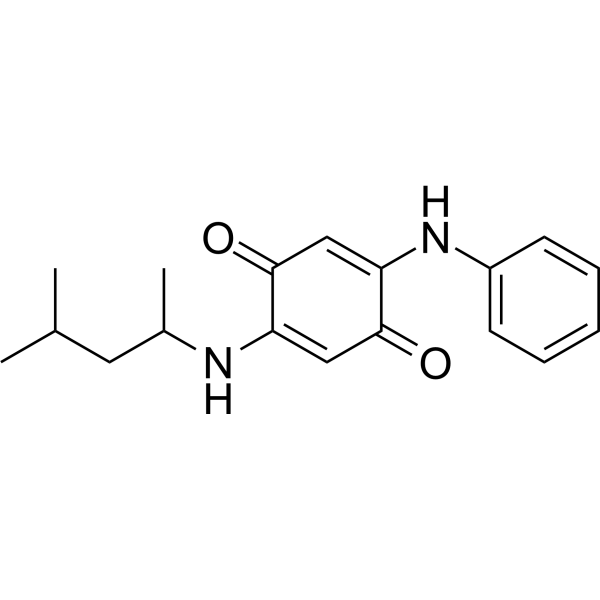
6PPD-Q (6PPD-Quinone) is an environmental pollutant that can be detected in human urine and is widely present in the environment. 6PPD-Q targets and binds to CNR2, CNR1, AA2AR, LCAT, and TRPA1, with CNR2 exhibiting the highest binding affinity, potentially acting as a CNR2 receptor agonist to activate cannabinoid receptors. 6PPD-Q induces intestinal inflammation and barrier damage by disrupting mitochondrial function, reducing neuronal glycolysis metabolites and TCA cycle intermediates, and exacerbating α-synuclein (α-syn) aggregation.
6PPD-Q is applicable in research on environmental toxicology, neurodegenerative diseases, and inflammation-related disorders .
|
-
- HY-W013266
-
-
- HY-W012722
-
|
α-Ketoisocaproic acid
|
Endogenous Metabolite
Autophagy
mTOR
SOD
|
Neurological Disease
Metabolic Disease
|
|
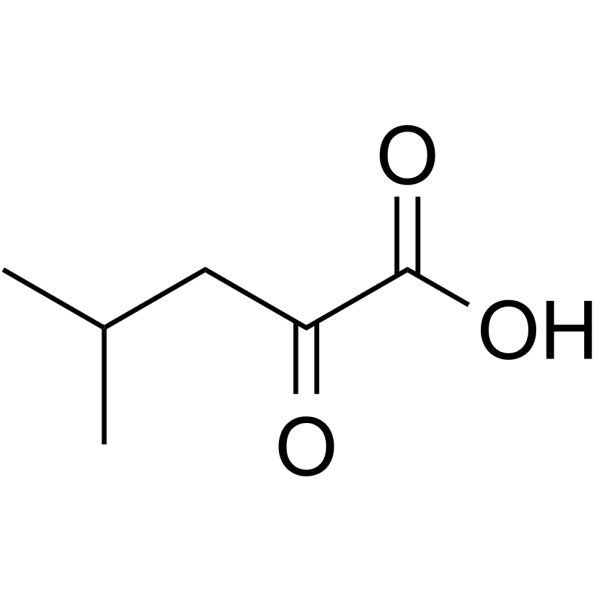
4-Methyl-2-oxopentanoic acid (α-Ketoisocaproic acid) is a metabolite of L-leucine and is involved in energy metabolism. 4-Methyl-2-oxopentanoic acid increases endoplasmic reticulum stress, promotes lipid accumulation in preadipocytes and insulin resistance by impairing mTOR and autophagy signaling pathways. 4-Methyl-2-oxopentanoic acid also causes oxidative damage, leading to cognitive deficits, inhibits α-ketoglutarate dehydrogenase activity, acts as an oxidative phosphorylation uncoupler and metabolic inhibitor. 4-Methyl-2-oxopentanoic acid acts as a nutrient signal and stimulates skeletal muscle protein synthesis. 4-Methyl-2-oxopentanoic acid can be used in the study of maple syrup urine disease .
|
-
- HY-117580
-
|
OH-PRED
|
Drug Metabolite
|
Inflammation/Immunology
|
|
16α-Hydroxyprednisolone (OH-PRED) is a stereoselective metabolite of the 22(R) epimer of the glucocorticoid Budesonide (HY-13580). 16α-Hydroxyprednisolone formation is catalyzed by isoenzymes within the cytochrome P450 3A (CYP3A) subfamily. 16α-Hydroxyprednisolone formation can be inhibited by antibodies targeting the CYP3A subfamily .
|
-
- HY-Y0496S
-
|
|
Isotope-Labeled Compounds
Insecticide
|
Others
|
|
1,4-Dichlorobenzene-d4 is the deuterium labeled 1,4-Dichlorobenzene. 1,4-Dichlorobenzene is a non-genotoxic, orally active mitogenic/tumor-promoting carcinogen that is also widely used as a dye, resin intermediate, and deodorant, moth repellent/insecticide. 1,4-Dichlorobenzene induces liver tumors in mice and promotes the growth of spontaneous precancerous lesions, but shows no liver tumor-inducing activity in F344 rats. 1,4-Dichlorobenzene increases the levels of white blood cell count, serum alanine aminotransferase and blood urea nitrogen in occupationally exposed populations. 1,4-Dichlorobenzene is metabolized to 2,5-dichlorophenol and excreted in urine, and this metabolite can serve as a biomarker for 1,4-Dichlorobenzene exposure. Due to its specific hepatotoxic characteristics, 1,4-Dichlorobenzene is applicable to liver cancer-related research .
|
-
- HY-113247
-
|
|
Drug Metabolite
|
Others
|
|
trans-trans-Muconic acid is a urinary metabolite of Benzene. trans-trans-Muconic acid serves as a urinary biomarker for occupational benzene exposure .
|
-
- HY-Y0496R
-
|
|
Reference Standards
Insecticide
|
Others
|
|
1,4-Dichlorobenzene (Standard) is the analytical standard of 1,4-Dichlorobenzene. This product is intended for research and analytical applications. 1,4-Dichlorobenzene is a non-genotoxic, orally active mitogenic/tumor-promoting carcinogen that is also widely used as a dye, resin intermediate, and deodorant, moth repellent/insecticide. 1,4-Dichlorobenzene induces liver tumors in mice and promotes the growth of spontaneous precancerous lesions, but shows no liver tumor-inducing activity in F344 rats. 1,4-Dichlorobenzene increases the levels of white blood cell count, serum alanine aminotransferase and blood urea nitrogen in occupationally exposed populations. 1,4-Dichlorobenzene is metabolized to 2,5-dichlorophenol and excreted in urine, and this metabolite can serve as a biomarker for 1,4-Dichlorobenzene exposure. Due to its specific hepatotoxic characteristics, 1,4-Dichlorobenzene is applicable to liver cancer-related research .
|
-
| Cat. No. |
Product Name |
Type |
-
- HY-W584173
-
|
|
Biochemical Assay Reagents
|
|
D-Glyceric acid calcium hydrate is an endogenous metabolite present in urine that can be used for the research of primary hyperoxaluria type I and glutaric acidemia type 2 .
|
| Cat. No. |
Product Name |
Target |
Research Area |
-
- HY-N13356
-
|
gamma-Glutamylthreonine; H-γ-Glu-Thr-OH; γ-Glu-Thr
|
Bacterial
Peptide-Drug Conjugates (PDCs)
Drug Metabolite
|
Infection
Inflammation/Immunology
|
|
L-gamma-Glutamyl-L-threonine (gamma-Glutamylthreonine; H-γ-Glu-Thr-OH; γ-Glu-Thr) is a dipeptide obtained through the formal condensation of the L-glutamic acid side chain carboxyl group and the L-threonine amino group. L-gamma-Glutamyl-L-threonine is present in high concentrations in human urine and exhibits antibacterial activity against Gram-negative bacterial. L-gamma-Glutamyl-L-threonine is also a flavor compound. Gamma-Glutamylthreonine is a metabolite catalyzed by γ-glutamyl transpeptidase and is associated with immune regulation. Gamma-Glutamylthreonine can be used in research on inflammation and bacterial infections .
|
-
- HY-164804
-
-
- HY-164805
-
|
|
Endogenous Metabolite
|
Others
|
|
N-Lactylleucine is an endogenous metabolite that can be identified in patients with the intermediate type of maple syrup urine disease .
|
-
- HY-P4511
-
|
H-Ser-Leu-OH; Ser-Leu
|
Peptides
|
Infection
|
|
Serylleucine (H-Ser-Leu-OH) is a dipeptide. Serylleucine's core 1 o-glycosylated peptide (SLC1G) can be detected in urine as a metabolite and is a biomarker in TB studies .
|
| Cat. No. |
Product Name |
Category |
Target |
Chemical Structure |
-
- HY-153169
-
6PPD-Q
Maximum Cited Publications
7 Publications Verification
6PPD-Quinone
|
Quinones
Structural Classification
Alkaloids
Classification of Application Fields
Other Alkaloids
Other Diseases
Benzene Quinones
Endogenous metabolite
Disease Research Fields
Source Classification
|
α-synuclein
Environmental Pollutants
|
|
6PPD-Q (6PPD-Quinone) is an environmental pollutant that can be detected in human urine and is widely present in the environment. 6PPD-Q targets and binds to CNR2, CNR1, AA2AR, LCAT, and TRPA1, with CNR2 exhibiting the highest binding affinity, potentially acting as a CNR2 receptor agonist to activate cannabinoid receptors. 6PPD-Q induces intestinal inflammation and barrier damage by disrupting mitochondrial function, reducing neuronal glycolysis metabolites and TCA cycle intermediates, and exacerbating α-synuclein (α-syn) aggregation.
6PPD-Q is applicable in research on environmental toxicology, neurodegenerative diseases, and inflammation-related disorders .
|
-
-
- HY-W012722
-
-
-
- HY-113409
-
-
-
- HY-W040047
-
-
-
- HY-113114
-
-
-
- HY-77641
-
-
-
- HY-113358
-
-
-
- HY-128733
-
-
-
- HY-W002105
-
-
-
- HY-113139
-
-
-
- HY-113423
-
-
-
- HY-N9446
-
-
-
- HY-W041019
-
-
-
- HY-113247
-
-
-
- HY-129554
-
-
-
- HY-W015060
-
-
-
- HY-133871
-
-
-
- HY-113150
-
-
-
- HY-113318
-
-
-
- HY-W251393
-
-
-
- HY-W019151
-
-
-
- HY-W008097
-
-
-
- HY-113158
-
|
|
Immune System Disorder
Disease markers
Endogenous metabolite
|
Drug Metabolite
|
|
4-Hydroxyhippuric acid is a metabolite of polyphenols. 4-Hydroxyhippuric acid is generated via medium-chain acyl-CoA dehydrogenase (MCAD)-dependent β-oxidation of microbially-produced 3-(4-hydroxyphenyl)propionic acid, followed by host glycine conjugation. 4-Hydroxyhippuric acid can be simultaneously detected in urine as a biomarker of dietary polyphenol intake .
|
-
-
- HY-113232
-
-
-
- HY-113495
-
-
-
- HY-113336
-
-
-
- HY-113200A
-
-
-
- HY-W016482
-
-
-
- HY-W053507
-
-
-
- HY-112948
-
-
-
- HY-Y1097
-
-
-
- HY-113239
-
-
-
- HY-145535
-
-
-
- HY-113095
-
-
-
- HY-113451
-
-
-
- HY-113283R
-
-
-
- HY-N9944
-
-
-
- HY-129953
-
-
-
- HY-W019151R
-
-
-
- HY-113317
-
-
-
- HY-128733R
-
-
-
- HY-113377
-
-
-
- HY-118399
-
-
-
- HY-113479
-
-
-
- HY-139070
-
-
-
- HY-W127369
-
-
-
- HY-113457
-
-
-
- HY-W016415
-
-
-
- HY-113105
-
-
-
- HY-N15364
-
|
|
Structural Classification
Ketones, Aldehydes, Acids
Endogenous metabolite
Source Classification
|
Endogenous Metabolite
|
|
Imidazoleacetic acid riboside is a metabolite of histamine, belonging to the riboside conjugates of imidazoleacetic acid. Imidazoleacetic acid riboside is generated by dephosphorylation of imidazoleacetic acid ribonucleotide in rats. Imidazoleacetic acid riboside can be detected in the kidney and brain tissue after administration of labeled histamine or histidine, and exists as a urinary metabolite of histamine in both rats and humans. Imidazoleacetic acid riboside is not only excreted in urine, but also can be used to capture and isolate ribose for studying the metabolic pathways of ribose synthesis from glucose or glucuronolactone via the pentose phosphate pathway or the C-6 oxidation pathway in vivo .
|
-
- HY-156558
-
-
- HY-113150R
-
-
- HY-W041019R
-
-
- HY-N6910
-
-
- HY-107850R
-
-
- HY-W053507R
-
-
- HY-W008097R
-
-
- HY-129554R
-
-
- HY-N15717
-
|
|
Natural Products
Araceae
Acorus gramineus Soland.
Plants
Source Classification
|
Drug Metabolite
|
|
(erythro) 1′,2′-Dihydroxyasarone is a metabolite of Beta-asarone (HY-N1501) and can also be isolated from the roots of Acorus tatarinowii. (erythro) 1′,2′-Dihydroxyasarone can form glucuronic acid conjugates in vivo and be excreted in urine. (erythro) 1′,2′-Dihydroxyasarone can serve as a marker for the metabolism and toxic risk assessment of Beta-asarone .
|
-
- HY-Y1097R
-
|
2-(Methoxycarbonyl)benzoic acid (Standard)
|
Structural Classification
Ketones, Aldehydes, Acids
Endogenous metabolite
Source Classification
|
Reference Standards
Endogenous Metabolite
|
|
Monomethyl phthalate (Standard) is the analytical standard of Monomethyl phthalate. This product is intended for research and analytical applications. Monomethyl phthalate is an orally active metabolite of phthalic acid. Monomethyl phthalate, as a urine biomarker after exposure to phthalate, can be used as a detection indicator for thyroid cancer and benign nodules. Monomethyl phthalate reduces the survival rate of young frogs. Monomethyl phthalate induces oxidative damage to red blood cells in rats.
|
-
- HY-113377A
-
-
- HY-113158R
-
|
|
Immune System Disorder
Disease markers
Endogenous metabolite
|
Reference Standards
Drug Metabolite
|
|
4-Hydroxyhippuric acid (Standard) is the analytical standard of 4-Hydroxyhippuric acid (HY-113158). This product is intended for research and analytical applications. 4-Hydroxyhippuric acid is a metabolite of polyphenols. 4-Hydroxyhippuric acid is generated via medium-chain acyl-CoA dehydrogenase (MCAD)-dependent β-oxidation of microbially-produced 3-(4-hydroxyphenyl)propionic acid, followed by host glycine conjugation. 4-Hydroxyhippuric acid can be simultaneously detected in urine as a biomarker of dietary polyphenol intake .
|
-
- HY-N9944R
-
-
- HY-W015060R
-
-
- HY-W016482R
-
-
- HY-N17735
-
-
- HY-W438378
-
|
HMPG piperazine
|
Monophenols
Phenols
Endogenous metabolite
Source Classification
|
Biochemical Assay Reagents
|
|
4-Hydroxy-3-methoxyphenylglycol piperazine (HMPG piperazine) is a salt of HMPG combined with piperazine. HMPG is a metabolite of adrenaline and norepinephrine and is an important marker of catecholamine hormone metabolism in the body. 4-Hydroxy-3-methoxyphenylglycol piperazine is used as a standard in clinical laboratories to accurately measure the HMPG content in urine .
|
-
- HY-W015874R
-
-
- HY-N18029
-
-
- HY-W002105R
-
|
|
Structural Classification
Ketones, Aldehydes, Acids
Endogenous metabolite
Source Classification
|
Reference Standards
Biochemical Assay Reagents
|
|
2,5-Furandicarboxylic acid (Standard) is the analytical standard of 2,5-Furandicarboxylic acid (HY-W002105). This product is intended for research and analytical applications. 2,5-Furandicarboxylic acid is an endogenous metabolite that can be detected in human urine. 2,5-Furandicarboxylic acid serves as an environmentally friendly substitute for terephthalic acid in the production of polyesters. 2,5-Furandicarboxylic acid can be used as the raw material for various chemical intermediates to synthesize polymers, polyurethanes, thermosetting resins, and plasticizers .
|
-
| Cat. No. |
Product Name |
Chemical Structure |
-
- HY-W653982
-
|
|
|
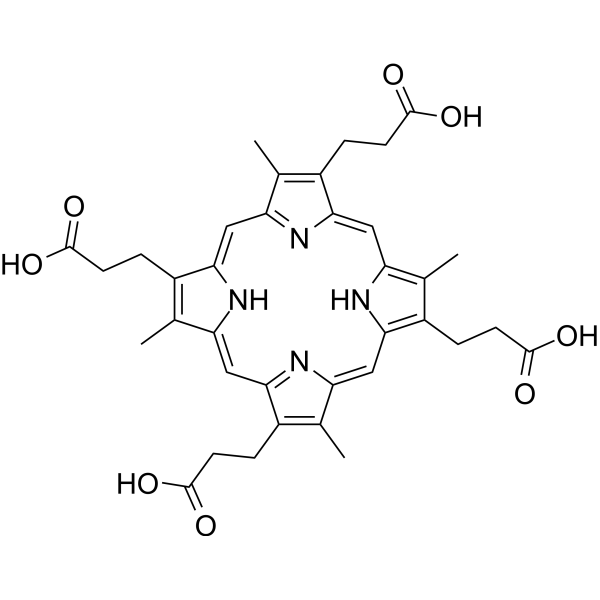
Coproporphyrin I- 15N4 is a 15N-labeled Coproporphyrin I (HY-113318). Coproporphyrin I is an endogenous metabolite present in urine and blood that can be used for the research of liver disease and porphyria .
|
-
-
- HY-W016562S
-
|
|
|
Hippuric acid-d5 is the deuterium labeled Hippuric acid. Hippuric Acid (2-Benzamidoacetic acid), an acyl glycine produced by the conjugation of benzoic acid and glycine, is a normal component in urine as a metabolite of aromatic compounds from food.
|
-
-
- HY-107850S
-
|
|
|
Pregnanediol-d5 is the deuterium labeled Pregnanediol. Pregnanediol is the major metabolite of progesterone and can be excreted via urine. Pregnanediol offers an indirect way to measure progesterone levels in vivo .
|
-
-
- HY-W016562S1
-
|
|
|
Hippuric acid-d2 is the deuterium labeled Hippuric acid. Hippuric Acid (2-Benzamidoacetic acid), an acyl glycine produced by the conjugation of benzoic acid and glycine, is a normal component in urine as a metabolite of aromatic compounds from food.
|
-
-
- HY-113139S
-
|
|
|
1-Methylinosine-d3 (N1-MetHYlinosine-d3) is the deuterium labeled 1-Methylinosine. 1-Methylinosine is a modified nucleotide located at position 37 of eukaryotic tRNA, 3' to the tRNA anticodon. 1-Methylinosine is a minor metabolite of 1-methyladenosine (HY-113081). The level of 1-Methylinosine is significantly elevated in urine samples from breast cancer models.
|
-
-
- HY-113283S
-
|
|
|
Homogentisic acid- 13C6 is the 13C-labeled Homogentisic acid (HY-113283). Homogentisic acid is a specific metabolite that accumulates in the urine and serum. Homogentisic acid can be used for diagnosis of alkaptonuria. Homogentisic acid is a phenolic acid .
|
-
-
- HY-W654040
-
|
|
|
N1-Acetylspermine-d3 Trihydrochloride is the deuterium labeled N1-Acetylspermine (HY-113200). N1-Acetylspermine is an endogenous metabolite present in Urine that can be used for the research of Leukemia .
|
-
-
- HY-113457S
-
|
|
|
11-Oxo etiocholanolone-d5 (11-Ketoetiocholanolone-d5) is the deuterium labeled 11-Oxo etiocholanolone (HY-113457). 11-Oxo etiocholanolone (11-Ketoetiocholanolone) is a steroid. 11-Oxo etiocholanolone is a key indicator for detecting cortisol metabolites in feces and urine. 11-Oxo etiocholanolone has the potential to be a pheromone .
|
-
-
- HY-W019151S
-
|
|
|
Meconin-d3 is the deuterium labeled Meconine (HY-W019151). Meconine is an endogenous metabolite of Noscapine (HY-13716). Meconine is the major metabolite in all three species, accounting for about 3, 8 and 2% of the dose in the first 24 h urines of rats, rabbits and humans, respectively. Meconine can be used as a marker to detect illicit opiate use.
|
-
-
- HY-128733S
-
|
|
|
Phenyl acetate-d5 is the deuterium labeled Phenyl acetate. Phenyl acetate is an endogenous metabolite and a metabolite of 2-phenylethylamine, which can be found in urine. Phenyl acetate regulates the metabolism of glutamine. In addition, Phenyl acetate can be used as a detection index for certain diseases, such as depression .
|
-
-
- HY-W741628
-
|
|
|
7-Aminonimetazepam-d3 is the deuterium labeled 7-Aminonimetazepam (HY-W088846). 7-Aminonimetazepam is the metabolite of Nimetazepam, which is found in the urine .
|
-
-
- HY-W016562S3
-
|
|
|
Hippuric acid- 15N is the 15N-labeled Hippuric acid. Hippuric Acid (2-Benzamidoacetic acid), an acyl glycine produced by the conjugation of benzoic acid and glycine, is a normal component in urine as a metabolite of aromatic compounds from food.
|
-
-
- HY-W040047S
-
|
|
|
Pregnanediol 3-glucuronide is the main end-metabolite of Progesterone (HY-N0437). Pregnanediol 3-glucuronide is a metabolite of Progesterone formed by hydroxylation and glucuronidation in the liver, with high hydrophilicity and easy excretion through urine. Pregnanediol 3-glucuronide excretion rate of ≥ 9 μmol/24 h can serve as biochemical evidence of ovulation. Pregnanediol 3-glucuronide reflects the quality of the luteal phase, and a level of < 7 μmol/24 h may indicate anovulation or luteal insufficiency. Pregnanediol 3-glucuronide holds significant importance in monitoring female reproductive health, assessing pregnancy, and diagnosing endocrine disorders.
|
-
-
- HY-Y0496S
-
|
|
|
1,4-Dichlorobenzene-d4 is the deuterium labeled 1,4-Dichlorobenzene. 1,4-Dichlorobenzene is a non-genotoxic, orally active mitogenic/tumor-promoting carcinogen that is also widely used as a dye, resin intermediate, and deodorant, moth repellent/insecticide. 1,4-Dichlorobenzene induces liver tumors in mice and promotes the growth of spontaneous precancerous lesions, but shows no liver tumor-inducing activity in F344 rats. 1,4-Dichlorobenzene increases the levels of white blood cell count, serum alanine aminotransferase and blood urea nitrogen in occupationally exposed populations. 1,4-Dichlorobenzene is metabolized to 2,5-dichlorophenol and excreted in urine, and this metabolite can serve as a biomarker for 1,4-Dichlorobenzene exposure. Due to its specific hepatotoxic characteristics, 1,4-Dichlorobenzene is applicable to liver cancer-related research .
|
-
-
- HY-113239S
-
|
|
|
Hydroxycotinine-d3 is deuterium labeled Hydroxycotinine. Hydroxycotinine is the main nicotine metabolite detected in smokers urine.
|
-
-
- HY-113239S1
-
|
|
|
rel-Hydroxycotinine-d3 is deuterated labeled Hydroxycotinine (HY-113239). Hydroxycotinine is the main nicotine metabolite detected in smokers urine.
|
-
-
- HY-113232S
-
|
|
|
3-Methylcrotonylglycine-d2 is the deuterium labeled 3-Methylcrotonylglycine. 3-Methylcrotonylglycine is an acyl glycine, a normal amino acid metabolite found in urine.
|
-
-
- HY-W015060S1
-
|
|
|
2-(2-Methylbenzamido)acetic acid-d2 is the deuterium labeled 2-(2-Methylbenzamido)acetic acid. 2-(2-Methylbenzamido)acetic acid is a metabolite detected in urine.
|
-
-
- HY-113150S2
-
|
|
|
Hexanoylglycine- 13C2, 15N is the 13C- and 15N-labeled Hexanoylglycine (HY-113150). Hexanoylglycine is an endogenous metabolite present in Urine that can be used for the research of Ethylmalonic Encephalopathy .
|
-
-
- HY-132545S
-
|
|
|
RPR132595A-d3 is the deuterium labeled RPR132595A. RPR132595A is an active metabolite of Irinotecan (CPT-11), which is generated by cytochrome P-450 3A4 (CYP3A4) and finally excreted through urine .
|
-
-
- HY-129953S
-
|
|
|
9α,11β-Prostaglandin F2α-d4 is a deuterated labeled 9α,11β-Prostaglandin F2α . 9α,11β-Prostaglandin F2α is an endogenous metabolite present in Urine that can be used for the research of Asthma .
|
-
-
- HY-113239S2
-
|
|
|
(Rac)-Hydroxycotinine-d3 is deuterated labeled Hydroxycotinine (HY-113239). Hydroxycotinine is the main nicotine metabolite detected in smokers urine.
|
-
-
- HY-W015060S
-
|
|
|
2-(2-Methylbenzamido)acetic acid-d7 is the deuterium labeled 2-(2-Methylbenzamido)acetic acid. 2-(2-Methylbenzamido)acetic acid is a metabolite detected in urine.
|
-
-
- HY-W706930
-
|
|
|
DCBA-d10 is the deuterium labeled DCBA (HY-136612). DCBA is a metabolite of insect repellent N-N-diethyl-meta-toluamide (DEET). The concentration of DCBA in urine can assess exposure to DEET .
|
-
-
- HY-W053507S
-
|
|
|
m-Tolylacetic acid-d3 (3-Methylbenzeneacetic acid-d3) is the deuterium labeled m-Tolylacetic acid (HY-W053507). m-Tolylacetic acid is a hydroaromatic dicarboxylic acids excreted in the urine as metabolite of tolueneacetic acid. m-Tolylacetic acid can be used for drug intermediate for synthesising more complex molecules .
|
-
Your information is safe with us. * Required Fields.
Inquiry Information
- Product Name:
- Cat. No.:
- Quantity:
- MCE Japan Authorized Agent:

