



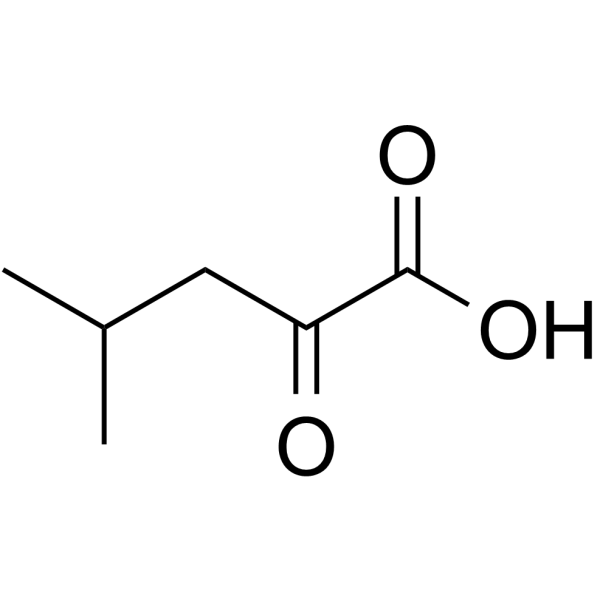
4-Methyl-2-oxopentanoic acid
Based on 1 publication(s) in Google Scholar
4-Methyl-2-oxopentanoic acid (α-Ketoisocaproic acid) is a metabolite of L-leucine and is involved in energy metabolism. 4-Methyl-2-oxopentanoic acid increases endoplasmic reticulum stress, promotes lipid accumulation in preadipocytes and insulin resistance by impairing mTOR and autophagy signaling pathways. 4-Methyl-2-oxopentanoic acid also causes oxidative damage, leading to cognitive deficits, inhibits α-ketoglutarate dehydrogenase activity, acts as an oxidative phosphorylation uncoupler and metabolic inhibitor. 4-Methyl-2-oxopentanoic acid acts as a nutrient signal and stimulates skeletal muscle protein synthesis. 4-Methyl-2-oxopentanoic acid can be used in the study of maple syrup urine disease.
For research use only. We do not sell to patients.
- Purity: 98.49%
- CAS No.: 816-66-0
- Formula: C6H10O3
- Molecular Weight:130.14
-
Storage:
4°C, protect from light
* In solvent : -80°C, 6 months; -20°C, 1 month (protect from light)

To place orders, for customer services and technical support, please contact: MedChemExpress USA
Tel: 609-228-6898 E-mail: [email protected] [email protected]


-
 Biological Activity
-
Chemical Information
-
Solvent & Solubility
- Purity & Documentation
- References
-
 Help & FAQs


-
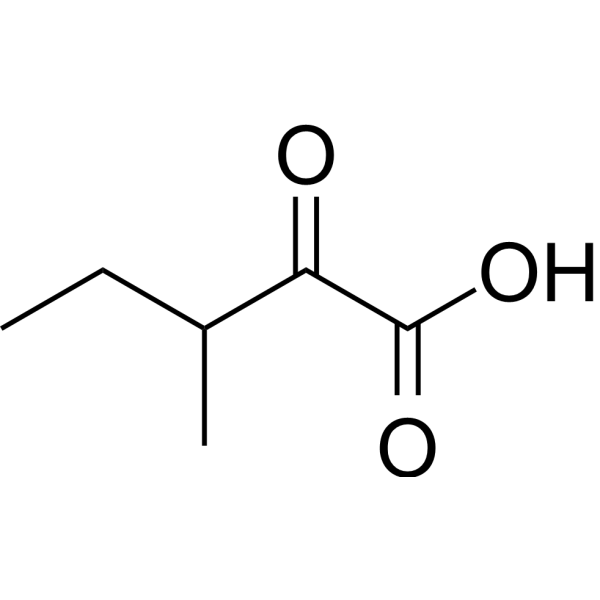
HY-113063
3-Methyl-2-oxovaleric acid -
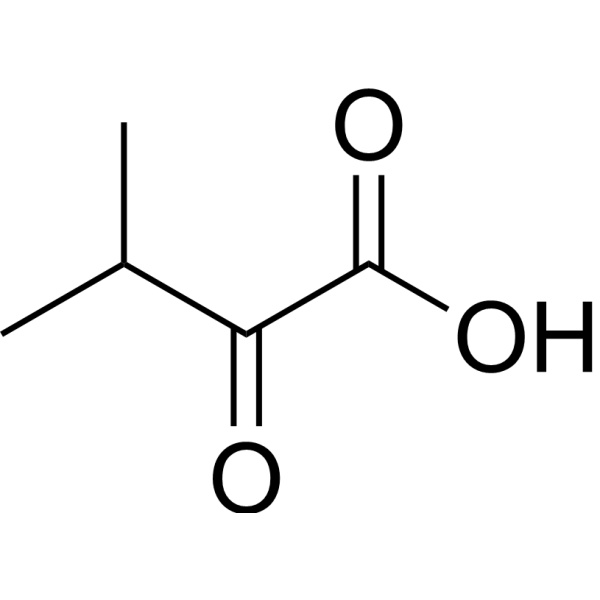
HY-W006057
3-Methyl-2-oxobutanoic acid -

HY-W012722R
4-Methyl-2-oxopentanoic acid (Standard) -
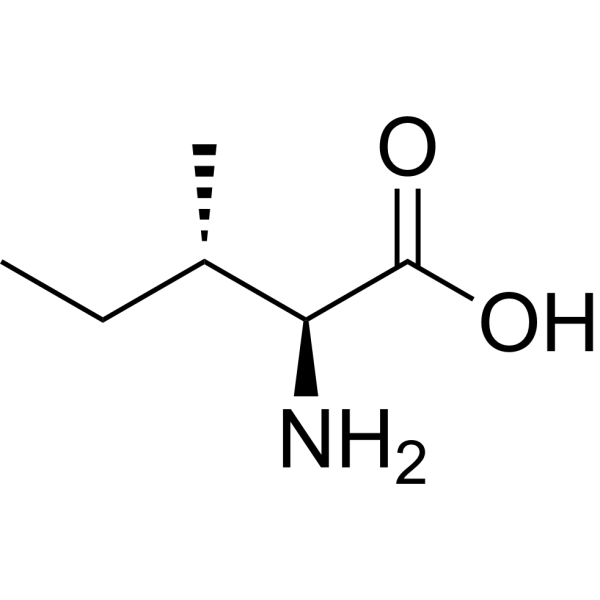
HY-N0771
L-Isoleucine -
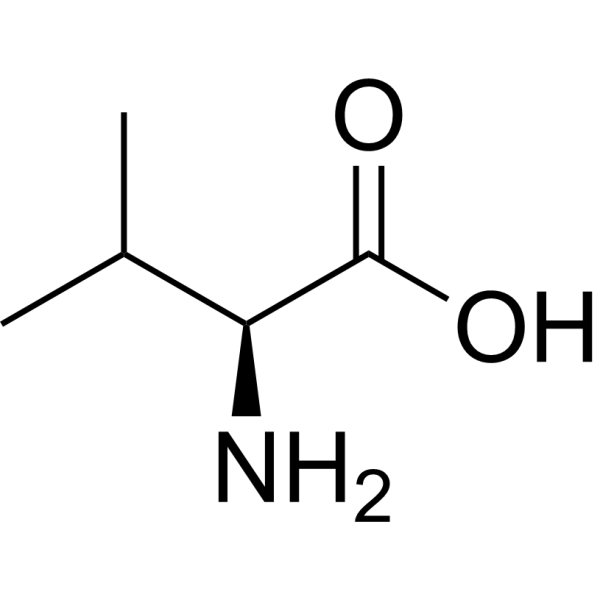
HY-N0717
L-Valine -
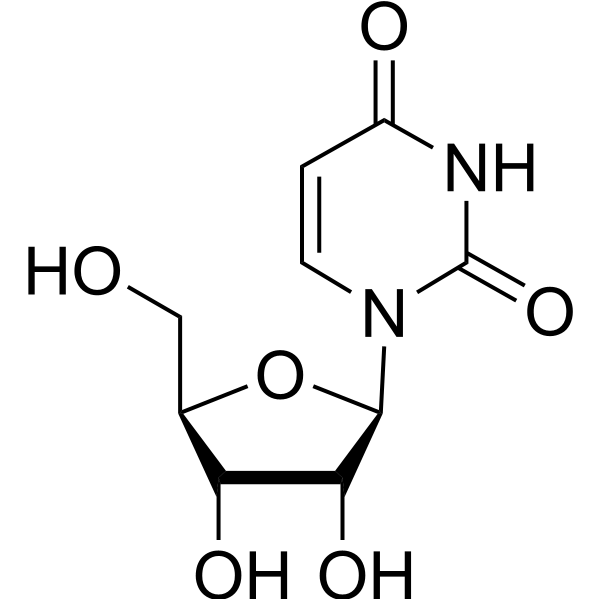
HY-B1449
Uridine -
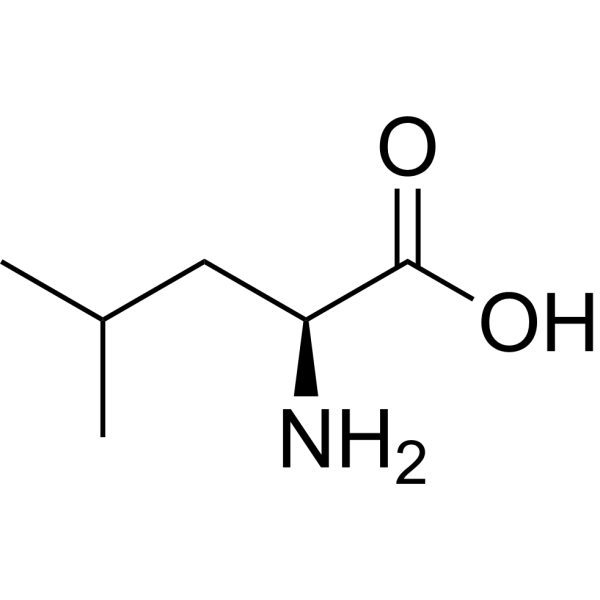
HY-N0486
L-Leucine -
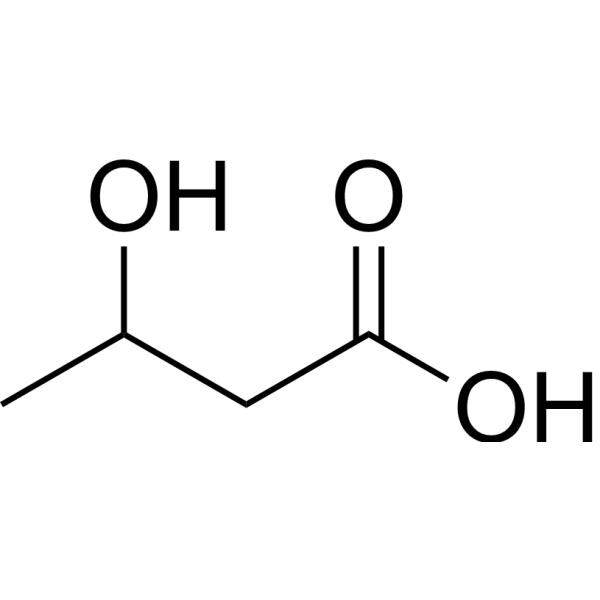
HY-113378
3-Hydroxybutyric acid -
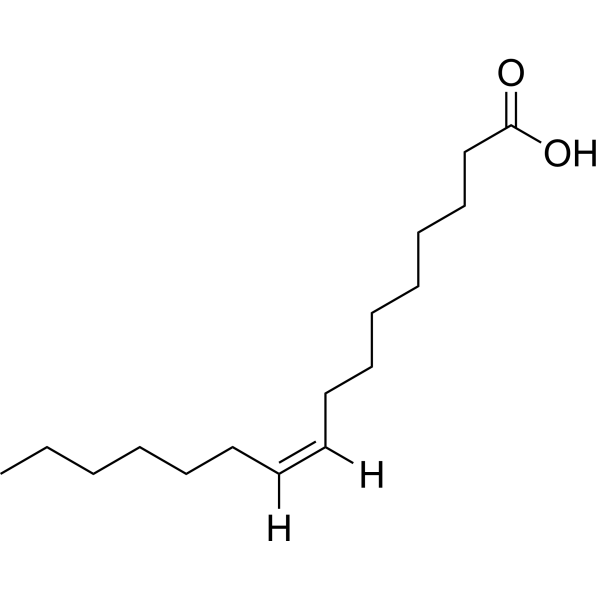
HY-W011873
Palmitoleic acid -
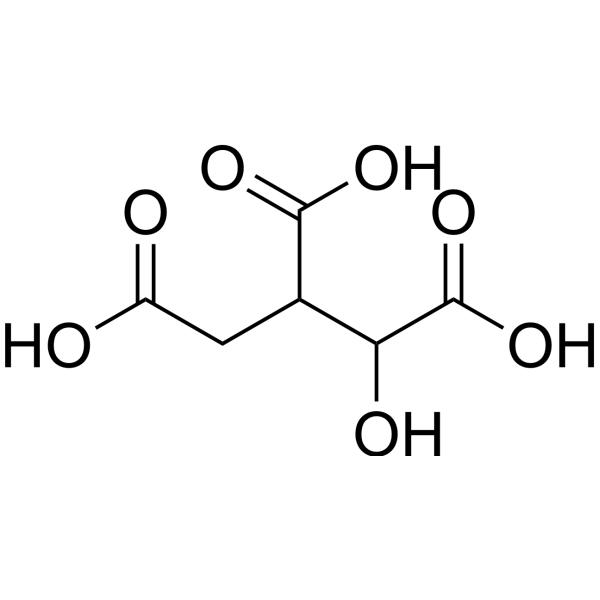
HY-113228
Isocitric acid -
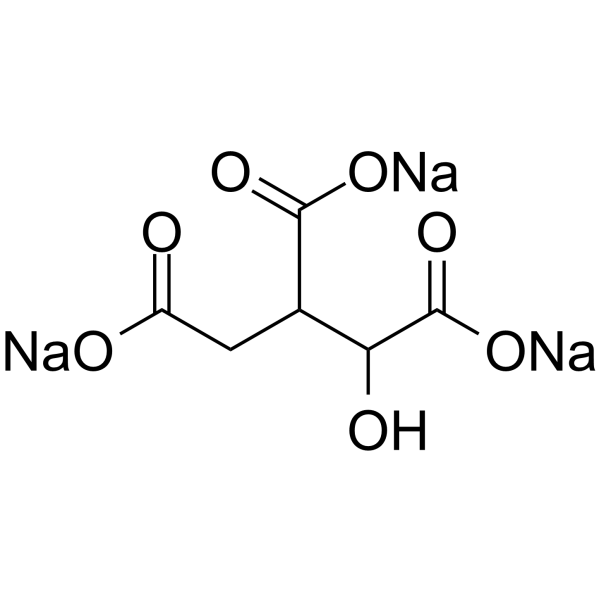
HY-W009362
DL-Isocitric acid trisodium salt -
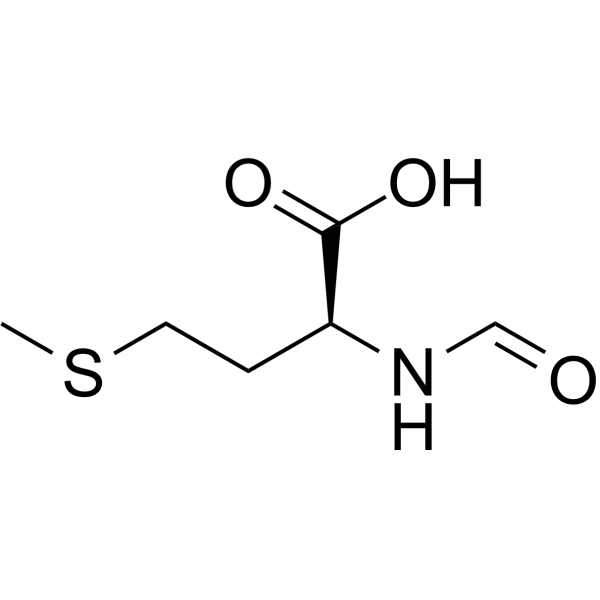
HY-W016647
For-Met-OH
Publications Citing Use of MedChemExpress (MCE) 4-Methyl-2-oxopentanoic acid
More Customer Validation & Images

-
WB

-
Bio/Physico-chemical Assay

All Endogenous Metabolite Isoforms
More

Biological Activity
Description
IC50 & Target
|
Human Endogenous Metabolite |
In Vitro
4-Methyl-2-oxopentanoic acid (0-300 μM; 2 d) promotes lipid accumulation and adipogenesis in 3T3-L1 preadipocytes[2].
MedChemExpress (MCE) has not independently confirmed the accuracy of these methods. They are for reference only.
-
Cell Line:3T3-L1 preadipocytes
-
Concentration:100 and 300 µM
-
Incubation Time:2 days
-
Result:Increased endoplasmic reticulum (ER) stress markers, such as phosphorylation of eukaryotic initiation factor 2 (eIF2) and CHOP. Increased mTOR phosphorylation and decreased autophagy markers, such as LC3 conversion and degradation of p62.
In Vivo
MedChemExpress (MCE) has not independently confirmed the accuracy of these methods. They are for reference only.
-
Animal Model:Thirty-day-old rats were anesthetized with a mixture of ketamine and xylazine (HY-B0443)[3]
-
Dosage:4 mol/L, Administer 2 μL
-
Administration:Intracerebroventricular injection (ICV); 1 h and 15 days
-
Result:Increased TBARS levels, protein carbonyl content and DNA damage in the hippocampus, striatum and cerebral cortex. SOD activity in the hippocampus and striatum increased 1 hour after injection, and SOD activity in the striatum decreased 15 days later.
-
Animal Model:Piglets were deprived of feed for 12-14 hours before infusion[4]
-
Dosage:400 μmol/kg
-
Administration:Inject into the aortic arch; the initial injection dose is 148 μmol/kg in the first 10 minutes, and the continuous infusion dose is 400 μmol/kg
-
Result:Increased phosphorylation of eukaryotic initiation factor (eIF) 4E binding protein-1 (4E-BP1) and eIF4G in skeletal muscle and increased the formation of active eIF4G×eIF4E complexes.


Chemical Information
-
CAS No. 816-66-0
-
Appearance Liquid (Density: 1.055 g/cm3 )
-
Molecular Weight 130.14
-
Formula C6H10O3
-
Color Colorless to light yellow
-
SMILES
CC(C)CC(C(O)=O)=O
-
Synonyms
α-Ketoisocaproic acid
-
Structure Classification
-
Shipping
Room temperature in continental US; may vary elsewhere.
-
Storage
4°C, protect from light
* In solvent : -80°C, 6 months; -20°C, 1 month (protect from light)


Publications (1)
-
Journal Impact Factor
-
Most Recent
-
Nat Commun
O-GlcNAc modification of leucyl-tRNA synthetase 1 integrates leucine and glucose availability to regulate mTORC1 and the metabolic fate of leucine. [Abstract]2022 May 25;13(1):2904. PMID: 35614056
4-Methyl-2-oxopentanoic acid purchased from MedChemExpress. Usage Cited in: Nat Commun. 2022 May 25;13(1):2904. [Abstract]
SW620 cells were transfected with the indicated LARS1 constructs. After 24 h, the cells were starved of glucose and leucine for 4 h then 0.4 mM leucine was added for 4 h with vehicle or indicated compounds: KIC (4-Methyl-2-oxopentanoic acid), 200 μM α-ketoisocaproic acid; Rapa, 10 nM rapamycin; CHX, 20 μM cycloheximide.
4-Methyl-2-oxopentanoic acid purchased from MedChemExpress. Usage Cited in: Nat Commun. 2022 May 25;13(1):2904. [Abstract]
Incubation with cell-permeable KIC (4-Methyl-2-oxopentanoic acid) restored NADH/NAD+ ratio reduced by BCAT2 downregulation under glucose starvation.


Solvent & Solubility
In Vitro:
DMSO : 100 mg/mL (768.40 mM; Need ultrasonic; Hygroscopic DMSO has a significant impact on the solubility of product, please use newly opened DMSO)
H2O : 100 mg/mL (768.40 mM; Need ultrasonic)
Please refer to the solubility information to select the appropriate solvent. Once prepared, please aliquot and store the solution to prevent product inactivation from repeated freeze-thaw cycles.
Storage method and period of stock solution: -80°C, 6 months; -20°C, 1 month (protect from light). When stored at -80°C, please use it within 6 months. When stored at -20°C, please use it within 1 month.
* Note: If you choose water as the stock solution, please dilute it to the working solution, then filter and sterilize it with a 0.22 μm filter before use.
Please refer to the solubility information to select the appropriate solvent. Once prepared, please aliquot and store the solution to prevent product inactivation from repeated freeze-thaw cycles.
Storage method and period of stock solution: -80°C, 6 months; -20°C, 1 month (protect from light). When stored at -80°C, please use it within 6 months. When stored at -20°C, please use it within 1 month.
* Note: If you choose water as the stock solution, please dilute it to the working solution, then filter and sterilize it with a 0.22 μm filter before use.
Concentration (start) × Volume (start) = Concentration (final) × Volume (final)
In Vivo:
Select the appropriate dissolution method based on your experimental animal and administration route.
- For the following dissolution methods, please ensure to first prepare a clear stock solution using an In Vitro approach and then sequentially add co-solvents:
- To ensure reliable experimental results, the clarified stock solution can be appropriately stored based on storage conditions. As for the working solution for In Vivo experiments, it is recommended to prepare freshly and use it on the same day.
- The percentages shown for the solvents indicate their volumetric ratio in the final prepared solution. If precipitation or phase separation occurs during preparation, heat and/or sonication can be used to aid dissolution.
Add each solvent one by one: 10% DMSO 40% PEG300 5% Tween-80 45% Saline
Solubility: ≥ 2.5 mg/mL (19.21 mM); Clear solution
This protocol yields a clear solution of ≥ 2.5 mg/mL (saturation unknown).
Taking 1 mL working solution as an example, add 100 μL DMSO stock solution (25.0 mg/mL) to 400 μL PEG300, and mix evenly; then add 50 μL Tween-80 and mix evenly; then add 450 μL Saline to adjust the volume to 1 mL.
Preparation of Saline: Dissolve 0.9 g sodium chloride in ddH₂O and dilute to 100 mL to obtain a clear Saline solution.
Add each solvent one by one: 10% DMSO 90% (20% SBE-β-CD in Saline)
Solubility: ≥ 2.5 mg/mL (19.21 mM); Clear solution
This protocol yields a clear solution of ≥ 2.5 mg/mL (saturation unknown).
Taking 1 mL working solution as an example, add 100 μL DMSO stock solution (25.0 mg/mL) to 900 μL 20% SBE-β-CD in Saline, and mix evenly.
Preparation of 20% SBE-β-CD in Saline (4°C, storage for one week): 2 g SBE-β-CD powder is dissolved in 10 mL Saline, completely dissolve until clear.
For the following dissolution methods, please prepare the working solution directly:
It is recommended to prepare fresh solutions and use them promptly within a short period of time.
The percentages shown for the solvents indicate their volumetric ratio in the final prepared solution. If precipitation or phase separation occurs during preparation, heat and/or sonication can be used to aid dissolution.
Add each solvent one by one: PBS
Solubility: 100 mg/mL (768.40 mM); Clear solution; Need ultrasonic
In Vivo Dissolution Calculator
Please enter the basic information of animal experiments:
-
-
-
-
Recommended: Prepare an additional quantity of animals to account for potential losses during experiments.
Working solution concentration: 0.22 mg/mL
This product has good water solubility, please refer to the measured solubility data in water/PBS/Saline for details.


Purity & Documentation
-
Data Sheet (284 KB)
-
SDS (477 KB)
- English - EN (477 KB)
- Français - FR (477 KB)
- Deutsch - DE (477 KB)
- Norwegian - NO (477 KB)
- Español - ES (477 KB)
- Swedish - SV (477 KB)
- Italian - IT (477 KB)
- Korean - KR (477 KB)
- Portuguese - PT (477 KB)
-
Handling Instructions (2659 KB)
References
[1]. Yudkoff M, et al. Brain amino acid requirements and toxicity: the example of leucine. J Nutr. 2005 Jun;135(6 Suppl):1531S-8S. [Content Brief]
[2]. Park, et al. α-ketoisocaproic acid promotes ER stress through impairment of autophagy, thereby provoking lipid accumulation and insulin resistance in murine preadipocytes. Biochemical and Biophysical Research Communications 603 (2022): 109-115. [Content Brief]
[3]. Taschetto, et al. Acute and long-term effects of intracerebroventricular administration of α-ketoisocaproic acid on oxidative stress parameters and cognitive and noncognitive behaviors. Metabolic brain disease 32 (2017): 1507-1518. [Content Brief]
[4]. Escobar, et al. Leucine and α-ketoisocaproic acid, but not norleucine, stimulate skeletal muscle protein synthesis in neonatal pigs. The Journal of nutrition 140.8 (2010): 1418-1424. [Content Brief]
[5]. Amaral, et al. α-Ketoisocaproic acid and leucine provoke mitochondrial bioenergetic dysfunction in rat brain. Brain research 1324 (2010): 75-84. [Content Brief]


Complete Stock Solution Preparation Table
Please refer to the solubility information to select the appropriate solvent. Once prepared, please aliquot and store the solution to prevent product inactivation from repeated freeze-thaw cycles.
Storage method and period of stock solution: -80°C, 6 months; -20°C, 1 month (protect from light). When stored at -80°C, please use it within 6 months. When stored at -20°C, please use it within 1 month.
| Optional Solvent | Concentration Solvent Mass | 1 mg | 5 mg | 10 mg | 25 mg |
|---|---|---|---|---|---|
| DMSO / H2O | 1 mM | 7.6840 mL | 38.4202 mL | 76.8403 mL | 192.1008 mL |
| 5 mM | 1.5368 mL | 7.6840 mL | 15.3681 mL | 38.4202 mL | |
| 10 mM | 0.7684 mL | 3.8420 mL | 7.6840 mL | 19.2101 mL | |
| 15 mM | 0.5123 mL | 2.5613 mL | 5.1227 mL | 12.8067 mL | |
| 20 mM | 0.3842 mL | 1.9210 mL | 3.8420 mL | 9.6050 mL | |
| 25 mM | 0.3074 mL | 1.5368 mL | 3.0736 mL | 7.6840 mL | |
| 30 mM | 0.2561 mL | 1.2807 mL | 2.5613 mL | 6.4034 mL | |
| 40 mM | 0.1921 mL | 0.9605 mL | 1.9210 mL | 4.8025 mL | |
| 50 mM | 0.1537 mL | 0.7684 mL | 1.5368 mL | 3.8420 mL | |
| 60 mM | 0.1281 mL | 0.6403 mL | 1.2807 mL | 3.2017 mL | |
| 80 mM | 0.0961 mL | 0.4803 mL | 0.9605 mL | 2.4013 mL | |
| 100 mM | 0.0768 mL | 0.3842 mL | 0.7684 mL | 1.9210 mL |
* Note: If you choose water as the stock solution, please dilute it to the working solution, then filter and sterilize it with a 0.22 μm filter before use.


4-Methyl-2-oxopentanoic acid Related Classifications
HY-W012722 Related Classifications
 Powered by Bioz