



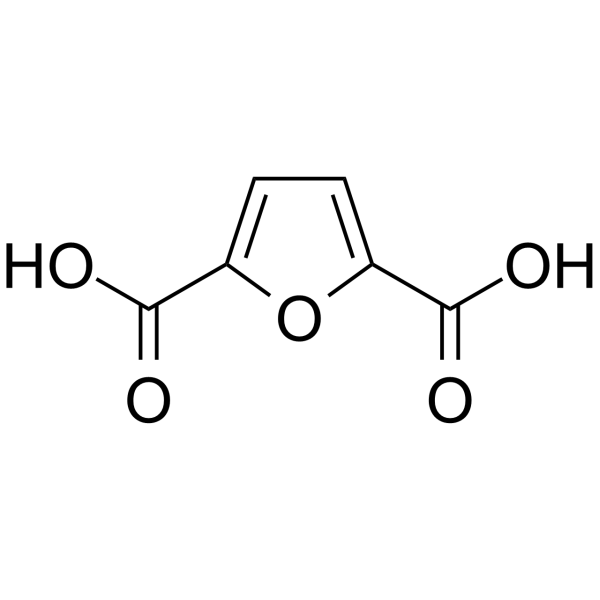
2,5-Furandicarboxylic acid
Based on 2 publication(s) in Google Scholar
2,5-Furandicarboxylic acid is an endogenous metabolite that can be detected in human urine. 2,5-Furandicarboxylic acid serves as an environmentally friendly substitute for terephthalic acid in the production of polyesters. 2,5-Furandicarboxylic acid can be used as the raw material for various chemical intermediates to synthesize polymers, polyurethanes, thermosetting resins, and plasticizers.
For research use only. We do not sell to patients.
- Purity : 99.03%
- CAS No.: 3238-40-2
- Formula: C6H4O5
- Molecular Weight:156.09
-
Storage:Powder -20°C, 3 years , 4°C, 2 years ; In solvent -80°C, 6 months , -20°C, 1 month

To place orders, for customer services and technical support, please contact: MedChemExpress USA
Tel: 609-228-6898 E-mail: [email protected] [email protected]


-
 Biological Activity
-
Chemical Information
-
Solvent & Solubility
- Purity & Documentation
- References
-
 Help & FAQs


-
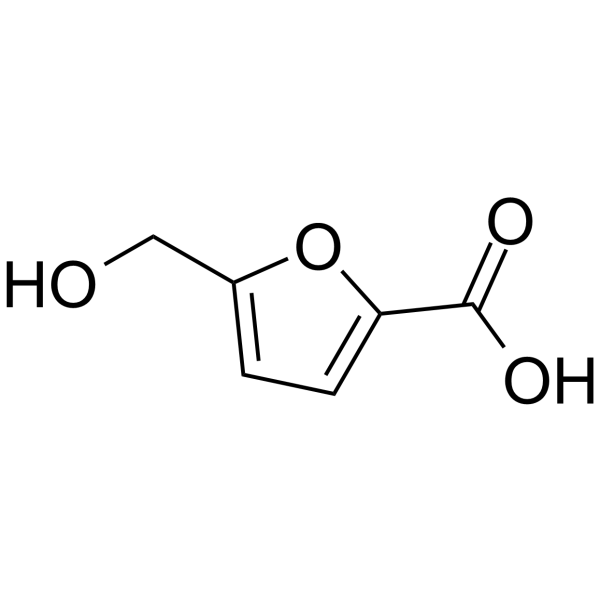
HY-W005241
5-Hydroxymethyl-2-furancarboxylic acid -
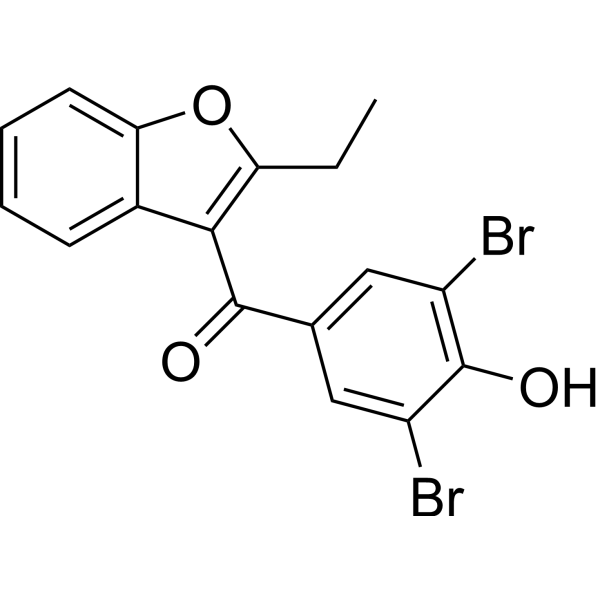
HY-B1135
Benzbromarone -
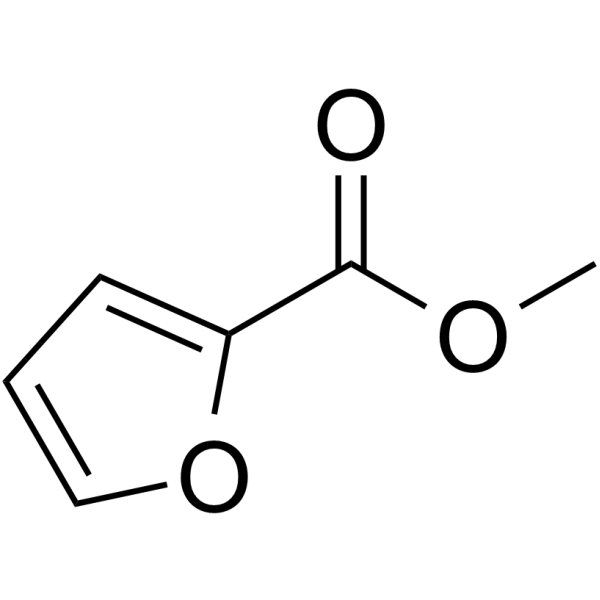
HY-Y0949
Methyl 2-furoate -
HY-W011664
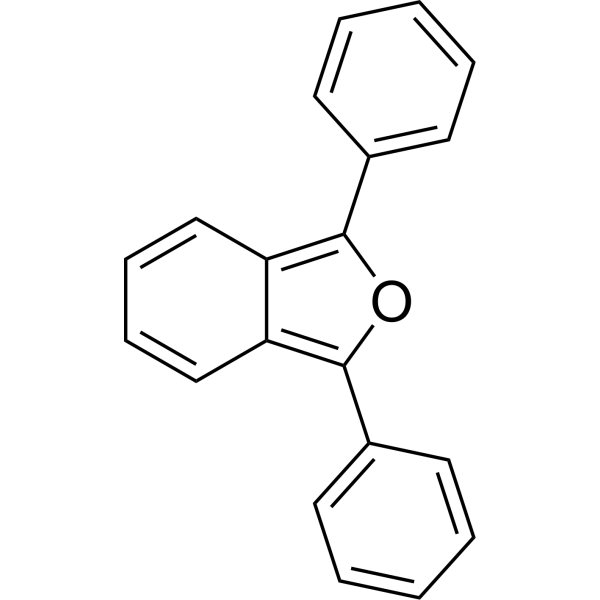
1,3-Diphenylisobenzofuran -

HY-W002105R
2,5-Furandicarboxylic acid (Standard) -
HY-Y0051
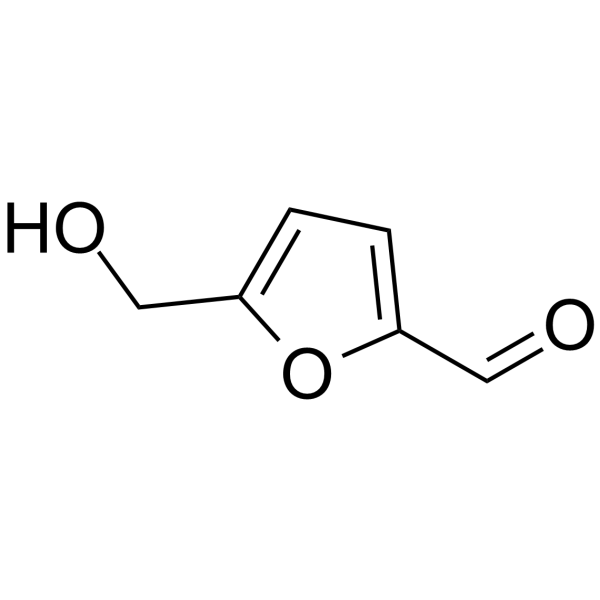
5-Hydroxymethylfurfural -

HY-Y0051R
5-Hydroxymethylfurfural (Standard) -
HY-21075
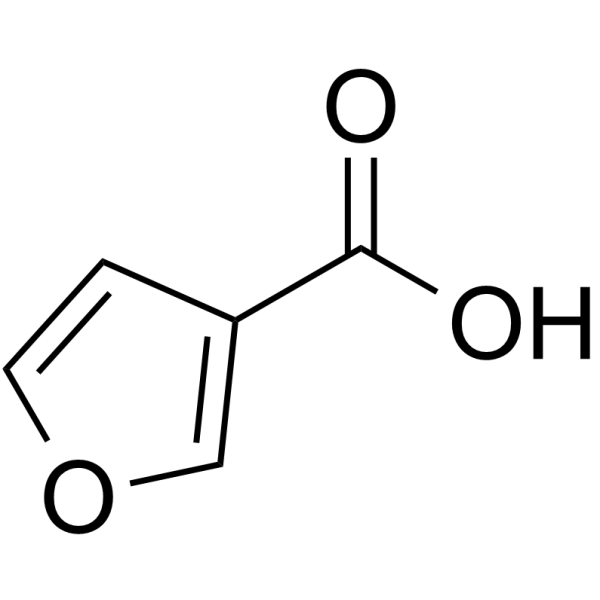
3-Furanoic acid -
HY-W015912
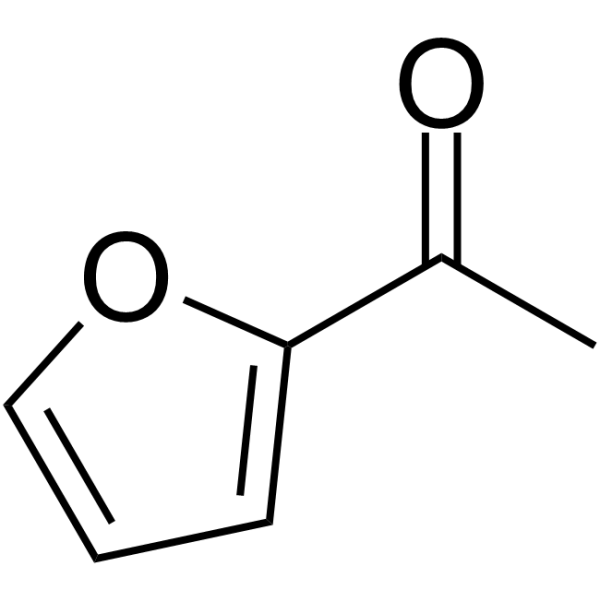
2-Acetylfuran -
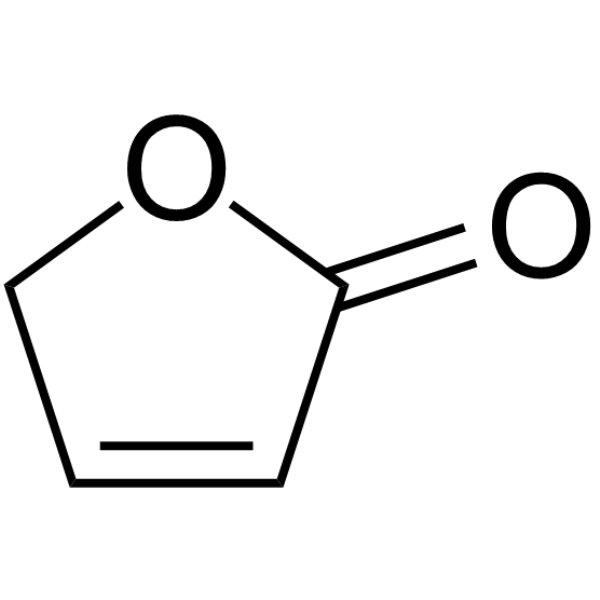
HY-W008270
2(5H)-Furanone -
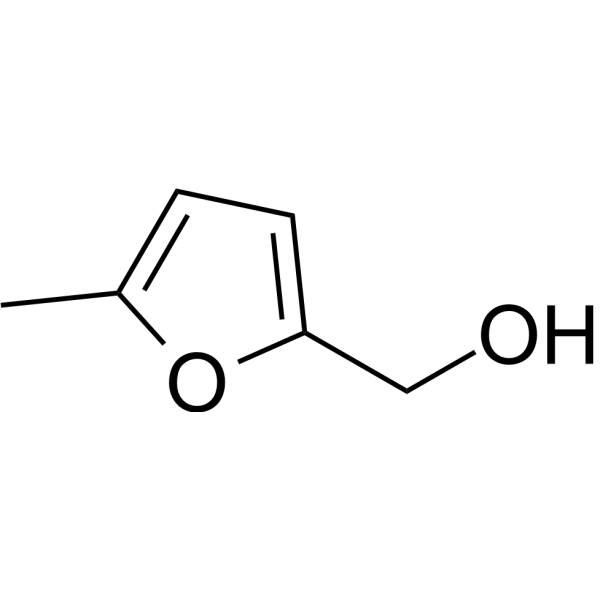
HY-W087919
5-Methyl-2-furanmethanol -
![Dibenzo[b,d]furan](https://file.medchemexpress.com/product_pic/hy-w017086.gif)
HY-W017086
Dibenzo[b,d]furan
Publications Citing Use of MedChemExpress (MCE) 2,5-Furandicarboxylic acid
MoreAll Endogenous Metabolite Isoforms
More

Biological Activity
Description
IC50 & Target
|
Human Endogenous Metabolite |
In Vitro
2,5-Furandicarboxylic acid can be used as a monomer to synthesize biodegradable polymers, such as polyethylene furanate (PEF) and polybutylene furanate (PBF)[1].
2,5-furandicarboxylic acid (0.53 wt %; up to 110 min) effectively catalyzes the dehydration of 15 wt % fructose to produce hydroxymethylfurfural[1].
2,5-Furandicarboxylic acid can improve the rigidity, heat resistance, and barrier properties of polymers, making it suitable for food packaging[2].
MedChemExpress (MCE) has not independently confirmed the accuracy of these methods. They are for reference only.


Chemical Information
-
CAS No. 3238-40-2
-
Appearance Solid
-
Molecular Weight 156.09
-
Formula C6H4O5
-
Color White to light yellow
-
SMILES
OC(C1=CC=C(C(O)=O)O1)=O
-
Structure Classification
-
Initial Source
-
Shipping
Room temperature in continental US; may vary elsewhere.
-
Storage
Powder -20°C 3 years 4°C 2 years In solvent -80°C 6 months -20°C 1 month


Publications (2)
-
Journal Impact Factor
-
Most Recent
-
Life Sci
Homogentisic acid metabolism inhibits papillary thyroid carcinoma proliferation through ROS and p21-induced cell cycle arrest. [Abstract]2024 Jun 15:347:122682. PMID: 38702025 -


Solvent & Solubility
In Vitro:
DMSO : ≥ 100 mg/mL (640.66 mM; Hygroscopic DMSO has a significant impact on the solubility of product, please use newly opened DMSO)
H2O : 16.67 mg/mL (106.80 mM; ultrasonic and adjust pH to 12 with H2O)
* "≥" means soluble, but saturation unknown.
Please refer to the solubility information to select the appropriate solvent. Once prepared, please aliquot and store the solution to prevent product inactivation from repeated freeze-thaw cycles.
Storage method and period of stock solution: -80°C, 6 months; -20°C, 1 month. When stored at -80°C, please use it within 6 months. When stored at -20°C, please use it within 1 month.
* Note: If you choose water as the stock solution, please dilute it to the working solution, then filter and sterilize it with a 0.22 μm filter before use.
Please refer to the solubility information to select the appropriate solvent. Once prepared, please aliquot and store the solution to prevent product inactivation from repeated freeze-thaw cycles.
Storage method and period of stock solution: -80°C, 6 months; -20°C, 1 month. When stored at -80°C, please use it within 6 months. When stored at -20°C, please use it within 1 month.
* Note: If you choose water as the stock solution, please dilute it to the working solution, then filter and sterilize it with a 0.22 μm filter before use.
Concentration (start) × Volume (start) = Concentration (final) × Volume (final)
In Vivo:
Select the appropriate dissolution method based on your experimental animal and administration route.
- For the following dissolution methods, please ensure to first prepare a clear stock solution using an In Vitro approach and then sequentially add co-solvents:
- To ensure reliable experimental results, the clarified stock solution can be appropriately stored based on storage conditions. As for the working solution for In Vivo experiments, it is recommended to prepare freshly and use it on the same day.
- The percentages shown for the solvents indicate their volumetric ratio in the final prepared solution. If precipitation or phase separation occurs during preparation, heat and/or sonication can be used to aid dissolution.
Add each solvent one by one: 10% DMSO 40% PEG300 5% Tween-80 45% Saline
Solubility: 2.5 mg/mL (16.02 mM); Suspended solution; Need ultrasonic
This protocol yields a suspended solution of 2.5 mg/mL. Suspended solution can be used for oral and intraperitoneal injection.
Taking 1 mL working solution as an example, add 100 μL DMSO stock solution (25.0 mg/mL) to 400 μL PEG300, and mix evenly; then add 50 μL Tween-80 and mix evenly; then add 450 μL Saline to adjust the volume to 1 mL.
Preparation of Saline: Dissolve 0.9 g sodium chloride in ddH₂O and dilute to 100 mL to obtain a clear Saline solution.
Add each solvent one by one: 10% DMSO 90% (20% SBE-β-CD in Saline)
Solubility: ≥ 2.5 mg/mL (16.02 mM); Clear solution
This protocol yields a clear solution of ≥ 2.5 mg/mL (saturation unknown).
Taking 1 mL working solution as an example, add 100 μL DMSO stock solution (25.0 mg/mL) to 900 μL 20% SBE-β-CD in Saline, and mix evenly.
Preparation of 20% SBE-β-CD in Saline (4°C, storage for one week): 2 g SBE-β-CD powder is dissolved in 10 mL Saline, completely dissolve until clear.
In Vivo Dissolution Calculator
Please enter the basic information of animal experiments:
-
-
-
-
Recommended: Prepare an additional quantity of animals to account for potential losses during experiments.
Working solution concentration: 0.22 mg/mL
This product has good water solubility, please refer to the measured solubility data in water/PBS/Saline for details.


Purity & Documentation
-
Data Sheet (282 KB)
-
SDS (393 KB)
- English - EN (393 KB)
- Français - FR (393 KB)
- Deutsch - DE (393 KB)
- Norwegian - NO (393 KB)
- Español - ES (393 KB)
- Swedish - SV (393 KB)
- Italian - IT (393 KB)
- Korean - KR (393 KB)
- Portuguese - PT (393 KB)
-
Handling Instructions (2659 KB)
References
[1]. Motagamwala AH, et al. Toward biomass-derived renewable plastics: Production of 2,5-furandicarboxylic acid from fructose. Sci Adv. 2018;4(1):eaap9722. Published 2018 Jan 19. [Content Brief]
[2]. Yuan H, et al. Biocatalytic production of 2,5-furandicarboxylic acid: recent advances and future perspectives. Appl Microbiol Biotechnol. 2020;104(2):527-543. [Content Brief]


Complete Stock Solution Preparation Table
Please refer to the solubility information to select the appropriate solvent. Once prepared, please aliquot and store the solution to prevent product inactivation from repeated freeze-thaw cycles.
Storage method and period of stock solution: -80°C, 6 months; -20°C, 1 month. When stored at -80°C, please use it within 6 months. When stored at -20°C, please use it within 1 month.
| Optional Solvent | Concentration Solvent Mass | 1 mg | 5 mg | 10 mg | 25 mg |
|---|---|---|---|---|---|
| H2O / DMSO | 1 mM | 6.4066 mL | 32.0328 mL | 64.0656 mL | 160.1640 mL |
| 5 mM | 1.2813 mL | 6.4066 mL | 12.8131 mL | 32.0328 mL | |
| 10 mM | 0.6407 mL | 3.2033 mL | 6.4066 mL | 16.0164 mL | |
| 15 mM | 0.4271 mL | 2.1355 mL | 4.2710 mL | 10.6776 mL | |
| 20 mM | 0.3203 mL | 1.6016 mL | 3.2033 mL | 8.0082 mL | |
| 25 mM | 0.2563 mL | 1.2813 mL | 2.5626 mL | 6.4066 mL | |
| 30 mM | 0.2136 mL | 1.0678 mL | 2.1355 mL | 5.3388 mL | |
| 40 mM | 0.1602 mL | 0.8008 mL | 1.6016 mL | 4.0041 mL | |
| 50 mM | 0.1281 mL | 0.6407 mL | 1.2813 mL | 3.2033 mL | |
| 60 mM | 0.1068 mL | 0.5339 mL | 1.0678 mL | 2.6694 mL | |
| 80 mM | 0.0801 mL | 0.4004 mL | 0.8008 mL | 2.0021 mL | |
| 100 mM | 0.0641 mL | 0.3203 mL | 0.6407 mL | 1.6016 mL |
* Note: If you choose water as the stock solution, please dilute it to the working solution, then filter and sterilize it with a 0.22 μm filter before use.


2,5-Furandicarboxylic acid Related Classifications
HY-W002105 Related Classifications
 Powered by Bioz
Keywords
- 2,5-Furandicarboxylic acid
- 3238-40-2
- Endogenous Metabolite
- Biochemical Assay Reagents
- 2-furoic acid
- in vivo whole-cell catalysis
- hydroxymethylfurfural
- 5% Pt/C
- fructose
- 5-methoxymethylfurfural
- terephthalic acid
- poly(ethylene 2,5-furandicarboxylate)
- in vitro enzymatic catalysis
- GVL/H2O solvent system
- Inhibitor
- inhibitor
- inhibit