



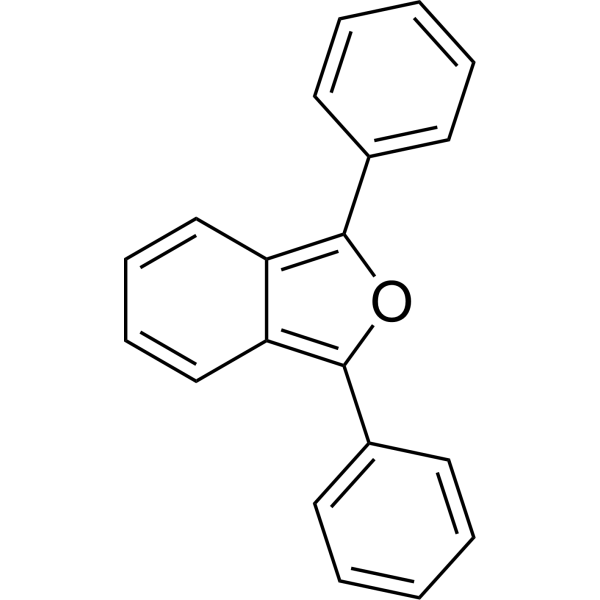
1,3-Diphenylisobenzofuran
Based on 30 publication(s) in Google Scholar
1,3-Diphenylisobenzofuran (DPBF) has been developed as a selective probe for the detection and quantitative determination of hydrogen peroxide in samples containing different reactive nitrogen and oxygen species (RNOS). DPBF is a fluorescent probe which, for almost 20 years, was believed to react in a highly specific manner toward some reactive oxygen species such as singlet oxygen and hydroxy, alkyloxy or alkylperoxy radicals.
For research use only. We do not sell to patients.
- Purity : 98.90%
- CAS No.: 5471-63-6
- Formula: C20H14O
- Molecular Weight:270.33
-
Storage:
4°C, protect from light, stored under nitrogen
* In solvent : -80°C, 6 months; -20°C, 1 month (protect from light, stored under nitrogen)

To place orders, for customer services and technical support, please contact: MedChemExpress USA
Tel: 609-228-6898 E-mail: [email protected] [email protected]


-
 Biological Activity
-
Chemical Information
-
Solvent & Solubility
- Purity & Documentation
- References
-
 Help & FAQs


-
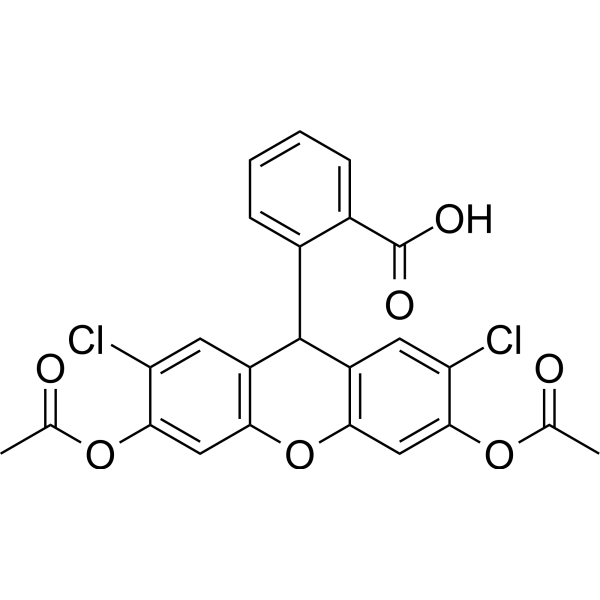
HY-D0940
H2DCFDA -
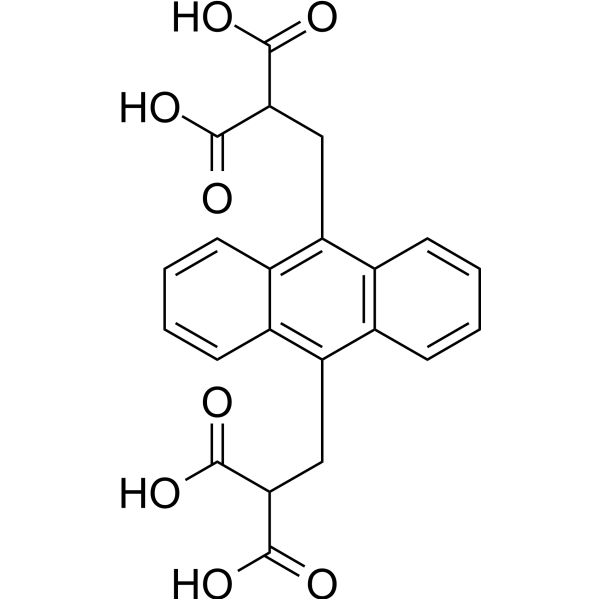
HY-D0034
9,10-Anthracenediyl-bis(methylene)dimalonic acid -
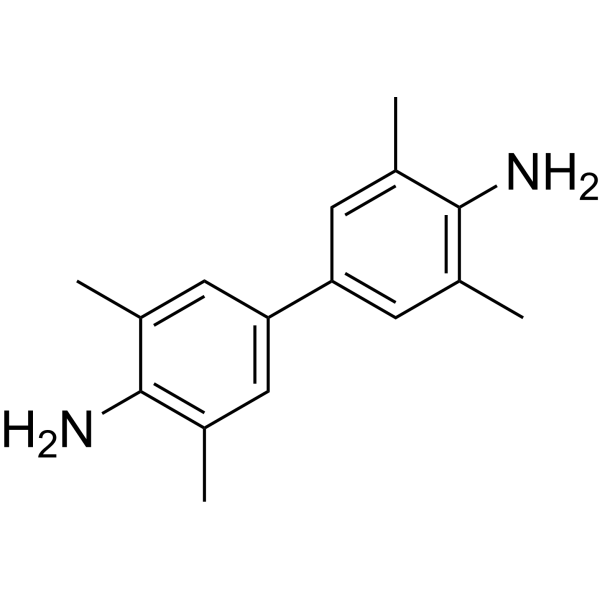
HY-15930
TMB -
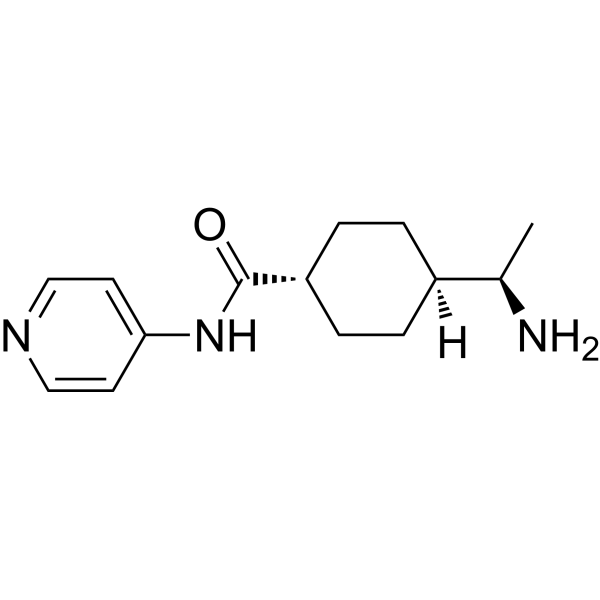
HY-10071
Y-27632 -

HY-Y0320C
Dimethyl sulfoxide -
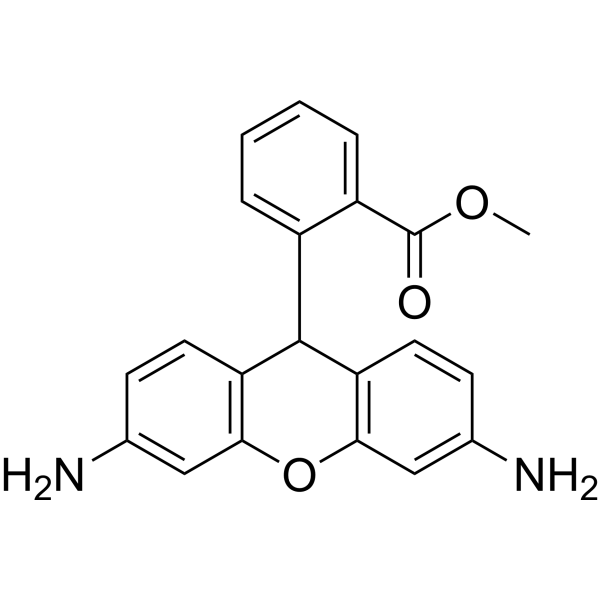
HY-101894
Dihydrorhodamine 123 -
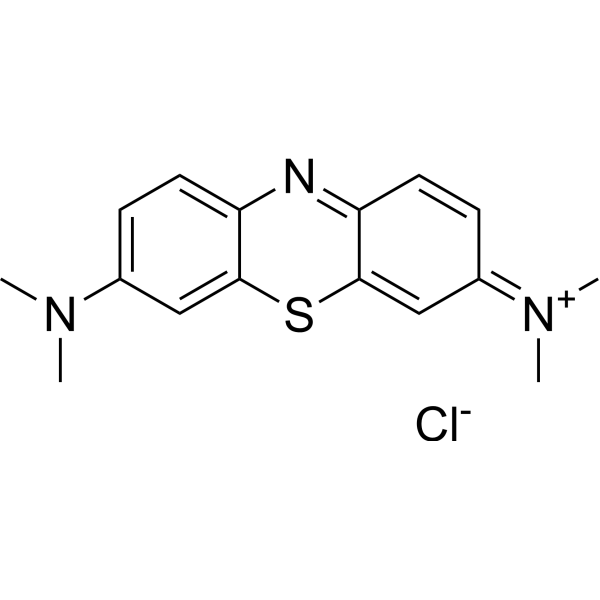
HY-14536
Methylene Blue -
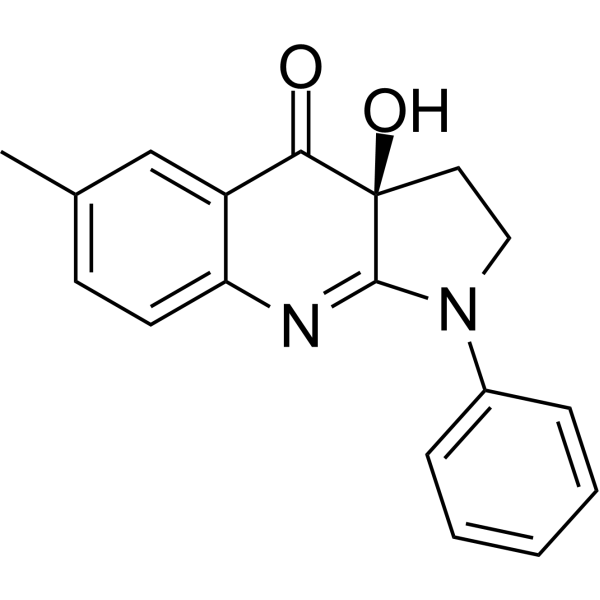
HY-13441
(-)-Blebbistatin -
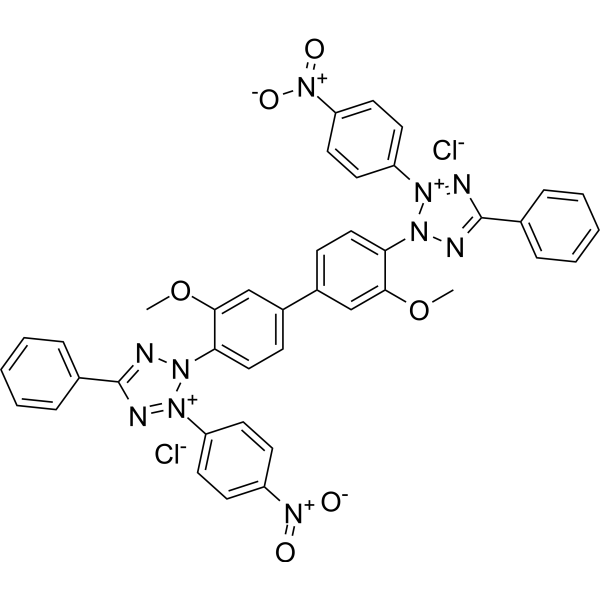
HY-15925
Nitro blue tetrazolium chloride -
HY-107690
DMPO -
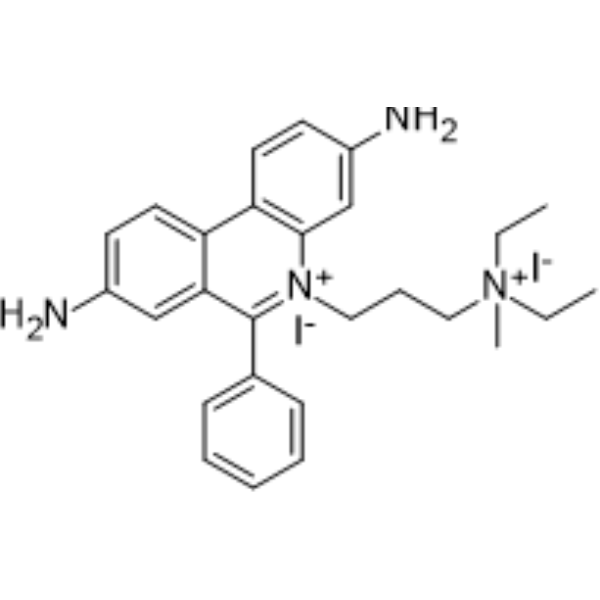
HY-D0815
Propidium Iodide -
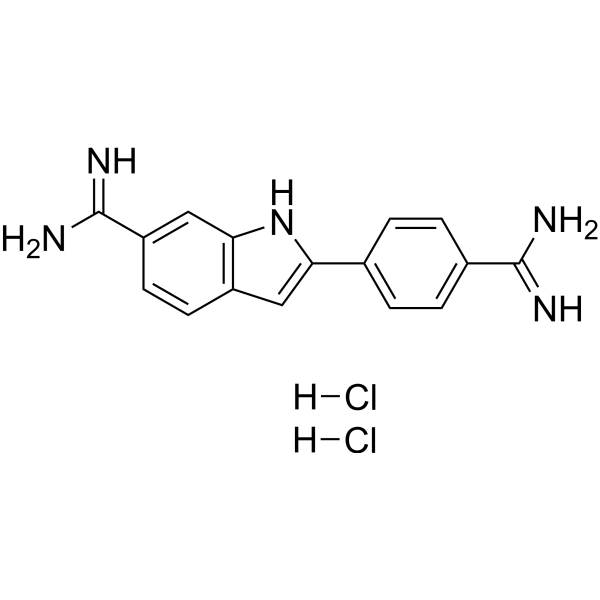
HY-D0814
DAPI dihydrochloride
Publications Citing Use of MedChemExpress (MCE) 1,3-Diphenylisobenzofuran
More- Adv Mater. 2025 Jun;37(24):e2414432. [Abstract]
- Bioact Mater. 2024 Jan 24:35:82-98. [Abstract]
- ACS Nano. 2025 Jan 21;19(2):2822-2833. [Abstract]
- BMEMat. 2025 Aug 19.
- J Nanobiotechnology. 2026 Jan 16;24(1):148. [Abstract]
- J Nanobiotechnology. 2024 Nov 30;22(1):744. [Abstract]
- Adv Sci (Weinh). 2025 May;12(17):e2417678. [Abstract]
- Adv Sci (Weinh). 2025 Mar;12(9):e2414307. [Abstract]
- Cell Rep Med. 2026 Mar 17;7(3):102635. [Abstract]
- Chem Eng J. 2025 Nov 24;526:171230.
- Chem Eng J. 2025 Jun 1.
- Chem Eng J. 2023 Dec 1, 477, 147195.
- J Control Release. 2025 May 10:381:113612. [Abstract]
- J Control Release. 2023 Jul:359:415-427. [Abstract]
- Small. 2025 Apr;21(15):e2412815. [Abstract]
- Mater Today Bio. 2025 Aug 13:34:102183. [Abstract]
- Adv Healthc Mater. 2025 Jul;14(17):e2405210. [Abstract]
- Adv Healthc Mater. 2024 Dec;13(30):e2401902. [Abstract]
- Mater Today Bio. 2023 Jun 16:21:100699. [Abstract]
- J Colloid Interface Sci. 2025 Sep 12;702(Pt 2):139007. [Abstract]
- Int J Nanomedicine. 2026 May 19:21:567165. [Abstract]
- Int J Nanomedicine. 2025 Dec 5:20:14551-14569. [Abstract]
- ACS Appl Mater Interfaces. 2026 Apr 1;18(12):17495-17512. [Abstract]
- ACS Appl Mater Interfaces. 2025 Dec 17;17(50):68345-68363. [Abstract]
- ACS Appl Mater Interfaces. 2025 Feb 26;17(8):11634-11652. [Abstract]
- J Agric Food Chem. 2025 Apr 30;73(17):10559-10573. [Abstract]
- RSC Adv. 2025 Apr 11;15(15):11283-11292. [Abstract]
- Colloids Surf B Biointerfaces. 2026 May:261:115461. [Abstract]
- J Coord Chem. 2025 Nov 12.
- Res Sq. 2026 May 24.
 Customer Validation & Images

-
Bio/Physico-chemical Assay
-
Flow Cytometry
-
Bio/Physico-chemical Assay
-
Bio/Physico-chemical Assay
-
Bio/Physico-chemical Assay


Biological Activity
Description
In Vitro
Guide (The following is our recommended protocol. This protocol is only a guide and should be modified according to your specific needs).
General Protocol
Preparation of DPBF working solution
1.1 Preparation of the stock solution
Dissolve 10 mg of DPBF in 3.6992 mL of DMSO to obtain 10 mM of DPBF.
Note: It is recommended to store the stock solution at -20°C, -80°C away from light and avoid repetitive freeze-thaw cycles.
1.2 Preparation of DPBF working solution
Dilute the stock solution in serum-free cell culture medium or PBS to obtain 20 μM of DPBF working solution.
Note: Please adjust the concentration of DPBF working solution according to the actual situation.
2. Cell staining
2.1 For suspension cells: Centrifuge at 1000 g at 4°C for 3-5 minutes and then discard the supernatant. Wash twice with PBS, 5 minutes each time.
For adherent cells: Discard the cell culture medium, and add trypsin to dissociate cells to make a single-cell suspension. Centrifuge at 1000 g at 4°C for 3-5 minutes and then discard the supernatant. Wash twice with PBS, 5 minutes each time.
2.2 Add 1 mL of DPBF working solution, and then incubate at room temperature for 30 minutes.
2.3 Centrifuge at 400 g at 4°C for 3-4 minutes and then discard the supernatant.
2.4 Wash twice with PBS, 5 minutes each time.
2.5 Resuspend cells with serum-free cell culture medium or PBS, and then detect by fluorescence microscope or flow cytometer.
3. Precautions
3.1 It is recommended to store the stock solution at -20°C or -80°C away from light and avoid repetitive freeze-thaw cycles.
3.2 Please adjust the concentration of DPBF working solution according to the actual situation.
3.3 This product is for R&D use only, not for drug, household, or other uses.
3.4 For your safety and health, please wear a lab coat and disposable gloves to operate.
MedChemExpress (MCE) has not independently confirmed the accuracy of these methods. They are for reference only.
Emission (Em)
523
Excitation (Ex)
495


Chemical Information
-
CAS No. 5471-63-6
-
Appearance Solid
-
Molecular Weight 270.33
-
Formula C20H14O
-
Color Light yellow to green yellow
-
SMILES
C1(C2=CC=CC=C2)=C3C=CC=CC3=C(C4=CC=CC=C4)O1
-
Synonyms
DPBF
-
Shipping
Room temperature in continental US; may vary elsewhere.
-
Storage
4°C, protect from light, stored under nitrogen
* In solvent : -80°C, 6 months; -20°C, 1 month (protect from light, stored under nitrogen)


Publications (30)
-
Journal Impact Factor
-
Most Recent
-
Adv Mater
2D Indium-Vacancy-Rich ZnIn2S4 Nanocatalysts for Sonocatalytic Cancer Suppression by Boosting Cancer-Cell Pyroptosis. [Abstract]2025 Jun;37(24):e2414432. PMID: 40207706 -
Bioact Mater
Nanoadjuvant-triggered STING activation evokes systemic immunotherapy for repetitive implant-related infections. [Abstract]2024 Jan 24:35:82-98. PMID: 38283386
1,3-Diphenylisobenzofuran purchased from MedChemExpress. Usage Cited in: Bioact Mater. 2024 Jan 24:35:82-98. [Abstract]
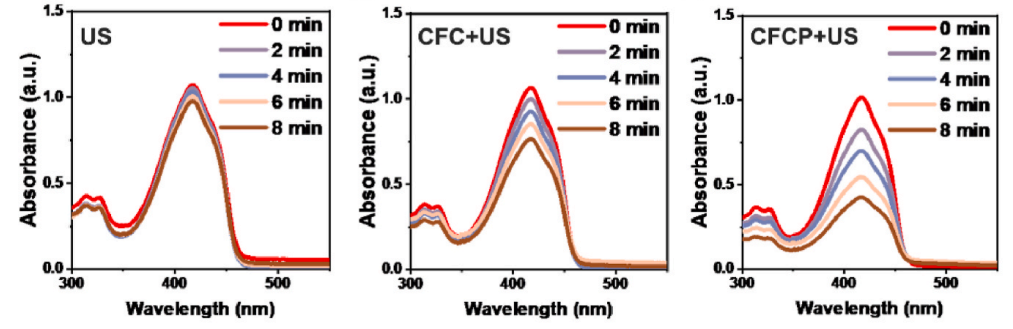
UV–vis spectra of DPBF (100 μM) in 20 mM H2O2 after co-incubation with US, CFC+US, and CFCP+US for 2, 4, 6, and 8 min.
-
ACS Nano
Charge Regulation-Enhanced Type I Photosensitizer-Loaded Hydrogel Dressing for Hypoxic Bacterial Inhibition and Biofilm Elimination. [Abstract]2025 Jan 21;19(2):2822-2833. PMID: 39764613 -
-
J Nanobiotechnology
Low-dose X-ray-activated radiodynamic therapy via a lutetium-coordinated nanoplatform synergizing PARP inhibition and ferroptosis. [Abstract]2026 Jan 16;24(1):148. PMID: 41546023 -
J Nanobiotechnology
Enhancing radiotherapy in triple-negative breast cancer with hesperetin-induced ferroptosis via AURKA targeting nanocomposites. [Abstract]2024 Nov 30;22(1):744. PMID: 39614277 -
Adv Sci (Weinh)
A Real-Time Cell Death Self-Reporting Theranostic Agent for Dynamic Optimization of Photodynamic Therapy. [Abstract]2025 May;12(17):e2417678. PMID: 40056057
1,3-Diphenylisobenzofuran purchased from MedChemExpress. Usage Cited in: Adv Sci (Weinh). 2025 May;12(17):e2417678. [Abstract]
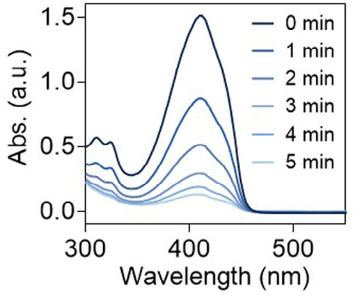
Changes in the absorbance spectra of the DPBF probe upon exposure to CDPNs at different irradiation times.
-
Adv Sci (Weinh)
Cryoshocked Adipocytes Mediated Dual-Modal Strategy Combining Photodynamic Therapy and Triptolide Palmitate for Pulmonary Metastatic Melanoma Treatment. [Abstract]2025 Mar;12(9):e2414307. PMID: 39804941
1,3-Diphenylisobenzofuran purchased from MedChemExpress. Usage Cited in: Adv Sci (Weinh). 2025 Mar;12(9):e2414307. [Abstract]
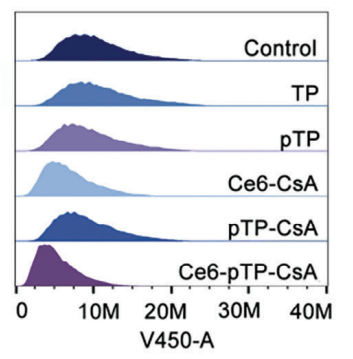
Flow cytometric analysis of DPBF (10 µM, 40 min) reacting with ROS in A375‐M1 cells (n = 3).
-
Cell Rep Med
Enhancing gastric cancer immunotherapy: Insights from multi-omics analysis and innovations in photodynamic-chemotherapy nanoplatforms. [Abstract]2026 Mar 17;7(3):102635. PMID: 41747719 -
1,3-Diphenylisobenzofuran purchased from MedChemExpress. Usage Cited in: Chem Eng J. 2025 Nov 24;526:171230.
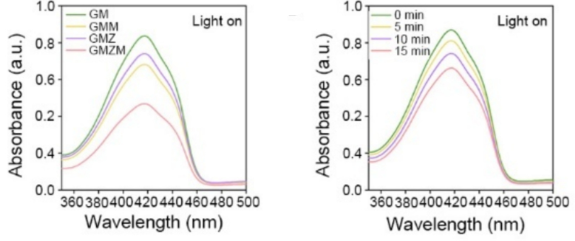
Evaluations of photothermal nanozyme-like activities of GMZM microneedles. The results of DPBF (10 µg/mL, 30 min) assay.
-
1,3-Diphenylisobenzofuran purchased from MedChemExpress. Usage Cited in: Chem Eng J. 2025 Jun 1.
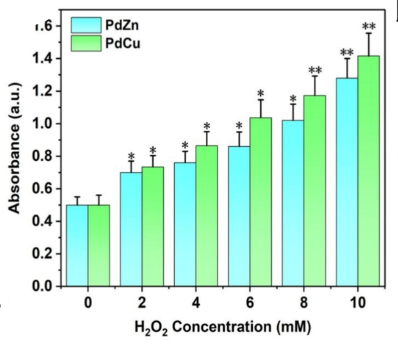
Comparison of peak UV absorption intensity at 650 nm between PdZn and PdCu with the addition of TMB and different concentrations of H2O2. and UV absorption at 410 nm under light conditions after the addition of DPBF to pdzn and pdcu.
-
-
J Control Release
Synergistic photothermal-sonodynamic therapy for antibacterial and immune reprogramming in chronic osteomyelitis. [Abstract]2025 May 10:381:113612. PMID: 40073945 -
J Control Release
A mitochondria-targeting ROS-activated nanoprodrug for self-augmented antitumor oxidation therapy. [Abstract]2023 Jul:359:415-427. PMID: 37290720 -
Small
Ultrasound-Driven Piezoelectric Heterostructures Block Early Atherosclerotic Plaques Progression. [Abstract]2025 Apr;21(15):e2412815. PMID: 40091396 -
Mater Today Bio
A tumor microenvironment-responsive Zr-MOF nanosystem for co-delivering siHIF-1α and triptolide enhances photodynamic therapy in esophageal cancer by amplifying ROS generation and reversing hypoxia. [Abstract]2025 Aug 13:34:102183. PMID: 40893379 -
Adv Healthc Mater
Controlled Self-Destructive Engineered Bacteria for Effective Immuno-Photodynamic Therapy Against Melanoma. [Abstract]2025 Jul;14(17):e2405210. PMID: 40437317 -
Adv Healthc Mater
Tumor Microenvironment Reprogrammed Bimetallic Hybrid Nanostimulator for Triggering Radio-Cuproptosis-Immunotherapy. [Abstract]2024 Dec;13(30):e2401902. PMID: 39136059 -
Mater Today Bio
An injectable MB/BG@LG sustained release lipid gel with antibacterial and osteogenic properties for efficient treatment of chronic periodontitis in rats. [Abstract]2023 Jun 16:21:100699. PMID: 37408697 -
J Colloid Interface Sci
Engineering microalgae-based oxygenators for hypoxia relief and enhanced photodynamic therapy against biofilms in diabetic wounds healing. [Abstract]2025 Sep 12;702(Pt 2):139007. PMID: 40961552 -
Int J Nanomedicine
Metal-Organic Framework Nanoplatform Synergizes Fenton-Driven Ferroptosis and Photodynamic Apoptosis for Enhanced Hepatocellular Carcinoma Therapy. [Abstract]2026 May 19:21:567165. PMID: 42205865 -
Int J Nanomedicine
Tumor Microenvironment Reprogramming via Copper-Enriched Black Phosphorus Nanoplatform for Cuproptosis-Sensitized Low-Dose Radioimmunotherapy. [Abstract]2025 Dec 5:20:14551-14569. PMID: 41383282 -
ACS Appl Mater Interfaces
Disrupting the Fortress: A Biomimetic Nano-Dual-Sensitizer Remodels Tumor Microenvironment via Dual HIF-1α Inhibition for Robust Photo-Immunotherapy. [Abstract]2026 Apr 1;18(12):17495-17512. PMID: 41838036 -
ACS Appl Mater Interfaces
Assembled Gold Superstructure Triggered Synergistic Apoptosis/Ferroptosis via Combined Photo-Enzyme Therapy. [Abstract]2025 Dec 17;17(50):68345-68363. PMID: 41351514 -
ACS Appl Mater Interfaces
Engineering a Self-Delivery Nanoplatform for Chemo-Photodynamic-Immune Synergistic Therapies against Aggressive Melanoma. [Abstract]2025 Feb 26;17(8):11634-11652. PMID: 39960055 -
J Agric Food Chem
Co-Exposure to Different Zinc Concentrations and High-Fat Diet Modules Endoplasmic Reticulum Stress and Lipotoxicity through the MTF-1/GPx7 Axis in Yellow Catfish (Pelteobagrus fulvidraco). [Abstract]2025 Apr 30;73(17):10559-10573. PMID: 40238493 -
RSC Adv
Manganese-based nanoparticles plus gambogic acid targeted hypoxic tumor microenvironment by enhancing ROS generation and provided antitumor treatment and improved immunotherapy. [Abstract]2025 Apr 11;15(15):11283-11292. PMID: 40225771 -
Colloids Surf B Biointerfaces
A dual-modal GSH depletion and NIR-triggered nanoplatform for cascade-amplified phototherapy. [Abstract]2026 May:261:115461. PMID: 41570414 -
-


Solvent & Solubility
In Vitro:
DMSO : 5.56 mg/mL (20.57 mM; Need ultrasonic; Hygroscopic DMSO has a significant impact on the solubility of product, please use newly opened DMSO)
H2O : < 0.1 mg/mL (insoluble)
Please refer to the solubility information to select the appropriate solvent. Once prepared, please aliquot and store the solution to prevent product inactivation from repeated freeze-thaw cycles.
Storage method and period of stock solution: -80°C, 6 months; -20°C, 1 month (protect from light, stored under nitrogen). When stored at -80°C, please use it within 6 months. When stored at -20°C, please use it within 1 month.
Please refer to the solubility information to select the appropriate solvent. Once prepared, please aliquot and store the solution to prevent product inactivation from repeated freeze-thaw cycles.
Storage method and period of stock solution: -80°C, 6 months; -20°C, 1 month (protect from light, stored under nitrogen). When stored at -80°C, please use it within 6 months. When stored at -20°C, please use it within 1 month.
Concentration (start) × Volume (start) = Concentration (final) × Volume (final)


Purity & Documentation
-
Data Sheet (281 KB)
-
SDS (393 KB)
- English - EN (393 KB)
- Français - FR (393 KB)
- Deutsch - DE (393 KB)
- Norwegian - NO (393 KB)
- Español - ES (393 KB)
- Swedish - SV (393 KB)
- Italian - IT (393 KB)
- Korean - KR (393 KB)
- Portuguese - PT (393 KB)
-
Handling Instructions (2659 KB)
References
[1]. Bai X, et al. HKOH-1: A Highly Sensitive and Selective Fluorescent Probe for Detecting Endogenous Hydroxyl Radicals in Living Cells. Angew Chem Int Ed Engl. 2017 Oct 9;56(42):12873-12877. [Content Brief]
[2]. Weili Fan, et al. Calcium carbonate-methylene blue nanohybrids for photodynamic therapy and ultrasound imaging. Sci China Life Sci. 2018 Apr;61(4):483-491. [Content Brief]


Complete Stock Solution Preparation Table
Please refer to the solubility information to select the appropriate solvent. Once prepared, please aliquot and store the solution to prevent product inactivation from repeated freeze-thaw cycles.
Storage method and period of stock solution: -80°C, 6 months; -20°C, 1 month (protect from light, stored under nitrogen). When stored at -80°C, please use it within 6 months. When stored at -20°C, please use it within 1 month.
| Optional Solvent | Concentration Solvent Mass | 1 mg | 5 mg | 10 mg | 25 mg |
|---|---|---|---|---|---|
| DMSO | 1 mM | 3.6992 mL | 18.4959 mL | 36.9918 mL | 92.4796 mL |
| 5 mM | 0.7398 mL | 3.6992 mL | 7.3984 mL | 18.4959 mL | |
| 10 mM | 0.3699 mL | 1.8496 mL | 3.6992 mL | 9.2480 mL | |
| 15 mM | 0.2466 mL | 1.2331 mL | 2.4661 mL | 6.1653 mL | |
| 20 mM | 0.1850 mL | 0.9248 mL | 1.8496 mL | 4.6240 mL |


1,3-Diphenylisobenzofuran Related Classifications
HY-W011664 Related Classifications
 Powered by Bioz