



1,3-Diphenylisobenzofuran (solution)
1,3-Diphenylisobenzofuran (DPBF) (solution) has been developed as a selective probe for the detection and quantitative determination of hydrogen peroxide in samples containing different reactive nitrogen and oxygen species (RNOS). DPBF is a fluorescent probe which, for almost 20 years, was believed to react in a highly specific manner toward some reactive oxygen species such as singlet oxygen and hydroxy, alkyloxy or alkylperoxy radicals.
Solvent and concentration: DMSO: 10 mM
The 1 mL volume is defined as the base specification. All larger sizes correspond to incremental volumes of this base.
For research use only. We do not sell to patients.
- CAS No.: 5471-63-6
- Formula: C20H14O
- Molecular Weight:270.33
-
Storage:
Please store the product under the recommended conditions in the Certificate of Analysis.


To place orders, for customer services and technical support, please contact: MedChemExpress USA
Tel: 609-228-6898 E-mail: [email protected] [email protected]


-
 Biological Activity
-
Chemical Information
- Protocols
- Purity & Documentation
- References
-
 Help & FAQs


-
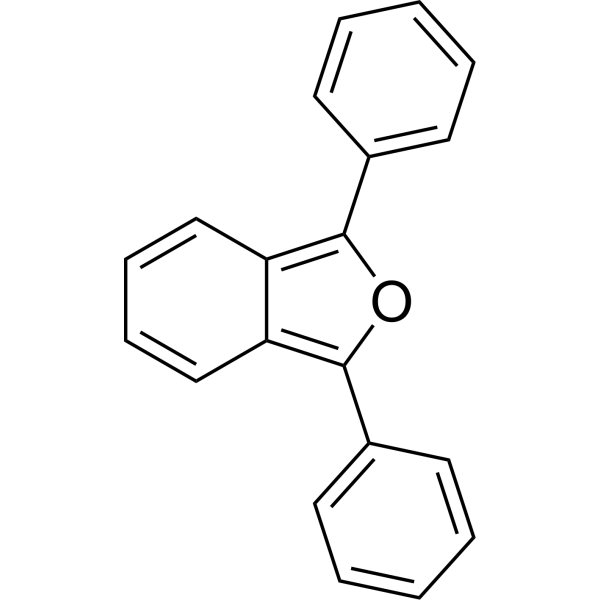
HY-W011664
1,3-DiphenylisobenzofuranFluorochrome -
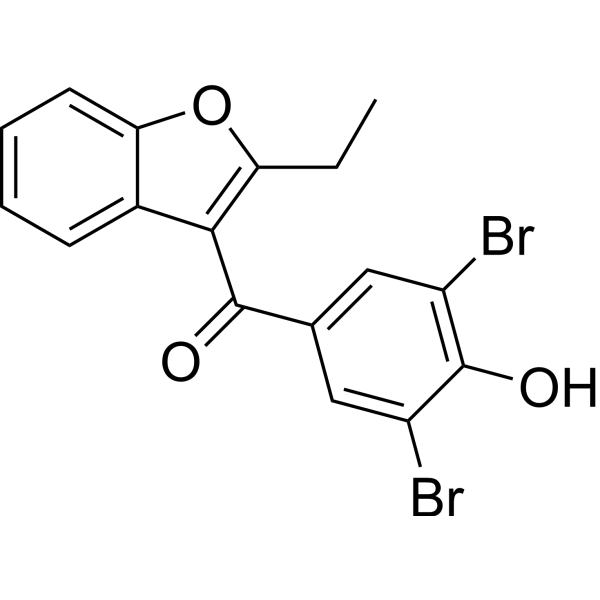
HY-B1135
BenzbromaroneApoptosis Inducer -
![Dibenzo[b,d]furan](https://file.medchemexpress.com/product_pic/hy-w017086.gif)
HY-W017086
Dibenzo[b,d]furanBiochemical Reagent -
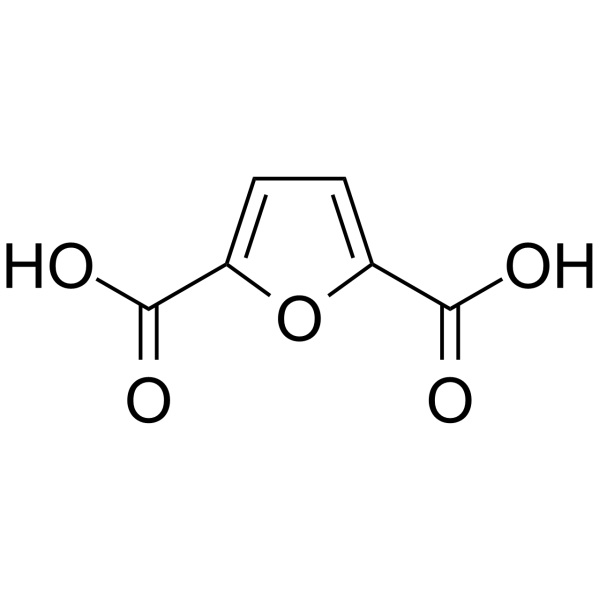
HY-W002105
2,5-Furandicarboxylic acidEndogenous Metabolite -
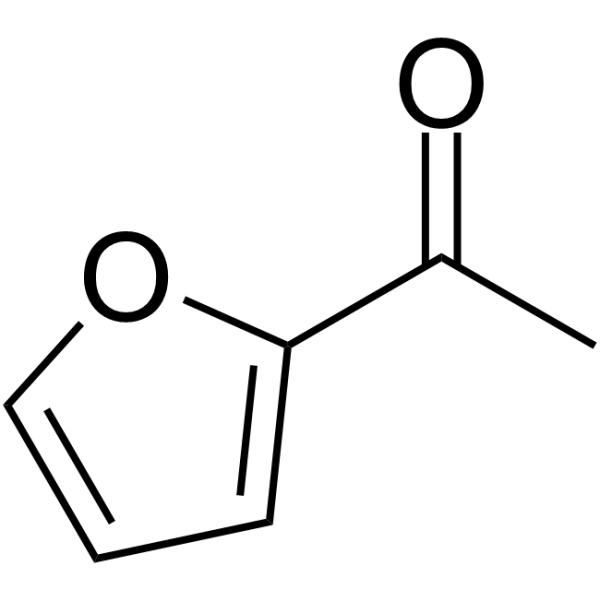
HY-W015912
2-AcetylfuranIntermediate In Foods -

HY-76203
2-CoumaranoneBicyclic Heteroaromatic Compound -

HY-B1135R
Benzbromarone (Standard)Apoptosis Inducer -
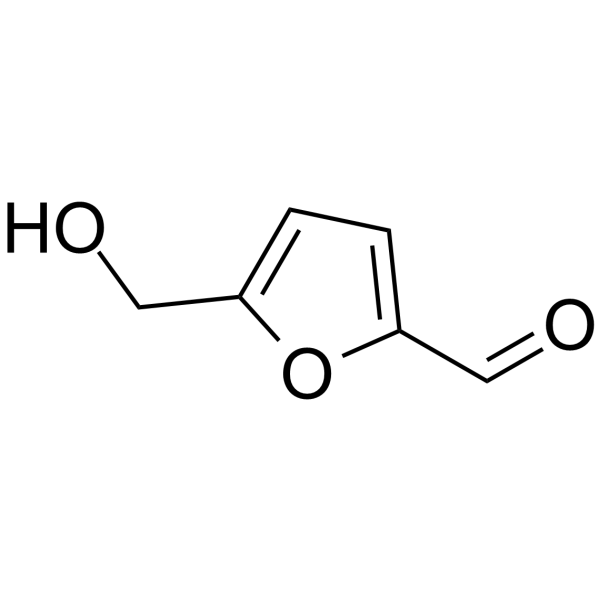
HY-Y0051
5-Hydroxymethylfurfural -
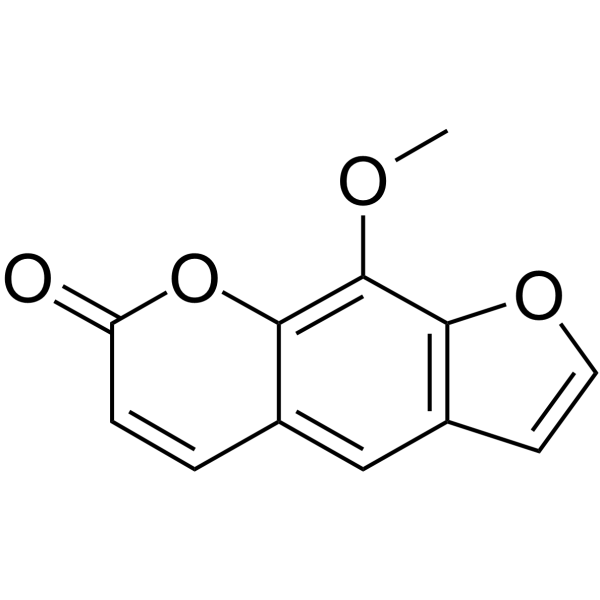
HY-30151
MethoxsalenCytochrome P450 Inhibitor -
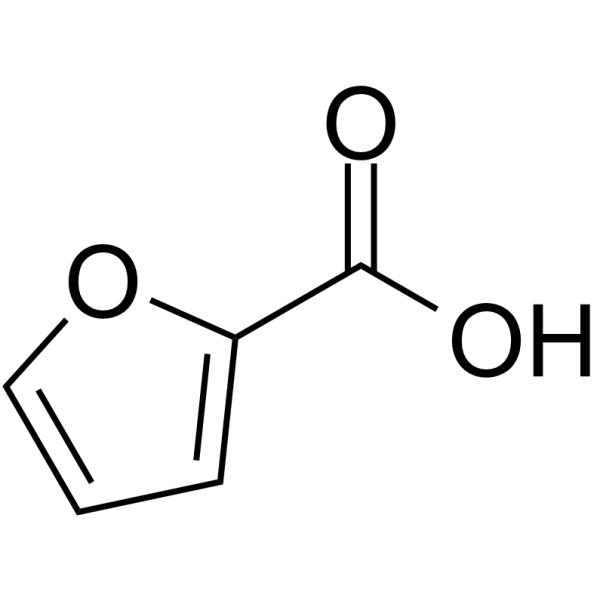
HY-W012946
2-Furoic acid -
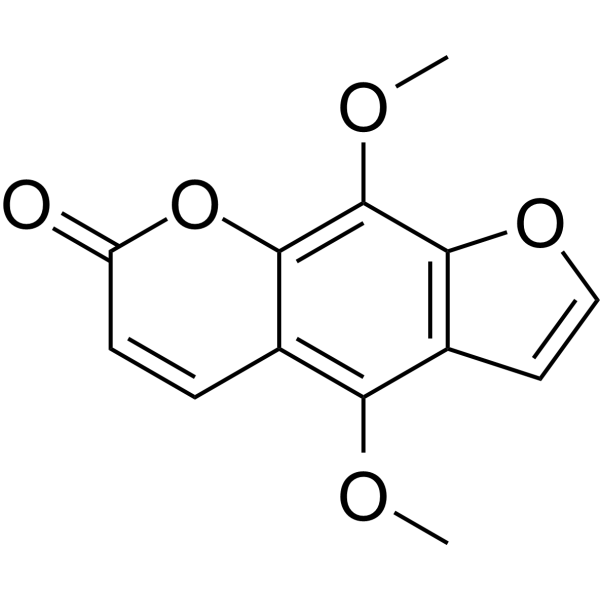
HY-N0769
IsopimpinellinParasite Inhibitor -
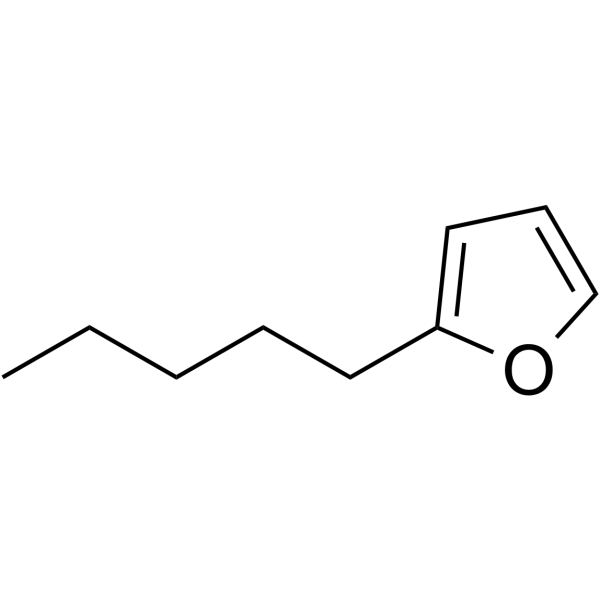
HY-N7398
2-PentylfuranNatural Product


Biological Activity
Description
Solvent and concentration: DMSO: 10 mM
The 1 mL volume is defined as the base specification. All larger sizes correspond to incremental volumes of this base.
In Vitro
Guidelines (The following are our recommended protocols. This protocol is for reference only and should be modified according to your specific needs.)
General Protocol
Preparation of DPBF working solution
1.1 Preparation of the stock solution
Dissolve 10 mg of DPBF in 3.6992 mL of DMSO to obtain 10 mM of DPBF.
Note: It is recommended to store the stock solution at -20°C, -80°C away from light and avoid repetitive freeze-thaw cycles.
1.2 Preparation of DPBF working solution
Dilute the stock solution in serum-free cell culture medium or PBS. The corresponding stock solution can be diluted according to the actual situation. Note that if the solvent is DMSO, the cytotoxicity of DMSO must be considered, and a solvent control should be prepared; if the solvent is pure water, the working solution needs to be filtered and sterilized before adding cells.
Note: Please adjust the concentration of DPBF working solution according to the actual situation.
Cell staining
2.1 For suspension cells: Centrifuge at 1000 g at 4°C for 3-5 minutes and then discard the supernatant. Wash twice with PBS, 5 minutes each time.
For adherent cells: Discard the cell culture medium, and add trypsin to dissociate cells to make a single-cell suspension. Centrifuge at 1000 g at 4°C for 3-5 minutes and then discard the supernatant. Wash twice with PBS, 5 minutes each time.
2.2 Add 1 mL of DPBF working solution, and then incubate at room temperature for 30 minutes.
2.3 Centrifuge at 400 g at 4°C for 3-4 minutes and then discard the supernatant.
2.4 Wash twice with PBS, 5 minutes each time.
2.5 Resuspend cells with serum-free cell culture medium or PBS, and then detect by fluorescence microscope or flow cytometer.
Precautions
1. It is recommended to store the stock solution at -20°C or -80°C away from light and avoid repetitive freeze-thaw cycles.
2. Please adjust the concentration of DPBF working solution according to the actual situation.
3. This product is for R&D use only, not for drug, household, or other uses.
4. For your safety and health, please wear a lab coat and disposable gloves to operate.
MedChemExpress (MCE) has not independently confirmed the accuracy of these methods. They are for reference only. Further protocols information, click here.


Chemical Information
-
CAS No. 5471-63-6
-
Molecular Weight 270.33
-
Formula C20H14O
-
SMILES
C1(C2=CC=CC=C2)=C3C=CC=CC3=C(C4=CC=CC=C4)O1
-
Shipping
Room temperature in continental US; may vary elsewhere.
-
Storage
Please store the product under the recommended conditions in the Certificate of Analysis.

Protocols
-
ROS/oxidative-stress fluorescent staining
ROS/oxidative-stress fluorescent staining uses cell-permeant fluorogenic probes that become fluorescent after oxidation inside cells or tissues; commonly used examples include DCFH-DA/DCFDA for broad cellular oxidant detection, DHE for superoxide-related signal detection, MitoSOX for mitochondrial superoxide-related signal detection, and CellROX probes for oxidative-stress-associated fluorescence readouts. The assay detects probe oxidation rather than a single ROS species unless the probe and analysis method have been chemically validated for that species. DCFH-DA enters cells, is deacetylated by intracellular esterases to DCFH, and produces fluorescent DCF after oxidation, so the readout is used as an operational measure of total cellular oxidative stress rather than a species-specific ROS measurement. DHE and MitoSOX can report superoxide-related oxidation, but red fluorescence alone can include non-specific ethidium-like oxidation products; HPLC or optimized spectral approaches are


Purity & Documentation
References
[1]. Weili Fan, et al. Calcium carbonate-methylene blue nanohybrids for photodynamic therapy and ultrasound imaging. Sci China Life Sci. 2018 Apr;61(4):483-491. [Content Brief]
[3]. Bai X, et al. HKOH-1: A Highly Sensitive and Selective Fluorescent Probe for Detecting Endogenous Hydroxyl Radicals in Living Cells. Angew Chem Int Ed Engl. 2017 Oct 9;56(42):12873-12877. [Content Brief]

Calculators
Concentration (start) × Volume (start) = Concentration (final) × Volume (final)


1,3-Diphenylisobenzofuran (solution) Related Classifications
HY-DY1053 Related Classifications
 Powered by Bioz