



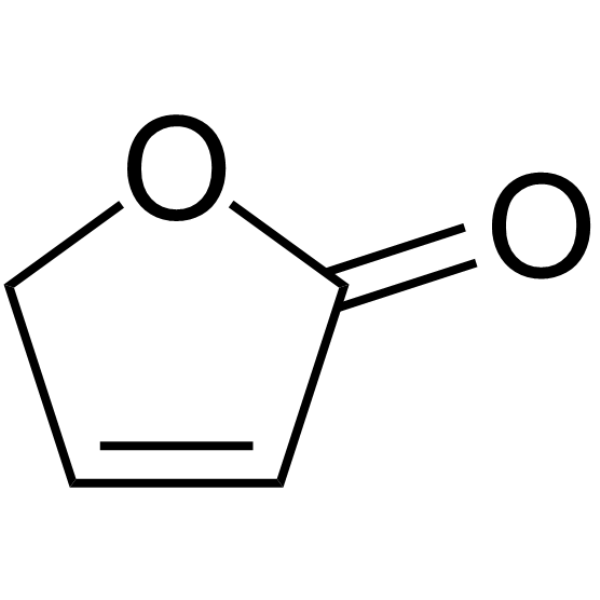
2(5H)-Furanone

Based on 1 Customer Validation
2(5H)-Furanone (γ-Crotonolactone) is an endogenous metabolite. 2(5H)-Furanone mimics N-acyl homoserine lactone signals, occupies the binding site of LuxR homologs, and interferes with quorum sensing-mediated gene regulation. 2(5H)-Furanone inhibits quorum sensing mediated by AHLs with different acyl chain lengths. 2(5H)-Furanone inhibits biofilm formation of environmental Aeromonas hydrophila strains on polystyrene plates. 2(5H)-Furanone suppresses spike-and-wave discharges in a rat model of generalized absence seizures and exhibits selective activity against absence seizures. 2(5H)-Furanone can be used in studies related to bacteria infections and generalized absence seizures.
For research use only. We do not sell to patients.
- Purity : 99.94%
- CAS No.: 497-23-4
- Formula: C4H4O2
- Molecular Weight:84.07
-
Storage:Pure form -20°C, 3 years , 4°C, 2 years ; In solvent -80°C, 6 months , -20°C, 1 month

To place orders, for customer services and technical support, please contact: MedChemExpress USA
Tel: 609-228-6898 E-mail: [email protected] [email protected]


-
 Biological Activity
-
Chemical Information
-
Solvent & Solubility
- Protocols
- Purity & Documentation
- References
-
 Help & FAQs


-

HY-W008270R
2(5H)-Furanone (Standard) -
HY-W002105
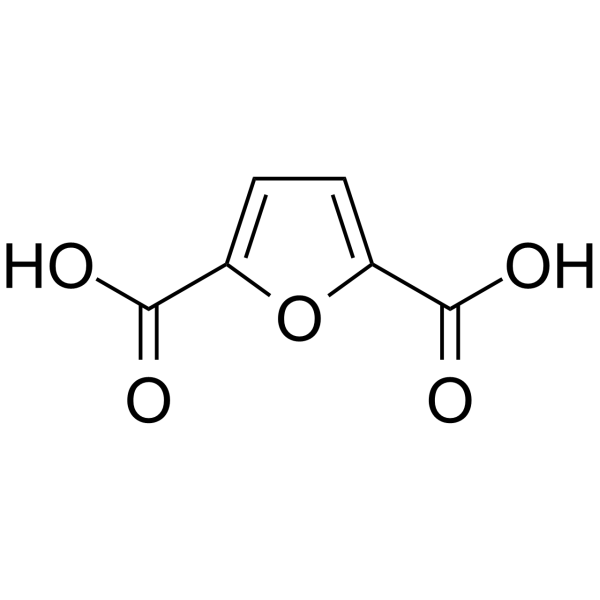
2,5-Furandicarboxylic acidEndogenous Metabolite -
HY-W087919
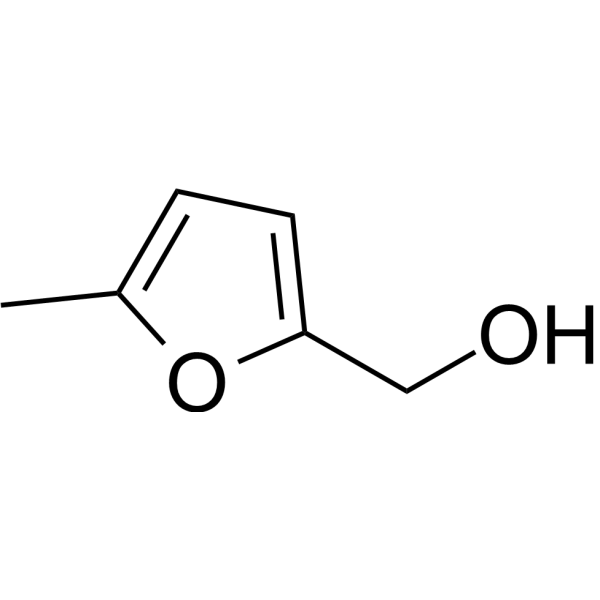
5-Methyl-2-furanmethanolCaramel Flavor Compound -
HY-W007708
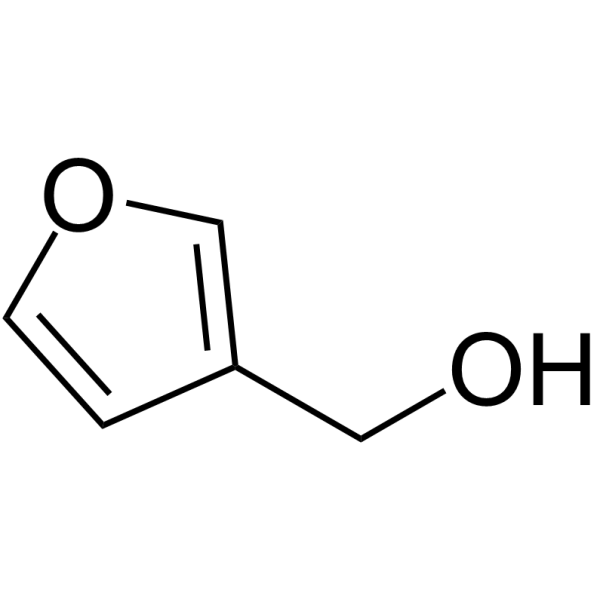
3-FuranmethanolFlavor Compound -
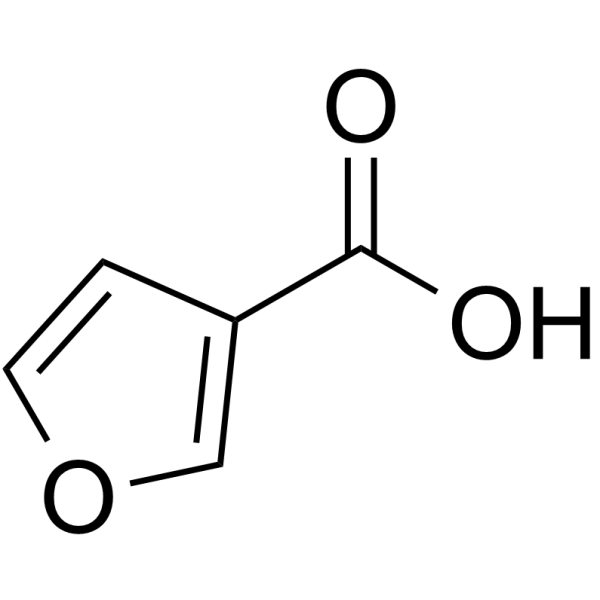
HY-21075
3-Furanoic acidEndogenous Metabolite -
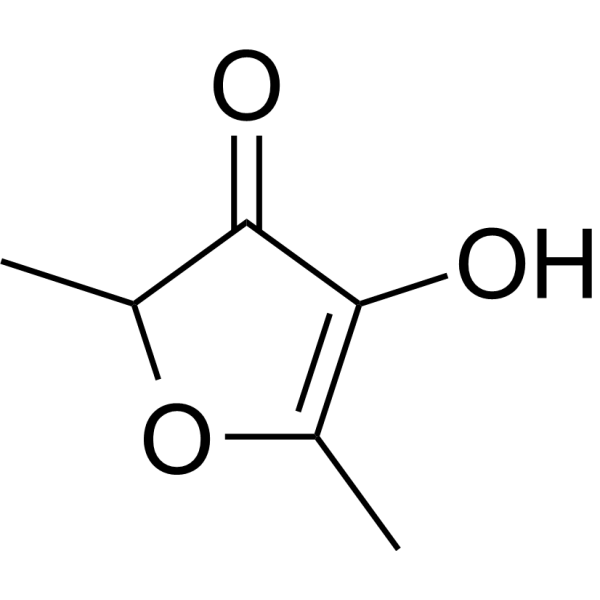
HY-N7093
FuraneolAntimicrobial Agent -
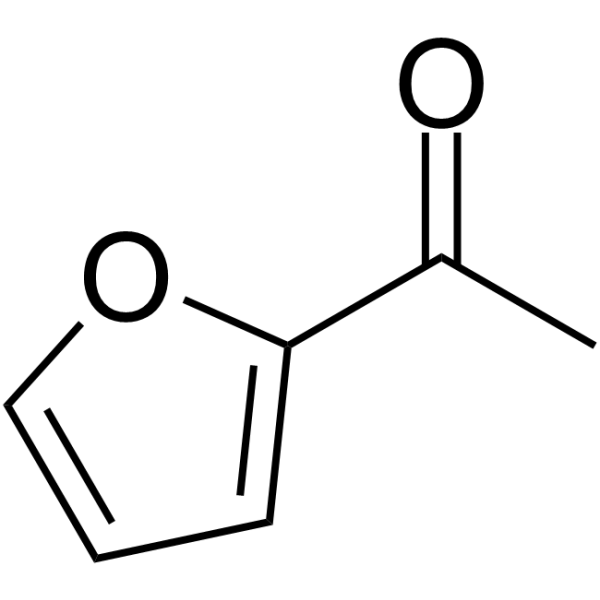
HY-W015912
2-AcetylfuranIntermediate In Foods -

HY-W111881
FurfurylideneacetoneDiluent -
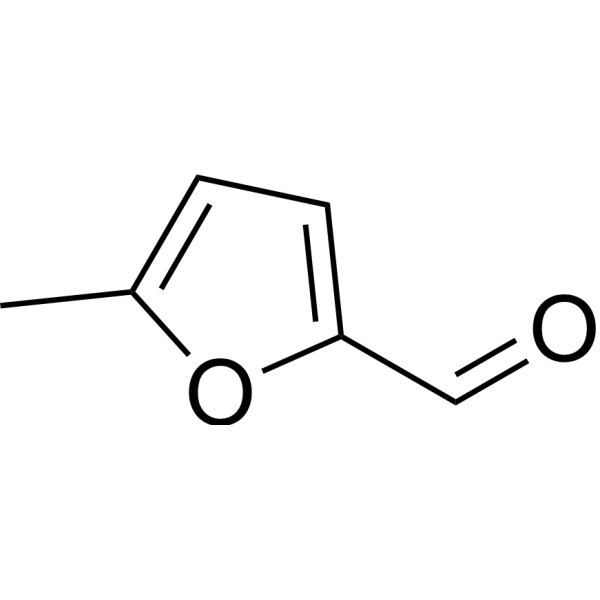
HY-Y0543
5-MethylfurfuralBiochemical Reagent -
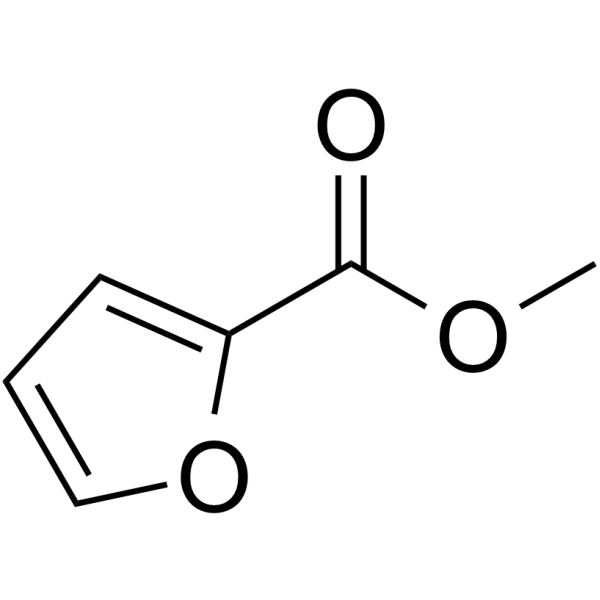
HY-Y0949
Methyl 2-furoateEster of Furan-2-carboxylic acid -
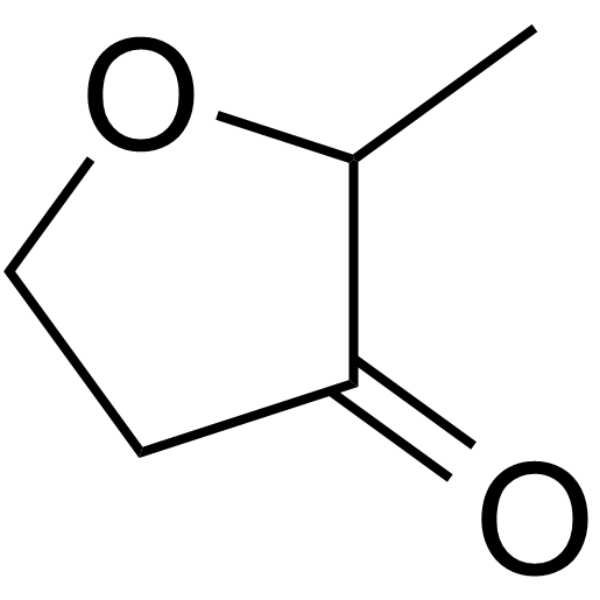
HY-W010608
2-Methyltetrahydrofuran-3-oneQuorum Sensing Inhibitor -

HY-W002105R
2,5-Furandicarboxylic acid (Standard)Standard of 2,5-Furandicarboxylic acid
All Endogenous Metabolite Isoforms
More

Biological Activity
Description
IC50 & Target
|
Human Endogenous Metabolite |
In Vitro
2(5H)-furanone (0-1 mg/mL; 18 h) dose-dependently inhibits short-chain AHL-mediated quorum sensing in Chromobacterium violaceum CV026[1].
2(5H)-furanone (0.4-1 mg/mL; 12 h) inhibits long-chain AHL-mediated quorum sensing in Agrobacterium tumefaciens NTL-4[1].
2(5H)-furanone (0.2-1 mg/mL; 6 h) inhibits quorum sensing-mediated biofilm formation of Aeromonas hydrophila on polystyrene surfaces[1].
MedChemExpress (MCE) has not independently confirmed the accuracy of these methods. They are for reference only. Further protocols information, click here.
In Vivo
MedChemExpress (MCE) has not independently confirmed the accuracy of these methods. They are for reference only.
-
Animal Model:Sprague-Dawley (male, 250-300 g, generalized absence seizures induced by intraperitoneal administration of 200 mg/kg γ-butyrolactone)[2]
-
Dosage:20 mg/kg; 100 mg/kg; 175 mg/kg; 200 mg/kg (pre-GBL pretreatment); 175 mg/kg (standalone EEG assessment)
-
Administration:i.p.; single dose
-
Result:Exhibited dose-dependent suppression of GBL-induced SWD, with an ED50 of 100 mg/kg.
Significantly reduced SWD duration compared to controls at all time points post-GBL administration at 175 mg/kg.
Produced no discernible EEG or behavioral changes when administered alone at 175 mg/kg.
Reduced the muscimol-induced prolongation of GBL-induced SWD duration.
Significantly attenuated muscimol-mediated enhancement of SWD compared to saline-treated controls.
Effectively reduced GBL-induced SWD duration in all age groups tested.
Showed delayed suppressive effect: no significant suppression seen until 40 minutes post-GBL in 26-day-old animals, and 60 minutes post-GBL in animals younger than 26 days.
Significantly suppressed PTZ-induced SWD duration compared to controls at all time points post-PTZ administration.


Chemical Information
-
CAS No. 497-23-4
-
Appearance Liquid (Density: 1.185 g/cm3)
-
Molecular Weight 84.07
-
Formula C4H4O2
-
Color Colorless to light yellow
-
SMILES
O=C1OCC=C1
-
Synonyms
γ-Crotonolactone
-
Structure Classification
-
Initial Source
-
Shipping
Room temperature in continental US; may vary elsewhere.
-
Storage
Pure form -20°C 3 years 4°C 2 years In solvent -80°C 6 months -20°C 1 month


Solvent & Solubility
In Vitro:
DMSO : 100 mg/mL (1189.48 mM; Need ultrasonic; Hygroscopic DMSO has a significant impact on the solubility of product, please use newly opened DMSO)
Please refer to the solubility information to select the appropriate solvent. Once prepared, please aliquot and store the solution to prevent product inactivation from repeated freeze-thaw cycles.
Storage method and period of stock solution: -80°C, 6 months; -20°C, 1 month. When stored at -80°C, please use it within 6 months. When stored at -20°C, please use it within 1 month.
Please refer to the solubility information to select the appropriate solvent. Once prepared, please aliquot and store the solution to prevent product inactivation from repeated freeze-thaw cycles.
Storage method and period of stock solution: -80°C, 6 months; -20°C, 1 month. When stored at -80°C, please use it within 6 months. When stored at -20°C, please use it within 1 month.
Concentration (start) × Volume (start) = Concentration (final) × Volume (final)
In Vivo:
Select the appropriate dissolution method based on your experimental animal and administration route.
- For the following dissolution methods, please ensure to first prepare a clear stock solution using an In Vitro approach and then sequentially add co-solvents:
- To ensure reliable experimental results, the clarified stock solution can be appropriately stored based on storage conditions. As for the working solution for In Vivo experiments, it is recommended to prepare freshly and use it on the same day.
- The percentages shown for the solvents indicate their volumetric ratio in the final prepared solution. If precipitation or phase separation occurs during preparation, heat and/or sonication can be used to aid dissolution.
Add each solvent one by one: 10% DMSO 40% PEG300 5% Tween-80 45% Saline
Solubility: ≥ 2.5 mg/mL (29.74 mM); Clear solution
This protocol yields a clear solution of ≥ 2.5 mg/mL (saturation unknown).
Taking 1 mL working solution as an example, add 100 μL DMSO stock solution (25.0 mg/mL) to 400 μL PEG300, and mix evenly; then add 50 μL Tween-80 and mix evenly; then add 450 μL Saline to adjust the volume to 1 mL.
Preparation of Saline: Dissolve 0.9 g sodium chloride in ddH₂O and dilute to 100 mL to obtain a clear Saline solution.
Add each solvent one by one: 10% DMSO 90% (20% SBE-β-CD in Saline)
Solubility: ≥ 2.5 mg/mL (29.74 mM); Clear solution
This protocol yields a clear solution of ≥ 2.5 mg/mL (saturation unknown).
Taking 1 mL working solution as an example, add 100 μL DMSO stock solution (25.0 mg/mL) to 900 μL 20% SBE-β-CD in Saline, and mix evenly.
Preparation of 20% SBE-β-CD in Saline (4°C, storage for one week): 2 g SBE-β-CD powder is dissolved in 10 mL Saline, completely dissolve until clear.
In Vivo Dissolution Calculator
Please enter the basic information of animal experiments:
-
-
-
-
Recommended: Prepare an additional quantity of animals to account for potential losses during experiments.
Please enter your animal formula composition:
-
%DMSO +
Recommended: Keep the proportion of DMSO in working solution below 2% if your animal is weak.
-
%+
-
+%Tween-80 + +
-
%Saline +
The co-solvents required include: DMSO, . All of co-solvents are available by MedChemExpress (MCE). , Tween 80. All of co-solvents are available by MedChemExpress (MCE).
Working solution concentration: 0.22 mg/mL
Method for preparing stock solution: mg drug dissolved in μL DMSO. Stock solution concentration: mg/mL.
1. Take μL DMSO stock solution;
2. Add μL .
μL , mix evenly;
3. Then add μL Tween 80, mix evenly;
4. Then add μL
Please ensure that the stock solution in the first step is dissolved to a clear state, and add co-solvents in sequence. You can use ultrasonic heating (ultrasonic cleaner, recommended frequency 20-40 kHz), vortexing, etc. to assist dissolution.

Protocols
-
How to Select a Suitable Non-Mouse Animal Model
Selecting a suitable non-mouse animal model is a structured decision based on the research question, required anatomy or physiology, disease mechanism, endpoint feasibility, translational relevance, and ethical justification. Non-mouse models are preferred when mice cannot reproduce key human-relevant features, such as organ size, surgical anatomy, cardiovascular physiology, neuroanatomy, immune features, pharmacology, toxicology, or long-term clinical procedures. Candidate species may include rats, rabbits, guinea pigs, ferrets, zebrafish, pigs, sheep, goats, dogs, cats, horses, and non-human primates, but each species must be justified by its specific scientific advantage rather than convenience or tradition. Unresolved questions include how to quantify translational superiority across species, how to balance increased biological relevance against higher ethical burden, and when human-derived systems or new approach methodologies should replace animal use.
-
CRISPRi/CRISPRa gene-regulation editing
CRISPRi and CRISPRa use catalytically inactive Cas9, typically SpCas9 D10A/H840A, as an RNA-guided DNA-binding platform that targets genomic loci through sgRNA complementarity and an adjacent PAM without generating Cas9 nuclease-mediated DNA cleavage. CRISPRi represses transcription by recruiting dCas9 alone or dCas9 fused to repressor domains such as KRAB to promoters or transcription start site regions, while CRISPRa activates transcription by recruiting activation domains such as VP64, VPR, or SAM components to promoter-proximal regions. The primary readout is target-gene expression change, commonly measured by RT-qPCR, RNA-seq, reporter fluorescence, or protein-level assays, and the readout reflects transcriptional repression or activation at the targeted endogenous locus.
-
Fungal Biofilm Culture
Fungal biofilm culture is an in vitro method for growing surface-attached fungal communities, most commonly Candida albicans, on abiotic substrates such as polystyrene wells, silicone elastomer, or polymethylmethacrylate; the assay models adhesion, proliferation, filamentation, extracellular-matrix-associated maturation, and dispersion. Biofilm output can be read by optical density at 600 nm for adherent biomass, XTT reduction for metabolic activity, CFU recovery for viable attached or dispersed cells, and microscopy for architecture.
-
How to Choose the Right Model Animal
Choosing the right model animal is a validity-driven decision in which the species, strain, sex, age, genetic background, disease-induction method, outcome measures, and welfare burden must match the scientific question rather than laboratory tradition or convenience. A model should be selected by judging face validity, construct validity, and predictive validity: whether it resembles the human phenotype, whether it reproduces relevant mechanisms, and whether results are likely to predict human biology or treatment response. Animal studies often fail to translate because of species differences, weak disease resemblance, poor experimental design, inadequate reporting, publication bias, and underuse of randomization, blinding, and sample-size justification. Unresolved questions include how to rank competing models objectively, how much human-disease complexity must be reproduced for a given objective, and when non-animal systems such as organoids, ex vivo tissue, or computational models


Purity & Documentation
-
Data Sheet (291 KB)
-
SDS (393 KB)
- English - EN (393 KB)
- Français - FR (393 KB)
- Deutsch - DE (393 KB)
- Norwegian - NO (393 KB)
- Español - ES (393 KB)
- Swedish - SV (393 KB)
- Italian - IT (393 KB)
- Korean - KR (393 KB)
- Portuguese - PT (393 KB)
-
Handling Instructions (2659 KB)
References
[1]. Ponnusamy K, et al. 2(5H)-Furanone: A Prospective strategy for biofouling-control in membrane biofilm bacteria by quorum sensing inhibition. Braz J Microbiol. 2010 Jan;41(1):227-34. [Content Brief]
[2]. Snead OC 3rd, et al. Effect of gamma-crotonolactone in experimental models of generalized absence seizures. Brain Res. 1991;543(1):10-14. [Content Brief]


Complete Stock Solution Preparation Table
Please refer to the solubility information to select the appropriate solvent. Once prepared, please aliquot and store the solution to prevent product inactivation from repeated freeze-thaw cycles.
Storage method and period of stock solution: -80°C, 6 months; -20°C, 1 month. When stored at -80°C, please use it within 6 months. When stored at -20°C, please use it within 1 month.
| Optional Solvent | Concentration Solvent Mass | 1 mg | 5 mg | 10 mg | 25 mg |
|---|---|---|---|---|---|
| DMSO | 1 mM | 11.8948 mL | 59.4742 mL | 118.9485 mL | 297.3712 mL |
| 5 mM | 2.3790 mL | 11.8948 mL | 23.7897 mL | 59.4742 mL | |
| 10 mM | 1.1895 mL | 5.9474 mL | 11.8948 mL | 29.7371 mL | |
| 15 mM | 0.7930 mL | 3.9649 mL | 7.9299 mL | 19.8247 mL | |
| 20 mM | 0.5947 mL | 2.9737 mL | 5.9474 mL | 14.8686 mL | |
| 25 mM | 0.4758 mL | 2.3790 mL | 4.7579 mL | 11.8948 mL | |
| 30 mM | 0.3965 mL | 1.9825 mL | 3.9649 mL | 9.9124 mL | |
| 40 mM | 0.2974 mL | 1.4869 mL | 2.9737 mL | 7.4343 mL | |
| 50 mM | 0.2379 mL | 1.1895 mL | 2.3790 mL | 5.9474 mL | |
| 60 mM | 0.1982 mL | 0.9912 mL | 1.9825 mL | 4.9562 mL | |
| 80 mM | 0.1487 mL | 0.7434 mL | 1.4869 mL | 3.7171 mL | |
| 100 mM | 0.1189 mL | 0.5947 mL | 1.1895 mL | 2.9737 mL |


2(5H)-Furanone Related Classifications
HY-W008270 Related Classifications
 Powered by Bioz
Keywords
- 2(5H)-Furanone
- 497-23-4
- γ-Crotonolactone
- Endogenous Metabolite
- Bacterial
- quorum sensing
- Agrobacterium tumefaciens NTL-4
- Sprague-Dawley rats
- Chromobacterium violaceum CV026
- Aeromonas hydrophila
- rat generalized absence seizure models
- γ-hydroxybutyrate
- LuxR homologue binding sites
- biofilm formation
- N-acylhomoserine lactone
- Inhibitor
- inhibitor
- inhibit