Search Result
Results for "
Succinate+Dehydrogenase
" in MedChemExpress (MCE) Product Catalog:
3
Biochemical Assay Reagents
2
Isotope-Labeled Compounds
| Cat. No. |
Product Name |
Target |
Research Areas |
Chemical Structure |
-
- HY-Y1787
-
|
|
Apoptosis
|
Neurological Disease
|
|
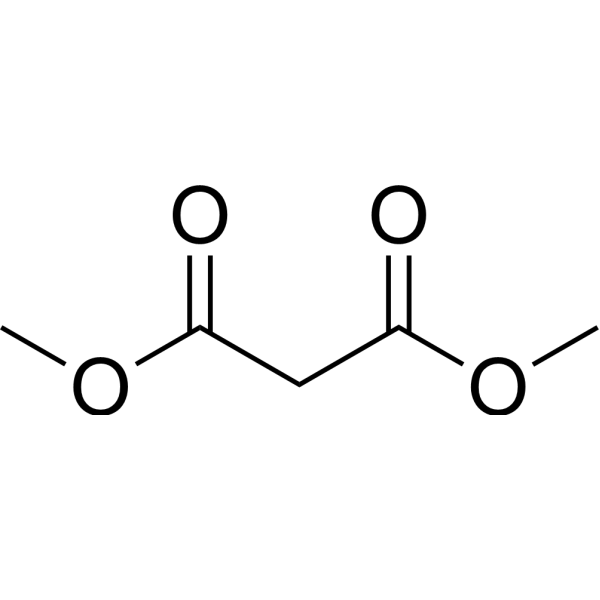
Dimethyl malonate is a competitive inhibitor of succinate dehydrogenase (SDH). Dimethyl malonate is able to cross the blood-brain barrier and hydrolyse to malonate. Dimethyl malonate reduces neuronal apoptosis .
|
-
-
- HY-W012875
-
|
β-Nitropropionic acid; Bovinocidin
|
Bacterial
Apoptosis
Autophagy
|
Infection
Metabolic Disease
Inflammation/Immunology
|
|
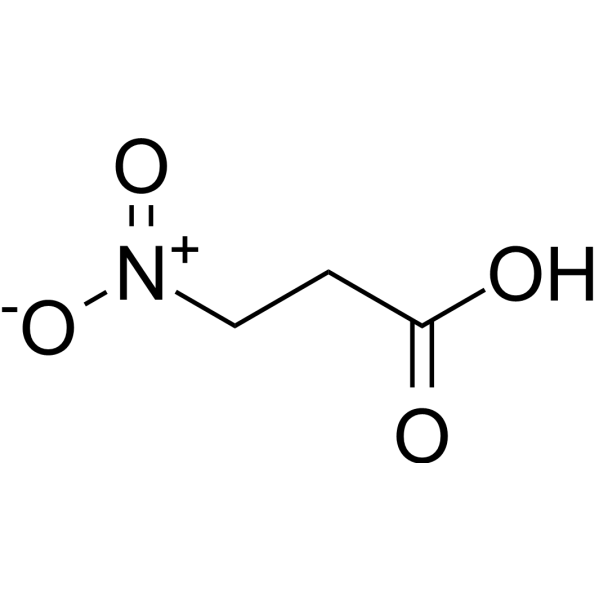
3-Nitropropanoic acid (β-Nitropropionic acid) is an irreversible and orally active inhibitor of succinate dehydrogenase. 3-Nitropropanoic acid exhibits potent antimycobacterial activity with a MIC value of 3.3 μM. 3-Nitropropanoic acid can induce cell apoptosis .
|
-
-
- HY-D0018
-
|
Dichlorophenylindophenol sodium; DCPIP sodium; Indochlorophenol sodium
|
Biochemical Assay Reagents
|
Others
|
|
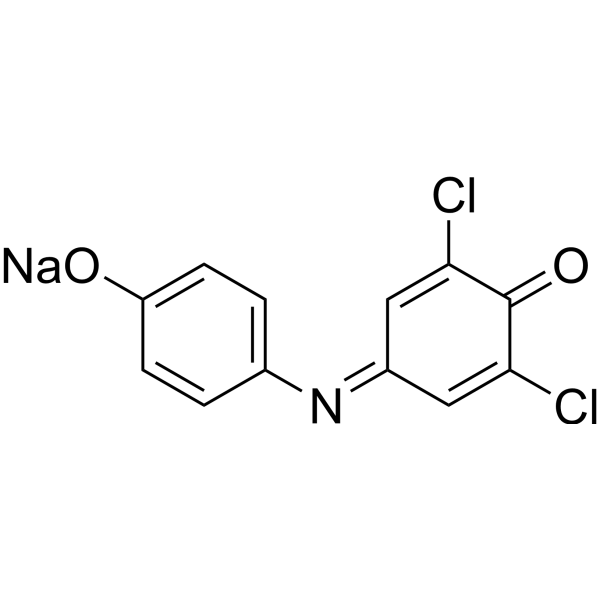
DCIP sodium is a blue dye commonly used in various biochemical and biotechnological applications as an indicator of redox reactions. DCIP sodium has unique chemical properties that change color according to the oxidation state of the substance being tested. It is commonly used in enzyme assays, such as measuring the activity of succinate dehydrogenase, or in protein quantification methods, such as the Lowry assay.
|
-
-
- HY-119459
-
-
-
- HY-W753375
-
|
|
Environmental Pollutants
Fungal
Succinate Dehydrogenase
|
Infection
|
|
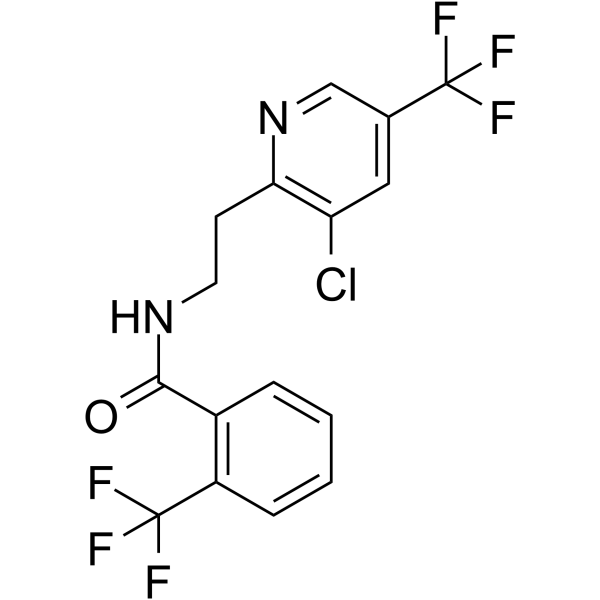
Fluindapyr is a broad-spectrum pyrazolamide chiral fungicide of succinate dehydrogenase inhibitor (SDHIs) with broad bactericidal spectrum and good efficacy. Fluopimomide is effective against M. incognita in vitro and application of fuopimomide shows some growth promotion effect in cucumber .
|
-

-
- HY-N7114A
-
|
|
Bacterial
P2Y Receptor
Succinate Dehydrogenase
Drug Intermediate
|
Infection
Inflammation/Immunology
|
|
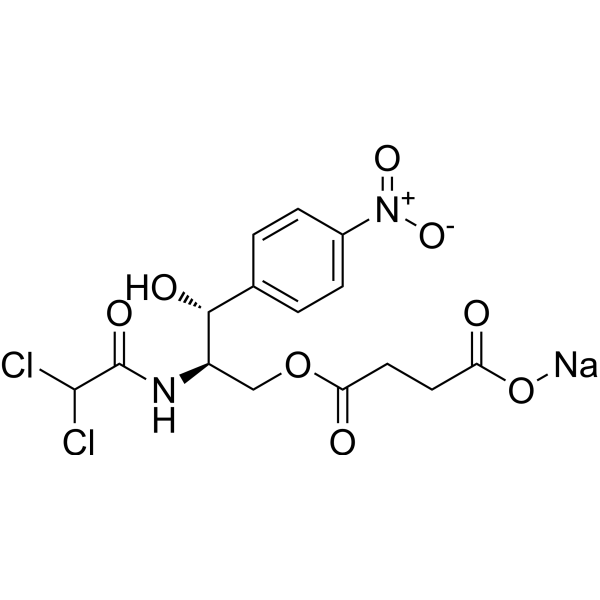
Chloramphenicol succinate sodium is a prodrug of Chloramphenicol (HY-B0239), acting as a P2Y14R inhibitor with an IC50 of 1.585 nM. Chloramphenicol succinate sodium serves as a competitive substrate and inhibitor of succinate dehydrogenase (SDH), which may account for its toxicity. Chloramphenicol succinate sodium exerts a significant inhibitory effect on colitis. Chloramphenicol succinate sodium can be used in research related to myelosuppression, gray baby syndrome, aplastic anemia, bacterial meningitis and inflammatory bowel disease .
|
-
-
- HY-137006
-
|
|
Fluorescent Dye
|
Others
|
|
MTT Formazan is a purple water-insoluble product formed by the reduction of yellow soluble MTT by succinate dehydrogenase in the mitochondria of viable cells. The amount of MTT Formazan produced is proportional to cellular metabolic activity, and it can serve as an indicator for evaluating cell viability and proliferation. MTT Formazan exhibits solvent-dependent solubility properties, and its absorbance value can be measured by spectrophotometry to reflect cellular status. MTT Formazan also supports the assessment of cell viability in bacterial MTT assays. MTT Formazan can be used in photoacoustic microscopy to enhance the imaging effect of viable cells, especially in applications in the fields of three-dimensional cell culture and tissue engineering .
|
-

-
- HY-B2011
-
|
|
Environmental Pollutants
Succinate Dehydrogenase
Fungal
Mitochondrial Metabolism
|
Infection
|
|
Flutolanil is a succinate dehydrogenase complex inhibitor and fungicide. Flutolanil blocks electron transfer between the redox center of succinate dehydrogenase and coenzyme Q, inhibits mycelial oxygen consumption, and suppresses mycelial growth. Flutolanil induces acute and sublethal toxicity in zebrafish at different life stages. Flutolanil can be used in studies on plant disease control .
|
-

-
- HY-135549
-
-
-
- HY-D0007
-
|
Tetrazolium blue
|
Biochemical Assay Reagents
|
Others
|
|
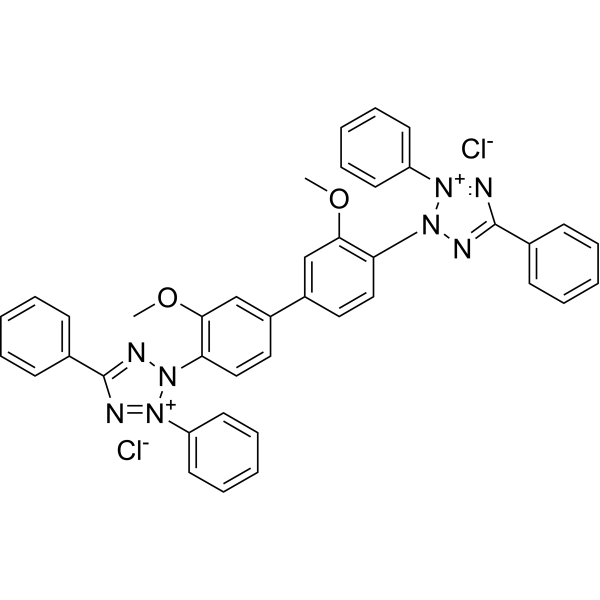
Blue Tetrazolium is a tetrazolium salt chromogenic dye that can be reduced to a dark blue formazan product. Blue Tetrazolium is applicable for assays such as succinate dehydrogenase activity detection and reducing sugar quantification. Blue Tetrazolium also serves as a novel corrosion inhibitor for cold-rolled steel in hydrochloric acid solutions. Blue Tetrazolium has a broad wavelength range (480-600 nm), with the maximum absorbance observed at 540 nm .
|
-
-
- HY-108012
-
|
|
Fungal
|
Infection
|
|
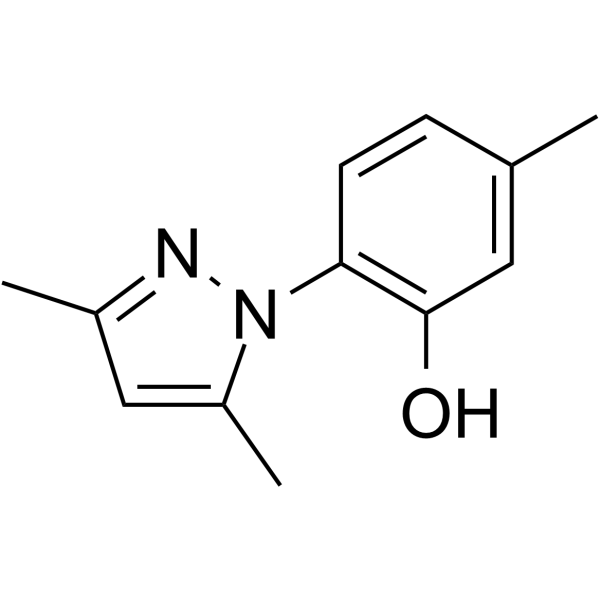
ME1111 is an antifungal agent that is active against dermatophytes. ME1111 is an inhibitor of the succinate dehydrogenase of Trichophyton species. ME1111 has an excellent ability to penetrate human nails and is used for onychomycosis research .
|
-
-
- HY-139983
-
|
|
Fungal
|
Infection
|
|
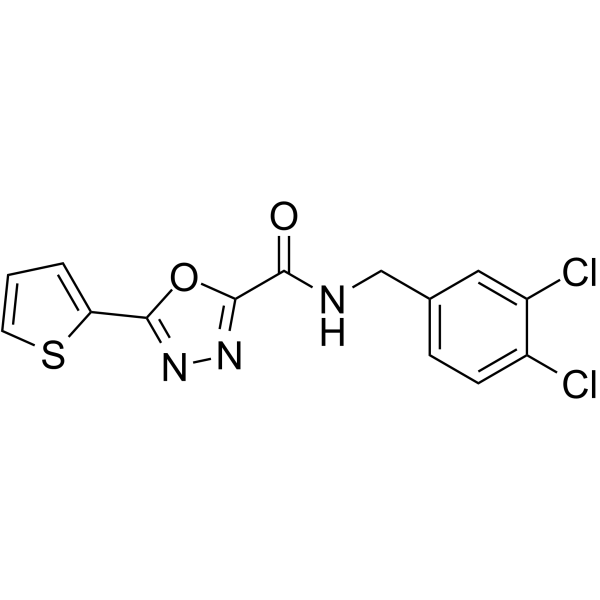
SDH-IN-1 (compound 4i) is a succinate dehydrogenase (SDH) inhibitor with an IC50 of 4.53 μM. SDH-IN-1 has potent antifungal activities. SDH-IN-1 displays potent activity against S. sclerotiorum (EC50 of 0.14 mg/L) .
|
-
-
- HY-44178
-
|
|
Succinate Dehydrogenase
Reactive Oxygen Species (ROS)
|
Infection
Neurological Disease
Inflammation/Immunology
|
|
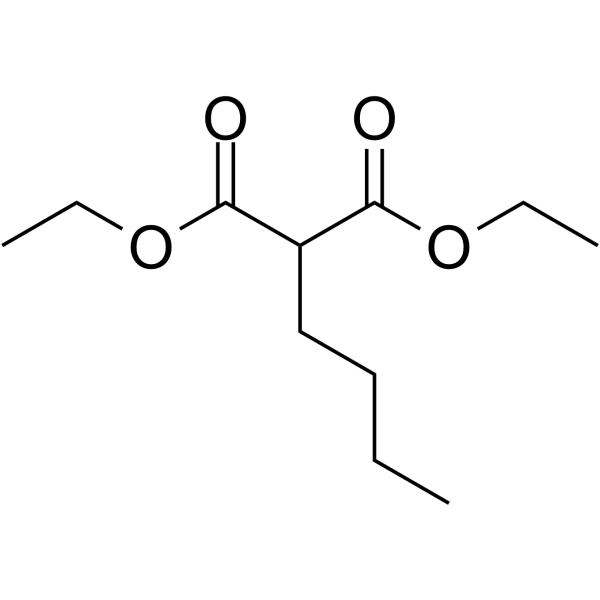
Diethyl butylmalonate is a competitive inhibitor of succinate dehydrogenase. Diethyl butylmalonate exerts anti-inflammatory effects by inhibiting ROS production. Diethyl butylmalonate also has neuroprotective activity. In addition, Diethyl butylmalonate shows toxicity to T. pyriformis, with its log(IGC50 -1) being 0.557. Diethyl butylmalonate can be used in the research of diseases such as Alzheimer's disease .
|
-
-
- HY-119459R
-
|
|
Reference Standards
Succinate Dehydrogenase
Fungal
Parasite
Constitutive Androstane Receptor
Caspase
NF-κB
|
Infection
Cancer
|
|
Fluopyram (Standard) is the analytical standard of Fluopyram (HY-119459). This product is intended for research and analytical applications. Fluopyram is an orally active succinate dehydrogenase inhibitor, antifungal and nematicide. Fluopyram inhibits succinate dehydrogenase activity, activates CAR/PXR nuclear receptors, and increases caspase-3, TNF-α and NF-κB. Fluopyram inhibits the growth of F. virguliforme, Botrytis cinerea and Alternaria solani with EC50 values of 3.35, 5.389 and 0.244 µg/mL, respectively. Fluopyram induces liver and thyroid tumor formation. Fluopyram is nephrotoxic and embryotoxic .
|
-

-
- HY-W775091
-
|
IKF-5411
|
Fungal
Succinate Dehydrogenase
|
Infection
|
|
Isofetamid (IKF-5411) is a succinate dehydrogenase inhibitor and a fungicide. Isofetamid exhibits good control effects against various fungal diseases such as gray mold, white mold, and powdery mildew. Isofetamid is promising for research of plant fungal diseases .
|
-

-
- HY-139161
-
|
|
Environmental Pollutants
Fungal
|
Infection
|
|
Penflufen is a highly efficient, broad-spectrum succinate dehydrogenase inhibitor (SDHI). Penflufen can be used as a fungicide and has broad bioactivity against many fungal diseases, including potato black scurf, wheat sharp eyespot, rice sheath blight, and root rot in peanut and other similar fungal diseases .
|
-
-
- HY-W516735
-
|
|
Fungal
Succinate Dehydrogenase
|
Infection
|
|
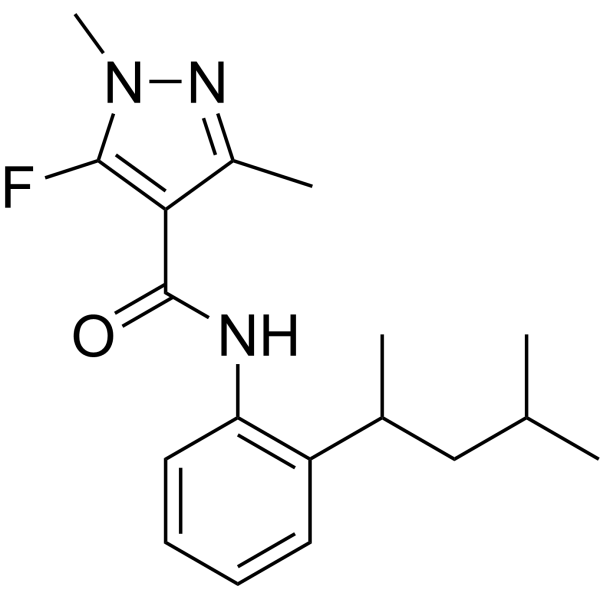
Sedaxane is a new broad-spectrum seed treatment fungicide. Sedaxane inhibits fungal respiration by binding to the succinate dehydrogenase complex in fungal mitochondria. Sedaxane has broad-spectrum activity against a variety of seed-borne and soil-borne fungi. Sedaxane can be used in the study of barley loose smut and barley stripe disease .
|
-

-
- HY-148921
-
|
|
Fungal
|
Infection
|
|
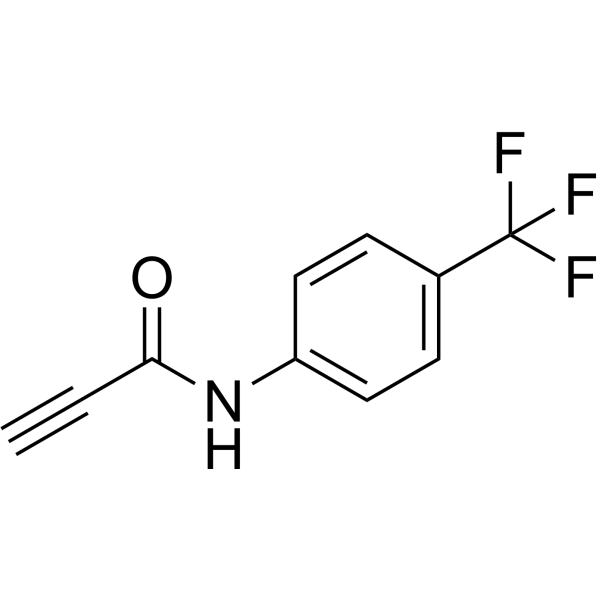
SDH-IN-2 is a potent succinate dehydrogenase (SDH) inhibitor with an IC50 of 0.55 μg/mL. SDH-IN-2 is also an antifungal agent. SDH-IN-2 inhibits phytopathogenic fungia with average EC50 values of 3.82-9.81 μg/mL for all the fungi . SDH-IN-2 is a click chemistry reagent, it contains an Alkyne group and can undergo copper-catalyzed azide-alkyne cycloaddition (CuAAc) with molecules containing Azide groups.
|
-
-
- HY-162142
-
|
|
Bacterial
Succinate Dehydrogenase
Reactive Oxygen Species (ROS)
|
Infection
|
|
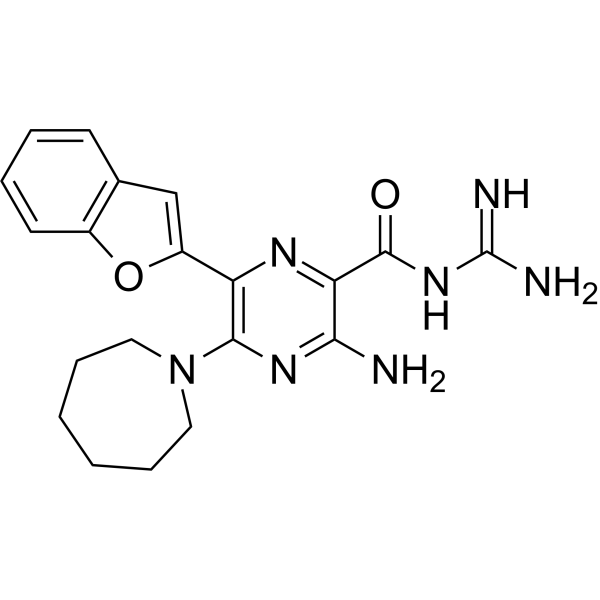
BB2-50F is an antimicrobial agent and succinate dehydrogenase and F1Fo-ATP synthase inhibitor. BB2-50F induces ROS. BB2-50F inhibits succinate oxidation and reduces tricarboxylic acid (TCA) cycle activity. BB2-50F inhibits the growth of Mycobacterium tuberculosis H37Rv and its auxotrophic, attenuated derivative mc2 6230 (ΔRD1, ΔpanCD) with an MIC of 8 μM .
|
-
-
- HY-133726
-
|
|
Bacterial
|
Infection
|
|
Bixafen, a member of the pyrazole class of fungicides, serves as a broad-spectrum agent for controlling pathogens in cereal crops by functioning as a succinate dehydrogenase inhibitor.
|
-

-
- HY-169972
-
|
|
Succinate Dehydrogenase
|
Infection
|
|
Succinate dehydrogenase-IN-5 (Compound M8) is the inhibitor for succinate dehydrogenase. Succinate dehydrogenase-IN-5 interfers with the energy metabolism and growth of fungi, inhibits Rhizoctonia solani, Sclerotinia sclerotiorum, Botrytis cinerea and Fusarium graminearum with EC50 < 0.3 μg/mL .
|
-

-
- HY-149876
-
|
|
Fungal
|
Infection
|
|
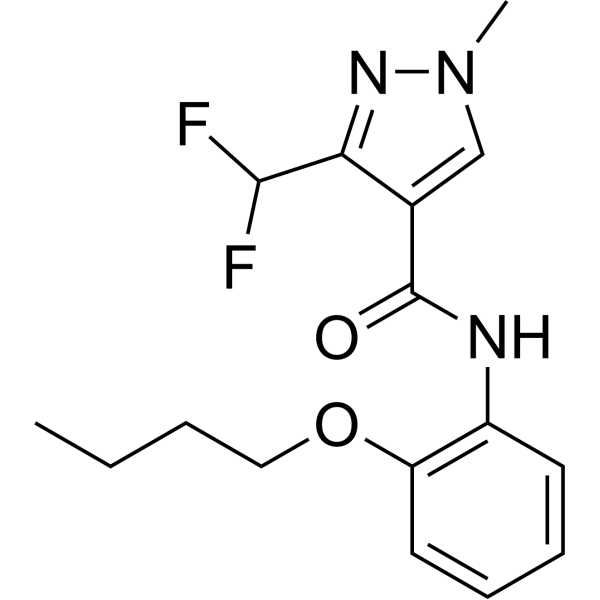
SDH-IN-5 (compound 7d) is a potent succinate dehydrogenase (SDH) inhibitor, with an IC50 of 3.293 μM. SDH-IN-5 is also exhibits antifungal activity, with an EC50 of 0.046 μg/mL against R. solani. SDH-IN-5 could significantly inhibit the growth of R. solani in rice leaves with excellent protective and curative efficacies .
|
-
-
- HY-44178S
-
-
-
- HY-139839
-
|
|
Fungal
|
Infection
|
|
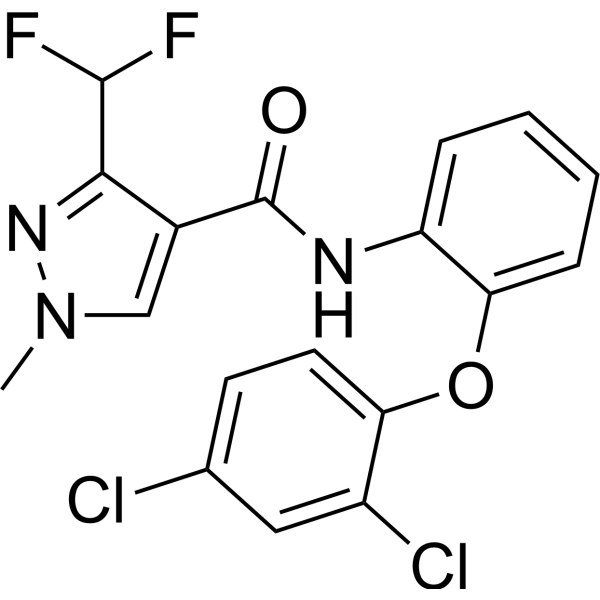
Y12196 is a novel succinate dehydrogenase inhibitor (SDHI) which exhibits strong fungicidal activity against F. graminearum.
|
-
-
- HY-120183
-
|
|
Fungal
|
Infection
|
|
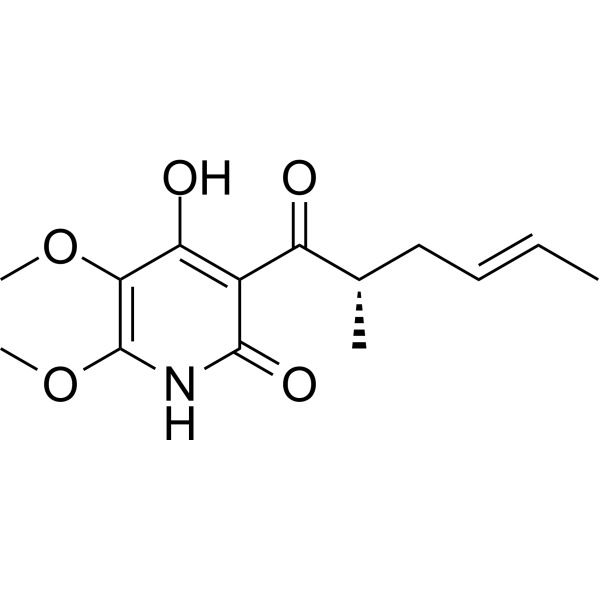
Harzianopyridone is a compound that can be isolated from Trichoderma harzianum. Harzianopyridone is a succinate dehydrogenase (SDH) inhibitor with an IC50 of 80 nM. Harzianopyridone has antifungal, antibacterial, and herbicidal activities .
|
-
-
- HY-106371
-
|
|
Antibiotic
Fungal
|
Infection
|
|
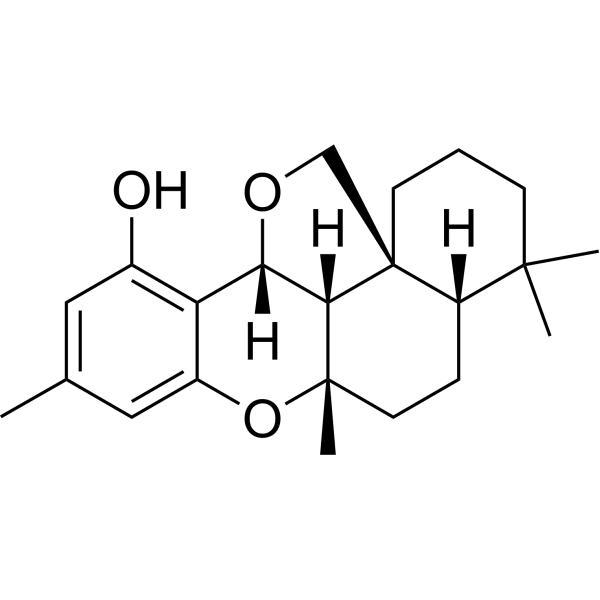
Siccanin is a succinate dehydrogenase (SDH) inhibitor (IC50=0.9 μM) with species-selective activity. Siccanin also is a antibiotic against pathogenic fungi .
|
-
-
- HY-Y1787R
-
|
|
Reference Standards
Apoptosis
|
Neurological Disease
|
|
Dimethyl malonate is a competitive inhibitor of succinate dehydrogenase (SDH). Dimethyl malonate is able to cross the blood-brain barrier and hydrolyse to malonate. Dimethyl malonate reduces neuronal apoptosis .
|
-

-
- HY-19688B
-
|
WR 6026 tosylate
|
Parasite
Mitochondrial Metabolism
|
Infection
|
|
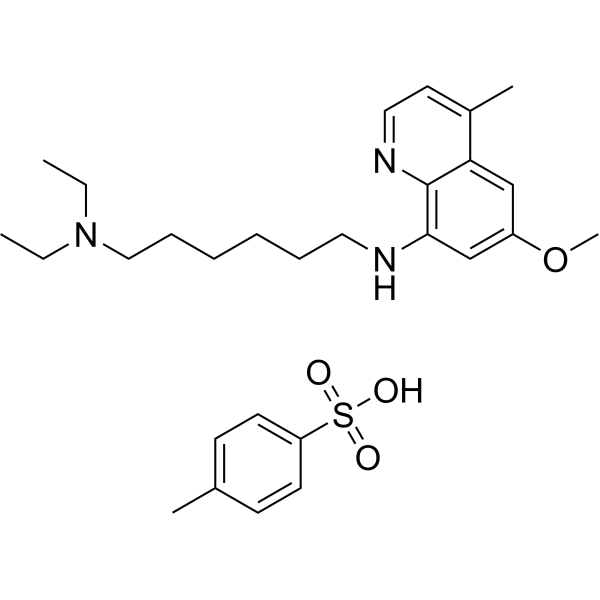
Sitamaquine (WR6026) tosylate, an orally active 8-aminoquinoline analog, is an antileishmanial agent. Sitamaquine tosylate inhibits mitochondrial complex II (succinate dehydrogenase). Sitamaquine tosylate is a lipophilic weak base that rapidly accumulates in acidic compartments of Leishmania spp., mainly in acidocalcisomes .
|
-
-
- HY-162776
-
-

-
- HY-149323
-
|
|
Fungal
|
Infection
|
|
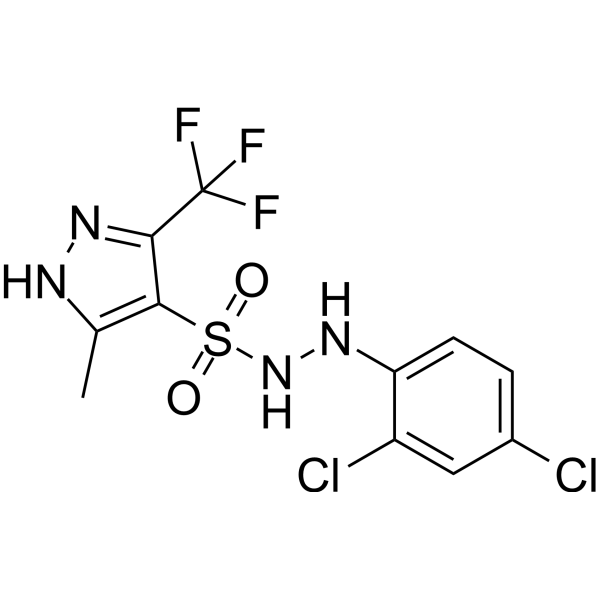
SDH-IN-4 (compound B6) is a selective inhibitor against succinate dehydrogenase (SDH) with an IC50 value of 0.28 μg/mL. SDH-IN-4 has highly efficient and broad-spectrum antifungal activity, against R. solani with an EC50 value of 0.23 μg/mL .
|
-
-
- HY-P3820
-
-
![[Dehydro-Pro4] Substance P (4-11)](//file.medchemexpress.com/product_pic/hy-p3820.gif)
-
- HY-178778
-
|
|
Fungal
|
Infection
|
|
SDH-IN-38 (Compound IIIe) is a Succinate dehydrogenase inhibitor. SDH-IN-38 is an antifungal agent, with an EC50 value of 0.009 μg/mL against R. solani mycelia. SDH-IN-38 inhibits mycelial growth by affecting mycelial respiration. SDH-IN-38 induces cellular senescenc and reduces mitochondrial membrane potential in mycelia .
|
-

-
- HY-173021
-
|
|
Succinate Dehydrogenase
Fungal
|
Infection
|
|
Succinate dehydrogenase-IN-7 (Compound 2f) is a Succinate dehydrogenase inhibitor (IC50 = 2.51 μM). Succinate dehydrogenase-IN-7 has fungicidal activity .
|
-

-
- HY-N7114
-
|
|
Bacterial
Drug Intermediate
P2Y Receptor
Succinate Dehydrogenase
|
Infection
Inflammation/Immunology
|
|
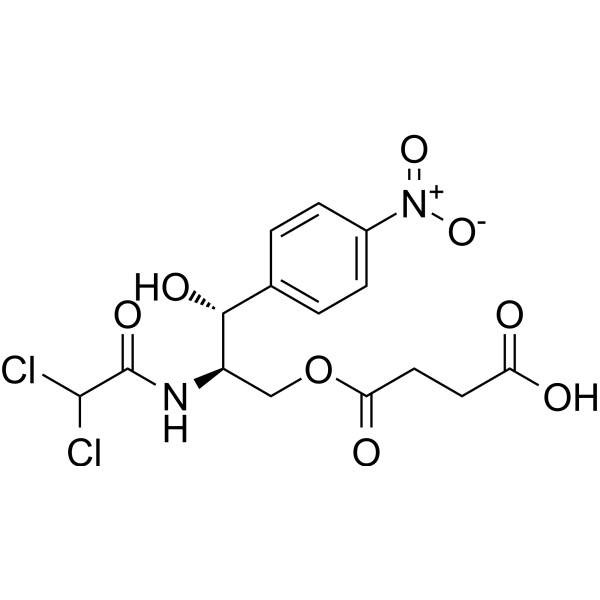
Chloramphenicol succinate is a prodrug of Chloramphenicol (HY-B0239), acting as a P2Y14R inhibitor with an IC50 of 1.585 nM. Chloramphenicol succinate serves as a competitive substrate and inhibitor of succinate dehydrogenase (SDH), which may account for its toxicity. Chloramphenicol succinate exerts a significant inhibitory effect on colitis. Chloramphenicol succinate can be used in research related to myelosuppression, gray baby syndrome, aplastic anemia, bacterial meningitis and inflammatory bowel disease .
|
-
-
- HY-174456
-
|
|
Succinate Dehydrogenase
Fungal
|
Infection
|
|
Succinate dehydrogenase-IN-10 (Compound B5) is a RsSDH (Succinate dehydrogenase of R. solani) inhibitor with an IC50 of 0.12 μM. Succinate dehydrogenase-IN-10 exhibits antifungal activity against R. solani (EC50 of 0.002 μg/mL) and P. pachyrhizi .
|
-

-
- HY-169965
-
|
|
Succinate Dehydrogenase
|
Infection
|
|
Succinate dehydrogenase-IN-4 (Compound 4b) is the inhibitor for succinate dehydrogenase with an IC50 of 3.38 μM. Succinate dehydrogenase-IN-4 exhibits antifungal activity against Physalospora piricola and Colletotrichum orbiculare with EC50 of 16.33 μM and 18.06 μM .
|
-

-
- HY-163890
-
|
|
Succinate Dehydrogenase
Parasite
|
Infection
|
|
Succinate dehydrogenase-IN-2 (Compound 12x) is an inhibitor for succinate dehydrogenase (SDH) with an IC50 of 1.22 mg/L. Succinate dehydrogenase-IN-2 exhibits antifungal activity, that inhibits S. sclerotiorum, V. mali, G. graminis, R. solani and B. cinerea with EC50 of 0.52-3.42 mg/L .
|
-

-
- HY-176140
-
|
|
Fungal
Succinate Dehydrogenase
|
Infection
|
|
Succinate dehydrogenase-IN-9 (Compound Iik) is a succinate dehydrogenase inhibitor (IC50: 3.6 μM). Succinate dehydrogenase-IN-9 exhibits potent inhibitory activity against various fungal species (eg: inhibits S. sclerotiorum with an EC50 value of 1.14 μg/mL. Succinate dehydrogenase-IN-9 enhances the nitrate reductase activity, thereby facilitating plant growth .
|
-

-
- HY-162648
-
|
|
Fungal
|
Infection
|
|
Succinate dehydrogenase-IN-1 (Compound 34) is an inhibitor for succinate dehydrogenase (SDH) with an IC50 of 0.94 μM and a KD of 22.4 μM. Succinate dehydrogenase-IN-1 exhibits antifungal activity against Rhizoctonia solani, Sclerotinia sclerotiorum, Monilinia fructicola, and Botrytis cinerea, with EC50 of 0.04 μM, 1.13 μM, 1.61 μM and 1.21 μM, respectively .
|
-

-
- HY-172810
-
|
|
Succinate Dehydrogenase
Fungal
|
Infection
|
|
Succinate dehydrogenase-IN-8 (compound i19) is a potent succinate dehydrogenase (SDH) inhibitor. Succinate dehydrogenase-IN-8, an indene amino acid derivative, demonstrates potent in vitro antifungal activity against Rhizoctonia solani (EC50=0.1843 mg/L), Botrytis cinerea (EC50=0.4829 mg/L), and Sclerotinia sclerotiorum (EC50=0.1349 mg/L) .
|
-

-
- HY-175501
-
|
|
Fungal
Succinate Dehydrogenase
|
Infection
|
|
Succinate dehydrogenase-IN-11 (Compound A12) is a succinate dehydrogenase inhibitor with an IC50 value of 3.58 μM. Succinate dehydrogenase-IN-11 exhibits antifungal activity. Succinate dehydrogenase-IN-11 shows activity against fungi such as R. solani, B. cinerea, F. graminearum, and S. sclerotiorum in vitro. Succinate dehydrogenase-IN-11 also exerts a controlling effect on R. solani, P. pachyrhizi, and P. sorghi in vivo. Succinate dehydrogenase-IN-11 can be used in research related to antifungal applications .
|
-

-
- HY-172363
-
|
|
Succinate Dehydrogenase
Fungal
|
Infection
|
|
Succinate dehydrogenase-IN-6 (Compound E23) is the inhibitor for succinate dehydrogenase that inhibits SDH in Rhizoctonia solani with an IC50 of 11.76 μM. Succinate dehydrogenase-IN-6 disrupts fungal cell membrane, exhibits board-spectrum antifungal activity that inhibits R. solani, V. dahliae, A. solani and C. gloeosporioides with EC50s of 0.41, 0.27, 1.15, 0.27 μg/mL, respectively. Succinate dehydrogenase-IN-6 exhibits no significant toxicity in rice and zebrafish (LC50 > 12.5 μg/mL) .
|
-

-
- HY-139851
-
|
|
Fungal
|
Infection
|
|
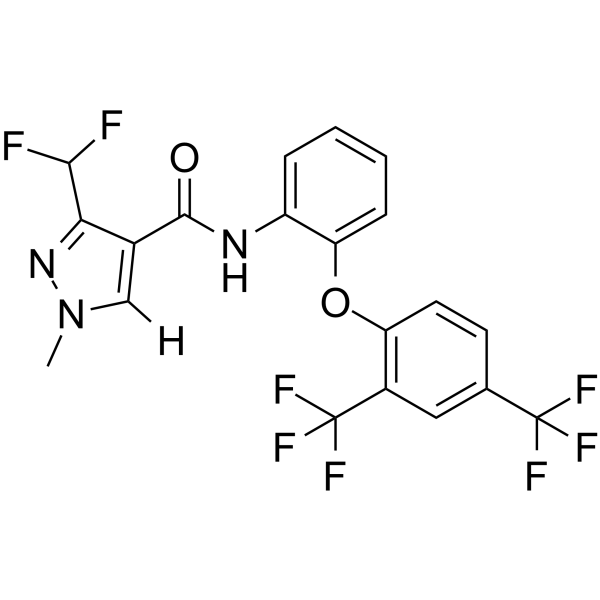
Fungicide5 is a fungicide candidate targeting succinate dehydrogenase (Ki = 0.095 μM).
|
-
-
- HY-149653
-
|
|
Fungal
|
Infection
|
|
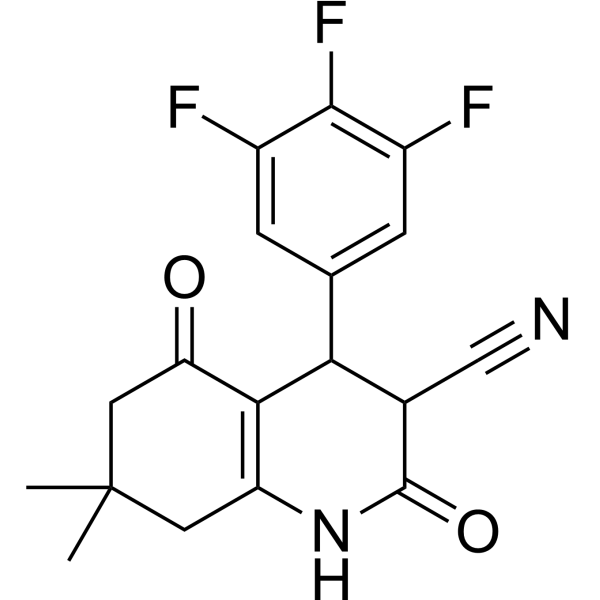
SDH-IN-10 is a potent succinate dehydrogenase inhibitor (SDHI) with antifungal effects .
|
-
-
- HY-157218
-
-
-
- HY-178457
-
-

-
- HY-B2011R
-
|
|
Reference Standards
Fungal
Mitochondrial Metabolism
Succinate Dehydrogenase
Environmental Pollutants
|
Infection
|
|
Flutolanil (Standard) is the analytical standard of Flutolanil (HY-B2011). This product is intended for research and analytical applications. Flutolanil is a succinate dehydrogenase complex inhibitor and fungicide. Flutolanil blocks electron transfer between the redox center of succinate dehydrogenase and coenzyme Q, inhibits mycelial oxygen consumption, and suppresses mycelial growth. Flutolanil induces acute and sublethal toxicity in zebrafish at different life stages. Flutolanil can be used in studies on plant disease control .
|
-

-
- HY-145326
-
|
|
Fungal
|
Others
|
|
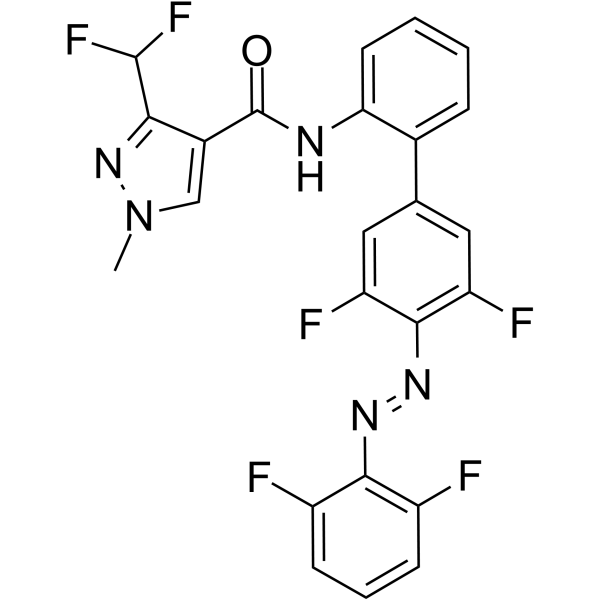
Antibacterial agent 67 (IC50 = 0.03 μM) has a great enzyme-inhibiting activity increase toward succinate dehydrogenase in comparison with fluxapyroxad (IC50 = 4.40 μM).
|
-
-
- HY-149601
-
|
|
Fungal
|
Infection
|
|
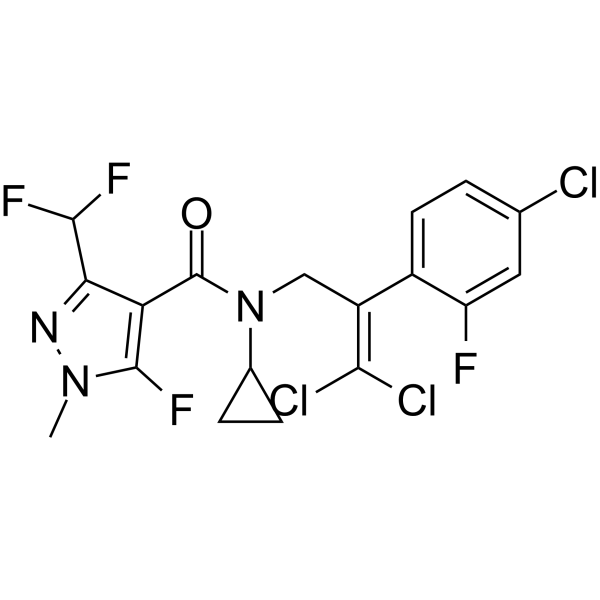
SDH-IN-8 (compound G40) is a potent succinate dehydrogenase (SDH) inhibitor with an IC50 of 27 nM for porcine SDH. SDH-IN-8 has fungicidal properties .
|
-
-
- HY-149600
-
|
|
Fungal
|
Infection
|
|
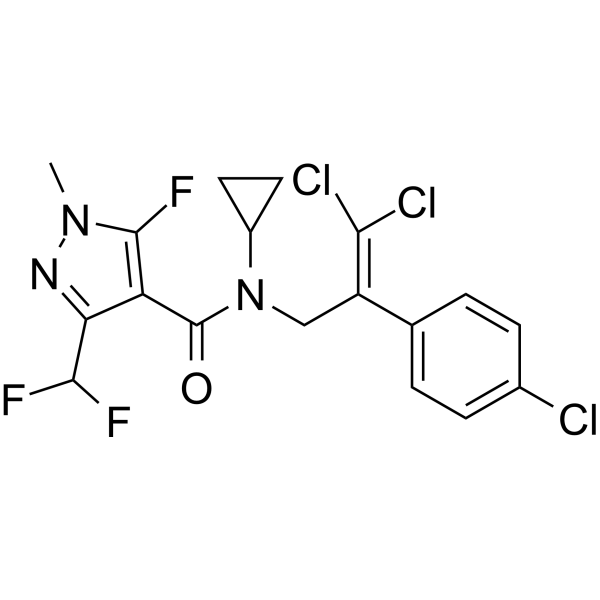
SDH-IN-7 (compound G28) is a potent succinate dehydrogenase (SDH) inhibitor with an IC50 of 26 nM for porcine SDH. SDH-IN-7 has fungicidal properties .
|
-
- HY-156270
-
|
|
Bacterial
|
Infection
|
|
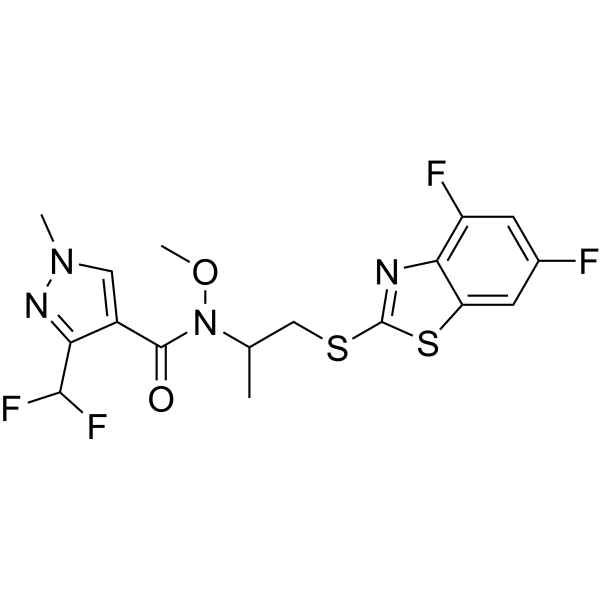
SDH-IN-9 (compound Ip) is a potent inhibitor of Succinate Dehydrogenase. SDH-IN-9 shows fungicidal activity against Fusarium graminearum Schw with the EC50 of 0.93 μg/mL .
|
-
- HY-162500
-
|
|
Fungal
|
Infection
|
|
Antifungal agent 99 (Compound E1) is a fungal succinate dehydrogenase (SDH) inhibitor. Antifungal agent 99 reduces mycelial density and significantly increase the mitochondrial number in mycelia cytoplasm .
|
-

- HY-168470
-
|
|
Fungal
|
Infection
|
|
Antifungal agent 125 (compound 4H) is a potent inhibitor of succinate dehydrogenase (SDH), with the IC50 of 3.59 μg/mL. Antifungal agent 125 exhibits fungicidal activity against Alternaria alternata .
|
-

- HY-155700
-
|
|
Fungal
|
Infection
|
|
SDH-IN-6 (compound 6i) is a potent succinate dehydrogenase (SDH) inhibitor. SDH-IN-6 has antifungal activity against Valsa mali with an EC50 value of 1.77 mg/L .
|
-
- HY-178469
-
|
|
Fungal
|
Infection
|
|
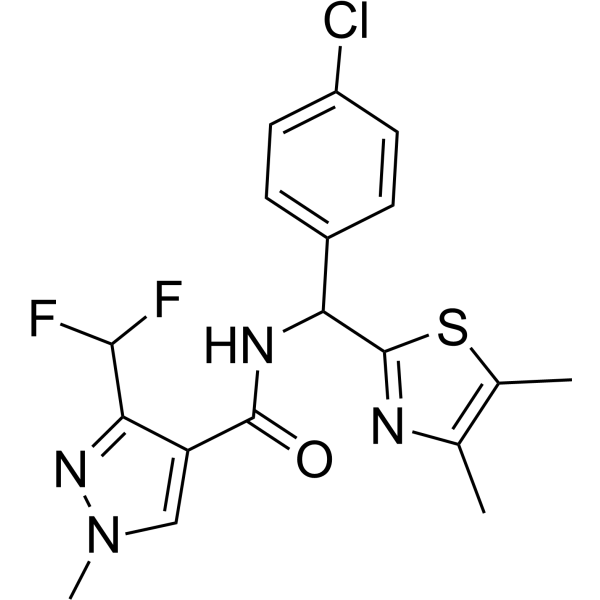
SDH-IN-35 (Compound A17) is a potent succinate dehydrogenase (SDH) inhibitor with antifungal activity (EC50=11.9 μM). SDH-IN-35 is promising for research of agricultural fungicide .
|
-

- HY-133726R
-
|
|
Bacterial
Reference Standards
|
Infection
|
|
Bixafen (Standard) is the analytical standard of Bixafen. This product is intended for research and analytical applications. Bixafen, a member of the pyrazole class of fungicides, serves as a broad-spectrum agent for controlling pathogens in cereal crops by functioning as a succinate dehydrogenase inhibitor.
|
-

- HY-172362
-
|
|
Succinate Dehydrogenase
Fungal
|
Infection
|
|
SDH-IN-22 (Compound SEZC7) is the inhibitor for succinate dehydrogenase (SDH) with an IC50 of 16.6 μM. SDH-IN-22 exhibits antifungal activity that inhibits Magnaporthe grisea with an EC50 of 0.5 mg/L .
|
-

- HY-124408
-
|
|
Fungal
|
Infection
|
|
Mepronil, a compound belonging to the carboxyamine group of fungicides, has a particularly strong bactericidal effect on basidiomycete fungi. Mepronil acts as a single point inhibitor of the succinate ubiquinone reductase or succinate dehydrogenase complex. Mepronil can be used in the study of cross resistance and biological infection .
|
-

- HY-19688A
-
|
WR 6026 hydrochloride
|
Parasite
Mitochondrial Metabolism
|
Infection
|
|
Sitamaquine (WR6026) hydrochloride, an orally active 8-aminoquinoline analog, is an antileishmanial agent. Sitamaquine hydrochloride inhibits mitochondrial complex II (succinate dehydrogenase). Sitamaquine hydrochloride is a lipophilic weak base that rapidly accumulates in acidic compartments of Leishmania spp., mainly in acidocalcisomes .
|
-

- HY-162458
-
|
|
Fungal
|
Infection
Inflammation/Immunology
|
|
Antifungal agent 100 (compound 3i) exhibits significant antifungal effects against S. sclerotiorum with an EC50 value of 0.33 mg/L. Antifungal agent 100 displays an IC50 of 0.63 mg/mL against the Succinate dehydrogenase (SDH) of S. sclerotiorum .
|
-
- HY-155004
-
|
|
Antibiotic
Fungal
|
Infection
|
|
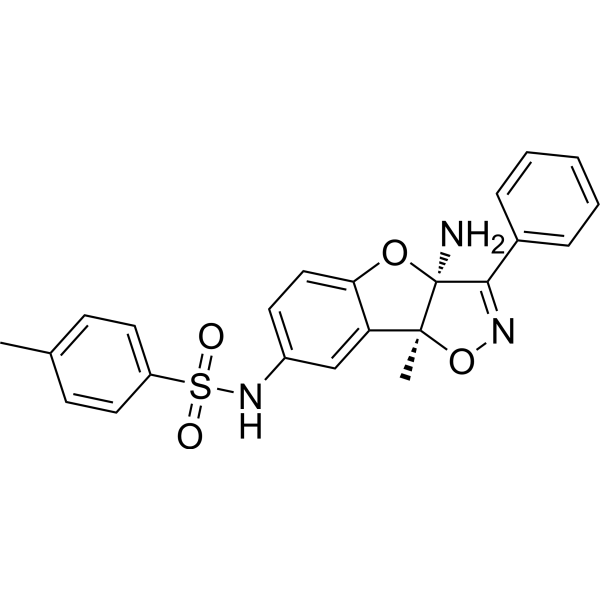
SDH-IN-3 is a succinate dehydrogenase (SDH) inhibitor with an IC50 of 7.2 μg/mL. SDH-IN-3 exhibits excellent antifungal activities against Nigrospora oryzae with an EC50 of 1.9 μg/mL. SDH-IN-3 can be used for anti-infection research .
|
-
- HY-159486
-
|
|
Succinate Dehydrogenase
Fungal
|
Infection
|
|
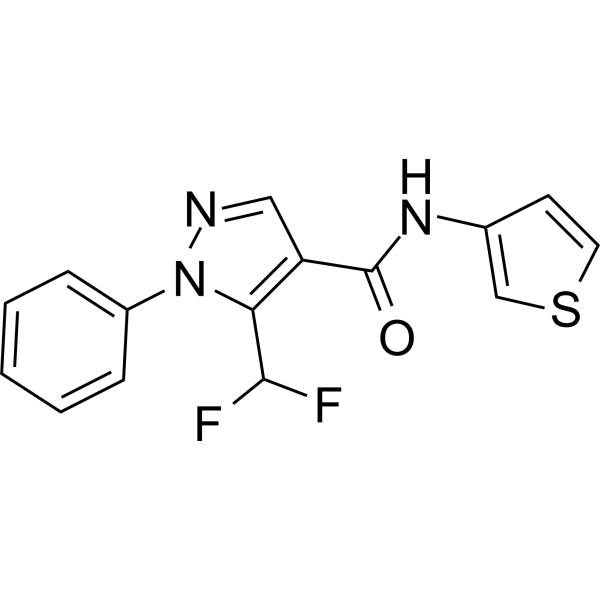
SDH-IN-18 (Compound 3a) is an inhibitor for succinate dehydrogenase (SDH) with an IC50 of 8.70 mg/L. SDH-IN-18 destroys fungal morphology and reproduction, exhibits antifungal activity against Rhizoctonia solani and Sclerotinia sclerotiorum with EC50 of 0.48 and 1.4 mg/L .
|
-

- HY-161504
-
|
|
Fungal
Succinate Dehydrogenase
|
Infection
|
|
SDH-IN-14 (Compound Z2) is an inhibitor of succinate dehydrogenase (SDH). SDH-IN-14 has antifungal activity (EC50=2.7 μg/mL) against B.cinerea. SDH-IN-14 acts by disrupting the integrity of the cell wall and cell membrane .
|
-

- HY-163284
-
|
|
Succinate Dehydrogenase
Fungal
|
Infection
|
|
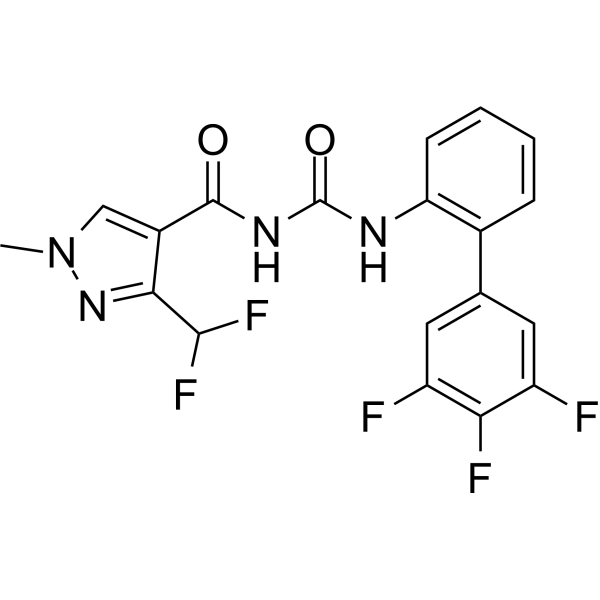
SDH-IN-12 (compound 9b) is a succinate dehydrogenase inhibitor, which exhibits activity against S. sclerotiorum and C. arachidicola, with EC50s of 0.97 and 2.07 μM, respectively. SDH-IN-12 reveals no significant herbicidal activity against monocotyledonous and dicotyledonous plants .
|
-
- HY-158321
-
|
|
Fungal
Succinate Dehydrogenase
|
Infection
|
|
SDH-IN-15 (Compound 5e) is an inhibitor of succinate dehydrogenase (SDH) (IC50=2.04 μM). SDH-IN-15 has significant antifungal activity. SDH-IN-15 blocks the mitochondrial respiratory chain of the fungus through inhibition of SDH, resulting in fungal death .
|
-

- HY-157459
-
|
|
Fungal
|
Infection
|
|
SDH-IN-11 (compound A7) is a SDH inhibitor, and shows inhibitory effect on nematode feeding, reproductive ability, and egg hatching. SDH-IN-11 promotes the oxidative stress of nematodes and causes intestinal damage to nematodes. SDH-IN-11 inhibits the activity of succinate dehydrogenase (SDH) in nematodes .
|
-
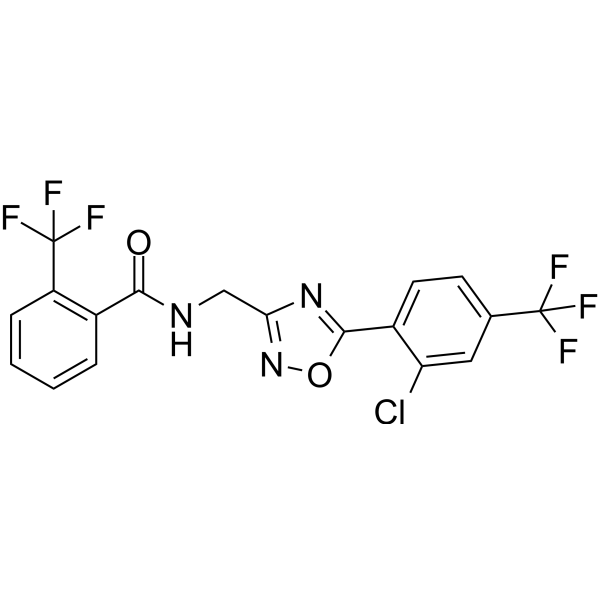
- HY-135549R
-
|
|
Reference Standards
Antibiotic
Fungal
Succinate Dehydrogenase
Cytochrome P450
|
Infection
Inflammation/Immunology
|
|
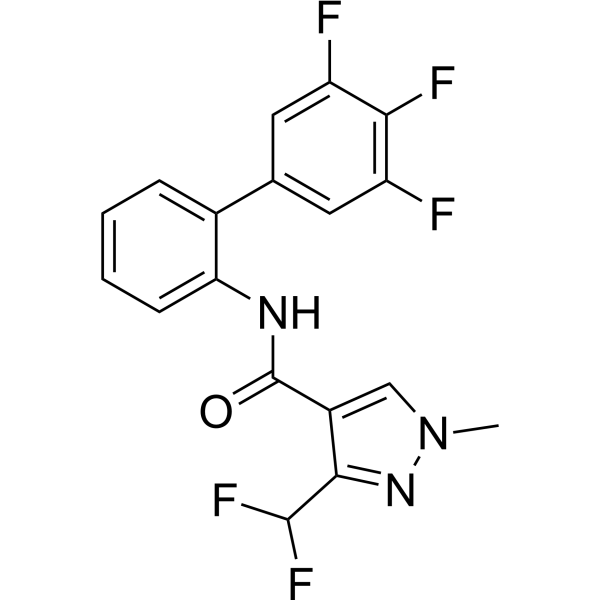
Fluxapyroxad (Standard) is the analytical standard of Fluxapyroxad. This product is intended for research and analytical applications. Fluxapyroxad is a synthetic broad-spectrum fungicide for the control of fungal diseases. It works by inhibiting succinate dehydrogenase in complex II of the mitochondrial respiratory chain, resulting in inhibition of spore germination, germ tubes and mycelia growth within the fungus target species .
|
-

- HY-124408R
-
|
|
Reference Standards
Fungal
|
Infection
|
|
Mepronil (Standard) is the analytical standard of Mepronil. This product is intended for research and analytical applications. Mepronil, a compound belonging to the carboxyamine group of fungicides, has a particularly strong bactericidal effect on basidiomycete fungi. Mepronil acts as a single point inhibitor of the succinate ubiquinone reductase or succinate dehydrogenase complex. Mepronil can be used in the study of cross resistance and biological infection .
|
-

- HY-175722
-
|
|
Fungal
|
Infection
|
|
JSZ16 is a Succinate dehydrogenase (SDH) inhibitor with an IC50 of 30.3 μM. JSZ16 has potent broad-spectrum fungicidal activity, such as Sclerotinia sclerotiorum, Botrytis cinerea and Colletotrichum fragariae, with an EC50 of 4.4 mg/L for Sclerotinia sclerotiorum. JSZ16 influences the cell membrane permeability of pathogenic fungi. JSZ16 can be used for the development of fungicide .
|
-

- HY-162559
-
|
|
Fungal
|
Infection
|
|
SDH-IN-16 (compound 5aa) is a potent inhibitor of Succinate Dehydrogenase, with the IC50 of 1.62 μM. SDH-IN-16 displays a broad spectrum of antifungal activity against F. graminearum, B. cinerea, S. sclerotiorum, and R. solani, with the corresponding EC50 values of 0.12, 4.48, 0.33, and 0.15 μg/mL, respectively .
|
-

- HY-182534
-
|
|
Succinate Dehydrogenase
|
Cancer
|
|
Succinate dehydrogenase-IN-12 is a selective inhibitor of mitochondrial complex II (succinate dehydrogenase), with an IC50 value of 3.3 nM. Succinate dehydrogenase-IN-12 can be used for tumor research .
|
-

- HY-W012875R
-
|
β-Nitropropionic acid (Standard); Bovinocidin (Standard)
|
Reference Standards
Bacterial
Apoptosis
Autophagy
|
Infection
Metabolic Disease
|
|
3-Nitropropanoic acid (Standard) is the analytical standard of 3-Nitropropanoic acid. This product is intended for research and analytical applications. 3-Nitropropanoic acid (β-Nitropropionic acid) is an irreversible and orally active inhibitor of succinate dehydrogenase. 3-Nitropropanoic acid exhibits potent antimycobacterial activity with a MIC value of 3.3 μM. 3-Nitropropanoic acid can induce cell apoptosis[1][2].
|
-

- HY-139161R
-
|
|
Fungal
Reference Standards
|
Infection
|
|
Penflufen (Standard) is the analytical standard of Penflufen. This product is intended for research and analytical applications. Penflufen is a highly efficient, broad-spectrum succinate dehydrogenase inhibitor (SDHI). Penflufen can be used as a fungicide and has broad bioactivity against many fungal diseases, including potato black scurf, wheat sharp eyespot, rice sheath blight, and root rot in peanut and other similar fungal diseases .
|
-

- HY-D0018R
-
|
Dichlorophenylindophenol sodium (Standard); DCPIP sodium (Standard); Indochlorophenol sodium (Standard)
|
Biochemical Assay Reagents
Reference Standards
|
Others
|
|
DCIP (sodium) (Standard) is the analytical standard of DCIP (sodium). This product is intended for research and analytical applications. DCIP sodium is a blue dye commonly used in various biochemical and biotechnological applications as an indicator of redox reactions. DCIP sodium has unique chemical properties that change color according to the oxidation state of the substance being tested. It is commonly used in enzyme assays, such as measuring the activity of succinate dehydrogenase, or in protein quantification methods, such as the Lowry assay.
|
-

- HY-174831
-
|
|
Fungal
Succinate Dehydrogenase
|
Infection
|
|
SDH-IN-28 is a succinate dehydrogenase inhibitor with an IC50 value of 2.65 mg/L. SDH-IN-28 demonstrates broad-spectrum fungicidal efficacy, with EC50 values of 0.21 (Valsa mali), 0.95 (Botrytis cinerea), 0.64 (Rhizoctonia solani), 1.33 (Fusarium graminearum), and 0.66 mg/L (Gaeumannomyces graminis). SDH-IN-28 effectively prevents V. mali infection in apples .
|
-

- HY-176413
-
|
|
Fungal
|
Infection
|
|
SDH-IN-27 (Compound Q18) is a succinate dehydrogenase inhibitor (SDHI) (IC50: 9.7 mg/L). SDH-IN-27 induces mycelial morphology changes and lipid peroxidation, and exhibits antifungal activity against C. camelliae (EC50: 6.0 mg/L). SDH-IN-27 is an ergosterol biosynthesis inhibitor (EBI) that binds to the active site of CYP51, ultimately leading to cell death of pathogenic fungi .
|
-

- HY-178051
-
|
|
Succinate Dehydrogenase
Fungal
|
Infection
|
|
Antifungal agent 135 (Compound C2), an antifungal agent, is a Succinate dehydrogenase (SDH) inhibitor with an IC50 of 1.99 μM. Antifungal agent 135 has potent antifungal activities against Valsa mali, Sclerotinia sclerotiorum and Phytophthora capsici with EC50 s of 0.280, 1.11 and 0.130 mg/L, respectively. Antifungal agent 135 shows protective and curative activities against Phytophthora capsici and Valsa mali by effectively disrupting hyphal structural integrity and inhibiting mycelial growth .
|
-

- HY-173264
-
|
|
Parasite
Insecticide
|
Infection
|
|
SDH-IN-24 (Compound 51) is an inhibitor of succinate dehydrogenase (SDH). The LC50 against the second-stage juveniles of Bursaphelenchus xylophilus (B. xylophilus) is 6.9 mg/L, and the IC50 for SDH is 15.0 μM. SDH-IN-24 exerts its nematicidal activity by inhibiting the activity of SDH to interfere with the energy metabolism of nematodes. Meanwhile, it inhibits the motility, feeding, and reproduction of nematodes, induces oxidative stress, reduces the protein content of nematodes, and impairs their antioxidant capacity. SDH-IN-24 can be used in the research related to anti-nematode fields .
|
-

- HY-N7114AR
-
|
|
Reference Standards
Bacterial
Drug Intermediate
P2Y Receptor
Succinate Dehydrogenase
|
Infection
Inflammation/Immunology
|
|
Chloramphenicol succinate sodium (Standard) is the analytical standard of Chloramphenicol succinate sodium. This product is intended for research and analytical applications. Chloramphenicol succinate sodium is a prodrug of Chloramphenicol (HY-B0239), acting as a P2Y14R inhibitor with an IC50 of 1.585 nM. Chloramphenicol succinate sodium serves as a competitive substrate and inhibitor of succinate dehydrogenase (SDH), which may account for its toxicity. Chloramphenicol succinate sodium exerts a significant inhibitory effect on colitis. Chloramphenicol succinate sodium can be used in research related to myelosuppression, gray baby syndrome, aplastic anemia, bacterial meningitis and inflammatory bowel disease .
|
-

- HY-159481
-
|
|
Succinate Dehydrogenase
Fungal
|
Infection
Inflammation/Immunology
|
|
SDH-IN-17 (compound C32), a hydrazide-containing flavonol derivative, is a potent succinate dehydrogenase (SDH) inhibitor with an IC50 of 8.42 μM. SDH-IN-17 can occupy the active site and form strong interactions with the key residues of SDH. SDH-IN-17 exhibits antifungal activity against Rhizoctonia solani (EC50=0.170 μg/mL). SDH-IN-17 disrupts the normal growth of hyphae by affecting the structural integrity of the cell membrane and cellular respiration. SDH-IN-17 has the potential for plant disease control research .
|
-

- HY-178050
-
|
|
Fungal
Succinate Dehydrogenase
|
Infection
|
|
SDH-IN-30 (Compound 7m) is a Succinate dehydrogenase (SDH) inhibitor with an IC50 of 0.34 μM. SDH-IN-30 has potent antifungal activities against Rhizoctonia solani and Sclerotinia sclerotiorum with EC50 s of 0.004 and 0.028 μg/mL. SDH-IN-30 also has remarkable protective and curative efficacies against R. solani and significantly inhibits S. sclerotiorum growth on oilseed rape leaves by damaging the fungal cell structure. SDH-IN-30 can be used for fungal infections like rice sheath blight (RSB) and sclerotinia stem rot (SSR) research .
|
-

- HY-172804
-
|
|
Succinate Dehydrogenase
Fungal
Apoptosis
|
Infection
|
|
SDH-IN-26 (Compound C3) is a succinate dehydrogenase (SDH) inhibitor. SDH-IN-26 exhibits significant inhibitory activity against multiple phytopathogenic fungi, such as Rhizoctonia solani and Botrytis cinerea, with an EC50 value of 0.270 μg/mL against Rhizoctonia solani. SDH-IN-26 damages the integrity of the fungal cell membrane, increases membrane permeability, disrupts cell structure, and reduces the number of mitochondria, thus affecting the normal growth of mycelia. SDH-IN-26 leads to a decrease in mitochondrial membrane potential, and induces cell apoptosis. SDH-IN-26 is promising for research of plant diseases caused by fungi .
|
-

- HY-172777
-
|
|
Succinate Dehydrogenase
Fungal
Reactive Oxygen Species (ROS)
MMP
|
Infection
|
|
SDH-IN-25 is a succinate dehydrogenase (SDH) inhibitor (IC50 = 4.82 mg/L). SDH-IN-25 exhibited broad-spectrum and potent antifungal activity. SDH-IN-25 mimics the interaction pattern of commercial fungicide Fluxapyroxad (HY-135549) through binding to SDH amino acid residues (TRP173, TYR58, and ARG43). SDH-IN-25 can induce hyphal morphology, interfere with respiratory metabolism by binding to complex II, generate reactive oxygen species (ROS), and affect mitochondrial membrane potential (MMP) in mycelia. SDH-IN-25 can be studied in research for agricultural disease control .
|
-

- HY-182278
-
|
|
Fungal
Succinate Dehydrogenase
|
Infection
|
|
Flubeneteram is a succinate dehydrogenase inhibitor with an IC50 of 0.0484 μM. Flubeneteram disrupts succinate dehydrogenase activity. Flubeneteram demonstrates protective effects against Rhizoctonia solani and Sphaerotheca fuliginea in preclinical models. Flubeneteram can be used for research related to fungal infections .
|
-

- HY-178346
-
|
|
Fungal
|
Infection
|
|
SDH-IN-33 (Compound I-9) is a succinate dehydrogenase inhibitor. SDH-IN-33 exhibits excellent fungicidal activity with an EC50 of 0.07 μg/mL. SDH-IN-33 inhibits R. solani succinate dehydrogenase (RsSDH) with an IC50 0.35 μg/mL. SDH-IN-33 can be used for the study of fungal infection .
|
-

- HY-185574
-
|
|
Succinate Dehydrogenase
Fungal
|
Infection
|
|
Enpyracymid is a succinate dehydrogenase inhibitor (SDHI) fungicide with fungicidal activity against fungal. It can be used in studies related to Fusarium head blight (FHB) .
|
-

- HY-181610
-
|
|
Succinate Dehydrogenase
Fungal
|
Infection
|
|
SDH-IN-45 is a succinate dehydrogenase BcSDH inhibitor and mycelial growth inhibitor targeting Botrytis cinerea, with an IC50 of 5.97 μg/mL against Botrytis cinerea. SDH-IN-45 inhibits succinate dehydrogenase, a component of the mitochondrial electron transport chain, via a unique binding mode, thereby regulating fungal energy metabolism. SDH-IN-45 causes morphological damage to Botrytis cinerea mycelia, leading to collapse and shrinkage of mycelial structures. SDH-IN-45 exhibits in vitro fungicidal activity against Botrytis cinerea. SDH-IN-45 can be used in research related to cucumber gray mold .
|
-

- HY-178177
-
|
|
Fungal
|
Infection
|
|
SDH-IN-31 is a succinate dehydrogenase (SDH) inhibitor with an IC50 of 1.11 μM. SDH-IN-31 exhibits anti-fungal activity. SDH-IN-31 can be used for the research of infection, such as infection, such as rice sheath blight .
|
-

- HY-179139
-
|
|
Fungal
|
Infection
|
|
SDH-IN-40 (compound A7) is a succinate dehydrogenase inhibitor (SDHI). SDH-IN-40 exhibits strong inhibitory effects on F. graminearum (IC50 = 34.33 μM). SDH-IN-40 can be used for research on fungal infections .
|
-

- HY-181346
-
|
|
Fungal
Succinate Dehydrogenase
|
Infection
|
|
SDH-IN-44 is a succinate dehydrogenase (SDH) inhibitor with an IC50 of 12.5 μg/mL against Alternaria solani. SDH-IN-44 exhibits antifungal activity and inhibits fungal mycelial growth. SDH-IN-44 is applicable to research related to fungal infections .
|
-

- HY-W725177
-
|
|
Fungal
Mitochondrial Metabolism
|
Infection
|
|
Inpyrfluxam is a succinate dehydrogenase (SDH) inhibitor. Inpyrfluxam targets the ubiquinone binding pocket of mitochondrial SDH complex subunits ViSDHB, ViSDHC, ViSDHD, interfering with cellular respiration. Inpyrfluxam inhibits conidial germination and mycelial growth of Venturia inaequalis in vitro. Inpyrfluxam can be used for the research of apple scab .
|
-

- HY-108012R
-
|
|
Reference Standards
Fungal
|
Infection
|
|
ME1111 (Standard) is the analytical standard of ME1111 (HY-108012). This product is intended for research and analytical applications. ME1111 is an antifungal agent that is active against dermatophytes. ME1111 is an inhibitor of the succinate dehydrogenase of Trichophyton species. ME1111 has an excellent ability to penetrate human nails and is used for onychomycosis research .
|
-

- HY-183722
-
|
|
Fungal
Succinate Dehydrogenase
|
Infection
|
|
SDH-IN-46 is a succinate dehydrogenase (SDH) inhibitor with an IC50 of 1.21 μM. SDH-IN-46 disrupts fungal respiration via mitochondrial respiratory chain enzyme targeting and exhibits broad-spectrum antifungal activity. SDH-IN-46 exhibits substantial protective effects against S. sclerotiorum on oilseed rape leaves, Rhizoctonia solani on rice leaves, and Valsa mali on apple fruits .
|
-

- HY-19688
-
|
WR 6026
|
Parasite
Succinate Dehydrogenase
Apoptosis
Calcium Channel
Mitochondrial Metabolism
|
Infection
|
|
Sitamaquine (WR 6026) is an orally active Antileishmanial agent and Succinate dehydrogenase inhibitor. Sitamaquine accumulates in the acidocalcisomes of Leishmania, induces organelle alkalization, and crosses the plasma membrane of Leishmania via temperature- and energy-independent diffusion. Sitamaquine disrupts oxidative phosphorylation in Leishmania, induces mitochondrial depolarization, oxidative stress, elevated intracellular calcium, plasma membrane depolarization, and Apoptosis-like cell death. Sitamaquine can be used in the research of leishmaniasis .
|
-

- HY-178196
-
|
|
Fungal
MMP
Apoptosis
|
Infection
|
|
SDH-IN-32 is a succinate dehydrogenase (SDH) inhibitor with an IC50 of 2.74 μM. SDH-IN-32 exhibits excellent antifungal activity. SDH-IN-32 can destroy the cell membrane structure and increase the permeability of the cell membrane. SDH-IN-32 can decrease the mitochondrial membrane potential (MMP), thereby inducing cell apoptosis and inhibiting the normal growth of mycelia. SDH-IN-32 can be used for the research of infection .
|
-

- HY-170974
-
|
|
Fungal
|
Infection
|
|
SDH-IN-20 (compound A19) is an antifungal agent. SDH-IN-20 against Verticillium dahlia, R. solani with EC50s of less than 3.0 μg/mL, 2.87 μg/mL. SDH-IN-20 exerts its highly antifungal effects by acting as an effective succinate dehydrogenase (SDH) inhibitor with an IC50 of 29.33 μM. SDH-IN-20 adversely impacts the integrity of cell membranes and mycelial morphologies of R. solani .
|
-

- HY-W677714
-
|
|
Succinate Dehydrogenase
Parasite
|
Infection
|
|
SDH-IN-43 (Compound i-19) is a succinate dehydrogenase (SDH) inhibitor. SDH-IN-43 shows potent inhibitory activity against caenorhabditis elegans wirh an IC50 of 6.67 μM. SDH-IN-43 can significantly reduce caenorhabditis elegans reproductive ability and movement ability, and is also effective against drug-resistant strains of Levamisole (HY-A0106), Benzimidazole (HY-Y1825), and Ivermectin (HY-15310). SDH-IN-43 can be used for the research of parasite infection .
|
-

- HY-114625
-
|
|
Parasite
Mitochondrial Metabolism
|
Infection
|
|
Amquinate is a coccidiostat and a cytochrome b inhibitor. Amquinate blocks cytochrome-mediated electron transport near cytochrome b in mitochondria, acting downstream of coenzyme Q without affecting succinate dehydrogenase or NADH dehydrogenase. Amquinate inhibits succinate- and malate plus pyruvate-supported mitochondrial respiration in Eimeria tenella and does not affect L-ascorbate-supported respiration or any mitochondrial respiration in chicken liver mitochondria. Amquinate exhibits selective anticoccidial activity against wild-type Eimeria tenella. Amquinate can be used for the research of coccidiosis (Eimeria tenella infection) .
|
-

- HY-180108
-
|
|
E1/E2/E3 Enzyme
|
Endocrinology
|
|
H111-H7 is a WW domain containing E3 ubiquitin 27 protein ligase 2 (WWP2) inhibitor with a KD of 717 nM. H111-H7 inhibits WWP2 expression, restores the succinate dehydrogenase complex subunit C (SDHC) level, and defers the acute kidney injury (AKI)-to-chronic kidney disease (CKD) transition in unilateral kidney ischemia–reperfusion (UIR) mice. H111-H7 can be used for AKI-to-CKD transition research .
|
-

- HY-180107
-
|
|
E1/E2/E3 Enzyme
|
Endocrinology
|
|
H36-E4 is a WW domain containing E3 ubiquitin 27 protein ligase 2 (WWP2) inhibitor with a KD of 6.25 μM. H36-E4 inhibits WWP2 expression, restores the succinate dehydrogenase complex subunit C (SDHC) level, and defers the acute kidney injury (AKI)-to-chronic kidney disease (CKD) transition in unilateral kidney ischemia-reperfusion (UIR) mice. H36-E4 can be used for AKI-to-CKD transition research .
|
-

- HY-119976
-
|
|
Environmental Pollutants
Apoptosis
Fungal
Mitochondrial Metabolism
Succinate Dehydrogenase
|
Infection
|
|
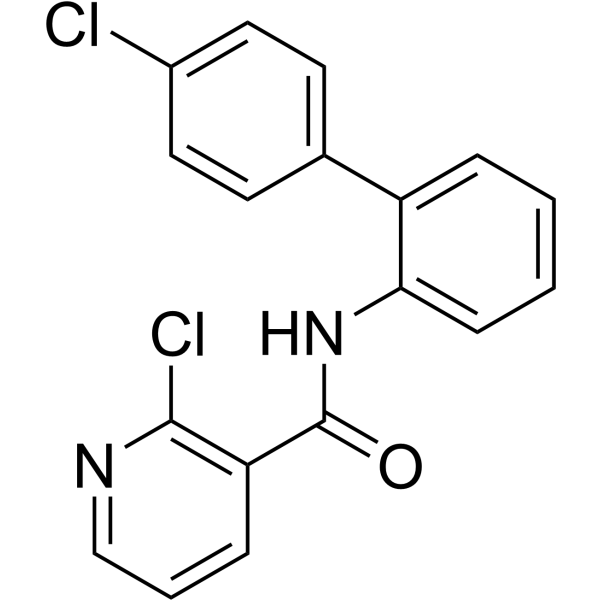
Boscalid is a succinate dehydrogenase (SDHI) inhibitor with antifungal activity. Boscalid binds to the ubiquinone-binding site of fungal mitochondrial complex II, blocks ATP production and aerobic respiration, exhibits good control efficacy against a variety of plant fungal diseases including gray mold, sclerotinia rot and powdery mildew, and is widely used for disease control in agriculture. Boscalid induces apoptosis, altered lipid metabolism, mitochondrial dysfunction, respiratory impairment, oxidative stress, ROS accumulation and neurodevelopmental disorders in zebrafish. Boscalid reduces foraging ability, shortens median death time and causes chronic toxicity in exposed honeybees. Boscalid also possesses genotoxicity, cytotoxicity, elevated mitochondrial superoxide levels and early-stage apoptosis .
|
-
- HY-119976S
-
|
|
Isotope-Labeled Compounds
Apoptosis
Fungal
Mitochondrial Metabolism
Succinate Dehydrogenase
|
Others
|
|
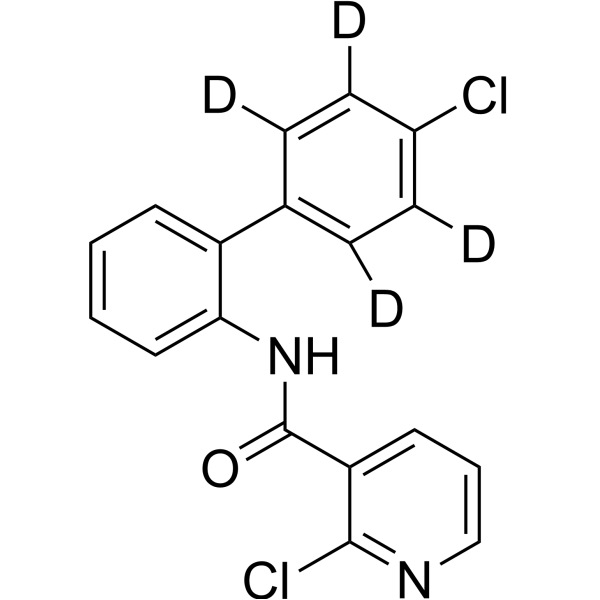
Boscalid-d4 is the deuterium labeled Boscalid. Boscalid is a succinate dehydrogenase (SDHI) inhibitor with antifungal activity. Boscalid binds to the ubiquinone-binding site of fungal mitochondrial complex II, blocks ATP production and aerobic respiration, exhibits good control efficacy against a variety of plant fungal diseases including gray mold, sclerotinia rot and powdery mildew, and is widely used for disease control in agriculture. Boscalid induces apoptosis, altered lipid metabolism, mitochondrial dysfunction, respiratory impairment, oxidative stress, ROS accumulation and neurodevelopmental disorders in zebrafish. Boscalid reduces foraging ability, shortens median death time and causes chronic toxicity in exposed honeybees. Boscalid also possesses genotoxicity, cytotoxicity, elevated mitochondrial superoxide levels and early-stage apoptosis .
|
-
- HY-119976R
-
|
|
Reference Standards
Apoptosis
Fungal
Mitochondrial Metabolism
Succinate Dehydrogenase
|
Infection
|
|
Boscalid (Standard) is the analytical standard of Boscalid. This product is intended for research and analytical applications. Boscalid is a succinate dehydrogenase (SDHI) inhibitor with antifungal activity. Boscalid binds to the ubiquinone-binding site of fungal mitochondrial complex II, blocks ATP production and aerobic respiration, exhibits good control efficacy against a variety of plant fungal diseases including gray mold, sclerotinia rot and powdery mildew, and is widely used for disease control in agriculture. Boscalid induces apoptosis, altered lipid metabolism, mitochondrial dysfunction, respiratory impairment, oxidative stress, ROS accumulation and neurodevelopmental disorders in zebrafish. Boscalid reduces foraging ability, shortens median death time and causes chronic toxicity in exposed honeybees. Boscalid also possesses genotoxicity, cytotoxicity, elevated mitochondrial superoxide levels and early-stage apoptosis .
|
-

- HY-113298
-
|
Methylmaleic acid
|
NOD-like Receptor (NLR)
Keap1-Nrf2
Reactive Oxygen Species (ROS)
|
Cardiovascular Disease
Inflammation/Immunology
|
|
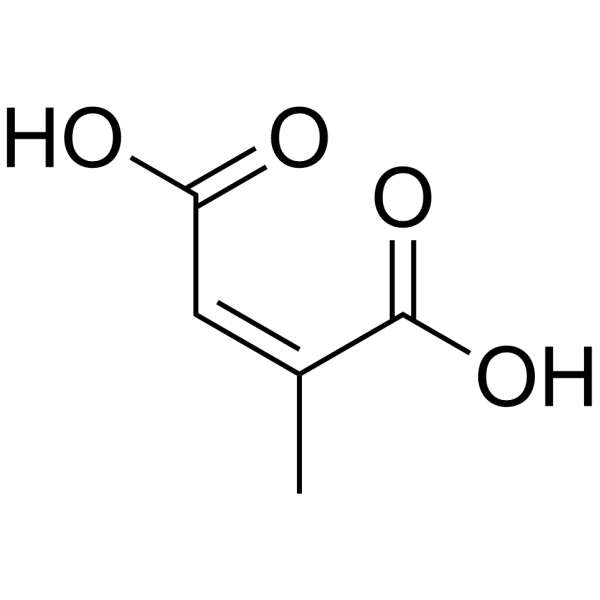
Citraconic acid (Methylmaleic acid) is an orally active inhibitor targeting the NLRP3 inflammasome and Keap1-Nrf2 pathway. Citraconic acid reduces reactive oxygen species (ROS) generation by inhibiting succinate dehydrogenase (SDH) activity. Citraconic acid also modifies the conformation of Keap1 protein, relieves its inhibition of Nrf2, promotes antioxidant gene expression, and inhibits NLRP3 activation and the release of pro-inflammatory factors such as IL-1β and IL-18. Citraconic acid has anti-inflammatory and antioxidant activities, can reduce oxidative stress and cell pyroptosis, improve tissue damage, and can be used for the research of inflammation-related diseases such as acute renal ischemia-reperfusion injury. Citraconic acid is an isomer of Itaconic acid (HY-Y052) .
|
-
- HY-113298R
-
|
Methylmaleic acid (Standard)
|
Reference Standards
NOD-like Receptor (NLR)
Keap1-Nrf2
Reactive Oxygen Species (ROS)
|
Cardiovascular Disease
Inflammation/Immunology
|
|
Citraconic acid (Methylmaleic acid) (Standard) is the analytical standard of Citraconic acid (HY-113298). This product is intended for research and analytical applications. Citraconic acid is an orally active inhibitor targeting the NLRP3 inflammasome and Keap1-Nrf2 pathway. Citraconic acid reduces reactive oxygen species (ROS) generation by inhibiting succinate dehydrogenase (SDH) activity. Citraconic acid also modifies the conformation of Keap1 protein, relieves its inhibition of Nrf2, promotes antioxidant gene expression, and inhibits NLRP3 activation and the release of pro-inflammatory factors such as IL-1β and IL-18. Citraconic acid has anti-inflammatory and antioxidant activities, can reduce oxidative stress and cell pyroptosis, improve tissue damage, and can be used for the research of inflammation-related diseases such as acute renal ischemia-reperfusion injury. Citraconic acid is an isomer of Itaconic acid (HY-Y052) .
|
-

- HY-N17816
-
|
|
Apoptosis
Reactive Oxygen Species (ROS)
α-synuclein
Succinate Dehydrogenase
Bcl-2 Family
Caspase
|
Cardiovascular Disease
Neurological Disease
Metabolic Disease
Inflammation/Immunology
Cancer
|
|
Tambulin is an orally active flavonol compound found in Zanthoxylum armatum. Tambulin can inhibit cell proliferation, induce apoptosis and inhibit ROS production. Tambulin upregulates cleaved caspase-3, cleaved caspase-9, and Bax, downregulates Bcl-2 levels. Tambulin can stimulate glucose-dependent insulin secretion and induce endothelium-independent vasorelaxation. Tambulin binds to succinate dehydrogenase (SDH) (Ki = 11.02 μM) and shows significant ferric reducing power. Tambulin can enhances oxidative stress resistance, reduces, lipofuscin deposits, lipid levels, α-synuclein levels, improves locomotary behavior, and dopamine levels in in age-synchronized L1 hermaphrodite Caenorhabditis elegans models of ageing and Parkinson's disease. Tambulin can be used for the researches of Parkinson's disease, lung squamous cell carcinoma, and diabetes .
|
-

- HY-P10563
-
|
BHV-1100
|
CD38
|
Cancer
|
|
Noraramtide (BHV-1100) is an antibody recruitment molecule. Noraramtide can specifically bind to CD38 molecules to recruit natural killer (NK) cells. Noraramtide enhances the ability of NK cells to kill tumor cells through antibody-dependent cellular cytotoxicity (ADCC). This mechanism allows NK cells to more effectively recognize and eliminate tumor cells while avoiding mutual killing between NK cells. Noraramtide can be used for the study of autologous cancer immunity .
|
-

| Cat. No. |
Product Name |
Type |
-
- HY-D0018
-
|
Dichlorophenylindophenol sodium; DCPIP sodium; Indochlorophenol sodium
|
Fluorescent Dyes
|
|
DCIP sodium is a blue dye commonly used in various biochemical and biotechnological applications as an indicator of redox reactions. DCIP sodium has unique chemical properties that change color according to the oxidation state of the substance being tested. It is commonly used in enzyme assays, such as measuring the activity of succinate dehydrogenase, or in protein quantification methods, such as the Lowry assay.
|
-
- HY-D0018R
-
|
Dichlorophenylindophenol sodium (Standard); DCPIP sodium (Standard); Indochlorophenol sodium (Standard)
|
Fluorescent Dyes
|
|
DCIP (sodium) (Standard) is the analytical standard of DCIP (sodium). This product is intended for research and analytical applications. DCIP sodium is a blue dye commonly used in various biochemical and biotechnological applications as an indicator of redox reactions. DCIP sodium has unique chemical properties that change color according to the oxidation state of the substance being tested. It is commonly used in enzyme assays, such as measuring the activity of succinate dehydrogenase, or in protein quantification methods, such as the Lowry assay.
|
| Cat. No. |
Product Name |
Type |
-
- HY-119976
-
|
|
Biochemical Assay Reagents
|
|
Boscalid is a succinate dehydrogenase (SDHI) inhibitor with antifungal activity. Boscalid binds to the ubiquinone-binding site of fungal mitochondrial complex II, blocks ATP production and aerobic respiration, exhibits good control efficacy against a variety of plant fungal diseases including gray mold, sclerotinia rot and powdery mildew, and is widely used for disease control in agriculture. Boscalid induces apoptosis, altered lipid metabolism, mitochondrial dysfunction, respiratory impairment, oxidative stress, ROS accumulation and neurodevelopmental disorders in zebrafish. Boscalid reduces foraging ability, shortens median death time and causes chronic toxicity in exposed honeybees. Boscalid also possesses genotoxicity, cytotoxicity, elevated mitochondrial superoxide levels and early-stage apoptosis .
|
-
- HY-D0007
-
|
Tetrazolium blue
|
Biochemical Assay Reagents
|
|
Blue Tetrazolium is a tetrazolium salt chromogenic dye that can be reduced to a dark blue formazan product. Blue Tetrazolium is applicable for assays such as succinate dehydrogenase activity detection and reducing sugar quantification. Blue Tetrazolium also serves as a novel corrosion inhibitor for cold-rolled steel in hydrochloric acid solutions. Blue Tetrazolium has a broad wavelength range (480-600 nm), with the maximum absorbance observed at 540 nm .
|
-
- HY-119976R
-
|
|
Biochemical Assay Reagents
|
|
Boscalid (Standard) is the analytical standard of Boscalid. This product is intended for research and analytical applications. Boscalid is a succinate dehydrogenase (SDHI) inhibitor with antifungal activity. Boscalid binds to the ubiquinone-binding site of fungal mitochondrial complex II, blocks ATP production and aerobic respiration, exhibits good control efficacy against a variety of plant fungal diseases including gray mold, sclerotinia rot and powdery mildew, and is widely used for disease control in agriculture. Boscalid induces apoptosis, altered lipid metabolism, mitochondrial dysfunction, respiratory impairment, oxidative stress, ROS accumulation and neurodevelopmental disorders in zebrafish. Boscalid reduces foraging ability, shortens median death time and causes chronic toxicity in exposed honeybees. Boscalid also possesses genotoxicity, cytotoxicity, elevated mitochondrial superoxide levels and early-stage apoptosis .
|
| Cat. No. |
Product Name |
Target |
Research Area |
-
- HY-P10563
-
|
BHV-1100
|
CD38
|
Cancer
|
|
Noraramtide (BHV-1100) is an antibody recruitment molecule. Noraramtide can specifically bind to CD38 molecules to recruit natural killer (NK) cells. Noraramtide enhances the ability of NK cells to kill tumor cells through antibody-dependent cellular cytotoxicity (ADCC). This mechanism allows NK cells to more effectively recognize and eliminate tumor cells while avoiding mutual killing between NK cells. Noraramtide can be used for the study of autologous cancer immunity .
|
-
- HY-P3820
-
| Cat. No. |
Product Name |
Category |
Target |
Chemical Structure |
-
- HY-Y1787
-
-
-
- HY-W012875
-
-
-
- HY-113298
-
-
-
- HY-N7114A
-
-
-
- HY-120183
-
|
|
Natural Products
Microorganisms
Source Classification
|
Fungal
|
|
Harzianopyridone is a compound that can be isolated from Trichoderma harzianum. Harzianopyridone is a succinate dehydrogenase (SDH) inhibitor with an IC50 of 80 nM. Harzianopyridone has antifungal, antibacterial, and herbicidal activities .
|
-
-
- HY-Y1787R
-
-
-
- HY-N7114
-
-
-
- HY-W012875R
-
-
-
- HY-N7114AR
-
-
-
- HY-113298R
-
|
Methylmaleic acid (Standard)
|
Structural Classification
Microorganisms
Ketones, Aldehydes, Acids
Endogenous metabolite
Source Classification
|
Reference Standards
NOD-like Receptor (NLR)
Keap1-Nrf2
Reactive Oxygen Species (ROS)
|
|
Citraconic acid (Methylmaleic acid) (Standard) is the analytical standard of Citraconic acid (HY-113298). This product is intended for research and analytical applications. Citraconic acid is an orally active inhibitor targeting the NLRP3 inflammasome and Keap1-Nrf2 pathway. Citraconic acid reduces reactive oxygen species (ROS) generation by inhibiting succinate dehydrogenase (SDH) activity. Citraconic acid also modifies the conformation of Keap1 protein, relieves its inhibition of Nrf2, promotes antioxidant gene expression, and inhibits NLRP3 activation and the release of pro-inflammatory factors such as IL-1β and IL-18. Citraconic acid has anti-inflammatory and antioxidant activities, can reduce oxidative stress and cell pyroptosis, improve tissue damage, and can be used for the research of inflammation-related diseases such as acute renal ischemia-reperfusion injury. Citraconic acid is an isomer of Itaconic acid (HY-Y052) .
|
-
-
- HY-114625
-
|
|
Structural Classification
Human Gut Microbiota Metabolites
Ketones, Aldehydes, Acids
Endogenous metabolite
Source Classification
|
Parasite
Mitochondrial Metabolism
|
|
Amquinate is a coccidiostat and a cytochrome b inhibitor. Amquinate blocks cytochrome-mediated electron transport near cytochrome b in mitochondria, acting downstream of coenzyme Q without affecting succinate dehydrogenase or NADH dehydrogenase. Amquinate inhibits succinate- and malate plus pyruvate-supported mitochondrial respiration in Eimeria tenella and does not affect L-ascorbate-supported respiration or any mitochondrial respiration in chicken liver mitochondria. Amquinate exhibits selective anticoccidial activity against wild-type Eimeria tenella. Amquinate can be used for the research of coccidiosis (Eimeria tenella infection) .
|
-
-
- HY-N17816
-
|
|
Structural Classification
Flavonoids
Flavones
Rutaceae
Plants
Zanthoxylum armatum DC.
Source Classification
|
Apoptosis
Reactive Oxygen Species (ROS)
α-synuclein
Succinate Dehydrogenase
Bcl-2 Family
Caspase
|
|
Tambulin is an orally active flavonol compound found in Zanthoxylum armatum. Tambulin can inhibit cell proliferation, induce apoptosis and inhibit ROS production. Tambulin upregulates cleaved caspase-3, cleaved caspase-9, and Bax, downregulates Bcl-2 levels. Tambulin can stimulate glucose-dependent insulin secretion and induce endothelium-independent vasorelaxation. Tambulin binds to succinate dehydrogenase (SDH) (Ki = 11.02 μM) and shows significant ferric reducing power. Tambulin can enhances oxidative stress resistance, reduces, lipofuscin deposits, lipid levels, α-synuclein levels, improves locomotary behavior, and dopamine levels in in age-synchronized L1 hermaphrodite Caenorhabditis elegans models of ageing and Parkinson's disease. Tambulin can be used for the researches of Parkinson's disease, lung squamous cell carcinoma, and diabetes .
|
-
| Cat. No. |
Compare |
Product Name |
Species |
Source |
Image |
Compare Products
|
| Products |
|
| Cat. No. |
|
| Species |
|
| Source |
|
| Tag |
|
| Accession |
|
| Gene ID |
|
| Molecular Weight |
|
| Purity |
|
| Endotoxin Level |
|
| Biological Activity |
|
| Appearance |
|
| Formulation |
|
| Storage & Stability |
|
| Shipping |
|
| Free Sample |
Yes
No
|
| Size |
* This product has been "discontinued".
Optimized version of product available:
|
| Cat. No. |
Product Name |
Chemical Structure |
-
- HY-44178S
-
|
|
|
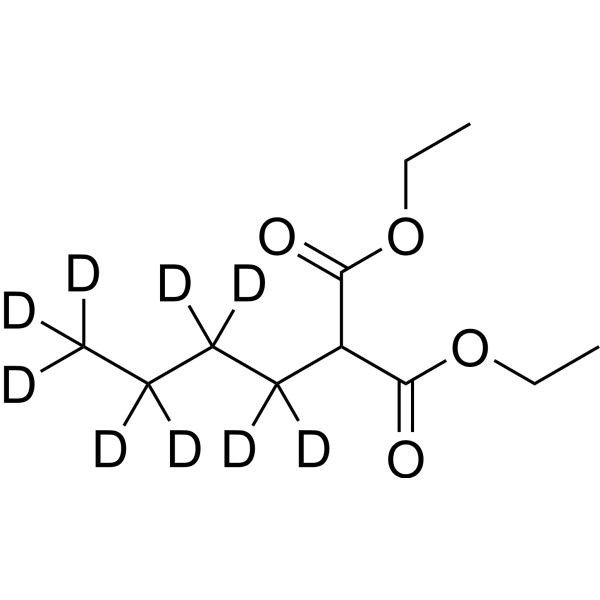
Diethyl butylmalonate-d9 is the deuterium labeled Diethyl butylmalonate (HY-44178). Diethyl butylmalonate is a competitive inhibitor of succinate dehydrogenase. Diethyl butylmalonate exerts anti-inflammatory effects by inhibiting ROS production. Diethyl butylmalonate also has neuroprotective activity. In addition, Diethyl butylmalonate shows toxicity to T. pyriformis, with its log(IGC50 -1) being 0.557. Diethyl butylmalonate can be used in the research of diseases such as Alzheimer's disease .
|
-
-
- HY-119976S
-
|
|
|
Boscalid-d4 is the deuterium labeled Boscalid. Boscalid is a succinate dehydrogenase (SDHI) inhibitor with antifungal activity. Boscalid binds to the ubiquinone-binding site of fungal mitochondrial complex II, blocks ATP production and aerobic respiration, exhibits good control efficacy against a variety of plant fungal diseases including gray mold, sclerotinia rot and powdery mildew, and is widely used for disease control in agriculture. Boscalid induces apoptosis, altered lipid metabolism, mitochondrial dysfunction, respiratory impairment, oxidative stress, ROS accumulation and neurodevelopmental disorders in zebrafish. Boscalid reduces foraging ability, shortens median death time and causes chronic toxicity in exposed honeybees. Boscalid also possesses genotoxicity, cytotoxicity, elevated mitochondrial superoxide levels and early-stage apoptosis .
|
-
| Cat. No. |
Product Name |
|
Classification |
-
- HY-148921
-
|
|
|
Alkynes
|
|
SDH-IN-2 is a potent succinate dehydrogenase (SDH) inhibitor with an IC50 of 0.55 μg/mL. SDH-IN-2 is also an antifungal agent. SDH-IN-2 inhibits phytopathogenic fungia with average EC50 values of 3.82-9.81 μg/mL for all the fungi . SDH-IN-2 is a click chemistry reagent, it contains an Alkyne group and can undergo copper-catalyzed azide-alkyne cycloaddition (CuAAc) with molecules containing Azide groups.
|
Your information is safe with us. * Required Fields.
Inquiry Information
- Product Name:
- Cat. No.:
- Quantity:
- MCE Japan Authorized Agent:





![[Dehydro-Pro4] Substance P (4-11)](http://file.medchemexpress.com/product_pic/hy-p3820.gif)








