



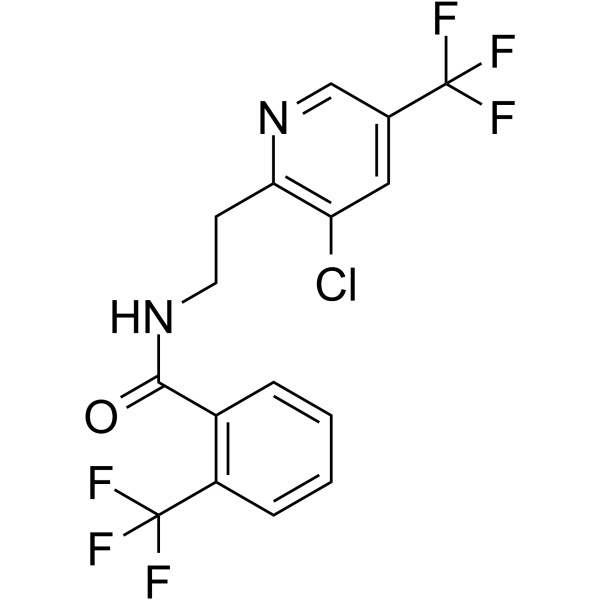
Fluopyram
Based on 1 publication(s) in Google Scholar
Fluopyram is an orally active succinate dehydrogenase inhibitor, antifungal and nematicide. Fluopyram inhibits succinate dehydrogenase activity, activates CAR/PXR nuclear receptors, and increases caspase-3, TNF-α and NF-κB. Fluopyram inhibits the growth of F. virguliforme, Botrytis cinerea and Alternaria solani with EC50 values of 3.35, 5.389 and 0.244 µg/mL, respectively. Fluopyram induces liver and thyroid tumor formation. Fluopyram is nephrotoxic and embryotoxic.
For research use only. We do not sell to patients.
- Purity : 99.76%
- CAS No.: 658066-35-4
- Formula: C16H11ClF6N2O
- Molecular Weight:396.71
-
Storage:
4°C, sealed storage, away from moisture and light
* In solvent : -80°C, 6 months; -20°C, 1 month (sealed storage, away from moisture and light)

To place orders, for customer services and technical support, please contact: MedChemExpress USA
Tel: 609-228-6898 E-mail: [email protected] [email protected]


-
 Biological Activity
-
Chemical Information
-
Solvent & Solubility
- Protocols
- Purity & Documentation
- References
-
 Help & FAQs


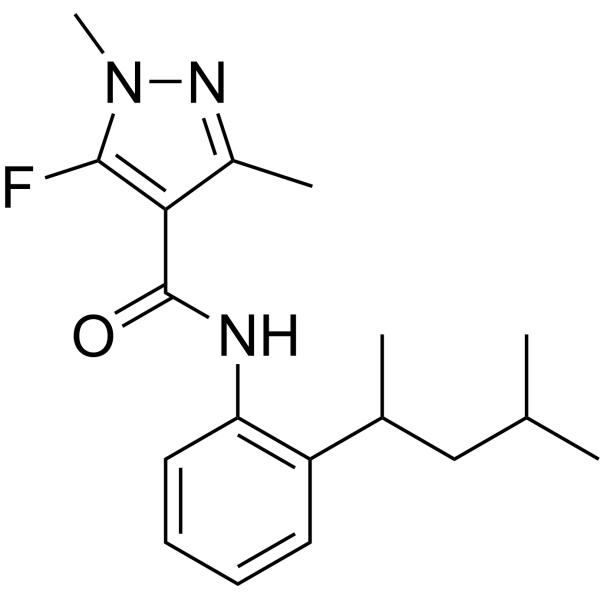
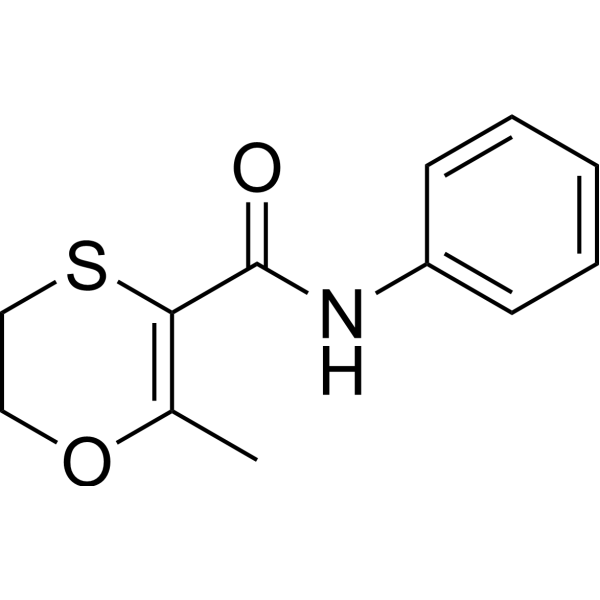

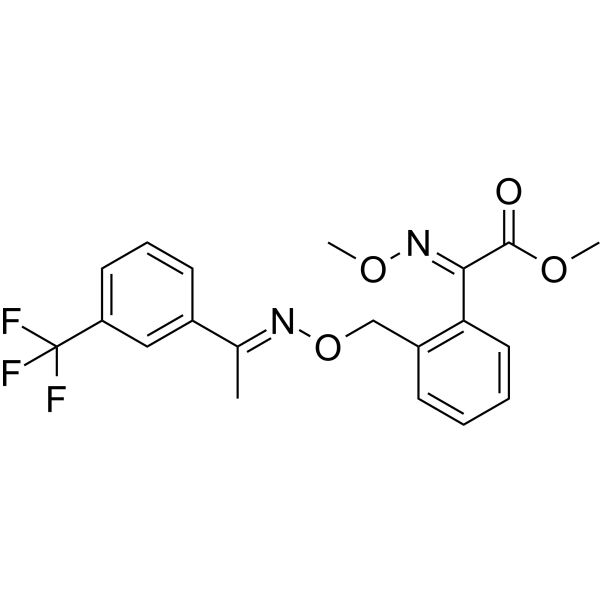
Publications Citing Use of MedChemExpress (MCE) Fluopyram
MoreAll Caspase Isoforms
MoreAll Parasite Isoforms
More

Biological Activity
Description
IC50 & Target
[7]|
Caspase-3 |
In Vitro
Fluopyram (0-126 μM; 48 h) inhibits the motility of Meloidogyne incognita and Heterodera schachtii second-stage infective juveniles (J2) in a concentration-dependent manner[1].
Fluopyram (96 h) shows moderate toxicity to zebrafish embryos, with a LC50 of 4.375 mg/L and inhibits their skeletal development[4].
Fluopyram (0.01-0.25 mg/L; 24 h) causes damage to the growth, locomotion behavior, feeding, lifespan and reproduction of C. elegans, induces oxidative stress, and affects the expression of genes associated with oxidative stress, intestinal damage, and cell apoptosis[5].
Fluopyram nanoparticles (FLU-NS, mean particle size 366.8 nm) show higher antifungal activity against Botrytis cinerea and Alternaria solani than fluopyram micron-sized solid formulation (FLU-MS, mean particle size 2.99 µm) and fluopyram wettable powder (FLU-WP, mean particle size 10.16 µm), with an EC50 value of 5.389 and 0.244 µg/mL against B. cinerea and A. solani respectively[6].
MedChemExpress (MCE) has not independently confirmed the accuracy of these methods. They are for reference only. Further protocols information, click here.
In Vivo
Fluopyram (100-300 mg/kg/day (equivalent to 750-2000 ppm dietary concentrations); p.o.; daily; 3-28 days) activates hepatic CAR/PXR nuclear receptors in male C57BL/6J mice, increases thyroid-stimulating hormone (TSH) secretion, and leads to thyroid follicular cell (TFC) adenomas in a dose-dependent manner[3].
Fluopyram (0.5-2 mg/kg; s.c.; every 2 days; 21 days) causes dose-dependent increased toxicity in mouse kidney tissues, leading to histopathological changes and increased positive staining of caspase-3, TNF-α, and NF-κB[7].
MedChemExpress (MCE) has not independently confirmed the accuracy of these methods. They are for reference only.
-
Animal Model:Male C57BL/6J mice and male Car/Pxr KO mice with C57BL/6J genetic background (10 weeks old at start of treatment), mouse thyroid tumor model[3]
-
Dosage:100-300 mg/kg/day (equivalent to 750-2000 ppm dietary concentrations)
-
Administration:Oral gavage (p.o.), 3 days or 28 days
-
Result:Activated the Car/Pxr nuclear receptor, manifested by an increase in the activity of specific phase I enzymes (PROD and BROD) in wild-type C57BL/6J mice.
Increased activity of uridine diphosphate glucuronyltransferase that binds to T4, leading to increased serum T4 clearance and decreased circulating T4.
Significantly induced Tshβ transcription and increased TFC proliferation.
Lacked the sequential key events leading to TCF tumors in Car/Pxr KO mice.
Induced an increased incidence of TFC adenomas in male mice at the highest dose evaluated (750 ppm) in the mouse oncogenicity study.


Chemical Information
-
CAS No. 658066-35-4
-
Appearance Solid
-
Molecular Weight 396.71
-
Formula C16H11ClF6N2O
-
Color White to off-white
-
SMILES
FC(F)(F)C1=CC(Cl)=C(CCNC(C2=C(C(F)(F)F)C=CC=C2)=O)N=C1
-
Shipping
Room temperature in continental US; may vary elsewhere.
-
Storage
4°C, sealed storage, away from moisture and light
* In solvent : -80°C, 6 months; -20°C, 1 month (sealed storage, away from moisture and light)


Publications (1)
-
Journal Impact Factor
-
Most Recent
-
Am J Reprod Immunol
Active Heme Metabolism Suppresses Macrophage Phagocytosis via the TLR4/Type I IFN Signaling/CD36 in Uterine Endometrial Cancer. [Abstract]2024 Aug;92(2):e13916. PMID: 39166450


Solvent & Solubility
In Vitro:
DMSO : 125 mg/mL (315.09 mM; Need ultrasonic; Hygroscopic DMSO has a significant impact on the solubility of product, please use newly opened DMSO)
Please refer to the solubility information to select the appropriate solvent. Once prepared, please aliquot and store the solution to prevent product inactivation from repeated freeze-thaw cycles.
Storage method and period of stock solution: -80°C, 6 months; -20°C, 1 month (sealed storage, away from moisture and light). When stored at -80°C, please use it within 6 months. When stored at -20°C, please use it within 1 month.
Please refer to the solubility information to select the appropriate solvent. Once prepared, please aliquot and store the solution to prevent product inactivation from repeated freeze-thaw cycles.
Storage method and period of stock solution: -80°C, 6 months; -20°C, 1 month (sealed storage, away from moisture and light). When stored at -80°C, please use it within 6 months. When stored at -20°C, please use it within 1 month.
Concentration (start) × Volume (start) = Concentration (final) × Volume (final)
In Vivo:
Select the appropriate dissolution method based on your experimental animal and administration route.
- For the following dissolution methods, please ensure to first prepare a clear stock solution using an In Vitro approach and then sequentially add co-solvents:
- To ensure reliable experimental results, the clarified stock solution can be appropriately stored based on storage conditions. As for the working solution for In Vivo experiments, it is recommended to prepare freshly and use it on the same day.
- The percentages shown for the solvents indicate their volumetric ratio in the final prepared solution. If precipitation or phase separation occurs during preparation, heat and/or sonication can be used to aid dissolution.
Add each solvent one by one: 10% DMSO 40% PEG300 5% Tween-80 45% Saline
Solubility: ≥ 2.08 mg/mL (5.24 mM); Clear solution
This protocol yields a clear solution of ≥ 2.08 mg/mL (saturation unknown).
Taking 1 mL working solution as an example, add 100 μL DMSO stock solution (20.8 mg/mL) to 400 μL PEG300, and mix evenly; then add 50 μL Tween-80 and mix evenly; then add 450 μL Saline to adjust the volume to 1 mL.
Preparation of Saline: Dissolve 0.9 g sodium chloride in ddH₂O and dilute to 100 mL to obtain a clear Saline solution.
In Vivo Dissolution Calculator
Please enter the basic information of animal experiments:
-
-
-
-
Recommended: Prepare an additional quantity of animals to account for potential losses during experiments.
Please enter your animal formula composition:
-
%DMSO +
Recommended: Keep the proportion of DMSO in working solution below 2% if your animal is weak.
-
%+
-
+%Tween-80 + +
-
%Saline +
The co-solvents required include: DMSO, . All of co-solvents are available by MedChemExpress (MCE). , Tween 80. All of co-solvents are available by MedChemExpress (MCE).
Working solution concentration: 0.22 mg/mL
Method for preparing stock solution: mg drug dissolved in μL DMSO. Stock solution concentration: mg/mL. * In solvent : -80°C, 6 months; -20°C, 1 month (sealed storage, away from moisture and light)
1. Take μL DMSO stock solution;
2. Add μL .
μL , mix evenly;
3. Then add μL Tween 80, mix evenly;
4. Then add μL
Please ensure that the stock solution in the first step is dissolved to a clear state, and add co-solvents in sequence. You can use ultrasonic heating (ultrasonic cleaner, recommended frequency 20-40 kHz), vortexing, etc. to assist dissolution.

Protocols
-
Nephrotoxicity Study
This protocol assesses nephrotoxicity by combining functional kidney injury readouts, urinary/tissue injury biomarkers, and renal histopathology. Serum creatinine and BUN reflect impaired kidney function, while KIM-1, NGAL, clusterin, osteopontin, IL-18, cystatin C, nephrin, Oat5, urinary protein, glucose, and alkaline phosphatase have been used to detect tubular injury in cisplatin-, gentamicin-, and acetaminophen-induced nephrotoxicity models.
-
Research Protocol for Endocrine Diseases
Endocrine diseases often arise from disrupted hormone production, hormone signaling, or target-tissue responsiveness; for diabetes-focused endocrine disease models, insulin signaling regulates glucose uptake, hepatic glucose output, lipid metabolism, and β-cell compensation. Type 2 diabetes develops through interacting defects in insulin resistance, β-cell dysfunction, adipose inflammation, hepatic glucose overproduction, altered incretin signaling, and ectopic lipid metabolism. A major unresolved question is whether endocrine dysfunction is driven primarily by target-tissue insulin resistance, intrinsic β-cell failure, immune/inflammatory stress, or combined multi-organ failure that differs by disease stage.
-
Apoptosis Solutions
Apoptosis is a regulated, generally non-lytic cell-death pathway that removes unwanted, damaged, infected, or abnormal cells through coordinated morphological changes, caspase activation, DNA fragmentation, and membrane remodeling. The intrinsic apoptosis pathway is controlled mainly by mitochondrial outer membrane permeabilization, BCL-2 family proteins, cytochrome c release, apoptosome formation, caspase-9 activation, and downstream executioner caspase-3/7 activation. The extrinsic apoptosis pathway is initiated by death receptors such as Fas, TNFR, and TRAIL receptors, which recruit adaptor proteins and activate caspase-8 before engaging executioner caspases or mitochondrial amplification through BID cleavage. Apoptosis is linked to many phenotypes, including cancer cell killing, tissue homeostasis, immune regulation, neurodegeneration, infection response, and treatment-induced cytotoxicity; unresolved questions include how apoptosis interacts with necroptosis, pyroptosis, ferroptos
-
Research Protocol for Inflammation-related Diseases
The NLRP3 inflammasome is a cytosolic innate immune signaling platform that integrates priming signals and danger-signal activation to promote caspase-1 activation, maturation of IL-1β and IL-18, and gasdermin D-mediated pyroptotic cell death. The core experimental logic is to determine whether inflammatory disease phenotypes are driven by increased NLRP3 expression, ASC-containing inflammasome assembly, caspase-1 cleavage, GSDMD cleavage, and extracellular release of IL-1β/IL-18 rather than by nonspecific cell injury alone. The pathway is strongly linked to inflammation-related disease phenotypes because monosodium urate crystals activate NALP3/NLRP3 inflammasome signaling in gout-like crystal inflammation, cholesterol crystals activate NLRP3 inflammasomes in atherogenesis models, and DSS-induced intestinal inflammation has been reported to involve NLRP3 inflammasome activity. However, experimental colitis studies also show context-dependent protective effects of NLRP3 inflammasome co


Purity & Documentation
-
Data Sheet (281 KB)
-
SDS (458 KB)
- English - EN (458 KB)
- Français - FR (458 KB)
- Deutsch - DE (458 KB)
- Norwegian - NO (458 KB)
- Español - ES (458 KB)
- Swedish - SV (458 KB)
- Italian - IT (458 KB)
- Korean - KR (458 KB)
- Portuguese - PT (458 KB)
-
Handling Instructions (2659 KB)
References
[1]. Schleker ASS, et al. Mode of action of fluopyram in plant-parasitic nematodes. Sci Rep. 2022 Jul 13;12(1):11954. [Content Brief]
[2]. Tinwell H, et al. Liver tumor formation in female rat induced by fluopyram is mediated by CAR/PXR nuclear receptor activation. Regul Toxicol Pharmacol. 2014 Dec;70(3):648-58. [Content Brief]
[3]. Rouquié D, et al. Thyroid tumor formation in the male mouse induced by fluopyram is mediated by activation of hepatic CAR/PXR nuclear receptors. Regul Toxicol Pharmacol. 2014 Dec;70(3):673-80. [Content Brief]
[4]. Zhang T, et al. Combined toxicity of trifloxystrobin and fluopyram to zebrafish embryos and the effect on bone development. Aquat Toxicol. 2024 Mar;268:106834. [Content Brief]
[5]. Liu Y, et al. Oxidative stress, intestinal damage, and cell apoptosis: Toxicity induced by fluopyram in Caenorhabditis elegans. Chemosphere. 2022 Jan;286(Pt 3):131830. [Content Brief]
[6]. Wang Y, et al. Different Size Formulations of Fluopyram: Preparation, Antifungal Activity, and Accumulation in the Fungal Pathogen Botrytis cinerea. Molecules. 2023 Aug 17;28(16):6099. [Content Brief]
[8]. Wang J, et al. Baseline Sensitivity of Fusarium virguliforme to Fluopyram Fungicide. Plant Dis. 2017 Apr;101(4):576-582. [Content Brief]


Complete Stock Solution Preparation Table
Please refer to the solubility information to select the appropriate solvent. Once prepared, please aliquot and store the solution to prevent product inactivation from repeated freeze-thaw cycles.
Storage method and period of stock solution: -80°C, 6 months; -20°C, 1 month (sealed storage, away from moisture and light). When stored at -80°C, please use it within 6 months. When stored at -20°C, please use it within 1 month.
| Optional Solvent | Concentration Solvent Mass | 1 mg | 5 mg | 10 mg | 25 mg |
|---|---|---|---|---|---|
| DMSO | 1 mM | 2.5207 mL | 12.6037 mL | 25.2073 mL | 63.0183 mL |
| 5 mM | 0.5041 mL | 2.5207 mL | 5.0415 mL | 12.6037 mL | |
| 10 mM | 0.2521 mL | 1.2604 mL | 2.5207 mL | 6.3018 mL | |
| 15 mM | 0.1680 mL | 0.8402 mL | 1.6805 mL | 4.2012 mL | |
| 20 mM | 0.1260 mL | 0.6302 mL | 1.2604 mL | 3.1509 mL | |
| 25 mM | 0.1008 mL | 0.5041 mL | 1.0083 mL | 2.5207 mL | |
| 30 mM | 0.0840 mL | 0.4201 mL | 0.8402 mL | 2.1006 mL | |
| 40 mM | 0.0630 mL | 0.3151 mL | 0.6302 mL | 1.5755 mL | |
| 50 mM | 0.0504 mL | 0.2521 mL | 0.5041 mL | 1.2604 mL | |
| 60 mM | 0.0420 mL | 0.2101 mL | 0.4201 mL | 1.0503 mL | |
| 80 mM | 0.0315 mL | 0.1575 mL | 0.3151 mL | 0.7877 mL | |
| 100 mM | 0.0252 mL | 0.1260 mL | 0.2521 mL | 0.6302 mL |


Fluopyram Related Classifications
HY-119459 Related Classifications
 Powered by Bioz