



Dimethyl malonate
Based on 9 publication(s) in Google Scholar
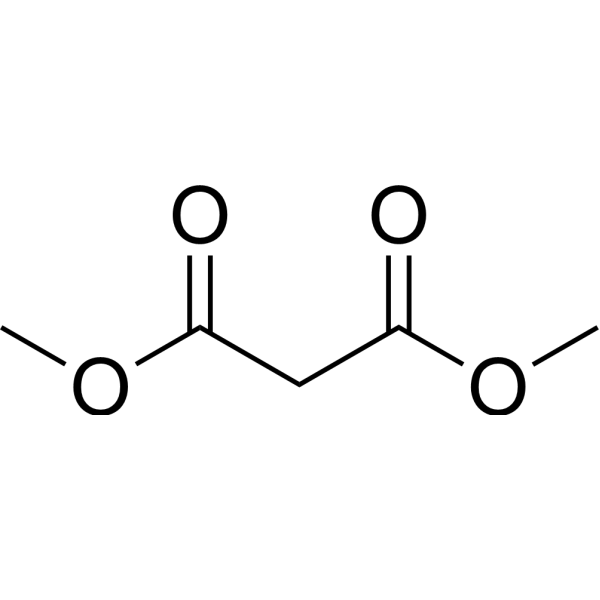
Dimethyl malonate is a competitive inhibitor of succinate dehydrogenase (SDH). Dimethyl malonate is able to cross the blood-brain barrier and hydrolyse to malonate. Dimethyl malonate reduces neuronal apoptosis.
For research use only. We do not sell to patients.
- Purity : 99.92%
- CAS No.: 108-59-8
- Formula: C5H8O4
- Molecular Weight:132.11
-
Storage:
Store at room temperature 3 years.
In solvent -80°C, 2 years , -20°C, 1 year

To place orders, for customer services and technical support, please contact: MedChemExpress USA
Tel: 609-228-6898 E-mail: [email protected] [email protected]


-
 Biological Activity
-
Chemical Information
-
Solvent & Solubility
- Protocols
- Purity & Documentation
- References
-
 Help & FAQs


-
HY-B1756
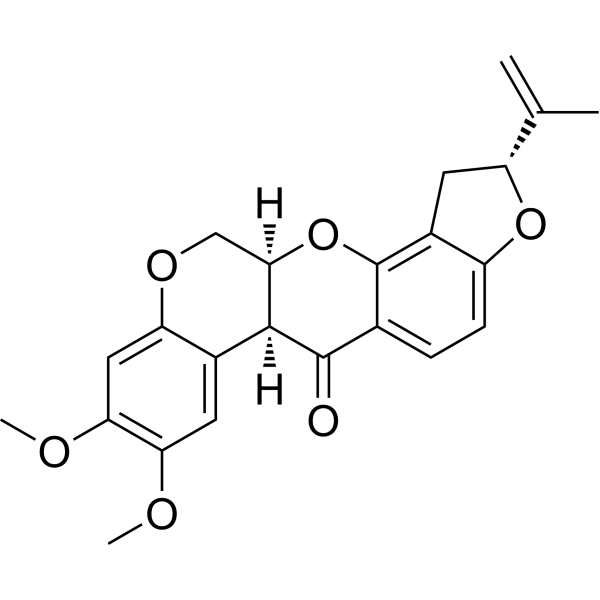
RotenoneMitochondrial Complex I Inhibitor -

HY-Y0808
Dimethyl succinateSuccinate Analogue -
HY-44134
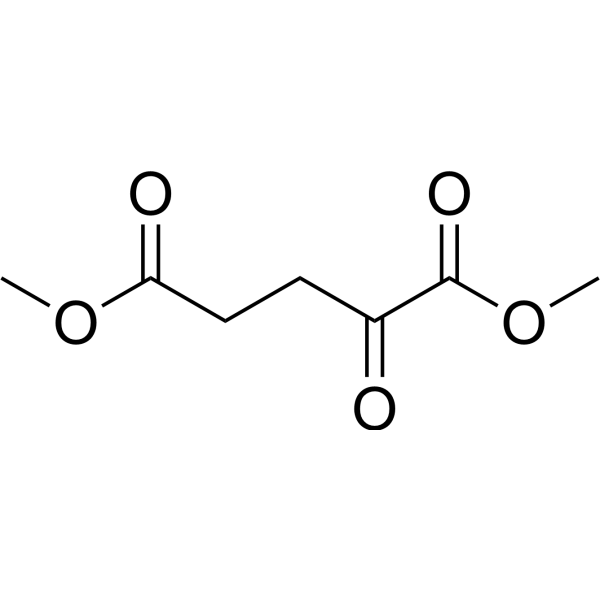
Dimethyl 2-oxoglutarate2-oxoglutarate Derivative -
HY-15453
DevimistatMitochondrial Metabolism Inhibitor -
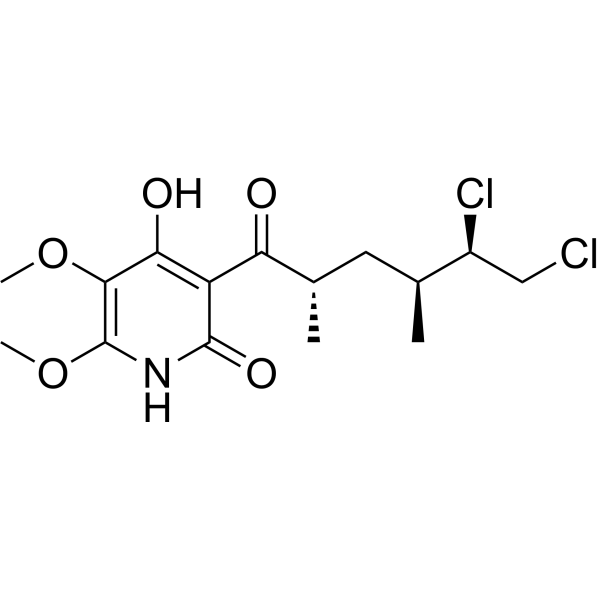
HY-126653
Atpenin A5Complex II Inhibitor -

HY-Y1787R
Dimethyl malonate (Standard)SDH Inhibitor -
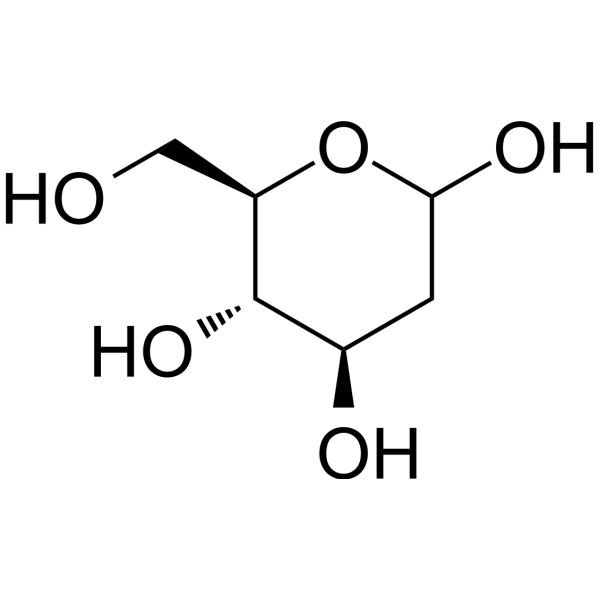
HY-13966
2-Deoxy-D-glucoseGlycolysis Inhibitor -
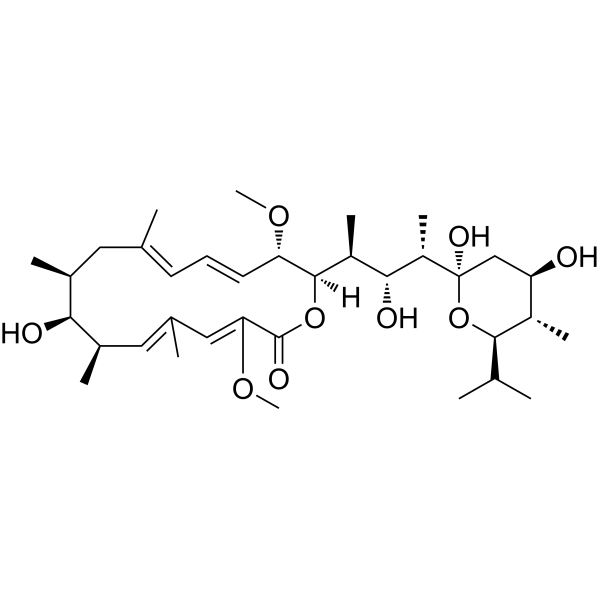
HY-100558
Bafilomycin A1V-ATPase Inhibitor -
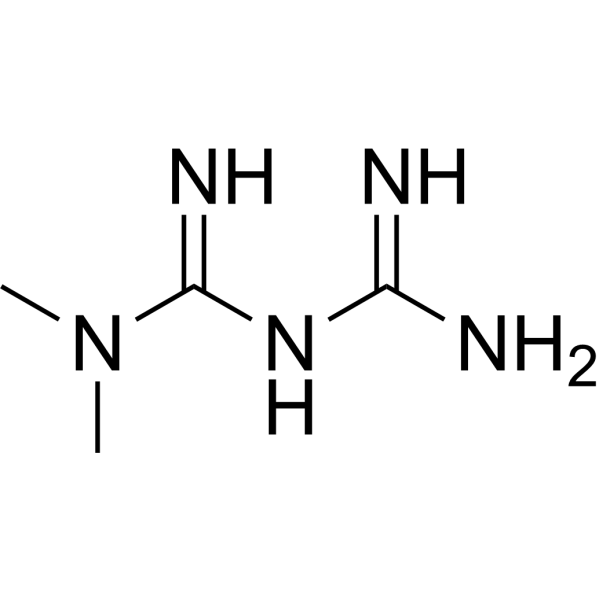
HY-B0627
MetforminAntihyperglycemic Agent -

HY-N6782
OligomycinH+-ATP-Synthase Inhibitor -
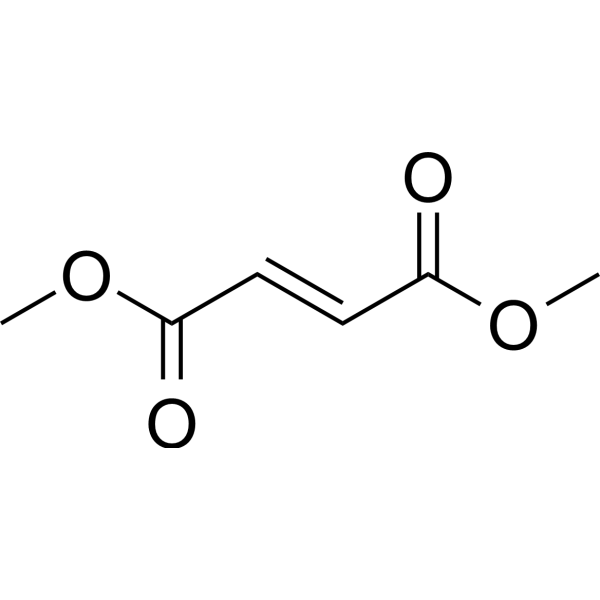
HY-17363
Dimethyl fumarateNrf2 Activator -
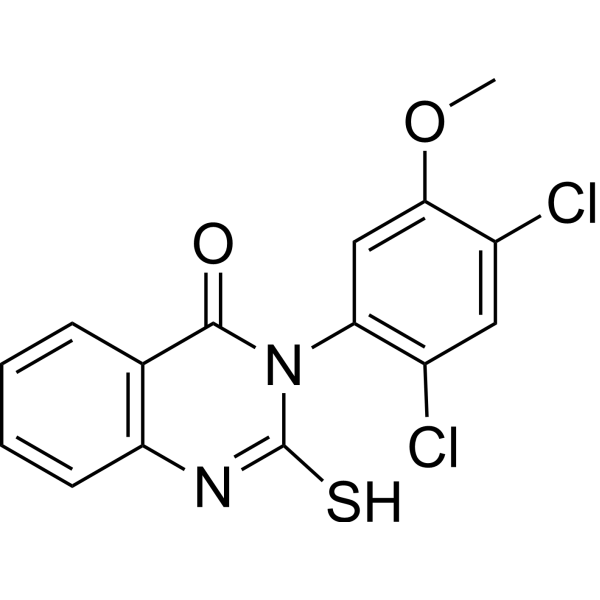
HY-15886
Mdivi-1Drp1 Inhibitor
Publications Citing Use of MedChemExpress (MCE) Dimethyl malonate
More- Signal Transduct Target Ther. 2025 Dec 17;10(1):413. [Abstract]
- Cell Metab. 2024 Dec 3;36(12):2511-2527.e7. [Abstract]
- Nat Microbiol. 2025 Oct;10(10):2521-2536. [Abstract]
- Nat Commun. 2025 Nov 28;16(1):10751. [Abstract]
- Dev Cell. 2025 Apr 18:S1534-5807(25)00206-0. [Abstract]
- J Clin Periodontol. 2025 Aug;52(8):1196-1210. [Abstract]
- Stem Cell Res Ther. 2025 Jul 23;16(1):399. [Abstract]
- SSRN. 2026 Mar 5.
- bioRxiv. 2024 October 26.
 Customer Validation & Images

-
Flow Cytometry
-
Histological Imaging/Staining
-
WB
-
Bio/Physico-chemical Assay
-
In Vivo Efficacy Study


Biological Activity
Description
In Vivo
MedChemExpress (MCE) has not independently confirmed the accuracy of these methods. They are for reference only.
-
Animal Model:Sprague-Dawley male rats, cardiac arrest model[1]
-
Dosage:6 mg/kg/min
-
Administration:Intravenous infusion, 51 min
-
Result:Improved ROSC after CA. Prevented the decline in neurological function and inhibited the apoptosis of hippocampal neurons at day 3 after CPR. Inhibited caspase-3 cleavage and increased HIF-1α expression at day 3 after CPR. Decreased the level of oxidative stress at day 3 after CPR. Inhibited excessive hyperpolarization of MMP and restrained the leakage of cytochrome C after 45 min reperfusion.
Clinical Trial
| NCT Number | Sponsor | Condition | Start Date |
Phase

|
|---|---|---|---|---|
| NCT01329991 | Plexxikon| | 2011-05 | PHASE1 |


Chemical Information
-
CAS No. 108-59-8
-
Appearance Liquid (Density: 1.156 g/cm3)
-
Molecular Weight 132.11
-
Formula C5H8O4
-
Color Colorless to light yellow
-
SMILES
O=C(OC)CC(OC)=O
-
Structure Classification
-
Initial Source
-
Shipping
Room temperature in continental US; may vary elsewhere.
-
Storage
Store at room temperature 3 years
In solvent -80°C 2 years -20°C 1 year


Publications (9)
-
Journal Impact Factor
-
Most Recent
-
Signal Transduct Target Ther
Disruption of heme homeostasis by nuclear receptor Nur77 induces pyroptosis through granzyme B-dependent GSDMC cleavage. [Abstract]2025 Dec 17;10(1):413. PMID: 41407678 -
Cell Metab
Hyperglycemia-triggered lipid peroxidation destabilizes STAT4 and impairs anti-viral Th1 responses in type 2 diabetes. [Abstract]2024 Dec 3;36(12):2511-2527.e7. PMID: 39488214 -
Nat Microbiol
Oxaloacetate sensing promotes innate immune antiviral defence against influenza virus infection. [Abstract]2025 Oct;10(10):2521-2536. PMID: 40983701 -
Nat Commun
NEK7 couples SDHB to orchestrate respiratory chain electron transport homeostasis that impedes liver fibrosis. [Abstract]2025 Nov 28;16(1):10751. PMID: 41315267
Dimethyl malonate purchased from MedChemExpress. Usage Cited in: Nat Commun. 2025 Nov 28;16(1):10751. [Abstract]
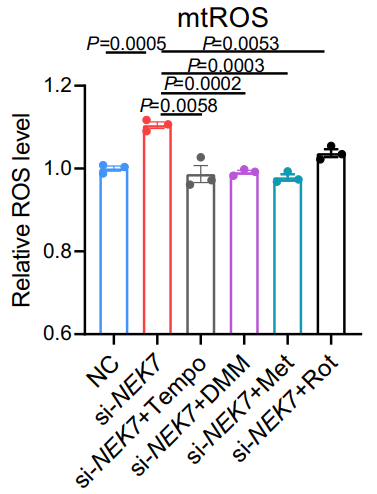
Flow cytometry detected mitochondrial ROS levels (MitoSox Red) in HepG2 cells. The HepG2 cells are transfected with NC or si-NEK7 for 48 h, then treated with 500 μM Tempo, 10 μM Dimethyl malonate (DMM), 100 μM Metformin (Met), or 50 nM Rotenone (Rot) for 24 h, respectively. N = 3/group. The results showed that DMM significantly attenuated the increase in ROS levels induced by NEK7 deletion in HepG2 cells.
Dimethyl malonate purchased from MedChemExpress. Usage Cited in: Nat Commun. 2025 Nov 28;16(1):10751. [Abstract]
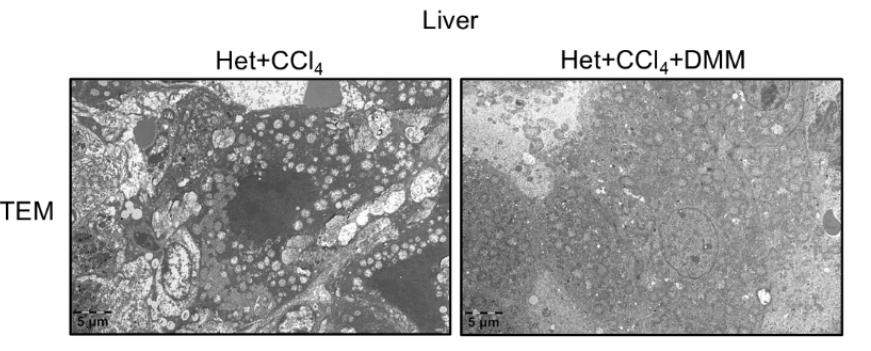
Representative TEM images depicting the ultrastructure of the mitochondria in hepatocytes from the Het+CCl4 and Het+CCl4+DMM mice (scale bar, 5μm). N=3/group. The results showed that Dimethyl malonate (DMM, 200 mg/kg; oral gavage 2-3 h after every CCl4-treatment) (targeting complex Ⅱ) could rescue hepatic mitochondrial damage induced by NEK7 knockdown, suggesting that mitochondrial structural disorganization may result from impaired complex Ⅱ activity.
Dimethyl malonate purchased from MedChemExpress. Usage Cited in: Nat Commun. 2025 Nov 28;16(1):10751. [Abstract]
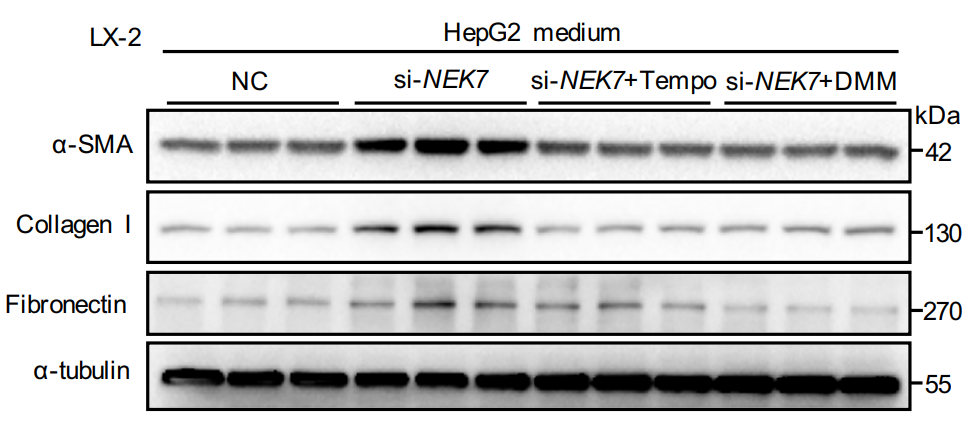
Western blotting analysis of the expression of α-SMA, Collagen Ⅰ, and Fibronectin protein in the LX-2 cells treated with the conditional medium of HepG2 cells. The HepG2 cells are transfected with NC or si-NEK7 for 48 h, then treated with 500 μM Tempo and 10 μM Dimethyl malonate (DMM) for 24 h, respectively.
-
Dev Cell
2025 Apr 18:S1534-5807(25)00206-0. PMID: 40280135
Dimethyl malonate purchased from MedChemExpress. Usage Cited in: Dev Cell. 2025 Apr 18:S1534-5807(25)00206-0. [Abstract]
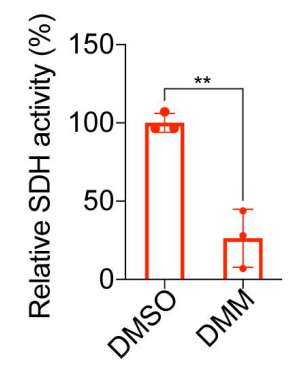
Measurement of succinate dehydrogenase complex (SDH) activity in NCI-H1299 cellstreated with either DMSO or Dimethyl malonate (DMM; 10 mM) for 3 h. The results showed that Dimethyl malonate (DMM) significantly inhibited the activity of SDH.
-
J Clin Periodontol
Exosomes Derived From Human Gingival Mesenchymal Stem Cells Induce Metabolic Reprogramming of Inflammatory Macrophages. [Abstract]2025 Aug;52(8):1196-1210. PMID: 40388972 -
Stem Cell Res Ther
From inflammation to healing: the crucial role of GPR91 activation and SDH inhibition in chronic diabetic wound recovery. [Abstract]2025 Jul 23;16(1):399. PMID: 40702577
Dimethyl malonate purchased from MedChemExpress. Usage Cited in: Stem Cell Res Ther. 2025 Jul 23;16(1):399. [Abstract]
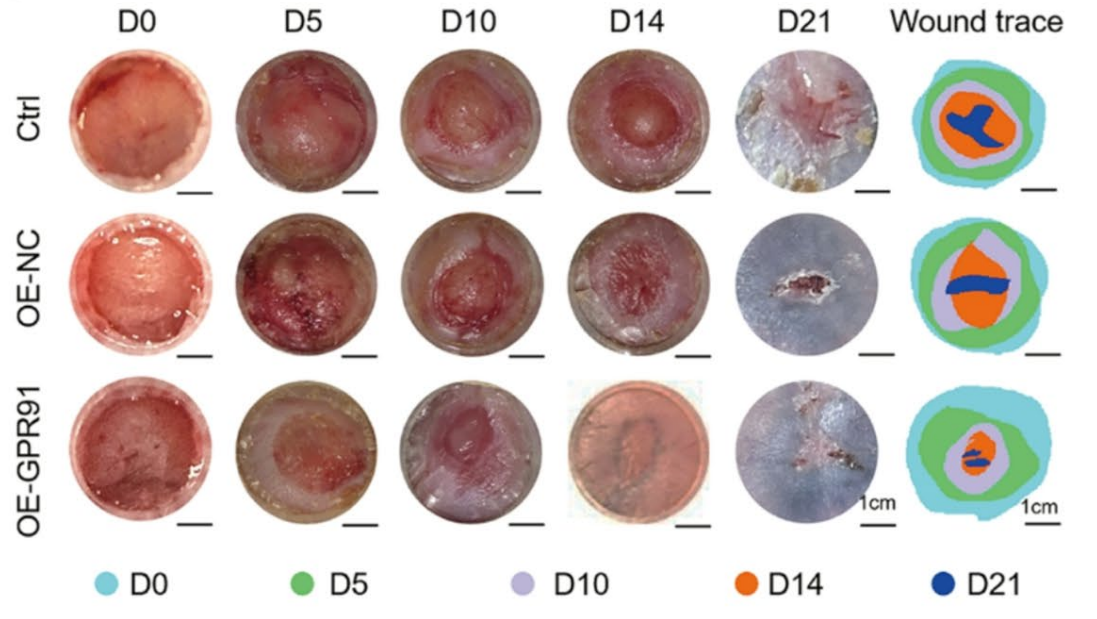
Dimethyl malonate (DMM) (100 mg/kg; s.c.) significantly reduced the residual wound area in diabetic mice on day 14 (D14), and further decreased the wound area on day 21 (D21). At this stage, only slight scab formation was observed in the control group (Ctrl group). No scar contracture was detected in any group; the regenerated epidermis exhibited a healthy morphology, and no skin contraction was observed.
-
-


Solvent & Solubility
In Vitro:
DMSO : 100 mg/mL (756.94 mM; Need ultrasonic; Hygroscopic DMSO has a significant impact on the solubility of product, please use newly opened DMSO)
H2O : 100 mg/mL (756.94 mM; Need ultrasonic)
Please refer to the solubility information to select the appropriate solvent. Once prepared, please aliquot and store the solution to prevent product inactivation from repeated freeze-thaw cycles.
Storage method and period of stock solution: -80°C, 2 years; -20°C, 1 year. When stored at -80°C, please use it within 2 years. When stored at -20°C, please use it within 1 year.
* Note: If you choose water as the stock solution, please dilute it to the working solution, then filter and sterilize it with a 0.22 μm filter before use.
Please refer to the solubility information to select the appropriate solvent. Once prepared, please aliquot and store the solution to prevent product inactivation from repeated freeze-thaw cycles.
Storage method and period of stock solution: -80°C, 2 years; -20°C, 1 year. When stored at -80°C, please use it within 2 years. When stored at -20°C, please use it within 1 year.
* Note: If you choose water as the stock solution, please dilute it to the working solution, then filter and sterilize it with a 0.22 μm filter before use.
Concentration (start) × Volume (start) = Concentration (final) × Volume (final)
In Vivo:
Select the appropriate dissolution method based on your experimental animal and administration route.
- For the following dissolution methods, please ensure to first prepare a clear stock solution using an In Vitro approach and then sequentially add co-solvents:
- To ensure reliable experimental results, the clarified stock solution can be appropriately stored based on storage conditions. As for the working solution for In Vivo experiments, it is recommended to prepare freshly and use it on the same day.
- The percentages shown for the solvents indicate their volumetric ratio in the final prepared solution. If precipitation or phase separation occurs during preparation, heat and/or sonication can be used to aid dissolution.
Add each solvent one by one: 10% DMSO 40% PEG300 5% Tween-80 45% Saline
Solubility: ≥ 2.5 mg/mL (18.92 mM); Clear solution
This protocol yields a clear solution of ≥ 2.5 mg/mL (saturation unknown).
Taking 1 mL working solution as an example, add 100 μL DMSO stock solution (25.0 mg/mL) to 400 μL PEG300, and mix evenly; then add 50 μL Tween-80 and mix evenly; then add 450 μL Saline to adjust the volume to 1 mL.
Preparation of Saline: Dissolve 0.9 g sodium chloride in ddH₂O and dilute to 100 mL to obtain a clear Saline solution.
Add each solvent one by one: 10% DMSO 90% (20% SBE-β-CD in Saline)
Solubility: ≥ 2.5 mg/mL (18.92 mM); Clear solution
This protocol yields a clear solution of ≥ 2.5 mg/mL (saturation unknown).
Taking 1 mL working solution as an example, add 100 μL DMSO stock solution (25.0 mg/mL) to 900 μL 20% SBE-β-CD in Saline, and mix evenly.
Preparation of 20% SBE-β-CD in Saline (4°C, storage for one week): 2 g SBE-β-CD powder is dissolved in 10 mL Saline, completely dissolve until clear.
In Vivo Dissolution Calculator
Please enter the basic information of animal experiments:
-
-
-
-
Recommended: Prepare an additional quantity of animals to account for potential losses during experiments.
Working solution concentration: 0.22 mg/mL
This product has good water solubility, please refer to the measured solubility data in water/PBS/Saline for details.

Protocols
-
Apoptosis
Apoptosis, also called programmed cell death, is generally characterized by distinct morphological characteristics.
-
TUNEL staining for apoptotic DNA fragmentation
TUNEL staining detects DNA strand breaks by using terminal deoxynucleotidyl transferase to add labeled nucleotides to exposed 3′-OH DNA termini, generating either microscopic staining in fixed cells or tissue sections, or fluorescence/cytometric signal in cell suspensions. TUNEL positivity reflects DNA fragmentation but should not be interpreted alone as definitive apoptosis, because TUNEL can also label necrotic, autolytic, mechanically damaged, or DNA-repair-associated DNA breaks.
-
Annexin V plus membrane-impermeant dye apoptosis staining
Annexin V-based apoptosis assays rely on the detection of phosphatidylserine (PS) externalization from the inner leaflet of the plasma membrane to the outer leaflet, an early biochemical hallmark of apoptosis. Fluorescently labeled Annexin V binds PS in a calcium-dependent manner, enabling identification of early apoptotic cells by flow cytometry or fluorescence microscopy. When combined with a membrane-impermeant DNA-binding dye (e. g. , propidium iodide), this approach allows discrimination between viable (Annexin V−/dye−), early apoptotic (Annexin V+/dye−), and late apoptotic or necrotic (Annexin V+/dye+) cell populations by assessing membrane integrity and PS exposure.
-
Apoptosis Solutions
Apoptosis is a regulated, generally non-lytic cell-death pathway that removes unwanted, damaged, infected, or abnormal cells through coordinated morphological changes, caspase activation, DNA fragmentation, and membrane remodeling. The intrinsic apoptosis pathway is controlled mainly by mitochondrial outer membrane permeabilization, BCL-2 family proteins, cytochrome c release, apoptosome formation, caspase-9 activation, and downstream executioner caspase-3/7 activation. The extrinsic apoptosis pathway is initiated by death receptors such as Fas, TNFR, and TRAIL receptors, which recruit adaptor proteins and activate caspase-8 before engaging executioner caspases or mitochondrial amplification through BID cleavage. Apoptosis is linked to many phenotypes, including cancer cell killing, tissue homeostasis, immune regulation, neurodegeneration, infection response, and treatment-induced cytotoxicity; unresolved questions include how apoptosis interacts with necroptosis, pyroptosis, ferroptos


Purity & Documentation
-
Data Sheet (271 KB)
-
SDS (393 KB)
- English - EN (393 KB)
- Français - FR (393 KB)
- Deutsch - DE (393 KB)
- Norwegian - NO (393 KB)
- Español - ES (393 KB)
- Swedish - SV (393 KB)
- Italian - IT (393 KB)
- Korean - KR (393 KB)
- Portuguese - PT (393 KB)
-
Handling Instructions (2659 KB)
References


Complete Stock Solution Preparation Table
Please refer to the solubility information to select the appropriate solvent. Once prepared, please aliquot and store the solution to prevent product inactivation from repeated freeze-thaw cycles.
Storage method and period of stock solution: -80°C, 2 years; -20°C, 1 year. When stored at -80°C, please use it within 2 years. When stored at -20°C, please use it within 1 year.
| Optional Solvent | Concentration Solvent Mass | 1 mg | 5 mg | 10 mg | 25 mg |
|---|---|---|---|---|---|
| DMSO / H2O | 1 mM | 7.5694 mL | 37.8472 mL | 75.6945 mL | 189.2362 mL |
| 5 mM | 1.5139 mL | 7.5694 mL | 15.1389 mL | 37.8472 mL | |
| 10 mM | 0.7569 mL | 3.7847 mL | 7.5694 mL | 18.9236 mL | |
| 15 mM | 0.5046 mL | 2.5231 mL | 5.0463 mL | 12.6157 mL | |
| 20 mM | 0.3785 mL | 1.8924 mL | 3.7847 mL | 9.4618 mL | |
| 25 mM | 0.3028 mL | 1.5139 mL | 3.0278 mL | 7.5694 mL | |
| 30 mM | 0.2523 mL | 1.2616 mL | 2.5231 mL | 6.3079 mL | |
| 40 mM | 0.1892 mL | 0.9462 mL | 1.8924 mL | 4.7309 mL | |
| 50 mM | 0.1514 mL | 0.7569 mL | 1.5139 mL | 3.7847 mL | |
| 60 mM | 0.1262 mL | 0.6308 mL | 1.2616 mL | 3.1539 mL | |
| 80 mM | 0.0946 mL | 0.4731 mL | 0.9462 mL | 2.3655 mL | |
| 100 mM | 0.0757 mL | 0.3785 mL | 0.7569 mL | 1.8924 mL |
* Note: If you choose water as the stock solution, please dilute it to the working solution, then filter and sterilize it with a 0.22 μm filter before use.


Dimethyl malonate Related Classifications
HY-Y1787 Related Classifications
 Powered by Bioz