1. Search Result
Search Result
Results for "

protein glycosylation

" in MedChemExpress (MCE) Product Catalog:

30

阻害剤およびアゴニスト

1

スクリーニングライブラリ

1

蛍光色素

3

生化学アッセイ試薬

2

ペプチド

2

MCE キット

13

天然物

13

組換えタンパク質

2

抗体

3

クリックケミストリー

2

オリゴヌクレオチド

製品番号 製品名 Target 研究分野 構造式
  • HY-A0098
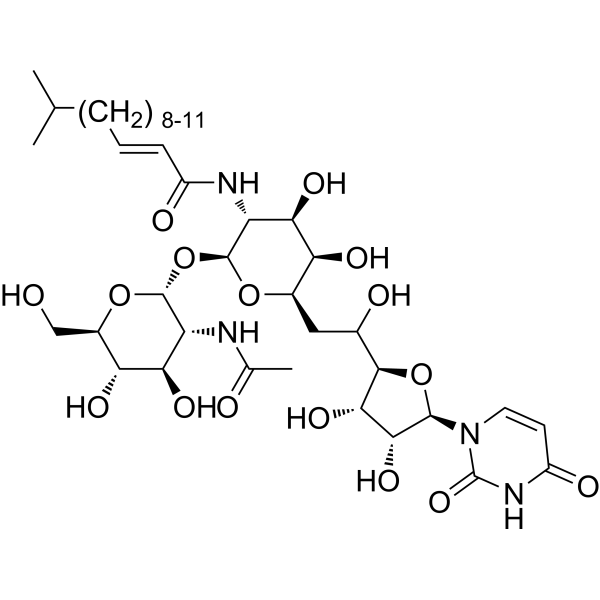
    Tunicamycin
    Maximum Cited Publications
    155 Publications Verification

    Antibiotic Influenza Virus Fungal Bacterial Aminotransferases (Transaminases) Exosomes Infection Inflammation/Immunology Cancer
    Tunicamycin is a mixture of homologous nucleoside antibiotic that inhibits N-linked glycosylation and blocks GlcNAc phosphotransferase (GPT). Tunicamycin causes accumulation of unfolded proteins in cell endoplasmic reticulum (ER) and induces ER stress, and causes blocking of DNA synthesis and cell cycle arrest in G1 phase. Tunicamycin inhibits gram-positive bacteria, yeasts, fungi, and viruses and has anti-cancer activity .Tunicamycin increases exosome release in cervical cancer cells .
    Tunicamycin
  • HY-N1347
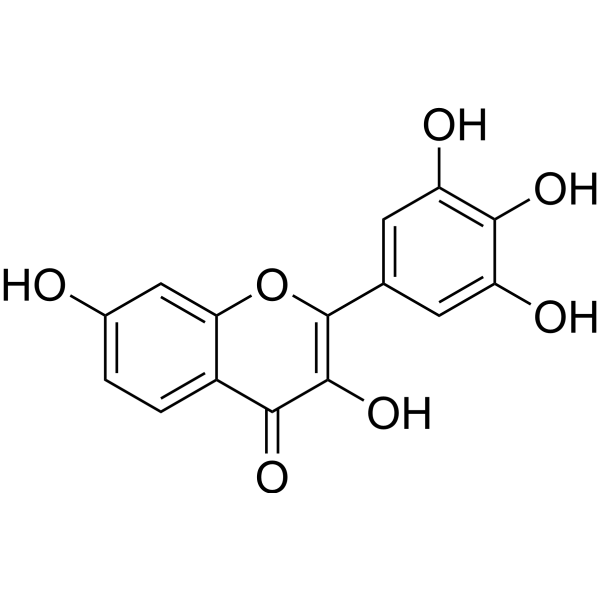
    Robinetin
    1 Publications Verification

    3,3',4',5',7-Pentahydroxyflavone

    Fungal HIV Integrase Bacterial Infection
    Robinetin (3,3',4',5',7-Pentahydroxyflavone), a naturally occurring flavonoid with remarkable ‘two color’ intrinsic fluorescence properties, has antifungal, antiviral, antibacterial, antimutagenesis, and antioxidant activity. Robinetin also can inhibit lipid peroxidation and protein glycosylation .
    Robinetin
  • HY-113357

    Endogenous Metabolite Neurological Disease Metabolic Disease Inflammation/Immunology
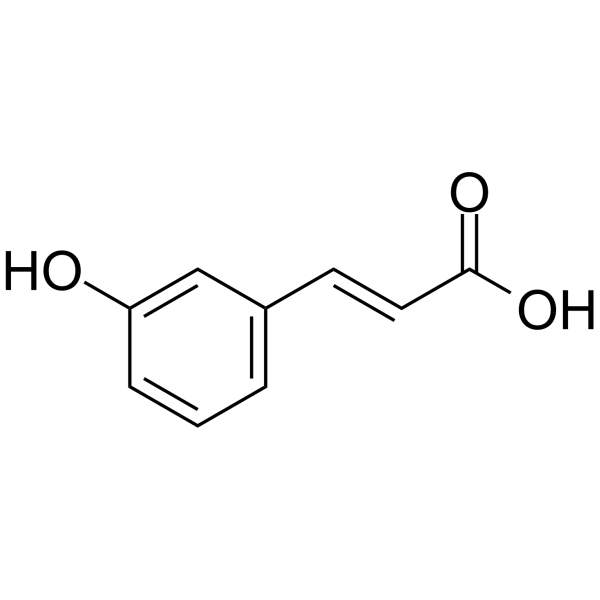
    m-Coumaric acid is a polyphenol metabolite from caffeic acid, formed by the gut microflora and the amount in human biofluids is diet-dependant. m-Coumaric acid is a BBB-penetrant metabolite of chlorogenic acid. m-Coumaric acid stimulates the cerebral nerves in vitro. m-Coumaric acid can evoke neurite outgrowth in hippocampal neuronal cells. m-Coumaric acid can promote neuronal differentiation. m-Coumaric acid increases spontaneous locomotor activity in mice by acting on the central nervous system. m-Coumaric acid inhibits the oxidation of L-dopa by epidermis tyrosinase. m-Coumaric acid attenuates non-catalytic protein glycosylation in retinas of diabetic rats .
    m-Coumaric acid
  • HY-W013707

    Cytidine triphosphate disodium dihydrate; 5'-CTP disodium dihydrate

    Endogenous Metabolite Metabolic Disease
    Cytidine-5'-triphosphate disodium dihydrate (5'-CTP disodium dihydrate) is a molecule of high energy, and acts as a coenzyme in glycerophospholipid biosynthesis and protein glycosylation .
    Cytidine-5'-triphosphate disodium dihydrate
  • HY-129099A

    PKC Estrogen Receptor/ERR Drug Metabolite Endogenous Metabolite Cancer
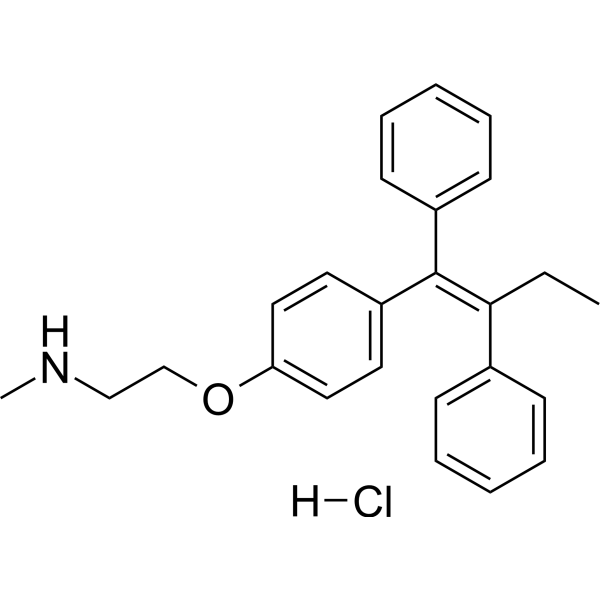
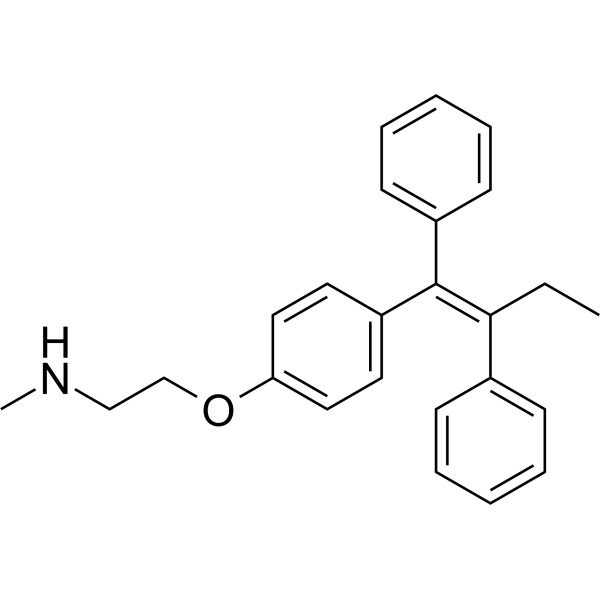
    N-Desmethyltamoxifen hydrochloride is the major metabolite of tamoxifen in humans. N-Desmethyltamoxifen, a poor antiestrogen, is a ten-fold more potent protein kinase C (PKC) inhibitor than Tamoxifen. N-Desmethyltamoxifen hydrochloride is also a potent regulator of ceramide metabolism in human AML cells, limiting ceramide glycosylation, hydrolysis, and sphingosine phosphorylation .
    N-Desmethyltamoxifen hydrochloride
  • HY-137042

    Alkyne-Cy5

    Oxidative Phosphorylation Mitochondrial Metabolism Cancer
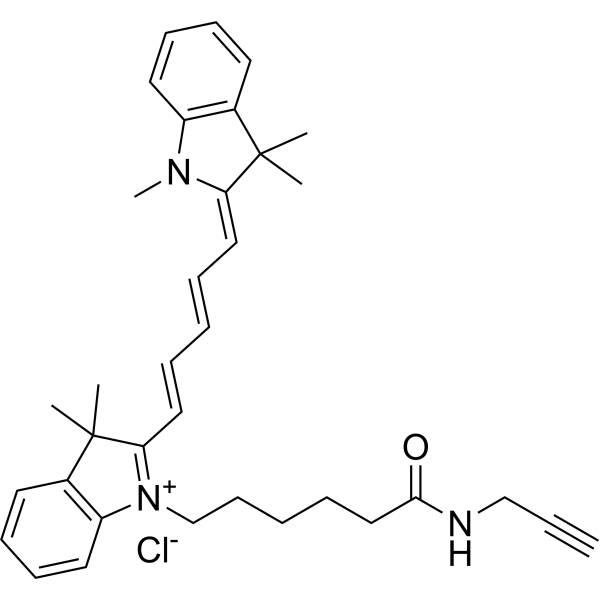
    Cyanine5 alkyne (Alkyne-Cy5) is a fluorescent dye used to label azide proteins and can be used to analyse post-translational modifications of proteins, glycosylation etc. Cyanine5 alkyne can also be used as a mitochondrial OXPHOS inhibitor to inhibit the growth of cancer stem cells (CSC) . Cyanine5 alkyne is a click chemistry reagent, it contains an Alkyne group and can undergo copper-catalyzed azide-alkyne cycloaddition (CuAAc) with molecules containing Azide groups.
    Cyanine5 alkyne
  • HY-P3443
    Peanut agglutinin
    1 Publications Verification

    PNA

    Biochemical Assay Reagents Cancer
    Peanut agglutinin (PNA) is a carbohydrate-recognition protein that binds competitively and irreversibly to cell-surface β-D-Gal (1-3)-GalNAc, and this binding can be inhibited by D-galactose and asialofetuin. Peanut agglutinin recognizes exposed glycoepitopes and reflects the glycosylation status of cells. Peanut agglutinin can label glycoconjugates at neuromuscular junctions to safely visualize synaptic structures. Peanut agglutinin can be used to synthesize dyes to distinguish between normal and tumor tissues. Peanut agglutinin provides support for research on leukemia, Burkitt's tumors, and cutaneous squamous lesions .
    Peanut agglutinin
  • HY-164390

    Neu5Acα2-6Galβ1-4GlcNAc

    Endogenous Metabolite Infection Cancer
    6′SLN is a cancer-related extracellular vesicle (EVs) surface glycan that serves as a key form of protein glycosylation in EVs. 6′SLN is also a sialic acid derivative that can interact with hemagglutinins (HAs) from human and avian influenza virus strains, making it useful for research into anti-influenza drugs .
    6′SLN
  • HY-W674039

    Biochemical Assay Reagents Others
    6-Azido-6-deoxy-D-glucose, 95% is used for visualizing protein-specific glycosylation in living cells.
    6-Azido-6-deoxy-D-glucose, 95%
  • HY-16304

    Endogenous Metabolite Metabolic Disease
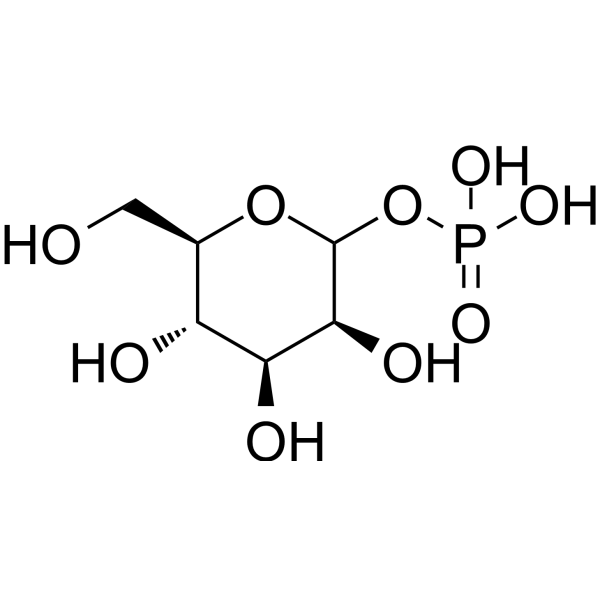
    Mannose 1-phosphate is a phosphorylated mannose that serves as a precursor of GDP-mannose, a constituent unit of glycosylation biosynthetic pathways. Mannose 1-phosphate increases intracellular GDP-mannose concentration, promotes normalization of lipid-linked oligosaccharide structures, and enhances the formation of mature N-glycans on cellular proteins. Mannose 1-phosphate can be used in studies related to glycosylation disorders .
    Mannose 1-phosphate
  • HY-E70290

    GALNT1

    Endogenous Metabolite β-catenin Wnt Cancer
    N-Acetylgalactosaminyltransferase 1 (GALNT1) is a glycosyltransferase that initiates mucin-type O-glycosylation by transferring α-GalNAc from UDP-GalNAc to serine (Ser) or threonine (Thr) residues in proteins. Overexpression of N-Acetylgalactosaminyltransferase 1 in gastric cancer can promote abnormal O-glycosylation of CD44, thereby activating the Wnt/β-catenin signaling pathway and regulating the malignant behavior of gastric cancer cells. Additionally, N-Acetylgalactosaminyltransferase 1 plays a crucial role in cancer growth and metastasis by modifying the O-glycosylation of various glycoproteins, such as mucin (MUC1), osteopontin (OPN), matrix metalloproteinase-14 (MMP14), and integrin α3 .
    N-Acetylgalactosaminyltransferase 1
  • HY-W040294

    Methyl α-D-glucopyranoside

    Biochemical Assay Reagents Others
    Methyl α-D-glucoside (Methyl α-D-glucopyranoside) can be used for protein glycosylation modification. Methyl α-D-glucoside is a kind of biological materials or organic compounds that are widely used in life science research .
    Methyl α-D-glucoside
  • HY-129099

    PKC Estrogen Receptor/ERR Drug Metabolite Endogenous Metabolite Cancer
    N-Desmethyltamoxifen is the major metabolite of tamoxifen in humans. N-Desmethyltamoxifen, a poor antiestrogen, is a ten-fold more potent protein kinase C (PKC) inhibitor than Tamoxifen. N-Desmethyltamoxifen is also a potent regulator of ceramide metabolism in human AML cells, limiting ceramide glycosylation, hydrolysis, and sphingosine phosphorylation .
    N-Desmethyltamoxifen
  • HY-150177

    Drug Intermediate Metabolic Disease
    Mannose 6 phosphate is an essential precursor for mannosyl glycoconjugates, including lipid-linked oligosaccharides (LLO; glucose3mannose9GlcNAc2-P-P-dolichol) used for protein N-glycosylation. Mannose 6 phosphate causes specific LLO cleavage. Mannose 6 phosphate causes specific degradation of G3M9Gn2-P-P-Dol. Complexes containing Mannose 6 phosphate can remodel the dermal collagen network, improve skin biomechanical properties, and reverse visible signs of aging. Mannose 6 phosphate can be used in research related to skin aging .
    Mannose 6 phosphate
  • HY-W415798

    Endogenous Metabolite Others
    Ac4GalNAlk is a weakly alkyne-labeled reagent for metabolic oligosaccharide engineering (MOE) that can be used to detect protein glycosylation. MOE reagents can be activated by cellular biosynthetic machinery into nucleotide sugars, which can be further traced through the introduction of glycoproteins in bioorthogonal chemistry. Ac4GalNAlk promotes nucleotide-sugar biosynthesis and increases bioorthogonal cell surface markers .
    Ac4GalNAlk
  • HY-113357R

    Reference Standards Endogenous Metabolite Neurological Disease Inflammation/Immunology
    m-Coumaric acid (Standard) is the analytical standard of m-Coumaric acid. This product is intended for research and analytical applications. m-Coumaric acid is a polyphenol metabolite from caffeic acid, formed by the gut microflora and the amount in human biofluids is diet-dependant. m-Coumaric acid is a BBB-penetrant metabolite of chlorogenic acid. m-Coumaric acid stimulates the cerebral nerves in vitro. m-Coumaric acid can evoke neurite outgrowth in hippocampal neuronal cells. m-Coumaric acid can promote neuronal differentiation. m-Coumaric acid increases spontaneous locomotor activity in mice by acting on the central nervous system. m-Coumaric acid inhibits the oxidation of L-dopa by epidermis tyrosinase. m-Coumaric acid attenuates non-catalytic protein glycosylation in retinas of diabetic rats .
    m-Coumaric acid (Standard)
  • HY-177787A

    Nucleoside Antimetabolite/Analog Others
    2'-Deoxy-N-methyl-AMP ammonium is an N6-substituted adenine nucleotide derivative and a glycosyl donor. On one hand, 2'-Deoxy-N-methyl-AMP ammonium acts as a specific substrate for N6-methyl-AMP aminohydrolase, and it is catalytically converted to dIMP to participate in the nucleotide metabolic cycle. On the other hand, 2'-Deoxy-N-methyl-AMP ammonium also serves as a guanosine diphosphate (GDP)-linked fucose derivative donor, driving site-specific glycoconjugation of proteins under the mediation of α-1,3-fucosyltransferase. 2'-Deoxy-N-methyl-AMP ammonium is an important molecular tool for investigating the mechanisms of nucleotide modification and protein glycosylation .
    2'-Deoxy-N-methyl-AMP ammonium
  • HY-N1347R

    3,3',4',5',7-Pentahydroxyflavone (Standard)

    Reference Standards Fungal HIV Integrase Bacterial Infection
    Robinetin (Standard) is the analytical standard of Robinetin. This product is intended for research and analytical applications. Robinetin (3,3',4',5',7-Pentahydroxyflavone), a naturally occurring flavonoid with remarkable ‘two color’ intrinsic fluorescence properties, has antifungal, antiviral, antibacterial, antimutagenesis, and antioxidant activity. Robinetin also can inhibit lipid peroxidation and protein glycosylation .
    Robinetin (Standard)
  • HY-N13299

    Endogenous Metabolite Others
    Glucoberteroin is a glucosinolate, which could be isolated from Degenia velebitica. Glucoberteroin inhibits protein glycosylation and carbonylation, decreases the production of carbonyl protein, and contributes to the preventation of skin-aging .
    Glucoberteroin
  • HY-16304A

    Endogenous Metabolite Metabolic Disease
    Mannose 1-phosphate sodium is a phosphorylated mannose that serves as a precursor of GDP-mannose, a constituent unit of glycosylation biosynthetic pathways. Mannose 1-phosphate sodium increases intracellular GDP-mannose concentration, promotes normalization of lipid-linked oligosaccharide structures, and enhances the formation of mature N-glycans on cellular proteins. Mannose 1-phosphate sodium can be used in studies related to glycosylation disorders .
    Mannose 1-phosphate sodium
  • HY-P4027

    HCV Infection
    HCV-1 e2 Protein (554-569) is one of the main antigenic regions of HCV envelope 2 (e2) protein. The HCV-1 e2 Protein (554-569) contains a putative n-glycosylation site, which was previously thought to influence the immune recognition of e2 .
    HCV-1 e2 Protein (554-569)
  • HY-P4027A

    HCV Infection
    HCV-1 e2 Protein (554-569) TFA is one of the main antigenic regions of HCV envelope 2 (e2) protein. The HCV-1 e2 Protein (554-569) TFA contains a putative N-glycosylation site, which was previously thought to influence the immune recognition of e2 .
    HCV-1 e2 Protein (554-569) TFA
  • HY-E70120

    Fungal Infection
    Phosphomannose isomerase is the first enzyme involved in the biosynthesis pathway of GDP-Man. Phosphomannose isomerase catalyzes the conversion between fructose-6-phosphate (Fru6P) and mannose-6-phosphate (Man6P). Phosphomannose isomerase is important for cell wall synthesis and protein glycosylation. Phosphomannose isomerase is a potent antifungal target to curb the threats posed by A. flavus .
    Phosphomannose isomerase
  • HY-129099AR

    Reference Standards PKC Estrogen Receptor/ERR Drug Metabolite Endogenous Metabolite Cancer
    N-Desmethyltamoxifen (hydrochloride) (Standard) is the analytical standard of N-Desmethyltamoxifen (hydrochloride). This product is intended for research and analytical applications. N-Desmethyltamoxifen hydrochloride is the major metabolite of tamoxifen in humans. N-Desmethyltamoxifen, a poor antiestrogen, is a ten-fold more potent protein kinase C (PKC) inhibitor than Tamoxifen. N-Desmethyltamoxifen hydrochloride is also a potent regulator of ceramide metabolism in human AML cells, limiting ceramide glycosylation, hydrolysis, and sphingosine phosphorylation[1][2][3].
    N-Desmethyltamoxifen hydrochloride (Standard)
  • HY-175697

    Glycosyltransferase SARS-CoV Angiotensin-converting Enzyme (ACE) DNA/RNA Synthesis Infection
    Glycosyltransferase-IN-2 (Compound 20) is a Glycosyltransferase inhibitor. Glycosyltransferase-IN-2 has a broad-spectrum anticoronavirus activity with IC50s of 11.3, 5.5 and ~16.2 μM for MHV, HCoV-NL63 and SARS-CoV-2, respectively. Glycosyltransferase-IN-2 interferes with the coronavirus infectivity, alters viral protein glycosylation with inhibition of interaction with the ACE2 receptor or SC-VLP secretion, and inhibits RNA replication. Glycosyltransferase-IN-2 can be used for coronavirus infections research .
    Glycosyltransferase-IN-2
  • HY-E70568

    Ser/Thr Protease Others
    Protease (O-glycan Cleaving) is recombinantly expressed from E.coli and contains a His tag. Protease (O-glycan Cleaving) is an O-glycan-dependent protease that digests proteins carrying mucin-type O-glycans, including sialylated substrates, glycosylated Ser and Thr residues at the N terminus. Protease (O-glycan Cleaving) digests a variety of O-glycan structures, including sialylated glycosylated core 1 and core 2 structures and Tn antigen. Protease (O-glycan Cleaving) does not digest terminally modified serine or threonine residues, nor does it digest N-glycosylation sites on glycoproteins.
    Protease (O-glycan Cleaving)
  • HY-W761987

    Virus Protease Infection
    2-Deoxy-2-fluoro-D-mannose is an antiviral mannose analogue, inhibited the dolichol cycle of protein glycosylation.
    2-Deoxy-2-fluoro-D-mannose
  • HY-E71260

    Biochemical Assay Reagents Others
    β-1,3-Galactosyl-O-glycosyl-glycoprotein β-1,6-N-acetylglucosaminyltransferase (EC 2.4.1.102) is involved in O-glycosylation of several proteins, such as mucins.
    β-1,3-Galactosyl-O-glycosyl-glycoprotein β-1,6-N-acetylglucosaminyltransferase
  • HY-182586

    Fungal Bcl-2 Family Infection
    Decyl gallate is an antifungal (fungal) agent. Decyl gallate downregulates the expression of the pro-apoptotic (apoptosis) protein Bak, upregulates the expression of the anti-apoptotic protein Bcl-2, and inhibits DNA damage. Decyl gallate disrupts ALG12-mediated N-glycosylation, overactivates the UPR pathway, and simultaneously reduces fungal cell wall enzyme activity, chitin levels, mitochondrial activity, budding ability, cell viability, and host cell adhesion capacity. Decyl gallate reduces inflammatory responses induced by fungal infection and disrupts fungal membrane structure. Decyl gallate can be used in studies related to paracoccidioidomycosis and invasive fungal infections .
    Decyl gallate
  • HY-179558

    PD-1/PD-L1 Cancer
    MS1-96 is an orally active PD-L1 (programmed death-ligand 1) degrader. MS1-96 effectively reduced PD-L1 protein levels across multiple colorectal cancer (CRC) cell lines. MS1-96 directly binds to PD-L1 (KD = 2.58 μM) and enhances the interaction between HIP1R and PD-L1, thereby altering the intracellular trafficking of PD-L1 within clathrin-coated vesicles. MS1-96 induces abnormal N-glycosylation of PD-L1, destabilizing the protein and hastening its lysosome-mediated degradation. MS1-96 can be used for the study of colorectal cancer .
    MS1-96

オンラインお問い合わせ

入力情報は安全に管理されます. 必須入力項目.

タイトル


国或いは地域 *

お名前 *


組纖名 *

デパートメント *


メールアドレス *


製品名 *

製品番号


カスタマ需要量 *

電話番号 *


必ず会社名を記載ください。個人への返信は行いません。

備考

バルクお問い合わせ

Inquiry Information

製品名:
製品番号:
数量:
MCE 日本正規代理店:

