Search Result
Results for "
2-benzofuran-2-yl-2-imidazoline-d4-hydrochloride
" in MedChemExpress (MCE) Product Catalog:
2
Biochemical Assay Reagents
7
Isotope-Labeled Compounds
| Cat. No. |
Product Name |
Target |
Research Areas |
Chemical Structure |
-
- HY-14188
-
|
|
Potassium Channel
Autophagy
|
Cardiovascular Disease
Infection
Neurological Disease
Cancer
|
|
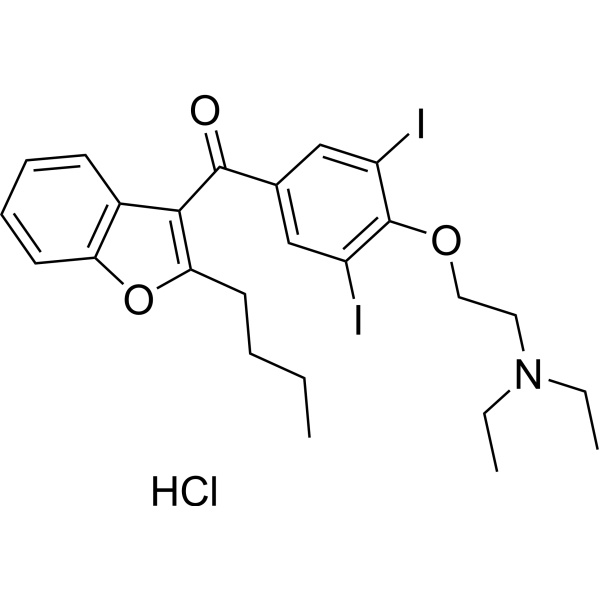
Amiodarone hydrochloride, a benzofuran-based Class III antiarrhythmic agent, inhibits WT outward ionic current (IhERG) tails with an IC50 of ∼45 nM . Amiodarone hydrochloride induces cell proliferation and myofibroblast differentiation via ERK1/2 and p38 MAPK signaling in fibroblasts . Amiodarone hydrochloride can be used in the research of both supraventricular and ventricular arrhythmias .
|
-
-
- HY-145514C
-
|
|
FKBP
PROTACs
|
Cancer
|
|
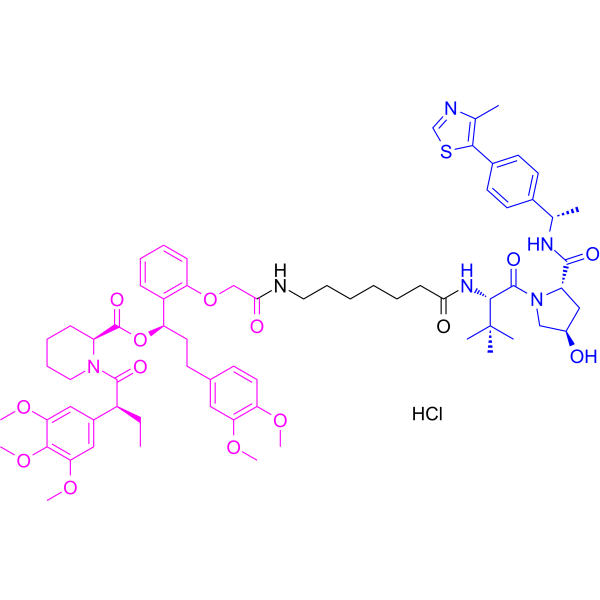
dTAGV-1 hydrochloride is a potent and selective degrader of FKBP12 F36V-tagged proteins PROTAC degrader. dTAGV-1 hydrochloride can induce degradation of FKBP12 F36V-Nluc in vivo. (Pink: Target Protein Ligand (HY-114420); Black: Linker (HY-W012001); Blue: VHL Ligand (HY-112078); VHL Ligan+Linker (HY-173628A)) .
|
-
-
- HY-101374A
-
|
(+)-BRD4780
|
Imidazoline Receptor
Caspase
Mitochondrial Metabolism
Lactate Dehydrogenase
|
Cardiovascular Disease
Neurological Disease
Cancer
|
|
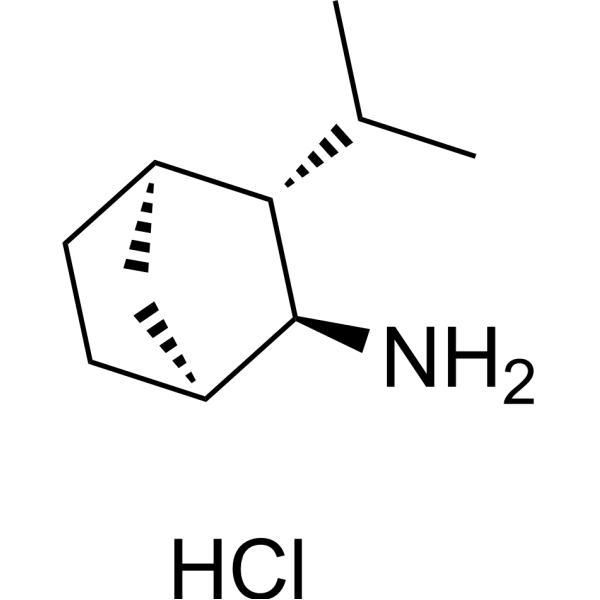
AGN 192403 (BRD4780) hydrochloride is a potent and selective imidazoline-1 receptor antagonist with a Ki value of 42 nM. AGN 192403 hydrochloride is also a TMED9 inhibitor. AGN 192403 hydrochloride shows protective effects on oxidative cytotoxicity and mitochondrial inhibitor-induced cytotoxicity in astrocytes. AGN 192403 hydrochloride mitigates the proliferation and migration of differentiated glioma tumor cells. AGN 192403 hydrochloride can be used for glioma tumor and neurological diseases research .
|
-
-
- HY-103697
-
|
|
Toll-like Receptor (TLR)
|
Cancer
|
|
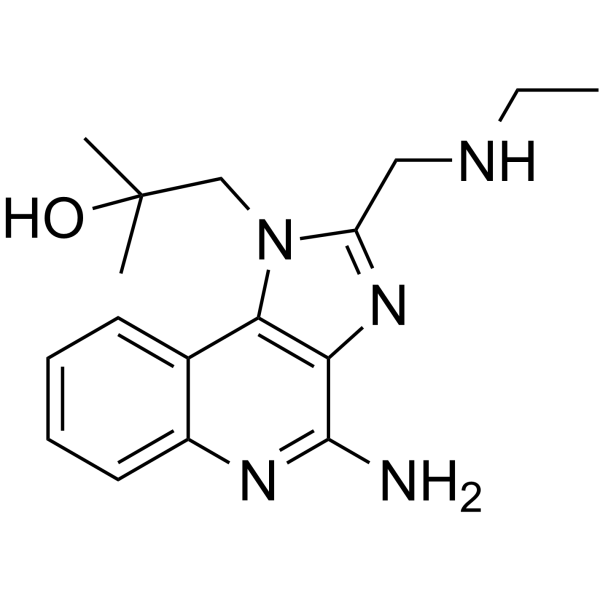
Gardiquimod is an imidazoline TLR7/8 agonist. Gardiquimod inhibits HIV-1 infection of macrophages and activated peripheral blood mononuclear cells (PBMCs). Gardiquimod specifically activates TLR7 at concentrations below 10 μM.
|
-
-
- HY-101238
-
-
-
- HY-W004842
-
|
|
Fungal
|
Others
|
|
Benzofuran-2-carboxaldehyde is a benzofuran derivative with a bitter almond odor. Benzofuran-2-carboxaldehyde exhibits high antifungal activity .
|
-

-
- HY-B1052
-
|
Baq-168; MDL-14042
|
Adrenergic Receptor
Imidazoline Receptor
|
Neurological Disease
Metabolic Disease
|
|
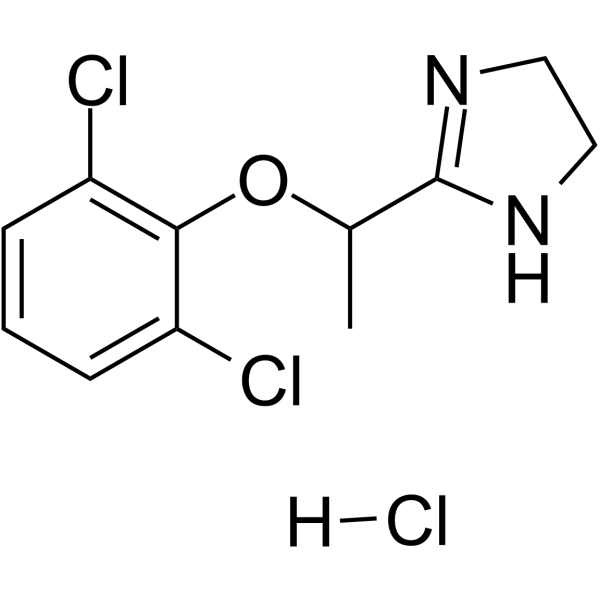
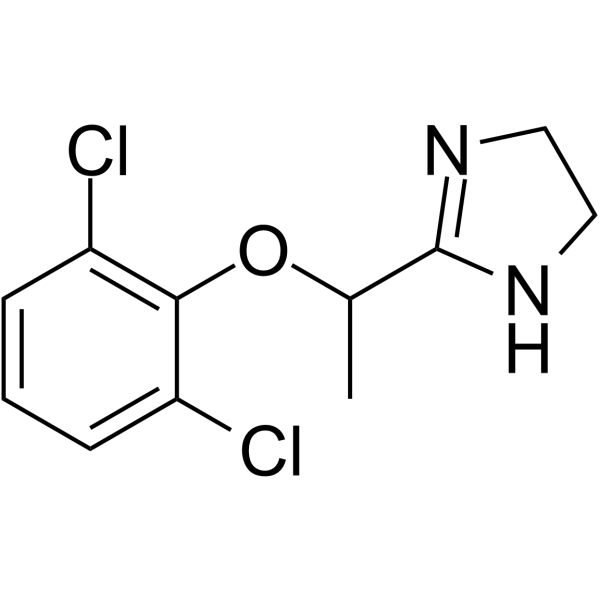
Lofexidine hydrochloride (Baq-168) is an orally active agonist of the imidazoline I1 receptor (imidazoline I1 receptor) (Ki: 1.9 nM) and α2-adrenergic receptor (α2-adrenergic receptor). Lofexidine hydrochloride binds to the α2A-adrenergic receptor, reduces sympathetic outflow, lowers blood pressure, and exhibits vasoconstrictive effects. Lofexidine hydrochloride regulates the expression of c-fos and alleviates opioid withdrawal symptoms. Lofexidine hydrochloride is applicable to research on opioid addiction and withdrawal .
|
-
-
- HY-14561A
-
|
RX 781094 hydrochloride
|
Adrenergic Receptor
Imidazoline Receptor
|
Neurological Disease
Endocrinology
|
|
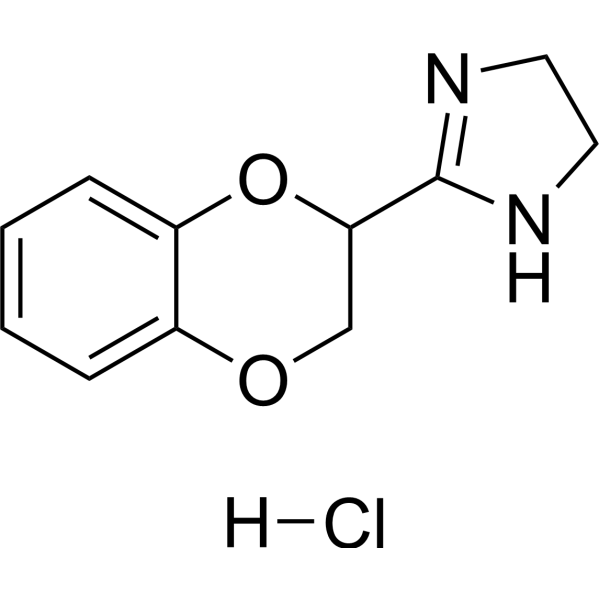
Idazoxan hydrochloride (RX 781094 hydrochloride) is an α2-adrenoceptor antagonist and is also a imidazoline receptors (IRs) antagonist competitively antagonized the centrally induced hypotensive effect of imidazoline-like agents (IMs). Idazoxan hydrochloride also improves motor symptoms in Parkinson’s disease, L-DOPA-induced dyskinesias, and experimental Parkinsonism .
|
-
-
- HY-B0374
-
|
BDF5895
|
Imidazoline Receptor
Adrenergic Receptor
LDLR
|
Cardiovascular Disease
Neurological Disease
|
|
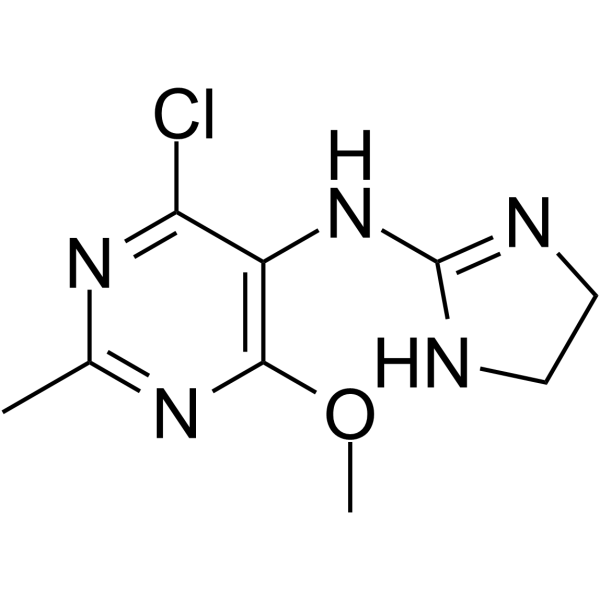
Moxonidine (BDF5895) is an orally active imidazoline type 1 receptor (I1-R) agonist. Moxonidine activates imidazoline I1 receptors and α2 adrenoceptors, affecting oxidized low-density lipoprotein uptake. Moxonidine reduces atherosclerotic lesions and lowers blood pressure. Moxonidine can be used in the study of hypertension, heart failure, and atherosclerosis .
|
-
-
- HY-B0556A
-
|
Tetryzoline hydrochloride
|
Adrenergic Receptor
|
Cardiovascular Disease
Endocrinology
|
|
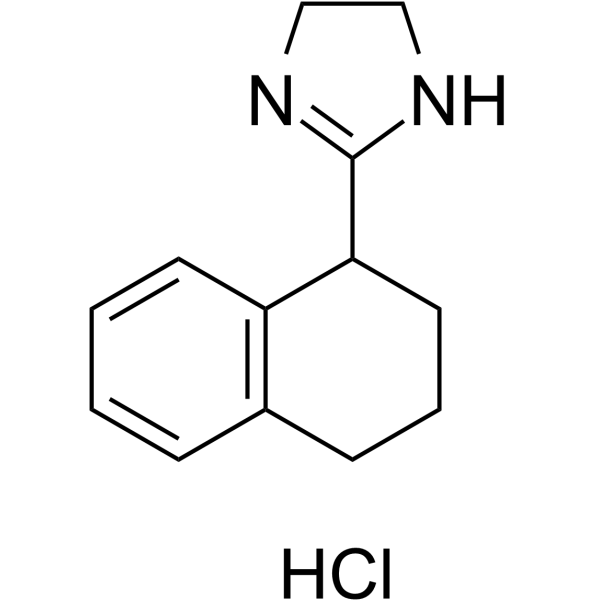
Tetrahydrozoline hydrochloride (Tetryzoline hydrochloride), a derivative of imidazoline, is an α-adrenergic agonist that causes vasoconstriction. Tetrahydrozoline hydrochloride is widely used for the research of nasal congestion and conjunctival congestion .
|
-
-
- HY-N15642
-
-

-
- HY-B0374A
-
|
BDF5895 hydrochloride
|
Imidazoline Receptor
Adrenergic Receptor
LDLR
|
Cardiovascular Disease
Neurological Disease
|
|
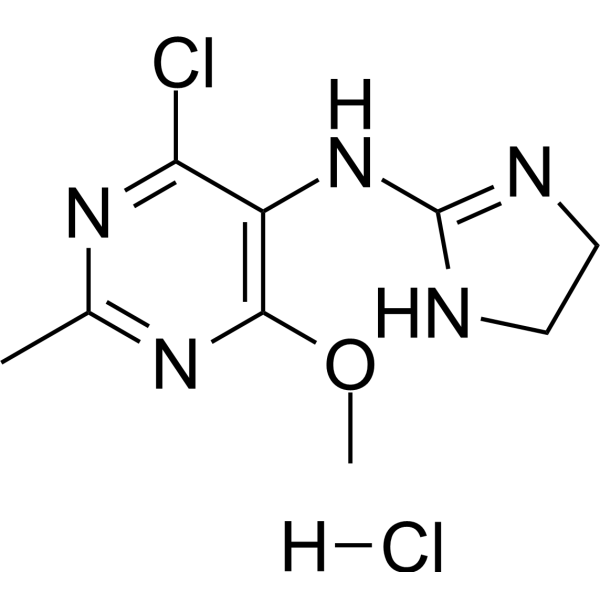
Moxonidine (BDF5895) hydrochloride is an orally active imidazoline type 1 receptor (I1-R) agonist. Moxonidine hydrochloride activates imidazoline I1 receptors and α2 adrenoceptors, affecting oxidized low-density lipoprotein uptake. Moxonidine hydrochloride reduces atherosclerotic lesions and lowers blood pressure. Moxonidine hydrochloride can be used in the study of hypertension, heart failure, and atherosclerosis .
|
-
-
- HY-B1416A
-
-
-
- HY-W001165
-
|
benzofuran-3-one
|
Biochemical Assay Reagents
|
Others
|
|
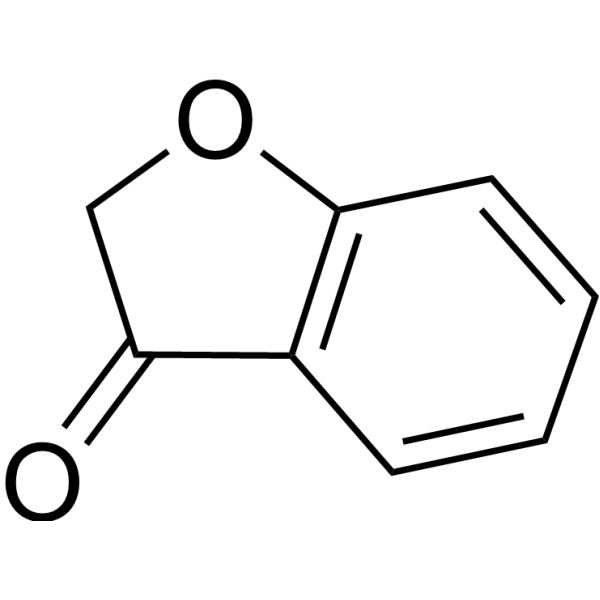
3-Coumaranone is a biochemical reagent that can be used as a biological material or organic compound for life science related research.
|
-
-
- HY-B1052A
-
|
Baq-168 free base; MDL-14042 free base
|
Imidazoline Receptor
Adrenergic Receptor
|
Neurological Disease
Metabolic Disease
|
|
Lofexidine (Baq-168 free base) is an orally active agonist of the imidazoline I1 receptor (imidazoline I1 receptor) (Ki: 1.9 nM) and α2-adrenergic receptor (α2-adrenergic receptor). Lofexidine binds to the α2A-adrenergic receptor, reduces sympathetic outflow, lowers blood pressure, and exhibits vasoconstrictive effects. Lofexidine regulates the expression of c-fos and alleviates opioid withdrawal symptoms. Lofexidine is applicable to research on opioid addiction and withdrawal .
|
-
-
- HY-W004801
-
|
|
Drug Intermediate
|
Others
|
|
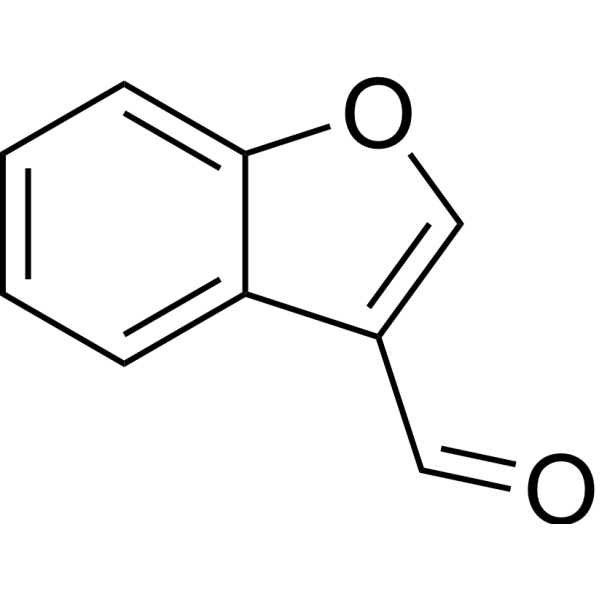
Benzofuran-3-carbaldehyde is a bioactive chemical, and can be used for the synthesis of active compound .
|
-
-
- HY-141714
-
-
-
- HY-D1760
-
|
|
Fluorescent Dye
|
Others
|
|
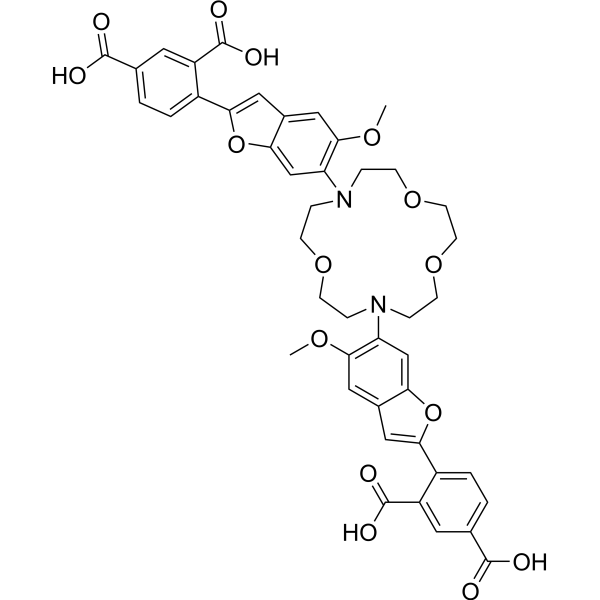
SBFI is a cell-impermeant, fluorescent Na + indicator dye. SBFI is excited at 340 nm and the fluorophore emission is collected at 450 nm . SBFI selective for Na + over K + with Kd values of 20 and 120 mM for these ions, respectively. .
|
-
-
- HY-B1800
-
-
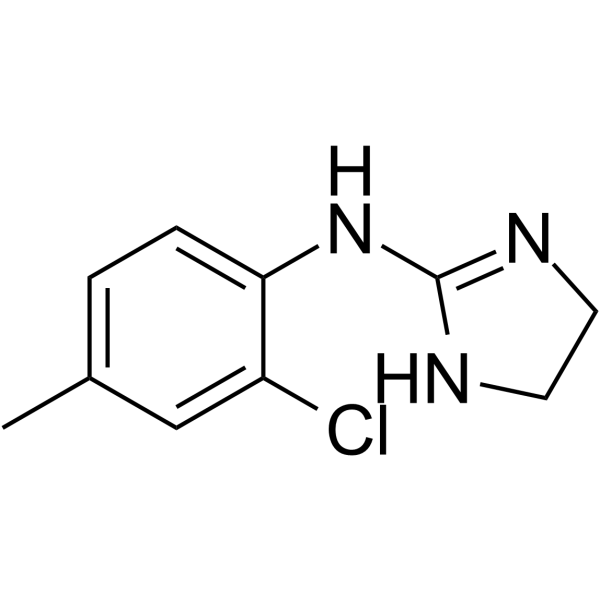
-
- HY-101170
-
|
|
Imidazoline Receptor
Apoptosis
TNF Receptor
|
Neurological Disease
Inflammation/Immunology
|
|
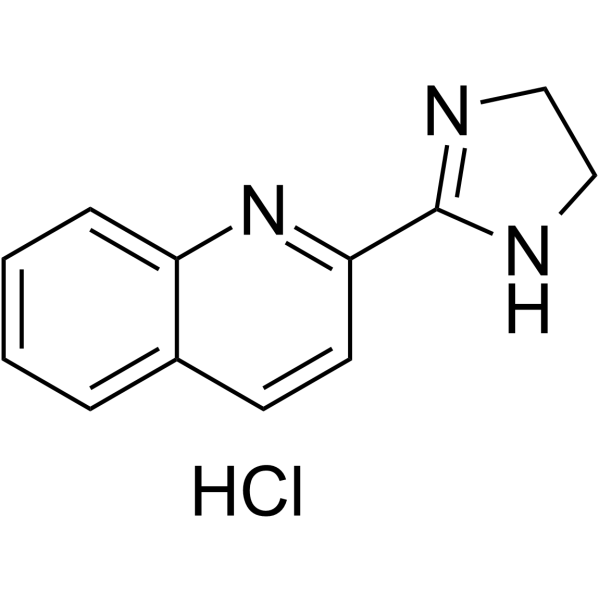
BU224 hydrochloride is a selective and high affinity imidazoline I2 receptor ligand, with a Ki of 2.1 nM. BU224 hydrochloride is sometimes used as an I2 receptor antagonist. BU224 hydrochloride exerts neuroprotective effects, with anti-inflammatory and anti-apoptotic properties. BU224 hydrochloride improves memory in 5XFAD mice, enlarging dendritic spines and reducing Aβ-induced changes in NMDARs. BU224 hydrochloride can be used for Alzheimer's disease research .
|
-
-
- HY-W004116
-
|
|
Biochemical Assay Reagents
|
Others
|
|
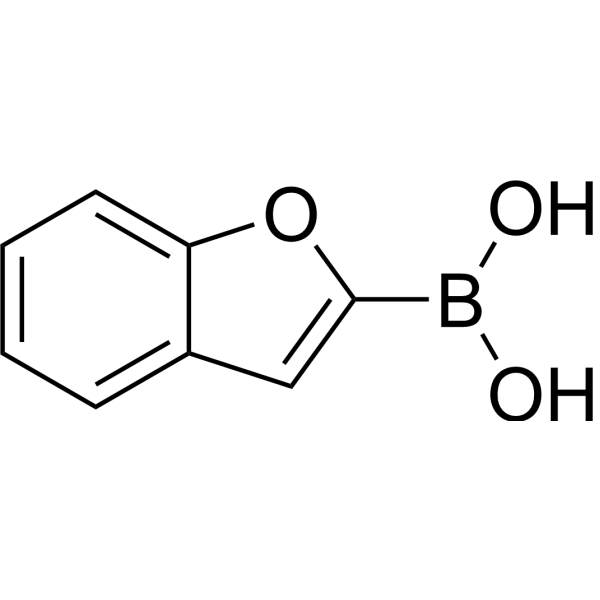
Benzofuran-2-boronic acid is a biochemical reagent that can be used as a biological material or organic compound for life science related research.
|
-
-
- HY-N4161
-
-
-
- HY-15481
-
-
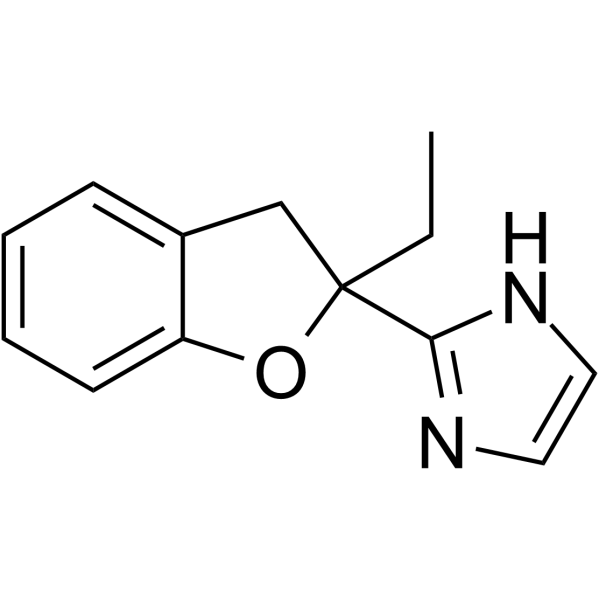
-
- HY-N7503
-
|
|
Drug Intermediate
Bacterial
|
Infection
Cancer
|
|
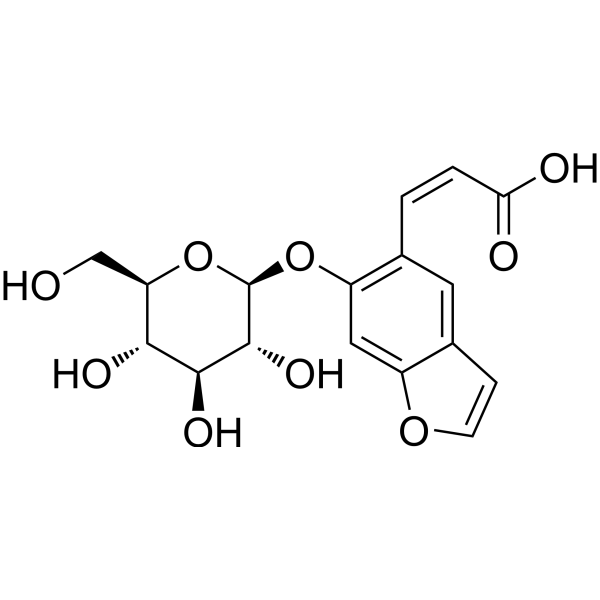
Psoralenoside is an orally active benzofuran glycoside. Psoralenoside is isolated from the fruits of Psoralea corylifolia. As a metabolite precursor, Psoralenoside undergoes deglycosylation by intestinal flora to form Psoralen (HY-N0053). Psoralenoside is applicable to research related to cancer and bacterial infections .
|
-
-
- HY-I0056
-
|
|
Drug Intermediate
|
Others
|
|
Ethyl 5-(piperazin-1-yl)benzofuran-2-carboxylate hydrochloride is a drug intermediate for synthesis of various active compounds.
|
-

-
- HY-77058A
-
|
Ethyl 5-(piperazin-1-yl)benzofuran-2-carboxylate dihydrochloride monohydrate
|
Drug Intermediate
|
Others
|
|
5-(1-Piperazinyl)-2-benzofurancarboxylic acid ethyl ester (Ethyl 5-(piperazin-1-yl)benzofuran-2-carboxylate) dihydrochloride hydrate is a drug intermediate for synthesis of various active compounds.
|
-

-
- HY-101374
-
-

-
- HY-W721302
-
|
|
Monoamine Oxidase
|
Neurological Disease
|
|
2-APB is an analog of 6-APB, a benzofuran derivative and a psychoactive substance. Certain benzofuran derivatives have monoamine oxidase-A inhibitory activity .
|
-

-
- HY-101100
-
|
D-16949 hydrochloride
|
5-HT Receptor
|
Neurological Disease
|
|
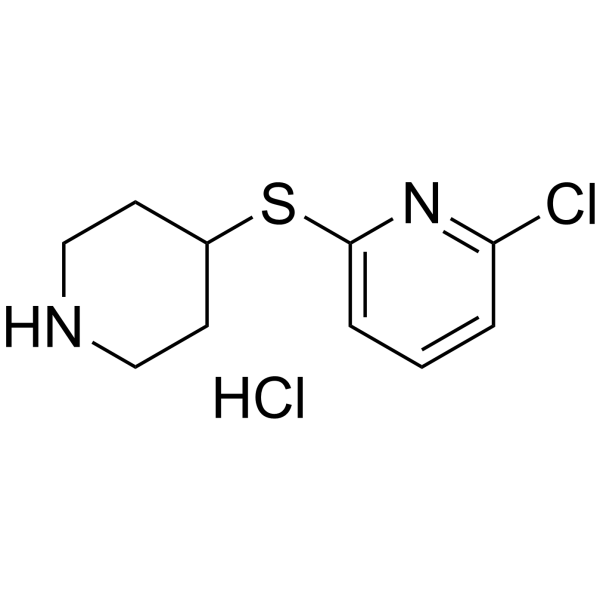
Anpirtoline (D-16949) hydrochloride is a centrally acting 5-HT1B receptor agonist, with Kis of 28 nM (5-HT1B), 150 nM (5-HT1A) and 1.49 μM (5-HT2). Anpirtoline hydrochloride has serotonergic, antinociceptive, antidepressant-like effects .
|
-
-
- HY-W111370
-
-

-
- HY-B0556
-
|
Tetryzoline
|
Adrenergic Receptor
|
Cardiovascular Disease
|
|
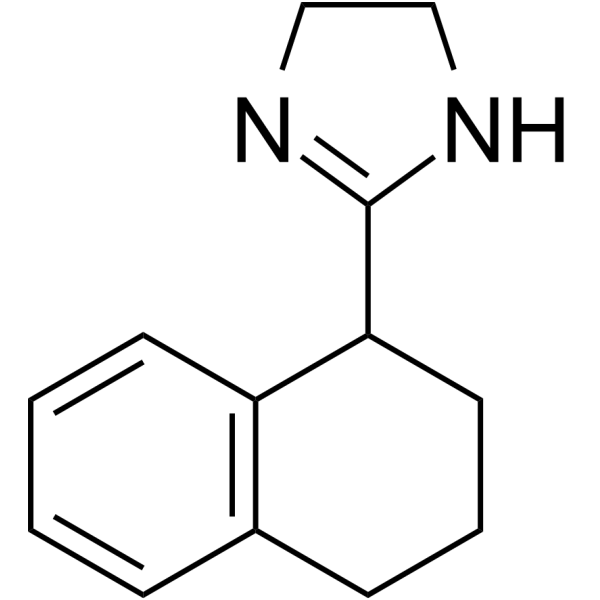
Tetrahydrozoline (Tetryzoline), a derivative of imidazoline, is an α-adrenergic agonist that causes vasoconstriction. Tetrahydrozoline is widely used for the research of nasal congestion and conjunctival congestion .
|
-
-
- HY-N7504
-
|
|
Bacterial
|
Infection
Metabolic Disease
Cancer
|
|
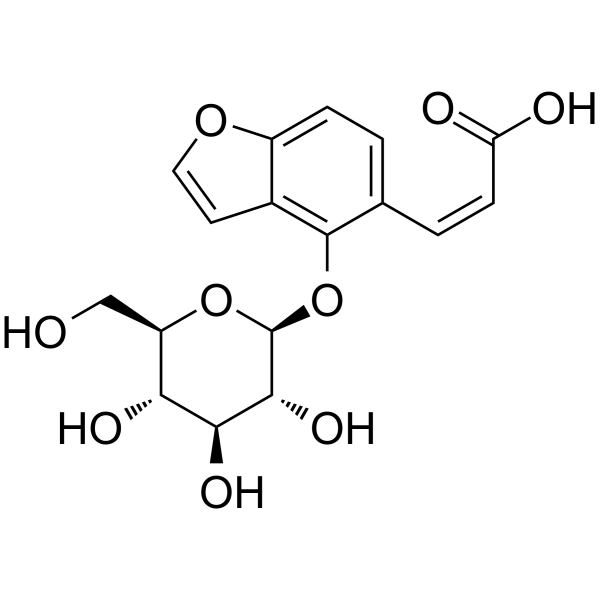
Isopsoralenoside is a benzofuran glycoside from Psoralea corylifolia. Isopsoralenoside can be quickly metabolized to Psoralen (HY-N0053) in digestive tract contents. Isopsoralenoside show estrogen-like activity, osteoblastic proliferation accelerating activity, antitumor effects and antibacterial activity .
|
-
-
- HY-B0556AS
-
|
Tetryzoline-d4 hydrochloride
|
Isotope-Labeled Compounds
Adrenergic Receptor
|
Cardiovascular Disease
Endocrinology
|
|
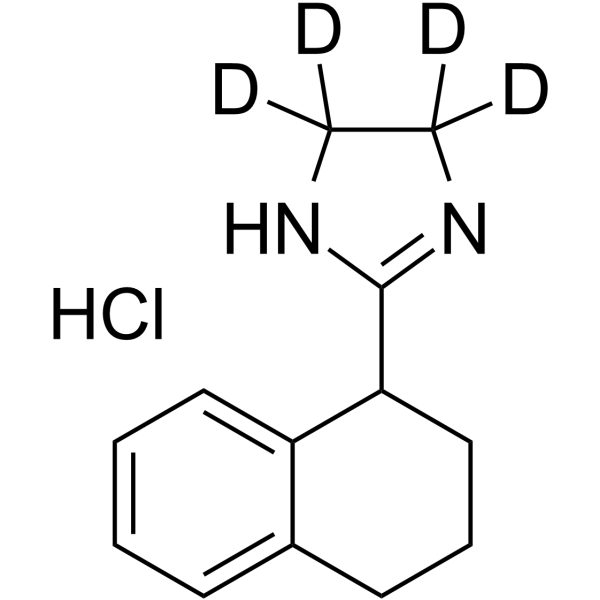
Tetrahydrozoline-d4 (hydrochloride) is the deuterium labeled Tetrahydrozoline hydrochloride. Tetrahydrozoline hydrochloride (Tetryzoline hydrochloride), a derivative of imidazoline, is an α-adrenergic agonist that causes vasoconstriction. Tetrahydrozoline hydrochloride is widely used for the research of nasal congestion and conjunctival congestion .
|
-
-
- HY-138813
-
|
SU-12662 hydrochloride
|
Drug Metabolite
|
Cancer
|
|
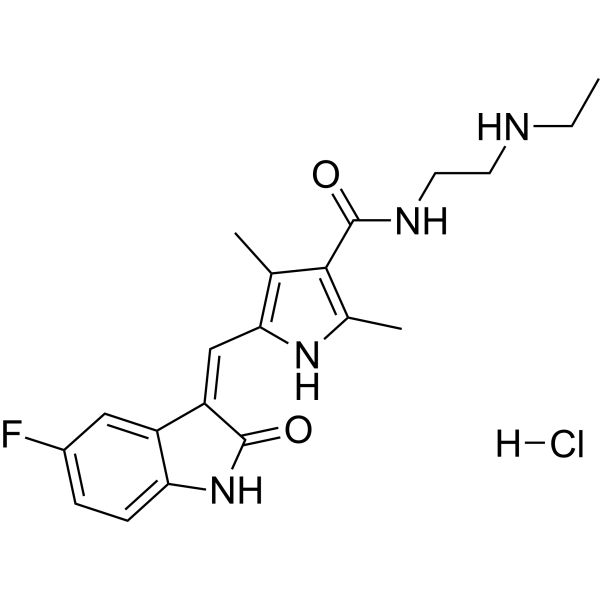
N-Desethyl Sunitinib (SU-12662) (hydrochloride) is a metabolite of sunitinib. Sunitinib is a potent, ATP-competitive VEGFR, PDGFRβ and KIT inhibitor with Ki values of 2, 9, 17, 8 and 4 nM for VEGFR -1, -2, -3, PDGFRβ and KIT, respectively .
|
-
-
- HY-N1777
-
|
|
Drug Intermediate
|
Others
|
|
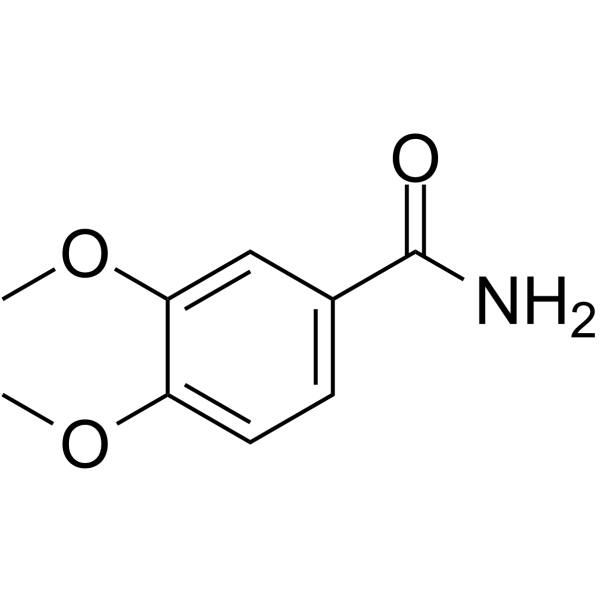
3,4-Dimethoxybenzamide, amide, is isolated from the solid culture of Streptoverticillium morookaense. 3,4-Dimethoxybenzamide can be used as the starting material to preparation Itopride hydrochloride .
|
-
-
- HY-103376
-
|
|
CRFR
|
Neurological Disease
|
|
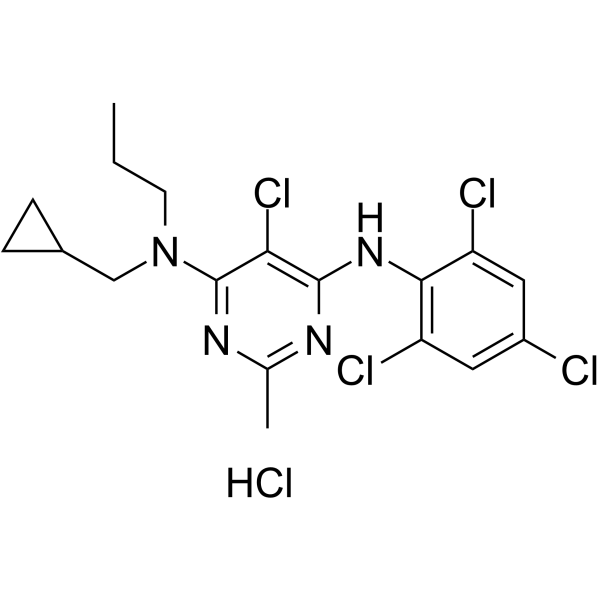
NBI-27914 (hydrochloride) is a selective Corticotropin-Releasing Factor 1 (CRF1) receptor antagonist with a Ki value of 1.7 nM .
|
-
-
- HY-B0374S
-
|
|
Isotope-Labeled Compounds
Imidazoline Receptor
Adrenergic Receptor
LDLR
|
Cardiovascular Disease
Neurological Disease
|
|
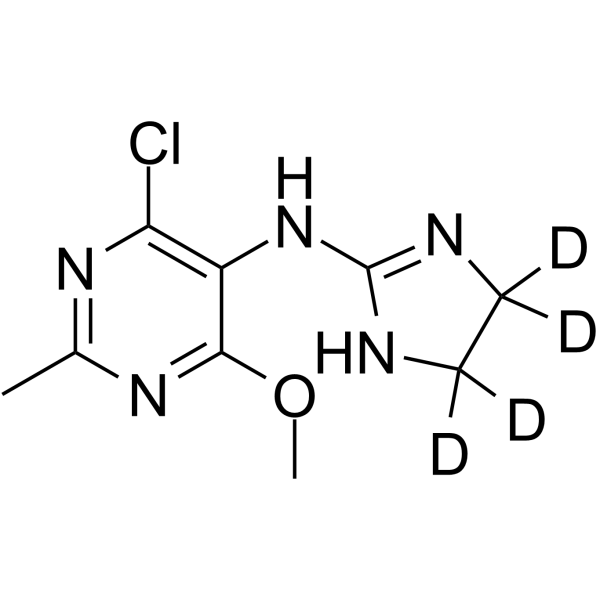
Moxonidine-d4 (BDF5895-d4) is the deuterium labeled Moxonidine (HY-B0374). Moxonidine (BDF5895) is an orally active imidazoline type 1 receptor (I1-R) agonist. Moxonidine activates imidazoline I1 receptors and α2 adrenoceptors, affecting oxidized low-density lipoprotein uptake. Moxonidine reduces atherosclerotic lesions and lowers blood pressure. Moxonidine can be used in the study of hypertension, heart failure, and atherosclerosis .
|
-
-
- HY-W1121922
-
-

-
- HY-N1352
-
|
|
HIV
|
Infection
|
|
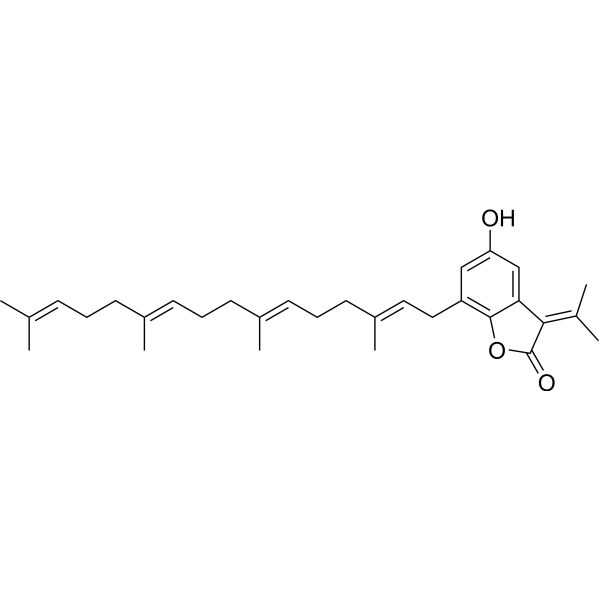
Rhuscholide A is a benzofuran lactone that shows significant anti-HIV-1 activity, with an EC50 of 1.62 μM .
|
-
-
- HY-N8750
-
|
|
Others
|
Others
|
|
5-Acetyl-2-(1-hydroxy-1-methylethyl)benzofuran serves as a phytoalexin.
|
-

-
- HY-N7724
-
|
(+)-Cedrusin
|
Others
|
Others
|
|
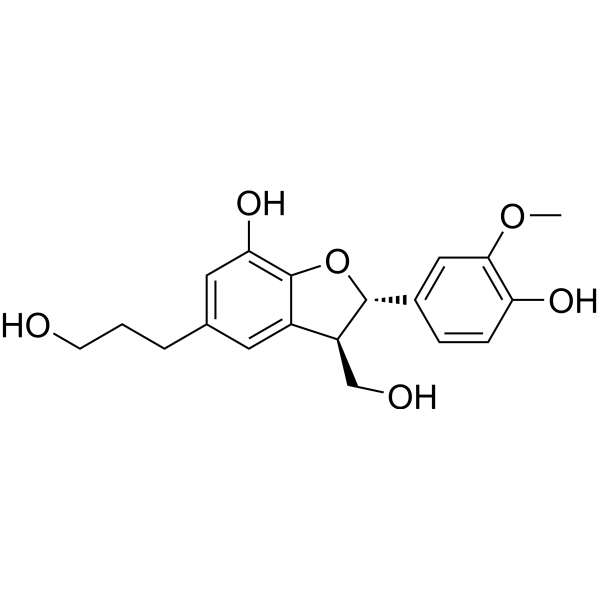
Cedrusin is a benzofuran derivative that can be isolated from Styrax suberifolius .
|
-
-
- HY-105167A
-
|
E 0471
|
Others
|
Cardiovascular Disease
|
|
MW-436 (E 0471) hydrochloride is a benzofuran compound with antiarrhythmic effects. MW-436 hydrochloride can be used for the research of cardiovascular disease .
|
-

-
- HY-N15520
-
|
|
Others
|
Others
|
|
Moracin J is found in the leaves of Cassia fistula. Moracin J is a derivative of the benzofuran compound Moracin .
|
-

-
- HY-B1416AR
-
|
|
Adrenergic Receptor
Imidazoline Receptor
|
Cardiovascular Disease
Metabolic Disease
|
|
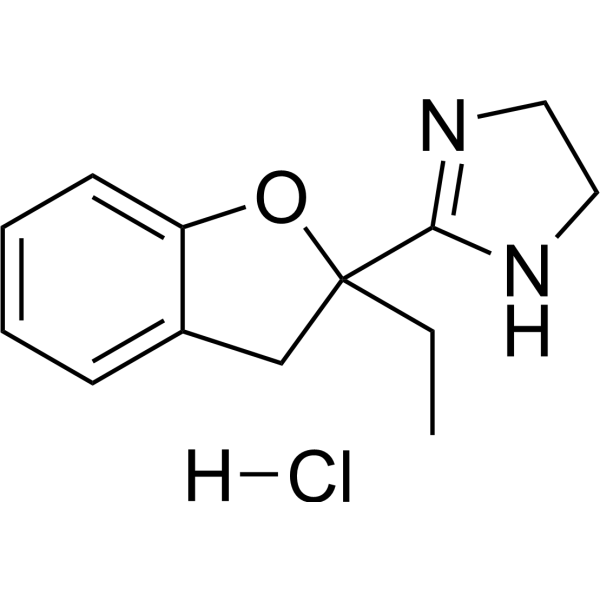
Efaroxan (hydrochloride) (Standard) is the analytical standard of Efaroxan (hydrochloride). This product is intended for research and analytical applications. Efaroxan hydrochloride is a potent, selective and orally active α2-adrenoceptor antagonist, with antidiabetic activity. Efaroxan hydrochloride is a selective I1-Imidazoline receptor antagonist. Efaroxan hydrochloride can be used for the research of cardiovascular disease .
|
-

-
- HY-B1800R
-
|
|
Angiotensin Receptor
Reference Standards
|
Cardiovascular Disease
|
|
Tolonidine (Standard) is the analytical standard of Tolonidine. This product is intended for research and analytical applications. Tolonidine is a derivative of imidazoline. Tolonidine is orally active and has been shown to possess hypotensive and antihypertensive properties .
|
-

-
- HY-106207
-
|
SSR149744C
|
Drug Derivative
|
Cardiovascular Disease
|
|
Celivarone (SSR149744C) is a orally active noniodinated benzofuran derivative with antiarrhythmic properties. Celivarone has the potential for atrial fibrillation and in ventricular arrhythmias research .
|
-

-
- HY-W348072
-
|
|
SARS-CoV
|
Infection
|
|
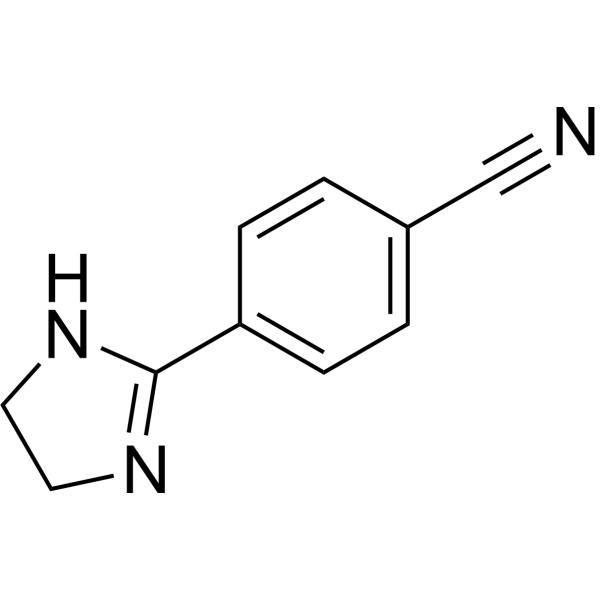
SARS-CoV-2-IN-59 (compound E07), an imidazoline derivative, is a non-peptide small molecule inhibitor of SARS-CoV-2 that targets the main protease (Mpro) of the coronavirus. SARS-CoV-2-IN-59 has a strong interaction with residues on Mpro (Met 165, Gln 166, Met 165, His 41, Gln 189) .
|
-
-
- HY-N7503R
-
-

-
- HY-101170R
-
|
|
Reference Standards
Imidazoline Receptor
Apoptosis
TNF Receptor
|
Neurological Disease
Inflammation/Immunology
|
|
BU224 (hydrochloride) (Standard) is the analytical standard of BU224 (hydrochloride). This product is intended for research and analytical applications. BU224 hydrochloride is a selective and high affinity imidazoline I2 receptor ligand, with a Ki of 2.1 nM. BU224 hydrochloride is sometimes used as an I2 receptor antagonist. BU224 hydrochloride exerts neuroprotective effects, with anti-inflammatory and anti-apoptotic properties. BU224 hydrochloride improves memory in 5XFAD mice, enlarging dendritic spines and reducing Aβ-induced changes in NMDARs. BU224 hydrochloride can be used for Alzheimer's disease research .
|
-

-
- HY-129864A
-
-

- HY-N3805
-
-
- HY-129822
-
-

- HY-116464
-
-

- HY-13250B
-
|
|
Drug Isomer
|
Cancer
|
|
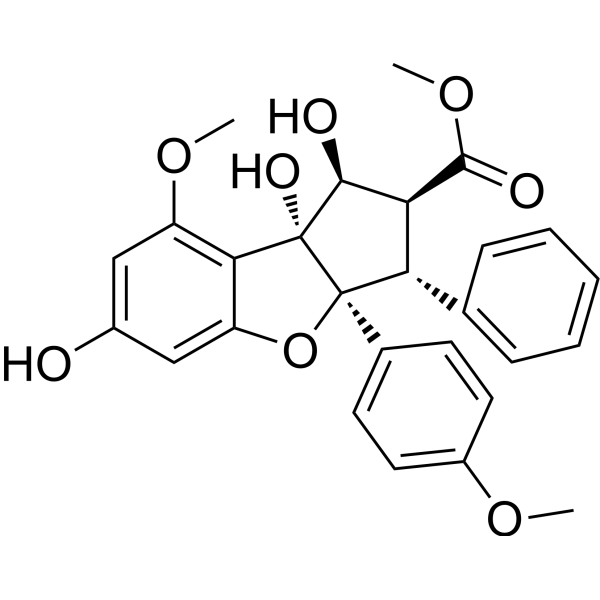
Silvestrol aglycone enantiomer is a cyclopenta benzofuran core phenol .
|
-
- HY-W714108
-
-

- HY-W013776
-
-

- HY-106504
-
-

- HY-14561AR
-
|
RX 781094 hydrochloride (Standard)
|
Adrenergic Receptor
Imidazoline Receptor
Reference Standards
|
Neurological Disease
Endocrinology
|
|
Idazoxan (hydrochloride) (Standard) is the analytical standard of Idazoxan (hydrochloride). This product is intended for research and analytical applications. Idazoxan hydrochloride (RX 781094 hydrochloride) is an α2-adrenoceptor antagonist and is also a imidazoline receptors (IRs) antagonist competitively antagonized the centrally induced hypotensive effect of imidazoline-like agents (IMs). Idazoxan hydrochloride also improves motor symptoms in Parkinson’s disease, L-DOPA-induced dyskinesias, and experimental Parkinsonism .
|
-

- HY-B0556B
-
|
Tetryzoline nitrate
|
Adrenergic Receptor
|
Cardiovascular Disease
Metabolic Disease
|
|
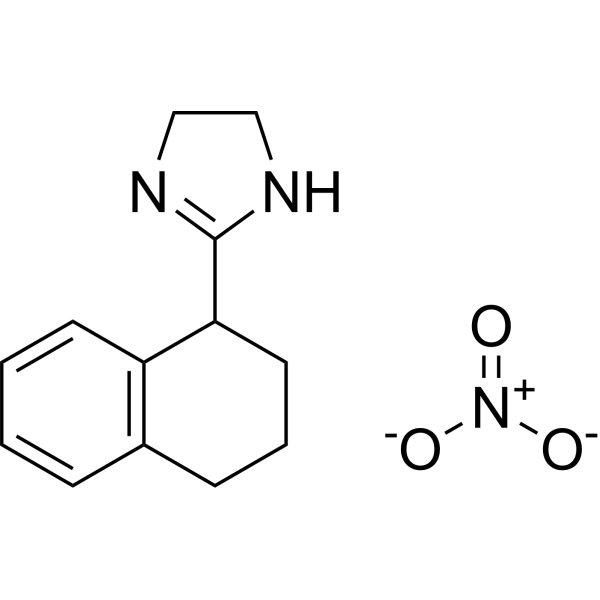
Tetrahydrozoline (Tetryzoline) nitrate , a derivative of imidazoline, is an α-adrenergic agonist that causes vasoconstriction. Tetrahydrozoline is widely used for the research of nasal congestion and conjunctival congestion .
|
-
- HY-103425
-
-
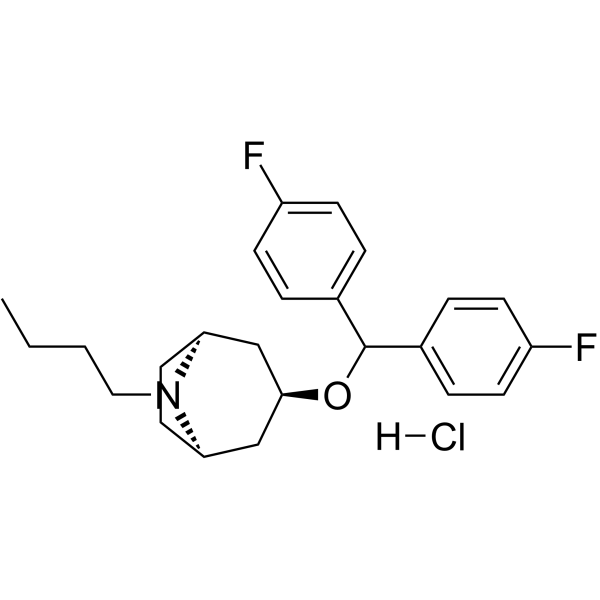
- HY-B0374R
-
|
BDF5895 (Standard)
|
Reference Standards
Imidazoline Receptor
Adrenergic Receptor
LDLR
|
Cardiovascular Disease
Neurological Disease
|
|
Moxonidine (Standard) is the analytical standard of Moxonidine (HY-B0374). This product is intended for research and analytical applications. Moxonidine (BDF5895) is an orally active imidazoline type 1 receptor (I1-R) agonist. Moxonidine activates imidazoline I1 receptors and α2 adrenoceptors, affecting oxidized low-density lipoprotein uptake. Moxonidine reduces atherosclerotic lesions and lowers blood pressure. Moxonidine can be used in the study of hypertension, heart failure, and atherosclerosis .
|
-

- HY-B0374S1
-
-
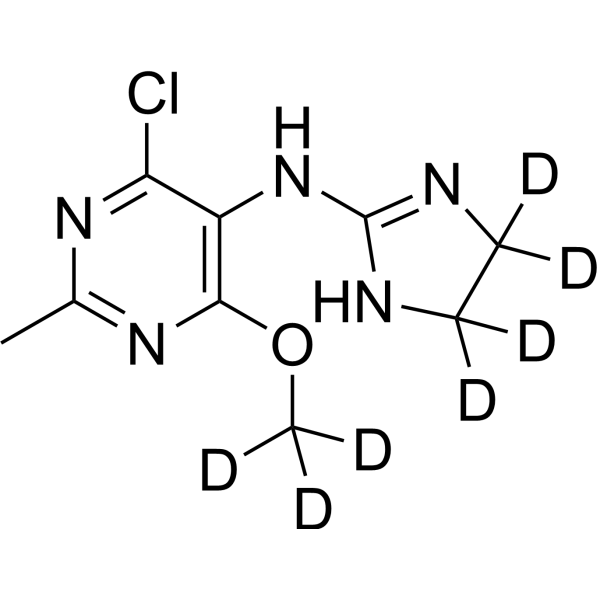
- HY-B0374AR
-
|
BDF5895 hydrochloride (Standard)
|
Imidazoline Receptor
Adrenergic Receptor
LDLR
Reference Standards
|
Cardiovascular Disease
Neurological Disease
|
|
Moxonidine hydrochloride (Standard) is the analytical standard of Moxonidine hydrochloride (HY-B0374A). This product is intended for research and analytical applications. Moxonidine (BDF5895) is an orally active imidazoline type 1 receptor (I1-R) agonist. Moxonidine activates imidazoline I1 receptors and α2 adrenoceptors, affecting oxidized low-density lipoprotein uptake. Moxonidine reduces atherosclerotic lesions and lowers blood pressure. Moxonidine can be used in the study of hypertension, heart failure, and atherosclerosis .
|
-

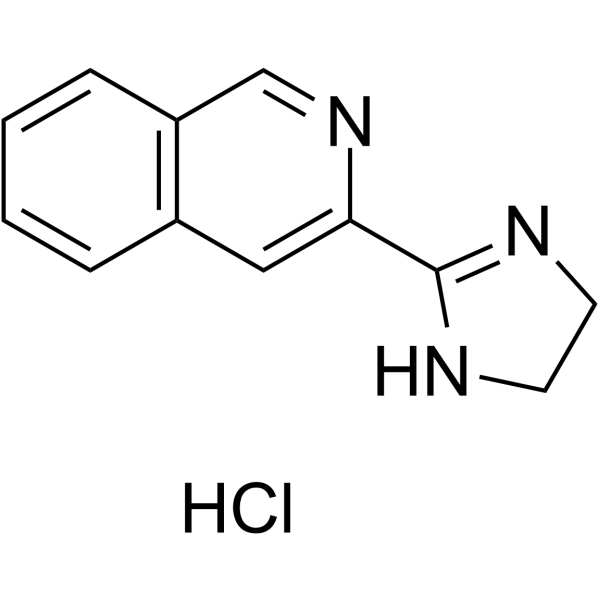
- HY-101380A
-
|
|
Imidazoline Receptor
|
Neurological Disease
|
|
BU226 hydrochloride is a selective imidazoline 2 (I2) receptors ligand with an Ki of 1.4 nM for I2 and an IC50 of 534.5 nM for I1. BU226 hydrochloride can be used for researching antidepressant .
|
-
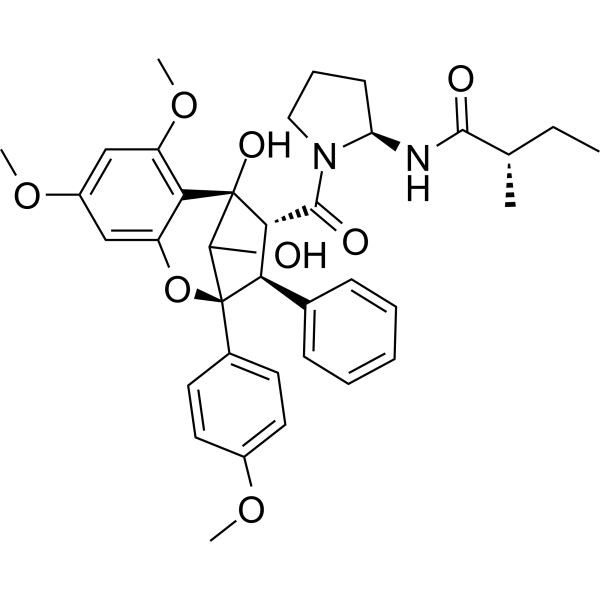
- HY-N2827
-
|
(-)-Aglain C
|
Others
|
Others
|
|
Aglain C is isolated from A. ponapensis. Aglain C enhances the NF-kB inhibitory activity .
|
-
- HY-B0374AS
-
|
BDF5895-13C,d3 hydrochloride
|
Imidazoline Receptor
Isotope-Labeled Compounds
Adrenergic Receptor
LDLR
|
Cardiovascular Disease
Neurological Disease
|
|
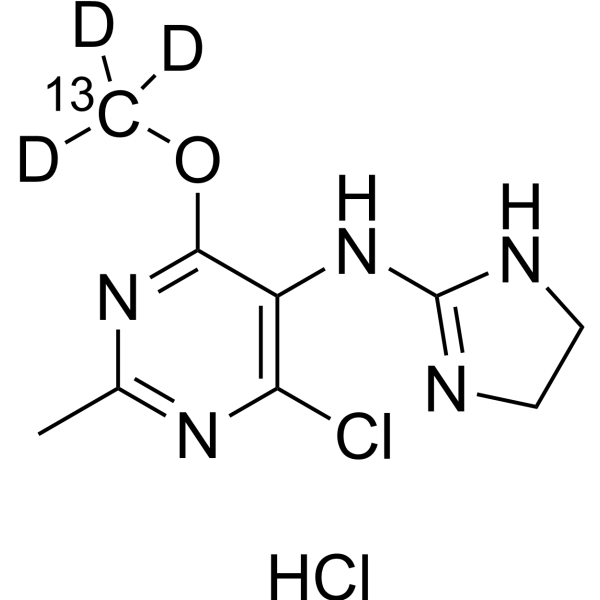
Moxonidine- 13C,d3 hydrochloride is 13C and deuterated labeled Moxonidine hydrochloride (HY-B0374A). Moxonidine (BDF5895) is an orally active imidazoline type 1 receptor (I1-R) agonist. Moxonidine activates imidazoline I1 receptors and α2 adrenoceptors, affecting oxidized low-density lipoprotein uptake. Moxonidine reduces atherosclerotic lesions and lowers blood pressure. Moxonidine can be used in the study of hypertension, heart failure, and atherosclerosis .
|
-
- HY-B0374S2
-
|
BDF5895-d3
|
Isotope-Labeled Compounds
Imidazoline Receptor
Adrenergic Receptor
LDLR
|
Cardiovascular Disease
Neurological Disease
|
|
Moxonidine-d3 (BDF5895-d3) is deuterium labeled Moxonidine (HY-B0374). Moxonidine (BDF5895) is an orally active imidazoline type 1 receptor (I1-R) agonist. Moxonidine activates imidazoline I1 receptors and α2 adrenoceptors, affecting oxidized low-density lipoprotein uptake. Moxonidine reduces atherosclerotic lesions and lowers blood pressure. Moxonidine can be used in the study of hypertension, heart failure, and atherosclerosis .
|
-

- HY-113985
-
-

- HY-N9910
-
|
|
Endogenous Metabolite
|
Others
|
|
Visamminol is a spasmolytic which can be extracted from Cimicifuga dahurica. Visamminol exhibits a spasmolytic action that is one-third as potent as that of papaverine hydrochloride .
|
-

- HY-138813R
-
|
SU-12662 hydrochloride (Standard)
|
Reference Standards
Drug Metabolite
|
Cancer
|
|
Glycochenodeoxycholic acid sodium salt (Standard) is the analytical standard of Glycochenodeoxycholic acid sodium salt. This product is intended for research and analytical applications. Glycochenodeoxycholic acid sodium salt (Sodium glycochenodeoxycholate) is a relatively toxic bile salt generated in the liver from chenodeoxycholic acid and glycine. Glycochenodeoxycholic acid sodium salt inhibits Autophagosome formation and impairs lysosomal function by inhibiting lysosomal proteolysis and increasing lysosomal pH in human normal liver cells, leading to the Apoptosis of human hepatocyte cells. Glycochenodeoxycholic acid sodium salt induces stemness and chemoresistance via activating STAT3 signaling pathway in hepatocellular carcinoma cells (HCC). Glycochenodeoxycholic acid sodium salt is promising for research in the field of cholestasis desease, hepatocellular carcinoma and primary sclerosing cholangitis (PSC) .
|
-

- HY-101392S
-
|
|
Imidazoline Receptor
Monoamine Oxidase
Adrenergic Receptor
|
Neurological Disease
Cancer
|
|
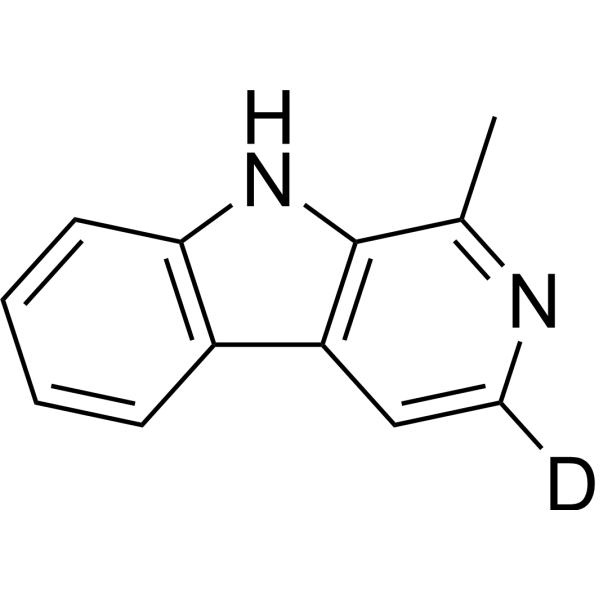
Harmane-d is the deuterium labeled Harmane. Harmane, a β-Carboline alkaloid (BCA), is a potent neurotoxin that causes severe action tremors and psychiatric manifestations. Harmane shows 1000-fold selectivity for I1-Imidazoline receptor (IC50=30 nM) over α2-adrenoceptor (IC50=18 μM). Harmane is also a potent and selective inhibitor of monoamine oxidase (MAO) (IC50s=0.5 and 5 μM for human MAO A/B, respectively) .
|
-
- HY-B0556R
-
|
Tetryzoline (Standard)
|
Reference Standards
Adrenergic Receptor
|
Cardiovascular Disease
|
|
Tetrahydrozoline (Standard) is the analytical standard of Tetrahydrozoline. This product is intended for research and analytical applications. Tetrahydrozoline (Tetryzoline), a derivative of imidazoline, is an α-adrenergic agonist that causes vasoconstriction. Tetrahydrozoline is widely used for the research of nasal congestion and conjunctival congestion .
|
-

- HY-B0556AR
-
|
Tetryzoline hydrochloride (Standard)
|
Reference Standards
Adrenergic Receptor
|
Cardiovascular Disease
Endocrinology
|
|
Tetrahydrozoline (hydrochloride) (Standard) is the analytical standard of Tetrahydrozoline (hydrochloride). This product is intended for research and analytical applications. Tetrahydrozoline hydrochloride (Tetryzoline hydrochloride), a derivative of imidazoline, is an α-adrenergic agonist that causes vasoconstriction. Tetrahydrozoline hydrochloride is widely used for the research of nasal congestion and conjunctival congestion .
|
-

- HY-182441
-
|
(-)-BRD4780
|
Drug Isomer
|
Others
|
|
(-)-AGN 192403 ((-)-BRD4780) hydrochloride is the enantiomer of AGN 192403 hydrochloride (HY-101374A). AGN 192403 hydrochloride is a potent and selective imidazoline-1 receptor antagonist .
|
-

- HY-132772S
-
|
|
Isotope-Labeled Compounds
|
Others
|
|
2-n-Butyl-4-[(2-bromoethoxy-d4)-3,5-diiodobenzoyl]benzofuran is the deuterium labeled 2-n-Butyl-4-[(2-bromoethoxy)-3,5-diiodobenzoyl]benzofuran .
|
-
![2-n-Butyl-4-[(2-bromoethoxy-d4)-3,5-diiodobenzoyl]benzofuran](//file.medchemexpress.com/product_pic/hy-132772s.gif)
- HY-N12991
-
|
|
Others
|
Others
|
|
Picraquassioside B is a benzofuran glucosides and can isolated from Cnidium monnieri fruits .
|
-

- HY-B1416
-
-

- HY-N9224
-
|
|
Others
|
Others
|
|
5-Acetyl-6-hydroxy-2-(1-hydroxy-1-methylethyl)benzofuran is a Phenols product that can be isolated from the herbs of Artemisia dracunculus. .
|
-

- HY-N15335
-
|
|
Drug Derivative
|
Inflammation/Immunology
|
|
Anti-inflammatory agent 98 (Compound 8) is a potent NO production inhibitor with an IC50 value of 14.79 μM. Anti-inflammatory agent 98 is a benzofuran with anti-inflammatory activities, which is found in the roots of Paeonia lactiflora Pall .
|
-

- HY-N17161
-
|
|
Drug Derivative
|
Others
|
|
(E)-5-Hydroxy-6-isoprenyl-2-(pent-1-en-1-yl)benzofuran-4-carbaldehyde is a natural phenolic compound.
|
-

- HY-Z0528R
-
|
|
Reference Standards
|
|
|
2,3-Dihydro-1-benzofuran-6-ol (Standard) is the analytical standard of 2,3-Dihydro-1-benzofuran-6-ol. This product is intended for research and analytical applications.
|
-

- HY-168408
-
-

- HY-129954
-
-

- HY-175158
-
-

- HY-W709831
-
-

- HY-W711329
-
-

- HY-W745320
-
-

- HY-W094760
-
-

- HY-W182790
-
|
LSL 60101
|
|
|
|
Garsevil (LSL 60101) is a biphasic, selective imidazoline I2 receptor (I2-IR) ligand, with a pKi of 9.03 and a Ki of 0.9 nM at the high-affinity site, and a pKi of 5.25 and a Ki of 5.6 nM at the low-affinity site. Garsevil is applicable to research related to Alzheimer's disease .
|
-

- HY-WAA0304
-
|
|
5-HT Receptor
Adrenergic Receptor
Imidazoline Receptor
|
Neurological Disease
|
|
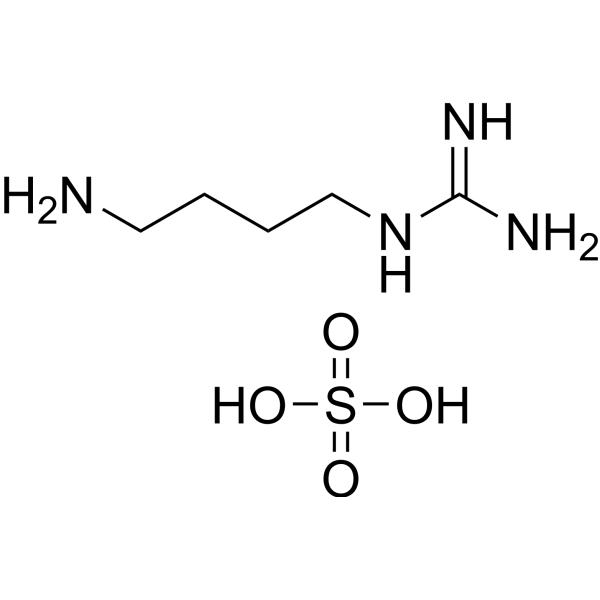
Agmatine is an orally active analgesic that can cross the blood-brain barrier. Agmatine targets the 5-HT2A receptor, 5-HT3 receptor, α2-adrenergic receptor, and I1 imidazoline receptor. Agmatine produces dose-dependent analgesic effects in various pain models. Agmatine can be used in research related to visceral pain, neuropathic pain, and inflammatory pain .
|
-

- HY-175150
-
-

- HY-182597
-
|
|
Imidazoline Receptor
5-HT Receptor
Adrenergic Receptor
|
Neurological Disease
|
|
Tracizoline is an orally active I2-imidazoline receptor agonist. Tracizoline functionally modulates I2-imidazoline receptors, regulates hippocampal FADD cell fate adaptor, attenuates mechanical and thermal hyperalgesia, activates α2A-adrenergic receptors with very weak partial agonism, and induces antidepressant-like activity via 5-HT1A receptor activation. Tracizoline can be used for the research of inflammatory pain, neuropathic pain, and depression .
|
-

- HY-W750822
-
|
|
Drug Metabolite
|
Others
|
|
7-APB hydrochloride is a benzofuran. 7-APB hydrochloride is a metabolite of 7-MAPB.
|
-

- HY-W573558
-
|
|
Drug Intermediate
|
Neurological Disease
|
|
(tert-Butoxycarbonyl)-DL-glutamine (Compound 2I) is a tert-butoxycarbonyl-protected glutamine derivative. (tert-Butoxycarbonyl)-DL-glutamine can be used for the synthesis of N-BOC-L-glutamine esters and Apocynin (HY-N0088). (tert-Butoxycarbonyl)-DL-glutamine is applicable to the research of retinal degenerative diseases .
|
-

- HY-W019105R
-
-

- HY-N16768
-
|
|
Others
|
Others
|
|
Alangilignoside B is a benzofuran-type neolignan glycoside compound that can be naturally extracted from the stems of Alangium premnifolium .
|
-

- HY-A0138A
-
-

- HY-U00075A
-
|
|
Biochemical Assay Reagents
|
Infection
|
|
Indanazoline (hydrochloride) is an orally active imidazoline derivative. Indanazoline (hydrochloride) has a LD50 of 481 mg/kg in rat model. Indanazoline (hydrochloride) can be studied in research on rhinitis .
|
-

- HY-W724128
-
|
|
Drug Derivative
|
Neurological Disease
|
|
Cariprazine N-oxide (Compound DP-3) is the mono-oxidative degradation product of Cariprazine hydrochloride (HY-14763A). Cariprazine hydrochloride exhibits antipsychotic activity .
|
-

- HY-N1777R
-
|
|
Reference Standards
Drug Intermediate
|
Others
|
|
3,4-Dimethoxybenzamide (Standard) is the analytical standard of 3,4-Dimethoxybenzamide. This product is intended for research and analytical applications. 3,4-Dimethoxybenzamide, amide, is isolated from the solid culture of Streptoverticillium morookaense. 3,4-Dimethoxybenzamide can be used as the starting material to preparation Itopride hydrochloride[1][2].
|
-

| Cat. No. |
Product Name |
Type |
-
- HY-D1760
-
|
|
Fluorescent Dyes
|
|
SBFI is a cell-impermeant, fluorescent Na + indicator dye. SBFI is excited at 340 nm and the fluorophore emission is collected at 450 nm . SBFI selective for Na + over K + with Kd values of 20 and 120 mM for these ions, respectively. .
|
| Cat. No. |
Product Name |
Type |
-
- HY-W001165
-
|
benzofuran-3-one
|
Biochemical Assay Reagents
|
|
3-Coumaranone is a biochemical reagent that can be used as a biological material or organic compound for life science related research.
|
-
- HY-W004116
-
|
|
Biochemical Assay Reagents
|
|
Benzofuran-2-boronic acid is a biochemical reagent that can be used as a biological material or organic compound for life science related research.
|
| Cat. No. |
Product Name |
Category |
Target |
Chemical Structure |
| Cat. No. |
Product Name |
Chemical Structure |
-
- HY-B0556AS
-
|
|
|
Tetrahydrozoline-d4 (hydrochloride) is the deuterium labeled Tetrahydrozoline hydrochloride. Tetrahydrozoline hydrochloride (Tetryzoline hydrochloride), a derivative of imidazoline, is an α-adrenergic agonist that causes vasoconstriction. Tetrahydrozoline hydrochloride is widely used for the research of nasal congestion and conjunctival congestion .
|
-
-
- HY-B0374S
-
|
|
|
Moxonidine-d4 (BDF5895-d4) is the deuterium labeled Moxonidine (HY-B0374). Moxonidine (BDF5895) is an orally active imidazoline type 1 receptor (I1-R) agonist. Moxonidine activates imidazoline I1 receptors and α2 adrenoceptors, affecting oxidized low-density lipoprotein uptake. Moxonidine reduces atherosclerotic lesions and lowers blood pressure. Moxonidine can be used in the study of hypertension, heart failure, and atherosclerosis .
|
-
-
- HY-B0374S1
-
|
|
|
Moxonidine-d7 is deuterated labeled Moxonidine (HY-B0374). Moxonidine (BDF5895) is an orally active imidazoline type 1 receptor (I1-R) agonist. Moxonidine activates imidazoline I1 receptors and α2 adrenoceptors, affecting oxidized low-density lipoprotein uptake. Moxonidine reduces atherosclerotic lesions and lowers blood pressure. Moxonidine can be used in the study of hypertension, heart failure, and atherosclerosis .
|
-
-
- HY-B0374AS
-
|
|
|
Moxonidine- 13C,d3 hydrochloride is 13C and deuterated labeled Moxonidine hydrochloride (HY-B0374A). Moxonidine (BDF5895) is an orally active imidazoline type 1 receptor (I1-R) agonist. Moxonidine activates imidazoline I1 receptors and α2 adrenoceptors, affecting oxidized low-density lipoprotein uptake. Moxonidine reduces atherosclerotic lesions and lowers blood pressure. Moxonidine can be used in the study of hypertension, heart failure, and atherosclerosis .
|
-
-
- HY-B0374S2
-
|
|
|
Moxonidine-d3 (BDF5895-d3) is deuterium labeled Moxonidine (HY-B0374). Moxonidine (BDF5895) is an orally active imidazoline type 1 receptor (I1-R) agonist. Moxonidine activates imidazoline I1 receptors and α2 adrenoceptors, affecting oxidized low-density lipoprotein uptake. Moxonidine reduces atherosclerotic lesions and lowers blood pressure. Moxonidine can be used in the study of hypertension, heart failure, and atherosclerosis .
|
-
-
- HY-101392S
-
|
|
|
Harmane-d is the deuterium labeled Harmane. Harmane, a β-Carboline alkaloid (BCA), is a potent neurotoxin that causes severe action tremors and psychiatric manifestations. Harmane shows 1000-fold selectivity for I1-Imidazoline receptor (IC50=30 nM) over α2-adrenoceptor (IC50=18 μM). Harmane is also a potent and selective inhibitor of monoamine oxidase (MAO) (IC50s=0.5 and 5 μM for human MAO A/B, respectively) .
|
-
-
- HY-132772S
-
|
|
|
2-n-Butyl-4-[(2-bromoethoxy-d4)-3,5-diiodobenzoyl]benzofuran is the deuterium labeled 2-n-Butyl-4-[(2-bromoethoxy)-3,5-diiodobenzoyl]benzofuran .
|
-
Your information is safe with us. * Required Fields.
Inquiry Information
- Product Name:
- Cat. No.:
- Quantity:
- MCE Japan Authorized Agent:





![2-n-Butyl-4-[(2-bromoethoxy-d4)-3,5-diiodobenzoyl]benzofuran](http://file.medchemexpress.com/product_pic/hy-132772s.gif)





