



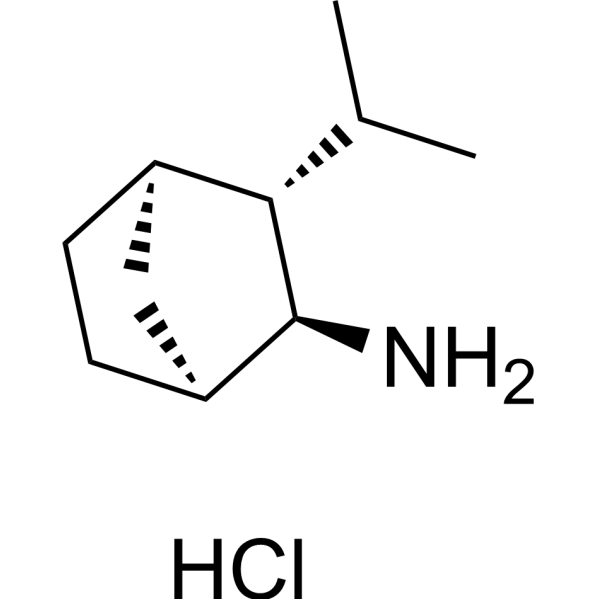
AGN 192403 hydrochloride

Based on 1 Customer Validation
AGN 192403 (BRD4780) hydrochloride is a potent and selective imidazoline-1 receptor antagonist with a Ki value of 42 nM. AGN 192403 hydrochloride is also a TMED9 inhibitor. AGN 192403 hydrochloride shows protective effects on oxidative cytotoxicity and mitochondrial inhibitor-induced cytotoxicity in astrocytes. AGN 192403 hydrochloride mitigates the proliferation and migration of differentiated glioma tumor cells. AGN 192403 hydrochloride can be used for glioma tumor and neurological diseases research.
For research use only. We do not sell to patients.
- Purity : 99.96%
- CAS No.: 1021868-90-5
- Formula: C10H20ClN
- Molecular Weight:189.73
-
Storage:Powder -20°C, 3 years , 4°C, 2 years ; In solvent -80°C, 6 months , -20°C, 1 month

To place orders, for customer services and technical support, please contact: MedChemExpress USA
Tel: 609-228-6898 E-mail: [email protected] [email protected]


-
 Biological Activity
-
Chemical Information
-
Solvent & Solubility
- Purity & Documentation
- References
-
 Help & FAQs


-
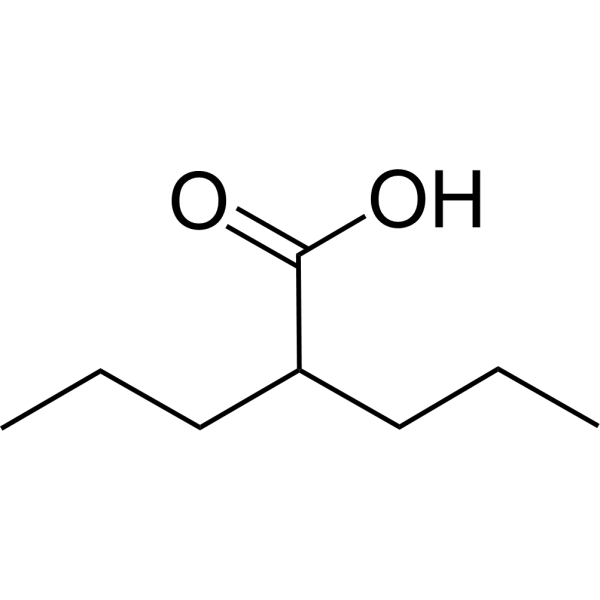
HY-10585
Valproic acid -
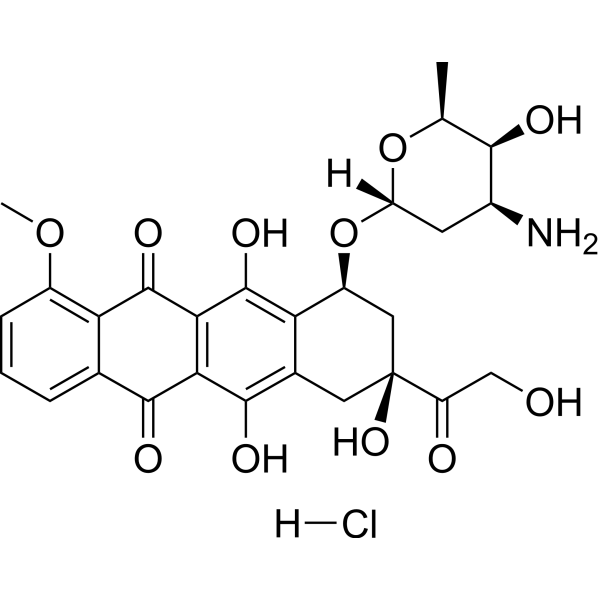
HY-15142
Doxorubicin hydrochloride -
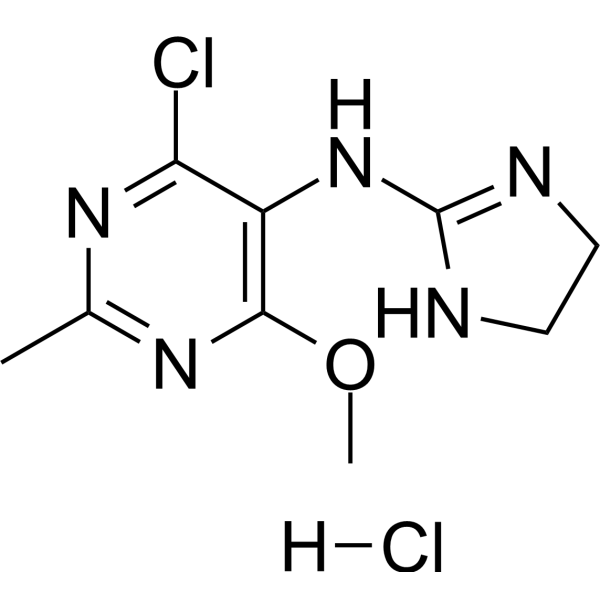
HY-B0374A
Moxonidine hydrochloride -
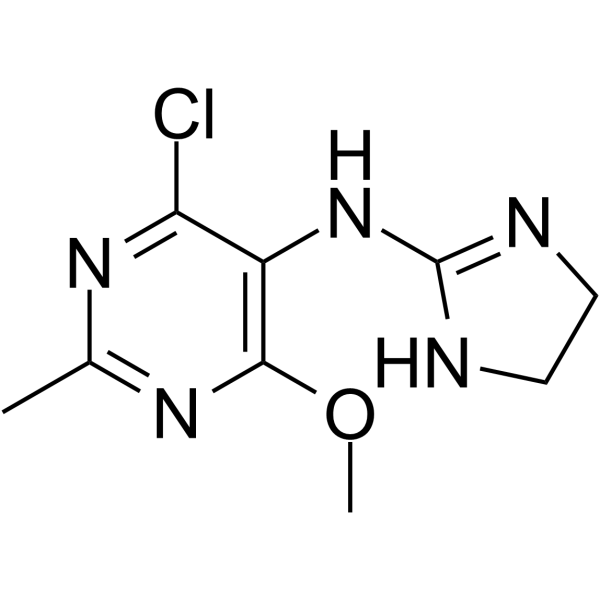
HY-B0374
Moxonidine -
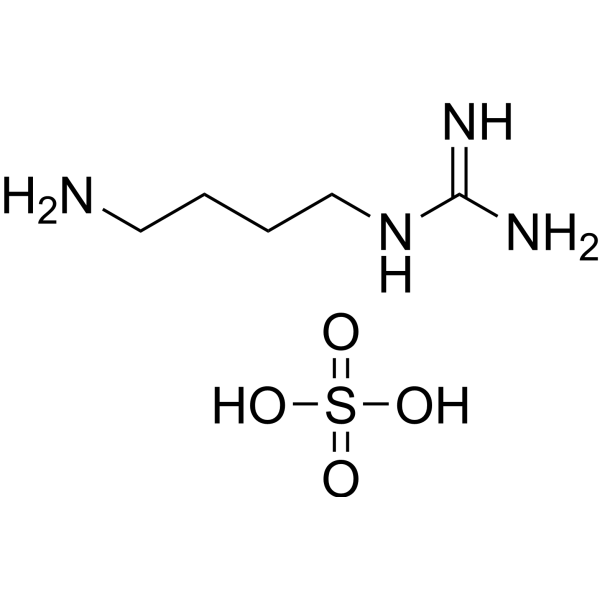
HY-101238
Agmatine sulfate -
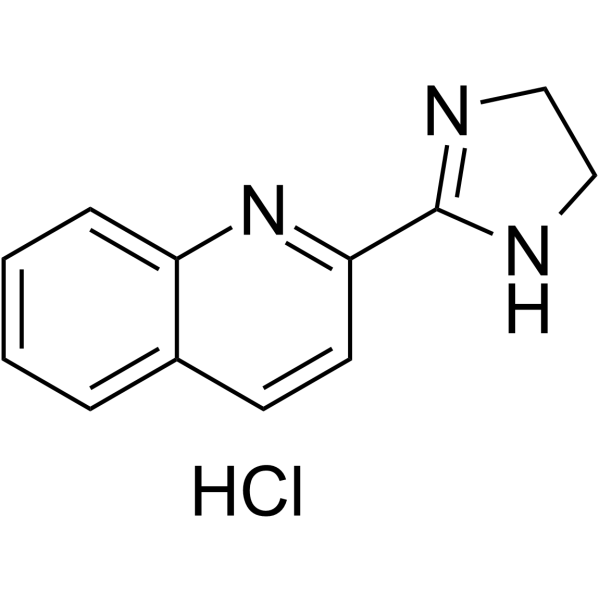
HY-101170
BU224 hydrochloride -
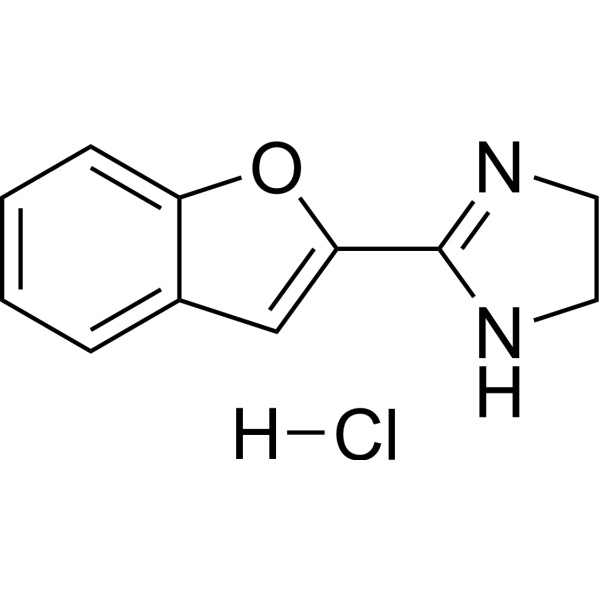
HY-100904
RX 801077 hydrochloride -

HY-101238R
Agmatine sulfate (Standard) -
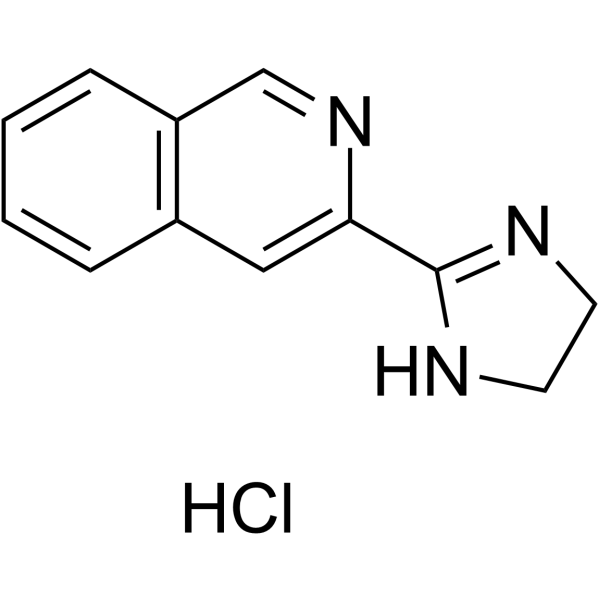
HY-101380A
BU226 hydrochloride -

HY-101170R
BU224 hydrochloride (Standard) -
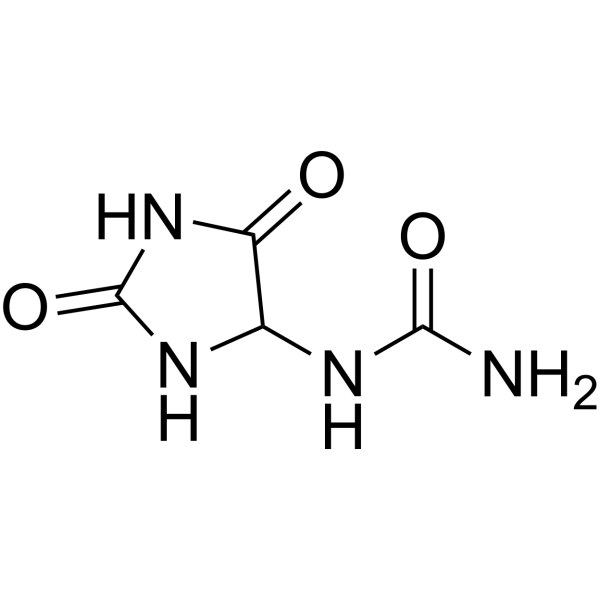
HY-N0543
Allantoin -

HY-B0374R
Moxonidine (Standard)
All Caspase Isoforms
More

Biological Activity
Description
IC50 & Target
[1]|
imidazoline-1 receptor 42 nM (Ki) |
Caspase-9 |
In Vitro
AGN 192403 (10-100 μM, 24 h) hydrochloride inhibits the former lysosomal destabilization and the subsequent decrease in mitochondrial potential in astrocytes exposed to Naphthazarin (HY-N7526)[1].
AGN 192403 (10-100 μM, 24 h) hydrochloride inhibits the Antimycin A- and Rotenone (HY-B1756)-induced decrease in mitochondrial potential, cytochrome c release, caspase-9 activation, and eventually LDH release in astrocytes[1].
AGN 192403 (4-25 μM, 14 days) hydrochloride exerts a remarkable inhibitory effect on glioma stem cells (GSC)s self-renewal, demonstrating almost complete inhibition of self-renewal at the highest concentration applied[2].
AGN 192403 (0-25 μM, 18-48 h) hydrochloride targets TMED9, reduces the stemness, reduces GSC migration, and inhibits GSC tumorigenic functions[2].
AGN 192403 (4-25 μM, 0-8 days) hydrochloride induces cell death in a dose dependent manner in patient-derived GSCs[2].
AGN 192403 (4-25 μM, 48 h-8 days) hydrochloride inhibits TMED9 and exerts anti-tumor effects in diffuse intrinsic pontine glioma (DIPG) cells[2].
MedChemExpress (MCE) has not independently confirmed the accuracy of these methods. They are for reference only.
-
Cell Line:patient-derived GSCs
-
Concentration:0, 4, 10, 25 μM
-
Incubation Time:48 h
-
Result:Decreased TMED9 expression in a dose-dependent manner in three different patient-derived GSCs.
-
Cell Line:GSCs
-
Concentration:10, 25 μM
-
Incubation Time:48 h
-
Result:Showed a marked and dose dependent reduction in SOX2 expression.
Markedly reduced YKL40 expression.
-
Cell Line:GSCs
-
Concentration:10, 25 μM
-
Incubation Time:18-20 h
-
Result:Dose-dependently reduced GSC migration.
-
Cell Line:GSCs
-
Concentration:4, 10, 25 μM
-
Incubation Time:0, 1, 2, 3, 4, 5, 6, 7, 8 days
-
Result:Resulted in a dose-dependent induction of cell death, at multiple points over the course of one week.
In Vivo
MedChemExpress (MCE) has not independently confirmed the accuracy of these methods. They are for reference only.


Chemical Information
-
CAS No. 1021868-90-5
-
Appearance Solid
-
Molecular Weight 189.73
-
Formula C10H20ClN
-
Color White to off-white
-
SMILES
CC(C)[C@@H]1[C@@H](N)[C@H]2CC[C@@H]1C2.Cl
-
Synonyms
(+)-BRD4780
-
Shipping
Room temperature in continental US; may vary elsewhere.
-
Storage
Powder -20°C 3 years 4°C 2 years In solvent -80°C 6 months -20°C 1 month


Solvent & Solubility
In Vitro:
DMSO : 100 mg/mL (527.06 mM; Need ultrasonic; Hygroscopic DMSO has a significant impact on the solubility of product, please use newly opened DMSO)
Please refer to the solubility information to select the appropriate solvent. Once prepared, please aliquot and store the solution to prevent product inactivation from repeated freeze-thaw cycles.
Storage method and period of stock solution: -80°C, 6 months; -20°C, 1 month. When stored at -80°C, please use it within 6 months. When stored at -20°C, please use it within 1 month.
Please refer to the solubility information to select the appropriate solvent. Once prepared, please aliquot and store the solution to prevent product inactivation from repeated freeze-thaw cycles.
Storage method and period of stock solution: -80°C, 6 months; -20°C, 1 month. When stored at -80°C, please use it within 6 months. When stored at -20°C, please use it within 1 month.
Concentration (start) × Volume (start) = Concentration (final) × Volume (final)
In Vivo:
Select the appropriate dissolution method based on your experimental animal and administration route.
- For the following dissolution methods, please ensure to first prepare a clear stock solution using an In Vitro approach and then sequentially add co-solvents:
- To ensure reliable experimental results, the clarified stock solution can be appropriately stored based on storage conditions. As for the working solution for In Vivo experiments, it is recommended to prepare freshly and use it on the same day.
- The percentages shown for the solvents indicate their volumetric ratio in the final prepared solution. If precipitation or phase separation occurs during preparation, heat and/or sonication can be used to aid dissolution.
Add each solvent one by one: 10% DMSO 40% PEG300 5% Tween-80 45% Saline
Solubility: ≥ 2.5 mg/mL (13.18 mM); Clear solution
This protocol yields a clear solution of ≥ 2.5 mg/mL (saturation unknown).
Taking 1 mL working solution as an example, add 100 μL DMSO stock solution (25.0 mg/mL) to 400 μL PEG300, and mix evenly; then add 50 μL Tween-80 and mix evenly; then add 450 μL Saline to adjust the volume to 1 mL.
Preparation of Saline: Dissolve 0.9 g sodium chloride in ddH₂O and dilute to 100 mL to obtain a clear Saline solution.
Add each solvent one by one: 10% DMSO 90% (20% SBE-β-CD in Saline)
Solubility: ≥ 2.5 mg/mL (13.18 mM); Clear solution
This protocol yields a clear solution of ≥ 2.5 mg/mL (saturation unknown).
Taking 1 mL working solution as an example, add 100 μL DMSO stock solution (25.0 mg/mL) to 900 μL 20% SBE-β-CD in Saline, and mix evenly.
Preparation of 20% SBE-β-CD in Saline (4°C, storage for one week): 2 g SBE-β-CD powder is dissolved in 10 mL Saline, completely dissolve until clear.
In Vivo Dissolution Calculator
Please enter the basic information of animal experiments:
-
-
-
-
Recommended: Prepare an additional quantity of animals to account for potential losses during experiments.
Please enter your animal formula composition:
-
%DMSO +
Recommended: Keep the proportion of DMSO in working solution below 2% if your animal is weak.
-
%+
-
+%Tween-80 + +
-
%Saline +
The co-solvents required include: DMSO, . All of co-solvents are available by MedChemExpress (MCE). , Tween 80. All of co-solvents are available by MedChemExpress (MCE).
Working solution concentration: 0.22 mg/mL
Method for preparing stock solution: mg drug dissolved in μL DMSO. Stock solution concentration: mg/mL.
1. Take μL DMSO stock solution;
2. Add μL .
μL , mix evenly;
3. Then add μL Tween 80, mix evenly;
4. Then add μL
Please ensure that the stock solution in the first step is dissolved to a clear state, and add co-solvents in sequence. You can use ultrasonic heating (ultrasonic cleaner, recommended frequency 20-40 kHz), vortexing, etc. to assist dissolution.


Purity & Documentation
-
Data Sheet (281 KB)
-
SDS (251 KB)
- English - EN (251 KB)
- Français - FR (251 KB)
- Deutsch - DE (251 KB)
- Norwegian - NO (251 KB)
- Español - ES (251 KB)
- Swedish - SV (251 KB)
- Italian - IT (251 KB)
- Korean - KR (251 KB)
- Portuguese - PT (251 KB)
-
Handling Instructions (2659 KB)
References
[1]. Choi DH, et al. Protective effects of rilmenidine and AGN 192403 on oxidative cytotoxicity and mitochondrial inhibitor-induced cytotoxicity in astrocytes. Free Radic Biol Med. 2002 Nov 15;33(10):1321-33. [Content Brief]
[2]. Daoud Sarsour A, et al. Targeting the Cargo Receptor TMED9 as a Therapeutic Strategy Against Brain Tumors. Cells. 2025 May 23;14(11):772. [Content Brief]
[3]. Cobos-Puc LE, et al. α2A-adrenoceptors, but not nitric oxide, mediate the peripheral cardiac sympatho-inhibition of moxonidine. Eur J Pharmacol. 2016 Jul 5;782:35-43. [Content Brief]


Complete Stock Solution Preparation Table
Please refer to the solubility information to select the appropriate solvent. Once prepared, please aliquot and store the solution to prevent product inactivation from repeated freeze-thaw cycles.
Storage method and period of stock solution: -80°C, 6 months; -20°C, 1 month. When stored at -80°C, please use it within 6 months. When stored at -20°C, please use it within 1 month.
| Optional Solvent | Concentration Solvent Mass | 1 mg | 5 mg | 10 mg | 25 mg |
|---|---|---|---|---|---|
| DMSO | 1 mM | 5.2706 mL | 26.3532 mL | 52.7065 mL | 131.7662 mL |
| 5 mM | 1.0541 mL | 5.2706 mL | 10.5413 mL | 26.3532 mL | |
| 10 mM | 0.5271 mL | 2.6353 mL | 5.2706 mL | 13.1766 mL | |
| 15 mM | 0.3514 mL | 1.7569 mL | 3.5138 mL | 8.7844 mL | |
| 20 mM | 0.2635 mL | 1.3177 mL | 2.6353 mL | 6.5883 mL | |
| 25 mM | 0.2108 mL | 1.0541 mL | 2.1083 mL | 5.2706 mL | |
| 30 mM | 0.1757 mL | 0.8784 mL | 1.7569 mL | 4.3922 mL | |
| 40 mM | 0.1318 mL | 0.6588 mL | 1.3177 mL | 3.2942 mL | |
| 50 mM | 0.1054 mL | 0.5271 mL | 1.0541 mL | 2.6353 mL | |
| 60 mM | 0.0878 mL | 0.4392 mL | 0.8784 mL | 2.1961 mL | |
| 80 mM | 0.0659 mL | 0.3294 mL | 0.6588 mL | 1.6471 mL | |
| 100 mM | 0.0527 mL | 0.2635 mL | 0.5271 mL | 1.3177 mL |


AGN 192403 hydrochloride Related Classifications
HY-101374A Related Classifications
 Powered by Bioz