



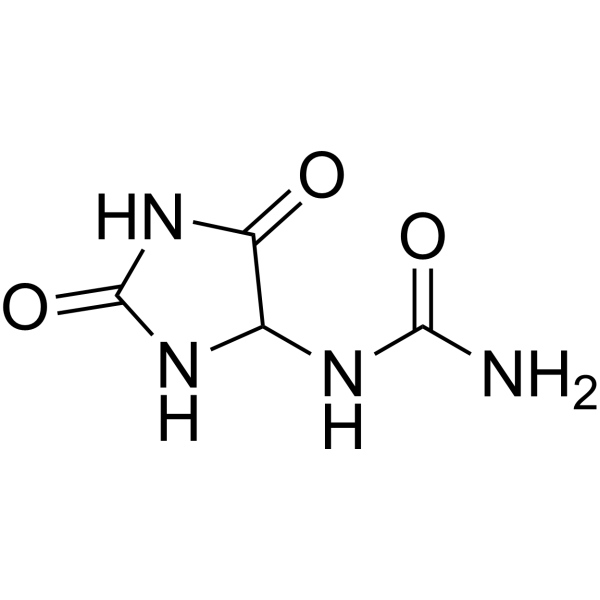
Allantoin
Based on 2 publication(s) in Google Scholar
Allantoin is a skin conditioning agent that promotes healthy skin, stimulates new and healthy tissue growth.
For research use only. We do not sell to patients.
- Purity : 99.62%
- CAS No.: 97-59-6
- Formula: C4H6N4O3
- Molecular Weight:158.12
-
Storage:Powder -20°C, 3 years , 4°C, 2 years ; In solvent -80°C, 2 years , -20°C, 1 year

To place orders, for customer services and technical support, please contact: MedChemExpress USA
Tel: 609-228-6898 E-mail: [email protected] [email protected]


-
 Biological Activity
-
Chemical Information
-
Solvent & Solubility
- Purity & Documentation
- References
-
 Help & FAQs


-
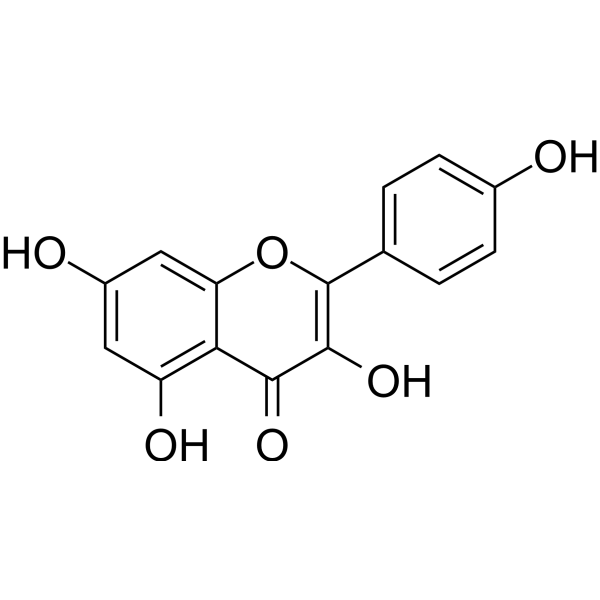
HY-14590
KaempferolEstrogen Receptor α Inhibitor -
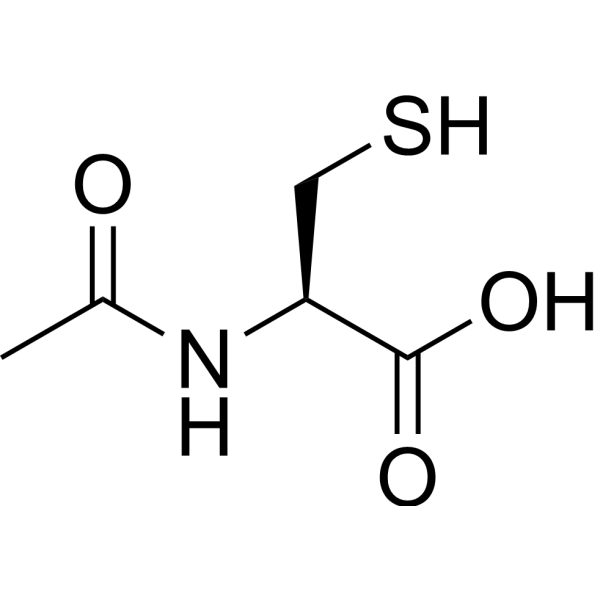
HY-B0215
AcetylcysteineMucolytic Agent -
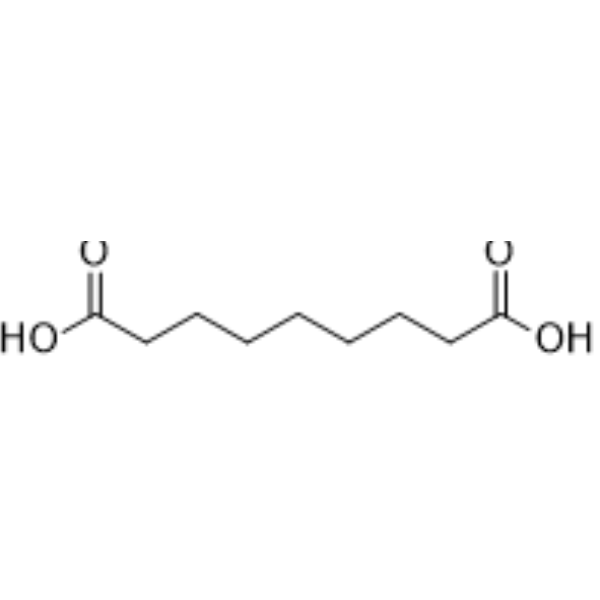
HY-B0704
Azelaic acidAnti-inflammatory Agent -
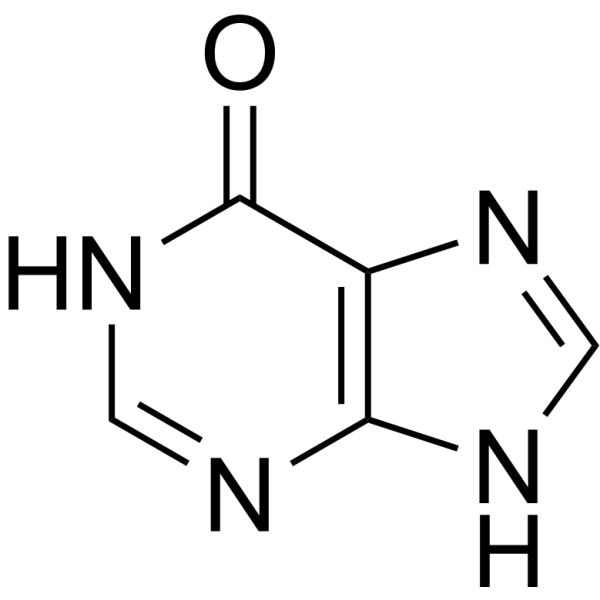
HY-N0091
HypoxanthineEndogenous Metabolite -

HY-N0543R
Allantoin (Standard)Endogenous Metabolite -
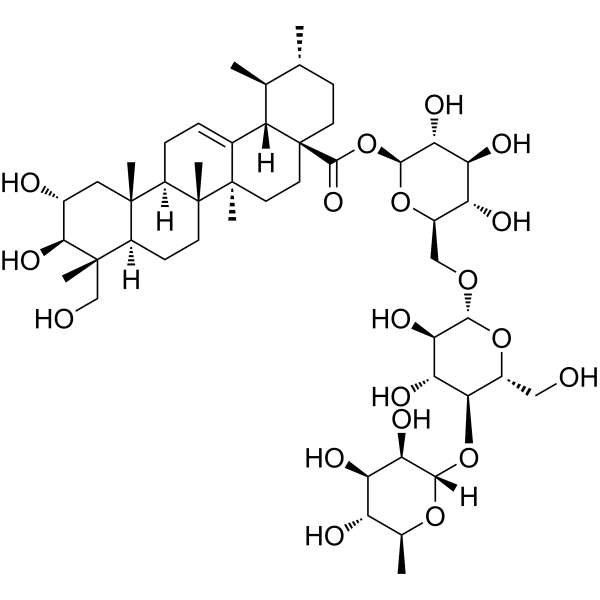
HY-N0439
AsiaticosideTriterpene Glycoside -
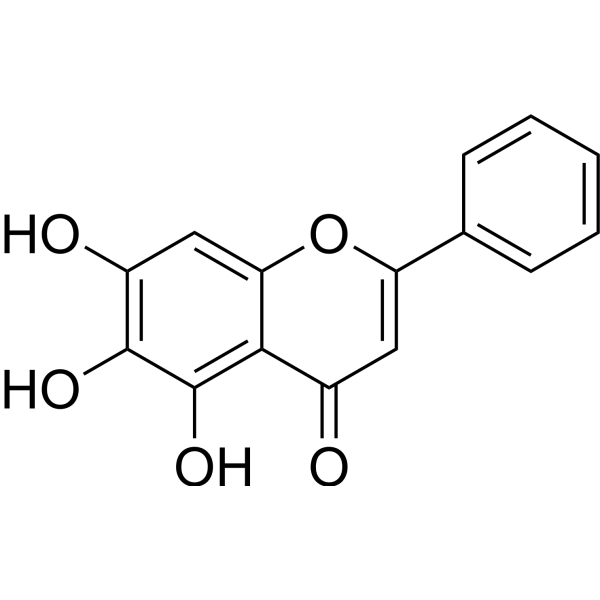
HY-N0196
BaicaleinXanthine Oxidase Inhibitor -
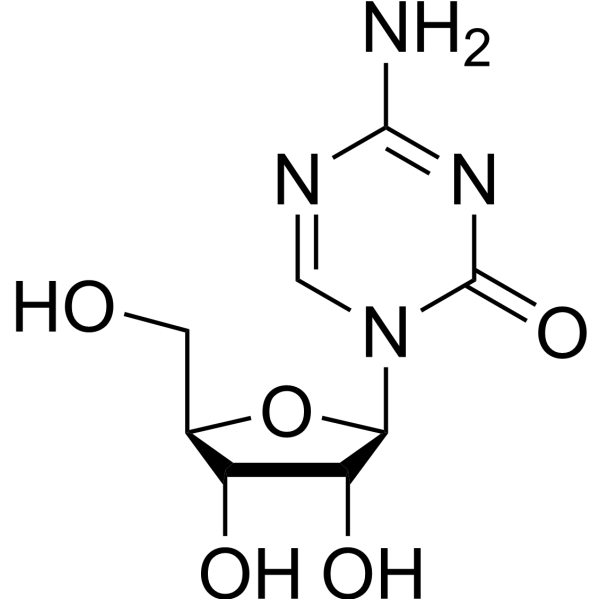
HY-10586
5-AzacytidineDNMT Inhibitor -
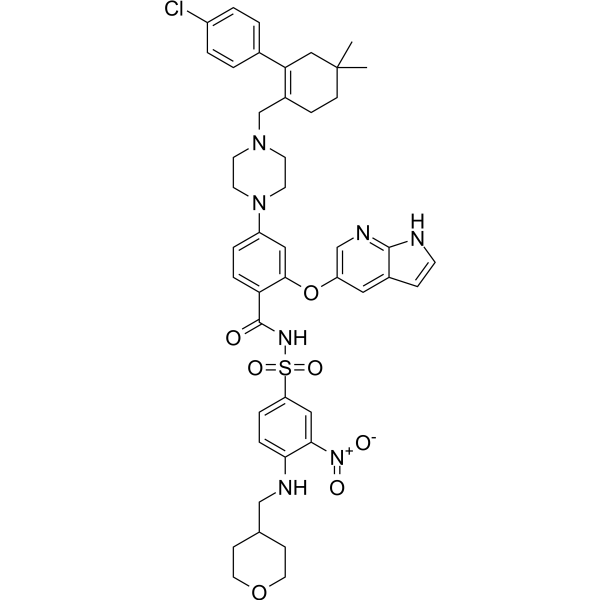
HY-15531
VenetoclaxBCL-2 Inhibitor -
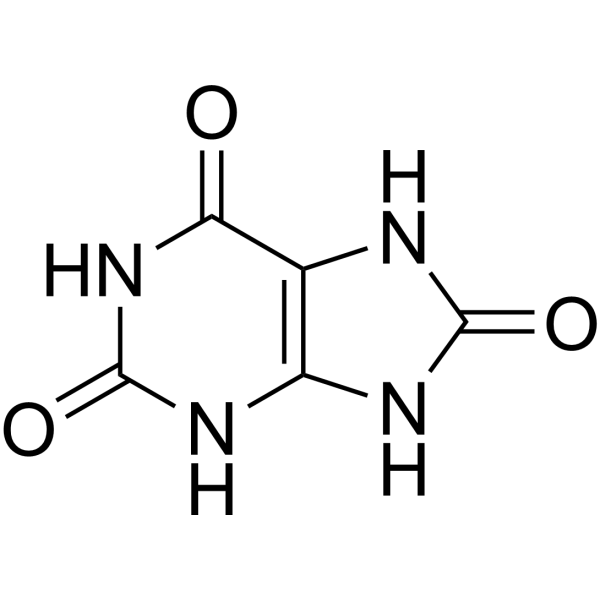
HY-B2130
Uric acidOxygen Radical Scavenger -
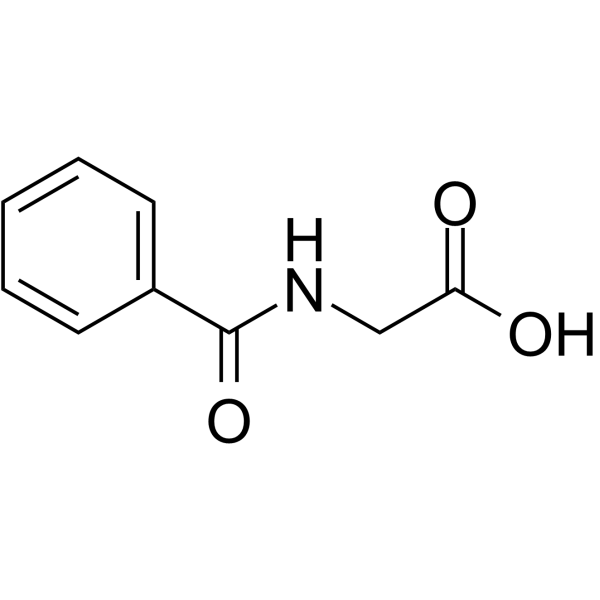
HY-W016562
Hippuric acidMetabolite -
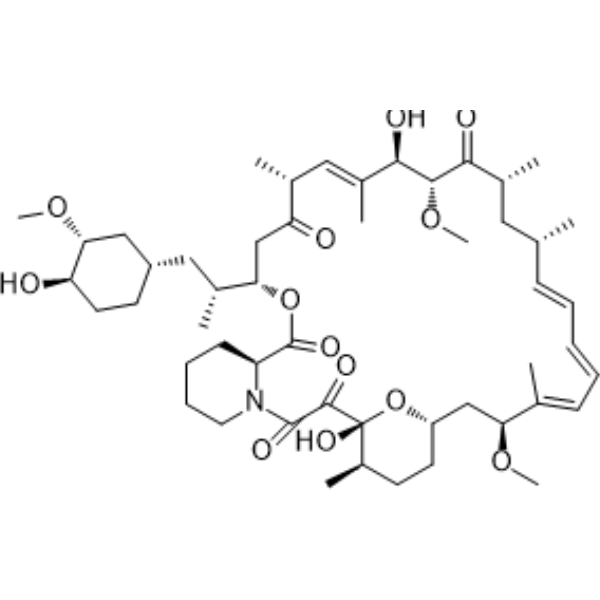
HY-10219
RapamycinmTOR Inhibitor
Publications Citing Use of MedChemExpress (MCE) Allantoin
MoreAll Endogenous Metabolite Isoforms
More

Biological Activity
Description
IC50 & Target
|
Microbial Metabolite |
Human Endogenous Metabolite |
Cellular Effect
|
Cell Line

|
Type | Value | Description | References |
|---|---|---|---|---|
| RAW264.7 | IC50 |
0.5 μM
Compound: 20
|
Inhibition of LPS-induced nitric oxide production in mouse RAW264.7 cells pretreated for 1 hr followed by LPS-stimulation and measured after 24 hrs by Griess assay
Inhibition of LPS-induced nitric oxide production in mouse RAW264.7 cells pretreated for 1 hr followed by LPS-stimulation and measured after 24 hrs by Griess assay
|
[PMID: 29932657] |
In Vitro
Allantoin is a well-known cosmetic ingredient reported to have anti-oxidative and anti-inflammatory activities[1]. Allantoin attenuates apoptosis and cytotoxicity and increased the viability of STZ-induced β-cells in a dose-dependent manner. Allantoin decreases the level of caspase-3 and increases the level of phosphorylated B-cell lymphoma 2 (Bcl-2) expression. Allantoin has been demonstrated to activate imidazoline 3 (I3) receptors[2].
MedChemExpress (MCE) has not independently confirmed the accuracy of these methods. They are for reference only.
In Vivo
MedChemExpress (MCE) has not independently confirmed the accuracy of these methods. They are for reference only.
Clinical Trial
| NCT Number | Sponsor | Condition | Start Date |
Phase
|
|---|---|---|---|---|
| NCT01329991 | 2011-05 | PHASE1 |


Chemical Information
-
CAS No. 97-59-6
-
Appearance Solid
-
Molecular Weight 158.12
-
Formula C4H6N4O3
-
Color White to off-white
-
SMILES
O=C(N)NC(C(N1)=O)NC1=O
-
Synonyms
5-Ureidohydantoin
-
Structure Classification
-
Initial Source
-
Shipping
Room temperature in continental US; may vary elsewhere.
-
Storage
Powder -20°C 3 years 4°C 2 years In solvent -80°C 2 years -20°C 1 year


Publications (2)
-
Journal Impact Factor
-
Most Recent
-
FASEB J
The metabolomic profiling identifies N, N-dimethylglycine as a facilitator of dorsal root ganglia neuron axon regeneration after injury. [Abstract]2022 May;36(5):e22305. PMID: 35394692 -


Solvent & Solubility
In Vitro:
DMSO : 50 mg/mL (316.22 mM; Need ultrasonic; Hygroscopic DMSO has a significant impact on the solubility of product, please use newly opened DMSO)
H2O : 3.85 mg/mL (24.35 mM; Need ultrasonic)
Please refer to the solubility information to select the appropriate solvent. Once prepared, please aliquot and store the solution to prevent product inactivation from repeated freeze-thaw cycles.
Storage method and period of stock solution: -80°C, 2 years; -20°C, 1 year. When stored at -80°C, please use it within 2 years. When stored at -20°C, please use it within 1 year.
* Note: If you choose water as the stock solution, please dilute it to the working solution, then filter and sterilize it with a 0.22 μm filter before use.
Please refer to the solubility information to select the appropriate solvent. Once prepared, please aliquot and store the solution to prevent product inactivation from repeated freeze-thaw cycles.
Storage method and period of stock solution: -80°C, 2 years; -20°C, 1 year. When stored at -80°C, please use it within 2 years. When stored at -20°C, please use it within 1 year.
* Note: If you choose water as the stock solution, please dilute it to the working solution, then filter and sterilize it with a 0.22 μm filter before use.
Concentration (start) × Volume (start) = Concentration (final) × Volume (final)
In Vivo:
Select the appropriate dissolution method based on your experimental animal and administration route.
- For the following dissolution methods, please ensure to first prepare a clear stock solution using an In Vitro approach and then sequentially add co-solvents:
- To ensure reliable experimental results, the clarified stock solution can be appropriately stored based on storage conditions. As for the working solution for In Vivo experiments, it is recommended to prepare freshly and use it on the same day.
- The percentages shown for the solvents indicate their volumetric ratio in the final prepared solution. If precipitation or phase separation occurs during preparation, heat and/or sonication can be used to aid dissolution.
Add each solvent one by one: 10% DMSO 40% PEG300 5% Tween-80 45% Saline
Solubility: ≥ 2.5 mg/mL (15.81 mM); Clear solution
This protocol yields a clear solution of ≥ 2.5 mg/mL (saturation unknown).
Taking 1 mL working solution as an example, add 100 μL DMSO stock solution (25.0 mg/mL) to 400 μL PEG300, and mix evenly; then add 50 μL Tween-80 and mix evenly; then add 450 μL Saline to adjust the volume to 1 mL.
Preparation of Saline: Dissolve 0.9 g sodium chloride in ddH₂O and dilute to 100 mL to obtain a clear Saline solution.
Add each solvent one by one: 10% DMSO 90% (20% SBE-β-CD in Saline)
Solubility: ≥ 2.5 mg/mL (15.81 mM); Clear solution
This protocol yields a clear solution of ≥ 2.5 mg/mL (saturation unknown).
Taking 1 mL working solution as an example, add 100 μL DMSO stock solution (25.0 mg/mL) to 900 μL 20% SBE-β-CD in Saline, and mix evenly.
Preparation of 20% SBE-β-CD in Saline (4°C, storage for one week): 2 g SBE-β-CD powder is dissolved in 10 mL Saline, completely dissolve until clear.
For the following dissolution methods, please prepare the working solution directly:
It is recommended to prepare fresh solutions and use them promptly within a short period of time.
The percentages shown for the solvents indicate their volumetric ratio in the final prepared solution. If precipitation or phase separation occurs during preparation, heat and/or sonication can be used to aid dissolution.
Add each solvent one by one: PBS
Solubility: 2 mg/mL (12.65 mM); Clear solution; Need ultrasonic and warming and heat to 60°C
Add each solvent one by one: Corn Oil
Solubility: 6.25 mg/mL (39.53 mM); Suspended solution; Need ultrasonic
Add each solvent one by one: 50% PEG300 50% Saline
Solubility: 12.5 mg/mL (79.05 mM); Clear solution; Need ultrasonic
Add each solvent one by one: 0.5% CMC-Na/saline water
Solubility: 8.33 mg/mL (52.68 mM); Clear solution; Need ultrasonic
In Vivo Dissolution Calculator
Please enter the basic information of animal experiments:
-
-
-
-
Recommended: Prepare an additional quantity of animals to account for potential losses during experiments.
Please enter your animal formula composition:
-
%DMSO +
Recommended: Keep the proportion of DMSO in working solution below 2% if your animal is weak.
-
%+
-
+%Tween-80 + +
-
%Saline +
The co-solvents required include: DMSO, . All of co-solvents are available by MedChemExpress (MCE). , Tween 80. All of co-solvents are available by MedChemExpress (MCE).
Working solution concentration: 0.22 mg/mL
Method for preparing stock solution: mg drug dissolved in μL DMSO. Stock solution concentration: mg/mL.
1. Take μL DMSO stock solution;
2. Add μL .
μL , mix evenly;
3. Then add μL Tween 80, mix evenly;
4. Then add μL
Please ensure that the stock solution in the first step is dissolved to a clear state, and add co-solvents in sequence. You can use ultrasonic heating (ultrasonic cleaner, recommended frequency 20-40 kHz), vortexing, etc. to assist dissolution.


Purity & Documentation
-
Data Sheet (280 KB)
-
SDS (396 KB)
- English - EN (396 KB)
- Français - FR (396 KB)
- Deutsch - DE (396 KB)
- Norwegian - NO (396 KB)
- Español - ES (396 KB)
- Swedish - SV (396 KB)
- Italian - IT (396 KB)
- Korean - KR (396 KB)
- Portuguese - PT (396 KB)
-
Handling Instructions (2659 KB)
References
[1]. Ahn YJ, et al. Effects of allantoin on cognitive function and hippocampal neurogenesis. Food Chem Toxicol. 2014 Feb;64:210-6. [Content Brief]
[2]. Amitani M, et al. Allantoin ameliorates chemically-induced pancreatic β-cell damage through activation of the imidazoline I3 receptors. PeerJ. 2015 Aug 6;3:e1105. [Content Brief]
[3]. Chen MF, et al. Antihypertensive action of allantoin in animals. Biomed Res Int. 2014;2014:690135. [Content Brief]


Complete Stock Solution Preparation Table
Please refer to the solubility information to select the appropriate solvent. Once prepared, please aliquot and store the solution to prevent product inactivation from repeated freeze-thaw cycles.
Storage method and period of stock solution: -80°C, 2 years; -20°C, 1 year. When stored at -80°C, please use it within 2 years. When stored at -20°C, please use it within 1 year.
| Optional Solvent | Concentration Solvent Mass | 1 mg | 5 mg | 10 mg | 25 mg |
|---|---|---|---|---|---|
| H2O / DMSO | 1 mM | 6.3243 mL | 31.6216 mL | 63.2431 mL | 158.1078 mL |
| 5 mM | 1.2649 mL | 6.3243 mL | 12.6486 mL | 31.6216 mL | |
| 10 mM | 0.6324 mL | 3.1622 mL | 6.3243 mL | 15.8108 mL | |
| 15 mM | 0.4216 mL | 2.1081 mL | 4.2162 mL | 10.5405 mL | |
| 20 mM | 0.3162 mL | 1.5811 mL | 3.1622 mL | 7.9054 mL | |
| DMSO | 25 mM | 0.2530 mL | 1.2649 mL | 2.5297 mL | 6.3243 mL |
| 30 mM | 0.2108 mL | 1.0541 mL | 2.1081 mL | 5.2703 mL | |
| 40 mM | 0.1581 mL | 0.7905 mL | 1.5811 mL | 3.9527 mL | |
| 50 mM | 0.1265 mL | 0.6324 mL | 1.2649 mL | 3.1622 mL | |
| 60 mM | 0.1054 mL | 0.5270 mL | 1.0541 mL | 2.6351 mL | |
| 80 mM | 0.0791 mL | 0.3953 mL | 0.7905 mL | 1.9763 mL | |
| 100 mM | 0.0632 mL | 0.3162 mL | 0.6324 mL | 1.5811 mL |
* Note: If you choose water as the stock solution, please dilute it to the working solution, then filter and sterilize it with a 0.22 μm filter before use.


Allantoin Related Classifications
HY-N0543 Related Classifications
 Powered by Bioz