



BU224 hydrochloride (Standard)
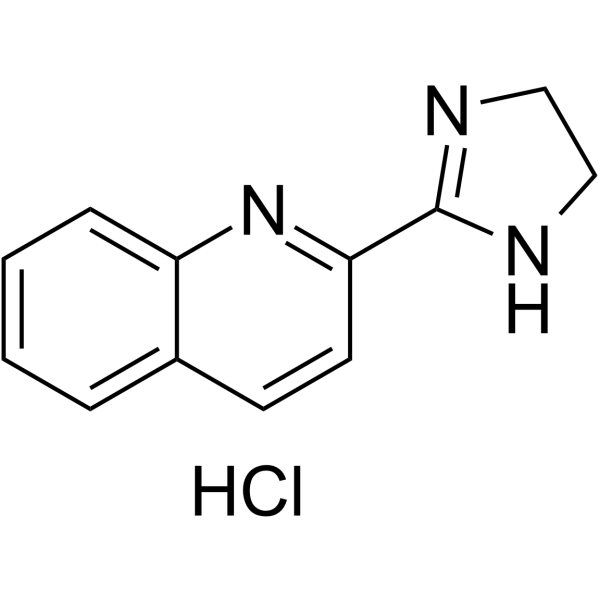
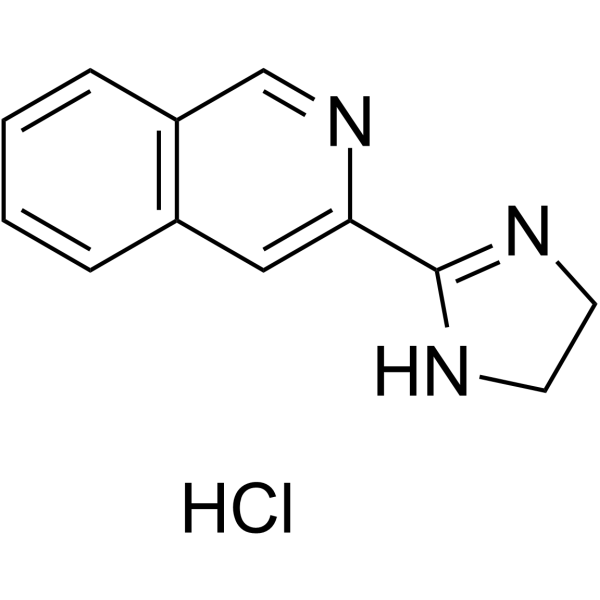
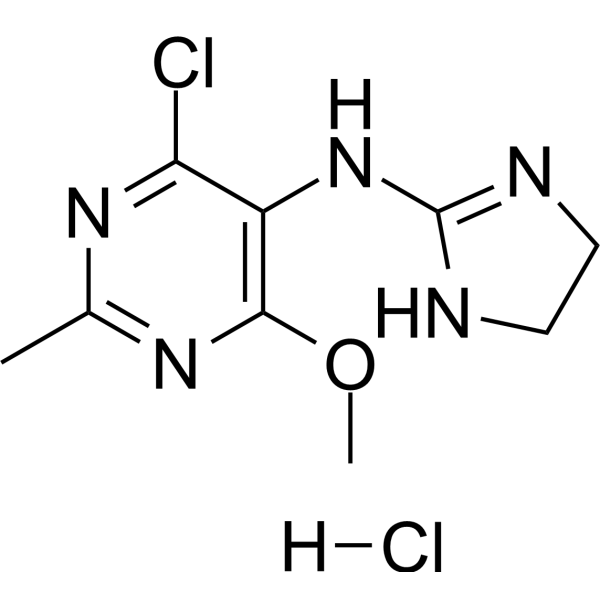
BU224 (hydrochloride) (Standard) is the analytical standard of BU224 (hydrochloride). This product is intended for research and analytical applications. BU224 hydrochloride is a selective and high affinity imidazoline I2 receptor ligand, with a Ki of 2.1 nM. BU224 hydrochloride is sometimes used as an I2 receptor antagonist. BU224 hydrochloride exerts neuroprotective effects, with anti-inflammatory and anti-apoptotic properties. BU224 hydrochloride improves memory in 5XFAD mice, enlarging dendritic spines and reducing Aβ-induced changes in NMDARs. BU224 hydrochloride can be used for Alzheimer's disease research.
For research use only. We do not sell to patients.
- CAS No.: 205437-64-5
- Formula: C12H12ClN3
- Molecular Weight:233.70
-
Storage:
Please store the product under the recommended conditions in the Certificate of Analysis.


To place orders, for customer services and technical support, please contact: MedChemExpress USA
Tel: 609-228-6898 E-mail: [email protected] [email protected]


-
 Product Information
-
Chemical Information
- Purity & Documentation
-
 Help & FAQs


-
HY-101170
BU224 hydrochloride -
HY-B0374
Moxonidine -
HY-101238
Agmatine sulfate -

HY-101238R
Agmatine sulfate (Standard) -
HY-101374A
AGN 192403 hydrochloride -
HY-N0543
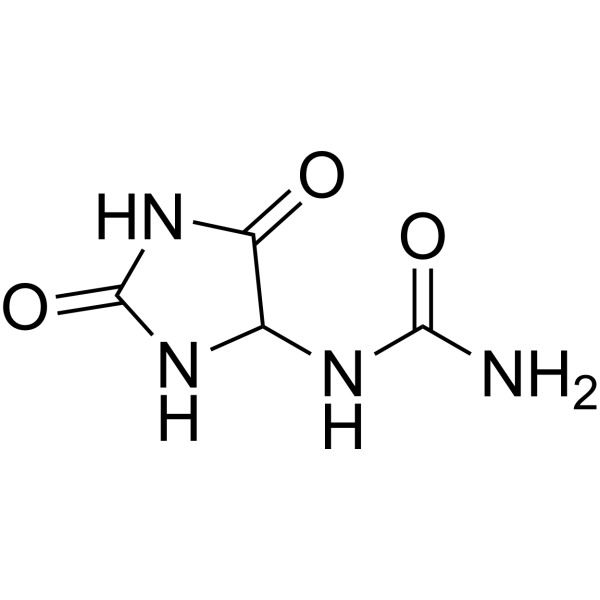
Allantoin -
HY-101380A
BU226 hydrochloride -

HY-N0543R
Allantoin (Standard) -
HY-100490B
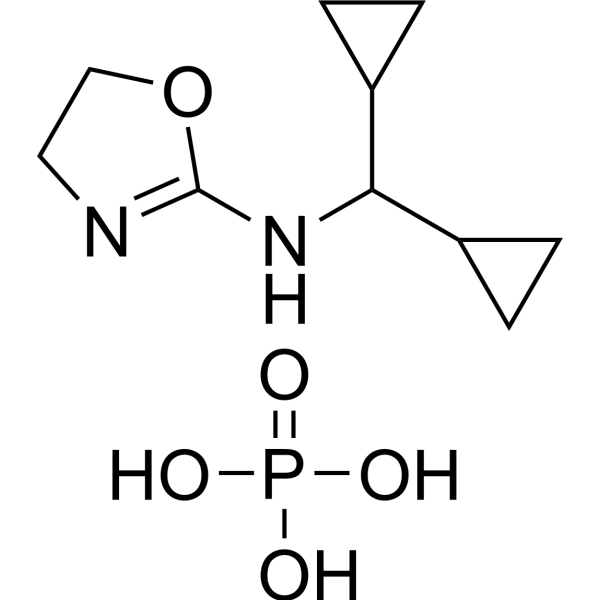
Rilmenidine phosphate -
HY-100904
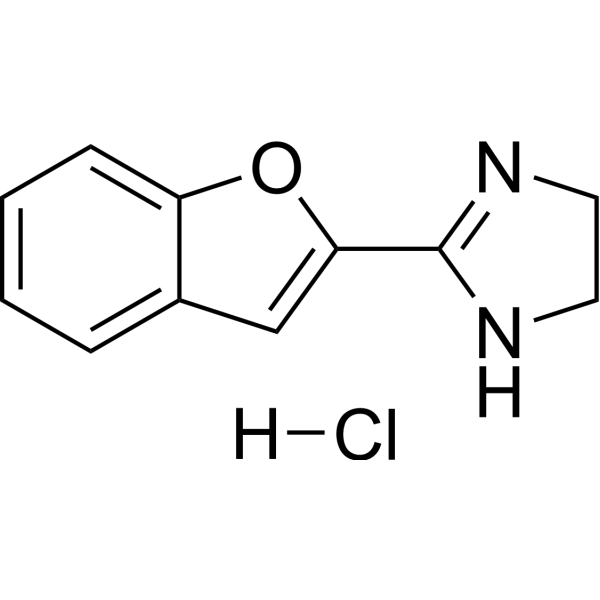
RX 801077 hydrochloride -

HY-B0374R
Moxonidine (Standard) -
HY-B0374A
Moxonidine hydrochloride


Product Information
Information
Application
The compound is the grade of analytical standard, which is the reference standard supplied assay. It is commonly used in qualitative, quantitative and methodological research experiments in HPLC, GC and MS.


Chemical Information
-
CAS No. 205437-64-5
-
Molecular Weight 233.70
-
Formula C12H12ClN3
-
SMILES
C1(C2=NCCN2)=NC3=CC=CC=C3C=C1.Cl
-
Shipping
Room temperature in continental US; may vary elsewhere.
-
Storage
Please store the product under the recommended conditions in the Certificate of Analysis.


Purity & Documentation
References
[1]. Mirzaei N, et al. Imidazoline ligand BU224 reverses cognitive deficits, reduces microgliosis and enhances synaptic connectivity in a mouse model of Alzheimer's disease. Br J Pharmacol. 2021 Feb;178(3):654-671. [Content Brief]
[2]. Finn DP, et al. Behavioral, neuroendocrine and neurochemical effects of the imidazoline I2 receptor selective ligand BU224 in naive rats and rats exposed to the stress of the forced swim test. Psychopharmacology (Berl). 2003 May;167(2):195-202. [Content Brief]
[3]. Qiu Y, et al. Discriminative stimulus effects of the imidazoline I2 receptor ligands BU224 and phenyzoline in rats. Eur J Pharmacol. 2015 Feb 15;749:133-41. [Content Brief]

Calculators
Concentration (start) × Volume (start) = Concentration (final) × Volume (final)


BU224 hydrochloride (Standard) Related Classifications
HY-101170R Related Classifications
 Powered by Bioz