1. Epigenetics PI3K/Akt/mTOR Autophagy Apoptosis
  2. AMPK Autophagy Mitophagy Apoptosis mTOR
  3. Metformin hydrochloride

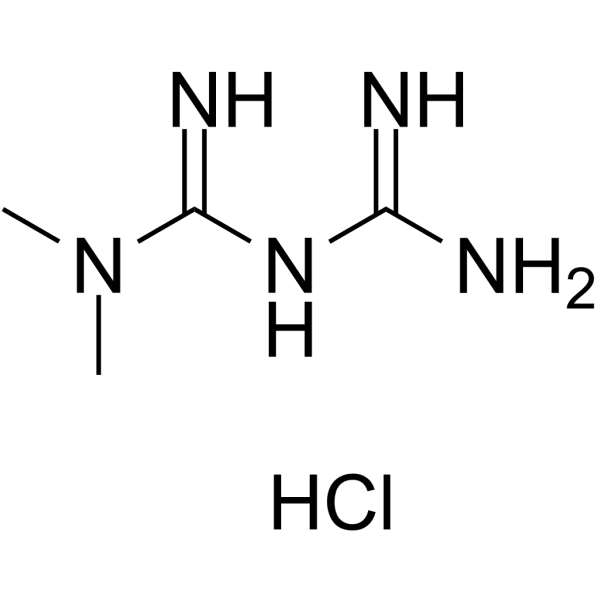
Metformin hydrochloride  (Synonyms: 1,1-Dimethylbiguanide hydrochloride)

Cat. No.: HY-17471A Purity: 99.98%
Handling Instructions Technical Support

Chlorhydrate de metformine inhibe la chaîne respiratoire mitochondriale dans le foie, il peut entraîner l'activation de AMPK et améliorer la sensibilité à l'insuline pour la recherche sur le diabète de type 2. Chlorhydrate de metformine déclenche l'autophagie.

Metformin-Hydrochlorid (1,1-Dimethylbiguanid-Hydrochlorid) hemmt die mitochondrial respiratory chain in der Leber, was zur Aktivierung von AMPK führt und die Insulinsensitivität für die Erforschung von Typ-2-Diabetes erhöht. Metforminhydrochlorid kann die Blut-Hirn-Schranke überwinden und löst autophagy aus.

Metformin (1,1-Dimethylbiguanide) hydrochloride inhibits the mitochondrial respiratory chain in the liver, leading to AMPK activation and enhancing insulin sensitivity, and can be used in the study of type 2 diabetes. Metformin hydrochloride exerts central glucose-lowering effects by inhibiting Ras-related protein 1 (Rap1) in SF1 hypothalamic neurons. Metformin hydrochloride also inhibits liver oxidative stress, nitrosative stress, inflammation, and apoptosis caused by liver ischemia/reperfusion injury. In addition, Metformin hydrochloride regulates the expression of autophagy-related proteins by activating AMPK and inhibiting the mTOR signaling pathway, thereby inducing tumor cell autophagy and inhibiting the growth of renal cell carcinoma in vitro and in vivo.

For research use only. We do not sell to patients.

CAS No. : 1115-70-4

Size Price Stock Quantity
Solid + Solvent (Highly Recommended)
10 mM * 1 mL in DMSO
ready for reconstitution
In-stock
Solution
10 mM * 1 mL in DMSO In-stock
Solid
5 mg In-stock
10 mg In-stock
25 mg In-stock
50 mg In-stock
100 mg In-stock
250 mg In-stock
500 mg In-stock
1 g   Get quote  
5 g   Get quote  

* Please select Quantity before adding items.

This product is a controlled substance and not for sale in your territory.

Customer Review

Based on 196 publication(s) in Google Scholar

Other Forms of Metformin hydrochloride:

Top Publications Citing Use of Products

196 Publications Citing Use of MCE Metformin hydrochloride

WB
IHC
Cell Proliferation/Viability Assay
RT-PCR

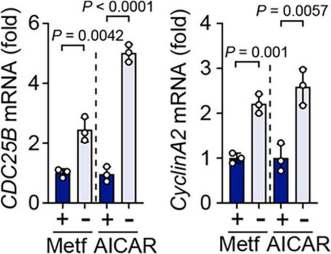
    Metformin hydrochloride purchased from MedChemExpress. Usage Cited in: Nature. 2025 Feb;638(8052):1112-1121.  [Abstract]

    Metformin (2 mM; 16 h) significantly inhibits the mRNA expression of FOXM1 downstream genes (CDC25B, CCNA2) in HEK293T cells.

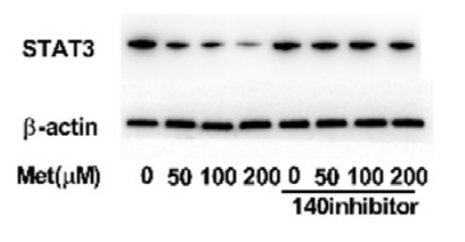
    Metformin hydrochloride purchased from MedChemExpress. Usage Cited in: J Adv Res. 2025 Mar 10:S2090-1232(25)00174-2.  [Abstract]

    STAT3 levels in hBMSCs treated with metformin and the miR-140-3p inhibitor.

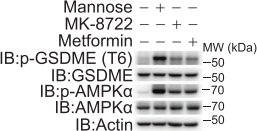
    Metformin hydrochloride purchased from MedChemExpress. Usage Cited in: Cell Res. 2023 Dec;33(12):904-922.  [Abstract]

    Cells were treated with mannose, MK-8722 (1 μM) or Metformin (1 mM) for 6 h. GSDME was immunoprecipitated using anti-GSDME antibody, and then the phosphorylation levels of GSDME T6 were detected.

    Metformin hydrochloride purchased from MedChemExpress. Usage Cited in: Redox Biol. 2023 Aug:64:102786.

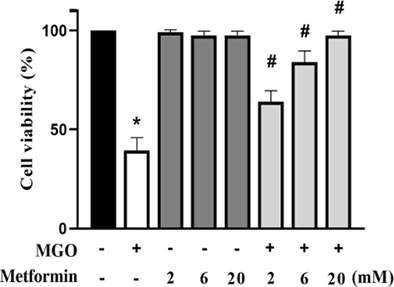
    Metformin hydrochloride (Metformin; 2, 6, 20 mM; 30 min) attenuates MGO-induced cell death in a concentration-dependent manner in ARPE-19 cells.

    Metformin hydrochloride purchased from MedChemExpress. Usage Cited in: Redox Biol. 2023 Aug:64:102786.

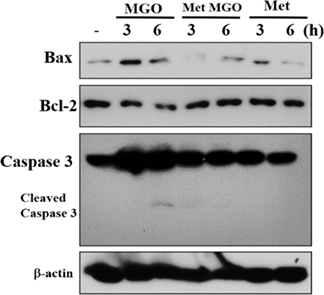
    Metformin hydrochloride (Met; 3, 6 mM; 30 min) inhibits MGO-induced the increased expression of Bax and caspase-3 cleavage and decreased expression of Bcl-2 in ARPE-19 cells.

    Metformin hydrochloride purchased from MedChemExpress. Usage Cited in: Circulation. 2023 Jan 10;147(2):158-174.  [Abstract]

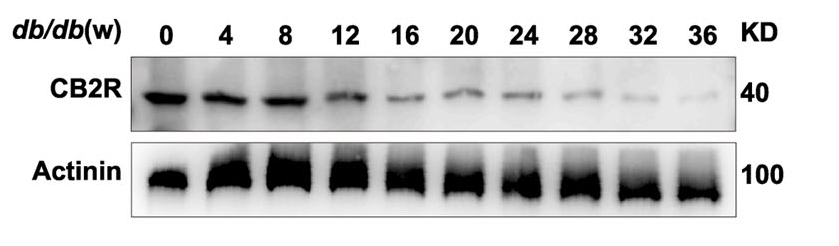
    Metformin. Western blot analysis of CB2R in the heart from db/db diabetic (DM) mice at different ages.

    Metformin hydrochloride purchased from MedChemExpress. Usage Cited in: Endocrinology. 2018 May 1;159(5):2008-2021.  [Abstract]

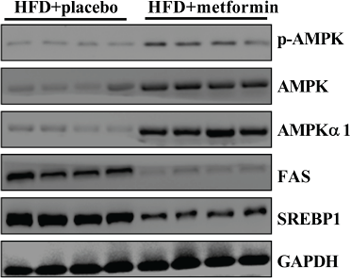
    Male C57BL/6 mice are intragastrically treated with Metformin or placebo at 3 mg/kg/day for 10 weeks in the presence of HFD after 10-week-HFD feeding and then sacrificed for sample collection. Western blot analysis of AMPKα1, AMPK, p-AMPK, SREBP1 and FAS.

    Metformin hydrochloride purchased from MedChemExpress. Usage Cited in: Biochem Pharmacol. 2017 Aug 15:138:49-60.  [Abstract]

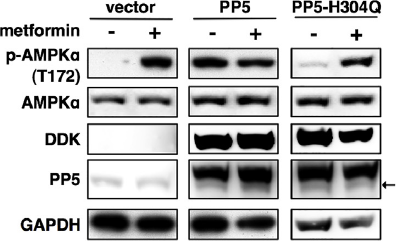
    PP5 overexpression suppresses AMPK-Thr172 phosphorylation induced by AMPK activators, AICAR and metformin. Hep3B cells are transfected with indicated plasmids and treated with AICAR (2 mM; 3 h) or Metformin (3 mM; 16 h) to simulate AMPK phosphorylation.

    Metformin hydrochloride purchased from MedChemExpress. Usage Cited in: Mol Cell Proteomics. 2017 Jul;16(7):1324-1334.  [Abstract]

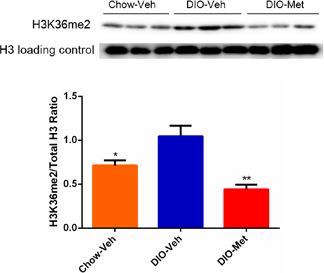
    To further validate the MS quantification results, Western blot analysis is carried out using an anti-H3K36 dimethylation antibody. Consistent with the mass spectrometric data, H3K36 dimethylation was elevated in DIO mouse livers, whereas Metformin treatment can significantly decrease histone H3K36 dimethylation in DIO mice to a level close to that of the chow-fed control mice.

    Metformin hydrochloride purchased from MedChemExpress. Usage Cited in: Mol Oncol. 2017 Aug;11(8):1035-1049.  [Abstract]

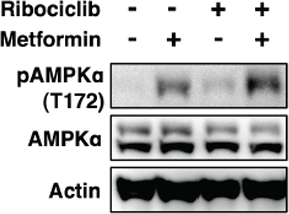
    Co-treatment of Metformin and Ribociclib induces cell death in Hep3B cells. Cells are exposed to Ribociclib at 25 μM and/or Metformin at 10 mM for 72 h.

    Metformin hydrochloride purchased from MedChemExpress. Usage Cited in: Mol Oncol. 2017 Oct;11(10):1475-1492.  [Abstract]

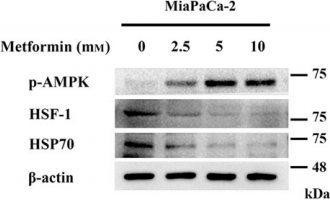
    MiaPaCa-2 cells are treated with a gradient concentration of Metformin for 24 h, and then, western blotting is performed to show the activation of p-AMPK and the suppression of HSF1 and HSP70.

    Metformin hydrochloride purchased from MedChemExpress. Usage Cited in: Mol Oncol. 2017 Oct;11(10):1475-1492.  [Abstract]

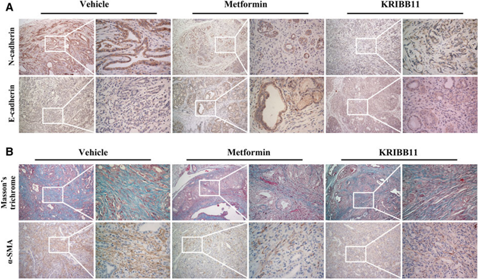
    (A) IHC staining of N-cadherin and E-cadherin in the pancreas from KPC mice treated with vehicle, Metformin, or KRIBB11. (B) Masson's trichrome staining and IHC staining of α-SMA in pancreatic tissues from mice treated with vehicle, Metformin, or KRIBB11.

    Metformin hydrochloride purchased from MedChemExpress. Usage Cited in: Mol Neurobiol. 2017 Jul;54(5):3327-3341.  [Abstract]

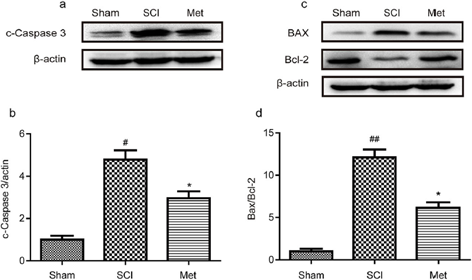
    Met attenuates apoptosis caused by traumatic spinal cord injury in rat. a, b Representative western blots and quantification data of cleaved caspase 3 and β-actin in each group rats. c, d Representative western blots and quantification data of Bax, Bcl-2, and β-actin in each group rats.

    Metformin hydrochloride purchased from MedChemExpress. Usage Cited in: J Cell Mol Med. 2017 Dec;21(12):3322-3336.  [Abstract]

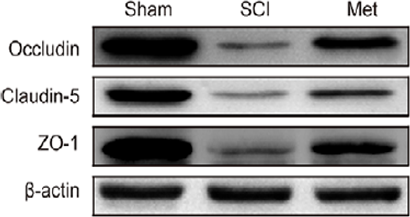
    Metformin prevents the loss of tight junction (TJ) proteins after SCI. Representative Western blots and quantification data of Occludin, Claudin-5, ZO-1 and β-actin at 3 day after injury.

    Metformin hydrochloride purchased from MedChemExpress. Usage Cited in: Cell Physiol Biochem. 2017;44(4):1381-1395.  [Abstract]

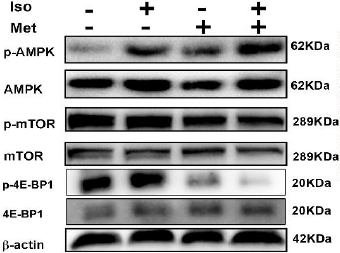
    U87 cells are treated with Met alone or in the presence of isogambogenic acid for 24 h. The expression levels of phosphorylated AMPK, mTOR and 4E-BP1 are assessed by western blotting, with total AMPK, mTOR and 4E-BP1 used as the internal controls.

    Metformin hydrochloride purchased from MedChemExpress. Usage Cited in: Front Immunol. 2016 Dec 12:7:597.  [Abstract]

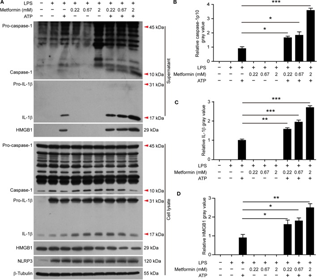
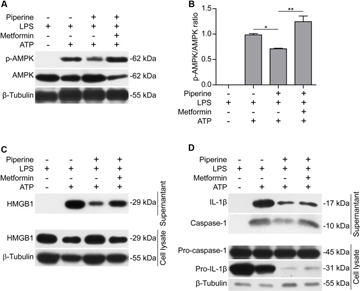
    Metformin increases adenosine triphosphate-induced inflammasome activation in bone marrow-derived macrophages. (A) Cells are treated. Indicated protein levels in both cell lysates and supernatants are evaluated by western blotting. β-Tubulin is used as a loading control for cell lysates. (B–D) The quantitative analyses of the active caspase-1p10 (B), mature interleukin-1β (C), and HMGB1 (D) levels in the supernatants (A) are shown.

    Metformin hydrochloride purchased from MedChemExpress. Usage Cited in: Front Pharmacol. 2016 Oct 20:7:390.  [Abstract]

    Metformin, an AMPK agonist, counteracts the effect of Piperine on suppressing ATP-induced AMPK activation and inflammatory mediator release. J774A.1 cells are pre-treated with 80 μM Piperine and BMDMs are pre-treated with 160 μM Piperine for 4 h. Without being washed out of Piperine, these cells are primed with LPS (500 ng/mL) for 4 h. Next, the cells are treated with Metformin (1 mM) for 1 h (in the absence of Piperine and LPS). Finally, in the presence of Metformin, the BMDMs are stimulated wi
    • Biological Activity

    • Purity & Documentation

    • References

    • Customer Review

    Description

    Metformin (1,1-Dimethylbiguanide) hydrochloride inhibits the mitochondrial respiratory chain in the liver, leading to AMPK activation and enhancing insulin sensitivity, and can be used in the study of type 2 diabetes. Metformin hydrochloride exerts central glucose-lowering effects by inhibiting Ras-related protein 1 (Rap1) in SF1 hypothalamic neurons. Metformin hydrochloride also inhibits liver oxidative stress, nitrosative stress, inflammation, and apoptosis caused by liver ischemia/reperfusion injury. In addition, Metformin hydrochloride regulates the expression of autophagy-related proteins by activating AMPK and inhibiting the mTOR signaling pathway, thereby inducing tumor cell autophagy and inhibiting the growth of renal cell carcinoma in vitro and in vivo[1][2][3][4][5][6][7].

    IC50 & Target[2]

    AMPK


    Cellular Effect
    Cell Line Type Value Description References
    Hs-578T IC50
    26.8 mM
    Compound: 6, metformin
    Cytotoxicity against triple-negative human Hs578T cells assessed as growth inhibition after 24 hrs by MTT assay
    Cytotoxicity against triple-negative human Hs578T cells assessed as growth inhibition after 24 hrs by MTT assay
    [PMID: 23490148]
    MDA-MB-231 IC50
    58.4 mM
    Compound: 6, metformin
    Cytotoxicity against triple-negative human MDA-MB-231 cells assessed as growth inhibition after 24 hrs by MTT assay
    Cytotoxicity against triple-negative human MDA-MB-231 cells assessed as growth inhibition after 24 hrs by MTT assay
    [PMID: 23490148]
    In Vitro

    Metformin (1,1-Dimethylbiguanide) hydrochloride inhibits proliferation of ESCs in a concentration-dependent manner. The IC50 is 2.45 mM for A-ESCs and 7.87 mM for N-ESCs. Metformin hydrochloride shows pronounced effects on activation of AMPK signaling in A-ESCs from secretory phase than in cells from proliferative phase[3].
    Metformin (0-500 μM) hydrochloride decreases glycogen synthesis in a dose-dependent manner with an IC50 value of 196.5 μM in cultured rat hepatocytes[4].
    Metformin hydrochloride shows cell viability and cytotoxic effects on PC-3 cells with IC50 of 5 mM[5].
    Metformin (1-50 mM; 0-120 h) hydrochloride significantly inhibites the proliferation of both 786-O and OS-RC-2 RCC cell lines in a dose- and time-dependent manner[7].
    Metformin (5 mM; 0-48 h) glycinate stimulates AMPK and inhibited the mTOR signaling pathway in 786-O cells[7].

    MedChemExpress (MCE) has not independently confirmed the accuracy of these methods. They are for reference only.

    Cell Proliferation Assay[7]

    Cell Line: 786-O and OS-RC-2 cells
    Concentration: 1, 5, 10, 20 and 50 mM
    Incubation Time: 0-120 h
    Result: Inhibited the growth of 786-O and OS-RC-2 cells by 10% and 14% at doses of 0.2 and 0.5 mM, respectively.

    Western Blot Analysis[7]

    Cell Line: 786-O cells
    Concentration: 5 mM
    Incubation Time: 0-48 h
    Result: Reduced phosphorylation of S6K1 (Thr389) in a time-dependent manner, and thus reduced phosphorylation of ribosomal S6 protein (Ser235/236).
    Activated AMPK in a time-dependent manner.
    In Vivo

    Metformin (1,1-Dimethylbiguanide; 100 mg/kg, p.o.) hydrochloride alone, and Metformin (25, 50, 100 mg/kg) hydrochloride with isoproterenol groups attenuates myocyte necrosis through histopathological analysis[1].
    Metformin (> 900 mg/kg/day, p.o.) hydrochloride results in moribundity/mortality and clinical signs of toxicity in Crl:CD(SD) rats[2].
    Metformin (200 mg/kg; i.p.; once a day for 6 consecutive days before induction of ischemia and at the beginning of reperfusion) hydrochloride significantly reduces the serum alanine aminotransferase (ALT) level in rats with ischemia-reperfusion model[6].
    Metformin (250 mg/kg; i.p.; once daily for 22 days) hydrochloride significantly reduces the growth of 786-O cell xenograft tumors in nude mice[7].

    MedChemExpress (MCE) has not independently confirmed the accuracy of these methods. They are for reference only.

    Clinical Trial
    Molecular Weight

    165.62

    Formula

    C4H12ClN5

    CAS No.
    Appearance

    Solid

    Color

    White to off-white

    SMILES

    NC(NC(N(C)C)=N)=N.Cl

    Shipping

    Room temperature in continental US; may vary elsewhere.

    Storage

    4°C, sealed storage, away from moisture

    *In solvent : -80°C, 6 months; -20°C, 1 month (sealed storage, away from moisture)

    Solvent & Solubility
    In Vitro: 

    H2O : ≥ 100 mg/mL (603.79 mM)

    DMSO : ≥ 1.7 mg/mL (10.26 mM; Hygroscopic DMSO has a significant impact on the solubility of product, please use newly opened DMSO)

    *"≥" means soluble, but saturation unknown.

    Preparing
    Stock Solutions
    Concentration Solvent Mass 1 mg 5 mg 10 mg
    1 mM 6.0379 mL 30.1896 mL 60.3792 mL
    5 mM 1.2076 mL 6.0379 mL 12.0758 mL
    View the Complete Stock Solution Preparation Table

    * Please refer to the solubility information to select the appropriate solvent. Once prepared, please aliquot and store the solution to prevent product inactivation from repeated freeze-thaw cycles.
    Storage method and period of stock solution: -80°C, 6 months; -20°C, 1 month (sealed storage, away from moisture). When stored at -80°C, please use it within 6 months. When stored at -20°C, please use it within 1 month.

    * Note: If you choose water as the stock solution, please dilute it to the working solution, then filter and sterilize it with a 0.22 μm filter before use.

    • Molarity Calculator

    • Dilution Calculator
    Mass (g) = Concentration (mol/L) × Volume (L) × Molecular Weight (g/mol)

    Mass
    =
    Concentration
    ×
    Volume
    ×
    Molecular Weight *

    Concentration (start) × Volume (start) = Concentration (final) × Volume (final)

    This equation is commonly abbreviated as: C1V1 = C2V2

    Concentration (start)

    C1

    ×
    Volume (start)

    V1

    =
    Concentration (final)

    C2

    ×
    Volume (final)

    V2

    In Vivo:

    Select the appropriate dissolution method based on your experimental animal and administration route.

    For the following dissolution methods, please ensure to first prepare a clear stock solution using an In Vitro approach and then sequentially add co-solvents:
    To ensure reliable experimental results, the clarified stock solution can be appropriately stored based on storage conditions. As for the working solution for in vivo experiments, it is recommended to prepare freshly and use it on the same day.
    The percentages shown for the solvents indicate their volumetric ratio in the final prepared solution. If precipitation or phase separation occurs during preparation, heat and/or sonication can be used to aid dissolution.

    • Protocol 1

      Add each solvent one by one:  5% DMSO    40% PEG300    5% Tween-80    50% Saline

      Solubility: ≥ 3 mg/mL (18.11 mM); Clear solution

    • Protocol 2

      Add each solvent one by one:  5% DMSO    95% (20% SBE-β-CD in Saline)

      Solubility: ≥ 3 mg/mL (18.11 mM); Clear solution

    For the following dissolution methods, please prepare the working solution directly. It is recommended to prepare fresh solutions and use them promptly within a short period of time.
    The percentages shown for the solvents indicate their volumetric ratio in the final prepared solution. If precipitation or phase separation occurs during preparation, heat and/or sonication can be used to aid dissolution.

    • Protocol 1

      Add each solvent one by one:  PBS

      Solubility: 100 mg/mL (603.79 mM); Clear solution; Need ultrasonic

    In Vivo Dissolution Calculator
    Please enter the basic information of animal experiments:

    Dosage

    mg/kg

    Animal weight
    (per animal)

    g

    Dosing volume
    (per animal)

    μL

    Number of animals

    Recommended: Prepare an additional quantity of animals to account for potential losses during experiments.
    Calculation results:
    Working solution concentration: mg/mL
    This product has good water solubility, please refer to the measured solubility data in water/PBS/Saline for details.
    The concentration of the stock solution you require exceeds the measured solubility. The following solution is for reference only.If necessary, please contact MedChemExpress (MCE).
    Purity & Documentation

    Purity: 99.98%

    References

    Complete Stock Solution Preparation Table

    * Please refer to the solubility information to select the appropriate solvent. Once prepared, please aliquot and store the solution to prevent product inactivation from repeated freeze-thaw cycles.
    Storage method and period of stock solution: -80°C, 6 months; -20°C, 1 month (sealed storage, away from moisture). When stored at -80°C, please use it within 6 months. When stored at -20°C, please use it within 1 month.

    Optional Solvent Concentration Solvent Mass 1 mg 5 mg 10 mg 25 mg
    DMSO / H2O 1 mM 6.0379 mL 30.1896 mL 60.3792 mL 150.9480 mL
    5 mM 1.2076 mL 6.0379 mL 12.0758 mL 30.1896 mL
    10 mM 0.6038 mL 3.0190 mL 6.0379 mL 15.0948 mL
    H2O 15 mM 0.4025 mL 2.0126 mL 4.0253 mL 10.0632 mL
    20 mM 0.3019 mL 1.5095 mL 3.0190 mL 7.5474 mL
    25 mM 0.2415 mL 1.2076 mL 2.4152 mL 6.0379 mL
    30 mM 0.2013 mL 1.0063 mL 2.0126 mL 5.0316 mL
    40 mM 0.1509 mL 0.7547 mL 1.5095 mL 3.7737 mL
    50 mM 0.1208 mL 0.6038 mL 1.2076 mL 3.0190 mL
    60 mM 0.1006 mL 0.5032 mL 1.0063 mL 2.5158 mL
    80 mM 0.0755 mL 0.3774 mL 0.7547 mL 1.8868 mL
    100 mM 0.0604 mL 0.3019 mL 0.6038 mL 1.5095 mL

    * Note: If you choose water as the stock solution, please dilute it to the working solution, then filter and sterilize it with a 0.22 μm filter before use.

    • No file chosen (Maximum size is: 1024 Kb)
    • If you have published this work, please enter the PubMed ID.
    • Your name will appear on the site.
    Help & FAQs
    • Do most proteins show cross-species activity?

      Species cross-reactivity must be investigated individually for each product. Many human cytokines will produce a nice response in mouse cell lines, and many mouse proteins will show activity on human cells. Other proteins may have a lower specific activity when used in the opposite species.

    Your Recently Viewed Products:

    Inquiry Online

    Your information is safe with us. * Required Fields.

    Product Name


    Requested Quantity *

    Applicant Name *


    Salutation

    Email Address *


    Phone Number *

    Department


    Organization Name *

    City

    State

    Country or Region *


    Remarks

    Bulk Inquiry

    Inquiry Information

    Product Name:
    Metformin hydrochloride
    Cat. No.:
    HY-17471A
    Quantity:
    MCE Japan Authorized Agent: