



Metformin hydrochloride (Standard)

Based on 1 Customer Validation
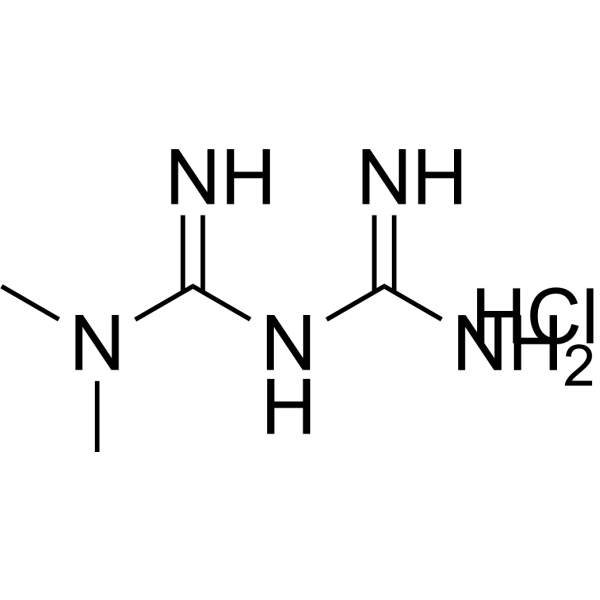
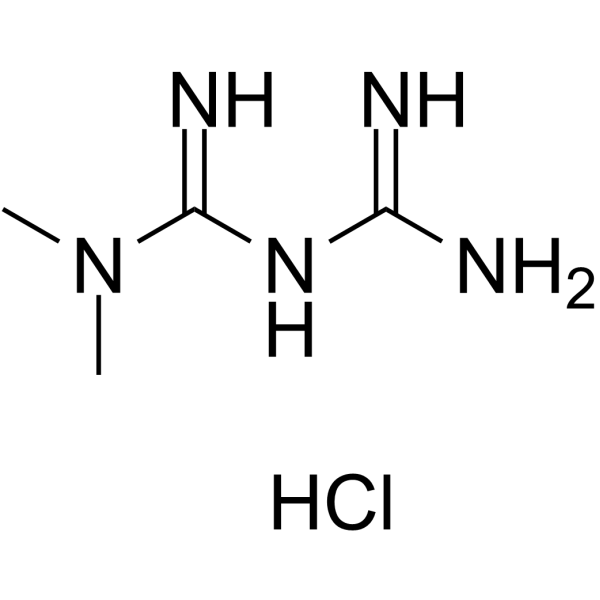
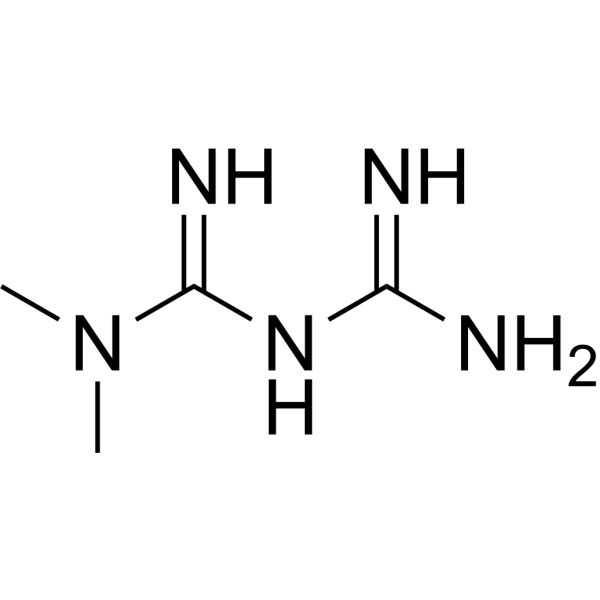
Metformin hydrochloride (Standard) is the analytical standard of Metformin hydrochloride (HY-17471A). This product is intended for research and analytical applications. Metformin (1,1-Dimethylbiguanide) hydrochloride inhibits the mitochondrial respiratory chain in the liver, leading to AMPK activation and enhancing insulin sensitivity, and can be used in the study of type 2 diabetes. Metformin hydrochloride exerts central glucose-lowering effects by inhibiting Ras-related protein 1 (Rap1) in SF1 hypothalamic neurons. Metformin hydrochloride also inhibits liver oxidative stress, nitrosative stress, inflammation, and apoptosis caused by liver ischemia/reperfusion injury. In addition, Metformin hydrochloride regulates the expression of autophagy-related proteins by activating AMPK and inhibiting the mTOR signaling pathway, thereby inducing tumor cell autophagy and inhibiting the growth of renal cell carcinoma in vitro and in vivo.
For research use only. We do not sell to patients.
- Purity : 99.97%
- CAS No.: 1115-70-4
- Formula: C4H12ClN5
- Molecular Weight:165.62
-
Storage:
Please store the product under the recommended conditions in the Certificate of Analysis.

To place orders, for customer services and technical support, please contact: MedChemExpress USA
Tel: 609-228-6898 E-mail: [email protected] [email protected]


-
 Product Information
-
Chemical Information
- Purity & Documentation
-
 Help & FAQs




Product Information
Information
Application
The compound is the grade of analytical standard, which is the reference standard supplied assay. It is commonly used in qualitative, quantitative and methodological research experiments in HPLC, GC and MS.


Chemical Information
-
CAS No. 1115-70-4
-
Appearance Solid
-
Molecular Weight 165.62
-
Formula C4H12ClN5
-
Color White to off-white
-
SMILES
NC(NC(N(C)C)=N)=N.Cl
-
Synonyms
1,1-Dimethylbiguanide hydrochloride (Standard)
-
Shipping
Room temperature in continental US; may vary elsewhere.
-
Storage
Please store the product under the recommended conditions in the Certificate of Analysis.


Purity & Documentation
-
SDS (252 KB)
- English - EN (252 KB)
- Français - FR (252 KB)
- Deutsch - DE (252 KB)
- Norwegian - NO (252 KB)
- Español - ES (252 KB)
- Swedish - SV (252 KB)
- Italian - IT (252 KB)
- Korean - KR (252 KB)
- Portuguese - PT (252 KB)
-
Handling Instructions (2659 KB)
References
[1]. Soraya H, et al. Acute treatment with metformin improves cardiac function following NSC 37745 induced myocardial infarction in rats. Pharmacol Rep. 2012;64(6):1476-84. [Content Brief]
[2]. Xue J, et al. Metformin inhibits growth of eutopic stromal cells from adenomyotic endometrium via AMPK activation and subsequent inhibition of AKT phosphorylation: a possible role in the treatment of adenomyosis. Reproduction. 2013 Aug 21;146(4):397-406. [Content Brief]
[3]. Otto M, et al. Metformin inhibits glycogen synthesis and gluconeogenesis in cultured rat hepatocytes. Diabetes Obes Metab. 2003 May;5(3):189-94. [Content Brief]
[4]. Avci CB, et al. Therapeutic potential of an anti-diabetic drug, metformin: alteration of miRNA expression in prostate cancer cells. Asian Pac J Cancer Prev. 2013;14(2):765-8. [Content Brief]
[5]. Quaile MP, et al. Toxicity and toxicokinetics of metformin in rats. Toxicol Appl Pharmacol. 2010 Mar 15;243(3):340-7. [Content Brief]
[6]. Abdel-Zaher AO, et al. Novel mechanistic insights of the potential role of gasotransmitters and autophagy in the protective effect of metformin against hepatic ischemia/reperfusion injury in rats. Naunyn Schmiedebergs Arch Pharmacol. 2025 Feb 6. [Content Brief]
[7]. Liu J, et al. Metformin inhibits renal cell carcinoma in vitro and in vivo xenograft. Urol Oncol. 2013 Feb;31(2):264-70. [Content Brief]


Metformin hydrochloride (Standard) Related Classifications
HY-17471AR Related Classifications
 Powered by Bioz