



CDK
Cyclin dependent kinase
CDKs (Cyclin-dependent kinases) are serine-threonine kinases first discovered for their role in regulating the cell cycle. They are also involved in regulating transcription, mRNA processing, and the differentiation of nerve cells. CDKs are relatively small proteins, with molecular weights ranging from 34 to 40 kDa, and contain little more than the kinase domain. In fact, yeast cells can proliferate normally when their CDK gene has been replaced with the homologous human gene. By definition, a CDK binds a regulatory protein called a cyclin. Without cyclin, CDK has little kinase activity; only the cyclin-CDK complex is an active kinase.
There are around 20 Cyclin-dependent kinases (CDK1-20) known till date. CDK1, 4 and 5 are involved in cell cycle, and CDK 7, 8, 9 and 11 are associated with transcription.
CDK levels remain relatively constant throughout the cell cycle and most regulation is post-translational. Most knowledge of CDK structure and function is based on CDKs of S. pombe (Cdc2), S. cerevisia (CDC28), and vertebrates (CDC2 and CDK2). The four major mechanisms of CDK regulation are cyclin binding, CAK phosphorylation, regulatory inhibitory phosphorylation, and binding of CDK inhibitory subunits (CKIs).
CDK Isoform Specific Products
-
CDK
(487)
View all products
-
CDK1
(195)
View all products
-
CDK2
(314)
View all products
-
CDK3
(28)
View all products
-
CDK4
(233)
View all products
-
CDK5
(98)
View all products
-
CDK6
(178)
View all products
-
CDK7
(118)
View all products
-
CDK8
(57)
View all products
-
CDK9
(204)
View all products
-
CDK11
(9)
View all products
-
CDK12
(52)
View all products
-
CDK13
(26)
View all products
-
CDK14
(6)
View all products
-
CDK16
(8)
View all products
-
CDK19
(25)
View all products
-
CDC
(21)
View all products
-
CLK
(31)
View all products
-
Pho85
(1)
View all products
-
CDK10
(1)
View all products
-
CDK15
(1)
View all products
-
CDK17
(2)
View all products
-
CDK18
(1)
View all products
-
CDK20
(1)
View all products
-
PITSLRE
(1)
View all products
All Product Categories
-
CDK Inhibitors
(1076)
View all products
-
CDK Agonists
(3)
View all products
-
CDK Antagonists
(2)
View all products
-
CDK Activators
(18)
View all products
-
CDK Modulators
(15)
View all products
-
CDK Degraders
(94)
View all products
-
CDK Controls
(4)
View all products
-
CDK Substrate
(1)
View all products
-
CDK Ligands
(16)
View all products
-
Cyclin-Dependent Kinases (CDKs) Proteins
(80)
View all products
-
Cyclin Dependent Kinase 1 (CDK1) Proteins
(9)
View all products
-
Cyclin-Dependent Kinase 2 (CDK2) Proteins
(12)
View all products
-
Cyclin-Dependent Kinase 3 (CDK3) Proteins
(6)
View all products
-
Cyclin-Dependent Kinase 4 (CDK4) Proteins
(4)
View all products
-
Cyclin-Dependent Kinase 5 (CDK5) Proteins
(5)
View all products
-
Cyclin-Dependent Kinase 6 (CDK6) Proteins
(6)
View all products
-
Cyclin-Dependent Kinase 7 (CDK7) Proteins
(4)
View all products
-
CDK Related Products (1351)
Related Products (1351)

-
Recombinant Proteins (82)
-
Antibodies (42)
-
CDK Isoform Comparison
-
Abemaciclib metabolite M18
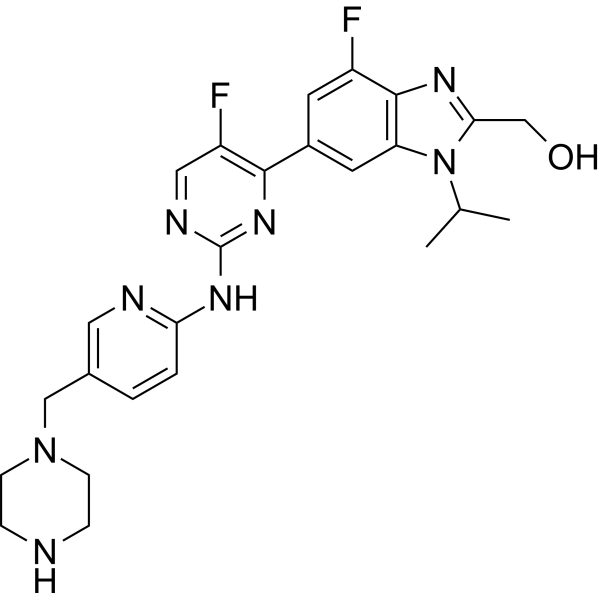 0 ImagesSynonyms: LSN3106729Abemaciclib metabolite M18 (LSN3106729), the metabolite of Abemaciclib (HY-16297A), is a CDK inhibitor with antitumor activity. Abemaciclib metabolite M18 and a CRBN ligand have been used to design PROTAC CDK4/6 degrader.
-
LL-K12-18
 0 ImagesLL-K12-18 is a CDK12 kinase inhibitor and a dual-site molecular glue. LL-K12-18 inhibits human CDK12 with an IC50 value of 283.9 nM, and selectively degrades cyclin K via the ubiquitin-proteasome system by stabilizing the CDK12-DDB1 complex. LL-K12-18 downregulates DNA damage response genes, reduces the phosphorylation level of CTD Ser2 in RNA polymerase II, and modulates biomarkers such as ATM, RAD51, γ-H2AX and cleaved PARP, thereby effectively inducing apoptosis and inhibiting proliferation of breast cancer cells. LL-K12-18 exhibits high target selectivity and serves as a research tool for studies on triple-negative breast cancer.
-
BML-259
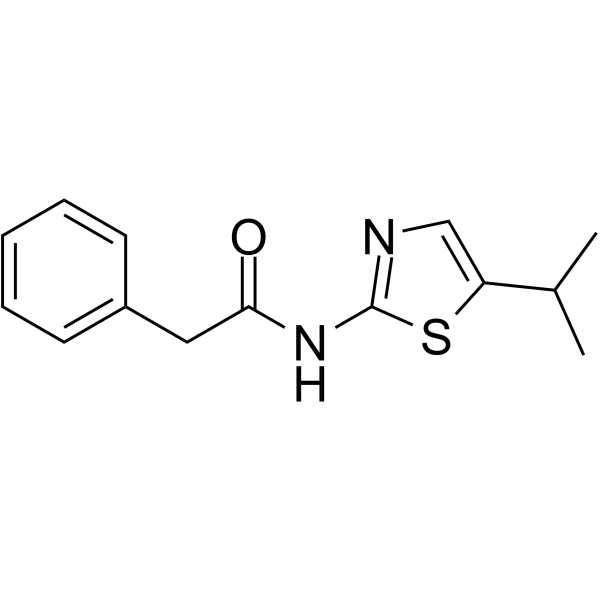 0 ImagesBML-259 is a potent cyclin-dependent kinase 5 (Cdk5) inhibitor, with IC50s of 64 and 98 nM for Cdk5 and Cdk2, respectively.
-
1,1-Dimethylethyl 4-(4-amino-3-pyridinyl)-1-piperazinecarboxylate
 0 Images1,1-Dimethylethyl 4-(4-amino-3-pyridinyl)-1-piperazinecarboxylate is the impurity of Palbociclib (HY-50767). Palbociclib is an orally active selective CDK4 and CDK6 inhibitor with IC50 values of 11 and 16 nM, respectively.
-
(S)-Roscovitine
 0 ImagesSynonyms: (S)-Seliciclib; (S)-CYC202(S)-Roscovitine ((S)-Seliciclib; (S)-CYC202) is a potent and cross the blood-brain barrier CDKs inhibitor. (S)-Roscovitine shows neuroprotective efficacy. (S)-Roscovitine has the potential for the research of stroke.
-
Palbociclib-d8
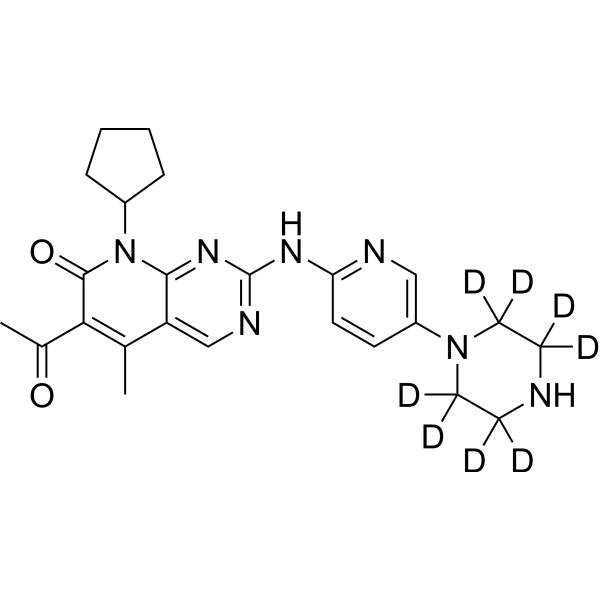 0 ImagesSynonyms: PD 0332991-d8Palbociclib-d8 is a deuterium labeled Palbociclib. Palbociclib is a selective and orally active CDK4 and CDK6 inhibitor with IC50s of 11 and 16 nM, respectively. Palbociclib has the potential for ER-positive and HER2-negative breast cancer research.
-
(-)-Enitociclib
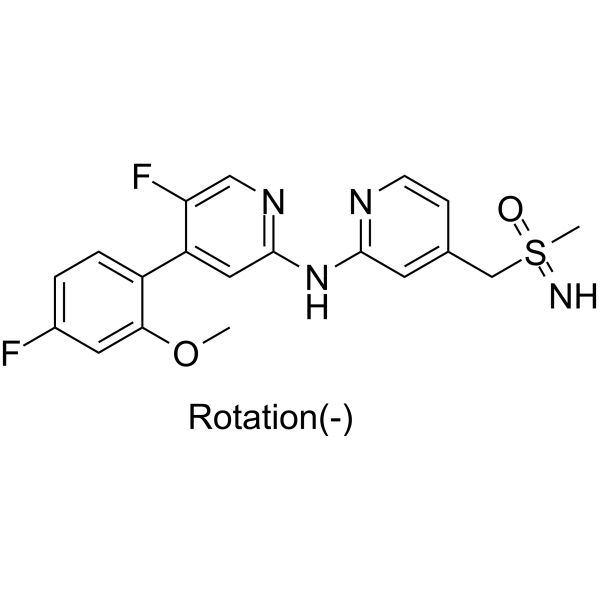 0 ImagesSynonyms: (R)-Enitociclib; (-)-BAY-1251152; (-)-VIP152(-)-Enitociclib ((R)-Enitociclib) is an enantiomer of Enitociclib (HY-103019E) with an optical rotation of (-). Enitociclib is a selective CDK9 inhibitor and apoptosis inducer. Enitociclib inhibits CDK9 activity and reduces the phosphorylation of Ser2 in the carboxyl-terminal domain (CTD) of RNA polymerase Pol II, thereby downregulating the transcription of key oncogenes such as MYC and MCL1. Enitociclib has anti-proliferative activity targeting MYC+ lymphoma and multiple myeloma (MM) cells, and has synergistic effects with Bortezomib (HY-10227) and Lenalidomide (HY-A0003), and can be used in the research of hematological malignancies.
-
Zotiraciclib
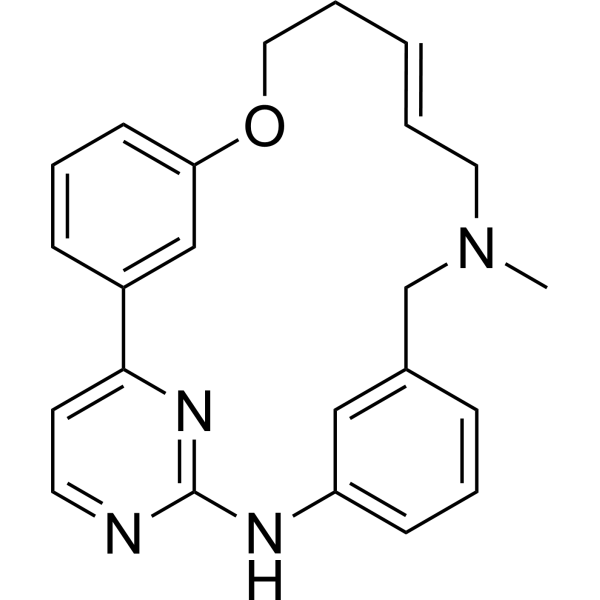 0 ImagesSynonyms: TG02; SB1317Zotiraciclib (TG02; SB1317) is an orally active JAK2/FLT3/CDK2 inhibitor with IC50 values of 13 nM, 73 nM and 56 nM, respectively. Zotiraciclib inhibits cancer cell proliferation, tumor growth and the activity of CYP2D6. Zotiraciclib exhibits high plasma protein binding rate, Caco-2 permeability and tissue distribution capacity, as well as metabolic stability in human and canine liver microsomes. Zotiraciclib achieves tumor growth inhibition in nude mouse models of colon cancer and lymphoma xenografts. Zotiraciclib can be used for research related to colon cancer, B-cell lymphoma, advanced leukemia, acute leukemia and multiple myeloma.
-
Ironomycin
 0 ImagesIronomycin is a derivative of Salinomycin (HY-15597). Ironomycin exhibits selective inhibitory activity against mantle cell lymphoma (MCL) cells. Ironomycin blocks the cell cycle and induces apoptosis and ferroptosis. Ironomycin induces double-strand DNA breaks and activates the unfolded protein response (UPR), particularly the IRE1α signaling pathway accumulation. The combination of Ironomycin with Ibrutinib (HY-10997) shows a synergistic effect. Ironomycin can be used for the study of MCL.
-
2,4,6-Trihydroxybenzoic acid
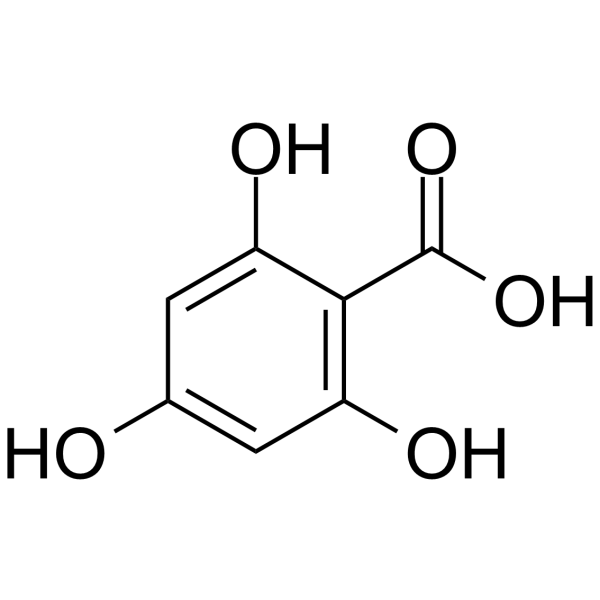 0 Images2,4,6-Trihydroxybenzoic acid is a CDK inhibitor that dose-dependently inhibits recombinant CDK1, CDK2, and CDK4 with IC50 values of 580, 262, and 403 μM, respectively. 2,4,6-Trihydroxybenzoic acid is also a flavonoid metabolite. Cellular uptake of 2,4,6-Trihydroxybenzoic acid depends on functional SLC5A8. 2,4,6-Trihydroxybenzoic acid can be used in colorectal cancer-related research.
-
BSJ-02-162
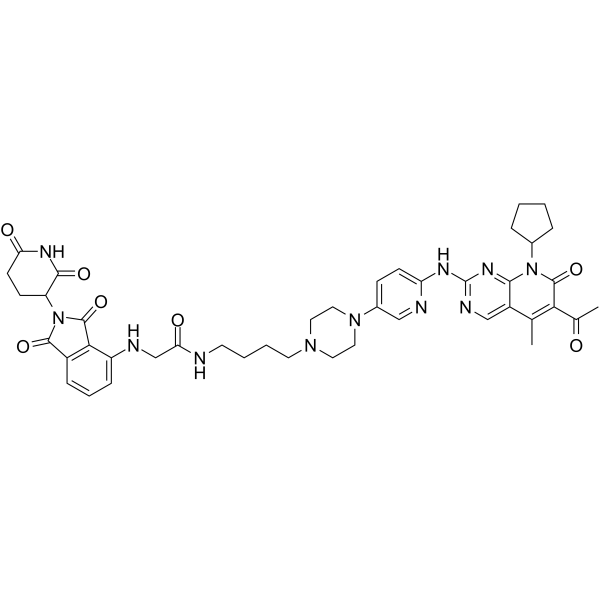 0 ImagesSynonyms: CDK4/6-IN-11BSJ-02-162 (CDK4/6-IN-11) is a CDK4/CDK6 and IKZF1/IKZF3 degrader, with DC50 values of 32 nM and 6.1 nM against CDK4 and CDK6, respectively; its IC50 ranges from 1 to 50 nM. BSJ-02-162 induces G1-phase cell cycle arrest, reduces phosphorylated retinoblastoma protein levels, and exerts antiproliferative activity in mantle cell lymphoma cells. BSJ-02-162 is applicable to research related to mantle cell lymphoma.

-
Daphnoretin
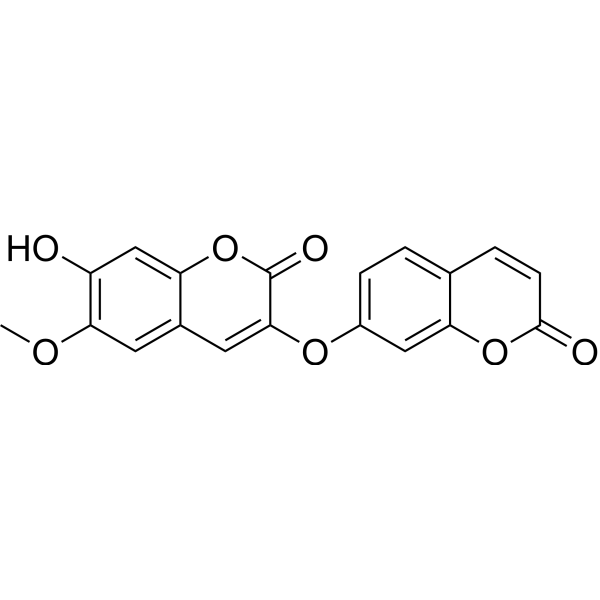 0 ImagesDaphnoretin (Dephnoretin; Thymelol) is a protein kinase C (PKC) activator that inhibits the expression of hepatitis B virus (HBV) surface antigen (HBsAg) and exhibits antiviral activity. Daphnoretin exerts its antitumor effects by inhibiting the activation of the PI3K/AKT signaling pathway and triggers the mitochondrial apoptosis pathway. Daphnoretin alleviates chondrocyte apoptosis and inflammatory responses by inhibiting endoplasmic reticulum stress and activation of the NLRP3 inflammasome. Daphnoretin regulates the differentiation and maturation of dendritic cells, inhibits their immunostimulatory function by downregulating the phosphorylation level of JNK, and thus exerts a protective effect in skin graft rejection.
-
HQ005
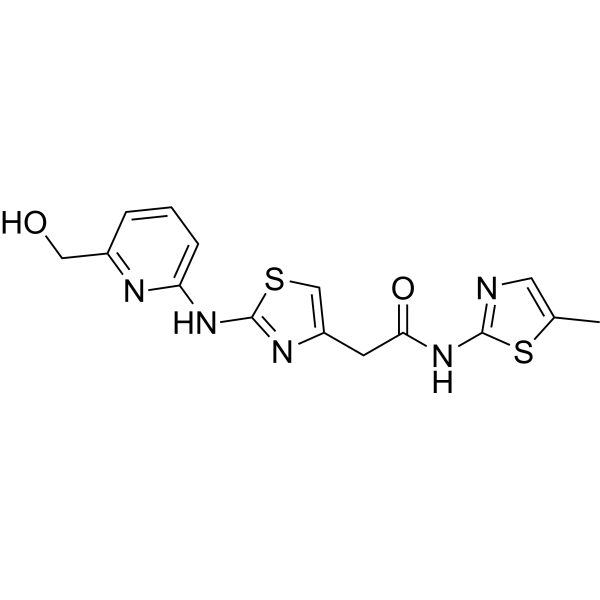 0 ImagesHQ005 is a potent CCNK degrader with an DC50 value of 0.041 µM. HQ005 is a molecular-glue degrader that mediates interactions between target proteins and components of the ubiquitin-proteasome system to cause selective protein degradation.
-
TMX-2172
 0 ImagesTMX-2172 is a selective bivalent cereblon-recruiting PROTAC-based dual CDK2 and CDK5 degrader with IC50 values of 6.5 nM and 6.8 nM, respectively. TMX-2172 shows selectivity for CDK2 and CDK5 over other cell cycle CDKs (CDK1, CDK4, and CDK6) and transcriptional CDKs (CDK7 and CDK9). TMX-2172 inhibits CDK2/CDK5 enzymatic activity, induces their proteasomal degradation, reduces ASCL1 protein levels and half-life, induces cancer cell death, and exerts antiproliferative effects. TMX-2172 can be used for the research of ovarian cancer and small cell lung cancer.
-
CDK4 degrader 1
 0 ImagesCDK4 degrader 1 is a selective CDK4 molecular glue degrader. CDK4 degrader 1 induces intracellular CDK4 degradation, and its activity is dependent on DCAF16. CDK4 degrader 1 targets the cysteine residue on DCAF16 through its vinylsulfonylpiperazine domain, thereby mediating the degradation of CDK4. CDK4 degrader 1 can be used in research related to cervical cancer.
-
MU1210
 0 ImagesMU1210 (compound 12f), a chemical probe, is an inhibitor of CDC-like kinases Clk1, Clk2, and Clk4 (with IC50 values of 8, 20, and 12 nM respectively), with IC50 for HIPK1 and DYRK2 are 187 and 1309 nM. MU1210 also has favorable pharmacokinetic characteristics (in mice, 10 mg/kg, intraperitoneal injection: Cmax=1.24 μM, T1/2=58 minutes; no acute toxicity observed).




