



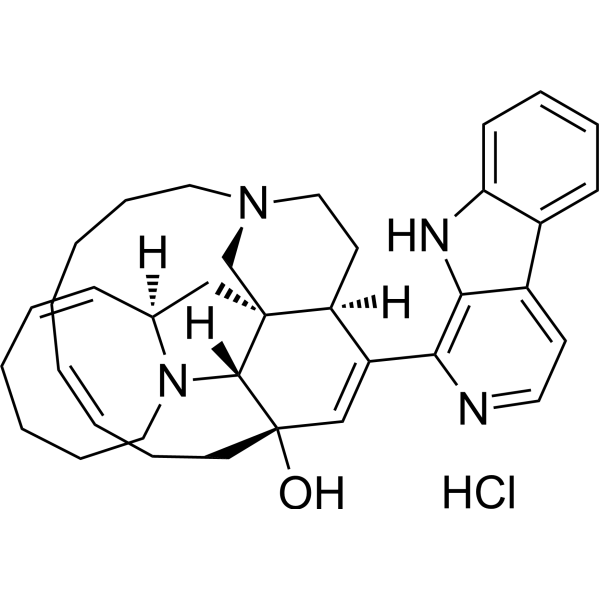
Manzamine A hydrochloride
Based on 2 publication(s) in Google Scholar
Manzamine A hydrochloride, an orally active beta-carboline alkaloid, inhibits specifically GSK-3β and CDK-5 with IC50s of 10.2 μM and 1.5 μM, respectively. Manzamine A hydrochloride targets vacuolar ATPases and inhibits autophagy in pancreatic cancer cells. Manzamine A hydrochloride has antimalarial and anticancer activities. Manzamine A hydrochloride also shows potent activity against HSV-1.
For research use only. We do not sell to patients.
- Purity : 99.66%
- CAS No.: 104264-80-4
- Formula: C36H45ClN4O
- Molecular Weight:585.22
-
Storage:
4°C, sealed storage, away from moisture and light
* In solvent : -80°C, 6 months; -20°C, 1 month (sealed storage, away from moisture and light)

To place orders, for customer services and technical support, please contact: MedChemExpress USA
Tel: 609-228-6898 E-mail: [email protected] [email protected]


-
 Biological Activity
-
Chemical Information
-
Solvent & Solubility
- Protocols
- Purity & Documentation
- References
-
 Help & FAQs


-
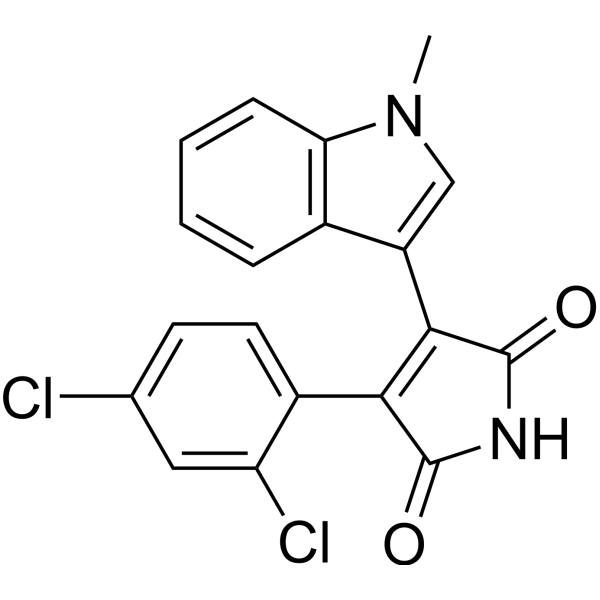
HY-12012
SB 216763Autophagy Inducer -
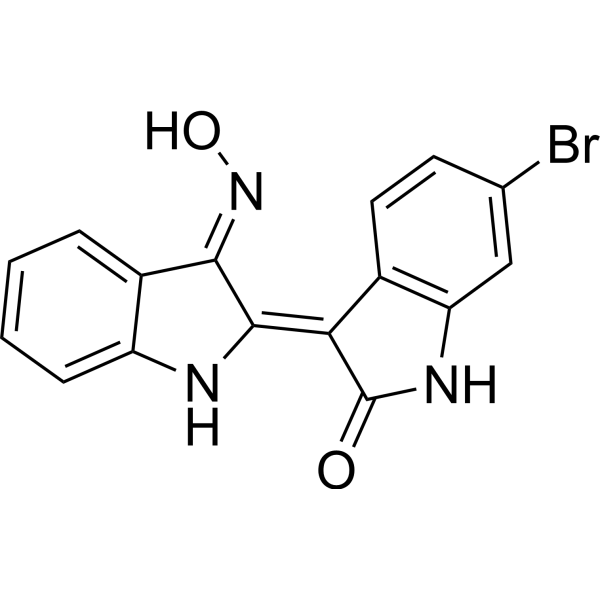
HY-10580
GSK 3 Inhibitor IXATP-Competitive Inhibitor -
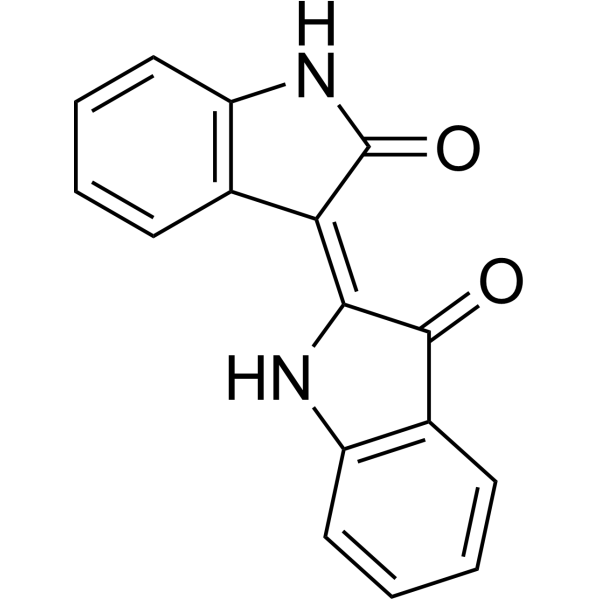
HY-N0117
IndirubinAnticancer Agent -
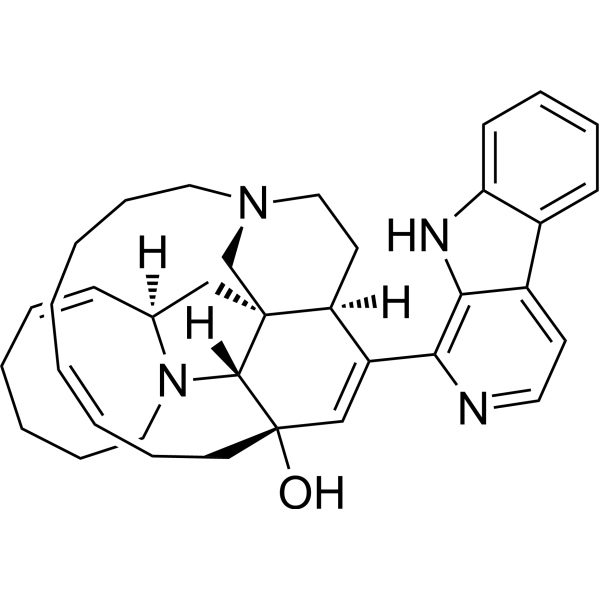
HY-117025
Manzamine AGSK-3β Inhibitor -
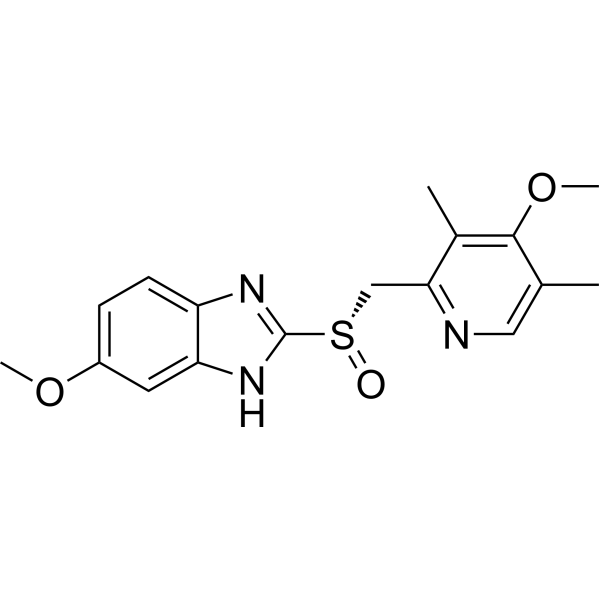
HY-17021
EsomeprazoleH+, K+-ATPase Inhibitor -
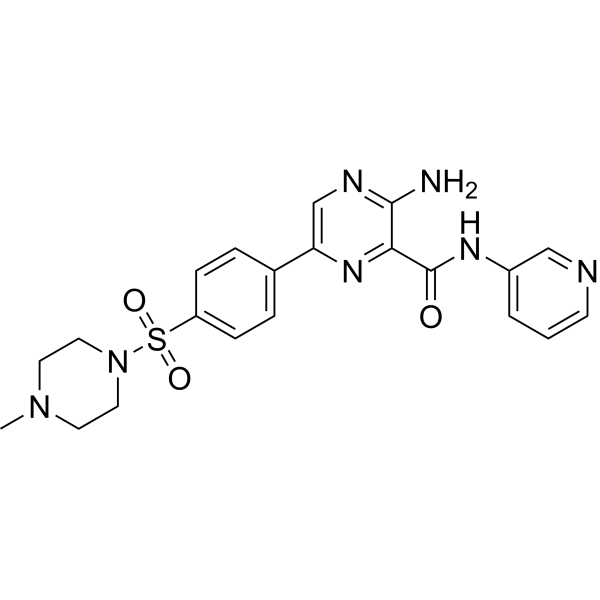
HY-15761
AZD2858GSK-3 Inhibitor -
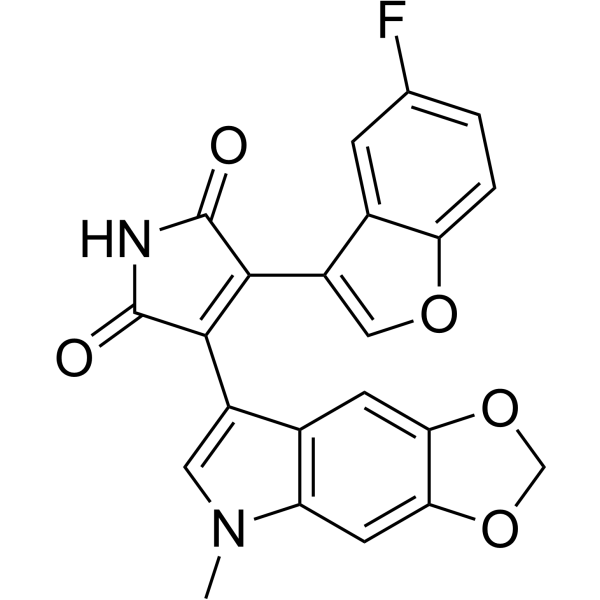
HY-113914
9-ING-41GSK-3β Inhibitor -
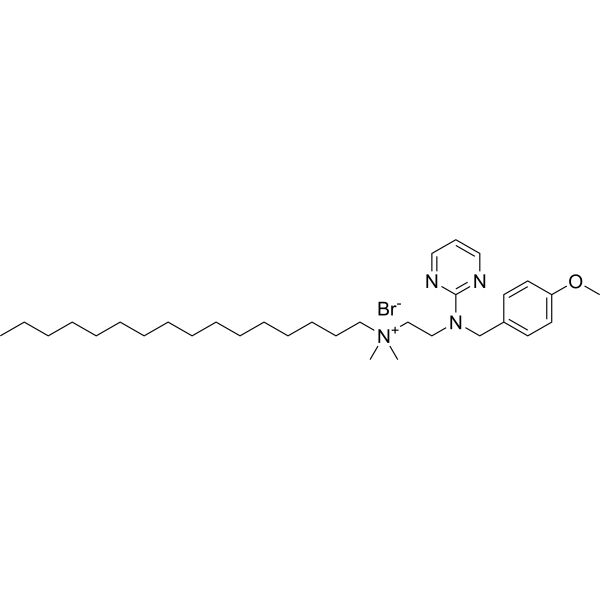
HY-B1246
Thonzonium bromideAntibacterial/Monocationic Surface-active Agent -

HY-17021R
Esomeprazole (Standard)H+, K+-ATPase Inhibitor -
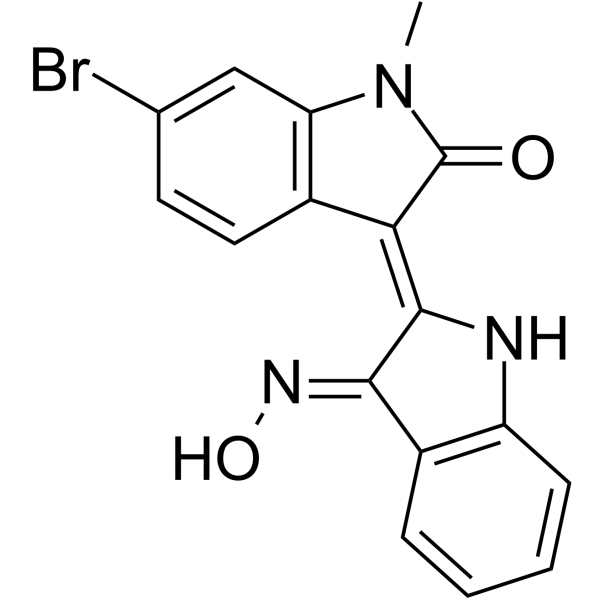
HY-103221
MeBIOAhR Agonist -
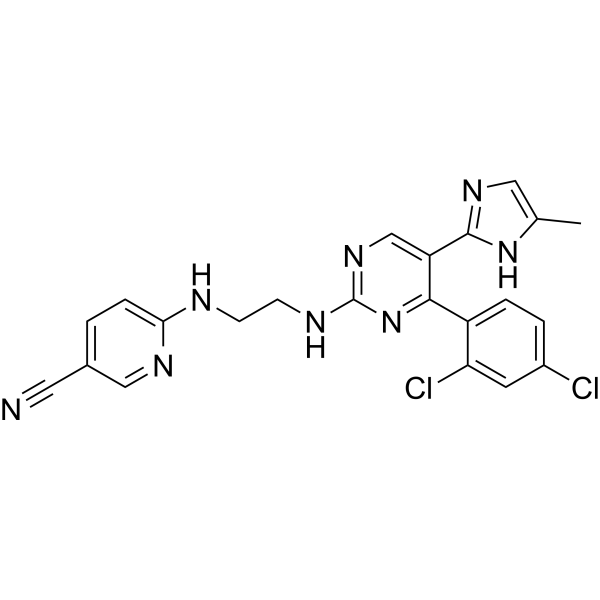
HY-10182
LaduviglusibGSK-3 Inhibitor -
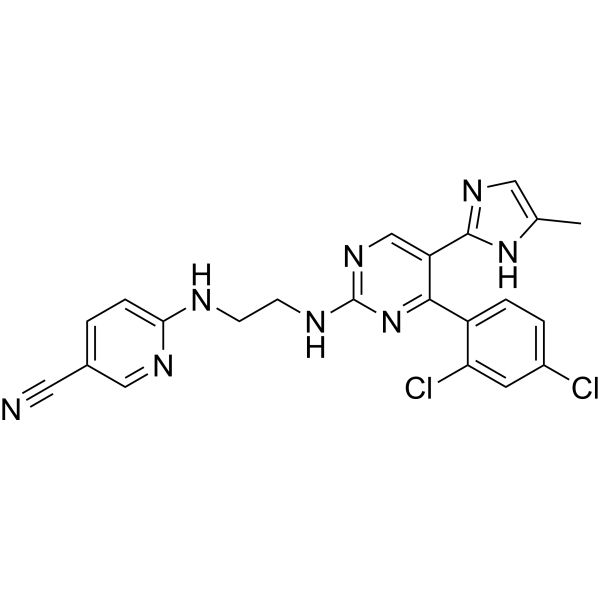
HY-10182G
Laduviglusib (GMP)GSK-3α/β Inhibitor (GMP)
Publications Citing Use of MedChemExpress (MCE) Manzamine A hydrochloride
More Customer Validation & Images

-
Cell Proliferation/Viability Assay
-
Cell Proliferation/Viability Assay
All Parasite Isoforms
More

Biological Activity
Description
|
GSK-3β 10.2 μM (IC50) |
Plasmodium |
CDK5 1.5 μM (IC50) |
vacuolar ATPases |
Malaria |
HSV-1 |
Cellular Effect
|
Cell Line

|
Type | Value | Description | References |
|---|---|---|---|---|
| Vero | IC50 |
1.7 μg/mL
Compound: 10, manzamine A HCl
|
Cytotoxicity against african green monkey Vero cells
Cytotoxicity against african green monkey Vero cells
|
[PMID: 18327911] |
In Vitro
Manzamine A (5-50 µM, 18 h) hydrochloride decreases tau phosphorylation, measured with ELISA[1].
Manzamine A (10 µM) hydrochloride inhibits yeast S. cerevisiae growth by 30%[2].
Manzamine A hydrochloride displays a few enlarged vacuoles in yeast[2].
Manzamine A (2.5-10 µM, 24 h) hydrochloride increases acidity in pancreatic cancer cells and non-malignant Vero cells[2].
Manzamine A (1 µM, 24 h) hydrochloride inhibits HSV-1 infection in SIRC cells[4].
Manzamine A hydrochloride shows antimalarial activity with an IC50 of 8.0 nM (D6 clone) and 11 nM (W2 clone)[5].
MedChemExpress (MCE) has not independently confirmed the accuracy of these methods. They are for reference only. Further protocols information, click here.
-
Cell Line:SIRC cell
-
Concentration:0.1, 0.5, 1, 2, 3, 5, and 10 µM
-
Incubation Time:72 h
-
Result:Inhibited SIRC cell viability with an IC50 of 5.6 µM.
In Vivo
Manzamine A (8 mg/kg, i.p., daily for 8 consecutive days) hydrochloride prolongs the survival of SW mice to 20 days[7].
MedChemExpress (MCE) has not independently confirmed the accuracy of these methods. They are for reference only.
-
Animal Model:Plasmodium berghei in infected mice[6]
-
Dosage:50 or 100 mol/kg
-
Administration:Intraperitoneal injection (i.p.) or oral administration (p.o.)
-
Result:Inhibited the growth of the rodent malaria parasite Plasmodium berghei. Prolonged the survival of highly parasitaemic mice.


Chemical Information
-
CAS No. 104264-80-4
-
Appearance Solid
-
Molecular Weight 585.22
-
Formula C36H45ClN4O
-
Color Off-white to yellow
-
SMILES
O[C@]1(CC/C=C\CCCC2)[C@@]3([H])[C@@](C[C@@]4([H])N3CCCC/C=C\4)(C[N@@]2CC5)[C@]5([H])C(C6=C(NC7=CC=CC=C87)C8=CC=N6)=C1.Cl
-
Synonyms
Keramamine A hydrochloride
-
Structure Classification
-
Initial Source
-
Shipping
Room temperature in continental US; may vary elsewhere.
-
Storage
4°C, sealed storage, away from moisture and light
* In solvent : -80°C, 6 months; -20°C, 1 month (sealed storage, away from moisture and light)


Publications (2)
-
Journal Impact Factor
-
Most Recent
-
Mar Drugs
2023 Feb 25;21(3):151. PMID: 36976201
Manzamine A hydrochloride purchased from MedChemExpress. Usage Cited in: Mar Drugs. 2023 Feb 25;21(3):151. [Abstract]
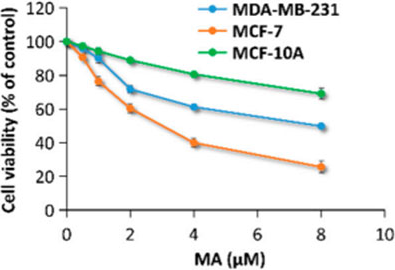
Manzamine A (MA; 0, 0.5, 1, 2, 4, 8 μM; 24 h) shows cytotoxic effects on MDA-MB-231 and MCF-7 cells but is non-toxic to normal breast epithelial MCF-10A cells in a dose-dependent manner.
Manzamine A hydrochloride purchased from MedChemExpress. Usage Cited in: Mar Drugs. 2023 Feb 25;21(3):151. [Abstract]
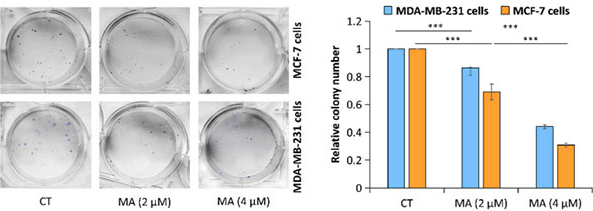
Manzamine A (MA) shows a long-term ability to inhibit both MCF-7 and MDA-MB-231 cells growth. The MA (0, 2, 4 μM; 24 h)-treated cells are seeded in 6-well plates and then cultured for 2 weeks.
-


Solvent & Solubility
In Vitro:
DMSO : 5.88 mg/mL (10.05 mM; Need ultrasonic; Hygroscopic DMSO has a significant impact on the solubility of product, please use newly opened DMSO)
Please refer to the solubility information to select the appropriate solvent. Once prepared, please aliquot and store the solution to prevent product inactivation from repeated freeze-thaw cycles.
Storage method and period of stock solution: -80°C, 6 months; -20°C, 1 month (sealed storage, away from moisture and light). When stored at -80°C, please use it within 6 months. When stored at -20°C, please use it within 1 month.
Please refer to the solubility information to select the appropriate solvent. Once prepared, please aliquot and store the solution to prevent product inactivation from repeated freeze-thaw cycles.
Storage method and period of stock solution: -80°C, 6 months; -20°C, 1 month (sealed storage, away from moisture and light). When stored at -80°C, please use it within 6 months. When stored at -20°C, please use it within 1 month.
Concentration (start) × Volume (start) = Concentration (final) × Volume (final)
In Vivo:
Select the appropriate dissolution method based on your experimental animal and administration route.
- For the following dissolution methods, please ensure to first prepare a clear stock solution using an In Vitro approach and then sequentially add co-solvents:
- To ensure reliable experimental results, the clarified stock solution can be appropriately stored based on storage conditions. As for the working solution for In Vivo experiments, it is recommended to prepare freshly and use it on the same day.
- The percentages shown for the solvents indicate their volumetric ratio in the final prepared solution. If precipitation or phase separation occurs during preparation, heat and/or sonication can be used to aid dissolution.
Add each solvent one by one: 10% DMSO 40% PEG300 5% Tween-80 45% Saline
Solubility: ≥ 0.59 mg/mL (1.01 mM); Clear solution
This protocol yields a clear solution of ≥ 0.59 mg/mL (saturation unknown).
Taking 1 mL working solution as an example, add 100 μL DMSO stock solution (5.9 mg/mL) to 400 μL PEG300, and mix evenly; then add 50 μL Tween-80 and mix evenly; then add 450 μL Saline to adjust the volume to 1 mL.
Preparation of Saline: Dissolve 0.9 g sodium chloride in ddH₂O and dilute to 100 mL to obtain a clear Saline solution.
Add each solvent one by one: 10% DMSO 90% (20% SBE-β-CD in Saline)
Solubility: 0.59 mg/mL (1.01 mM); Suspended solution; Need ultrasonic
This protocol yields a suspended solution of 0.59 mg/mL. Suspended solution can be used for oral and intraperitoneal injection.
Taking 1 mL working solution as an example, add 100 μL DMSO stock solution (5.9 mg/mL) to 900 μL 20% SBE-β-CD in Saline, and mix evenly.
Preparation of 20% SBE-β-CD in Saline (4°C, storage for one week): 2 g SBE-β-CD powder is dissolved in 10 mL Saline, completely dissolve until clear.
In Vivo Dissolution Calculator
Please enter the basic information of animal experiments:
-
-
-
-
Recommended: Prepare an additional quantity of animals to account for potential losses during experiments.
Please enter your animal formula composition:
-
%DMSO +
Recommended: Keep the proportion of DMSO in working solution below 2% if your animal is weak.
-
%+
-
+%Tween-80 + +
-
%Saline +
The co-solvents required include: DMSO, . All of co-solvents are available by MedChemExpress (MCE). , Tween 80. All of co-solvents are available by MedChemExpress (MCE).
Working solution concentration: 0.22 mg/mL
Method for preparing stock solution: mg drug dissolved in μL DMSO. Stock solution concentration: mg/mL. * In solvent : -80°C, 6 months; -20°C, 1 month (sealed storage, away from moisture and light)
1. Take μL DMSO stock solution;
2. Add μL .
μL , mix evenly;
3. Then add μL Tween 80, mix evenly;
4. Then add μL
Please ensure that the stock solution in the first step is dissolved to a clear state, and add co-solvents in sequence. You can use ultrasonic heating (ultrasonic cleaner, recommended frequency 20-40 kHz), vortexing, etc. to assist dissolution.

Protocols
-
Autophagy
Autophagy is a process in which eukaryotic cells use lysosomes to degrade their own cytoplasmic proteins and damaged organelles under the regulation of autophagy related gene (Atg). Microtubule-associated proteins light chain 3 (LC3) is recognized as autophagy marker, which transfers from cytoplasmic LC3 (LC3-I) to membrane type (LC3-II). LC3-II/I ratio could be detected by Western Blot and fluorescence microscopy.
-
Lysosome and acidic-vesicle live-cell staining
Lysosome and acidic-vesicle live-cell staining detects acidic intracellular compartments by using membrane-permeant acidotropic probes that accumulate in low-pH vesicles, including lysosomes, late endosomes, autolysosomes, and acidic phagosomes. LysoTracker staining is commonly used as an intensity-based readout of acidic lysosomal compartment abundance or enlargement, while acridine orange produces green fluorescence in less concentrated compartments and red fluorescence after concentration-dependent accumulation in acidic vesicular organelles. Loss or reduction of acridine-orange red signal can be used as a readout of lysosomal membrane permeabilization or reduced acidic-vesicle integrity. This protocol is designed for live cultured cells and can be adapted for fluorescence microscopy, high-content imaging, plate-reader readout, or flow cytometry when the selected literature supports the readout. Because these dyes report acidotropic accumulation rather than lysosome identity alone,
-
Macroautophagy Solutions
Macroautophagy is a conserved lysosome-dependent degradation pathway in which cytoplasmic material is sequestered into double-membrane autophagosomes and delivered to lysosomes for degradation and recycling. The pathway supports cellular homeostasis during nutrient limitation, organelle stress, protein-aggregate accumulation, infection, differentiation, and tissue remodeling by coupling cargo sequestration, autophagosome maturation, lysosomal fusion, and degradation of cargo-derived macromolecules. The core molecular sequence includes initiation by nutrient- and stress-regulated autophagy machinery, autophagosome nucleation, LC3/ATG8-family conjugation to autophagosomal membranes, cargo selection through receptors such as SQSTM1/p62, autophagosome-lysosome fusion, and lysosomal degradation. LC3 was identified as a mammalian homolog of yeast Atg8 that localizes to autophagosomal membranes after processing, and p62/SQSTM1 was shown to connect ubiquitinated cargo with autophagic degradati


Purity & Documentation
-
Data Sheet (290 KB)
-
SDS (254 KB)
- English - EN (254 KB)
- Français - FR (254 KB)
- Deutsch - DE (254 KB)
- Norwegian - NO (254 KB)
- Español - ES (254 KB)
- Swedish - SV (254 KB)
- Italian - IT (254 KB)
- Korean - KR (254 KB)
- Portuguese - PT (254 KB)
-
Handling Instructions (2659 KB)
References
[1]. Hamann M, et al. Glycogen synthase kinase-3 (GSK-3) inhibitory activity and structure-activity relationship (SAR) studies of the manzamine alkaloids. Potential for Alzheimer's disease. J Nat Prod. 2007;70(9):1397-1405. [Content Brief]
[2]. Kallifatidis G, et al. The marine natural product manzamine A targets vacuolar ATPases and inhibits autophagy in pancreatic cancer cells [published correction appears in Mar Drugs. 2014;12(4):2305-7]. Mar Drugs. 2013;11(9):3500-3516. Published 2013 Sep 17. [Content Brief]
[3]. Winkler JD, et al. Antimalarial activity of a new family of analogues of manzamine A. Org Lett. 2006;8(12):2591-2594. [Content Brief]
[4]. Palem JR, et al. Manzamine A as a novel inhibitor of herpes simplex virus type-1 replication in cultured corneal cells. Planta Med. 2011;77(1):46-51. [Content Brief]
[5]. Wahba AE, et al. Structure-activity relationship studies of manzamine A: amidation of positions 6 and 8 of the beta-carboline moiety. Bioorg Med Chem. 2009 Nov 15;17(22):7775-82. [Content Brief]
[6]. Donia M, et al. Marine natural products and their potential applications as anti-infective agents. Lancet Infect Dis. 2003 Jun;3(6):338-48. [Content Brief]
[7]. El Sayed KA, et al. New manzamine alkaloids with potent activity against infectious diseases. J Am Chem Soc. 2001 Mar 7;123(9):1804-8. [Content Brief]


Complete Stock Solution Preparation Table
Please refer to the solubility information to select the appropriate solvent. Once prepared, please aliquot and store the solution to prevent product inactivation from repeated freeze-thaw cycles.
Storage method and period of stock solution: -80°C, 6 months; -20°C, 1 month (sealed storage, away from moisture and light). When stored at -80°C, please use it within 6 months. When stored at -20°C, please use it within 1 month.
| Optional Solvent | Concentration Solvent Mass | 1 mg | 5 mg | 10 mg | 25 mg |
|---|---|---|---|---|---|
| DMSO | 1 mM | 1.7088 mL | 8.5438 mL | 17.0876 mL | 42.7190 mL |
| 5 mM | 0.3418 mL | 1.7088 mL | 3.4175 mL | 8.5438 mL | |
| 10 mM | 0.1709 mL | 0.8544 mL | 1.7088 mL | 4.2719 mL |


Manzamine A hydrochloride Related Classifications
HY-117025A Related Classifications
 Powered by Bioz